There are very few absolutes in this life. What kind of school our children attend is not one of them.
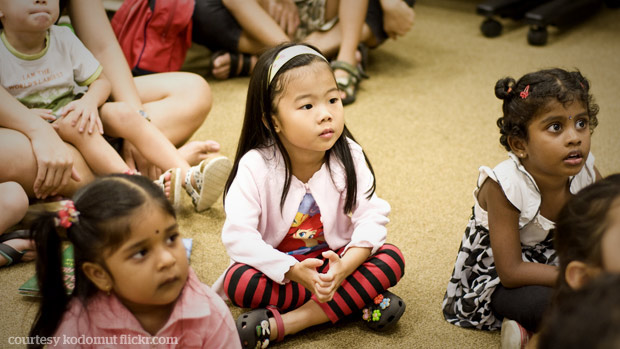
Home schools, private schools of kinds, public schools, each in their different ways are places where good parents hope for a good education, knowing that at the end of the day they are responsible for teaching their children to love God and his world. We have chosen all three along the way, raising our five children, and each one has blessings and curses. None is a tragic choice, but none are perfect choices either.
Almost 25 years ago, we were involved in the beginning of a private school called Rivendell. Eventually all of our children went there, and graduated at eighth grade. Born of an entrepreneurial hope for a different kind of education, the little community of parents who brought it into being worked very hard for many years to create an educational culture that prized a creative, responsible learning. A literature-based curriculum focused on thematic study was its heart, along with a requirement that parents actively involve themselves in the week-by-week life of the school.
Committed to teaching our children to “learn about God’s world and to discover their place in it,” we were a family, with all the good and bad stories of families everywhere. But when all was said and done, we wanted our children to learn to learn, and to love learning.
When our children finished at Rivendell, we searched the city of Washington for something similar, and found nothing that satisfied. Eventually, intrigued by the more personal pedagogy of private schools, we entered into the life of St. Stephen’s and St. Agnes School, an Episcopal day school in Alexandria.
From our first conversations with the headmaster we knew that the school was sympathetic to transcendence, but did not believe in truth. A hard judgment, perhaps, but knowing that to be true kept us from expecting the school to be something other than what it was. What it was was its own gift to our children. A small school with small classes, it offered them an opportunity to know their teachers as they were learning within the disciplines of a demanding curriculum. That is never small.
A wonderful grace for our children in those years was FOCUS, a ministry to students in the private and independent school world along the Eastern seaboard principally. A bit playfully, I have described it as “John Stott and Francis Schaeffer meeting on Martha’s Vineyard, imagining together a ministry to high-school students.” For over 50 years, it has served the schools that no else has served, viz. the private, independent schools, and has done so with great grace. Its presence at St. Stephen’s and St. Agnes was a lifeline for our children, nurturing them in visions of honest faith as they were learning to learn in a pluralizing, secularizing world.
And all of our children eventually must live in that kind of world. It cannot and will not be different than that. So where they go to school is not finally the most important decision; how they learn and who they become with what they learn is more critical. As I long argued at Rivendell—remembering the moral vision of Tolkien himself—it is not only important that our children learn their duty to love God and his world, but that they learn to desire that. The one is easier than the other. But duty and desire together are the best hope of a good education, and a good life, for children everywhere.
Steven Garber is married to Meg, and they are parents of five children. Long members of The Falls Church, he is the principal and founder of The Washington Institute for Faith, Vocation and Culture.