






Why Early Childhood Parenting Is a Gospel Priority

How could you already be so messed up?
The question ran through my mind as I looked at Dylan, a lanky, disruptive second grader in the Brooklyn "school in need of improvement" where I taught. One day, the answer came in the middle of class. Dylan volunteered, "My dad's in jail because he tried to kill my mom." Suddenly, Dylan's behavior made sense. In the span of a few minutes, my exasperation turned into compassion. Getting to know Dylan, his classmates, and their families deepened my longing for the fulfillment of Isaiah 58:12: rebuilding ruins, raising up foundations, and restoring streets to dwell in.
That comprehensive flourishing envisioned in Isaiah cannot happen without flourishing families. If all other social institutions are restored, and the family remains in ruins, a community cannot thrive, because the family is the lynchpin of character formation, skill development, and cultural transmission. In communities of cyclical poverty like my Brooklyn neighborhood, raising up foundations means intervening where the cycle begins: at birth, and through the family.
The family is the smallest and most powerful unit of human culture—for good or for ill—and exerts its greatest influence during the most rapid and sensitive period of brain development: the first five years.[i] What happens, or does not happen, in the first five years shapes a child's brain physiology and molds her character.[ii] Parental nurture can either catalyze or cripple linguistic, cognitive and social development through the use (or neglect) of love and language. Paul Tough's new book, How Children Succeed: Grit, Curiosity and the Hidden Power of Character, masterfully shows that the connection between attachment—the early emotional bond formed (or disfigured) between parents and child by parental responsiveness and nurture—can be a better predictor of high-school graduation than IQ or achievement test scores. Parenting affects gene expression and lifelong brain physiology. In Tough's words, "The effect of good parenting is not just emotional or psychological, the neuroscientists say; it is biochemical."[iii] In language acquisition, one watershed study showed that by 3 years of age, children from language-poor homes (i.e., limited vocabularies and denigrating patterns of speech) had only half the vocabulary of those from language-rich families (i.e., affirming and creative use of language).[iv]
|
At age 3 |
|||
|
|
Children of Professionals |
|
|
|
Words Heard |
30 million |
10 million |
|
|
Encouragements |
500,000 |
80,000 |
|
|
Discouragements |
80,000 |
200,000 |
|
|
Words Spoken |
1,100 |
525 |
|
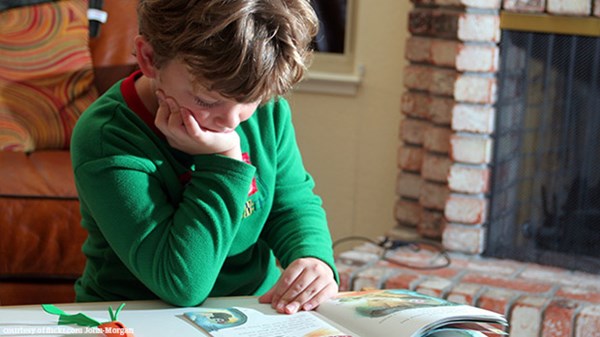
Children who sit with a parent reading a beautiful story are receiving constructive affirmation, vocabulary, and positive narratives. Children who lack these "relational nutrients" will, like malnourished children, be relationally, linguistically, and cognitively stunted. They enter formal education like runners lining up 50 meters before the starting line to run the 100-meter dash. It's almost impossible to overstate the influence of early childhood parenting on children and their communities.
For character formation, education, and health, there is no more strategic investment than early childhood parenting. Engaging and empowering the parents of young children sends them a very clear message: "You are the most important people in your child's life!" A growing movement of governmental and non-governmental groups is making this critical investment. For example, Parents as Teachers is an international nonprofit that employs a home-visit model to help parents develop confidence and skills "on their own turf." Young Lives, an initiative of Young Life, uses club gatherings to match mature Christian women with teenage moms for mentoring and support. In Minnesota, Early Child Family Education takes another creative approach, using public schools as gathering places for young parents from the neighborhood to network and learn from parent educators and from each other. The Harlem Children's Zone in New York City sends teams onto the streets and into the housing projects to recruit parents of children under three for their Baby College parent education and support program. The nature and tactics of these and many other organizations differ, but all recognize that parent involvement is the single best predictor of a child's educational achievement, which is a primary factor in lifelong social, civic, and economic contribution.[v]
The economic and cultural arguments for investing deeply in parents of young children are sufficient to embolden leaders from all walks of life and diverse faith commitments to take action.
For Christians, there are three central theological reasons for loving young children and their parents – even if these actions did not have the kind of economic and cultural power that they do. First, Jesus calls little children to himself, and commands us to not only welcome them but also to become like them in order to enter the kingdom. Early childhood is designed by our wise Father as a time to receive and display his gracious rule. When we welcome children like Dylan, we learn from those we love.
Second, in the Parable of the Lost Sheep, Jesus extols the shepherd who leaves the 99 to go after 1 lost sheep. When we leave our self-absorption to love all families, especially families like Dylan's with all their pain, and bring them the good news of Christ, there is rejoicing in heaven! Third, the church has something to offer that no other entity can offer: the gospel. Just as John the Baptist was sent before Jesus "to turn the hearts of the fathers to the children and the wicked to the wisdom of the just" (Luke 1:17), the Father sends us to turn the hearts of parents to their children with the infinitely good news of reconciliation through the cross. Our presence manifests that reconciliation, and with our words we must announce it.
There are myriads of ways that Christians can and should be investing in parents with young children. We can do it individually, by building relationships with our neighbors who have young children. We can champion the organizations in our communities that are ahead of us in strengthening families with young children. As local congregations we can intentionally and strategically welcome, support, and love needy parents. We can encourage the younger members of our churches to consider pursuing vocations in this sphere: family counseling, speech pathology, social work, early intervention, visiting nurse services, and developmental pediatrics, in addition to the noble vocation of parenting. Just as we rightly support prison ministry, drug rehab, care for the homeless, and crisis pregnancy centers, we should consider linking these efforts to ministry to parents of young children. For without reconciled and renewed families, communities will not flourish.
Graham Scharf is a father, the husband of a developmental pediatrician, and the author of The Apprenticeship of Being Human: Why Early Childhood Parenting Matters to Everyone. He has worked in team development, taught early elementary grades as NYC Teaching Fellow, co-founded of Tumblon.com, and is full-time dad to his 8- and 3-year-old daughters.
[i]I owe this insight to Andy Crouch's book, Culture Making.
[ii] Zero to Three Brain FAQ: "Brain development is 'activity-dependent,' meaning that the electrical activity in every circuit—sensory, motor, emotional, cognitive--shapes the way that circuit gets put together."
[iii] Paul Tough, How Children Succeed: Grit, Curiosity and the Hidden Power of Character p36 citing "the fullest evaluation to date of the long-lasting effects of early parental relationships on a child's development," The Development of the Person by Alan Sroufe and Byron Egeland
[iv] Ibid. p28
[v]Meaningful Differences in the Everyday Experience of Young American Children by Todd Risley & Betty Hart
[vi] "[T]he most accurate predictor of student achievement is the extent to which the family is involved in his or her education." Education Resources Information Center

Rethinking the $3,000 Missions Trip

Furniture Fit for the Kingdom

Faith in a Fallen Empire

 RSS
RSS
 TWITTER
 FACEBOOK
Comments Are Closed
No comments
See all comments