What would you do for poetry? What would you sacrifice just to pen a verse? Would you spend a few minutes a day to read a few lines? Would you give money to support a poet? Would you gamble your life to write a poem?
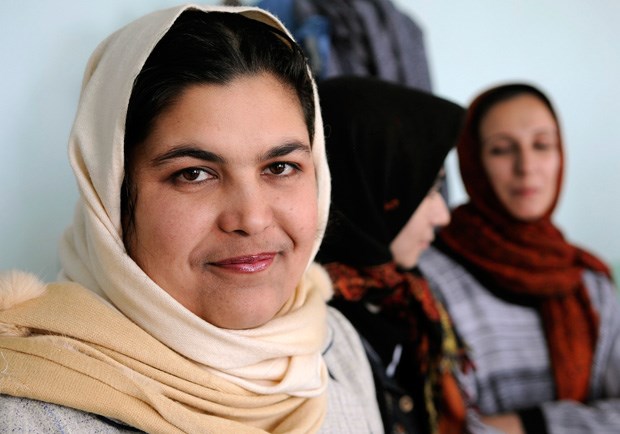
Some women from the rural provinces of Afghanistan are doing exactly that—risking their very lives for poetry. A poignant essay in the New York Times Magazine describes the lengths some impoverished, oppressed, and unschooled women and girls will go just to grasp the bits of freedom poetry gives. In writing and reciting their poems, these women give voice to the fears and injustices—and to the hopes and dreams--that define their lives.
For many of them, poetry is their only form of education. Their literary societies are so dangerous that they gather in secret, like the women immortalized a decade ago in Azar Nafisi's memoir, Reading Lolita in Tehran. In some of the groups, recitations and lessons are offered surreptitiously over cell phones. Getting caught could cost the women their lives, just as it did one girl who set herself on fire two weeks after a beating by her brothers who had found love poems she'd written in secret. To write a love poem suggests a lover, and to have a lover is a sin punishable by death in some communities. One girl interviewed told her poetry call-in group, "I want to write about what's wrong in my country." Through tears, she recited a folk poem of her people:
"My pains grow as my life dwindles, I will die with a heart full of hope."
"Record my voice," she instructed the other women who'd called in, "so that when I get killed at least you'll have something of me."
Voice. This is what poetry offers that makes it worth dying—and living—for. Perhaps only those without a voice can truly understand this power. How could we whose voices are amplified to deafening decibels—by the Facebooks, the Twitters, the blogs, the Internets, the cell phones, the texts, the reality shows, the Good Reads, the "like" buttons, the "dislike" buttons, the comments—understand the death-defying power poetry has to offer a life-giving voice?
We seem, sadly, to have lost an understanding of poetry's beauty and power. A few years ago, the National Endowment for the Arts found that while fiction reading is on the rise, poetry reading had fallen to a years-long low. The lukewarm response to (and at times downright confusion at) the inclusion of poetry at President Barack Obama's inauguration earlier this year is yet another sign of our antagonism. Most people I've talked to didn't even know the U. S. has a poet laureate, let alone who the current one is. For many poetry is too stuffy or too quaint—or worse, simply irrelevant.
Yet, poetry—along with the hunger for poetry—is all around us.
Poetry is in the hymns we sing. It is in the rules and rhythms of the games we play. It is in the songs we listen to and the jingles on the television that we can't get out of our heads. It is in the nursery rhymes we read to our children. It is in the movies we see. It is in the rituals of our mornings and the routines of our daily work. It is in the thanksgivings of the farmer's wife. It is in the lamentations of the broken. It is in the repeated prayers of the soul in need.
But to be a poet—to emerge from this sea of unseen poetry that constitutes life and to be carried forth by the lifeboat of a poem of one's own making—this is what these Afghan women risk death to do. The ancients understood. This is why they used the word that means "maker" to designate the poet. We who are created in the image of the Creator are, as Leland Ryken has written, "incorrigible makers."
So upon seeing Eve, Adam made a poem, the first spoken by one human being to another:
"This is now bone of my bones
and flesh of my flesh;
she shall be called 'woman,'
for she was taken out of man."
This, the first poem by the first man, accomplishes what it is the nature of all poetry to do: to use the power of words to unite and connect, to seek and find resemblances among differences and stitch them together with words. Connection is one of the deepest desires of the human condition. Poetry expresses and helps fulfill that desire. All the poetic devices we learned in school—rhyme, meter, alliteration, allusion, anaphora, metaphor, simile, paradox, and more—are the priests that preside over the wedding of one thing to another. The fruit of such union is meaning.
Poetry gives voice to this meaning that is birthed by the bonds of connectivity. Furthermore, the poet Adrienne Rich proclaims, "transfusions of poetic language can and do quite literally keep bodies and souls together." And, I would add, it can bear those souls and bodies to God, too.
The cross, too, is a poem. A crossbeam tethered to a pole. Feet and wrists nailed to wood, rhymed by the pierced side. Sins of man bonded to the Son of Man. From death, life.
What price would you pay for poetry? Ask the Afghan women. They know.














 While we pray for peace, we need moral clarity about this war.
 As my doubts about his teachings grew, so did a secret fascination with Jesus.
 How groups like Hillsong learned to let go of the literal in favor of creative collaboration.españolPortuguês





