Ideas

Speeding Up Desegregation

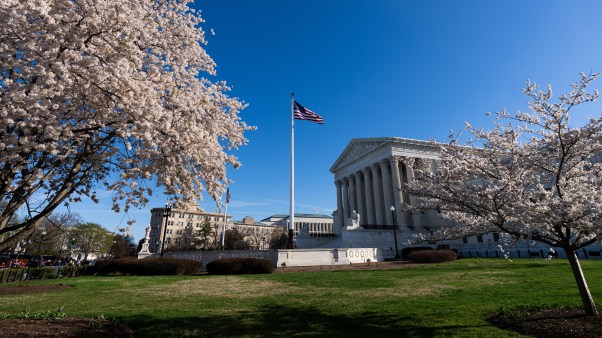
In the classic race between the tortoise and the hare, the tortoise won by moving forward with “all deliberate speed.” But the United States Supreme Court has recently ruled that in the matter of school desegregation this tortoise pace is no longer tolerable.

In 1954 the court declared that school desegregation should proceed “with all deliberate speed.” That ambiguous terminology has led to much confusion and debate about just how soon the goal of total desegregation should be reached. The justices have now put an end to the confusion by ruling unanimously that school districts must end segregation “at once.” The court also took away from reluctant school districts their most effective means of delay—the practice of continuing segregation until all appeals have been exhausted. Now school districts must desegregate immediately and remain that way during litigation.

During the fifteen years since the original decision, citizens in many school districts have moved to comply with the court’s ruling, and they are to be commended for their progress. But others have no intention of seeing their schools desegregated and have nullified the intent of judicial decision under the protective covering of the “all deliberate speed” concept. In these districts every year that passes is another year in which some citizens have been deprived of their constitutional rights.

It would have been far preferable had the Supreme Court not found it necessary to make this new ruling. And it is unfortunate that the decision may work a hardship on districts that have been honestly wrestling with the problem. But the time had to come when the court would say “now,” and fifteen years seems like a long enough waiting time to those whose rights are at stake.

The court’s ruling is bound to give rise to considerable confusion and bitterness, and the problems of implementation will be great. Let us hope that Christians will assume leadership in promoting peaceful compliance with the law of the land and loving concern for the welfare of others.


Also in this issue

The CT archives are a rich treasure of biblical wisdom and insight from our past. Some things we would say differently today, and some stances we've changed. But overall, we're amazed at how relevant so much of this content is. We trust that you'll find it a helpful resource.

'Co-belligerent' Reconciliation

Editorial

The Role of Lebanese Christians

Editorial

Justice and the Chicago Eight

Editorial

Capitalism in the Soviet Union

Editorial

The Book for All Seasons

Editorial

Man's Judgement

Belfast Imbroglio

Ministry, Computer Style

The Complete NEB

Denominational Regrouping

Editorial

Foundations and Tax Reform

Fruitful Shakedown for 'Evangel' Craft

Prayer Day for Captives

Ouster in Missouri

New York Council: Problems in the Immediate Family

John Wesley College: Disengaging the Nazarenes

Indonesian Phenomenon

Inaguration Ceremonies: Dividends for Dollars

Latin, Litter, Limitations

ACCC: No Longer Doing Its Founder’s Will

News Briefs from November 21, 1969

Scientology: Religion or Racket?: Second of Two Parts

Joseph Martin Hopkins

The Quaker Movement West

What’s the Mutter with Astrology?

Religious Cartoons: Needling Inconsistencies

Roman Synod: Speaking with Candor to the Pope

Book Briefs: November 21, 1969

Editorial

God, Grace, and Gratitude

Testing for Maturity

That Searching Look

Eutychus and His Kin: November 21, 1969

Who Needs History?

Richard L. Tobin

Editor's Note from November 21, 1969

’Tis the Season to Be Gluttonous

Stanley Paregien

The Human Experience of Death

Thomas Howard

The Nonsense of Liberal Catholics

James P. Degnan

Poverty: The Psychological Effects

The Heritage of Plymouth

Editorial

The President’s Viet Nam Policy

Editorial

A Philosophy of Despair

Editorial

Charisma in Context

Editorial

'Death' In a Beatle's Life

View issue

Our Latest

Death of a Eulogy

Matthew D. Love

Christian funerals are increasingly secular. But how can Christians go quiet on the gospel at these of all moments?

The Vanishing Gifts of Boredom

The Bulletin with Christine Rosen

How technology steals uncomfortable yet formative human experiences.

Christianity Today: A Declaration of Principles

Where we stand at seven decades—and how readers can help.

Being Human

Steve Cuss & Clarissa Moll: How Your Communication Style Fuels Reactivity—and How to Change It

Communication styles that reduce anxiety: rigid vs fluid, rapid vs deliberate

Reexamining Thomas Jefferson

Thomas S. Kidd

Three books on history to read this month.

From Panic Attacks to Physical Discipline

Justin Whitmel Earley

How one new year turned my life around spiritually and physically.

When the Times Were ‘A-Changin’’

CT reported on 1967 “message music,” the radicalism on American college campuses, and how the Six-Day War fit into biblical prophecy.

Where Your Heart Is, There Your Habits Will Be Also

Elise Brandon

We won’t want to change until we know why we need to and what we’re aiming for.

Apple PodcastsDown ArrowDown ArrowDown Arrowarrow_left_altLeft ArrowLeft ArrowRight ArrowRight ArrowRight Arrowarrow_up_altUp ArrowUp ArrowAvailable at Amazoncaret-downCloseCloseEmailEmailExpandExpandExternalExternalFacebookfacebook-squareGiftGiftGooglegoogleGoogle KeephamburgerInstagraminstagram-squareLinkLinklinkedin-squareListenListenListenChristianity TodayCT Creative Studio Logologo_orgMegaphoneMenuMenupausePinterestPlayPlayPocketPodcastRSSRSSSaveSaveSaveSearchSearchsearchSpotifyStitcherTelegramTable of ContentsTable of Contentstwitter-squareWhatsAppXYouTubeYouTube