Cult Wins Round One

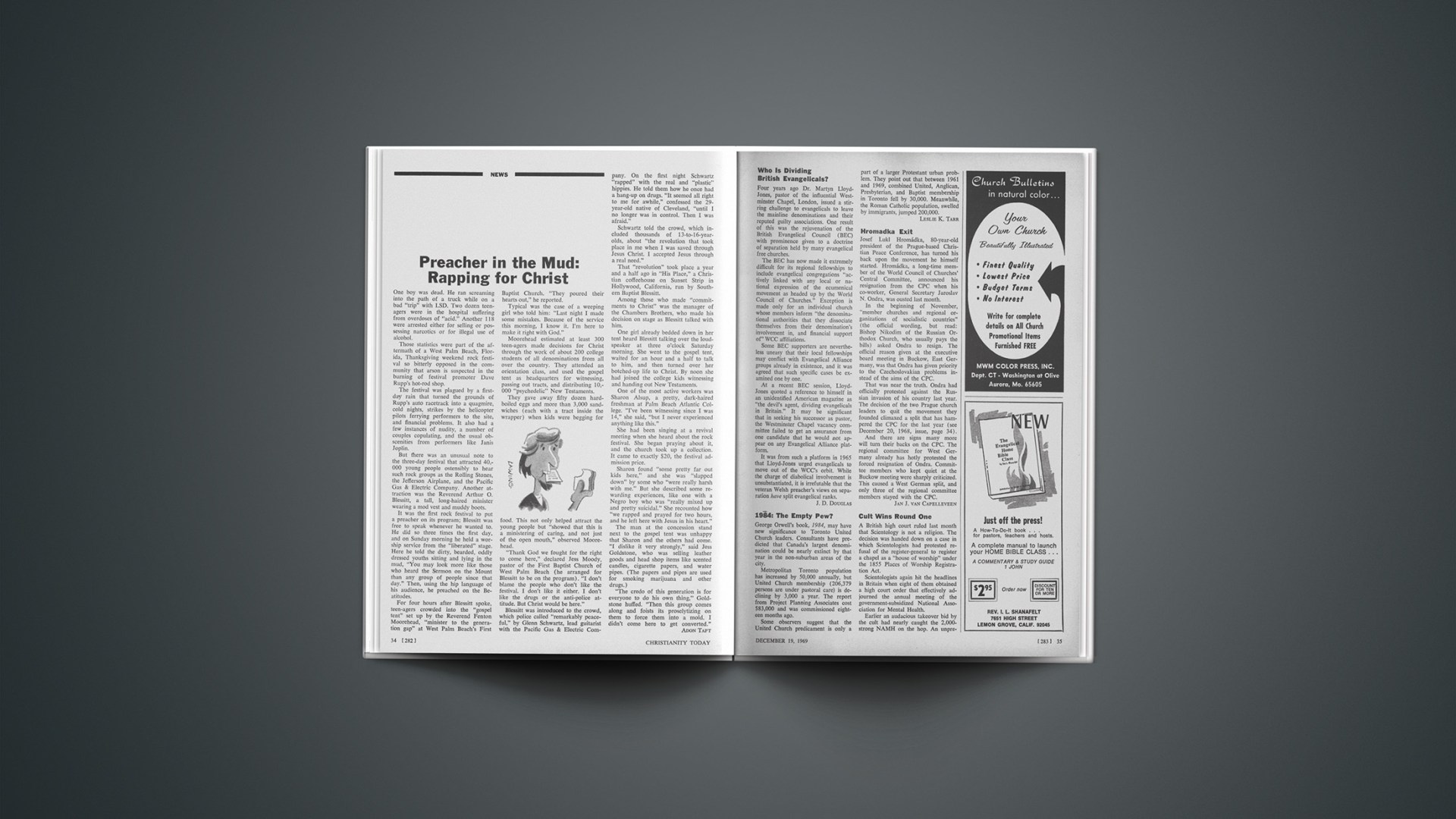
A British high court ruled last month that Scientology is not a religion. The decision was handed down on a case in which Scientologists had protested refusal of the register-general to register a chapel as a “house of worship” under the 1855 Places of Worship Registration Act.

Scientologists again hit the headlines in Britain when eight of them obtained a high court order that effectively adjourned the annual meeting of the government-subsidized National Association for Mental Health.

Earlier an audacious takeover bid by the cult had nearly caught the 2,000-strong NAMH on the hop. An unprecedented flurry of new members (about 250 during the previous month alone) marked the Scientological strategy, and clearly had implications for the annual NAMH meeting, where attendance did not normally exceed 500. When ofiicials tumbled to what was going on, the association froze membership until after the meeting. (For a two-part report on Scientology, see the November 7 and 21 issues of CHRISTIANITY TODAY.)

The ground had obviously been carefully laid by the devotees of Scientology, unabashed by the British Minister of Health’s description last year of their philosophy as “socially harmful,” and alert to the possibilities of slapping a writ on critics before you can say “L. R. Hubbard.” His followers complain that for years they had been snubbed in their attempts to “meet NAMH representatives to cajole or jolt the association into some sort of action to get a Bill of Rights for mental health patients.” They decided to put the pressure on after government inquiries had disclosed staff misbehavior at some of the country’s mental health institutions.

J. D. DOUGLAS

Our Latest

Being Human

Andrew Arndt: The Hidden Struggles of Public Figures and Why Real Community Matters

How do we identify coping mechanisms and begin a journey to wholeness?

The Russell Moore Show

Should I Leave My Church Over Calvinism and Arminianism?

Russell answers a listener question about whether a church’s differences over Calvinism and Arminianism mean it’s time to leave his church.

Was Abraham Lincoln a Christian?

In his younger years, Lincoln was a skeptic. But as he aged, he turned toward biblical wisdom—and not only when in the public eye.

Killing People Is Not the Same as Allowing Them to Die

And the church of Jesus Christ has to offer people a better way of thinking about life and dependence if we want to push against the horrors of euthanasia.

News

How CT Editors Carl Henry and Nelson Bell Covered Civil Rights

Michael D. Hammond

Trying to stake out a sliver of space for the “moderate evangelical,” the magazine sometimes left readers confused and justice ignored.

Review

This ‘Screwtape for Our Times’ Will Challenge and Confound You

The Body of This Death is difficult to classify, difficult to read, and absolutely worth your time.

Christian Athletes to Cheer on at the 2026 Milan Cortina Winter Olympics

Annie Meldrum

Competitors in speedskating, bobsledding, the biathlon, and hockey speak about their faith.

Review

Dissent Does Not Division Make

Three books on art and culture to read this month.

Apple PodcastsDown ArrowDown ArrowDown Arrowarrow_left_altLeft ArrowLeft ArrowRight ArrowRight ArrowRight Arrowarrow_up_altUp ArrowUp ArrowAvailable at Amazoncaret-downCloseCloseEmailEmailExpandExpandExternalExternalFacebookfacebook-squareGiftGiftGooglegoogleGoogle KeephamburgerInstagraminstagram-squareLinkLinklinkedin-squareListenListenListenChristianity TodayCT Creative Studio Logologo_orgMegaphoneMenuMenupausePinterestPlayPlayPocketPodcastprintRSSRSSSaveSaveSaveSearchSearchsearchSpotifyStitcherTelegramTable of ContentsTable of Contentstwitter-squareWhatsAppXYouTubeYouTube