My brain, like yours, is remarkable. Sometimes it astounds me by creating a string of words or a solution to a complex problem. Yet it also embarrasses me. It’s clumsy; it malfunctions with names and simple tasks.
With names I am like a five-year-old trying to master addition. I seldom have trouble with faces. I can generally remember the emotional setting of a contact and the person’s role and attitude. But in trying to recall the names of even close friends, my brain at times shorts out.
I once felt guilty because of the theory that those who don’t remember names don’t care about people. I gained a bit of comfort when I read an article attacking that idea, but I was even more comforted by incontrovertible proof that the theory is muddle-headed: twice now I have literally forgotten my own name. You without this weakness may think I jest, but for at least two seconds my brain impulses detoured, and I simply couldn’t remember “Harold Myra.” Knowing my strong interest in myself, that devastated the theory.
Actually, our remarkable brains all have weaknesses. A friend described an experience during graduate training in psychology. The professor warned that a series of tests the class was to take might be disillusioning. “You’ll probably find you are brain-damaged.”
My very bright friend was startled. What an odd prediction! But afterward, he and his classmates found that parts of their brains were indeed less than completely functional.
Maybe that’s why I can’t remember names. Or maybe it’s because I have such an abstract brain it always wanders off into broad implications.
Brains are not like bones or kidneys or fingernails. They’re radically different-like Picasso contrasted with Renoir, the Beatles with Bach.
I find it oddly comforting to think of us all going about life with damaged brains. It puts us at one with the mentally handicapped, the socially inept. It helps us think more compassionately about people in prisons who often started life genetically aberrant or were damaged by childhood abuse.
It also may make us a little more relaxed with the brilliant. My son has difficulty with spelling. I happened to mention that to Fred Smith once, and he said, “I have the same problem. They gave up on me at school. They just excused me from spelling. I still can’t spell many simple words.” I was astounded. Fred is one of the most brilliant and successful men I’ve met.
In the book The Soul of a New Machine, programmer Neal Firth is described as a man who could write up to three hundred lines of code in his mind but had a hard time remembering his own phone number He kept his number on a slip of paper in his desk drawer.
As Jay Kesler, president of Youth for Christ, says about both our minds and personalities, “We’re all a little odd. If you rolled any one of us down a hill, we’d flop, flop, flop all the way to the bottom.”
This is not only an aid to both humility and hope for us odd ducks, but it also hints at a mosaic of beautiful interconnectedness.
Fred Smith once also told me a psychiatrist friend had said to him, “You never read a book through, do you, Fred?” This time it was Fred who was astounded. How could the psychiatrist know that? Fred acknowledged that he dips into books for bits and pieces, catching the flavor and key ideas. Fred’s brain works extremely well, but totally different from mine.
My wife, Jeanette, has brilliant intuitions and perceptions, and our brains are about equal in intelligence, but they are as different as an orange and a pear.
All of the above may help explain why a carefully crafted, prayed-over sermon may not hit all brains the same.
To some, the reaction will be like putting a key in a lock. For others, the message is like something in a different language, or at least something with a heavy foreign accent.
All of us tend to think the universe runs its axis through our lives and that our way of thinking is the prime reality. If we’re into Narnia and Middle Earth, we tend to dismiss the line-by-line Bible study crowd as uncreative and parochial, whereas the Bible studiers dismiss the mythopoeics as shallow and less biblical. Part of this is the way our brains work. We all need to be thoroughly Christ-centered and biblical, but can we allow for fully diverse minds and respect each other?
We might be helped in this if we would: (1) probe minds different from ours and learn how they think; (2) accept the fact that despite our best efforts, we may not communicate well with everybody; (3) relax with our limitations.
We need a correct assessment of ourselves. Clark Clifford once observed that Harry Truman had virtually no affectations and no inferiority complex. Though his roots were in the farm and haberdashery, he saw himself neither above nor below his Yale and Harvard-educated Secretary of State, Dean Acheson.
As we with considerable humor learn the truth about ourselves, we can relax with the fact that God made us as we are and has equipped us for our specific tasks. Diversity in a congregation should not be an irritant or a cause of either inferiority feelings or pride. Instead, it should enable us to say with Paul, “I thank God every time I remember you. In all my prayers for all of you, I always pray with joy because of your partnership in the gospel” (Phil. 1:3-5 NIV).
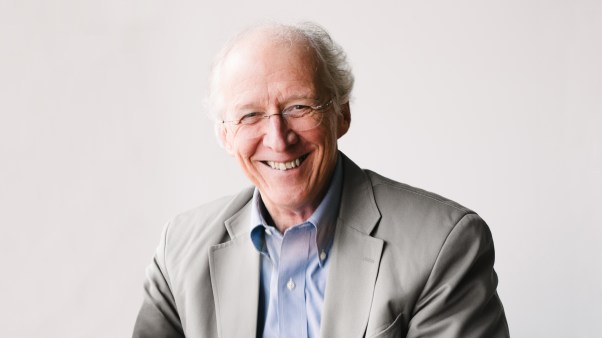
Harold L. Myra, President Christianity Today, Inc.
Copyright © 1984 by the author or Christianity Today/Leadership Journal. Click here for reprint information on Leadership Journal.