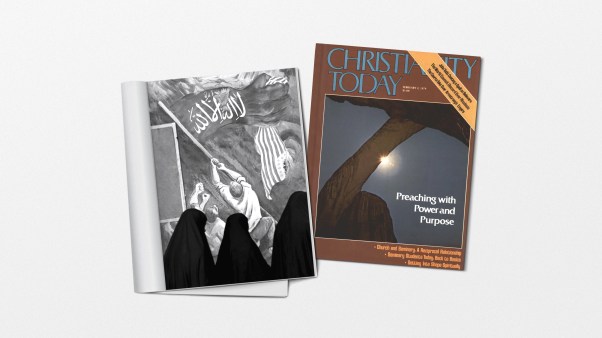

Sunday, September 29, has been designated International Day of Prayer for the Persecuted Church by the World Evangelical Fellowship. It is a day when we can raise our voices in unified petition on behalf of our suffering brothers and sisters who live in lands hostile to their faith.
Religious liberty advocate Warren Cofsky (who also serves as a missionary to the Middle East) says it is incumbent upon “grassroots Christian advocacy” to advance the cause of our persecuted Christian family. This is, after all, our issue. These are our people.
It is to our shame that it took someone outside the evangelical community to rally our support. Michael Horowitz–a Jew–raised the issue in the Wall Street Journal in July 1995, and he has not stopped talking about it since–to American evangelicals, to the State Department, and to the White House.
Assurances have been made by the White House that the President would address this issue in earnest. However, these promises have translated into such a limited response that evangelical leaders (including Don Argue of the National Association of Evangelicals and Jim Henry of the Southern Baptist Convention) have sent a letter to the President stating that his response will “deflect and defer” action rather than “spur” it.
We cannot understand why we American Christians enjoy such affluence and freedom while our brothers and sisters in faraway places are imprisoned, beaten, and enslaved for their faith. But Jesus reminds us that “from the one who has been entrusted with much, will much more be required” (Luke 12:48, NIV). Let us resolve not only to remember our spiritual family in their suffering, but to take up their cause and bear their burdens.
Consult our last issue for resources that help Christians stay alert to the plight of the persecuted (July 15, 1996, p. 59). Churches and individuals that stay abreast of developments by using these resources can respond to needs in a timely fashion.
Letter writing is another effective response. When three of Warren Cofsky’s close friends, converts from Islam, were imprisoned and tortured in Cairo, he undertook a campaign to have friends and colleagues write letters to the U.S. Embassy there, the Egyptian ambassador here, the State Department, Congress, and even the President. These voices were eventually heard, and after ten months these young Christians were released.
When we gather as believers on September 29, let us not underestimate how God will act through our prayers for our suffering brothers and sisters. Let us remember the words of Paul who, in the depths of his own travail, beseeched his brothers and sisters: “Remember my chains.”
Copyright © 1996 Christianity Today. Click for reprint information.