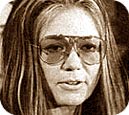
A journey of a dozen blocks begins with a single step—in my case, stepping into the front seat of a cab on the Harvard campus while Gloria Steinem stepped into the back. My eyes were still red from crying. How I got there is another story.
 During his nearly 70 years as an evangelical leader, John Stott rarely garnered headlines, cut across airwaves, or graced TV screens. But his ministry was ever-present, a fixture in the worlds of biblical interpretation and spiritual development that impacted thousands of evangelical leaders and laypeople alike. In many ways, the unfolding of Stott’s 50 books and hundreds of sermons paralleled the quiet persistence of one of his great passions: bird watching. Those who knew him speak of a legacy that transcends his public role as pastor, author, and evangelical leader. And those who knew of him have also offered reflections on his life and ministry. In a roar of tweets, blog posts, newscasts, and columns, influential thinkers around the world remembered Stott’s life. Christianity Today presents a selection of their comments below. Billy GrahamEvangelist
“The evangelical world has lost one of its greatest spokesmen, and I have lost one of my close personal friends and advisers. I look forward to seeing him again when I go to heaven.”Geoff TunnicliffeSecretary General of the World Evangelical Alliance
“Uncle John was a great influence in my own theological development. His commitment to biblical orthodoxy, global mission and unity in the body of Christ were foundational in my own spiritual journey.”J.I. PackerProfessor of theology, Regent College
“I first met John Stott in the late 1940s at a youth camp and remember being impressed with how strategic and focused he was as a young assistant clergyman; we continued to communicate regularly through the years. I recall exchanging Christmas letters with him: he would write about birds and I would return his letters with stories about family dogs and we would rejoice in life together. John was an unusual sort of person, a ten-talent man of sorts. He lived under an extraordinarily firm self-discipline and brought a thoroughness of thought to every project he took on—and there were many. He had an unparalleled gift for setting things in order in his own mind and then articulating them to others.”Mark NollProfessor of History, University of Notre Dame
“He was a patron, mentor, friend and encourager of thousands of pastors, students and laypeople from the newer Christian parts of the world, a bridge between the West and the rising Christian world … But he also demanded that evangelicals look beyond liturgy and Christian tradition and remain engaged in worldly matters —to take more responsible attitudes toward economics, the arts, politics and culture in general.”Chris WrightInternational Director of Langham Partnership
“Like Moses, he was one of the greatest leaders God has given to his people, and yet at the same time, one of the humblest men on the face of the earth. He was, for all of us who knew him, a walking embodiment of the simple beauty of Jesus, whom he loved above all else.”John YatesPastor of The Falls Church
“I have had few heroes, but John Stott has indeed been not only a hero, but a teacher and friend to me, and so many of us. The last few weeks have been very difficult for him, and he was ready for this. Three old friends were at his bedside reading from 2 Timothy to him and listening to Handel’s Messiah. When the chorus began to sing, ‘I Know That My Redeemer Liveth,’ ‘Uncle John’ slipped away.”Tyler Wigg StevensonDirector of Two Futures Project
“From 2005 to 2006 I had the pleasure and privilege of serving ‘Uncle John,’ as he was known to friends around the world, as his study assistant. … It is John Stott the disciple of Christ that I mourn today, rather than John Stott the Evangelical statesman. For in my year with him he continually revealed the Lord to whom he had given his life, whole cloth. And the birds! A lifelong birdwatcher, his love for this slow, patient pastime was infectious. For my birthday he sent me and Natalie to an island to see the comical puffins, which he adored. And he was forever pushing the limits of his aging body along the beautiful cliffs of his beloved Welsh headlands, where gulls and ravens and gannets danced, in his eyes, to the glory of God.”Michael HortonProfessor of theology at Westminster Seminary, California
“John Stott belongs to a generation of British evangelical leaders who worked patiently, prayerfully, persistently, and intelligently within the established church. They were not known for their own achievements, networks, and influence, but for their exposition of God’s Word with clarity, dependence upon the Spirit, and concern for both the lost and the gathered.”Rick WarrenPastor of Saddleback Church and author of The Purpose Driven Life
“John Stott, one of my closest mentors, just died. I flew to the UK recently just to pray for him and sit by his bed. What a giant!” (Warren followed with 10 tweets on what he has learned from Stott.)Elaine StorkeyTheologian and president of Tearfund
“I think the biggest impact for me, was that once John understood the justice of an issue, once he understood the biblical nature of an issue, he was all for it. And the way he got involved with the whole gender issue, the way he saw the issue of justice for women, and how much of our patriarchal culture had been a barrier to women, both in terms of their own progression, but even more in terms of hearing the Gospel, acknowledging God as ‘Father,’ etc.— once he saw that, he just went for it. And so here you had a pillar of the church, coming from a very conservative stable, actually opening up the feminist doors wide so that a new generation of women could go through them.”Rowan WilliamsArchbishop of Canterbury
“Without ever compromising his firm evangelical faith, he showed himself willing to challenge some of the ways in which that faith had become conventional or inward-looking. It is not too much to say that he helped to change the face of evangelicalism internationally, arguing for the necessity of ‘holistic’ mission that applied the Gospel of Jesus to every area of life, including social and political questions. But he will be remembered most warmly as an expositor of scripture and a teacher of the faith, whose depth and simplicity brought doctrine alive in all sorts of new ways.”Benjamin HomanPresident of John Stott Ministries
“He set an impeccable example for ministry leaders of handing things over to other leaders. He imparted to many a love for the global church and imparted a passion for biblical fidelity and a love for the Savior.”Albert MohlerPresident of the Southern Baptist Seminary
“You cannot explain English-speaking evangelicalism in the 20th century without crucial reference to the massive influence of John Stott. I am thankful for warm memories of conversations with him, a man with a generous heart as well as a keen mind. We will miss him.”Max LucadoPastor of Oak Hills Church, San Antonio
“The gracious scholar, John Stott, is with Jesus. Model for all pastors. Teacher for all students. Friend of all seekers. We’ll miss him.”Tim ChesterAuthor of A Meal with Jesus
“The private John Stott was just as impressive as the public persona: gracious, humble, without affectation. I’m sure it was this humility that meant God could entrust him with the influence and success he received. It is hard to underestimate the impact he has had across the world. ‘Thank you, gracious Father.’”John PiperPastor of Bethlehem Bible Church in Minneapolis
“John Stott turned the words of Bible sentences into windows onto glorious reality by explaining them in clear, compelling, complete, coherent, fresh, silly-free, English sentences. For Stott ‘all true Christian preaching is expository preaching.’ So, John Stott, I’m glad you preached and wrote Men Made New just like it was. I’m glad you preached the way you preached. And when you heard your ‘Well done,’ yesterday in heaven, I don’t think Jesus meant, ‘Except for the illustrations.’”Bob FrylingPublisher of InterVarsity Press
“John Stott was not only revered; he was loved. He had a humble mind and a gracious spirit. We will miss ‘Uncle John’ but we celebrate his life and writings as an extraordinary testimony of one who was abundantly faithful to his Lord Jesus Christ.”Michael PotemraDeputy Managing Editor, National Review
“An Anglican clergyman, he played a key role in keeping alive Evangelical vigor in the Church of England in some of that Church’s feeblest decades. (Indeed, one of the things he said at Calvary Baptist that impressed both me and my girlfriend the most was that it is very difficult—I forget, he may even have said ‘impossible’—to be a Christian without the church. This is not a sentiment I have heard stressed very often in U.S. Evangelicalism, and I am not even 100 percent convinced that it is correct, but I think it stands as a refreshing corrective to much of today’s conventional wisdom about religion.)”Joseph StowellPresident of Cornerstone University
“When you think of evangelism, you think of Billy Graham. When you think of preaching, writing, encouraging pastors, scholarship, exegesis, reliability, and moderation in the midst of crisis, you automatically think of John Stott. He could hold his own with the best of theologians, and yet he could speak a sermon in a church that would reach a whole cross-section of people who came off the streets of London to sit under his ministry.”Doug BirdsallExecutive Chair of the Lausanne Movement
“John Stott’s focus was the cross. The church was his great love. World evangelization was his passion. Scripture was his authority. Heaven was his hope. Now it is his home.”Copyright © 2011 Christianity Today. Click for reprint information.Related Elsewhere:See also Christianity Today‘s obituary and special section on Stott.
During the conference, the two dozen evangelical women who attended would meet in the hallways and over coffee to chat. Yes, we seemed to constitute only about ten percent of the participants. Yes, the plenary and panel speakers were heavily weighted toward a perspective different from our own. Yes, reflexive disdain for evangelicals kept popping up during question-and-answer periods, so much so that none of us felt comfortable getting into the question lines.
Nevertheless, we could tell the organizers and other participants were trying. There was a genuine desire to broaden their awareness of the range of political and religious viewpoints women bear. Most slights were not intentional, but more in the nature of oversights—simple unfamiliarity with others’ beliefs. All in all, it was good to be there.
Friday night I participated in a small group discussion about the high rate of childlessness among high-achieving women. The setting gave me an opportunity to hold forth on some of my cranky ex-feminist ideas. I explained that I thought feminism went astray in the mid- to late 70s, when it abandoned its early hippie style with its “mother earth” flavor. Though naive, that strain of feminism at least affirmed women’s domestic and child-rearing lives. Later “power feminism” adopted the contrary view, that housewives were stupid and that value came only from corporate success. Ironically, this was exactly what “male chauvinists” thought; feminism adopted a contemptuous male attitude toward women’s work and rejected that which our foremothers had found honorable and fulfilling. (Of course, the male model—that career comes before all else—has never been all that healthy for men, either.)
Helen Hunt happened to be present in this small group, and told me afterward that she was very intrigued by my comments (though, frankly, I don’t know if they were all that original). As we parted that evening she said, “Feminists need to hear from you on this.”
The next night the closing plenary speaker was Gloria Steinem, and I arrived late, as usual. The place, a small amphitheater, was jammed. One solitary seat was open, right in the middle of the front row. I settled in there next to my friend, Lilian Calles Barger of the Damaris Project, and we prepared to hear a legend speak.
The speech was a bit nonlinear and seemed to be coming nearly off the top of Gloria’s head; as she turned pages we could see they were handwritten in pen, as if recently dashed off. As she spoke of the confluence of religion and politics, it became apparent that Gloria is of the school that religion is a resource to be reinterpreted and reinvented. Indeed, this seemed to be the governing presumption of the conference. The presumption is that we should explore the spiritual realm and discover what best pleases and supports us, while discarding the rest. Spirituality is a powerful resource that women have too long neglected, they would say. Much of it is stale and patriarchal, though, so we must sieve through it to select those elements that seem true and right to us.
Some of us who were attending the conference—not just the evangelical Christians, but possibly also the Buddhist nun in her habit, and the Muslim women in their veils—see things differently. We believe that we are inheritors of a faith tradition that is coherent, rich, and profound. We have no desire to tamper with it. Instead, we want to listen attentively to it and learn.
These ancient faiths, because of their continuity over centuries, possess a multicultural validation that is worth weighing. Communities widely separated by geography as well as time have lived their lives exploring these beliefs, and found in them cause for awe. This cumulative wisdom is something that no single one of us, trapped as we are in our own cultures and wearing our own blinders, is smart enough to second-guess. We might explain our disagreement with the “buffet” school of spirituality, then, by saying that we respect the witness of generations of women and men before us, and come to our faiths as followers and disciples, not as critics or shoppers.
But Gloria was on an entirely different track, one which seemed the broadly-accepted starting point of her audience. She is still very striking: tall, slim, and dressed that evening in form-fitting red. Everything about her is long, even the palms of her large hands; her very long fingers were accentuated by a coiled-snake ring. She stood behind the podium at ease, enjoying herself, offering an analysis of religious themes and trends in an amused tone. The audience adored her.
There I was, sitting front-row-center, my knees about six feet from the podium. I noticed after a while that I was gradually feeling more and more besieged. I felt slyly insulted; things I held dear were being sneered at. I slumped down and leaned toward Lilian. My mind wasn’t quick enough to come up with responses and explanations for everything Gloria was saying. Her comments were being received enthusiastically. I felt very lonely.
About this time we hit the low point of the evening. Gloria began describing an interpretation of church architecture that she had read, which drew parallels between the various structural elements and female reproductive anatomy. You can imagine what the church door and narthex and center aisle represented. This, I thought, was just silly. Then she completed the analogy by saying that the altar was the womb, “the site where childbirth takes place.”
I felt slapped, and then quickly felt very, very sad. Lilian must have had the same reaction, because she threw her arm around my shoulder and held on like she was drowning.
Why did this image wound me, when so much of the rest could be dismissed with, “Oh well, she just doesn’t understand”? Never mind that the idea was illogical; as an old natural-childbirth teacher, I’m pretty sure the birth itself would transpire on the church steps. The problem with the analogy was not its confused view of female anatomy, but its obliviousness to the original, deeper meaning of the altar. Ignorant, cavalier, it didn’t care to listen to what the altar meant to the people who built it, or those worshiped there for millennia.
It wasn’t the altar that was being insulted, I felt, but Jesus himself. The altar for me is the place where I remember Jesus’s sacrifice for us, his torture and death, his overwhelming love and willingness to give everything for our sakes. What I heard instead was that Jesus doesn’t matter, his love is forgettable, his suffering is invisible. All the nails and blood and thorns were obliterated in favor of a cheap giggle. It seemed to me one more example of the feminist narcissism that makes everything about women, and cannot see suffering and sacrifice if it is done by men. Jesus’ broken body on the cross? Shrug. Let’s be naughty, and talk about wombs instead!
I tried to choke them back, but tears started trickling down my cheeks. I felt so sad. The person I loved most had been insulted and trivialized, and I could do nothing. For the rest of Gloria’s speech I sat there, thinking about this and leaking slow tears. I hoped she couldn’t see me, though I was right in front of her and only a few feet away.
When Gloria finished her speech, Swanee Hunt stepped to the podium to say she’d been watching body language during the talk, and while some in the audience appeared energized, sitting up straighter and looking more alert, others had been “wilting.” She reminded the audience that everyone should be respectful of others’ beliefs, and to remember that we might be talking of things that others hold sacred. Think how you would feel, she said, if a speaker at the podium said lesbians were going to hell.
The kindness of these words had an effect the previous mockery had not, and I started to cry in earnest. Something had been released, and now I couldn’t stop. Snuffling and sobbing, right in the middle of the front row, parked under the podium, with no way to escape. Through 45 minutes of question-and-answer I sat there gulping back sobs, feeling like a conspicuous idiot.
As the crowd dispersed I wandered around till I found my roommate Caroline Langston. We went in the ladies’ room where we talked it all out, and I finished boo-hooing and washed my face. By the time we came out everyone else had gone, and we stepped outside into the cool early evening air.
Just as we were going across the lawn we came upon a small knot of people discussing whether to walk or take a cab across campus to the banquet that was next on the schedule. There stood Swanee and Helen Hunt, Divinity School dean Anne Braude—and Gloria Steinem.
Helen immediately called me over and had me shake hands with Gloria. Swanee commented quietly, “Frederica is one of the ones who was wilting.” (I could have hugged her for that.) Gloria looked at me frankly and said, “I didn’t mean to hurt anyone.” I replied, “I know that is not what you intended to do.”
Helen then suggested that I come along in the taxi with her, Gloria, and Anne for the short ride to the banquet; Swanee and Caroline would walk. So we crammed into the cab, me in the front, Gloria in the middle of the back with Anne and Helen on either side. The cab was dark and seemed cavernous, with a plexiglass shield that effectively segregated me and the driver from the others way in the back. I looked at the photos of the driver’s children, illuminated by the dashboard lights. As we pulled away from the curb, Helen’s voice came from the back seat: “Frederica, tell Gloria your critique of feminism. Gloria, this is so interesting!”
Picture it. My critique of feminism, in five minutes, for the elucidation of Gloria Steinem. From the front seat of a cab, no less. I turned around to peer through the little round opening in the shield. Gloria’s face hung in the dark like a disk, large, pale, and impassive as the moon.
My sympathies at that moment lay all with her. She was probably thinking, “Here’s some kook I never heard of, who was crying all through my speech, and now she’s going to deliver a thumbnail criticism of my entire life’s work.”
I figured the best thing I could do in the circumstances was tell a story. I recounted a scene from my own feminist college days: I had been attending a consciousness-raising session at the home of lesbian friends and had gone upstairs to use the bathroom. There I discovered that the bathtub was full of cow manure. Why? “We’re trying to raise psilocybin mushrooms.”
This, I said, was a very different kind of feminism from the one we’re familiar with now; this was not a kind of feminism that was going to climb the corporate ladder. For all its foolishness and flaws, mother-earth feminist resisted the idea that power-seeking and masculine-style careerism was life’s highest goal. I could remember the day a friend told me enthusiastically that a woman had been made a vice president at AT&T, and I responded, “Why is that good news? We’re not fighting for a bigger piece of the pie. We’re after a different kind of pie altogether.”
But “power feminism” won the struggle, I said, and Gloria interrupted me to say she’d never heard the term “power feminism” before Naomi Wolf coined it. I said that feminism had made a mistake as well in adopting another unhealthy male value, promiscuity, as liberating. Gloria interrupted me again, to say that others would charge feminism with being anti-sex, rather than promiscuous, because it opposes pornography. I couldn’t see any way to get past this Ping-Pong game to real discussion, not in a cab in five minutes. It was a relief when we pulled up to the dining hall and I could politely sidle away.
Months later I got a second-hand message that Gloria was very sorry to have hurt me. I don’t doubt that it’s true, and know that I must hurt people, myself, sometimes, by trampling without realizing it on things they hold dear. Probably she still doesn’t know just why I was hurt, or just chalks it up to Christians being generally parochial and touchy. I hope someday we have an opportunity to talk further. But not through a plexiglass porthole.
Related Elsewhere
Visit Books & Culture online at BooksandCulture.com or subscribe here.
Frederica Mathewes-Green’s Web site, www.frederica.com, offers more of her writing, including ” Twice Liberated | A Personal Journey Through Feminism.”
Mathewes-Green is also a columnist for Christianity Today.
Books & Culture Corner appears Mondays at ChristianityToday.com. Earlier Books & Culture Corners include:
I Read the News Today | Finding the most important story in headlines’ sum. By John Wilson (Mar. 27, 2000)
Peace Be With You | Looking beyond naivete and cynicism about peacemaking at Wheaton’s Christianity and Violence conference (Mar. 20, 2000)
Putting the Poor on the National Agenda | Ron Sider’s timely proposals. By Amy L. Sherman (Mar. 13, 2000)
“To Know the Universe” | Well, sort of. By John Wilson (Mar. 2, 2000)
Guelzo’s Lincoln Book a Winner | Established by Richard Gilder and Lewis Lehrman to honor the best historical work each year on Lincoln and the Civil War era, the prize is now in its tenth year. By Allen C. Guelzo (Feb. 21, 2000)
Nancy Drew and the Wine-Dark Sea | The importance of good literature—and how to get young people to read it. By Sarah Cowie (Feb. 14, 2000)
Spring in Purgatory: Dante, Botticelli, C. S. Lewis, and a Lost Masterpiece | The most popular illustration of Dante’s “Divine Comedy” has remained effectively “lost” for 500 years—although millions have seen it and admired it. By Kathryn Lindskoog (Feb. 7, 2000)
Playwright, Dissident, Czech President … Who Is This Man? | A new biography of Václav Havel fills in important blanks, but omits his theology. By Jim Sire (Jan. 31, 2000)
Copyright © 2000 Christianity Today. Click for reprint information.