It was too late to get out. I was wedged into the back seat and miles from anywhere when I learned that the driver, our host, had received death threats as recently as a year ago.
Last month I was in Jordan with a two-fold agenda: to visit biblical sites, and to meet Christians living in an Islamic culture. That’s how I met Esam, an enthusiastic man in his fifties who eagerly shares his faith despite the pressures of his culture.
He was driving five of us journalists to the camp he operates on three acres in the hills overlooking the Zarqa River. That’s the river, known in the Bible as the Jabbock, where Jacob wrestled with a mysterious foe and refused to quit until his opponent blessed him (Gen. 32). Jacob eventually got his blessing—and along with it a dislocated hip.
Today this is where Esam seeks to be a blessing through the camping ministry—where each summer more than 500 children will enjoy games, songs, an obstacle course, and learn about Jesus. In addition, Esam heads up a ministry to Palestinian and Iraqi refugees, offering clothing and food. He also visits inmates in local jails, providing care packages of toiletries and reading material, including a Bible.
With each gift, Esam says, “I’m giving this to you because Jesus loves you and so do I.” Esam says he’s blessed by being able to serve. But like Jacob, the blessing is accompanied by severe discomfort.
While the government has not stopped Esam’s efforts, his public testimony has provoked a violent reaction from others. Three years ago, one of the camp buildings was firebombed. No one was hurt, but the damage is still visible. Two years ago, an arsonist caused $30,000 worth of damage to Esam’s small Christian bookstore in Amman. And then the threats got personal—phone calls day and night telling him he would be killed.
“But I cannot stop serving the Lord Jesus,” he says simply. “He is my life.”
I asked if he still gets the threatening calls. “No,” he said with a smile. “I got caller ID and no longer answer unknown callers.” He also goes home by a different route each night. That was etched in my mind a few days later when our group met with a senior Jordanian government official.
I knew from U.S. State Department documents that “the Government of Jordan does not interfere with public worship by the country’s Christian minority. However, although the majority of Christians are allowed to practice freely, some activities, such as proselytizing or encouraging conversion to the Christian faith—both considered legally incompatible with Islam—are prohibited. It is illegal for a Muslim to convert to Christianity.”
We asked the government minister if the people of his nation would ever be free to change their religion.
“People are free to convert,” the diplomat said.
“But it’s illegal for a Muslim to become a Christian,” one of the journalists objected.
“People are free to convert, but that doesn’t mean there aren’t consequences,” he said evenly. “If you want to convert to a new faith, and it’s that important to you, shouldn’t you be willing to suffer and even to die for that faith?”
The logic was breathtaking. I’d just never heard anyone put it quite so directly. Freedom—to die.
I came home haunted by the “freedom” in that country—and Jordan is perhaps the most moderate and westernized, Islamic nation. (To be fair, I must also point out that the ban on conversions is also the law in Israel.)
I was moved to pray for the Christians and all the yet-to-be Christians in Islamic countries and in Israel. Then I marveled at the utter absence of that kind of barrier to evangelism where I live.
Certainly impediments to the gospel exist here, but my cramped ride in the back of Esam’s Honda put them in a whole different light.
The freedom to follow Jesus without death threats. What a gift. What an opportunity.
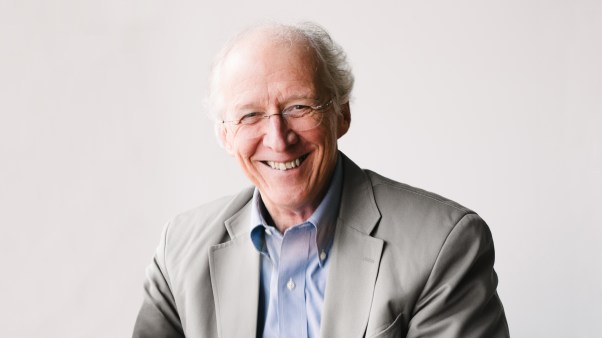
Marshall Shelley is editor of Leadership.
Copyright © 2001 by the author or Christianity Today/Leadership journal. Click here for reprint information on Leadership.