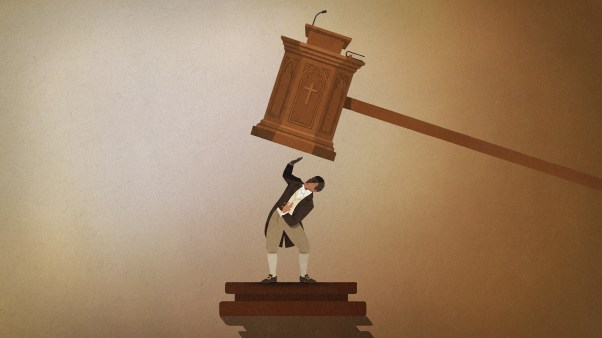
Six months into our church plant, the two most influential families had a fight. Nasty words were exchanged, battle lines drawn. Both sides began recruiting people to their cause. Something had to be done, but what? I held separate meetings with the two parties, but that just made things worse.
“Lord, help me,” I prayed desperately. I set up another meeting with both families.
Then I witnessed a divine intervention. As I fretted over the coming confrontation, Ron knocked on my office door. Unlike others, however, he didn’t come to complain.
“Would you like some help holding a peace conference?” he asked. Ron is a school principal, well versed in conflict resolution. I gratefully accepted his offer.
Ron led the meeting gracefully, compassionately, and thoughtfully. It was a great success. At the beginning of the “peace conference,” the two sides wouldn’t even look at each other. Afterward, they were laughing and hugging. Not only did he help resolve the biggest conflict we’d ever had, he taught me skills on how to deal with conflict.
Here’s how he did it:
1. Ice-breaker.
Ron started with a conversational tone, not a confrontational one. “We all know why we are here today,” Ron began. “There is hurt in our hearts and misunderstanding in our minds. For the good of the church and the kingdom of God, we must reconcile. Before we dive into the issues, let’s open with a question. I would like each of you to break up into groups of two, and discuss this question, What is your favorite hobby and why?“
I know it sounds silly, but it worked. There were eight people at that meeting. After the first pairings discussed the question, he broke us up again and again, until everybody got a chance to converse over a non-jugular issue.
2. Information.
Ron shared some ground rules. Without rules, meetings often do more harm than good.
Norm Shawchuck in How to Manage Conflict in the Church offers three ground rules for “peace conferences”: permission, potency, and protection. People are given permission to disagree. Each person is allowed to share their views strongly as long as they do it with respect. No one will be allowed to inflict intentional pain on others.
3. Illumination.
Next Ron prayed. His prayer was full of grace and love. He prayed that the Lord would bring reconciliation, understanding, and restoration.
4. Issues.
“What are your concerns?” he asked. After each person spoke, Ron would clarify what they said. “Correct me if I am wrong, but you feel used?” “If I am hearing you correctly, you are saying that she was disrespectful in what she said?” “I am trying to see it from your point of view, and if I do, you feel that you were intentionally hurt?”
When one side spoke, the other filtered their claims through anger and hurt. But when Ron paraphrased what was said, the opposing sides listened. Why? He was a “neutral” party. You could see the tension subside.
Behind him was a giant Post-It note on the wall with a line drawn down the middle and the sides marked “A” and “B.” After he clarified an issue, he would write it down. He then asked the other side to comment on that issue.
This step took about two hours. Its objective was to help the parties “unload their files” from memory.
5. Implications.
Ron asked two questions: What is the worst thing that could happen if we don’t resolve this conflict? and What is the best thing that could happen if we resolve this conflict? Again, he wrote their answers down. It became clear that the outcome of this conflict would either make or break the church.
Then he asked, “Which scenario do we want to shoot for?” Ron moved the group from defending adversarial positions to unanimously voting to seek a mutual position.
6. Ideas. “What are some ideas for reaching that goal?” Ron asked. As a team, they brainstormed and agreed on an answer. Finally Ron returned to the first large notes and, one by one, reviewed their original concerns. “What are we going to do about this concern?” he asked, making sure every concern was dealt with. Later I typed up my notes from the meeting, and sent a copy to everybody involved.
After that meeting, enemies became friends and peace was restored in our young fellowship. I have used these techniques many times since to mend marriages and heal friendships.
Steve Larson, Rochester, Minnesota
Copyright © 2004 by the author or Christianity Today/Leadership Journal. Click here for reprint information onLeadership Journal.