I spent ten years in Waco, Texas, which should be more than enough for anyone. My memory of those days is a bit spotty. It goes something like this: I moved into my dorm at Baylor, made friends, enjoyed classes, joined a fraternity, pastored a rural church, started a new church funded by American Express, blah blah blah. Let me expand on that last part.
I met a friend named David Crowder, and in January 1995, we started University Baptist Church. Within six weeks, the church exploded from 0 to 600. We were telling the story of God in a way that connected with college students and with people other churches weren’t reaching. One month later a local pastor wrote a scathing article in his church newsletter defaming the church and me. I had never met the man, and assuming there must be a misunderstanding, I gave him a call.
The same man who stood behind a pulpit to preach God’s Word the day before now uttered vile and arrogant words through the phone line, “Son, we are in a different class. You don’t amount to s!*t and you never will. Maybe you will make me eat my words. But I doubt it.”
The words are forever imprinted on my brain.
What do you say to that? “Good to visit with you, Pastor. Thanks for your time.” Even now, I sometimes dream about calling him and rattling off my accomplishments, like the fact that Philip Yancey or Calvin Miller read one of my books and liked it. But then I decide I’ll just send him a copy of the book with a clever comment inscribed.
Never mind, I won’t do that either.
As this supercilious, middle-aged minister berated me on the phone, I was simultaneously humiliated and angry. I look back now and realize I adopted a new posture after that day, my wit sharper, my attitude more jaded, and my mind more skeptical about boomer pastors. My opinions and preferences were cementing into dogma, and without knowing it I was becoming the very thing I hated in others.
I spent a number of years guarding myself from experiencing that kind of pain and humiliation again, and, I am sad to say, I went on the offense. My targets varied, but the most common were the church-growth practitioners who had perfected the art of slick. In my view they had managed to condense centuries of Christian worship experiences into a 60-minute glitch-free presentation.
In the late 1990s, I did my best to convince them of their foolishness. I insulted their mullet hairstyles, mocked their booty-shaking pianist, and snubbed their band-in-a-box called the MIDI.
Despite my assaults they stood their ground undeterred. The wings of their hair grew fluffier, the pastels grew brighter, and soon the entire throng of miked vocalists began to shake their booties. This was a war I couldn’t win. People—large crowds of people—actually enjoyed this contemporary worship that I considered a shenanigan. Who was I to rob them of such joy? So I gave up the culture wars. If they didn’t mind our worship sounding a bit like Wilco or Coldplay, then theirs could relive the glory days of Neil Diamond.
Looking back, I realize I failed at being a peacemaker. I failed to build bridges. I failed to make friends. And I failed to be a blessing to others. I deeply regret that. In spirit, I was closer to my Waco antagonist than I cared to admit. I thought he and his types didn’t amount to much, and never would.
But my anger was misplaced and sinful.
The transition I’m walking through now is much more about substance than style. I pray that, with additional years, I will have more patience and grace. The gospel is always about uniting us amid our diversity. I knew that in my head, but it is an easy thing to forget when we feel under attack.
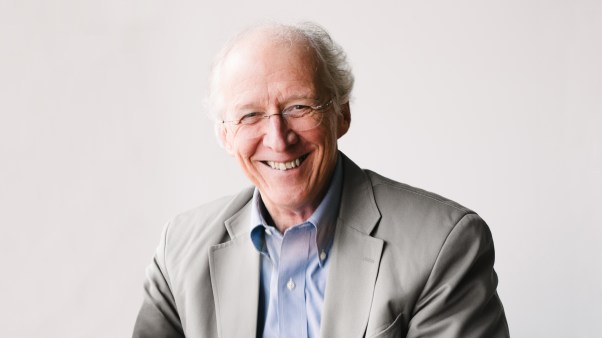
Chris Seay is pastor of Ecclesia, a congregation in Houston, Texas.
Copyright © 2005 by the author or Christianity Today/Leadership Journal.Click here for reprint information onLeadership Journal.