Books

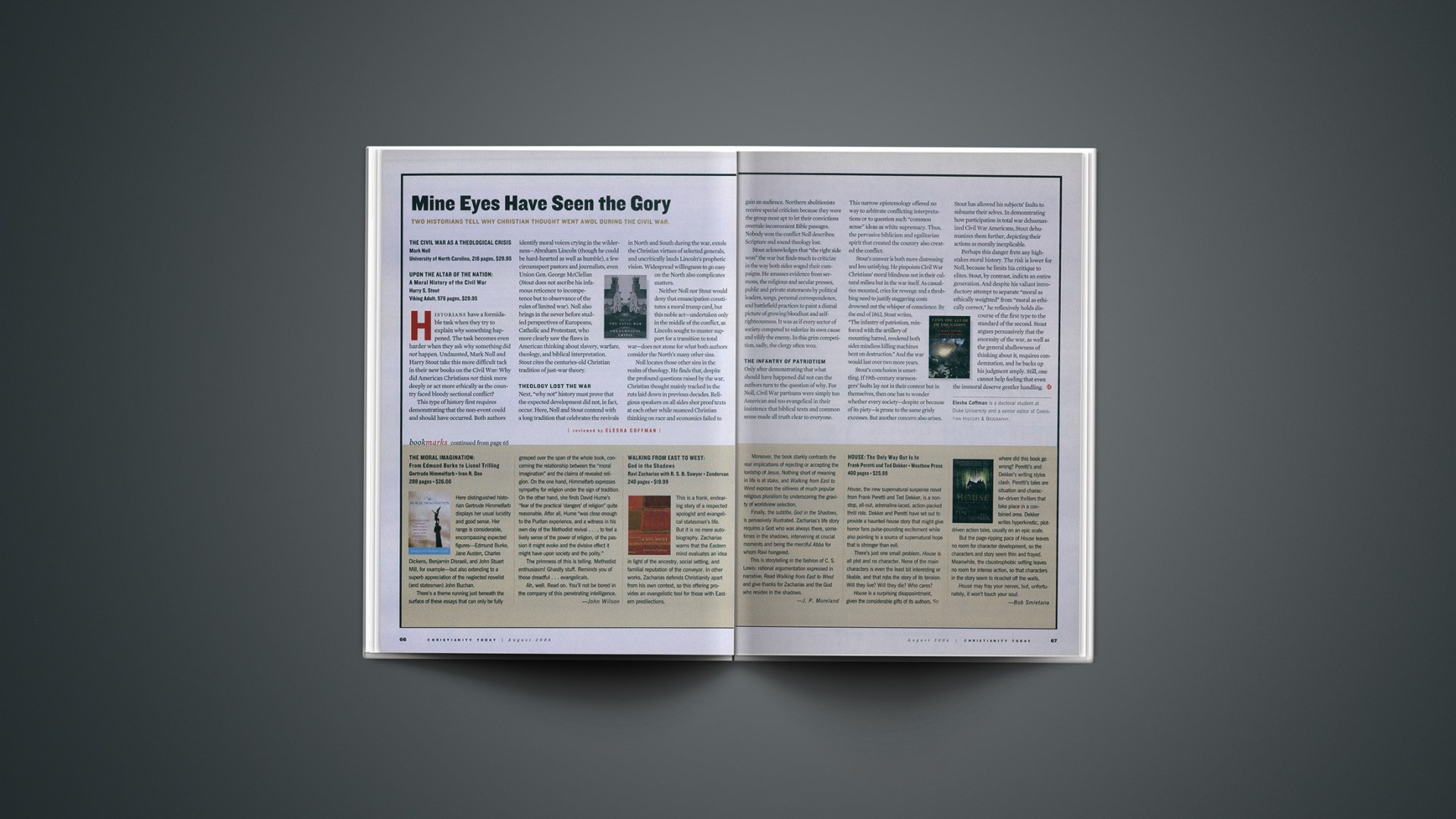
The Moral Imagination

Morality and religion from Edmund Burke to Lionel Trilling.

Here distinguished historian Gertrude Himmelfarb displays her usual lucidity and good sense. Her range is considerable, encompassing expected figures—Edmund Burke, Jane Austen, Charles Dickens, Benjamin Disraeli, and John Stuart Mill, for example—but also extending to a superb appreciation of the neglected novelist (and statesman) John Buchan.
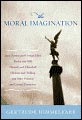
THE MORALIMAGINATION:FromEdmund BurketoLionel Trillingby Gertrude HimmelfarbIvan R. Dee288 pp.; $26.00

There’s a theme running just beneath the surface of these essays that can only be fully grasped over the span of the whole book, concerning the relationship between the “moral imagination” and the claims of revealed religion. On the one hand, Himmelfarb expresses sympathy for religion under the sign of tradition. On the other hand, she finds David Hume’s “fear of the practical ‘dangers’ of religion” quite reasonable. After all, Hume “was close enough to the Puritan experience, and a witness in his own day of the Methodist revival … , to feel a lively sense of the power of religion, of the passion it might evoke and the divisive effect it might have upon society and the polity.”

The primness of this is telling. Methodist enthusiasm! Ghastly stuff. Reminds you of those dreadful … evangelicals.

Ah, well. Read on. You’ll not be bored in the company of this penetrating intelligence.

Copyright © 2006 Christianity Today. Click for reprint information.

Related Elsewhere:

The Moral Imagination is available from Amazon.com and other book retailers.

More information is available from the publisher, Ivan R. Dee.

For book lovers, our 2006 CT book awards are available online, along with our book awards for 2005, 2004, 2003, 2002, 2001, 2000, 1999, 1998, and 1997, as well as our Books of the Twentieth Century. For other coverage or reviews, see our Books archive and the weekly Books & Culture Corner.


Also in this issue

The CT archives are a rich treasure of biblical wisdom and insight from our past. Some things we would say differently today, and some stances we've changed. But overall, we're amazed at how relevant so much of this content is. We trust that you'll find it a helpful resource.

Our Latest

Agentic AI Isn’t Laborsaving If You Don’t Know How to Sabbath

A. Trevor Sutton

New tech promises to do our work for us. But it can’t replace our need for rest in God.

The Russell Moore Show

8 Things I’ve Learned About How to Make a Major Life Decision

Russell shares his 8 tips for making major decisions.

Sin Is a Tyrant

Kyle Wells

The Bible’s view of sin frees us from seeing ourselves as autonomous choosers or victims of our circumstances.

The Bulletin

No Iran Deal, Russell Brand Reads the Bible, and Ben Sasse’s Public Dying

Clarissa Moll, Russell Moore

Trump insists on nuclear deal with Iran, Brand’s viral Bible faux pas, and Senator Sasse shares his dying and his faith.

The Algorithm Is Changing How We Speak—and Strive

Griffin Gooch

“Algospeak” capitalizes on our desire for attention and status. We should turn to God for both.

Review

When Faith Feels Cloudy

Three books for the doubting Christian.

News

The Christian Migrants Feeding the Displaced in Lebanon

Ghinwa Akiki and Hunter Williamson in Beirut, Lebanon

The war left many domestic workers jobless and homeless. Some Christians see a chance to serve their community.

addApple PodcastsDown ArrowDown ArrowDown Arrowarrow_left_altLeft ArrowLeft ArrowRight ArrowRight ArrowRight Arrowarrow_up_altUp ArrowUp ArrowAvailable at Amazoncaret-downCloseCloseellipseEmailEmailExpandExpandExternalExternalFacebookfacebook-squarefolderGiftGiftGooglegoogleGoogle KeephamburgerInstagraminstagram-squareLinkLinklinkedin-squareListenListenListenChristianity TodayCT Creative Studio Logologo_orgMegaphoneMenuMenupausePinterestPlayPlayPocketPodcastprintremoveRSSRSSSaveSavesaveSearchSearchsearchSpotifyStitcherTelegramTable of ContentsTable of Contentstwitter-squareWhatsAppXYouTubeYouTube