

Books
Excerpt

Jesus Doesn’t Need Help

Well-intentioned impulses can lead to modeling ourselves after the wrong Christ.

Jesus Doesn't Need Help

Jesus Doesn't Need Help

Ephesians 4:16 tells us that from Christ "the whole body, joined and held together by every supporting ligament, grows and builds itself up in love, as each part does its work." … [As activists], [w]hen we try to do everything ourselves, we risk disrespecting the diversity of gifts Christ has given to his body.

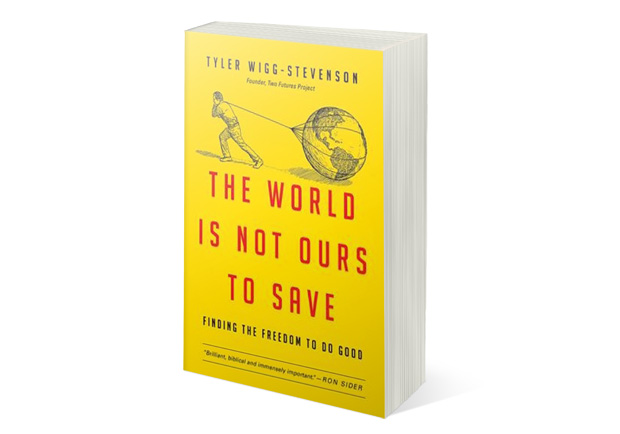
The World Is Not Ours to Save: Finding the Freedom to Do Good

The World Is Not Ours to Save: Finding the Freedom to Do Good

IVP

222 pages

I remember facilitating a discussion on faith and activism at a conference for university chaplains and ministers. One young woman confessed that she was the consummate "joiner." Give her a Christian cause and something to do, and she was on board. She'd like it on Facebook, follow on Twitter, buy the product, go to the conference, do the small group study. You name it; she'd do it. She was also exhausted, on the verge of burnout. As she spoke, sympathetic heads nodded around the table, including my own.

It struck me that those of us who shared such well-intentioned impulses were actually modeling ourselves after the wrong Christ. Our problem wasn't a lack of concern for Jesus; his heart and compassion drove our response. But in taking the world's burdens onto our backs, we were trying to grow in the image of Christ that we see in Colossians: the cosmic Jesus in whom "all things hold together" and through whose blood God chose to "reconcile to himself all things" (1:17, 20). Horrified by the sin and pain [of the world], we try to stretch wide enough and sacrifice hard enough to fix it. Does this sound like the faith of anyone you know?

Our shoulders aren't big enough for that task. The miracle of the incarnation means that Jesus the man is also the Son of God, and so his sacrifice is sufficient for all of us. As disciples, we are called to conformity with his image, but not to his divinity (see Romans 8:29; Luke 6:40). In the student ministers' discussion, Greg Carmer, the Dean of Chapel at Gordon College, put it well: a mature understanding of the unity of the body of Christ allows us to care about everything Christ cares about, but to carry only what he has given us to bear.

God has predestined us to become "little Christs" as we grow in maturity. Our resemblance to Jesus is like spiritual DNA, wherein all the parts of the body, though different in appearance and function, carry the same essential coding. This doesn't mean that we put our feet up and relax—but how liberating it is to remember that Jesus does not need any help being the head or the whole of the body, and that "each part" can simply focus on doing its own work!

Taken from The World Is Not Ours to Save, by Tyler Wigg-Stevenson. Copyright © 2013 by Tyler Wigg-Stevenson. Used by permission of InterVarsity Press, PO Box 1400, Downers Grove, IL 60515. ivpress.com.

See also Wigg-Stevenson's 2008 CT article on similar themes, "A Merciful White Flash."

Also in this issue

The CT archives are a rich treasure of biblical wisdom and insight from our past. Some things we would say differently today, and some stances we've changed. But overall, we're amazed at how relevant so much of this content is. We trust that you'll find it a helpful resource.

Cover Story

Here Come the Radicals!

Django Unchained and the Quest for Revenge

Jeffrey Overstreet

Testimony

The Atheist's Dilemma

Jordan Monge

News

Why Latino Enrollments Are on the Rise

Andrew Thompson

Who Defines Doctrine?

My Top 5 Books on Creativity

More Than a Right

Sharon Hodde Miller

Review

Is Longer Life Better?

Rob Moll

Review

Anxious About Assurance

Phillip Cary

I Love You—I Just Don't Trust You

Bigger Than We Think

David Wilkinson

Happy Meals

Interview by LaVonne Neff

News

Flip That Church

Melissa Steffan

The Sabbath Swimming Lesson

Susan Wunderink

What Classic Spiritual Discipline Needs the Most Renewal Among American Christians?

Jonathan Wilson-Hartgrove, Anne Graham Lotz, and Dallas Willard

Hotter Than All the Fifty Shades in the World

Megan Hill

Editorial

The Future of Today's Christianity

Mark Galli and Andy Crouch

News

How a Catholic-Pentecostal Split Could Help Nigeria's Militant Islamists

Sunday Oguntola in Lagos, Nigeria

Letters to the Editor

News

Gleanings

News

Quotation Marks

News

Go Figure

Giving It Everything

The Love Shack

News

Radical Proposal to Weed Out 'Fake Pastors' Splits Kenyans

Tom Osanjo in Nairobi, Kenya

Quick Takes

Wilson's Bookmarks

John Wilson

News

Should an Iowa Dentist Have Fired his Attractive Assistant?

Compiled by Ruth Moon

Orphans in Limbo

News

Sovereign Grace Ministries: Courts Shouldn't 'Second-Guess' Pastoral Counseling of Sex Abuse Victims

Bobby Ross Jr.

View issue

Our Latest

The Bulletin

Joe Kent Resigns, Iranian Threats, and a Victory for Parents’ Rights

Mike Cosper, Clarissa Moll, Russell Moore

Public opinions on the Iran war, homeland security risks, and disagreements about gender transition in the classroom.

Review

What Kids Think About God Matters

Three theology books to read this month.

Analysis

Q&A: Why Pakistan and Afghanistan Are Fighting and How Christians There Survive

The Bulletin with Knox Thames

A conversation with human rights lawyer and former diplomat Knox Thames.

Turning ‘a Miracle’ into Long-Haul Help for the Homeless

Taylor Berglund

A North Carolina nonprofit is thinking in decades, not days, about sustainable, affordable housing.

Urgency Is Not Faithfulness

Thomas Anderson

A church that quickly reacts to every controversy is echoing the culture, not God’s Word.

What to Expect at This Year’s Church Conventions

SBC, LCMS, ACNA, CREC, and Global Methodist gatherings in 2026 will weigh issues including abuse investigations and sexual ethics.

Gospel Matriarch Lucie Campbell Looked To God

Daylan Woodall

Her songs spoke to life’s uncertainties and God’s presence—and taught me how to hope.

The Just Life with Benjamin Watson

Johnny Joey Jones: What Do We Owe the Men and Women We Send to War?

Trauma, Responsibility, and the Honor of Being Needed

Apple PodcastsDown ArrowDown ArrowDown Arrowarrow_left_altLeft ArrowLeft ArrowRight ArrowRight ArrowRight Arrowarrow_up_altUp ArrowUp ArrowAvailable at Amazoncaret-downCloseCloseEmailEmailExpandExpandExternalExternalFacebookfacebook-squareGiftGiftGooglegoogleGoogle KeephamburgerInstagraminstagram-squareLinkLinklinkedin-squareListenListenListenChristianity TodayCT Creative Studio Logologo_orgMegaphoneMenuMenupausePinterestPlayPlayPocketPodcastprintRSSRSSSaveSaveSaveSearchSearchsearchSpotifyStitcherTelegramTable of ContentsTable of Contentstwitter-squareWhatsAppXYouTubeYouTube






