Books
Review

Lawyers for the Least of These

Bruce Strom’s legal assistance nonprofit takes its cues from the Good Samaritan.

With hundreds of churches as clients and a case that reached the Supreme Court, Bruce Strom had a law practice that both Christian and secular lawyers would covet. But some 13 years ago, his career took an unexpected turn.

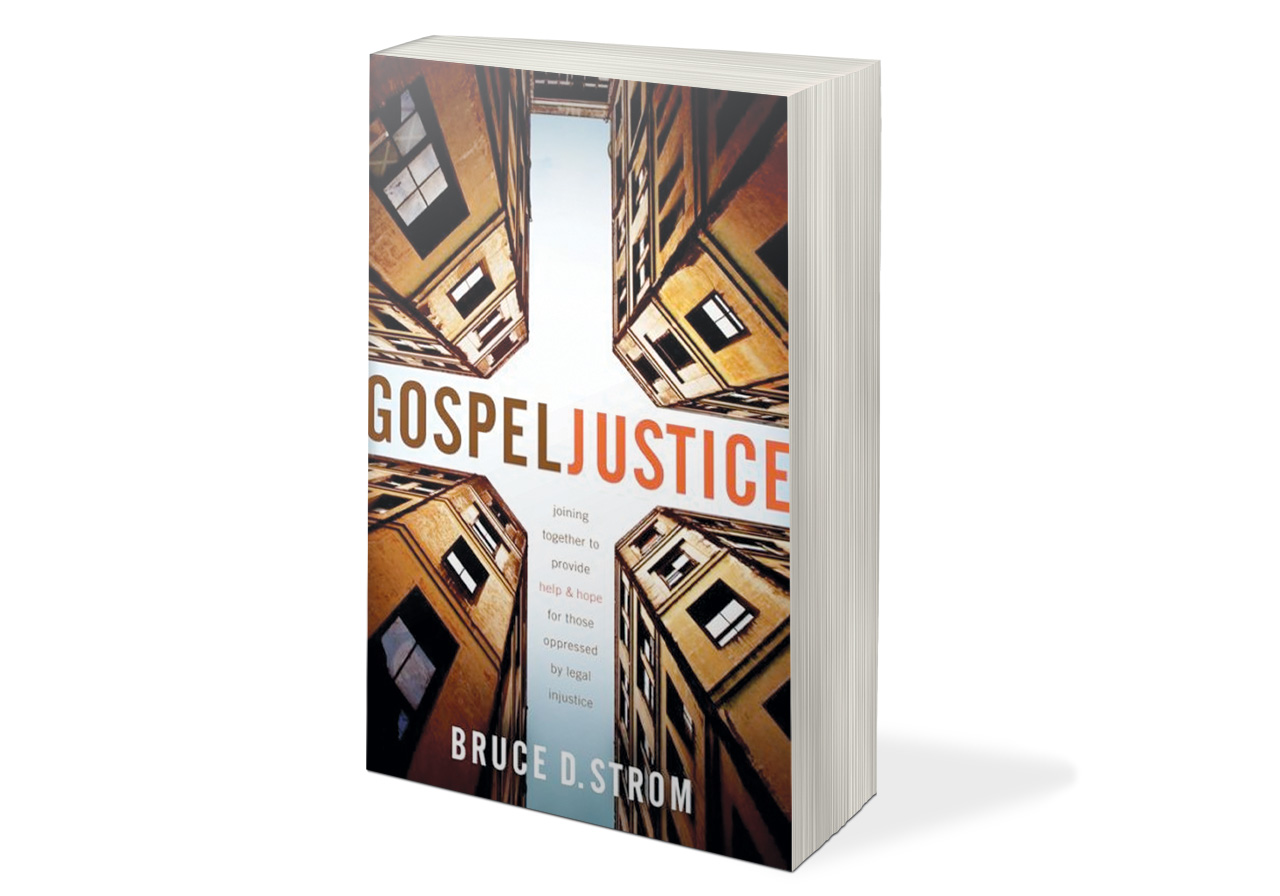
Gospel Justice: Joining Together to Provide Help and Hope for those Oppressed by Legal Injustice

Gospel Justice: Joining Together to Provide Help and Hope for those Oppressed by Legal Injustice

Moody Publishers

208 pages

$16.95

After a sequence of events that included two rainbows and the conception of twins after seven years of trying, Strom launched the Illinois-based organization Administer Justice, "a comprehensive program of educational outreach, legal assistance, financial counseling, and conflict resolution services" for clients who otherwise could not afford them. Three years later, God "threw him overboard," and Strom found himself running the ministry full-time at poverty-level wages. Gospel Justice: Joining Together to Provide Help and Hope for Those Oppressed by Legal Injustice interweaves the story of Administer Justice (which takes its name from Zechariah 7:9) with a call for lawyers and nonlawyers alike to "leave the comfort of the boat to step into the storm of injustice."

Each of the book's ten chapters takes its cue from a character or other feature of Jesus' parable of the Good Samaritan who, unlike the priest and Levite who pass by, comes to the aid of a beaten and robbed man. In one chapter, the Samaritan himself teaches the importance of taking risks to assist others; a chapter on the robbers explores how America's poor and aged are often taken advantage of; the priest is an object lesson in making excuses for not helping; and the Levite provides a lesson on harsh views of justice. Even the inn where the injured man stayed makes an appearance (a symbol of the church's responsibility to provide refuge), as does the Jericho Road (the need for social change).

Strom is fond of clever wordplay. He tells one client that if justice is "just ice," she will be sinking—that is, "sin" will be "king." A few pages later, he warns that justice should not be pronounced "just is." "History" is "His story." Readers who prefer such devices in moderation will be relieved that the frequency diminishes as the book progresses.

Gospel Justice is sprinkled liberally with stories of men and women served by Administer Justice, often in moving ways. It also exposes systemic abuses—such as zombie debt collectors, who send threatening letters to everyone who has the same name as a person who owes an old, unpaid debt—and advocates legal changes to address problems that affect large groups of vulnerable citizens. Administer Justice's most controversial practice is assisting undocumented/illegal immigrants without insisting that they turn themselves in. Strom gives a spirited defense. "Our office obeys the authorities," he writes. "Where benefits are permitted we enforce these benefits, and where they are denied we pursue legitimate alternatives. But the system is broken."

If Strom has his way, Christians will work not just for "faith informed" justice, but for "faith transformed" justice. (Gospel Justice gives a detailed chart of the differences between the two, but does not explore the material in the text.) At Administer Justice, faith-transformed justice means beginning each consultation with prayer if the client is willing, and integrating the spiritual and practical dimensions of the ministry, so that they connect as closely as (in the words of Gary Haugen of International Justice Mission) breathing in and breathing out.

Administer Justice is one of the largest and most effective in a wave of justice ministries that have emerged around the country in the past decade or so. Gospel Justice is an inspiring account of its origins and vision, and a handy resource for those who may be called to take the plunge.

David Skeel is a law professor at the University of Pennsylvania. He blogs at Less than the Least.


Also in this issue

The CT archives are a rich treasure of biblical wisdom and insight from our past. Some things we would say differently today, and some stances we've changed. But overall, we're amazed at how relevant so much of this content is. We trust that you'll find it a helpful resource.

Cover Story

Can We Trust the God of Genocide?

Cover Story

Sex in Leviticus

Christopher J.H. Wright

Cover Story

Learning to Love Leviticus

Christopher J. H. Wright

Cover Story

Gentiles in the Hands of a Genocidal God

Phillip Cary

Real Martyrs Don't Murder

Workaholic Women and the Wager of Success

The Shadow of Schizophrenia

Excerpt

Struggling on the Streets

John Christopher Frame

Why We Call God 'Father'

Simon Chan

The Frightening—But Biblical—Moral Logic of 'Breaking Bad'

David Zahl

Blindsided by God … But Never Betrayed

Peter Chin

Persecuted (or Paranoid) at Work

News

The Spirit Sweeps Over Bali

Melissa Kimiadi

The Public Listener: A Conversation with Radio Host Krista Tippett

How Should Churches and Seminaries Respond to Immigrant Pastors Who Minister in the US Illegally?

Kedri Metzger, Mark Tooley, Mathew Staver

Testimony

My Crash Course on Jesus

Casey Cease

News

Booming Churches, Barred Pastors: How U.S. Visa Policies Thwart Hiring Ministers

John W. Kennedy

Beauty From Broken Things

Alanna Foxwell-Barajas

A Fresh Encounter with Jesus

Timothy C. Morgan

Redeeming Disaster in Japan

Soohwan Park

News

Should Churches Stop Sponsoring Boy Scout Troops?

Compiled by Ruth Moon

Honoring David Neff, The Gentleman Scholar

News

House and Senate Farm Bills Set to Reform International Food Aid

Melissa Steffan

News

Quotation Marks: July/August 2013

Wilson's Bookmarks

John Wilson

My Top 5 Books by C. S. Lewis

Alister McGrath

Letters to the Editor

News

Gleanings: July/August 2013

New & Noteworthy

Matt Reynolds

Review

Our Almost National Anthem

Allen C. Guelzo

Editorial

Sex Without Bodies

Mourning a Daughter's Suicide

Interview by Matt Reynolds

View issue

Our Latest

Public Theology Project

Christians, Let’s Stop Abusing Romans 13

Believers often use the passage to wave away state violence, but that’s the opposite of what Paul intended.

News

The 50 Countries Where It’s Most Dangerous for Christians in 2026

From Syria to Sudan, believers around the world face increasing oppression and persecution.

How to Do Your Own Research About Vaccines

A doctor shows how to inoculate yourself against foolishness with a shot of wisdom.

Christian Writer Daniel Nayeri Dreams from Home

Jonathon Crump

Lying on the floor of his mauve-walled writing shed, the celebrated YA author writes himself around the world.

The Russell Moore Show

Martin Shaw on the Liturgy of Myth

What do myth, wilderness, and ancient story have to teach a culture drowning in information but starving for meaning?

Review

It’s Not Just What We Teach, but How

A new book on public schools—and the public square—looks beyond culture-war battles to deeper questions of pedagogy.

News

As Iran Cracks Down on Protests, Christians Speak Up

This time, believers in the Iranian diaspora are praying more explicitly for the fall of the country’s rulers.

Evangelicals, Get Back in the Game

Neil Shenvi and Pat Sawyer

An excerpt from Post-Woke: Asserting a Biblical Vision of Race, Gender, and Sexuality.

Apple PodcastsDown ArrowDown ArrowDown Arrowarrow_left_altLeft ArrowLeft ArrowRight ArrowRight ArrowRight Arrowarrow_up_altUp ArrowUp ArrowAvailable at Amazoncaret-downCloseCloseEmailEmailExpandExpandExternalExternalFacebookfacebook-squareGiftGiftGooglegoogleGoogle KeephamburgerInstagraminstagram-squareLinkLinklinkedin-squareListenListenListenChristianity TodayCT Creative Studio Logologo_orgMegaphoneMenuMenupausePinterestPlayPlayPocketPodcastRSSRSSSaveSaveSaveSearchSearchsearchSpotifyStitcherTelegramTable of ContentsTable of Contentstwitter-squareWhatsAppXYouTubeYouTube