


It’s puzzling to consider what went wrong with Serena, a film that on paper should have been great or at least tolerably amusing. (It is neither).
Consider the film’s promising ingredients: two A-list, Oscar-nominated actors anchoring the cast (Bradley Cooper and Jennifer Lawrence); an Oscar-winning director known for subtle relational dramas (Susanne Bier); a script adapted from a bestselling 2008 book (by Ron Rash); a budget large enough to do the period (1920s North Carolina) suitable justice. And yet as anyone knows who has done much cooking, having all the right ingredients in the fridge does not always mean you’ll make a tasty meal.
 Magnolia Pictures
In the case of Serena, the meal isn’t stomach-churning as just disappointingly bland, devoid of any spice or aroma that would cause it to be memorable.
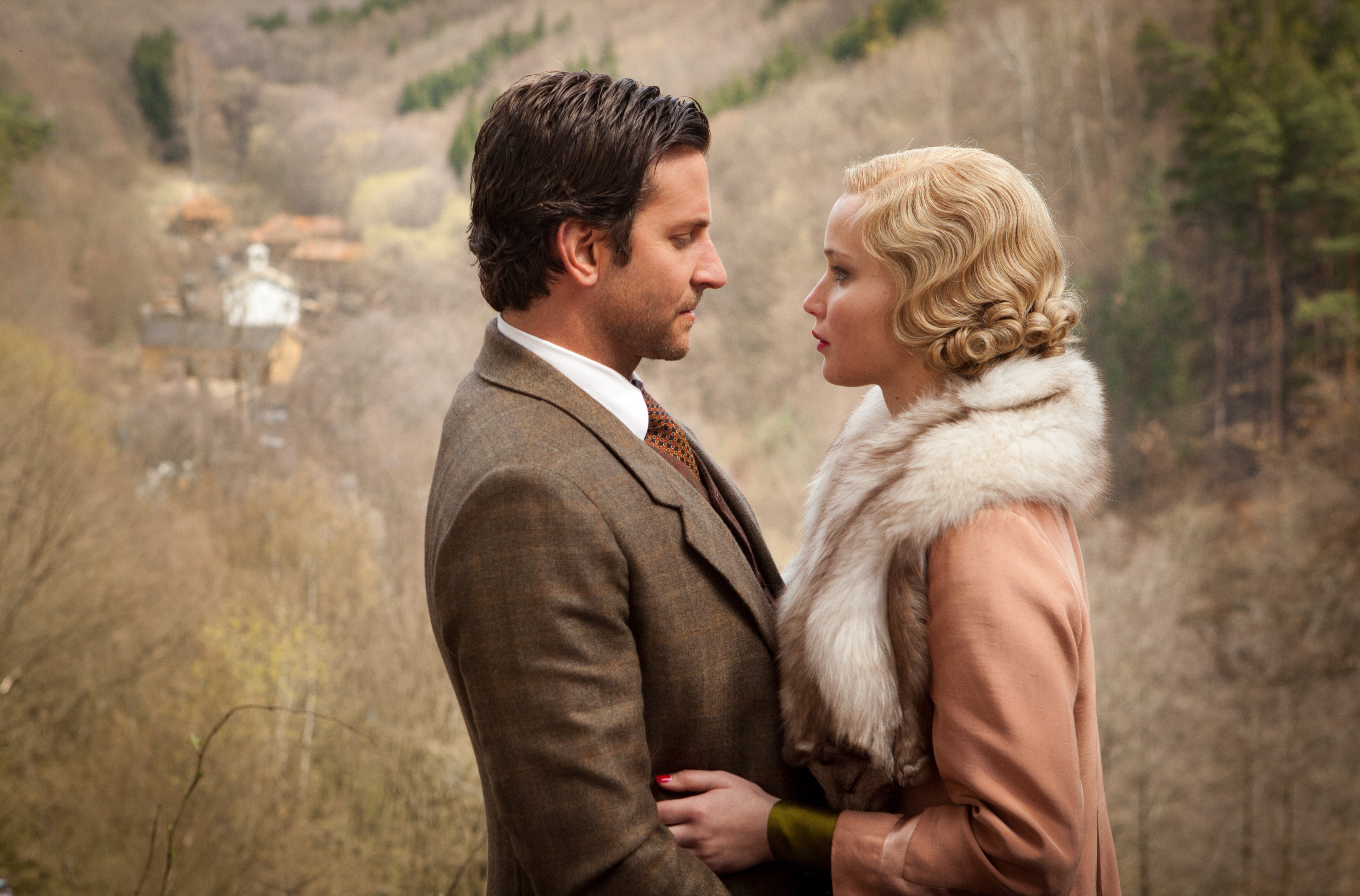
The story alone should, in theory, deliver at least some cinematic spice: a titan in the logging industry, George Pemberton (Cooper), marries a beautiful woman named Serena (Lawrence), who at first appears to be his perfect, business-savvy companion. Yet as hardships arise in the couple’s business ventures and past ghosts come to haunt their marriage, she morphs into a dangerous and unpredictable femme fatale, capable of wreaking havoc on the lives of all those around her.
Unfortunately, due to the way the film is edited and paced, the fairly straightforward plot comes across as needlessly abstract and frustratingly un-engaging. Little chemistry or tension develops. Characters are written so one-dimensionally that when trouble and violence come to them, we don’t feel a thing. Lack of feeling in general is one of the film’s worst qualities.
Take the supposed romance between George and Serena. As written in the script by Christopher Kyle (Alexander), George meets Serena by chasing her on a horse and (literally) the first thing he says to her is that he thinks they should be married. By the next scene they are married. We have no idea why. Throughout the rest of the film we see George and Serena periodically having sex or saying clichéd things to one another like “I never thought I’d find you” or “Everything you did, you did for us,” but that is the extent of their connection.
Serena’s character, fueled by tragedy and complex personal history, could have been very interesting. One senses that she’s less overtly evil than, say, the exaggerated vixen Amy Dunne of Gone Girl.
Yet Serena is never fully real, relatable or even human in Serena. Her actions rarely seem to have moral inspiration or implications. It’s unclear whether this is due to Lawrence’s capable-yet-wooden acting or the terrible script (probably a combination of both), the result is unfortunate: a title character whom we neither like nor loathe, but merely must endure.
All of this is especially perplexing given the talent of director Susanne Bier, whose Danish films like Brothers (2004), After the Wedding (2006), and the Oscar-winning In a Better World (2010) are commendably nuanced and powerful portraits of the complex, combustible nature of family relationships. One can see why she was drawn to the film adaptation of Serena, which contains some of the same “pushing relational tension to the breaking point” themes that she’s explored in other films. But like her other English-language, set-in-America film Things We Lost in the Fire (2007), Serena unfortunately comes across as heavy-handed and emotionally overwrought. Perhaps Bier should stick to telling stories that are culturally and personally a bit closer to home.
The fact is, not all movies work. Hollywood is a tough business and when money and egos and crews of hundreds are involved, it’s a miracle any film succeeds both artistically and commercially. Failure is part of life, and Hollywood is not too big to fail. And that’s a good thing. In an industry that increasingly favors formula and franchise, I’d rather see an attempt at originality that fails rather than a re-hash of proven success that (surprise!) succeeds.
 Magnolia Pictures
Perhaps the saddest thing about the failure of Serena is that it appears that those involved in the film (or at least the A-list parties with the most to lose) would prefer that it just disappear completely rather than tarnish their reputation by association. The film was unceremoniously released last month on VOD platforms and will likely come and go in theaters with little to no marketing fanfare. At Serena’s London Film Festival premiere in October, star Jennifer Lawrence jokingly told the audience that if they don’t like the film, “just don’t Tweet about it.”
For “prestige” actors like Lawrence at the top of the Hollywood power pyramid, the old adage “no press is bad press” does not apply. Being sucked into a social media spiral surrounding a Razzie-worthy stinker is far worse than no one actually seeing or hearing about the film. Certainly for Lawrence and Cooper (and maybe even Bier), a quiet fade into forgotten-film oblivion is the preferred trajectory for Serena.
In our Instagram age, when every post and pose is calculated and controlled, Serena is like that embarrassing photo that shows up on our wall because someone else tagged us in it. We just want to delete it quickly lest it tarnish the “brand” we’ve been trying to build. For Serena’s stars, releasing the film quietly on VOD is their version of deleting the embarrassing photo.
But although pretending failure doesn’t exist or hiding mistakes from view protects our vanity, it doesn’t help us grow. The healthiest and most successful people in life are those who take hardship in stride, own their mistakes, and learn from setbacks, without falling to pieces. Ironically this may be one of the themes of Serena’s narrative that might have come through had the film been more skillfully made. But it’s also a lesson for the filmmakers and actors behind the film.
It’s OK that Serena is not very good. May it inspire greater things in the next effort.
Caveat Spectator
Serena is rated R for intermittent scenes of sex and violence. The sex is moderately explicit but shows no nudity; mostly it just feels thrown in and superfluous. The violence is more germane to the story and is appropriately prevalent: Trees fall on loggers, hands get cut off, throats are slit on several occasions, one character shoots another in the heart, a panther attacks a character and kills him, a woman has a miscarriage, a character dies in a fire, a man strangles a woman and nearly kills her, various characters fight with each other.
Brett McCracken is a Los Angeles-based writer and journalist, and author of the books Hipster Christianity: When Church and Cool Collide (Baker, 2010) and Gray Matters: Navigating the Space Between Legalism and Liberty (Baker, 2013). You can follow him @brettmccracken.