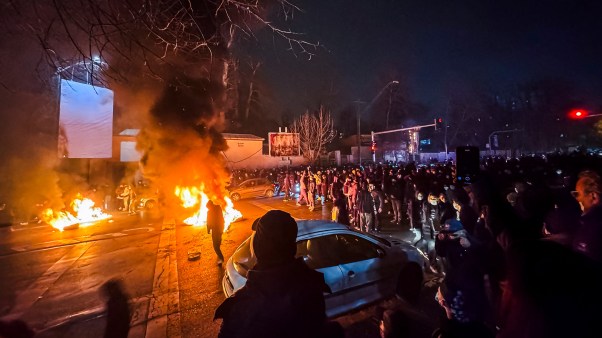

Trauma happens. Not often, but anyone in ministry will likely face it eventually. Thus the need for emergency preparedness. Natural disasters, shootings, domestic violence, rape, bullying, assault, sexual or emotional abuse, suicide—all are traumatic. When any of our people have been traumatized, they need a shepherd to guide them out from danger.
Trauma differs from crisis. Everyone experiences crisis. According to psychologist Scott Floyd in The Ministry Essentials Bible, a crisis is a state of distress that challenges a person's normal coping mechanisms. A crisis is not necessarily a bad thing; rather, a crisis is a turning point—financial, directional, or relational— where things can go in either a positive or a negative direction.
A trauma, on the other hand, is an unexpected event that goes beyond normal coping capabilities. While a crisis will challenge a person's ability to cope, trauma tends to overwhelm a person's coping mechanisms. And afterward, trauma can leave a person with ongoing symptoms not easily healed.
Of particular relevance for those in ministry: trauma can be contagious. Its effects can mark those trying to help the traumatized.
Roger Benimoff, an Army chaplain, saw this while trying to help those traumatized by combat. In Faith Under Fire, he writes: "Somewhere along the trajectory of my two deployments, I had internalized the traumas, the deaths, the chaos, and the lack of safety. I was supposed to be a pillar of strength and support; instead I was a sponge, absorbing all the grief and making it my own. Now [at home] I was overreacting to all perceived injustices around me."
That's certainly a danger for anyone in ministry. Psalm 69:1-4, while not using the term, describes trauma:
"Save me, O God, for the fl oodwaters are up to my neck. Deeper and deeper I sink into the mire; I can't find a foothold. I am in deep water, and the floods overwhelm me. I am exhausted from crying for help; my throat is parched. My eyes are swollen with weeping, waiting for my God to help me."
We in ministry have the amazing privilege of walking with people whose lives have been traumatized. Like the psalmist, they may be overwhelmed. When the floodwaters take them under, they need a shepherd—someone willing to step into the swirling flood while remaining grounded in God's strength.
Initially, our simple, tangible presence may be the most powerful thing we can offer. Over the longer term, of course, our role is to help them walk hand-in-hand with the One who walked into our own deep waters, bearing our sin and brokenness. This is something we at Christianity Today are calling "Beautiful Orthodoxy," an emphasis we will be making in the coming year.
It's the underlying reality providing the foothold that keeps us all from drowning.
Copyright © 2015 by the author or Christianity Today/Leadership Journal. Click here for reprint information on Leadership Journal.