Pastors

Stephen Colbert: Faithful and Grateful

And other items of interest from ministry and culture.

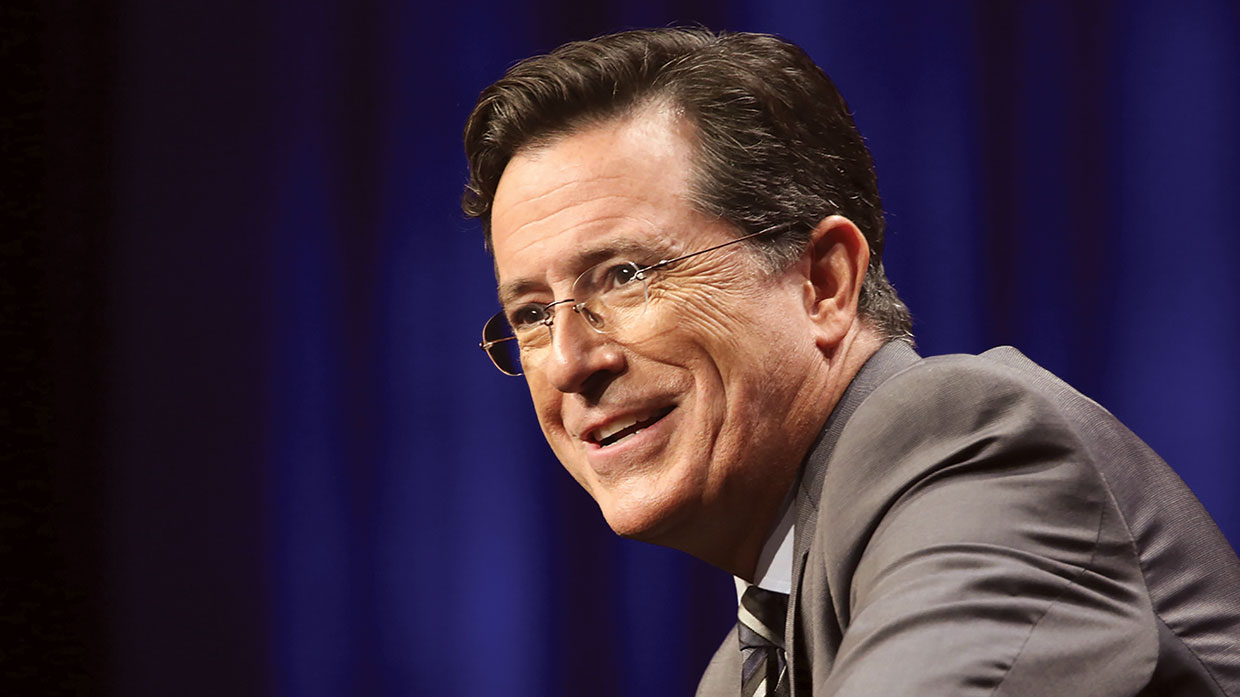
LOS ANGELES - AUGUST 10: Stephen Colbert, host of "The LATE SHOW with STEPHEN COLBERT" appears at the TCA Summer Press Tour 2015 on Monday August 10, 2015 at the Beverly Hilton hotel in Los Angeles, CA. (Photo by Monty Brinton/CBS via Getty Images)

Comedy often emerges from lives marked by tragedy, and new Late Show host Stephen Colbert is no exception. In a cover story for GQ, Joel Lovell described Colbert’s difficult childhood—growing up the youngest of eleven kids, losing his father and two closest brothers in a car crash when he was 10, struggling academically—all preceded his impressive climb to comedic stardom.

Colbert cites his faith (he’s a practicing Catholic) as an expression of the gratitude and joy that’s contributed to his success. “I’m very grateful to be alive,” Colbert says. “And so that impulse to be grateful, wants an object. That object I call God.”

His relentless gratitude, in fact, is what helped him overcome his family’s loss. Quoting a letter from J.R.R. Tolkien, Colbert asks, “‘What punishments of God are not gifts?’ … It would be ungrateful not to take everything with gratitude.” That dogged pursuit of joy has made him one of the most successful innovators and leaders in American entertainment.

Profanity’s Changing Tone

We all know of Paul’s imperative that we put away obscene talk, but what if cultural definitions of obscenity change? In “How Dare You Say That! The Evolution of Profanity” in The Wall Street Journal, linguist John H. McWhorter traced the development of profanity from literal swearing of oaths in the medieval era (“By God!”), the reliance of euphemisms in the Renaissance (“Odsbodikins!”), and the growing discomfort with words about sex and excretion—all of which have contributed to our ever-evolving lexicon of “bad words.”

Context changes: words that used to qualify as “profane” are now merely “salty,” while others—particularly those involving “the slandering of groups, especially groups that have historically suffered discrimination or worse”—are considered taboo. This is good news to medieval literature expert Melissa Mohr, who sees the change as “a sign that culturally we are able to put ourselves in other people’s shoes a little bit more than we were in the past.” It’s something to keep in mind the next time you stub your toe. —Adam Marshall

In Polls We Trust, Should We?

In a recent post on First Things, Princeton professor Robert Wuthnow calls into question the value of religious polling:

“From the beginning,” Wuthnow notes, “polling was in the business to make headlines, and that is pretty much what it continues to do today. The seeming accuracy of results to the tenth of a percentage point doesn’t stand up to basic methodological scrutiny, nor does the content of the questions themselves. If the devil is in the details, the details about religion polls are devilishly difficult to trust.”

“Stanley Woodworth, my high school French teacher, once described the peculiar passion for his own vocation in the following terms:

‘The joy of teaching lies not in one’s own enthusiasm for the students, or even for the subject matter, but rather for the privilege of introducing the one to the other.’

If this is true of French, chemistry, or history, how much more is it true of the pastor’s passion, which is not simply love of God or love of people, but rather the love of introducing the one (people) to the other (God)?”

— Kevin J. Vanhoozer, in The Pastor as Public Theologian

Copyright © 2015 by the author or Christianity Today/Leadership Journal.Click here for reprint information on Leadership Journal.


Our Latest

My Top 5 Books on Christianity in South Asia

Compiled by Nathanael Somanathan

Wisdom on staying faithful in ministry and navigating multireligious realities in India, Sri Lanka, and beyond.

News

Top Women’s Cricket Player Trolled for Her Christian Faith

Vikram Mukka

Christian public figures in India face online attacks and offline consequences for speaking about Jesus.

The Russell Moore Show

Our Favorite Moments from 2025 Episodes

Russell and Leslie meander through the 2025 podcast episodes and share some of their favorite moments.

The Case Against VIP Tickets at Christian Conferences

Jazer Willis

Exclusive perks may be well-intended business decisions, but Christian gatherings shouldn’t reinforce economic hierarchy.

The Bulletin

Pete Hegseth’s Future, Farmers on Tariffs, and Religious Decline Stalls

Mike Cosper, Clarissa Moll

Hegseth scrutinized for drug boat strikes, farmers react to Trump’s tariffs, and a Pew report says religious decline has slowed.

Turn Toward Each Other and Away from the Screen

Perhaps technology has changed everything. But God is still here, still wiring humans for connection and presence.

The Call to Art, Africa, and Politics

In 1964, CT urged Christians to “be what they really are—new men and women in Christ.”

Apple PodcastsDown ArrowDown ArrowDown Arrowarrow_left_altLeft ArrowLeft ArrowRight ArrowRight ArrowRight Arrowarrow_up_altUp ArrowUp ArrowAvailable at Amazoncaret-downCloseCloseEmailEmailExpandExpandExternalExternalFacebookfacebook-squareGiftGiftGooglegoogleGoogle KeephamburgerInstagraminstagram-squareLinkLinklinkedin-squareListenListenListenChristianity TodayCT Creative Studio Logologo_orgMegaphoneMenuMenupausePinterestPlayPlayPocketPodcastRSSRSSSaveSaveSaveSearchSearchsearchSpotifyStitcherTelegramTable of ContentsTable of Contentstwitter-squareWhatsAppXYouTubeYouTube