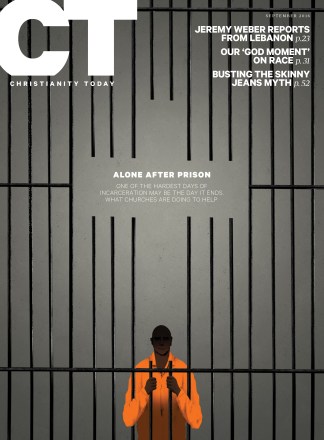
In the early 19th century, evangelicals were at the forefront of prison reform—England’s Elizabeth Fry being a foremost example. Today, while many churches have or support prison ministries of mercy and evangelism, very few work on criminal justice reform. Four out of five American churches (80%) say they are not currently involved in advocacy to reform the criminal justice system, according to statistics from new LifeWay Research published this year. But among those that are involved, African American pastors are two-and-a-half times more likely (42%) than white pastors (16%) to say that they are currently involved.
The PICO National Network is trying to change those statistics. Its Live Free campaign organizes dozens of predominantly black and Latino pastors to address mass incarceration and gun violence in their communities.
PICO works across faith traditions, and since the campaign started in 2010, it has partnered with evangelical institutions like the Exponential Conference and Urbana to teach about mass incarceration.
Michael McBride, director of the Live Free campaign, said, “I try to remind people that when it comes to addressing systems of justice, our battle is not against flesh and blood but against principalities and powers.”
Prison Fellowship’s traditional way of engaging churchgoers has been through ministries of mercy. Its Angel Tree program encourages donors to purchase presents for the children of prisoners. McBride’s wife benefited from the program herself as a child.
Earlier this year, however, Prison Fellowship also created an advocacy volunteer coordinator.
And this May, Prison Fellowship announced an 18-member Faith and Justice Fellowship. The bipartisan network of politicians, most of whom are Christians, is “not obligated to support or oppose any particular legislation.” But the network commits “to reach the shared goal of restoration for communities, victims, and people who commit crimes.”
In 2015, Craig DeRoche, Prison Fellowship’s head of advocacy, served on a congressionally enacted task force named for Chuck Colson. Prison Fellowship also claims credit for several federal legislative reforms and co-founded Right on Crime to provide resources and support to the growing number of conservatives committed to justice reform.
Another group working at the federal level is the Southern Baptist Convention’s Ethics and Religious Liberty Commission (ERLC). Recently, it featured criminal justice reform initiatives on its 2016 legislative agenda for the first time. The ERLC aims to inform churches about why they should be concerned about mass incarceration while pushing for change at the federal level.
“It seems as though we’re in a moment where we can get something done,” said ERLC president Russell Moore. “This isn’t just an issue for judges and politicians. I’m consistently hearing from pastors about racial disparities in the criminal justice system or the sort of family distress that can come with a broken system.”
Miea Walker serves as the head of the Christian Community Development Association’s mass incarceration task force.
“The question I have is,” Walker said at this year’s World Relief–sponsored Justice Conference, “What really happens when the Cross meets the prisoner?”