News

Americans Think Church Should Look Churchy

Survey shows most don’t like trendy, modern buildings.

Illustration showing a church building split down the middle with each half representing a modern or traditional church interior.
Illustration by Mike Haddad

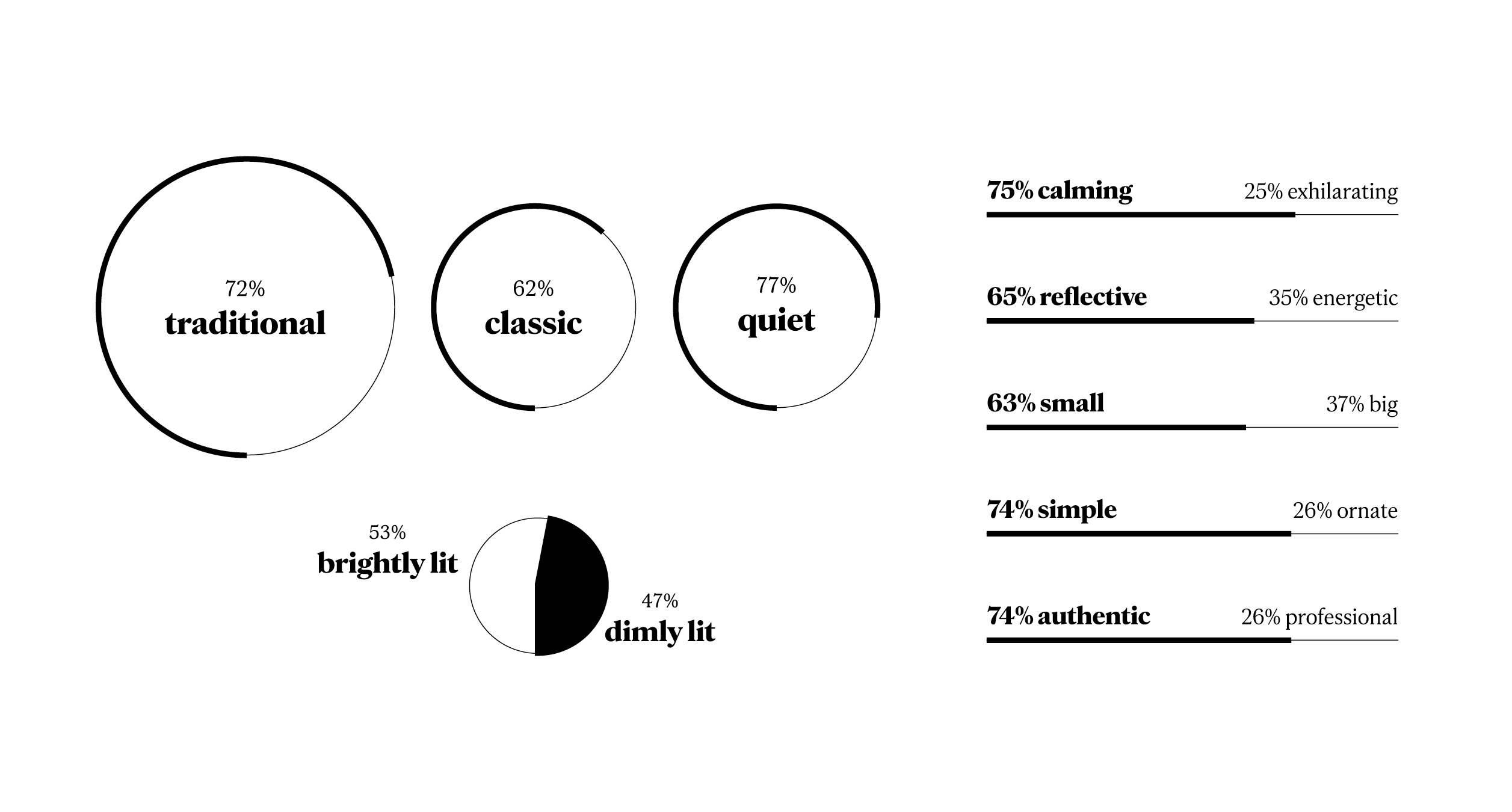
Outreach-minded evangelicals have often argued that church buildings need to be less “churchy” to draw in would-be seekers. But that might not actually be true, according to recent research from Barna Group and Aspen Group asking a representative sample of 2,000 Americans questions about the architecture of sacred spaces.

When Americans close their eyes, they can picture a church. Even if they rarely or never attend one, they have an idea of what a church should look and feel like—and a preference. That preference is quite traditional. 

Nearly 90 percent of Americans say a church should be “easily identifiable,” and 8 of 10 say they want the building to “reflect the beauty of God.” There are some, to be sure, who prefer that churches feel modern (38%) and trendy (28%), but most Americans want religious spaces that feel more timeless and transcendent.

Graphs about the ideal church building

Also in this issue

Even amid scandals, cultural shifts, and declining institutional trust, we at Christianity Today recognize the beauty of Christ’s church. In this issue, you’ll read of the various biblical metaphors for the church, and of the faithfulness of Japanese pastors. You’ll hear how one British podcaster is rethinking apologetics, and Collin Hansen’s hope for evangelical institutions two years after Tim Keller’s death. You’ll be reminded of the power of the Resurrection, and how the church is both more fragile and much stronger than we think from editor in chief Russell Moore. This Lent and Easter season, may you take great courage in Jesus’ words in Matthew 16:18—“I will build my church, and the gates of Hades will not overcome it.”

Easter Is God’s Story, Not Ours

Andrew Torrance

Invasion Theology

News

Growth Is Good. Survival Is, Too.

News

Canadian Pastors Struggle to Address Assisted Death

Borrowing Faith When Doubt Creeps In

News

Church Kitchens Are Getting Chopped

NYC Pastor Rich Villodas on Subversive Anger and True Forgiveness

Russell Moore and Rich Villodas

Keller’s Threefold Hope for Renewal

Collin Hansen

Testimony

I Was Sold into Slavery. Jesus Set Me Free.

Public Theology Project

The Church Is Fragile—And Unshakable

Hope for Tainted Creeks and Troubled Families

Church Hurts for Pastors, Too

Living Water for the Faithless

Review

Always on the Go but Never Away from Home

The Man Tackling the Masculinity Crisis

Review

What Must We Do to Agree on Salvation?

Rhyne Putman

Satisfaction Comes for Doubters

Review

Faith Torn Down to the Studs

One Lord, One Faith, Many Metaphors

Qualms & Proverbs

Who Gets Our Church After a Dating Breakup?

Beth Moore, Kevin Antlitz, and Kiara John-Charles

News

Justin Brierley Goes from Unbelievable to Re-Enchanting

View issue

Our Latest

Public Theology Project

Your Understanding of Calling Is About to Change Radically

You can do little about what artificial intelligence is doing around you, but you can do something about you.

Late to a 1,400-Year-Old Church Tradition? Me Too.

My nondenominational church is having its first Ash Wednesday service today. But why start now?

Christian Doctrine in 70 Hebrew Words

Martin Luther called Psalm 110 the core of Scripture for its 7 short verses of foundational doctrine.

The Russell Moore Show

Jen Wilkin on Recovering Bible Literacy

What if the church’s biggest discipleship problem isn’t disbelief—but disinterest in learning?

News

Refugees Disappeared. Churches Prayed and Lawyered Up.

Christians who fled violence in Myanmar were largely Trump supporters. Then ICE started arresting their congregants.

Excerpt

How the Lord’s Supper Heals Church Hurt

Communion makes us face our relational conflicts.

Review

We’ve Still Got Heaven Wrong

Claude Atcho

N.T. Wright’s Homecoming hits familiar notes, but they’re still needed.

Review

Emotions Don’t Just Happen to You

Our society tends to treat feelings as inevitable and authentic. A new book explores an older understanding in the Bible and the church.

Apple PodcastsDown ArrowDown ArrowDown Arrowarrow_left_altLeft ArrowLeft ArrowRight ArrowRight ArrowRight Arrowarrow_up_altUp ArrowUp ArrowAvailable at Amazoncaret-downCloseCloseEmailEmailExpandExpandExternalExternalFacebookfacebook-squareGiftGiftGooglegoogleGoogle KeephamburgerInstagraminstagram-squareLinkLinklinkedin-squareListenListenListenChristianity TodayCT Creative Studio Logologo_orgMegaphoneMenuMenupausePinterestPlayPlayPocketPodcastprintRSSRSSSaveSaveSaveSearchSearchsearchSpotifyStitcherTelegramTable of ContentsTable of Contentstwitter-squareWhatsAppXYouTubeYouTube