Church Life

Seek the Kingdom Wherever It Is Found

President & CEO

A note from mission advancement in our July/August issue.

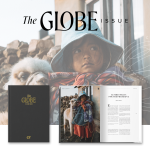
An illustration featuring a composite of three images: a mountain landscape, a busy street in India, and a farmer somewhere in Asia.
Source Images: Matthieu Rochette / Arto Suraj / Pat Whelen / Unsplash / Edits by CT

I will always remember the first year I traveled overseas as president and CEO of Christianity Today. Wherever we met believers, from the mountains of Papua to the streets of Bengaluru, they greeted CT as a friend. Most could name a recent article they had read. Their common request was that we do more to elevate the stories and ideas from their places in Christ’s global kingdom. 

As we framed the One Kingdom Campaign to shape the future of Christianity Today, we prioritized its Global Initiative. When Billy Graham founded the magazine in 1956, he envisioned 100 correspondents around the world telling the stories of the church. This part of the original vision, we felt, had not yet been fully realized. If we could interconnect followers of Jesus around the planet and serve as a central nervous system, then the global body of Christ could more effectively communicate and coordinate. The Global Initiative would help Christianity Today better represent the breadth and beauty of the whole kingdom of God. 

This initiative is for our brothers and sisters overseas—but also for us in the American church. We are in desperate need of a more capacious vision for following Jesus today. When we asked Christian author Ann Voskamp why she supports Christianity Today, she said that it’s easy to focus merely on the North American religious landscape and arrive at a kind of “flat-earth” Christianity. “We forget there’s a whole global church out there that is living out the words of Christ in rich, robust, orthodox ways that can inform and shape us,” she added. Or as Philip Yancey wrote in support of our global emphasis, “If you get discouraged about the church in America, go to the church in other countries and you will find life.” 

To be sure, God is doing good and beautiful things through the American church. But our part of the church, like every other part, is broken and sinful. Maybe we are discouraged. Maybe we are too caught up in national struggles and strife. Maybe we have forgotten how powerfully God can move. We need the examples of other brothers and sisters, sometimes in faraway places, to explode our comfortable vision of what it means when Jesus bids us take up our crosses and follow him. We need each other. 

You may have already noticed our increasing global coverage. We invite you to learn more about CT’s Global Initiative and to join us in seeking the kingdom wherever it’s found.

On a personal note, this month I will be concluding my service as president  and CEO of Christianity Today. I have been appointed to serve as president of the John Templeton Foundation beginning July 31, 2025.

Serving Christianity Today for the past six years has been the honor of a lifetime. The mission is compelling, the team is exceptional, and the future is bright. While I’m excited to return to the kinds of questions that motivated my academic work, I could not be prouder of what the team has accomplished at Christianity Today. 

I will remain connected to CT as a donor and friend. It was mine to serve CT for a time, but the ministry has a far grander story that began long before me and will endure long after me. 


Timothy Dalrymple was president and CEO of Christianity Today from 2019 to 2025. He is leaving CT to serve as president of the John Templeton Foundation.


Also in this issue

As developments in artificial intelligence change daily, we’re increasingly asking what makes humanity different from the machines we use. In this issue, Emily Belz introduces us to tech workers on the frontlines of AI development, Harvest Prude explains how algorithms affect Christian courtship, and Miroslav Volf writes on the transhumanist question. Several writers call our attention to the gifts of being human: Haejin and Makoto Fujimura point us to beauty and justice, Kelly Kapic reminds us God’s highest purpose isn’t efficiency, and Jen Pollock Michel writes on the effects of Alzheimer’s. We bring together futurists, theologians, artists, practitioners, and professors to consider how technology shapes us even as we use it.

The Transhumanist Question

Miroslav Volf

Unlearning the Gospel of Efficiency

Kelly Kapic

Review

Racial Reconciliation Is on the Move

Stephen R. Haynes

Still Life with the Fruit of the Spirit

Analysis

Rise of the Thinking Machines

Ali Llewellyn and Nick Skytland

News

Evangelical Report Says AI Needs Ethics

God Remembers in Our Dementia

Review

When Pseudoscience Swallowed Scripture

News

What Algorithms Have Brought Together

Readers Say Yes to Church Kitchens

Kate Lucky

Qualms & Proverbs

Should Christians Avoid Writing with AI?

Karen Swallow Prior, Kevin Antlitz, and Kiara John-Charles

Review

We Want What the World Can’t Give

Ronni Kurtz

When We Make Intelligence in Our Image

Timothy Dalrymple

Nicholas Carr on AI Doctors and Internet Edgelords

Public Theology Project

An Image of God for an Era of AI

Testimony

Explosive Secrets Damaged Me. Surrendering to Jesus Saved Me.

Christine Caine

News

Meet the Christian Engineers Helping to Shape AI

We’re Committed to Humans

In Those Days, There Was No King Over AI

Stephen Carradini

What Is (Artificial) Intelligence?

Don’t Conflate Intelligence with Value

Chris Krycho

Why We’re Desperate to Measure Intelligence

Marcus Schwarting

AI Offers Information. God Offers Wisdom.

Vineet Rajan

AI Is Making Humans Dumber

O. Alan Noble

View issue

Our Latest

News

First Year of Trump 2.0 Leaves Pro-lifers with Misgivings

At the March for Life, pro-life Christians express concerns with Washington’s waning commitment to their cause.

News

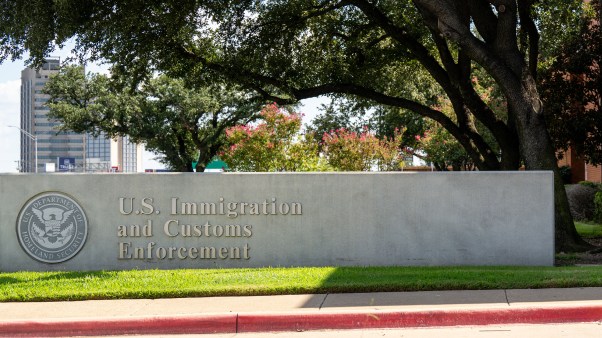
In a Tense Minnesota, Christians Help Immigrant Neighbors

As the Twin Cities reel from ICE arrests and the killing of Alex Pretti, churchgoers drive immigrants to work and doctor’s appointments.

My Healing Was God’s Work, Not Mine 

Natalie Mead

After six years of debilitating chronic migraine disorder, I’d lost my confidence in the Lord. He was still faithful.

Being Human

Steve & Lisa Cuss’ Insights into Communication Styles and Their Impact on Well-Being

Why is it so hard to transform communication styles for deeper connections?

The Russell Moore Show

How to Use Faith Language in Everyday Conversation

Russell answers a listener question on how we can use language about our faith in conversation about the mundane and ordinary parts of life – without overspiritualizing.

Analysis

The Indignity of a Computer Undressing You

The Bulletin with Christine Emba

Why Christians need to talk about Grok’s policies on AI-image generation.

Human Worth in the Attention Economy

James tells us to guard against partiality. That means rejecting disdain for mothers, blue-collar workers, and others the world devalues.

Authority Is a Responsibility, Not an Excuse

The Trump administration should be able to execute on its immigration mandate without executing people like Alex Pretti in the streets.

Apple PodcastsDown ArrowDown ArrowDown Arrowarrow_left_altLeft ArrowLeft ArrowRight ArrowRight ArrowRight Arrowarrow_up_altUp ArrowUp ArrowAvailable at Amazoncaret-downCloseCloseEmailEmailExpandExpandExternalExternalFacebookfacebook-squareGiftGiftGooglegoogleGoogle KeephamburgerInstagraminstagram-squareLinkLinklinkedin-squareListenListenListenChristianity TodayCT Creative Studio Logologo_orgMegaphoneMenuMenupausePinterestPlayPlayPocketPodcastRSSRSSSaveSaveSaveSearchSearchsearchSpotifyStitcherTelegramTable of ContentsTable of Contentstwitter-squareWhatsAppXYouTubeYouTube