News

Rise of the Thinking Machines

The development of artificial intelligence explained by experts in the field.

An illustration of a digital apple in a pixelated style.
Illustration by Nick Little

The history of artificial intelligence (AI) can be traced back through ancient literature and philosophy, where deep thinkers imagined intelligent machines and artificial beings. 

As a technical discipline, the field of AI began in the mid-20th century. In 1950, British mathematician Alan Turing proposed the idea of a machine that could simulate any human intelligence, conceiving the now-famous Turing test.

Just six years later, at the 1956 Dartmouth Conference, computer scientists John McCarthy, Marvin Minsky, and Claude Shannon coined the term artificial intelligence, laying the foundation for modern AI research and development.

In the decades that followed, AI went through cycles of optimism and disappointment—often referred to as “AI winters,” when progress floundered due to technological limitations and overhyped expectations. Still, significant strides were made in expert systems in the 1980s and machine learning techniques in the 1990s.

The 21st century proved to be a new era for AI, fueled by massive data availability, advances in computing power, and breakthroughs in neural networks. In 2012, a deep learning system built at the University of Toronto dramatically improved image recognition, sparking renewed interest in AI. Tech giants quickly adopted these methods, driving rapid developments in natural language processing, computer vision, and robotics.

Today, AI is embedded in everyday life—from virtual assistants to recommendation algorithms—and continues to evolve quickly. As it grows more powerful and integrated into society, discussions about ethics, safety, and human-AI collaboration have become more crucial than ever. 

artificial intelligence (AI) 

A human-made computer system that can emulate or exceed human thought and perform complex tasks of reasoning, decision-making, communication, and creation.

algorithm

A defined, sequential set of instructions that a computer program follows to solve a specific problem or complete a task. The algorithm works step by step, following code written by humans. For example, when Netflix recommends a show based on your viewing history, it is using an algorithm. Algorithms are often informed by machine learning. 

machine learning

A system that can identify patterns, learn from data, and improve its performance. Machine learning can adapt through an automated process and make decisions without being explicitly programmed for every possible scenario. Large language models (LLMs) are a type of machine learning, trained on vast amounts of text to recognize patterns and respond to natural-language prompts in a contextually appropriate way.

generative AI

An artificial intelligence model that uses its training data and learned patterns to create original content, such as text, images, or music. Generative AI relies on statistical patterns and associations, not step-by-step instructions, to fulfill user prompts. Chatbots such as ChatGPT, Grok, and Claude are examples of generative AI.

agentic AI

An AI system that operates with autonomy, enabling it to make decisions, take actions, and interact with its environment to achieve specific goals. Agentic AI can initiate tasks, adapt to changing circumstances, and pursue objectives independently, not simply responding to external prompts or following instructions. Self-driving cars are an example of agentic AI.

Ali Llewellyn and Nick Skytland are futurists and technologists with experience spanning space exploration, ministry, and church planting. They work at the intersection of faith and AI and are coauthors of What Comes Next?


Also in this issue

As developments in artificial intelligence change daily, we’re increasingly asking what makes humanity different from the machines we use. In this issue, Emily Belz introduces us to tech workers on the frontlines of AI development, Harvest Prude explains how algorithms affect Christian courtship, and Miroslav Volf writes on the transhumanist question. Several writers call our attention to the gifts of being human: Haejin and Makoto Fujimura point us to beauty and justice, Kelly Kapic reminds us God’s highest purpose isn’t efficiency, and Jen Pollock Michel writes on the effects of Alzheimer’s. We bring together futurists, theologians, artists, practitioners, and professors to consider how technology shapes us even as we use it.

Seek the Kingdom Wherever It Is Found

The Transhumanist Question

Miroslav Volf

Unlearning the Gospel of Efficiency

Review

Racial Reconciliation Is on the Move

Stephen R. Haynes

Still Life with the Fruit of the Spirit

News

Evangelical Report Says AI Needs Ethics

God Remembers in Our Dementia

Review

When Pseudoscience Swallowed Scripture

News

What Algorithms Have Brought Together

Readers Say Yes to Church Kitchens

Kate Lucky

Qualms & Proverbs

Should Christians Avoid Writing with AI?

Karen Swallow Prior, Kevin Antlitz, and Kiara John-Charles

Review

We Want What the World Can’t Give

Ronni Kurtz

When We Make Intelligence in Our Image

Timothy Dalrymple

Nicholas Carr on AI Doctors and Internet Edgelords

Public Theology Project

An Image of God for an Era of AI

Testimony

Explosive Secrets Damaged Me. Surrendering to Jesus Saved Me.

Christine Caine

News

Meet the Christian Engineers Helping to Shape AI

We’re Committed to Humans

In Those Days, There Was No King Over AI

Stephen Carradini

What Is (Artificial) Intelligence?

Don’t Conflate Intelligence with Value

Chris Krycho

Why We’re Desperate to Measure Intelligence

Marcus Schwarting

AI Offers Information. God Offers Wisdom.

Vineet Rajan

AI Is Making Humans Dumber

O. Alan Noble

View issue

Our Latest

The Bulletin

Midwest Primaries, Taiwan’s Ukraine Lessons, and Abortion Pill Case

Clarissa Moll, Russell Moore

Indiana and Ohio hold primaries, Trump travels to Beijing, and the Supreme Court considers the abortion pill.

News

Sudan’s Civil War Destroyed Hospitals and Churches

Emmanuel Nwachukwu in Khartoum

Local doctors and Christians are trying to rebuild lives in the capital city.

Review

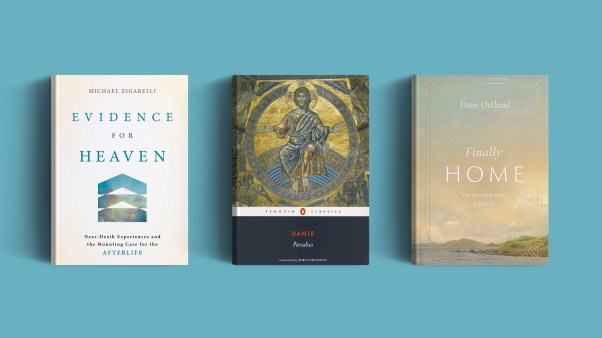
Are Near-Death Experiences Evidence for Heaven?

Three theology books on the afterlife.

Thrifting to the Glory of God

Ann Byle

Shopping secondhand and donating our own items echoes Jesus’ renewal of discarded lives.

‘No-Kids Zones’ Abound in South Korea. But Kids Aren’t Pests.

Ahrum Yoo

In a country with one of the lowest fertility rates in the world, children are seen as a nuisance. But they are a blessing that can pierce the idols of efficiency.

Review

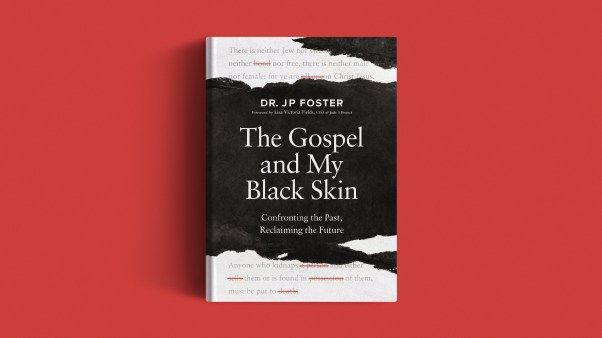
The Lies—and Truths—That Keep Some Black People Out of Church

A California pastor’s book confronts the painful parts of Christian history but points to the healing power of the gospel.

News

Iran Tensions Threaten Kenya’s Largest Export Industry: Tea

Moses Wasamu

Christian farmers struggle to avoid bankruptcy.

Q&A: Douglas McKelvey on Gen Z’s Lack of Rites of Passage

The Rabbit Room’s newest prayer book urges readers to join God’s mission in young adulthood.

addApple PodcastsDown ArrowDown ArrowDown Arrowarrow_left_altLeft ArrowLeft ArrowRight ArrowRight ArrowRight Arrowarrow_up_altUp ArrowUp ArrowAvailable at Amazoncaret-downCloseCloseellipseEmailEmailExpandExpandExternalExternalFacebookfacebook-squarefolderGiftGiftGooglegoogleGoogle KeephamburgerInstagraminstagram-squareLinkLinklinkedin-squareListenListenListenChristianity TodayCT Creative Studio Logologo_orgMegaphoneMenuMenupausePinterestPlayPlayPocketPodcastprintremoveRSSRSSSaveSavesaveSearchSearchsearchSpotifyStitcherTelegramTable of ContentsTable of Contentstwitter-squareWhatsAppXYouTubeYouTube