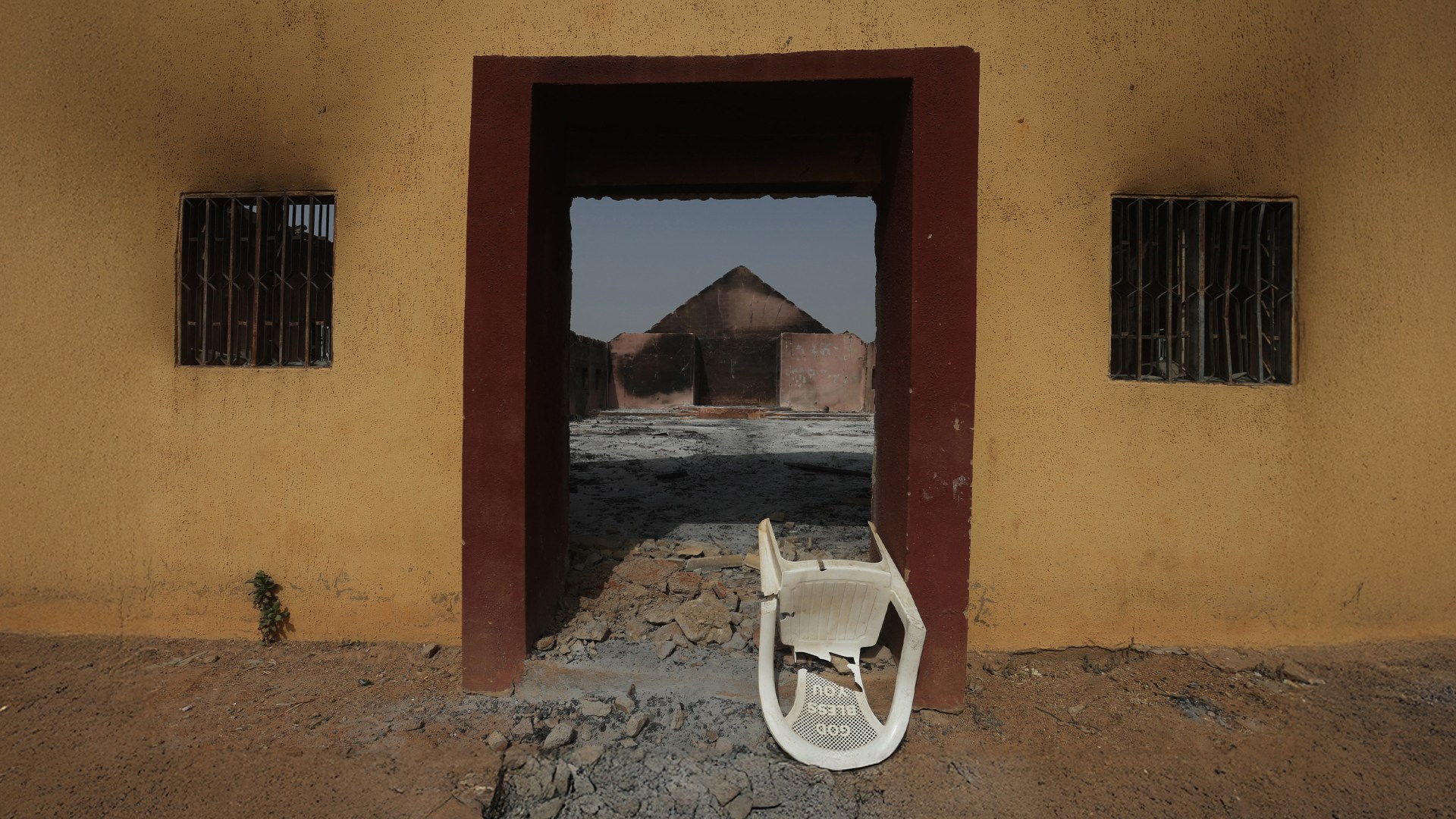
In past Decembers, pastor Paul Maina’s congregation at Church of Christ in Nations (COCIN) Njilang in Chibok, Borno state, Nigeria, spent the week before Christmas celebrating. They often went house to house, singing in the local Cibak language, dancing, bearing gifts, and sharing meals. Maina prepared a midnight Christmas Eve service at church. Non-Christian neighbors joined in the festivities.
“These were happy times,” Maina told CT. “But that is no more.”
The church began canceling festivities in 2020 due to terror attacks in the area. This year, the holiday will be quiet. His congregation won’t go caroling. He won’t hold a Christmas Eve service at his church. After his more than 20 years of ministry there, he said Chibok no longer feels like home because Christians live in fear.
Chibok is one of the few towns with Christian local governments within the majority Muslim state, and it has been a target of Islamic terrorist group Boko Haram’s violence against Christians and moderate Muslims. In 2014, Boko Haram infamously kidnapped more than 200 Christian schoolgirls from the area, including Leah Sharibu.
Leading up to Christmas, members of Boko Haram have visited villages in the Chibok area, seemingly looking for their next attack, Maina said. The visits have increased since November, prompting many residents to leave their homes.
“If you see a motorbike, if it’s not a soldier, it is Boko Haram,” Maina explained. “They use this to create fear and panic.”
It works. Most villagers sleep in the bushes instead of inside their homes, Maina said, as they fear nighttime attacks. Because churches are often exposed to violence—at least four area churches have been bombed or burned this year—pastors don’t dare hold services there. Maina gathers his 300-member congregation in open fields, but even that’s risky.
“[Christians] are careful with whatever we do during this season,” Maina said. “We are not free to celebrate.”
Like Maina, other pastors in Nigeria’s north and Middle Belt are also bracing for the holiday and canceling services. They fear attacks by Islamic extremists, who know churches will be packed, roads crowded with traveling families, and villagers distracted by celebrations. Militant groups, especially Boko Haram, have used Christmas attacks in the past to boost media coverage of their demands.
On Christmas Eve in 2020, Boko Haram militants attacked Pemi, five miles from Njilang, while the villagers prepared for celebrations. Militants killed at least seven Christians and burned down the Church of the Brethren alongside 10 houses. Survivors fled the community. Many never returned.
“The attacks are to make communities scared and to spoil the Christmas celebrations,” Christian clergyman Oliver Dashe Doeme told Aid to the Church in Need. “They don’t want Christians to enjoy Christmas.”
On Christmas Day in 2023, Islamic groups killed at least 160 and wounded 300 during a weeklong attack on at least 17 Christian communities in Plateau State in Nigeria’s Middle Belt. Last year, Christians in the Mkomon district of Kwande Local Government Area in Benue State were preparing their homes for Christmas lunch when attackers killed 11 people.
Maina said the Nigerian military warned against any outdoor events between 7:00 p.m. and 6:00 a.m. due to the recent threats, which is why he canceled his Christmas Eve celebrations.
Fear isn’t the only barrier to Christmas gatherings. Terrorist attacks disrupt food supplies for holiday celebrations, which for farmers in the north fall during the peak of the dry season, when they gather and store crops. Durning the dry season, clashes also intensify in the North Central region between armed Islamic Fulani herders and poorly defended farmers. As the herders move their cattle looking for pasture, they often ruin fields and set ablaze homes and barns.
In November, Yohanna Yakubu, a farmer and member of Church of the Brethren in Nigeria, traveled an hour on his bicycle to harvest maize on his rented farmland. He couldn’t find land closer to home. Yakubu plants low-maintenance maize, so he doesn’t have to risk traveling to tend it often. Harvest usually requires Yakubu and his hired workers to stay on the property for two or three weeks. He harvested early this year and hired extra workers to finish within a week, trying to avoid attackers.
“I had to harvest [quickly] because of the fear,” he told CT. “But some others cannot even go to their farm any longer. It is too risky.”
Yakubu, a resident of Mbalala, a town seven miles from Chibok, said villagers from outlying areas seek safety with other Christians in Mabala during Christmas. Last year, he hosted five people. “I am always willing to allow them [to] stay with me.”
Boko Haram’s violence has forced some Christians to spend the holiday in camps for internally displaced persons (IDP) after fleeing their homes. Some nonprofits donate food, clothes, and medicine during Christmas, but the IDP camp in Chibok has no Christmas services.
Maina has already officiated or attended more than a dozen funerals of Christians killed by militants this year. He doesn’t want to bury more at Christmastime.
The national government has set up a barrack to protect the community, Maina said, but even the soldiers run away at the sight of the attackers, leaving the villages vulnerable: “The local government cannot do a thing because it’s beyond its strength.”
So Maina seeks strength from God, the testimonies of other local churches, and congregants who attend his services despite the threats. “It is encouraging that they do not give up,” he said.
From the pulpit he warned church members against unnecessary travels this season and assured them he will hold a Christmas Day service, though he’s not sure when and how. He’ll let church members know at the last minute.
He’s afraid but said the church is used to Boko Haram’s threats: “We will meet no matter their plan.”