Church Life

Living in the Dark Space

We can’t always see the light when we are in the dark. But the light can always see us.

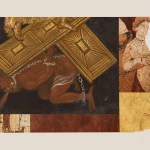
Illustration by Jill DeHaan

I was watching my son come out of the water at the beach. He was laughing until he wasn’t. He couldn’t see me. I watched him scan the sand for my chair.

“Mom!” he shouted while starting to panic. He thought he was lost because he couldn’t see me. But he wasn’t lost at all. He had stopped watching me, but I never stopped watching him.

I have gone through dark spaces in my life. Gaps where I couldn’t see how the dots would connect where I was with where I hoped to be going. I have shouted at the ceiling. I have prayed into the darkness. I have cried out to a God that I couldn’t see anymore. These gaps are what I call “dark spaces.” They’re the spaces between what we see and what we can’t. Between faith and fear. Uncertainty and urgency. Hope and hallucinations.

Dark spaces are inevitable. The word darkness is used around 150 times in the Bible. On earth there will be darkness. But there will also be light. Much of life is spent navigating the gap in between. It’s a theme of Scripture—the ongoing battle between darkness and light. None of us will escape it.

I want my obedience to God to come with a detailed prophecy of how these stars align. I want a visible string. Thread the needle and show me the yarn. But so rarely does what I want match what I have experienced. And we don’t talk about the dark spaces enough.

The dark space between “I surrender all” and “once I see how it turns out.” Between singleness and the altar. Between the womb and the baby. Between the diagnosis and the healing. Between the last two weeks’ pay and the new-hire form. Between the moving and the landing.

The hardest part of faith is standing ten toes deep in the gaps of these dark spaces. It feels like quicksand, like your knees will disappear while praying on them. Yet Scripture is filled with dark spaces. And very few of our heroes managed them well. Job nearly died in his descent into the dark space. Sarah laughed in hers. Hannah wept in the bitterness of it. And Jonah ran from his.

Jesus was born to secure the gap between Eden and our eternity in heaven. There will be no more waiting then. No more quicksand. No more “Where is God?” or “I can’t see you.” God came to earth to stand ten toes deep with us in the dark spaces.

“I thought I’d see you by now,” I cried out to God in my bedroom one evening. And that’s when I remembered the beach. My son thought he had been lost. But he wasn’t lost at all. He had stopped watching me, but I never stopped watching him.

So it is with God every time we step into the darkness. There is a Light that sees you, even when you can’t see it.

Heather Thompson Day is the author of What If I’m Wrong? and host of the What If I’m Wrong? podcast.

Church Life

From Limping to Leaping

A story of cancer, calves, Christmas, and the coming of Christ.

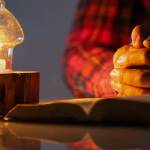
Illustration by Jill DeHaan

Look, the day is coming, burning like a furnace, when all the arrogant and everyone who commits wickedness will become stubble. The coming day will consume them,’ says the Lord of Armies, ‘not leaving them root or branches. But for you who fear my name, the sun of righteousness will rise with healing in its wings, and you will go out and playfully jump like calves from the stall’” (Mal. 4:1–2, CSB).

“Jared, have you ever seen calves jumping?”

“No, I don’t think I have,” I replied.

It was a bitterly cold, late November day in Vermont, and I sat at the bedside of my friend Natalie, who was bundled up under layers of blankets. Natalie was dying of pancreatic cancer. Much earlier in the year, the doctors had given her a matter of weeks to live, but she’d outlived their predictions. Feeble and frail, she was now spending her final days in the home of her best friends, where they’d set up hospice in a basement apartment. I was Natalie’s pastor and had visited her each week, spending substantial time praying and reading Scripture with her and listening to her reflect on life, death, and everything in between. Christmas was coming, and barring a miracle, it would be her last.
Natalie had unusual requests for Scripture readings. She would become preoccupied with particular passages in the Bible, wanting me to read them to her every time I visited, for weeks on end. We’d read John 10 and Revelation 1–3 over and over again. Now we were multiple days into Malachi chapter 4. And no, I’d never seen calves jumping.

When we’d been neck-deep in John 10, Natalie had described the behavior of sheep who recognize their shepherd’s voice. Now she was telling me that when calves are figuring out what their bodies do, they bounce across the pasture in ways you wouldn’t expect.

I said, “I see.” But I really didn’t. I was having a hard time picturing it, perhaps because I didn’t have the capacity at the time to visualize such an image of joy. My friend was dying. And she wasn’t the first. We’d seen so much death in our little country church. I’d lost numerous friends to cancer—young parents, people I’d baptized, people I cared about deeply. Natalie was an older woman but had otherwise been very healthy. She was definitely going “before her time.” And as it seemed I’d spent the last three years of ministry largely in hospitals, at bedsides, and in funeral parlors, I was worn out. I didn’t feel like leaping. But Natalie did.

As painful as life had become for her, she just kept talking about seeing Jesus. Everyone else was preparing for Christmas, when Jesus came to us. She was preparing for heaven and going to him. We talked about the glory of that moment. We talked about the glories of the new earth to come, when these bodies that we can’t keep from winding down finally give way to bodies that won’t decay and will live forever. By God’s grace, it wasn’t just those blankets keeping Natalie warm; it was her hope in Malachi 4:2’s “sun of righteousness.” Her healing was coming.

Christmas came. My family and I traveled back home to Texas, but we returned to Vermont the week after. I hadn’t seen Natalie in a couple of weeks, so after settling in, I drove over to the basement apartment to visit her. It was January 1. I didn’t know—no one had told me—but Natalie had died that morning. I arrived just as her husband and a few others were navigating bringing the pine box she requested as her casket down the staircase. I didn’t get to say goodbye.

Her memorial service was held in the spring. As I sat at the big picture window in our rural home, trying to figure out my funeral sermon, I glanced out at the hillside across the street. And there to my surprise and delight came a calf, bounding exuberantly across the rocky hill. I couldn’t believe it! It was a hilarious, adorable, joyful sight. Now I knew what Natalie knew.

And one day I will know what Natalie knows—that as dark as our Christmases may be, the sun of righteousness will rise with healing in its wings. The first time, Christ came to die. But he rose from his grave. He will come to us again. The lame hearts of those who trust in him will leap in their chests. And all will be well.

Jared C. Wilson is pastor for preaching at Liberty Baptist Church in Liberty, Missouri, and assistant professor of pastoral ministry at Midwestern Seminary in Kansas City, Missouri. He is the author of over 20 books, including Friendship with the Friend of Sinners and Lest We Drift.

Church Life

Held Together by a Cornerstone

The validity of Christianity is not based on our experiences; it’s based on him and his Word.

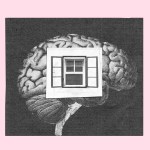
Illustration by Jill DeHaan

Rubble was everywhere. Over a decade of life in a local church was lost in a conflict. Deep roots severed. Old friendships went up in flames. The explosion sent shock waves through home after home. Shrapnel left me with a limp. And that’s not the worst of it.

Anxiety and depression took the spare bedroom. And they were terrible guests—awful in every way you can imagine. They were annoying when I needed peace, quiet, and rest. They were crippling when I wanted to do something—anything. They started making themselves at home, spilling out of the guest room and redecorating the house according to their style and vibe. It’s darker than you realize. Funhouse mirrors are a favorite accent. They paint the walls a dark shade of contorted reality. And while they don’t know plumbing or electrical, it doesn’t stop them from tinkering. Thankfully, they couldn’t harm the foundation of the house.

The foundation stands.

People see my nearly smooth scars now and ask, “Why didn’t you deconstruct? What kept you from leaving Christianity? And why, after everything you’ve been through, do you still serve the church?” Serious questions deserve sincere consideration.

The answer is as clear and serious as the noonday sun: because Jesus is real.

The incarnate Son of God, Jesus Christ, is our foundation. Christmas is no myth. It’s not a cute story. The validity of Christianity is not based on our experiences; it’s based on him and his Word.

The eternal Son of God really did come to earth from another realm to save us. He was actually placed in Mary’s womb by the power of the Holy Spirit to be our redeemer. Fully God and fully man, Jesus was born in Bethlehem. He came to die for our sins (Gal. 3:13), to destroy the works of the devil (1 John 3:8), and to rise for our right standing before God (Rom. 4:25). And he really is building his church with himself as the foundation (Eph. 2:20). It’s all true. I must follow him.

The foundation—the cornerstone—is dependable. You can trust him. Isaiah tells us that this is “a tested stone, a precious cornerstone, a sure foundation; the one who believes will be unshakable” (28:16, CSB). Jesus is acquainted with our griefs (53:3). He knows heartache and suffering more than anyone. The stone went through a stress test, and he passed.

When your house is built on Christ and his Word, you are unshakable (Matt. 7:24–25). The storms will come. You will sway in the wind, and you will be beaten by the rain. A new roof, walls, and flooring may be needed—but the foundation holds. You are held fast in him. As the old hymn tells us, “When all around my soul gives way, he then is all my hope and stay.” Christmas is the story of the delivery and installation of your cornerstone, your hope and stay.

As I sat in the rubble, new friends helped me realize where I was sitting. Christ was always holding me up. Rest and rejoice in him, your firm foundation.

J.A. Medders (PhD) is the director of theology and content for Send Network and the general editor for New Churches. He also writes regularly at SpiritualTheology.net and hosts the Home Row podcast for writers.

Church Life

These Dark Days

Left to our own ruminations, it is hard to see Jesus’ light.

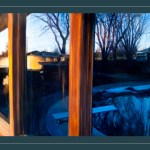
Illustration by Jill DeHaan

The darkness haunts me. During the successive weeks of Advent, I want the mood to lift, the light to shine, and the joy to radiate. Yet the illuminated tree, songs of good tidings and cheer, sweet cookies, and all the trimmings of “the most wonderful time of the year” can’t overcome the foreboding darkness that looms just on the other side of December 25.

As I meander further into my middle-aged years, the fear of greater hardship and affliction grows. December 25 gives way not to bliss and joy but to the literal darkness of January. Short daylight hours, bone-chilling cold, and the slog of a new year of work bring me into a depressive state. Another page of the calendar turns, and my concerns multiply. Will this be the year everything goes so poorly that I’m ruined? Will the world break apart in an all-out war? Will I be so short-sighted and uncaring that I make an irredeemable mess? Is this the year the other shoe drops and grief shrouds my eyes from any joy?

Left to my own ruminations, the darkness wins. Every time. My perspective is too narrow and jaded to gain a glimpse over the horizon. The darkness is too pervasive to think a dawning light could drive the shadows away. Hope is for those who are already winners.

That is, of course, if you ignore God’s promise. The promise.

The promise isn’t for the winners. It’s not for the whole and healthy or the rich and powerful. The promise is for those who live in the land of deep darkness. “On them has light shone” (Isa. 9:2, ESV, emphasis mine). Embracing that promise takes a mountain, or only a mustard seed, of humility. I live in that dark land. I am both a creation and a creator of it. Yet if I admit that the darkness dwells within me, I am poised to be on the receiving end of the promise.

The light has shone. Jesus confronts our present darkness with his piercing light: “While I am in the world, I am the light of the world” (John 9:5). He comforts fearful and cowering dwellers of the darkness, saying, “Do not let your hearts be troubled. You believe in God; believe also in me” (14:1). He delivers us from the dominion of darkness, bringing us into his kingdom through the shedding of his own blood (Col. 1:13).

The light will shine. The present darkness does not stand a chance with the coming Second Advent. Jesus is “the radiance of God’s glory” (Heb. 1:3). When he comes again, he will put all things to rights. His light of grace and justice will fully illuminate even the secret things. It’s by his glorious light that the nations will walk. Darkness will not overcome, “for the Lord God will give them light. And they will reign for ever and ever” (Rev. 22:5).

Yes, darkness is present. The darkness may get deeper still. But the promise is dawning. Post tenebras lux. “After darkness, light.”

Jeremy Writebol is the lead campus pastor of Woodside Bible Church in Plymouth, Michigan, and the executive director of Gospel-Centered Discipleship. He is the author of several books including Make It Your Ambition, the award-winning Pastor, Jesus Is Enough, and everPresent: How the Gospel Relocates Us in the Present.

Church Life

So Shall It Be

Our waiting is never in vain.

Illustration by Jill DeHaan

When the ultrasound tech said, “Sit tight. The doctor will be in shortly,” she had enough “uhoh” in her voice to tell us something wasn’t right. Our normal ob-gyn was away (of course), so a stranger sat before us holding pictures of my daughter’s brain. After pointing out six “cloudy spots” on the scan, he explained two scenarios. In the first, these cysts would result in the death of our daughter sometime before her first birthday. In the second, she would be fine. “She’s fine or she isn’t,” he said. The only test available endangered her life, so the doctor asked us how to proceed. I stared at this man’s degrees on the wall, wondering how this could be our decision to make. We chose life and the ambiguity of anxious waiting.

Normal life continued. Fall transitioned into Advent. I watched my full-term wife show my infant son how to arrange our Dickens’ Village houses just right. We decorated the tree. We wrapped a baby doll for him to open on Christmas morning, hoping it would teach him to be gentle with his sister who may or may not come home. The waiting—that awful mix of hope and horror—carried us into the new year. The regular rhythms of ministry ticked by like the heart monitors of congregants I visited at the hospital. I rehearsed the statistics provided by the doctors. She’s fine. It’s fine. We waited.

Advent turned to Christmas and then Epiphany. We feasted with our church family. We prepared for Lent. We faced the whiplash of seemingly contradictory emotions embedded in the church calendar.

The night before Ash Wednesday, a once-in-a-decade blizzard descended on Louisville. We gathered the next day, with snow burying the world around us, to remember we were dying. I wondered if my daughter was still living.

On February 18, 2015, at roughly 6:40 a.m., my phone began vibrating during my homily. I read the message: “She’s coming.” We barreled through the snow to the hospital. Tears exploded when the doctor, playing a perfect Rafiki, lifted my daughter into the air.

“Is she okay?” I choked out. She was beautiful. She was healthy. She was perfect. In the twinkling of an eye, terror transformed into joy.

Our waiting taught us something of how to wait and of what is awaiting us when the waiting is over. Ours is no longer an ambiguous waiting. It may at times be painful and persistent, but it is neither vain nor uncertain. We know that when we see Jesus, we will be made like him. No one whose hope is in the Lord is ever put to shame, so we face our waiting, complicated and unpleasant as it may be. We hold our contradictory emotions. We rest in the goodness of him who keeps all his promises. He promised a child would be born unto us, and so he was. That child promised that new life would be born in each of us, and so shall it be.

Jonah Sage serves as one of the pastors of Sojourn Church in New Albany, Indiana. He completed his undergraduate studies in philosophy at Miami University (Oxford, Ohio) and received his master of divinity from The Southern Baptist Theological Seminary in 2013.

Church Life

Bend Toward the Light

A lesson from plants on our need to bend toward the light.

Illustration by Jill DeHaan

I’ve been told that during and after COVID-19, many of us picked up a variety of hobbies—from sourdough-bread making to new workout routines and regimens, we all tried to find something to help us pass the time. For me, it was plants; what started with a solo pothos plant from Lowe’s on an ignored shelf became a burgeoning collection of all manner of plants. Confession: I have killed many a plant in my brief career, but I’ve come to understand that one absolutely essential element for all plants is good lighting. Light is king in the plant world.

Because of this reality, one of the hardest times for a plant lover like myself is the winter; the days and sunlit hours are shorter, and the nights are long and cold, especially here in the Midwest. A few days ago, I came into my kitchen and saw that several of my plants were looking a bit sad and depressed. Yet a slice of sunshine was coming through the windows that was particularly bright for even this cold day. I’m sure it could have been my imagination, but it seemed that one of the plants was bending toward the light, as if crying out, “I can’t take this dreariness forever. I must get to you.”

It was a stark reminder that we share some similarities with plants. That shouldn’t surprise us at all. Botanical and arboreal themes abound throughout Scripture. Like plants, we humans aren’t made for the darkness. We don’t thrive there. But, for whatever reason, we often find ourselves there. Whether by choice or circumstance, every human being experiences dark times and days.

What darkness envelops you today? Perhaps it’s the long winter months we find ourselves in, the overwhelming expectations of the holiday season, the pain and heartbreak of broken and estranged relationships—we’ve all been there. Darkness is defined by the absence of light. In the dark, we can feel abandoned, forgotten, and unloved.

What are we to do, then? Like my plant, we do whatever we can to bend toward the Light. The prophet Jeremiah seems to capture this aching tension of living in the reality of a broken, dark world but also straining for whatever ray of light we can faithfully see: “The Lord will not cast off forever, for, though he cause grief, he will have compassion according to the abundance of his steadfast love; for he does not afflict from his heart or grieve the children of men” (Lam. 3:31–33, ESV).

In times of darkness, my encouragement to my own heart and yours today is to do whatever it takes to bend toward the Light. Bending our hearts toward Jesus is an act of faith, because sometimes the darkness feels so overwhelming to us. But we remind ourselves and others that it’s in the light that we truly flourish. As the apostle John records in relation to Christ’s first advent, “The true light that gives light to everyone was coming into the world” (John 1:9).

Jonathan Holmes is the executive director of Fieldstone Counseling and the interim executive director of Christian Counseling & Educational Foundation (CCEF). He also serves as an instructor at Westminster Theological Seminary in the master of arts in counseling program.

Church Life

No More Night

Without acknowledging our grief, we won’t experience the deep comfort of releasing our sorrows to the suffering Savior

Illustration by Jill DeHaan

One day we noticed that the trim around our door frames was especially dark. I assumed we hadn’t dusted enough. Then we noticed discoloration on the concrete floors, and it hit us—there’s mold in the house! This led to major upheaval in our lives. Then, within weeks, financial investments bottomed out, my wife was in a car accident, and I lost my job.

We struggled with anxiety about finances, worry that we would lose our home, and a sense of injustice. But mostly, we were sad. It felt like we were in the pitch black of night. When our pastor asked my daughter how she was handling everything, she replied, “We are grieving. We also know that sometimes you have to sacrifice things for the spread of the gospel. But we’re also sad.”

It’s important to hold both of these realities in tension: grief over loss and hope in gospel gain. If we just brandish our hope, we won’t experience the deep comfort of releasing our sorrows to the suffering Savior. But if we get mired in our grief, without a sense of what God is doing, we will spin out into despair.

In Revelation 21, John writes about our future with great hope: “The city does not need the sun or the moon to shine on it, for the glory of God gives it light, and the Lamb is its lamp. The nations will walk by its light, and the kings of the earth will bring their splendor into it. On no day will its gates ever be shut, for there will be no night there” (vv. 23–25).

Within this stunning description of life under the unwaning sun of God’s glory is a hint of previous darkness: “and there will be no night there.” In this brief phrase, John acknowledges the unwelcome darkness of suffering. Earlier he describes God’s judgment wiping out a third of all lights in the sky (8:12). The exiled apostle writes about the glory of Christ with a profound sense of how dark things can get. Yet he knows the night is on notice.

One day, there will be no more night. Life will be so peaceful and safe that the protective gates of the city will never need closing. There will be no threat of loss, no pain of grief, no more injustice. Only light.

The good news is that light can break into our lives now. Jesus’ undiminished glory illuminates our present path like a shaft of light in the darkness. If we trust him with our heartaches and step out to follow him, he will lead us into the light of the eternal city. While this doesn’t immediately resolve the tension between grief and hope, it does diminish the darkness of night.

Another daughter had strep and was confined to the house for several days. Toward the end of the week, we decided to go outside together. As we stepped out into the warm sunlight, she said, “Daddy, the light hurts.”

I replied, “That’s because you’ve been in the dark so long. Once you get used to the light, you’ll see it’s a beautiful day.”

Coming out of the darkness can be painful, even scary, but as we step into the light, our eyes adjust to take in the brilliance of Jesus, who brings us unique comfort and hope.

Jonathan K. Dodson has served as the founding pastor of City Life Church, a theologian in residence, and the founder of the resource ministry Gospel-Centered Discipleship. He is married to his remarkable wife, Robie, and is the author of numerous books, including The Unwavering Pastor.

Church Life

An Invitation to Believe

I was a memory-verse A-lister, Bible trivia ace pastor’s kid. A crisis of faith brought me to read Scripture anew.

Illustration by Jill DeHaan

When I was 27, my faith fell apart. To be more accurate, the house of cards I had carefully constructed to look like faith fell apart.

For years I had hidden certain doubts and hypocrisies behind theological knowledge and articulate arguments. I gave the impression of confidence in Christ while actually grasping at confidence in myself. And then it all blew up. I was fired from a job for dishonesty and theft. My sin was exposed, and the damage it caused was deep. Worst of all, though, I was forced to confront the question “What do you actually believe?” Not “What do you profess?” or “What do you assent to?” but “What do you stake your life on?”

And I couldn’t very well answer. All my previous professions of faith had brought me to this place. I was staring into the chasm of unbelief, on the brink of falling in completely, and realizing I didn’t know how to believe or whom to believe in.

Amid this crisis, an elder from my church who was patiently caring for me and offering guidance urged, “Go back and read the Gospels and look for Jesus. Try to forget all your preconceptions.” That’s not an easy thing for a pastor’s kid, Sunday schooler, sword-drill champion, memory-verse A-lister, Bible trivia ace, and flannelgraph aficionado. Preconceptions were, in many ways, all I had.

But I did my best. Starting in Matthew 1, I read stories and passages I’d read a hundred times. I read through Jesus’ teachings and about his miracles. I muddled and trudged my way into Mark. Then I got to Mark 9 and the account of a desperate father bringing his demon-possessed son to Jesus for deliverance. I knew this story. It barely registered as significant in the moment, except for one interaction:

“It has often cast him into fire and into water, to
destroy him. But if you can do anything, have compassion
on us and help us.” And Jesus said to him, “‘If
you can’! All things are possible for one who believes.”
Immediately the father of the child cried out and said,
“I believe; help my unbelief!” (Mark 9:22–24, ESV)

This grabbed my attention. When a struggling doubter brought those doubts to Jesus and asked for help, Jesus didn’t reject or condemn him for his struggles. The man could look Jesus in the face and say, “Help my unbelief” and Jesus would. This offered a paradigm for real faith: belief with struggle, belief with dependence.

The words I had so often skipped over began to take on flesh in the living person and reality of Jesus. Whereas I had been unmoved by reading of Jesus’ birth, I now discovered another sort of advent—when Jesus comes alive in a soul.

These discoveries weren’t immediate. Yet seeing those verses that day was the spark that caught the tinder of my heart. Over the ensuing months, the flame flickered, then crackled, then roared into heat and light in my heart. Jesus invited me into belief and showed me he is indeed the life who is the light for men’s hearts (John 1:4).

Barnabas Piper is a pastor at Immanuel Church in Nashville, Tennessee. He is the author of several books, including Help My Unbelief and Belong. He is married to Lauren and has three children.

Church Life

Hope That Cannot Be Overshadowed

Advent reminds us that light is never overcome by darkness.

Illustration by Jill DeHaan

Summer of 2022 was a high point in my life. I was on sabbatical, getting some much-needed rest and an abundance of quality time with my family and the Lord. Psalm 16:5–6 became the theme of that season: “Lord, you are my portion and my cup of blessing; you hold my future. The boundary lines have fallen for me in pleasant places; indeed, I have a beautiful inheritance” (CSB). The Lord was helping me embrace my limitations and see his goodness in both the highs and lows of life and ministry. I returned from that season of rest with renewed hope and joy in the provision and promises of God in my life.

But immediately upon my return, it was all put to the test. The hopeful light of that season was replaced with discouraging darkness. My first day back as lead pastor came with the news that a staff member was preparing to leave. This was followed by the departures of several church members, leaving a wake of grief and pain. It was a season of discouragement unlike any other I had experienced in my years of pastoring.

Aside from the ministry pains, my wife was bearing the weight of caring for her father, who was suffering from dementia. Together, we shared the burden of praying for our oldest son, who remained close to our family but had distanced himself from the church and his faith a couple years before. We found ourselves facing so many discouragements and challenges. By November, it felt like all the light of the summer was on the verge of being overshadowed.

But then the season of Advent came with the reminder “The light shines in the darkness, and the darkness has not overcome it” (John 1:5). This is one of the great gifts this season presents to us. It invites us to remember that no matter how dark things might seem, light has come and is coming again, and darkness cannot overcome it. Advent bade me to not forget the lessons of the summer and to embrace that even amid discouragement, the boundary lines have fallen for me in pleasant places, the Lord holds my future, and I still have a beautiful inheritance.

Jesus was so good in that season to lead me to cling to him and the hope he brings, even if it meant waiting for things to actually feel hopeful. And he was gracious to not make us wait too long. Within a few months, a spirit of joyful hope returned to our church. Even more beautifully, the Lord brought our son to faith in one of the most amazing transformations I have seen.

Whatever you are facing in this season, however dark things might seem, remember that light has come and is coming again, and darkness cannot and will never overcome it. The beautiful inheritance we have in Christ cannot be overshadowed.

Chris Jones is the founding and lead pastor of Redeemer Community Church in Bloomington, Indiana. He’s been married to his wife, Krystal, for 25 years, and they have three children.

Church Life

The Storm and the Promise

A word of comfort for weary saints.

Illustration by Jill DeHaan

Mom passed away this afternoon.” My sister-in-law spoke the five words no one wants to hear—especially not on Christmas Eve. As we adults talked quietly on the phone, our kids half watched a Christmas movie and ate their dinner, trying to figure out what was going on.

It was Chinese takeout, our family’s yearslong Christmas Eve tradition. It was cold before we grown-ups took a bite.

We walked in circles outside, reeling. We’d experienced death in our extended family before, but this was different. This was my wife Emily’s mother. This was the first of our parents to die. Even as we tried to process the news and planned to get Emily to Canada to be with her dad and sister, Christmas loomed large. What would the next day be like? How would we tell our friends—our gospel family here in Tennessee—about what happened without ruining their Christmas?

The next day was heavy but normal. Presents, food, and another failed attempt at rallying the family around a reading of the birth of Jesus (Luke 2:1–20). Phone calls and texts with family. Quiet time to contemplate.

The following days and weeks were a blur of calls, texts, tears, and travel. As January passed into February, we prayed for a sense of normalcy. We didn’t yet know this was only the beginning of a storm that would rage for over a year: A major health scare and surgery. Another unexpected death, this time my sister’s husband, a man I’d known for over 30 years. The end of our church of more than eight years.

We prayed for the storm to end and for peace to come. But instead of Jesus calming the storm (Mark 4:39), our boat was overturned. Instead of finding stillness, we were washed up on the shore to sit beside Job, the weary saint who helped me see the light.

It’s easy to misread Job’s story, especially when God breaks his silence and responds to Job’s complaints (Job 38–40). His “Where were you when” stings, seeming to say, “I’m God. You’re not. So how about you sit down and shut your mouth?” Yet one small but important detail challenges this idea: “Then the Lord spoke to Job out of the storm” (38:1). When God appears, he is identified by his intimate, covenantal name—YHWH, I Am Who I Am. The name given to sustain his people in their distress (Ex. 3:14). The name that told them he was with them in their trials—and tells us the same.

He is with us in the storm.

That is Advent’s promise, one Christ’s birth made manifest as “the Word became flesh and made his dwelling among us” (John 1:14). Despair will haunt us, but God will not abandon us. Storms will come, but Christ is with us. Darkness will come, but after darkness comes light.

And one year later, on Christmas Eve, we sat down for dinner. It was Chinese takeout, our family’s yearslong tradition. It was hot when we took our first bite.

Aaron Armstrong is the author of Faith Simplified: What We Believe and Why We Believe It. For nearly 20 years, he has served local churches as a preacher, small-group leader, and children’s ministry leader.

Apple PodcastsDown ArrowDown ArrowDown Arrowarrow_left_altLeft ArrowLeft ArrowRight ArrowRight ArrowRight Arrowarrow_up_altUp ArrowUp ArrowAvailable at Amazoncaret-downCloseCloseEmailEmailExpandExpandExternalExternalFacebookfacebook-squareGiftGiftGooglegoogleGoogle KeephamburgerInstagraminstagram-squareLinkLinklinkedin-squareListenListenListenChristianity TodayCT Creative Studio Logologo_orgMegaphoneMenuMenupausePinterestPlayPlayPocketPodcastRSSRSSSaveSaveSaveSearchSearchsearchSpotifyStitcherTelegramTable of ContentsTable of Contentstwitter-squareWhatsAppXYouTubeYouTube