Ideas

How To Practice Gratitude (Even When You Don’t Feel It)

Gratitude is more about action than feeling.

Christianity Today November 24, 2025
Illustration by Elizabeth Kaye / Source Images: Getty

Excitedly one Christmas I ripped off a present’s wrapping paper. I hoped to see one of those video games you could get at Blockbuster in the ’90s, like Excitebike or Double Dragon—their very names promised adventure. Instead, the Nintendo game I opened was called Bible Adventures. The letdown was something awful. While I’m sure the historical Noah was pretty cool, playing him on Nintendo decidedly was not. I remember feeling so bad that I felt guilty for not wanting the game. But I decided to try it. It still wasn’t exactly fun, but I played. Although I never came to love it, I grew grateful that my parents tried to buy a game that would please my siblings and me.

We like to think of gratitude as an overflowing feeling directed at others—an outpouring of love and warmth. But sometimes warmth doesn’t come. Even still, another’s kindness deservesour gratitude. What are we to do when we don’t feelgrateful but know we ought to be? Is gratitude duty or an emotional response?

We must often practice and embody gratitude before we feel and experience it in our hearts. The key is choosing to practicegratitude as a habit, not an emotional state. Gratitude may come spontaneously, but more often, it is a habit, choice, and action in response to what we know to be true.

The Bible speaks about the importance of thanksgiving, emphasizing the actionof giving thanks rather than the emotionof gratitude. For example, 1 Thessalonians 5:16–18 reads, “Rejoice always, pray continually, give thanks in all circumstances; for this is God’s will for you in Christ Jesus.” Notice it doesn’t say, “Feel thankful in all circumstances.” The command is “Give thanks in all circumstances,” even when your parents give you the wrong video game.

Similarly, Paul writes to the Philippians, “Do not be anxious about anything, but in every situation, by prayer and petition, with thanksgiving, present your requests to God. And the peace of God, which transcends all understanding, will guard your hearts and your minds in Christ Jesus” (4:6–7). Prayer must include thanksgiving alongside requests. The implication is that in seeking the peace of God, we must first acknowledge God’s blessing. This, again, is action, not necessarily feeling.

Because of the influence of expressive individualism, we tend to believe that what is real and authentic is what we deeply feel, what comes from inside us intuitively. Expressive individualism is the belief that we establish our identity only when we look deep inside ourselves, discover something, and express it authentically to the world. This modern ideology inclines us to trust our inward senses over external sources. In this model, what is most real is what comes from deep inside us, what we discover about ourselves. So if we discover that we are grateful, then we are grateful.

But if we do not feel grateful, then the best we can do is try to persuade ourselves to feel that way and hope it works. As Christians, we can recognize that what’s objectively real and authentic is that we owe God and others gratitude, whether or not we feel it. It’s only a question of how we will act on that gratitude.

Once you begin thinking about gratitude as an action and then secondarily as an emotion, a whole world of thankfulness opens up. If you sit and wait to be thankful for the blessings God has given you, you may never feel grateful. Like nine-year-old me, you may even feel guilty for not feeling thankful. Or you may grow bitter over the blessings you have received. It is only when you accept that you have been blessed and choose to act on that objective reality in response to a generous God that you are freed from bondage to your emotions.

Our emotions are the currency of our social media feeds, as companies target ads that play upon our vulnerabilities. Algorithms remind us of our inadequacy, comparing our lives to others. Billboards invite us to indulge ourselves. The world affirms our passions and confirms our discontentment. The world whispers in our ear that whatever we have, we have earned ourselves, and we deserve more, infinitely more. It tells us that whatever good blessings God has given us are insufficient, paltry things that cannot sustain us. It is our birthright to have our desires fulfilled.

For each of us, some of God’s gifts will feel like the Bible Adventures video game that Christmas morning: out of place, disappointing, and hard to accept. It may be our jobs, our homes, our marriages, our friends or lack of friends, our bodies, our minds, our finances, or our very lives.

But whatever the situation, our obligation is to be grateful. There are three steps we can take to form a habit of gratitude instead of waiting for the feeling. First, we can pray, “Lord, you have blessed me with more than I can imagine. Help me to recognize those gifts, even when I don’t feel thankful. Teach me to love them as you meant for me to love them.”

Second, we can humbly look for blessings. Humility is key, because if we are not humble, we may overlook the good gifts God has given us and assume they are our own works. When we start looking for blessings, we rightly recognize our dependence upon God, and thankfulness can become a more natural outcome.

Third, we can speakand perform gestures of gratitude to God and others. Once we have identified a blessing, an act of kindness, or a gift from God or a neighbor, our natural response should be to speak words of gratitude, write the person a note, smile, or give a hug. Maybe our feelings will be there; maybe they won’t. It is no matter. The goodness of giving and sharing the love of God in thanksgiving remains whether or not we feel it.

Our God, who honors the humble, will give us the ability to be grateful if we practice these habits. You may not feel gratitude all at once. You may never feel it as much as you’d like. But you can choose to act out gratitude with your life. I never came to love Bible Adventures. It’s not a good game. But I acted out gratitude to my mother and father by loving them. And whether or not I feel it, it is good.

O. Alan Noble is associate professor of English at Oklahoma Baptist University and author of three books: On Getting Out of Bed: The Burden and Gift of Living, You Are Not Your Own: Belonging to God in an Inhuman World, and Disruptive Witness: Speaking Truth in a Distracted Age.


News

Kenyan Churches Tackle Superstitions Against Disabilities

Lack of resources and false teaching makes life difficult for people with mobility issues.

A wheelchair.
Christianity Today November 24, 2025
Edits by CT / Source Image: Getty

Stephen Kitsao lost his ability to walk at age 11 when he suffered a spinal injury from a fall out of a coconut tree. Kitsao couldn’t afford a wheelchair, so his father carried him to school every day in a tomato crate fastened to the back of his bicycle.

“Every new day began the same way—in the crate, in my father’s arms, with both of us pretending it was normal,” said Kitsao, who is now 31. His school in Kilifi County on the coast of Kenya lent him a wheelchair donated by a charity to use during the day, but he couldn’t use it for the 40-minute trek home. Kitsao didn’t get an electric wheelchair until he entered college.

Superstition also plagued his life. As he grew up, others in the community shunned him, fearing that if they got close, they would get life-threatening diseases or end up in a wheelchair too. In May 2022, a mob, including the pastor of an unregistered local church called Watumishi (Swahili for “servants”), stormed Kitsao’s home. They accused his father of practicing witchcraft, claiming it resulted in Kitsao’s paralysis and another child born with an illness.

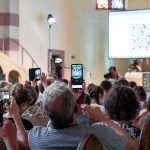
The crowd threw stones at the house and at then 28-year-old Kitsao’s father. Kitsao’s 12-year-old sister, Eunice Masha, tried to shield their father with her body. By the time the mob left, they had destroyed Kitsao’s home, left his sister with permanent scars, and stoned his father to death. The police arrested seven people but released all but one due to lack of sufficient evidence.

Kitsao, now a youth leader at Mkunguni Light of God Church, a Pentecostal church in Nairobi said the incident caused him to question God, wondering in anger and confusion why God allowed his father to be killed. Yet Kitsao has leaned on his faith in his lowest moments: “I was helped to understand that God is all-knowing and that he was going to be with me.”

For years, cultural beliefs about disabilities as a curse from God or a sign of bad luck, coupled with poor health care infrastructure in the country, have left Kenyans with disabilities at risk of mistreatment and without adequate medical care. Today, the government—and Christian churches and ministries—are trying to change that.

In January, Kenya updated its disability laws to better prevent the abuse of those with disabilities and increase access to public spaces, adding stiffer penalties for violations. Kenya’s Constitution and the 2025 Persons with Disabilities Act guarantee accessibility in public spaces and transportation.

Still, rights on paper don’t always translate to daily life.

Kitsao told CT people with wheelchairs face discrimination in transportation. His commute to classes at Kenyatta University in Nairobi, Kenya, takes him at least twice as long as it would take a regular commuter. Drivers must carry Kitsao onto the bus and properly secure his wheelchair. Some don’t want the hassle.

“Minibuses pass me by, one after another, and the few that stop often demand double fare for me and my wheelchair,” Kitsao said. He usually gets to the bus stop two hours early to compensate.

Once Kitsao tried to get a ride to a job interview, but vehicle after vehicle passed as drivers refused to take him: “By the time one finally agreed, I arrived—late, tired, and humiliated before I’d even stepped into the room.”

Landing a job as a person living with a disability is equally challenging. Since 2003, Kenyan disability law has required public institutions to reserve at least 5 percent of their jobs for people with disabilities, and mandates accessibility standards in housing and public infrastructure.

In 2022, only a third of institutions had an employee with a disability, and few public institutions bother to hold open the mandated number of positions for them.

Kitsao said many companies also lack wheelchair ramps and accessible bathrooms. He recalls working for three months at a TV station where the security guard and a friend had to carry him to his desk every day because the building had no ramp: “It was demeaning.”

Kenyans like Kitsao also struggle to get and maintain wheelchairs.

Christian ministries such as Joni and Friends and Christian Aid Ministries provide Kenyans with free mobility devices through outreach programs, alleviating some of the need. But the few wheelchairs available for purchase in Kenya can be too expensive or poorly sized for the user. If organizations that donate devices don’t provide service support, many wheelchairs break down within months.

“It’s a half solution,” said Kenneth Gichohi, an assistive-technology innovator from Nairobi.

Gichohi explained that although wheelchairs qualify for tax exemptions, few buyers know that, so they often pay inflated prices. An electric wheelchair can cost between 150,000 and 300,000 Kenyan shillings (about $1,200–2,300 USD), up to a third of the average yearly income in Kenya. Since Kenya doesn’t have service centers to repair these devices, Gichohi said fixing them is nearly impossible: “We need a radical shift in how this space is managed.”

Some churches, recognizing the need to service wheelchairs, now conduct follow-ups for the maintenance of donated mobility devices.

Churches are finding other ways to integrate congregants with disabilities. Some have begun to modify their facilities—installing ramps, wider aisles, and wheelchair-accessible restrooms. Some congregations now include disability ministries, offering job training, free medical camps, or spaces for fellowship.  

The nondenominational Nairobi Chapel’s disability ministry doesn’t stop at distributing wheelchairs or widening doorways. Enzi—which means “treasured”—also provides special needs classes for children, bimonthly parent support meetings, and sign language interpretation in one service each week. Leaders teach about disabilities in sermons and Sunday school lessons, even using disability-themed coloring worksheets for its children’s programs.

When Kitsao joined Mkunguni Light of God at age 20, leaders installed a ramp and welcomed him as part of the congregation. “I’m grateful that the church sees me beyond my disability and they preach true doctrines,” Kitsao said.

Because many Kenyans—including Christians—believe witchcraft or punishments from God cause disabilities, some nonprofits, such as Kupenda for the Children, hold workshops to train pastors to confront these stigmas in the culture and the church.

For Kitsao, correcting false teaching about disability is personal; the pastor and the unregistered church group that murdered his father still operate today.

“I can’t harbor resentment toward all churches because of them,” he said. “But I carry some bitterness for that specific group. They’re still out there preaching.”

News
Wire Story

UK Breaks Ground on Massive Monument to Answered Prayers

After years of planning and fundraising, the roadside landmark shaped like a Möbius loop will represent a million Christian petitions, brick by brick.

A white structure loops over a hilly landscape with people walking around.

An artistic rendering of the Eternal Wall of Answered Prayer, which will be constructed near Birmingham, England.

Christianity Today November 24, 2025
Courtesy image / RNS

Richard Gamble’s passion for Jesus has always been outsize. Twenty years ago, he had a vision from God to drag a 9-foot wooden cross for 77 miles during Holy Week leading up to Easter.

After that grueling marathon in 2004 came a bigger, bolder vision: Build a wall that tells a million stories of how God has answered prayer.

Last week, Gamble, 56, broke ground on that vision—a 168-foot-tall architectural landmark that is expected to be one of the largest Christian monuments in England, if not the world. (Christ the Redeemer, the iconic statue of Jesus in Rio de Janeiro, is 98 feet.)

Planned to open to the public in 2028, The Eternal Wall of Answered Prayer, with a price tag of 45 million pounds (or $59 million), will not, however, feature any familiar Christian icons such a cross, a fish, a lamb, or a representation of Jesus. Instead, it will consist of a giant white Möbius strip stretching nearly the size of a football field, upon which a million small rectangular bricks will be overlaid, each with a digitally linked story of answered prayer accessible on a mobile app.

“We live in a country where Christianity has been pretty much put on mute,” Gamble said in an interview at the Eternal Wall offices near the construction site last week. “To build something that big and unashamedly Christian, I don’t think anybody had the faith that it was going to happen.”

To Gamble, the groundbreaking is itself the result of 21 years of fervent prayer. A one-time software developer, church planter, and former chaplain to the Leicester City Football Club, Gamble became a Christian after a visit to a charismatic church at age 20. It immediately changed his life. He quit drinking and gambling and enrolled in a Bible college. After several years in ministry, he decided he wasn’t cut out to be a pastor.

But he never gave up on his deep Christian convictions. In a country where only 21 percent of people say they pray daily, Gamble wanted to find a way to communicate what he felt to be God’s active role in people’s lives.

The way he tells it, God answered his prayers in stages. Among the first signs was when a woman came up to him after a presentation at a 2015 conference at Redding, California’s Bethel Church, and said, “God wants you to know he’s got some heavenly land for you.”  

The exact plot of land, which someone on his prayer team back in England identified—another sign—was given to him by Andrew Edmiston, the son of Lord Robert Edmiston, a British billionaire businessman who established the charity Christian Vision and happened to own the land. Andrew Edmiston also had a vision for a Christian monument in the United Kingdom, Gamble said, and the family company’s contribution to the project now totals more than 30 million pounds. About 22,000 individuals have also contributed to the project, Gamble said.

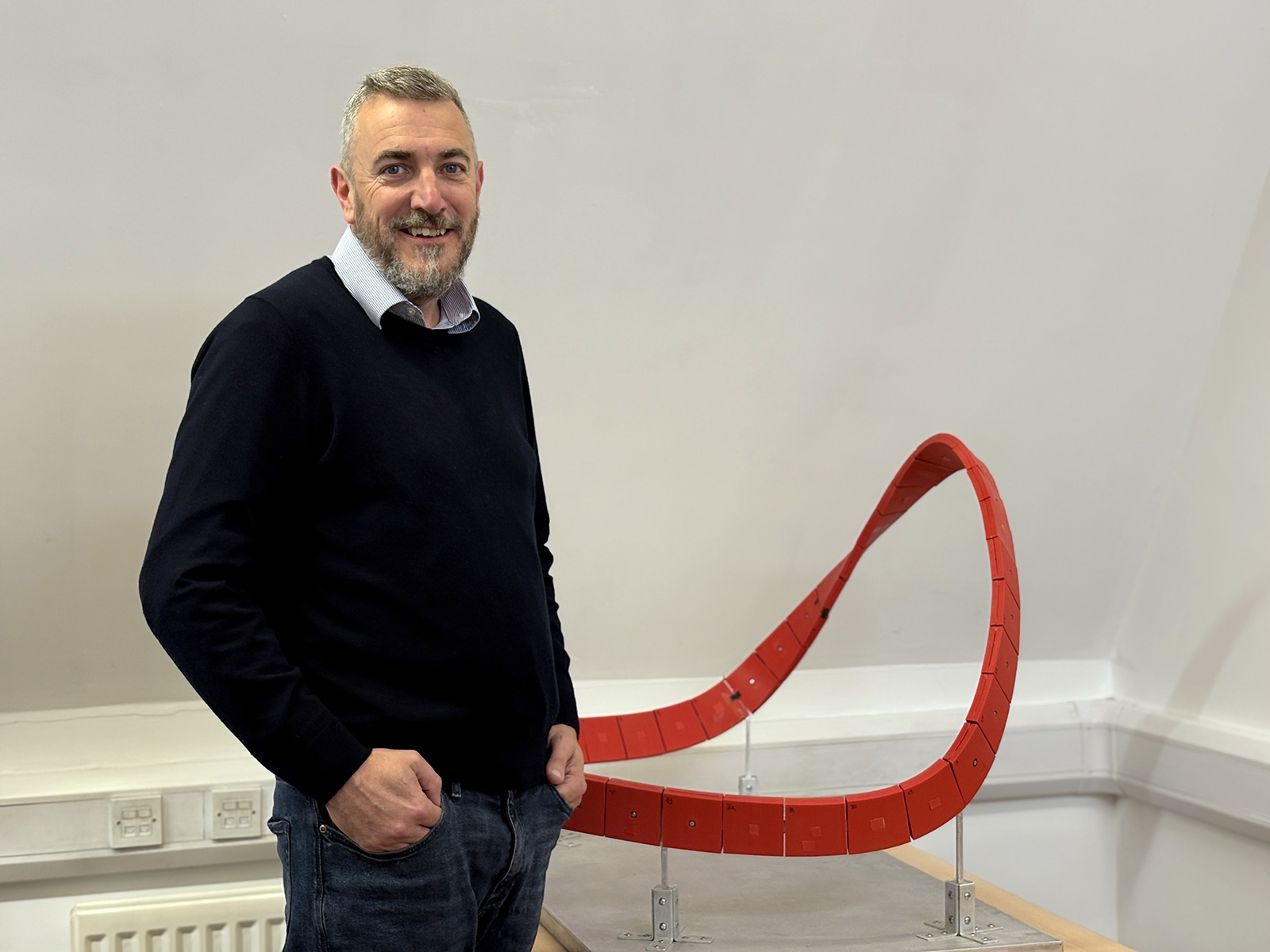
A bearded man in his 50s stands besides a red model shaped like a Möbius strip.Yonat Shimron / RNS
British Christian Richard Gamble came up with the idea for the Eternal Wall of Answered Prayer.

The Eternal Wall of Answered Prayer will sit just off the M6 motorway on the outskirts of Birmingham. The M6 is the longest highway in the UK, running from the Midlands to the border of Scotland. The location was important to Gamble because the monument will be visible from six miles away and, he hopes, will pique the interest of thousands of drivers and passengers each day.

What they see, however, will be a most unconventional design. Gamble wanted something new and novel, a piece of art. He put his idea before the Royal Institute of British Architects, which held a global competition for the design in 2016. A total of 133 entries from 28 countries were received, and a UK firm with a Möbius strip design was selected.

That design was approved by the North Warwickshire Borough Council in 2020, another sign of answered prayer for Gamble. Mathew Guest, a professor of the sociology of religion at Durham University who researches evangelicals in the UK, said the design’s neutrality probably helped.

“Having religious symbolism in the UK beyond the traditional architecture of churches can be very controversial,” Guest said. “In a polarized world where there’s a lot of religious tensions between religious groups, it can be perceived as a potential provocation. And I wonder whether that’s partly the reason for building it in this way.”

Christianity has been declining for years across the UK. A recent Pew study found that between 2010 and 2020, the Christian share of the UK’s population fell to just under half—49 percent. During that same time, the share of the religiously unaffiliated increased to 40 percent.

Independent evangelical churches, including charismatic and Pentecostal groups, may be the one segment of Christianity that is thriving in the UK, Guest said. Gamble and his family attend Chroma Church, an evangelical congregation in Leicester.

For several years now, Gamble and his team of 10 full-time staff have been combing through stories of answered prayers, beginning with the Bible. The idea is to gather a million testimonies of answered prayer, in writing or video. Those testimonies, 500 words each or three minutes of video, describe a time when Jesus answered prayers—for healing, for a job, for recovery from addiction, for reconciliation, for the birth of a child. Only Christian prayers will be included.

Each story will form part of a database digitally loaded on a single brick, the size of a business card on the monument. Visitors to the site will be able to download an app that identifies their location and read, listen to or watch the stories on their phone.

Gamble allows that not all prayers are answered with a yes. Sometimes the answer is “wait,” and sometimes the answer is “no.” The important thing, he believes, is the conversation with Jesus. He knows not everyone visiting the site will be convinced, but he’s hoping to provoke people to have an encounter with Jesus.

“It’s like this secret world in the UK that nobody knows that God is alive and answering prayer,” Gamble said. “Nobody talks about it.”

He’s banking on a monument— far removed from a church, which so few attend nowadays—being the catalyst that motivates people to seek out faith.

“If somebody comes and looks at it and goes, ‘Great piece of architecture, but a load of rubbish,’ that’s a win because they have taken themselves out of a secular environment and considered elements of the Christian message,” he said. 

Videos

Mastering Masculinity

Jason Wilson’s rite of passage combines martial arts, emotional stability, and lessons from the Bible.

Christianity Today November 21, 2025

Six years ago, Jason Wilson taught men how to cry. These days, he’s also training boys to fight—not just on the outside but from within.

Wilson teaches young men martial arts and emotional stability at The Cave of Adullam Transformational Training Academy in Detroit. Editorial director Sho Baraka visited the ministry, where he saw a man who carried compassion in a brawny frame integrate contemplation with lessons from jujitsu and the Bible.

In this video from Christianity Today’s Big Tent Initiative, Baraka interviews Wilson about masculinity, emotional incarceration, and the meaning of being a “comprehensive man.” Baraka also talks to participants in Wilson’s emotional-stability training, which aims to help young men survive this predatory world and, more importantly, themselves.

Church Life

What Do a 103-Year-Old Theologian’s Prayers Sound Like?

Jim Houston’s scholarship centered on communion with God. His life in a Canadian care home continues to reflect this pursuit.

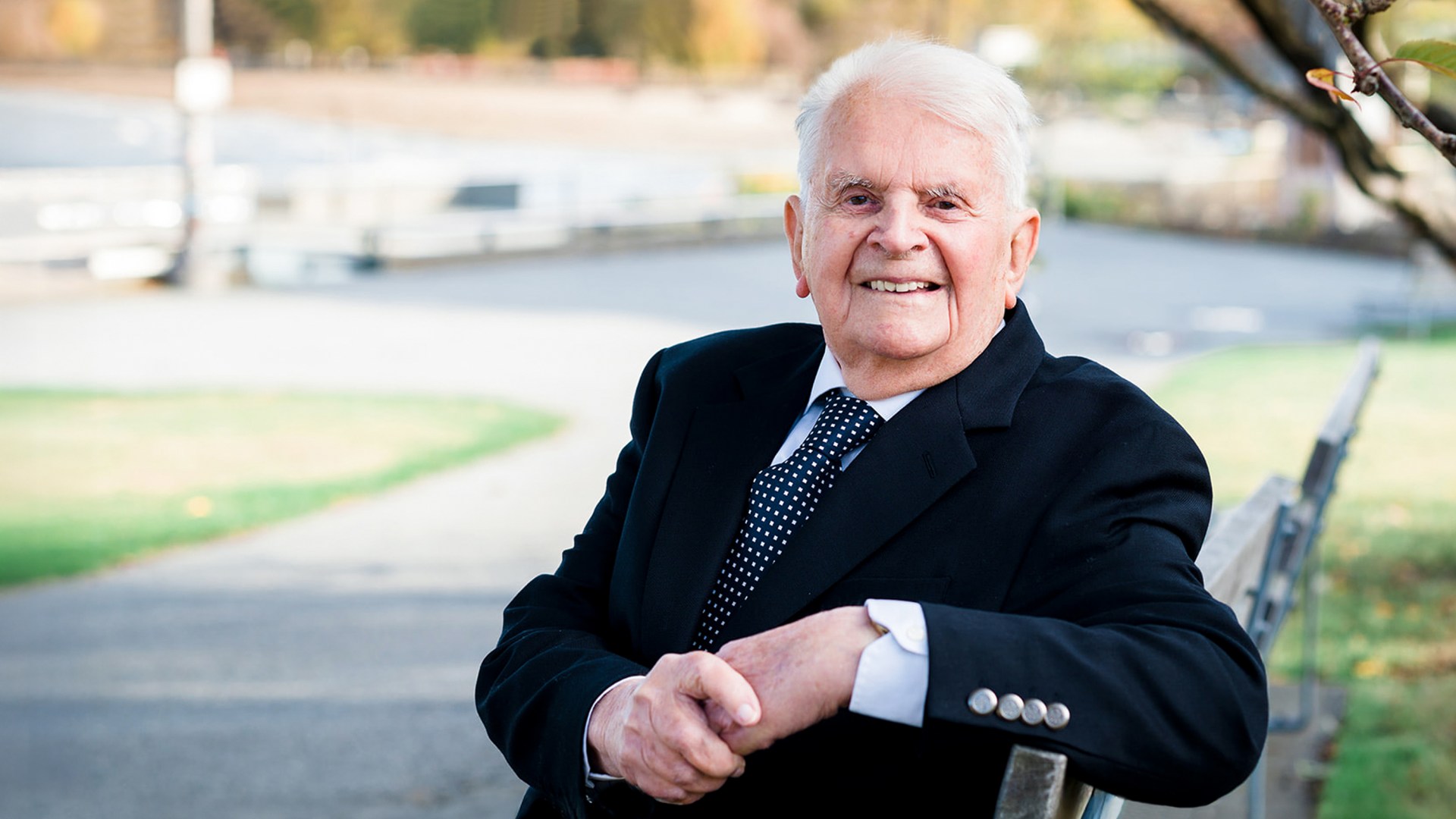
A photo of Jim Houston
Christianity Today November 21, 2025
Sandra Leung / Yaletown Photography

Today is Jim Houston’s 103rd birthday. When I visited him last month, he sat in a plush armchair and fiddled with his MacBook as pale sunlight streamed in from a set of windows beside him. Loose sheets of paper bearing his cursive handwriting spilled haphazardly from a short stack of books on his desk.

Even in his Vancouver care home, the centenarian theologian gave off a professorial air. His theological writing career has exceeded most people’s lifespans. From age 99 to 100, Houston posted on his blog dispatches from his hospital bed. Last year, at 102, he coauthored A Vision for the Aging Christian.

“What does it feel like to be turning 103?” I asked. Houston answered as if it was obvious: “Well, I’m very grateful to God, of course.”

Generations of evangelicals in Canada know Houston as the founding president of Regent College in Vancouver. He moved there from the University of Oxford, where he had regularly studied the Bible with C. S. Lewis. Houston published an array of books on Christian spirituality, and as the years went by, his ministry included a focus on caretaking and aging, with the opening of the James Houston Center for Faith and Successful Aging. 

Houston has married his theological interests with hands-on experience. For most of his life, that meant offering spiritual care for students and colleagues. But in his later years, his ministry takes place in the rooms and halls of a bright, spacious care home in Vancouver. 

Houston’s private room lies in one corner of the building, his armchair and desk situated next to his bed and a walker. Illustrations of Psalm 23 and a kid’s painting hang on his walls, while a bookshelf displays pictures of family and a framed image of Russian painter Andrei Rublev’s Trinity

Every morning, he eats breakfast with other residents in a communal dining space but takes his other meals privately as he prefers to read, write, and speak with his visitors. He also shares daily devotions with fellow seniors.

Residents or their families, many of whom aren’t Christian, seek him out when they want “someone spiritual” to pray for them, particularly as they near the end, his daughter Lydele said. 

“I have opportunity to speak words of hope and kindness to a community who daily and more poignantly face death,” he wrote in his latest book.  

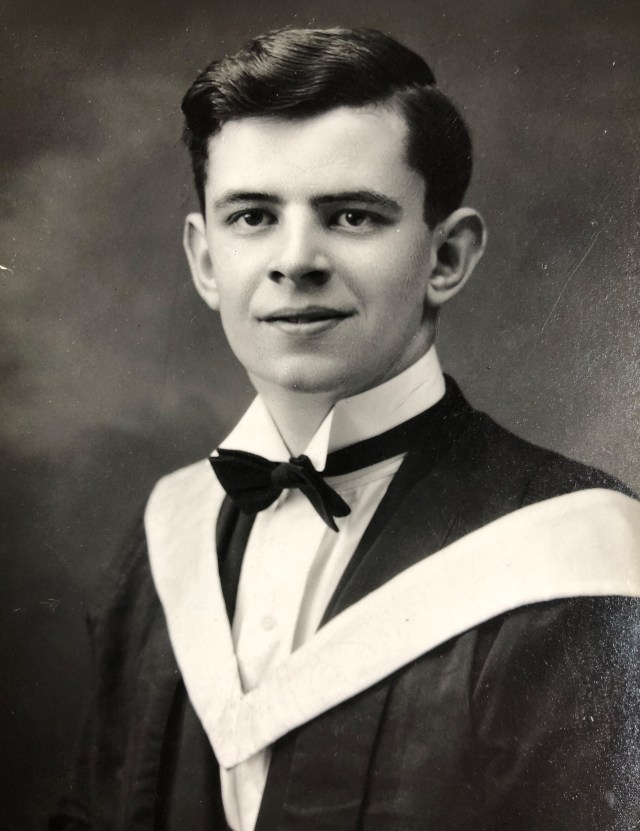
James Macintosh Houston—Jim to most —was born in Edinburgh on November 21, 1922. He grew up in Spain, where his parents served as Brethren missionaries for the first seven years of his life. Then he moved back to Scotland, where he almost died of diphtheria. His memoir reveals that as a teenager, he struggled with low self-esteem.

After scoring a fellowship to Oxford, Houston studied geography and later lectured on cultural and historical geography in 1947 when the university was short-staffed after World War II. While at Oxford, he met his wife, Rita, and got married in 1953.

A young Jim Houston. Courtesy of Claire Taylor.

He had a mystical encounter with God in the early 1960s in Winnipeg, after attending an Urbana conference in the US, when he woke up in the middle of the night to a bright light at the foot of his bed. “Lord, what do you want me to do?” he asked. 

Six years later, he received his answer: Leave Oxford for Canada. 

The Houstons had planted their roots in Oxford, welcoming children as Houston became bursar of Hertford College. Yet Houston felt a steady pull toward establishing a school that would offer theological training for laypeople in Vancouver. This came about after he read a 1965 article by local businessman John Cochrane that proposed establishing a graduate Brethren school on the campus of the University of British Columbia (UBC), one that would be open to believers from all Christian traditions.

In 1970, Houston became the fledgling school’s founding president, modeling Regent’s evangelical ethos after Cambridge’s Tyndale House. Houston brought in other notable evangelicals, such as British New Testament scholar F. F. Bruce and Peruvian scholar Samuel Escobar, to Regent’s summer school program. Houston also taught, offering courses exploring Christian classics and traditions of Christian spirituality. In 1978, he stepped down as president and became Regent’s chancellor and professor of spiritual theology. He also cofounded the C. S. Lewis Institute in Washington, DC. 

Fellow theologians have recognized and lauded Houston’s holistic perspective on the Christian life. “Throughout his adult life Jim has combated compartmental living in the interest of his concern that Christians be ‘alive to God’ in every sphere of thought and action,” his longtime friends and colleagues J. I. Packer and Loren Wilkinson wrote in a festschrift commemorating Houston’s 70th birthday. Houston’s life and teaching is “a constant reminder to us all that discipleship means to love God with one’s whole being,” Gordon Fee also wrote in an essay for the same book. 

Regent graduate Rosie Perera first met Houston in a course entitled The Christian Mind. She found him esoteric at first: “He spoke as if his students already had a grounding in philosophy that I definitely didn’t possess.” But Perera grew to understand and appreciate his teaching. She also got to know Houston as a spiritual mentor. Students would seek him out for spiritual direction and end up in tears, the retired software engineer said. 

“I was one who sat in the guest chair in his office and poured out my own struggles,” she said. “He asked me about my relationship with my father, and indeed he glimpsed things I had been only vaguely aware of.” 

Perera also caught a firsthand glimpse of Houston’s love for the written word. In the late ’90s, she went to Houston’s home to help him get online: 

He had heard it was important but had no idea what it might be good for—only that he didn’t want to miss the wave of the future. He already had email, so it wasn’t hard to set up a browser and show him the basics.

“So what can I do with it?” he asked. “Can I check the stock market?” I showed him how. “What else?” “Well, you can buy books,” I said, and introduced him to Amazon.com. He immediately wanted to create an account and enter his credit card number. He was like a kid in a candy shop, delighted as he clicked and ordered this book and then that one. I left that day realizing that I might have changed his life more than he had ever changed mine.

The Houstons regarded hospitality as equally important as theological study, hosting countless students in their home every Sunday afternoon. One of these students was Suzanne Taylor, who taught nursing at UBC and decided to enroll in courses at Regent. Houston began mentoring her, and she often spent time with him and Rita at their home for tea and soup. 

For six years, Taylor’s husband, Robert, a retired UBC professor of surgery, has been going to a Vancouver men’s prayer breakfast group, which Houston has been a part of for half a century. “As I came to know the men, from varied professional and business backgrounds, I realized that many of them, if not most, were also there because of encounters with Jim during their lives,” he said. 

Houston is now unable to attend the group meetings, but members of the prayer group often visit him. When he first moved into the care home, where Rita lived until her death in 2014, he had up to 17 visitors in a day. 

Perera also visits Houston every few months. “His mind wanders more now, and his hearing loss makes real dialogue difficult, but he knows who I am and is glad to see me,” she said. 

Houston is remarkably healthy for his age, with no health conditions apart from mobility issues and tiring easily. Four years ago, he had a bad fall and was bedridden for a month, thinking he would die soon. But he got up and began walking again at 99, according to Lydele. 

Three years ago, Houston’s family threw a big bash at a local golf course to celebrate his 100th birthday. Some flew in from as far away as Ireland. His nine grandkids put up a skit and read a poem for him. His cake was shaped like a stack of his favorite books. 

Houston’s 103rd birthday plans are a bit quieter. Last weekend, he celebrated with friends from Rita’s Bible study, and he will have lunch at his daughter Penny’s home. Lydele plans to take him to church—First Baptist in downtown Vancouver—on Sunday for the first time in months. 

Communion with God still shapes much of Houston’s life and thought. When I asked, “What will you say to Jesus when you get to meet him?” Houston responded with a chuckle, “When I meet him? Oh, we’re in communication just now. I won’t need to do that then. You see, we have no idea what we’ll do in glory.” 

And when I asked if there is anything else he wants to share with CT readers, Houston said without missing a beat, “Prayer is not [just about] saying prayers. Prayer is without ceasing. … Our Lord is the best friend you could ever have.”

Houston showed me the psalm he has chosen to exhibit at his memorial: Psalm 1, which hangs in a wooden frame across from his desk. The words of the psalm are in calligraphy alongside an image of a leafy tree with its roots stretching down, a depiction of how “those enriched roots multiply great fruits,” Houston said. The psalm reminds him that he wants to be a righteous man, to be “right-related to the God who inspired Moses to [write] the Ten Commandments.” 

I asked if I could pray for him. Instead, he took out a small bottle of anointing oil and dabbed it on my forehead, asking me to smell it. This is frankincense, he said, and then prayed, “Dear Lord, may you anoint my dear sister so that she knows what future mission she’s due for you. So guide her and bless her, and may you be her best friend. Amen.” 

He closed our time together by singing aloud, in a tremulous yet clear voice, the words of a hymn: “May the mind of Christ our Savior / Live in me from day to day.”

History

New Frontiers in 1961

CT considered paperback books, the Peace Corps, and the first man in space.

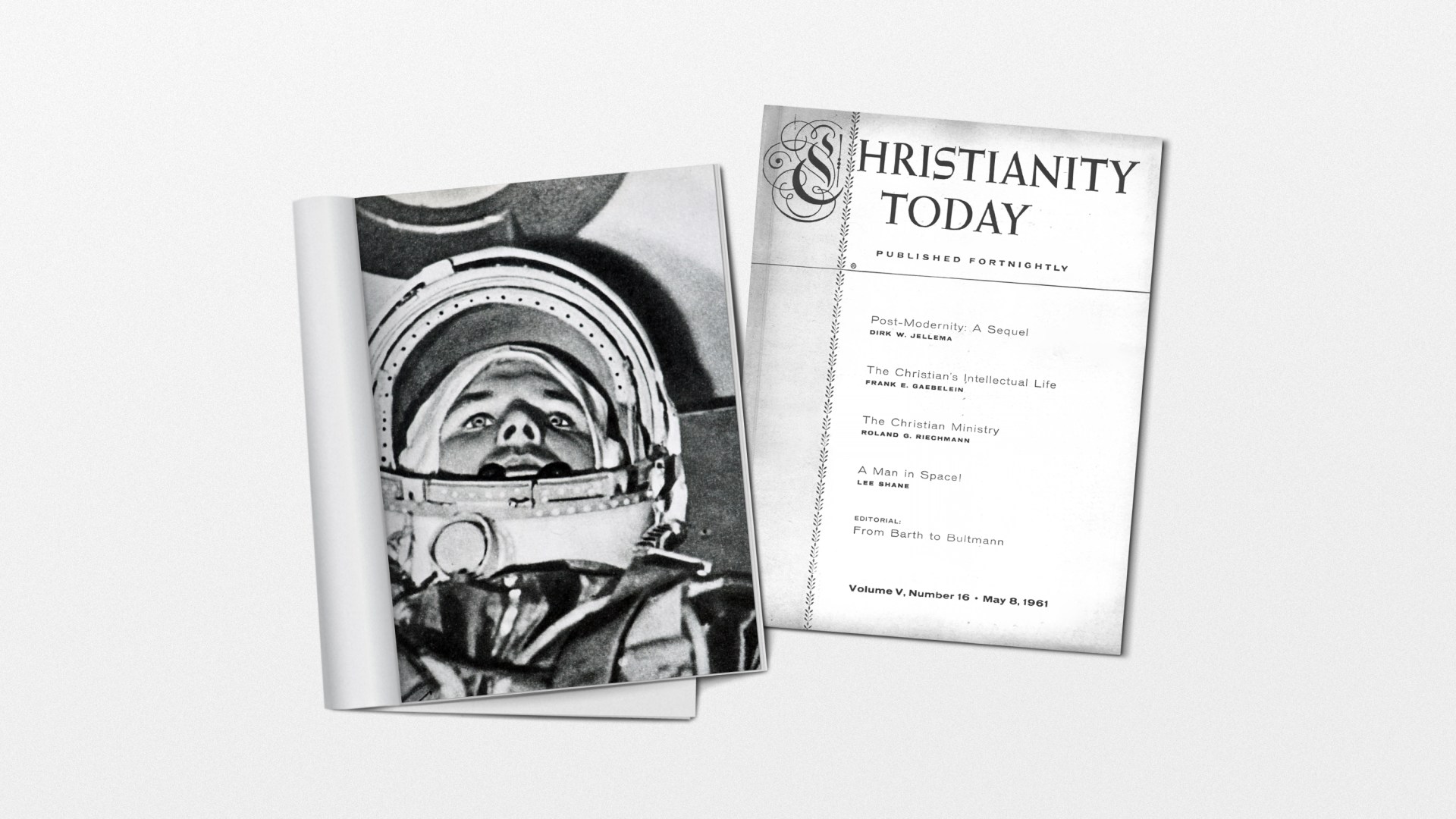
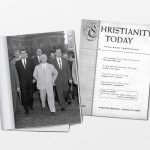
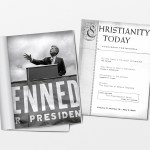
An astronaut and a CT magazine cover from 1961.
Christianity Today November 21, 2025
Illustration by Christianity Today / Source Images: Getty

In 1961, CT greeted one technological advance with unreserved celebration: paperback publishing. Pocket-sized paperbound books became popular during World War II, and in the prosperous years following victory over Nazi Germany and its allies, cheap books flooded America. CT celebrated the many evangelical texts becoming widely available.

Books bound in paper have set off a revolution in publishing, bookselling and reading. … The book corners in drug stores, department stores and the “chains” have their eagerly patronized paperback racks. And a surprising number of religious books is available, though usually these are of a strongly liberal flavor. 

Religious book publishers have read the “handwriting on the wall” and now we have Abingdon’s Apex Books, Harper’s Torchbooks, Eerdmans’ Pathway Books, the Macmillan line distinguished by its colophon, and a half dozen other quality sets. … Not all paperbacks are reprints. Some of those which are have been severely trimmed down to size with consequent damage to the original text. It is unfortunate that format and price should be an excuse for excluding valuable and essential content.

Eerdmans’ new paperback series in the strictly evangelical and highly competent tradition of this house includes G. C. Berkouwer’s The Triumph of Grace in the Theology of Karl Barth, Edward J. Carnell’s The Theology of Reinhold Niebuhr, J. Gresham Machen’s Christianity and Liberalism and Gordon Clark’s A Christian View of Men and Things. Eerdmans has also issued John Calvin’s Institutes of the Christian Religion in a 2-volume paperback edition. Kregel has put Josephus’ Complete Works in paper. Macmillan has done the same for C. S. Lewis’ Screwtape Letters and Mere Christianity; also J. B. Phillips’ Letters to Young Churches and God, Our Contemporary. … There is here a tremendous potential in the popularization of religious books and a publishers’ bonanza.

One hardback book received special attention. Oxford University Press and Cambridge University Press released a new Bible translation, which they said would be a successor to (and not just a revision of) the King James Version. CT asked British Bible scholar F. F. Bruce to review the New English Bible

The New Testament panel of translators are to be congratulated on the excellence of their achievement. It is not the reviews which appear on publication day or the day after that will decide the acceptance of the new version. That will be decided, over the months and years that lie ahead, by the people for whom it was prepared. We trust with the translators, “that under the providence of Almighty God this translation may open the truth of the scriptures to many who have been hindered in their approach to it by barriers of language.”

CT editors found occasion to quote from the New English Bible in the same issue, in an article calling attention to the upcoming trial of Nazi leader Adolf Eichmann and raising questions about the treatment of Palestinians in Israel. 

The trial of Adolph Eichmann, charged by the State of Israel with the Nazi-regime murder of 6 million Jews, gets underway next month in Jerusalem. The Israeli government has authorized sale of films of the proceedings at cost to television and motion picture organizations, thus enabling the whole world to follow this incredible chapter in the twentieth century’s “evolutionary progress.” Eichmann’s aged father, a pious Austrian Protestant of deep religious feelings, has voiced this tear-drenched comment: “If he did what you say, he deserves to die.…”

Probably no courtroom spectacle in our times plows up as many far-reaching questions about truth, justice, and love as these charges that the former Nazi “racial expert” deliberately attempted to annihilate the Jews. The World War II death-ledger of the Hebrews runs like this: Austria, 40,000; Belgium, 40,000; Czechoslovakia, 260,000; Denmark (where the Lutherans displayed heroic defiance of Nazi race hatred), 500; Estonia, 4,000; France, 120,000; Germany, 170,000; Greece, 60,000; Holland, 200,000; Italy, 15,000; Latvia, 85,000; Lithuania, 135,000; Macedonia, 7,000; Norway, 900; Poland, 2,800,000; Rumania, 425,000; Russia, 1,500,000; Yugoslavia, 55,000. The God who is alert to each falling sparrow, and who values men far above “the grass in the fields, which is there today, and tomorrow is thrown on the stove …” (Matt. 6:30, NEB), must surely have endured the near limits of patience during those monstrous events. … 

Will Eichmann’s trial in divided Jerusalem—where “no man’s land” separates Arab and Jew—serve indirectly to raise the question of the dignity of man along even wider lines than the tragic dimension of the despicable Nazi attempt to annihilate the Jewish race? While reparation remains due the displaced Arabs, the need for equity and conciliation shadows the Holy Land.

In Palestine a strand of sacred history links together the destiny of all races and nations. The Old Testament sheds its radiant light on the conflict of Jew and Arab, and the New Testament addresses its invitation first to the Jew, then to the Gentile.

Back in the US, CT worried about the decline in seminary enrollment and the shortage of ministerial candidates.

Unless a recovery materializes, there may be a clamor for emergency measures, especially if church membership continues to climb.

Enrollment in 122 accredited or associate member schools of the [American Association of Theological Schools] during the autumn quarter was 20,032. A year ago it was 21,088. The new figure is the lowest in five years.

Dr. Charles L. Taylor, executive director of the AATS, said there is “no simple answer” to explain the decline. Among factors involved, he suggested, are the appeal of science careers, weak recruitment programs, increasing costs of seminary training, the end of veteran education grants, and growth of Bible schools offering a “short cut” to ordination. … 

The AATS and its member schools are “very much” concerned about both the quantity and quality of ministerial students, Taylor said.

He declared that to counteract the decline scholars are working “very hard” on scholarship aid, recruitment, and adequate housing for the growing number of married students.

The new presidential administration launched the Peace Corps in 1961, fulfilling one of John F. Kennedy’s campaign promises. CT, noting one of the directors was a graduate from Southwestern Baptist Theological Seminary, interviewed him about the government program in June. 

Q: Just what is the purpose of the Peace Corps?

A: The Peace Corps will provide talented Americans to do needed jobs in newly-developing countries of the world. Many of these countries have leadership at the top—people trained at Oxford, Cambridge, Harvard, and other institutions in the West and in the Communist bloc—and there is usually an abundance of unskilled labor at the other end of the economic ladder. The missing link is manpower at the middle level: teachers, electricians, home economists, government clerks, nurses’ aides, farmers, water and sanitation experts, medical technicians, and so on. Peace Corps volunteers will go to do this work—and I emphasize very strongly that they will be doers, performing operational functions—and in the process will teach local people to do the work themselves. … 

Q: Will you co-operate with religious, sectarian, or semi-religious agencies?

A: No project which meets Peace Corps criteria and standards will be barred from receiving Peace Corps support because it is sponsored by a religious or sectarian group, provided the project does not further any religious, sectarian, commercial or propaganda cause or releases funds for such purposes.

Q: Will you encourage liaison with U.S. missionaries and missions boards?

A: We have already been in touch with many missionaries individually and with several of the boards.

CT also noted the growing popularity of rightwing radio

Some 50 radio stations linked with the Mutual Broadcasting System added a 30-minute weekly broadcast this month featuring the voice of Dr. Billy James Hargis, founder-director of Christian Crusade, “largest anti-communist ministry in America.” Hargis was already being heard on 15-minute daily broadcasts carried by some 76 stations and on 30-minute weekly broadcasts heard over 66 stations. … 

The right-wing renascence is basically a political phenomenon, but some of the motivations are religious, as are some of the repercussions. … 

Responsible evangelicals applaud the initiative of genuinely sincere anti-Communists. But some observers record their reservations over an excessively negative approach. They agree that the public ought to be more aware of Communist strategy, and that the ideological transition from socialism to communism is well worth publicizing. But they question whether some of the hoop-la rallies provide much ideological orientation. More important, these observers are disturbed at preoccupation with communism to the neglect of positive Christianity. The question is asked: Would we not be more profitably engaged if we indoctrinated the masses in the fundamentals of the Christian world-life view and called for personal commitment and for aggressive cells of workers?

Editor in chief Carl F. H. Henry repeated this call for evangelicals to be more positive in a speech to the National Association of Evangelicals, arguing they should not be “known in the public mind as merely an anti-Liberal, anti-Catholic, and anti-Communist movement.” CT reported: 

He said the evangelical movement “must face the theological, social, political, and economic trends before us, rather than seeming to be resigned forever merely to react to the world’s initiative” in these areas. And, speaking on “theological trends facing the evangelicals today,” he challenged the NAE to promote a “comprehensive evangelical exposition of three great concerns—the problem of religious authority, the mission of the Church, and the nature of the Church.”

CT also called for more unity among evangelicals—but only on the proper basis. 

Evangelicals often seem to be one of the most divided and divisive forces in the ecclesiastical world even in their internal dealings. Splits, suspicions, wordy campaigns are common features. Squabbling about less essential matters seems to absorb the energy that should go to working together on essentials. And the tragedy is that the world both needs and would unquestionably be impressed and affected by a genuine manifestation of unity in spirit, purpose, and action on the part of evangelicalism. …

Without a common looking to the Lord, a common confession of him as Saviour, Lord, and God, a common knowledge of God in him, there is no building on the common basis and therefore no hope of unity. Faith in him, however, is not a leap in the dark. It is no blind or chance encounter. It is faith responding to a Word. And this Word is the authentic and authoritative record given concerning him. True faith in him is faith in the Jesus of Scripture who embraces both the so-called Jesus of history and the Christ of faith. It is faith enlightened and instructed and impelled by the written Word and its preaching and exposition. To the one basis belongs also the foundation of the apostles and prophets (Eph. 2:20). To build apart from Scripture is to build apart from Jesus Christ himself and therefore to destroy unity. Yet this faith is neither abstract nor ideal. It is busy and active. It is impelled as well as instructed. It is obedient. It accepts a task. It is given orders. It is endowed with the high privilege of ministry. It is given a Great Commission.

Fear of the spread of Communism was not easy to dismiss, though. CT reported on the major success of the Soviet cosmonaut program in a piece titled “A Man in Space!” 

There was dancing in the streets of Moscow; and in the corridors of Washington’s Pentagon there were grim and bothersome questions.

In a span of one hour and 30 minutes, man opened a new frontier. It all began at 9:07 with a five-ton vehicle soaring off a launching pad somewhere in Soviet Russia. For 89 minutes that vehicle whipped along at a speed of 17,000 miles an hour, in a path of travel, 188 miles beyond the earth. This “beyond-the-earth sphere” in which the object moved was one which from the dawn of time until that special 89 minute segment of April 12, had been “without a traveller.”

Aboard this earth-orbiting vehicle was a 27 year-old Soviet peasant who, after riding 89 minutes with history, put down on a predetermined piece of soil, and stepped from his “sky scooter” with the light of distant stars in his eyes … the first man to travel in space! …

[Soviet Prime Minister Nikita] Khrushchev has said of his cosmonaut that he had achieved immortality. Obviously this top Communist and atheist did not mean that this first space man is now unliable to death, that 89 minutes in space performed for him what union with Christ performs for the Christian. He simply meant he had captured an enduring fame. His is one of the names born not to die.

We will have to go along with that judgment. … He has inched every one of us to the edge of tomorrow.

News

The Current No. 1 Christian Artist Has No Soul

AI-generated musician Solomon Ray has stirred a debate among listeners, drawing pushback from popular human singer Forrest Frank.

An AI-generated man walks down a road arched with trees wearing a tan suit and hat and waving to the side.

Solomon Ray’s Facebook page describes the musician as “AI Voice/Mississippi Soul.”

Christianity Today November 21, 2025
Facebook

According to his Spotify profile, Solomon Ray is a “Mississippi-made soul singer carrying a Southern soul revival into the present.” His most recent release, a Christmas EP called A Soulful Christmas, features tracks with titles like “Soul to the World” and “Jingle Bell Soul.” 

Ray is a verified artist on the streaming platform, draws over 324,000 monthly listeners, and became the top artist on the iTunes top 100 Christian and gospel albums chart this week. 

But Solomon Ray (at least, this Solomon Ray) is not a real person. Artificial intelligence crafted his persona, voice, performance style, and lyrics. 

AI-generated music is no longer a laughline or niche tech interest. More listeners are encountering songs created by algorithms and machines, whether by choice or by accident. 

Last week, an AI-generated song—“Walk My Walk” by Breaking Rust—topped Billboard’s Country Digital Song Sales chart and hit 3 million streams on Spotify. Music enthusiasts now worry whether their new favorite song or artist is actually real

Spotify released a statement in September pledging stronger impersonation protection for artists, an improved “music spam filter,” and intensified scrutiny of “deceptive content.” But these policies still allow publicly anonymous creators to post AI-generated artist profiles and music. 

When the AI-generated band The Velvet Sundown surfaced over the summer, fooling droves of listeners with its retro ’70s-flavored rock, streaming platforms did not roll out features to label the content as AI-generated. When it comes to distinguishing AI-generated music, listeners are on their own. 

Meta, the parent company of Facebook and Instagram, expanded its AI content moderation policies last year, mandating that the content be labeled. 

A video posted to Solomon Ray’s Instagram account featuring a rendition of “Silent Night” shows a Black man wearing a gold cross necklace, maroon suit, and tan fedora singing in front of twinkling lights. 

There are some hints of AI animation that viewers might miss. A small note at the bottom of the video designates it as “AI info.” When clicked, a pop-up states that the profile’s owner has added an AI label to the video and that “AI may have been used for a wide range of purposes, from photo retouching to generating entirely new content.” 

One viewer of the music video commented, “Is your music AI?” Another wrote, “This is AI. The lyrics are beautiful but it feels so wrong coming from a thing without a soul.” 

Earlier this week, a worship leader named Solomon Ray started getting texts from friends, asking about his new music and marveling at how quickly it was climbing the Christian charts. That Solomon Ray is a real person, who also recently released an album and a Christmas single. 

“At first, I didn’t understand what was going on,” said Ray, who leads worship at Fresh Life Church in Kalispell, Montana. He also records music as “Solo Ray” and has worked as a freelance producer and session musician for worship artists like Phil Wickham, Elevation Worship, Chris Tomlin, and Pat Barrett. 

“Some friends were texting and calling because they thought it was funny, others were reaching out because they thought it was really me.” 

The sudden success of an AI-generated artist on the Christian charts has sparked an online conversation about the ethics and theology of computer-generated art. After Solomon Ray’s EP took the No. 1 spot on the iTunes chart, Forrest Frank (who also released a Christmas single last week) weighed in on social media. 

“At minimum, AI does not have the Holy Spirit inside of it,” Frank said. “So I think that it’s really weird to be opening up your spirit to something that has no spirit.”

The real person behind the character of Solomon Ray is Christopher “Topher” Townsend, a conservative hip-hop artist involved with Veterans for Trump, who performed at a rally that coincided with the January 6 storming of the Capitol in 2021. Following the event, Townsend’s song, “The Patriot,” was removed from Spotify, and Instagram banned him from going live on the platform.

In a video posted to Instagram on November 19, Townsend called himself “the man behind the machine.” He disagreed with Frank’s claim that Solomon Ray’s music has “no spirit,” saying, “This is an extension of my creativity, so therefore to me it’s art. It’s definitely inspired by a Christian. It may not be performed by one, but I don’t know why that really matters in the end.” 

Townsend said that God can use any vehicle to reach people, even AI, and accused Frank of doing “more gatekeeping” than “uplifting.” 

The real Solomon Ray chimed in on Frank’s video. “Should Forrest and I reclaim Christmas from the robots?” he asked.

Ray said that the last week has been amusing but also a little disheartening. “It bums me out to see people get hoodwinked by AI,” he told CT. 

As a musician and producer, Ray said he immediately realized that the other Solomon Ray was AI-generated when he listened to the music. But he knows that most listeners wouldn’t necessarily hear the tells. 

“There’s something in the high end of the vocals that gives it away,” said Ray. “And the creative choices sound like AI. It’s so precise that it’s clear no creative choices are really being made.” 

As a worship leader, Ray says that, in his view, AI-generated music will never offer what the church needs. “How much of your heart are you pouring into this? If you’re having AI generate it for you, the answer is zero. God wants costly worship.”  

Long before AI, Christians have debated how much to bring machines into music and worship. 

Christian traditions like the Church of Christ have historically objected to the use of mechanical musical instruments in congregational music. Churches with high-production contemporary worship have to navigate the use of tools like autotune and click tracks

AI-generated Christian music introduces new facets of the debate that seem to have most to do with what the music is for. Townsend reflects a utilitarian view of Christian music: that it is a vehicle for the gospel above all else. Frank takes more seriously the “inspirational” potential of Christian music as a cultivator of transcendent encounters with God. 

For Christian artists and industry insiders, the conversation about AI-generated music is also about community and the creative value of making music, which can be transformative and spiritually meaningful for the humans involved. 

Historically, though, the Christian music industry and its fans have leaned toward a utilitarian view of Christian media. Historian Leah Payne wrote that CCM has always been “part business, part devotional activity, part religious instruction.” Perhaps AI-generated music is simply another technological advancement—like radio, television, or social media—to be harnessed for the dissemination of gospel-centered entertainment. 

In his new book AI Goes to Church, Todd Korpi suggests that “the biggest threat to creation at the hands of AI is in how it continues to feed our appetite for consumption and progress.” AI-generated music is faster and easier to produce than a studio album that requires real musicians, songwriters, and audio engineers—the relational part of making music. Korpi cautions that the use of AI might “continue the trend of disconnection and preference for the convenience of disembodied interaction that has shaped the last decade.”

Billy Graham’s Grandson Stephan Tchividjian Sees the ‘Heart of God’ Reflected in Christianity Today

How CT is upholding its founder’s legacy.

Billy Graham’s Grandson Stephan Tchividjian Sees the ‘Heart of God’ Reflected in Christianity Today
Image from National Christian Foundation South Florida

“One of the greatest blessings I received growing up was a deep invitation to develop your own personal relationship with Jesus,” says Stephan Tchividjian, the eldest grandchild of Billy and Ruth Graham. “I really believe this narrative cascaded from my grandparents.”

As a boy growing up in a family of seven children, Stephan Tchividjian, whose mother, Virginia “Gigi” Graham Tchividjian, is the eldest daughter of the Grahams, was surrounded by loving adults who spoke openly about their faith and actively encouraged Stephan and his siblings to develop their own relationship with God—one that emphasized honesty and candor through prayer, listening to the Holy Spirit, and even expressing doubts.

Stephan doesn’t take this for granted.

Tracing his own faith journey, Stephan points to a memory of becoming a Christian at the age of five when his family was living in Switzerland. “I believe that God had been working in my heart all along, but it was at that moment as a little child praying, ‘Dear Jesus, come into my heart’ that God actually did begin that work, though I didn’t understand it yet.”

When he was a college student, Stephan began to wrestle with his faith, asking himself if he was a Christian only because of the influence of his well-known family.“If I’d been raised in a Muslim or Hindu home, would I have the same belief systems and loyalties to those forms of belief and faith? I asked myself,” he says. Ultimately, Stephan came to the conclusion that Christianity is true and that his faith in God was real and not dependent on his family’s legacy.

He is grateful for his family’s spiritual guidance, particularly the way his parents regularly implored him to “go and talk to the Lord about it”—an admonition he now views as both wise parenting and practical theology. “I remember as a teenager getting into arguments with my parents about my curfew, and they would say, ‘You and the Lord talk about it, and let’s see what he says. Whatever he says, we’ll go with it.’ I thought it was a good idea at the time. As I got a little older, I came to realize that God was always on their side,” he says with a chuckle.

Now Stephan reflects on the faithful influence of his parents and grandparents, remarking that it was their “consistency and authenticity” that made Christianity attractive to him growing up. As the eldest grandchild, Stephan looks back fondly on his relationship with Billy Graham, affectionately known as “Daddy Bill” by his grandchildren.

Looking back, Stephan is amazed at how generous and intentional Graham was with his time, particularly during the most demanding years of his ministry. Stephan says that even in the midst of his grandfather’s busy event schedule and high-profile persona, he was present for the milestones and important moments, including Stephan’s confirmation in the Lutheran Church as a boy and later his wedding, where he officiated. He also had a close relationship with his grandmother, Ruth, whom he describes as “down to earth.” “We would talk at least a couple of times a month on the phone just to check in,” he says.

In one of the sharpest and most enduring memories of his childhood, Stephan recalls a rare privilege of being behind the scenes during one of Billy Graham’s crusades in the 1970s when “America’s pastor” was already a household name. “Daddy Bill” invited each of his grandchildren who were a certain age to shadow him during a ministry engagement.

Although it was nearly five decades ago, Stephan still has vivid memories of joining Daddy Bill for a crusade in San Diego. At the age of 12 or 13, outfitted in “a little coat and tie,” Stephen recounts that visit: “I just followed him everywhere he went. If he went to a TV interview, if he went to meet the mayor, if he was meeting with his team. I’m this little kid in an adult world.” Stephan recollects with nostalgia eating “a little hamburger and fries” with his grandfather at the hotel and being included as the older men were debriefing after the evangelistic event.

Stephan will never forget Graham’s gesture of love during a debriefing session with his ministry team: “He looked at me and said, ‘Stephan, do you have anything to add?’ I didn’t think much about it at the time. I hope I didn’t make a fool of myself, but what remains with me was the fact that I was seen.”

“This gesture from my grandfather has reminded me to look out for those who may feel unseen and to extend the love of Christ. Simply put, the gospel is that God sees me.”

The characteristics of humility and authenticity that Stephan points out in Billy Graham are also ones he sees reflected in the current ministry of Christianity Today. Stephan wishes Graham were alive today and could still be an “elder statesman” of Christianity, a voice of reason in our increasingly divisive and polarized society.

Stephan bemoans the current state of the American church. “It’s embarrassing when you have Christians attacking Christians,” he says. “But I do believe that it is at this time that our voice as believers is so desperately needed. There’s a Scripture verse that says, Be ready always to give a reason for the hope that’s in you, and do it with gentleness and respect” (1 Pet. 3:15).

Today, Stephan believes that Christianity Today is “that voice of reason” that Billy Graham modeled. For those who have become disillusioned with the church, politics, and cultural divisiveness, he wants to be a person whom nonbelievers and those who are hurting approach because they see the hope of Christ in him and want to know how they can have it too. Stephan says, “I see Christianity Today as a voice of gospel hope, a source for stories and ideas that reflect the heart of God.”

Stephan also says, “I appreciate that CT’s stories regularly cause me to consider things that I hadn’t considered before or see things from an angle that perhaps I didn’t see before.” Stephan credits his experiences of growing up all over the world for instilling in him an appreciation for diverse perspectives within the church as well as cultivating empathy for those who may be outside the church, whether culturally or spiritually. “Our level of tolerance and love increasingly grows when we actually get to know the person rather than labeling them,” he says.

“CT is thought-provoking, but never at the expense of the character of God. CT is intellectually stimulating, but appeals to the emotional part of my heart and my deep longings. CT will push me just enough to make me think and feel like I’ve got to be engaged.”

Currently, Stephan serves as the Co-Founder and CEO of the National Christian Foundation of South Florida, where he is helping Christians think more deeply about how to steward their resources and invest in the work of God’s kingdom, not only with their money but with their time and talents as well. He is also an associate pastor at Calvary Chapel Fort Lauderdale and serves on a variety of for-profit and nonprofit boards. Stephan’s passion is for the bride of Christ to unite around the biblical mission to share the good news around the world, and he sees his and his wife Lisa’s annual financial support of Christianity Today as an extension of this calling.

Stephan believes that CT has held fast to the vision his grandfather had when the ministry was founded 68 years ago. “My grandfather was criticized often for taking certain positions, his embracing of the Catholic community and his embrace of the Civil Rights Movement, for example. There were quite a few times of courage when he said, ‘Now I’m going to do this, even when it may be misunderstood amongst fellow believers, because this is what God has called me to do.’” As Stephan compares and sums up CT’s calling, he adds, “We’re here to honor and glorify the heart of God.”

Melissa Huff is foundation relationships manager at Christianity Today.

News

Utah Flocks to Crusade Event at Campus Where Charlie Kirk Was Killed

Evangelicals take the stage for worship and altar calls in the Mormon-majority state.

"Hope for America" Harvest Crusade in Utah

"Hope for America" Harvest Crusade in Utah

Christianity Today November 20, 2025
Photo via Harvest

Jeb Jacobi wasn’t sure about Sunday night’s gathering.

The last time he attended a big campus event at Utah Valley University (UVU), he watched from ten feet away as a bullet took Charlie Kirk’s life. He can replay the chaotic aftermath—everyone running in different directions, parents shielding their children’s eyes.

Just two months later, thousands returned to the Orem, Utah, school for a crusade held in Kirk’s memory. Jacobi felt relieved it took place indoors, with metal detectors, uniformed officers, and campus security monitoring the crowds that filled the basketball stands.

As they sang along with worship leader Phil Wickham, “Oh God, the battle belongs to you,” the music’s triumphant tone stood in stark contrast to the horror Jacobi and many others there had witnessed on September 10.

“Sixty-seven days ago, tragedy struck just feet from where we are now,” said Jonathan Laurie, son of Harvest Christian Fellowship pastor and evangelist Greg Laurie. “I believe even before Charlie knew what happened, he was in the arms of his Savior.”

A second-year student and member of UVU’s Turning Point USA chapter, Jacobi wore a white T-shirt with the word FREEDOM, designed after the one Kirk wore during his campus visit.

“God kept me safe that day,” said Jacobi, who’s Catholic. His faith has grown in the wake of the tragedy, and he’s seen more students join TPUSA who are looking for a place to engage their beliefs and values.

Catholics and evangelical Protestants make up a tiny minority in Utah, where Latter-day Saints outnumber each more than tenfold. But at this “Hope for America” event, put on by Greg Laurie, they worshiped together, and evangelicals spoke of the potential for revival. 

The evening opened with a tribute video of Kirk speaking about Christianity. In a front-row bleacher, one young man wore a shirt printed with one of Kirk’s X posts: “Jesus defeated death so you can live.” Another woman, a volunteer for the event, sported a white “47” hat and a shirt that said, “Make Heaven Crowded,” with Kirk’s name under it.

Greg Laurie paid homage to Kirk during his message, which otherwise focused on his personal testimony and urged attendees to commit to faith in Jesus.

“Despite this tragedy, God has done amazing things around our nation,” said Laurie, who also serves as a spiritual adviser to President Donald Trump. “It was like a wake-up call. All of you, for all of us, this is your moment tonight. This is your wake-up call tonight. Don’t let it slip by.”

The evangelist originally planned to bring his crusade to Utah in 2027 but expedited the timeline after Kirk’s assassination, planning the visit in mere weeks. Utah pastors asked Harvest to come sooner. Former governor Gary Herbert and US Rep. Mike Kennedy—both members of the Church of Jesus Christ of Latter-day Saints—sat in the front row.

Laurie invited attendees to profess faith in Christ as Wickham retook the stage to sing “O Come to the Altar.” A few hundred people left the bleachers to surround the stage. Volunteers met them with resources and a New Believer’s Bible. According to event organizers, over 2,100 people made professions of faith in person and online.

Though people came down for the gospel call, local faith leaders suggested that they may have responded by recommitting faith rather than converting, particularly among the LDS community.

Laurie later described the crowd as a mix of LDS church members, nonbelievers, and evangelicals. While he did not specifically address Mormonism in his remarks, his ministry does not consider the LDS church to be “biblically sound.” The night before the event, he met with evangelicals who minister among Latter-day Saints to pray for the crusade and learn about the spiritual norms in Utah.

One of those faith leaders was Gregory Johnson, a convert from the LDS church and cofounder of the ministry Standing Together. Johnson called the UVU crusade “the most successful, historic, largest evangelical outreach that I think Utah probably has ever seen.”

Dozens of evangelical congregations across the state partnered with Laurie to send groups to the UVU event, and 67 streamed it at their own churches.

“Jesus has opened the door for the gospel to be unapologetically preached in our backyard,” said Ken Krueger, who pastors The Mountain Church, an Assemblies of God congregation an hour away. “What we are seeing God do, and he will continue to do in this region, is the result of years, years of travailing with the Lord. Do not overlook our tribe. Do not overlook our land.”

Justin Banks, pastor of the Genesis Project in Provo, said that in Utah, pastors are used to big Christian artists skipping the state for ones with larger evangelical populations. So for him, the crusade was a huge encouragement.

“This is a miracle,” he said. “This doesn’t happen in Utah County unless God moves.” 

He hopes the success of the event will encourage other Christian leaders to “stop flying over us.”

One young woman in a cross necklace, Megan Luna, came with two friends after hearing about the event from her church, Redemption Hill in Eagle Mountain. “I loved it,” she said. “I think a lot of saving happened here.”

Annie LeBaron, 20, said she came after attending Charlie’s memorial service.  

“It’s the first time I ever saw those two Christian singers sing in person, and it changed my life,” she said, referring to Chris Tomlin and Wickham, who also performed at Kirk’s memorial service in September.

“There’s something about music and just praising and praying, things like that, that just touch the soul,” she said. “That’s why I came tonight. Because I want to continue to fill that fire in my soul.”

Culture

Which Topics Are Off Limits at Your Dinner Table?

A Christian anthropologist explains why we should talk about hard things and how to do it.

A man cutting a cancel symbol instead of a turkey.
Christianity Today November 20, 2025
Illustration by Christianity Today / Source Images: Getty

When I was a kid, holidays meant playing in my grandparents’ basement with my brother and cousins. We turned Grandma’s hats and polyester pants into costumes, pounded the cracked keys of an ancient piano, and marveled at Grandpa’s forgiveness after we jammed a Wiffle ball down a hole of his pool table. 

But one day as we all played, my youngest cousin disappeared upstairs. A few minutes later, her mom called us into the kitchen. My aunt looked angry. She reprimanded us for being mean to our cousin and told us to be kinder.

As I puzzled over why my aunt was upset, I chalked it up to the fact that my cousin was younger than the rest of us. Years later, my cousin told me what she remembered of that day. When she went upstairs, she had tearfully asked her mom, “Why do I look different than the rest of the family?” My little cousin was trying to understand why she was the only Black child among a group of white cousins. But that wasn’t something our family talked about.

Years later, I learned my grandfather had so vehemently opposed my aunt’s marriage to a Black man that he had refused to attend the wedding or to allow my uncle into his home. 

Many families try to tiptoe around sensitive topics—or ignore them altogether. In doing so, we avoid naming or solving the source of conflict and pain. And our silence communicates volumes. 

As you gather for holidays this year—if you gather at all—your family might be skirting around conversations about politics, race, religion, depression, addiction, and myriad other touchy subjects. In these polarized and insular times, the number of risky topics seems to be ballooning. We’ve heard too many stories of family gatherings that end in shouting and tears, with relatives refusing to gather for the next holiday.

poll conducted last Thanksgiving found that a third of Americans were uncomfortable at family gatherings due to political differences, and half of Americans had at least one estranged relative.

We are living in what author and journalist Jonathan Rauch calls an epistemic crisis—a breakdown in how our society decides what’s true and how to make collective decisions. We have lost the skills for understanding one another, but more than that, many of us have lost the will to try. 

As holiday gatherings become a battleground of this larger epistemic crisis, many of us choose avoidance. While there may be times when letting a subject rest can be a step toward healing, we cannot build loving relationships without honesty. 

But here’s some good news: Talking about sensitive topics is a learnable skill. According to sociologist Derisa Grant, many of the conversations people avoid are not inherently difficult. We make topics difficult by deeming them ineffable. As an anthropology professor, I traffic in difficult conversations. I teach people how to understand each other across differences, and that means talking about the whole gamut of tough topics—race, gender, sexuality, religion, immigration, politics, and more.

When I started teaching anthropology at Wheaton College ten years ago, my most challenging students were those who disengaged because they believed they already understood other people. Lately there’s a different challenge: Students disengage because they no longer believe it’s possible to understand others.

Several years ago, I began a research study to learn how individuals develop long-term commitments to the well-being of groups they consider different from their own. Specifically, I explored what it takes for white Christians to develop enduring practices that address racism against people of color. 

I interviewed 30 nonwhite Christians about their experiences with race and asked them to suggest white individuals whom they saw as advocates for racial justice. I then interviewed 40 of those white Christians to study their practices. In my forthcoming book, Racial Justice for the Long Haul, I share what I learned about how to talk about difficult topics like race. I’ve come to believe that these kinds of conversations could help mend broken relationships and ultimately our society.

Conducting these interviews taught me that some conversations are like the table saw in my garage. Cutting wood without the proper training can cause serious injury. But add in some woodworking courses and safety gear, and it’s a different story. I’m ready when something around the house breaks, and I can make beautiful and functional pieces out of scraps of wood. Likewise, if we take the time to prepare ourselves, God can turn even the most challenging conversations into something beautiful.

What does that preparation entail? Here are three practices that I’ve seen work. 

First, stop denying the bad. Christianity is not built on denialist optimism. We do not have a shallow hope that says, “Honesty is the best medicine” or “Time heals all wounds.” We hope in Christ, who met the bad face to face. We know that Christ is our peace, having broken down dividing walls of hostility (Eph. 2:14). We bring our dreaded subjects to Christ because “if we walk in the light, as he is in the light, we have fellowship with one another, and the blood of Jesus, his Son, purifies us from all sin” (1 John 1:7).

As I grew up in the 1980s, my family’s silence about race followed the trend among white communities at the time. We embraced colorblindness, pretending we could remain blissfully unaware of how the surrounding culture trains us in racism. We kept that silence even as racism ripped through our family.

When I left for college, my default method for dealing with racism was to avoid mentioning race. But race kept showing up at my door. I worked as a residence hall assistant, and one night I heard a tentative knock at my door. A first-year student who was Black asked me with tears streaming down her face why her white roommate acted as if she didn’t exist. 

A few weeks later, in another room shared by a Black student and a white student, the white student’s parents placed a masking tape line down the center of the room. They shouted at the Black roommate loudly enough for the hallway to hear, “Don’t you dare cross over onto our daughter’s side.”

I had no idea where to begin, but I knew I couldn’t deny that something very wrong was pulling us apart. 

That’s where the second practice for difficult conversations comes in: Ask questions. Learn the context behind people’s decisions. Rather than assuming they should make the same choices you make, ask about the circumstances or history that led to their choices. As I once heard another researcher say, “When you start to think, ‘Those people are so stupid,’ it’s time to do some more research.” 

Doing that research can take many forms. One woman I met started questioning racial inequalities when she talked to her coworkers at a fruit farm. Later she worked with children in an under-resourced neighborhood, and she wondered about some of their habits. “They were eating Cheetos all day,” she noticed. Instead of jumping to blame their parents, she began to ask questions. Were their parents unable to afford vegetables? Did their long hours of work prevent them from cooking? Why did they seem stressed and sleep deprived? She called this season of life “asking a lot of why.” 

Asking why can prepare us for difficult conversations, but God doesn’t promise that information alone will solve our disunity. We also need a third practice: radical grace.

Throughout my 70 interviews, grace and the related words forgiveness and mercy came up in more than half the conversations. Nearly all the white people I spoke with told stories about receiving blessings they didn’t deserve. 

Grace happens when people recognize that a debt exists and when the person who is owed gives something freely to the debtor—not to coerce a response but to move toward a new way of relating to one another. This grace runs counter to strategies of avoidance or revenge.

Too often we settle for cheap imitations of grace by either ignoring the bad or demanding forgiveness. Grace isn’t meant to let people off the hook. It’s meant to lead us into honesty and love.


My research focused on the debts formed through racism—legacies of who was allowed to enter the US, who was denied, and who was forced to live here. I looked at our unevenly funded schools and our segregated neighborhoods and churches. These debts are not abstract and distant—they cut through our friendships, our families, and our congregations.

Preparing to engage with difficult relationships through radical grace involves actively pursuing wisdom by learning about each other. It means leaving defensiveness outside when we step across the threshold of a relative’s door for a holiday gathering. And it means extending love when our instincts pull us toward hate.

We must practice this radical grace within the body of Christ. When cancel culture reigns, we can make a countercultural choice. As one person I interviewed put it, “At the end of the day, I’m not going to throw you off the island, because that’s not an option.” As members of Christ’s universal church, we are part of a covenantal community. We belong to one another.

“The commitment to still love one another is not just a fuzzy feeling,” this church leader continued. “We have to figure it out. We have to stick to the hot mess … [and] it’s a sign of the kingdom when it is hot and messy. I’m not saying that toxic, abusive behavior should happen. But if we’re really engaging with each other, how could it be anything but a hot mess? Too often that’s when people leave. But that’s the moment right before when you might actually experience transformation.”

For me, “sticking with it” means allowing the lessons I learn as a Christian anthropologist to seep into my family conversations.

As I was forming my research into a book, I met up with my cousin at a botanical garden halfway between our homes. We talked about childhood memories, sharing stories we had never told each other about how race—and grace—shaped us.These days, our children are the ones playing together in the basement at holiday gatherings. We owe it to them to place honesty, courage, and radical grace at the center of our family.

Apple PodcastsDown ArrowDown ArrowDown Arrowarrow_left_altLeft ArrowLeft ArrowRight ArrowRight ArrowRight Arrowarrow_up_altUp ArrowUp ArrowAvailable at Amazoncaret-downCloseCloseEmailEmailExpandExpandExternalExternalFacebookfacebook-squareGiftGiftGooglegoogleGoogle KeephamburgerInstagraminstagram-squareLinkLinklinkedin-squareListenListenListenChristianity TodayCT Creative Studio Logologo_orgMegaphoneMenuMenupausePinterestPlayPlayPocketPodcastRSSRSSSaveSaveSaveSearchSearchsearchSpotifyStitcherTelegramTable of ContentsTable of Contentstwitter-squareWhatsAppXYouTubeYouTube