Ideas

Are the Public Schools Falling Apart?

Contributor

We need Christians to engage thoughtfully in local schools. That starts with understanding the problems.

Christianity Today November 20, 2025

Editor’s note: During  the next few months, Carrie McKean is writing for CT a series about education, exploring nationwide challenges and trends that affect all of us through the lens of what she sees happening in her own community in Midland, Texas. Coming up first, after this intro: a frank and honest look at how untested, unproven, and ubiquitous technology platforms in the classroom have rapidly transformed education. As the series gets underway, Carrie invites you to join the conversation: Write to her at education@christianitytoday.com and share what you see in your communities, both glimmers of hope and causes for concern. —Marvin Olasky

Last month, on opening weekend at a new Bass Pro Shops store about 15 minutes from my home, a group of men started fighting, reportedly because one of them had taken too long in the bathroom. Viral videos that spread in the aftermath show at least five or six men throwing punches and pushing each other down underneath the mounted heads of bison and bears and other wild beasts.

In the videos, some bystanders scurry to get out of the brawlers’ way. Others pause to watch, pulling out their phones to film. One woman caught on camera enters the fray, screaming at the—as she calls them—“grown-ass men acting like idiots.”

“And you wonder why our schools are falling apart,” she shouts as they roll on the ground in front of her. “Y’all are the example that [we’re] setting.”

The schools are falling apart.

She says it as a statement of fact, and I can’t find anyone disputing her—not in the video and not in the commentary afterward and not among a single person I’ve talked to about the state of education, especially in public schools, over the last few years. If anything, our collective sense of alarm is rapidly snowballing. More and more of us feel the same frantic energy she embodies: Something is deeply wrong. The house is burning, the ship is sinking, the walls are crumbling—and our children and their futures are trapped inside.

The vibes match with the data. American eighth-graders’ reading skills have now reached a 30-year low. Harvard has a remedial math class. Financial Times is asking, “Have humans passed peak brain power?” and publishing startingly precipitous charts to illustrate their bleak answer.


Indeed, the only thing remarkable about the shouting woman’s commentary is that this acute ache she names, this fervent concern for schools and the children within them, is what’s at the top of her mind as she watches grown men exchange blows. But I don’t find it surprising. I feel the same anxious energy lurking just under the surface of almost every social interaction I have these days. Education is one of the hubs of our civic wagon wheel, the center point from which our collective life follows and to which all our social problems return. Her visceral reaction, both furious and desperate for help, names the pain we all live with: Where are the grownups who will act like adults and make things right by the kids instead of giving up, watching, or—worst of all—contributing to the destruction?

Something is wrong with education in America today. Like a piece of glass pierced by a bullet, its fracturing sends ripples of anxiety and concern in every direction and into every space, even showing up in the midst of a brawl at the shiny new Bass Pro Shops in Odessa, Texas—where it demonstrates, once again, that no amount of economic development, consumer distraction, or shiny new stuff can plaster over our deepest problems. My 13-year-old puts it a little differently, in the vernacular of the day: “Our generation is cooked.”

We may all agree that something is wrong with education in America today, especially in our large and unwieldy public school systems which serve around 75 percent of American children, but diagnosing the origins isn’t as simple as laying things out on a linear graph. There’s not just one point when everything started to go wrong. It’s hard to find a root cause and even harder to find effective solutions. Like broken glass, the problems in our education system look like a complex fracture pattern, where each point of stress is both an effect of past pressure and a cause of future shattering.

Are the problems in our schools caused by inadequate school funding or lackluster teacher training or overcrowding or standardized testing? Are they caused by forgetting phonics or giving everyone a trophy? Are they caused by poor curriculum or wokeness or behavioral problems or fractured families or overused technology or ineffective instructional methods or too little homework or too much homework or artificial intelligence or not enough recess or lowered academic standards or culture wars or social-emotional learning or lack of discipline or cell phones? The answer is yes.

Can we solve our schools’ problems by posting the Ten Commandments in every classroom? By restoring prayer in schools? Is there any path back to the good ol’ days of reading, writing, and arithmetic that properly prepares our children for a future we cannot fathom? Some of us select homeschools, microschools, charter schools, or private schools. These can all be excellent choices, yet still, as followers of Jesus who are commanded to have concern for the most vulnerable, we must reckon with a question: If that is our choice, what do we owe the children whose families can’t (or just don’t) find viable alternatives to crumbling public schools? Do we give up on them?

School has always been important to me. In my often-chaotic childhood, the tiny public school where I attended K–12 was my safe shelter and a sturdy tether to reality. My husband never loved books as much as I did, and his educational journey was more of a hybrid hodgepodge. He attended some church schools and spent several years homeschooling before graduating from the same public school where I had always attended. That’s where we met. Our daughters are in large public middle and high schools—my eldest daughter’s ninth grade class has more children than I had in my entire school district. Our children have seen things in their school hallways that I’ve never been exposed to in my sheltered life.

I’m not a teacher, but I am a concerned parent and an engaged citizen who wants all children to have access to the opportunities I want for my own. When it comes to my own kids, I know they’ll turn out all right. We’ll practice reading and find a math tutor when necessary, and I’ll email the principal or the superintendent or my school board members when I have concerns I can’t resolve at the campus level. And I am quick to celebrate the bright spots—like this year, when both my children are on campuses led by effective administrators and many passionate teachers. However, when things aren’t going well, I know how to navigate the system to try to meet my kids’ needs. But stopping with my own kids doesn’t sit well with my soul. My faith compels me to pursue the same for other children—the kids whose parents don’t speak English or the child whose single mom is a cashier at Walgreens till 10 p.m. each night.

So over the last several years, I’ve asked countless questions of educators, administrators, parents, and students in my attempt to understand why providing all children with access to high-quality educational opportunities seems utterly impossible these days. The more I learn, the more I picture a tangled snarl of yarn. When you pull on one end to untangle the knot, it tightens and twists somewhere else.

If I were dealing with a ball of yarn, I’d throw it away. But when it comes to our schools, giving up and feeling apathetic isn’t an option we Christians get to exercise. After all, we have a spiritual heritage that rightfully informed the radical idea that all children have value and potential worth cultivating, and we have a theology that teaches us to have persistent hope in the face of unlikely odds and apparent defeat.

Sadly, this heritage is not what Christians are known for in national educational conversations these days. We are known more for our abrasiveness than our love. In many cities, the loudest among us turned on the schools right down our own streets because of something we saw on the national news. This is wrong. We need more people who can set aside the endless cultural battles and take an honest look at what’s happening in their neighborhood schools, not in some other city’s schools across the country.

Whether or not we have kids in public schools, Christians should pay reasonable and thoughtful attention to all schools in the neighborhoods and communities where God has planted us. God commands his people to “seek the welfare” of our cities (Jer. 29:7, ESV). And the needs in our cities, whether Miami or Midland, are great: Our teachers are discouraged. Our administrators are weary. Our students are increasingly aware that everyone else thinks the whole system is broken (and if the adults don’t think it can be salvaged, why should they care?).

What’s needed where you live might be different from what’s needed in my community, but regardless, we have much to learn from one another. Together, let’s get honest about the mess we’ve made—and the mess we’ve inherited—and try to untangle some of the snarled knots that are hamstringing our children’s futures.

The schools may be falling apart, but let’s be the grownups who fix things.

Church Life

Black Greek Life Faces a Christian Exodus

Believers are denouncing historical fraternities and sororities that have been beacons of progress.

Pictures of the founders of Greek life organizations.
Christianity Today November 20, 2025
Illustration by Elizabeth Kaye / Source Images: Getty, Wikimedia Commons

If you walk into a university—especially a historically Black one—this fall, you might see the steps and strolls of the Divine Nine.

From the pretty-in-pink Alpha Kappa Alpha to the purple-and-gold Omega Psi Phi, the nine Black fraternities and sororities can be found stomping, clapping, chanting, dancing, and singing to signify their unity. On the outskirts of many campuses, members volunteer at food pantries or participate in other types of community service.

Black Greek life has never been merely about parties, alcohol, and red plastic cups. Although it developed to include those things, its roots and ethos date to students who sought to foster deeper bonds as they navigated the harsh realities of systemic racism, including exclusion from Greek life and professional networks at predominantly white institutions.

Christians founded some Black Greek-letter organizations, and over time all of them became beacons of progress and a fixture of African American culture. Many students who pledged made their mark as prominent civil rights activists, authors, actors, and contemporary figures, such as comedian Steve Harvey, Baptist leader Boise Kimber, and former vice president Kamala Harris. Despite more recent criticisms of mission drift and elitism depicted in movies like Spike Lee’s School Daze, Greek life enjoyed widespread acceptance among those who loved Jesus and those who don’t care for him—that is, until now.

Over the past few years, the Divine Nine have become the subject of a robust debate among Black Christians about what it means to have loyalty to Christ today.

On TikTok, Instagram, or YouTube, members have been posting testimonies in which they denounce—and renounce—their partnership in what they claim to be “idolatry” and “ungodly covenants” with Greek life. The Washington Post previously reported that hundreds of videos have been posted, all drawing the ire of other members who view the exodus as misinformed and distracting from the good work these organizations do.

Critics and denouncers—including charismatic social media influencer Tiphani Montgomery—say that the vows (which the organizations don’t publicize but which are known by initiates) are idolatrous and demand a level of devotion that should only be reserved for God.

Some critics mention legitimate concerns about sin, like hazing or debauchery found across all Greek houses, including predominately white ones. They also highlight what they see as problematic symbols (the sphinx for Alpha Phi Alpha, the Roman goddess Minerva for Delta Sigma Theta) and what appear to be self-glorifying hymn lyrics (“Delta! With glowing heart we praise thee”).

If I had my wish, people would be talking about reforming concrete problems, like hazing, in these organizations or giving Christians a blueprint on how they can faithfully participate in historic and pluralistic institutions that have shaped our communities. But the back-and-forth can often become silly, panic-filled, and theologically loose, with some critics wrongly accusing members of jeopardizing their salvation or being morally compromised in some way because of their involvement.

The debate ratcheted up in recent weeks after gospel singer Travis Greene preached a sermon in which he mentioned that his involvement with a fraternity in college led to idolatry as well as “pride and perversion.”

Days later, rapper Lecrae posted a video discussing his own story of leaving a Black fraternity because the lifestyle did not mesh with following Jesus. At the same time, he counseled listeners to avoid throwing out the baby with the bathwater and instead to treat the issue as a matter of conscience and liberty (Rom. 14). Prominent pastor Eric Mason offered a similar take and told people to stop demonizing other Christians who disagree on the issue. Some Black church leaders have also done the same, though others have told people to get out of Greek life.

Though the drama can feel like just another online kerfuffle, it presents a legitimate challenge to a long-standing institution in the Black community and the role of us Christians within it. Throughout American history, the Black church and Black culture have often overlapped, creating deep bonds with cultural institutions that have fought for our communities more so than the broader American church.

I grew up with Black Greek parents, listening to their stories about pledging Alpha Kappa Alpha or Omega Psi Phi in college. My mother pledged at the now-defunct Bishop College with classmates who went on to become well-known pastors and ministry leaders. As a child, my earliest memories included her teaching me the Greek alphabet with the fun tune she had memorized. My father, meanwhile, often endured late nights of spontaneous meetings to support his fraternity.

My parents loved their organizations and faithfully served in our home church for over 30 years. I also wanted to join a sorority but never got the chance to pledge. During my freshman year in college, the president of the historically Black university I attended barred every Greek organization from recruiting new members after a student tragically died during a hazing ritual.

When I saw people fighting about Greek life years later, I was a bit torn. I agreed with arguments about excessive party lifestyles. Even if their claims were overblown, I could also see why many people didn’t like the shroud of secrecy that surrounded the oaths or felt uncomfortable with certain song lyrics or symbols.

But I was annoyed by strange and hyperbolic claims about covenants, rituals, and even Satan himself being the “father” of these organizations. One influencer went even further, saying many Christians involved in Greek life would die because of their association.

The entire ordeal sparked discussions about why, culturally, it seems everything inherently Black seems to get demonized. Members called on people to refrain from judging entire organizations and to show nuance by disentangling the good from the bad. But overnight, leaving a Black Greek letter organization had suddenly emerged as a mark of faithfulness.

On college campuses, Christian ministries are navigating how to provide counsel the right way.

At Howard University, campus pastor Cyril Chavis said students have approached him this fall to ask whether they should join Greek life. “There are more and more Christians that believe categorically it is a sin to join Black Greek letter organizations and there are no gray areas—it’s a black-and-white issue,” he said during an interview.

The subject has also been a hot topic within InterVarsity Christian Fellowship. Chelir Mule-Kivindyo, an associate national director for the organization’s Black Campus Ministries division, said leaders and staff members are working to put together materials that help students think through the issue, mainly because of all the bad theology they’re receiving—and regurgitating—from social media.

“For some people, they don’t need to go Greek. They are going to idolize it,” said Mule-Kivindyo, who is a member of Delta Sigma Theta. “But when it comes to losing your salvation, that’s not biblical. I don’t drink alcohol, because the Lord told me to stop, but that doesn’t mean every Christian should stop drinking alcohol.”

It’s true that maturity is knowing that God convicts us all of things differently and the application, including for Greek life, shouldn’t be pushed on everyone. But it’s also incumbent upon Christians to avoid being complacent about, or worse, complicit in pervasive problems.

Just this year, a student at Southern University died from an alleged off-campus hazing incident while pledging to join Omega Psi Phi. Wendy Johnson, a graduate of Spelman College who left Alpha Kappa Alpha in the early 2000s, told me there are also other issues that need to be confronted.

Johnson had high hopes when she initially went into sorority life. But she soon became concerned with the culture of exclusivity, favoritism, and status-seeking behavior that she said emanated from other members.

She continued to feel uneasy about it after graduating and seeing some women who showed “obsession” with joining a graduate chapter. Eventually, she sent an email to other members saying she did not want to be involved in the sorority.

“I represent Christ,” Johnson, who works as a doctor in New York, told me.

“I don’t want anyone to see me being a card-carrying sorority member and for that to somehow speak more loudly than me being a Christian,” she said. Wherever one lands on this issue, we can at least agree to that.

Alyssa Rhodes is a writer and content editor for RightNow Media and a writing contributor for the R.H. Boyd Publishing Company. She is a graduate of Dallas Theological Seminary and lives in Dallas, Texas. 

Church Life

God Loves Our Middling Worship Music

Songwriting might be the community-building project your church needs right now.

Hands holding up music notes.
Christianity Today November 20, 2025
Illustration by Elizabeth Kaye / Source Images: Getty

I am the oldest of 12 grandchildren on my mother’s side of the family. Naturally, I was the director. My grandparents’ house had a large brick fireplace—a perfect, potentially hazardous stage. The youngest cousins served as central casting. Every Christmas, we’d all scurry to the basement to plan our living-room performance.

After squabbling about roles, songs, and costumes for what seemed like hours, we emerged, calling all the adults to attention. We played bells and sang “Frosty the Snowman” and “Angels We Have Heard on High.” Depending on our commitment level, there might be a choreographed dance number or one-act play. Somewhere in a storage room, video recordings of our performances are gathering dust.

It’s always seemed obvious to me that families should create things—silly, corny, half-baked—together.

These days, I spend a lot of my time writing about music. I am not a songwriter or a performer; I’ve left my Christmas pageant days behind. But last year, I was invited to Nashville for a songwriting camp at Belmont University, part of the In Every Generation project focused on creating music for multigenerational congregations.

I showed up to speak at a workshop—not to put lyrics or notes on a page. So when the facilitator asked me to join a writing group, I felt a mixture of embarrassment and terror. Had I accidentally given someone the impression that I, the world’s most middling pianist and retired living-room performer, was a musician who belonged in a room with professionals? Not just any professionals—Nashville professionals.

I came away from that camp believing that collaborative songwriting might be one of the scariest things we can do together—also one of the most generative. In an age of highly produced, hyperpolished worship music production, this humble process requires vulnerability and laughter, deference and generosity, the relational connectedness so many of us crave in our atomized online world. 

Of course, songwriting isn’t the only creative work that pushes us toward deeper community. But in the church in particular, it might be just what we need right now. 

To prioritize local, congregational songwriting isn’t to wholly disregard the worship music industry and its producers of today’s most popular contemporary hits (think Elevation Worship, Brandon Lake, or Phil Wickham). Some of these songs—“How Great Is Our God,” “The Blessing”—have deeply formed countless believers. Historian Molly Worthen recently reflected on the surprising role of contemporary worship music in her own conversion: “the incongruity between smooth harmonies, uncomplicated lyrics, and the shock that comes if you pause to grapple with the words’ meaning.”

But this kind of professionalized worship often comes with expectations about production value and polish. Enter the worship-tech industries supporting the local churches who make this music on Sunday mornings. Platforms like MultiTracks and Loop Community, for example, offer congregations instrumental and vocal tracks to fill in parts that can’t be covered by their communities’ musicians.

Tools like these can make life a lot less stressful for overworked worship leaders trying to wrangle volunteers for weekly practice. Short one guitar player this week? A track can fill in that part. Drummer calls in sick on Saturday night? There’s a track for that.

These programs have made it possible for churches to have sophisticated music without rehearsal or musician recruitment. But what’s lost when it’s possible to have the product of communal music making without the process?

Church leaders and musicians who use contemporary worship music—and the latest tools to produce it in their contexts—are often techno-optimists. This cheery outlook is, in some ways, admirable. It resists the impulse to panic or descend into doom-and-gloom moralizing about modernity. On the other hand, though techno-optimists tend to talk a lot about what new tools afford, they may not anticipate what those tools—in-ear monitors, a click track, or live auto-tuning—might take away.

After all, making music together isn’t valuable solely because of a perfect final product. For the musicians on stage, there’s community building in the warm-ups, the tuning, the problem-solving. To plug in a choral track when there has been no rehearsal is to skip what makes choir worthwhile. And the congregation, even in an auditorium outfitted with the flashiest lighting rig, isn’t there to observe a performance but to participate in cocreation.

Congregational worship is inherently social. The decline of community singing in the US over the course of the 20th century and the shift to music enjoyment as an individualized, isolated experience have left us with the impression that music is something we consume, not something we make or do together.

Gen Z spends more money on live music events than millennials and Gen Xers do, and more broadly, live music is booming. But those stages are for a special few. My college students see music making as something best left to professionals, and hopelessly cringe when done poorly. Most of them don’t play an instrument and are convinced they’ve missed their chance—if they were going to be “musical” or “creative,” they would know it by now.

My sense is that, in many churches, a similar belief has taken root. In the techno-optimistic sprint toward contemporary worship music, seeker-sensitive churches have come to take production so seriously because they fear that the awkwardness of amateurism might cause the tenuous attendee to go elsewhere.

What if that thinking is wrong? What if it’s out of date? These days, we all carry constant access to stunning music in our pockets. The church could offer something different.

That’s not to say we should try to make Sunday-morning musical worship messier or more awkward on purpose. But reorienting a church’s musical culture toward grassroots songwriting and local eclecticism could be one sign of our upside-down kingdom. Production value might not be as impressive as radical antipolish.

By the end of the two-day In Every Generation camp, I had been part of four different writing groups. In each session, I watched my new acquaintances let musical and lyrical ideas flow with abandon, starting with the skeleton of a groove, experimenting with progressions and unexpected harmonies, tracing out vocal hooks bit by bit, and straining to find the right word for the end of a phrase. Sometimes an idea fell to the floor; sometimes a collaborator grabbed it and ran to start building a prechorus or bridge.

When I worked up the courage to make a suggestion, I began with apologetic, deferential phrases (“This might be nothing …”). But in those writing rooms, there was a noncompetitive generosity of spirit that, eventually, assuaged my fear of being judged for a bad idea—and I had many. I imagine artists who regularly collaborate like this must develop an aversion to snark and pretension. No one, not even the award-winning songwriters, insisted that their sense of direction was better than mine.

To outsiders like me, songwriting can seem like a forbidding, mystical process that requires a combination of divine inspiration and raw talent possessed by very few. In the church, we sometimes refer to writers of influential worship songs as “anointed.”

That mythology is a barrier that Christians like Joel Payne and Chris Juby of Resound Worship are trying to break down. Every year, the UK-based organization invites participants of all musical backgrounds to join their songwriting community and take on the “12 Song Challenge.”

On Resound’s latest EP, “All Our Voices” provides a model for allowing a congregation to cowrite a song in real time, contributing lines to a simple, repetitive chorus.

“These kinds of songs invite the leader into more of a facilitator role,” said Juby. “You find yourself leading the people, not the song.”

On the process of songwriting with inexperienced musicians, both leaders say that churches can teach the craft in the same way they teach people to lead a group in prayer. They talk about writing and sharing songs the way some talk about meal trains—as a low-stakes, tangible act of service.

“We can write songs that care for one another,” said Payne. That gave me pause. Can a song “care”?

At the In Every Generation camp, we spent one afternoon writing songs on prompts like “awaiting the birth of a baby,” “celebrating an anniversary,” and “sending students off to college.” We were writing music for particular moments in the life of a church community.

It had never occurred to me that a church could send off its college students with a song by and for that particular community—even if there were a few sideways smirks at the sentimentality of it all.

Not all writing sessions lead to tuneful, soul-stirring results. Songwriting is a skill that can be honed and strengthened; I couldn’t write “What a Beautiful Name.” But before God, I imagine, the differences in our skill levels are negligible. We are all children performing on the fireplace ledge.

Kelsey Kramer McGinnis is the worship correspondent for Christianity Today and the author of The Myth of Good Christian Parenting: How False Promises Betrayed a Generation of Evangelical Families, cowritten with Melissa Burt.

Theology

The Church Sexual Abuse Crisis Should Prepare Us for the Epstein Files

Columnist

The path to justifying predatory behavior often follows the same seven steps. We can respond differently.

An image of some Epstein files.
Christianity Today November 19, 2025
Illustration by Christianity Today / Source Images: Getty

This piece was adapted from Russell Moore’s newsletter. Subscribe here.

“I’ve never seen anything like it,” a friend said to me, mentioning the latest news reports on the battle over the release of the files of Jeffrey Epstein. I responded, “I wish I could say the same.”

Now, in one sense, of course, none of us has seen anything quite like this. After all, Epstein is perhaps the most notorious sex trafficker in history, with allegations that he enabled the rape of girls in webs of influence of the most powerful men in the world. With Congress having voted Tuesday to release the Epstein files and sending the bill to President Donald Trump for his approval, we are only just now entering this era.

But in another sense, we should be prepared for it. The church sexual abuse crises of the past decade should have taught us something. When it comes to justifying the cover-up of or inaction toward the sexual predation of minors, we can anticipate how these conversations typically go.

I’ve seen a predictable set of seven steps play out in bad church or ministry responses to sex predators in their midst—a pattern we can see here and everywhere the veil is lifted on this kind of evil.

Step 1: This is not a problem. In a church context, we can always find those who don’t want to think an institution they love could be vulnerable to this kind of awful behavior. These are the people predators count on to empower them to keep doing what they do. Whenever the subject of abuse comes up, some of these people say, “We all know each other at our church. We’re like family.” Or, of a denomination or another bigger system, “We are protected from this by …” and then fill in that blank with things like “having bishops” or “not having bishops” or whatever.

We are, it seems, well past this step in the Epstein files debate.

Step 2: Yes, it’s a problem, but the other side is worse. In some cases, a church or ministry never proceeds past step 1, but when denial fails—usually because those calling out the issues are persistent—the next move is to export the problem. First, a constituency accepts a dark vision of human nature. They suggest that abuse happens everywhere and is just a part of the world in which we live. Often those who don’t want any more questions asked employ language of “pearl-clutching” and “moralizing.” Moral relativism disguises itself as realism.

Then, we usually hear the next stage of this step in the words “What about …?” to point out how awful the enemies are. Once people establish an agreement of the enemies’ failures, the “desperate times call for desperate measures” rationale for ignoring moral atrocities becomes much easier.

Step 3: Yes, it’s a problem, but it’s not as bad as it could be. On this, podcaster Megyn Kelly is a step in front of the crowd. Her argument was that, no matter what we find in the Epstein files, we should remember that technically he was an ephebophile who allegedly sexually preferred “barely legal” girls as young as 15. First of all, of course, minor girls are not “barely legal.” They’re not legal at all in the sense of being able to consent to their own rape and trafficking.

When accusations were made several years ago that former judge Roy Moore allegedly sexually assaulted minors, I had to respond live on television to one of his supporters who suggested that, even if this were proven to be true, Mary was probably a teenager and Joseph an old man. There are so many biblical and moral problems with such a defense that I struggled to know where to start.

Most people will not move to impugning the morality of the holy family, but often the strategy is the same: “Nobody is saying this is good, but here’s how it wasn’t nearly as bad as it could have been.”

Step 4: Yes, it’s a problem, but the cause is too important. When, over a quarter century ago, a scandal emerged about former president Bill Clinton using his power over a White House intern to exploit her sexually, some feminist leaders were in a quandary because of their previous definitions of sexual harassment. Some of them immediately pivoted to saying, “Well, everybody thinks this was wrong, but …” and then discussed how important Clinton was for their cause of keeping abortion legal. Many on the right denounced this for the moral equivocation it was. In the fullness of time and in the more recent era, they would use the same strategy over and over again to great success.

Church sexual abuse scandals have operated much the same way. Those who pointed out severe systemic flaws that enabled the cover-up of abuse were sometimes told that their public criticism could lead to people not giving, which would lead to missionaries not being funded, which would lead people going to hell. “We can fix all this over time,” the argument goes, “but the cause is more important than a few bad situations.”

Step 5: The whistleblowers are the problem. In church or denominational settings, I’ve seen those who point out the problem—whether survivors or their advocates—maligned as being anti-church or importing some dangerous political or religious ideology from “the outside.” Rarely is this done immediately or publicly. The game of those who quiet the whistleblowers is to seek retribution against them—publicly enough that others will see and be warned but privately enough that by the time people hear of the retaliation, it can be waved away as an “old story.”

This is twinned closely with step 6.

Step 6: Stop asking if it’s a problem, or you’re not one of us. Those who want disclosure or reform—or who simply don’t want to support those who are involved in rape or other predatory behavior, even if it’s on “our side”—are shunned. Those remaining are then implicitly warned that, to stay in the fold, we need to resist being “distracted” by those who are “trying to divide us.” That’s a powerful incentive.

We are designed to want to belong, and it’s scary not to do so. That’s especially true when a person wants to be in a group and has ambitions to somehow lead it. The threat of exile hits at a level much deeper than just rationality or strategy; it can feel to the psyche like the exclusion of hell itself.

Some people intentionally sear their consciences so as not to face rejection. But other people don’t even notice themselves doing it. A part of them seems to “switch off” any thought about justice for victims. They can be safely inside at the low, low cost of one soul.

Step 7: This is not a problem. The typical pattern is then to end up where we started: This is not a problem. The end result, the strategy goes, is to have most of those inside the tent thinking, This again? How long until we move on? the next time it is brought up.

Those are the seven steps I’ve seen play out. But they are not inevitable. I’ve seen churches and ministries break this cycle, but it required much more than most people are willing to give. Thankfully, there’s an eighth step—one we haven’t seen yet, but we will. As the Nicene Creed puts it, Jesus “will come again in glory to judge the living and the dead.”

I don’t know what the Epstein files will reveal, if and when we ever see them. What I do know is that we can decide ahead of time how we will respond.

Russell Moore is editor at-large and columnist at Christianity Today and leads its Public Theology Project.

Christianity Today Appoints Dr. Nicole Martin as President & CEO

Dr. Martin has served at CT since 2023 as Chief Impact Officer and most recently Chief Operating Officer.

Nicole Massie Martin smiles wearing a red shirt and blue blazer against a blue background.
Dr. Nicole Massie Martin

WHEATON, Ill., November 19, 2025—The Christianity Today Board of Directors has unanimously elected Dr. Nicole Massie Martin as its next President and CEO during its annual fall meeting. Dr. Martin has more than 25 years of nonprofit, academic, ministry leadership, and church engagement experience. She has served at CT since 2023 as Chief Impact Officer and most recently Chief Operating Officer.

With the help of the firm CarterBaldwin Executive Search, the CT Board of Directors chose Dr. Martin after an extensive five-month search that included a global pool of 130 candidates. The search committee unanimously recommended Dr. Martin to the full board, which affirmed her appointment to replace the previous President and CEO Timothy Dalrymple. Thomas Addington, who served as Interim President since May, will remain at CT as Chief Operating Officer.

Dr. Martin graduated magna cum laude from Vanderbilt University and worked as a business analyst for Deloitte. She earned a Master of Divinity degree at Princeton Theological Seminary and a Doctor of Ministry degree from Gordon-Conwell Theological Seminary, where she was also an Adjunct Professor of Ministry and Leadership Development.

Dr. Martin is the Founder and Executive Director of Soulfire International Ministries. She served at the American Bible Society as Chief Ministry Impact Officer, Senior Vice President, and Executive Director of Trauma Healing. She currently holds leadership positions on the boards of the National Association of Evangelicals, Fuller Theological Seminary, the Center for Christianity and Public Life, and PastorServe, a ministry that supports church leaders. She is also a member of the Salvation Army’s National Advisory Board.

Dr. Martin is a dynamic Bible teacher and author. Her published works include Nailing It: Why Successful Leadership Demands Suffering and Surrender; Made to Lead: Empowering Women for Ministry; and Leaning In, Letting Go: A Lenten Devotional. She lives in Baltimore and is married to her best friend, Dr. Mark Martin. They have two daughters.

“I, along with millions of Christians around the world, have deeply benefited from the impact of Christianity Today over the years,” said Dr. Martin. “Stepping into the position of leading this organization is a responsibility and calling I do not take lightly, and I’m grateful for the opportunity to steward this meaningful ministry. It is my desire to carry on Billy Graham’s vision at CT by serving the church through creative and redemptive storytelling, informative journalism from an evangelical Christian worldview, and resources and convenings that foster flourishing.”

Dr. Martin continued, “We have an important role to play in shining a light on the church’s gospel impact and on the ways it can strengthen its witness. We will elevate the wide-ranging, far-reaching stories and ideas of the kingdom of God in a way that unifies the church beyond ideological and political boundaries.”

Evangelist Billy Graham established Christianity Today as a magazine in 1956. It became a flagship publication for the American evangelical movement, equipping the church with news, commentary, and resources. Each month, CT reaches more than 4.5 million people around the globe across a variety of digital and print media.

Dr. Leighton Ford, former Associate Evangelist and Vice President of the Billy Graham Evangelistic Association, said, “Christlike leadership is humble. It is also wise, and so with enthusiasm I applaud the selection of Dr. Nicole Martin to steward and guide the legacy of my brother-in-law Billy Graham.”

Dr. Ford continued, “When CT was founded 70 years ago, we were at a promising but uncharted season for the church and the gospel worldwide. Now again we are called, like Joshua, to ‘a way we have not gone before.’ We need a rare leader the likes of Dr. Martin who listens deeply to God’s word in Scripture and sensitively to God’s mission to the world. I believe that with biblically informed imagination she will magnify the truth and beauty and goodness of our Lord in a way that will unify his followers and point people to him.”

CT’s Executive Board Chairman, Bishop Claude Alexander, said, “The Christianity Today Board of Directors is excited and united in the selection of Dr. Nicole Martin as our next CEO. Through prayer and an extensive search process, she rose as the clear and compelling choice for this role. She brings unquestioned commitment to the gospel of Jesus Christ and an unrivaled ability to promote and defend its claims effectively across various constituencies.”

“I am thrilled about Dr. Nicole Martin’s appointment to lead Christianity Today,” said Walter Kim, President of the National Association of Evangelicals and a member of the CT board and executive search committee. “Her leadership extends far beyond her impressive experience and deep understanding of the media’s influence. As a vital member of the National Association of Evangelicals’ executive committee, Dr. Martin compellingly exemplifies the qualities of Christian leadership our times demand—a profound love for God, unwavering commitment to the truth and grace of Jesus Christ, and a Spirit-led vision for ministry. She will be an extraordinary blessing to Christianity Today and to the global work of God’s kingdom.”

About Christianity Today

Reaching 35 million people across the world annually through acclaimed and award-winning digital and print media, Christianity Today elevates the stories and ideas of the kingdom of God in order to see the church more faithful to Christ and the world more drawn to him. Learn more at christianitytoday.com/about.

News

Church Attendance Drops Among Single Moms

Women raising kids alone say worship can be a lifeline or a logistical burden.

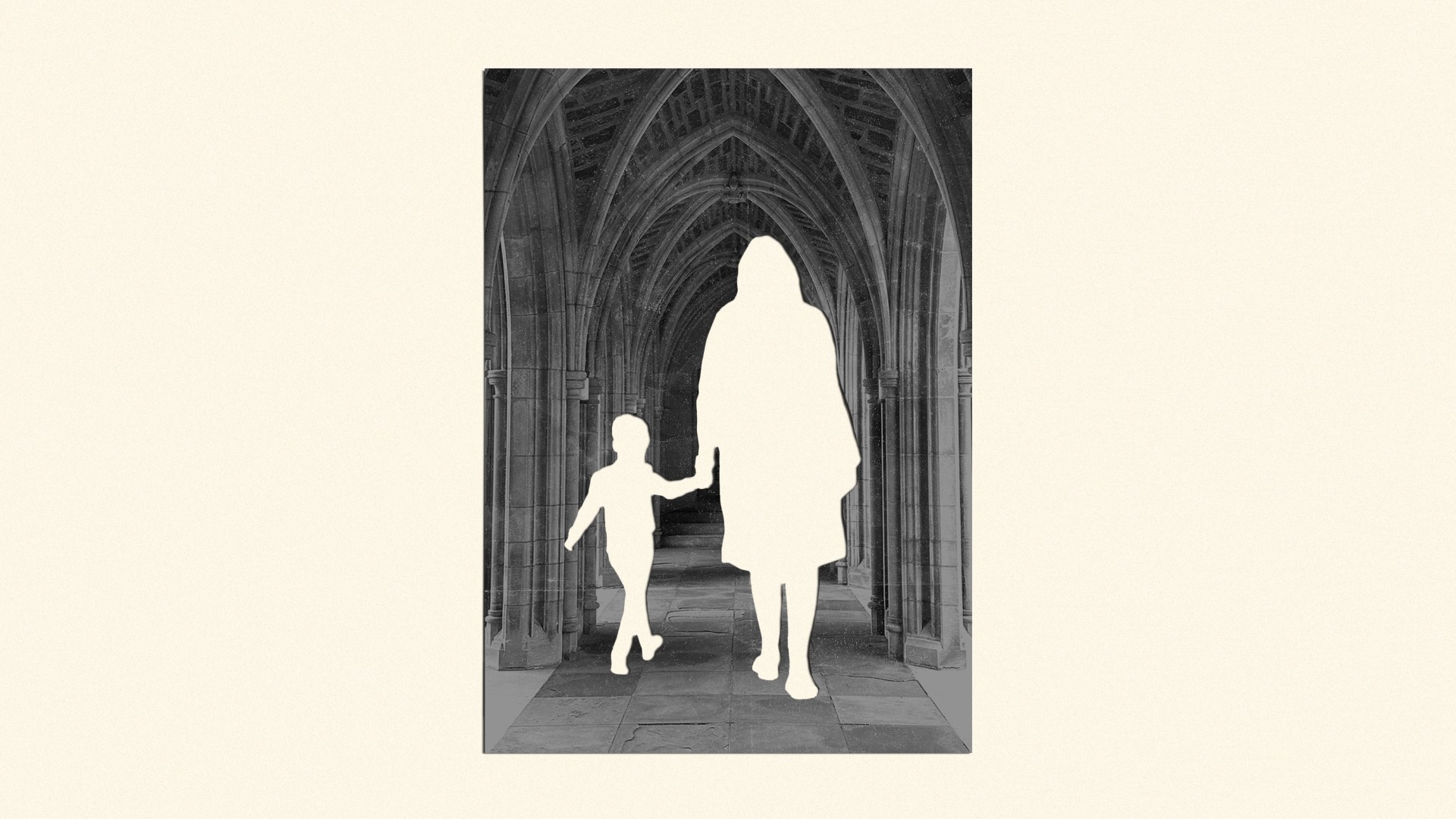
A mom and child shape cut out of a photo of a church.
Christianity Today November 19, 2025
Illustration by Elizabeth Kaye / Source Images: Getty, Unsplash

Scripture repeatedly calls believers to care for the widow and the orphan. Yet as pews refill post-pandemic, one group remains strikingly absent: single mothers.

Recent Barna research reveals that only one in four single moms attends church weekly, the steepest drop among women in recent years. The finding raises an uncomfortable question: Are churches truly heeding the biblical command to care for the vulnerable in their midst?

When Joie Van Holstyn became a single mom of two boys through foster care and adoption in 2019, her church attendance quickly spiraled. 

“It was really hard at first,” she said. “We had pretty rough attendance the first two years—it was so much work to get out of the house. And I just felt out of place as a single mom.”

For women like Van Holstyn, the barriers start with logistics—juggling work hours, transportation, and the chaos of getting kids ready alone. But the emotional weight can be heavier still. Many feel judged, pitied, or simply invisible in congregations that assume families include a husband.

A friend eventually confronted Van Holstyn about her sporadic attendance. Convicted, she committed to going every week, even when her children squirmed through the small rural church’s service.

“I just committed to going, and I hated it at first,” she said. “I didn’t learn anything because my kids were so busy and naughty. But I just kept going, and slowly I realized I enjoyed it more.”

Now six years into single motherhood, Van Holstyn says she’s found her rhythm—but wishes churches would be more proactive about providing childcare rather than waiting for participants to ask.

“I hate when they say, ‘If you need childcare, let us know,’” she said. “That makes me feel like a burden, so I don’t say anything.”

Her persistence makes her something of an exception among single moms, though. 

In the US, 23 million kids grow up in single-parent homes, mostly with single moms who don’t attend church. Even well-intentioned congregations, experts say, often miss the mark in reaching them.

“Many of these women have experienced significant trauma,” said Michelle Donnelly, founder of Uncommon Valor, a ministry for relational healing after trauma. “They may resist asking for or receiving help, and that means even if you offer the best programming, they may not want to participate.”

Indeed, the programmatic mindset—offering a special event or class, then assuming participants will assimilate into existing ministries—often leaves women feeling unseen.

“There’s been a rise in one-time events for single moms,” said Jennifer Maggio, founder of the ministry The Life of a Single Mom, which partners with over 2,000 churches nationwide. “But churches assume those mothers are joining other ministries afterward. Most aren’t.”

Maggio knows this firsthand. Once a 19-year-old single mom of two on food stamps, she started her ministry in 2011 to fill a gap she herself had felt.

“When we began, I had to reassure pastors we weren’t advocating for creating more single-mother-led families,” she said. “That was the mindset back then.”

While she’s encouraged by growing interest, Maggio says the deeper challenge is consistency.

“Churches that establish long-term efforts—like a weekly Bible study or mentorship program—are the ones that see women discipled and connected,” Maggio said.

The category of single moms is not a monolith and includes divorced mothers, widows, teen moms, grandparents raising grandchildren, and single foster or adoptive parents like Van Holstyn.

Yet for many churches, “family ministry” still means nuclear family ministry. Sermons often center on the dynamics of marriage and parenting as a couple. Small groups are organized by life stage—young families, empty nesters, singles—leaving single moms feeling as if they belong nowhere.

“Grouping people by life circumstance can be isolating and disempowering,” Donnelly said.

Esther Vazquez, a mom of four from Ocala, Florida, put it plainly: “My children love going to church, and I go for God, not for people, but it’s hard to find community as a single mom.”

Churches often organize annual outreach events like clothing drives, guest speakers, or Mother’s Day brunches for single parents, but these gestures rarely lead to genuine belonging.

“The best groups I’ve been in have been multigenerational,” Donnelly said. “Different ages, stages, and life experiences together—that’s where healing happens.”

Barna’s data suggest why such environments are rare: Only 19 percent of Christians say their churches provide “opportunities for cross-generational interaction.” The rest remain siloed by age, marital status, or life stage.

Without intentional church structures to include nontraditional homes, single moms can feel subtly sidelined. And when divorce or separation is the reason for their singlehood, stigma can deepen that isolation.

Christine Moriarty Field, a divorced Christian writer, says many divorced women feel like “second-class members of the congregation” due to “unspoken judgment” that makes them feel “alienated and rejected, rather than loved and accepted.”

Sarah Cleveringa, a former single mom of four in Oregon who has since remarried, has felt both the sting and the grace.

“One thing that always feels constant,” she told me, “is needing to give the disclaimer that I didn’t destroy my previous marriage. People kind of expect to know: ‘Are you the homewrecker?’”

Even casual gossip can wound deeply, she added. “People feel entitled to know your story.”

Not every story ends in exclusion. When Kaeley Triller Harms became a single mom at 19, her church “basically saved me,” she said.

“They loved my babies, surrounded me with prayer, and two women adopted me—meeting with me weekly for intercessory prayer,” she recalled. “The men from my life group volunteered to go with me to custody exchanges with my abusive ex. Honestly, I’ve never felt so loved or supported in my life.”

These examples, though less common, reveal what’s possible when churches approach single mothers not as a category to manage but as relationships to nurture.

Donnelly noted that many single mothers fear judgment, but she said that often “there are wonderful people nearby who genuinely care—they just don’t always know what to do.”

Van Holstyn has felt that support. 

“Once I stopped assuming that married moms and couples didn’t welcome me, I found great community,” she said. “I started making friends and got over myself. It does get easier.”

She’s learned that church, at its best, is less about sitting among people in the same life stage and more about fellowship across difference—being seen as a sister in Christ, not a project.

Families headed by single mothers will remain a large and growing part of American life. For churches, that reality is not a distraction from the gospel mission but an invitation to live it out.

As Donnelly put it, “Helping women find safe spaces to give and receive in the context of community is very healing and restorative.”

The biblical charge to care for the widow and the fatherless has never been theoretical. It’s practical, relational, and sometimes inconvenient. For churches, this kind of love looks like offering childcare, sharing meals, or simply sitting beside a woman who feels alone, again and again.

Churches that see single mothers not as a problem to solve but as a people to serve will embody what James called “pure religion.” In doing so, they’ll not only bring single moms back to church but also reveal the heart of Christ to the whole congregation.

Culture

How Grief Can Heal America

Abraham Lincoln’s words to a divided nation still ring true today.

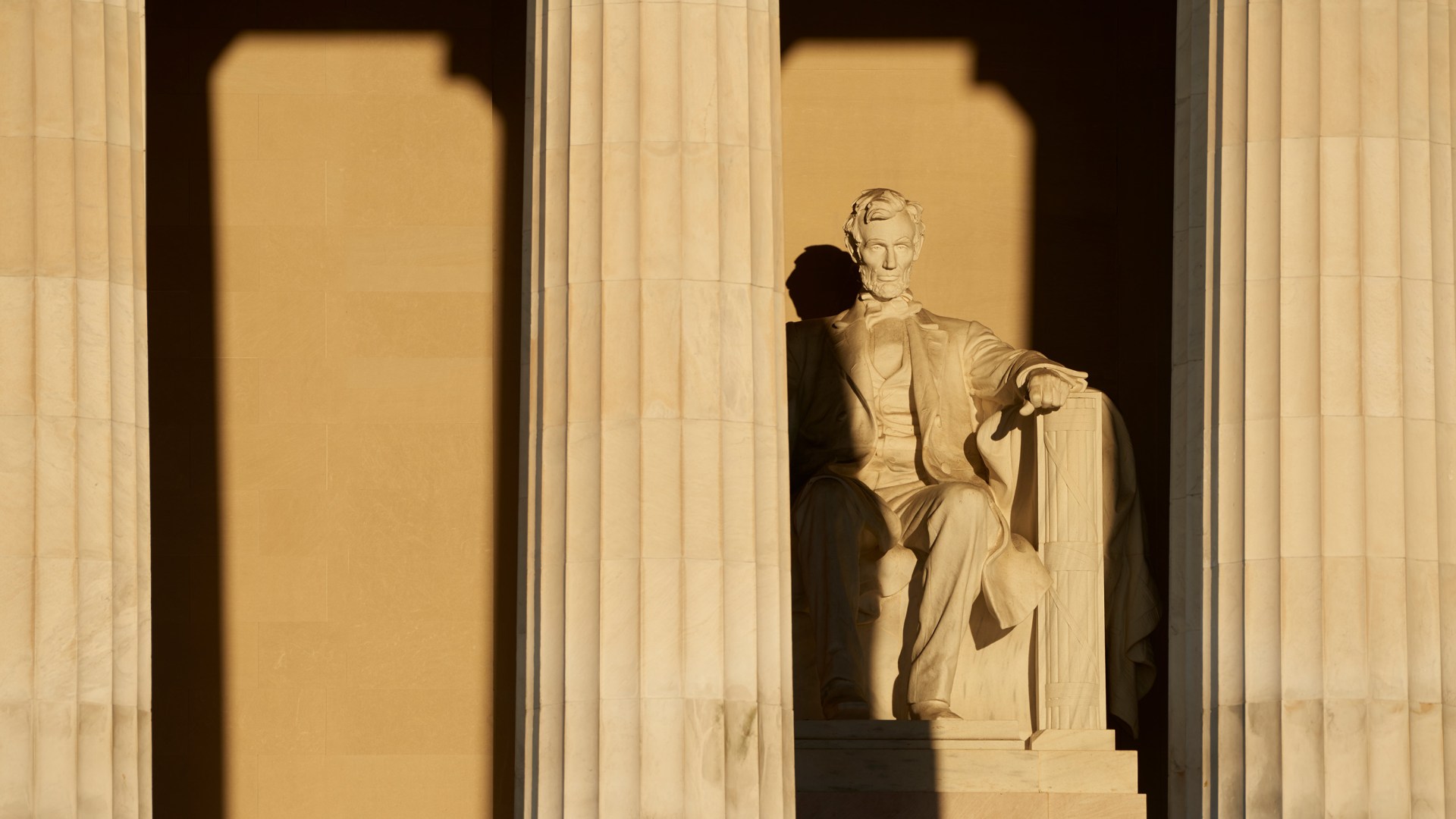
The statue of Abraham Lincoln in the Lincoln Memorial.
Christianity Today November 19, 2025
Westend61 / Getty

On March 4, 1865, President Abraham Lincoln stood on the east portico of the US Capitol in Washington, DC, to offer his second inaugural address. Wearied by four years of bloody conflict, Mr. Lincoln held in his hand only 700 words, cut and pasted onto a single piece of paper. 

That day, Lincoln named the evil of slavery, acknowledged the war’s deep divisions, and called the nation to work toward repair. The final words of his speech, carved in Indiana limestone on the national memorial that bears his name, still echo 160 years later. 

With malice toward none, with charity for all, with firmness in the right, as God gives us to see the right, let us strive on to finish the work we are in, to bind up the nation’s wound, to care for him who shall have borne the battle, and for his widow and orphans; to do all which may achieve and cherish a just and a lasting peace among ourselves and with all nations.

As he stood before the crowd that day, Lincoln knew just how far-fetched his exhortation might seem. Bitter strife and loss had torn the country apart not only in Washington’s halls of power but also in clapboard homes across the North and small farms laid out like patchwork across the South. In the face of such deep and expansive division and loss, what healing could a country reasonably expect?

On a smaller scale, Lincoln was no stranger to this kind of tension and sorrow. Only three years prior, grief had burst the president’s heart open when his 11-year-old son, Willie, died in a bedroom of the White House from typhoid fever. Willie’s death carved a giant chasm in Lincoln’s marriage, an isolating division that touched every aspect of his life and work. In this microcosm of sorrow, the president knew what arduous work lay ahead.

The truth was, to bind a country’s wounds would require more than reparative compromise in Congress and the surrender of arms in communities still bound up in conflict. To achieve a lasting peace, Americans would need to gather not only at the podium but also in the funeral parlor, not only with the gavel but also at the graveside. True healing would begin only when the nation acknowledged and engaged with grief.

When people ask me in curiosity, discouragement, or frustration how to heal our country from polarization, I’m often drawn to Lincoln’s second inaugural address and these words from the heart of a grieving man to his grieving country. More than a century apart, Lincoln and I both long for a lasting peace. Partisan divides still threaten the fabric of our nation and the voice of our democracy around the world. What would Lincoln prescribe for a country such as ours? I suspect his answer would be the same. 

The work to which Lincoln called his country in 1865 remains relevant and necessary for Americans because it is rooted in the timeless truth of the Judeo-Christian tradition. To heal our country’s deep divisions, we do not need a new plan or policy. Instead, we must grasp Holy Scripture’s exhortation to weep with those who weep (Rom. 12:15). It is only in the work of grief that true healing begins, and our greatest growth as a nation can follow.

Although contemporary Americans have lost much of a cultural vocabulary for grief and death, bereavement research confirms that we can reacquire the skills we need for grief that leads to healing. Like all wounds, the divisions we have suffered because of politics may carry tenderness for years to come, but they need not remain raw and open. Instead, we can answer Lincoln’s call to integrate these griefs into productive discourse and action.

In his address, Lincoln relied on Holy Scripture to model the honest and hopeful grieving that repairs individuals, communities, and nations. Echoing the words of Jesus in his address, Lincoln lamented, “Woe unto the world because of offences. … Woe to that man by whom the offence cometh” (Matt. 18:7, KJV). In a modern psalm of lament, the president guided the nation into what psychologist J. William Worden would years later identify as the first “task” of bereavement, accepting the reality of pain and loss. Rather than avoiding conversation about conflict, Lincoln identified the pain of polarization. He named the cause of the division that had brought so much pain. In doing so, he invited the nation to grieve with him.

To break free from our cultural, religious, and political echo chambers, we too need this invitation to vulnerable lament. Rather than avoiding conflict or running headlong into it, we must thoughtfully give language to the hard feelings that come with lost elections, failed endeavors, and shifting cultural changes. We must mourn together in community spaces where we share our stories of loss—lost jobs, lost local economies, lost loved ones to addiction—with the goal of not fixing but forging. We forge new brotherhoods in the valley of the shadow that so often feels like the loneliest place to exist. We must acknowledge that polarization has left us not winners but walking wounded. We must turn to our pain together and “care for him who shall have borne the battle.”

Lincoln knew that talking about grief was only the first step toward repairing national division. Thus, he suggested concrete acts of mercy to make material the solidarity articulated in vulnerable sharing. Without qualification he instructed the people: Care for the soldier with post-traumatic stress, employ and empower the widow, raise up the generation birthed in trauma and marked by loss. Lincoln called the people to work out their nation’s salvation with fear and trembling. Those once considered enemies could be made friends through grief and, arm in arm, chart a new course in the face of loss.

As we seek to heal polarization, this dimension of grief expression is vital too. Our losses, while unique, are woven together with universal threads. Our desire for agency is one of the strongest threads. While polarization might encourage us to circle the wagons and care for our own, Lincoln leaned into scriptural allusion in the story of the Good Samaritan: “He went to him and bandaged his wounds, pouring on oil and wine” (Luke 10:34). Men once enemies could find intimate friendship at the intersection of sorrow and action. Naming grief can break down barriers, but loving neighbor in word and deed might be the most powerful healing balm of all.

What would this mean for our local communities suffering from division? For those who experienced various COVID-19 losses, informal community groups could encourage listening and receiving others’ stories of grief. For communities strangled by economic decline, physical actions of repair could help unlikely partners channel anger and disappointment into fruitful endeavors. While we may always mourn for what is past, healthy engagement with grief reminds us that we are not prisoners of fate. Together, we can heal a country’s wounds slowly, patiently, and intentionally. We can shape a new tomorrow with the wisdom and clarity that only sorrow can bring. 

Lincoln understood that the responsibilities of life pull us forward, that we rarely have discreet space in which to grieve. Yet if we wish to diminish polarization, we must commit to the long, relational work of walking side by side toward that goal. The spirit of our politics is not an angry or divisive one. It is a grieving one. When we face and embrace this brokenness, good things can begin.

After Lincoln’s death and the end of the Civil War, communities across the United States erected memorials on town greens in memory of the soldiers they’d lost. In the South, granite sculptures of Confederate generals and soldiers expressed a distinct interpretation of grief—the “War of Northern Aggression.” In the North, statues of Yankee soldiers rose honoring losses in the “Great Rebellion.” It would seem that even in our nation’s grief, it could not do as Lincoln had hoped. Its citizens could not bind themselves to their warring brothers or sisters in sorrow and reconciling love.

But in a little town buried in Kentucky, just an hour’s drive from Lincoln’s humble birthplace in a neighboring county, one community longed for more. Acknowledging their shared and unique griefs, honestly naming the division that had severed relationships in their town, the citizens of Morgantown, Kentucky, offered a different path forward. To heal their country’s wounds, they build a single monument to both Union and Confederate soldiers. Seeing the grief of the other brought humanity that dismantled polarization. Working together to remember offered space for opposing sides to lay down their swords in favor of plowshares. 

Lincoln never lived to see that monument erected, but his vision still calls us toward that great goal. “It is for us the living, rather, to be dedicated here to the unfinished work which they who fought here have thus far so nobly advanced,” Lincoln said at Gettysburg. As we seek to bind our country’s wounds, may we take up the task and invite grief to heal our nation.


This piece originally appeared in the Journal of Ideas for the Center for Christianity and Public Life. Clarissa Moll is a 2025 public life fellow and the executive editor of news at Christianity Today.

Pastors
Excerpt

Timothy Keller: Sin Is the Strongest Argument for Faith

Scripture’s take on human nature helps us cope with evil. It also gives us reason to believe.

CT Pastors November 18, 2025
manusapon kasosod / Getty

Adapted excerpt from What Is Wrong with the World?
by Timothy Keller

Questions arise in our minds and hearts every day. Some are easy to answer: “What should I wear today?” or “What should I make for dinner?” Some are weightier and harder to determine: “Should I move to a different city?” or “Should I marry this person?” But one question rises above all others, the supreme question that each of us asks ourselves time and time again: What is wrong with the world? What is wrong with the human race? 

Years ago I read a book on the subject of evil in modern life and how we view it. In his introduction, the author noted that it was rare for a week to pass without him seeing news reports detailing horrific events. He noted an account of teenagers performing contract killings for just a few dollars, a story of a man shot in the head over the keys to a car, and—the week he finished the book—reports of atrocities in concentration camps where ethnic cleansing was happening. 

What’s wrong with us? What could lead human beings to do things like this? The truth of the matter is that we will never be able to answer these questions unless we come to understand sin. We will never be able to resolve our personal problems, let alone the rest of the world’s problems, unless we possess a full comprehension of sin. I’ll give you two reasons. The first reason is that the biblical teaching about sin is one of the strongest arguments for the truth of Christianity. The second is that it equips you to best handle life as it is. 

To take the first reason, I can show you person after who abandoned Christianity but were pushed back to embrace it because nothing other than the idea of sin could account for the darkest depths of human behavior. These individuals saw human evil up close. The Bible was the only way they could find to explain what they saw. 

In The Death of Satan: How Americans Have Lost the Sense of Evil, Andrew Delbanco, a professor of American studies at Columbia University and a self-described secular liberal, argues that if you get rid of the ideas of religion along with the moral, spiritual idea of sin, you are forced to conclude that the reason we do the terrible things to each other as described earlier is due to either biology, psychology, or sociology. That creates all sorts of problems. As Delbanco writes, “A gulf has opened up in our culture between the visibility of evil and the intellectual resources available for coping with it.” 

If the terrible acts humans commit are a result of biology, they’re part of our evolutionary makeup, where aggression is bound up with the idea of the survival of the fittest. Or the reasons are found in psychology: We do these terrible things because of repressed emotions. Or in sociology, we do them because of economic deprivation. But when you get a close-up view of the horrors of evil, all those theories fall apart. If those theories are true, then we really can’t help doing what we do and therefore we’re not really evil. But anyone who witnesses a parent killing their child knows that makes no sense. These acts can’t be so easily explained away, no matter how hard we try. 

As the serial killer Hannibal Lecter says to the FBI agent trying to analyze him in The Silence of the Lambs, “Nothing happened to me, Officer Starling. I happened. You can’t reduce me to a set of influences. You’ve given up good and evil for behaviorism . . . You’ve got everybody in moral-dignity pants—nothing is ever anybody’s fault. Look at me, Officer Starling. Can you stand to say I’m evil?” 

In his book The Brothers Karamazov, Russian novelist Fyodor Dostoevsky addresses the idea of seeing biology as the culprit: “People talk sometimes of a bestial cruelty, but that’s a great injustice and insult to the beasts; a beast can never be so cruel as a man, so artistically cruel. The tiger only tears and gnaws, that’s all he can do. He would never think of nailing people by the ears, even if he were able to do it.”  

As Dostoevsky knew, something else is going on here, something beyond biology or sociology or psychology. That something is sin. 

The second reason it’s all-important to understand sin is that if you don’t take up the old-fashioned, traditional understanding of it, you will be led into countless personal and social miscalculations. You will not be able to deal with life as it is. Not only that, but you won’t be able to understand the glory of God’s love and grace. You’ll never be stunned or amazed by it. 

Here is what I mean. If someone came up to you and said, “I was at your house the other day and you weren’t there. Then a man came with a bill for you, and I paid it,” how would you react? Well, it depends on the size of the bill, doesn’t it? 

What if it was postage due for seventy-five cents? That’s one thing. What if it was the landlord demanding rent? That’s another thing. What if it was an auditor from the IRS saying, “You owe ten years of back taxes, and we’re repossessing your property unless you pay up”? That’s something else entirely.  

How does this relate to the idea of sin? Here’s how. If there is a lack of joy in your life today, if the thought of Jesus dying for you does not transfix and transform you, if you’re not able to draw power out of the thought of what he has done for you on the cross, then you don’t understand the enormity and power of your sin.  

Put another way, if you don’t understand sin, you are neither pessimistic enough nor optimistic enough to deal with life. If you believe the reason people do the terrible things they do is because of poor social conditioning or evolution or repressed psychology, you’ll never be able to deal with life as it is. You’ll be like Agent Starling, speechless before Hannibal Lecter.  

In her book Creed or Chaos?, English author Dorothy L. Sayers observes that Christianity, far from its caricature as an escape from reality, is a supremely clear-eyed way of viewing the world. She writes, “It seems to me quite disastrous that the idea should have got about that Christianity is an other-worldly, unreal, idealistic kind of religion that suggests that if we are good we shall be happy. On the contrary, it is fiercely and even harshly realistic, insisting that there are certain eternal achievements that make even happiness look like trash.”  

In other words, one of the things that precludes an “unreal, idealistic” view of life is Christianity’s clear-eyed view of sin. 

If we stand any chance of answering the question of what is wrong with the world—much less of being saved from the answer to that question—we must begin with understanding the complexity and multifaceted nature of sin and end with understanding the unfailing love of a God who chooses to save us from it.  

Taken from “What Is Wrong with the World?” by Timothy Keller. Copyright © October 2025 by Zondervan. Used by permission of Zondervan, www.zondervan.com. 

Books

More Than a City On a Hill

Religion in the Lands that Became America moves readers away from religious exceptionalism.

The book cover on a green background.
Christianity Today November 18, 2025
Illustration by Christianity Today / Source Images: Getty, Yale University Press

Thomas Tweed is one of the most distinguished figures in the world of religious studies. His wide-ranging writings include key contributions in diasporic and immigrant religion, Catholic history, American Buddhism, and “lived” or everyday religion. Even that diversity does little to prepare us for the sheer scope of his triumphant new book, Religion in the Lands That Became America: A New History, which is destined to become a standard work for anyone interested in American religious history. It will be for this generation what Sydney Ahlstrom’s A Religious History of the American People (1972) was for the scholars, students, seminarians, and general readers of half a century ago and what Mark Noll’s A History of Christianity in the United States and Canada (1992) was for the next generation.

Grounded in contemporary concerns, Tweed’s book differs from many traditional models, so it requires a little explanation. At first sight, it offers a straightforward chronological structure. For example, a chapter on the period 1792–1848 addresses the broad theme of “Expansionist Religion: Expanding and Contracting Worlds in the Agrarian ‘Empire of Liberty.’” This is followed by the “Industrial Religion” era of 1848–1920, and so on.

This sort of presentation might appear in any general history, with a more or less familiar periodization. With a couple of arguable exceptions, Tweed’s account of religious development is exemplary. I am unconvinced that the “Countercultural Religion” he locates between 1964 and 1974 demands as much attention as he gives it, and I personally would attach just as much significance to the post-1975 decade. But generally, the structure makes wonderful sense.

Throughout, Tweed’s points are convincing and his writing accessible. His strength lies in describing religious places and sites and interpreting sensitively what they might have meant to the communities that created and used them. I cannot resist quoting his description of the New England meetinghouse as “a sort of Congregationalist kiva or Puritan council house.”

But if much of the book’s format seems conventional, it departs massively from older precedents in two crucial ways. One is the geographic scope indicated by the title Religion in the Lands That Became America, and second is the cultural and religious consequences of that perspective. That means paying full and respectful attention to Native societies, as well as to the Catholic imperial systems, chiefly the French and Spanish, that preceded the British and the Americans. The book also seeks to understand religion through the lens of sustainability, through how societies cope with the technological and climatic pressures that can prove so ruinous if not handled wisely. In both these innovative approaches, Tweed presents provocative and rewarding ideas.

Tweed is deliberately seeking to escape a once-familiar model by which histories of American religion began by describing conditions in the British seaboard colonies (Puritan New England, Quaker Pennsylvania, the Anglican Chesapeake and South) and then traced the expansion of that religious order through progressive stages of conquest and settlement. His book is a history of religion, not just of American Christianity and assuredly not of American expressions of Protestantism as they originated in Northern and Western Europe.

To offer an admittedly crude gauge of just how radically Tweed’s book differs from its predecessors, it has no reference to Massachusetts until page 119 in a work of 370 pages of text! Plymouth and the Puritans make their entrance around the same point, roughly a third of the way through the story as he recounts it. He devotes considerably less space to the Protestant Great Awakening of the 18th century than to the Indigenous worlds of the Ancestral Puebloans (whom we used to call the “Anasazi”).

We might illustrate older models of telling that story—the versions he wishes to challenge—if we imagine the kind of continental map we might see in a television documentary, which begins with the scene in impenetrable darkness. Light then rises in the east, spreading gradually to bring new regions into view. In that vision, Ohio, for example, really did not exist until the arrival of the first British and Irish Protestants in the mid- and late-18th century, and certainly it had no separate religious history to speak of. On our imagined documentary map, it lies deep in the heart of darkness. The Rockies and the Pacific Northwest flash briefly into authentic existence as Lewis and Clark visit them, then the regions resume spiritual night.

If we take the whole subcontinental landscape that would ultimately become part of the Lower 48 states, such visions are absurd. In reality, Ohio was densely settled by Indigenous peoples for perhaps 400 generations by the time the first White settlers arrived. From approximately the first century AD, the region became home to sophisticated cultures who built cities and fortresses and whose rich spiritual life manifested abundantly in sacred art and architecture. The same was true of the ancient Puebloans.

Allowing for local circumstances and variations, we could make a similar statement for virtually every part of the subcontinent, which in spiritual terms was in no sense a wasteland awaiting the arrival of new truths from Boston and Philadelphia. Moreover, a generation of scholarship has established just how slow the Euro-American settlers were to dispossess these older spiritual and social orders, usually long after official maps claimed a territory for the emerging United States.

In retrospect, those maps should be seen as aspirational if not delusional. Often, the European presence in such communities was marginal and transitory, and matters went on much as they always had. Whatever the nation’s leaders might have desired, the United States remained a floridly diverse religious landscape through much of the 19th century, with active Indigenous practices operating in far more of the territory than anyone cared to admit. And that comment takes no account of the extensive survival of African spiritual traditions.

Older books might have included a token introductory chapter on Native American spiritualities before reaching the coming of Protestantism. Tweed, in contrast, devotes two of his ten chapters to detailed accounts of Native worlds, beginning with the foraging societies we first see in the archaeological record. He symbolizes this era through the remains of (presumably) a shaman who lived some 11,000 years ago in central Texas, where he was buried in Horn Shelter. Chapter 2 offers a loving portrait of the “Farming Religion” of the sedentary and (often) urban worlds during what Europeans might call the Middle Ages, the years between AD 1100 and 1492. We don’t conventionally talk about “medieval America,” but perhaps we should. Looking at the settlements of the Southwest and the Mississippi Valley, the language of cities and castles—and maybe also of cathedrals and pilgrim shrines—is hard to avoid.

To differing degrees, each of the following chapters pays full attention to the Indigenous backdrop to the religious and cultural thought of the rising European societies. At every stage, Anglo-Native relations revolved around religious issues and competing spiritual views. Native societies were dominated by spiritual leaders, and no effective distinctions demarcated the world of religion from that of diplomacy or warfare. Similar remarks apply to the Virginian Christians, whose attitudes to their new lands were shaped by ideas of providential guidance and the struggle against pagan evils. Repeatedly, the Native leaders who most effectively challenged white expansion claimed special prophetic or charismatic guidance. “Indian wars” were commonly religious wars in all but name.

From the 17th century through the 19th, white Americans formed their ideologies of empire through their successive encounters with Native peoples, whether peaceful or military, and religious themes dominated throughout. Visions of divinely sponsored conquest gave rise to theories of manifest destiny, while missionary rhetoric justified the imposition of Christianity upon subject peoples.

If Tweed’s focus on Native realities requires little justification, his guiding motif of sustainability requires some exposition. He describes how, through the centuries, the societies in “the lands that became America” all faced intense challenges that threatened to destroy them. In some cases, religion encouraged people to confront these dangers and to survive, while in others, that same force subverted societies and contributed to ruin.

In successive eras, those challenges included dangers from climate change, as well as the issues arising from African slavery and the subsequent legacy of injustice and exploitation. In more modern times, an industrial crisis led to mass urbanization, with its consequences of social conflict and gaping inequality, together with grave damage to the environment. For Tweed, these cumulative crises remain unresolved and in need of urgent action. Each, he suggests, should properly form the agendas of religious institutions in the modern world.

We do not have to accept every aspect of that structure to find it useful as an interpretive tool. Nor, of course, do we have to agree precisely with the space Tweed allocates to different religious and ethnic traditions. No one book can begin to cover every part of the vast story the author addresses here. I will put this volume on my bookshelf alongside those by Sydney Ahlstrom and Mark Noll but will assuredly not displace those classics. Even with those mild caveats, I really cannot recommend too strongly Religion in the Lands That Became America. It is a splendid achievement.

Philip Jenkins is a distinguished professor in Baylor University’s Institute for Studies of Religion. His most recent book is Kingdoms of This World: How Empires Have Made and Remade Religions.


News

The World’s Largest Displacement Crisis

A pastor in North Darfur recounts the Sudanese paramilitary group’s attack on his church.

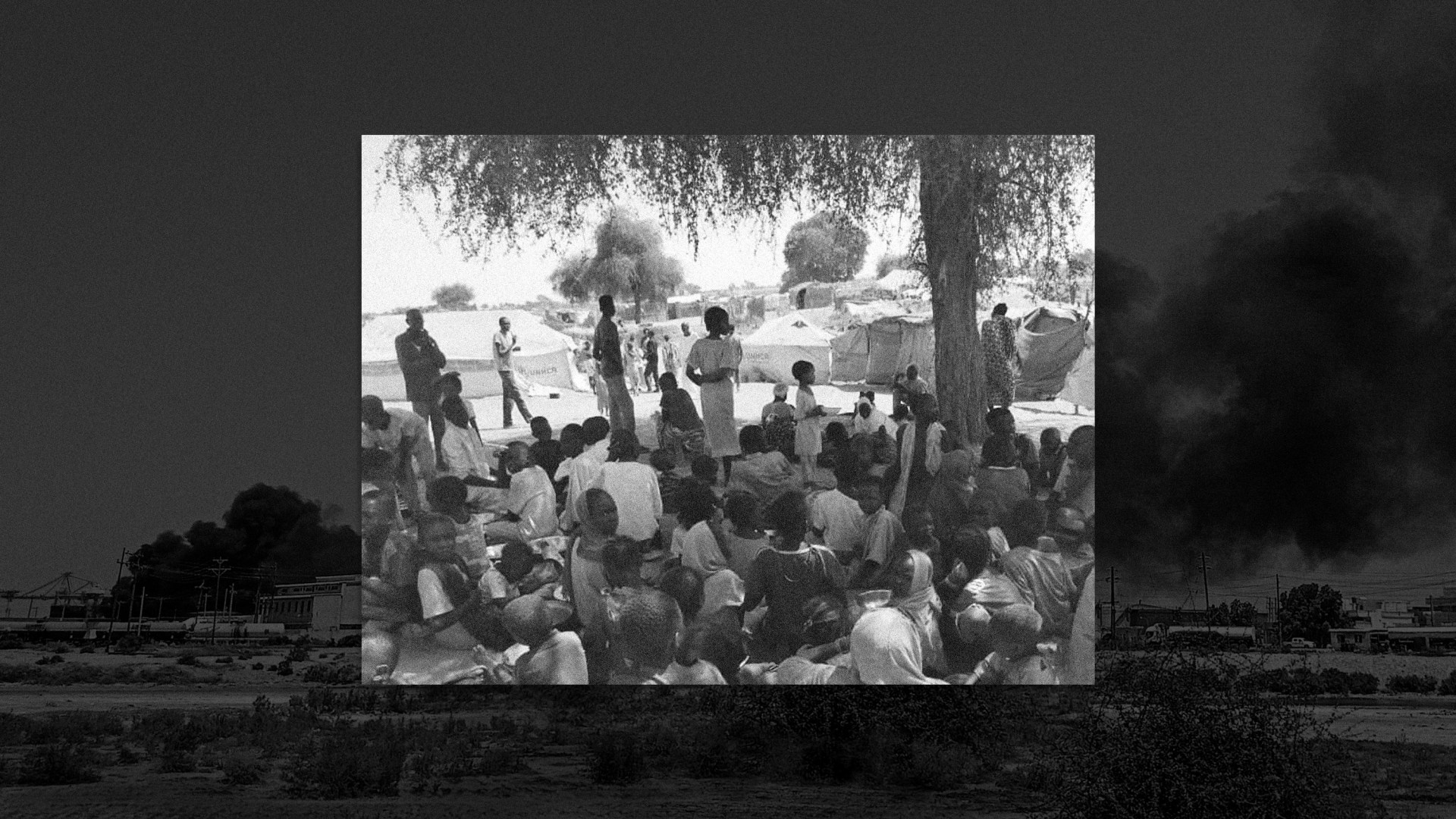
Displaced Sudanese Christians meeting for prayer.

Displaced Sudanese Christians meeting for prayer.

Christianity Today November 18, 2025
Illustration by Christianity Today / Source Images: Getty, Pastor Darmali Ismail

From July to September, Darmali Ismail and the 80 other people sheltering at his church—Episcopal Church El Fasher in North Darfur, Sudan—survived on one meal a day. Some days they didn’t eat anything.

The group, made up of the church’s congregants and members of the local community, included 30 children between the ages of 3 months and 12 years. When they heard the approach of the raiding paramilitary group, Rapid Support Forces (RSF), they would hide under the church’s plastic chairs.

“We were feeling stuck and sad,” Ismail said. “Each day was a battle for survival.”

Intensified fighting between RSF and the government-backed Sudanese Armed Forces (SAF) in El Fasher has displaced Ismail, his congregation, and at least 80,000 people in North Darfur’s capital in recent months.

Around noon on September 14, Ismail heard distant gunshots. As he listened, the crack of gunfire drew nearer.

Three trucks carrying dozens of RSF members arrived, along with more armed forces on foot. They shot at the church building as Ismail and his members fled. “We didn’t even know where we were running to,” he said. RSF kidnapped two male members of the church. They killed one, a 25-year-old. The other escaped.

“The church was usually a safe place,” Ismail said. “But not anymore. No one is safe.”

Churches have served as makeshift shelters for many of the country’s displaced residents since the RSF and the SAF began fighting for control of the country in April 2023. Soon RSF began attacking churches and eventually hospitals.

After seizing full control of El Fasher in late October, RSF used drones to bomb Saudi Maternity Hospital, the only functional hospital in the city, killing more than 460 patients and health workers.

RSF has used drone strikes against hospitals, displacement shelters, power plants, and marketplaces to gain an edge in its bid to drive the government’s army out of its last stronghold in Darfur. After the takeover, Al Jazeera reported widespread atrocities, some filmed by RSF fighters and posted on social media.

“The RSF have thrown away every proper way of conduct,” said Tom Catena, a physician at Mother of Mercy, a Catholic hospital in the Nuba Mountains. “We are certainly a target. I don’t think that there’s any doubt that we are liable to be hit. We are not protected.”

The World Health Organization condemned the killings and said the RSF’s attacks on civilian care centers in El Fasher have left more than 260,000 people trapped with “almost no access to food, clean water, or medical care.”

In October alone, the RSF killed an estimated 2,000 unarmed civilians, with reports of mass executions, sexual violence, and widespread looting. Since the war began, the fighting has killed an estimated 40,000 people and displaced 12 million, making it the largest displacement crisis in the world, according to the UN refugee agency.

President Omar al-Bashir originally formed the RSF in 2013 to combat Sudanese rebels. He later extended its service to border control and deployed the group for foreign conflicts in Yemen. Then, under the leadership of Mohamed Hamdan Dagalo (also known as Hemedti), a military officer and politician, the RSF evolved into a formidable militia with ties to Russia.

Bashir saw Hemedti as his protector, but then the warlord turned on him. In April 2023, the now-powerful RSF seized parts of the country, including El Fasher and the capital of Khartoum. The RSF’s clash with the Sudanese army sparked a civil war.

Earlier this year, the army forced the RSF’s retreat from Khartoum. But Hemedti vowed a “stronger, more powerful and victorious” return, rejecting negotiations with the government in favor of “the language of arms.”

The RSF’s attacks aren’t just about power—they tie into ethnic and religious motivations as well. The RSF, predominantly Arab and Muslim, often targets non-Arab and Christian communities to commit acts of violence or seize property.

Nonprofits reported the RSF has vandalized 165 churches and turned others into military bases.

Saman Farjalla, the Episcopal bishop of Wad Medani Diocese, told CT the RSF has occupied several of his churches, storing cars and weapons on the premises and living in the buildings.
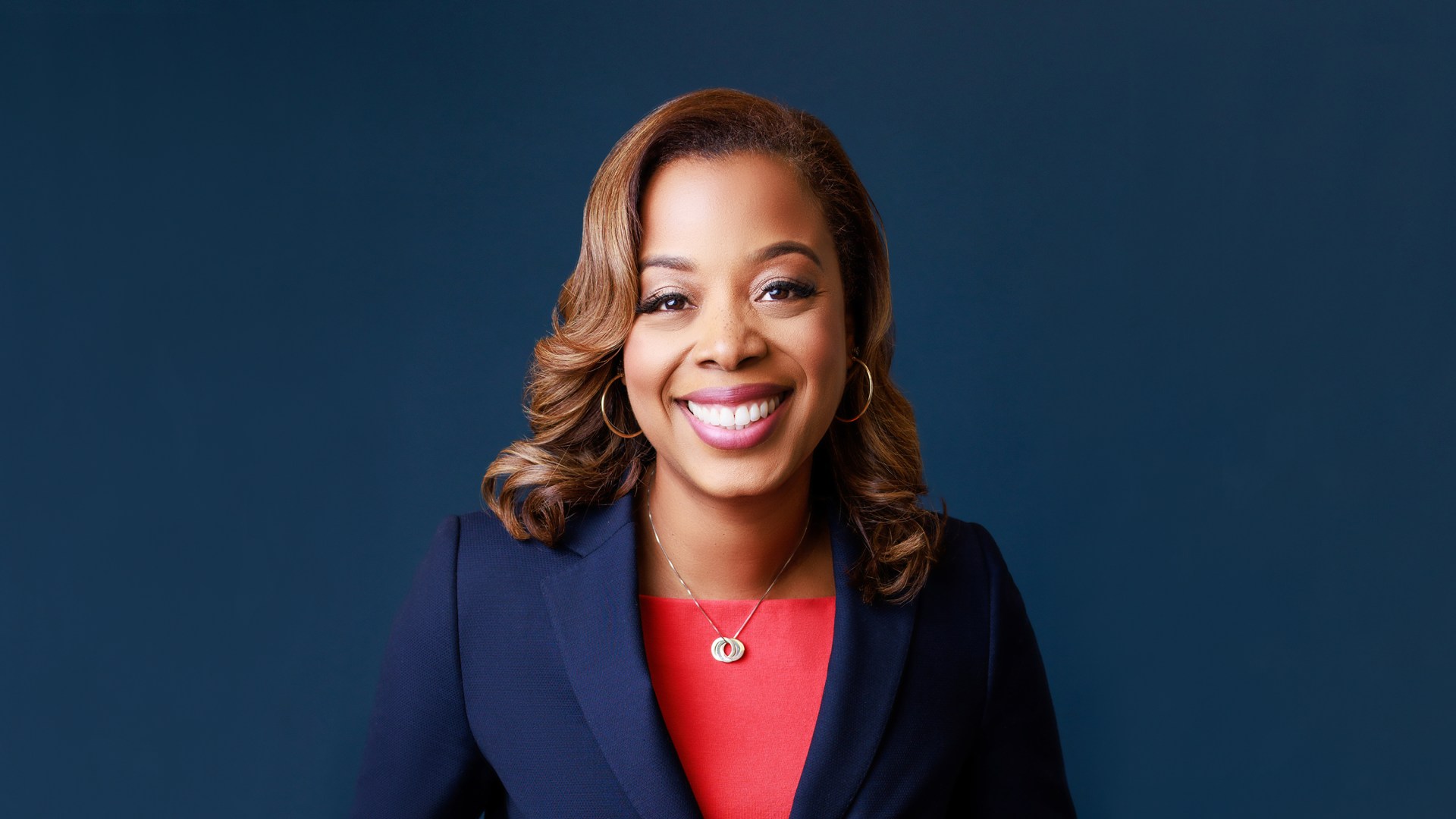
Farjalla said the RSF has looted churches, including St. Paul’s Cathedral in Wad Medani: “Only the building is still standing. Everything inside is gone.”

He added that church members now meet in temporary locations for prayer and worship. The region’s instability makes it difficult to reach scattered church members.

“Destruction is happening everywhere,” he said.

Mohamed Ismail (no relation to Darmail Ismail), pastor of Baptist Church Mayo in southern Khartoum, was forced to abandon his three-year-old church after militants looted the building.

“We lost everything,” he said. “But the worst is that we have no means to get in touch with our members. It has been so painful.”

After fleeing the RSF in September, Darmali Ismail and the group sheltering at his church headed to Abu Shouk camp, about four miles away from El Fasher. They slept under trees and in empty houses while continuing to dodge bombs and bullets, Ismail said.

“I was not feeling that I would be alive until now,” Ismail said. “I was thinking, They will shoot me now. I will fall soon.”

As the bombing increased, Ismail’s group walked 18 hours to Tawila, a town west of El Fasher that is now controlled by the Sudan Liberation Army, a neutral force in the conflict. Thousands of displaced Sudanese occupy the town, including 117 Christian families who sometimes join Ismail in his daily prayers under a desert date tree. Sometimes they eat together too—still just one meal a day.

The winter nights are cold, and Ismail said they don’t have blankets. Most people sleep under the trees. They spend most days waiting, with no jobs or schoolwork to break up the grinding boredom. If people get sick, they can’t get to the nearest hospital, which is 55 miles away.

“We are suffering here,” Ismail said.

Apple PodcastsDown ArrowDown ArrowDown Arrowarrow_left_altLeft ArrowLeft ArrowRight ArrowRight ArrowRight Arrowarrow_up_altUp ArrowUp ArrowAvailable at Amazoncaret-downCloseCloseEmailEmailExpandExpandExternalExternalFacebookfacebook-squareGiftGiftGooglegoogleGoogle KeephamburgerInstagraminstagram-squareLinkLinklinkedin-squareListenListenListenChristianity TodayCT Creative Studio Logologo_orgMegaphoneMenuMenupausePinterestPlayPlayPocketPodcastRSSRSSSaveSaveSaveSearchSearchsearchSpotifyStitcherTelegramTable of ContentsTable of Contentstwitter-squareWhatsAppXYouTubeYouTube