Church Life

What Porn Does to Us

Christine Emba talks with Russell Moore about how psychological research supports biblical injunctions.

A man on his phone in shadow.
Christianity Today October 20, 2025
Harry Prabowo / Unsplash

The Christian sex ethic says sexual relations should occur only in marriage, but that’s not the way most Americans and many Christians act. Pornography is almost rampant, and not just outside the church.

Christine Emba, a senior fellow at the American Enterprise Institute and the author of Rethinking Sex, told Russell Moore on his podcast last month that pornography now shapes what people want. If you’re a listener, go here for the 7,800 spoken words. If you’re a reader, here are 1,500 words, excerpted and tightened by human hands, not artificial intelligence, starting with Emba’s description of how pornography works:

There’s normal watching. Something appeals to you, like a jingle that sticks in your brain. Then there’s pornography, which engages our sexual instinct, one of our deepest desires and one of our most intense pleasure centers. And yet pornography is not about real relationships. It does not even attempt to show real love and real respect for the other person. We’re consuming other people’s bodies.

The average age of first exposure to pornography is between 13 and 15. The relationship between men and women they’re seeing is often violent and ugly: choking, slapping, hitting, vile language, women treated as objects to be abused. That shapes their image of what women and men do.

You’re fed categories you like or are supposed to like, and that further channels your imagination in certain directions. “Click here for blond people. Click here for younger women. Click here for something else.” Real women and men make these productions: “They are objects for my consumption, and whatever happens to them is worth it because I get to have what I want.” It’s teaching men to see women as made for my pleasure, my consumption.

That understanding of what women are for can spill out into real life and into real interactions with other people. People say, “It’s just pornography. It’s just something I’m watching. It doesn’t have anything to do with my real life.” That’s not how people work. Our brains aren’t wired like that. And our souls are not wired like that.

We have lots of debate about the language of addiction as it applies to pornography.

The scientific understanding of addiction is something you can’t control, a disease that’s affecting your life in a negative way. Some people feel withdrawal when they stop using it. But porn changes users in other ways as well.

I interviewed a young guy [who was] in a self-directed study program on a campus and didn’t know anybody. He was bored and lonely and started watching a lot of porn. He also wanted to be in a relationship and eventually get married. He found he couldn’t be physically attracted to a woman he liked because she didn’t resemble what he saw in porn. She was a live woman with flaws, and he had trained himself not to like a real woman. The solution for him was cutting out porn entirely and trying to reframe his understanding of attraction.

It worked out for him. He is now married and has a baby on the way. The first step was recognizing what porn might be. It is easy to access. It doesn’t ask anything of you. It’s always there. To go on a date you have to take a shower, get dressed, go outside, talk to someone who might turn you down, find someone else who might also turn you down. That is a lot of work. I worry about young men trapped in the “it’s not great but it’s sufficient” position—and that keeping them from going further.


Do academic studies show the danger?

Research shows that young men who watch violent pornography are less likely to intervene in situations where women call for help and more likely to blame the victim in a rape case. But it’s hard to find clear studies on pornography, because so many of them are [ideologically] motivated. Porn companies want to prove it’s fine. Religious organizations want to prove it’s bad. The research is seen as skewed by many readers, but research can show we become habituated to things. Do something enough times, and it becomes normal, inoffensive, or perhaps part of your own practice.

I’ve seen a big shift to sexless marriages—not the typical pattern of older people hormonally slowing down, but young married couples. In almost every case the reason was the man. They’d explain that sex with their wives felt awkward, too intense emotionally after porn, which is just consumption.

The pandemic made it harder for young people to go out on dates to connect one-on-one, and especially for this swath of people of the age in which they learn to do that. It made some men a lot more nervous and cautious about interacting with women. You couldn’t necessarily go out and see someone, but porn was there with smartphone access.

I hear a lot from young women who say men they run into are porn led. They’ll say, “I was texting with this guy, and he started saying wild and gross things to me over text. I don’t want to be with a person like that.”

Or they’ll say, “I slept with this person, and he immediately tried some sort of crazy, rough action on me,” such as surprise choking, which has become shockingly common over the past couple of years and is definitely coming from pornography. A landscape in which men behave toward me in the way that men behave in pornography is terrifying—so I’d rather just not engage. I’m not gonna be in a relationship. I’m not gonna date if that’s what’s out there. It pushes people away on both ends.

What should a person look for to see if it’s a healthy potential dating relationship?

This sounds simplistic, but it’s not. Does the person you’re with treat you like a person—not like an object, someone who’s there to cater to desires, but interested in you as a person, in your thoughts, your sensitivities?

I wonder if we could bring in mentorship from older people who understand what the norms were. People do not want to talk to their parents about their dating life, but an older person in their community or in their church or aunts or uncles who make themselves available could be helpful in giving feedback: “That doesn’t seem normal.” “Are you sure about this?”

In America we’re all about individualism and allowing people the freedom to make their own choices and not interfering, but guidance is really important. I don’t just walk up to somebody and say, “Do you want some guidance in terms of love and intimacy?” We have a generational divide. People hang out with their age slice in some way. It would be valuable for churches or individuals to find ways to cross barriers.

Is the discussion of porn and smartphones parallel in some way, in that people assume this is just what the world is like now and there’s nothing you can do about it?

But we can. Gen Z is actually more in favor of regulations on porn and porn access than older people—[like] age bans, as they’ve adopted in various places. There is support for pushback against the way that kind of porn has taken over the internet. That’s probably because younger people in particular have had this all their lives and they see how it has harmed them.

Do age verification and these kinds of measures actually work?

It’s too early to say, but in some states where these age-verification laws have been put in place, Pornhub, one of the largest streaming sites for porn, has just decided to not provide porn in that state. That’s a win. It’s true that people can use VPNs or other ways to get around these age-verification tools, but they are a speed bump. They put some friction in between a young person [accessing] a porn site.

Friction does something. Even if some people sneak around it, some people won’t. The law is a teacher. An age limitation and labeling make it clear that this isn’t just an innocuous thing but something you should think twice about, something you have to be old enough to watch—or maybe you shouldn’t be watching it at all.

It’s seeding the idea that this is a bit dangerous. That’s important because right now we have a discourse that says, “No, it’s fine. Go ahead. Do what you feel.” And that has not helped anyone at all.

We almost have a consensus, at least in mainstream American life, that child porn is wrong. Is that right?

But often the argument seems to be simply the abuse of the children involved, which is a major reason why it’s wrong. With AI allowing for image construction without abusing a real person, will it be more difficult for people to argue for the wrongness of child porn? They’ll say it’s a victimless crime.

I hope that is a step beyond what people are willing to take, but that argument is made. That’s horrifying and scary. You can train your attraction. I am very uncomfortable with saying, in essence, “It’s okay to train yourself to be into child-sexual-assault material as long as you don’t take it any further than that.”
News

Amid ICE Raids, Korean American Churches Stay Quiet

Christians in the community are divided on how to respond, yet more churches want to prepare their congregants.

Parishioners attend Sunday service at New Life Baptist Church of Atlanta.

Parishioners attend Sunday service at New Life Baptist Church of Atlanta.

Christianity Today October 20, 2025
Yasuyoshi Chiba / Contributor / Getty

When news broke last month that ICE had detained more than 300 Korean nationals at a Hyundai plant near Savannah, Georgia, Christina Shin took a break from posting reviews of beauty products and irreverent slice-of-life videos on TikTok to address the issue of immigration.

Shin criticized the raid and the Korean American Christians who used the catchline, “Illegal is illegal” to defend ICE’s right to enforce the law.

“We are privileged that our parents got here legally, got the paperwork, made us [to] be born in the States,” Shin says into the camera, speaking to second-generation Korean Americans who take a hard line on immigration. Shin, a 35-year-old office manager in Atlanta, said she is not affiliated with any political party, but seeing the callous responses from some of her fellow Korean American Christians made her “blood boil.”

“It doesn’t seem like they have any empathy for their community members,” she told CT.

Still, when she went to her church on Sunday, she chose not to talk about the raid with her friends and fellow parishioners. She attends a 200-person Korean-speaking ministry for young adults that is part of a larger Korean church outside of Atlanta.

“I don’t want to be the one causing drama and stuff, especially at a church discussion where we’re trying to love each other,” she said.

Highlighting the sensitivity of these topics in immigrant churches, Shin asked that her church not be named.

The September 4 raid at an electric vehicle battery plant co-owned by South Korean companies Hyundai Motor Group and LG Energy Solution was the largest single-site operation by US immigration authorities.

Images of workers handcuffed at the Savannah plant and reports that they faced poor conditions in the detention center spread across social media, causing panic and confusion among Koreans both at home and abroad. US Homeland Security stated that those arrested had overstayed their visas or had entered the country illegally, although some workers disputed the claim.

The operation came on the heels of several other cases of ICE apprehending Koreans in the US. In June, ICE arrested Justin Chung, who had served a commuted sentence for murder in 2007, while he was in the process of complying with deportation orders, according to a Korean American advocacy group.

Then in July, ICE took Tae Heung “Will” Kim, a 40-year-old PhD student and green-card holder, without explanation or access to a lawyer. Authorities later pointed to a 2011 drug charge. In August, faith leaders successfully rallied for the release of Yeonsoo Go, a 20-year-old undergrad at Purdue University and daughter of an Episcopal priest, who was arrested after a visa hearing and held at a Louisiana facility.

In South Korea, anger toward the Hyundai-LG raid united conservative and liberal lawmakers, even as right-wing supporters of the impeached president Yoon Suk Yeol borrowed language from the MAGA movement. Within a month, the US eased restrictions on South Koreans working in factories like the one in Georgia.

In the US, Korean American Christians have had mixed reactions to the Trump administration’s immigration enforcement tactics. While some emphasize the importance of upholding law and order, others, like Shin, argue that such views overlook the hardships that immigrants face.

Many churches have stayed silent on the issue, seeking to protect undocumented members and to preserve unity among congregants who hold differing political views. At the same time, organizations like the Korean American Sanctuary Church Network continue to offer legal services, financial assistance, and shelter to immigrants in need.

“We should take care of the weak and the people who are not privileged enough to go through the right process,” Shin said.

About 110,000 unauthorized immigrants from South Korea live in the US, according to a 2022 report from Pew Research Center. While the earliest waves of Korean immigrants were primarily laborers, victims of war, and political refugees, the US saw a surge of white-collar workers from the 1960s through the 1980s driven by high unemployment and political instability in South Korea. Today, the Korean American population numbers 1.8 million, with more than one-third identifying as born-again or evangelical Protestants.

For many Korean Christians on the right, sympathy for immigrants is separate from the principle of fairness in the justice system.

“A crime is a crime, but that does not mean that I’m less compassionate on the person,” said Samuel Shon, 34, a small business owner and deacon in Fairfax, Virginia. For Shon, abiding by the law is a way to honor God. However, he said his faith calls for empathy toward those who were not born with citizenship.

“I feel for them, because they’re just trying to do what’s best for their family, for their individual selves,” said Shon.

Shon’s parents immigrated from Korea to the US in the 1980s and started out as street vendors before working their way up to own several businesses. At the time, US immigration policy favored family reunification and skilled laborers, causing Korean-born immigrants to become the 10th-largest immigrant group in the country.

For Shon, following legal pathways to US citizenship, however challenging, is a prime example of biblical submission to authority. “I don’t think it ought to be an easy process. It should be difficult, much like citizenship in heaven … that was bought with a price,” he said.

In Los Angeles, James Chae, 42, knows just how difficult the immigration system can be. His wife, a Korean national, waited seven years for US citizenship. Though Chae, who identifies as center-right, supports reforms to make the system more efficient, he said existing immigration laws should be enforced in the meantime, pointing to concerns over crime and national security.

“My heart goes out to them,” Chae said of the undocumented people in his city. “What would Jesus do? I’m sure he would have open arms … [But] in the world we live in today, it’s really hard to do what we think Jesus would have done.”

Even though Trump’s immigration policies affect many Korean Americans, pastors and congregations often stay apolitical and dispassionate at church.

Raymond Chang, a pastor and the president of the Asian American Christian Collaborative, noted that one reason is because some pastors don’t want to draw attention to vulnerable undocumented congregants. This is especially relevant as, in January, the Trump administration rolled back protections that prevented federal agencies from making arrests at churches and schools.

Pastors also face internal division. Like many religious leaders across the country, some Korean American pastors said they’ve faced criticism from parishioners for speaking too much about current events. Some said long-time members of the church have left over political disagreements.

“There’s a lot of … churches that are trying to figure out [how to] disciple people in the midst of all the political division that we’re seeing?” Chang said. “The conversation is so polarizing and toxic and loud.”

Justin Oh, 26, of Long Island, once believed pastors should avoid politics entirely. “Those are secondary things, and obviously the most important thing is preaching Christ,” he said.

But after seeing an increase in divisive political content on social media, especially rhetoric demeaning certain groups of people, Oh’s view of the church’s role has evolved. “For us to just stay silent, I don’t think that’s right,” he said.

Oh noted that the Korean Christian community tends to not engage on immigration issues publicly. “We live in a bubble. We just stick with each other and pretend as if nothing else happens,” he said.

For Mina Song Lee, 25, a theology student in Atlanta, this passivity highlights a dissonance within the Korean American church. Historically, the church has been the central institution for immigrants to the US, offering practical aid and standing against racial discrimination. Many pastors started Korean American churches with ministries for new arrivals in mind.

“There are resources within the Christian tradition that are incredibly liberating, incredibly healing,” Lee said. Yet growing up in a Korean Pentecostal megachurch in New York City, Lee, a registered Democrat, saw little focus on social organizing. She described a culture where faith was personal, not political. “Our theology doesn’t compel us to be political actors,” said Lee.

She enrolled at Emory University in hopes of understanding how that apolitical posture developed. In Atlanta, Lee volunteers with church-run fundraisers and food drives to support the local migrant population—and hopes for more dialogue and action from the Korean community in the future.

Some advocates say they are beginning to see a shift in how Korean American churches are responding to immigration issues. After the Hyundai-LG raid, more first-generation Korean American churches in Georgia opened their doors to host Know Your Rights trainings, sessions designed to prepare people for encounters with immigration authorities.

Grace Choi, head of the New York chapter of the Coalition of AAPI Churches, said the move was unusual among Korean faith leaders who have long resisted anything in the public sphere, including nonpartisan voter registration drives.

“[The raid] is sparking another level of engagement with churches,” Choi said.

More churches are also interested in working with the Korean American Sanctuary Church Network, which was formed in 2017 in response to the anti-immigrant rhetoric of Trump’s first campaign. Today it includes 150 churches across the New York metropolitan area and Chicago.

Initially, some congregations were opposed to working with the network, but that’s changing, said Youngsoo Choi (no relation to Grace), head of the organization’s legal task force: “They understand how important it is to have such organizations [on] their side in this challenging time.”

The network partners with immigration attorneys, community advocates, and faith leaders to offer legal support and spiritual care to the Korean immigrant community. Earlier this year, it held legal seminars at nine local churches over a two-month period.

Even as some churches are more willing to engage on immigration issues, for Korean American congregants like Shin, the decision to publicly voice their opinions is a fraught one.

Shin’s TikTok has returned to its lighter fare, and she remains cautious about sharing her views on immigration at church. Still, she recently brought up the issue during a dinner with her small group, warning that “if ICE really wanted to, then they could hit up all the churches.”

News

Northern Seminary Presidential Installation Goes Awry

It’s unclear whether Joy Moore resigned her leadership at the suburban Chicago school.

Northern Seminary in Lisle, IL
Christianity Today October 17, 2025
Google/ Edits by CT

There’s a lot of confusion at Northern Seminary.

According to some board members, Joy Moore, the president of the suburban Chicago seminary, resigned last week, less than a year into the job. It’s not clear whether Moore resigned or what led Northern to announce her departure a day before the seminary planned to officially install her as president.

Northern named Moore its 13th president last November, the first African American to hold the job. She succeeded William Shiell, who resigned in 2023 following accusations of bullying and retaliating against staff, particularly women.

In the aftermath, Northern diversified and revamped its board, bylaws, and processes, including conducting trauma training with trustees, staff, and faculty. The seminary brought in Moore, an evangelical homiletics scholar and ordained elder in the United Methodist Church (UMC), to lead Northern in its new chapter—that is, until last Thursday.

Moore’s presidential installation kicked off with a dinner at a hotel in nearby Naperville, Illinois. Dozens of attendees heard statements from Northern alumni, a family friend of Moore’s sang “Goodness of God” and played the harp, and Moore gave a speech that received a standing ovation.

Wendy Mohler-Seib, a theology professor at Friends University in Kansas, said the event was so moving that she and a friend decided to double their contributions to seminary scholarships.

But as the celebration winded down, two Northern trustees—vice chair Brian Johnson and chair James Stellwagen—announced from the stage that Moore had “discerned” that she would no longer lead the seminary and had resigned, according to Mohler-Seib. Johnson told the crowd not to overwhelm Moore with follow-up questions, she said.

To a crowd that had spent the evening celebrating Northern’s new leadership, the news came as a shock. “Absolutely jarring,” said Mohler-Seib.

The situation became even more confusing on Friday at a worship service that was originally supposed to be Moore’s installation ceremony. Near the end of the service, Moore told the crowd gathered at New Mount Pilgrim Missionary Baptist Church in Chicago that she had not resigned from her position.

All of it culminated in a tense service, where Dennis Blackwell, a Black UMC pastor from New Jersey, reportedly spoke up to accuse the seminary of racism. Other attendees, including retired Methodist pastor Keith Boyette, took to social media to voice their support for Moore.

“She did not resign and she did not discern that she was not a good fit for the Seminary. Pray for Joy in this time,” Boyette wrote on Facebook last week. “One can hope that the Seminary Board of Trustees is rethinking their leadership and the way they have falsely maligned Joy.”

Last week, the seminary announced online that Moore had “decided to conclude her service.” But it then removed the post within 24 hours. The school has not said whether Moore remains its president, and Moore declined a request for an interview. 

In a written statement to Christianity Today, Mike Moore, Northern’s dean of seminary, said the school is “aware of the concern surrounding recent events and is approaching this moment with mutual discernment, compassion, and faith in God’s guidance.”

“Conversations between Dr. Joy J. Moore and the Board of Trustees are ongoing, and out of respect for everyone involved, we will refrain from further comment until the process concludes,” said Mike Moore, who is not related to Joy Moore.

When the seminary announced its new president last year, it said it came to the decision after a nine-month search that concluded with a unanimous board vote for Moore’s appointment.

Before she came to Northern, Moore held academic positions at Duke Divinity School and Fuller Theological Seminary, where she established a center for Black church studies.

Northern Seminary, established in 1913 as Northern Baptist Theological Seminary, is affiliated with the mainline American Baptist Churches USA. CT’s first editor Carl Henry attended Northern, as did Kenneth Taylor, founder of Tyndale House Publishers, and Bible teacher Warren Wiersbe.

According to data from The Association of Theological Schools, the seminary had 233 full-time students enrolled in courses last fall. Northern’s professors include Beth Felker Jones, Nijay Gupta, and Matthew Bates.

Culture

‘The Chosen Adventures’ Educates Our Smallest Bible Scholars

Staff Editor

The animated spinoff on the adult show is a heady attempt to disciple kids on the life of Jesus.

A still from The Chosen Adventures showing Jesus teaching two children.
Christianity Today October 17, 2025
Courtesy of Amazon Prime / Copyright Amazon MGM Studios

Every toddler parent I know is anxious about screen time. We dread our own device addictions being passed down to our children, so we fear iPads and smartphones and YouTube Kids as fervently as our parents feared their little ones’ exposure to kidnappers and cigarettes. I try to leave the room when I have to send a text so my son doesn’t see me illumined by the screen’s glow, slack-jawed and vacant-eyed.

Now my son is almost two, and according to the American Academy of Pediatrics, he can watch television. (My own mother recently sent me a picture of my two-year birthday party. My cake was shaped like Elmo. My aunt wore a Cookie Monster costume. Apparently I had been tuning in prior to 24 months, and I think I turned out okay.)

But TV is different now, with algorithms and without commercials. I’m as uptight as all those other parents, so I’ve pretty much listened to the pediatric establishment. On November 18, we’ll be all clear for TV. Great. But what kind? For Christian parents, the decision is informed by what will help our kids learn not just their letters (Sesame Street is still going strong) but also the tenets of their fledgling faith.

When it comes to Christian kids’ TV, though, I feel at a loss. I didn’t grow up watching VeggieTales on VHS or listening to Adventures in Odyssey on the radio. I’m more comfortable reciting Bible stories than vetting religious programming for preschoolers. The balances—silly yet serious, playful yet pious—are hard to get right.

At least I’ve got one option. Someday I’ll let my son watch The Chosen Adventures, the children’s animated spinoff of the well-known adult show about Jesus’ life.

Season 1 is out now on Amazon Prime, 14 episodes of around 11 minutes each. (At the end of this month, it will appear on the Christian kids content platform Minno.) Adventures was developed by one of the writers of the adult Chosen, and it features the voices of many Chosen cast members, including Jonathan Roumie as Jesus. It expands an early story line from the original show—a little girl who keeps asking Jesus questions—as its premise.

In Adventures, main character Abby runs errands for her mother at the Capernaum market, plays alongside the son of a Roman official, fantasizes about exacting revenge on a bully, and gets swept adrift on the Sea of Galilee. She keeps asking Jesus questions, exuberant that she can access education aside from the boys-only synagogue classes her friend Joshua gets to attend. The man from Nazareth is always around, but he doesn’t appear in every episode. In the season finale, a “part 1” that leaves its audience hanging, Jesus is about to encounter a paralyzed man who’s been lowered through a roof.

So far, so biblical. But Adventures is for kids, so enter a talking sheep and a talking pigeon and some slapstick humor and potty jokes, plus a few clever quips for the adults. (“That one’s called sheepshank,” says the pigeon as she watches a fisherman tie a knot. “I know,” the sheep grumbles. “I learned that in prison.”) The animation style is round and colorful, nothing particularly sophisticated, but sufficient. The show is pretty funny. (A vendor hawks, “Fruit so good it’s worth getting kicked out of Eden.” The lost sheep estimates his former flock had 99 other members, give or take.)

That’s not to say Adventures gets everything right. It’s most legible if you’ve already seen The Chosen—which presumably much of its young target audience has not. Right away, we’re in the richly detailed world of Roman authority and Shabbat regulations and Torah scrolls. All of the Jewish characters are speaking English in Israeli accents, some harder to understand than others, which makes it easier to miss important contextual asides. Some of Jesus’ disciples wander through the frame, but we don’t yet know anything about them. I imagine this is hard for a child to follow, even a fairly Sunday-school-literate nine-year-old. Clunky as the addition might have been, a voice-over narrator may have helped.

Instead, parents stand in that narrator role, which isn’t necessarily a bad thing but will require some preparation. I can anticipate the questions my own child might ask. Why couldn’t they just cook dinner after the sun went down? Why do the girls go to different synagogue services? And why do they go to synagogue, not church? What’s an auger? Why are tax collectors so bad—isn’t that kind of what my grampa and uncle do for their jobs? If Jesus was Jewish, why aren’t we?

Questions like these, important as they are, aren’t what I’ve imagined talking my son through early on as he steps into his childhood faith. The ones I have anticipated—Why do bad things happen to me sometimes? What do I do when someone at preschool is mean to me? Why do I have to listen to you, Mommy? Why do we have to go to church if it’s boring?—are indeed answered by Adventures, in the light-touch lessons that conclude each episode. They’re lovely. When nobody is around to play, God is still with you. When you think nobody cares, God is still with you. Revenge, as Jesus himself advises, “doesn’t make the hurt go away.” When church is boring, he encourages Abby to “daydream in the Scriptures.”

Not all of the lessons are so straightforward. The season’s theodicy episode concludes that Abby’s bad day could have been even worse. After all, God protected her from getting struck by a cart or mocked by a soldier. “Thank you for the good things I don’t even see,” she says in her end-of-day prayer.

Of course, God’s ways are more mysterious than I dropped the pie my mom wanted me to pick up, and then a hungry beggar got to eat it instead, and all’s well that ends well. Some of Adventures’ takeaways are necessarily simplified for its medium and demographic. “With faith, we all receive the miracles we need,” says Jesus. True in the largest sense, but so often we’re waiting. The miracles come so much later than we’d like or differently than we envisioned, invisible but also inscrutable.

Even the best program is just one tool in the box, one aspect of formation. No matter how good a Christian kids’ show is, children will always need parents and pastors. Even when our kids come to us, our answers won’t always suffice. Praise God that, like all of us, my son can go directly to the source. 

Kate Lucky is the senior features editor at Christianity Today.

Books
Review

Suffering Comes in Many Forms. So Does Theodicy.

Scripture attests to God’s distinct plans to wipe individual tears from individual eyes.

The book cover on a yellow background.
Christianity Today October 17, 2025
Illustration by Christianity Today / Source Images: Oxford University Press

Eleonore Stump is a connoisseur of suffering. To quote Hamlet’s anguished words, she knows the “thousand natural shocks that flesh is heir to,” which come in degrees, varieties, and combinations that bring ruin to human lives.

Some sufferings arise because the human heart desires goods that are fragile or uncertain. Other sufferings arise because our own evil acts harm ourselves and others. Still others come about without guilt, resulting from natural tragedies which God permits for reasons unknown and mysterious. Then there is the suffering that disqualifies a person from the intimacy of relationships through a pervasive sense of shame.

If God intends to wipe every tear from every eye, then it stands to reason that his means for doing so must be as varied as the sorrows themselves. In Grains of Wheat: Suffering and Biblical Narratives, Stump, a philosopher of religion, argues that stories from Scripture provide insight into God’s plans for defeating the assorted forms of suffering that afflict those who love him.

Reading biblical narratives in this way is hardly uncontroversial. It can be tricky to derive broad philosophical insights from specific narratives—especially historical accounts that consist of so many contingent and unrepeatable details.

Aristotle once said that poetry “is a more philosophical and a higher thing than history” since poetry deals in universal truths whereas history records particular events. Modern biblical scholars, employing historical-critical interpretative methods, seemingly agree with this perspective. Much of their work involves parsing biblical narratives into layers of accretion and redaction, thereby reducing the scope of interpretation to the author’s original historical context.

By contrast, many premodern Christian thinkers viewed certain biblical characters as allegories of particular virtues, rather than complex bundles of personality and psychology like any other human beings. Likewise, many preachers, tasked with making biblical narratives lively and interesting to contemporary congregations, feel tempted to reduce Bible figures to character sketches or morality fables. Think, for instance, of sermons that exhort, “Dare to be a Daniel!” or offer “Lessons in Leadership from the Life of Esther.”

Stump, for her part, works to avoid these habits. As she considers what biblical narratives tell us about suffering, she refrains from deriving universal lessons, crafting simple allegories, or limiting her insights to time-bound historical details. Instead, she assumes that these stories are as they appear, unitary accounts compiled with great and evident artistry. And she proceeds to ask what they can teach about suffering, in all its varieties, and God’s work to defeat it.

Defeating suffering, Stump writes, means arranging things so that “a good … comes primarily to the sufferer, that greatly outweighs the suffering, and that could not be gotten without the suffering.” This is a twist on what theologians sometimes call a felix culpa theodicy, referring to the notion that humanity’s fall into sin led to blessed outcomes (like the redemptive work of Christ) that would have been impossible without it. Stump takes this viewpoint, typically applied to humanity as a whole, and tailors it to each individual who suffers. In her view, God is no utilitarian who allows evils in the lives of some to bring about a greater good for a larger number. Instead, he allows suffering in the lives of those who love him so that he might defeat those evils and bring about greater goods for each one individually.

Notice, of course, that this picture of defeating suffering does not involve preventing its occurrence or even lessening its sorrow. This will come as no surprise to sufferers. The Bible is more often the story of suffering turned to some good than suffering avoided. Theodicy may soothe the intellect, but it rarely binds up the wounds of the soul.

Yet here is where we see the advantage of grounding a philosophy of suffering not merely in propositions about God’s nature but also in narratives about his work of healing and restoration. Consider this in the context of our relationships with other people. Propositions yield only the most superficial acquaintance. The deepest kind of knowledge comes through stories. A proposition about my grandfather (“He was courageous”) does not capture his personality nearly as well as a narrative from his life (“After parachuting into France on D-day, he was captured by the Nazis and escaped from their prison camp by singing German opera with his captor”).

Biblical narratives afford insight into the personalities of all the actors in the story, including the foremost actor, God. In other writing, Stump has distinguished between what she calls “Dominican knowledge,” the propositional kind cherished in the Dominican Order’s analytically rigorous theology, and “Franciscan knowledge,” a kind that is most characteristic of intimate relationships.

Scripture captures something like this distinction in Job’s culminating exclamation, which itself comes in the course of a narrative: “My ears had heard of you but now my eyes have seen you” (42:5). Job, of course, had not literally seen God with his physical eyes. Instead, he alludes to a newer and deeper familiarity gained by living in the narrative God had written for him. Ask the oldest and holiest members of your congregation what they’ve learned about God, and they will probably begin telling stories.

Stump herself blends these two types of knowing. She is the rare academic about whom hagiography is not uncommon. A senior philosopher of religion once described her to me as “terrifying holy,” which he attributed to her practice of rising each morning at 4 a.m. to pray. Her writings on the Bible give off a palpable radiance, suggesting someone who has seen the living God and come away limping but unscathed. They demonstrate an attention to detail and a power of psychological insight that attest to decades of a just and loving gaze at Scripture.

I first heard Stump describe her method of reading the Bible at a conference in Jerusalem on interpreting Hebrew Scripture. More than any other education or training, that conference influenced the way I read the Bible, because the Jewish scholars there approached their work with the conviction that every narrative detail, explicit and implicit, reveals something important.

Take, for example, the first time Scripture names God as Jehovah Sabaoth, meaning “Lord of Armies.” This occurs in the first chapter of 1 Samuel, where Hannah prays for a son. Why does she invoke this name for the first time in Israel’s history when asking for relief from her infertility? According to the Jewish scholars at the conference, she did so to present God with a kind of logical appeal: Oh, God, you have so many men at your disposal. Can’t I just have one?

Stump is masterful at drawing out these sorts of details and subtle textures. Consider her account of Mary of Bethany (the New Testament sister of Martha). Of the sisters, Mary is undoubtedly the most familiar with Christ. Yet she does not hasten to Christ after the death of her brother Lazarus, as does the more distant Martha. As Stump argues, Mary hesitates because Christ needs to make the first move, demonstrating to Mary that she is as important to him as he is to her.

Stump is similarly insightful in discussing the sufferings of Abraham, which she attributes to “the desires of his heart”—namely, his desire to be not just a father but a patriarch. As Stump observes, this makes him “double-minded about the fulfillment of God’s promises, at least to the extent of providing a back-up plan for God, in case the original plan fails.”

After Sarah’s death, Abraham marries a woman named Keturah, who bears six additional sons as a kind of insurance policy against the potential failure of God’s promises. Abraham was planning to fulfill these promises by his own strategies, since Rebekah was barren for the first two decades of her marriage to Isaac. Only after she gives birth to twins does Abraham feel confident enough in God’s provision of offspring to send Keturah and her sons away, ensuring that Issac alone will carry the covenant forward.

Taken as a whole, the chapters of this book, each previously published elsewhere but compiled here for the first time, form a kind of narrative and argument. The first four chapters—on Job, Samson, Abraham, and Mary—give a taxonomy of different forms of suffering. As Stump argues, God intends to defeat these sufferings through a process of salvation that will itself include sufferings.

To develop this theme, then, she devotes the next two chapters to Christ, the suffering God who triumphs over suffering first by overcoming temptation in the wilderness, then by overcoming death itself in Gethsemane and on Calvary. Then follows a chapter on Ecclesiastes, a book whose first-person, narrative shape often goes overlooked. In the chapter, Stump reflects on how humans after the Fall might “flourish as embodied creatures of a good Creator in the parts of their lives lived in the earthly realm.”

The book concludes with an autobiographical chapter about Stump’s own experience with suffering, reflecting on what she calls “goodness of the heartbreaking kind” and showing how this is a vestige of God’s continued presence in the world. As she argues, our acquaintance with evil, even simply by reading the news, offers a kind of preparation for the gospel.

“The mirror of evil,” Stump writes, “can also lead us to God.” She continues,

A loathing focus on the evils of our world and ourselves prepares us to be the more startled by the taste of true goodness when we find it and the more determined to follow that taste till we see where it leads. … There are some people, then, and I count myself among them, for whom focus on evil constitutes a way to God.

God does intend to defeat evil in the lives of those who love him. Stump does readers a great service by showing that this has been his intention all along. If the narratives of the Bible are any indication, he is quite good at it.

Justin R. Hawkins is a postdoctoral researcher in bioethics at Columbia University Irving Medical Center.

News

How Abortion Pills Change the Fight for Life

Texas pregnancy centers adjust their services as women increasingly access mifepristone by mail.

A woman holds a pill bottle in a manila envelope in a mail room.
Christianity Today October 17, 2025
iStock / Getty Images Plus

The closest US abortion clinic to Corpus Christi, Texas, is at least an 8-hour car ride away in New Mexico.

It’s a drive that fewer southern Texas women are taking due to the popularity of abortion pills, despite pro-life legislation attempting to restrict access in the state.

Out-of-state travel for abortions dropped 8 percent in the first half of the year compared to the same period in 2024, according to the Guttmacher Institute, a research organization that supports abortion rights. In states without bans, abortions provided through clinics and via telehealth have fallen 5 percent so far in 2025, down from highs in 2023 and 2024.

Guttmacher’s researchers wrote that the declines “are likely driven in part by the availability of medication abortion.” 

Jana Pinson, executive director of Pregnancy Center of the Coastal Bend, knows that while fewer abortions may be happening in clinics, they’re taking place in homes and college dorms. In the Corpus Christi area, Pinson sees women arrive at centers for pregnancy tests with pills already in their pockets—prescriptions they’ve received by mail or purchased across the border in Mexico.

“It really makes me angry when some pro-life groups in Texas say there’s no abortion in Texas,” she said. “There’s just as much as there ever was, but it’s chemical. It’s dark. It’s alone.”

When the Texas Heartbeat Act was passed in 2021, the pregnancy center, like others across the state, saw a surge in women testing earlier to get abortions before the legal cutoff. Then, the Dobbs ruling spurred a rise in out-of-state travel. But those trends have shifted again.

“We’ve seen a huge decline in surgical abortions and the huge, unbelievable rise of the pill,” Pinson said.

As medication become the most common method for abortion, pro-life advocates and centers across the country have had to adjust their strategies, aiming to reach women earlier in what has become a quicker and lonelier process.

Marjorie Dannenfelser, president of Susan B. Anthony Pro-Life America, said that 63 percent of abortions in America come through medication.

“The Biden-era, COVID-era decision to allow abortion drugs to be sent through the mail without in-person doctor visits has been a disaster for women,” Dannenfelser said. “It’s been a disaster for state sovereignty on the part of pro-life states and a disaster for babies.”

While Health and Human Services Secretary Robert F. Kennedy Jr. has promised to investigate concerns about the safety of the abortion drug mifepristone and the risk for complications when taken outside of clinical supervision, the Food and Drug Administration (FDA) recently approved another generic brand of the drug.

Ingrid Skop, a practicing ob-gyn in Texas and director of medical affairs at the Charlotte Lozier Institute, has cared for women suffering from complications from the abortion pill and studied what she calls the FDA’s “regulatory malpractice” in allowing women to take the medication without seeing a doctor.

“Women are ordering these drugs without an ultrasound to rule out a potentially deadly ectopic pregnancy or to confirm gestational age,” said Skop.

Some women she’s encountered have been encouraged to keep abortion pills on hand so they can access them quickly if they become pregnant.

“I cared for a woman who took the drugs immediately upon discovering she was pregnant just because they were in her medicine cabinet, only to decide within hours that she really did desire her child,” Skop said. “She desperately sought me out to provide progesterone to reverse the mifepristone effect.”

Save the Storks, a pro-life organization that supports women with unexpected pregnancies, has also seen the effects of widespread access to the abortion pill.

“With a chemical abortion, especially if they receive the pills in the mail, there is a shorter period of time for them to second-guess their decision,” said CEO Diane Ferraro by email. “Oftentimes, the women view chemical abortion as an easier option, as they are not fully informed of the process.”

Ferraro added that women are also less likely to visit pregnancy health centers, since online searches prioritize links to mail-order abortion pill providers.

In southern Texas, Pinson said the Pregnancy Center of the Coastal Bend has adapted to help women who either have taken or are considering the abortion pill: “We say that, really, our mission statement should be one word: pivot.”

Though the organization is pro-life, it offers pre-abortion screening for women who are planning to take abortion pills. The screening allows women to confirm their pregnancy test results and gives the pregnancy center staff an opportunity to share options besides abortion.

Staff also inform the women that if they change their mind after taking the pill, they can contact the center for help procuring medication to try to reverse it. (The treatment involves an off-label dose of progesterone to counteract the mifepristone. In contrast to some pro-life ob-gyns, several medical organizations say abortion pill reversal lacks adequate scientific backing.)

Coastal Bend also offers post-abortive pill scans. By its own count, of the first 40 women to get scans after taking abortion pills, staff still detected heartbeats in 10. Medication abortion is most effective early in pregnancy and can require repeated dosages for later gestation.

While some pro-lifers disapprove of pregnancy centers offering post-abortive scans, Pinson believes it is similar to their screenings for expectant moms. “If we see a baby, we send them to an ob-gyn. If we see a demise, we send them to the ER,” Pinson said.

Out of the 10 women who discovered in utero heartbeats at their screenings, two mothers chose to go out of state for a surgical abortion, while eight chose to keep the baby. All were born healthy.

Pinson wants the chance to talk to expectant moms before they take the pills, which is why Coastal Bend offers screenings for women who plan to abort. Her organization targeted its advertising so that when someone searches for abortion pills, its resources show up in the results.

Despite pro-life efforts, many women who undergo medication abortion—including hundreds of thousands of women who procure pills via telehealth each year—may never talk to anyone in the process.

“Getting them in is the challenge because they can get the pills so freely,” Pinson said.

While a medication abortion can seem simpler to women because it doesn’t require travel or involve other people, it also leaves women to go through the loss alone, bleeding heavily and sometimes seeing the remains of their aborted fetus.

When doing post-abortive counseling with women who regret their choice to take abortion pills, Pinson takes a similar approach as with those who had a surgical abortion. “At the end of the day … the loss of the baby is the same.”

History

How ‘Christianity Today’ Reported News and Offered Views, 1956–2026

A new series: Walking Through 70 Years.

The first editors and staff of Christianity Today reading the first issue.

The first editors and staff of Christianity Today reading the first issue.

Christianity Today October 17, 2025
Illustration by Elizabeth Kaye / Source Images: Christianity Today

Sam Cooke once recorded a song with a first line that’s become famous: “Don’t know much about history.” Later, teachers published some student essays about the American Revolution that provided supporting evidence for that critique. Students wrote numerous groaners, such as “Delegates from the original 13 states formed the Contented Congress.” Maybe the teachers made up this one for fun: “Benjamin Franklin declared, ‘A horse divided against itself cannot stand.’”

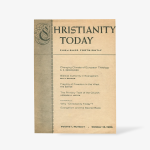
In October 1956, Billy Graham and a group of his supporters thought a religion divided against itself would have a hard time standing. In “Why ‘Christianity Today’?” they launched CT “with sincere Christian love for those who may differ with us.” They declared, “Theological Liberalism has failed to meet the moral and spiritual needs of the people” and has instead left us “adrift in speculation that neither solves the problem of the individual nor of the society of which he is a part.” They said CT “dedicates itself to the presentation of the reasonableness and effectiveness of the Christian evangel.” 

The editors—Carl F. H. Henry was CT’s first editor in chief—said, “Christianity Today will apply the biblical revelation to the contemporary social crisis, by presenting the implications of the total Gospel message for every area of life.” And “every” meant “every”: Senior news editor Daniel Silliman and I are going through the CT archives and seeing the wide variety of issues that editors and writers addressed. 

Starting today, once each week, we’ll make available some highlights of our research. For example, you can read below about the 1956 presidential election, the brutal Russian reaction to a Hungarian revolt, and discussions of whether there is a Christian America, how to confront China, and what to do about Christmas excess. Next Friday you’ll be able to read about Christian reactions to the news of 1957: the Cold War, civil rights debates, the advent of artificial insemination, and Sputnik.

If you’re young and don’t know what Sputnik was, that’s exactly why we’ll offer a history lesson about both America and American evangelicalism. All this leads to Thursday, October 15, 2026, when we’ll celebrate this series on the 70th anniversary of CT’s founding. 

The newsgathering process has changed: In 1956, CT bragged that “telegrams are received direct at Christianity Today editorial headquarters through the Desk-Fax service of Western Union. Christianity Today also uses the Bell System national teletype service.” But as you’ll see, many issues are similar.

We begin with a CT-commissioned survey of Protestant ministers that showed 85 percent favored the reelection of Dwight D. Eisenhower, who eventually won with 57 percent of the popular vote: 

A poll by Christianity Today of representative Protestant clergymen from all sections of the United States revealed a strong preference for Eisenhower over Stevenson in the November election for the Presidency. 

Tabulation of 1,474 postcards from ministers, selected at random among all denominations, showed the following results: 

► Eisenhower—85 per cent. 

► Stevenson—11 per cent. …

[The leading reason was] personal stature of the candidates. Eisenhower, 1,017; Stevenson, 75. [Other reasons were] “clean government … lifting of the moral and spiritual life of the American people as a whole … less centralized national government … foreign and domestic policies consistent with Christian principles … more emphasis on spiritual things … much stronger stand against Communism at home and abroad … back to sane, sensible, Constitutional government.” 

Looking at the results of the survey, CT’s editors reflected on where the country was going—and what the results of the election said about the effectiveness of Christian leadership in America. 

Protestant ministers of all denominations throughout the United States responded with candor and directness to Christianity Today’s inquiry: “What change for the better in American affairs do you desire for your candidate if elected?” More than 2,000 clergymen … expressed deep conviction that the future of America depends more upon the application of spiritual concepts in national and international life and less upon a specific political party or candidate. …

The stark fact of disagreement on leading social issues is a reminder that official church agencies only at great risk constitute themselves pressure lobbies for specific politico-economic objectives. … In doing so, they run the peril of violating democratic rights within their churches, in the presumed course of contributing stability to democracy in the nation. …

More liberal churchmen, whose theology has not undergone a full conservative revision, today acknowledge the fallacy of socialism, and appear ready to combine the theological left with the economic right. In the welter of confusion, it is understandable that men with a concern for the Protestant witness to a culture near chaos should promote the idea of unity in social reconstruction. But to compensate for a disunity which grows out of a basic departure from biblical norms by a unity which is manmade is to jump out of confusion into caprice.

After Eisenhower gained a majority in the popular vote in all but seven states, CT asked the president’s Washington, DC, pastor whether America should be thought of as a “Christian nation”:

In the absolute sense and on the perfectionist basis there is no such thing as a “Christian nation.” In terms of the higher order of the Kingdom of God, no political entity, in this imperfect world, is thoroughly Christian. But some nations embody more Christian principles than other nations. … When America is most faithful to its origin, to its truest self and to its God, it is that kind of nation. …

Much is being said these days in religious circles about the “exploitation” of religion as a weapon of ideological conflict. In the highest sense, pure religion is not to be “exploited” for anything except God’s purposes. God is to be worshipped and served for God’s sake. Righteousness is to be sought for righteousness’ sake. Nothing in Jesus’ teaching is more emphatic than that. …

In the decade since World War II, American life has been characterized on the one hand by a moral sag and cultural deterioration, and on the other hand by a moral resurgence and a spiritual awakening. … The presence of the former does not invalidate the latter. That we are living in a period of great religious revival of continental proportions is too clear to need documentation. The evidence is all about us. It is too cumulative and too impressive to be ignored or minimized. 

Hungary was in the news in the fall of 1956 as protest against the Soviet Union’s control of the country welled and then died. Evangelicals worried the rumble of tanks in Budapest signaled a dark new chapter of the Cold War

The rebellious people of Hungary, fighting to rid themselves of communist domination, took their cue from the inscription on the war memorial in Budapest University: 

“Endure everything: sorrow, pain, suffering and death; but do not tolerate one thing—the dishonor of the Hungarian people.”

A Hungarian seminary professor wrote a detailed report of what was happening: 

The recent tragedy of Hungary unfolded before our eyes. … The students, the workers and the intellectuals started their peaceful demonstrations. Their demands could be summed up in three short words: bread and freedom. They wanted for themselves things which we in America simply take for granted: national independence and full sovereignty, free elections and a representative government, free press and free communication with all the countries of the world, a readjustment of wages and the assurance of the possibility of a decent human living; finally, the withdrawal of Soviet troops from Hungary. … 

In the last days of October they used the short period of freedom at their disposal to effect far-reaching changes in their very lives. … The newly established National Christian Youth Federation appealed to the Christians of the world on November 3. Some of their dramatic words read as follows: “May God, who is the God of history, bless the efforts of our nation to build up an independent, free and neutral Hungary and may He enable us all to serve for reconciliation, peace and friendship among the nations.”

Two days later, choosing a Sunday morning for their attack, the Russian tanks crushed the insurgence of the whole Hungarian nation. At least 20,000 men, women and children were reported to have been killed in Budapest itself. … Those who survived are facing starvation, the freezing cold of winter and, perhaps worst of all, the possibility of deportation to Siberia. … 

The NBC television newsreel has recently shown some very moving pictures of the way in which Hungarian refugees managed to reach the Austrian border. …

The refugees came up against a deep, water-filled canal. There was no bridge any more. The Russians had long before dynamited it. With a swift and desperate ingenuity, the Hungarians pieced some treetrunks together so that they could serve as an improvised gangplank. But all this was good only to prop their feet against it; they could never have walked on it. Something more had to be done. Finally they stretched a wire over the “bridge,” and the breathtaking crossing began. Feeble old women and playfully agile children, while using the wobbling treetrunks as a foothold, grasped the wire with both hands and slowly but surely all reached the other side.

The editors of CT were especially worried about what increased Communist oppression would mean for Hungarian Protestants. A professor from Western Theological Seminary in Holland, Michigan, offered a historical perspective:

The tragic developments in Hungary have involved a large and flourishing Protestant community there. Twenty-eight percent of the population is Protestant; of these, twenty percent are Reformed and six percent Lutheran. They have been suffering with their compatriots in the recent attempt to throw off Soviet domination and gain freedom. …

Suffering is not a new experience for Hungarian Protestantism. … The historian d’Aubigne writes that “it was by a kind of thunderclap that the Reformation began in Hungary.” … Raped and looted by the vast armies of two powerful countries, Germany and Russia, during World War II, Hungary’s condition became tragic. … Dr. Stewart W. Herman, in an address to the Lutheran World Action conference, stated that Hungary was “experiencing the greatest religious revival to be found in all Europe.” … Much of the leadership of the Small-landholders Party, overthrown in the revolution of 1948, hated by the victorious Communists, and active in the most recent revolt, came from the Protestant Church.

In 1956 another Communist dictatorship was transforming China. CT editors warned readers not to be naive about “reforms”:

Communism is intrinsically atheistic. Since an atheist recognizes no fixed principles of morality, one cannot have confidence in his word, integrity or intentions. Promises and pledges, however solemnly stated in international treaties, are suspended on something other than unchanging moral principles.

How reads the record of Red China? It has flagrantly violated the basic rights of humanity and flaunted the standards of international law and comity. It has denied the legitimate rights of American citizens—business men, educators, missionaries—and has caused them to leave property and posts of duty, or has imprisoned them on charges palpably false. Contrary to the provisions of international law, it has held prisoners of war (both Japanese and American) for indefinite periods. … the communists recognize no law nor organization superior to their own nefarious program.

CT worried about more than the cultural revolutions wrought by communism. Closer to home, the magazine raised concerns about the commercialization of Christmas:

The public celebration of Christmas raises deep concern in the Christian Church. Although instituted to commemorate the birth of Christ, Christmas has become an occasion for inexcusable excesses. Blatant commercialism has captured the season for unholy gains. Drunken orgies at office and home ascribe the day more fittingly to Bacchus, the god of wine. Santa Claus takes prominence over Christ as the process of secularization captures the day once dedicated to worship of the King of kings.

History vividly reveals the only adequate course by which the Church can restore true significance to Christmas. She must become engrossed with the nature of Christ and the Incarnation with the same passion evident in the life of fourth-century Christianity. 

History

What Billy Graham Wanted in ‘Christianity Today’

The talk that launched over 1,000 magazine issues.

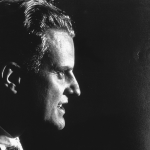
An image of Billy Graham.
Christianity Today October 16, 2025
Spencer Grant / Contributor / Getty

October 15, 1956, was the date of Christianity Today’s first issue. Tomorrow we’ll begin a weekly feature of highlights from each year. Planning for that issue, though, began a year earlier, when Billy Graham gathered a small group to discuss the need for a new Christian magazine. Here’s an abridged version of what he said:

For nearly three years I have been deeply concerned about the situation of evangelicals in the United States. We seem to be confused, bewildered, divided, and almost defeated in the face of the greatest opportunity and responsibility possibly in the history of the church. This burden and concern has been growing month by month. I have found this same burden exists among many evangelical leaders.

It has come to me with ever increasing conviction that one of the great needs is a religious magazine on the order of The Christian Century that will reach the clergy and the lay leaders of every denomination presenting truth from the evangelical viewpoint. This vacuum in the United States and Britain must be filled. There are many other areas that we can attack, but this must be our first concern.

For a long time The Christian Century has been the voice of liberalism in this country. While its circulation is small, its influence is tremendous. It is constantly quoted in Time, Newsweek, and other secular magazines and newspapers. Its intellectual popular journalism is a must for thousands of ministers each week. It influences religious thought more than any single factor in Protestantism today, in my opinion. At the moment there is no evangelical paper that has the respect that can challenge it.

Therefore, I have called you men together for prayer, for consultation, advice, to seek the will of God in this matter and to present some concrete proposals for our discussion, prayers, and thought.

I propose that this magazine consist of hard-hitting editorial on current subjects—that these editorials be popular, well-thought-out journalism very much like The Christian Century—that we discuss current subjects very much as The Christian Century does from the evangelical viewpoint.

[Editorial policy should be:]

  1. Pro-church—this magazine should not take sides in fights on various councils in the United States, such as “The American Council,” etc. We should be constructive, positive, and not anti-church.
  2. This magazine should be thoroughly biblical, evangelical, and evangelistic. However, I would suggest that we not use the term fundamentalist or even conservative. I think the word evangelical is far better and far more disarming.
  3. This magazine should be nondispensational.
  4. We should not be either amillenial or premillennial.
  5. Certainly this magazine should be anti-Communist, giving the intellectual reasons why the Christian church is anti-Communist. There are thousands of Americans, including thousands of ministers, who are against communism, but they have no genuine intellectual reasons as to why. In a debate with a Communist, they would lose nine times out of ten.
  6. This magazine must be for social improvement. We must take the great social issues of our day, such as the starving people of India, the racial problem, and others, and take a positive viewpoint. We must be for the underdog and the downtrodden, as we all believe Christ was, without being socialistic in our tendencies.
  7. While we do not want to get into politics yet, we will take a mildly conservative political position in our interpretation of current events. (In other words, the editorial policy should be “down the middle of the road.”)

I suggest the name of the magazine be Christianity Today. I suggest this magazine have a maximum of 30 to 50 pages that would be on the same type of paper as The Christian Century. That it be intellectual yet popular journalism—that the articles be brief.

Culture

Naomi Raine Isn’t Playing Games

The founding member of Maverick City Music is releasing new songs as a solo artist with an impressive roster of guests.

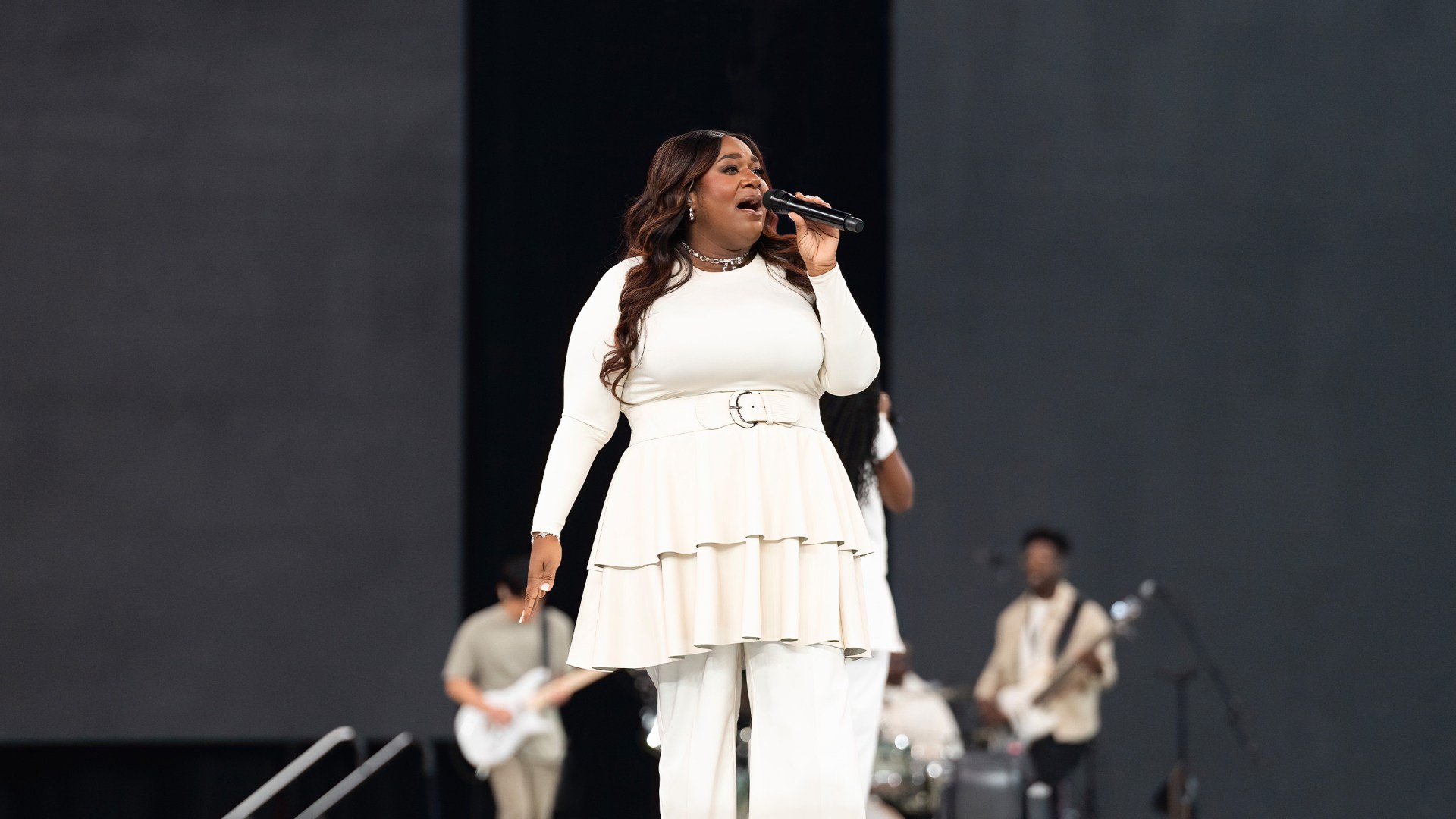
Naomi Raine performing during Woman Evolve 2024 in Arlington, Texas.

Naomi Raine performing during Woman Evolve 2024 in Arlington, Texas.

Christianity Today October 16, 2025
Eugenia R. Washington / Contributor / Getty

Naomi Raine started to understand worship as a ten-year-old, listening to her parents’ church choir rehearse the song “Breathe” in their living room.

“I remember sneaking downstairs and hiding in the bathroom,” Raine told CT. “I grew up hearing my parents sing all the time, but something shifted for me that night as I heard them sing, ‘This is the air I breathe.’”

Around that time, Raine’s parents bought her a keyboard, and she started writing songs in the privacy of her cramped bedroom closet. Her music career also started out as a solitary one. Now, she’s writing and performing with some of the most popular artists in Christian music.

Raine’s performance-and-songwriting style was deeply formed by the charismatic practices of the church where her parents served as worship leaders. She grew up immersed in the Black gospel tradition and contemporary Christian music (CCM), a confluence that’s evident in the music she helped create as a founding member of Maverick City Music.

The popular worship collective, known for hits like “Jireh” and “Promises,” became one of the most influential producers of contemporary worship music in the US with its breakout album Old Church Basement (2021), a collaboration with Elevation Worship. It blends the anthemic style of groups like Elevation and Bethel Music with elements of Black gospel.

Maverick City’s success and fusion of different traditions have drawn praise and criticism in the industry. Recently, internal divisions and a pending lawsuit have gained public attention. As controversy continues to plague the group’s profile, Raine has moved into a new phase of her career. “I think the ministry is getting overshadowed by the opinions,” she told CT. Raine recently announced her departure from Maverick City Music, along with collaborator Chandler Moore, and is releasing new music as a solo artist.

Her new album, Jesus Over Everything, features an impressive roster of guests, including rapper Anike, Tasha Cobbs Leonard, and Christine D’Clario. Raine also serves as a pastor at Fresh Start Christian Center in Mount Vernon, New York.

Raine spoke with CT about her journey with Maverick City Music, the significance of the songs the group created together, and the need for multiple sounds and styles in the world of worship.

This interview has been edited for clarity and length.

Maverick City Music has become such an influential force in the contemporary worship music world, but unlike some of these other collectives like Bethel and Elevation, it didn’t grow out of a local church. How did the group start collaborating?

So I got Lyme disease. [Laughs] Okay, I want to tell you everything, but I’m going to answer the question. I got Lyme disease in 2018, and I think that was the Lord forcing me to rest. At the time, I was saying yes to everything. I had written a song called “Pour Me Out” that was starting to get some traction. I performed in a showcase at the Dove Awards. Todd Dulaney covered the song and asked me to sing on his album. I was getting my first introduction into the industry. But then I get sick, and I have to start saying no.

In 2019, I’m recovering, and I feel like the Lord is healing me. I see online that Bethel is doing a Black History Month worship set. Chandler Moore was going to be there, and Dante Bowe. I messaged the organizer and told him, “Hey, you need a woman there. How about my friend Casey J?” He responded, “How about you?”

So I said yes. They couldn’t pay me, but they did give me a place to stay. That’s where I met Chandler and Jonathan Jay and Brandon Lake for the first time. We wrote some songs and recorded them. These sessions ended up creating the album that became Maverick City, Vol. 1.

If you watch those first videos, you can see me reading from my phone because we had just written the songs a few hours before.

The beginning of Maverick City Music coincided so closely with the start of the 2020 pandemic. How do you think that timing impacted the reception?

I remember the week we recorded “Promises” in Atlanta, fall of 2019. When we finished recording the song, I felt terrible about it—like it was a hodgepodge, the song put together like a quilt. The room we recorded in was hot. We were packed in there like sardines. I couldn’t see the members of the band I needed to see.

But Tony [Brown] decided that was the song we were going to release. He sent the final version out, but I don’t think I even listened. We were all just trying to get through the pandemic—feeding kids and holding it together.

But when I finally listened to the whole thing and saw the response, I realized that song was what people needed at that time. We didn’t know we were going to need a song about the faithfulness of God, a God who keeps his promises.

“Promises” wasn’t the only song we had for that moment; we also had “The Blessing.” We survived on those songs.

The response to Maverick City Music was so enthusiastic. You almost immediately started collaborating with some of the biggest names in worship music. But there was also a lot of scrutiny directed at the group and the music you created. How did you experience the response?

It felt confusing.  I think that’s the best word. We were just making the music that we loved. It was prayerful music. At our writing camps, we prayed, “Before we do this, Lord, what do you want to do?”

We were in our Scripture, trying to write music that was biblically sound. I’m a pastor as well. I’m not playing games with the songs that I release. There’s creativity, of course, but I do believe that the Lord breathed on us. So it was confusing when it seemed like just because there was success and because the music was gaining traction, people assumed something was wrong.

Now when I look back, I realize that we were just so different, and people don’t always appreciate different. Change is difficult for people.

I was never the person to be like, “It’s race.” But what I have experienced has helped me to recognize that some of the backlash was racially related. It is what it is, right?

We got too big too fast, and most of us were people of color. I think that was threatening to some people in the CCM world. I don’t think it was intentional. I think it was just “Wait, where did this come from?” and also “That’s not how we would do this.”

There was some backlash from the gospel industry as well, right?

 Yeah, on the gospel side, people were happy for us but also like, “Okay, that’s cute.” It felt like there was more talk behind our backs, but to our faces it was all, “We love what you’re doing.”

In CCM spaces, it felt more like everyone was looking at us and asking, “Who do you think you are?” And not just because of race but because of age. A lot of our members were relatively young and experiencing success really quickly.

On your new record and in your work with Maverick City, you showcase your vocal skill and power. You can hit runs and improvise. How do you navigate the tension between musical showmanship and accessibility in worship music?

 There are some things that keep me up at night, and there are some things that don’t. I am okay with talent. I think the people that need to navigate that tension are the people that don’t have talent. [Laughs]

I’m being a little ridiculous, because I do know there are some people with talent and skill that actually feel guilty because people have put guilt on them for being good at something. But pride has nothing to do with how good you are at something; it comes from thinking that your skill started with you. But my skills and my ability to hone and refine my skills come from God.

 I’m not trying to come for people, but I think sometimes we decide to raise the bar by completely removing it and saying, “The musicians don’t really need to know how to play. Four chords is enough.”

Of course, if you have a song in your heart and all you have is four chords, you play those four chords and give the four chords to Jesus.

Yes, Chris Tomlin doesn’t do riffs and runs. But don’t hate on my riffs and runs.

Maverick City Music infused new style elements into the prevailing sound of contemporary worship music—gospel characteristics, choir, improvisatory vocals. It seemed like people were excited to hear something that sounded different. Do you think that’s still the case?

We don’t need just one kind of music. We are one body with many parts. I look at the state of worship music right now, and I see different movements bringing different things.

 Upperroom is about “Come, Jesus, come,” calling us to wait upon the return of Jesus Christ. Then there’s Bethel, focused on the Holy Spirit moving and flowing through us. There’s Transformation Worship, which is all about blessing God and lifting up his name. I was just talking with someone from Planetshakers the other day, and they feel like their mission is high praise songs. Elevation is focused on faith. And Maverick City is about resilient praise, praise in the midst of dark times. “Christ is my firm foundation.”

All of these are valid and good. We could look at them in isolation and say, “Oh, this is unbalanced.” And sure, a balanced praise culture doesn’t sound like Planetshakers or Maverick City all the time. We need all of it.

News

Shrinking Palestinian Christian Population Wary of Cease-Fire

“As people, we can live together … because this is what Jesus asked us to do.”

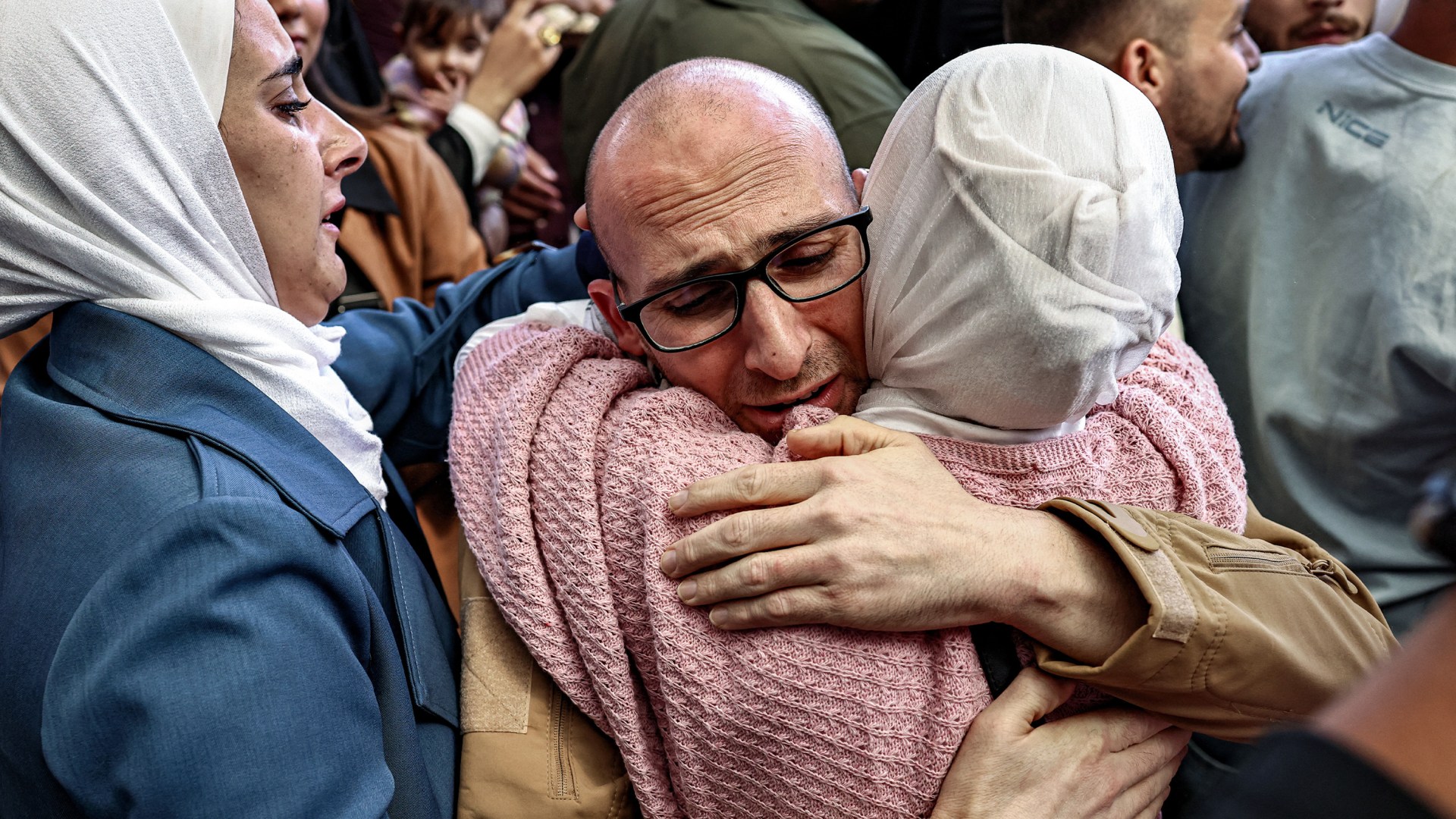
One of the Palestinian prisoners released in the ceasefire deal between Israel and Hamas.

One of the Palestinian prisoners released in the ceasefire deal between Israel and Hamas.

Christianity Today October 16, 2025
Zain Jaafar / Contributor / Getty

To get from her home in Bethlehem to her college and workplace in Abu Dis, east of Jerusalem, Christine Awad had to pass through the only Israeli checkpoint connecting the northern and southern parts of the West Bank. Without this barrier and the traffic it forms, the drive would take 20 minutes. With it and the increased restrictions after the October 7, 2023, attack on Israel by Hamas-led militants, Awad’s commute every morning and evening until the end of her employment in June could stretch into a two-hour journey.

Every time she reached the checkpoint—one of the West Bank’s 849 checkpoints, road gates, and obstacles—Israeli soldiers climbed onto the bus. Sometimes they checked passenger IDs. Other times they demanded riders hand over unlocked phones and searched their contacts, messages, and photos. Sometimes they ordered commuters to get off the bus to undergo further inspection. Once a female friend of Awad’s was taken inside a booth and strip searched.

“You have no agency,” Awad, a Palestinian Christian, said of these interactions. “You can’t say no. You can’t refuse.”

Awad, now a graduate student at Bethlehem University, described passing through checkpoints as both scary and normal. The daughter of a Presbyterian pastor, Awad has lived her whole life under Israeli occupation—a term used to describe Israel’s military control of the West Bank, East Jerusalem, and Gaza, areas that would constitute a future Palestinian state.

The reality of the occupation colors Awad’s view of last week’s cease-fire between Israel and Hamas. Like millions in the region, she felt relief. On Monday, Hamas returned the remaining 20 living Israeli hostages, whom the terrorist organization had held captive for 738 days. Later, Israel released around 2,000 Palestinians from prison—250 convicted of terrorism and murder and the rest detained without charges during the war.

As the Israeli hostages returned home, US president Donald Trump delivered a triumphant speech in Israel’s Parliament, the Knesset, declaring the deal would usher in “the historic dawn of a new Middle East.” Trump then went to Sharm el-Sheikh, Egypt, where he and Egyptian president Abdel Fattah el-Sisi co-led a peace summit that more than 20 other world leaders attended. Alongside the US and Egypt, fellow mediators Qatar and Türkiye signed a document backing the cease-fire agreement and committing to an “enduring peace” in the region.

Yet Awad expressed skepticism about whether this agreement will result in lasting peace. Both the four-day truce in November 2023 and the cease-fire that began January 19, 2025, devolved into further bombing and bloodshed.

And though often overshadowed by the Gaza war, the situation in the West Bank has worsened drastically the last two years, with Human Rights Watch reporting increased movement restrictions for Palestinians, settler violence, Palestinian-home demolitions, and an uptick in settlement building. Historically Christian areas like al-Makhrour and Taybeh have been targets of settler violence and attempts to dispossess Palestinians of their land.

“I think now justice is more the concern before peace can happen,” Awad said.

From Beit Hanina, a Palestinian neighborhood in East Jerusalem, Simon Azazian shared similar feelings. He is grateful the cease-fire will bring relief to Gazans’ suffering—some of which he has observed firsthand as assistant pastor of Alliance Church in the Holy Land, nestled within the walls of Jerusalem’s Old City.

Since October 7, 2023, church members have visited Muslim Gazan cancer patients stuck in Jerusalem and have built friendships with 100 orphans transported to Bethlehem from a Gaza-based SOS village that supported children lacking parental care.

Twice in 2024, the congregation funded street kitchens inside Gaza where hungry families could receive a hot meal. After these events, Azazian said, around 30 individuals contacted the church through its Facebook page, expressing interest in following Christ.

Though he’s glad Gazans will get some respite in the coming days, Azazian is also concerned about the cease-fire deal. “We’ll have a few years … of peace, but things will happen again, and wars will erupt because the issue isn’t solved from its roots,” he said. “And the root here is the end of the Israeli occupation. That has to happen one way or another. We must give the Palestinians justice.”

Awad’s daily life in Bethlehem illustrates some of the justice issues created by Israel’s military control of Palestinian territories. The more than 3 million residents of West Bank—including Awad’s family—face water scarcity as Israel diverts more water to Jerusalem and Jewish settlements than to the homes of Palestinian residents. On average, Israelis consume around 300 liters of water daily, while Palestinians consume only 73 liters, according to a 2017 Amnesty International report.

Though Palestinian ID cards are granted by the Palestinian Authority, Israel must approve them first, which sometimes results in yearslong delays. For more than 20 years, Awad’s mother, a Filipino native, had to leave the West Bank and Israel regularly to renew her visa, incurring travel expenses and the emotional burden of separation from her husband and three daughters. Awad’s parents met in the Philippines when her father studied theology there. She finally received an official ID in early 2022.

According to Azazian, the failing economy and lack of job opportunities in the West Bank have already caused 160 Christian families to leave the Bethlehem area in the last two years. He said that 400 more families have applied for visas to emigrate. These losses make life even more difficult for the believers who remain, he said, with Christians now composing less than 2 percent of the West Bank’s total population.  

Though she regularly faces discriminatory policies and movement restrictions, Awad said she doesn’t hold bitterness toward Israeli security personnel. Azazian agrees.

“I carry no sort of hatred or animosity to any of my brothers or sisters in humanity,” he said. “And this is the message we are trying to spread today: that as people, we can live together. We can overcome the obstacles, because this is what Jesus asked us to do.”

But Azazian does not believe the Christian responsibility to love excludes the church’s prophetic role to speak out against societal injustices that prevent lasting peace in the Holy Land. On the second anniversary of the October 7 massacre, he wrote on Facebook that Israelis and Palestinians face not a single enemy but three—“the Corrupt Palestinian Authority, the Brutal Israeli Occupation, and the Extreme Fanatic Islamic Regime led by Hamas”—that together “strangled any hope for justice, peace, or dignity.” He envisions the church—believers of all backgrounds, inside and outside the Holy Land—bridging the gap between Israel and Palestine.  

“The church has an important role: to raise the voice that is calling to love and to forgiveness and to better days ahead, but also to a complete change in the different regimes and this triangle of evil,” he said.

But to play a prophetic role, Azazian believes those in the Western church must act. Instead of giving Israel unilateral support, they must also get to know Palestinian Christians, love them, and advocate for them.

After two years of war, Azazian said that “the forgotten faithful,” as he calls Palestinian believers, feel abandoned by many of their Western brothers and sisters, who have been influenced by Christian Zionism. Followers of the theology believe they must bless Israel, which often results in uncritical support of Israeli political and military actions.

About half of US evangelicals view Jews as God’s chosen people, according to a recent report from Infinity Concepts and Grey Matter Research. This percentage has remained unchanged from 2021, although only 29 percent of respondents under the age of 35 believe Jews are God’s chosen people. Younger evangelicals are also less engaged with and less supportive of Israel, the report found.

Azazian has met Western Christians willing to listen to and stand with both peoples, as the Alliance Church in Jerusalem practices. Every Sunday, church leaders pray for both Israelis and Palestinians from the pulpit, and they advocate for equal rights and opportunities for both groups. Three years ago, Azazian sat with a group of Christian tourists from California in their hotel room. He said he won’t forget the look in their eyes that night as he told them about his identity and experience as a Palestinian Christian.

“They came with repentance, saying, ‘We are sorry. We didn’t know you existed. We feel ashamed. We want to know more,’” Azazian recalled.

When Awad was young, her parents hosted groups of American Christians visiting Bethlehem. Her mom would prepare huge trays of rice and chicken to feed groups of 15 or more. After lunch, the family would answer the visitors’ questions about life in Bethlehem.

After the war began, some of these same visitors commented on Awad’s father’s social media posts about the conflict and regional politics. They sent Bible verses about loving one’s enemies and being peacemakers.

It was difficult to receive these comments from Christians so far removed from the daily experiences of the occupation, Awad said. Her father replied that believers must also stand against injustice and oppression.

“Come and sit and just drink coffee and try to understand what our life is like, what our history is like as Palestinian Christians,” Awad said. “Try to understand the challenges without judging or giving advice that seems so easy on paper but difficult to actually do.”

Apple PodcastsDown ArrowDown ArrowDown Arrowarrow_left_altLeft ArrowLeft ArrowRight ArrowRight ArrowRight Arrowarrow_up_altUp ArrowUp ArrowAvailable at Amazoncaret-downCloseCloseEmailEmailExpandExpandExternalExternalFacebookfacebook-squareGiftGiftGooglegoogleGoogle KeephamburgerInstagraminstagram-squareLinkLinklinkedin-squareListenListenListenChristianity TodayCT Creative Studio Logologo_orgMegaphoneMenuMenupausePinterestPlayPlayPocketPodcastRSSRSSSaveSaveSaveSearchSearchsearchSpotifyStitcherTelegramTable of ContentsTable of Contentstwitter-squareWhatsAppXYouTubeYouTube