Church Life

Teaching Sunday School on Philippines’ Witchcraft Island

Doris Lantoria grew up on Siquijor island. Now she’s back to tell its youth about Jesus.

An ‘Arise to Christ’ worship gathering.

An ‘Arise to Christ’ worship gathering.

Christianity Today October 13, 2025
Image courtesy of Esther Shin Chuang

Past fragrant mango trees and shacks with clothes hanging on laundry lines stands a canopy made of coconut timber typically used to shade locals waiting for a tuk-tuk or habal-habal (motorcycle taxi). But today, 14 children ages 3 to 12 gather there in 90-degree heat for Sunday school. They sing along as a teacher in his mid-40s strums Bethel Music’s “Goodness of God” on his guitar, accompanied by roosters crowing in the background.

After singing in English and Filipino, the teacher leads them in a short prayer and jumps into a Bible lesson about Jesus feeding the 5,000. The children break out into big grins as the older kids help hand out lunches of green peas, pork, and white rice. The Sunday school has also started adding English and math classes following the Bible lesson.

Every Sunday, the scene repeats in 14 villages in San Juan, a municipality on the island of Siquijor in the Philippines. Doris Ann Lantoria, who grew up in San Juan, started the Sunday schools in 2015 after hearing a sermon in Malaysia on reaching out to children for Jesus. She felt convicted to share the gospel with children in remote areas of Siquijor.

“Wherever children are, we put a Sunday school there,” said the 49-year-old.

Siquijor has a long history of witchcraft and animism, which mixed with Catholicism when the Spanish came to the island in the 18th century. While 94 percent of Siquijor residents identify as Catholic, they also hold on to animist beliefs, including healing potions, mangkukulam (witches), and bolo-bolo healers, who use stones and a glass of water to cure ailments.

Although many mothers and grandmothers attend Mass in Siquijor, they often don’t bring their kids because they are noisy and unable to sit still. Catholic churches in Siquijor only hold Catechism classes for children in the month of May. Lantoria, who grew up attending both Catholic and Protestant churches in San Juan, had never attended Sunday school.

But her Arise to Christ Ministry Sunday schools and Saturday worship nights work to make everyone feel involved, Doris said. “The songs are contemporary, and the sermon is contextualized for their age.”

I first met Lantoria a year ago when she attended an online seminary class I was teaching. At the end of the course, students from all over Malaysia and the Philippines flew into Kuala Lumpur, Malaysia, for a two-day, in-person class. During a lunch break, she described the 17-bed guesthouse and restaurant she runs in the travel destination of Siquijor. Most of her staff members—the chefs, baristas, and cleaners—double as Sunday school teachers and worship leaders in her ministry.

Last June, my family and I traveled to Siquijor by plane and ferry to see Lantoria’s ministry in person. The evening we arrived, a storm had hit the island, and only a few shops had their lights on. (Later we learned that Siquijor often loses power for 18–20 hours a day.) Lantoria welcomed us in the heavy rain, and her staff drove us 20 minutes over the bumpy roads to her guesthouse, Sea View Resort.

Connected to the guesthouse is the open-air Tawhay Resto Café, which served Malaysian, Chinese, and Western cuisine as worship music played. Christian books lined the bookshelves, and Bible verses decorated the windows. Tawhay, which means “relax,” was the first café in the district of San Juan. When Lantoria opened it in 2019, locals doubted anyone would pay 130–150 pesos (about $2.50 USD) for coffee when instant coffee packets cost a fraction of the price. Yet as tourism started booming in Siquijor, visitors came to Tawhay looking for good coffee and an Instagrammable café.

Money from the guesthouse and café supports Arise to Christ Ministry. Last year, the business made enough for her to contribute 5 million pesos ($86,000 USD) to the ministry, which gives high school and college scholarships to 60 students and feeds 400–500 kids weekly. It is also in the process of building a youth worship center.

Born and raised in Siquijor island, Lantoria has deep roots in the area, as her grandfather was the former mayor of San Juan. She grew up regularly accompanying her grandmother to Mass and her grandfather to his church with the United Church of Christ in the Philippines. At the age of 20, Lantoria moved to Malaysia after marrying a Chinese Malaysian (they later divorced) and lived in Kuala Lumpur for 26 years. It was there that she came to faith in Christ through a women’s Bible study and joined a church.

“When I saw one Sunday school in Malaysia, it instantly clicked to me that this is what was needed in Siquijor,” said Lantoria.

From 2015, she started flying back to Siquijor every three months to set up Sunday schools. In 2017, she started giving out scholarships to students unable to afford school fees, including books, uniforms, or food. “Village people are generally poor,” Lantoria said. “What they earn today is food for today.” By 2018, she was flying back every two weeks.

During one of her trips to Siquijor in March 2020, the government shut down the area due to the COVID-19 pandemic, trapping Lantoria on the island for two years. Throughout that time, she discipled the youth and expanded her café and lodging businesses, eventually deciding to stay in Siquijor after the pandemic.

From 2019 to 2023, she taught 12 Bible classes each weekend wherever she could find space: basketball courts, a local’s porch, canopies, or large trees. By 2022, she was exhausted from running from village to village and realized she needed to raise other leaders to teach the classes. She began training the scholarship students, teaching them about Jesus. Several of them started teaching the Sunday schools.

Because many of the new leaders were young in their faith, Lantoria wrote down each lesson for them to repeat verbatim. One Sunday school teacher, 32-year-old Jayce Mae Vios, said that as she taught the students, it “helped me learn what happened in the Bible at the same time.”

Today, Lantoria’s adult and youth leaders teach all but one of the classes.

As the children reached their teen years, Lantoria realized they needed a place to worship. About 90 percent of the young people who attend Arise to Christ come from a Catholic background and would never step into an evangelical church, Lantoria said. So she started a Saturday night worship service for the youth.

When my family and I visited on a humid summer night, more than 150 teens gathered to eat dinner in the half-finished building of Lantoria’s second café. Then they walked to the unfinished worship center to sing and listen to her preach. Halfway through, a downpour halted the worship service, as the center did not yet have a roof or walls. Together with the teens, we ran back to the café. As rain drummed on the metal roof, we continued to worship.

Many of the attendees had attended Lantoria’s Sunday school for years. Lantoria and the teachers built relationships with families as they fed their children, taught them the Bible, and visited their homes. One mom spotted Lantoria as she drove down the road to pick up other young people for the worship night. The mom shouted, “Don’t forget to pick up my child to go to Saturday service!”

Lantoria noted that the teens are eager to attend because San Juan has few activities geared toward youth. Many of them spend their time playing basketball or scrolling on their phones.

Liezel Laranjo, 46, is one of the few adults who attend the worship service. Her children attended Arise to Christ activities and told her what they had learned. Although she grew up Catholic, “it was nice to hear about the word of God” from her children, she said. When Laranjo joined the Sunday school in 2019, she found her faith growing.

She also started attending the Saturday worship service with her children this June. Laranjo said that since Jesus forgave and saved her, she wants to give the “gift of our lives” to him and worship him.

Not only have her children received scholarships through Lantoria’s ministry; her daughter also worked at Tawhay until her recent pregnancy, and Laranjo works at the guesthouse. “The ministry helped my family a lot in ways like provision for food, teaching, and guidance,” she said. “[It] made us whole spiritually and physically.”

Ministering in Siquijor is difficult due to deep roots of witchcraft in the island. Siquijor is known as “Island of Witches” or “Mystic Island” and is seeing a revival of tourists interested in magical healings and potions. It is common to see vendors selling voodoo dolls, sacred stones, and amulets on the streets.

Although the Spanish brought Catholicism to the Philippines in the 16th century, it wasn’t until 200 years later that the Catholic missionaries set foot on Siquijor island.

“Catholicism was supposed to replace the witchcraft and animism, but instead it got mixed with Catholicism,” she said. For instance, on Black Saturday (the day before Easter Sunday), “healers” in Siquijor gather for the annual Healing Festival, where they create a sticky paste they believe can cure ailments. On Palm Sunday, locals spray palm leaves with holy water, then craft them into the shape of a cross or a flower and put them around their houses or boats to ward off evil, Lantoria explained.

But in her Sunday school classes, Lantoria teaches the children that though people used palm leaves to welcome Jesus, they don’t have any special powers. “People seek a faith healer, and they’re told they may have offended [the spirit of a] big tree, like the old acacia or balete tree, and [are] asked to offer a whole chicken, rice, eggs,or Coke,” Lantoria said. “I go against that and tell them to chase the spirit away!”

Deep-seated pagan beliefs and superstition make it difficult to reach the people of Siquijor, said Josephine Bulado Malicay, a Filipina missionary with the Southern Baptist Convention’s International Mission Board (IMB). From 2008 to 2010, she served in Siquijor’s Lazi municipality, where she led Bible studies and took part in door-to-door evangelism.

Her colleague Jess Jennings, who has been based in the Philippines since 1993, said IMB has sent many Filipino and American short-term mission teams to Siquijor and found that some people were responsive to the gospel and willing to study the Bible. Those teams have been able to help locals plant one or two churches on the island, where only 2 percent of the population is evangelical, Jennings said. Yet they don’t think enough Filipinos are willing to go and stay long-term.

“There seems to be fear of the reputation that Siquijor has of witchcraft. And because of some resistance to the gospel, not many are willing to come from outside of Siquijor and stay a long time,” Jennings said. “The harvest is plentiful and seems to be ripe.”

As a businesswoman and a local, Lantoria is an insider in Siquijor. Over the years, she has gained the trust of residents in San Juan. Recently, she started a guitar class that meets every Saturday afternoon. The class is free, although the students need to attend a 45-minute Bible study prior to the guitar lesson. Twice a week, Lantoria disciples young people and leads worship team practices.

Lantoria said that when she started her ministry, her Baptist uncle criticized her for teaching Catholic children, because they were of a “different religion because they pray to saints.” When Lantoria’s uncle converted from Catholicism, he removed all the icons in Lantoria’s Catholic grandmother’s house, saying, “Throw them away, or you will go to hell.” His harsh response made her grandmother uninterested in learning about her eldest son’s new faith.

Lantoria pushed back: “I will stay with the Roman Catholic children because they need to know the truth.” Lantoria said she doesn’t attack Catholics. Although she believes that local Catholics have combined the Bible with local traditions, she said, “I am making their strayed teachings straight, using the Bible.”

“Unlike other pastors, who say, ‘If you pray to saints or if you are Catholic, you will go to hell,’ I don’t do it that way,” she said. “I give [them] Bible passages where it says we are all saints. I don’t condemn them for going to the Roman Catholic Church, but I want to put Jesus back to where he belongs, as number one.”

Correction: An earlier version of this article misstated the relative who criticized Lantoria’s ministry.

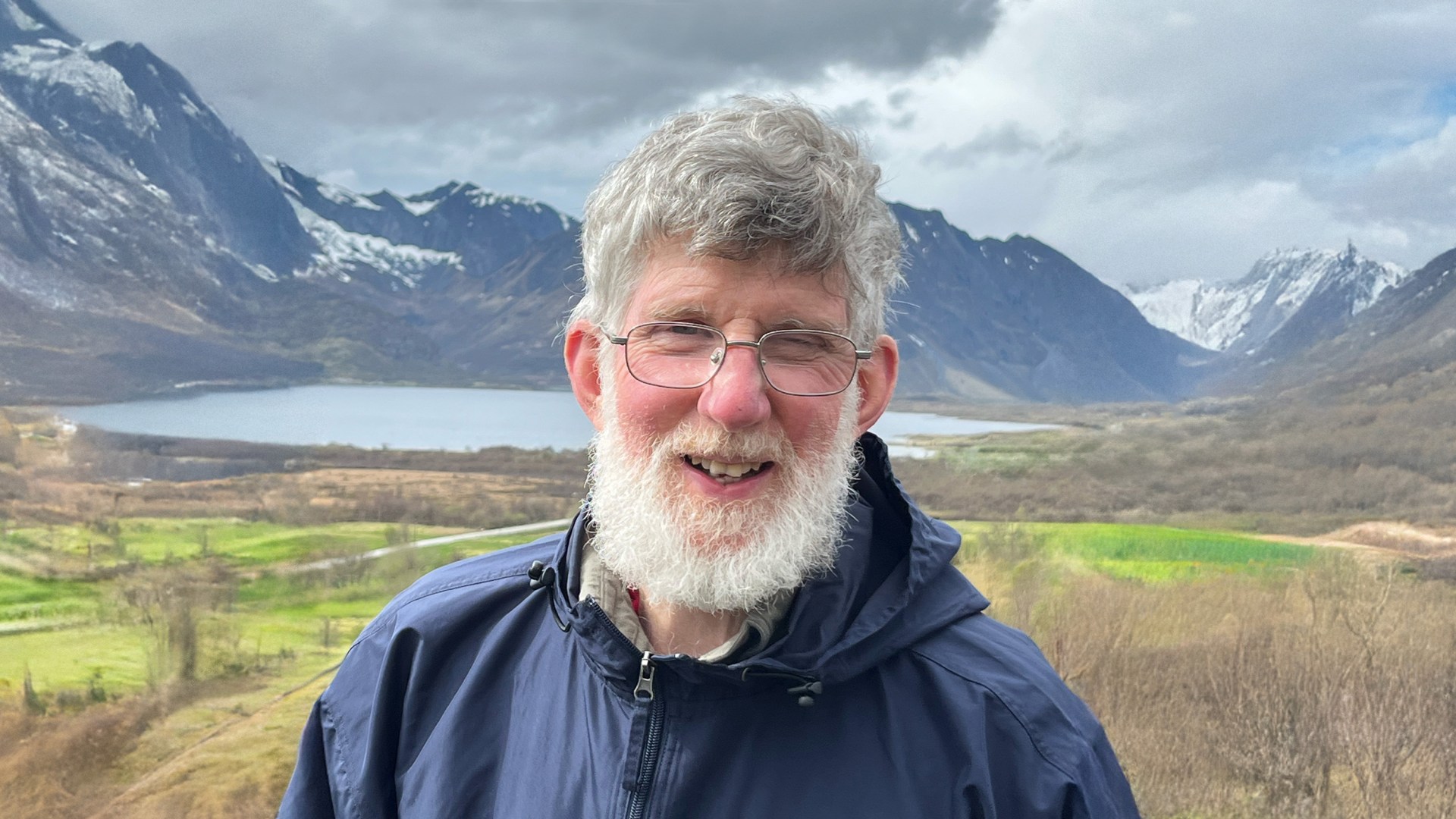
Esther Shin Chuang is an award-winning concert pianist, a singer, and the director of the worship program at Malaysia Baptist Theological Seminary. She and her husband are pastors at Georgetown Baptist Church in Penang, Malaysia.
News

Ukrainian Refugees Brought Revival to a Polish Church

The arrivals that transformed one congregation overnight stand to have long-lasting effects on mission in Europe.

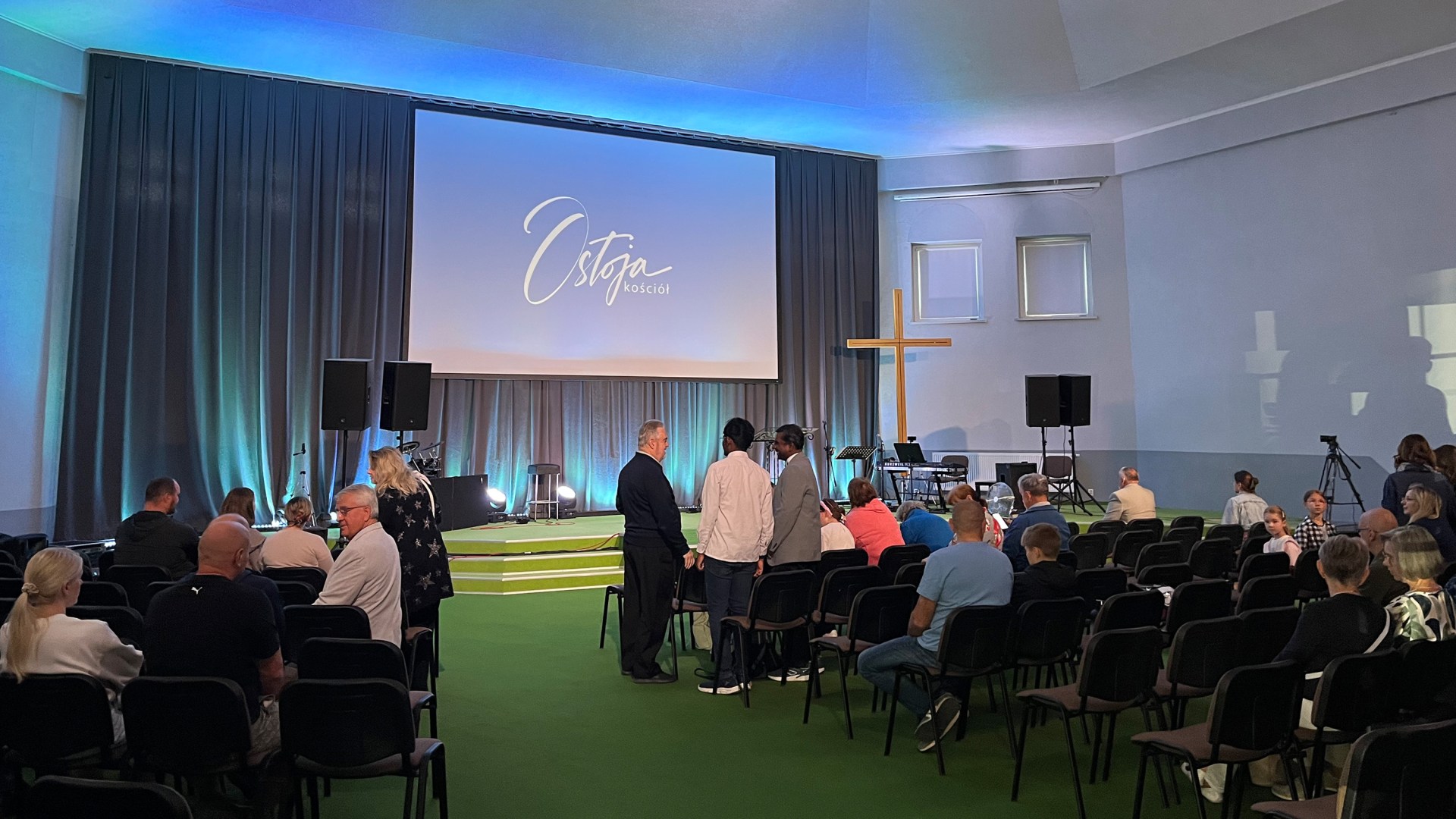
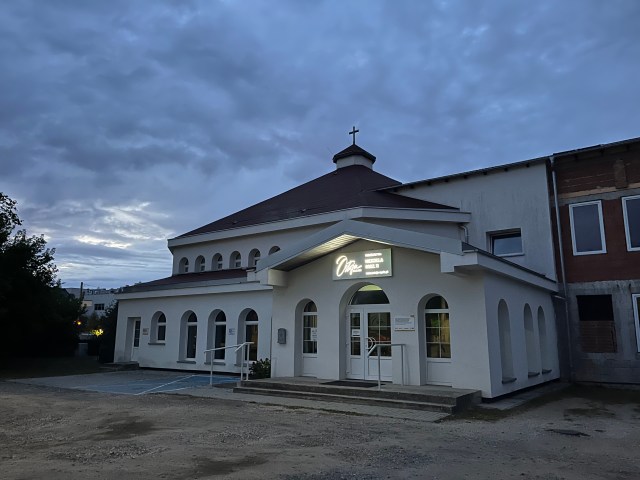
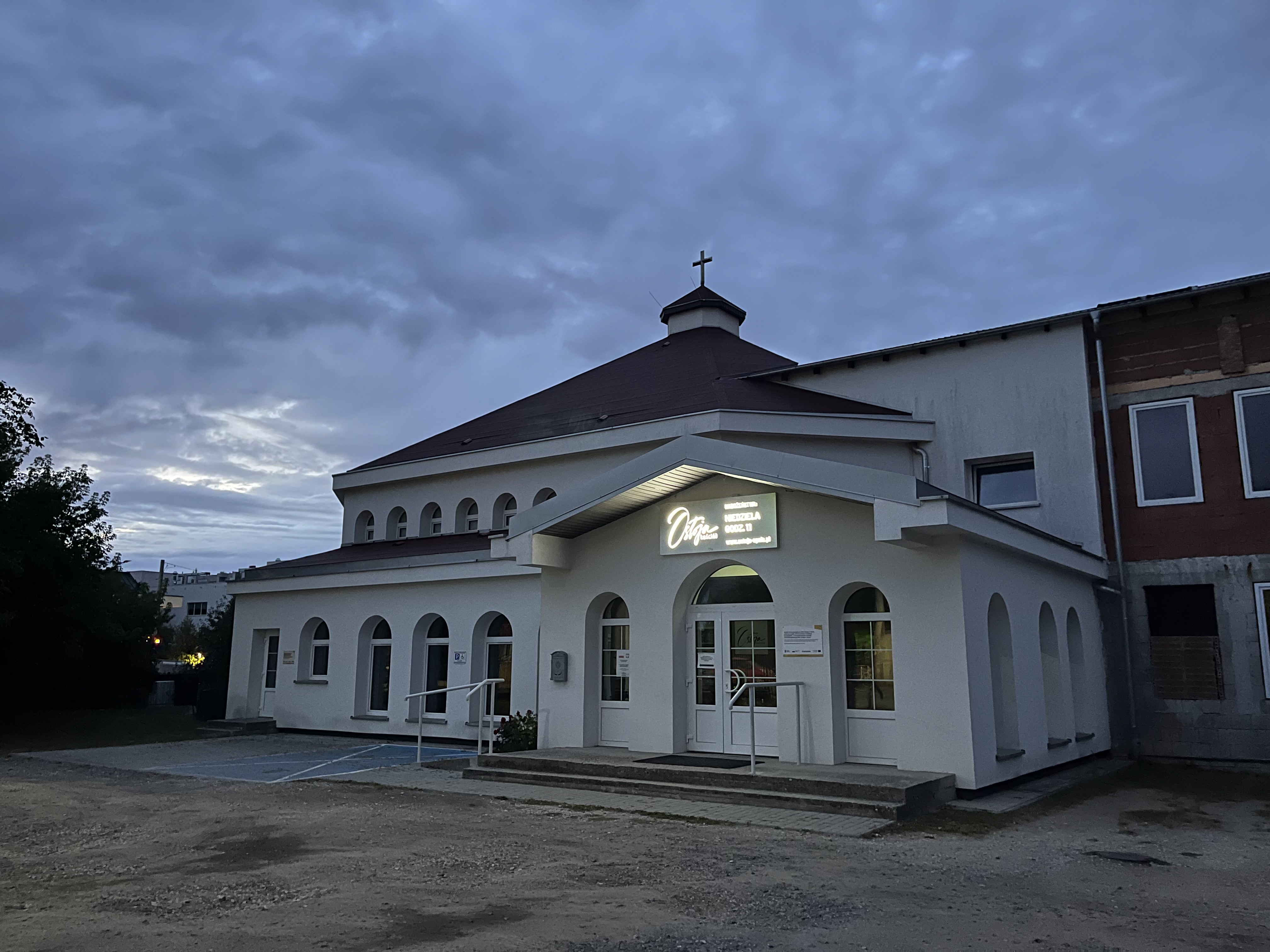
A Pentecostal congregation at Ostoja Church in Opole, Poland.

A Pentecostal congregation at Ostoja Church in Opole, Poland.

Christianity Today October 13, 2025
Image courtesy of Ken Chitwood.

The city of Opole is 275 miles from Poland’s eastern border. But Ukraine never feels that far away.

And at Ostoja Church, a Pentecostal congregation that has served the city of 130,000 since 1952, that presence is palpable, particularly during Sunday-morning prayers.

The church’s pastor, Mariusz Muszczyński, said that every Sunday since the beginning of the war, the church has prayed for peace in Ukraine—in Ukrainian and Polish.

“We never skip it,” he said. “It’s become part of who we are.”

It’s not only the church’s prayers that have changed since the war began. The people have as well.

“From one day to the next, our church transformed from a middle-class Polish-descent church into a messy, missional, giving, caring, international community,” Muszczyński told CT. “It revolutionized our church overnight. Three years down the road, we are in a totally different place than we used to be.”

Even before 2022, there were more than 8,000 economic migrants from Ukraine living in Opole, the historic capital of Upper Silesia in Poland’s southwest. But in February of that year, when Russia launched a large-scale invasion of Ukraine, hundreds—and later thousands—arrived seeking shelter and safety. In the first 18 months after the invasion, the Polish government granted temporary protected status to 22,000 people in Opole.

Muszczyński’s church was on the frontlines of dramatic change.

As refugees started to flee west across Poland, he said Ostoja Church was the first organization in the city to receive them. Expecting to help dozens out of the 100 the city planned to resettle, the church received almost 500 refugees in just two days. By the end of the first year, that number increased to 900.

It was a lot for the midsize church to handle. But Muszczyński and church volunteers called everyone they knew in the city: hotel and motel owners, student-dormitory directors, private homeowners, businesspeople, and landlords. Somehow, the pastor said, they were able to place every single person within 24 hours without having to house anyone at the church itself. 

Muszczyński knew the church would change too. The church bought headphones for translations and started working with an Orthodox woman who had moved to Opole before the war to provide simultaneous interpretations during every service. The congregation also started praying for peace.

But beyond the change in logistics and liturgy, it was the change of heart that struck Muszczyński the most.

“It was a totally new season for our congregation,” he said. “From one day to the next, we became a local church with a global outlook, willing to embrace people from different nations.”

Now, three years later, Ostoja welcomes worshipers from 10 other nations: India, Italy, Indonesia, Tunisia, Colombia, El Salvador, Peru, Pakistan, Belarus, and Ukraine. The church provides translations for as many languages as possible, and Muszczyński is working to train up leaders from among the multiple nationalities and languages present.

Ken Chitwood

Ostoja is not alone in this transformation. Across the continent, migrants and refugees have changed the demographics and dynamics of congregations—including many that welcomed Ukrainians and became hubs for humanitarian aid, shelter, and spiritual care.

According to a European Commission report, there were 995,925 beneficiaries of temporary protection from Ukraine in Poland by August 2025, making it the country hosting the second-highest number of such individuals within the European Union. Poland’s figures represent a slight increase of 2,260 people compared to the previous month and are part of an ongoing trend of more people making their way to EU countries as the war escalates amid fraught and frustrated negotiations for a possible peace.

Writing just months after the Russian invasion, Jim Memory, a regional director of Lausanne Europe, described the response from churches across Europe as “extraordinary.” He said the way thousands of churches and Christian families opened their doors to receive Ukrainian refugees—many of them women and children—would not only have an immediate impact but also possibly bear “long-lasting consequences for mission in Europe.”

But Ostoja’s story remains unique, in part because war and displacement are, for better or worse, part of its DNA.

During World War II, Opole (then Oppeln) was part of the German Province of Upper Silesia until its capture by the Soviet Army in January 1945. Following Germany’s defeat, Opole and the surrounding region were placed under Polish administration. The German population was displaced, with millions leaving the city before Polish settlers were brought in from further east, themselves forcibly displaced, to repopulate the city.

Among them was Muszczyński’s family, who arrived from what is now Ukraine. Each family traveled with their own faith, and those who were evangelical or Pentecostal had no place in Opole to meet or worship. Nor did the Soviet authorities allow them to start their own churches. Instead, the Polish government formed a United Evangelical Church (UEC), which comprised various Polish Protestant communities.

This families had to begin the church from scratch, said Muszczyński, accommodating different traditions, cultures, and beliefs along the way. In 1952, Ostoja Church was able to overcome the differences and open its doors for worship—at the former Lutheran chapel in the city’s cemetery.

It was, Muszczyński admitted, always a challenge to maintain the church in such conditions, but it was the church he grew up in, and he learned much from it. “We had evangelicals together, from Pentecostals to Baptists and things in between, staying in one congregation,” he said. “To stay in peace and worship God together, we needed leadership who could bring people together.”

Those lifelong lessons were put to good use in February 2022 when the first refugees from Ukraine arrived. It was, the pastor said, like starting the church anew. But Muszczyński was able to not only quickly rally people together but also raise up leaders who could continue the work and provide support beyond what he alone could give.

Two of those leaders are Yevgeniy Snitsar and Kateryna Duldina. Yevgeniy, as he is known, is the leader of the church’s Ukrainian group, and Duldina spearheads the collection of support and supplies the community sends back to Ukraine.
Duldina said the church assists new arrivals with immigration paperwork, food support, and education and health care logistics. Currently, it is assisting 56 families across Opole. Beyond immediate aid in the city, it also sends upward of 50,000 euros in supplies via transport vans to ministries in Kherson, Donetsk, Zaporizhzhia, and Boryspil, just outside of Kyiv. It sends wheelchairs, toilets for those disabled by the conflict, school supplies, diapers, games, and a whole laundry list of other supplies.

Flipping through pictures of deliveries on her phone, Duldina said, “Every euro is worth it, to see the impact it has on families and friends going through the worst of war.”

Yevgeniy said it may be hard for people far away to understand what is happening in Ukraine, Poland, and elsewhere in Eastern Europe. Even so, he wants people to know that though the war is terribly painful, they have found blessings along the way. Pointing to the Ukrainian group at Ostoja, he said that though their lives have been upended, the change has brought revival to the church and individuals.

“For us, it is clear where God is at work in all of this: right here at this church, through different people all working together for the same goal,” he said.

Asked about the potential for peace and an eventual return to Ukraine—despite mounting uncertainty over the prospect of negotiations between Russian president Vladimir Putin and Ukrainian president Volodymyr Zelensky—Yevgeniy and Duldina said that though they may not know what the future holds, they feel called to continue their work in the face of war.

“Three-and-a-half years is a long time, and there are so many questions in the air right now,” said Duldina. “But because of churches like Ostoja, in all its diversity, we can continue this work for years to come, no matter what the future holds.”

News

China Detains Influential House Church Pastor

Authorities arrested Zion Church’s Pastor Jin “Ezra” Mingri along with dozens of church leaders.

An image of Pastor Jin Mingri of Zion Church.

Pastor Jin Mingri in 2018.

Christianity Today October 11, 2025
Fred Dufour / AFP

Since Thursday, police have detained nearly 30 pastors and staff members of Zion Church, an influential Chinese house church network, in what many fear is the beginning of a new wave of persecution against Christians in China.

The arrests took place in at least six cities across China. More than 10 officers broke into senior pastor Jin “Ezra” Mingri’s apartment in Beihai, Guangxi province, on Friday and searched his home all night before taking him away in handcuffs, according to the nonprofit ChinaAid. Authorities detained one pastor at the Shenzhen airport. Church members have lost contact with more than a dozen congregants in Beihai and are uncertain whether they’ve also been arrested.

Jin’s daughter, Grace, who lives in Maryland near Washington, DC, first heard about the roundup on Friday morning as she woke up to see her father’s prayer-request letter about Zion pastor Wang Lin’s arrest. Then she received a call from her mom, who also lives in the US, saying she had lost contact with her dad. They later found out he was under arrest in Beihai.

Grace always knew this could happen. In 2018, the government shut down Zion Church’s sanctuary in Beijing. Yet since the pandemic, the church has grown rapidly through its hybrid model of livestreaming services to small groups across the country. Today the church network includes nearly 10,000 people spread across 40 cities. Likely because of this growth, the Chinese government has increasingly targeted the church, breaking up services and detaining pastors and church members—although typically releasing them after several days.   

“I didn’t want to believe this was happening,” she said. She tried to downplay her father’s unavailability, thinking perhaps officials had just invited him to “drink tea” (a euphemism in China for police interrogations). “I did not want to look at what it entailed.”

Jin, an ethnic Korean from northeast China, became a Christian after the Tiananmen Square massacre left him disillusioned about the country’s Communist government. At a local church, he found hope he couldn’t find anywhere else. In 2007, he started Zion Church with fewer than 20 people. A decade later, it was one of the largest unregistered house churches in China, with about 1,500 members and more than 20 pastors. When I visited the church in Beijing in 2018 before the crackdown, the church was meeting on the third floor of an office building with a spacious modern sanctuary and its own coffee shop and Christian bookstore.

The government began threatening to close the church in August 2018 after Jin refused to install security cameras in the sanctuary. Authorities pressured about 100 church members to stop attending. In September, the government officially banned the church, sealing off the church property. Police detained Jin and other leaders for a few hours before releasing them.

This week’s roundup was different, said Sean Long, a Zion pastor pursuing a doctorate in theology at Wheaton College. In a coordinated attack, police in cities around the country carried warrants to detain the leaders and staff. They face charges of “illegal dissemination of religious information via the internet,” Long said.

Yet Long noted that Jin had long anticipated a crackdown. In 2018, even before the church was shut down, Jin sensed persecution coming and sent Long and his family abroad so an arrest of pastors would not leave the church leaderless. Jin’s wife, daughter, and two sons also moved to the US so the government could not use them as leverage.

This year Jin again sensed a storm coming. In one Zoom call with Jin, Long asked what would happen if all Zion’s leaders were arrested. Jin replied, “Hallelujah, because a new wave of revival is coming.” 

The arrests still shocked Long: “It’s a brutal violation of … the Chinese Constitution that grants every Chinese citizen freedom of religious belief.” 

A prayer letter Zion Church released Saturday listed other house churches recently facing persecution: In May, Xi’an police detained pastor Gao Quanfu of Zion’s Light Church for  allegedly “using superstitious activities to undermine the implementation of justice.” In June, authorities imprisoned 10 members of Golden Lampstand Church in Linfen on fraud charges. They sentenced pastor Yang Rongli to 15 years in prison.

With the leaders inside China detained, Long and several other pastors who reside overseas—including in South Korea and Canada—will continue to shepherd Zion Church.

On Sunday, three days after the crackdown began, Zion’s 100 church plants—gatherings that number between 5 and 50 people—will meet for worship as they do every week, Long said. Some groups meet inside living rooms, while other rent out private restaurant rooms. They’ll watch over Zoom as a Zion pastor who resides in South Korea preaches a sermon on the stoning of Stephen (Acts 7:54–60), the first Christian martyr, followed by a short encouragement and benediction by Long. After that, they’ll hold in-person discussions or Bible studies. Some will share a meal together.  

“No suffering, no glory—that’s the most important spiritual DNA of the Chinese house church movement through history,” Long said. “We are willing to pay the price to bear the cost of discipleship.”

Culture

Amazon’s New Streaming Channel Has Both ‘House of David’ and ‘Sherlock’

Major networks have invested in faith-based programming like Wonder Project before. This time seems different.

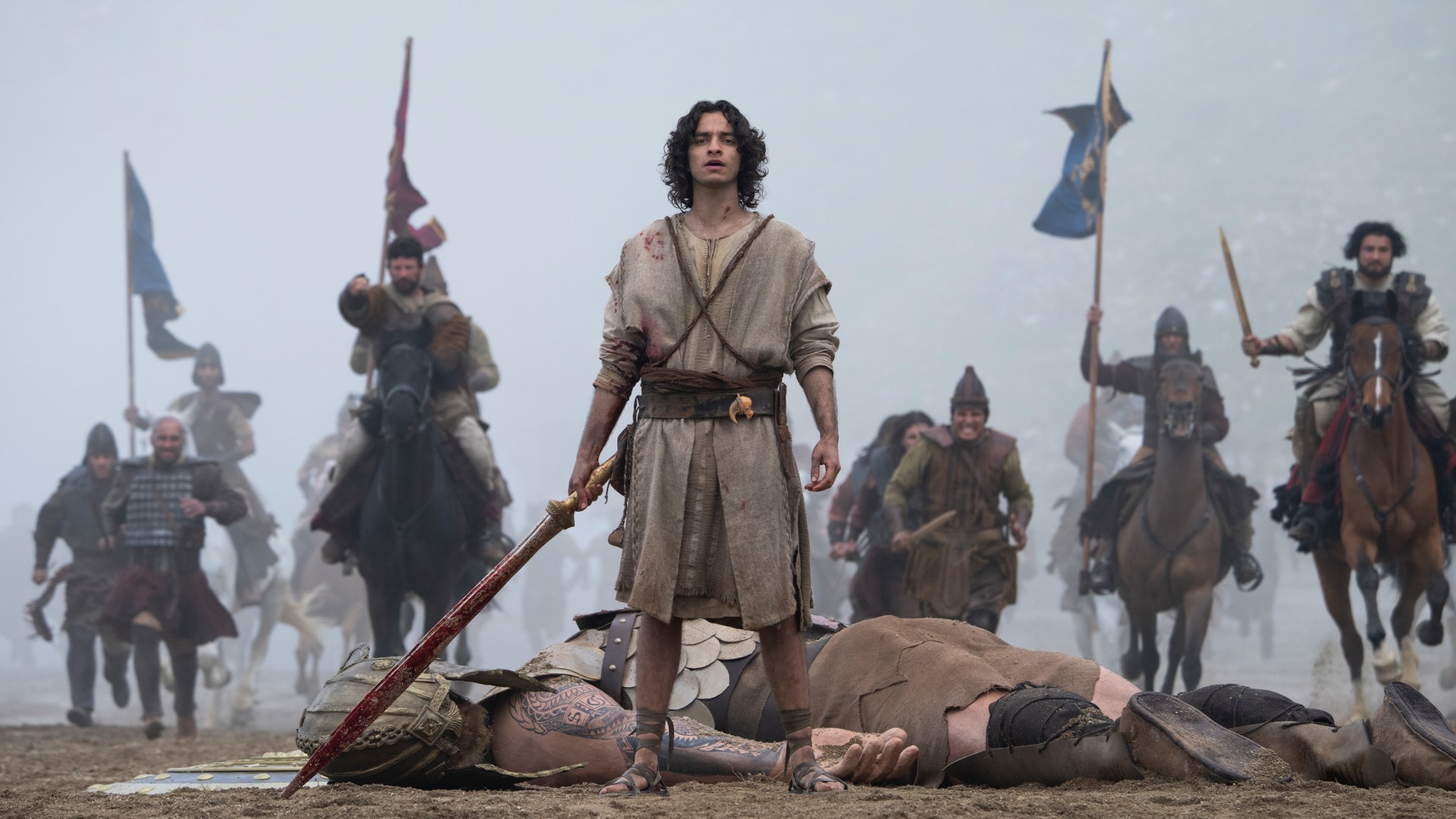
A still from House of David season 2.
Christianity Today October 10, 2025
Jonathan Prime / Prime Video. © Amazon Content Services LLC

Ten years ago, in the wake of Noah, Exodus: Gods and Kings, and the History Channel’s The Bible miniseries, a couple of major networks tried to cash in on the growing appetite for biblical stories by launching some Scripture-themed TV shows.

NBC got the ball rolling with A.D.: The Bible Continues, a series beginning with the death and resurrection of Jesus. It was canceled after just one season. By that point, ABC had already started shooting Of Kings and Prophets, a series about David, Goliath, and King Saul’s family. When it premiered one year later, it lasted all of two episodes before the network pulled the plug.

Now, a decade later, there is another major series about Jesus and the disciples and another about Saul and David. This time, they’re on streaming platforms, not legacy networks. And they’re both very popular. With the premiere of House of David season 2 last Sunday—one week after The Chosen’s fifth season became available worldwide on its free app—they are both genuine, bona fide, multiseason TV shows.

But there’s more to note here than larger viewership and relative longevity. In both cases, the makers of these shows are using their success to create new infrastructure, with the aim of supporting more Bible-based media in the long term.

The Chosen’s production company, in addition to running its own app and raising funds through the nonprofit Come and See Foundation, is launching a series of “Chosen universe” spinoffs.

And the makers of House of David used the show’s second season to launch a brand-new streaming channel called Wonder Project, named for the “faith and values” production company cofounded two years ago by series creator Jon Erwin and former YouTube and Netflix executive Kelly Merryman Hoogstraten.

The channel—which features a variety of classic films and TV shows as well as new offerings—costs $8.99 per month or $89.99 per year and is currently available through Prime Video. The long-term goal is to make it a direct-to-consumer app.

“We wanted to create a place where there could be some level of independence of this content being made over and over again,” said Erwin, who codirected hit films like I Can Only Imagine and Jesus Revolution before launching Wonder Project.

Erwin, who has worked with a variety of studios since directing October Baby with his brother Andrew in 2011, said the constant moving around (he likens it to musical chairs) and changing corporate structures made it necessary to “build something of our own.”

“So often in dealing with studios—and I love representing Christianity and middle America to many of these studios, and they’re very receptive—but you feel as if you’re building everyone else’s home and they’re all built on sand,” he said. “And whether it’s a regime change or an acquisition or a merger, a lot of times you feel like years of work are gone overnight.

“So the idea of building something that could really last and endure the test of time … was very inspiring to me.”

Erwin said he had the idea for a streaming channel before House of David got the green light. He wanted “an HBO for the faith audience globally,” and he always intended for the dramatic series to serve as a hook.

The first season of House of David, which came out between February and April of this year, paved the way by going out on Prime Video globally, where it was an instant smash and ultimately attracted 44 million viewers worldwide: “More than every movie ticket I’ve ever sold to any movie I’ve ever made,” Erwin said. “It was so cool to see the show blow past any expectations that we had or that Amazon had, just in a matter of days.”

The second season went into production right away. But instead of going to regular Prime Video, it premiered on Wonder Project the same day the channel launched. It is, for now, only available there (which, itself, is only available in the US). The season will become available on Prime Video globally at some point in the future.

In a world where platforms like Angel Studios and Pure Flix already exist—Erwin himself recently finished shooting a George Washington movie for Angel, due in theaters next summer—some might wonder whether the world needs another faith-based streaming platform.

But Wonder Project aims to serve a broader audience by mixing religious titles with more mainstream fare like Sherlock, The Sound of Music, and The Secret Life of Walter Mitty—and it will offer the official, edited-for-TV versions of some movies, which is something no other platform does.

“It’s like, ‘Here’s a bunch of stuff that we think your families will love, because our families love it,’” said Erwin. “We’ve scoured decades of entertainment to pull together a curated library … including many things that you’ve forgotten how much you loved or you didn’t know where to find.”

Some might find it ironic that a family-friendly streaming channel would have House of David as its flagship show, given that the series is full of violence. (The first episode of season 2 is basically one big battle sequence.) There’s plenty of potential in the biblical story for other, more risqué elements too. (Images of David in military garb walking in front of his men with a bag in his hand has some people wondering if the series is going to tackle 1 Samuel 18:27.)

Erwin admits that what is considered appropriate for children will vary from family to family: “My oldest is 16 and our youngest is 8. … There are some brutal parts of the Bible—and the Old Testament, especially—so that can be hard to adapt to film. But my goal in the adaptation is to make the version of the show that I would feel comfortable watching with all my kids.”

“It’s violence in the tradition of the Lord of the Rings movies, not Game of Thrones,” he added. “It’s in that PG-13 space, is the goal.”

The series is coming out amidst an explosion of biblical storytelling on screens both big and small. Mel Gibson is making two movies about the Resurrection. Angel Studios is releasing an animated movie about David in December and a Nativity-themed film called Zero A.D. (starring Jim Caviezel as King Herod) sometime next year.

Fox is producing a three-part series about the women of Genesis called The Faithful. You can find a comedy about Moses called The Promised Land on YouTube. There’s even an R-rated horror movie called The Carpenter’s Son about Joseph, Mary, and Jesus, starring Nicolas Cage and slated for next month.

The two major streaming platforms are getting in on the action too.

Netflix has been a bit more tentative so far. Its offerings include a multifaith documentary series (Testament: The Story of Moses), a thriller based on an apocryphal-gospel-inspired movie they acquired after it was completed (Mary), and a romance that sets the Book of Ruth in modern-day Tennessee (Ruth & Boaz).

Prime Video, on the other hand, has jumped into the genre with both feet, not only producing House of David but also signing an exclusivity deal with The Chosen and coproducing its spinoffs The Chosen Adventures (an animated series launching October 17) and Joseph of Egypt (a live-action miniseries currently being filmed in New Mexico). Amazon MGM, the studio owned by Prime Video’s parent company, will also release two Chosen movies in theaters worldwide in 2027 and 2028.

One remarkable aspect of the biblical media surge is its genre diversity. The Chosen takes its cues from Friday Night Lights and The Wire, House of David borrows from the Lord of the Rings and Marvel movies, and The Promised Land models itself on The Office and Parks and Recreation.

Erwin finds the variety freeing and encouraging. “I’ve often said Christianity is an audience to serve, it’s a cause to champion, it’s a story to be told—it is not a genre, you know?” he said. “I think we have limited ourselves by thinking that … all these things have to look and feel the same. What I love is that there’s this group of filmmakers and we’re all serving the same cause in our own way.”

Beyond House of David, Wonder Project has other projects in the works, including a drama called It’s Not Like That, starring Scott Foley as a widowed pastor who learns to love again; Sarah’s Oil, a true story about a young Black girl who finds oil on her land, to be released in theaters by Amazon MGM on November 7; and The Breadwinner, a comedy starring Nate Bargatze that TriStar Pictures has planned for next March.

Then there’s House of David. Erwin envisioned the series as a trilogy, with three seasons charting the title character’s rise from shepherd to warrior to king, and he’s now working with writers on the final installment, which he hopes to shoot next year. (He’s also thinking of doing a second trilogy about “the back half of David’s life,” but it would “almost be a different show” with a different cast.)

“I’m grateful to be able to tell the story, and I would love to keep telling it,” Erwin said. “I can’t wait to get back for season three.”

Peter T. Chattaway is a film critic with a special interest in Bible movies.

Marvin Olasky Officially Named Editor in Chief

Russell Moore becomes editor at-large and columnist.

A headshot of Marvin Olasky.
Image courtesy of Marvin Olasky / Edits by CT

Christianity Today interim president Thomas Addington officially announced today the appointment of Marvin Olasky as editor in chief. The media company with its magazine flagship is moving into its 70th-year celebration.

Olasky was editor in chief at World magazine from 1994 to 2021. He served as a professor at The University of Texas at Austin from 1983 to 2008. Olasky is the author of 30 books on journalism, American history, abortion, and public policy, including The Tragedy of American Compassion, Prodigal Press, and Compassionate Conservatism. He has served the past 18 months at CT, first as a consultant and then as an executive editor.

Olasky’s move to editor in chief was first referenced publicly in Russell Moore’s “Moore to the Point” newsletter two weeks ago. Moore, who served in the editor in chief role from 2022 to 2025, requested a change to editor at-large and columnist because of the expansion of The Russell Moore Show in audience and time commitment, in addition to his weekly essays, column in each issue, and role as a cohost on The Bulletin, CT’s weekly news and analysis podcast, which has also grown in scope and reach over the last year.

Moore praised Olasky’s experience as “the titanic editor of World” and said, “I would quite often open up an issue with a low whistle and comment, ‘I can’t believe he is courageous enough to take on that.’… I finally convinced Marvin to take the editor in chief parts of this role so I can expand all this writing and speaking without collapsing. I was able to sell it to the powers that be at CT by noting that they could get the best of both of us if they let me have it this way.”

“I have been praying for a year and a half for God to send us a ‘Marvin Olasky type’ to serve with us so that I could focus my attention fully on writing, audio and video content, and speaking,” Moore said. “I remember the moment when I realized it might just be that the ‘Marvin Olasky type’ God was sending us was, well, Marvin Olasky. That seemed almost too perfect to be real.”

“Marvin is respected all over the world not only as one of the most accomplished Christian journalists in American history but also for the way he identifies and cultivates the gifts and callings of others,” Moore said. “Many of the most skilled and recognizable Christian journalists right now, on countless platforms all over the country, were trained by Marvin Olasky.”

“I am thankful to work with Russell Moore and my other colleagues and to follow in the footsteps of Carl F. H. Henry, CT’s first editor in chief when he and Billy Graham started the magazine in 1956,” Olasky said. “We’re celebrating next year its 70th anniversary of attempting to apply biblical thinking to every area of life. We’re now a big tent with global outreach but still faithful to God and not to any political party or movement.”

Addington called Moore and Olasky “evangelical statesmen” and said he was “thrilled” to have both of them, along with the rest of the CT team, working together “to lift up the stories and ideas of the kingdom of God.”

“They communicate the message of Jesus with clarity and continue Christianity Today’s legacy as a strong voice for conservative orthodoxy and the heart transformation of the gospel,” Addington said.

News

Hamas Releases All 20 Living Israeli Hostages

Israelis and Palestinians feel relief but fear the uncertainties to come.

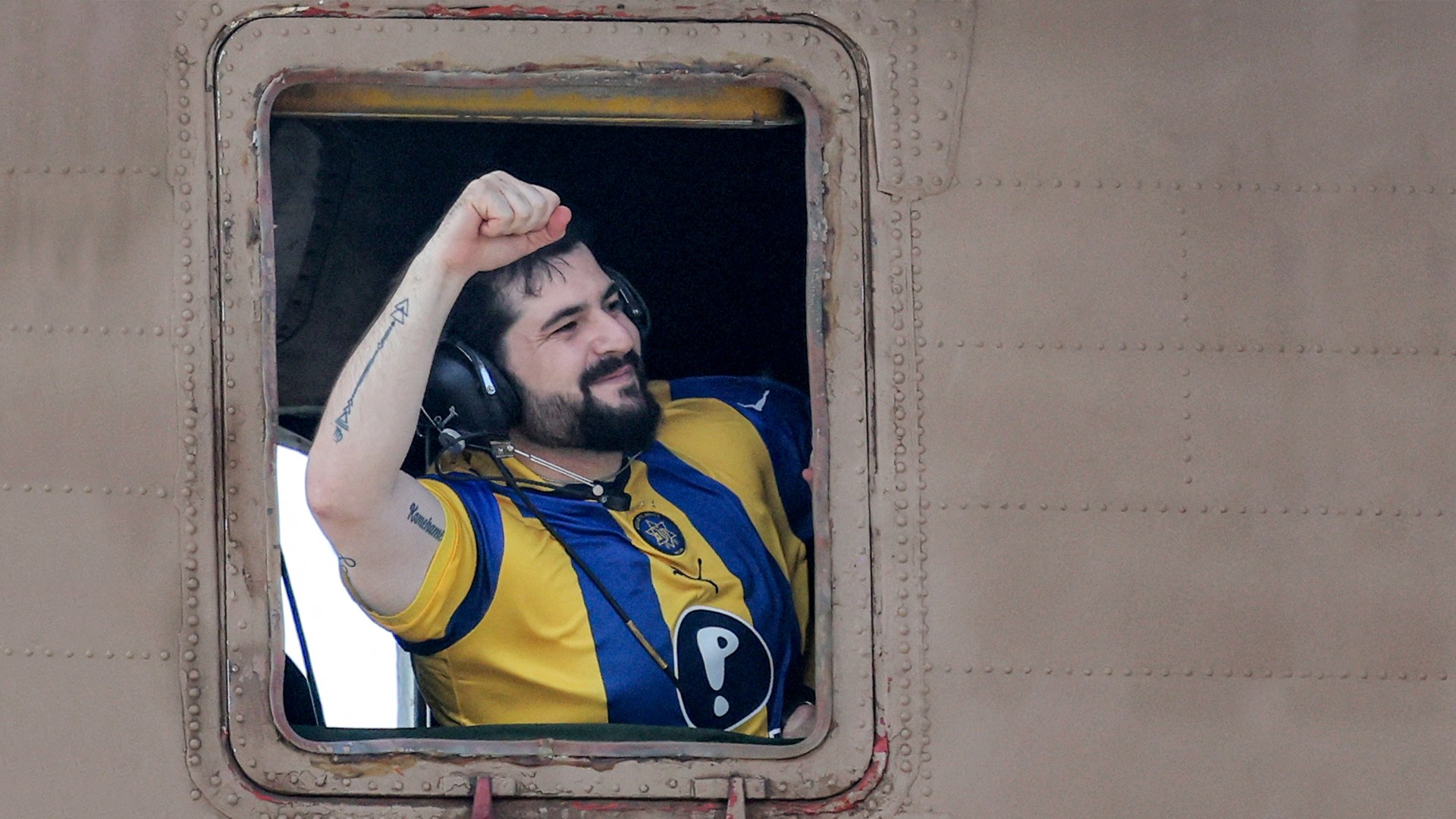
Ziv Berman, one of the released Israeli hostages formerly held captive in Gaza since 2023, gestures from the window of an Israeli helicopter.

Ziv Berman, one of the released Israeli hostages formerly held captive in Gaza since 2023, gestures from the window of an Israeli helicopter.

Christianity Today Updated October 13, 2025
Ahmad Gharabli / Contributor / Getty

Key Updates

October 13, 2025

Hamas released all 20 of the remaining living Israeli hostages Monday, Israeli military said. Meanwhile, Israel released nearly 2,000 Palestinian prisoners and detainees as part of the cease-fire deal brokered by US president Donald Trump to end the war.

A video released by Israel Defense Forces showed the father of released hostage Eitan Mor weeping with joy as he embraced his son. Mor, 25, was working as a security guard at the Nova Music Festival in Re’im on October 7, 2023, when Hamas members took him hostage.

Hamas said it would release the bodies of 4 of the 28 deceased hostages later Monday. Earlier, the group suggested that it did not know the location of all of the bodies.

Humanitarian groups are preparing to bring large amounts of aid into the Gaza Strip, which is facing a severe food crisis. Around 600 trucks of aid per day will soon start arriving in the territory under the cease-fire agreement, according to the Israeli defense body in charge of humanitarian aid in Gaza.

Trump, who spoke to Israel’s parliament, Knesset, Monday, called the deal “the historic dawn of a new Middle East.”

He added, “At last, not only for Israelis but also Palestinians, the long and painful nightmare is finally over.”

As Trump heads to a summit in Egypt with world leaders backing the cease-fire plan, many challenges still remain, including whether Hamas will agree to disarm and who will govern Gaza.

October 9, 2025

Two years and two days after the October 7, 2023, Hamas attack, Israel and Hamas agreed Thursday to stop fighting and to exchange hostages and prisoners. Gazans and Israelis took to the streets to cheer the news of a possible end to the war.

In Nazareth, Azer Ajaj, the president of Nazareth Evangelical College, said he was “overwhelmed with joy” when he first heard about the prospective cease-fire and deal between Israel and Hamas.

“This is what my church and I have been praying for personally throughout the war,” he told CT.

President Donald Trump, who brokered the deal, called the signing of the first phase of the peace plan “a momentous breakthrough,” and declared, “We ended the war in Gaza.” Hamas negotiator Khalil al-Hayya said he received guarantees from the United States and other mediators that the war was over.

Questions remain about other parts of the 20-point plan, including whether Hamas will disarm—a condition the group had previously refused—and who would govern Gaza. Yet the deal is the biggest step toward peace since the war began.

“This is a GREAT Day for the Arab and Muslim World, Israel, all surrounding Nations, and the United States of America,” Trump wrote on Truth Social Wednesday. “BLESSED ARE THE PEACEMAKERS!” 

On Thursday evening, Israeli prime minister Benjamin Netanyahu met with his security cabinet to seek approval of the agreement. Once they approve, the full cease-fire will go into effect 24 hours later, according to government spokeswoman Shosh Bedrosian.

According to Trump, Hamas will return the roughly 20 hostages believed to be alive early next week. The deal also mentioned the release of the at least 26 deceased hostages; however, Hamas told negotiators that it doesn’t know where their bodies are located. A multinational task force will be formed to find the bodies.

In return, Israel will release 250 Palestinian prisoners serving life sentences and 1,700 Palestinians detained in the wake of the October 7 attacks. Israeli officials are finalizing a list of Palestinian prisoners they plan to free, and victims of their attacks have 24 hours to object.

As soon as Thursday, the Israel Defense Forces (IDF) could begin to withdraw from agreed-upon areas of Gaza, leaving them in control of about 53 percent of the Gaza Strip, Bedrosian said. Five border crossings would reopen, allowing aid to flow back into Gaza, according to Egyptian and Hamas officials. For months, Israeli restrictions, heavy fighting, and mobs have made it difficult for aid trucks to reach Palestinians, leading to a severe hunger crisis.

Following the October 7 Hamas attack, which killed 1,200 Israelis, the Hamas-run Gaza Health Ministry says the ensuing war against Hamas has led to the deaths of more than 67,000 Palestinians. The Ministry does not distinguish between civilians and combatants in its death toll. Israeli attacks have destroyed two-thirds of Gaza’s infrastructure.

“We have wept with those who weep, whether they are Arabs or Jews,” Ajaj said. “The possibility of such a deal means an end to the continuous suffering of the Palestinians in Gaza, the return of Israeli hostages to their loved ones, and perhaps even the potential for a new round of negotiations to reach a comprehensive solution to the Israeli-Palestinian conflict.”

This is the third cease-fire since the war began. Seeing previous cease-fires break down makes Ajaj “cautiously reserved” in his optimism. Yet he is hopeful because he knows both sides are desperate to see the conflict end.

“My concerns compel me to pray more intensely: that God would raise up Palestinians, Israelis, and allies from supporting nations to champion this deal and offer guarantees for its continuity,” Ajaj said.

Jamie Cowen, a Messianic Jewish lawyer in northern Israel, said distrust of both Hamas and Netanyahu’s government makes many wonder if the deal will hold.

“The people here are exhausted and hopeful for an end to the worst disaster and longest war to befall Israel in her modern history,” Cowen said. “Most feel like I do. We want an end to this, but we are wary based on past experiences.”

Trump’s 20-point plan, which he unveiled in late September during Netanyahu’s visit, also states the IDF would agree to withdraw completely from the Gaza Strip. Hamas members who “commit to peaceful co-existence and to decommission their weapons” would be given amnesty, and no resident would be forced to leave Gaza.

It also states that an apolitical transitional government made up of Palestinian and international experts would govern Gaza. This committee would be overseen by a new international “Board of Peace” headed by Trump and made up of other foreign leaders including former UK prime minister Tony Blair. Hamas would have no role in governing Gaza, and the whole territory would be demilitarized.

The plan calls on the Palestinian Authority to complete a “reform program,” at which point it can take back control of Gaza, and urges international investment to re-develop the territory. When that has advanced, “the conditions may finally be in place for a credible pathway to Palestinian self-determination and statehood, which we recognize as the aspiration of the Palestinian people.”

The deal is a stark change from Trump’s previous plan, which called for the voluntary evacuation of Gazans to other countries.

Danny Kopp, chairman of the Evangelical Alliance of Israel, offered his “concern for the many ways this deal could be foiled coupled with apprehensive hope for all the ways it could succeed.” He worries the US will lose interest and patience to secure all the goals of the second phase, including establishing a Palestinian governing body “that is deradicalized, pursues peace with Israel, and crushes the remnants of Hamas.”

He noted that as unimaginable as it was for Israel and Germany to become strong allies decades after the Holocaust, “can we imagine the same one day for Israelis and Palestinians?”

News

As Shutdown Strains Incomes, Church Ramps Up to Feed the Hungry

In suburban Detroit, a $50,000 ministry grant helps families keep food on the tables during furloughs.

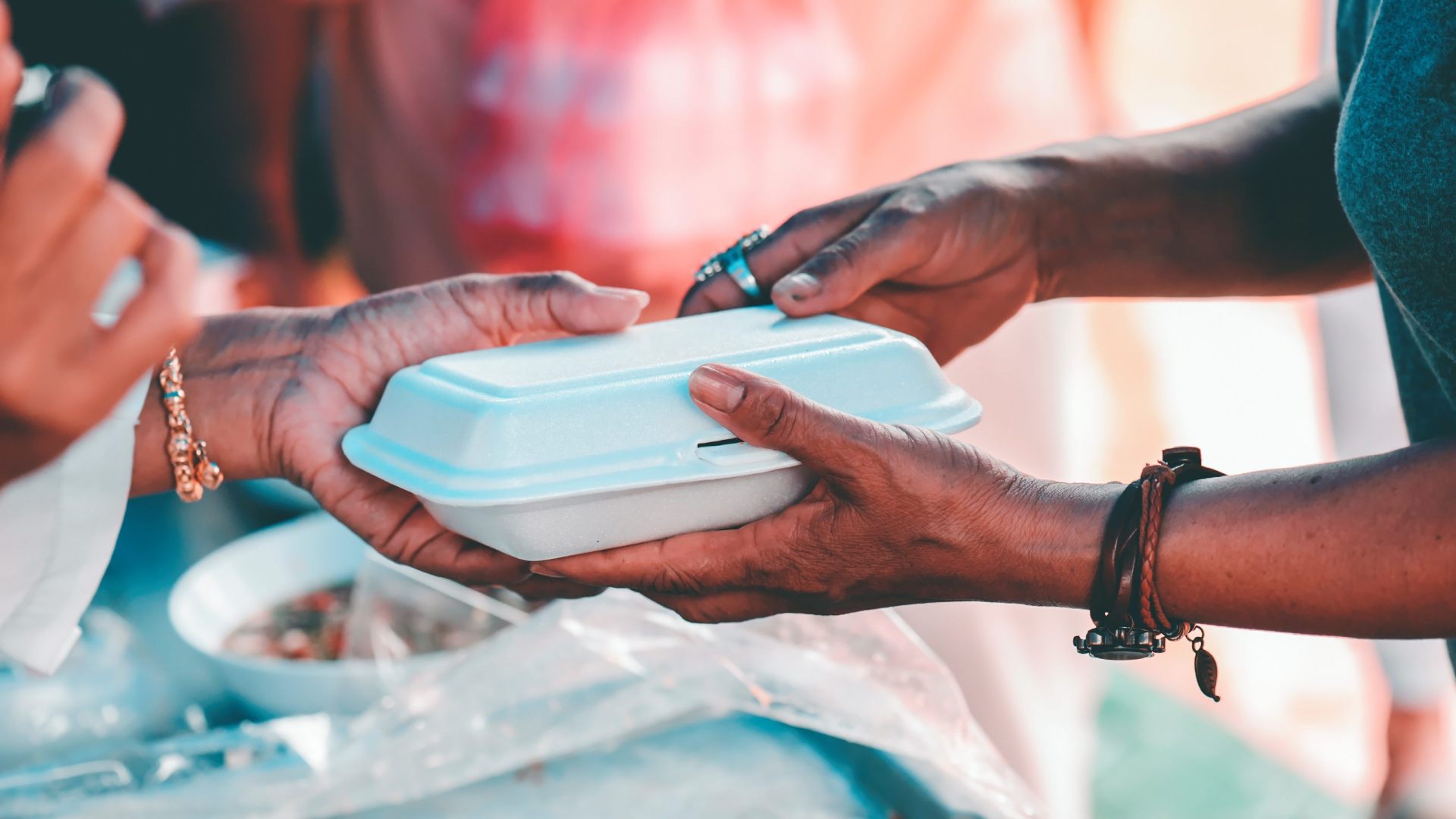
Hands pass off a styrofoam container
Christianity Today October 9, 2025
iStock / Getty Images Plus

The federal government shutdown furloughed 57 members of the Commonwealth of Faith church, where a third of the 350 attendees are federal workers, including bivocational pastor Torion Bridges and his wife Jasmine.

The change could jeopardize financial gifts from a quarter of Commonwealth of Faith’s adult members, Bridges said.

“Some people give when they don’t have, but the reality is, some people stop giving,” Bridges said, especially since they don’t know how long the shutdown will last or in some cases, whether their positions will be retained.

That made the news all the more comforting when, just a couple of days in advance of the shutdown, Bridges learned the church had been awarded a matching grant of up to $50,000 through November 2 to fund its feeding ministry.

“Food insecurity is something our church has always cared about, whether or not people can eat,” Bridges told Baptist Press. “That’s a big thing for us at Commonwealth.”

Across Michigan, about 29,900 civilians are federal workers, the Congressional Research Service said in a September 25 report.

Jasmine is among church members furloughed, while Bridges continues to report to work for the Veterans Administration, their pay delayed until the government resolves its impasse. What’s more, Bridges doesn’t accept a salary from the church he planted in 2018 through the North American Mission Board, although his wife also works in real estate and is opening a day care center.

The grant will undergird offerings that help feed children at five Metro Detroit schools with which the church partners and 15 early childhood development centers. It will also support the church’s distribution of groceries and hot meals through the Fields Feeding Program Commonwealth birthed in 2020. The program has grown to include 35 sites, Bridges said, most of them churches.

“To have this ability to be matched for that, it’s like the old hymn says, ‘Whatever betide, God will take care of you,’” Bridges said. “And I’m not trying to be funny when I say this, but I personally think that Commonwealth is one of God’s favorite churches. It just happens like that. I can’t explain the favor that’s on this house. But we just keep on doing whatever we feel God has called us to do.”

Bridges hopes the grant will allow the church to double its feeding outreach, including Westfield Charter Academy, which shares a campus with the church, and the Cornerstone Network of Schools.

“We send kids home with meals and snacks to cover what they’re not getting while away from school. We do the same with the early learning centers,” he said, “and our aim is to go from five to 10 schools and 15 to 30 centers.” 

Through the Fields Feeding Program, launched in response to the COVID-19 pandemic, the church plays a part in feeding those in need across Michigan through food distribution and hot meals. Commonwealth and partner sites have together served more than 80,000 hot meals and distributed more than 75 million pounds of groceries since the program’s inception in 2020.

Commonwealth launched the Fields-Harper Community Christmas Dinner in 2024, when it served a fully prepared hot Christmas dinner to 800 families of four, Bridges said.

“Any family can come into the church and enjoy a Christmas dinner, receive a small gift for each kid and have a gospel conversation,” Bridges said.

With the grant, which came from a local donor, the church hopes to serve 1,600 families this year by offering several serving times.

“I assume I’m not the only pastor that has church members in their pews that work for the federal government that need help, and we need more than just thoughts and prayers on this,” Bridges said. “We need actions to ensure our people don’t go hungry.”

Books
Review

‘Roe v. Wade’ Eroded the Church’s Historic Pro-Life Consensus

It was already unraveling by 1973. Repairing it today won’t be easy.

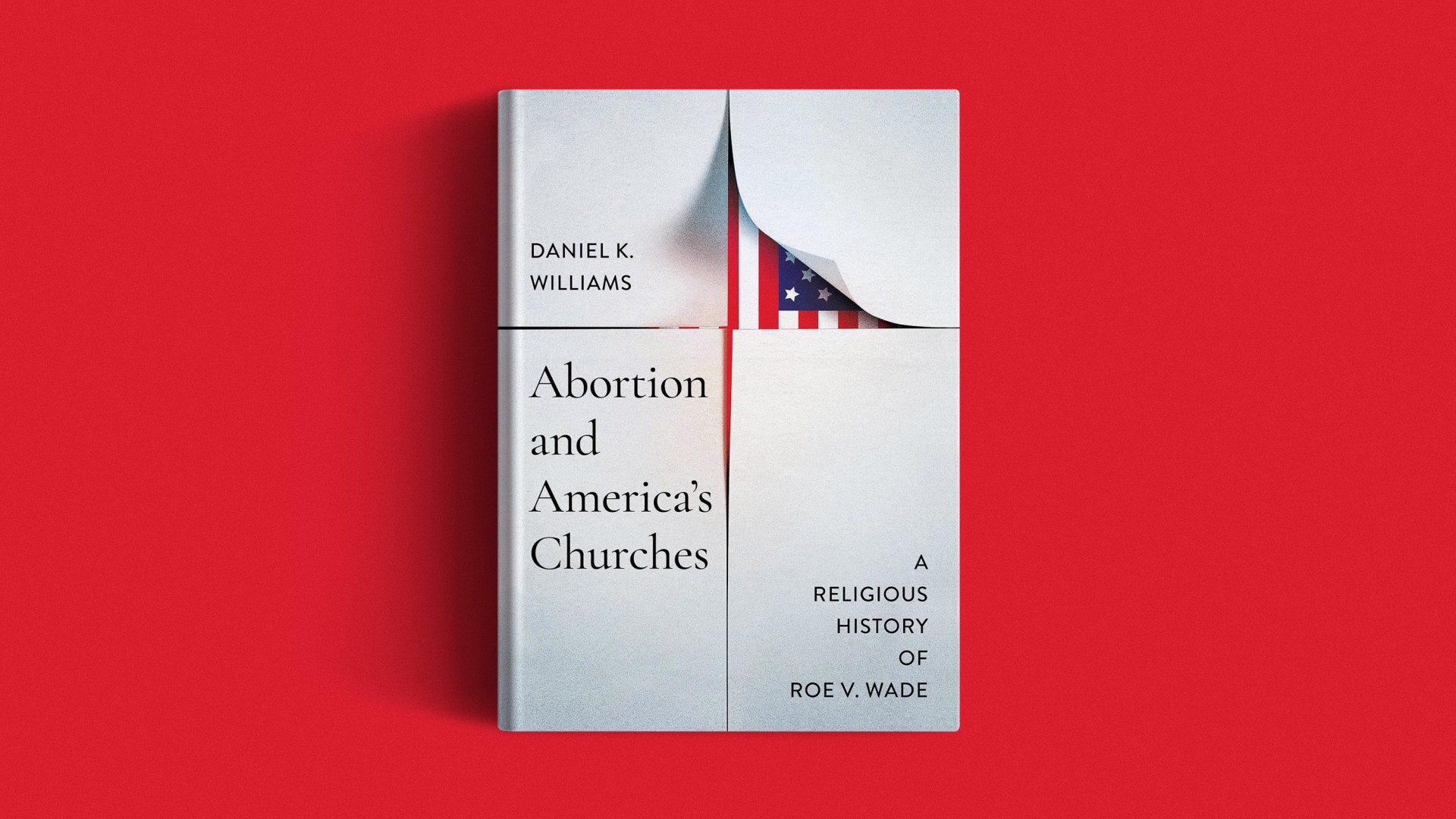
The book cover on a red background.
Christianity Today October 9, 2025
Illustration by Christianity Today / Source Images: Getty, Notre Dame Press

After the Supreme Court’s polarizing Roe v. Wade decision in 1973, the liberal Protestant organ, The Christian Century, sometimes expressed deep ethical concerns about freer access to abortion. Though generally supportive of the ruling, some of the magazine’s contributors were willing to express serious qualms about its potential impact. 

Writing in 1975, Kenneth Vaux, a theologian and ethicist at Garrett-Evangelical Theological Seminary, lamented that the majority opinion “opened the floodgates for thousands of thoughtless and unwarranted abortions.” Four years later, United Methodist chaplain J. Claude Evans argued that the pro-choice movement needed to respect the consciences of those who considered abortion tantamount to murder. The government, he added, should ensure that public monies never fund abortions. 

Liberal Protestant unease of this sort is one of the many illuminating themes in Daniel K. Williams’s new book Abortion and America’s Churches: A Religious History of “Roe v. Wade”. Williams offers a thorough and insightful study of how American churches—Protestant and Catholic, white and Black—grappled with the ethics of abortion before and after the Supreme Court’s momentous decision. In particular, he seeks to show how different Christian denominations formulated positions on abortion that “reflected a particular theological framework” rooted in convictions that preceded Roe and persisted well after the landmark case. 

Along the way, Williams questions at least a couple common assumptions. First, denominational defenders sometimes maintain that their traditions’ positions have never changed over time. Second, some scholars argue that evangelicals shifted their views suddenly for pragmatic partisan reasons. Here, Williams has in mind Randall Balmer’s thesis that white Southern Baptists adopted pro-life perspectives because of racial and political considerations rather than theological convictions.

Prior to the mid-20th century, American Protestants and Catholics hardly differed on matters of abortion. While historian James Mohr has maintained that first-trimester abortions were common and widely accepted during the 18th century, Williams inclines toward studies maintaining that abortions were relatively rare during this period due to widespread disapproval. 

By the mid-19th century, that disapproval became more explicit, with Protestant bodies passing resolutions (like the Northern Presbyterians’ 1869 statement) that issued strong condemnations. By the turn of the century, the social gospel movement softened attitudes toward birth control among some Protestants, and this tended to liberalize their approach to questions of abortion. 

Despite this gradual trend, however, ecumenical organizations, including the National Council of Churches, expressed ethical reservations as late as the early 1960s. A few prominent liberal Protestants, such as Princeton University’s Paul Ramsey, remained firm opponents. But by the early 1970s, virtually every mainline Protestant denomination supported liberalizing America’s abortion laws. 

Indeed, Justice Harry Blackmun’s majority opinion in Roe echoed an official statement crafted by the United Methodist Church that framed legalized abortion as a matter of individual rights. The similarity was no accident; Blackmun was a faithful UMC member. “One could even call Roe v. Wade itself a liberal Protestant decision,” Williams concludes.

As for American Catholics, Williams highlights the deeply rooted theological and philosophical arguments, stretching back to early- and medieval-church traditions that prevailed in the pre-Roe era. The church’s position regarding the appropriate penalty for abortion changed over time, but its conviction that abortion was a serious sin did not. 

Historic church teaching helped American Catholic leaders understand opposition to abortion within a broader social context. Detroit’s cardinal John Dearden, for instance, connected the pro-life cause with larger concerns about poverty and opposition to the Vietnam War, and many Catholic politicians (including Democratic senator Ted Kennedy) embraced such an approach—at least initially.

Meanwhile, white evangelicals’ more individualistic understanding of sin militated against this kind of broader social perspective. American Protestants, both theological conservatives (like Billy Graham) and theological liberals, had come to accept artificial birth control by the mid-20th century. Although independent fundamentalist Baptists had a long record of opposing abortion, the Southern Baptist Convention (SBC) continued to espouse a moderate or centrist position as late as 1971. 

Christianity Today sharply criticized the Roe decision, though, and many evangelicals came to interpret legalized abortion as a disturbing sign of a larger moral decline in American culture. Both the SBC and Jerry Falwell’s Moral Majority (founded in 1979) issued jeremiads about national decay, justifying their activism with concerns about liberal hostility toward the traditional family. As Williams observes, “This new understanding of the pro-life campaign as a quest to restore Christian values in the nation’s law” had been less central in pro-life discourse before Roe, and it generated some debate within the movement.

During the 1980s and 1990s, debates over abortion emerged even within liberal mainline Protestant denominations, such as the United Methodists, the Evangelical Lutheran Church in America, and Episcopalians. Pro-life groups within the mainline forged alliances with renewal movements that sought to pull their communions away from theological liberalism in general. When these movements failed, Williams notes, the resulting denominational splits produced bodies that were “more homogenously liberal” on abortion. 

Some liberal theologians recognized that pro-choice arguments were based upon individualistic Enlightenment assumptions. Even so, Williams observes, the position of liberal Protestants soon hardened as pro-choice advocates “reframed [abortion] as a healthcare equity issue.” Moreover, by the 1980s, Black Protestant leaders increasingly assumed an unqualified pro-choice stance. Take, for instance, the civil rights leader, minister, and presidential hopeful Jesse Jackson. In 1977, he had staked out a firm pro-life position. Yet his views shifted in 1983, gravitating toward what had become the mainstream posture of the Democratic Party.

As liberal Protestants retreated from earlier convictions, conservative evangelicals and Catholics increasingly recognized each other as co-combatants in the pro-life cause. In 1992, representatives from both traditions began crafting an ecumenical agreement, published in 1994 as “Evangelicals and Catholics Together.” The joint statement deepened their alliance on the abortion issue while laying the groundwork for further cooperation. 

By the early 2000s, Williams notes, many American Catholic bishops intensified their focus on abortion itself as distinct from a broader ethic of human dignity. Some asserted their right to deny Communion to pro-choice Democratic politicians who attended Mass, though Pope Francis later discouraged such a confrontational approach. When, in 2022, a conservative Supreme Court majority finally overturned Roe v. Wade in the Dobbs v. Jackson Women’s Health Organization decision, it was not surprising that four of the five justices were Catholics. 

The demise of Roe underscored the diminished role of mainline Protestants in shaping religious attitudes toward abortion. Indeed, the entire framework of the abortion debate had changed profoundly since 1973. As Williams explains, “The fusion of the pro-life movement with a campaign to return the country to Christian principles turned the abortion debate into a referendum on the religious identity of the nation.”

Like all good historical works, Abortion and America’s Churches provides invaluable context, complicating our understanding of the past in enlightening ways. But the book also raises difficult questions about the viability of Christian pro-life witness going forward. Williams believes that a “pro-life ethic [that] demands self-sacrifice and a commitment to marriage, sexual chastity, and care for others” is unlikely to prevail in an increasingly unchurched and intensely individualistic society. 

This is undoubtedly true. But the presumed moral divide—between a pro-life movement grounded in religious values and a largely secular opposition—isn’t quite so clear, especially in light of Donald Trump’s pronounced reshaping of conservative political coalitions. How should one understand the pro-life movement’s transactional decision to support a figure as ethically compromised as Trump? How much damage has the movement sustained to its reputation and wider influence on account of this alliance? 

In the wake of the Dobbs decision, as Williams notes, the Republican Party—under Trump’s sway—dramatically weakened the pro-life elements of its platform. Moreover, some American Christians (Protestant and Catholic) find Trump’s transgressive behavior appealing. In recent election cycles, a good number gave him electoral support, despite the presence of bona fide pro-life evangelical alternatives like Ted Cruz (in 2016) or Mike Pence (in 2024). Admittedly, scholars might need more time to assess these developments in their fullness.

All told, however, Abortion and America’s Churches succeeds in tackling a difficult subject with a consistently fair and even-handed approach. Between its admirable objectivity and its extensive reliance upon primary sources, the book is likely to become the standard treatment of how different Christian traditions have wrestled with abortion. 

Moreover, unlike many academic works, Williams’s book can serve as a helpful guide for productive dialogue on this emotionally charged subject.

Gillis J. Harp retired as professor of history at Grove City College in January 2025. His most recent book is Protestants and American Conservatism: A Short History.

News

Kenyan Churches Struggle to Support Childless Couples

One Christian woman hopes to destigmatize infertility.

A doctor specializing in reproductive health attends to a patient at his clinic in Kenya on September 16, 2021.

A doctor specializing in reproductive health attends to a patient at his clinic in Kenya on September 16, 2021.

Christianity Today October 9, 2025
Tony Karumba / Contributor / Getty

For more than a decade, Cecilia Karanja of Nairobi, Kenya, struggled to have children.

She married three times, with two marriages ending in divorce due to physical abuse and abandonment due to infertility.

The pastors at her Pentecostal church in Nairobi, encouraged Karanja to fast and pray to get pregnant. Once, a pastor prophesied she would have a baby. She didn’t.

She tried attending the church of a well-known TV preacher who promised miracles. That didn’t work either. Karanja said she couldn’t face her church friends or attend baby showers. She felt like less of a woman. Many people assumed she’d had abortions in the past and then could not conceive.

“You feel incomplete; everywhere you go, you feel that people are discussing you,” she said.

Karanja first got married in her mid-20s. She and her husband tried for years to get pregnant before finding out her husband was infertile due to a low sperm count. Karanja left him after he started to beat her. Eight months later, she married again. Her second marriage ended in divorce six years later after her husband’s friends and relatives convinced him she could not have children. He left her for another woman.

When other women introduced themselves by referencing their children’s names, Karanja couldn’t do the same.

“At times, I would just cry and cry in the house,” Karanja said. “In church, when people are giving testimonies of how God has blessed them with children, I would feel so terrible.”

Karanja said the church doesn’t openly discuss infertility. Cultural stigmas make childlessness a topic reserved for whispers, not public conversation, in Kenya. Because of this, many infertile men and women don’t get needed medical or pastoral care.

Infertility affects 1 in 5 couples in Kenya, totaling 4.2 million people, according to All Africa. Sexually transmitted infections are a leading cause of infertility in the country, as well as parasitic infections from contaminated water. Infertility levels in Sub-Saharan Africa have reached as high as 30–40 percent.

Myths and mistaken beliefs about the causes of infertility, such as witchcraft and possession by evil spirits, lead couples to delay treatment while they turn to religious or traditional healers. Some of those stigmas also linger in churches.

“Cultural or religious misconceptions can make couples feel isolated or judged,” said Isaac Kimani, pastor of Kingdom Seekers Fellowship in Nairobi. “[Infertility is] often treated as a private struggle rather than a communal concern in the church.”

When churches do talk about infertility, they can oversimplify the problem, said Matthew Okeyo, pastor of Africa Inland Church in Milimani, Nairobi. In Karanja’s experience, church leaders would encourage prayer and fasting but provide little counseling or guidance about ethical medical options. “The church has spiritualized this issue instead of looking at the social, psychological and practical part of it,” he said.

When couples do look into medical solutions—such as surgery to repair blocked fallopian tubes or medication to stimulate ovulation or increase sperm count—costs can prohibit them from getting treatment. For example, surgeries for female infertility can cost between 250,000 and 500,000 Kenyan shillings ($1,800 to $3,900 USD). A Kenyan worker’s average monthly salary is 37,000 shillings (about $280 USD).

Because of the stigma surrounding female infertility and the high cultural emphasis on having children, some men turn to divorce or polygamy as a solution. In 2014, Kenya legalized polygamy for men who follow Islam or traditional religions. Wives do not have to consent. Christian and civil marriages are supposed to remain monogamous under law, but even these couples sometimes turn quietly to other sexual partners. Some practice polygamy unofficially. Some infertile men allow their wife to have sex with male friends to conceive a child.

John Daau of the Episcopal Church of South Sudan said the common practice of polygamy in Africa has affected even the clergy. “Some Christians, including ordained ministers, have chosen to marry second wives due to childlessness and the stereotypes associated with it in our African context,” he said. Church leadership and congregations usually expect these pastors to step down, but some refuse despite biblical injunctions against church leaders having more than one wife (Titus 1:6; 1 Tim. 3:2).

Meanwhile, some leaders say churches should develop more robust ministries to childless couples. “The pastoral care ministers should be committed to provide continuous services to the infertile couples through counseling, preaching, public and private prayers,” wrote Christian scholar Richard Muasya.

While many Kenyan churches hold health talks about issues such as mental health and HIV/AIDS, these presentations rarely feature infertility. Muasya argued that churches’ spiritual care for those affected by infertility should not be a one-off event.

Cecilia Karanja agrees. Despite feeling unsupported at church, her faith kept her going. After seeing a doctor, she learned she had blocked fallopian tubes. She decided to pursue surgery to have them unblocked, planning to go to South Africa if she couldn’t have it done in Kenya.

In 2010, Karanja raised enough money to have surgery. She arranged with the specialist to pay it off in installments, using what she made from running a secondhand furniture business. The surgery was successful. She later married her third husband, Benson Karanja, and gave birth to three children. She said she hopes churches will educate their congregations about infertility to reduce the stigma and misinformation about the subject.

“Let pastors talk about solutions, not only praying,” Karanja said. “Let them invite doctors, and people like me, to talk about the problem of infertility.”

Inkwell

Art Is Not About You

Chaucer’s penitentiary story “The Parson’s Tale” can teach us how to find communal self-knowledge and true repentance.

Inkwell October 9, 2025
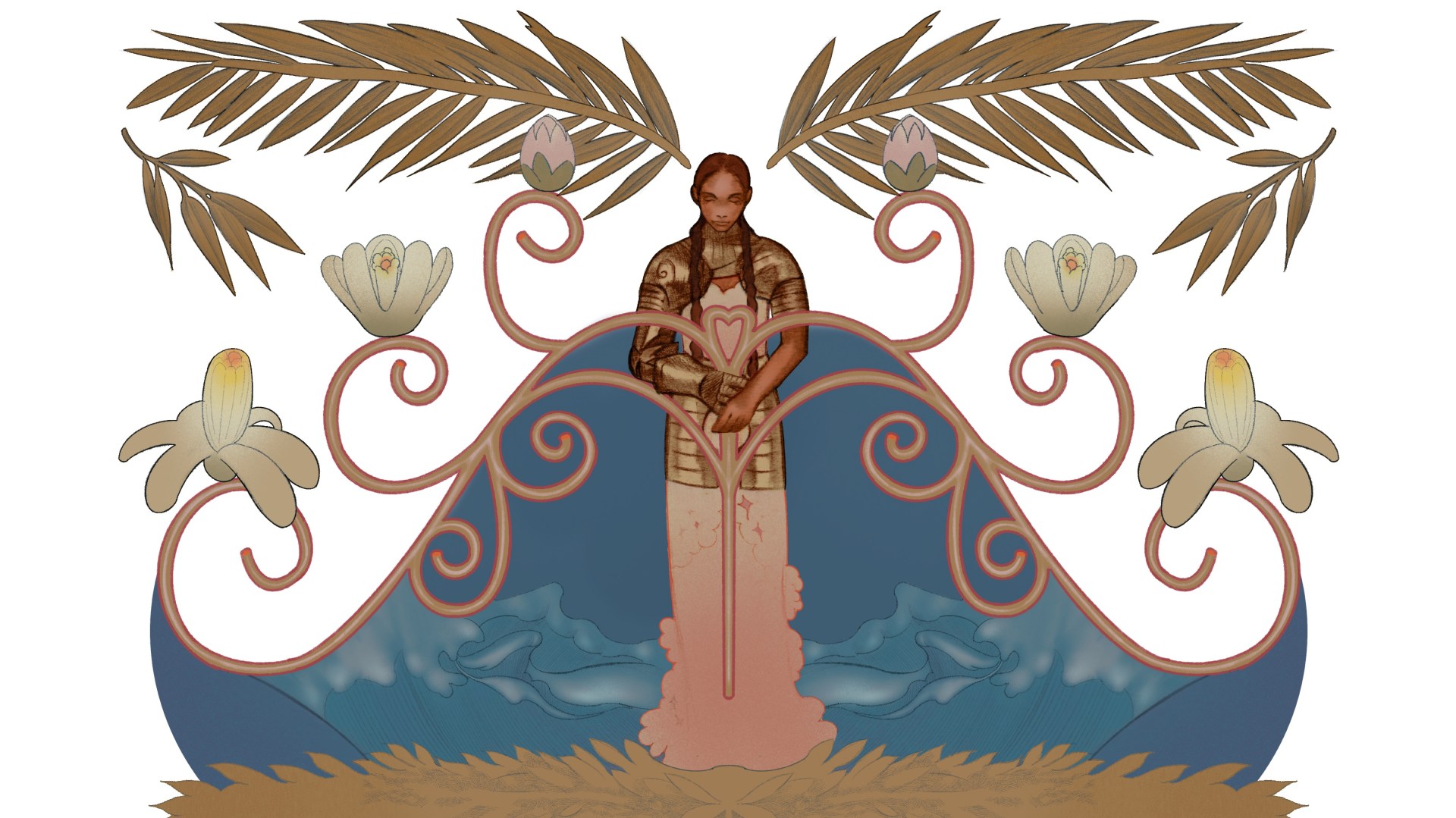
"The Bride" by Diego Best, Sep. 2025.

Caught between a tavern and a cathedral, between the slums and stews of Southwark and the beating heart of medieval religion in the 14th century, a passel of pilgrims journeys onward to the grave of a martyr. 

To pass time on the road, they have been spinning stories: good stories, bad stories, stories that poke holes in the pretensions of other pilgrims or that bore even the kindest listenerstories that are basically an obscene middle finger to the universe. Now, buoyed by these tales, they are almost to Canterbury to visit the shrine of St. Thomas à Becket.

The end of the journey has come, and pilgrim shadows loom long on the road. It is now the Parson’s turn to tell a story. You may be a priest, pleads the host who has orchestrated this game of tale-telling, but don’t ruin the fun. The Parson smiles. He cannot rhyme, but he will tell “a merry tale in prose / To knit up all this feast and make an end.”

Thus winds down the great poem of Geoffrey Chaucer, The Canterbury Tales. But the Parson’s merry little tale is neither merry nor little nor a tale. It is a rather lengthy moral treatise of 1,080 lines on the subject of penance. 

Medieval communities across Europe used this genre to examine the conscience and prepare for the threefold sacrament of penance: contrition, oral confession of sins, and satisfaction. These writings surface everywhere in the Middle Ages, a dull white noise behind the bright songs of poetry that appear in The Canterbury Tales, Piers Plowman, and Sir Gawain and the Green Knight. 

Unsurprisingly, “The Parson’s Tale” rarely ends up in collected translations of The Canterbury Tales. Outside the most dedicated Chaucer scholars, most readers find it sleepy at best, judgmental at worst. Where is the witty, poignant, storytelling Chaucer we know and love?

In fact, scholars disagree on how to read it. How is this implausible moral treatise supposed to tie up the wild yarns spun out before it? Is it a piece of absurdity, and did Chaucer mean it as a joke, a sly injection of dusty-dry religious hypocrisy punching down the creative, messy, and human? After all, Chaucer is famous for his trickery. 

Such interpretations pit creative stories against the dull, penitential tale of the Parson. This conflict aligns with how we often view ourselves and art in postmodernity: as discrete, divided, and individual. We think that’s what makes them our stories, our art. Instead, insists the Parson among the crowd of storytellers, his tale “knits up this feast.” It makes an end. It coheres. It reorients each pilgrim’s tale in a new light.

Etrogs. Mixed Media (Pencil and Procreate), Diego Best, Sep. 2025.

The point of all penitential literature—that mumbling, monotonous genre of “The Parson’s Tale”—is self-knowledge in service of reconciliation within Christ’s body. Embracing divine grace is indeed the end and the beginning of all our stories told on the road. We begin to ask, What can communal self-knowledge offer us today, in the ways we understand ourselves and our creative work in this world?

Perhaps the very phrase “communal self-knowledge” strikes us as an oxymoron. Today, self-knowledge usually means something more like seeking the sparkles of uniqueness about oneself (mainly good things). How are you different from others? Or sometimes it means implicitly asking, How are you different in a cool, interesting, maybe even misunderstood way? This postmodern self ends up celebrated but anxiously protected like a fragile balloon at a toddler’s birthday party.

In the West, we often frame self-knowledge as heroically won despite the world, despite community, despite familial ties and national histories. In that defiant context, the admission of weakness, failure, wrongdoing, or even the need for others can compromise the integrity of that hard-won individual self.

In stark contrast, medieval self-knowledge was always communally contingent. The Parson begins by paraphrasing Jeremiah 6:16 and the kind of knowledge that we seek as we pursue life together: “Standeth upon the ways, and seeth and asketh of old paths (that is to say, of old sentences) which is the good way, / and walketh in that way, and ye shall find refreshing for your souls.”

For medieval people, it was these “old sentences” that could help people understand themselves more fully. For in confessional self-knowledge, the question transforms. It’s not how you are special or different. Instead, how have you fallen and failed in the ways that other people just like you have? And how will you be caught up in the workings of God’s grace, just like those fallen friends around you? 

The old paths of “The Parson’s Tale” reach further back in time than Chaucer’s 14th century, all the way back to the Fourth Lateran Council of 1215—a council of theologians who inadvertently ignited a profound emphasis on spiritual interiority. This papal council confirmed that all Christians must participate in yearly confession, in the sacrament of penance, before they received the Eucharist during Eastertide.

To receive Christ’s body was serious business. Medieval thinkers cautioned that one mustn’t receive casually, with a compromised conscience or while living in conflict with one’s neighbors. Though all baptized Christians were saved by grace, penance was meant to clean the house of the heart and effect reconciliation within communities. Ideally, when taking the Eucharist, no one would be in a position of isolation from God or humankind.

Pomegranates. Mixed Media (Pencil and Procreate), by Diego Best, Sep. 2025.

To confess fully, one needed to take the first step of penance known as contrition—to know what was sin and what wasn’t, to strip away the little rationalizations and self-deceptions. So, back in the 14th century, our Parson made a list of vices. What do you lack? Where do you hurt? How have you hurt others? He describes how vices might be combatted with patterns of living called virtues.

Then, as the Parson describes, one confessed all these things fully to a priest before moving to the final stage, satisfaction: the acts and apologies to be done in the aftermath. Satisfaction was the reclaiming of your place within community, the “receipts” or proof that you were determined to begin to undo what you had done. Pilgrimage itself was a work of satisfaction. Satisfaction asks, What is your role within your community, within your contexts and histories? What are you called to in love?

What paths might you follow that have already been trod? So asks the penitential literature of “The Parson’s Tale.” Confessional self-knowledge becomes a creative and communal endeavor, bravely laying bare our failings to one another. This self-knowledge can be shared, modeled, or taught. The ways other people have erred, loved, or worshiped become paths to guide us into greater understanding of ourselves and God.

Confession has always and only belonged to the individual person. Yet the self is completely unknowable apart from others and apart from its vocation of love within the community. Then, humans lost themselves. Now, we mistakenly draw this precious self ever closer in response, buttressing it against the world. Against this reality, the old penitential paths of the Parson come as a comfort, as a relief to us.

There is an inviolate sturdiness in the self and story belonging to the kingdom of heaven, one that does not drift like the frail self defined only on its own terms. Ordinary, communal, penitential self-knowledge that manifests in repentance and flowers into active love of self and community is indeed “a merry tale in prose.”

Figs. Mixed Media (Pencil and Procreate), by Diego Best, Sep. 2025.

In The Canterbury Tales, pilgrims have threatened to mutilate one another, have nearly rioted in response to hearing lies, or have cut one another off in desperation to reach the end of a boring story. There have been stories told to reinforce social hierarchies or to deepen violence between men and women or religious groups. 

Chaucer poetically sets “The Parson’s Tale” as the last curious story on the old path to Canterbury to somehow miraculously knit up the feast. All the pilgrim tales are ultimately meant to be interpreted in the context of their commonality, in the shared pilgrims’ ancient path toward Christ.

The knitting does something to Chaucer’s art—just as penance does something in both individual persons and communities. The tales themselves, from the mundane to the stupid to the beautiful, have become welling sources of communal self-knowledge. The merry tale in prose works backward. 

Knit up the feast. When we begin to understand ourselves within communities, held in grace cemented by mutual failure and need, all our tales can become merry tales of repentance, however prosaic.

How does your creative work—whether in writing, art, or relationships—belong to others as much as it belongs to yourself? 

It is still yours, just like confession is always yours. Yet when we understand our creative labors as distinctive solely because they are individual or different from other people, we lose something essential. Work becomes ephemeral, fleeting, flimsy. Stories lose their cosmic meaning set apart from their teller and the teller’s community.

But within the pilgrimage, within the penitential work of communal self-knowledge and healing, stories lose their ephemerality and become enduring gifts given to others. They then tenderly hold up the mirror, like the Parson, to our likeness to and distance from God.

Grace Hamman is the author of Ask of Old Paths: Medieval Virtues & Vices for a Whole & Holy Life and Jesus Through Medieval Eyes: Beholding Christ with the Artists, Mystics, and Theologians of the Middle AgesLearn more about her work at gracehamman.com.

Apple PodcastsDown ArrowDown ArrowDown Arrowarrow_left_altLeft ArrowLeft ArrowRight ArrowRight ArrowRight Arrowarrow_up_altUp ArrowUp ArrowAvailable at Amazoncaret-downCloseCloseEmailEmailExpandExpandExternalExternalFacebookfacebook-squareGiftGiftGooglegoogleGoogle KeephamburgerInstagraminstagram-squareLinkLinklinkedin-squareListenListenListenChristianity TodayCT Creative Studio Logologo_orgMegaphoneMenuMenupausePinterestPlayPlayPocketPodcastRSSRSSSaveSaveSaveSearchSearchsearchSpotifyStitcherTelegramTable of ContentsTable of Contentstwitter-squareWhatsAppXYouTubeYouTube