News

For Kirk’s Fans, Provocation Wasn’t the Point

Young Christians in Kentucky remember how he treated question-askers and critics.

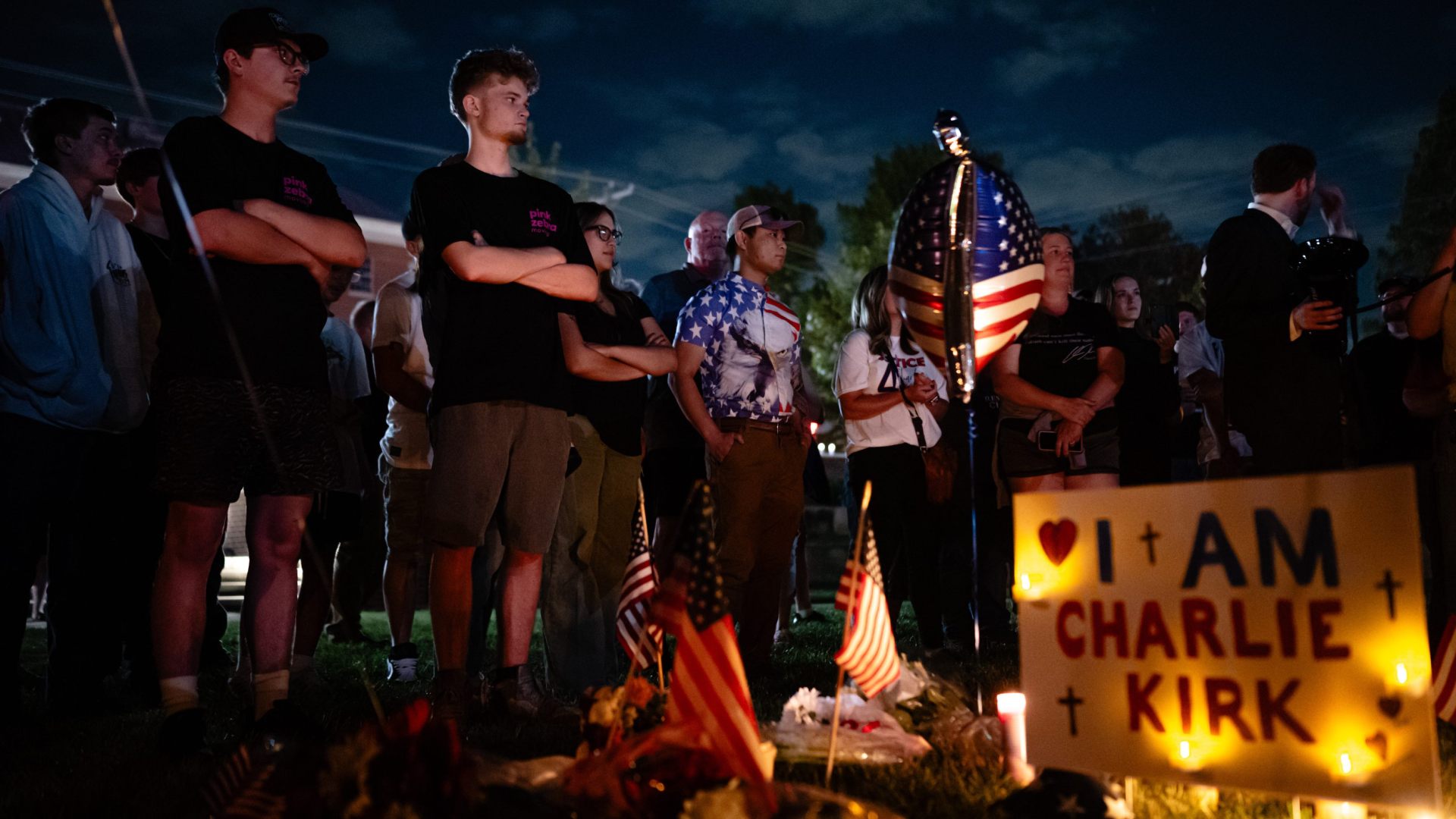
People gather around the memorial space during a Charlie Kirk vigil at Burlington Commons on September 17, 2025 in Burlington, Kentucky.
Christianity Today September 19, 2025
Jon Cherry / Getty Images

In the week following the assassination of Charlie Kirk, many young Christians in my hometown of Louisville, Kentucky were explaining why his death hit them so hard. They pointed me to videos of Kirk interacting with others.

Carter McGill, a 23-year-old recent graduate of the University of Louisville and former vice president of a campus ministry called Across Campus, pointed out a YouTube short in which Kirk interacted with a young woman who identified as a transgender male. In the clip, the student asks Kirk at what age a person should be allowed to start medical intervention for gender transition. Kirk deflects and asks to hear the student’s story and reasons for seeking gender transition.

Kirk then encourages mental health help and “someone that is going to listen to what you’ve gone through, listen to what else is going on.” He says, “My prayer for you … I actually want to see you be comfortable in how you were born. I know that you might not feel that way, but I think that is something that you can achieve. … You don’t have to wage war on your body. You can learn to love your body.”

McGill spoke of dozens of videos in which a person approaches Kirk with a difficult question or even with hostility and his response is almost pastoral. “I can’t think of a time when he was ever hateful to someone he actually interacted with,” McGill said. Sometimes there’s fun, as in McGill’s favorite moment: a young woman coming to the microphone with her baby. She tries to ask a question. The baby interrupts, making noise into the microphone. But rather than express irritation or shrug it off, Kirk, with an ear-to-ear smile, says, “Give it up. That is a gift from the Lord, everyone. That is just beautiful.”

Clayton Smitson, 26, said, “When he talked to people, he talked to them particularly, not to their ideology.” Seth Franco, a 20-year-old student at the University of Louisville, said he admired how Kirk told followers to consider the downstream consequences of progressive ideas and the ministry opportunities they presented to the church.

For example, on the subject of gender transition, Kirk would often speak of it as a matter of social contagion. But rather than simply argue against the ideology itself, he challenged followers to prepare to help. “We need to care for people when they come out of this,” Franco said, believing the “fallout of the movement” was where the church could meet people with the love of Christ and restore them to normal lives.

When orating before crowds, as opposed to answering questions, Kirk was sometimes a flame thrower, with particular criticism reserved for affirmative action, transgender ideology, and DEI initiatives—which he said stood for “Didn’t Earn It.” But some Louisville Christians emphasized how he told opponents they were made in the image of God. His belief in that fact shaped how he treated critics. He often slowed people down, tried to calm their nerves, and even helped them articulate their arguments or critiques.

Although the mainstream press has focused on Kirk’s political role, many in their 20s said his influence went way beyond politics. “He was different from [The Daily Wire’s] Ben Shapiro or Matt Walsh,” said Cassidy Adams, 26, a stay-at-home mom of twin boys. (Disclosure: she’s married to my nephew.) “They’re so abrasive. Kirk showed you could get so much further when you act Christlike and show kindness even while you spoke the truth.”

Adams graduated with a biology degree from an extension campus of Indiana University, where many of her peers tried to “disprove or debunk Christianity and creationism. … The minute you mentioned that you were a Christian, you were treated different.” She appreciated Kirk’s professional demeanor when taking on progressive campus culture and how he tied “science, religion, and politics into one discussion.” She admired his “gift for winning the argument, for sure, but above the arguments he made it plain and simple—Jesus above all.”

Young Christian mourners I spoke with loved Kirk for his bold affirmations of the beauty of marriage. They’ll miss his humor and charm as he won someone from the opposition over to his side. They’ll miss his understanding of when to laugh with people and when to challenge them and those moments when Kirk could disarm one of his challengers by presenting the gospel. In his best moments, he spoke not as a saint lording his status over a sinner but (to borrow a phrase) as one beggar showing another where to find food.

Kirk played that part imperfectly. When his critics say he blurred the lines between political and religious conviction, they’re right. When folks dig up comments he made that are inflammatory or offensive, the critiques that accompany them are often fair. But for those who loved Charlie Kirk, the point wasn’t the provocation, nor was it really even the culture war. It was the appeal of a person of deep conviction, showing up unafraid in a hostile setting, sharing his faith, and treating those around him with dignity and respect.

If those on the right fail to learn from these values, incorporate them, and even canonize them in their own political ethos, we could be headed to a very dark place. The death of Charlie Kirk may well be a tipping point for us culturally. But his way of life may light a way that pulls us back from the brink.

News

Most Men Are Pro-Life. Activists Want Them to Speak Up.

Programs seek to help fathers voice opinions and take responsibility.

young men at pro-life march washington dc
Christianity Today September 19, 2025
Bryan Dozier/Middle East Images/AFP via Getty Images

When polled, a majority of men in America check the pro-life box. But when two blue lines appear on a pregnancy test, many remain reluctant to voice those views.

“It’s like they don’t want to say the wrong thing and they don’t take a hard stance out loud,” said Amy Ford, cofounder and president of Embrace Grace, a nonprofit that equips churches to minister to expectant mothers. 

Fifty four percent of men identified as pro-life, compared to just 32 percent of women, in a recent Gallup poll. In practice, those who work in the pro-life movement say many men are reluctant to express those views in public—or in private when faced with unplanned pregnancies.

Care Net president and CEO Roland Warren believes a big reason they don’t say anything is because they have bought into the pervasive cultural narrative that a man has no right to care about an unborn child until the mother decides not to have an abortion. 

“Unfortunately, because of what’s happened in the culture, men have been trained that the right thing to say is ‘I support whatever decision you make,’” Warren said.

Warren and other pro-life advocates want to see that cultural norm change. They wish the pro-life sentiment that shows up in polls would get voiced aloud when it matters most. Pro-life advocates believe men can and should voice their views on life, especially in their personal relationships.

“We’re talking about the intentional killing of innocent human lives,” said Sean Corcoran, CEO of Men for Life. “That is not a women’s issue. That is not a men’s issue. That is a societal issue.”

When a woman tells a man she is pregnant, she is in a vulnerable position and is often looking for reassurance, Corcoran said. The father of the child has an opportunity at that point to address those fears.

“They need to speak to the woman’s concern—the concern that she’s going to be alone, that she’s not going to be able to afford this, that this is going to negatively impact her life,” Corcoran said. 

Corcoran believes it’s important for a man to show that he’ll be there in some fashion, even if the relationship hasn’t been figured out and the status of that relationship needs to be a separate conversation. He encourages each man to show that he’ll be there through the pregnancy, help raise the child, and provide financially.

Warren knows a bit about how rewarding it can be when a man steps into the role of father.

He and his girlfriend, Yvette Lopez, were halfway through their degrees at Princeton University when they found out she was pregnant.

A professional at Princeton University’s student health services encouraged her to abort. Yvette was studying to be a doctor, and a baby would be an obstacle in that path.

Warren was scared. He had grown up in a single-mother home with four kids. He knew nothing of fatherhood.

Against the advice around them, they chose life, got married, and proved the naysayers wrong as they finished their education and pursued their careers while raising their child. 

That experience and a growing understanding of Scripture helped Warren create a philosophy of pro-life ministry that includes men.

When faced with an unplanned pregnancy, Warren believes, Christians should consider an important question.

“If you can change everything except the fact that she’s pregnant,” he posited, “what should Christians want to have happen?”

He believes the story of Mary’s unexpected pregnancy with Jesus is a great precedent that highlights God’s call of Joseph to step into the role of father and husband.

Ultimately, Warren said, Christian pro-lifers want the woman to be supported and the child to be raised in the fear and admonition of the Lord. But you can’t get any of that if you don’t engage the guy.

That’s why Warren has put an emphasis on ministering to men during his 11 years as president of National Fatherhood Initiative before joining Care Net in 2012 as president and CEO. For many years, he said, crisis pregnancy resource centers have made the mistake of ignoring a man’s role.

“When I started at Care Net, less than 10 percent of Care Net-affiliated pregnancy centers had anything for men. Now we’re close to 65 to 70 percent,” he said.

One of the best ways he’s found to connect with a man is to have his partner invite him along when she contacts a crisis pregnancy center.

After a couple makes contact, the staff can begin to show the father how involved he needs to be, countering the cultural message that pregnancy is none of his business. Showing a man the life of his child—connecting with his abstract, quiet pro-life beliefs—can be really powerful too.

“When he goes to the ultrasound and he sees that life in her womb, something happens in his head. It becomes real for him,” Warren said.

Once fathers see their role, Care Net tries to teach them the skills to be good fathers and husbands. 

This programming helps grow the man’s confidence that he can be a father. It also reassures a woman that her partner will be able to support her.

Embrace Grace also has a group focused on men called Embrace Legacy. It’s a chance for soon-to-be fathers to learn from older men.

“If these young men could have mentors that would disciple them and take them under their wing and help them dream, I think it would change everything,” Ford said. 

When fathers don’t step up, Ford believes other Christian men can play a valuable role by using their gifts to help support single women. 

Embrace Grace holds a special event for women called Princess Day, where they focus on their identity and worth in the eyes of God. One Embrace Grace support group decided to take it a step further and have men of all ages line the path the women walk into the event, holding signs with words of identity: chosen, loved, brave.

“These girls, they walk into this room, and they have to go through this tunnel, and they are bawling. Like they’ve never had men speak life over them,” Ford said. 

Brian Walker, program director at Pro-Life Action Ministries and cofounder of Rich in Mercy, said a lot of men haven’t had anyone speak goodness into their lives either. He said having godly men show up for young men facing the reality of fatherhood can be transformative. 

Sometimes, he said, when he stands near abortion facilities and tries to engage in peaceful conversations with people considering abortion, protesters will yell things at him like “no uterus, no opinion.” But he remembers 40 years ago: When he and his girlfriend decided to abort their child, he wishes someone had talked him, telling him his child was a real human being and he had a right to want to see his baby born.

Maybe if he’d spoken up, they wouldn’t have had an abortion. Outside clinics, he sometimes gets the opportunity to engage in deep conversations with men. They’re often surprised, he said. 

He recalled one conversation ended with a young man saying, “Thank you, I’ve never talked with a man [about this] before.”

It showed him an important truth. Men’s voices are needed. 

There’s a fatherhood crisis in America, Walker thinks. That’s part of the cultural problem that led to abortion being legalized. And it’s part of the problem that keeps men silent even when they have thoughts and feelings about the lives of their children. 

But there’s a solution, according to Walker: “Men in the pro-life movement can exhibit being a father,” he said, “and exhibit our Father who art in heaven.” 

News

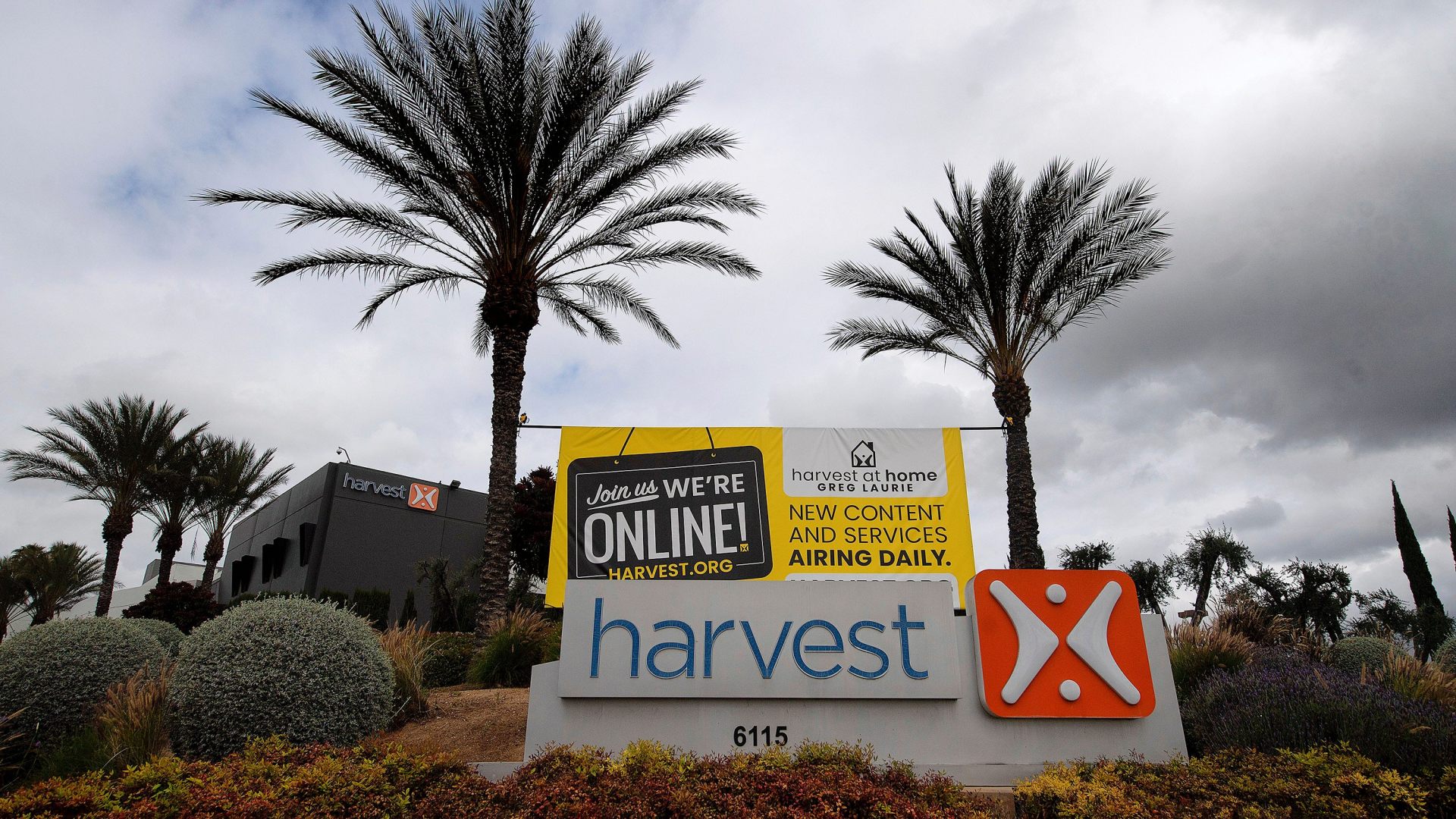
Harvest Christian Fellowship Accused of Negligence in Romania

Church responds to lawsuits claiming abuse in orphanages it supported: “The target here should be the alleged perpetrator, not our church.”

sign for harvest with palm trees

Cindy Yamanaka / The Orange County Register via AP

Christianity Today September 18, 2025

Two Romanian men claim a church in California is responsible for the fact that they were repeatedly raped as children in orphanages in the Eastern European country.

They say Harvest Christian Fellowship and its leaders, including evangelist and Calvary Chapel pastor Greg Laurie, should have known what was happening and stopped it.

Marian Barbu and Mihai-Constantin Petcu are plaintiffs in two lawsuits filed in federal court in California this week. They allege negligence and seek damages from Laurie and Harvest Christian Fellowship, who supported the Romanian ministries, along with former pastors Richard Schutte and Paul Havsgaard.

Their suits do not offer evidence that Laurie knew of the abuse allegations but blame him nonetheless.

Harvest Christian Fellowship, in a statement to CT called the lawsuits “sensational” and “a form of financial extortion … The allegations are serious and disturbing, but the target here should be the alleged perpetrator, not our church. This misplaced lawsuit wrongly targets Harvest and our pastor.”  

Paul Havsgaard, who worked at the Riverside, California, church for about 20 years, went on to start ten orphanages in Romania in the late 1990s and early 2000s. He allegedly used them to sexually abuse scores of children. The abuse was “savage” and “prolific,” according to the lawsuits, terrorizing the boys and girls who came to Harvest Homes because they were desperate and the ministry promised them hamburgers and a safe place to sleep. 

“I know what God wants,” Havsgaard allegedly told children as young as eight. “What I want, God wants.”

Harvest Christian Fellowship supported the orphanages financially but did not provide any oversight, according to attorney Jan Cervenka. The lawsuits argue the church and its pastors knew of allegations against Havsgaard before he went to Romania in 1998 and were told in 2004 of “awful accusations” at the orphanages but chose to ignore them.

“They did nothing to protect the children there,” Cervenka told the court. “Despite proof that Havsgaard was a devious and unrelenting pedophile … Harvest Riverside, Laurie and Schutte did nothing. They did not fire, suspend, withdraw or discipline Havsgaard. They neither reported him to the authorities, as was their duty under California law, nor instituted any new policies or procedures at the Harvest Homes.”

Cervenka’s firm, McAllister Olivarius, said it expects to file 20 additional suits with additional victims who were raised in the Romanian orphanages in the coming weeks.

The defendants in the case have not yet responded to the lawsuits in court or identified legal representatives. Havsgaard could not be reached for comment. Schutte, who went on to pastor a Bible church, also could not be reached for comment.

The church acknowledged it did fund Havsgaard’s orphanages. It also acknowledged it didn’t provide oversight—but rejected arguments it was responsible for oversight of the Eastern European ministry. 

The orphanages were run through the nonprofit Actively Restoring Kids International, which Havsgaard set up independent of the church. Online archives of the Harvest Christian Fellowship website list Havsgaard as a minister in 2001 but not in spring 2002.

When a denominational magazine profiled the work Havsgaard was doing in Romania in the winter of 2001, it encouraged people to donate and gave a phone number. The number belonged to Harvest Christian Fellowship’s main office in Riverside, California. 

The following year, when another Calvary Chapel minister working in Romania heard reports of Havsgaard’s abuse, he thought he should report it to Harvest Christian Fellowship.

“He doesn’t need to be another day in Romania,” pastor Steve Quarles told Schutte, according to the lawsuits. “He needs to be gone. He is an embarrassment to every single missionary and Christian worker. Get him out of here.”

Quarles and two other pastors did an audit of Havsgaard’s ministry in 2004 and found extensive evidence of abuse, according to the lawsuits. Children at the homes reportedly talked about sexual abuse openly, discussing it with each other and adults they trusted on staff. The audit also turned up receipts showing Havsgaard took some of the boys to nearby hotels and purchased snacks and alcohol after midnight, the lawsuits say.

Schutte, the missions pastor at Harvest Christian Fellowship and a member of Havsgaard’s board, reportedly received the results of the internal investigation November 2004. He allegedly didn’t do anything and continued to direct funds to the ministry for four years. 

Harvest Christian Fellowship has 21 days to respond to the court summons. It said the lawsuit’s claims are “absolutely and entirely false” and “some of it is plainly slanderous.”

“We thank God for courts of law,” the church said. “We expect to vigorously defend against these claims.”

This is a breaking news story and has been updated.

News

Malaysian Christian Executed After 8 Years on Singapore’s Death Row

“Jesus loves you,” Pannir Selvam Pranthaman wrote in his final handwritten note to his lawyer.

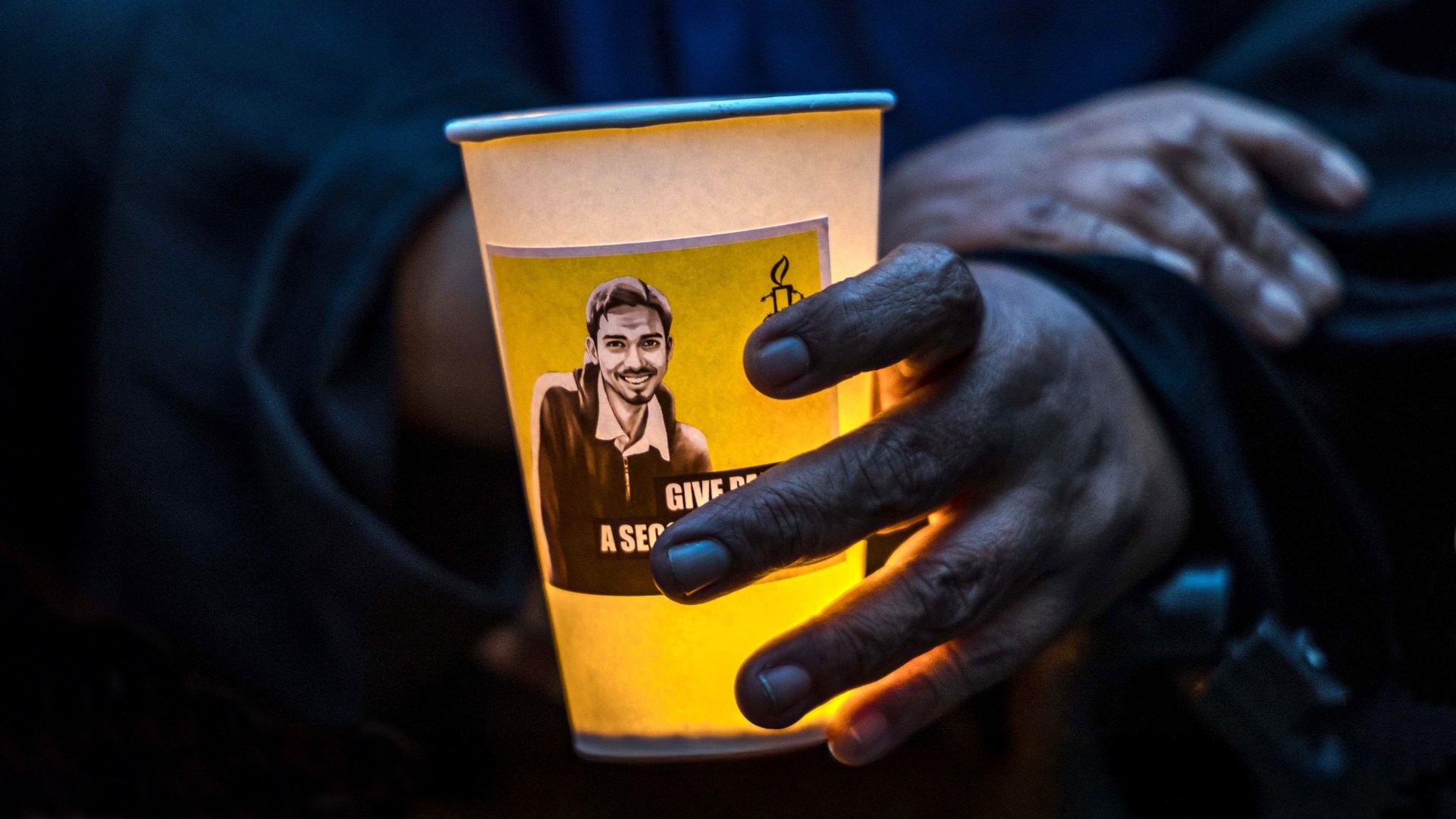
Activists attend a candlelight vigil to protest the impending execution of Pannir Selvam Pranthaman.

Activists attend a candlelight vigil to protest the impending execution of Pannir Selvam Pranthaman.

Christianity Today Updated October 10, 2025
NurPhoto / Contributor / Getty

October 10, 2025

On October 8, Singapore hanged Pannir Selvam Pranthaman.

The Southeast Asian country’s High Court first sentenced the 38-year-old to death in 2017 for importing 51.84 grams of heroin from Malaysia to Singapore. Pannir, a pastor’s son who was baptized while in prison, received two stays of execution in the last few years. He submitted one final appeal against his death sentence, but the Singapore court dismissed the appeal on October 7. A Singaporean judge said that there was “no basis” to grant Pannir another stay of execution.

When Pannir learned of his execution date, he told his siblings what he wanted to wear for his final photo shoot: the latest Manchester United jersey and a pair of jeans, according to a report by Singapore newsletter We, The Citizens.

“The outcome may not be what we [had hoped] for, but let it not diminish the richness of the journey we went through,” Pannir wrote in a letter to his lawyer Too Xing Ji on October 3. “God will be with you n’ your family.”

Pannir lived with “deep reflection, prayer, and purpose,” his older sister, Sangkari, said at his funeral at the Word of Life Centre Church in Perak, Malaysia, on October 10. “I want to remind others that change is possible, even from the darkest place. That’s who my brother was, a man of faith, compassion and courage.”

Malaysian human rights lawyer Andrew Khoo felt a deep sense of resignation when he heard about Pannir’s impending execution. He prayed for God to halt the execution and for Pannir to know God’s love for him with “great confidence.”

​​“Many things are done on earth in the purported name of justice,” Khoo told Christianity Today. “But we are a flawed people.”

Prior to Pannir’s execution, groups had assembled outside Singapore’s High Commission to hold candlelight vigils. Some people bore a large yellow banner with the words “Stop the Executions” in big, bold letters.

Pannir’s death is the 12th execution to take place in Singapore this year. A few days before Pannir’s execution, Singapore hanged another Malaysian, K. Datchinamurthy, for bringing 44.96 grams of diamorphine into Singapore. Datchinamurthy converted to Catholicism while in prison.

Last month, Pannir published a book of poetry in Malaysia titled Death Row Literature. He penned these poems while sitting on his prison cell’s cold floor with only a few sheets of paper at his disposal.

“Is justice in this world like the garden of Eden, / a place that you’ve heard exists, / but you can’t find a way to reach it?” Pannir wrote in a poem dated May 21, 2022. “Yet, still in hope, I am waiting / with open arms to welcome. / “Will justice finally come home?”

September 18, 2025

September 3, 2014, felt like any other ordinary day for Angelia Pranthaman—until the Malaysian national found out that Singapore’s police had arrested her older brother Pannir Selvam Pranthaman for trafficking drugs into the Southeast Asian country.

Singapore’s Immigration and Checkpoints Authority (ICA) officers stopped 27-year-old Pannir for a random search as he tried to cross the Malaysia-Singapore border at Woodlands Checkpoint, the world’s busiest land crossing. The officers discovered he was carrying diamorphine, or heroin.

Three years later, the High Court of Singapore convicted Pannir of importing 51.84 grams of heroin from Malaysia to Singapore and sentenced him to death, setting the execution for May 24, 2019.

But Pannir did not die that day and has remained on death row for the past eight years after experiencing two stays of execution.

On September 5, Singapore’s Court of Appeal dismissed Pannir’s most recent bid to halt his execution. This means that Pannir is again “at risk” of receiving an execution notice, Angelia told Union of Catholic Asian News.

Angelia felt heartbroken and deeply disappointed when she received news of the court ruling. “This decision was devastating,” she told Christianity Today. “At the same time, we felt a strange sense of calmness because we knew that God was still powerful even in this painful moment.”

Singapore is one of 34 countries in the world—like Iran, Saudi Arabia, and China—that punish drug offenses with a mandatory death penalty, which the country introduced in 1973. It has one of the world’s strictest drug laws—anyone caught trafficking 15 grams of heroin, 30 grams of cocaine, 250 grams of methamphetamine, or 500 grams of cannabis will face capital punishment.

Many Singaporean evangelicals in the country favor the death penalty, as they consider it a helpful and even necessary deterrent to the proliferation of drug-related crimes in the country. More than two-thirds (74.6%) of Protestants supported capital punishment, a 2018 research project revealed.

In Malaysia, some Christians feel otherwise, noting there is room to practice greater compassion in the criminal justice system. Just over half (54%) of Malaysian Protestants are not opposed to abolishing the mandatory death penalty, according to a 2013 survey. Two years ago, the country scrapped the mandatory death penalty for serious crimes, including drug trafficking.

To Angelia, Pannir’s sentence leaves no room for the redemptive arc she has seen in her brother’s life. “No one should be defined by the worst mistake made, and every human life has value and potential for redemption,” Angelia said.

Pannir was born in Ipoh, Malaysia. The son of a pastor, he attended Emmanuel Tamil Assembly Church, where he played the drums, guitar, and keyboard on the worship team. In 2010, he started working in Singapore while living in the nearby Malaysian city of Johor Bahru.

At a gambling den there, Pannir became friends with a man named Anand, who asked him to transport goods from Malaysia into Singapore. This led to Pannir’s arrest and 2017 conviction, as the Singapore High Court found insufficient evidence to prove Pannir was unaware of the contents of the goods he had transported.

The 2017 court judgment noted several inconsistencies in Pannir’s statements, which led the judge to question whether he was a “truthful witness.” For instance, Pannir originally said he had transported the goods because he needed money, but he later claimed it was Anand facing financial difficulties. Pannir also initially said he did not know what goods he was carrying, but he later claimed they were drugs or aphrodisiacs.

As the years on death row passed, Pannir spent more time praying and reading the Bible. In 2018, he got baptized in prison and took a new name, Paul Silas, according to the Singaporean Christian publication Salt&Light.

“I feel blessed and my heart can feel the joy that came from [God’s] salvation,” he wrote of his decision to get baptized. “My relationship with my family and God is being healed, and it [has become] stronger these past two years.”

Evangelicals in Singapore have largely avoided addressing Pannir’s case. Some, however, have written publicly in support of Singapore’s imposition of the death penalty.

Capital punishment is “a divine imperative and a pattern found in the Old Testament,” Edwin Wong, a pastor at True Way Presbyterian Church in Singapore, wrote in a 2018 post on his church website.

Mosaic law “legislates the death penalty for various transgressions,” Wong argued. Old Testament passages like Exodus 21, where God says a person who strikes another “with a fatal blow is to be put to death” (v. 12), and Leviticus 24, where anyone who “takes the life of a human being” or blasphemes God must be put to death (vv. 16–17), illustrate this principle in Wong’s view.

The New Testament also reflects the “appropriateness” of the death penalty, Wong noted. He cited Luke 23:41, where the thief on the cross humbly acknowledges that he is being punished justly. 

Some Singaporean evangelicals view the death penalty as a useful measure to quell the escalation of vices in the country. International drug syndicates increasingly target Singaporeans under the age of 16 to become buyers or sellers, said Kent Ho, chairman of Christian nonprofit Loving Hand Fellowship, which supports drug offenders through counseling and addiction recovery.

“That is why the Singapore government has to be so firm in [its] stance on drug-related laws,” said Ho.

Other Singaporean Christians are less convinced of the death penalty’s effectiveness in discouraging serious crimes.

In 2018, the National Council of Churches of Singapore (NCCS), affiliated with the World Council of Churches, urged the Singaporean government to reconsider whether alternative forms of state punishment, such as life imprisonment, might achieve a comparable deterrent effect.

Citing Jesus’ response to the woman caught in adultery in John 8:1–11, NCCS stated, “We believe that the Scriptural position is best represented as neither mandating nor prohibiting the death penalty but rather permitting it.”

“The government has the authority to impose the death penalty, but is not necessarily under obligation to do so,” the statement continued. The Singapore government did not respond to NCCS’s statement.

Some Malaysian evangelicals echoed NCCS’s position on the death penalty.

Humanity is created in the image of God, and God wants to restore his image in us rather than seek retribution against those who have destroyed it, said Davin Wong (no relation to Edwin Wong), a finance manager who worships at Bangsar Lutheran Church in Kuala Lumpur.

Countries with a mandatory death penalty “should consider moving from a mandatory to a discretionary death penalty and learn from other countries, such as those with European legal systems that lean towards rehabilitation and correction,” Wong added.

A new date of execution for Pannir may be imminent after the Singapore court rejected his appeal earlier this month, said Malaysian human rights lawyer Andrew Khoo.

Pannir and his family maintain that he cooperated with Singapore’s law enforcement and gave the authorities useful information, Khoo said. “If so, he should be credited for assisting the police. This has not happened. We need to continue to fight that the truth will prevail.”

“We should not hope to avoid the consequences of our actions. That is justice,” Khoo added. “We can only pray for God’s mercy to flow to the authorities through the power of the Holy Spirit.”

When Pannir was first arrested in 2014, Angelia could not understand why this had happened to her family. “But I gradually began to realize that God is fighting this battle with us,” she said. 

Over the years, God has intervened in Pannir’s case in miraculous ways, Angelia shared. The day before Pannir was to represent himself in court to appeal his 2019 sentence, two lawyers in Singapore approached the family to help and successfully called for a stay of execution.

Then, in February as the Pranthamans fasted and kneeled in prayer, Singaporean authorities granted Pannir another stay one day before the execution was to take place.

Two Bible verses have served as a lifeline for the Pranthaman siblings in this season. One is Psalm 46:1, which declares that God is a “refuge and strength,” a very present “help in trouble.” A Malaysian evangelical pastor had written this verse in a card for Pannir, who placed it on his cell wall. Pannir meditates on the verse regularly because it comforts him, Angelia said. 

Angelia, meanwhile, clings to Jeremiah 33:3, which says, “Call to me and I will answer you and tell you great and unsearchable things you do not know.”

During one prison visit with Pannir, the siblings excitedly discussed how God had repeatedly done the unexpected, like how Moses and the Israelites escaped Pharaoh by crossing the Red Sea in Exodus 14.

“We were constantly reminded [of] how our human mind is not God’s mind,” she said.

Pannir, now 38, continues to evangelize fellow inmates and write music and poetry from his prison cell.

“I believe God has a purpose and has His will in my life,” Pannir wrote in a 2019 plea for clemency to Singapore’s former president Halimah Yacob, a plea Yacob rejected. “This journey of my life has taught me to seek His will more than … mine.”

After the court rejected Pannir’s appeal this September, Angelia and her family continue to explore legal options, although they recognize that opportunities for clemency are slim. For now, the Pranthamans focus on supporting Pannir spiritually and emotionally.

“I pray with tears, asking God to strengthen Pannir Selvam, to give him peace and courage inside prison, and also to help us not to lose faith,” Angelia said. “I also pray that God will turn this situation into a testimony of his power and mercy, [even] when everything seems hopeless.”

Additional reporting by Isabel Ong

Singapore’s Death Penalty

Official statistics on death penalty executions in Singapore are not published publicly. Human rights organization Amnesty International estimates that authorities hanged more than 400 people between 1991 and 2004.

Singapore halted the death penalty during the COVID-19 pandemic and reinstated it in 2022. Since then, the country has executed close to 30 people, most for the crime of trafficking drugs, and dozens of drug traffickers sit on death row.

Although the country rarely issues clemency for death sentences, Singaporean president Tharman Shanmugaratnam pardoned a drug trafficker facing the death penalty and gave him life imprisonment this August.  

Support for the death penalty is strong in Singapore. Just over 3 in 4 Singaporeans (77.4%) support the use of the death penalty for crimes including drug trafficking, a 2023 survey by the Ministry of Home Affairs revealed. Close to 3 in 4 (73.7%) of Singaporeans polled in a 2021 survey find the death penalty more effective than life imprisonment in deterring drug traffickers.

Locals tend to avoid criticizing their country’s practice of capital punishment, wary that their government would view this as dissent and cause them to undergo criminal investigations or civil suits.

Singapore has received criticism and backlash from United Nations human rights experts for its imposition of capital punishment. But its government remains firm on adopting an “uncompromising approach” toward drug-trafficking offences to help create a “safe, stable, and relatively drug-free society,” wrote Anil Nayar, the country’s high commissioner to Australia, in March.

News

93-Year-Old Mission Hospital in Kenya Forced to Close Its Gates

How a new state-funded health insurance program’s piling debts put Christian hospitals—and patients—at risk.

Empty beds at a maternity ward in Kibera hospital in Nairobi, Kenya.

Empty beds at a maternity ward in Kibera hospital in Nairobi, Kenya.

Christianity Today September 18, 2025
Donwilson Odhiambo / Contributor / Getty

Jennipher Nanjala’s third pregnancy turned dangerous this spring when her water broke, spilling out in a greenish color, but she didn’t feel labor pains. The 42-year-old traveled more than 20 miles by public transit to St. Mary’s Mission Hospital—one of the country’s oldest mission hospitals, founded in 1932—in Mumias, Kakamega County, in western Kenya.

A clerk checked Nanjala’s national identification card to see if she had registered under the new Social Health Authority (SHA) insurance fund. She had, so the hospital cleared her to start treatment without paying cash upfront. Then the doctors examined her. Nanjala’s blood pressure was critically high.

“When I was told the baby was not kicking and she had defecated in the womb and I couldn’t go to the labor room to push, I called my husband to ask my pastor to pray for me,” said Nanjala. Doctors performed an emergency cesarean section and delivered her baby girl, Risper, alive. Three months later, Nanjala took Risper back to St. Mary’s to get a vaccination—only to find the gates closed. The hospital had shut down.

Weeks before Nanjala gave birth, faith leaders warned of imminent hospital closures due to debts owed by the defunct National Health Insurance Fund (NHIF) and fallout from slow SHA payments. The Christian Health Association of Kenya called on the government to reimburse faith-based hospitals within 14 days, but delays continued. Debts under SHA piled up, paralyzing St. Mary’s operations.

In late June, around 100 staffers went on strike because they hadn’t received paychecks in over four months. On July 1, the hospital stopped operating, unable to pay workers or purchase equipment and drugs. National news reported the Kenyan government had failed to pay St. Mary’s more than 180 million Kenyan shillings ($1.4 million USD) since the SHA insurance fund’s October 2024 rollout.

The shutdown left an estimated 300 patients without regular care and more than 200 staffers without jobs. As of August, more than 700 private and faith-based hospitals are fighting to avoid shutdowns due to SHA debts. The Rural and Urban Private Hospitals Association warned that health care facilities will have to suspend services or require patients to pay if the government fails to cover bills within 14 days. Faith-based organizations provide 40 percent of Kenya’s health care.

Kakamega senator Bonny Khalwale, a medical doctor, blamed St. Mary’s closure on President William Ruto’s poor rollout of SHA. Ruto replaced the nearly 60-year-old NHIF system with the stated aim of providing affordable health coverage under a more efficient program. SHA mandates that every Kenyan over age 18 register to receive services at any public hospital. Just under half of Kenya’s population has registered for SHA so far.

Individuals must pay a lump sum annually to register for SHA. Formal employees have 2.75 percent of their salaries withheld to cover the cost, but gig workers struggle to pay the annual fee. Without SHA registration, patients cannot receive services at public hospitals. If patients don’t have cash on hand to pay for SHA registration, public health care providers can’t treat them. Private or religious hospitals let unregistered patients pay cash.

Nurse Caroline Moracha said the public hospital where she works stays mostly empty: “We just go and sit up [till] evening. Patients don’t come, because when they come, you ask them, ‘Do you have SHA?’ If not, you send them away to go and register first.”

Because of the quick rollout, some patients’ names don’t show up in the system. Zadock Mwanzi—a public health promoter who registers villagers for SHA—signed up right away. When his daughter needed a hernia operation, staff at Kakamega County Teaching and Referral Hospital couldn’t find his SHA records. He said the hospital detained his daughter for two weeks until he gathered the cash for the bill. Such detentions are common but not legal.

Julius Wakukha, a motorcycle rider in Kakamega, had to fundraise to get his wife and their newborn twins discharged. A hospital had forced them to stay for six weeks because the babies were underweight, then insisted he pay his whole SHA annual fee upfront.

“Then the bill was too high, and I was told to pay the extra amount [for services] because SHA could only pay a certain percentage,” Wakukha told CT.

Kakamega General Hospital denied Margaret Imbenzi’s daughter admission to the labor ward to give birth unless she paid her annual SHA fee: “I had to rush her to a private hospital. Because you are saving a life, you can’t sit there waiting for the system to approve you.”

SHA also faces concerns about corruption. Earlier this year, Auditor General Nancy Gathungu told the Kenyan Parliament she found legal violations in the purchase of SHA’s 104 billion Kenyan shilling ($803 million USD) health information technology system. Senator Okiya Omtatah from Busia County, Kenya, claimed some employees running the technology received salaries of 5 million shillings per month (about $39,000 USD)—higher than the Kenyan president’s 1.4 million shilling salary (about $11,000). Daily Nation reported some payments going to nonexistent or nonfunctioning “ghost” hospitals.

Brian Lishenga, chairman of the Rural and Urban Private Hospitals Association, accused Health Cabinet Secretary Aden Duale of mishandling fraud investigations and said SHA has accumulated a debt of 43 billion shillings ($332 million USD) in just ten months. Duale said the government has uncovered fraud at 24 health facilities and is investigating 61 others.

Duale has also said the government is working to pay all outstanding debt to St. Mary’s Mission Hospital and other affected hospitals so they can reopen, on one condition: “We will work on a verification process. Minus verification, I will not pay.”

After finding St. Mary’s closed, Jennipher Nanjala tried going to a public hospital in Kakamega. Hospital staff wanted her to pay the annual SHA premium before they would vaccinate baby Risper or treat Nanjala for high blood pressure. Nanjala couldn’t, so she returned home and sold a few chickens. She used the money to go to a private hospital the following day.

Nanjala said she hopes the 93-year-old mission hospital will reopen: “All my family has been using the hospital. We were all born there, and all my children were born there.”

Correction: CT reported that St. Mary’s Mission Hospital is the oldest continuing mission hospital, but Presbyterian Hospital Kikuyu Hospital, founded in 1908, is older. 

Ideas

Why Charlie Kirk Landed with Young Men Like Me

He didn’t hedge or soften his positions to broaden appeal; he underlined them.

Charlie Kirk debating with students at The Cambridge Union on May 19, 2025.

Charlie Kirk debating with students at The Cambridge Union on May 19, 2025.

Christianity Today September 18, 2025
Nordin Catic / Contributor / Getty

When Charlie Kirk was assassinated, the images spread quickly: candlelight vigils across the country. Young men in polos and cross necklaces stood shoulder to shoulder, heads bowed. People carried signs with messages like “We are all Charlie.”

To many in the press, Kirk was a partisan provocateur, a combative media personality. But the mourning revealed something harder to dismiss. It showed that for a generation of young men—myself included—he was more than a pundit. He had become a figure to reckon with. For Christians in particular, he was an example of what it looks like to hold unpopular social views with conviction and to speak openly about saving faith in Jesus Christ.

Even Gavin Newsom admitted Kirk’s influence. In a 2025 interview, the progressive governor of California, known for his sharp clashes with conservatives on everything from abortion to speech, let slip that his teenage son was a fan of Kirk. It startled people. How could the son of one of the nation’s most prominent liberals look up to the right’s most polarizing voice? But in truth, it shouldn’t have been surprising.

For years, Kirk commanded attention. His clips ricocheted across TikTok and X, igniting arguments in group chats and dorm hallways. By early 2025, his personal YouTube account had more than 3 million followers, his podcast regularly broke into Spotify’s top political shows, and his TikTok clips pulled millions of views each month. Turning Point USA, the organization he founded, now spans more than 3,500 schools with over 2,000 active student groups (with reports pointing to a surge in membership after his death).

You didn’t have to be a supporter to watch him. Many weren’t. But you paid attention because he made himself impossible to ignore. By the time of his death, he wasn’t just a political commentator. He was a cultural symbol.

The question worth asking is why. Why did so many young men—conservative, contrarian, or just curious—lean in when Kirk spoke? The easy explanation is politics. Gen Z men are trending more conservative than Gen Z women, and the gap is widening. According to Pew Research Center, 52 percent of Gen Z men lean Republican, compared to just 37 percent of Gen Z women. But numbers alone don’t explain the connection. I think there’s more.

For one, Kirk embodied free speech. My generation grew up in an environment where speech carried real social risk. Say the wrong thing, ask the wrong question, or invite the wrong guest, and the consequences could be swift. That atmosphere bred caution. But it also bred hunger—for something different, something less sanitized. A 2019 study of college campuses found that 71 percent of Zoomer men saw protecting free speech as more important than fostering inclusivity, compared to only 46 percent of Gen Z women. Less safety, more sparring.

Kirk leaned hard into that instinct. His signature format was simple: sit beneath a banner that read “Prove me wrong” and let the argument play out in public. He sparred on race, gender, religion, and politics—sometimes sharp, sometimes sloppy, but always open. Critics called his views offensive, even dangerous, especially on transgender athletes, progressive sex education, or activist orthodoxy. But for many of us, the outrage itself only confirmed a deeper problem: Raising certain questions was considered off-limits. Kirk refused to play by those rules. He dramatized free speech as a live contest of ideas, and whether or not you agreed with him, he forced you to engage.

He also embodied conviction. He didn’t hedge or soften his positions to broaden appeal; he underlined them. Traditional marriage. Pro-life advocacy. America’s Christian roots. Rejection of critical race theory and gender ideology. These were not the positions of someone watching the polls. They were unpopular in many circles, and he knew it, but he held them anyway. At a time when public figures pivot with every headline, that steadiness stood out. Even those who disagreed with him often admitted the appeal of clarity. In an age of curated ambiguity and corporate moral posturing, it was refreshing to hear someone speak with his chest.

He also offered agency. Social psychologist Jonathan Haidt has described agency as a core drive, especially for young men—the need to feel they can act in the world, not just comment on it. That need has only sharpened in a culture where nearly every conversation is framed around global crises too big for one person to solve. Climate change, systemic injustice, broken politics—the scale is paralyzing. The constant demand to “fix the world” leaves many young men exhausted, convinced before they even start that they’d fail.

Kirk’s countermessage was a bit more doable: Get married. Have children. Plant yourself in a church. Take responsibility for something close to you, something that lasts. In an age where many delay adulthood and treat responsibility as optional, he called young men into permanence.

And in his later years, Kirk grounded his call in faith, speaking more directly about Christ. He quoted Scripture on stage, not just in churches but at political rallies. He talked about sin, salvation, judgment, and grace. He told crowds that the chaos in America wouldn’t be healed by winning elections or flipping the Supreme Court but by repentance and renewal. He urged young men not just to vote but to pray, not just to build households but to anchor them in the gospel.

In another era, this kind of talk might have sounded like a liability—too religious, too moralistic, too much of a distraction from the “real” issues. But not now. Gen Z men aren’t turned off by faith; many are drawn to it. Perhaps this is part of the reason why, the Sunday after his death, there were anecdotes of an uptick in church attendance.

We are coming of age in a world saturated with content and starved of meaning, a world fluent in therapy speak but hesitant to name truth, goodness, or sin. In that context, hearing someone talk about eternal things feels different. Serious. Like they actually believe it.

And maybe that’s what made Kirk stand out the most. So many young men today are soaked in online irony, where everything is mocked, so nothing has to be believed. It’s a posture that breeds isolation, keeps lives on pause, and, in its darkest form, produces instability—even assassins.

This is the ultimate divide in America: not political or demographic but existential. The divide between a boy who hides on a roof and a man who stands in the square. The divide between frogs and fathers, nihilists and believers.

Whatever you thought of him—provocateur, preacher, politician—Charlie Kirk believed. He believed in ideas worth debating, truths worth standing for, a Savior worth praising. And though his voice has been silenced, the longing that made us listen has not. Charlie Kirk is gone, but what my generation longs for remains.

Luke Simon is a content strategist for The Crossing church in Columbia, Missouri, and MDiv student at Covenant Theological Seminary. He has written on Gen Z, technology, masculinity, and the church. You can follow him on X.

Inkwell

So You Want to Write a Book

An acquisitions editor gives advice to aspiring writers on the platform dilemma.

Inkwell September 18, 2025
"Royal Straight Flush and Five Dollar Bill" by American School

My friend Joy, for the good of her soul, stays off social media. She decided long ago that it wasn’t helpful, and has lived in blissful ignorance of many fleeting trends, online arguments, and Instagram reels about which homemade snacks she should be feeding her children. 

Instead, she listens to thoughtful podcasts, has conversations in person with real friends, reads luxuriously long books, and enjoys not knowing all the ways that Elon Musk has derailed what was formerly known as Twitter.

Joy is also a lovely writer. She cares about shaping language to explore the beauty of creation, the depth of human connection, and the intricacies of grief.

She wants to write a book.

I am an acquisitions editor. Finding authors is what I do.

You probably already see the dilemma. One of the first pieces of advice that hopeful book writers hear is “You must develop a platform.” So I must decide: Do I invite my friend—the one with the rare self-discipline to buck cultural trends in order to suck the marrow of life—to get back online, the very place she saw was hurting her soul?

Another writer shared that he got off social media so he would spend less time on his phone and more time being present with his children. Do I encourage him to redownload the very apps that stole his focus from the happy chatter of his daughter, that made it difficult to look up when his son said, “Dad, watch this?

I wish I could tell you that selling Christian books is all about good writing and thoughtful content by devoted saints. I want to assure you that you don’t have to put your name after an @ sign in order to secure a book contract and share your words. I want to tell you that the Eugene Petersons and Henri Nouwens of our day would find it exceedingly easy to find an agent and publisher. I want to, but I can’t.

At the same time, publishers are noticing that followers on social media don’t always equal book sales. Just because someone watches your short video reels or reads snippets of your essays here and there doesn’t mean they want to read an entire book by you. Maybe they don’t want to read an entire book at all! 

In some ways, what sells and doesn’t sell is inexplicable; dependent on the right time, the right place, even the right title and cover. It’s a guessing game. An educated guessing game, but a game all the same. 

What does all this mean for the writer with remarkable ability, whose practical theology cuts to the bone and reads like poetry, but who hasn’t spent time online, booked speaking gigs, or tried to go viral on YouTube? 

What about the older, wiser mother or father of the faith who has a book burning inside them but doesn’t know how to create an Instagram post? Do they have a chance at being published? Will we ever get to read them?

If we do, it will be by the efforts of not only writers, agents, marketers, and publishers but also of readers. Readers must demand the good, the true, and the beautiful and show their demand by purchasing such books, regardless of how famous the author is.

While I cannot predict the future of Christian publishing, I can give you some of the advice I give to other good writers with small (or nonexistent) platforms who want to write a book:

1. Give your readers a place to find you. 

I recently spoke with a book agent—a true legend in the industry—who suggested that aspiring writers should “consider one channel or platform to explore and communicate in, an avenue that naturally allows [them] to speak about their work and [begin] building relational equity.”

Instead of turning your nose up at the idea of a platform, consider your readers. Consider the ways that building a platform could actually be a form of hospitality, where you intentionally invite them into a space where they can read your work, hear your thoughts, and engage with your ideas. 

Another book agent I interviewed wisely noted that some worry that “if I go down this path, I’ll be making an idol in my own image.” She continued, “They let that hesitation keep them from engaging at all. But how will a reader ever find their book if they’re not willing to talk about their message?” Her concluding advice was: “If your message matters to you, don’t wait for a book to share it.”

The truth is, most writers are introverted. We would rather maintain some degree of mystery and prefer the idea of writing in the woods under candlelight to a raucous event where we sit at the center. But I suggest that we consider the humility and kindness it takes to put ourselves out there, thinking of creative ways to invite readers to find our work and hopefully be blessed by our words.

You don’t have to get on every social media platform, book a speaking tour, or start your own podcast for readers to find you. If it’s not a natural fit, it will be obvious. Of course, if it’s between your well-being and yet another social media app, choose your well-being every single time. 

Finding the right place to share your voice is a little like picking out the best office chair. We all have different aches and pains, aesthetic leanings, and different heights. Pick the chair that you’re most comfortable in.

2. Write in and out of season. 

I’ll tell you a secret: there are acquisitions editors spying out good writing all the time, especially from people who haven’t been “discovered” yet. Whether you’re actively writing a book or working on a pitch, the key task is to keep writing. Keep reading. Keep living. 

I wrote for years without being published. I was published in Christian magazines for years without ever being paid. I wrote and wrote, and the discipline of it shaped me. It prepared me. When the time came, I was approached to write a book rather than seeking out a deal myself.

The author Hunter S. Thompson is said to have typed out every word of The Great Gatsby just to feel what it was like to write at that level. Every time you read, you are making yourself a student of writing. Reading is never a waste of time for the writer, and writing is never a waste—even if it stays in a folder on your laptop for eternity.

The writers I love most are the ones who write for the joy of it—who try their hand at poetry one day just because—and are not simply sharing an essay or poem to promote a book. They genuinely care about their craft beyond the money it might make them. You can see that in what they choose to write and share over the years. If you are truly a writer, you will write before and after, even without ever receiving the coveted book deal.

One acquisitions editor told me that his advice for writers is to “write what brings you joy, and if it brings you fame, so be it.” My favorite writing projects have been the ones that didn’t fit into any typical publishing mold but pushed me, giving me the chance to develop my voice, my craft, and even my theology. If we are always writing to be published, we won’t take the risks necessary to grow as writers.

3. Encourage other writers. 

When my very first book—a chapbook of angsty poems entitled Blue Tarp—was published back in 2016 by a small but wonderful press, endorsements were still a thing. I remember taking a deep breath and pressing “send” on some Facebook and Twitter messages, asking some of my favorite writers if they would read the book and write a blurb. To my surprise, many wrote back and said yes!

Ever since then, I do my best to say yes when someone asks me to read their book and consider an endorsement (since having babies, I’ve had to break that streak). There is much beauty in building a community of writers who genuinely celebrate one another and are not merely motivated by their own success.

You might be surprised to discover how many of your favorite Christian authors—your heroes of the faith—are not actually bestsellers, and they certainly aren’t rich. Whereas some newer authors, with the triple-threat of winsome writing, engaging content, and social media know-how, are the ones who sell enough copies for a down payment on a house. 

Because of this discrepancy, I have a dream of asking some of these new and trending authors to consider how they might use their platforms to amplify the voices of their mentors and of writers who have words we need but whose names we do not yet know.

I love platforms (like Substack) that make it easy to tag others, share their work, and uplift their voices. We are never too old, too famous, or too far along in our writing careers to read someone else’s blog post and share it, noting, “This is worth your time.” 

We never arrive as writers, reaching a point where we don’t need community, feedback, or editing. There is always room to grow, and we do our best growing together.

4. Pray through it. 

Finally, my best advice to you faithful writers out there, bent over laptops or wrangling pen and paper, is to pray. Don’t assume that your writing aspirations are somehow separate from your spiritual life or that God isn’t involved because it’s not directly related to your local church ministry. If God cares about the sparrow that falls from the tree, how much more does he care for us in every way, including our dreams, goals, and the ways we hope to use our gifts?

“My greatest hope,” one book agent told me, is that we get to publish “thoughtful, well-written, timeless books.” God is watering these seeds that we scatter late at night, in the early morning, and in the tired afternoon, over cups of cold coffee. 

Of course, we may not see a vast harvest field—we may only behold one small blade of grass. But let it grow and let Psalm 90 be our prayer: “May the favor of the Lord our God rest on us; establish the work of our hands for us—yes, establish the work of our hands” (v. 17).

This may be your season to write in the dark. This may be your season to lift up the voice of another. Maybe this is the season to put your words forth and trust that the Holy Spirit will carry them exactly where they need to go.

I hope you get to read Joy’s book one day.

Rachel Joy Welcher is the author of three collections of poetry, Talking Back to Purity Culture, and a forthcoming children’s book. She studied at the University of St. Andrews and now works as an acquisitions editor for Baker Books. You can check out more of her work at her Substack.

Pastors

What Has Publishing to Do with the Church?

Christian publishing, done well, gives pastors a partner in the long work of spiritual formation.

CT Pastors September 18, 2025
Javier Zayas / Getty

Paul the missionary. Paul the tentmaker. Paul the evangelist. Paul the apologist. Paul the teacher. Paul the mentor. Paul the church planter. Paul the theologian. 

But what about Paul the writer? 

Paul’s 13 New Testament epistles share many similarities in their nature, scope, and function. These theological letters invite and empower the church—God’s new people—to be fundamentally transformed in both being and action.

Meant to be delivered by a messenger, each of these epistles was written on papyri—bound, tied, carried, opened, read, and heard. Paul may have used the wages from his tent making to purchase papyri and ink. With these ordinary tools in hand, he set out to equip, encourage, and, when necessary, reprimand the church.

Even a beginning Greek student can quickly surmise that Paul was a thoughtful wordsmith in his day, at times even seeming to coin some new Greek words. He curated and crafted his writing to press the ultimacy of the gospel on the dozens of young churches in the first decades after Jesus’ death and resurrection.  

In my reflections on Paul’s writings to these churches and in respect to my role as publisher of a Christian imprint, I’m convinced Paul offers a model for Christian publishing. We can call this the Pauline paradigm, which includes the following: 

  • Paul drew on cultural forms of writing: prose, poetry, hymns, and early church confessions. In short, he borrowed several rhetorical practices and tools of his day. 
  • He was familiar with common cultural narratives, even quoting pagan literature to connect with his readers. 
  • He was extraordinarily familiar with the Hebrew Bible. 
  • He used his letters to intentionally shape and form both individuals and churches. 

Unlike any modern writing, Paul’s words bear the unique authority of the Spirit’s inspiration. That authority gives his letters a quality that transcends all human publishing capabilities. Yet the principles above offer a kind of literary foundation, or Pauline paradigm, that can shape and define the ethos of Christian publishing: biblically grounded, culturally engaged, and passionately committed to spiritual formation. 

Every Christian publication, from academic monographs to popular devotionals, should be rigorously faithful to the Scriptures—not by merely tacking on references but by allowing the biblical narrative and theology to shape both the medium and the message. At B&H Academic, we’re currently developing a liturgical project, aptly named Creator to Crown: A Christ-Centered Catechism—designed to guide readers in worship and reflection, from Genesis to Revelation. The project combines written and visual elements to invite wonder, meditation, and prayer, offering an example of how medium and message can work together to form the reader’s imagination.

To be culturally engaged means publishers cannot retreat into an insular bubble. They must enter the conversation with today’s prevailing cultural stories and intellectual currents. As Kevin Vanhoozer relates, “To make disciples is to teach people how to keep the faith. One keeps faith by following Jesus’ words rather than merely knowing faith’s content.” Just as Paul borrowed rhetorical tools and quoted pagan poets to communicate the gospel effectively, so should Christian publishing answer the world’s questions with distinctly Christian perspectives spoken in ways that are accessible and relevant to readers.

To be passionately committed to spiritual formation means the ultimate aim of every publication is to move beyond mere information transfer or business success. Paul’s letters sought to transform individuals and churches. In the same way, publishers should desire to see their readers grow in Christlikeness, deepen their communion with God, and be equipped for faithful living and ministry. This vision should drive every decision, from acquisitions to author care to cover design.

But what has publishing to do with the church? 

In the second century, the theologian Tertullian raised a cultural question to the church when he asked, “What indeed has Athens to do with Jerusalem?” He was drawing both a distinction and a connection. If I could bend his quote for today, I would say, What has publishing to do with the church? Or more pointedly, What have Nashville, Grand Rapids, or Downers Grove to do with the church? Each of these publishing hubs has played a prominent role in equipping the church through books. 

As a bivocational pastor of a small, rural church in West Tennessee, I’m never surprised by how books often fill a gap where pastoral discipleship feels thin. They become ministerial mentors for leaders and laypeople who may lack direct guidance within their own congregations. For our adult Sunday School class at Hickory Grove, I regularly use books as a tool to extend discipleship and care throughout the week. These resources nurture, nourish, and strengthen both individuals and the wider church in their spiritual growth.

Christian books invite us deeper into the biblical texts while also linking us to other believers. They have the remarkable ability to bridge what French philosopher Paul Ricœur called the “hermeneutical gap”—that space between the biblical world and our own. Books have a way of transporting us into new—or even eschatological—worlds.

Telos, treasures, and testaments

“For where your treasure is, there your heart will be also” (Matt. 6:21). These words of Jesus come from his Sermon on the Mount, where he answers a deep question: What does it mean to be the people of God? 

To be God’s people, Jesus implies, is to treasure the things that cannot be destroyed or stolen. When God himself is our treasure, our hearts—the deepest core of our identities and desires—enter into communion with him. 

We have a word for this connection between goals and aims: telos. A telos is more than a goal; it’s an ultimate end that draws us toward itself, shaping our lives around its transcending purpose. In Every Member Matters, Josh Wredberg and Matt Capps describe the church as a building, a family, and a body—and the Bible is the divine plotline that guides our life together toward the final feast with the Father, Son, and Spirit. 

Christian publishing may pursue many aims—and often does. But its most profound witness is to craft books that do more than merely inform. The best books invite this living building, family, and body into an intimate experience with Scripture and a deeper union with Christ.

Christian publishing can and does pursue many aims. But its most profound witness is to craft books that do more than merely inform—books that invite readers into an intimate experience with Scripture and foster a deeper union with Christ. 

Books are not lifeless texts. At their best, they become living testaments, helping us relentlessly strive toward the ultimate telos of knowing Christ, our incomparable treasure. 

Devin Maddox, publisher at B&H Publishing Group, often uses an insightful metaphor: “Books are missionaries.” Missionaries are emissaries, or assigned representatives, speaking for a king or kingdom. They are not the king, but they testify on his behalf. In this way, when churches receive resources commissioned by Christian publishers, they are equipped and encouraged for formation into the image and likeness of Christ. 

Like Paul’s own literary writings, today’s books can function as ministerial tools—means through which God invites his people to take up their crosses and live out Christ’s transformative reign. 

May we, then, recover something of that ancient, burning compulsion Augustine felt when he heard the simple chant from a few children on the other side of a wall: Tolle, lege (“Take up and read”). 

Augustine’s journey toward solace and salvation in Christ began with that call and the book he opened. Let ours do the same—and may pastors be the ones who hand the book across the table.

Pastor, I invite you to put good words in your people’s hands. Guide them to read slowly and thoughtfully. Whether it’s a letter from Paul, a line from Augustine, or a paragraph from a missionary’s memoir, books still shape the saints like few other things can.

They don’t disciple in place of the church, but they come alongside her, echoing the voice of the Shepherd, reinforcing the gospel truth that is preached each Lord’s day.

So take up and read. And help your people do the same.

Michael McEwen is publisher for B&H Academic and pastor of Hickory Grove Baptist Church in Trenton, Tennessee.

Theology

When Violence Is the Vibe

Columnist

In the wake of Charlie Kirk’s death, if we bite and devour each other, we will be consumed by each other.

An image of Charlie Kirk.
Christianity Today September 17, 2025
Illustration by Christianity Today / Source Images: Getty

This piece was adapted from Russell Moore’s newsletter. Subscribe here.

After the shocking assassination of Turning Point USA founder Charlie Kirk, I described the violence not merely as immoral and un-American but also as satanic. A friend objected to that word. I stand by it—and here’s why.

The Bible explicitly defines murder as the way of the Devil (1 John 3:10–12). But when it comes to political violence in particular, satanic is the only word I know that can describe the combination of calculated self-idolatry with senseless self-sabotage.

When a health-care executive was murdered, some, mostly on the left, cheered and wrote songs and memes of devotion about the alleged killer. When a former speaker of the House’s husband was attacked with a hammer, some, mostly on the right, laughed and castigated the victim.

Now here we are, at the end of a summer in which we’ve seen the murders of some of the highest elected officials in Minnesota, as well as the murder—on video before the eyes of countless watchers—of one of the most recognizable political activists in the country.

For some of us, this brings a sense of foreboding that goes beyond the deaths of these human beings made in the image of God. It portends a country seemingly on the brink of something unspeakably dark.

On one level, this push toward violence seems coldly intentional. Over the past week, many have cited Amanda Ripley’s apt designation of “conflict entrepreneurs,” those in whose interest it is to tip disagreement over into what Ripley calls “high conflict.” We are in an atmosphere charged with revenge—to the point of having algorithms and online subcultures whose entire business model is to activate the most primal depths of the limbic system.

Within a Christian vision of reality, the ways that our fallenness can be exploited should be of no surprise, including the fact that we are vulnerable to invisible forces that take advantage of our brokenness and propel our own destruction. Even the most convinced materialist must at least recognize the analogy behind what the apostle Paul called “the prince of the power of the air,” who drives people along invisibly by appealing to what is already in them—the passions and desires of the flesh and of the mind (Eph. 2:2–3).

Some of the conflict entrepreneurs actually want civil war—and sell it to a people so deadened by affluence and spiritual alienation that the feeling of hate is the closest imitation they can find to life and purpose. Some of them want an enemy to blame that’s big enough to justify the crushing of their enemies. And many know that, in this sort of global moment, the thirst for retribution sells.

This would seem to have a logic to it. What could seem more reasonable, from the standpoint of evolutionary survival and tribal loyalty, than to say that one would fight for one’s friend to the point of shedding the blood of one’s enemies?

At Caesarea Philippi, the apostle Peter believed just that when he said, “Far be it from you, Lord! This shall never happen to you,” after he learned what Jesus’ enemies would do to the Christ, the Son of the living God. And Jesus responded, “Get behind me, Satan!” (Matt. 16:23, ESV throughout).

When Peter would later enact his previous vow by attacking the one coming to arrest Jesus, our Lord spoke not only to the immorality of the attempt but to its senselessness: “Put your sword back into its place. For all who take the sword will perish by the sword” (26:52). Jesus spoke there to the kind of high conflict of which Paul later warned the church at Galatia: “If you bite and devour one another, watch out that you are not consumed by one another” (Gal. 5:15).

Political violence is morally wrong. No authority is granted the rightness of vigilantism. That’s true of people with whom one agrees as well as of those with whom one strongly disagrees.

But political violence is also self-defeating. History has proven this over and over. Hate gives way to hate, retribution to more retribution. If one believes a cause to be furthered by murder and terror, then whether that cause is good or evil, it will harm itself in the process.

In that way, political violence is satanic. After all, Scripture tells us that spiritual beings opposed to the ways of God know the outcome of history as well as, or better than, any human religion or philosophy—and they shudder before it (James 2:19). And yet the same Scriptures tell us that the Devil rages all the more “because he knows that his time is short” (Rev. 12:12).

Evil—even cold, rationalistic evil—is crazed and self-destructive. It relies on the kind of passion that is driven by jealousy, selfish ambition, and disorder—the kind of “wisdom” our Lord’s brother described as earthly, unspiritual, and, yes, demonic (James 3:15–16).

We are in great danger here. When we surrender the question of how for merely the question of what we want and who we support, violence is no longer unthinkable but instead inevitable. And after a while, we are conformed to that pattern of being. We start to accept it as normal.

We must not. Wherever you are on the political spectrum, you will be pulled at some time or other to think the stakes are so high, the enemies so irredeemable, that moral norms must yield to animalistic cruelty and revenge, even to the point of shedding blood.

When that moment comes to your mind, there is only one thing to say: “Get behind me, Satan.”

Russell Moore is the editor in chief at Christianity Today and leads its Public Theology Project.

Church Life

How Indian Christian Families are Tackling Gen Z Loneliness

Couples involved in student ministries are welcoming young people into their homes and lives.

Bible study and fellowship at Sunil and Gladlyn's home.

Bible study and fellowship at Sunil and Gladlyn's home.

Christianity Today September 17, 2025
Image courtesy of Gladlyn Deboret Suthakar.

When Gracy David first moved to the city of Jaipur in India’s Rajasthan state for an architecture internship nine years ago, the then-23-year-old was nervous.

It was her first time living away from her family and paying for her own rent and food with her small stipend. She didn’t know many people in the city and, beyond her work, had no plans in the evenings or weekends.

Yet through the Union of Evangelical Students of India (UESI), three Christian families in Jaipur welcomed her into their homes, giving her a “soft landing into adulting,” David recalled. They picked her up to attend church and invited her to Sunday lunches.

One couple hosted Bible study for about 15 to 20 college students and young professionals every Saturday. After the study, the young people would hang out late into the evening, and the couple even invited them to stay overnight, David said. One room in their home was always reserved for guests or anyone new to the city. The couple, who had two sons in middle school, celebrated each Bible-study member’s birthday with a homemade cake, and David and her friends had an open invitation to come over to cook, talk, or sing.

“I was never hard-hit by loneliness thanks to the open homes that welcomed me,” said David, whose parents also opened their home to students when she was young.

UESI, which is affiliated with the International Fellowship of Evangelical Students, was founded in 1948 as a professor in Tamil Nadu started opening up his home to students for prayer and Bible studies to deepen their faith. As UESI grew, the concept of “open homes” became a core part of the ministry; married couples provided mentorship, discipleship, and a home away from home for students and new grads. The program is also a channel through which the ministry is combating loneliness among young people, a growing issue as a 2021 survey found that 4 in 10 urban Indians felt lonely most of the time.

Yet for the families that decide to participate in open homes, it’s not always an easy sacrifice. In recent years, demanding jobs, a growing generation gap, and busy students have led to a decrease in the number of open homes. Still, some couples, like C. S. and Shyla Mahind, who have hosted an open home in Bengaluru for the past two decades, believe it’s a worthwhile sacrifice.

“An open home lets you get to the point of talking to people at a very deep level, at a heart-to-heart level. It allows a person to open up, lower their guards, and feel acceptance,” C. S. said. “More importantly, in an open home, [students] have the opportunity to verify the authenticity of the claims made by the host.”

Although evangelicals make up less than 2 percent of India’s population, UESI operates in almost every state in India and holds Bible-study fellowships in and around college campuses. Today, it serves about 13,000 students and young professionals, according to a report from UESI’s annual general meeting.

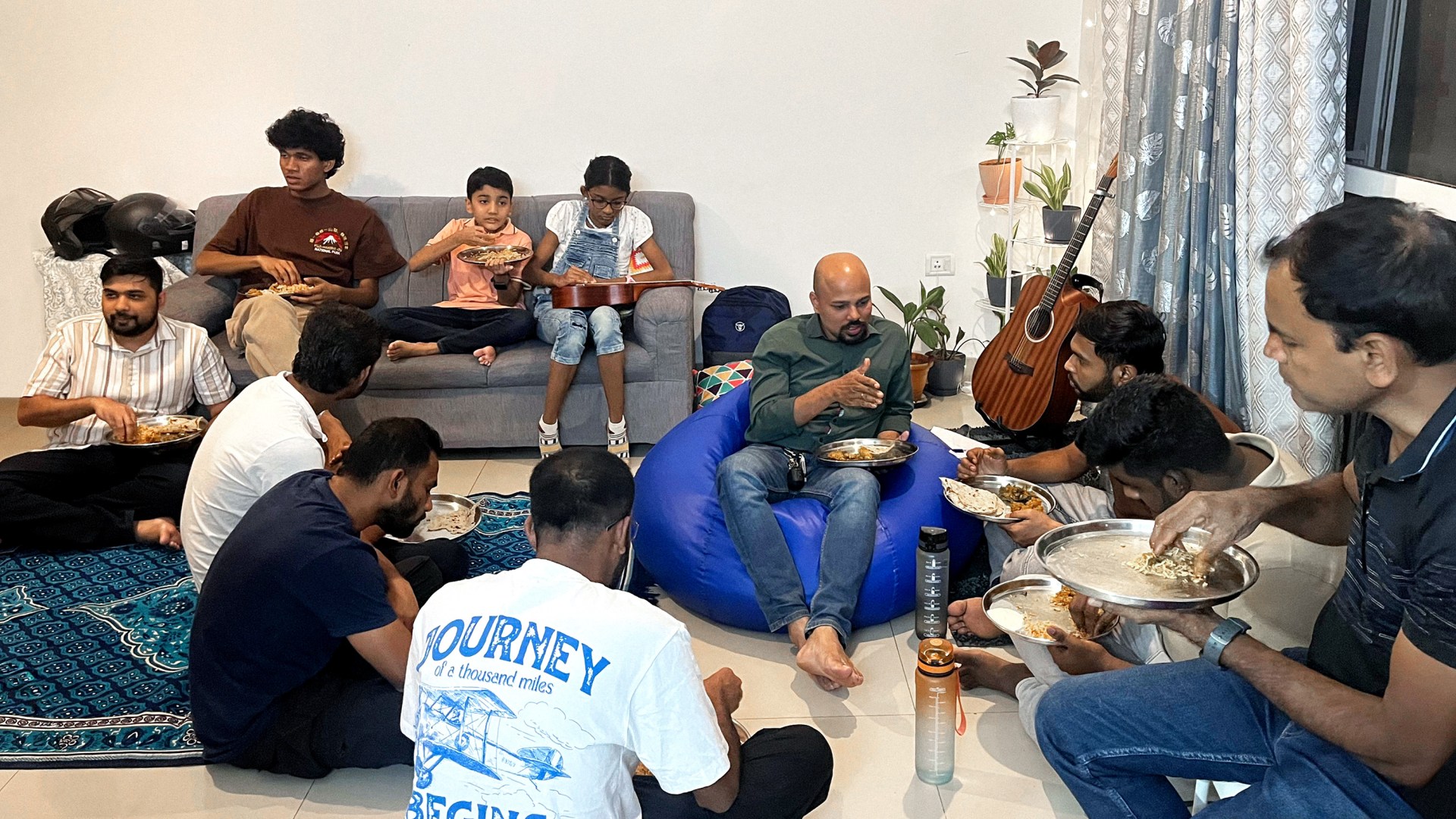
On a recent April night at the South Bengaluru home of Sunil Joy and Gladlyn Deboret Suthakar, seven college students settled down on the couch, rug, and dining chairs for the week’s Bible study. One student led a lively discussion on Romans 1 before the group gathered to eat a homemade dinner of egg curry, rice, and dal (Indian lentil curry).

Sometimes students will stay as late as 3 a.m. to have deep conversations about their faith, the couple said. Other times a student will come alone for a one-on-one conversation about emotional struggles. Joy said that on average the couple spends about two to three days a week ministering to students and currently mentors four of them.

Joy and Suthakar started opening up their home last year after they got married. Suthakar joined UESI in college while Joy got involved as a new grad. The two met through their UESI mentors and, after they married, decided they wanted to provide the same care and environment for the next generation of students. 

As a new host family, they receive training from more experienced couples on how to mentor students. At times, juggling work and student ministry can get challenging, as Joy works as a software engineer and Suthakar is a doctor. When Suthakar had to take an exam, she took a two-month break from the ministry. They still kept their home open for students to visit individually, and other families in the area volunteered to host Bible studies.

Joy and Suthakar also noted that they have had to consciously set boundaries to prevent the ministry from consuming their marriage.

“Sometimes our conversations become entirely about students and ministry and camps. Then we consciously decide to speak about other things,” Suthakar said. “Having these kinds of boundaries within our conversations and during the time we spend together has been helpful.”

Elsewhere in Bengaluru, Shyla and C. S. said they first decided to host an open home in 2005 because they believed it was a way to obey the biblical commands to welcome the stranger and to make disciples. C. S., who joined UESI while in college, introduced his wife to the ministry. While in the beginning Shyla didn’t know how to host and engage with students, she now loves seeing them grow.

Shyla remembers when a young woman, a seeker from another faith, moved to Bengaluru for college and struggled with loneliness during weekends.

“Friday evening to Sunday evening was the most difficult period for her because her roommates would go out with their boyfriends [and] come back with stories of fancy dates and expensive gifts,” Shyla recalled. So she invited the student to stay at their house on  weekends. For a whole year, the student would spend the weekend with their family, attending church with them on Sundays before she went back to college on Monday morning. The student ended up becoming a strong Christian and now has her own family.

“At that time, if I had avoided [opening my home to her], thinking every weekend was too much, I don’t know where she would have been,” Shyla said.

C. S. noted that while an Open Home doesn’t mean the couple is available 24-7, it’s “an attitude that says, ‘When there’s a problem, my doors are open.’” By building trust with the students, the couple can create an “atmosphere that will give young people the freedom to reach out without hesitation,” he added.

Another time, Shyla received a call from a young woman who was in tears. She had gotten drunk and had a one-night stand, and she wanted to see Shyla. Shyla invited her to their home immediately to counsel her and comfort her. “In such situations, I cannot say, ‘Oh it’s a weekday; I don’t have the time,’” Shyla said.

Yet the couple also faced challenges with the demands of an open home when their son was young. Most students were free on Saturdays, but that was also the time the family could spend together. So during the week, Shyla made an effort to take her son on walks and spend extra time with him. Still, he struggled.

“At one point in his teenage years, he even said that he wanted nothing to do with his parents’ God because they were so sold-out for students,” said Shyla. Now, with their son an adult, his parents say he loves his childhood and claims the renunciation was part of his teenage rebellion. Yet Shyla stresses the need for families hosting open homes to prioritize their kids.

They also had to set strict boundaries, especially as college girls would come and sometimes stay overnight in their house. Shyla made sure there was no touching or long interactions between her then-teenage son and the college students and that the women dressed modestly in the home.

Hosting an open home also comes with financial costs. At times, C. S. and Shyla have loaned students money for college fees or chipped in for medical emergencies. The couple had to budget their own household expenses more tightly so they could help students out.

“When you walk alongside a person’s spiritual journey, there may be financial struggles on the way,” C. S. said. “You cannot say that ‘I’ll be there only for spiritual things and nothing else.’”

Theophilus John Thota, a staff member of UESI, noted that with rising living costs and more households where both spouses work long hours, setting up open homes in big cities is becoming increasingly difficult. Some young people are also less willing to open up to older couples, as they fear being judged or exposed to gossip. Students are also becoming busier and less available, Suthakar noted. With more and more Indian universities adopting rigorous schedules and frequent exams, students have little time to attend Bible studies and camps, including discipleship or leadership trainings that take place in couples’ homes.

Sometimes, only one student shows up for Bible study at Joy and Suthakar’s home. “It’s disappointing at times, but we know that not all students are always interested, and we try to reach out to them and understand any hindrances they may be facing,” said Joy.

For David, the open-home experience in Jaipur exposed her to a less-legalistic Christian environment than the church she grew up in. The open home in Jaipur was also a space where she could discuss more controversial topics like homosexuality and dating, which her church back in Indore never touched on.

A few months ago, David got married, and now she and her husband plan to open up their own home. Having grown up in an open home and then having experienced the warmth of open homes in Jaipur, David always imagined continuing the tradition after marriage.

“When I met my husband for the first time, for about an hour I only spoke about open homes and how I’d like to have one after getting married,” David said.

Apple PodcastsDown ArrowDown ArrowDown Arrowarrow_left_altLeft ArrowLeft ArrowRight ArrowRight ArrowRight Arrowarrow_up_altUp ArrowUp ArrowAvailable at Amazoncaret-downCloseCloseEmailEmailExpandExpandExternalExternalFacebookfacebook-squareGiftGiftGooglegoogleGoogle KeephamburgerInstagraminstagram-squareLinkLinklinkedin-squareListenListenListenChristianity TodayCT Creative Studio Logologo_orgMegaphoneMenuMenupausePinterestPlayPlayPocketPodcastRSSRSSSaveSaveSaveSearchSearchsearchSpotifyStitcherTelegramTable of ContentsTable of Contentstwitter-squareWhatsAppXYouTubeYouTube