Pastors

Kingdom Friendship in a Divided World

What if the relationships that sustain pastors also showed the world a better way?

CT Pastors September 12, 2025
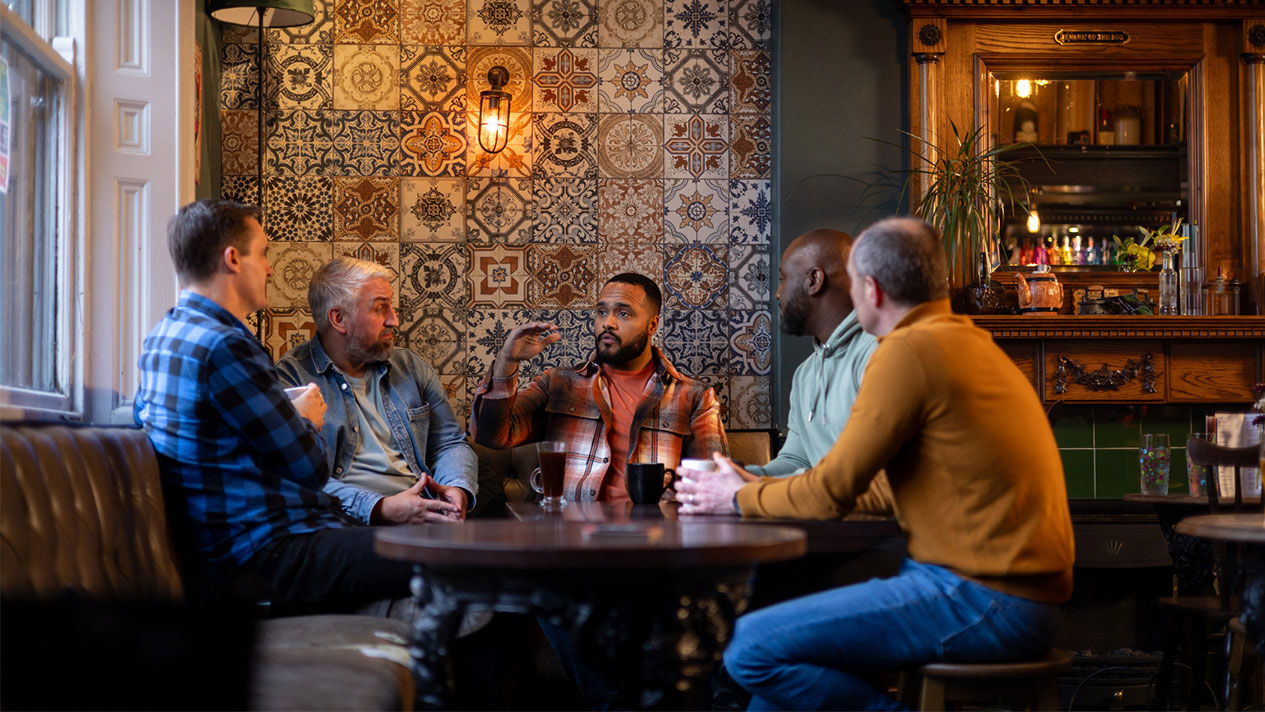
SolStock / Getty

Do you remember the excitement and sense of purpose when you first felt called by God to vocational ministry?  Like the disciples on the mountain with Jesus just before he gave them their commission, you may have wrestled with some nervous jitters or doubts.  But beneath those anxious thoughts there was a genuine excitement—a holy thrill at the chance to make a kingdom impact in the lives of others.   

For many pastors, that early sense of calling eventually gives way to an unexpected reality: feeling lonely and isolated. The weight of ministry and the expectations of our people can sometimes feel exhausting, even crushing. In our efforts to be faithful to our calling, we often crowd our calendars and deny ourselves the very things that help us endure and thrive—personal care and meaningful relationships.

And yet, it’s precisely these kinds of relationships—honest, sustaining, kingdom-minded friendships—that many pastors need but ultimately lack.

Created in the image of God, we are fundamentally relational by nature, created to live in meaningful relationship with God and in authentic community with others We are meant to live out of our union with Christ and his body, offering a quiet testimony to an unbelieving world. We are at our best when we cultivate healthy and integrated relationships in our communities where we serve. In his earthly ministry, Jesus modeled these relationships by refusing to distance himself from either the religious or the irreligious, choosing instead to share meals with both religious leaders and sinners.

If churches are to have influence in the world, they must be led by healthy pastors. Charles Spurgeon once observed, “I believe that one reason why the church of God at this present moment has so little influence over the world is because the world has so much influence over the church.”  When today’s church leaders parrot the world’s habits by working in isolation, staying guarded and siloed, we miss the very call Spurgeon was urging us to heed. 

One of the most overlooked key ingredients in a thriving and flourishing ministry life is safe and transparent friendships. It is a paradox: We spend our days being with people and yet many of us feel isolated, lonely, and disconnected. Rather than experiencing the beauty of friendship that Jesus offers (John 15:15), we begin to feel like hired help and respond by distancing ourselves from the people around us. Our busy schedule leave us exhausted and with the perception that we have no time to invest relationally. Our calendars grow full, but our souls run empty.

If you are feeling isolated or lonely, you are not alone.  A 2024 study by the Hartford Institute of Religion found that half of pastors say they often or frequently experience loneliness.  A separate Barna study (also from last year) showed a significant decrease in how satisfied pastors are in terms of having “true friends.” 

In my own life and ministry, I (Chip) have walked through several seasons of deep depression and anxiety. In those times, my temptation has been to isolate and withdraw. Fortunately, the Lord has given me a small circle of trusted, long-term friends who played a key role in restoring me. 

We (Chip and Robert) have learned over 60 combined years in ministry that “life is all about relationships!”  God designed us this way!

We are made for meaningful community and deep authentic friendships—with God (vertical) and with others (horizontal). Jesus summed up all the law when he said that the two greatest commandments are to “love the Lord your God with all your heart and with all your soul and with all your mind” and to “love your neighbor as yourself” (Matt. 22:37-40) .

God is our perfect model for community—namely, in the Trinity. Even before creation, the Father, Son, and Holy Spirit had perfect community and perfect loving relationships with each other. They didn’t need to create us for their own relational desires but to share the loving relationship they eternally have with each other. “Let us make mankind in our image, in our likeness… God created mankind in his own image, in the image of God he created them” (Gen. 1:26-27). Being made in God’s image explains our desire and need for relationships and community. As Genesis 2:18 reminds us, we are not meant to be alone.

In his classic Mere Christianity, C.S. Lewis described the Trinity as “a dynamic, pulsating activity, a life… almost, if you will not think me irreverent, a kind of dance.” While you might occasionally see a person dancing alone, it is something else to behold the beauty of loved ones moving together in step. 

Now contrast that with the oft-quoted observation that “the Sunday morning worship is most segregated hour in America.” That’s like watching a beautiful tango dance with one partner missing. 

To live and lead in isolation—or to only have friends who are just like us—is a bit like looking at one facet of a diamond. The classic round brilliant cut diamond has 57 or 58 facets. In order to see and experience the beauty of the diamond, you have to see it from many sides. The same is true in our relationships. We need others—different from us, shaped by different histories—in order to see the other facets. 

We have also learned that some of our most life-giving friendships are those that reflect God’s unity in diversity. From the beginning, the Lord has pointed us toward a beautifully multiethnic future. The day is coming when Jesus will return, and there will be “a great multitude that no one [can] count, from every nation, tribe, people and language, standing before the throne and before the Lamb… [crying out] in a loud voice: ‘Salvation belongs to our God’” (Rev. 7:9-10).

God set apart a people through Abraham and his family—not just for themselves, but to be a blessing to all the nations and families of the earth (Gen. 12:1-3). And when Jesus came, he came to unite and heal what sin had divided: people, cultures, nations, and families that had long been at odds.

Paul puts it plainly in Ephesians 2:14–16: 

“For he himself is our peace, who has made the two groups one and has destroyed the barrier, the dividing wall of hostility… to create in himself one new humanity out of the two, thus making peace, and in one body to reconcile both of them to God through the cross, by which he put to death their hostility.”

Here, the apostle is speaking about Jews and Gentiles—two groups who hated each other.  Jesus doesn’t just save individuals; he reconciles enemies. He creates one new people. 

Near the time of his death, Jesus prays a prayer that this unified body (the beautifully diverse body of Christ) would become one. “Then the world will know,” he said, “that you sent me and have loved them even as you have loved me” (John 17:23). That kind unity isn’t decorative. It’s missional. It’s a compelling witness to the gospel of Jesus Christ, particularly as we consider what it means to love our neighbor.    

Over the last 20 to 30 years, our “neighbors” in Atlanta have become ethnically and culturally more diverse. And it’s not just here. In nearly every major metropolitan area and even across rural communities, the nations are now at our doorsteps.

The unity Jesus prayed for in John 17, when put into practice, gives a greater opportunity for the gospel to impact these changing demographics.  Rather than lamenting the loss of homogeneity, if we become intentional in cultivating intercultural friendships our witness for Christ will be far more effective.  The gospel becomes more visible. Instead of boarding planes to serve in faraway places, each of us has the opportunity to become a missionary right in our own neighborhood. 

The beauty in developing intercultural relationships and friendships is analogous to the richness of a well-played piano. In 2016, Android released a commercial featuring a master pianist performing Moonlight Sonata on two different pianos. One was a traditional piano with all 88 keys tuned to their specific notes and another piano had every key tuned to the key C. The difference was startling. One played a beautiful masterpiece that anyone could appreciate. The other? Monotone and flat.   

The tagline for the advertisement was “Be together. Not the same.” It is striking that even Android marketing picked up on this beautiful truth: Diversity is not a threat to unity but the texture that gives it beauty.

We need friendships in our lives that play their own note, rather than merely echoing ours. When each friend plays his specific note, we hear the symphonic richness of the body of Christ. It is not enough to say we want diverse relationships; it is important to recognize that we need these relationships to hear, see, and understand things that we can’t from our own experiences.   

In the articles that follow, we will share how we have celebrated this in our own contexts and the impact it has had on our lives.  

For the pastor or ministry leader feeling the weight of loneliness, our prayer is that you will be both encouraged and challenged to step out in building diverse kingdom relationships—the kind that will allow you and your ministry to flourish. 

Don’t be surprised if those life-giving relationships are already within reach.  

Chip Sweney serves on the executive leadership team at Perimeter Church, where he has been a pastor for nearly three decades. He is also the executive director of the church’s Greater Atlanta Transformation Division, which leads Perimeter’s outward-focused ministries across the metro Atlanta area.

Robert Kim serves as an associate professor of applied theology and church planting at Covenant Seminary and the director of church planting at Perimeter Church in Atlanta. He planted churches during his pastoral career and currently serves as a board member for the missions organization Serge. 

Books
Review

The Flickering Flame of Intelligent Design

A new study asks why the ID movement hasn’t left a more enduring mark on scientific or religious thought.

Mockup of a book cover "Designer Science" on a dark blue background
Christianity Today September 12, 2025
Illustration by Christianity Today / Source Images: Getty, NYU Press

Like a brightly burning candle in the wind: That’s how C. W. Howell depicts the brief history of the American intelligent design movement in his new book, Designer Science.

Howell, a researcher based at Duke University, seeks to show where intelligent design (“ID”) fits alongside more established frameworks for relating the Bible’s account of Creation with the findings of modern evolutionary science. Young-earth creationism, he suggests, has gained a popular following and left its stamp on 21st-century Christian thought. So too, he observes, has its chief philosophical rival, theistic evolution (or its newer cousin, evolutionary creationism).

By contrast, Howell presents ID as more a brief flicker than a lasting force. In his telling, it emerged on the national stage with the 1996 Mere Creation Conference at Biola University and largely faded from view after the 2005 Kitzmiller v. Dover Area School District trial in Dover, Pennsylvania, which ended with a federal judge ruling that teaching ID in public schools amounts to promoting a religious belief.

When Howell and others refer to “ID,” they do not mean age-old arguments for God rooted in the evidence of intricate, purposeful design in nature. Nor are they invoking the narrower natural theology of late 18th-century English cleric William Paley, best known for proposing that an ordered universe presupposed a “divine watchmaker” who set it into motion.

Instead, the term ID encompasses specific ideas first advanced in the 1990s by American law professor Phillip Johnson, philosopher William Dembski, biologist Michael Behe, and others associated with the Discovery Institute think tank. ID theorists coalesced around the philosophical position that science should not arbitrarily exclude supernatural explanations for physical phenomena. Over time, they added arguments suggesting that “irreducible complexity” in biology—systems too intricately arranged to be broken into separately evolved parts—points toward intelligent design in nature.

As such, Howell writes, ID became “a broad, ideologically diverse, and theologically accommodating approach to anti-evolution” that at first drew an array of intellectual theists under its “big tent.” According to Howell, however, the movement’s initial strength proved its ultimate weakness. As he suggests, the thin gruel of its “ideological minimalism” could not sustain the allegiance of partisans for whom ideas carried deep meaning.

Whenever ID theorists sought to add meat to the broth, they alienated some faction. Without a robust scientific component, ID remained an ideological critique of evolutionary science that blurred methodological with philosophical naturalism to make its case that Darwinism went hand in hand with atheism.

Regarding questions of human origins, survey data from recent years suggests that American Christians fall into two camps of roughly equal size. Each takes faith seriously and posits a divinely majestic Creator crafting the physical universe.

Young-earth creationists look for evidence in nature supporting a literal reading of the early chapters of Genesis. Shaped by the mid-20th century work of Baptist engineer Henry Morris and apologetics organizations like Ken Ham’s Answers in Genesis, they emphasize a six-day creation occurring less than 10,000 years ago, a theologically significant fall from grace, and a worldwide flood. Theistic evolutionists (and evolutionary creationists) see a preexisting God creating non-mechanistic laws of nature and superintending them to shape the course of creation. Their views draw from earlier efforts by Christian thinkers to address 19th-century developments in science—efforts now carried on by the BioLogos Foundation, figures like Francis Collins (its founder), and various Catholic scholars working in the tradition of Thomas Aquinas.

Both groups eventually turned against ID, Howell writes. Young-earth creationists objected to ID because it failed to support their theological presuppositions. Meanwhile, theistic evolutionists and evolutionary creationists despaired of ID’s embrace of “a highly mechanical and modernist conception of reality” that partakes of “the very reductionism it claims to be resisting” and postulates “a modern conception of divine action in the world.” In short, young-earth creationists regarded ID as insufficiently creationist, while religious evolutionists regarded it as overly naturalistic.

Perhaps because Howell places himself in the latter camp, Designer Science is especially insightful in presenting the theistic-evolutionist and evolutionary-creationist critique of ID. In a notable moment of candor appended to the book’s introduction, Howell states that he “grew up in a young-Earth creationist setting” and became “interested in ID as a high school and college student” before migrating to theistic evolution and becoming an Eastern Orthodox Christian. Designer Science is based on his PhD dissertation in religion from Duke.

Given Howell’s religious background and his book’s academic origins, it is not surprising that Designer Science is a dense exposition of intellectual ideas with lots of citations. It draws mostly on published writings by thought leaders in the three camps, with an occasional nod to atheistic adversaries like Richard Dawkins. But it makes little mention of either the biologists who greeted ID with withering rebuttals or the tepid response from Christians generally.

However, Howell does note the appeal of ID to political conservatives, who carried it into the culture wars of the 1990s and early 2000s after the Supreme Court’s 1987 ruling against teaching creation science in public schools. They offered ID as a nonsectarian critique of evolution that could pass muster under the establishment clause. Indeed, Howell suggests that young-earth creationist leaders initially warmed to ID precisely for this strategic reason even as they questioned its heft as an evangelistic tool.

After ID concepts began appearing in state and local public-education policies, culture-war dynamics led to the showdown at Dover. Local young-earth creationists and Discovery Institute officials pushed the Dover school board to adopt ID-friendly policies in 2004. Local citizens, many of them churchgoers, brought suit against those policies.

Howell presents theistic evolutionists as leading the opposition. “At Dover,” he writes, “ID was roped into a conflict by the creationist wing of its big tent, and it wilted under the spotlight—because it could not offer a positive scientific alternative but also because it could not cleanly separate itself from its creationist allies.” After the federal court ruled that teaching ID in public schools also violated the establishment clause, Howell reports, leading young-earth creationists saw less reason to promote ID than before.

After the Dover decision, public and academic interest in ID began waning. Howell depicts embattled ID theorists “doubling down” on “the same general arguments that had failed to win the day in court” but with “a far more conspiratorial tone and air of grievance.” Along with a “sense of persecution,” he writes, came a growing “hostility toward the scientific world.”

Such an anti-expert attitude had been there from the beginning, Howell notes, “but it came to the forefront after 2005.” ID theorists increasingly questioned “the prevailing scientific wisdom about vaccines, climate change, astrophysics, and AIDS.” Within the ID movement, Howell writes, distrust of the scientific establishment became “the basis for a worldview deeply skeptical of scientific progress and knowledge.”

If ID began as an “ecumenical anti-evolutionary movement,” Howell concludes, it eventually became “just one of many highly skeptical attacks on contemporary science.” He views this as ID’s lasting legacy. “Even though it did fail to achieve its goal of remaking contemporary science,” he writes, “intelligent design both planted the seeds and nurtured the growth of extreme skepticism in the world of US conservatism.”

But this assessment likely overstates ID’s role in furthering these trends. It fails to consider other strong forces seeding and nurturing suspicion of scientific expertise, such as political polarization over issues involving science, the effects of COVID-19-era restrictions on public trust, and the explosion of anti-expertise conspiracy theories on the internet.

A question remains after reading Howell’s book. Was ID ever more than an attack on science that blurred methodological naturalism with philosophical naturalism to make its case against evolutionary biology? Both young-earth creationism and theistic evolution are rooted in deep religious sentiments that are intrinsic to their lasting appeal. They continue to influence modern American Christianity. Howell’s book is insightful in suggesting reasons why intelligent design hasn’t attained a similar stature.

Edward J. Larson is a historian and legal scholar teaching at Pepperdine University. He is the author of Summer for the Gods: The Scopes Trial and America’s Continuing Debate over Science and Religion.

News

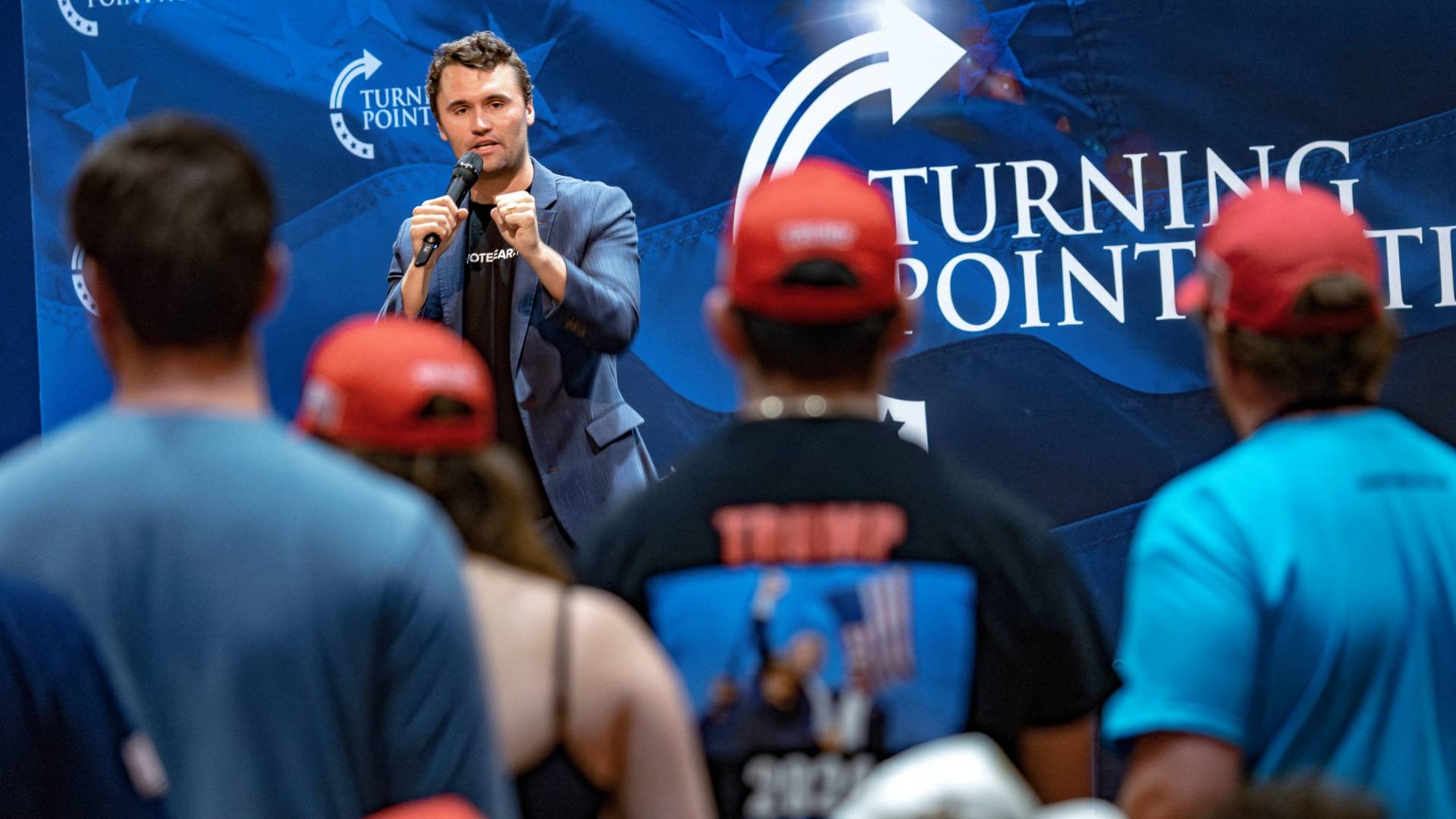
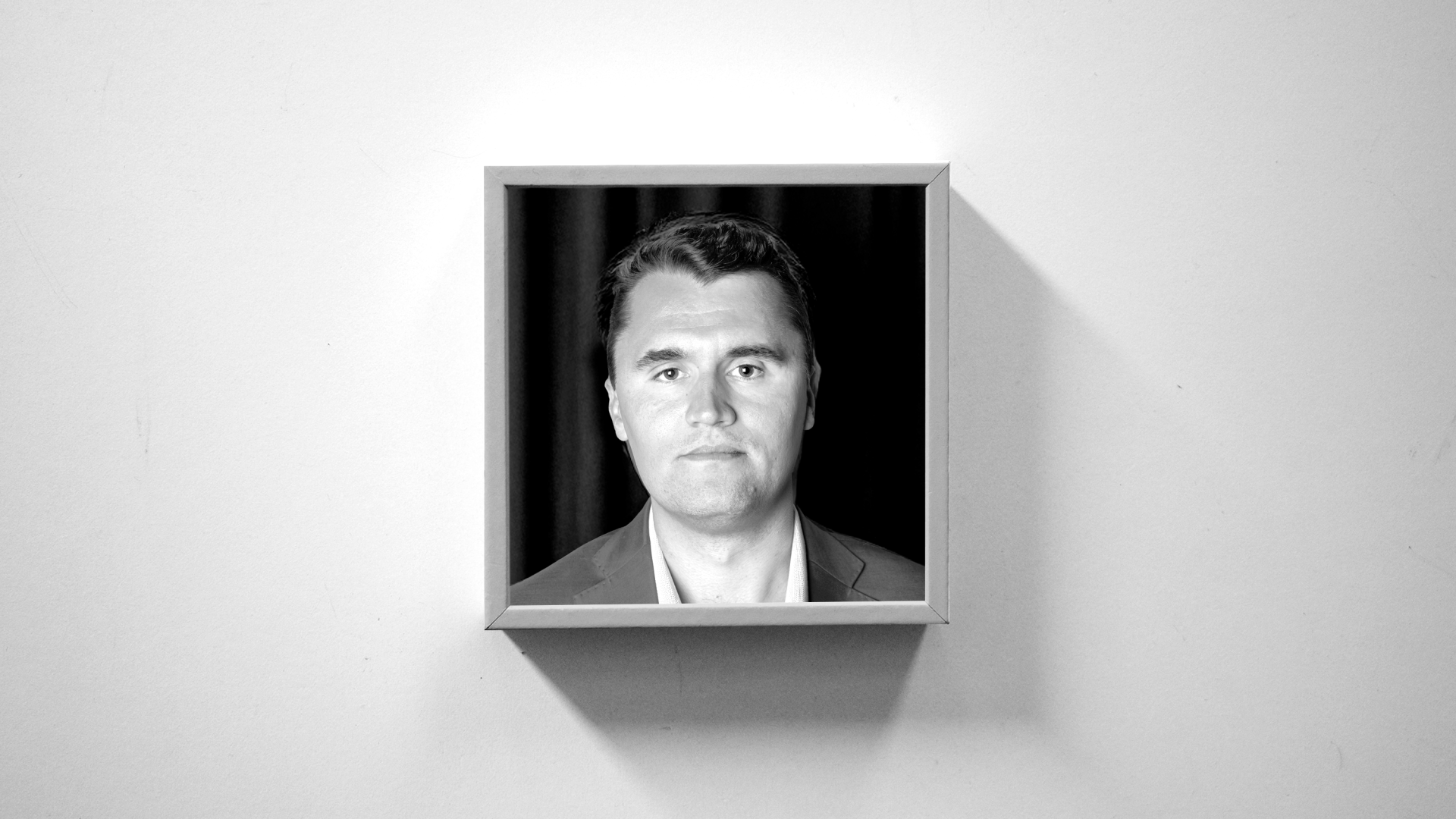
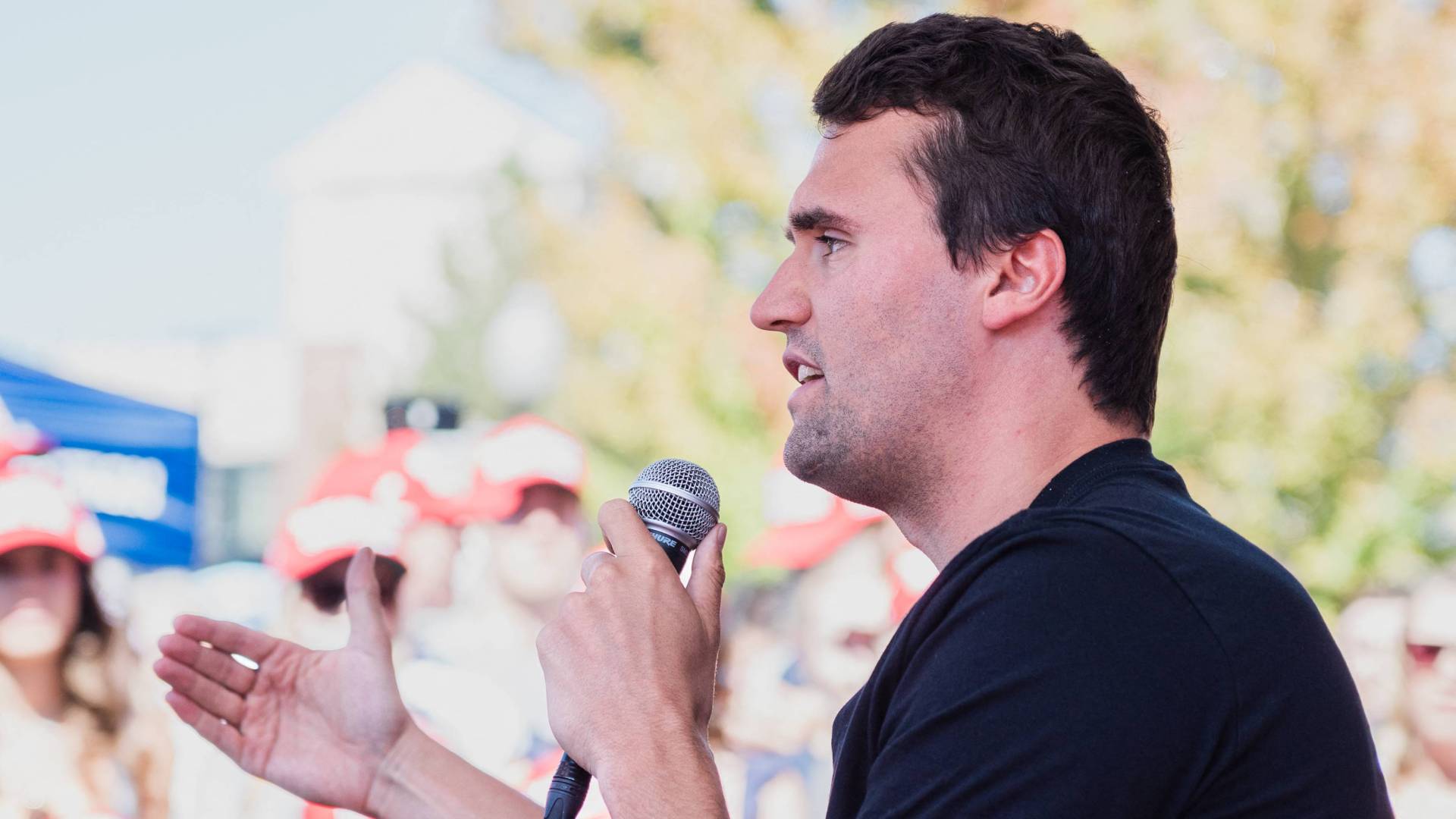
Died: Charlie Kirk, Activist Who Championed ‘MAGA Doctrine’

With a debate style honed for college campuses and social media, the Turning Point USA founder sought to renew America.

Charlie Kirk Photograph
Christianity Today September 11, 2025
Nordin Catic / Getty / Edits by CT

Conservative political activist Charlie Kirk died on Wednesday after he was shot at a public event at a college campus in Utah. He was 31.

Kirk built a massive political movement with viral video clips of sharp comebacks and quick counterarguments in all-comers debates. He described himself as a disruptor and argued disruption was the only way to make America great again. Adopting Donald Trump’s signature political slogan, Kirk called it “the MAGA doctrine, which is a doctrine of American renewal, revival … that America is the greatest country in the history of the world.”

Promising to “play offense against the secular left,” he launched hundreds of chapters of his youth organization, Turning Point USA, and taught a generation of grassroots activists to court controversy. The groups invited him to their schools, where he would engage crowds with entertaining, argumentative melees.

Clips of his “dunks” and “owns” reached, by some counts, billions of people. Kirk became, in the process, a leading proponent of the confrontational style of political engagement that he and others believed was necessary to bring about a conservative reclamation of American culture. 

“Directly confronting the left, and promising to fight their illiberal ideology with state power when necessary, is the key to winning everyday Americans,” he said in 2021.

Kirk became a trusted adviser in the Trump administration. Many, including Trump himself, credited him with rallying youth support for Trump’s reelection in 2024.

The president broke the news of Kirk’s death on social media. 

“The Great, and even Legendary, Charlie Kirk, is dead,” Trump wrote. “No one understood or had the Heart of the Youth in the United States of America better than Charlie. He was loved and admired by ALL, especially me, and now, he is no longer with us.”

The governor of Utah called Kirk’s death a political assassination. Some Christian leaders, including the former pastor of the Chicago-area megachurch that Kirk attended in high school, said the political activist should be seen as a martyr. 

“So grieved /shocked for the world to lose our dear friend Charlie Kirk,” James MacDonald wrote on X. “He is a martyr, of the cause to take America back from the evil one. … Charlie exhausted himself for righteous causes and was unashamed of his saving faith in Jesus Christ.”

The senior pastor of the Phoenix-area megachurch that Kirk regularly attended as an adult added that Kirk was killed because of his biblical views of truth.

“What the enemy has tried to do today is silence the people of God, silence the men and women of God,” Luke Barnett explained in his Wednesday-night sermon. “Well, you just unleashed the dragon.”

Charles James Kirk was born on October 14, 1993. His mother, Kimberly, was a mental health counselor, and his father, Robert, was an architect. 

Kirk grew up in the suburbs north of Chicago. He first got interested in politics listening to conservative commentator Rush Limbaugh on the radio. As a teenager, he tuned in to debates about President Barack Obama’s plan to reform health care and discussions about the Tea Party movement’s efforts to oppose elected Democrats more effectively than the Republican Party was doing.

“I was like, This guy is unbelievable!” Kirk told The New York Times. “I would never forget: on my lunch break, from like 12:17 to 12:55, I’d listen. Just me. I went all in on Rush.”

In 2010, at 16, he volunteered for the Republican campaign to fill Barack Obama’s vacant Senate seat, knocking on doors and passing out fliers for a fiscally conservative, socially liberal candidate. 

Kirk got his first taste of running his own political campaign the following year, when he rallied fellow students to protest the high school cafeteria’s hike of the price of cookies. He started a Facebook group and challenged Prospect Heights, Illinois, teenagers to “show the establishment the power of our generation.”

According to the Chicago Tribune, it was “more of a prank than serious political action,” but just because Kirk was having fun, that didn’t mean he wasn’t also serious.

“I never say anything I don’t mean,” he told the paper. “I wouldn’t say it if I didn’t mean it.”

In 2012, Kirk made a critical political connection that changed his life. He spoke at a Youth Government Day event at a Catholic University and used his time to argue against the Occupy Wall Street movement. He said the left-wing protesters were divisive and, besides, had terrible ideas. What America needed, according to Kirk, was fiscal responsibility and limited government.

Kirk captured the attention of the students in the room and retired restaurateur Bill Montgomery. They listened to him and seemed compelled to engage his arguments. Montgomery, who was 72 at the time, approached Kirk after and urged him not to go to college.

“You’ve gotta get involved in politics,” Montgomery said

Kirk had hoped to go to the US Military Academy in West Point, New York, but hadn’t gotten in. He was looking at Baylor University, but activism seemed more exciting and important. 

With Montgomery’s help and financial backing, Kirk launched Turning Point USA. The incorporation papers said, “Turning Point USA believes that every young person can be enlightened to true free market values.”

Kirk soon found he had a gift at connecting with donors. Older conservative men found him charismatic and compelling and were eager to give him financial support. 

“He’s phenomenal,” evangelical businessman Peter Huizenga said. “At his age, he is one of the most accomplished, one of the most mature, and one of the most organized and intelligent guys that I have ever met. You just don’t meet guys like this.”

At the Republican National Convention in 2012, Kirk bumped into conservative evangelical megadonor Foster Friess. He’d never met him before but decided to pitch Friess on his vision for Turning Point. A few days later, a check from Friess for $10,000 arrived in the mailbox of his parents’ home.

Kirk also proved remarkably adept at connecting with college students. Turning Point added dozens of chapters every year and soon rivaled or even surpassed older, more established conservative groups on many college campuses, including the Young Republicans, Young Americans for Freedom, and Young Americans for Liberty. 

Young people were not always interested in the economic arguments Turning Point was launched to advocate, but Kirk was quick to find issues that would pull students into the movement. 

He frequently set up “Tell Me I’m Wrong” tables at campus events, inviting students to debate him. He homed in on the hottest topics. He found debates over free speech and censorship were particularly effective. Conservative students regularly clashed with left-leaning instructors and often felt their professors were trying to indoctrinate them. Turning Point launched a watch list, stirring controversy that raised the group’s profile.

Kirk connected with the Trump campaign in 2016, working closely with Donald Trump Jr. and acting as a youth director. Kirk continued to offer advice after the election, frequently going to meetings at the White House. He became a regular fixture of the right-wing media ecosystem and had a high profile on social media, where he often stoked controversy.

Kirk’s political activism became more overtly religious in 2019. He and Liberty University’s president at the time, Jerry Falwell Jr., cofounded a think tank they called the Falkirk Center. Kirk said the center would “explain the link between the gospel of Jesus Christ and American founding freedom” and help mobilize conservative evangelicals in the upcoming election.

He became more convinced during the COVID-19 pandemic that political battles and spiritual battles were deeply intertwined. In lockdown he read The Founders’ Key by Hillsdale College president Larry P. Arnn, Dominion by British historian Tom Holland, and The Age of Entitlement by conservative author Christopher Caldwell. The three titles taught him that all the political clashes and cultural conflict were really one big fight between opposed worldviews.

“I saw the wokies appealing to a moral order that they said was true and good,” he told The New York Times. “And I said, Well, we think ours is.”

When churches temporarily shut down to stop the spread of the coronavirus, Kirk became alarmed that Christians would surrender to government mandates without protest. This, he thought, could easily be the first step toward authoritarianism—and he wanted Christians to fight.

“While we’ve been doing budgets and baptisms and bigger buildings,” he said, “the secular humanists, they’ve been taking terrain. … This is the time for us to rise and stand. And the Bible says very clearly to ‘occupy till I come’” (Luke 19:13, KJV).

Rob McCoy, a Calvary Chapel pastor who clashed with California governor Gavin Newsom over pandemic mandates, mentored Kirk, who began to call McCoy his pastor. The two of them started Turning Point Faith together in 2021, holding events in church, working to organize pastors and mobilize conservative Christians.

“I realized that there is a desire for revival in this country, that there is a yearning for a different type of Christianity,” Kirk said. “It is about preaching a hot gospel and bringing a nation to repentance, which will then lead to revival.”

Kirk described the 2020 election as a spiritual battle and in one speech declared that the Democrats “stand for everything God hates,” before leading the crowd in a chant of “Christ is King! Christ is King!”

Kirk mobilized church and college groups for Trump in 2024, spending a year and a half focused on the election. When Trump won a surprising number of young voters, Kirk took credit. 

“We registered tens of thousands of new voters and delivered the youth vote in record numbers,” he said. “The youth vote won Trump the White House.”

Despite his success, Kirk showed no desire to rest on his laurels or even slow down. His appearance at Utah Valley University was meant to be the first stop in a new campus tour, dubbed the “American Comeback Tour.”

The fatal bullet struck Kirk as he and a student were debating.

Kirk is survived by his wife, Erika Frantzve Kirk, and their two children, ages 1 and 3.

Church Life

What the Loneliness Conversation Misses

It’s often easier to be alone.

An open skylight with light pouring in and two birds in the sky.
Christianity Today September 11, 2025
Illustration by Xinyue Chen

I’d imagine few Americans are so lucky as to be unaware of our cultural afflictions. We know everything that’s wrong with us, don’t we? We see the headlines. We understand our fatal flaws. We’re addicted to our phones, scrolling away to our doom. We’re unable to maintain thriving social lives or strong work ethics, overall incapable of contributing to the “real world” in meaningful ways.

The marriage rate is down. The divorce rate is up. We don’t read anymore. We can’t navigate anywhere without Apple Maps. We’re obsessed with presenting a persona to the world while wholly unable to cultivate a compelling inner life. We’re anxious, we’re depressed, we’re burned out, and we’re all sick and tired of hearing about it.

Above all, we’re lonely, which is somehow both the source and the symptom of all this malaise. In his May 2023 “U.S. Surgeon General’s Advisory on the Healing Effects of Social Connection and Community,” Vivek Murthy called isolation an epidemic. His opening letter references research that “in recent years, about one-in-two adults in America reported experiencing loneliness” and that this loneliness “harms both individual and societal health.” Murthy sees relationships as “an untapped resource—a source of healing hiding in plain sight” that “can help us live healthier, more productive, and more fulfilled lives.”

In the two years since he published that report, the loneliness conversation has continued apace. While many voices have proposed different approaches to our alienation, they often center around the same solution—more real, offline human connection, whether through parties or standing breakfast dates or recurring visits to libraries and parks or mushroom foraging and block parties.

On the one hand, making friends is often just a matter of putting yourself out there and reaping the rewards. As a recent college graduate who has moved to a new city and started attending a new church over the course of the past year, I’ve been learning how to make friends all over again. I’ve tried to take first steps by saying hello to the person sitting next to me at church and asking that person to coffee. Recently, I got sick while my roommates were out of town. Multiple new friends from the congregation were quick to offer to bring me anything I might need. Friendship really can be that simple.

And also—friendship is so hard. It’s easy to announce it as the quick-fix answer to our menagerie of societal problems. But that’s idealistic. Friendship, as any friend knows, also comes with suffering and sin. Sometimes—oftentimes—it would be easier to stay home alone. Our encouragements to friendship must be honest about that.

Put another way, the desire to belong is straightforward. But belonging takes work. Trust must be earned. Sometimes people have natural synergy; sometimes they don’t. Sometimes a friend is going through a hard season. Sometimes that season lasts for years, and that friend needs significant support. Sharing life means not just easy company and inside jokes but someone else’s hardships, trauma, and personality quirks. A friend comes asking for help moving or processing a breakup. Friends come needing grace after grace. They come, like me, sick and in need of Pedialyte. 

When I’m navigating relational strain or having a hard time loving someone well, I often return to the Seamus Heaney poem “The Skylight” for spiritual encouragement. 

In this poem, the speaker narrates a conflict between himself and his second-person audience, presumably his wife. She thinks it would be a good idea to cut a skylight into their roof. He likes their home as it is; he does not want to change. Despite his list of reasons why the house is perfectly cozy, no changes needed, he trusts her. They make the cut.

The outcome is wonder: “When the slates came off, extravagant sky entered and held surprise wide open.” The home opens to the heavens. The speaker references the familiar story from Mark 2, in which the friends of a man who has paralysis lower him through the roof of a house where Jesus is teaching. Jesus heals the man’s physical body and forgives him. 

Interestingly, the speaker doesn’t identify himself with the man with paralysis or even his friends. Instead, he is “like an inhabitant / of that house” where this miracle occurred. He isn’t the main character, but as is the case in much of the New Testament, he finds himself marveling at what he has seen and changed as a result.

Why do I look to this poem for spiritual encouragement when I have a hard time in friendship? Heaney’s words remind me that I too am a creature of habit; I like what I like, and I get set in my ways. Sometimes I need to make space for my friends or roommates to think differently than I do; this sort of perspectival hospitality is a spiritual discipline. Creating space for people in the fullness of who God made them to be is a way of loving them. Like Heaney, I too have found these pains of accommodation often give way to great wonder. Relationships create opportunities for God to surprise me in ways I never thought possible.

All the voices I hear calling for us to make friends as the solution to the loneliness epidemic are dipping their toes into a much deeper sea. They are scraping the surface of a much deeper truth. Friendship is as easy as taking the first step to say hello, and it is as hard as forgiving someone who has hurt you. It is as simple as asking if someone wants to grab lunch after this, and it is as challenging as inviting someone into the mess of your own life. While the work and risk and sacrifice of friendship can (and inevitably will) cause pain, it is far surpassed by the joy of genuine love.

Kathryn Ryken works for the Council for Christian Colleges & Universities, located in Washington, DC. She is a recent graduate of Wheaton College.

Ideas

Debate Medicine. Not Mortality.

MAHA makes some good points. But I also want to consider more than what is best for my body.

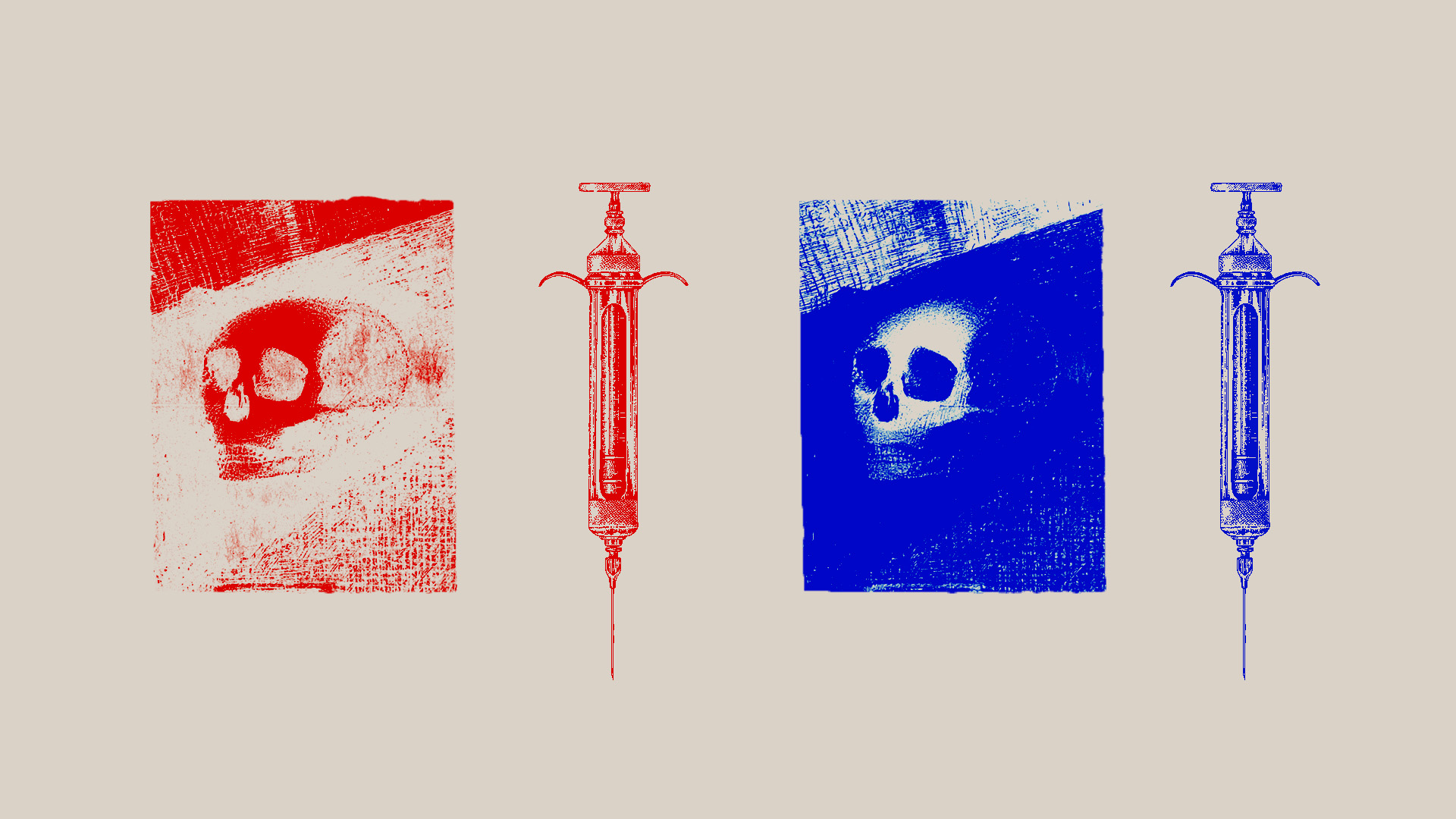
Collage of a skull and syringe in red and blue on a cream background. Cropped image from "Through an Opening in the Wall, a Skull Appeared, plate 1 from Edmond Picard’s Le Jure" by Odilon Redon in 1887
Christianity Today September 11, 2025
Illustration by Abigail Erickson / Source Images: Getty, The Art Institute of Chicago

If you want to quickly determine whether someone is the type to give out unsolicited medical advice, tell the person that over the past year you’ve received more Botox injections than Kim Kardashian, Jennifer Aniston, and Gwyneth Paltrow combined.

That doesn’t sound good, does it? And yet that was my reality back when I got Botox for chronic migraines—one of the neurotoxin’s many medical uses. Relaxing muscles by inhibiting nerve endings, it’s also good for treating muscle tremors and tension, overactive salivary or sweat glands, and conditions related to the vocal cords.

There are plenty of other things we do in the pursuit of health that don’t seem all that … well, healthy. The keto diet, for example, is touted as effective for weight loss but involves eating so much fat it can aggravate heart problems. Another recent fad—intermittent fasting—can be dangerous for those who struggle with either metabolic conditions or disordered eating.

With Robert F. Kennedy Jr.’s recent efforts to “Make America Healthy Again,” some (stereotypically) conservative Christian views on health and wellness are having their moment. There’s been a groundswell in vaccine skepticism, as well as rising opposition to Big Pharma and processed foods—all hallmarks of “crunchy Christians” whose views on health and wellness were, until recently, somewhat fringe.

Some of these developments are undeniably good—the push for healthier food, for example. But others, like vaccine skepticism and the eschewal of the medical establishment, are contentious, including within Christian circles. This brings us to a crossroads: What do we do when Christians disagree on something as fundamental as what’s healthy and what’s not? Is there any unity to be had amid these hotly debated differences?

Back to Botox, which I received four times a year for many years—and which Kennedy has tried as a treatment for the neurological condition that affects his voice. I had chronic migraines for two years before I took the plunge. The idea of injecting a toxin into dozens of points all over my head freaked me out. (Botox treatments for chronic migraines have high doses, roughly four times what’s usually administered for cosmetic purposes.)

I also agonized over its potential long-term side effects, which according to many medical studies are negligible but according to much of the internet are severe. There are all sorts of horror stories, ranging from losing feeling in your face to dying from the Botox getting into your bloodstream.

There were also, of course, all the opinions I heard from seemingly everyone—from my physical therapist to my closest friends. Botox is poison. The studies on it are biased. It’s not worth it. Most celebrities won’t even go near that stuff these days. I have a friend who got Botox, and now her face is stuck in a permanent frown.

Receiving unsolicited feedback on my medical decisions was nothing new. By now, I’ve almost gotten used to it. But with Botox, I couldn’t brush off the concerns as easily, because they were concerns that I largely shared.

From cryogenics to biohacking and the newfound field of longevity science, much of modern society is obsessed with being as healthy as possible for as long as possible. Even medically assisted suicide, though seemingly in opposition to the “live forever” movement, is just the other side of the same coin. “At the center of the world’s fastest-growing euthanasia regime is the concept of patient autonomy,” claims a recent article on medically assisted suicide. Whether by extending the human lifespan or by cutting it short, both fields aim to control what is, to many people, the scariest, most uncontrollable phase of life: death.

As a Christian who has spent many years in pain, I’m decidedly not obsessed with being in control of when and how my life ends. On the one hand, coming so frequently face-to-face with my own frailty has me agreeing with Paul, who wanted to be “away from the body and at home with the Lord” (2 Cor. 5:8). On the other, whenever I focus on God’s promises, I realize that my earthly life has value, even the scary parts that I’d rather avoid.

There’s nothing wrong with wanting to live a long, healthy life here on earth. But at the same time, when it comes to when we die and how, Christians should know we have nothing to fear. (As a well-known Easter hymn says, “Lives again our glorious King … / Where, O death, is now thy sting? … / Once he died our souls to save… / Where thy victory, O grave? Alleluia!”) This fearlessness makes us salt and light to a world that’s controlled by the uncertainties of mortality, and it should also change how we approach the topics of health and wellness.

From microplastics to food dyes to injectable neurotoxins, modern life has no shortage of real threats to our health. And as a professional patient, I have many reservations about Western and alternative medicine alike. But when I remove the fear of death from my medical decision-making, it frees me up to consider more than what is best for my physical body. What is best for my mind, my soul, and the people around me? And most importantly, how can I make this decision in a way that offers hope to a watching world? When the fear of dying predominates these decisions, it also overrides all these nuances.

In spite of the frequent exhortations not to do Botox, many of which I found difficult to shake, I ultimately decided to go ahead with the treatments. Why? At the time, I was living in constant, high-level pain. My mental health was deteriorating, my spiritual life was basically nonexistent, and even my marriage was suffering beneath the pressures of my illness. After my first treatment, I had some pain-free days—not many, but more than the zero I’d had before. And that, in the end, seemed worth all the potential downsides.

Was getting Botox the right decision? I don’t know. Maybe my face will droop in a few years, or maybe future research studies will show that Botox has shortened my lifespan. This choice never felt black-and-white. But at the time, one option felt like giving in to fear over a future that God held firmly in his hands, and the other felt like his provision for the season I was in.

Our lives are full of medical gray areas, and Christians will likely continue to disagree on how best to steward and care for our physical bodies. But one thing we can and should agree on is that our lives are not our own and that our calling as believers is to show the peace of Christ to a world darkened by the fear of death.

Natalie Mead is currently pursuing an MFA while writing a memoir about chronic pain, relationships, and faith. Read more of her writing at nataliemead.com.

Ideas

The Cameras Missed Me on 9/11

I can’t find any footage of my escape from Manhattan that horrible day. I looked and looked—and finally asked what I wanted to prove.

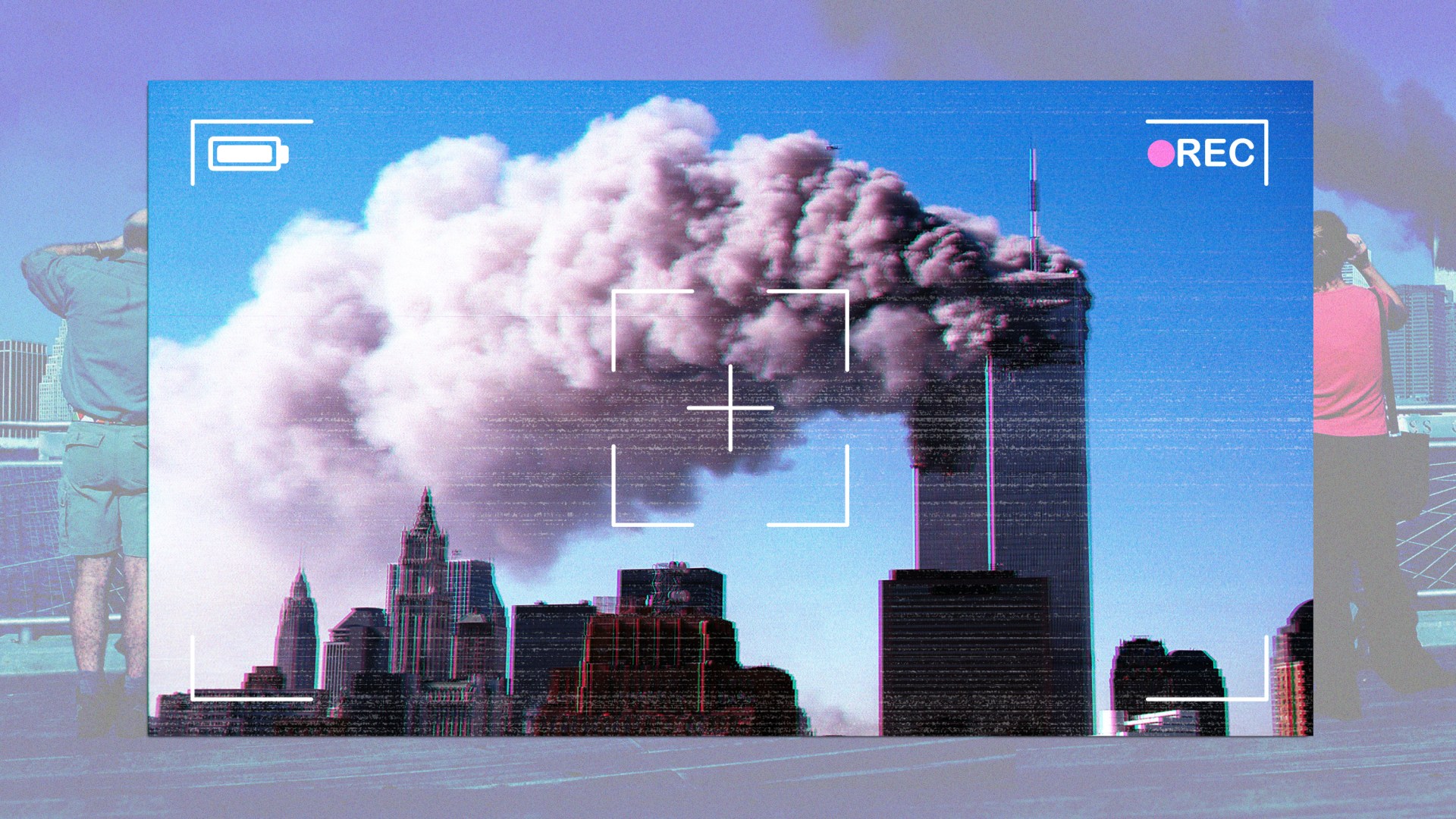
The Twin Towers on 9/11

The 9/11 attack on the Twin Towers.

Christianity Today September 11, 2025
Illustration by Christianity Today / Source Images: Getty

They say a picture is worth a thousand words, and I believe it. Images have the power to shape public opinion, even to shift history. In my work as a New York City tour guide, I’ve seen firsthand how photographs bring the past to life. For all their side effects, smartphones have made photographic memories more widely accessible than ever before. We are uniquely wealthy in snapshots of who we used to be, milestones showing how far we’ve come.

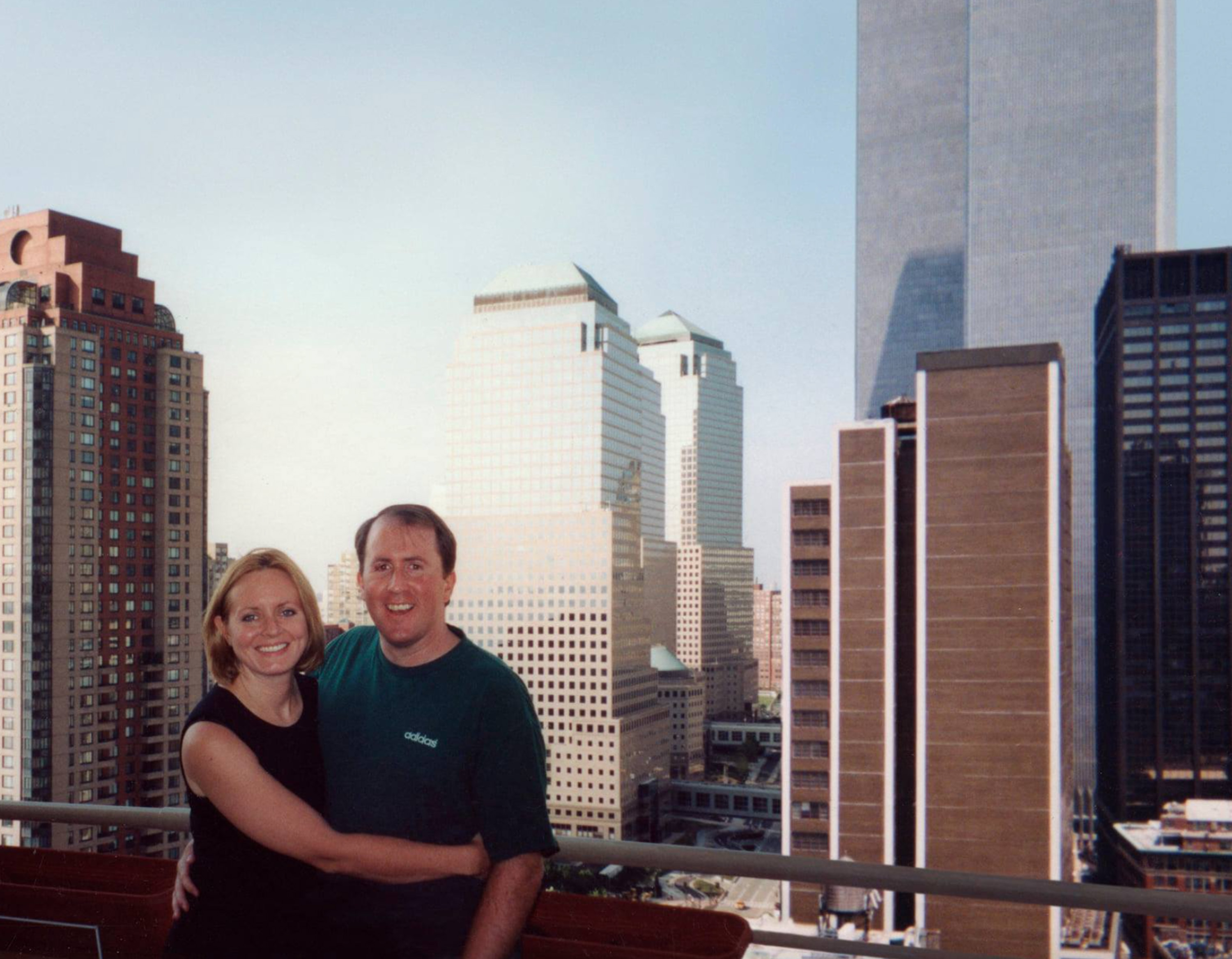
Recently I began searching through photo archives of the September 11, 2001, attacks in New York City. I wanted to see if I could find any visual record of my husband and myself from that day. 

Although I have been telling our story for years—as an author and a tour guide and a speaker at schools and libraries and churches across the country—I still sometimes feel the need to prove we were there that day. I wanted a witness: some reassurance that we mattered, that our story counts. I asked God to help me find the photographic evidence I thought I needed. As has happened so often in my life, God did provide reassuring evidence, just not the kind I expected.

Finding a photo or footage struck me as a real possibility because we were there. We watched the second jet ram into the South Tower from the balcony of our apartment just six blocks from the World Trade Center complex. Our frantic attempt to put distance between us and the burning towers took us through downtown streets and into the toxic debris cloud when the towers crumbled. 

We remember the smell, the shock, the sound of buildings collapsing, the panicked shrieks from frightened people all around us. But memory, especially when shaped by trauma, can blur with time. I’ve found myself longing for something more concrete—something outside myself.

Although most Americans who lived through that day carry searing mental snapshots, footage from 9/11 is surprisingly scarce, especially compared to the flood of visual documentation we’d have if a comparable tragedy happened today. In 2001, cell phones in the USA were rudimentary, with bad service and no cameras, and few fleeing the attacks grabbed cameras on their way out the door. Only one known video has a clear shot of the first plane hitting the North Tower.

I started my search for images of us with a deep dive on YouTube. One clip stopped me cold. 

Permission by Luc Courchesne

A photographer filming the burning North Tower panned to our building, 21 West Side Highway. (I’ve circled and annotated it in the footage.) My husband Brian and I aren’t visible, but I know we were on our balcony at that very moment. I know because we were still there when a passenger jet flew directly overhead, and this footage shows that plane hitting the South Tower seconds after the photographer panned to our building.

The clip was shot by acclaimed Canadian artist and academic Luc Courchesne, who happened to be in New York at the time. It brought my memories back in sharp, almost-unbearable detail: the roar of the second jet, the maneuver before impact to cause maximum damage, the shock of witnessing it all at such close range.

It was the second strike that sent me into a full-blown panic that day. I bolted down 24 flights of stairs, barefoot in a nightgown, with Brian close behind, carrying our terrified Boston terrier, Gabriel. We ran to the southern tip of Manhattan, as far as we could get from the towers, unsure of what would happen next. 

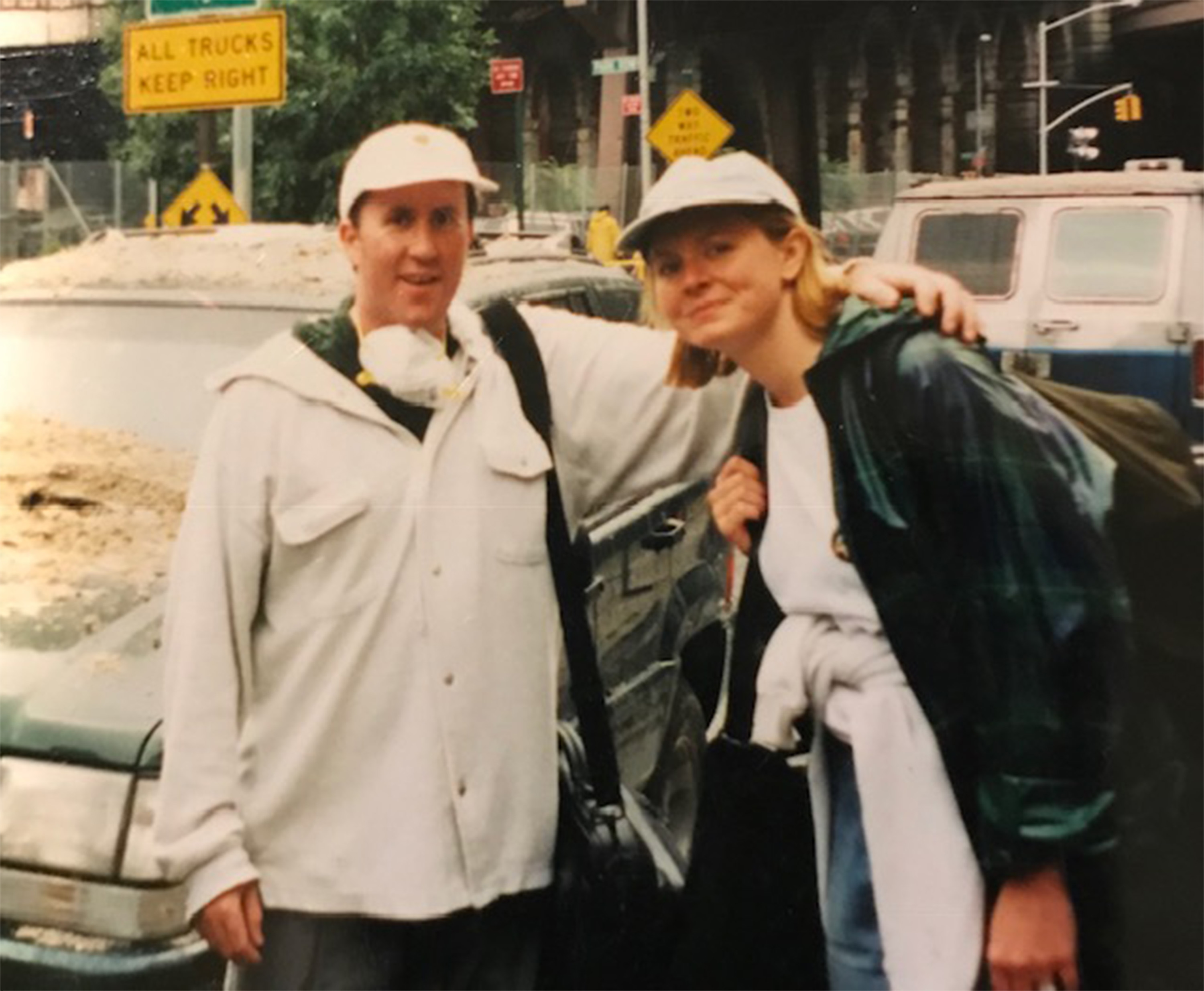
When the buildings collapsed, a cloud of pulverized debris blotted out the sky. It felt like stumbling blind through a toxic snow globe. Struggling to breathe, Brian and I clung to each other and recited the Lord’s Prayer aloud together. Certain the end had come, I felt the ache of a faith I’d let fade since childhood, its absence sharpest when I needed God’s comfort most.

Unbeknownst to us then, Courchesne had kept his camera rolling and was submerged in the dust cloud right alongside us—seeing what we saw, feeling what we felt. Again his footage stunned me. I couldn’t believe he had the presence of mind to keep recording amid such horror. 

We didn’t appear in this video either, yet it gave me a visual record of what we’d endured, something I’d never had before. It deepened my determination to keep searching, too, so I sought and received permission to comb through the archives of the National September 11 Memorial and Museum.

The collection houses over 81,000 artifacts and continues to grow as more people choose to share what they’ve saved, everything from first responders’ hardhats to Tupperware filled with dust from the collapse. I thought of my own ziplock bag of charred paper scraps that had blown into our apartment. I’m not ready to donate them. At least not yet.  

When I arrived at the museum offices, an archivist led me to a quiet conference room where she projected videos and photos onto a large screen. She’d selected these images based on the path we’d taken before we had been unexpectedly evacuated from Manhattan by boat and taken to safety in New Jersey. Among them was footage filmed by a tugboat deck hand, Ralph Gundersen, who in 2019 donated a rarely seen video of his participation in the 9/11 boat rescue.

Courtesy of the 9/11 Memorial & Museum and Ralph Gundersen

Then just 21, Gundersen was aboard the Dory B, one of the first boats on the scene. He filmed the rescue with a Sony camcorder as his boat filled. Courchesne, too, captured scenes of boarding.

Permission by Luc Courchesne

I cried as I watched dogs being handed off from the docks, remembering how Brian lowered Gabriel down to strangers before we jumped aboard a New York Waterway ferry. He was covered in the same dust as we were, licking the debris from his fur and clawing at his eyes. The toxins, which included ground glass, ravaged his throat and lungs. He barely made it through the following days and suffered lasting effects until his death several years later.

I increasingly suspect I too suffered lasting effects: I was diagnosed with uterine cancer in March, one of nearly 70 illnesses now tied to 9/11 exposure. This year has been filled with doctor appointments and surgeries, reinforcing to me that the toxic clouds of 9/11 are not just a memory from my past but a part of my present.

Courtesy of the 9/11 Memorial & Museum and Ralph Gundersen

Gundersen’s footage was raw and moving, but though the clip showed the tugboat docking very near to where we boarded our ferry, we weren’t visible in this video either.

Courtesy of the 9/11 Memorial & Museum and Ralph Gundersen

Two weeks after the archives visit, I returned to the museum for a screening of Dust: The Lingering Legacy of 9/11. The 2021 documentary includes rare footage of survivors walking unmasked through the toxic cloud, unaware of the danger they were breathing. More people have died from 9/11-related illnesses than died in the attacks themselves, the documentary reported. Cameras are still capturing that day’s effects more than two decades on.
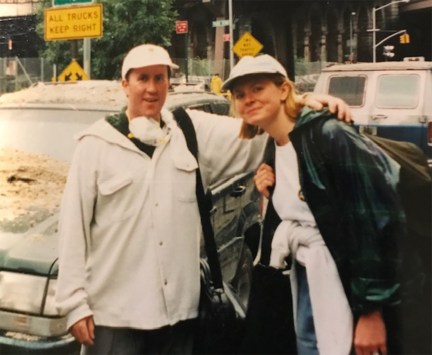
This summer, I watched hours of 9/11 videos and combed through countless stills from every angle. I saw chaos, compassion, grief, survival. I saw echoes of our story. But I did not see us.

I wanted to see myself in a picture to show that we’d been there. That our story mattered. That our suffering was real. I thought a photographic record could prove those truths to others. Maybe I even needed an image to prove that to myself. No photographic proof arrived.

But after all those hours of searching, I came to believe no proof was needed to verify the most important truth: God had seen us that day. 

When we ran down those stairs, when we prayed in the dust cloud, when we held our frightened dog, when we boarded the boat—he saw us. And he sees us still.

In Scripture, the act of being seen by God is often a turning point. Hagar, abandoned in the wilderness, names God El Roi—“the God who sees me” (Gen. 16:13). When no one else saw her, he did. That divine seeing was enough to carry her forward, and it is enough for me too. 

After the attacks, Brian and I were invited to Redeemer Presbyterian Church in New York City, where we quickly became deeply involved. In time, Brian joined the church staff while I led short-term international mission trips for more than a decade. On those trips, I began sharing my testimony—how God met us at our lowest point on the day of 9/11—and often returned to the verse that became my anchor, Galatians 2:20.

Over the years, I’ve come to treasure sharing what God has done in our lives, grateful to be a witness to his glory. Twenty-four years later, I continue to tell my testimony whenever I can—because I’ve seen firsthand the hope and healing found in God’s love.

Our testimony, like every Christian’s, is sacred—not because a camera caught it but because Christ transformed it. What matters most can’t be frozen in a frame; it lives in our hearts and our changed lives. To testify is to remember what God has done, even when the world forgets. And we trust that the God who redeems is also the God who remembers.

I went looking for photographic evidence of our presence that day. What I found instead was a deeper truth: I am a witness. The power of my story is revealed in how God guided us, strengthened us, loved us through the hardest days. On 9/11 and all the days after.

God is still writing my story, one day at a time, and because of him, I know I am seen. I know I matter. And I know my story counts. 

The Cameras Missed Me on 9/11

Christina and her husband two weeks before the attacks.

1 of 3

Christina Stanton and her husband two weeks before the attacks.

Image courtesy of Christina Stanton.

A photo of Christina Stanton after the 9/11 attacks.

2 of 3

Christina Stanton and her husband two weeks after the 9/11 attacks.

Image courtesy of Christina Stanton.

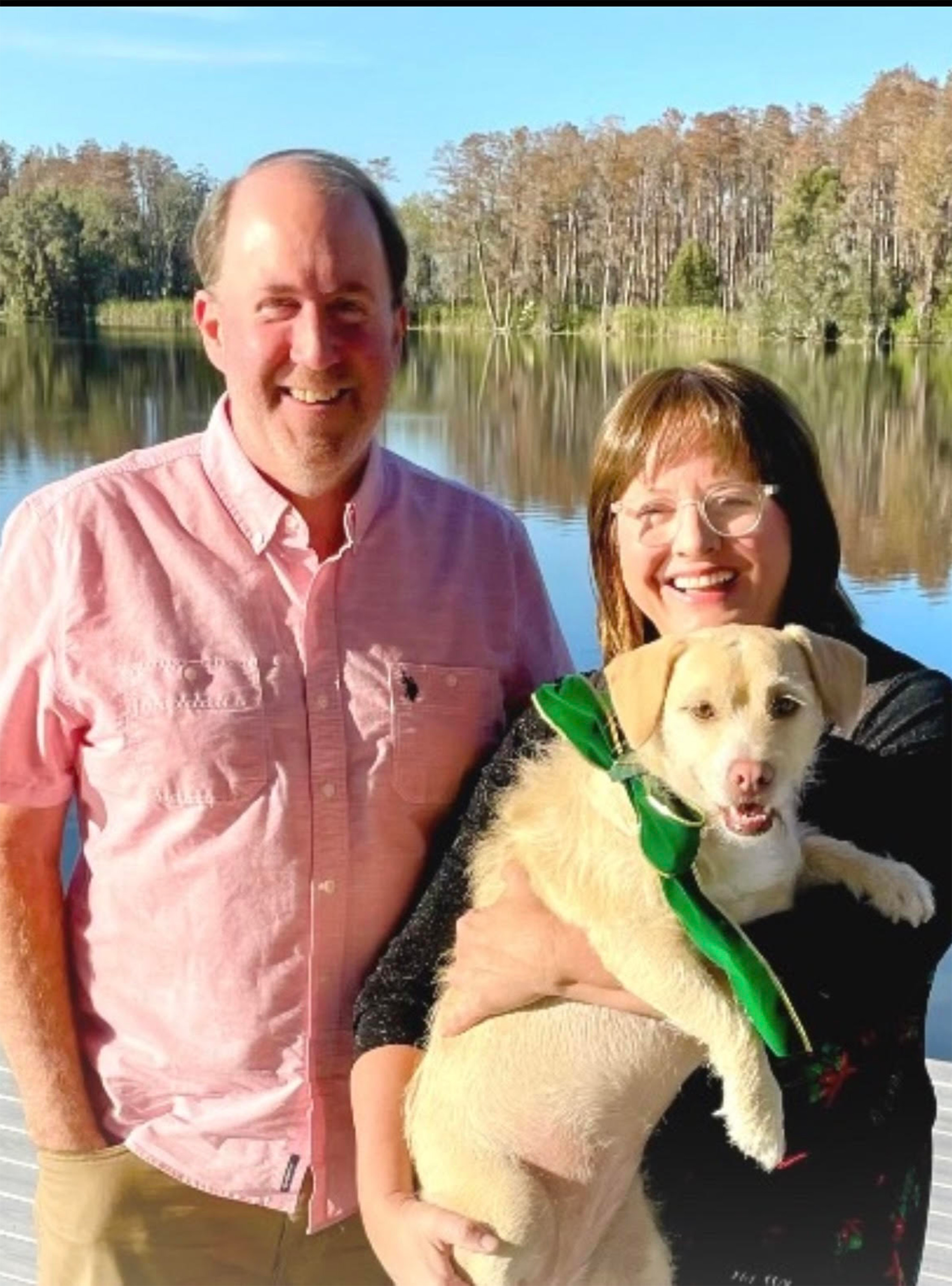
Christina Stanton and her husband now.

3 of 3

Christina Stanton and her husband now.

Image courtesy of Christina Stanton.

Log in or subscribe to view the slideshow.

A special thanks to the 9/11 Memorial & Museum collection and the gifts of Rodney G. JeanBaptiste and Ralph Gundersen, as well as Nimia Kurator and Luc Courchesne.

Christina Ray Stanton wrote an award-winning memoir of her 9/11 experience. A licensed NYC guide since 1995, she is among the few tour guides still active who toured the World Trade Center both before and after 9/11.

News

‘We Won’t Stop Worshiping’

As governments across Africa clamp down on churches, Rwandan pastors call out political overreach.

Bible reading at home in a village near Gicumbi, northern province, Rwanda. (photo by: Godong/ Universal Images Group via Getty Images)

Godong / Contributor / Getty / Edits by Christianity Today

Christianity Today September 11, 2025

Yesterday, AJ Johnson showed how new government regulations for churches in Rwanda are suppressing Christians’ ability to worship. Today, Johnson describes the pushback.

Congregations worship in the shadows. A latch clicks. Sandals shuffle over tile. When the hymn begins, it comes out more mouthed than sung so the sound won’t climb the stairwell.

More than 7,700 churches remain shuttered following the Rwandan government’s August 2024 mass inspection of prayer houses. The government’s tightening regulations have not only burdened churches and driven some underground—by requiring extensive pastoral training and inspecting church facilities from toilets to noise levels—but also produced a chilling effect on pastors’ speech.

Despite the risk of retaliation from the government, some Rwandan pastors are pushing back against the new rules. CT has agreed to change or withhold some church leaders’ names for their protection.

For rural pastors, the reforms are simply untenable. “In Kigali, you have neighbouring communities that would be affected by the sound coming from a church but in Kagera, there is a church up in the mountains so there are no neighboring homes. The congregants don’t have cars or even motorbikes so the issue of parking should not be a requirement,” said pastor Kabagambe Nziza of New Life Bible Church.

Rural churches can’t gather enough local signatures in support of their congregations. “Why demand 1,000 signatures? Are churches political parties?” interjected another pastor, whose name CT agreed to withhold to avoid reprisals.

Human rights groups amplify these cries. The World Evangelical Alliance submitted a report to the UN in July calling the Rwanda’s church regulations contrary to the country’s constitution and “not in compliance with international human rights standards.”

A February report by the Christian organization Open Doors says these regulations derive from a “dictatorial paranoia,” a dominant persecution engine in Rwanda, with the government exerting significant control over religious institutions and practices.

The closures are not just spiritual. They rip at Rwanda’s social fabric.

Beyond their role as centers of worship, churches serve as hubs of trauma care and community healing. More than 64,000 Rwandans have participated in Mvura Nkuvure, community-based sociotherapy led by faith groups, to walk toward trust and shared dignity.
Participants say the therapy builds safety, trust, care, and respect between former enemies. Survivors and perpetrators meet through church-led reconciliation forums to listen and forgive, a process many describe as restoring not just emotional wholeness but also the bonds of community life, Catholic News Agency reported. An academic review in 2024 confirmed churches and faith-based institutions fill critical gaps in mental health care in Rwanda, supporting survivors of conflict with culturally attuned, accessible care.

Without churches, neighborhoods lose job training, counseling, orphan aid, and loans. Kamanzi, the pastor from the previous article, stacks chairs after a service. “Churches are not just about preaching. They are places of healing and community,” he said. Now underground gatherings fill the void, but fear lingers: “We try not to sing too loud.”

In late July, a group of evangelical Rwandan pastors and ministry leaders started quietly working on a draft position paper proposing adjustments to the current regulatory framework. Although they haven’t formally published it out of concern for safety, the document reflects a growing but cautious internal push for government reforms. The position paper’s key proposals include reinstating the five-year compliance period for branch leaders, removing the 1,000-signature quota in rural zones, accepting modular or informal theological training for pastors, and exempting churches already approved in prior inspections.
“Regulation is not evil,” the draft reads. “But it must be humane, equitable, and anchored in dialogue.”

So far, the position paper’s writers have issued no official communication, nor has any government response indicated such a paper has been submitted. Authors of the document have refrained from identifying themselves publicly, citing fear of reprisals.

In a rural village, another pastor leads prayers in a mud-walled barn. Her congregation, too poor to soundproof their building or pay the fees, kneels on dirt floors, their whispers mingling with the rustle of maize stalks outside. “These rules are for cities, not us,” she said. “But we won’t stop worshiping.”

Her defiance reflects a broader struggle.

Rwanda’s rigid, one-size-fits-all regulations, shutting down thousands of churches and mandating pastoral credentials, stand out. Still, they echo a broader African trend of governments tightening control over religion, often lumping genuine faith communities together with rogue operators with sweeping rule changes.

In Kenya, a task force convened after the Shakahola starvation cult and proposed requiring theological certification and a state registry for pastors. In 2023, the doomsday cult led by Paul Nthenge Mackenzie compelled followers to starve themselves to “meet Jesus,” an instruction claiming more than 400 lives, many of them children. Authorities recently found five more bodies at nearby gravesites, raising the number of suspected burial locations to 27. The fallout prompted fierce debates about how to prevent religious abuses. One task force recommended the state impose more regulations. Some evangelicals have resisted, fearing politicization and threats to religious freedom.

In Tanzania, the government shut down the church of politician Josephat Gwajima after he accused the state of human rights abuses. Equatorial Guinea issued a decree mandating all religious bodies re-register or risk closure. In South Africa, new data-privacy laws have raised compliance concerns for churches sharing member photos or testimonies online.

Though these efforts vary in origin, some triggered by abuse, others by suspicion or strategy, they reveal a regional trend toward the formalization, filtration, and at times frustration of religious expression. These uniform policies, meant to weed out predators, often ensnare humble worshipers, driving devotion underground as they fail to distinguish between the faithful and the fraudulent.

Rwanda’s broad regulations have turned sanctuaries into secret gatherings. Rural pastors like Nziza face the same demands as urban megachurches. The 1,000-signature rule alienates small congregations, forcing thousands to worship in secret. This rigidity, critics argue, sacrifices spiritual freedom for bureaucratic control, silencing the very communities it claims to protect.

Back in his house, as twilight falls over the Kigali ridge, Kamanzi pulls a white candle from a drawer and places it on the windowsill.

His youngest son, tugs his sleeve. “Papa, when will we go back to church?”

Kamanzi kneels beside him, his eyes fixed on the flickering flame.

“Soon,” he whispers. “But until then, we worship here.”

Books

Christian Parents’ Mistakes Aren’t the End of the Story

Q&A with author Kara K. Root about anxiety, trust, and raising kids well.

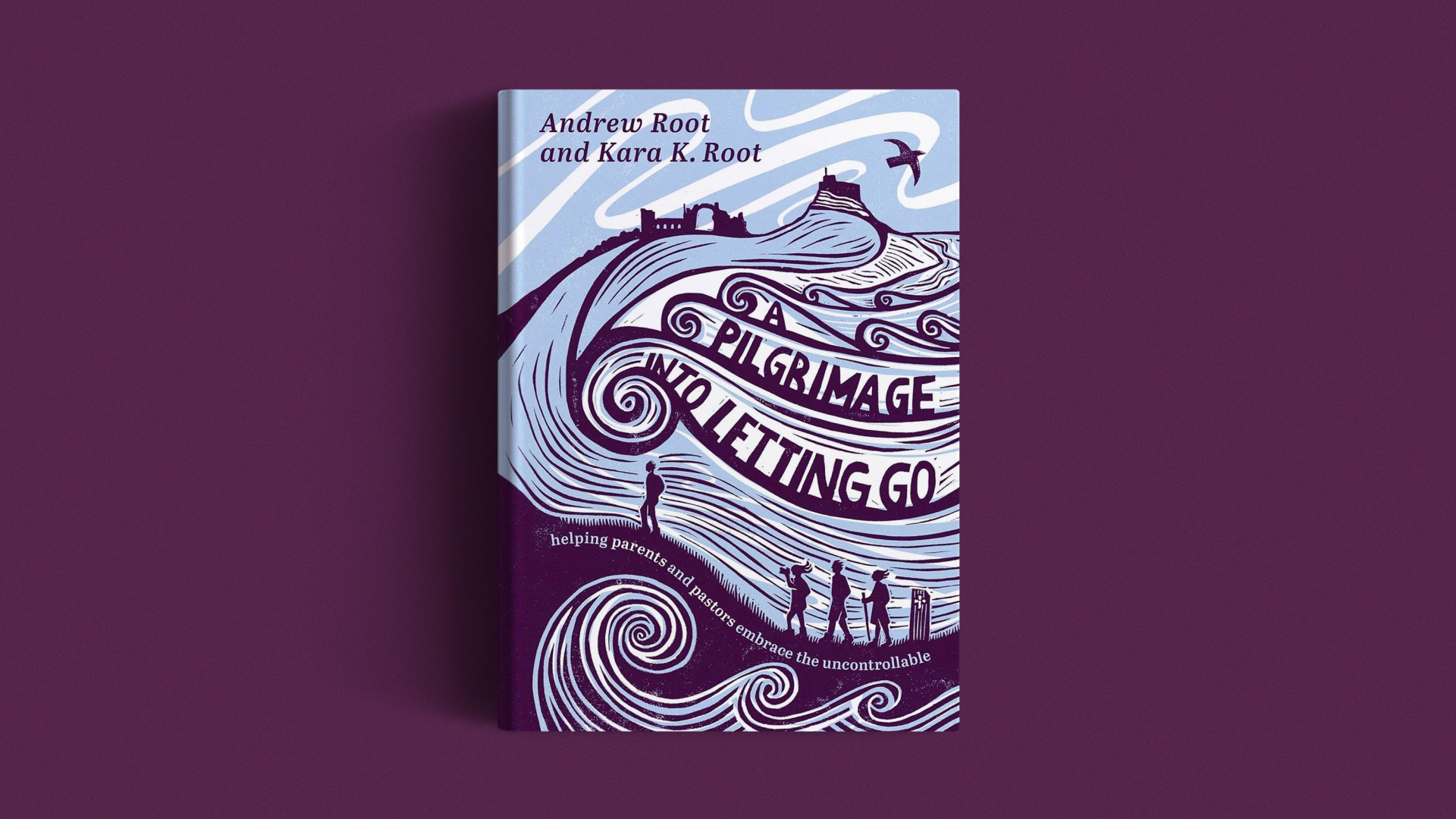
The book cover on a purple background.
Christianity Today September 11, 2025
Illustration by Elizabeth Kaye / Source Images: Getty, Brazos Press

A few weeks ago, the morning after some squabble I now can’t recall, my eldest daughter and I were alone in the car. A tense silence was still hanging heavy between us. “I’m sorry for how I acted last night,” I said. “It’s your first time to be 14, and it’s my first time to be a mom of a 14-year-old, and sometimes I really mess that up. I spent a lot of years learning how to take care of everything for you. Sometimes it’s hard to remember that now it’s time to learn how to let go.”

As the tension between us dissipated, I caught a fleeting glimpse of the little girl who used to exasperate me by tossing squished grapes off her highchair. How quickly she was gone, replaced with this young woman who is both deeply familiar and not wholly knowable. It is good that she’s not mine to control, I thought. She is meant for more than I can control.

But this shimmering recognition—this settled trusting in God’s plan and provision for both of us—isn’t the territory where I normally reside, despite my best intentions. Organization and direction come easily to me. I can always try a little harder, prepare a little better, worry a little more. And I can always imagine that this will give me the sense of sufficiency and security I desire.

Of course, I recognize the sinfulness in all this. I know how parental anxiety and attempts to control the uncontrollable contribute to our culture’s well-documented childhood anxiety epidemic. Yet every day, like the apostle Paul, I do what I do not want to do (Rom. 7:15). I manage, cajole, suggest, engineer, and solve for the best possible outcomes that I believe only I can see on the horizon ahead. 

But God’s horizon is further still, and sometimes I manage to remember it. That’s one of the central messages that Kara Root, a pastor and spiritual director, shares in A Pilgrimage into Letting Go: Helping Parents and Pastors Embrace the Uncontrollable, the new book she coauthored with her husband, Andrew Root, which published this week. 

This interview has been edited and condensed.

I was excited to come across your book because I both work at a church and am the mother of teen girls, and I found it ripe for discussion. There’s the deep dive into the life of Saint Cuthbert and the travelogue of your family’s 63-mile pilgrimage to Scotland and England. But my favorite part was your diagnosis of what I see as one of the main challenges facing modern parents and pastors: the way our anxiety causes us to grasp ever more tightly for control over those we love. You’ve named at least one facet of this thing we’re all living with—but why do you think modern Westerners are particularly prone to leaning into control as a way of dealing with the unpredictability of life?

It’s hard to answer that in a short way after answering it the long way in the book! I think we often see control as our only tool. It’s given to us at every turn as our remedy, especially on social media. We have a puppy, and I looked up one thing about dogs. Now the algorithms are sending me a million things about how to train your dog, how to calm your dog, how to take control of this or that. It’s very easy to go down any little rabbit hole and try to fix whatever it is that you think is wrong. If we think we have the capacity to control and fix it, maybe it will make us feel more existentially secure.

And everything is moving faster—under pressure to be bigger and more and better—so we’ve got that pressure internally as parents too. We’re always grasping for resources, feeling like if we just had enough knowledge, enough capacity, enough confidence, enough whatever, then we could manage, and we could avoid whatever it is that that scares us, perhaps fear of failure at being a parent. And there’s no signpost you can reach that lets you say, Well, I’ve arrived, or I am now functioning as a good parent. We’re always turning back onto ourselves.

My son just left home to do a study abroad in Scotland as a college junior, and I know he can do this. Yet here I am in another country giving him a checklist and waking up in the middle of the night just texting, How’s it going? How’s the packing? I don’t need to be doing that—but I find that anxiety propels me. In one sense, we are letting go of control. We let him figure it out and get on the plane and go by himself. But inside, I’m still grasping for control. That struggle doesn’t stop.

It’s as if I think that being in control will let me prevent something bad from happening or ensure a great experience. But really, we have no control of anything—but we’re held in the care of a loving God, so when things go wrong, that’s not the end of the story.

Do you see any difference between Christians and our secular neighbors on this? Or put another way, when faced with an unpredictable situation, is the average American Christian likely to respond more similarly to her secular American neighbor or to her African Christian sister?

I’m taking a leap here, but I’d say our secular American neighbor. The culture we’re swimming in, the air we’re breathing, is full of this sense of control and anxiety about little things. 

I’m in Copenhagen right now, and we drove into town at 4:00 p.m. Everybody’s just sitting around along the riverbanks and in the parks because this is the time of day that you get off work and you sit around with your neighbors, coworkers, and friends. It’s a different way of life.

This is not an African sister. This is a Danish sibling. But how interesting to grow up in a culture that prizes connection, belonging, and prioritizing something like watching the sunset together. Whereas for us, it feels like we’re going to get behind somehow if we spend time that way—we’re going to lose our way. And plus, who has time for the sunset when you’re running to soccer practice and violin lessons and youth group and whatever else?

That strikes me as right, but it makes me wonder: What does it say about us that our culture is forming us more than our faith and the work of the Spirit are? 

Part of it, I think, is our sense of American exceptionalism—the idea that certain things can’t or don’t happen to us. It’s easier for us to live in this denial of our mortality because we have more ways to feel secure. Although it’s interesting that, as things in our lives or our society crumble, it seems like our existential fear is heightened.

I have a friend who teaches English to immigrants from all different places, and she tells me that they seem to be able to be less anxious even in the midst of objectively higher risk. Many have been through terrible things, and they know you have to keep living in the midst of them—and that life is more than those terrible things. We still have people we love and moments we share. 

But as Americans, I think much of our sense of well-being relies on external structures that we’ve created either for ourselves or that have been given to us, and I think the church does that too. Many people want to go to a church that looks like it’s successful and busy—maybe too busy even for them to do all the things that the church is doing. 

There’s also a weird sense of shame if we’re not doing all that we could be doing: I could be doing so much more reading. I could be learning another language. I could be learning to invest. It always feels like we’re wasting our time.

But that’s this bizarre pressure that we put on ourselves, and we import that into the church and reduce our faith to an optimization tool. We think about how much more we can optimize with God on our side or how Christianity can give us better tools to accomplish what we already wanted to do. But actually, Christianity is saying that’s not what life is about. It’s about something completely different.

What does that say, then, about the formative power of our faith and the work of the Spirit? I work at a church, and I know our best intentions are to love and lead all people to deeper life in Jesus Christ. Any program we have is geared toward that objective. But so often it seems like we’re going somewhere we don’t intend to go. What’s happening there? 

Well, I think part of it is this idea that we can even lead people into deeper relationship with Jesus Christ. The way that that’s phrased very much puts it on us and puts the control in our hands. 

I’m a pastor, and the core sort of narrative that has formed in my congregation is one of trust that we all already belong to God and to each other. That’s the foundational reality of the universe that we can’t change. But we ignore it all the time. We fight against it all the time. 

In Jesus Christ, we’ve been reconciled to God and other people, though, and so the people we’re journeying with are siblings, not competition. They’re not targets of our need to convert or whatever else. They’re living in the world that God loves, just as we are.

What would it look like if we could surrender ourselves into that reality and actually live like that’s true,  like God is already active, already doing something in our lives and in the lives of the people around us? And what if we walk through this world with this anticipation? What’s God going to do today? What’s going to happen here?

That’s really different from putting that pressure on ourselves. Is it my job to make sure that people’s lives are open to the work of Christ? Is it my job to make sure that there’s something transformative that happens in the children’s ministry or in the sermon or whatever else? No, that’s not my job. That’s the Holy Spirit’s job. The idea that we or our church is somehow in charge is so ridiculous in the course of history.

The church has been through so much, and it’s going to go way past us. We just get this one little moment to receive it and watch and join in what God is doing. But if we’re so focused on trying to make something happen, we could be missing God doing something right now. 

Turning more specifically to parenting, so much of raising kids well and being in local church ministry for that matter is mundane and routine, not a spontaneous mountaintop experience. I know experiences like that can’t be forced. But you write about seeking those moments—they’re called moments of resonance in the book—by setting a table and inviting a posture of openness to be met by something beyond what we are capable of producing. I love that and have had those moments, but also, what does it look like practically to do this day in and day out when life is sloggy and unexciting? Is there a place for formational practices here? 

Often that kind of experience happens where we’re not looking for it. You’re in the middle of an ordinary Thursday, and sometimes every moment is excruciating. Maybe the kids are fighting over music in the back seat of the car. But parenting also goes by so fast, and sometimes it just strikes me, as they’re bickering, that I get to be their mom. We can’t force mountaintop experiences, but we can try to be present in the moments that we have. We can practice, maybe at the end of the day, noticing what we might have missed along the way and thinking about what we can be open to tomorrow.

When my daughter was preparing for kindergarten, she was so excited. Her big brother had already been in school two years; she was ready. She had her clothes picked out in July. But the moment she crossed the threshold of the classroom, she just melted down. There were so many kids—it’s chaos, and it’s overwhelming. She was inconsolable. I just couldn’t calm her down. 

I took her out in the hallway, and I was doing the thing of trying to get her to change, trying to control her. Nothing I did was working. I wasn’t meeting her in this moment. But then in desperation, not because I had any great faith, I knelt down and looked in her little face, and I said, “Maisy, God has a surprise for you today.” 

She stopped crying for a minute, and her eyes got really big, and she said, “Really?” And I told her yes and that at pickup I wanted her to tell me what God’s surprise was. 

I walked out the building thinking, Okay, God, you better show up. I just told her you were going to be there. All day long I’m praying and nervous. But then I picked her up, and she came running over and said, “Mom, you were right. God did have a surprise for me.” I can’t even remember what it was now, but it became our daily liturgy to talk about God’s surprise.

It was always something ordinary. It was ordinary life. And it took me a while to realize we can always expect this presence of Christ in our moments. God feeds me when God promises to feed me, but we have to train ourselves and each other to notice these gifts. It’s about belonging to God and belonging to each other. God wants to give me something every day and care for me, but also we belong to each other. I’ve experienced the presence of God in how we care for one another.

If we stop asking what we need to do to fix this moment, we can instead notice God in this moment.

Yeah, if we trust that God’s really real, we can. But I don’t know that we do. I actually think that’s our main problem in church. We believe God’s real. We’d like to think God’s real. That’s how we aspire to live. But we don’t live like God’s real. We live like it’s all up to us. 

What would it look like to actually trust this real, living God—to trust that God is going to do something, is already doing something?

As a mom with two teen daughters who has entered a season where family conflict too often seems to be the norm, I appreciated your idea of “points of aggression” as a way of explaining what’s happening under the surface in our relationships: When everything and everyone is a challenge to be managed or optimized, our relationships with our children and our churches get distorted. I see that play out in a lot of ways, but I also find myself wanting to ask how that works with our real needs for healthy authority. What does healthy authority—whether parental or spiritual—that avoids these points of aggression look like in families and churches? What are some concrete differences you’d expect to see?

Part of our anxiety, including in parenting, is that we are so afraid of disappointing people. Our feelings have been given a lot of power in today’s world. But we have to say no to be able to say yes. Just holding that boundary provides a sense of safety and security for kids. It tells them there are reliable ways to be in the world—that it’s not up to them to figure everything out.

One of the difficulties in parenting today is this idea that we have to create our own identities and curate ourselves in the world. We’ve put that on kids from a very young age. This may be changing in younger generations, but many parents will say, We’re not going to tell you what to think or what to believe or what to do. You have to be you. But sometimes children just need someone to tell them what to do. 

Every time our kids would say they didn’t want to go to church, we’d tell them that’s what we do. Our family goes to church. It’s who we are. 

If you don’t set that kind of boundary, if you ask them to create their own identities, you’re asking kids to do more than what is their rightful work as kids. And I think what we intend to be gentleness and grace is going to devolve into aggression. It’s like that in our culture. We live in a very unforgiving and merciless society. 

But what the Christian story has that the rest of culture doesn’t is mercy and forgiveness. What’s beautiful about the Christian story and about Christian parenting is not that you’ll avoid all these mistakes. It’s that those mistakes aren’t the end of the story. God is already holding us. We get to come back again, and our relationships become stronger because of the apology and the forgiveness and the rootedness with one another. 

Thinking back in your family’s life, you’ll see those moments that on the front end or in the middle felt like disasters but ultimately made you stronger down the road. And God’s never done with us. That’s the beauty too. God is always going to do something, through everything that happens. Are we willing to participate in that, or are we going to resist or ignore it?

One thing that’s different about being a Christian is a sense of eschatology too—that we have a God who promises that the end is complete love and connection. And so if we’re in a situation that’s not okay, we know it’s not the end yet. Any one bad moment is not the defining moment. We trust ourselves into this bigger story. We have a further horizon. And I think our culture has made every decision, every moment, so fraught—as though somehow we can control it all. But the truth is we’re held in God no matter what. Whatever happens, even if it’s not what thought you wanted to have happen, it’s not the end of the story.

I see that so often in so many things. Everything becomes higher stakes if you lack this longer horizon. And this is where we often see how formation matters. I’ve also said to my children that we go to church—or do other things—“because this is what our family does.” I have used that same line many times. Sometimes I wonder why we’re doing it. But then in difficult moments I see the effects, and I realize that these practices have formed my children in a particular way.

Our faith is a very corporate thing. We read Scripture together, and we practice faith together, and we show up at church together because this community helps us to be the church. We’re not the church by ourselves. And some days you’re going to be the one feeling it, and other days you’re totally not, but someone else is going to be holding you up in faith. We need each other, and kids need to see that life in community along the way. They need to understand that they’re part of this community that believes and this community is holding them.

News

Suspect in Charlie Kirk Assassination Arrested

Two days after the conservative activist was fatally shot, authorities apprehend a 22-year-old Utah man.

Charlie Kirk in a black T-shirt holding a microphone at an outdoor event.

Turning Point USA founder Charlie Kirk

Christianity Today September 10, 2025
Andri Tambunan / AFP via Getty Images

Key Updates

September 12, 2025

Utah authorities named the suspect in conservative activist Charlie Kirk’s assassination as Tyler Robinson, 22, and said they had taken him into custody in St. George, Utah.

A judge ordered him held without bail on suspicion of aggravated murder, felony discharge of a firearm causing serious bodily harm, and obstruction of justice, with prosecutors promising formal charges soon.

Utah Gov. Spencer Cox said a family member reported the suspect to a family friend, who reported Robinson to Utah law enforcement. Sources told the Associated Press that the suspect’s father had recognized him from photos released and asked a youth pastor for help convincing Robinson to turn himself in. Cox praised the family who “did the right thing” to help with the arrest.

Cox said the suspect had grown “more political” and that the family member said Robinson brought up at a recent dinner that he opposed Kirk’s views, that Kirk was “full of hate,” and that Kirk was coming to Utah Valley University. 

The family member said Robinson had “implied” he committed the crime, according to Cox. The suspect’s roommate had also shared with law enforcement Robinson’s Discord messages about retrieving his rifle. 

Investigators found several online trolling references engraved on bullet casings found with the gun used in the assassination, such as, “notices bulges OwO what’s this?” and “If you read this, you are gay lmao.” One casing read, “Hey fascist! Catch!” along with up, right, and three down arrows, likely a gaming reference.

The governor said surveillance footage showed Robinson’s car arriving on campus about four hours before the shooting, and that he blended in among students because of his age.

At the press conference the Utah governor addressed the nation’s young people, saying he knew many of them admired Kirk and many hated him.

“You are inheriting a country where politics feels like rage. It feels like rage is the only option,” said Cox, a Republican who belongs to the Church of Jesus Christ of Latter-day Saints. “We can choose a different path. Your generation has an opportunity to build a culture that is very different than what we are suffering through right now.”

He quoted something Kirk had previously said: “Turn off your phone, read Scripture, spend time with friends.” He added later that having the video of the killing available to view was not good for humans: “Log off, touch grass, hug a family member.”

“We can return violence with violence, we can return hate with hate. That’s the problem with political violence, it metastasizes,” Cox said. “At some point we have to find an off-ramp or it’s going to get much, much worse. … History will dictate if this is a turning point for our country. Every single one of us gets to choose right now if this is a turning point for us.”

September 10, 2025

Christians and politicians called for prayer after conservative activist Charlie Kirk was shot Wednesday afternoon.

Within hours, they learned Kirk, the 31-year-old executive director of Turning Point USA, had died, and their prayers for recovery turned to mourning the leader and decrying the violence that killed him.

Kirk had been speaking from a tent to thousands of students gathered in the courtyard of Utah Valley University when a single bullet sailed toward him and appeared to hit him in the neck before he collapsed.

The shooter fired from the student center building, about 200 yards away, per university reports. By Wednesday evening, police had questioned and released two individuals but had not publicly identified a suspect.

President Donald Trump and Vice President JD Vance memorialized Kirk, one of the best-known young conservative voices in the country and a friend of the administration, with the president saying on Truth Social, “No one understood or had the Heart of the Youth in the United States of America better than Charlie.”

“Charlie was killed while working to peacefully persuade others,” wrote pro-life activist Lila Rose. “May his witness call us to reject hatred and violence and to embrace the power of truth spoken in love.”

The fatal shooting comes amid a sense of swelling political violence in the US, including the murder of a Democratic lawmaker in Minnesota in June and an assassination attempt against Trump during a Pennsylvania campaign rally last year. Texas pastor Jack Graham, an evangelical adviser to Trump, called Kirk a “martyr.”

Kirk was an evangelical Christian, and his wife, Erika, runs a Christian clothing brand and Bible-reading project called Biblein365. She posted from the Psalms on X: “God is our refuge and strength, a very present help in trouble.”

On social media, where Kirk had millions of followers, his death stirred responses from Christians who appreciated his politics as well as those who disagreed.

They called his killing gruesome and horrific. They asked for prayer for his wife and two kids, sharing photos and video clips of the young family. And they expressed feeling unsettled by the current political climate, rhetoric, and violence.  

In a survey last year, the majority of American voters (66%) agreed that the threat of political violence was a major problem in the US, with Trump supporters most concerned (74%).

Kirk’s movement of young conservatives took off during Trump’s first term, expanding to around 800 campuses including dozens of Christian schools.

Many college chapters held vigils in Kirk’s memory Wednesday night, gathering with candles and posters. Supporters saw him as a hero for free speech on campus; students shared about how they took interest in conservative politics and spoke out about their faith as a result of Kirk’s dialogues.  

At Liberty University in Virginia, where Kirk was scheduled to speak at convocation next month, hundreds gathered to hear from student leaders as well as chancellor Jonathan Falwell. They grouped together to pray on the steps and lawn in front of the student union, while a vocalist sang “Amazing Grace.”

Turning Point USA is popular but has also been divisive. On its website, the organization urges conservatives to “take up arms in the culture war.” Some professors reported harassment after it launched a watch list to expose “leftist propaganda” in college classrooms.

Kirk had partnered with Jerry Falwell Jr. to form the Falkirk Center for Faith and Liberty at Liberty before Turning Point USA began its own faith arm in 2021. TPUSA Faith sets out to “unite the Church around primary doctrine and to eliminate wokeism from the American pulpit.” It offers biblical citizenship classes, courses for pastors, and church events.

Utah Valley University in Orem had been the first stop of Kirk’s “American Comeback Tour,” with events across 10 cities in September and October.

The university told The New York Times that six officers from the college’s police department worked the event, in addition to Kirk’s security team. Police chief Jeff Long said, “You try to get your bases covered, and unfortunately, today, we didn’t. Because of that, we have this tragic incident.”

The leaders of the school’s TPUSA chapter donned American Comeback T-shirts and MAGA hats as they promoted the event for weeks with posters, videos, and a giant cutout of Kirk’s head.

Kirk was manning his “Prove Me Wrong” table, answering questions from the crowd on the Orem, Utah, campus. According to news reports and footage taken during the incident, he had been responding to a question about mass shootings when the bullet fired.

“Charlie Kirk got Gen Z off the sidelines. We owe him much,” wrote Southern Baptist pastor Dean Inserra following Kirk’s death.

This is a breaking news story and will be updated.

Apple PodcastsDown ArrowDown ArrowDown Arrowarrow_left_altLeft ArrowLeft ArrowRight ArrowRight ArrowRight Arrowarrow_up_altUp ArrowUp ArrowAvailable at Amazoncaret-downCloseCloseEmailEmailExpandExpandExternalExternalFacebookfacebook-squareGiftGiftGooglegoogleGoogle KeephamburgerInstagraminstagram-squareLinkLinklinkedin-squareListenListenListenChristianity TodayCT Creative Studio Logologo_orgMegaphoneMenuMenupausePinterestPlayPlayPocketPodcastRSSRSSSaveSaveSaveSearchSearchsearchSpotifyStitcherTelegramTable of ContentsTable of Contentstwitter-squareWhatsAppXYouTubeYouTube