Church Life

Families Use Our Church to Get into Private School. What Do I Do?

CT advice columnists also weigh in on theological disagreements at church and living above reproach.

Cartoon showing a priest baptizing a row of children lined up in school uniforms.
Illustration by Jay Cover | Portraits by Jack Richardson

Got a question? Email advice@christianitytoday.com to ask CT’s advice columnists. Queries may be edited for brevity and clarity.


Q: I’m a staunch egalitarian, but many members of my church family lean complementarian. I read a lot to better understand the biblical basis of what I believe, and I want to avoid confirmation bias, but reading arguments for complementarianism fills me with dread. Do I need to look at both sides even when I feel firm in what I believe? —Wary in Wisconsin

Karen Swallow Prior: The more strongly we hold a conviction, the more we are obligated to be knowledgeable about it. The issue you’ve raised here is one on which you feel strongly, but it’s also a question about which Christians have disagreed across church history, including within evangelicalism. 

Many individual Christians and denominations have changed their views about women’s roles over the years. For example, I know of one prominent Christian who began as an outspoken egalitarian, then called women’s roles a secondary issue, and then called complementarianism an essential matter of biblical commitment. 

Moreover, the categories of egalitarian and complementarian as used today only date back to the 1980s, and that period has brought numerous nuances, clarifications, and subcategories. None is infallible. 

In general, this debate should be handled with charity and humility—and with an eye focused more on church history than on today’s constantly evolving postures. For you specifically, I’d advise considering how much these questions come up in your local church life. 

If you’re debating the issue intensely or often, you should probably be well-read to be able to speak graciously and thoroughly. But if the topic isn’t of high interest to others in your church and you continue to be content to worship alongside complementarians, your present knowledge may suffice.  

Karen Swallow PriorIllustration by Jack Richardson

Karen Swallow Prior lives in rural Virginia with her husband, two dogs, and several chickens. Following a decades-long vocation as an English professor, Karen now speaks and writes full-time.


Q: I coordinate a children’s ministry at my town’s only Anglican church. Nearby, there’s a private school for Anglican girls, and I’ve long seen families attend our church a year or so before their daughter would enroll. The child gets baptized, but then the families often disappear. I’ve told myself I should welcome a chance for evangelism and discipleship, but I find myself suspicious of families who turn up with a daughter of a certain age. I’m sick of feeling used but then feel guilty about feeling that! What should I do? —Not Sure in New Zealand

Kevin Antlitz: I think most of us who work in churches can relate to how you feel. 

My initial response to you was to strategize ways to stop this: Maybe you could require families to be part of your church longer before baptism or sync up with the school to ask for institutional changes.

But as I sat with your situation, I found myself softening. As frustrating as it is to feel like a box being checked, I encourage you to focus on the opportunity here. 

Maybe most of the families really are using the church solely to get their kids into this school. But that still means they’re with you for a year. This is a chance to love freely, without condition. What might it look like to more intentionally support these families? They may still check out after a while, but that’s not something you can control.

So much of ministry is sowing seeds. As we partner with others in sharing the gospel and discipling, the Lord gives the growth (1 Cor. 3:6). Or he doesn’t. We can only sow and water. 

Instead of trying to insulate yourself from being used, spend your time and energy doing what you can to help these girls and their families experience the love of God in your church. Maybe, at the end of the year, they’ll no longer be able to imagine life apart from your community.

Kevin AntlitzIllustration by Jack Richardson

Kevin Antlitz is an Anglican priest at a Pittsburgh church positively overflowing with kids. He and his wife have three young children who they pray will never know a day apart from Jesus.


Q: I have a friend who is thinking about dating a guy, but they live in separate states. He’s visiting her and staying at her place overnight. I know they won’t sleep together, but it still feels a little weird to me. Should I say anything to her as her friend? What does “living above reproach” really mean? —Ill at Ease in Indiana

Kiara John-Charles: Scripture discusses “living above reproach” as a responsibility of church leaders (1 Tim. 3:2; Titus 1:6), but those leaders are an example for all believers. As Christians, our lives are a witness to those around us, and even the appearance of wrongdoing can hurt our witness or lead others astray (Matt. 18:6–7). 

An overnight stay can also lead to future compromise because of the comfort and intimacy this experience may establish outside of marriage. Without clear boundaries, we can overestimate our ability to resist temptation as desire naturally deepens when we become close emotionally and physically (1 Cor. 6:18). 

As a friend once told me, “Your body will betray you” in these moments if you are not on your guard, relying on the help of the Spirit (1 Cor. 10:13).

Boundaries are important in dating relationships, and godly friendships are a beautiful gift in the life of a believer and can offer accountability and wisdom (Prov. 27:17). So it’s worth asking your friend why this potential suitor needs to stay with her overnight. Why hasn’t he sought other options, like a guest room at another friend’s home?

There are plenty of reasons this plan is unwise, and you may be able to encourage her to set boundaries against temptation, helping her avoid unintended consequences or moral compromise.

Kiara John-CharlesIllustration by Jack Richardson

Kiara John-Charles is an LA native with Caribbean roots and a love for travel and food. She works as a pediatric occupational therapist and serves at her local church in Long Beach, California.


Books
Review

The Uneasy Conscience of a Christian Introvert

Introverts don’t need to become extroverts. But sometimes I’ve let my introversion excuse my failure to love God’s people as I should.

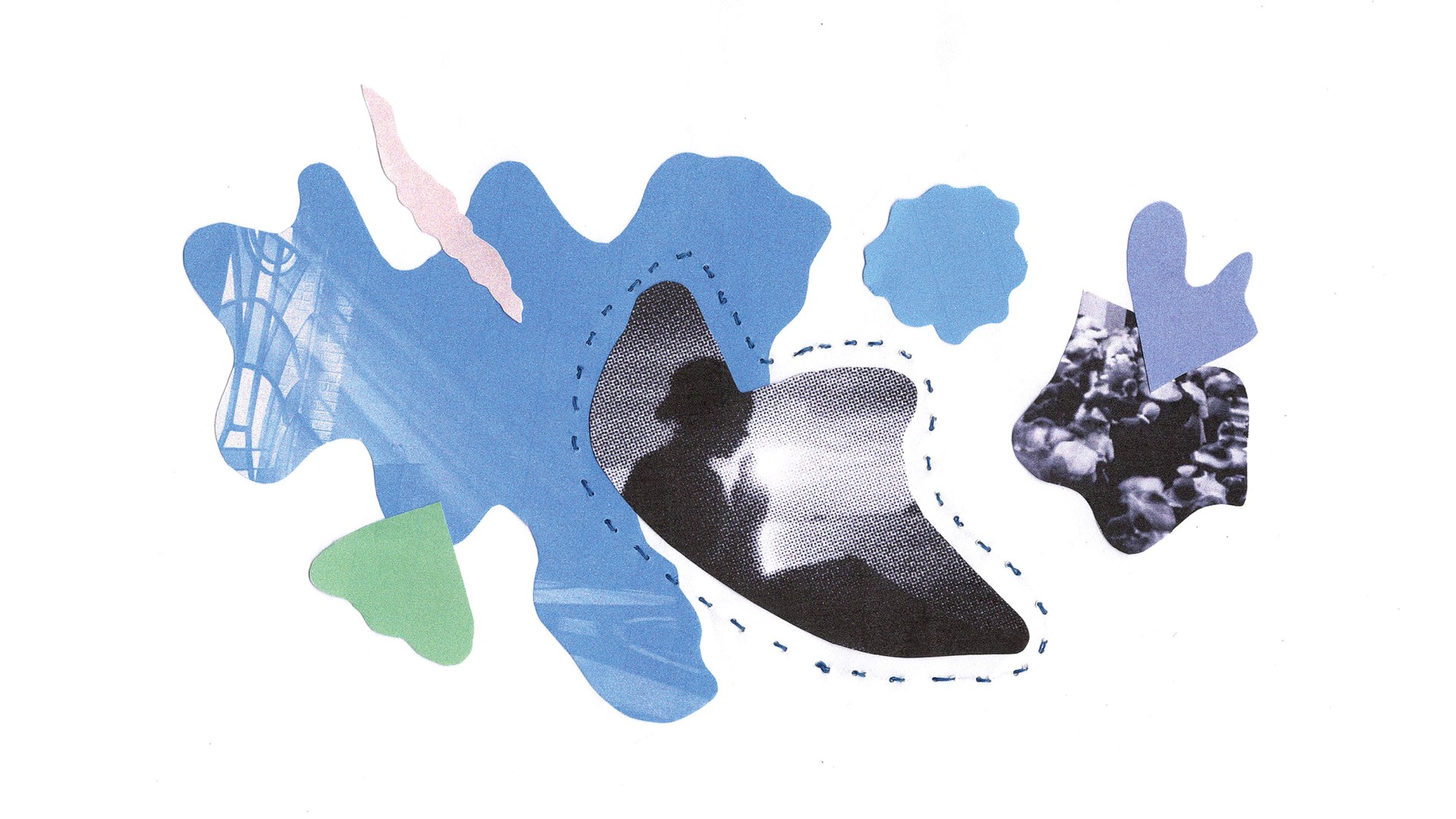
A collage of organic cutout shapes, with images of silhouettes of people inside.
Illustration by E S Kibele Yarman

Somewhere in the lower circles of introvert hell, about halfway between Office Birthday Party Boulevard and (shudder) the Professional Networking District, you’ll find a former church of mine.

Don’t mistake me: I loved this church, though I only spent a few months there. It revitalized my understanding of the Bible’s blueprint for local congregations. Yet a palpable dread enveloped me each Sunday as the benediction crept closer.

In most churches, as the sanctuary thins out after a service, introverts have options. Rather than lingering to socialize, we can merge with outbound traffic as it flows toward restrooms and refreshment tables. Here, though, you sat back down and fell into conversation with your nearest pew-mate, often for ten minutes or more.

No one commanded this from the pulpit. No ushers enforced it. It happened because everyone wanted it to happen. Presumably, they’d been discipled to believe that when brothers and sisters gather for worship, they shouldn’t interact like strangers on the street.

Intellectually, I understood the impulse. Yet it felt like an elaborate conspiracy to make introverts self-conscious. I’d stumble through some perfunctory small talk, counting the moments until I could browse the church’s bookstall in blissful solitude.

Adam S. McHugh probably had similar experiences in mind when, just over 15 years ago, he wrote Introverts in the Church: Finding Our Place in an Extroverted Culture. (A revised and expanded edition appeared in 2017.) As McHugh sees it, evangelical churches often foster forms of fellowship and spirituality that favor chatterboxes over quiet types. Think, for instance, of post-service coffee hours, which McHugh amusingly likens to nonalcoholic cocktail parties. Or small-group environments that encourage immediate, plentiful “vulnerability.” Or evangelistic models that elevate quick wits and slick salesmanship above patient listening.

A former pastor and chaplain, McHugh delivers keen insights on extroverted archetypes within Christian ministry. As he notes, many congregations expect charisma from the pulpit and backslapping bonhomie in the greeting line. I nodded sympathetically as he described preferring study and sermon prep to the more social and collaborative dimensions of church leadership. (McHugh later left the pastorate to become a sommelier in one of California’s winemaking regions, an experience he details in Blood from a Stone.)  

Much of the book revolves around two “journeys” McHugh prescribes for Christian introverts. First comes an inward journey, by which we come to embrace our personalities as divine gifts rather than social and emotional handicaps. But this doesn’t mean luxuriating on an island of seclusion, because McHugh also outlines an outward journey, by which we learn to pursue Christian fellowship as our authentic selves. Rather than “masquerading” as social butterflies, he writes, we should “stretch our personality preferences without distorting them.” 

From here on, it might sound like I’m finding fault with McHugh’s counsel. That’s not quite right. Yes, I jotted down several questions and counterarguments in the margins. But McHugh, to his credit, eventually addressed each one. Where we differ—if we differ—boils down to questions of emphasis.

Take, for instance, McHugh’s account of the inward journey, which leans heavily on therapeutic notions of healing and self-acceptance. Introverts, he says, bear scars from being rejected and misunderstood by peers, colleagues, and loved ones. At one point, he writes of “distinguishing between the healthy components of our personalities, those that are natural and to be celebrated, and the coping mechanisms that are the symptoms of our wounds.”

Having nursed those wounds myself, I wouldn’t minimize their severity or begrudge anyone the consolation they deserve. But McHugh’s framing obscures a third possibility: that introversion, in certain circumstances, reveals hearts that need cleansing more than healing.

This uncomfortable thought occurs whenever I catch myself plotting Sunday morning escape routes. Aren’t church gatherings supposed to offer a foretaste of heaven? McHugh might reply with reasonable alternatives to self-reproach: Perhaps, after worship, most introverts prefer holy silence, quiet prayer, or deeper dialogue to shooting the breeze in a noisy foyer. 

Yet my own inward journeys of reflection suggest a less flattering answer: I don’t always love God’s people as I should. I treat them as roadblocks to reading books or watching Sunday afternoon football.

McHugh rightly objects to blaming God-given dispositions for unrelated spiritual shortcomings. He’s clear that being reserved doesn’t justify withdrawal from Christian community or neglecting to love our neighbors. The book acknowledges habitual temptations introverts should resist—yet it seems reluctant to regard introversion itself as subject to sin’s corruption.

If McHugh’s model of journeying inward flirts with underselling human fallenness, his model of journeying outward flirts with overselling personality types as gifts that nourish the church. I agree that introverts and extroverts bless Christ’s body in complementary ways. Yet I remain uneasy about introverts purposefully engaging church cultures as introverts.

Granted, McHugh admits the limits of personality labels. They don’t define us, he says, and they shouldn’t outweigh how Scripture defines us. Still, I suspect I’m warier of our cultural mania for identity badges, from the alphabetical readouts of Myers-Briggs to the numerical permutations of the Enneagram

These exercises can help illuminate who we are and what makes us tick. At extremes, however, they can seduce us into navel-gazing. McHugh casts an appealing vision of introverts and extroverts edifying each other about the contours and intricacies of their personalities. But I worry about these conversations diverting attention from the biblical drama of redemption, the riches of church history, and other weightier topics.

The 2017 version of Introverts in the Church opens in a cheerful mood, noting the favorable reputation our tribe increasingly enjoys. McHugh’s new preface pays homage to Susan Cain’s 2012 bestseller Quiet: The Power of Introverts in a World That Can’t Stop Talking. “Somewhere along the line,” he quips, “introverts got sexy.” He promises more celebration of “what we are” than apologies for “what we lack.”

That’s an improvement over stigmatizing introverts as antisocial weirdos. But I’ll pass on attending any victory parades. I’ve never let stereotypes get me down, and I don’t want to let cultural acclaim puff me up. If introverts know anything, it’s the value of standing apart.

Matt Reynolds is senior books editor for Christianity Today.

Theology

It Was ‘Good,’ Not Perfect

The language of creation can reframe the way we view people with disabilities in the church.

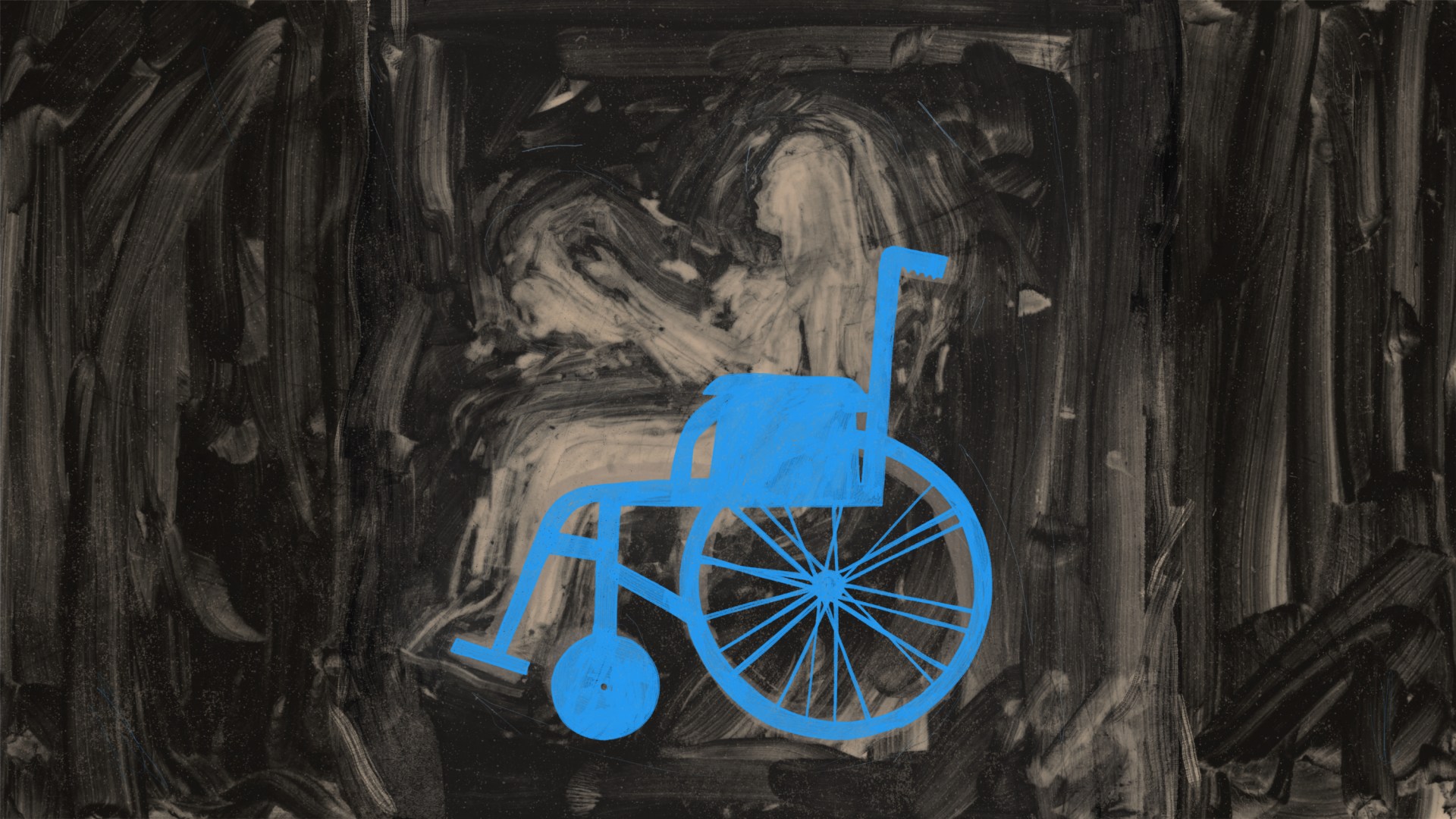
Charcoal sketch of a person sitting in a blue wheelchair.
Illustration by Kume Pather

My good friend Emma is a deeply committed Christian who lives with cerebral palsy. Recently she went to a church she had not visited before. As she was leaving, an elder approached her and asked, “Can I pray for you?” She replied, “Why would you want to do that?” He said, “I feel that Jesus wants to free you from your disability.”

Emma’s response was calm but firm: “I’m happy as I am, thank you.” She left the church with dignity, but she was really upset. “Every time that happens, it makes me feel like I don’t belong in church,” she told me. “It’s like people think I’m less than everyone else. But I’m not, right?” A tear rolled down her cheek. 

My friend’s experience lays bare a theological fault line Christians must confront: When the church sees disability solely as something to be fixed rather than something that can be honored and received, it obscures the truth of creation’s goodness and distorts the image of God.

The term disability is both theologically and culturally contested. For some, like the elder who presumed to pray away Emma’s cerebral palsy, it signifies only a defect—something in the body or mind that has gone wrong and needs to be fixed. This deficit model treats disability as an aberration from an assumed norm of bodily or cognitive integrity and reinforces disability as the primary part of a person’s identity.

Others argue that a good deal of disability lies within society and not within the individual. In this view, a wheelchair user, though impaired in mobility, is rendered disabled when people build stairs instead of ramps or withhold community on the grounds of bodily deviation.

Disability is not simply a condition; it is also a relation. Disability can be both a site of divine image-bearing and a context of genuine struggle. I believe it is possible to honor the goodness of disabled lives without denying the fragility they may carry.

To do so, we must begin with Creation itself. The key question is not simply whether disability is good or bad, but what kind of world we believe God has made—and what it means to belong within it.

Some of our errors in theology around disability stem from a reading of the Genesis creation narrative that idealizes Adam and Eve as perfect examples of human beings. The implication is that there was no disability in the Garden of Eden and therefore disability must have arisen after the Fall.

Within this reading, we can start to think of Eden as a flawless realm, untouched by struggle or dependency—a vision of harmony in which disruption, limitation, and fragility are cast as intrusions. Bodily or cognitive differences are viewed solely through the lens of departures from divine design.

But there is another way to interpret the Genesis account of creation, a way that sees the goodness of creation in a different light.

Let’s begin with the suggestion that the original state of the world was one of perfection. Although some default to this language when interpreting the Genesis creation narratives, the text itself never uses this term. While Eden was originally untainted by sin, the Bible does not suggest that creation was perfect in the sense of flawlessness or static idealism.

Instead, the divine pronouncement is that the creation is good (tov in Hebrew). This word, in its biblical and theological context, does not imply perfection or uniformity but denotes relational integrity, aesthetic richness, diversity, and the capacity for fruitful, dynamic life and connection. 

The theological grammar of Genesis is thus relational rather than idealistic. The goodness of creation is not grounded in metaphysical perfection but in the dynamics between Creator and creation, and among created beings themselves. Eden is a world of movement, interdependence, vulnerability, and growth. It is, in short, a world that includes the possibility of difference and dependence as intrinsic to its goodness. This reframing of Genesis as a story of dynamic goodness rather than static perfection compels us to revisit its embedded theological anthropology.

If Eden’s goodness lies in its interrelational depth rather than its metaphysical flawlessness, then the human vocation must likewise be understood in relational rather than idealized terms. The move from a general depiction of creation’s goodness to the particular creation of humanity (Gen. 1:27–31) signals not a break but an intensification of this theme. 

Diversity of form, function, and even capacity is not a deviation from divine intent but a constitutive feature of it. Genesis 1 is not concerned with perfection as sameness but with a flourishing ecology of difference. The opening chapter of Genesis celebrates a creation teeming with life: light and dark, sky and sea, birds, fish, and finally human beings, uniquely made in the image of God.

Thus, humanity’s imaging of God is rooted not in perfectionistic traits like rational mastery or autonomy but in the divine capacity for relation, response, and care.

While the imago Dei has sometimes been defined in terms of intellect, rationality, or physical capacity, this view inevitably excludes those with profound intellectual disabilities or those living with dementia, whose capacities are either undeveloped or diminishing. But the problem runs deeper: If the image is equated with cognitive or physical function, then all human beings are, in effect, growing out of that image as we age and our bodies and minds decline. This renders the imago Dei not a gift bestowed but a status to be lost, an anthropology that is both theologically incoherent and pastorally troubling.

There is another way to think about the image of God. God’s Spirit (ruach) sustains all living creatures, including animals (Gen. 7:15; Ps. 104:27–30). What distinguishes humans is God’s desire to relate to them (Gen. 1:26–28). The imago Dei is manifested in God’s loving gift of relationality. What distinguishes humanity is not superior functionality but God’s relational intent. God speaks with human beings, entrusts them with responsibility, and desires communion with them in a way not extended to other creatures. The imago Dei is a gift, not a human capacity.

Some might challenge the inclusivity of this view by arguing that relationality requires reciprocity, asking, “If you can’t respond to God’s gift, then how can you receive it?” Once again, Genesis has a reply.

In the second creation account, in Genesis 2, humans are called to care for the world—to tend, to keep, and to sustain it (v. 15). If caring for the world and all its creatures is a foundational human vocation, then we as creatures are counted among those who also need to receive care. If you find yourself in a situation where you can only be cared for, where you cannot respond to others and to God, this does not mean you are somehow a lesser portrayal of the image of God.

This vision of the image of God as a relational gift rather than a functional capacity opens the door to a more profound understanding of humanness. If Genesis 1 affirms that difference and dependence do not preclude divine image-bearing, then Genesis 2 goes further. It reveals that human wholeness emerges through incompletion, need, and embodied vulnerability—the opposites of modern ideals of autonomy.

This idea stands in stark contrast to prevailing cultural narratives. Consider, for instance, the increasing momentum behind assisted suicide legislation in the US, Canada, and beyond, where public discourse often frames dependence as indignity, suffering as meaningless, and the loss of cognitive or physical control as a fate worse than death. 

The vision of dependence and vulnerability as part of God’s good design is supported by wider theological tradition. For example, Dietrich Bonhoeffer, writing in Creation and Fall, reflects on Adam’s formation from the dust as a sign of human finitude and need, not failure.

For Bonhoeffer, to be human is to exist not in isolation but in relationship—drawn into life with God and others. More recently, theologian Christa McKirland argued that human need is not the result of sin but part of what it means to be created. She says we are made for necessary kenosis— a posture of receiving from God and others that reflects the image we bear. 

These perspectives remind us that what our culture often views as weakness may in fact be how the image of God is most clearly seen. This is an understanding that sits uneasily with much of what modern society prizes. These cultural frameworks are underwritten by a view of the human person that regards self-sufficiency as the highest good, and care, especially long-term or intensive care, as a social, economic, and existential burden.

Against this backdrop, the Genesis account offers a radical counter-vision. It insists that vulnerability is not a failure of human life but rather a feature of its divine design.

To be human is not to be autonomous but to be made for communion. And communion—both with God and with one another—is made possible not through strength but through the shared grammar of need. 

The second creation account amplifies the theological subtext of the first. Here, dependence is not merely accommodated within human nature; it is part of it. The divine image is not only preserved in those who receive care; it is clarified in the very structures of mutuality and community through which care becomes necessary. What Genesis 1 gestures toward, Genesis 2 makes explicit: We are created not to be whole alone but to become whole together. Any account of the imago Dei that cannot make theological sense of the person in decline, distress, or dependency is not merely incomplete; it is false. 

Yet this vision unfolds in proximity to fracture. Genesis 3 is not far off. The Fall does not erase the relational architecture of creation but distorts it, transforming mutuality into blame and interdependence into alienation. Sin distorts the image of God in men and women. That movement, from communion to rupture, sharpens the theological stakes of Genesis 2: The goodness of human relationality is vivid precisely because it stands on the brink of rupture. 

What is often overlooked in the creation account is the cost of interdependence, even before sin enters the narrative. Adam loses a rib to make relationship possible; communion is born not from wholeness but from incision. The first human does not begin as a self-sufficient, intact ideal. Rather, he becomes relational through the opening of his body.

Adam bears the wound that makes community possible. His body, altered to make space for another, testifies that limitation and change are not contradictions of goodness but are conditions for love. If the grammar of Creation is goodness and not perfection, then bodies marked by difference, by need, by variance, are not deviations from the human norm. They are part of it.

What the church should see is this: The first scar in Scripture was not caused by sin, but by love. It was not a punishment. It was the cost of communion. If we miss that, we miss something important about the gospel.

At this point, a caution is necessary. Many forms of disability are not experienced as benign differences and should not be idealized. For some people, disability is marked by chronic pain, fatigue, degeneration, or isolation. To overlook these realities would be both pastorally insensitive and theologically dishonest.

Suffering is real. And for some, it is relentless. Yet we are not without hope: In the new heavens and new earth, Christ will wipe away every tear, and mourning, crying, and pain will cease (Rev. 21:4). But this does not mean that disabled bodies fall outside the scope of creation’s goodness. All human lives bear the imprint of fragility; every body carries its own marks of limitation and vulnerability. 

To suffer is not to stand outside the goodness of creation; it is to live within its present groaning. As Paul writes, “the whole creation has been groaning together” (Rom. 8:22, ESV). This groaning is not a sign of divine abandonment but a cry for the redemption to come. It signals not a departure from God’s purposes but their incompletion.

Our wounds (like Adam’s) are not always chosen, and they are often not healed. But they are not disqualifications from belonging. They are reminders that we are part of a creation still yearning for its fulfilment that will be complete in the coming kingdom of God.

One might object: Doesn’t Jesus’ healing ministry suggest that God intends to eliminate disability? Only if healing is read exclusively as the negation of bodily difference rather than also as the manifestation of divine presence amid human fragility.

Jesus’ healings are signs of the kingdom’s arrival within a world structured by exclusion, sin, and harm. Jesus’ healing ministry was one sign that he was, in fact, the promised Messiah (Matt. 11:2–5). When Jesus healed, he took away personal suffering and he often redeemed and redefined the lives of people whose neighbors labeled them deficient. Jesus restored them to community, to dignity, and to worship (Luke 13:10–17; Mark 2:1–12; John 9).

We must also remember that Jesus did not always choose to heal. That the risen Christ retained his scars (John 20:27) and that Paul’s plea for healing was refused (2 Cor. 12:7–9) further confirm that divine purposes are not exhausted by physical cures.

God does not need to remove what the world calls impairment, disfigurement, or disability in order to disclose the full humanity and full belovedness of a person. 

The message from church and culture alike to many people with disabilities has been that their lives are, at best, an exception to God’s design and, at worst, a problem to be resolved. Their differences are often received as intrusions into an otherwise idealized human norm. 

Such a vision turns the hospitable logic of creation on its head. It suggests that belonging is conditional, and therefore one must change in order to be welcomed. In this way, communal belonging that was meant to reflect God’s goodness becomes a place of exclusion. 

The church must learn to hear and resist this distortion. If God’s creation is good, then every life within it, regardless of capacity, cognition, or conformity, is already gifted with divine affirmation. 

While the church should be a place of belonging, we must also realize that our present joys and sufferings within the body, on this side of Genesis 3, are partial. In the new creation—regardless of one’s present-day ability or disability—we will all be fully healed in our bodies and communities. Isaiah tells us that infants will not die, children will not be doomed to destruction, and old men will live long to enjoy the fruit of their labor (Isa. 65:17–23). The church does not drum up this goodness; it is called to bear witness to it. We must create communities where people with disabilities are not merely included but are recognized as those through whom God’s grace is disclosed.

Inclusion is not enough. Accommodation is not enough. What is needed is a theologically grounded sense of belonging. To belong is not simply to be present. It is to be recognized as someone whose presence is necessary, whose difference makes a difference. The church must become a community in which disability is neither ignored nor heroized but is received as part of the diverse ecology of God’s good creation. This will require changes—practical, liturgical, and theological. Rethinking leadership. Reimagining worship. Listening differently. Asking not just what people with disabilities need from the church but what the church needs to learn from everyone’s experience.

Can someone with profound intellectual disability lead us in prayer? Can a body marked by pain be the place where we see power made perfect in weakness (2 Cor. 12:9)? These are not rhetorical questions; they are theological imperatives. 

Emma’s question remains: “It’s like people think I’m less than everyone else. But I’m not, right?” Her words emerge from a lifetime of negotiating what it means to belong. They arise within a world that often measures value by ability and a church that has too often mirrored that standard. 

If the church is to be faithful to the God who made the world and called it good, it must learn how to respond to Emma’s query in word and deed. Far from being “less than,” she bears the imago Dei. Her life is evidence of the goodness of God.

John Swinton is a professor in practical theology and pastoral care at the University of Aberdeen, Scotland. He is a former nurse and mental health chaplain. His research focuses on the theology of disability, dementia, and mental health. He is the founder of the University of Aberdeen’s Centre for Spirituality, Health and Disability.

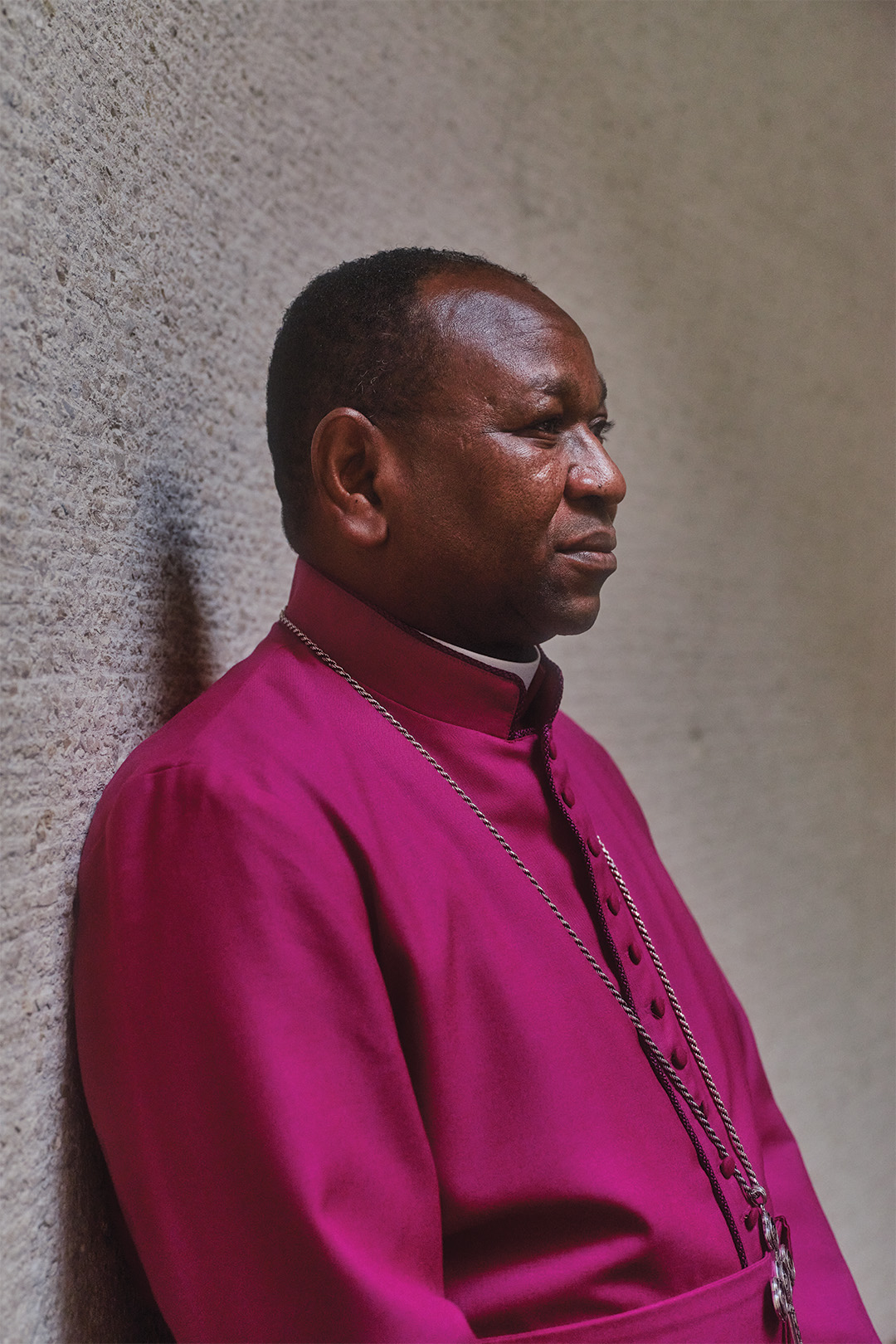
Headshot of Yassir Eric leaning against a textured wall
Testimony

I Was the Enemy Jesus Told You to Love

As an extremist Muslim, I beat a Christian boy and left him to die. His faithful prayers for me led to my salvation.

Photography by Sandra Singh for Christianity Today

When I was 16, a new student named Zakariya showed up at school. His forehead bore fan-shaped scars that identified him as a member of the Dinka people group—south Sudanese minority rebels, many of whom were Christian. My enemies. Zakariya was nice to everyone and scored the top grades in class, which made me hate him more.

As devout Muslims, my family and I were committed to Islam’s central place in the government. But our application of our religion was radical, since we prayed for Allah to destroy those who opposed us.

For two years, I added a request for Zakariya’s destruction to my daily noontime prayers. One night, that prayer was answered. My friends and I climbed a tree with our bayonet-fixed rifles and watched as a flashlight approached in the distance. It was Zakariya, who we knew walked this way each evening.

When he was beneath our tree, we ambushed him, beating him mercilessly with our fists and rifle butts. In a frenzy, I stabbed him repeatedly with my bayonet.

“Allahu Akbar,” I muttered in pride as we walked away from his mangled body. We left him for dead, and he never returned to school.

I was born into one of independent Sudan’s three leading families. My great-grandfather had joined the 1881 Islamic revolt against the British. Members of my family helped enshrine sharia law in our country. My father led the military in Darfur, where he later served as governor.

As the only son, I was to inherit this legacy. Our family believed our highest allegiance transcended the nation to include all Muslims in a global Islamic community called an umma. This inspired a tradition—unknown to me at the time—of early commitment to religious learning. So when I was 8 years old, my father drove me 500 miles north of Khartoum and dropped me at a desert madrasa to learn the Quran. He gave me no explanation and barely said goodbye.

At the madrasa, I was shaved bald and given a white robe and prayer cap for my daily uniform. Our group of ten boys sat in a straw hut and memorized Arabic verses with a long-bearded shaykh. The Quran was in his right hand; in his left he held a leather whip to punish our frequent mistakes. Allah must be like this too, I thought. I cried at night for 17 days straight.

When my father came to pick me up two years later, there was no embrace, but I saw he was proud of me. At home, I recited the entire Quran to my family and received a camel as my reward.

In my family’s eyes, I was now a man. Instead of playing soccer, I practiced disassembling and reassembling a Kalashnikov rifle and playacted ambushes against our enemies. Maybe it was preparation for Zakariya. By the time I graduated from high school in 1989, I was ready for jihad and to die as a martyr. I was the perfect son my father had dreamed of.

But my role model wasn’t my father. It was my favorite uncle, Khaled, an officer in Sudan’s intelligence services who was educated in Britain. He had personally converted south Sudanese Christians to Islam and imprisoned others who held to their faith.

One day, Khaled came to visit us, and my grandfather held court with the men in our home. That’s when Khaled suddenly blurted out, “I’m no longer a Muslim. I’ve become a Christian.”

My uncle had been monitoring the activities of an evangelical church in Khartoum when he heard a sermon about the preconversion life of the apostle Paul—and wrongly assumed that every detail was about him. Enraged, he put a gun to the pastor’s head and demanded to know how the pastor knew so much about his life. He ended up talking for hours with the pastor and became a Christian.

His pronouncement threw us into total shock. As Muslims, we knew the tradition that an apostate must be killed. Beset by shame, we quickly decided to do so. But the secret service arrested him first.

Abstract photo of the shadows of leaves on the groundPhotography by Sandra Singh for Christianity Today

Since Islam forbids a Muslim woman from being married to an unbeliever, we ensured Khaled’s divorce from my aunt and took custody of their children.

Two years after Khaled’s betrayal, his son Fouad—with whom I was close—fell into a coma. The doctors diagnosed the cause as malaria, complicated by some sort of infectious disease. They could do nothing to help.

Every day for a month, I went from my classes at Khartoum University to the hospital, where I recited the Quran over my 11-year-old cousin. He was gaunt and disfigured, with many medical devices attached to his body. I felt abandoned and confused. It was unfair that Fouad was being punished for Khaled’s sin.

One afternoon, two strange men came into the hospital room. I identified them as Egyptian Copts from the cross tattoos on their wrists. They told me they had visited Khaled in prison. When they asked to pray for his son, I shrugged, believing Christian prayer was worthless. But I also felt my conscience stir. They were praying for a Muslim boy, whereas I had always prayed against Christians.

Just as I stood to ask them to leave, I noticed Fouad’s complexion change. His eyes opened. Suddenly the machines in the room started beeping and nurses began rushing in. Fouad raised his hands slowly, and life filled his whole body. He recognized me. It was a miracle.

I spent hours talking with the Copts that evening. At dawn prayers the next morning, I prayed to Jesus for the first time, asking him to change me—if indeed what the Copts said about him was true.

I bought a copy of the Bible and began reading it quietly every day. For the next two months, I hid my Bible while continuing to perform the obligatory Islamic prayers. Still, my family grew suspicious.

In February 1991, my grandfather asked me directly, “Have you become like Khaled?” I confessed quietly, “I am a Christian.”

As before with Khaled, the room fell silent. Then my grandfather turned and rebuked his son, and my father punched me in the face.

I had been raised to be strong and to stand for what I believed in. So I brought out my Bible, and my grandfather stood up and walked out
of the room. My father said, “If this is your faith, you are no longer my son.”

I packed my bags. The next morning, as my mother and sisters cried, begging me to reconsider, my father brought out a contract. I signed my name, renouncing my inheritance and family name. For the first time in my life, I saw tears in my father’s eyes. Later, I learned that my family held a funeral for me, burying an empty coffin. It was somehow a gesture of love, meant to symbolize that they would not have to kill me.

I went to stay with a Palestinian friend at university and tried to go to church, but the south Sudanese believers at church rejected me—until a kind foreigner reassured them that my faith was real. Being among them, I thought of Zakariya, but I quickly suppressed the memory of him.

Soon after, I was baptized in the Nile River and began preaching, which led to my arrest. I was accused of treason against my country and spent 49 days in solitary confinement. After being released, and after several further detainments, I headed south to Kenya to study theology, where a German family took me into their home. Eventually, I took their last name, Eric, for my new passport and immigrated to Germany. Today I am a bishop in the Anglican Church, helping form a nongeographic diocese to give former Muslims like me a global community to belong to—a new umma.

Like the apostle Paul and like my uncle Khaled, I had once been a persecutor of Christians. But Jesus loved me when I was his enemy. And in 2008, he showed me the extent of that love.

I was at a pastors’ conference in Cairo, delivering the opening address. Afterward, a man came up to me, walking with a limp. He had oddly pointed questions about where I was from and where I went to school.

“Don’t you recognize me?” he finally asked. I noticed his crippled hand and how his right eye didn’t move, frozen in place as if from an old injury. When he said, “I’m Zakariya,” I was speechless.

He pulled out his Bible and showed me the front page. My name was there, first on a list.

“Because you hated me so deeply,” he said, “I always prayed for you.”

Yassir Eric is a presiding bishop over the Anglican Church’s Ekkios diocese and a professor of intercultural and Islamic studies at Columbia International University’s Academy of World Mission in Germany.

Jayson Casper is the Middle East correspondent for CT.

Theology

A Different Kind of Darwinism Is Winning

Columnist

In a world conditioned by evolutionary advantage, Christians are called to welcome those who seem naturally selected for failure.

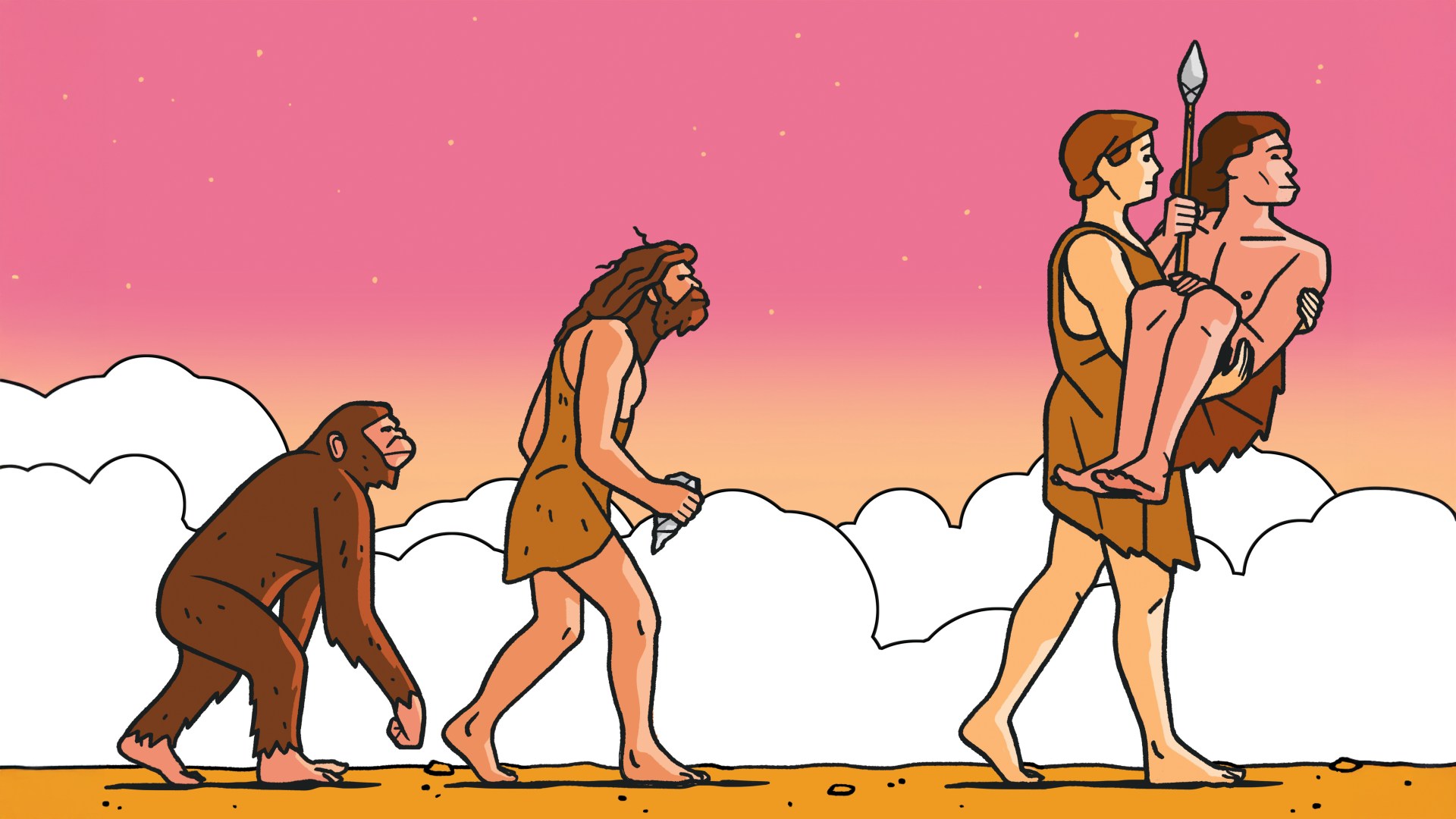
An image showing the progression of evolution from ape to man, ending with a man carrying a Neanderthal man.
Illustration by James Walton

A hundred years ago in Dayton, Tennessee, high school teacher John Scopes was put on trial for violating the state’s law against teaching evolution in public schools. The widely publicized state trial—the first to be nationally broadcast via radio in America—encapsulated the fundamentalist-modernist controversy of the time.

Nobody wants a new Scopes Trial in 2025. But maybe we need one.

For anti-evolution evangelicals, Scopes’s guilty verdict was a short-term victory that led to a long-term defeat, as S. Joshua Swamidass recently detailed for CT. It snowballed into the decay of American evangelicalism’s external credibility and led to internal vulnerability toward an anti-intellectual, populist view of science.

Prohibition, another 1920s pain point, was a disastrous experiment that empowered bootleggers and mobs. Still, the instinct behind it—that substance abuse devastates families and communities—was not wrong. We don’t ridicule the Alcoholics Anonymous meeting in our church basement just because Carrie Nation took an axe to a tavern or our childhood pastor argued that the wine at Cana was really grape juice. In the same way, we can recognize the right instincts of the concerns about Darwinism at the Scopes Trial without adhering to a firmly literalist interpretation of the Bible.

William Jennings Bryan, who argued for Scopes’s prosecution, believed that the teaching of Charles Darwin’s evolution theory was the cause of many of modernity’s ills. Bryan may have been made a mockery of on the “Monkey Trial” stand, but he feared that a survival-of-the-fittest mentality was slowly undergirding society. He believed that Darwinism championed a vision of humanity in which the code of the jungle replaced the Sermon on the Mount.

“The Darwinian theory represents man as reaching his present perfection by the operation of the law of hate,” Bryan said. “Evolution is the merciless law by which the strong crowd out and kill off the weak.” That’s exactly what we’re witnessing today.

For years, some Christians have argued that a woodenly literal interpretation of Genesis, joined with scientific acrobatics, would protect the church from a slippery slope into naturalistic Darwinism. Yet many who believe that some form of evolution was involved in creation and who accept the scientific consensus on the vast age of the cosmos have proven to be the most effective opponents of Darwinism’s reductionistic materialism, which strips down the universe to mere matter and human beings to mere animals.

At the same time, some of those who trumpet their resistance to theistic evolution have adapted quite readily to a number of social Darwinism’s conclusions—whether in dismissal of the constant biblical calls to care for the poor and the vulnerable, or in the most extreme sectors of the very-online “Christian” manosphere, where we find the outright embrace of Kinism, eugenics, and even a kind of Naziism.

Much of the gender debate among Christians has devolved from disputes about the meaning of Pauline texts for the church and home into grand “natural law” metanarratives, in which male and female roles determine virtually everything. This is far closer to social Darwinism than to the created order of the biblical canon. A thin veneer of biblical proof texts overlays a “caveman stronger than cavewoman” argument or “caveman wired to spread his seed, woman must not tempt him” rhetoric that is far distant from the biblical language of the created co-heirs of Adam and Eve.

Some on the left love to say that “Christianity must move beyond the supernatural or die,” while some on the right say, “Christianity must know what era we’re living in and ditch empathy.” Most of us would refute both of these perspectives, but for all of us, the pull to an invisible theistic social Darwinism is always present.

We are tempted to adopt the viewpoint that the size of our churches or movements is an indicator of their truth or merit, applying a kind of prosperity gospel to congregations or political ideologies that we rightly resist applying to individuals. As the Jurassic Park movies remind us, what we see as tamable and containable can grow up and bite. We have strained a fossilized gnat while swallowing a fossilized camel.

I am not a young-earth creationist. But here’s where I agree with them: The Bible is the final word on everything, including on God’s presence and work in creation, and we shouldn’t pile additional requirements on top of it. If people are offended by the gospel, they should be offended by what it really asserts, not by contrarian idiosyncrasies that signal tribal allegiance.

Jesus’ teachings simply don’t make sense on evolutionary terms. From the perspective of social Darwinism, loving your kin and hating your enemies seems logical—yet Jesus calls us to follow him in doing the opposite. Likewise, early Christian churches trying to influence a pagan Roman Empire would have appeared wise to make much of those with cultural or economic influence who were interested in the faith. But our Lord’s brother tells us, “Has not God chosen those who are poor in the eyes of the world to be rich in faith and to inherit the kingdom he promised those who love him?” (James 2:5).

This inversion of worldly wisdom is not peripheral—it’s the marrow of the gospel. In a world conditioned by evolutionary advantage and our sinful nature, which desires power at the expense of pushing others down, the gospel calls us to cruciform weakness.

The gospel shows us that focusing on the “losers,” as defined by the standards of this present age, is how we model and become like Jesus (Luke 9:48), how we gain eternal treasures (14:12–14), and how we worship God in Spirit and in truth (Acts 10:4). The woman with dementia, whose hand we hold and to whom we sing hymns, is not defined by her usefulness. The prisoner on death row who cannot tithe or lead evangelistic crusades is worth our attention. The man with an ALS diagnosis should not be tempted to contemplate assisted dying because he fears being a burden to those around him.

The strangeness of a church that doesn’t invest in people who might help it, but rather chooses to serve those who never can, is the very strangeness that upended the first-century world. Nothing could have seemed more alien to the atmosphere of Caesars and heroes than a community who would rather be crucified than be crucifiers, who welcomed those who seemed naturally selected for failure.

Whatever our views on how evolution and the fossil record fit with the Book of Genesis, every Christian ought to agree that Bryan’s concern about Darwinism as an all-encompassing ethic is indeed contrary to the way of the gospel.

Science and the Bible are often put into artificial cage matches with each other. Yet the sheer strangeness and mystery of what science now shows us—from black hole cosmology to quantum mechanics—ought to convey that making the Bible “fit” current scientific narratives is myopic. We may not even have the language yet to describe the wonders God has waiting for us to discover.

In the meantime, we can bear charitably with one another on some disagreements. But when it comes to whether a person’s worth is defined by strength or power or usefulness alone, let the church say with one voice, “You cannot serve both God and Darwin.”

Russell Moore is editor in chief at CT.

Books
Review

One Machine to Rule Them All

Paul Kingsnorth paints an apocalyptic picture of digital captivity.

Close up illustration of a person's eye, dissected by a grid that is breaking apart to reveal a black background with a spider building a web.
Illustration by Jeffrey Kam

As a professor, I discourage students from using smartphones during class. Nevertheless, they always pull them out as soon as class is over or during breaks in longer sessions. I feel this pull myself—the fear of missing something, the desire for dopamine. Perhaps we all need to practice better self-control. But clearly, our devices are designed to keep us hooked.

Hooks, like webs and nets, are meant to trap prey. This observation from Paul Kingsnorth captures the heart of his new book, Against the Machine: On the Unmaking of Humanity. For Kingsnorth, our screen addiction suggests a larger captivity to an “unprecedented technological network of power and control,” which he calls “the Machine.”

As Kingsnorth defines it, the Machine started as the basic ideology of modern life, best summed up as a preference for “the mechanical over the natural, the planned over the organic, the centralised over the local, the system over the individual and the community.” He sees it as the malign force behind slavery, colonization, overconsumption, and environmental degradation.

More recently, he argues, it has taken concrete form through technologies—especially digital technologies—that promise control but make us ever more dependent. Kingsnorth writes in an apocalyptic mode, seeking to unveil how we are losing our humanity—and calling us to resist before it is too late.

Kingsnorth is an English poet and essayist living in western Ireland. At one time he was an environmental activist who protested by “chaining [himself] to bulldozers” and “living in treehouses.” Nowadays, he channels those impulses into writing.

As a former practitioner of Wicca who (to his own surprise) converted to Eastern Orthodox Christianity, Kingsnorth’s perspective does not fit cleanly into common political or theological categories. His current publisher positions him in “the tradition of Wendell Berry, Jacques Ellul, and Simone Weil,” and like these thinkers, he does not give anyone a free pass.

Against the Machine is a trenchant and terrifying account of what modern people have sacrificed in exchange for technology’s promise of power and autonomy. As Kingsnorth writes, “We have less agency, less control, less humanity than ever before. In the future that is offered to us we are not even cogs in the Machine, for the Machine can increasingly operate without human input.”

If this sounds a bit like science fiction, Kingsnorth wants readers to make the connection. He describes the 1999 film The Matrix as “the most symbolically prophetic film yet made about the 21st century.” Like the Matrix, he writes, the Machine is “designed to promote an illusion of freedom and choice to people who have neither.” In the film, humans exist primarily to power the artificial superintelligence that runs the world. Its genius is to absorb those who seek to resist.

Are we living in the Matrix? Not quite, though it is increasingly difficult to escape the hooks of our digital connectedness. My wife works in health care, and although our jobs have little in common, we share complaints about the comprehensive software “solutions” we’re compelled to navigate. When my university adopted a new software system from the Oracle Corporation, my colleagues and I joked about its name: “Let’s ask the Oracle.” “The Oracle will solve all of our problems.” “The Oracle is sending me on a journey.”

Technologies like these are designed to bring greater security and stability to increasingly complex professions and institutions. But do we really want the same software to manage hospitals, universities, and city governments? One “tech stack” to rule them all?

Perhaps this makes sense in economic terms. But it’s possible to discern a darker underlying logic, wherein a push for ever-improving outcomes dictates ever-greater efficiency—which, in turn, demands the imposition of ever-greater uniformity. Indeed, as I read Kingsnorth’s book, I thought of an 1869 lecture by the Dutch thinker Abraham Kuyper: “Uniformity: The Curse of Modern Life.” There is a difference, Kuyper argued, between organic, unplanned harmony and uniformity dictated from above (especially by the state).

Kingsnorth frames the curse of modern life with the language of uprooting. Traditionally, cultures have been anchored to what he calls the “four P’s”: our past (our history and ancestry), our people (the story of who we are), our place (our embeddedness in a particular setting), and prayer (our religious tradition). But the goal of the Machine, as Kingsnorth sees it, is detaching us from everything we know and love to rearrange people and cultures in a more uniform fashion.

This process replaces the four P’s with four S’s: science (which offers a “non-mythic” story of where we come from), the self (whose good we pursue above all else), sex (which provides the ultimate tool for expressing individual identity), and the screen (which distracts us from reality and directs us to “the coming post-human reality”). For Kingsnorth, this common ideology lies behind both progressive leftism and market liberalism.

The Machine might expand our menu of lifestyle options. Yet in embracing it, Kingsnorth argues, we unmake our humanity, losing our roots and plunging ourselves into a crisis of meaning. We have sought autonomy, but its price has been alienation—from the land, from each other, even from our own bodies. As Kingsnorth argues, proceeding along this path will destroy our planet, our cultures, and our homes, leaving us to gamble on new technologies to rescue us from the wreckage.

For Kingsnorth, the Machine is more than a metaphor. Artificial intelligence, in his view, embodies the spirit it has manifested since the Industrial Revolution. He notes how developers speak of AI as a form of intelligence they are “ushering” into the world, quoting Ray Kurzweil’s answer to the question if God exists: “Not yet.”

Rod Dreher recently suggested that ChatGPT is like a new Ouija board, a dangerous power we don’t fully understand. Kingsnorth entertains this as a serious possibility, drawing parallels between the spirit of the Machine and the spirit of the Antichrist. He believes “there is a throne at the heart of every culture” and something insidious “is crawling towards the throne.”

Many readers, especially those who have embraced new technologies, will find Kingsnorth’s project alarmist. By and large, I want to affirm the intrinsic goodness of technological innovation while resisting its idolatrous tendencies. Nevertheless, I find myself haunted by the dehumanizing—even diabolical?—tilt embedded in top-down systems (like Oracle), which by design treat people more like things. Kingsnorth has convinced me that careful theological reflection is needed on “principalities and powers” as they relate to our technological age.

Reflection, of course, is not enough. To what degree should we opt out of our digitally mediated world, seeking radically alternative forms of life? To what degree can we? Kingsnorth recalls a pilgrimage to Mount Athos in Greece. He was shocked to see monks with long beards and black robes tapping away on iPhones: “Even here, I thought, even them. If even they can’t make a stand, who possibly could?”

Indeed, Kingsnorth calls for resistance despite strongly suspecting the battle is lost. The West, he writes, is dead, and we are living in its ruins. Accordingly, we cannot rebuild large-scale civilizations, but only smaller communities on the margins, communities that embrace limits, lean into the local, and “learn again the meaning of worship and commitment.” As he writes, Westerners have to “learn how to inhabit again. We have to learn how to live sanely in our lands. How to write poems and walk in the woods and love our neighbours. How to have the time to even notice them.”

Such small interventions might seem unequal to the pervasive despair threaded through these pages. Yet the book reminded me of an insight from theologian Norman Wirzba: When we love particular places and particular people, we find space for hope. As Kingsnorth alternates between prophetic exposé and poetic lament, he revels in small things, in “community bonds, local economics and human-scale systems.” Perhaps he is not yet ready to hope; nevertheless, there are still things—and people—to love.

Still, as I consider my students, I wonder if they need a deeper hope, grounded not in the direction of our culture but in the covenantal love of the Creator for his creation—a living hope inspired most profoundly by the Resurrection. This hope helps us celebrate the good of creation and work for its continual renewal. It also reassures us that there are other powers at work in the world than the will of evil.

Kingsnorth begins with an epigraph from G. K. Chesterton. This makes it appropriate to recall some lines from Orthodoxy, where Chesterton says we are most human when joy becomes the most fundamental thing about us:

Melancholy should be an innocent interlude, a tender and fugitive frame of mind; praise should be the permanent pulsation of the soul. Pessimism is at best an emotional half-holiday; joy is the uproarious labour by which all things live.

In this spirit, we can rejoice that our world belongs to God; even the Machine is only an interlude. Resisting it might be grimly necessary. But in light of the Resurrection, our resistance can still be exhilarating.

Justin Ariel Bailey is a professor of theology at Dordt University. He is the author of Interpreting Your World: Five Lenses for Engaging Theology and Culture.

Church Life

A Generation Seeking Transcendence

A letter from Mission Advancement in our September/October issue.

Paint, flowers, and people holding coffee cups
Illustration by Christianity Today / Source Images: Unsplash

Today’s digital natives are experiencing an existential earthquake at the intersection of technology, geopolitics, and the erosion of a shared social fabric. Recent years have been marked by social polarization, religious disillusionment, and lack of vocational opportunity. Many are wondering, What’s the point of all this?

Gen Zers and millennials are in a spiritual tailspin. In a world that runs on algorithmic fearmongering and mind-numbing engagement, objective truth seems inaccessible. The arts, once a haven for the distinctly human, feel fake and formulaic now with the advent of artificial intelligence. The basic rhythms of church and community—gathering at the same place and time to navigate the uncomfortable, pleasurable, and joyful exchange of thoughts, words, and care—now often cave to the impulses of isolationism and tribalism. The mental health of a generation is drifting toward a precipice that has been formalized with a warning from the United States surgeon general.

Despite all this, I am encouraged by this generation’s desire to transcend political and cultural divisions by connecting with one another through beauty, creativity, and authentic storytelling. While today’s digital generations are overstimulated, the “cracks in the matrix” of materialism allow them to glimpse the transcendent. We have seen evidence of what the UK’s Bible Society calls a “quiet revival,”  with moments of renewal sweeping across college campuses. God is intimately responding to this generation’s needs as they leave adolescence and enter the fraught societal, spiritual, and financial state of the adult world.  

Christianity Today can help younger believers remember that God is in control and that he meets his people when they seek him. Where there is anxiety, he brings deep peace; where evangelism has stuttered, he brings boldening voices and new avenues for the gospel to ring out. He meets the existential vacuum that lies at the heart of a generation. 

I joined Christianity Today four years ago because of a small arts and literature magazine I started at the end of college. I had been through real doubt, pushing against the contours of my adolescent faith. But even then, beauty still called. I needed the arts to speak to the reality of something that went far beyond a materialistic worldview. 

As my faith resolidified and the creative vision of my vocation came into focus, I received an email from the president of CT that felt like a dream come true. I will forever be grateful to an organization that seeks to raise up storytellers and invest in the next generation. With a renewed commitment to my faith and a deep understanding of the power of art and creativity to shape our inner lives, I set out with CT to help gather seekers and believers “to find the place where all the beauty came from,” as C. S. Lewis so tenderly put it.

In this moment, CT is uniquely able to serve this next generation. Stories matter; we are attracted to beauty and craft but often do not know their ultimate source. Through our Next Gen Initiative, we focus on the power of personal testimony, the necessity of rich community, and the strangely poetic nature of our current moment. For this younger generation, connection is paramount and excellent storytelling is a priority. 

With younger generations representing 40 percent of our audience and with new offerings through Inkwell, the Christianity Today Story Fund, and our annual Young Storytellers Fellowship, we are well-positioned to reach more people and engage them more deeply than ever before. Already these efforts have formed new atmospheres of spiritual testimony, social dynamism, and vocational possibility.

Would you join with us to inspire and equip the storytellers of this young generation? To cultivate communities where they can share stories that illuminate the beauty and diversity of the church? In a world of chaotic crumbling and slick marketing, your partnership will enable young people to use their God-given gifts to elevate the stories of ordinary people who are faithfully following Jesus, inviting young and old alike to seek the kingdom.

Conor Sweetman is director of innovation and leads The NextGen Initiative at Christianity Today.

Ideas

Grace Beggars Not Culture Warriors

Staff Editor

A note from CT’s editorial director in our September/October issue.

A cartoon of a matador and a bull wrapped in the matador's cape sitting next to one another on a pink background.
Illustration by James Yates

Creating a magazine is always full of surprises. In developing this issue, we discussed the diverse, global, and often-fractured landscape of evangelicalism. I guessed what would emerge: analysis on “worship wars,” gender divides, and other ways we’ve segmented ourselves into factions where any “evangelism” we do is just online shouting matches for our in-group. Frankly, we’re tiring of that. 

At some level, heaping analysis atop analysis does not lead to acting in love or to showing hospitality to strangers—whereby, the Book of Hebrews reminds us, some have unknowingly entertained angels (13:2). Even if we charitably chalk an abundance of analysis up to a desire to be thoughtful, it still gives us an opportunity to shirk responsibility or maintain a theoretical distance from discomfort, pain, or suffering.

Rather than focusing on division, we framed this issue on Jesus’ cosmic, life-altering grace. As we act in response to grace, Jesus’ upside-down kingdom reorients our relationship  with power and helps us see, serve, and love people very different from us. 

Like Paul, we may need to be struck by a blinding light in the middle of the road. We may need the prayers and touch of someone like Ananias, against whom Paul was “breathing out murderous threats” (Acts 9:1). As poet John Donne knew, we must be acted upon from the outside. Donne asked God to “break, blow, burn, and make me new.” Divine grace both enthralls and knocks us down. 

In this issue, Molly Worthen reminds us that our snobbery is a blockade to wrestling with Jesus (while highlighting that CCM worship songs were part of her conversion). Elizabeth Bruenig shares in a Q&A about the transforming power of forgiveness against the backdrop of death row. And Daniel Silliman’s essay lifts the veil on modern-day gambling to expose the yearning heart of the spiritual but not religious. In each essay, there is a tone: a suppleness, a lightness, a sense that we are fellow pilgrims in need of the transforming work of the Spirit. 

We’re also pleased to feature the Compassion Awards, a longtime project of executive editor Marvin Olasky, now housed at Christianity Today. Here we profile seven nonprofits who do real good in their communities—from immigration advocacy to temporary housing and more—inspiring compassion over cruelty.  

The late Tim Keller often spoke about the essence of the gospel thus: We’re more evil than we think and more loved than we could imagine. This issue invites you to imagine with us. Seeking Jesus’ kingdom means our message will look foolish and be a stumbling block to those who don’t believe—maybe even to those on the right or left of us (1 Cor. 1:23). We’re okay with that. We invite you to seek the surprising kingdom with us as you read, share, and discuss not only the facts of the Good News and our broken world, but also the power of Christ to make all things new.

Ashley Hales is editorial director for print at Christianity Today.

Church Life

Don’t Silo the Saints

Contributor

Spiritual formation isn’t a solo project. It’s a shared table across generations.

people gathered around the table, eating and celebrating
Illustration by Sergey Isakov

The most spiritually formative moments of my life didn’t happen in an age-targeted church program. They happened across a table.

Bill, a retired pastor who was in his 80s, took me under his wing when I was in my late 20s. We didn’t meet for a curriculum. We met for coffee, short walks, and conversations that wandered through life and arrived at truth and grace. He listened more than he taught. When he spoke, his words carried weight because I knew the life behind them. His simple faithfulness helped me imagine obedience over the long haul.

At the same time, Lisa and Steve invited me over for family dinner. I was single then, still learning what adulthood looked like. We ate while they wiped up baby drool and cut food into toddler-safe bites. No lesson plan. No hyperspiritualized talk. Just a quiet, embodied glimpse of patience, partnership, and peace.

In these moments, I was discipled without anyone using the term. Yet formation—slow, relational, generational—is what many churches are missing. In trying to serve people where they are, churches have sorted them by life stage: Elementary children, teenagers, young adults, and empty nesters are siloed from one another. Most programs begin with good intentions and meet real needs, but we rarely pause to ask what we built or what it might cost us.

We’ve built systems that connect people but keep them apart. We’ve separated people into peer groups and fragmented spiritual formation. More than that, we’ve subtly taught people how to treat the church. If our ministries are built around personal preference and presented as optional, affinity-based experiences, then church feels like another consumer choice, privileging convenience over communion. People learn to engage with church on their own terms instead of on Christ’s. Deep Christian maturity doesn’t grow best through segmented programs but through shared life across generations.

Barna’s February 2025  report “Discipleship Across Generations” reveals this trend’s cost: While 87 percent of Christians over 55 say it’s important to continue growing spiritually, only 18 percent say their church helps them connect across generations. 

This fragmentation didn’t begin as strategy. It began as sacrificial service. In late 18th-century England, Sunday school arose not as a church-growth tactic but as a gospel response to child labor. Children worked long hours six days a week without access to schooling. In response, churches gave up their one day of rest to offer literacy and Bible teaching—meeting families where they were and at great personal cost. Over time, however, outreach turned inward and programs evolved into unquestioned, self-serving norms. By the mid-20th century, as new educational theory and consumer culture shaped Western institutions, churches followed suit: organizing ministry by age, life stage, and felt need. But in mirroring the world’s categories, we inherit its isolation.

Today, in a cultural moment already marked by loneliness, screen-mediated relationships, and generational suspicion, our siloed structures risk reinforcing the very divides the gospel is meant to heal. Paul insists that in Christ there is no Jew or Greek, slave or free, male or female (Gal. 3:28). We might add: no boomer or Gen Zer. In Christ, the old categories give way to a new kind of family united not by age or affinity but by grace.

Comfort, surely, can be found with one’s peers: One Gen Z friend of mine joked that his megachurch’s college group is the only place where he can meet girls who love Jesus. Older adults gain strength walking with others who are navigating similar losses—empty homes, lingering regret, the slow grief of aging, or the deep ache of losing a loved one. Parents know the relief of handing a toddler to a volunteer who knows what to do. It’s the recognition of friendship, as C. S. Lewis wrote: “The typical expression of opening friendship would be something like, ‘What! You too? I thought I was the only one.’ ” But while life-stage spaces can be meaningful, they’re not the point of church, nor do they often lead to Christian maturity.

Psychologist Jean Twenge notes that today’s generational divides aren’t simply cultural but are also digital. Time spent behind screens profoundly shapes how young people relate, learn, and believe. As technology rapidly rewires childhood norms, age-based ministry can be crucial. Full-time youth workers who make it their job to understand the shaping forces of digital addictions can strengthen the work of  family discipleship.

But affinity should never become identity. Affinity groups risk forming Christians who know the events calendar but not the church family. The danger isn’t just isolation—it’s discipleship drift. When church always serves up what we want according to our felt needs and stage of life, then spiritual formation, too, becomes curated. Conditioned by constant customization, we treat church like a buffet: choosing ministries and communities that feel familiar, favoring teaching that confirms our instincts, and connecting with peers who share the same stage of life. 

The result? Spiritual formation happens apart from the very people who might stretch us most toward mature Christlikeness.

Younger believers long for connection with older ones—but only if it’s relational, not transactional. As one Gen Z believer described, “I know I need older people in my life. But I also don’t know how to find them. And when I try, it doesn’t feel like they’re really listening. It’s like they’re trying to teach more than relate, as if I’m a project and not a person.” What younger believers are  looking for isn’t mere correction disguised as care. It’s presence and relationship—the kind of discipleship that happens at a kitchen table, over reheated coffee and real conversation.

Some older believers hesitate to step into these relationships because the cultural gap feels vast, the vocabulary unfamiliar, and the pace of life exhausting. “I don’t want to make excuses or sound out of touch,” one older church member told me. “I just don’t know what they need from an old-school guy like me.”

That hesitation is understandable. But Scripture offers a different perspective. To the one worried about seeming irrelevant or obsolete, Proverbs reminds us, “Gray hair is a crown of glory; it is gained in a righteous life” (16:31). It takes a lifetime to acquire wisdom—and younger believers need it. They don’t need someone who has all the answers. They need someone who’s been through the questions.

Younger believers fear being misunderstood, patronized, or not taken seriously. But Paul tells Timothy, “Don’t let anyone look down on you because you are young, but set an example … in speech, in conduct, in love, in faith and in purity” (1 Tim. 4:12, ESV). Spiritual maturity isn’t always measured by age, but by faithfulness.

Multigenerational relationships will have their awkward moments. There will be missed cues and mismatched expectations. But maybe that’s the point. We don’t just need relationships that are easy—we need ones that carry us into maturity. And often, the very disorientation we feel is what makes us need each other most.

That kind of growth doesn’t come from doctrinal content alone. It comes from life-on-life proximity. From interruptible rhythms, shared meals, and the long obedience of everyday Christian faithfulness. To follow Jesus in our time, we need voices formed in earlier times. And to stay softhearted in a jaded world, we need the questions, energy, and urgency of the young.

We don’t need to scrap programs. But we may need to rethink what they’re for. Programs are best when they scaffold shared life, not replace it.

I’ve seen it happen, and it’s beautiful. A retired widow singing beside a high school student on a Sunday morning. An empty nester bouncing a newborn so an exhausted mom could take Communion. College students hauling boxes for an aging couple and then staying after to swap stories of faith, doubt, and fidelity. Single adults and families trading tips, career advice, and prayer requests.

These moments don’t start with a strategy. They start with a shift in imagination—a willingness to slow down, to move toward people in other stages of life, and to see the church not as a cluster of affinity groups but as a family already bound to one another in Christ. 

The church was never meant to be a gathering of generations under one roof living separate lives. It was meant to be a spiritual family. Some things are best learned by walking with someone who has walked a little further than us. Some burdens are best carried with someone whose shoulders aren’t already stooped by the same weight. 

For me, it started when someone made space. Bill invited me to walk his yard, sit for coffee, share a table. He didn’t organize a program. He simply showed up—and kept showing up. That simple act of hospitality became holy ground. It starts with a seat at the table.

Chris Poblete is editorial director for CT Pastors at Christianity Today.

Ideas

Alien Mercy

Staff Editor

A conversation with Atlantic journalist Elizabeth Bruenig about capital punishment.

A person wearing a striped prison uniform is embraced by the silhouette of a person in orange on an orange background.
Illustration by Ronan Lynam

Elizabeth Bruenig first began reporting on capital punishment in 2020 when she served as a witness to a state execution in Terre Haute, Indiana, for The New York Times. Since then, she’s served as a media and personal witness in several executions, reporting on abuses in US prison systems, racialized executions, and more broadly on Christianity and politics for The Atlantic

In this conversation with Ashley Hales, CT’s editorial director for print, Bruenig discusses the death penalty, her Catholic faith, and the alien nature of mercy and forgiveness. This interview has been condensed for length and edited for clarity.

ASHLEY HALES: Your journalistic writing on capital punishment has been widely recognized. Tell us how it all began.

ELIZABETH BRUENIG: I always had an interest in capital punishment. Coming from a religion where the central event of the Gospels is an execution, that seemed significant to me, but I never gave it a lot of thought until I had the opportunity to start reporting on it for The New York Times. From there, I felt like this was something of a calling.

AH: How have you thought about the execution of Jesus and your own work of witnessing execution?

EB: There’s kind of two instances of executions in the New Testament. One is attempted and it fails: That is the stoning of the adulterer (John 8:1–11). That’s an execution according to law. Jesus stopped it and forgave the woman. That’s significant because under the law she was to be stoned. But what Christianity teaches us that’s so significant is mercy—the withholding of the most severe punishment may be dictated by an action in favor of something gentler. In the execution of Jesus, I think you get an excellent example of the sort of politics involved in executions, and it highlights the fact that innocent people are executed. It’s been happening since executions. It’s still happening now.

AH: I want to talk about your Atlantic cover story, titled “Witness” in print. As we think about our readers at Christianity Today, the word witness has some other connotations. We think about the Great Commission of Jesus after his death and resurrection, telling his disciples that they will be witnesses. To what extent do you feel your own witnessing of executions is a witness of your faith? 

EB: I think that it’s important to be honest with the reader about my actual interest here and that my interest is not strictly as a news reporter who’s trying to contribute to democracy. That’s part of it. Connecting with these guys [on death row] has been very spiritually enriching. It’s more of a witness to faith to the reader. I hope that readers understand this is what Christianity is really about. Right? It’s about the infinite mercy of God expressed through the salvation of humankind. The reason that I’m so upfront about being Christian in the article is not just to be honest, but I hope this leaves an impression that Christianity has a lot to offer the world. 

AH: As we think more generally about capital punishment, Christians are divided. Pew reported in 2021 that 66 percent of Protestants and 58 percent of Catholics in the US favored capital punishment. In an article in 2023, CT recorded a source who mentioned, “There’s an appetite for that form of punishment.” Why do you think that is—especially for those who are told to love their neighbor and pray for their enemies?

EB: I understand Christians who support capital punishment, and I don’t think they’re bad Christians. Executions have been carried out for centuries by Christian people and Christian nations. The Bible, especially the Old Testament, commands people to purge the evil from among you—that’s the language that’s in there. It quite readily prescribes execution for certain crimes. But in the New Testament, in my opinion, Jesus takes a different approach to sin and to wrongdoing. I think that’s beautiful. I think it’s what makes Christianity unique. So, for me, execution comes across as extremely wrong and extremely wrong for Christian reasons. That’s a case I have to make. I’m trying to do that not just for the public but for my fellow Christians.

AH: In your view, are there any conditions under which it would be permissible to execute the convicted?

EB: If you’re in a society that can’t contain people who are doing wrong (a society with not a lot of infrastructure and not a very good justice system) and there’s a person—let’s just imagine the worst possible person, a sexually motivated child killer or something—who cannot be stopped, will not stop, cannot be restrained. In that case, I guess you do what you have to do. 

But in the United States, and I think now in a majority of countries worldwide, that’s not the case. The most reprobate and evil of offenders can be contained. There’s a lot of repentance, a lot of regret, and a lot of remorse on death row.

AH: What strikes me about your work  is the radical strangeness of forgiveness and mercy you write about. It’s this idea that we—all of us—are human and bear the image of God, no matter how twisted we become with evil. That radical nature of grace, of forgiveness, of mercy, is highly offensive to us as people who are twisted by sin. I’m curious how you communicate some of that strangeness of forgiveness and mercy to a secular audience.

EB: One of my favorite things about Christianity is the utter alien weirdness of the Christian approach to evil and wrongdoing. 

If you took someone who had never had any contact with Christianity and was a perfect blank slate with average, reasonable assumptions about reality and you said, “What should you do in response to someone who kills people, someone who kills a lot of
people?” the last thing someone would come up with is you recognize your shared humanity with this person and that there is something valuable about their unique life. 

That that’s not what would come to mind reveals divinity to me, because it indicates how different the divine consciousness is from the human. Part of how you know that you’re dealing with the will of God is that it’s foreign to men. 

AH: You also talk about forgiveness as not individual and not simply therapeutic—that its aim is for the restoration of community. Is our public life so broken, do you think, because of our lack of forgiveness? Help us think about some of these things in our day-to-day versus simply as we think about capital punishment.

EB: I think the way that forgiveness is thought about in society is a very therapeutic sense of forgiveness. You forgive someone so you can move on, and many people I’ve spoken to in this work, like victims’ families, have spoken quite movingly about how letting anger and hurt from these offenses go and instead embracing forgiveness does have therapeutic effects. 

But for Christians, the reason that we’re told to forgive is not necessarily because it’ll be pleasurable or helpful to us; it’s because it’s the will of God. Forgiveness can be extremely uncomfortable. It can be a burden. You’re not only dealing with the unfairness of the fact that the crime was committed, but you’re also dealing with this second sort of indignity, which is that you have to forgive the person. 

I think you can make the argument that forgiveness is important even to someone who does not come at it from a Christian point of view, because as you say, it allows us to reestablish community with someone who has done wrong. It allows people to change. It allows people the moral opportunity to reverse the way they were thinking or the way they were behaving. 

In terms of embracing forgiveness as a wider cultural trend, it’s very hard to be forgiven or to ask forgiveness in public because everything is so highly recorded. Everything’s on the internet. 

AH: You’re married with two daughters who are pretty young. How do you, or can you, metabolize the kind of evil that you witness in your work while raising a family? And conversely, how has motherhood or marriage informed your own reporting?

EB: My family is the bedrock of my life, and they’re the center of my emotional universe. In a lot of important senses, they make doing this work possible for me. It’s dark work. It’s difficult. Because I have my family to come home to after witnessing these executions—that I can lay down in my bed beside my husband, getting in really late, knowing that the next morning my children will be excited to see me again and that we’ll have a great day—it really makes it all possible.

Marriage and motherhood do teach you some things about forgiveness. Because these are your people in this world, and you can’t throw them away. You have to find ways to recover closeness and make peace between you, even when people do things that are really wrong. And you also need forgiveness as a mother and as a wife. The family is a training ground for these kinds of virtues. 

AH:  You opened your article for The Atlantic about having nightmares about your own execution. In those nightmares, what would your own last words be?

EB: I always think of the Lord’s Prayer. Jesus taught us that prayer. It’s something I pray three times a night, and it’s the most comforting thing in the world to me. It’s kind of always playing in the background of my mind. I pray it throughout the day. I know that would be it for me.

Elizabeth Bruenig is a staff writer for The Atlantic.
Ashley Hales is editorial director for print at Christianity Today.

Apple PodcastsDown ArrowDown ArrowDown Arrowarrow_left_altLeft ArrowLeft ArrowRight ArrowRight ArrowRight Arrowarrow_up_altUp ArrowUp ArrowAvailable at Amazoncaret-downCloseCloseEmailEmailExpandExpandExternalExternalFacebookfacebook-squareGiftGiftGooglegoogleGoogle KeephamburgerInstagraminstagram-squareLinkLinklinkedin-squareListenListenListenChristianity TodayCT Creative Studio Logologo_orgMegaphoneMenuMenupausePinterestPlayPlayPocketPodcastRSSRSSSaveSaveSaveSearchSearchsearchSpotifyStitcherTelegramTable of ContentsTable of Contentstwitter-squareWhatsAppXYouTubeYouTube