
News

Educating Low-Income Boys at Delta Streets Academy

The Christian school is defying the stereotype that “private school is for white people.”

Photography by Timothy Ivy for Christianity Today

In this series

After enrolling at Delta Streets Academy (DSA) in Mississippi in 2016, Imanol Moreno said, he “slacked a lot.” As a middle schooler who pushed back against the rules, Moreno often had to stay after class to handwrite pages crammed with sentences like “I want a disciplined education.” Fed up, he told his parents, “I don’t want to go there no more.”

His father told him to stick it out. The next year, Moreno decided to follow Christ, encouraged by his religion teacher, Nick Carroll. “I started doing my homework, got closer to Christ, put my britches on,” Moreno said.

He graduated from DSA in 2021 and earned an associate’s degree in business management in 2023. He works as the office manager and heavy equipment operator at the construction business he and his father started. “I still read the Bible they gave me at Delta Streets,” he said. Moreno credits the school with sparking his love for math and teaching him to learn from his mistakes. “My life wouldn’t be what it is now without Delta Streets.”

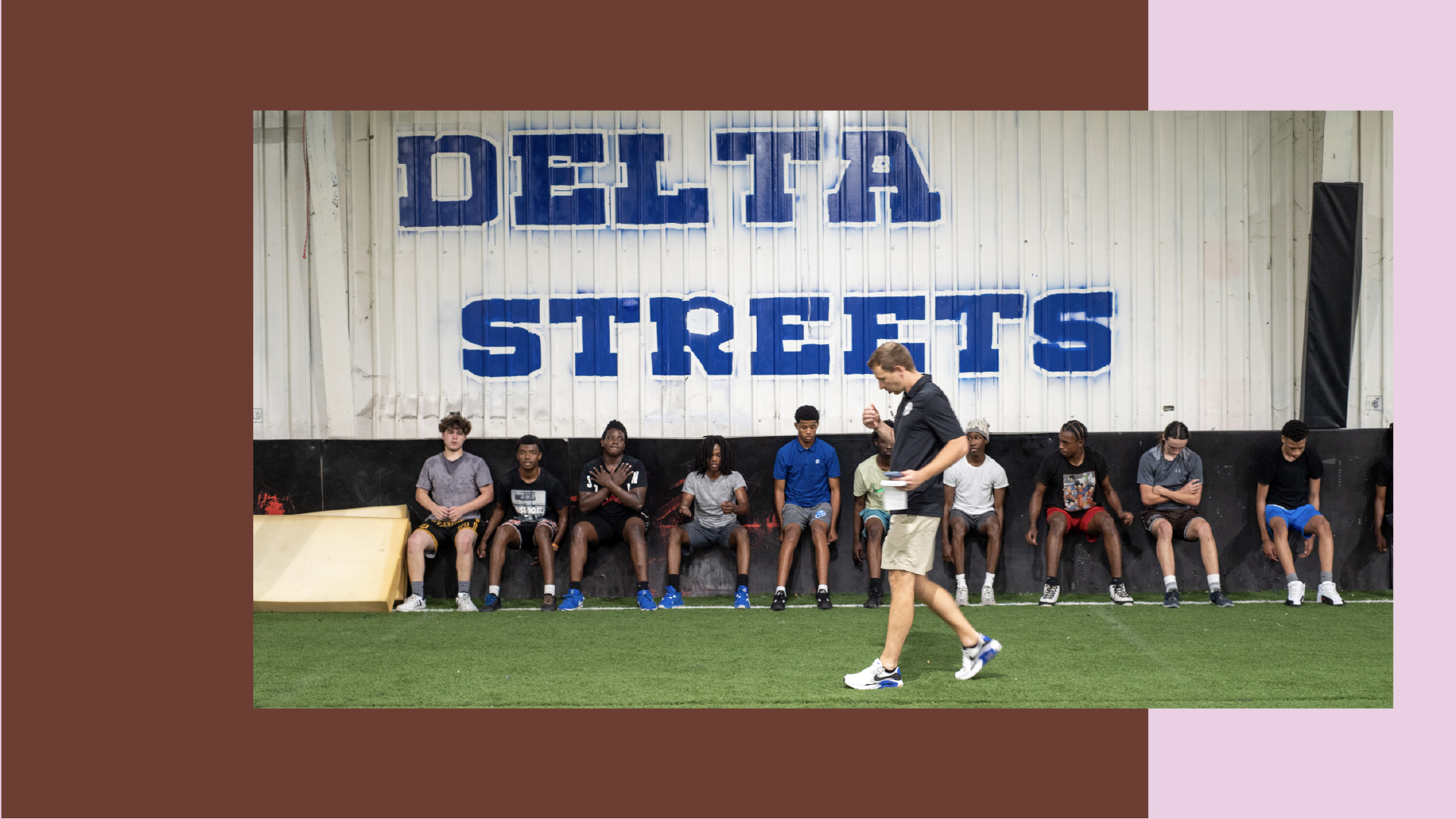
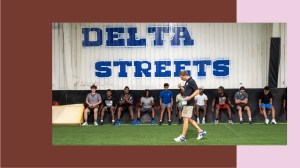
Not every story from DSA ends up like Moreno’s. The Christian academy for low-income boys faces a high attrition rate and distrust bred by decades of segregation in the South. But its leaders keep pushing forward, offering challenging academics and Christian hope to nearly 100 Black and Hispanic boys in grades 4 through 12.

The school is situated two blocks from Greenwood’s gutted downtown, where mom-and-pop shops alternate with swaths of broken, boarded-up, or empty windows.
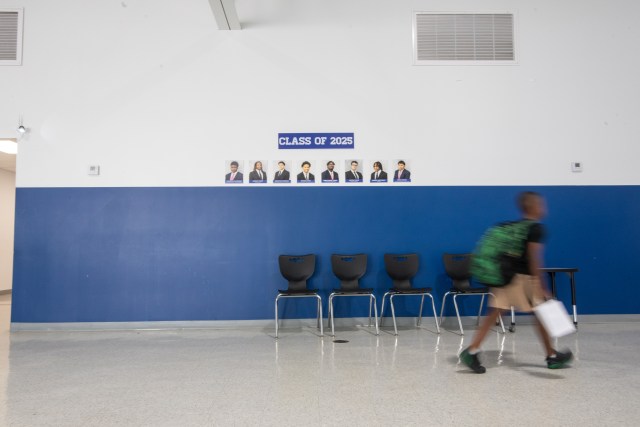
Students at the Delta Streets academy in Greenwood, Mississippi, walk between classes.Photography by Timothy Ivy for Christianity Today
Students at the Delta Streets academy in Greenwood, Mississippi, walk between classes.

Thomas “T. Mac” Howard, who founded DSA in 2012 after teaching math at a poorly rated local high school, talked about his philosophy for the school while elementary-grade boys played soccer in their new gym. The kids run around for an hour before their first class, in addition to recess after lunch. “The more energy they can burn, the better [they can] focus on class,” Howard said.

Many students arrive at DSA reading well below grade level after spending time at low-performing public schools. Nearly one-fourth of the boys who stay in the local public schools drop out, and the ACT scores of those who stay at the high school are around 20 percent below the national average. 

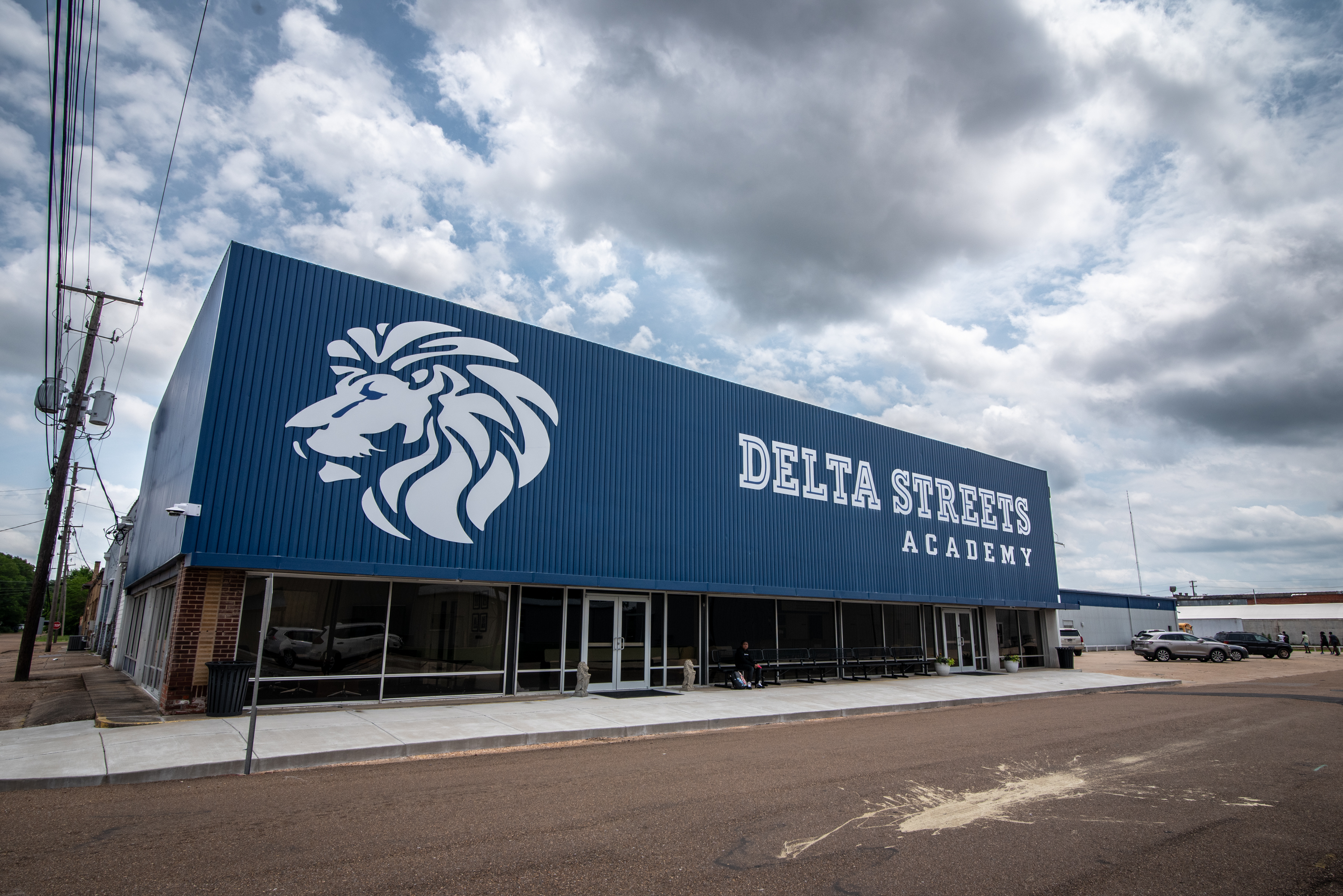
But for $75 a month, low-income families can send their sons to DSA, which is housed in three steel-clad buildings across the street from a pawn shop covered in ivy and a rundown house nearly concealed by a porch of old furniture.

DSA’s mark system is part of a highly structured disciplinary plan. Students receive demerits for failing to turn in homework, speaking out of turn during class, and more. Two marks, and they’re stuck eating “silent lunch” away from their friends. More, and they must stay after school to write one page per mark.

Educating Low-Income Boys at Delta Streets Academy
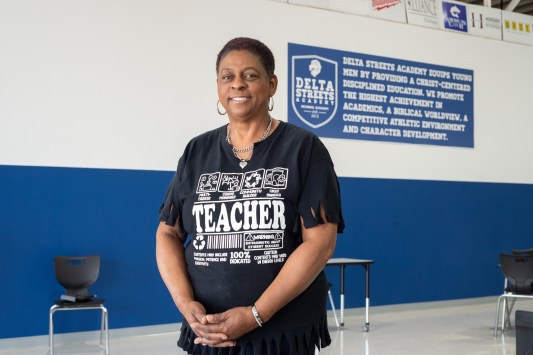
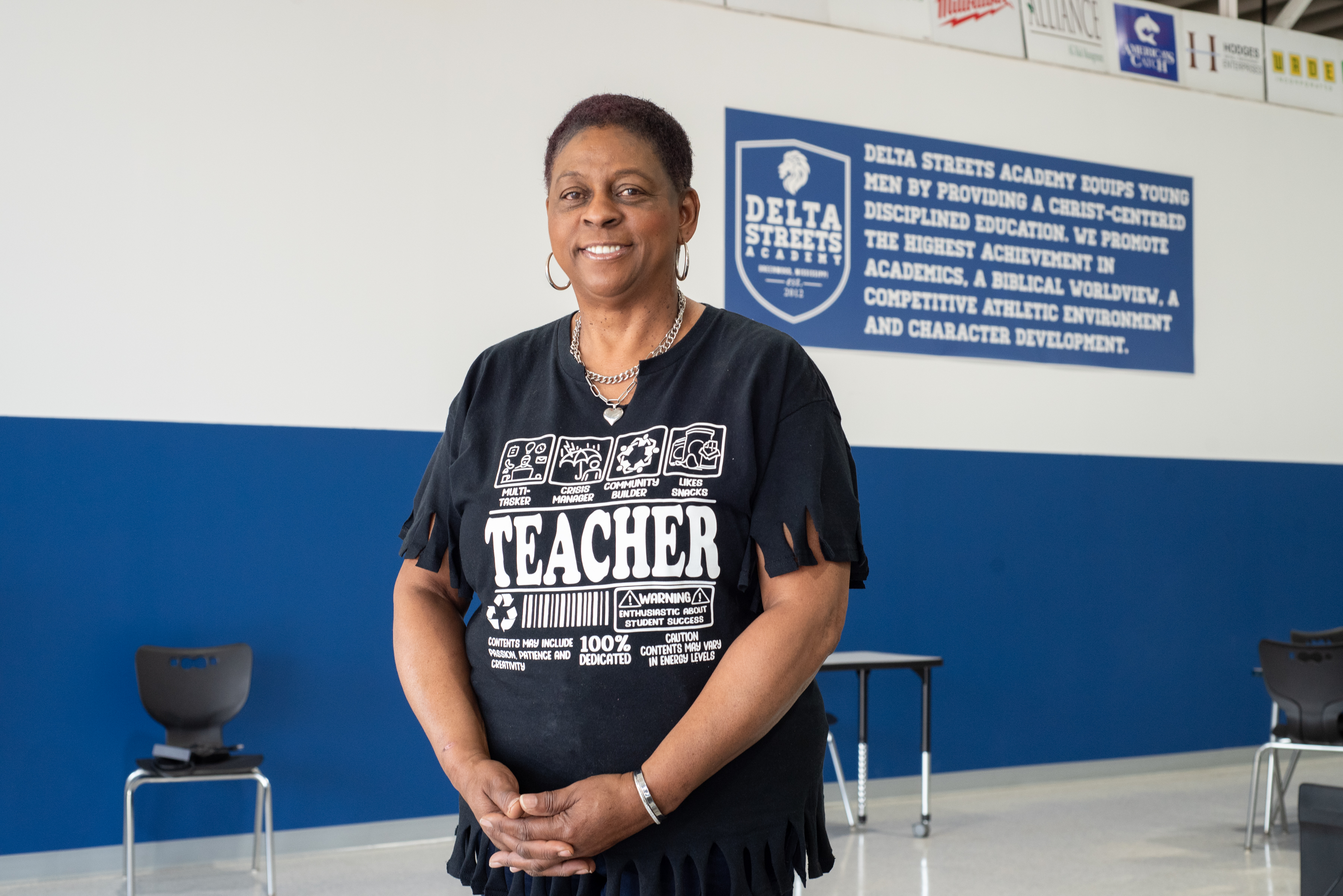
Edna Williams, a teacher at the Delta Streets academy in Greenwood.

1 of 3

Edna Williams, a teacher at the Delta Streets Academy.

Photography by Timothy Ivy for Christianity Today
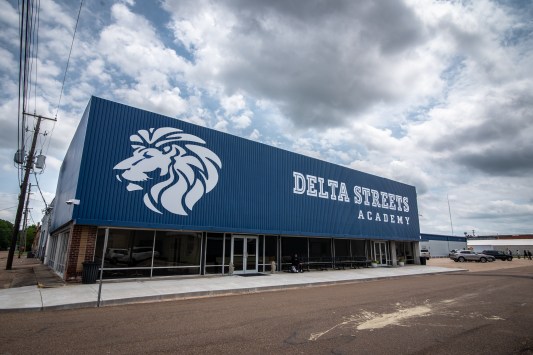
Delta Streets Academy

2 of 3

Delta Streets Academy

Photography by Timothy Ivy for Christianity Today
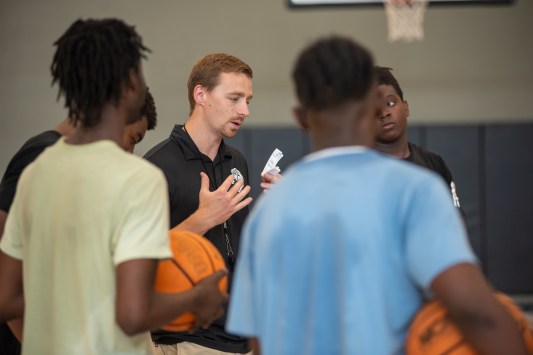
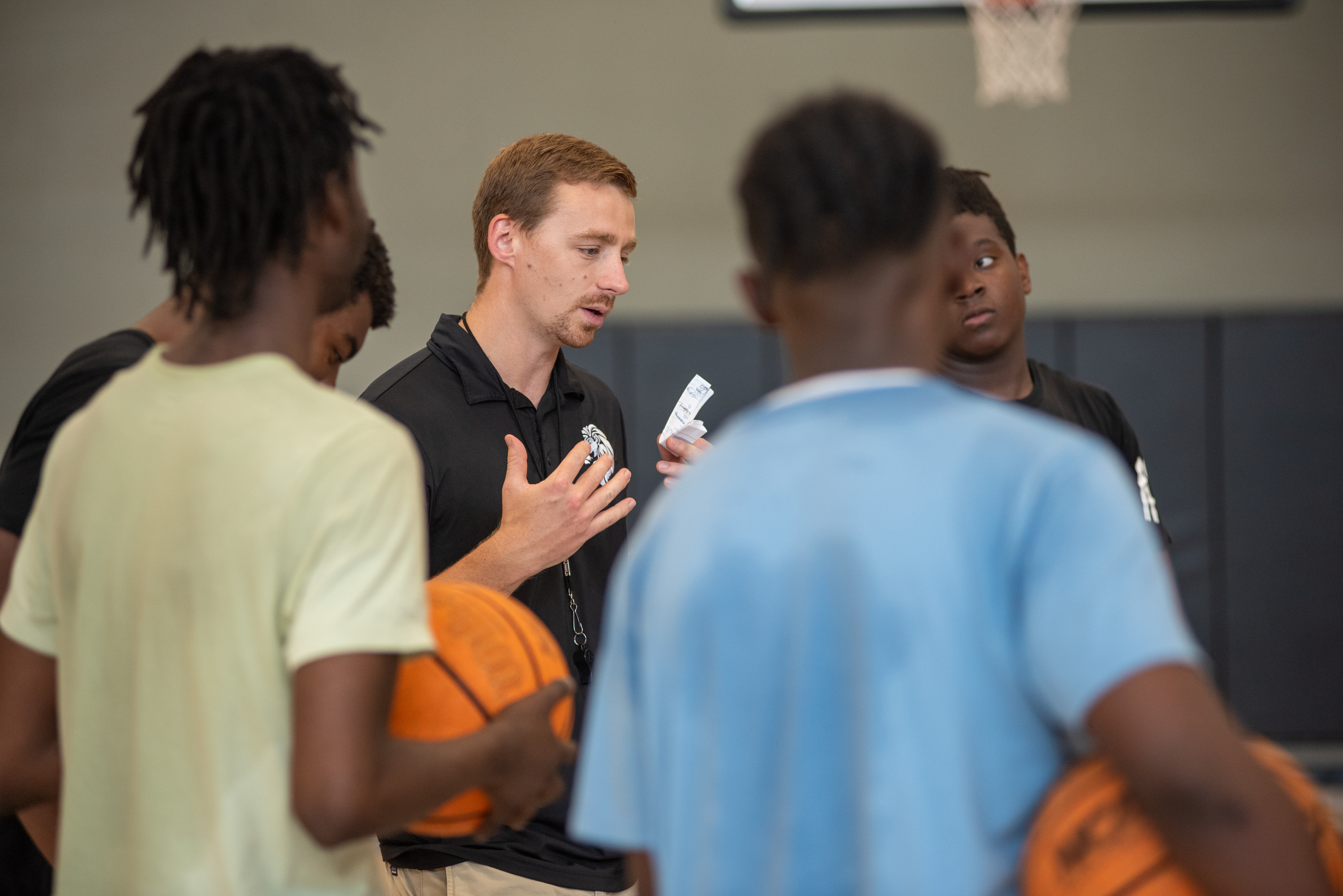
Jonathan Holland, a teacher and basketball coach at Delta Streets academy, talking to students during tryouts.

3 of 3

Jonathan Holland, a teacher and basketball coach at Delta Streets Academy, talks to students during tryouts.

Photography by Timothy Ivy for Christianity Today

Log in or subscribe to view the slideshow.

The strictness doesn’t keep classrooms from coming alive, though. In fourth-grade English, hands shot up to answer Kristen Montgomery’s rapid-fire questions about verbs and adverbs. Beneath a tall brick wall painted with the word “CADILLAC”—left over from this building’s past life as a dealership—some of the boys fidgeted or lip-trilled, but they paid attention.

In fifth-grade social science, students shouted replies to Edna Williams’s booming questions about the tortoise and the hare. In tenth-grade English, nine students discussed a novel, connecting the teenage characters’ experiences to their own. During lunch, the cafeteria buzzed with conversation (probably boosted by a strict no-phones policy).


Class sizes at DSA are small, with just 15 fourth graders enrolled last fall and about 9 students per graduating class. Mississippi Delta parents are not beating on the DSA doors for their children to get in. Howard says, “The verdict of the Black community is still out on Delta Streets.”

Downtown, a statue of Emmett Till stands just 36 miles from the courthouse where an all-white jury acquitted the Black teen’s white murderers in 1955. Segregation died on paper in 1964 but isn’t yet buried. Milton Glass, pastor of the New Green Grove Church of Faith, told CT of a common “stigma”—which he repudiates—that “private school is for white people.”
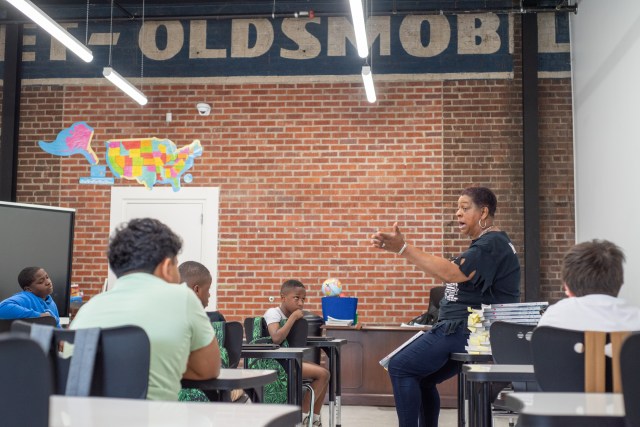
Edna Williams talks with students about their futures before taking their final exam.Photography by Timothy Ivy for Christianity Today
Edna Williams talks with students about their futures before taking their final exam.

Whites fleeing desegregation started many private schools in Mississippi, and most white students in Greenwood go to one. Greenwood High’s student body is 95 percent Black, and most of the teachers there are Black too. Howard is white, as are most DSA teachers. Howard acknowledges that DSA struggles to recruit and retain Black teachers; public schools can offer higher salaries. 

Coretta Green, a Black teacher set to become the school’s first elementary principal this fall, has learned that it’s important to provide immediate incentives for students. Kids “fight harder” when rewards are on the line, she said. She started buying goodie bags for students herself. Now, she has added awards for perfect weekly attendance, student of the month, fewest marks, and honor roll.

Green appreciates working for a Christ-centered school with morning devotions—and the student body comes with another bonus: “No girl drama.” But that also keeps some boys away, as do the limited opportunities for athletic recognition. (DSA’s small teams struggle to compete against bigger schools.)

Another barrier to entry is the tuition. For some families, even $75 a month may be unaffordable. “If it was free,” Glass said, “you would have a whole lot more.”

Ty Korsmo is a journalist based in Houston, Texas.

News

Navigating the Law at the Christian Immigration Advocacy Center

In hostile political times, this Pittsburgh ministry helps lawful immigrants stay in the US.

Photography by Hannah Yoon for Christianity Today

In this series

The first client intake I observed at Pittsburgh’s Christian Immigration Advocacy Center (CIAC) was a legal dead end.

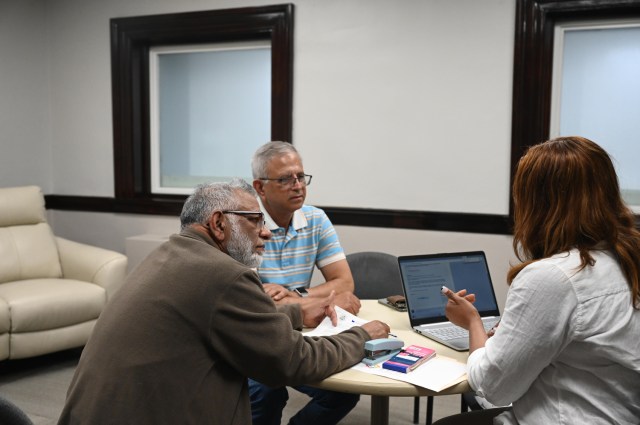
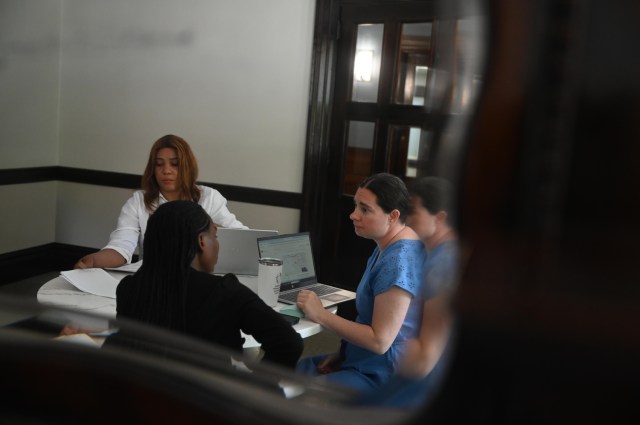
CIAC ministry director Rogerio Torres sat behind a desk crammed into a drab office dominated by shelves of paperback Bibles. Rogerio is one of four staffers at CIAC (pronounced “kayak”) who are accredited representatives through the US Department of Justice’s Recognition & Accreditation Program, which allows people who aren’t lawyers to provide select legal services to low-income immigrants and refugees.

Across from Rogerio was the client, a glamorous Ukrainian woman named Dariia Savenko. In a flawlessly coordinated outfit of black and white, trimmed with pearls, she explained to Rogerio how she, her two children, and her boyfriend came to be in the United States. “I crossroad in Mexico, in Tijuana, before the Ukraine program,” she said. But now, “I don’t have idea what to do.”

For 20 minutes, Rogerio reviewed Dariia’s documents and options. She’s in the country through Uniting for Ukraine, which provided temporary immigration status for Ukrainian refugees of Russia’s invasion. But that status will expire in a matter of months if it’s not extended, and Rogerio could offer little hope for a path to legal long-term residency.

“Wait a minute,” Dariia said as the conversation wound down. “Okay. Okay. We have another options for legalization, or no?”

“In the moment, no.”

And that was that—well, almost. Before saying goodbye, with a smoothness obviously born of extensive practice, Rogerio asked Dariia if he could pray. “I dunno if you believe in God,” he said, “but we believe in God, and we know that we plan things, but God is the one who establishes.”

She assented, and Rogerio prayed for Dariia, for her boyfriend, for their uncertain future, and for the revelation of God’s plan for their lives. “It seems that all we can do is to pray,” he finished, “so I’m offering this prayer in the name of Jesus, Lord, so that they will have peace in their hearts that you are in control.”

Dariia is unlikely to return to CIAC, Rogerio told me after she’d left, and that isn’t an unusual outcome for these intakes. All the CIAC staffers I interviewed were clear on their purview: CIAC is not a policy advocacy organization and only works with clients—often refugees and others eligible for a green card or US citizenship—who have an active, licit immigration status and viable legal options going forward.

Intakes are free, but for most services, clients pay modest, income-scaled fees ranging from $40 to $3,000. The organization never works with those in the US illegally, though it may connect them to churches and other local ministries. Nor does CIAC typically handle asylum cases, which are so involved that they’d eat up too much of the group’s limited time and budget.

During three days of interviews and observation, I saw how painstakingly conscientious this team is. Staff members want to help clients achieve their legal goals. But more than that, they want to tell the truth—about clients’ immigration status and prospects, yes, but also about God and his love for each person CIAC serves (which is on track to be more than 1,000 this year). 

CIAC, which has grown rapidly since opening in 2019, receives hosting from Allegheny Center Alliance Church (ACAC), a large and long-
standing
Christian and Missionary Alliance congregation in Deutschtown, on the north side of Pittsburgh. CIAC board member Glenn Hanna, who founded the ministry, was ACAC’s missions pastor until his retirement, and CIAC clients sometimes visit and join the church.

ACAC is a neighborhood institution and an integral part of the CIAC story. When other local churches moved to the suburbs in the midcentury era of white flight and urban renewal, Hanna told me, ACAC chose to stay and actively pursue integration across racial, economic, and political lines.

Hanna joined it as a congregant in the 1990s, committing on the spot when a pastor bluntly spoke against racism from the pulpit. In three decades of membership, he’s seen the church pour resources into Deutschtown’s dilapidated streets, funding a community health center, offering ESL classes, and buying a nuisance bar to shut it down.

CIAC, then, is just one fruit of those decades of faithfulness—and several other congregations are setting up their own programs. One early adopter is my own church, Church of the Ascension in Pittsburgh, where Jennifer Tinker, an immigration attorney who helped Hanna with CIAC’s launch, runs a small offshoot on Thursday evenings.

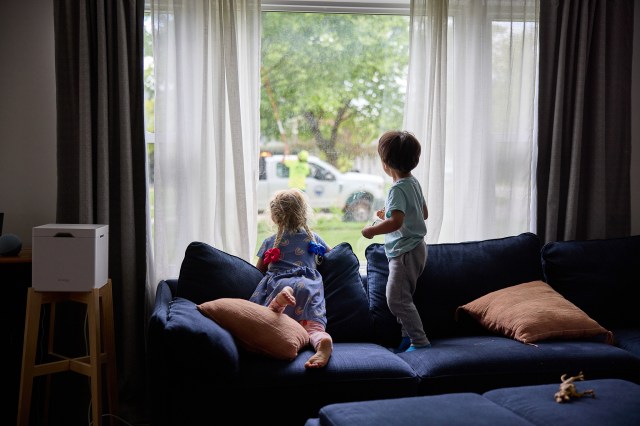
Many stories of CIAC clients are frustrating or sad, but not all. CIAC aids people like Camille Alves Damota, who came to the United States from Guyana with her three kids in 2020. The marriage to a US citizen that brought her here lasted just seven months, she said, rapidly devolving into abuse. Fearing for herself and her children and unable to navigate Pittsburgh’s tangled streets, she contacted CIAC and met with accredited representative Jessica Weaver, who came to Camille’s home for the initial intake.

Photography by Hannah Yoon for Christianity Today

“Since then, they’re on it,” said Camille, a small woman wearing a bright sweater and a nose ring. “If I call Jessica or any one of the staff, they would be there, try to help me.” With CIAC’s aid, Camille obtained her green card and is moving toward citizenship. She got a driver’s license and a job, and she’s working on her GED.

“I never really give up because I pray and I say, ‘No, God’s going to guide everything,’ ” Camille told me. “I thank God every day—it’s all God.” But she made a point of ending our talk with thanks to CIAC too: “They have so much patience.”

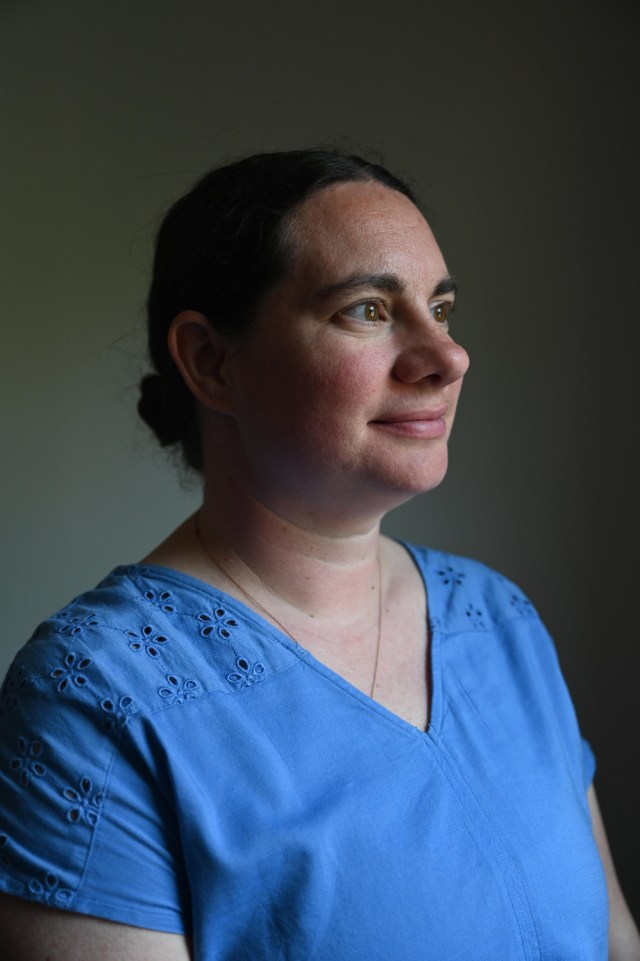
Bonnie Kristian is the editorial director of ideas and books at Christianity Today.

News

Stepping In for Struggling Parents at Safe Families

Children avoid the brokenness of the US foster care system through temporary stays at churchgoers’ homes.

Photography by Tim Klein for Christianity Today

In this series

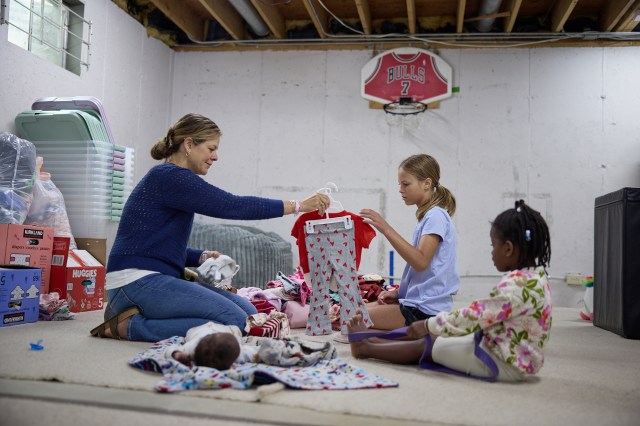
Brenda Todd needs size 3T and 4T clothes for a little boy who is going to stay temporarily with a host family. He’s bringing nothing with him.

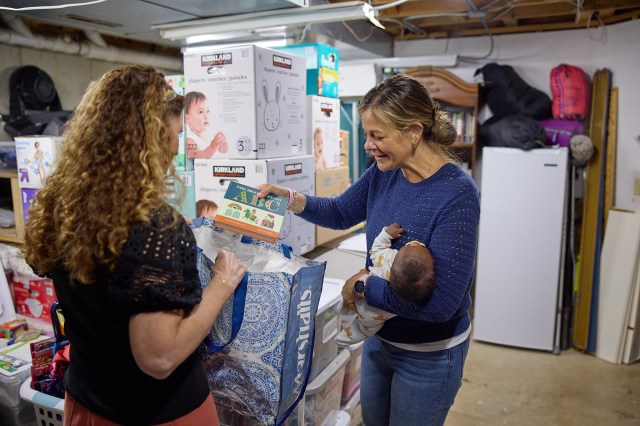
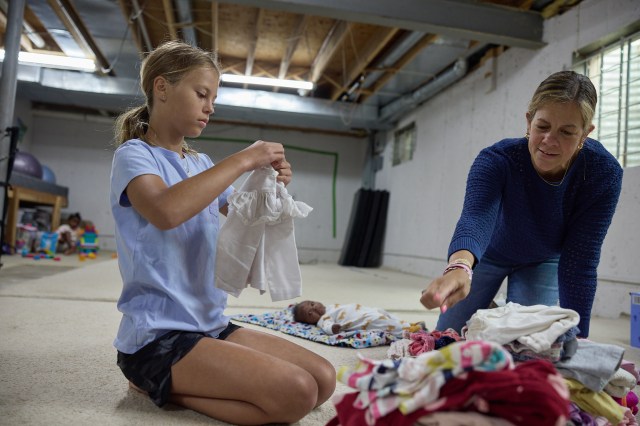
Todd knows who to call: A volunteer in Wheaton, Illinois, has transformed her basement into a storage room stuffed with baby gear and clear plastic totes of children’s clothes in every size. “[The intake form] says he’s potty trained, but I told her to grab pull-ups too, because you never know,” Todd said.

Todd is the director of a Safe Families for Children chapter that covers four counties in the western suburbs of Chicago. It’s one of more than 90 Safe Families chapters in 150 cities across eight countries working, as the website describes, “to enable the global church to return to its historic role of caring for the orphan and the widow.” Often, this care means helping struggling families avoid state involvement and separation.

For instance, if a mother loses housing, Safe Families might place her child with a temporary host family while coaches support her efforts to find a job and a home. Safe Families provides this help for free, and the mother keeps guardianship of her child. Host families understand that the goal is reunification, not adoption.

“If we say we’re pro-life, where do we go from here? It’s not just at the baby stage,” Todd said. “If this mom’s going to have the baby, we need to be there for her all the way through.”

Photography by Tim Klein for Christianity Today

Todd currently oversees 25 cases with the help of one other paid staffer and volunteers from local churches. About one-third of the cases come after the Department of Child and Family Services investigates a family and fails to find evidence of neglect or abuse but knows the family is struggling. Another third of the cases come from other sources, like domestic violence shelters or schools. The rest come from parents who call Safe Families asking for help.

Relationships are at the center of Safe Families. Hosts take on a potentially lifelong commitment to mentor a family through crises that may not resolve. Former host Melissa Duncan says it is painful to watch families struggle repeatedly with the same crises. It’s not “Step into this family’s hard spot and get them through this bump on the road,” she said. “It was all bumpy.”

When a crisis does resolve, it’s also painful when hosts lose touch with the children they’ve welcomed into their homes. When families are reunified, parents may not want to stay in contact, especially if they feel shame about needing a host family.

Given the challenges, government officials in 2003 told Safe Families founder David Anderson that his idea of using hosts from partner churches would never work. “You’re not paying them? You’ll never find families to do this,” they told him. “We can’t find enough foster families to care for children, and we pay them. Why would anyone want to do that for a stranger, for free?” Yet for two decades, church volunteers have come forward.

Some host. Others bring meals to hosting families, arrange social events, or collect children’s clothes and baby gear. Relying on volunteers means that the average Safe Families hosting situation costs $1,500 compared to $40,000 through US foster care.

The brokenness of the foster system is well documented. Public health journals and news outlets have featured articles on the “foster care to homelessness” pipeline. Many children bounce from one foster home to another for years. Only half of government-run cases end in family reunification, compared to 96 percent of Safe Families placements.

Safe Families carries forward the compassion Christians have offered throughout the centuries. As Todd tells pastors of potential partner churches, “You’re preaching [that] you want people to care for their neighbors, but how do they do that? We bring the neighbors that need help to you.”

Laura Finch is a multimedia journalist.

News

Showing Love to Fearful Migrants at Restoration Outreach Programs

Refugees receive the help they need, even as they look over their shoulders for ICE agents.

Photography by Kris Cheng for Christianity Today

In this series

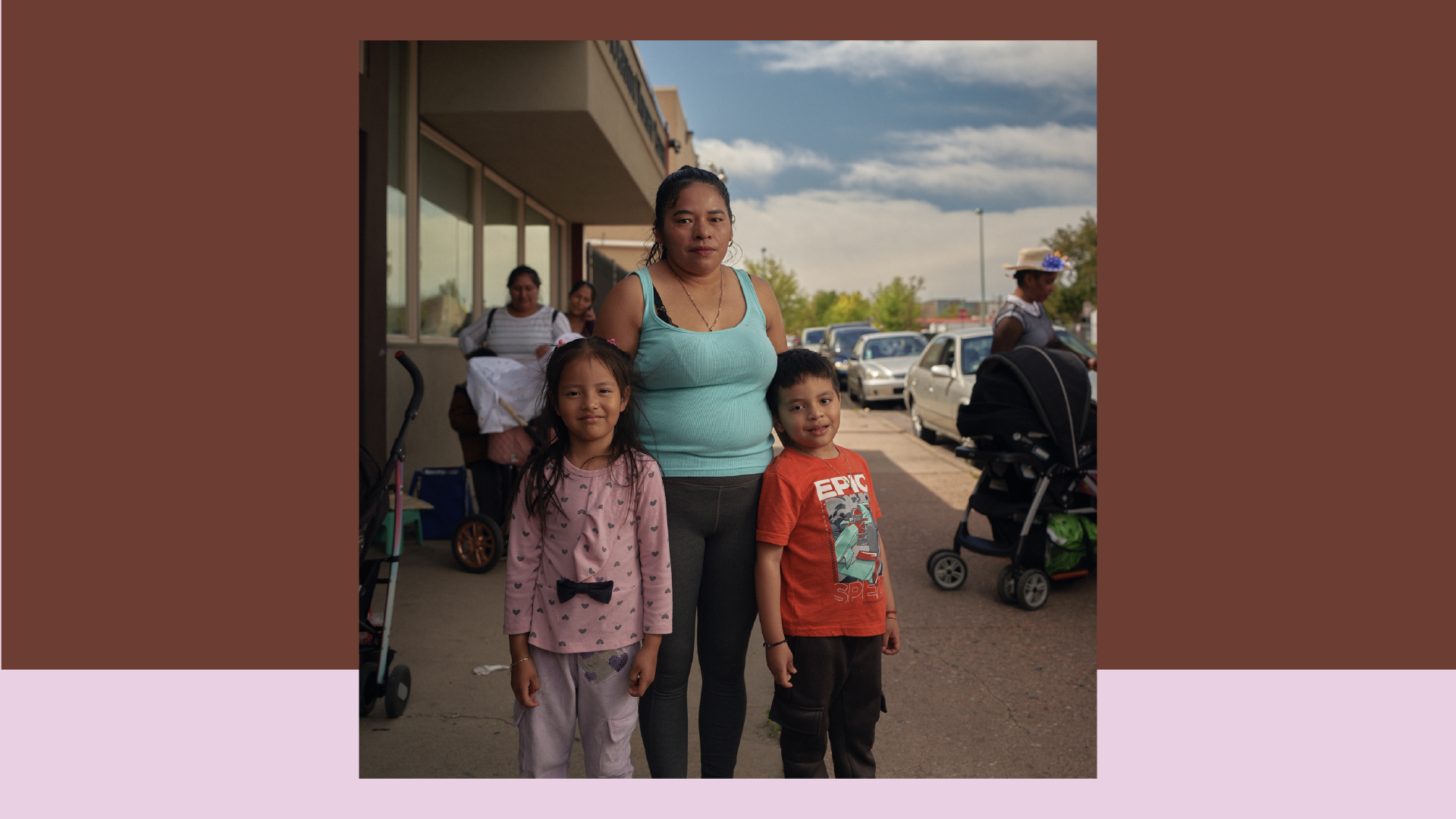
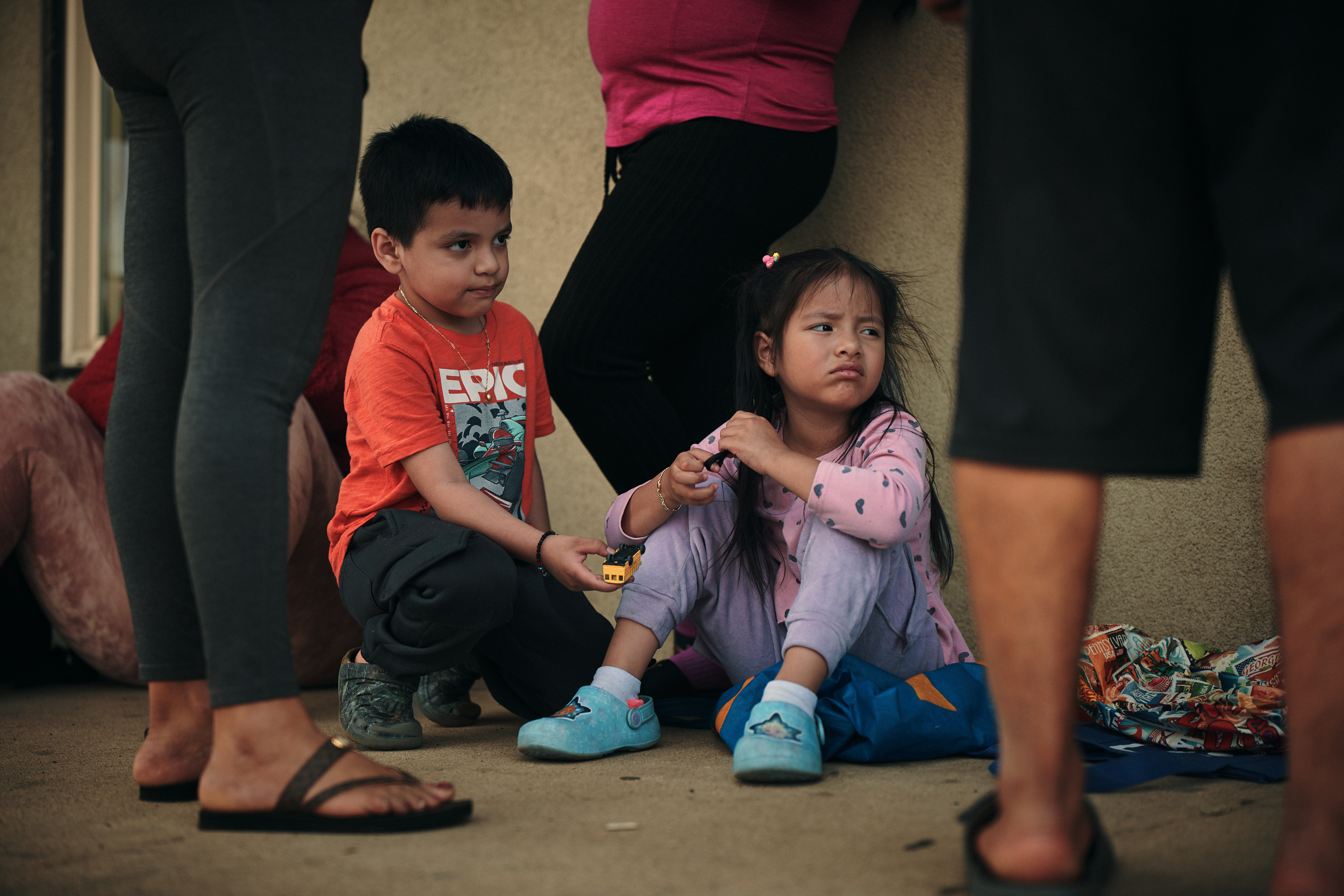
On a Monday evening, Ashley Leopold walked down the streets of Aurora, Colorado, calling young people to join the children’s ministry of Restoration Outreach Programs (ROP). “Are you coming?” she asked a young boy sitting by an open second-story window. “No, not today. I’ll go next week,” he responded. 

Fifteen children from Southeast Asia, Africa, and Latin America were willing to gather at a picnic table in the courtyard of a four-story apartment building. With small whiteboards in their hands, they drew as Leopold’s husband, Zac, read a story about God’s message to Isaiah from the Jesus Storybook Bible. The kids taped eyes and ears to white balloons to make sheep that kept blowing away in the wind.

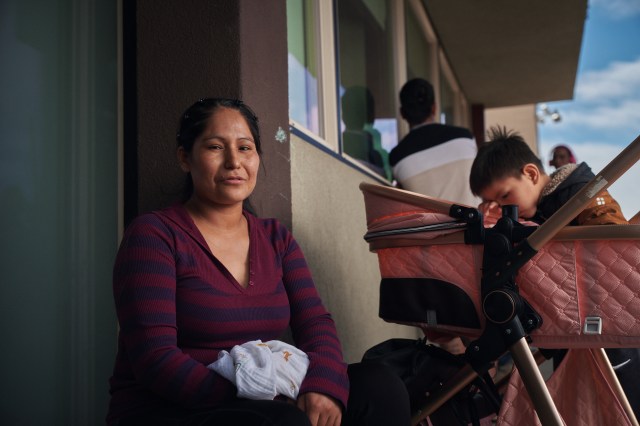
ROP has made progress among the refugee families living along the impoverished East Colfax corridor, which bridges Denver and Aurora. But this spring, none of the Venezuelan residents from one of the apartment buildings where the children’s ministry meets were willing to participate. “They’re fearful somebody’s gonna show up if we’re gathered in a group,” Leopold said. 

The city’s Venezuelan population had been on high alert since August 2024, when armed men, allegedly members of the Venezuelan gang Tren de Aragua, broke into an apartment half a mile from ROP’s office. A video went of the attack went viral and grabbed the attention of then–presidential candidate Donald Trump. “You look at Aurora in Colorado,” Trump said. “[Venezuelan gangs] are taking over the towns. They’re taking over buildings. They’re going in violently.” 

Photography by Kris Cheng for Christianity Today

Aurora’s Republican mayor, Mike Coffman, called the claims “overstated” and  “simply not true.” As president, Trump has deported thousands of Venezuelans, including women and children. In March, he sent three planes full of alleged Tren de Aragua members to a detention center in El Salvador. But many of them have no verified criminal records.

Since many Venezuelans are afraid to gather in public, ROP staff have fewer people coming to their door. The immigrants fear they’ll attract attention from ICE (US Immigration and Customs Enforcement). Yet Mary Tellis, ROP’s executive director, said she’s not giving up.

“They gonna have to put a lock on our door and take the brick and mortar,” she said. “We’re not going to go easy. … We are going to fight the good fight of faith here.”

East Colfax was once considered the city’s downtown. It began to decline in the 1960s after Interstate 70 opened three miles north, a nearby airport closed, and Aurora built a new city hall farther east. The area’s affordability led refugees and immigrants to settle there. Crime and homelessness increased: Between 2008 and 2022, Aurora’s crime rate rose 12 percent.

A drive down East Colfax reveals both economic challenge and ethnic diversity: Top Pho next to Restaurante Antojitos Hondurenos; empty storefronts next to pawn shops with bars on their windows; a small food court selling cuisine from Myanmar, Syria, Nepal, and Ethiopia. The city’s many ethnicities are reflected within the Aurora school district, where students speak more than 160 languages.

Some see gentrification as the answer to turn around the East Colfax neighborhood. New upscale apartments now stand several blocks north of ROP’s building. The city of Aurora is drafting plans to revitalize business along East Colfax, yet many residents fear the change will raise the rent and force them to move out. ROP and other Christian ministries in the area worry the city is leaving behind the most vulnerable, so they meet with local officials and nonprofits to discuss ways to preserve the community. 

Despite all the challenges, ROP sees God’s provision as it continues to serve the people who show up. In October 2022, the ministry saw a wave of Venezuelans arrive in the Denver area along with migrants from Central and South America, many bused from Texas. ROP’s food bank was running out of food. “It was so overwhelming that I would literally look out the window and begin to pray,” Tellis said. 

Then, in what Tellis calls an answer to prayer, the Food Bank of the Rockies received a $450,000 grant that allowed it to give groups like ROP meat, dairy products, and produce for free. Since then, ROP’s food bank has stayed open. 

Volunteers and staff at the ministry look for ways to infuse faith in all they do. Tracey Grant, head of the GED and work readiness program, said sometimes students she meets with individually arrive distraught over hardships in their lives. She pivots from her planned lesson to talk and pray with them. She teaches English to one student from Myanmar with the help of a parallel English- and Karen-language Bible.

Jim Bever, a volunteer ESL teacher, describes conversations he’s had with a student from China who wanted to know why a large print on the wall describes ROP’s mission as “meeting needs, building relationships, and restoring lives through Christ in the East Colfax community.”

On a sunny Tuesday morning, Tellis walks down the line of people waiting to get into the food bank, greeting regulars and families who have waited hours for the doors to open. “You ready to shop?” she asks a toddler clinging to his mom. “Ya’ll brought the sunshine!” she says as several women grin and laugh.

At the head of the line, a man from Venezuela says he has visited the food bank for the past year to supplement his income from cleaning a hotel. Walking along tables lined with bananas, avocados, spices, pico de gallo, and breakfast bars, he packs his bag with groceries. 

In the dairy section, an 86-year-old woman named Teresa converses in Spanish with people coming down the line as she hands out yogurt and milk. Her daughter said she saw a change come over her mother after she started volunteering at the food bank.

Photography by Kris Cheng for Christianity Today

Teresa, who once owned a store in Venezuela, came to Aurora a year ago and felt isolated at home as her children went off to work. She doesn’t speak English. When a relative invited her to volunteer at the food bank, she agreed. She began to feel like part of the community. Teresa is Catholic, and her daughter said she appreciates that the volunteers start each day with prayer. 

“She really loves it because she is … helping people,” her daughter shared. “This changed her life.”

Most Tuesdays, Doug Ford, the pastor of Restoration Worship Center, stands near the exit of the food bank with a sign offering prayer. It’s written in three languages.

Even though Ford speaks only English, many approach him. He asks God to guide their families and give them favor in the situations they face. And he prays that they will have a relationship with Jesus.

Angela Lu Fulton is the Asia editor for Christianity Today.

News

The Shock of School Shooting Victims in a Minneapolis ER

A doctor prayed for God’s help and presence as he cared for wounded Annunciation students in the operating room.

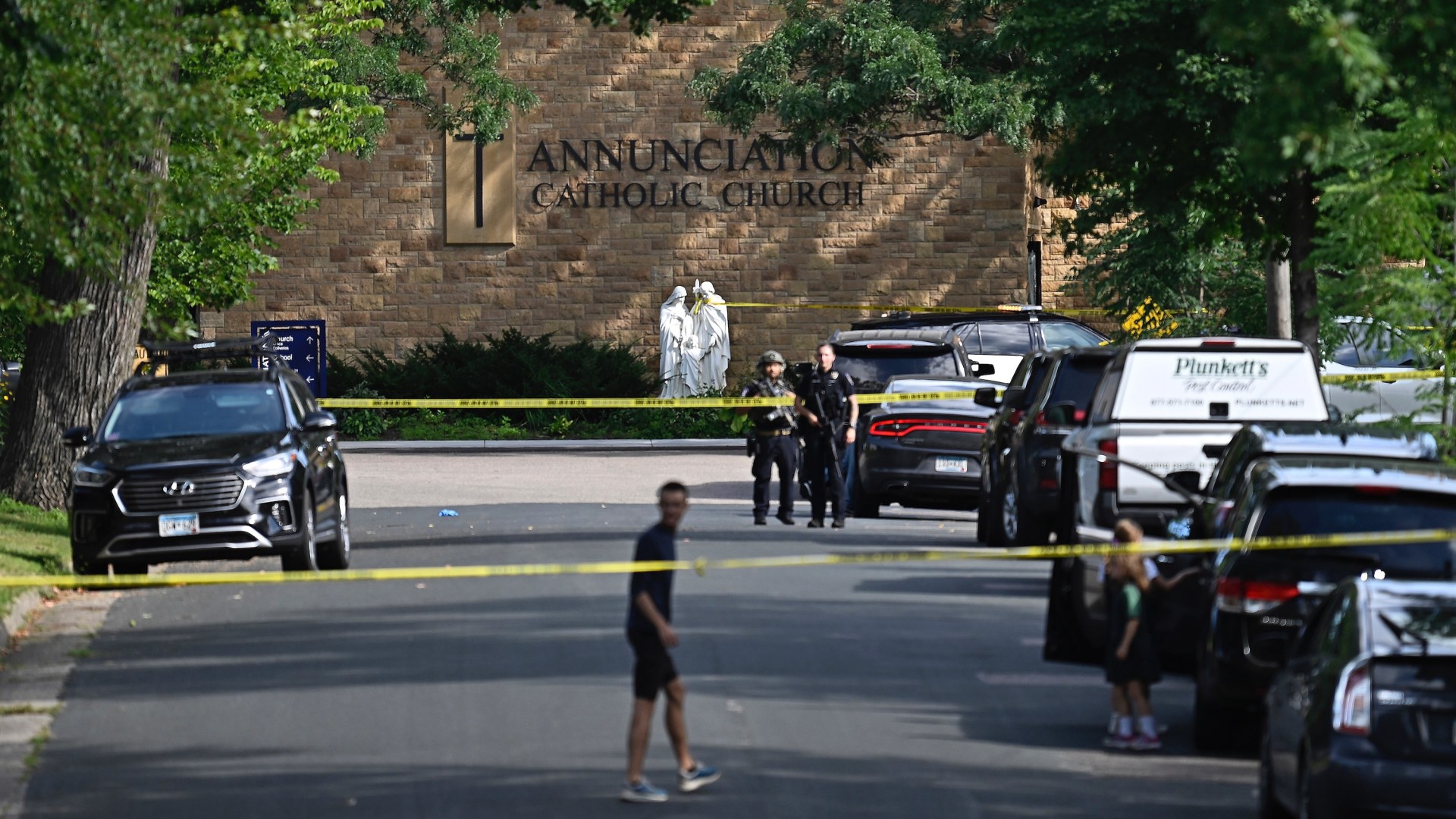
Police work the scene following a mass shooting at Annunciation Catholic School on August 27, 2025 in Minneapolis, Minnesota.

Police work the scene following a mass shooting at Annunciation Catholic School on August 27, 2025 in Minneapolis, Minnesota.

Christianity Today September 2, 2025
Stephen Maturen / Getty Images

In the operating rooms of Minneapolis’s busiest trauma center, anesthesiologist Andrew Engel regularly cares for gunshot victims. He’s used to the adrenaline of assessing patients in critical condition, stopping their bleeding, and rushing them into surgery.

But last week, when Engel got paged with a message saying students from the mass shooting at Annunciation Catholic School were on their way to Hennepin County Medical Center, he felt something he never feels at work: fear.

Engel, a Christian and Wheaton College graduate, began to pray, “Not my will but yours” and “Jesus, please be with us. Be near us.”

A shooter had targeted Annunciation, a school of 391 students from preschool through 8th grade, on the first day of classes—firing through stained glass windows where kids and staff gathered for Mass.

The attack killed 2 children and injured another 18 children and 3 adults in their 80s. The shooter died by suicide. The FBI said it is investigating the crime as domestic terrorism and a hate crime against Catholics, though the motive remains unclear.  Children from a variety of Christian traditions, including Protestants, attend the school.

On Sunday, priest Dennis Zehren led his first Mass since the one interrupted by gunfire.

“We are in a very low place, a place we never could have imagined even in our worst nightmares,” he said to the congregation, which met in the school’s auditorium instead of the sanctuary that is now a crime scene.

“Jesus says, ‘Can you just sit with me here in the dust?’ That’s the dust where Jesus fell when he was carrying the cross. That’s the dust that soaked up Jesus’ blood as he was on the way to crucifixion,” he said. “That’s where he always can be found, in that lowest place.”

Zehren compared first responders to those who held up Moses’ arms in Exodus 17, saying they were “a rock underneath us.”

Staff at Hennepin County Medical Center were on the frontlines. The hospital shut down all open operating rooms to hold space for the incoming wounded and paged medical staff to come in to help, according to Engel.

OR staff like Engel went down to the emergency room to triage the victims, some in critical condition with gunshot wounds, whom paramedics had rushed from the scene.

That day, Engel worked on victims from ages 6 to 82. Anesthesiologists are highly specialized doctors who make sure patients stay alive during surgeries, monitoring vitals and administering drugs during procedures. Parents who came to the hospital with their children couldn’t go past the door into the operating room. That gutted Engel.

The parents were severely distressed. As a doctor, he had to compartmentalize his feelings. “You can’t let yourself go there emotionally and feel that with them at that time. If you do, you’re not going to make good decisions. You’ll be slow; you won’t be crisp.”

Engel told himself he could process what he was seeing later. He remembered just praying the name “Jesus” under his breath: “God, help us. Help me. Help them,” he prayed.

He recalled a specific prayer from Oswald Chambers’ My Utmost for His Highest, a devotional book his mother had emphasized to him as a reminder to bring Jesus into every moment of his life.

“Prayer is the practice of drawing on the grace of God,” the devotion reads in part. “Don’t say, ‘I will endure this until I can get away and pray.’ Pray now—draw on the grace of God in your moment of need.”

One of the young victims remains in critical condition, the hospital reported.

“It’s unimaginable,” said Engel.

The hospital is Minnesota’s largest trauma center and is considered a “safety-net” hospital because it serves many patients who have lower incomes or are uninsured.

Before the school shooting on Wednesday, Engel’s OR team had already had a tough week, with two shootings, which he believed to be gang-related, bringing victims to the hospital.

Because he sees patients from a range of nationalities and socioeconomic statuses, Engel sees his work as a “mini mission field.” Minneapolis itself is mostly white but has a growing immigrant population. The hospital has interpreters for all the languages patients speak.

“I love my job,” Engel said. “One of the reasons I love it is because I have a sense of my own mortality every day. It could be any day for any of us that we go meet Jesus.”

Before starting at the county hospital, Engel worked 18 years in private practice, which was more profit oriented. He wished he hadn’t spent so much time there. He thrives on the adrenaline of treating trauma patients.

But six-year-old victims on their first day of school was hard to process even for seasoned trauma-care physicians like Engel.

After work, he had a gin and tonic and listened to Maverick City Music. He lay in bed and prayed. He stopped himself from asking, “Why?”

God “doesn’t promise an easy life or a healthy life or a long life, but he does promise us his peace and sometimes his joy—and most importantly his eternal life,” Engel said. “That’s what I’m banking on.”

The next day, the hospital brought psychologists and counselors into the break room to talk to any of the medical staff. People who had tended to the incoming wounded children were “openly emotional,” Engel said, adding that the hospital staff generally is open to talking about the heaviness of such moments.

Several Protestant churches near Annunciation, including Restoration Anglican, City Church, and The Urban Refuge Church, held prayer services that night after the shooting.

Restoration’s pastor of children’s ministry Emily Collings posted resources on talking to children about violence, including a video from Nashville-based Christian psychologist Sissy Goff that she recorded after the Covenant School shooting.

Over the weekend, Engel prayed and read the Bible between shifts.

“I know I can give testimony that God is faithful,” he said. “It isn’t always in the way we envision it. It’s not always physical healing or prosperity, but in the important ways, meeting us in our hearts and mind.”

Church Life

Go and Cancel No More

The church has an old antithesis to our fearful, spiteful culture: discipleship.

A person shielding her head from angry emojis.
Christianity Today September 2, 2025
Illustration by Elizabeth Kaye / Source Images: Getty, Google

As a current grad student, I spend a lot of time in classroom settings. Recently, I attended an intensive course with peers who are mostly a little older than me and further along in their careers. While I’ve been graciously mentored by many of them, I’m also keenly aware of my innocence and naivety. I often feel nervous to ask questions out of fear of being seen as ignorant at best or politically incorrect or insensitive at worst.

There are certainly natural pressures to being the youngest person in a room. But after the course, as I thought through why I had felt nervous, I realized this was about more than age or experience. Sometimes the fear of even asking a question the wrong way prohibited me from asking questions at all. I delicately crafted my clarifications or comments so as not to accidentally offend, exclude, or reveal unconscious biases. I spent so much time playing devil’s advocate to myself that my priority became saying the right thing instead of learning.

There’s no shame in wanting to be inclusive and sensitive to the people around you. It’s biblical, even. Take Ephesians 4:32: “Be kind and compassionate to one another, forgiving each other, just as in Christ God forgave you.” Minding our words is commended in the Psalms (19:14; 34:13; 141), in Proverbs (chapters 12, 13, 15), in the Gospels, and in the letters of Paul, Peter, and James.

But in this case, my anxiety wasn’t rooted in appropriate regard. Instead, I was afraid of being canceled—by which I don’t mean held appropriately accountable for my actions, but rather shamed and ostracized for perceived wrongdoing.

The right often criticizes the left for fostering cancel culture. But in my experience, cancel culture exists across political environments, even in classroom settings where I’m trying to learn from others. At my conservative college, I felt as if I had to walk on eggshells when I asked questions about sexuality, abortion, and the inerrancy of Scripture so as not to seem unorthodox. In my more progressive circles, I thread the needle when I ask about affirmative action, globalization, and colonization.

Indeed, cancel culture is a real problem on university campuses. I heard of one student at a secular university who was blacklisted for an autobiographical senior art project because it explored touchy issues around sexuality. Last summer, communities of students were shattered over disparate positions on the Israel-Hamas conflict. The atmospheres of places where we’re supposed to be free to inquire have become quick to label, quick to judge, and slow to offer the most generous interpretation of others’ words.

But cancel culture isn’t exclusive to college. I find it impacts all our spaces of formation—and that’s something we as Christians should be concerned about.

Cancel culture leaves no space for reconciliation, curiosity, or community. It sorts sheep from goats with an ever-changing set of standards for judgment. Canceling is based on relative right and wrong, often determined by political fads instead of gospel truths. When it happens on social media, it is done rapidly and anonymously, relying on a crowd mentality to enact its inconsistent justice.

Cancel culture also thrives off fear. You will never know enough, do enough, or be enough to escape the threat. You can’t even sit still or keep silent. Even Christ, the most perfect person, could not escape cancel culture (see Matt. 27 and parallel passages). In Luke’s crucifixion account, Pilate says to the crowd, “As you can see, he has done nothing to deserve death” (23:15). Yet the people “kept shouting, ‘Crucify him! Crucify him!’” (v. 21).

How am I and other members of Gen Z supposed to be discipled in today’s cultural environment when the threat of cancellation looms? Can I ask questions—in church, at school, among friends—that are not a virtue signal of my ideologies or perceived as politically charged? Where can I find grace when I make a mistake?

Since we Christians are moving through the process of sanctification, the Bible assumes we won’t have all the answers. Proverbs 3:5–6 states, “Trust in the Lord with all your heart and lean not on your own understanding; in all your ways submit to him, and he will make your paths straight.” Romans 11:33 proclaims, “Oh, the depth of the riches of the wisdom and knowledge of God! How unsearchable his judgments, and his paths beyond tracing out!”

In response to his disciples’ many questions, Jesus doesn’t sneer. He tells parables then asks more questions. Before Jesus tells the parable of the Good Samaritan, someone inquires, “What must I do to inherit eternal life?” (Luke 10:25). Instead of directly answering, Jesus tells the story of three men passing an injured person. At the end, he turns to his listeners for an interpretation: “Which of these three do you think was a neighbor to the man who fell into the hands of robbers?” (v. 36).

Jesus may gently correct his followers for their lack of understanding (like when he says, “Where is your faith?” after he calms the seas in Luke 8:25), but he doesn’t cast them out of the group. When Peter denies Jesus three times, fearing he will be labeled an outcast associated with the man sent to the cross (John 18:15–18), Jesus does not cancel Peter. Instead, he redeems him three times, once for each denial (21:15–19). Jesus cares about helping his followers grow in wisdom, not about offering “in or out” rubrics.

Cancel culture is the antithesis of this model of discipleship, especially in spaces of formation and development. Instead of confessing sins, expressing doubts, and searching for answers together, we have social media approbation and systemic unforgiveness that lead to insecurity and isolation. The fear I experience at school, at work, in small groups, or even in my social circles of suddenly being labeled as hurtful, manipulative, or insensitive leaves me with less space to know others and be known. If no one is going to help me work through thorny problems or constructively correct me when I falter, then I must be alone.

By contrast, discipleship never happens in isolation. Though content can disciple us for good or for bad—TikTok videos and clickbait, or sermon podcasts and theology textbooks—we are ideally making sense of those inputs with others, with mentors and peers alike. That requires vulnerability and trust.

I find baking bread a useful metaphor that helps me learn something about God. The process reminds me of our mandate to create. I extend grace to myself when I mess up. I practice patience and experience delayed gratification.

I can certainly bake alone using cookbooks, YouTube videos, or Instagram Reels to guide my technique. But when my grandma teaches me how warm the water needs to be, when my mom shows me how to knead dough and not overwork it, and when I get to share the finished product with friends and family, the experience is all the more satisfying.

Discipleship is about being taught—but it’s also necessary to include others in our learning. That can look like small groups that create safe spaces to live life authentically together, or like a mentor and mentee meeting over coffee. Discipleship can be office hours at school with a professor, walks with a family member, or a meal after church with friends. But all these forms of community become impossible if we’re afraid of being ostracized when we slip up. The foundation of cancel culture is fear. The foundation of discipleship is grace.

Mia Staub is editorial project manager at Christianity Today.

News

Some Christian Schools Take On the Cost of Inclusive Education

Despite the challenges of accommodating ADHD and other learning difficulties in the classroom, advocates see the missional benefits.

A row of children carrying different colored backpacks.
Christianity Today September 2, 2025
Illustration by Elizabeth Kaye / Source Images: Getty

All four of Jessica Borisch’s kids have attended Dutton Christian School (DCS), a school serving pre-K through eighth grade students outside Grand Rapids, Michigan.

With her youngest, though, things were different. In first grade, Gabe had trouble sitting still. In second, he struggled to adjust to instruction during pandemic lockdowns. By fifth grade, schoolwork was too much for him to get through.

Borisch got him tested. Gabe’s ADHD, she learned, made it hard for him to stay focused on classroom tasks. He needed more support.

Research shows that as many as 1 in 3 kids with ADHD (attention-deficit/hyperactivity disorder) don’t get the school services they need. In public schools, students can receive accommodations for ADHD, including quieter workspaces or adjusted directions for assignments. In private Christian schools, administrators may worry that accepting students with learning challenges will take away from the experience of other students in the classroom.

And without taxpayer funding for such programs, many Christian schools must raise money themselves to cover the additional costs for specialists, said Susan Verheul, vice president of executive initiatives at the Association of Christian Schools International.

DCS sees providing education for all students as part of its mission and partners with the All Belong Center for Inclusive Education to provide assessments and resources for neurodiverse students. All Belong works with nearly a hundred Christian schools, including 50 in Michigan, where it’s headquartered.

To evaluate Gabe for attention issues, DCS had All Belong conduct a comprehensive assessment of his strengths and struggles. They gathered information from Gabe, his parents, and his teachers and evaluated his academic progress and attentiveness.

With the help of All Belong, Gabe gets extra help to stay on task in his regular classroom, and he also attends pullout classes with a group led by a special education teacher. Gabe’s teacher reformats his study guides using pictures, graphs, and flow charts, which his brain can process easier than lists of text. Plus, teachers alert parents of upcoming assignments ahead of time since time management can be harder for students with ADHD.

“One thing I appreciate is that they give different tests that help them demonstrate they grasp central concepts but without some of the less-relevant information,” said Borisch. “Sometimes he takes the same tests as his fellow neurotypical students to see how he handles it, and he is so proud when he does well. He’s still being pushed, but also accommodated.”

All Belong CEO Becky Tubergen sees inclusion as an opportunity. In her view, teaching students and teachers to work with ADHD students not only expands their ability to accept others but also expands their vision for the kingdom of God.

This kind of work requires teachers to invest a lot of time on the front end. But much of teaching already is front-loaded, like teaching students the classroom rules and procedures early so they can lean into those routines throughout the school year.

“It’s about building relationships,” said Tubergen, “and that’s not an extraordinary thing.”

While Christian organizations (including the Wheaton Center for Faith and Disability) are speaking out about welcoming and supporting students of all abilities, few are offering the kind of training and resources All Belong does.

Founded in 1979 as the Christian Learning Center, the ministry helped launch one of the earliest inclusive education programs in West Michigan and went on to advocate for tuition equity within Christian schools so parents of kids with disabilities didn’t have to pay additional fees.

The rise of the school choice movement could play a role in more private schools accommodating students with ADHD and other learning difficulties. With state voucher programs expanding—including education savings accounts (ESAs) universally available in 11 states—more families are eyeing private options.

Texas’ recently passed ESA program allows special education students to access up to $30,000 per year for tuition. In the meantime, public school systems worry that diverting funds will disproportionately harm their support for students with special needs.

All Belong’s training urges Christian educators to resist seeing students who have trouble sitting still or following directions as sinfully defiant. Drawing from Christian and secular research, the ministry’s “See-Think-Do” method prompts teachers to observe students to find patterns in their behavior rather than jumping in to correct it.

“God has designed the student uniquely, and we want to be curious about the learner, not the label,” said Betsy Winkle, All Belong’s director of student services and chief operating officer. “This is beneficial for that particular learner but also helps kids see the fullness of God’s kingdom and what it means to see each other well.”

It can sting when parents who want to educate their kids in Christian settings find that a school either won’t admit children with learning disabilities or won’t provide accommodations for neurodivergent students.

Such families often hear no from several schools before they get a yes, said Carolyn Beall, educational support programs director at Annapolis Area Christian School (AACS).

It’s not uncommon, she said, for a Christian school to build out support for one or two students, then do away with it once they graduate.

When a family with several children at AACS wanted the school to admit their daughter with Down syndrome and offered to help fund a program, school leaders wanted to invest in something that would be sustainable.

Up until then, the school had only a tutoring program for students with learning disabilities. It was expensive, almost doubling the cost of tuition. Superintendent Rick Kempton, who previously spent 28 years advocating for inclusion at a Christian school in California, was convinced there was a better way.

The journey brought the school to All Belong. But it’s not easy to change an entire educational ethos. It takes buy-in from budgets, families, and teachers themselves. Kempton took a group of teachers who were skeptical about inclusion to visit the ministry’s headquarters.

“I knew if I got them on board they would win the day for us, and they did,” Kempton said.

Kempton then hired Beall, who had worked for 15 years in special education in the Annapolis, Maryland, public schools, to develop a robust program to accommodate learning disabilities.

“It’s hard, and there have been lots of challenges with teachers saying, ‘This is too hard. I have been teaching like this my whole career, and I can’t do things differently,’” she said. “When you can talk to them about how each child in the room is made in God’s image, they usually have the heart for it.”

Kempton said he had to constantly remind the faculty that God called the school to this ministry and they are all in it together. He reminded the faculty that they were making a difference not only in the life of each child but also in whole families.

“We embraced the idea that we are ministering to this family, partnering with this family, and can’t tell this family that some of their children can come but one cannot,” he said.

Today, AACS has 850 students across four campuses, and 20 percent of those students receive some kind of extra support. For half those students, it’s for ADHD.

AT DCS in Michigan, 50 of the 654 students in kindergarten through eighth grade have an ADHD diagnosis.

Cindy Groot, the school’s director of educational support services, said teachers struggle most to create learning plans for students every year—to write out what each child needs in the classroom and monitor goals. But they don’t do it alone: DCS provides specialists, enrichment coordinators, paraprofessionals, and All Belong to help.

“We are aware of challenges when there is a diagnosis, but we dig deeper to find out how we can best support them not only in their challenges but in their strengths,” said Groot. Staff members prioritize “getting to know that child, which is different than looking at a diagnosis, and how to help them succeed academically.”

Borisch said the accommodations DCS provided for Gabe transformed his experience in middle school. Gabe and his classmates are taught that God made each child and values them all as they are, and they treat each other accordingly.

“Tolerance is so off the charts at Dutton that it blows my mind,” she said.

Inkwell

Stock the Library of Your Mind

Good writing flows from a lifetime of good reading.

Inkwell September 2, 2025
"In Prison" by Cyprian Kamil Norwid

In a dark, dank prison, a man is writing, intent on the scroll in front of him. He is unsure if he will live to finish this work, but he hopes he will. He still has much more to say. Sometimes he wonders, Will anyone read it? Or will this work, the greatest of his life, be heartlessly fed to the fire after his death? And if readers find it, what will they think of it?

But there is no time to waste on these questions, the unknowns. He rushes ahead, eager to get ideas down on the fragile scroll before he forgets, or before they come for him, as they so surely will one day soon.

In AD 423, Anicius Manlius Severinus Boethius was imprisoned on a charge of treason and executed the following year. We best remember him today not for the injustice he suffered but for what he accomplished during his imprisonment. Awaiting his death, Boethius composed a stunning work that has received well-deserved and renewed attention of lateThe Consolation of Philosophy.

The story of how Boethius wrote this unusual book of dialogue with Lady Philosophy is also the story of one glaring absence: library access for the author. You can’t tell it while reading his work, but once you see it, you can’t unsee. 

How can a man write an entire book like this, quoting poetry, summarizing ideas, covering the Greco-Roman canon so thoroughly and precisely, all from memory? This case is a strong testimony to the existence of an extraordinarily well-stocked library housed in the author’s mind.

We all possess our own distinctive “libraries of the mind,” literary scholar William Marx argues in his new book by this title. Each of us owns an invisible library that keeps growing over the course of a lifetime, shaping us into the people we become. 

It is a rather chaotic process, of course, completed in stages. Lifelong readers begin stocking their inner library from a young age. From the first book someone ever read to you as an infant, the construction project of your inner library began. 

In these early years, perhaps the library was stocked with simple classics. Inevitably, some of these earliest books eventually became forced into a sort of mental backroom storage in your mind, where they now dwell in the subconscious. 

My six-year-old daughter recently came across Are You My Mother? and had no recollection of us ever reading it to her, even as the book still bears distinctive marks of toddler-chewing on the cover. But then, upon re-reading, the sweet tale of the bird and the Scary Snort who helped it get back in the nest came flooding back.

The library of the mind is no static, fixed entity. It keeps expanding as long as you keep reading—and gets cobwebby with neglect. It’s not just the stories or plots of certain books that shape the reader but also poignant turns of phrase. Entire short poems or snippets stick in our mind for the long haul, and mental images take shape when reading, jumping off the page and into our lives. I often find particular Bible verses or hymns coming to mind in a given situation.

For Boethius, it was these books, the fruit of a lifetime of reading, that gave him the imagination and the beautiful words that comforted him in prison. Consolation of Philosophy is, at its heart, the story of the consolation that books will grace lifelong readers with in their moments of deepest distress. 

I have recently begun the position of interim director of the MFA in Creative Writing program at Ashland University. I find myself asking, How might I encourage the next generation of Christian creative writers? As of this August, it is my job to seek good answers to this question. 

The program has not previously had a distinctive focus, and enrollment has dwindled to the low single digits. I am now rebuilding the program with a new focus on training creative writers for the public good and for the good of the church. And I keep returning to the Boethian answer to the question of what is essential for this program.

Really, every single one of us must read more, and this is especially true for creatives. We must read more than we write. For those coming into the MFA, everything must begin with cultivating a personal library of the mind and the soul. From what fount will the writing flow, otherwise?

I worry that for too many writers today, creativity comes from within. You are your own muse and rescuer, ready to resolve any difficulty in your life or writing (and the two surely overlap and inform each other) with just the right degree of caffeine and medicinal cheesecake or chocolate. All writing becomes, by default, memoir—the grittier the better. The model of Boethius provides a different model: Good writing flows from a lifetime of good reading.

The modern view of creativity as coming from within rather than from the riches of earlier tradition is not unique to writers. As trust in institutions is at an all-time low, tradition and authority have become dirty words, and the circle of acceptable influences has shrunk.

Taken to its logical conclusions, reading becomes unnecessary if inspiration is found chiefly within the writer. But the results are not only narcissistic, they are also remarkably boring and unoriginal. In contrast, think of every great writer you have ever read. I guarantee that every single one of them has been a voracious reader. 

Indeed, while I am beginning student recruitment for the program, I must admit that some of the best writers historically did not hold an MFA or receive any sort of training in writing. After all, a degree specifically in creative writing is a fairly recent concept. Instead, the best writers have always been prolific readers. 

Consider Abraham Lincoln. With less than a year of formal schooling, he was an autodidact, simply reading and learning on his own—reading his way successfully into a career in law. As we read any of his writings now, such as the famous Gettysburg Address, we have to admit that he had a way with words. But his gift did not come from within. Lincoln’s writings are suffused, in particular, with biblical language, because his library of the mind was steeped in the imagery of the Bible.

More recently, consider the classic example of the Inklings. Though most of them were academics by training, we do not know them for their scholarly publications. Instead, the incredible library of the mind that each had accumulated from a life spent immersed in classical and medieval literature, philology and linguistics, the Bible, philosophy, and theology yielded the fruit of works that now undergird our contemporary understanding of Christian storytelling. Their inspiration was in the Boethian mode—one that I would now like to bottle and spritz on aspiring poets, novelists, and essayists! 

The source of Boethian creativity takes years—decades, really. Our reading life, after all, is cumulative. C. S. Lewis had accumulated a rich library of the mind because he had been reading mythology, literature, and everything else he could get his hands on since childhood. 

But what about prospective writers who have not grown up around books, only to discover a love for poetry in high school or college? Not everyone begins in the same place. But one must begin somewhere, sometime, someplace. Why not now? 

Read words that will make you stop whatever else you had thought of doing to stay with the book. It might be the sort of book or essay or poem you cannot set down until you have finished it. 

Or it might be one that makes you stop mid-paragraph. Then, settled into a reverie, you experience that out-of-body experience that only graces quiet readers—the delight of the words gently seeping into your very bones.

Nadya Williams is books editor for Mere Orthodoxy and author of Cultural Christians in the Early Church (2023); Mothers, Children, and the Body Politic (2024); and Christians Reading Classics (2025). Find her on Substack at Cultural Christians in the Early Church.

Books

The Apocalypse Has Two Faces

But a frustrating new attempt to chart its cultural history does little to unveil either one.

Half of a dragon and half of a dove separated by a red line.
Christianity Today September 1, 2025
Illustration by Elizabeth Kaye / Source Images: Getty, WikiMedia Commons

It is hard to imagine a more tiresome book about a more fascinating subject than Ed Simon’s The Dove and the Dragon: A Cultural History of the Apocalypse.

The book’s premise is intriguing: a sweeping intellectual history of apocalyptic thought from the Zoroastrians to QAnon. And Simon promises to interpret this history through his “schema,” which revolves around two categories: “the gentle dove,” symbolic of “hopes for a coming millennium when all shall be perfected,” and “the vengeful dragon,” defined as “an emissary of destruction, a creature of fire who comes to annihilate.”

You could write an illuminating and important book showing how artists, politicians, and religious leaders have deployed these two apparently opposing visions across the centuries. Indeed, such a book might reveal the complicated ways they actually depend on one another. Unfortunately, that book remains to be written, though Simon has at least gathered plenty of raw material to inspire a future author.

Things begin to fall apart from the outset as factual and syntactic errors pile up. Simon quotes from “David” Alter’s The Art of Biblical Poetry while making an argument the actual scholar, Robert Alter, refutes in that book. Elsewhere, he draws a dubious comparison between the 1572 St. Bartholomew’s Day Massacre, in which French Catholic mobs massacred Protestant countrymen, and the Reign of Terror during the French Revolution. “A single night” of the first event, he asserts, “killed three times as many people” as the entirety of the second. Almost no historian would agree with this claim, which is likely why he cites none.

The plague of Justinian supposedly occurred “a century” before the 14th-century Black Death (Justinian was emperor in the sixth century). A discussion of the 19th-century preacher William Miller, who predicted Christ would return in 1843 or 1844, appears under the heading “The Burned-Over Country: America’s First Great Awakening.” Miller, of course, was active during the Second Great Awakening. I will spare you instances of garbled grammar; dangling modifiers, for instance, recur often.

These errors don’t inspire confidence in Simon’s idiosyncratic and usually unsubstantiated assertions. A few examples: The canonization of Revelation “was a seminal accident” based on confusion about its author’s identity, but the Quran was “divinely imparted” to Muhammad. “The cause of the American Revolution was fundamentally religious and millennial”—apparently taxation and representation were inconsequential. The alliance between evangelicals and Catholics opposing abortion owes to evangelical millennialism rather than any shared convictions about the sanctity of life. Because of the atomic bomb’s destructive power, “history thus divides before and after 1945 in a manner that no other event matches in significance, certainly not the birth of Christ.” Ronald Reagan was “agnostic.”

What does all this have to do with apocalypse as dove or dragon? I have no idea, and if Simon knows, he isn’t telling.

In lieu of real analysis, we get authoritative-sounding, cryptic declarations: “The French Revolution was both fulfillment and negation of the Enlightenment.” “If apocalypse wasn’t real it would be necessary to invent it, and so we did.” “Just as every millennium necessitates an apocalypse, so every apocalypse may reveal a millennium.”

When Simon does recall his opening promise to interpret events and figures through the dove-and-dragon paradigm, the results are banal. Muhammad, he writes, comes “in the guise of both the dragon and the dove, just like Christ.” Moore’s law, an Intel cofounder’s hypothesis regarding periodic improvements in computing power, “signaled either the emergence of an apocalyptic dragon, of a millennial dove, or both.” The book never elucidates such koan-like claims.

Part of the problem is that Simon’s working definition of apocalypse is so expansive as to be nearly meaningless. Sometimes he hews close to a standard definition: the end of history as we know it and, at least on the Christian account, the return of Christ. But apparently many other events or rhetorical habits count as well. Identifying one’s geopolitical enemies as the Antichrist, for instance. Any revolution, any disruptive historical event, anything that “unveils” anything. “Revolution is millennium,” he instructs us. In fact, almost anything “new” merits inclusion in Simon’s litany: He interprets a question from French American writer J. Hector St. John de Crèvecœur—“What then is the American, this new man?”—as “Edenic” and “millennial” in equal measure.

One might aptly describe the book’s structure, like the structure of many of its sentences, as a tedious concatenation of loosely related characters, incidents, and observations. There is no discernible narrative thread, no analytic framework to speak of, merely a catalog of undigested historical anecdotes.

Simon’s own summation of his study’s payoff reveals just how trivial it is. As he writes on the last page (with another typo), “If a reading of this book demonstrates anything, it’s that that every century has a contingent of people, both smaller and larger depending on circumstance, who are convinced that they’re living in the last days.” I’m not sure he needed 238 pages to demonstrate this. Whether T. S. Eliot is right to say the world will end “not with a bang but a whimper,” that is certainly how this book ends.

Nevertheless, sifting through the myriad examples gathered here, one glimpses the possibility of a more illuminating narrative. Across the centuries, threats and promises of apocalypse have served both to control and to comfort. Often, the promise of comfort relies on a related promise to bring some semblance of control to a chaotic or oppressive situation.

If you are afflicted—a member of a persecuted sect in a powerful empire, say—then it makes sense to imagine the peaceable kingdom coming in the wake of a definitive, divine judgment. Only after God casts Satan and his works into the lake of fire can such people hope to see the lion lie down with the lamb and the New Jerusalem descend from the heavens. It’s no wonder that the enslaved, the colonized, the proletariat were drawn to Girolamo Savonarola’s searing rhetoric against Renaissance-era corruptions, Nat Turner’s slave uprising, Miller’s prophecies, Joseph Smith’s new revelation, or Karl Marx and Friedrich Engels’s secularized vision of eternal peace and justice.

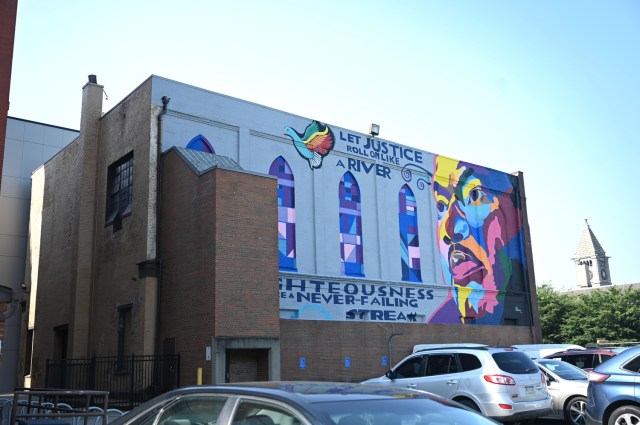
Yet time and again, as many of these examples indicate, this yearning to judge God’s enemies and usher in a harmonious kingdom takes an ugly turn. Gurus, cult leaders, or demagogues co-opt this vision to consolidate their own power rather than to remove political or economic barriers preventing judgment from running down as waters and righteousness as a mighty stream.

Thus it was that crusades waged in the name of holy war and liberation led to the massacre of European Jews and Eastern Christians. And that Communist ideology provided rhetorical justification for some of the most oppressive regimes in the 20th century. And that Nazism leveraged a sense of grievance and a promise to usher in a new millennium, the Third Reich, to gain widespread support for genocide.

The great promise of Christ’s return, however, differs fundamentally. Only God himself, not any human ruler, can inaugurate the Apocalypse. Scripture makes this point memorably in Daniel 5, with its account of the disembodied hand appearing during King Belshazzar’s grand feast. Daniel translates its mysterious “writing on the wall,” informing the arrogant king that God has numbered the days of his kingdom, has weighed him and found him wanting, and has given his kingdom to the Medes and Persians (vv. 26–28).

The unexpected demise of Babylon is a dramatic unveiling—in keeping, thematically, with Daniel’s later revelations. What is revealed? That God is the ultimate king and judge. That unjust rulers, no matter how entrenched they seem, will one day be overthrown.

In this way, a Christian apocalyptic hope relativizes all claims to earthly power. Empires will fall. The martyrs will reign with Christ. While some have twisted this confidence in God’s supreme sovereignty to justify passive acceptance of injustice on earth, this certainty has also freed many for humble, redemptive work. By lifting the impossible burden of saving the world from our shoulders, this eschatological hope liberates us to give ourselves—like Daniel—in faithful service, confident that God’s rule will be revealed in God’s time.

Jeffrey Bilbro is professor of English at Grove City College and editor in chief at Front Porch Republic. His most recent book is Words for Conviviality: Media Technologies and Practices of Hope.

Pastors

The Bible Is More Than a Book to Know

It’s a story to inhabit. And pastors must lead the way.

CT Pastors August 29, 2025
Stefania Pelfini la Waziya / Getty

Have you ever heard someone use the phrase back in Bible times? That expression has always bothered me. I understand what people mean by it, but I want to shout, “We are still living in Bible times!” The same God who interacted with his people back then continues to invite participation in his story today. The same Jesus Christ the disciples saw rise to the heavens in order to take his rightful place on the throne still reigns and rules from there today. The same Holy Spirit who poured out on the disciples at Pentecost is still being poured out by King Jesus as he builds his church today.  

The book we preach as pastors is not a story from a long time ago and a galaxy far, far away. It is the story of this world, just as relevant today as it was all those years ago.  

We live in a time of innumerable false or disorienting stories. But there is only one true story: the one told in the Bible. Maybe some of your people have never thought of it that way. Perhaps they were taught to see the Bible as a list of rules to make them good people. Maybe they were taught it is a collection of inspirational teachings or a systematic theology reference guide. While each of these offers something profitable, none of them captures the heart. The Bible is a story, one comprehensive narrative about what God has accomplished for sinners through the person and work of Jesus Christ.  

And your church lives inside it. So do you.

We’ve been born into a cosmic drama that started well before any of us were born and will continue into eternity—all of which is found in this one true, unified story. Scripture is not primarily a list of rules (though it does tell us what to do and what to not do). It is not a compilation of various teachings or even a textbook. It is a drama. And we are not mere spectators. We’ve been invited to participate. 

This is discipleship: learning to follow Christ as a participant in this story.   

But to truly participate, we must identify and remove the false stories we are living so we can put on the better one. That’s true for our congregations, and it’s true for us as preachers of this story.

If we want people to grow as disciples of Jesus, their stories must be rescripted by his Spirit, edited to follow the contours of Scripture and written so they may participate.   

But we cannot participate in the Bible’s story if we don’t know it. Actors playing a part cannot perform a script they don’t know. Put simply, we can’t live in the story of Scripture if we don’t know the story of Scripture.  

Sadly, many in our churches are doing just that—trying to live a story they don’t know. According to the 2022 State of Theology research produced by Ligonier Ministries and Lifeway Research, evangelicals believe the following about the Bible:

  • 65 percent agree that “everyone is born innocent in the eyes of God.”  
  • 26 percent agree that “the Bible, like all sacred writings, contains helpful accounts of ancient myths but is not literally true.”  
  • 56 percent agree that “God accepts the worship of all religions, including Christianity, Judaism, and Islam.”  
  • 38 percent agree that “religious belief is a matter of personal opinion; it is not about objective truth.”  

Each of these beliefs betrays the true story of Scripture, revealing that evangelical Christians are living in other stories.   

We are living in a time when we have never had more or easier access to our sacred text. But the reality is, we have not taken advantage of it. Our Bibles sit on the shelves, preachers discuss self-help mantras, and as a result the church is forgetting the story we have been called into.  

Now it may be easy to view that data and simply assume it’s not true about us or our own churches. So let’s dig a little deeper. How would your average church member answer the following questions?  

  • Can you tell the story of Scripture in 15 minutes?  
  • Can you define the kingdom of God?  
  • What is a covenant?  
  • What are the major covenants found in Scripture, and what do they promise?  
  • Where are they located in Scripture?  
  • How do the covenants help us know the full story of the Bible?  
  • How do the covenants relate to Jesus and what he came to accomplish?  

Bible illiteracy is one of the greatest challenges facing the modern church. It’s a challenge for pastors. And our goal is not that congregants would simply do better on Bible quizzes or have the right answers in Sunday school. Bible literacy matters because biblical living is essential. The goal is not right answers but a right life, participation in the great joy of fellowship with God. 

We’re not just after better informed congregations. We want faithful ones—people who don’t just know the Word but live and breathe it.

That kind of formation is possible because the story of the Bible is still at hand. God has not gone silent. Christ has not abdicated his throne. The Spirit has not stopped moving. And the church—your church—is still called to bear witness to the one true story that holds all others together. 

So pastor like it’s true. Preach like it’s unfolding. Open the text not just to explain it but to enter it—Sunday after Sunday, again and again—and lead your hearers in with you.

You are not just teaching the Bible. You are helping your congregants live inside it.

This is the pastoral calling: to be stewards of the story, servants of the Word, and shepherds walking the old paths with fresh faith, not as distant readers of ancient truths but as those who know we’re in it still.

Author Bio

J.T. English is the lead pastor of Storyline Church in Arvada, Colorado, and the author of Deep Discipleship and Remember and Rehearse. He is also the cohost of the Knowing Faith podcast.

Apple PodcastsDown ArrowDown ArrowDown Arrowarrow_left_altLeft ArrowLeft ArrowRight ArrowRight ArrowRight Arrowarrow_up_altUp ArrowUp ArrowAvailable at Amazoncaret-downCloseCloseEmailEmailExpandExpandExternalExternalFacebookfacebook-squareGiftGiftGooglegoogleGoogle KeephamburgerInstagraminstagram-squareLinkLinklinkedin-squareListenListenListenChristianity TodayCT Creative Studio Logologo_orgMegaphoneMenuMenupausePinterestPlayPlayPocketPodcastRSSRSSSaveSaveSaveSearchSearchsearchSpotifyStitcherTelegramTable of ContentsTable of Contentstwitter-squareWhatsAppXYouTubeYouTube