Church Life

What It Takes to Prosecute a Child Rapist in Uganda

Assertive parents and a Christian ministry take on the country’s hamstrung criminal justice system.

Christianity Today August 22, 2025

On her way back from school each afternoon, six-year-old N. K. walked past acres of leafy cassava plants, corn stalks, and bushels of bananas dangling over lily-white coffee blossoms. The sun shone brightly on the fertile volcano-soil fields in Bukumbula, a village outside the southwestern Ugandan city of Masaka.

Before entering her courtyard, N. K. walked past Maalo Mohammed’s food stall selling rolexes, a popular Ugandan street food made of fried egg and a flatbread known as chapati. The 70-year-old man, better known as Jajja (grandfather) Roma, often kept an eye on the kids living in the block behind his business for a few hours until their parents came home.

N. K.’s parents were close with Maalo and trusted him. Yet unbeknownst to them, Maalo was following their daughter home, cornering her in the house or latrine, and forcing her to undress. Then he would rape N. K. Before he left, he would point a knife at her, warning her he would kill her if she reported him.

On July 17, 2023, N. K.’s mother, Namatovu Joyce, noticed discharge on her daughter’s underwear while doing laundry. N. K. had been feeling sick, and her mother was suspicious. (Because of the nature of the crimes done against the children in this story, CT is using their initials.)

Namatovu sobbed as N. K. told her that Maalo had been assaulting her. Namatovu and her husband, Sserwanja Dick, contacted the authorities. When the police arrived later that day, they asked Sserwanja for more than a month’s wages to transfer Maalo to jail and treat N. K. at the hospital. Sserwanja begrudgingly paid, and the police arrested Maalo on charges of defilement (how Uganda refers to sexual assault) and took him into custody.

Corruption is just one of numerous challenges that Uganda’s citizens face when navigating the criminal justice system. Lack of funding and personnel regularly impedes arrests, trials, and defendants’ bail and speedy-trial rights, according to interviews with ten professionals connected to Masaka’s criminal justice system.

N. K.’s family faced many of these obstacles: After the arrest, they didn’t receive any updates on a possible trial for two years. Sserwanja visited the district jail every three months to confirm authorities hadn’t released Maalo. (Desperate families may try to bribe officials.) But their determination, in tandem with the efforts of a local ministry, helped secure justice that eludes many sex abuse survivors.

In 2020, Okoa Refuge opened the first of six centers across the Masaka area to help sex abuse survivors file police reports and send their cases to the prosecutors, and to support law enforcement by offering transportation and arrest support. The day after Maalo’s arrest, a social worker from the ministry came to help fill out a police form that documented the crimes to send to the state. By then, three additional families, who all shared a courtyard with Namatovu and Sserwanja, had reported that Maalo had assaulted their daughters, whose ages ranged from five to eight.

The social worker took all five girls to a clinic to see if they had Maalo’s DNA inside them and to test them for sexually transmitted diseases. Tests confirmed that the DNA was a match and that the girls had syphilis.

As the parents tended to their daughters’ health concerns, they could do little to move the case along. The High Court, which had jurisdiction over capital punishment and life imprisonment cases, had a backlog of 1,114 cases. (Ostensibly, each of Uganda’s 135 districts should have their own court, but here 6 districts fell under the Masaka High Court.) It did not hear a single case in 2024. The regional jail held defendants who had been arrested in 2018 and had never had the opportunity to make bail.
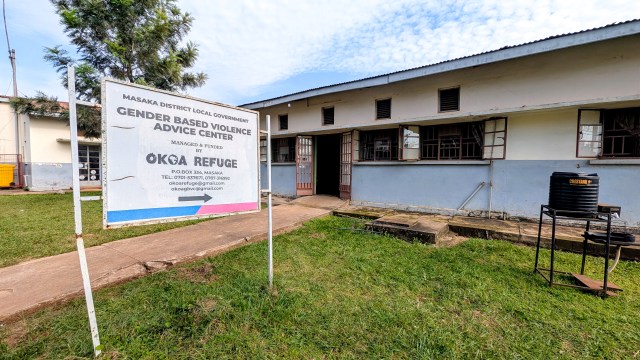
Okoa Refuge CenterPhotography by Troy McGee
Okoa Refuge Center

In February of this year, Tyler Workman, Okoa’s CEO, ran into the outgoing High Court judge, who asked Workman if the ministry would consider underwriting a court session later that year. After deliberating with his board, Workman agreed but wanted the funding to be strategic. He and his colleagues decided the session would include cases from only a single district. The ministry also reached out to the (overcrowded) prison to ensure it would have space for up to 40 new prisoners. The ministry requested that the court hear a portion of the cases where staff at one of their centers had counseled or supported the victims.

For its part, the court decided to focus on more recent cases where it believed the victims (many of whom were children) would be more likely to remember incriminating facts and where witnesses were less likely to have moved away.

In April, a police officer came personally to the village to inform N. K., her parents, and the other three families that their case would be heard the first Wednesday of June of this year. On June 4, the families left the village at six in the morning and arrived at court at seven.

The trial commenced at two o’clock. As the families entered, an official escorted the girls away from their parents to a space with balls, puzzles, dolls, and toy cars, which the court hoped would distract the girls and calm their nerves as they prepared to testify. Still, they shook when Maalo walked in, stared at them, and waved. 

“I didn’t want to see him,” said N. K. “I refused to make eye contact.”

As the trial opened, Judge Bwanika Fatuma read out the charges against Maalo. But before she could call anyone to the stand, Maalo pleaded guilty to everything.

What It Takes to Prosecute a Child Rapist in Uganda
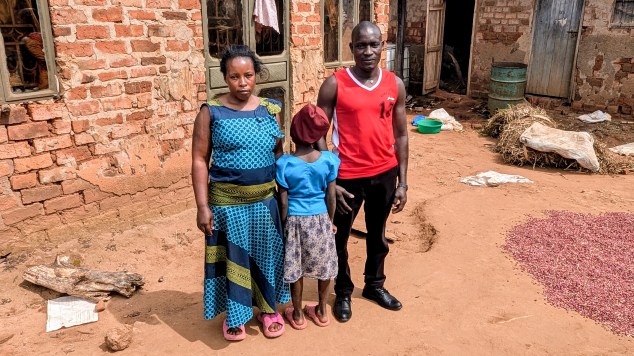
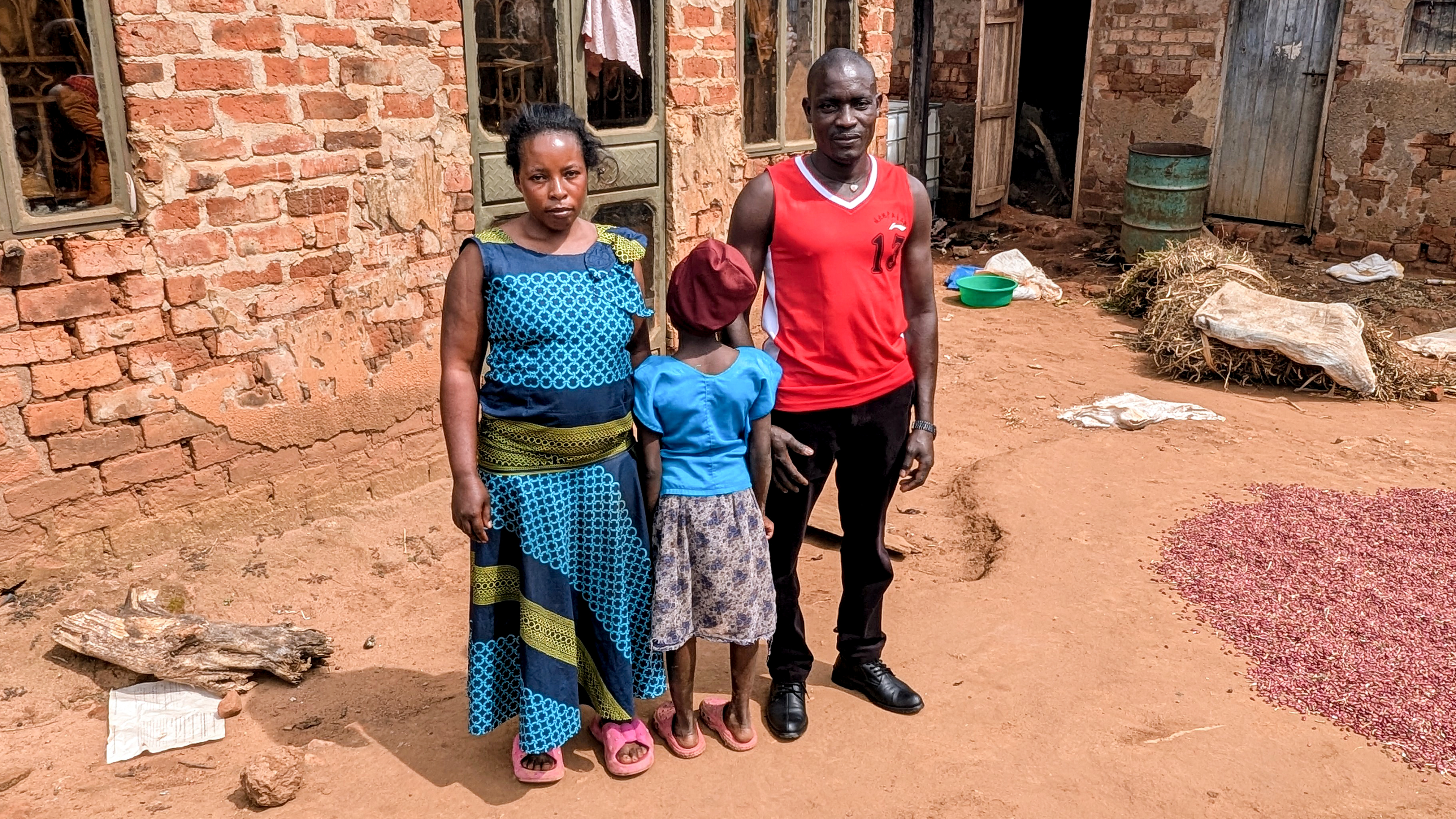
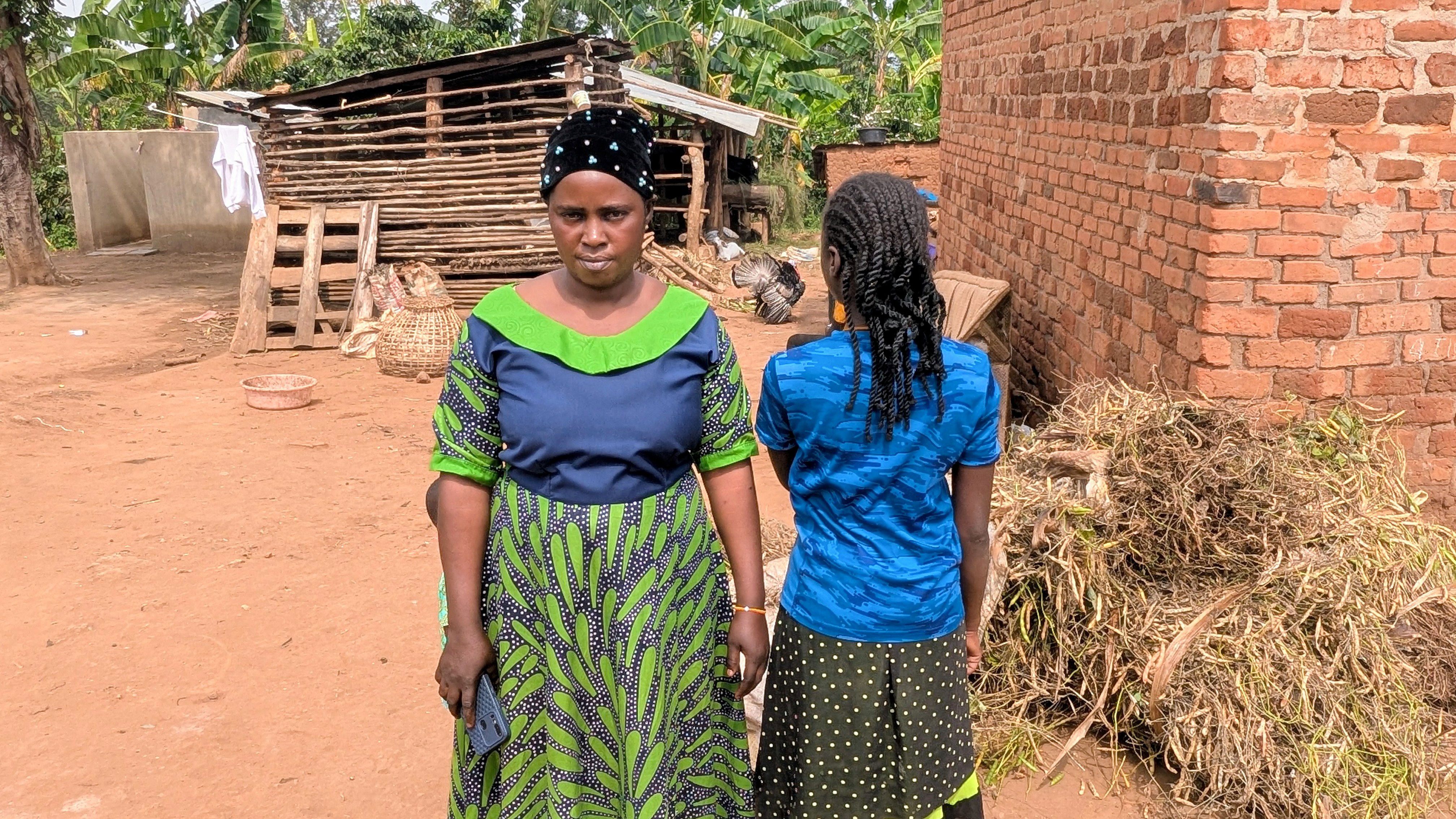
N.K., age 9, stands between her parents Namatovu Joyce and Sserwanja Dick.

1 of 4

N.K., age 9, stands between her parents Namatovu Joyce and Sserwanja Dick.

Photography by Troy McGee
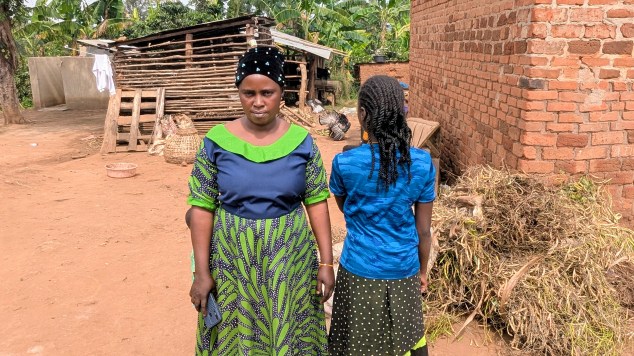
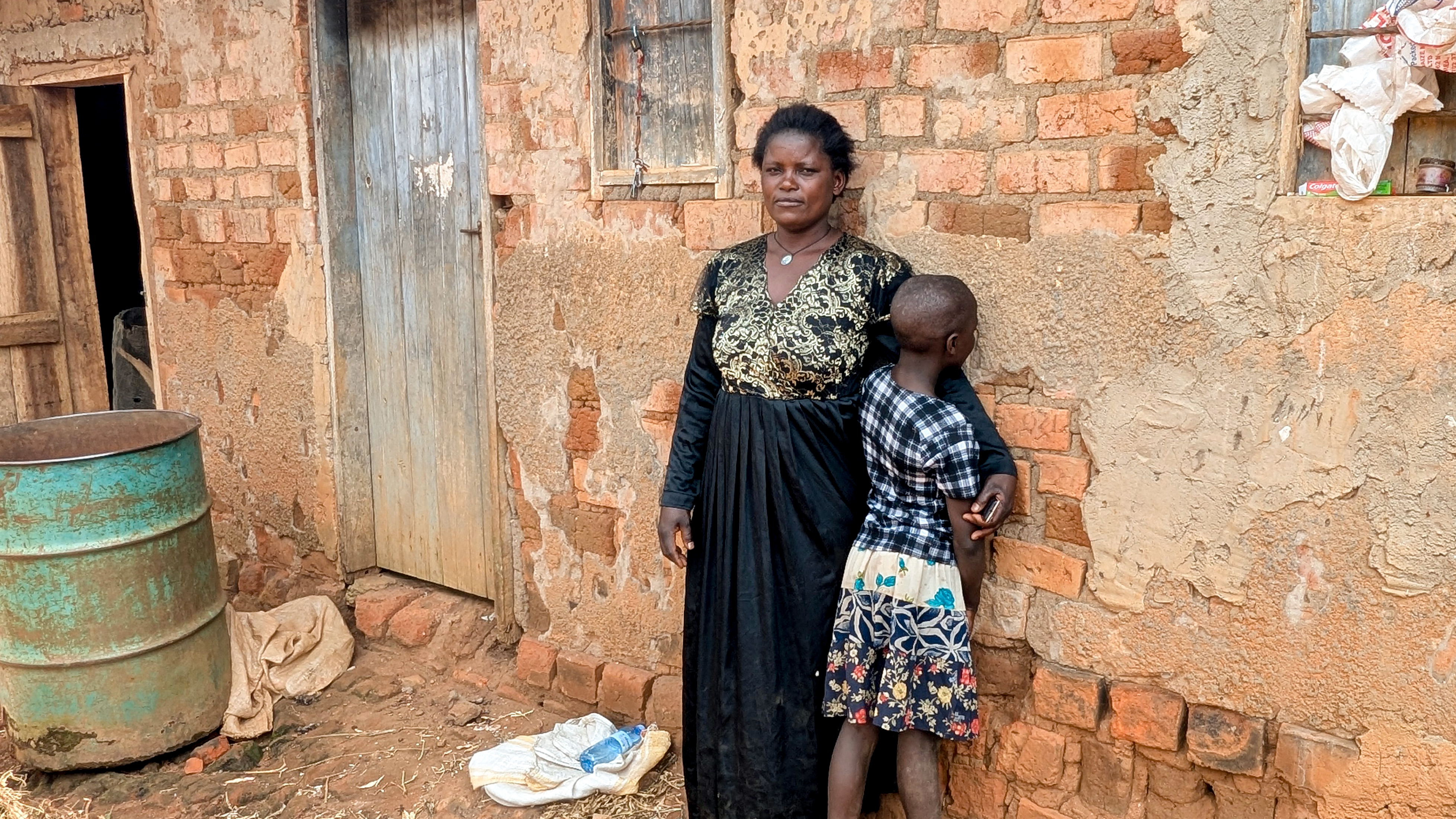
Nante Sulinah stands next to her daughter, N. S., age 12.

2 of 4

Nante Sulinah stands next to her daughter, N. S., age 12.

Photography by Troy McGee
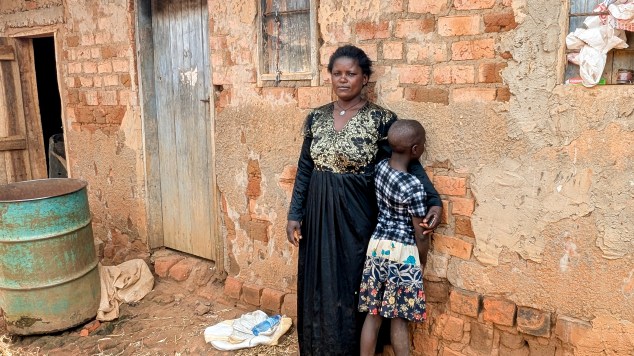
Nantumbwe Rose stands next to her daughter, N. T., age 11.

3 of 4

Nantumbwe Rose stands next to her daughter, N. T., age 11.

Photography by Troy McGee
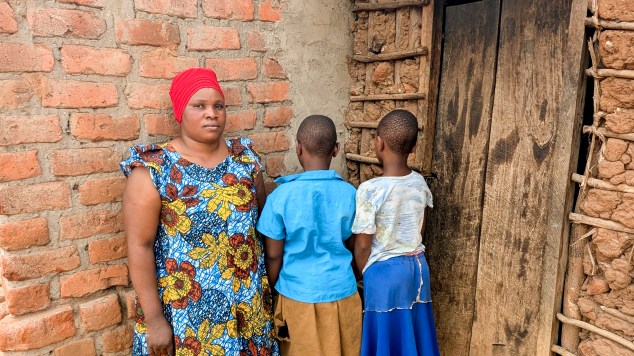
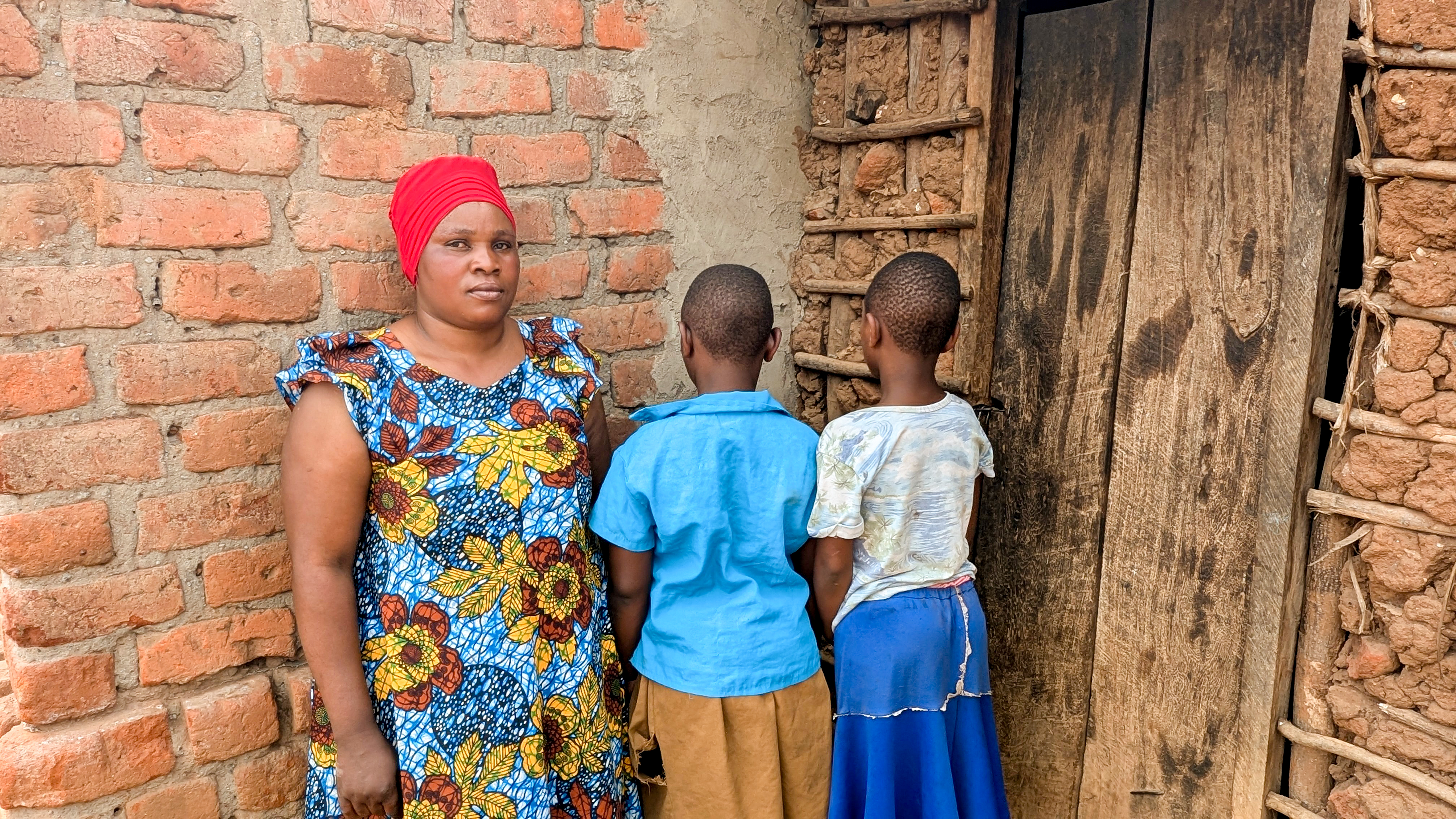
Namuyiga Asfah stands next to her two daughters N. A., age 8, and N. A., age 9.

4 of 4

Namuyiga Asfah stands next to her two daughters N. A., age 8, and N. A., age 9.

Photography by Troy McGee

Log in or subscribe to view the slideshow.

The girls and their parents were furious. “We were ready to give him hell,” said Namatovu. When a parent in the room started crying, an official reprimanded her.

The lead investigator, the prosecutor, and the judge all later identified the case as the most emotionally disturbing of the session. At court, Nassuna Rehema, the lead investigator, cried. (“He wasn’t remorseful.”) So did the judge. Then Bwanika sentenced Maalo to 10 years, 1 month, and 23 days in prison for each girl he raped.

Maalo is now incarcerated in a prison holding more than five times its intended population.

The criminal justice system put the perpetrator away, but recovery has been tougher at the personal level. In the beginning, classmates bullied the girls for being Maalo’s “wife.” Others accused them of having HIV. (They do not.) All but one family transferred their daughters to other schools.

Still, Maalo’s family’s house sits along their school route. The empty rolex kiosk stands just steps from their home.

After Maalo’s arrest, Namatovu began coming home earlier from work. “Children are more important than money,” she said. At one point, she got so sick thinking about her daughter’s trauma she nearly went to the hospital. She has turned to prayer, asking God to give her strength and courage, and confides in her neighbors, some Muslim, some Christian, about their daughters’ challenges.

All the girls still deal with stomachaches, headaches, and leg pain. The girls need monthly treatments, which include IV injections (“They are so painful,” said N. K.), and often must stay at the clinic for three to five days at a time. The price of the treatments and the transportation to these sessions can overwhelm their families.

“Whenever I feel sick, I remember what happened, and I feel worse,” said N. R., who was five when Maalo raped her.

The girls have also realized how few victims can seek justice. Maalo’s stepson committed a sex crime against a girl around their age, but no one spoke up for her because she was related to him, the girls say.

“I want her parents to encourage her to speak up,” said N. R., “and not block her from saying what happened.”

Ideas

I Lost Three Babies in a Year. No One Knew What to Say.

Christian misconceptions around miscarriage are not new, but need to change.

A woman with a rose and petals
Christianity Today August 22, 2025
Illustration by Mallory Rentsch Tlapek / Source Images: Unsplash, Pexels

On a mild spring day, I paced back and forth in the newly green grass while on a phone call. A friend’s words stopped me in my tracks. She spoke of a mutual friend: “She’s been trying for a baby for ten years. At least you can get pregnant.”

I had lost three babies in a year, with none in my arms, and these words, though spoken to encourage, sent a shock wave of pain to my heart. I was weary of these kinds of statements from fellow believers: “At least it was early” or “You’ll have another baby.” For those of us who have miscarried, these comments feel as if someone has crumpled up the lives of our babies like a piece of paper and thrown them in the trash. Their words diminish the value of our unborn children and invalidate our grief.

But how did we get here? How did we as evangelical Christians, with our predominantly pro-life stance, overlook the way our words undervalue babies lost through miscarriage? We can begin to answer these questions by looking to history.

We often forget that for many centuries, people were left to guess about the happenings in the secret place of a mother’s womb. As far back as the time of Aristotle (384–322 BC), it was widely believed that a baby gained a soul at the quickening—the moment a woman felt the baby’s movement (typically between 16 and 24 weeks’ gestation). Augustine and Thomas Aquinas believed this was also the time of “ensoulment.”

A baby lost earlier in pregnancy was considered a false conception or a “potential” child. Some still held to this belief even into the 19th century, as we see in one woman’s letter to her husband after her miscarriage: “The imaginary Number 10, whom I had already begun to love, is not a real entity as yet.” But at that time, Western culture had a sharp turn toward another belief.

Around the late 17th century through the late 18th century, many people believed in preformationism—the belief that a miniature, preformed human was in either the woman’s egg or the man’s sperm. Because they thought a fully adult person resided like a Russian nest doll inside one of the sex cells, many began to believe the soul existed at conception. German biologist Oscar Hertwig disproved preformationism when he discovered the process of fertilization somewhere around 1875–1878. This new discovery caused renewed confusion among scholars about when life truly began.

Today’s scientific and technological developments have led nearly all biologists, including those who consider themselves to be pro-choice, to agree that life begins at conception. Fetal doppler monitors detect a heartbeat as early as 8–10 weeks’ gestation, and the ultrasound allows us to capture the heartbeat of a preborn child as early as 5 weeks: a heartbeat that thumps with the truth of life, its rhythm an anthem of praise to the Creator.

Many of us have heard our babies’ heartbeats or witnessed their wiggling on screens. But the fetal doppler monitor was created only in 1964. The ultrasound wasn’t routinely used in American hospitals until the late 1970s. Many women, including my mother, didn’t receive this care even in the late ’80s.

Still, even with all the knowledge we have today, many choose to ignore—and even attack—the personhood of the unborn. We would be amiss to deny the impact this has had on our language around children in the womb, including inside the church.

I shudder to remember my own mistakes in this area when a friend of mine experienced a miscarriage. My thoughts then revealed a wrong view of children in the womb. It seemed to me as if she had lost a dream. But my friend didn’t lose a dream; she was grieving a life, a relationship, the severed connection to her baby. It wasn’t until my own losses that I recognized my ignorance.

When a woman receives comments from fellow believers about her miscarriage, like “You’ll have another baby,” “At least you have other children,” or “It’s so common,” what she hears is “Your baby doesn’t matter,” “Your baby wasn’t real,” and “Your baby isn’t worth grieving.”

Though most Christians uphold the sanctity of life, many of us still speak of babies lost to miscarriage as if they were almost babies. Women are grieving real children whom they carried in their bodies, and we address them as if they have merely lost an aspiration. But God does not view preborn babies this way.

In scientific terms, the loss of a preborn child before 20 weeks is considered a miscarriage, whereas a loss after 20 weeks is classified as stillbirth. When we read about stillbirth in Scripture, however, the Hebrew word nephel includes both stillbirth and miscarriage. The word shakol, often translated to “miscarriage,” means “to be bereaved, to miscarry, to lose children.”

It appears God does not differentiate between types of infant loss. To say to a woman, “At least it was early,” is to align ourselves more with the world’s understanding of personhood than with God’s.

Scripture affirms both the humanity and the personhood of every baby conceived in a mother’s womb, regardless of how long the baby is there. Psalm 139 declares that God forms babies’ “inward parts” and that even before they were ova, zygotes, embryos, or fetuses, they were known by our Creator—their days numbered by him (vv. 13–16, ESV). Ensoulment as Augustine and Aquinas considered it is false; babies have souls from the moment they are conceived. Not only that, but they are also created in his image (Gen. 9:6, ESV). They have intrinsic value that can never be stripped away.

Views about life in the womb and personhood in the culture and past centuries have influenced the way many Christians speak of babies in the womb today. But we of all people should refine our speech surrounding miscarriage to align with the view we find in Scripture.

When our gut reaction is “You’ll have another baby,” we can instead say, “I’m so sorry for the loss of your baby.” Rather than dismissing the pain of this great loss with “At least it was early,” we can say, “Every life lost—no matter how young—is valuable and worthy of grief.”

By my first Mother’s Day post-miscarriage, I had lost two babies. A friend walked up to me at church bearing flowers and said, “You are a mother. Happy Mother’s Day.” She exemplifies how we might acknowledge infant loss.

Instead of treating women as if they’ve merely lost pregnancies, we can comfort them in the grief of whom they really lost—their babies. After all, women are not only grieving their babies; they are also grieving the loss of getting to kiss them or look into their eyes. These women carry the grief of never seeing who their children would have become. They’re grieving an entire future they had already planned.

In past centuries, even before technology could prove it, some Christians understood that every life conceived was a person with a soul. There’s a poem by Mary Carey, written in 1657, where she shares about her own early miscarriage.

“What birth is this; a poor despised creature? / A little embryo; void of life, and feature,” she begins. She had lost a baby early enough that the baby’s features were indiscernible. Yet she also says,

I also joy, that God hath gain’d one more;

To praise him in the heavens; then was before:

And that this babe (as well as all the rest,)

since ’t had a soul, shall be forever blest.

Carey knew her baby, though “void of life, and feature,” had an eternal soul and was a child. And she grieved her child. She wasn’t the only one. Sir William Masham wrote to his mother-in-law in 1631 that his wife was “young with child and hath miscarried this day.” He continued: “It is the greater grief to us, having been thus long without; I pray God sanctify this affliction to us.”

May we, too, learn to uphold these young lives who are tragically lost as the image bearers they are, through our words and actions. And in doing so, may we allow women in our church pews to grieve their babies.

Brittany Lee Allen is the author of Lost Gifts: Miscarriage, Grief, and the God of All Comfort.

News

The Biggest Planned Parenthood in the Country Is Closing

In Houston, pro-life Christians prepare to meet the growing demand for women’s health care and crisis pregnancy resources.

A blue windowed building surrounded by a black fence, grass, and trees with Planned Parenthood on it.

Planned Parenthood Prevention Park in Houston

Christianity Today August 22, 2025
Brett Coomer / Houston Chronicle

Gulfcrest Street curves sharply and rises slowly as what had been the nation’s largest Planned Parenthood facilities comes into view.

The blue-windowed building stairsteps into the sky, looming over Houston’s Gulf Freeway as a bastion to abortion rights advocates and an abomination to pro-life supporters, many of whom prayed for the center to close.

Soon their prayers will be answered, with the clinic set to shutter at the end of September, part of a restructuring plan due to funding cuts.

When Planned Parenthood Prevention Park opened in Houston in May 2010, more than a dozen protesters demonstrated outside the 78,000-square-foot edifice, picketing, singing, and even weeping. This location gained widespread attention in 2015 when the Center for Medical Progress published clandestine videos from the clinic.

Many of the city’s pro-life organizations sprouted within a 15-mile radius of Prevention Park. Demand for their services has been on the rise since the Texas abortion ban took effect in 2022, and pro-life expect the trend to accelerate.

The closure “still feels a bit surreal,” said Mary Whitehurst, CEO of The Source, a pro-life, “Christ-centered” women’s health care clinic. Rivaling Planned Parenthood always felt “a bit like David and Goliath,” she said.

But by offering medical care beyond pregnancy tests and counseling—including well-woman exams and contraception—The Source hopes to fill in the gaps left by Planned Parenthood shutdowns.

In October, Planned Parenthood Gulf Coast’s operations will be taken over by Planned Parenthood of Greater Texas, per local media reports. With the consolidation comes the closures of Prevention Park and a clinic in southwest Houston, leaving four remaining facilities on the outskirts of the city.

In neighboring Louisiana, Planned Parenthood Gulf Coast announced it will cease operations entirely, shuttering both the Baton Rouge and New Orleans clinics. Planned Parenthood confirmed the closures but did not respond to requests for further comment.

Pressure on Planned Parenthood has been intensifying for years, with Arkansas, Indiana, Kansas, Missouri, Tennessee, Texas, and Wisconsin stripping away state dollars, mostly by removing Planned Parenthood’s eligibility for programs like Medicaid or Title X.

“This is definitely something for pro-lifers to celebrate,” said John Seago, president of Texas Right to Life. “This is a symbolic victory that Planned Parenthood has really lost its prominence and its power. That building specifically, the largest Planned Parenthood, the largest abortion clinic before Dobbs, it really represented the height of Planned Parenthood’s impact on our culture and politics.”

On the federal level, Planned Parenthood was essentially cut off from federal funding via the One Big Beautiful Bill Act passed by Congress last month. Legal challenges claiming the move  amounts to legislative “punishment without a trial” are making their way through the courts, but if the cuts stand, Planned Parenthood estimates a third of its facilities, about 200 clinics, would be at risk of closing.

In addition to national defunding efforts, abortion restrictions have stymied the organization’s operations in 41 states, per reproductive health policy group the Guttmacher Institute. As a result, Planned Parenthood pivoted to facilitating out-of-state abortions.

With clinics in Houston and Austin, Texas, The Source aims to serve as an alternative to Planned Parenthood, focusing on holistic and preventative care for women.  

Patients can receive medical services like well-woman exams, tests and treatment for sexually transmitted infections, contraception, and professional counseling and case management, all for free. They provide spiritual care too, with 203 women making “decisions for Christ” through its ministry last year.

“Our philosophy and how we are approaching care is that if we can help women have access to excellent health care, be equipped with education and resources to prevent unplanned pregnancy, then we’ll be able to have, ultimately, the long-term impact that we want: fewer women needing abortions,” Whitehurst explained.

Whitehurst doesn’t shy away from using the term reproductive health care, saying it refers not just to abortion but to a range of services women need.

Last year, The Source served 6,215 patients in-person and virtually. Already this month, its clinics have seen an uptick in appointments thanks to the launch of a new TikTok account.

The Houston Coalition for Life’s Blue Blossom Pregnancy Centers has also seen traffic increase each year since the Supreme Court decision overturning Roe v. Wade. In 2024, a record 5,051 women visited the organization’s headquarters and four mobile centers.

Like many pro-life ministries, Blue Blossom offers free pregnancy tests, ultrasounds, counseling, parenting classes, and material help like diapers and wipes. Its biggest mobile center is permanently stationed outside Prevention Park. (For now, the ministry doesn’t plan to move the 44-foot-long “Big Blue” bus.)

“We’re just going to continue doing everything we’re doing, because nothing has really changed except the law,” said Christine Melchor, executive director of the Houston Coalition for Life. 

In Texas, abortions now take place at home behind closed bathroom doors rather than in a clinic operating room.

“We want people to realize abortions have not ended. There’s still a lot of work to do,” Melchor said. “Our numbers have increased since Roe was overturned. We’re still here, and we’re not going anywhere.”

Texas ministries report more women seeking aftercare following medication abortions—they offer emotional support and if needed, refer to medical providers for follow-up.

Darlene Kearney has found, regardless of the law, there will always be pregnant women who need help. Kearney runs God’s Lovely Butterflies Maternity Home, serving expectant moms coming out of incarceration or experiencing homelessness.

For these women, she becomes their village of one, providing housing, teaching parenting and life-skill classes, driving moms to prenatal appointments, throwing baby showers, and helping women sign up for public assistance.

A former teen mother herself, Kearney guides women through motherhood in the trenches. Her ministry has served 30 moms and their kids since 2021 and stands to double its capacity after opening its second location in Houston’s north side this August. She said it’s the city’s only Black-owned maternity home.

“I will give what I have, my all in all, to believe in and to help these young ladies,” said Kearney, who shared that God gave her the vision for the ministry in a dream 15 years ago. “I’m not rich. I do what I need to do to make sure these ladies keep their babies, they’re safe, and have the proper support they need. Everybody needs support.”

The need for more robust community support for mothers with unplanned pregnancies will only increase as Planned Parenthood loses ground, Kearney predicts. As it is, the demand for housing outpaces Kearney’s capacity to help. She hopes to one day launch a 20-unit apartment complex to serve even more mothers in crisis.

Local congregations also have a role to play in meeting community needs. Church-based support groups, organized through the national ministry Embrace Grace, offer both material help and a sense of community for women experiencing unplanned pregnancies.

With around 183 groups in Texas, including 19 in Houston, “the church can play a big role in helping save lives through loving people,” said cofounder and president Amy Ford.

“Now more than ever, these moms are pregnant, and they are going to need support,” Ford emphasized. “We can’t just say, ‘Good luck, I hope it works out for you.’ We need to walk alongside them, to be in the trenches and help get them back on their feet.”

In the midst of the policy shuffles and the evolving abortion landscape, the reality on the ground for pro-life groups like the Houston Coalition for Life and Texas Right to Life is that much of the fervor for advocacy and volunteerism has waned.

For instance, the Houston Coalition for Life has found it more challenging to enlist prayer and sidewalk volunteers. These volunteers serve on the frontlines of the pro-life effort, praying for women as they walk into abortion clinics.

Fifteen years ago, Melchor stood outside Prevention Park as the former bank building was converted into a Planned Parenthood facility, and she and other pro-lifers will be present in full force the day it closes—both to celebrate what the closure represents and to mourn the lives lost.

News

Died: James Dobson, Who Taught Evangelicals to Focus on Family

The child psychologist answered hundreds of thousands of parenting questions and urged Christians to fight in America’s “civil war of values.”

James Dobson
Christianity Today August 21, 2025
Illustration by Christianity Today / Source Images: WikiMedia Commons

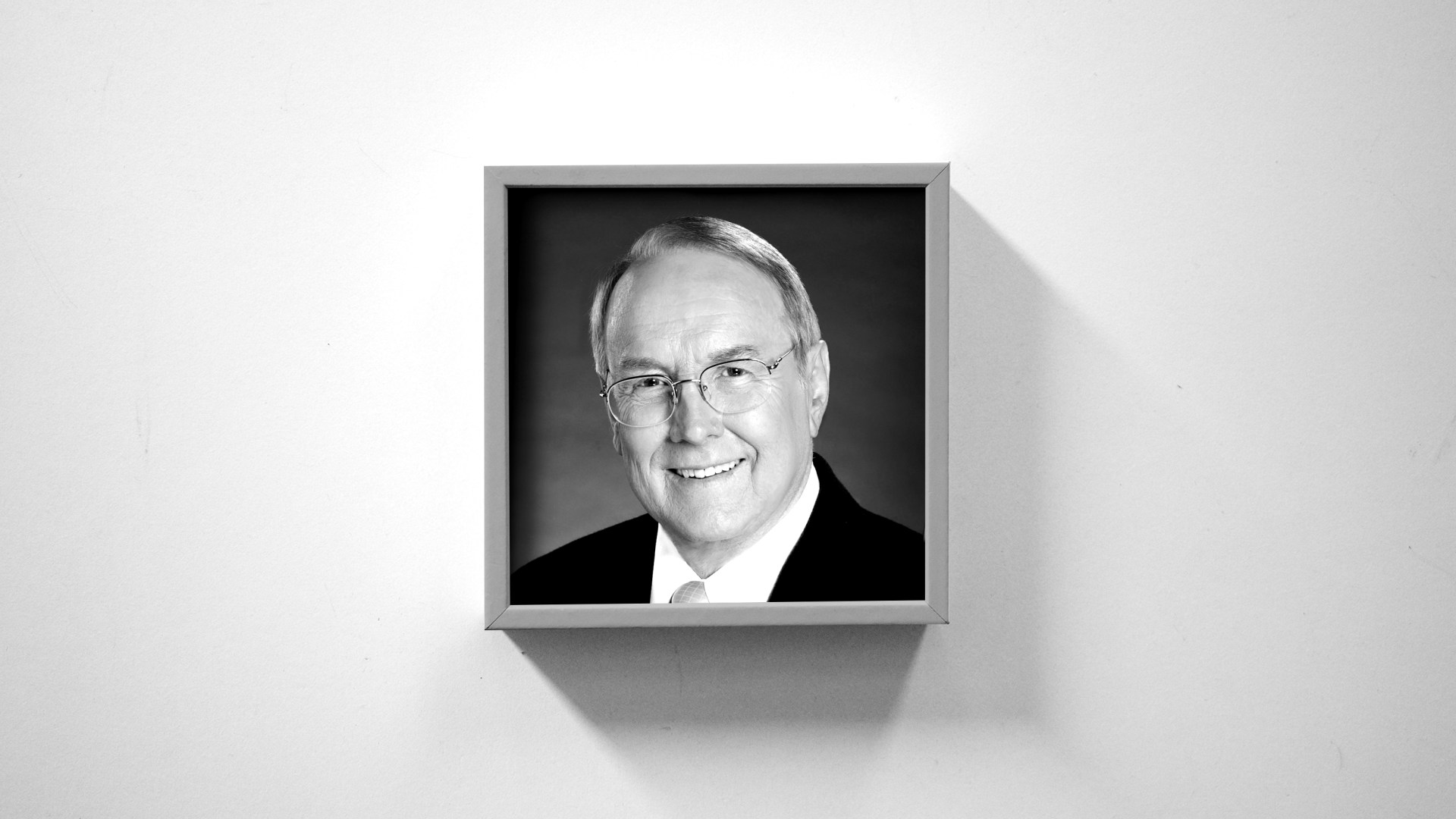
James Dobson, author and child psychologist who told millions of evangelicals how to raise children and order their families, died on August 21 at the age of 89.

Dobson believed in strict-but-loving discipline and obedience, which he held out as the antidote to America’s cultural permissiveness and slide toward moral chaos and social disorder. 

The founder of Focus on the Family, Dobson wrote more than a dozen books, including Dare to Discipline, Parenting Isn’t for Cowards, and The Strong-Willed Child, and answered questions on radio programs broadcast on thousands of stations across the United States.

His advice was embraced by Christian parents who were eager to hear from a medical professional who also upheld traditional family values. By the mid-1990s, Focus on the Family received upwards of 12,000 letters, emails, and phone calls every day. 

“For nearly five decades, he was one of the most influential Christian leaders in our country,” evangelist Franklin Graham wrote in a tribute on social media. “Dr. Dobson was a staunch defender of the family and stood for morality and Biblical values as much as any person in our country’s history.”

Dobson appeared on the cover of Christianity Today in 1982. The profile called him the “one man behind the profamily phenomenon,” working to “snatch the tottering institution” of the traditional family “from the brink of the grave.”

Part of Dobson’s power, the magazine noted, was his gentleness and moderation. 

“His writings have a sensible tone,” wrote Rodney Clapp. “He rejects extremes, fishes methodically for the ‘logical middle,’ advocates being open-minded but not letting ‘brains leak out.’” 

He grew more political as time went on. Dobson also had a large political impact, mobilizing Christians to vote for conservative candidates who prioritized opposition to abortion, pornography, and the social acceptance of homosexuality. 

The activism was not always welcome. The late Michael Gerson, a conservative political columnist who became a speech writer for President George W. Bush, complained Dobson was “a moralist and a populist” who didn’t understand the complexities of politics but went around “demanding rapid, immediate progress to fit a flaming moral vision.”

Critics have also accused Dobson of replacing the gospel with “family values.” Historian Kristin Kobes Du Mez argued that evangelicals were “inspired by men like James Dobson” to embrace an ideology of militant masculinity in the home and in politics.

Some critics of Dobson’s politics, however, nonetheless praised the positive impact of his parenting advice. Historian John Fea noted that Dobson’s ministry had a transformative effect on his father.

“Dobson taught my father that he should exercise paternal discipline because children had strong wills that needed breaking, but that such discipline should never be delivered in a spirit of anger,” Fea wrote in The Atlantic. “For all the bad that’s come out of this movement, there are still countless stories of personal transformation leading people to become better parents, better spouses, and better members of their communities.”

Dobson was born in Louisiana on April 21, 1936. He was the only child of Myrtle and James Dobson Sr., traveling evangelists with the Church of the Nazarene. 

Dobson recalled being close to his parents. He said he was heartbroken when they left him with an aunt so they could travel to tent meetings and revivals around the Southwest and in the Great Plains states. As a young boy, he started acting out. 

“I was kind of a troublemaker in church and in the neighborhood,” he told biographer Dale Buss. “I can look back and see that apparently I had felt abandoned even though I wasn’t angry with my parents.”

When Dobson was six, his mother decided to stay home to raise him. She doted on him but was also a strict disciplinarian. She especially would not tolerate sassiness, Dobson said. 

When he started rebelling as a teenager, Dobson’s father stopped traveling so he could have a larger parenting role. The family moved to Texas, where the elder Dobson took a job as a pastor.

“He came home and canceled four years of meetings with one stroke,” Dobson said. “He took a church in order to be home with me. He saved me.”

He considered following his parents into ministry but was inspired by his classes at Pasadena College (now Point Loma Nazarene University) to study psychology. Dobson went on to earn a doctorate at the University of Southern California medical school and do academic research at Children’s Hospital Los Angeles. He oversaw a $5 million study of dietary treatment of children with a rare genetic disorder that caused developmental disabilities, and he wrote multiple scientific articles and a textbook. 

At the same time, Dobson became acutely concerned with family structures. He was alarmed by the growing number of children born out of wedlock, the frequency and ease of divorce, and how many kids were sent to daycare. Views on sex were changing rapidly—and respect for authority seemed to just disintegrate. 

The cultural transformations of the 1960s were, according to Dobson, wrecking families and harming children. 

“All those things assaulted family life,” Dobson said. “I was watching everything I cared about being mocked and vilified, and it gave me this passion to do something to protect and preserve it.”

He started teaching a Sunday school class answering the questions of young parents and then decided to write a book. He dashed off Dare to Discipline in six months.

“Children thrive best in an atmosphere of genuine love, undergirded by reasonable, consistent discipline,” Dobson wrote in the introduction. “In a day of widespread drug usage, immorality, civil disobedience, vandalism, and violence, we must not depend on hope and luck to fashion the critical attitudes we value in our children. … Permissiveness has not just been a failure; it’s been a disaster!”

The book sold 2 million copies in 22 years. An updated edition, released in 1992, has sold another 1.5 million. 

Dobson launched Focus on the Family as a 15-minute, weekly radio program in 1977. Early listeners found the psychologist couldn’t say much in that time, though, and often barely made it through a question. The producers revamped the format in 1981, turning the show into a daily, half-hour conversation with Gilbert Moegerle, an experienced host and father of three. 

Focus on the Family was then packaged and distributed with Chuck Swindoll’s half-hour program, Insight for Living, and the show took off. By 1982, Dobson was on 800 Christian radio stations every day. By the 1990s, when Focus on the Family moved from Southern California to Colorado Springs, the ministry had to to hire 350 people to respond to the daily mail. 

Focus on the Family expanded into a $140 million multimedia enterprise, with books, magazines, television shows, and, of course, a slate of popular radio programs that reached an estimated 220 million people in more than 150 countries. 

Perhaps the most influential program was Adventures in Odyssey, a radio drama narrating the adventures of a group of youngsters who hang out at a small-town soda shop and ice cream emporium, learning life lessons from the grandfatherly proprietor and inventor, John Avery Whittaker. The show became one of the most-listened-to programs on Christian radio and “an important cultural touchpoint for many evangelicals of a certain age,” according to Relevant magazine.

Dobson also founded Family Research Council, a political think tank and advocacy organization. Dobson was always interested in American politics but became more active and outspoken in the 1990s. 

He was deeply offended by President Bill Clinton’s immorality—and the fact that the country seemed to only care about the state of the economy. He started regularly urging listeners to call Congress, the White House, or particular government agencies to make their voices heard. 

Republican congressman Joe Scarborough, who went on to become a TV commentator, recalled that Dobson’s listeners “melted down our phone lines” over an education bill. Democratic leader Tom Daschle’s staff reportedly decided to change the office phone number after thousands of Dobson’s listeners clogged lines to protest a procedural maneuver he was making in the senate.

Dobson told CT that he could not tolerate Christian “isolationism” when the stakes were so high.

“Hanging in the balance is the essence of the Christian faith—purity, reverence for life, family stability, love for God, and receptivity to the gospel itself,” he wrote. “We can’t afford to tremble now!”

Dobson endorsed a presidential candidate for the first time in 2004, backing George W. Bush’s reelection bid and urging the president to support a constitutional amendment defining marriage as the union of a man and a woman. He turned leadership of Focus of the Family over to Jim Daly, the current president, the following year.

Dobson launched a new radio show, Dr. James Dobsons Family Talk, and started the Dr. James Dobson Family Institute, where he continued to speak out on political issues.

“Nobody … has done as much to align evangelicalism with hard-nosed partisan politics,” CT reported in 2006. “‘Family’ no longer goes with baseball and apple pie. It has become a fighting word, and a politicized one at that.”

Dobson said he knew his political activities offended people and many evangelicals wanted him to stick to parenting advice. He couldn’t accept that, he said, when America was locked in a “civil war of values.”

“Do we as Christians need to be liked so badly,” he asked, “that we choose to remain silent in response to the killing of babies, the spreading of homosexual propaganda to our children, the distribution of condoms and immoral advice to our teenagers, and the undermining of marriage as an institution? Would Jesus have ignored these wicked activities?”

In his final years, Dobson was a staunch supporter of President Donald Trump. Dobson said that while he shared many evangelicals’ concerns about Trump’s private behavior and caustic rhetoric, the candidate’s commitment to support pro-life justices to the Supreme Court mattered more than anything else.

The Supreme Court decision to overturn Roe v. Wade in 2022, after Trump appointed justices Neil Gorsuch, Brett Kavanaugh, and Amy Coney Barrett, proved that was the right decision, Dobson said

Dobson is survived by his wife, Shirley, and their children, Danae and Ryan.

Correction: A previous version of this article misstated Tom Daschale’s party affiliation. He is a Democrat.

Church Life

Is Vacation Bible School Worth the Effort?

I wasn’t quite sure what would happen when I signed up my children for three straight weeks of VBS at three different churches.

Two children running in a giant Bible with flowers and grass.
Christianity Today August 21, 2025
Illustration by Elizabeth Kaye and Mallory Rentsch Tlapek / Source Images: Getty, Unsplash

This summer, I signed my children up for three back-to-back vacation Bible schools—one in Brooklyn, where we live; one in Manhattan; and one in the suburbs of Philadelphia near extended family. Our vacation Bible school (VBS) boot camp spanned three consecutive weeks and three different denominations.

I wasn’t sure how my kids would respond. Would three weeks of Jesus camp turn my nine-year-old son off to church or draw him closer to God? How would my three-year-old daughter fare in a trio of new environments without me? Was this a little too much VBS for one month?

I’ll admit my VBS immersion plan was as much logistical as it was spiritual. Earlier this year, I had scrolled through the family calendar and counted nine weeks of blank squares in July and August. I told my husband I was starting to panic. After years of working limited hours as a freelancer to maximize time with my children, accepting a new job opened my eyes to the stress millions of parents face every year. Piecing together the summertime childcare puzzle requires time, money, and first-rate organizational skills. 

The cost of local summer camps involving sports, art, nature, and all kinds of niche activities was staggering ($800 a week to play chess?!). Our newly planted church didn’t have the resources to hold its own vacation Bible school—or kids’ week, kids’ camp, or my favorite: kidz camp (VBS’s edgy cousin).

Feeling discouraged and a little cross-eyed after several hours of research, I prayed for help and started looking up VBS programs at churches where our family had a connection. My anxiety lifted as the blank calendar squares filled up with day camps that were both Christ centered and blessedly affordable.

The one in Manhattan, at a large Presbyterian church, cost the most, but it was also the only full-day program, running from 9 a.m. to 3 p.m., Monday to Friday. The church intentionally chose those hours to meet the needs of working parents. To wrangle enough volunteers, church leadership asked parents of campers to spend one of the five days serving.

The Brooklyn camp took place at a small, nondenominational community church and was free to attend. It ran from 9 a.m. to noon, Monday to Friday.

The third camp was held at my mom’s midsize Lutheran church in southeastern Pennsylvania. It cost $50 per child, with a promise to help families who couldn’t afford the fee. It also ran from 9 a.m. to noon during the workweek. 

I was curious to see how the three VBS experiences compared to one another. Each church invited parents to watch a portion of the programming, so I was able to make some first-person observations in addition to interviewing my own children.

Both kids enjoyed all three camps but liked the Pennsylvania one best. I expected this from my daughter, given that her grandmother was one of her VBS teachers that week. But my son surprised me by picking the most traditional of the three.

The church still called its program vacation Bible school, not some cool new pseudonym. Each day began and ended in the sanctuary, with its stained-glass windows, long red carpet, and golden chandeliers. And many of the teachers were retirees.

The kids didn’t care about any of that. They were wowed from the moment they stepped out of the parking lot and into the Alaskan wilderness. The theme was True North: Trusting Jesus in a Wild World, and the church went all in. White, fluorescent ceiling bulbs were replaced by green, blue, and purple hues to invoke the Northern Lights. Someone had dragged undecorated Christmas trees out of the attic to create a coniferous forest. My daughter squealed with delight when she spotted a little stuffed otter swimming in the make-believe mountain stream. 

A quick search shows that this ready-made VBS program from Group Publishing was a popular choice this year. A Pentecostal church in Tennessee, a Presbyterian church in Canada, and a Roman Catholic church in Trinadad and Tobago are among the long list of congregations that deployed the curriculum this summer. 

For about $300, churches could order the True North starter kit, including a program guide, leader manuals, music, and basic student resources. The church my kids visited purchased add-ons like colorful wristbands, T-shirts, and scenery backdrops.

Ready-made programs like this one are the most accessible for many congregations. They can also tip VBS toward social media homogeneity, the same “tyranny of the algorithm” that makes “every coffee shop [look] the same.” 

But the globalization of VBS programming isn’t necessarily problematic if church leaders carefully vet their curricula. It’s beautiful to think that my kids were studying the Book of Matthew, learning lessons like “When we need hope, we can trust Jesus,” as children from Ontario to Trinidad were hearing the same message (delivered perfectly by Bruce the Moose).

The Manhattan church chose Lifeway’s Magnified! curriculum, which focused on Psalm 34:3 and encouraged kids to discover “the bigness of God in the smallest of things.” The church decked out its space with colorful backdrops, giant daffodils, and jumbo ants made from black balloons.

This congregation did an outstanding job of keeping the key point front and center, judging by the frequency with which my toddler continues to randomly shout, “Made to magnify God!” 

She also still talks about “that silly frog.” Some brave soul donned a neon-green, inflatable costume in the July heat. His antics kept the kids laughing all week.

The final stop on our Tour de VBS, on our home turf in Brooklyn, was another win. The church used a ministry called Orange for its program, Live It Out: Discover How to Love like Jesus.

Compared to Lifeway and Group Publishing, Orange is the new kid on the block and seems to emphasize digital content over VBS’s physical spaces. For my kids, that cut down a bit on the wow factor, but they still had plenty of hands-on fun. They could also rattle off the five key lessons by heart—“love one another,” “be kind to one another,” “forgive one another,” “pray for one another,” and “serve one another.” 

VBS falls somewhere between weekly Sunday school classes and overnight Christian camps. For preschool and elementary-age kids like mine, it can be a spiritually significant, immersive experience without the time constraints of Sunday mornings or the higher stakes of sleepaway camp. As NPR reported last year, VBS is also an easy entry point for non-Christians facing significant childcare needs.

And yet the number of churches that offer VBS is dwindling. CT covered the trend in 2013 after Barna published “The State of Vacation Bible School.” At that time, Barna reported that 68 percent of Protestant churches in the US offered VBS in 2012, down from 81 percent in 1997.

It’s hard to find comparable recent numbers, but it appears VBS programs were already declining when the pandemic hit. A 2022 study by Hartford International, which surveyed more than 600 churches representing 31 denominations (both Catholic and Protestant), found that only 36 percent of churches held VBS the year before the pandemic. After a sharp drop-off in 2020 and a rebound in 2021, just 31 percent of churches said they were planning to hold VBS in 2022.

There are many reasons churches may skip vacation Bible school. It’s time-consuming and logistically challenging. It requires a significant time commitment from volunteers. It’s messy, loud, and can be costly. Plus, results are difficult to measure. But couldn’t we say the same about most worthwhile evangelism and discipleship efforts?

I may never know whether three weeks of VBS boot camp in the summer of 2025 had a long-term impact on my children’s faith, but I’m seeing evidence that the experience captivated the little hearts in my household.

It’s been more than a month since the first week of VBS came to a close in Manhattan. I asked my son if he could recall any important lessons he learned there. He answered almost instantly: “God loves me. God cares about me. God sees me. God forgives me.” 

Not to be left out, my daughter piped up to share her most important takeaway: “I know! Trusting in Jesus!” Then they both broke into one of their favorite new VBS songs as I soaked in the sounds of their high-pitched little voices. These lyrics say it best: “The greatness of God is magnified in the smallest of things.”

Books
Review

Around the World in 11 Church Services

A new travelogue of global worship celebrates gospel unity across cultural difference—within certain limits.

A globe with pictures of an Asian and African church worshiping
Christianity Today August 21, 2025
Illustration by Mallory Rentsch Tlapek / Source Images: Getty, Unsplash

In a remote village in Cambodia, Christians dressed in black cloth worship God with indigenous songs and a tribal dance, accompanied by rhythmic clapping. In a congested city in South Korea, a large congregation lifts a solemn hymn while crying out loudly to God in prayer. Meanwhile, in a church building in Poland that houses 60 Ukrainian refugees, the gathered community sings a Polish hymn with violin accompaniment after hearing two different pastors—one from Ukraine, the other from Poland—preach the Word of God.

These snapshots of Christians worshiping God around the globe offer a taste of the rich feast we encounter in a new book, From the Rising of the Sun: A Journey of Worship Around the World. The authors, Tim Challies and Tim Keesee, take us on a whirlwind journey, starting just west of the international dateline in the Pacific Ocean, where a new day begins, and concluding on the Alaskan coastline, just east of where the day ends. (Their title draws from Psalm 113:3, which says, “From the rising of the sun to the place where it sets, the name of the Lord is to be praised.”)

Along the way, the book introduces us to gathered communities of worship in 11 different settings. Taken together, these churches lift up Christ across the 24 hours that make up any given Sunday. Challies and Keesee target countries in roughly every second time zone. Unfortunately, however, no church in South Asia appears on the itinerary, presumably due to last-minute visa restrictions the authors encountered.

What is the purpose of this global tour? Mainly, to narrate how local expressions of music, preaching, and sacrament demonstrate both our rich differences and our defining unity as Christ’s church across the world. For the most part, Challies and Keesee succeed in that specific task. The book is primarily descriptive rather than reflective. It’s concerned more with showing certain commonalities and differences than with explaining why they exist. (If you’re looking for a deeper analysis of what unifies and divides the global Christian church, this may not be the place to start.)

The book’s structure is straightforward, making it easy to follow. In the prologue and introduction, Challies and Keesee each give a personal account of how the project took form and what led them to choose which churches to visit. We learn that once the plan was hatched, its implementation hit a series of walls, including a cancer diagnosis and therapy, the devastating loss of a child, and a global pandemic that shut down travel. Nevertheless, the authors’ dream persevered and ultimately led to this book (and an accompanying film series).

The main chapters also follow a straightforward pattern. Each consists primarily of a travelogue based on Keesee’s journal entries from the three or four days the pair spent in a given location. Chapters begin with a general reflection, often from the history of Christian missions in that place. Keesee then typically tells faith narratives of believers or church leaders the authors encountered.

Keesee is a gifted storyteller, and these testimonies constitute some of the richest and most inspiring material in the book. For example, while in Poland, the authors met a Ukrainian woman named Svetlana and her four children. Originally from Mariupol, a city devasted by three months of Russian bombing, Svetlana paid smugglers to extract her family from their homeland. With little access to food and water, they made the dangerous journey through Crimea, Russia, Latvia, and Lithuania and finally reached Poland.

Hearing of a church in Rybnik, Poland, that cared for refugees, Svetlana pleaded with the pastor to let her family stay. Although the facilities were already overcrowded, the pastor extended hospitality to this desperate family, and they had lived and worshiped at the church for four months by the time of the authors’ visit.

Finally, each chapter ends with a description of the Sunday worship the writers experienced. I found their narrative of a house church gathering in a member’s living room in Morocco particularly compelling. As they describe it, the small Christian community encircles a table of mint tea and Arabic sweets. The service begins with praying and singing to guitar accompaniment, including original Arabic hymns and songs translated from English. The song “I Have Decided to Follow Jesus” is familiar, but this community adds an Arabic verse: “If I’m put in chains, or go to prison, no turning back, no turning back.”

The sermon, taken from 1 Corinthians 1:26–31, talks about how God chose the weak, the low, and the despised in the world so that no one might put hope in themselves. The preaching is interactive, with the leader asking questions and congregants seeking clarification. Later, the group sings the Lord’s Prayer and shares the bread and cup for Communion. Keesee comments, “In that room were old and young along with professionals and the barely literate. Some have good jobs and bright prospects, while others are outcasts, poor, and maybe a little odd. There’s no reason for us to be together here except for one everlasting reason: Christ!”

The scene they describe evokes my own memories of worshiping in house church settings in Asian countries, where even assembling to lift up Christ is a risky business. Although I went to teach classes on the Bible, their joyful worship instructed me in how to more faithfully read New Testament passages about suffering for Christ.

After each chapter, Challies offers a brief reflection on one aspect of Christian worship in a global setting, covering such topics as a visitor’s heart posture, music, preaching, and worshiping in different languages. These sections spotlight common elements as well as differences. Some I found valuable, such as Challies’s reflection on diversity in how different churches practice the Lord’s Supper. Others are quite brief and almost self-evident, like his thoughts “On Being a Good Traveler”: Essentially, try to avoid offending people! In each case, helpful discussion questions enable readers to reflect further and make applications in their own context.

There is much I appreciate in this book. After living outside North America for nearly 25 years and ministering on several continents, I resonate profoundly with the writers’ desire to show how Christians of various languages and cultures exalt our one Lord. These snapshots offer a foretaste of Revelation’s vision of a multitude from every tribe and tongue worshiping before the throne of God and the Lamb (7:9–11). Although we don’t always recognize or embody it, this diversity of cultures, languages, and worship expressions is baked into who we are as God’s people. It will continue into the new creation.

What is more, the book is beautifully written, narrative in style, and engaging to read—perfect for a broad Christian audience. The authors seamlessly weave Scripture and hymns into their travelogue, and photos of their encounters with people and places enrich their descriptions. I also appreciate their efforts to provide relevant historical context, from the voyages of British explorer and captain James Cook to the eruptions of a Chilean volcano to the marginalized posture of the early church in North Africa.

Yet despite the book’s positive features, it left me with several concerns. First, for a book claiming to celebrate the diversity of Christian worship around the world, it offers only one relatively narrow slice of the Christian pie.

Challies and Keesee set boundaries for the types of churches they visited, some acknowledged, some not. The common thread that ties these congregations together is “a deep commitment to Scripture and sound doctrine.” Fair enough. But in practice, these parameters translate into conservative, evangelical churches, primarily from a broadly Reformed theological background. Further, nearly all these churches prioritize doctrine-centered expository preaching.

Given the Reformed backgrounds of Challies (a pastor) and Keesee (a missions organization leader), these limits are perhaps not surprising. But I wonder what would have happened if the authors had expanded their journey and moved out of their comfortable lane. What if they had included churches from a Wesleyan Methodist or Pentecostal background? Given that Pentecostals are the largest single group of evangelical Christians worshiping on any given Sunday, that tradition might have been worth considering.

Or for that matter, what about Roman Catholic or Orthodox Christians? (Surely some will appear among the diverse multitude described in Revelation 7:9.) Or churches that use more drama, ritual, storytelling, media, or other preaching styles, like the kind of call-and-response pattern so familiar to African American worship? Or congregations that emphasize Christlike living as much as or more than sound doctrine?

And what about women? In the book, pastors and pastoral team members are always men, with females fulfilling roles like composing music and singing. But in my time as a missionary and professor serving in different global contexts, I have witnessed God consistently using called and Spirit-gifted women in many ministry roles, including pastoral leadership and preaching. What if the authors had grafted a church with more female leadership into their itinerary, even if this took them outside their comfort zone?

Filling these gaps would have yielded a different book. But perhaps the resulting product would better reflect Revelation’s vision of worshipers from every nation, tribe, people, and culture.

Second, I wish the authors had shown a deeper understanding of issues related to the mission of the church. Challies and Keesee tend to glimpse the global church through a traditional Western filter. For example, when describing missionaries, past and present, they paint a somewhat-romanticized portrait. Missionaries, in this view, are heroes, primarily Western men, who endured great hardship (and sometimes martyrdom) to plant the gospel.

I readily acknowledge the enormous debt we owe to pioneer missionaries who risked everything to fulfill Christ’s commission to make disciples of all nations. As someone who spent most of his adult life in global missions, I’m the last one to throw all missionaries under the bus.

But the book could have demonstrated more sensitivity toward other aspects of the Western missionary legacy, like the colonial attitudes and cultural assumptions that still influence worship around the globe. For example, in the South Pacific, I’ve observed that many pastors wear dress shirts, ties, and sometimes jackets in a tropical climate. The reason, I’ve been told, is that missionaries had prescribed this as proper preaching attire. And the churches the authors describe throughout the book rely heavily, though not exclusively, on translations of Western hymns.

What’s more, missions as described in From the Rising of the Sun advances in one direction, from “us” to “them,” from the West to the rest. But missions today is globalized and multidirectional—“from everywhere to everyone,” as South American theologian Samuel Escobar puts it. That includes missionaries from around the globe coming to minister in North America. I realize this book isn’t a missions textbook. But at times it risks reinforcing stereotypes that still shape the mindsets of North American evangelical congregations.

Finally, Challies and Keesee could have strengthened the book with more in-depth reflection on the various worship settings they observed. They affirm virtually all the examples of worship and preaching they encountered, with little attempt at evaluation or critique. I had hoped that, at the end of the book, they might reflect on some strengths and weaknesses of different practices and traditions or perhaps grapple with their theological significance. But that didn’t happen.

It’s noteworthy that in the final worship reflection, the authors describe feeling “at home” in different churches where familiar elements were present. On the one hand, I share their delight in what unites Christians across various traditions and international venues. On the other hand, a littleless familiarity and a bit more discomfort with the differences might have produced a richer portrait of the magnificent diversity of Christ’s body throughout the earth.

Despite these concerns, this is a book worth reading, especially for Christians who assume, consciously or otherwise, “The way we do worship is right!” or “Everybody does it like us.” With infectious enthusiasm and elegant prose, Challies and Keesee turn a travelogue into an opportunity to celebrate the vibrant variety that characterizes the one global church of Jesus Christ.

Dean Flemming is professor emeritus of New Testament and mission at MidAmerica Nazarene University. His books include Recovering the Full Mission of God: A Biblical Perspective on Being, Doing and Telling.

News

Indian Christians Defiant Amid Death Threats and Raids

Hindu nationalists hope Maharashtra will become the next Indian state to pass an anti-conversion law.

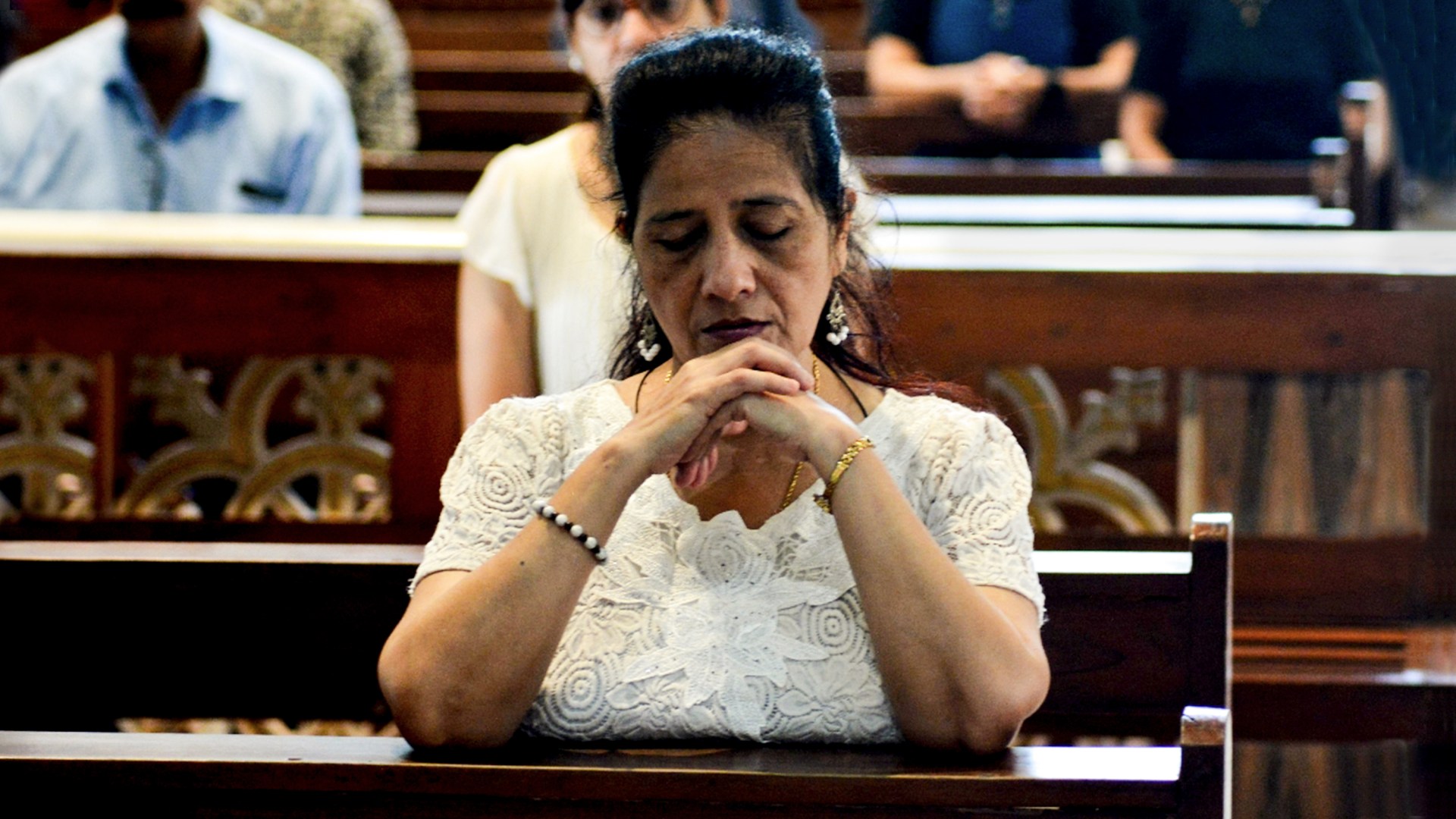
A woman prays at St. John the Baptist Church in Thane, India.

A woman prays at St. John the Baptist Church in Thane, India.

Christianity Today August 21, 2025
Hindustan Times / Contributor / Getty

A mob of 200 Hindu nationalists stormed Bethel Prarthana Bhavan (Bethel Prayer Hall) in Maharashtra’s Malegaon town, with police and revenue authorities in tow, to disrupt the ongoing Sunday service on July 20. Shouted slogans decrying “Christian conversion” replaced the typical praise and worship, the church’s pastor, Simon Raut, told CT.

Worshipers stood in disbelief as the mob, made up of people who belonged to the Hindutva militant group Bajrang Dal, confronted the pastor and church elders, claiming they didn’t have the government’s permission to worship in the building. They snatched gospel tracts from the Bibles where they were tucked, then tore them, Raut said. Police and other officials watched in silence until tempers cooled, only to serve a notice to the church leaders, forcing them to stop all activities.

Since 2019, about 300 believers have gathered to worship in this hall each Sunday. After beginning as a house church in 2017, the group expanded and moved to the new location. Raut denied allegations that the church had met illegally and that they had forcibly converted Hindus.

“I own the land,” he said. “I have all the permissions. This is just an attempt to stop God’s mighty work in our land.”

Since the mob came, the congregation has continued to hold services at the prayer hall. The church leaders also hired a Christian lawyer to challenge the notice.

Two days after the attack in Malegaon, a similar script played out 65 miles away in the city of Nashik. Police summoned six believers from a tribal church, which was established in 2009, to the local police station, according to the church’s pastor. The cops warned them not to congregate in the church or at anyone’s house in the village to pray. Since then, the 200 Christians in the church have splintered into six small groups to worship secretly. CT agreed not to disclose the specific details of the church and the pastor, as they fear arrest.

Since the landslide victory of the Hindu nationalist Bharatiya Janata Party (BJP) in the western Indian state of Maharashtra in November 2024, attacks against Christians have surged. So far this year, the Evangelical Fellowship of India’s Religious Liberty Commission documented 11 cases of violence against Christians in the region. Over the same period last year, there was only a single incident.

Christian lawyer Wilson Nathan, who is part of a team providing pro bono legal aid to persecuted Christians, told CT there has been a sharp escalation of violence in recent months. He has received distressed calls from districts all over the state. House churches in tribal districts, especially in Dhule and Nandurbar, are often the target of Hindu fanaticism. Most new converts in the state are from marginalized tribal and Dalit hamlets, where Christianity is mushrooming.

The rising rhetoric against the Christian community comes amid the BJP’s push for an anticonversion law, which it pledged during its election campaign last year. The new law, slated to roll out this December, is set to curb religious conversions and to demolish “unauthorised” churches, particularly in tribal areas. If the law is enacted, Maharashtra will become the 14th Indian state to pass an anticonversion law, ironically called the Freedom of Religion Act. (The state of Tamil Nadu has since repealed its anticonversion law, while lawmakers in Karnataka have said they plan to repeal its law.)

Christian leaders told CT that the Hindu nationalists aim to reshape public opinion through anti-Christian speeches, attacks on worship spaces, and accusations of “forced conversions.” This would allow them to act with impunity and assault Christians at will. Many expect that the government would then pass the anticonversion law without any hurdles.

The impact is already palpable. “There is heightened fear among those who carry out any Christian activity,” said Arun Shinde, the retired pastor of Saint Andrew’s Church in Nashik. “I can no longer imagine sharing the gospel, praying for people, and distributing the New Testament in public places, as I did until last year.”

On June 21, Gopichand Padalkar, a BJP lawmaker, announced monetary rewards of 300,000 Indian rupees ($3,450 USD) for attacking a Christian priest, 500,000 rupees ($5,740 USD) for breaking a priest’s limbs, and 1,100,000 rupees ($12,640 USD) for killing a priest and his family. Despite protests, the National Commission for Minorities (NCM), a federal body that protects religious minorities’ interests, did not initiate an investigation into Padalkar until August 6.

On the same day, the Bombay High Court, the top court in Maharashtra, accepted a public interest litigation against Padalkar from the secretary of the Association of Concerned Christians.

The state government has also announced its decision to increase scrutiny on Dalit and tribal converts. Tribal Christians now run the risk of losing the government’s welfare benefits. Similarly, the government is stripping Scheduled Caste status from Dalits who identify as Christians.

Amid such threats, about 15,000 Christians from across Maharashtra on July 11 converged at Azad Maidan—a sports field in the state’s capital, Mumbai—holding placards, singing hymns, and praying in protest against the proposed anticonversion law, attacks on churches, and hate speeches.

Among them was pastor Digambar Prakash Singh, a soft-spoken man who has received death threats from Hindu nationalists over the phone. “They tell me I will be killed if I don’t stop evangelizing,” he said. “I tell them, ‘You are welcome to my home. We can talk.’”

Yet he continues to hold on to hope. “Rising persecution is a sign that the gospel is spreading fast and deep,” he added. “It is only a matter of time before God gives us a rich harvest. All we have to do now is to follow [the] apostle Paul to bless those persecuting us.”

Inkwell

Ditch Your Taste in Books

We do not read to become more knowledgeable. We read to experience our finitude.

Inkwell August 21, 2025
By Willem Claesz. Heda

I’m sitting in a webinar with fellow librarians as representatives from big-time publishers pitch us their upcoming releases, hoping to land a place in our library catalogs. 

My screen is awash in book covers as presenters quickly flip through PowerPoints, each as generic as the next: cartoony illustrations of couples over a solid-colored background for romance titles; moody, nondescript landscapes with a prominent sans serif title for thrillers and mysteries; a smattering of minimalist nonfiction covers, complete with your choice of inanimate object atop a plain white background paired with a sleek font.

The presenter’s blurbs for these books are even more insubstantial. Their descriptions either stitch together two subgenres or tropes (This book is romantasy with a friends-to-lovers storyline you can’t resist!) or pair two familiar cultural touchpoints (This book is like The Bachelor but with a cottagecore vibe!). Each selection is offered with the enthusiasm and expertise of a connoisseur recommending a sublime wine and cheese pairing.

As the webinar progresses and I struggle to retain both summaries and book covers, the publishers’ primary sales tactic becomes clear: This book will remind you of something else. 

When someone says they love the aesthetic of dark academia, they do not mean that they spend all their free time reading ancient poetry and contemplating Baroque artwork. They likely mean that they wear vintage Doc Martens and thrifted sweaters over collared shirts, as it evokes the idea of someone who would spend their time doing those things. Maybe they enjoy the film Dead Poets Society, as it embodies this aesthetic while not actually existing within the hypothetical canon of dark academia. 

Our current use of the word aesthetic has become completely detached from its original meaning. We refer not to a branch of philosophy dealing with the nature of beauty, art, and taste and with the creation and appreciation of beauty (as defined by Merriam-Webster) but rather to an evocative quality.

The list of aesthetics (or aura, vibe, energy, or whatever-core—pick your poison) is ever-growing, including but not limited to: dark academia, light academia, cottagecore, clean girl, that-girl, soft boy, boho, granola girl, and coastal grandmother. These aesthetics are not restricted to how someone curates their appearance—although that is the primary avenue for their expression—but also in all surface-level sensory experiences, from the broad strokes of music and home decor to the minute details of vernacular expressions and color palettes.

Despite this wingspan, these aesthetics rarely crystallize into real-life practices; to don them does not require any reckoning with their true substance. St. Augustine aptly asserts in Soliloquies, Book I, that “What is not loved for itself is not loved.” 

We may have a Renaissance painting set as our desktop background and a growing collection of hardbound classics, but this does not necessarily mean we embody a lifestyle that engages the intellect. We are allured by the romance of well-weathered spines lined up neatly on our shelf, but not by the strain required to actually read their antiquated and difficult insides.

In On Reading Well: Finding the Good Life Through Great Books, Karen Swallow Prior argues that reading fiction is an essential component in forming virtue. Throughout the book, she connects various literary classics with the virtues they propagate, prefacing them with this wider connection:

Indeed, there is something in the very form of reading—the shape of the action itself—that tends toward virtue. The attentiveness necessary for deep reading requires patience. The skills of interpretation and evaluation require prudence. Even the simple decision to set aside time to read in a world rife with so many other choices competing for our attention requires a kind of temperance.

While reading’s popularity has surged once again through the influence of BookTube and BookTok, our approach to reading has been altered through platforms like these. Many book influencers utilize the same tactic deployed by the publishers in my webinar: recommending a book based on some other touchpoint. Algorithms rely on repackaging or referring back to what we already lean toward. Generative AI is even more patently utilitarian in this regard, rendering no limits to our whims. 

As an example, a video titled “If you liked THIS Taylor Swift Song, You’ll like THIS Book” popped up on my YouTube recommendations just this week. I wonder: Will these books be loved for themselves, or will they be enjoyed merely for the sentimental immersion they offer?

Offering “readalike” recommendations is an essential skill of any librarian, but a good librarian will expand a reader’s palette and introduce them to new authors or genres adjacent to those they already love. Recommending more of the same leads to stagnant and eventually bored readers. Reading a book that reminds you of your favorite TV show is no more riveting than watching a TV show that reminds you of your favorite TV show. 

To search for the reminiscent in what we read dilutes it to mere entertainment, forfeiting its formative and virtuous benefits that Prior describes. It is not enough to merely read, even in light of the harrowing illiteracy rates we are now facing. We need to read books that enrapture us out of ourselves and what we know. We need stories that stretch our imagination, not coddle it.

Good taste is reverence for that which towers before you, silent and steady. We cannot quite shake the truth that things possess real quality, and to recognize it is not hubris but humility, a submission to what stands before us. 

Elaine Scarry calls this posture “radical decentering,” a step outside into otherness. In these surreal moments, we glimpse transcendence, and it looks nothing like us. We realize our contextualized human placement within the world. We cannot contain magnificence and beauty, let alone mold them to our fancies. Instead, we become the molded. We bend and are not overcome, but made more true.

One of my daily duties at the library is to empty the book drop of recent returns, which gives me an idea for what patrons read the most (James Patterson and Colleen Hoover are our frequent flyers). The book drop can often be homogenous, but every so often, an unassuming gem sneaks into the mix. 

The book will show itself to me as I hold it under the scanner, my eye catching on either a distinct cover or a faintly familiar author. I’ll check it out to my card, and it may go unread in my locker until it’s due three weeks later. But sometimes it doesn’t.

It was while checking in returns that Rainer Maria Rilke’s Book of Hours: Love Poems to God snagged my attention and followed me home. It captivated me with a language for the divine that is disentangled from cliché and painful connotations. Rilke—perhaps a mystic, perhaps an atheist even—miraculously offered me the first prayer I could find myself truly uttering in months in a time of spiritual desperation:

I want to unfold.
Let no place in me hold itself closed,
for where I am closed, I am false.
I want to stay clear in your sight.

These lines rerouted my journey back home toward the church. After months of ravishing numerous Christian books that left me bereft, I found relief in substantial and challenging poetry that I would have never known to look for of my own accord. 

I’ve experienced many of these book-drop intercessions—some more pivotal than others—and through them, I am reminded that I am unaware of what I lack. In periods of need, mere sentiment does not do us any favors; referential content is not strong enough to bear the weight of doubt, ignorance, or arrogance. Reading in and of itself was not what I needed (for I was doing much of it). What I needed was a book that could reposition me.

There is certainly a need to readjust our approach to all media—movies, TV shows, video games, YouTube videos—but, as Prior outlines for us, literary mediums offer the most potential in shaping our very personhood. Reading is not merely another way to consume media; it is a practice that will train us in virtue and accustom us to humility.

A book worth reading contains years of an author’s toil, has weathered the fickleness and upheaval of times come and gone, and exists as an intimate relic of an experience we would not otherwise encounter. One does not approach such an artifact with flippancy. Reading these books will uncloak the biases of our time and the façade of our own knowledge. Good books will rattle us awake and bring the world into full dimension, pixel by pixel.

We do not need to read to become more knowledgeable, as we were once taught; we must read to experience our finitude. Might this alter the way we construct our reading lists, bookshelves, and library catalogs, as we reckon with their true potential? A single good book may offer us much, but even a lifetime of reading will still only graze the vastness of the human experience. 

Through reading, we are invited to enter into these tensions honestly and creaturely, as Rilke did through the same poem that altered my life years ago:

I’m too alone in the world, yet not alone enough
to make each hour holy
I’m too small in the world, yet not small enough
to be simply in your presence, like a thing—
just as it is.

There is time yet to return to the simplicity of things, to know them as they are. There is time to be too small and too alone, yet not enough of either. A good book will guide you to this sacred tautness and acquaint you with this virtue-forming suspension once again. 

If you let it, perhaps it will even leave you there, at the consummate threshold of humanity both cradled and bated.

Caroline Liberatore is a writer, editor, and librarian from Cleveland. Her work has been published with Solum Literary Press, Calla Press, and Amethyst Review, among others. She is currently enrolled in Bethany Theological Seminary’s theopoetics and writing program and serves as editor for The Clayjar Review. You can find more on her Substack, Dog-Eared Inquiries.

Christianity Today “Stands in the Gap” 

For Chris Davis, Christianity Today meets pastors who find themselves in a gray space.

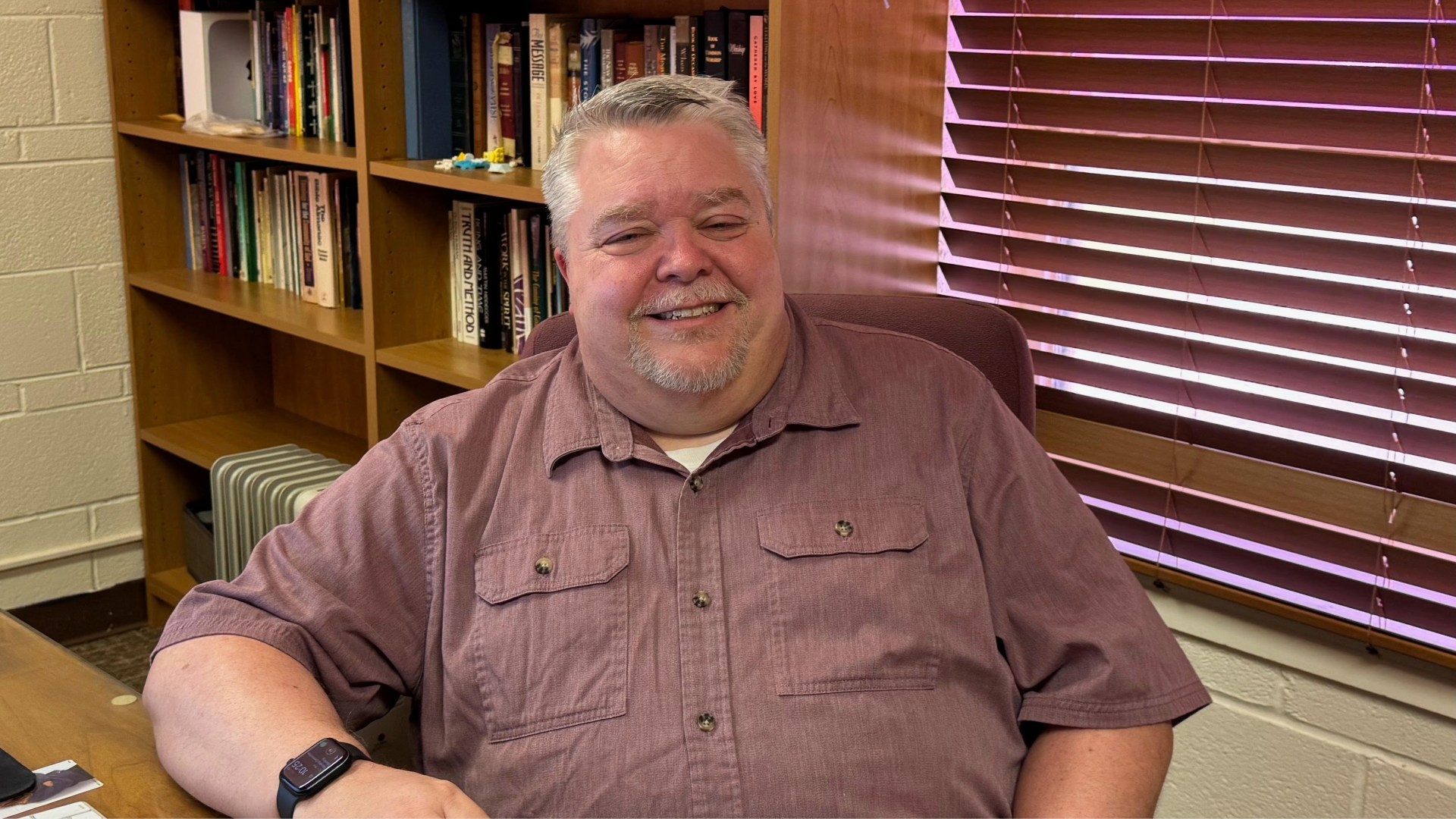
Christopher Davis

Andrea Stitt

In Chris Davis’s world, the word “evangelical” can raise eyebrows. Chris is a PCUSA pastor and an evangelical, two identities that often feel opposed to one another. 

The PCUSA is a mainline denomination associated with fairly progressive theology, whereas evangelicalism is conservative theologically. Chris lives and ministers in this often lonely space. Deepening this sense of living in an in-between space, Chris describes his church’s community as politically “purple.” To Pratt, Kansas, his church is progressive. But within his congregation, he is viewed as more conservative than most. He describes this experience as “serving in the minority.”

That’s why CT is so important to him, offering him a spiritual home where he finds both encouragement and guidance as he navigates ministry. For Chris, Christianity Today speaks to those who feel stuck in the space between ideologies. “CT is standing in the gap,” he said. “It’s not falling into the trap that so much of evangelicalism is falling into with Christian nationalism.”

For Chris, recognizing that the labels we use to describe a group or someone else who is different than ourselves is the first step in regaining common ground.

“We use labels too much; they are all so loaded and lack nuance,” he said. “I get why we use them, but I think we are being overly reckless.”

Chris has seen firsthand how these labels isolate us from one another, often leading to loneliness and a lack of understanding. This feeling is something CT editor in chief Russell Moore acknowledges in his writing, calling it political homelessness. Many Christians like Chris feel disheartened about what they see from conservative Christians’ leaning toward Christian nationalism, but they also do not feel aligned theologically with more progressive denominations or political parties. 

But when we put labels aside, Christians often find they share most of the main core convictions. 

“I have colleagues in the PCUSA who might identify as progressive, but once we start talking, we realize we have a lot of common ground,” Chris said. “There are definitely areas where we disagree, but there is a deep love of Jesus and a commitment to serve Jesus. When we use labels, we lose some of that awareness of common ground.

“CT is standing in the gap. It holds firm to the Christian worldview that is focused on sharing the good news of Jesus Christ and speaks out for traditional evangelical values, but it is also standing firm against the Christian nationalism that too many evangelicals have been quick to embrace. CT is willing to call out a sinful attitude of thinking that thinks the American Church has the answer.”

Christianity Today’s mission isn’t politically motivated, it’s kingdom-minded—something that matters a lot to ministry leaders like Chris. But that also means that CT challenges Chris just as much as it encourages him. 

One particular article that struck Chris was Clarissa Moll’s “I Confessed My Sin with a Christian Nationalist Pastor.” The article challenged his frustrations. His role as a pastor becomes more difficult when the term “evangelical” is equated with Christian nationalists, especially among colleagues in his denomination. But Moll’s article put Chris’s frustrations into perspective, reminding him to check his heart before passing judgment. 

“It’s so easy to blame people with views I disagree with, but we have to remember we need to start with the log in our own eye,” he said. “We both worship the same God, and we both need forgiveness from the same God.”

It can be difficult to work in spaces of repair. This ideological gap Chris works within often looks like undoing the preconceived notions his congregants have about Christianity. It is easy to want to point at someone or something to blame when it feels as though you are picking up pieces and putting things back together again. Christians who find themselves between the political right and the theological left sit in these isolating spaces daily. Christianity Today wants to elevate those voices of concern while also pointing to the hope we have in Christ. 

In acknowledging the division in the Church and the way our use of labels becomes “overly reckless,” we distance ourselves from what we have in common. For Chris, Christianity Today sits in that space with those who feel isolated or betrayed by certain labels and the way they might be perceived. 

The same feeling Chris had after reading an article that challenged him is what he hopes for all CT articles: that they don’t only confirm our ideas but also shed light on a new way of thinking. 

“Even when I feel a bit rebuked by an article, I don’t walk away feeling discouraged,” Chris said. “So much media out there is negative and panic-inducing. I don’t get that from articles at CT. I walk away feeling like there is still hope for the Kingdom of God.” 

Theology

30 Things I’ve Learned in 30 Years of Ministry

Columnist

Russell Moore on taking criticism, couples counseling, dry spells, and gut reactions.

Hymnals in a church pew
Christianity Today August 20, 2025
Illustration by Christianity Today / Source Images: Unsplash

This piece was adapted from Russell Moore’s newsletter. Subscribe here.

Last week on August 6 marked the 30th (!) anniversary of my ordination to ministry by the Bay Vista Baptist Church in my hometown of Biloxi, Mississippi. I’m recognizing the milestone this week by offering you 30 things I’ve learned in 30 years in ministry.

I do not claim that these are the 30 most important things I’ve learned. If I tried to do that, I would procrastinate forever, weighing how one thing is more important than something else. So instead, I am tricking myself by forcing myself to do it randomly, not allowing myself time to think between each of these bullet points.

Some of the points are ones I’ve made before; some have never occurred to me until right now. They are in no particular order except in how they occurred to me as I wrote them down. Here they are.

1.) In preparing to preach, teach, and in everything else I’ve done, immersion since childhood in the Scriptures was more important than graduate and postgraduate education in systematic theology.

2.) Hymnody is more important than “vision statements” or “mission statements” or almost anything else. The hymns are what seep into the broken places and the hidden places. Replacing them with ephemeral, forgettable, and always-changing music is insane.

3.) That said, alongside the hymns, I realize how much of my theology and sense of the world was formed by the contemporary Christian music I listened to as a teenager. Michael Card songs taught me hermeneutics. Rich Mullins and Amy Grant songs taught me to pray. Petra songs taught me a “happy warrior” approach to spiritual battle.

4.) After years of teaching preaching at the seminary level, I ultimately concluded that I could help people to shape and form and get better at a gift they already have, but I couldn’t teach it. Preaching is about a way of seeing, a way of inhabiting a text, and it’s more about affection for and obsession with the Bible than it is about communication ability. That has to just be there; it can’t be taught.

5.) Most of the theological errors I’ve found in myself or in others can usually be boiled down to confusing an “either/or” with a “both/and” statement or vice versa. The distinction is important. To put a “both/and” on the question of “the Lord or Baal” or “Jesus or mammon” is deadly. To put an “either/or” on questions of divine providence versus human freedom, truth versus love, faith versus obedience, gospel versus justice, and so on, is too.

6.) Early on, I assumed that rigorous theology was the answer to cultural, nominal Christianity. I assumed that people who were steeped in theology were spiritually mature. I found, quite often, just the opposite: Many of those who were deep in theological systems turned out to be hacks, selling out what they believe for politics or denominational belonging or money. And some of those I thought were “pragmatists” or “mystics” turned out to be those who really stood by what they believed.

7.) My mind was often wrong, but my gut rarely was. When I thought, “This person gives off a creepy vibe, but I seem to be the only one who notices” or “This person is filled with rage but is so important to the kingdom, so I should overlook it” or “This leader is, behind closed doors, talking about crazy things, but he’s smarter than I am, so I shouldn’t question it”—I should have trusted my gut and would have avoided much heartache. Once, 30 years ago, I attended a purportedly “Calvinist” meeting at which I said, “This seems to be more about neo-Confederate ancestor cultism than about the grace of God, but that must just be my immaturity.” My first intuition proved to be true.

8.) Because as a child, my father—growing up a pastor’s son in a parsonage—had such a bad experience seeing the darker side of church tensions, I resolved to do my best to keep my children from seeing such. I realized just how successful I was at this when one of my adult sons called, preparing to give his “spiritual autobiography” to a new church in the faraway state where he had moved, and asked me, “One thing: looking over this, I realize that we were always in Southern Baptist churches, and then we were at a nondenominational church; is there any backstory to that?”

9.) Consider a complementarian who believes that certain biblical texts differentiate a few offices between men and women and an egalitarian who believes the full authority of the Bible but believes the texts in question don’t say what the complementarian says they do. These two have more in common with each other than either does with the “complementarian” who thinks everything is about gender wars or who has a creepy psychological problem with women or with the “egalitarian” who thinks Paul and Peter were misogynists. The “two-party” system on this stuff—which I once accepted at face value—is nonsensical and dangerous.

10.) I assumed as a youth pastor that I would “grow out” of youth ministry, but I have learned it is all youth ministry. Getting a group of teenagers to Glorieta, New Mexico, for Centrifuge—while dealing with who refuses to sit next to whom, who is hiding marijuana in the bottom of the Doritos bag, and who is jealous that so-and-so is talking to somebody else—is all the exact same skill set as leading a church, a faculty, a nonprofit, or organizing a coalition in the Oval Office.

11.) I’ve counseled lots of couples through one cheating on the other. In most of those cases, the cheated-on spouse assumed that he or she was partly to blame for not being attractive enough or sexy enough. I have literally not once ever seen that to be the case. In almost every case, the cheater wasn’t looking for sex but for the feeling of being an adolescent again, with the hormonal rush of “I like you; do you like me?”

12.) The most dangerous and damnable heresy is treating Jesus like a means to an end—political mobilization, marketing a product, financial blessing, or whatever. It doesn’t matter what the “end” is or how theologically sophisticated one is in getting there. The way of Simon Magus (Acts 8:18–23) always leads to hell.

13.) You can’t avoid criticism. Decide in advance what kind of criticism you would want to be said and remembered about you at your graveside, and then don’t let it crush you when it comes.

14.) Everybody talks about “standing on their convictions” or “having a countercultural Christian worldview.” Most of this is fake. You can usually only see it’s fake when the “convictions” cost membership in the tribe. If you don’t adapt, you will find that many people—even those who privately agree with you—will urge you to lie, to apologize for what you don’t think was wrong or to throw out red meat to the base in order to divert their attention.

15.) Praying is easy for some people while, for them, reading the Bible is hard. The reverse is true for me. I need to write down my prayers or to offer them while walking, alone. That’s not any more or less spiritual than anybody else, just what works for me. Finding that out about oneself is important.

16.) When guest speaking somewhere, there will almost always be someone who wants an ahead-of-time call to go over how to use the microphone or to tell you that the question-and-answer session will follow the message, not precede it. This makes them feel better, but is a waste of their time and yours. If you’re performing a concert, arriving an hour early for a mic check and sound check is probably necessary. To preach a sermon or to give a lecture, it is not.

17.) Wisdom is not optional, and it’s about more than knowing facts. Solomon demonstrated wisdom by knowing human nature generally and “reading” specific people’s actions and motives particularly (1 Kings 3:16–28). Solomon’s greater son did too (John 2:23–25). You need to get to know psychologies very different from your own. Along with immersion in the text of the Bible, paying attention when counseling people will help, as will reading good fiction.

18.) Most things you think are cul-de-sacs or dry times in your ministry turn out not to be. They are almost always the points where—much later in your life—you will look back and see that God was most at work, preparing you for something else.

19.) Keep notes of encouragement that come to you over the years. You will need them later. Sometimes keep notes of criticism. I can think of one of them that helped me: “You always look to the right side of the sanctuary and never over to the left when you’re preaching.” And I have framed one of them: “Russell Moore is … a nasty man with no heart,” which makes me laugh sometimes.

20.) Keep a journal, if you can. It will help you to remember ordinary graces you will forget, and it will also show you that almost everything you worried about turned out to be either something that never happened or something that was bearable.

21.) Friendships matter. You will find that there are a lot of people who will use you for your gifts. If you can find that small group of people who will love you even if you were to leave ministry entirely to work the night shift at the mortuary, these are the people you need to keep close to you always. If you’re married, the most important of these is your spouse—who must be, of course, much more than a friend but not less.

22.) People will tell you to separate out your Bible reading for devotion and for preparation to teach. Take the truth of what they mean, and then discard this advice. If you separate these two strictly, you are secularizing. If you’re not reading the Bible because it fascinates you and motivates you, you are not going to teach it well. And while reading the Bible on your own, if you don’t start thinking about how you would communicate it to others, you aren’t really a teacher. The goal is to be so in the Bible that you forget whether you’re reading it because you love it or because you’re preparing a sermon or a lesson.

23.) If you’re in a “lower church” tradition, people will tell you that you should space out the Lord’s Supper because if you do it too often, people will get bored with it. If people are bored with being fed by Jesus—of having a sign enacted of his communion with his people, of his death, burial, and resurrection, of the oneness of his body—then that’s the emergency. You don’t solve this by serving the Lord’s Supper less often but more often.

24.) Cynicism feels self-protective and sophisticated. If you always assume the worst, you will, in a fallen world, often end up right. But it’s just fear—and it will deaden you. When you start to become cynical, you are hearing the Devil. Fight like hell against it.

25.) We tend to overreact to the last bad thing. When we decided evangelism programs were overly programmed, we stopped training people—and left people without the mental “hooks” they needed to maintain conversations about spiritual things. When we decided altar calls could be manipulative, we ended them, and ended with them the ability to rehearse for people every week how to communicate the free call of the gospel.

26.) It’s important to have a Christian view of the world, but most of the stuff that goes under the name worldview is just somebody’s secular political program—which they would hold even if Jesus were dead—with Bible verses attached. Pay attention to what’s not talked about.

27.) As a matter of fact, the most dangerous ways that one is conformed to this world (Rom. 12:2) are almost never about issues now being debated. They are almost always about things so ubiquitous that no one questions them or about things so far ahead that no one is ready for them.

28.) The miracle that many skeptics around you find most incredible is not the Resurrection or the Virgin Birth but the New Birth. They’ve seen lots of Christians who have given no evidence of having been born again, of walking in the Spirit. Lots of people are watching you—people you have no idea are doing so—and they are asking, “Is it real?”

29.) The “slippery slope” argument is a logical fallacy, but slippery slopes are real. It’s just that they go in all directions, not just in one.

30.) The light shines in the darkness, and the darkness has not, the darkness will not, and the darkness cannot overcome it. Don’t give up.

31.) For a lot of us called to ministry, math is hard. That’s okay.

Russell Moore is the editor in chief at Christianity Today and leads its Public Theology Project.

Apple PodcastsDown ArrowDown ArrowDown Arrowarrow_left_altLeft ArrowLeft ArrowRight ArrowRight ArrowRight Arrowarrow_up_altUp ArrowUp ArrowAvailable at Amazoncaret-downCloseCloseEmailEmailExpandExpandExternalExternalFacebookfacebook-squareGiftGiftGooglegoogleGoogle KeephamburgerInstagraminstagram-squareLinkLinklinkedin-squareListenListenListenChristianity TodayCT Creative Studio Logologo_orgMegaphoneMenuMenupausePinterestPlayPlayPocketPodcastRSSRSSSaveSaveSaveSearchSearchsearchSpotifyStitcherTelegramTable of ContentsTable of Contentstwitter-squareWhatsAppXYouTubeYouTube