News

Who Are the ‘Court Evangelicals’?

These Christian leaders regularly visit the White House but rarely, if ever, criticize the president.

President Trump at a desk in the Rose Garden, surrounded by clergy and ministry leaders, with a man kneeling before him.

Donald Trump hosts the National Day of Prayer at the White House.

Christianity Today June 4, 2025
Andrew Harnik / Getty Images

When I coined the phrase court evangelicals during the first Trump administration, I compared these Christians to the court clergy of late medieval and Renaissance-era Europe. These courtiers were motivated by one goal: to gain access to and win the favor of the monarch. As I wrote back in 2020, access to the court brought with it “privilege and power and an opportunity to influence the king on important matters.”

Today’s court evangelicals want a “seat at the table.” They flatter President Donald Trump and praise him for appointing pro-life Supreme Court justices; removing the teaching of critical race theory and other diversity, equity, and inclusion initiatives from schools; and protecting their religious liberty from the secular forces trying to undermine the Christian nation they are trying to reclaim.

Many Christians in America share the concerns of the court evangelicals. They are pro-family, opposed to abortion on demand, opposed to biological men playing women’s sports, and concerned about religious persecution around the world. But the political witness of the court evangelicals and other Trump-loving evangelicals is incomplete.

Rarely, if ever, do the court evangelicals criticize Trump. They believe the Bible is the Word of God, but they seem to have little use for Nathan—the Old Testament prophet who rebuked David for committing adultery with Bathsheba, as recorded in 2 Samuel 12.

When these Christians enter the Oval Office, they trade their prophetic edge for group photos. They behave politically as if there are no points of contention between the United States of America and the kingdom of God.

Court evangelicals were largely silent when Trump supporters staged an insurrection at the Capitol on January 6, 2021. When Trump faced multiple felony charges in 2024, court evangelicals claimed that the Biden administration was on a “witch-hunt” to prevent No. 45 from becoming No. 47. 

In Trump’s second term, it is hard to find any major policy issue—refugees, the cutting of American aid abroad, deportations, Elon Musk’s government efficiency cuts, the teaching of racial diversity in schools—in which the court evangelicals publicly oppose Trump. They’ve even figured out a way to baptize tariffs.

The court evangelicals are easily identifiable. Just look for evangelical leaders who regularly visit Trump at the court: Greg LaurieEric Metaxas, and Paula White-Cain, to name a few.

The latest court evangelical gathering took place on the Wednesday of Holy Week. Trump invited evangelicals to the White House for an Easter dinner. Christianity Today reported on the event here. Franklin Graham preached an Easter message, and the Liberty University student choir performed

Some of the court evangelicals gathered in the Roosevelt Room and sang “How Great Thou Art.” From all reports, they were singing to God. And of course there were photos—plenty of photos.

In April, Trump-supporting evangelicals came to the White House to learn more about White-Cain’s Faith Office and how the government might fight antisemitism and anti-Christian bias in the United States.

Sean Feucht, an itinerant worship leader and former candidate for Congress, led the group in praise songs. “1600 Pennsylvania Avenue has become a house of prayer today,” he announced.

Feucht even had time to pose for a shot of him walking in the middle of a road toward the US Capitol carrying his guitar case and sporting a black jacket. He posted the pic with a reference to Psalm 33:12, which says, “Blessed is the nation whose God is the Lord.”

On the same day, Attorney General Pam Bondi’s Task Force to Eradicate Anti-Christian Bias met to carry out Trump’s Executive Order 14202. Trump issued the order to correct what he sees as abuses of religious liberty under the Biden administration. 

The witnesses at the hearing included Scott Hicks, the provost of Liberty University. He testified that the US Department of Education had unfairly targeted Liberty.

While the court evangelicals enjoyed Easter dinner, worshiped in the White House, and expressed their grievances about anti-Christian bias, other evangelicals in the United States and around the world were saving lives with vaccines, defending Christians in Ukraine, finding solidarity with the suffering, and bringing attention to the globally displaced.

John Fea is distinguished fellow in history at the Lumen Center in Madison, Wisconsin.

Ideas

Sermons with Benefits

Contributor

Too many Christians, tired of ridicule and eager for social approval, have downplayed or abandoned the biblical sexual ethic.

A partially blurred image of a bride and groom exchanging vows.
Christianity Today June 4, 2025
Illustration by Elizabeth Kaye / Source Images: Getty

In Lupe Fiasco’s song “The Cool,” the master storyteller lyrically weaves a tale about a hustler obsessed with a fast lifestyle of money and street fame. He’s developed all the right sensibilities, slang, and fashion to fit the part. Just one problem: He’s dead—a putrid, rotting corpse that climbed out of the grave with no living flesh left to defile. Lupe implies that the hustler died “chasing the cool,” pursuing fulfillment through materialism, peer validation, and self-indulgence. Even after death, he never realizes the moral of his own tragic story.

Christianity has never been without those seeking surface-level relevance and self-satisfaction (1 Cor. 6:12–20). And today, when the time comes to publicly uphold unpopular biblical principles, some Christians seem to be chasing the cool. Christian compassion and justice are widely admired. But when it comes to an uncool subject like the Christian sexual ethic—which holds that sex is for marriage between one man and one woman—too many of us become silent, turn theologically ambiguous, or wholly embrace unbiblical positions. 

With sexual ethics in particular, recent history matters: Many American Christians are still trying to scrub off the stain of legalism, harshness, and hypocrisy widely associated with the Moral Majority wing of evangelicalism. A family-oriented Christian response to the moral decay of the sexual revolution was needed. But right-wing lovelessness toward hurting people was never necessary or Christlike, and Christians are right to want to push back on long-standing caricatures—not always as inaccurate as we’d wish—of Christians as haters who can’t carry the heavy burdens we place on others.

Decades of ridicule from pop culture and academia had a lasting effect on the American church because ridicule is powerful. As Saul Alinsky, the godfather of progressive activism, said, “Ridicule is man’s most potent weapon. There is no defense. It is almost impossible to counterattack ridicule.” 

So, as US culture shifted leftward over the past few decades, Gen X and millennial Christians in particular paid for the sins of the Moral Majority. We were guilty by religious association and grew tired of being the butt of the joke. And beyond cultural self-defense, we also understood that the heartlessness of the religious right truly needed correction. 

Unfortunately, many overcorrected, discarding our faith’s hard teachings about sex and the body altogether (1 Cor. 3:16–17). This may have felt compassionate. Likely it opened up new avenues of pleasure and was also the path of least resistance, especially in academia and activist spaces. That is no excuse.

I understand the appeal of fitting in, of course. I understand why many Christians have developed a social inferiority complex and started seeking validation from our secular peers. Plenty of adults, whether Christian or not, never graduate from high school mentalities. There’s always a cool kids’ table, and nobody wants to be the finger-wagging hall monitor. Fashioning exceptions to the rules seems to win more friends than urging others to uphold them.

And for Christians who want to evade the biblical sexual ethic, our culture provides plenty of support. More than a hundred years ago, Swiss psychiatrist Carl Jung added sexual repression to the list of cardinal sins, and in the decades since, sexual freedom has become an article of faith for secular progressivism. Mainline churches are dying a slow death trying to align with secular standards. And in the 2010s, Christian leaders popular among evangelicals, like Rob Bell, twisted the Bible in knots trying to follow suit. 

More recently, in a sermon posted online, progressive pastor Delman Coates claimed the Bible’s sexual ethic has been misinterpreted for over 2,000 years. According to Coates, Scripture doesn’t actually bar premarital sex; rather, it more narrowly forbids sex with a prostitute. He argued that the Greek term porneia was used exclusively in reference to prostitution and that therefore Christians shouldn’t feel shame for premarital sex as long as all parties consent. 

For those without itching ears, the claim is unserious on its face. We’d expect a justification for carnality from Playboy or Teen Vogue, not from a pulpit. 

Coates’s assertion is in clear conflict with the overall biblical teaching of holiness and love as self-sacrifice not self-indulgence (Lev. 20:26; Rom. 12:1; 1 Pet. 1:15–16; 1 John 3:16). If anything, Jesus raised the standard for sexual morality. He certainly didn’t abolish it (Matt. 5:17, 27). It’s faith in him that washes away our shame, not justifications made with human hands (Luke 19:10, Heb. 9:14). Moreover, as urban apologists Damon Richardson and Michael Holloway meticulously prove as they dismantle Coates’s claimsporneia in the Bible does refer to sexual immorality generally.

The practical effects of disregarding God’s guidance for our sexuality are grave. Christians eager to wave away biblical prohibitions usually fail to mention the STIs ravaging the country, the crisis of fatherlessness, the mental health consequences of promiscuity, and sexual assaults where consent gets lost in an alcohol-induced memory fog.

License for further sexual inhibition is the last thing our society needs to hear from the church. Disassembling a people’s family and sexual ethic is one of the most wicked things an enemy can do—let alone a pastor. Coates may be rejecting the Christian sexual ethic in an honest effort to be more compassionate, but good intentions aren’t penance.

I speak from painful personal experience here, not from my own righteousness. I philandered through college and early adulthood, partaking in all the debauchery enabled on America’s college campuses. The lies, broken hearts, and Plan B pills left me dead in sin. Finally, I repented and admitted that the Bible’s age-old truths were far more profitable than the “enlightened” teachings I received at an elite university.

My thinking about sexual ethics had to be redeemed as well. I once conveniently dismissed sexual morality as a white evangelical preoccupation. But that was intellectually dishonest. The African church father Saint Augustine was fighting against the British Pelagian heresy—which tried to “liberate” the faith from the concept of sin—centuries before the American religious right stepped onto the scene. 

That lie also erases the legacies of Black Christian women like Frances Ellen Watkins Harper and Nannie Helen Burroughs, who used their public witness to promote (among other things) the dignity of biblical obedience and moral discipline. 

And there’s nothing new or evolved about permissiveness. The early church distinguished itself as an alternative to the hedonism of Roman culture. The first Christians refused to chase the cool of ancient Rome and “pervert the grace of our God into a license for immorality” (Jude 4). They stood in stark contrast.

They knew what many in today’s church seem to have forgotten: that putting a Christian gloss on secular values is not Christianity, nor is it especially appealing. As New York Times columnist Ross Douthat recently explained, “I think the persistent weakness of liberal forms of [religion] is that they are attractive to people on the way out of intense religious belief, but they don’t usually pull people in.”

The truth is that a religion telling broken people “Do what thou wilt” simply isn’t compelling. Those trying to resuscitate thin Christianity might find validation from secular society or temporarily clear their consciences. But Christianity that undermines the Word of God is dead. It does not deserve to bear the name of Christ. We need transformation, not an excuse for sin. We can love well without endorsing licentiousness. Faithful disciples lead with grace without letting go of the truth.

Justin Giboney is an ordained minister, an attorney, and the president of And Campaign, a Christian civic organization. He’s the author of the forthcoming book Don’t Let Nobody Turn You Around: How the Black Church’s Public Witness Leads Us out of the Culture War.

News

Crackdown on Refugees in India Shakes Christian Rohingya Community

Church members recall receiving calls from family members after India cast them into the sea, forcing them to swim to Myanmar’s shores.

Rohingya women in a refugee camp carry water to their homes.

Rohingya women in a refugee camp carry water to their homes.

Christianity Today June 4, 2025
SOPA Images / Contributor / Getty

For the past 13 years, the small Christian Rohingya community in Delhi—which numbers 150—has rented rooms to worship in three congregations each Sunday. The two pastors had been going through the Sermon on the Mount for the past six months.

They had reached Matthew 7 when the government began rounding up members of the community.

It began May 6, when police called 15 Christian and 23 Muslim Rohingya into police stations, claiming they needed to be fingerprinted due to a “failure in their biometric,” according to Sadeq Shalom, a church member whose brother was deported. The Rohingya complied, believing it was another routine check. Although the refugees have UN-recognized refugee status, India is not a signatory of the UN refugee law and treats them as illegal migrants.

Once the refugees reached the station, authorities moved them from one government office to another before transporting them by airplane and boat into international waters. Then, they ordered the refugees to jump into the ocean with life vests on.

David Nazir, another member of the church, said his elderly parents were also among those deported. On May 9, he received a phone call from them calling from inside Myanmar. They recalled their harrowing journey and the way Indian authorities had led them to believe they would be deported to Indonesia. Before throwing them into the ocean, the naval officers said they would soon be picked up, Nazir said, “but no one came.”

“My parents don’t know how to swim,” he said. “Those who could swim helped drag the others toward shore, but God only knew where they were going.”

Once they reached the shore, they realized they were back in Myanmar, the home they had escaped years ago.

The Christian Rohingya have been caught up in the Indian government’s crackdown on immigrants living illegally in the country. In February, Amit Shah, the minister for Home Affairs, began advocating for strict action against those who help illegal Bangladeshi and Rohingya immigrants, claiming they are a threat to “national security.” Then, in early May, the government issued “revised instructions” to identify, detain, and deport illegal immigrants.

The policy has devastated Delhi’s close-knit Christian Rohingya community, as businesses are afraid to employ them and the refugees are struggling to support their families. They also fear the government will round them up and deport them back to Myanmar.

“Everyone is living in constant fear that they could be next,” said Nazir, who is currently on the run himself. 

Yet the church continues. Three young men, including Shalom, have taken up preaching and pastoral care for the congregation. The past month, they secretly gathered in different homes for worship.

“We thought if the government wants to detain all of us, let them detain us from the church service,” said Shalom.

The Rohingya are an ethnic and religious minority group in Myanmar’s Rakhine state that has long faced discrimination from the Buddhist-nationalist junta. Before their mass exodus in 2017, the predominantly Muslim Rohingya made up an estimated 2 percent of the country’s population. 

Fearful that Islam would take over the majority-Buddhist country, the junta stripped Rohingya of citizenship in 1982. In 2015, the government invalidated their temporary registration cards, eliminating their limited voting rights. Today the Rohingya represent the world’s largest stateless population.

In 2017, widespread violence by the Myanmar military forced more than 750,000 Rohingya to flee to Bangladesh. Rohingya refugees now also reside in Pakistan, Thailand, Saudi Arabia, the United Arab Emirates, Indonesia, and Australia. An estimated 40,000 live in India.

Yet even before the genocide, Rohingya faced decades of severe persecution. Shalom remembers the desperate survival strategies people in his village developed as the Myanmar military began attacking his area in 2011. “All [the] villagers would gather in one person’s house,” he said. “Two to three people would guard the room at night, taking turns, and the rest of us would sleep peacefully there.”

Each morning brought fresh reports from neighboring villages that “people, including children and pregnant women, were slaughtered and killed and houses burnt with petrol,” Shalom said.

Although most Rohingya are Muslim, Shalom grew up in a Christian family. In 2004, some Rohingya came to Christ after missionaries from India’s Mizoram state arrived at Shalom’s village of Thaung Chaung and introduced villagers to the gospel. In addition to the persecution from the Buddhist authorities, Rohingya Christians also face discrimination from their own people group as Muslims do not allow them to fetch water from the wells or work alongside them, Shalom said.  

In 2014, Shalom and other Rohingya families fled to India. Many have registered with the UN refugee office in Delhi, which offers limited protection but no legal residency under Indian law. While the government considers most illegal immigrants, a small minority were able to obtain long-term visas that need to be renewed annually.  

When this group of about 150 Christian Rohingya arrived in Delhi, they started working as “rag pickers” collecting recyclables from Delhi’s streets. Yet families continued to prioritize their children’s education, Shalom recalled. Families would spread across the city at 5 a.m. to collect recyclables, then return home for evening study sessions. The community pooled resources to hire teachers for their children since local schools were often inaccessible, he said.

Nazir noted that their faith has helped buoy them through difficult times since arriving in India. The church became a support network.

“Our faith helped us rebuild our lives,” Nazir said. Churches “became centers of mutual support where families shared resources and information about jobs, legal issues, and safety concerns.”

Over time, about 20 of the children completed secondary (10th grade) or senior secondary education (12th grade) and eventually found work in private companies, including telecommunication, sales, and delivery services. Shalom became an educational content creator. Older members found jobs like pulling rented rickshas, farming leased land, or cleaning office buildings.

Yet things took a turn in 2017 when the Indian government ordered states to identify and deport all illegal immigrants and stopped renewing the Rohingya refugees’ long-term visas.

Since the Hindu-nationalist Bharatiya Janata Party (BJP) took control of India’s central government in 2014, Rohingya refugees have been targeted, according to media reports. Because Rohingya are predominantly Muslims, they have become targets of both physical assaults and verbal harassment as part of BJP’s broader pattern of anti-Muslim sentiment.

Recently, Shalom has became afraid that he and his family could be deported under the Foreigners Act. In May 2025, he decided to resign from his job, as he felt it was unsafe for him to continue to work. Others who employed Rohingya refugees let them go under pressure from the government.

“Our daily wages helped us survive each day, but now that is gone,” Shalom said.

To cope, the community adopted an “early church” approach by sharing their limited resources. “For example, I had a bag of rice, and I distributed [it] to the people who didn’t have,” he said. “This is how we have been surviving, but I don’t know now what we can do, for we are left with nothing to share.”

At the same time, they worry about their own personal safety.

Nazir first sensed that the Indian authorities were preparing to take action when the police began visiting Rohingya homes for address verification and taking community members to the police station in the early hours of February 26. Nazir was also taken and remembers authorities assigning each refugee a prison number and detaining them for several hours before letting them go.

Then came the roundup on May 6. From the police stations, the 15 Christians were taken to a hospital for medical exams before being moved to a detention center.

A Christian Rohingya told The Wire that police took him in while his wife was in the hospital recovering from a miscarriage. “They asked me to take off all my clothes and beat me repeatedly,” he told the publication. “After that they made me sit in a squatting position and beat me on the thighs.”

Shalom said that when the police couldn’t find a refugee they were looking for, “they threatened his wife despite her having no knowledge of his whereabouts,” and “police encouraged local passersby to join beatings, telling crowds that the Christians were Pakistani terrorists involved in the recent Pahalgam [Kashmir] attacks.”

On May 7, Shalom received a 17-second call from his brother, John Anwar, from an unknown number. Anwar told him the refugees were being taken to the airport and would be deported back to Myanmar.

According to media reports, the Indian authorities took the refugees on a military aircraft to Sri Vijaya Puram (formerly Port Blair) in the Indian-owned Andaman and Nicobar Islands. Upon arrival, authorities confiscated their UN-refugee identity cards, money, and personal possessions before forcing them aboard Indian naval vessels.

Shalom’s brother told him that the naval officers blindfolded them and tied their hands tightly together. After hours in the same position, Anwar’s wrists began to bleed. He also said that an officer beat him when the man learned he was a Christian.

The officers then offered the refugees a choice between deportation to Myanmar or deportation to Indonesia. Desperate to avoid Myanmar, the refugees chose Indonesia. Finally, on May 9, the officers took off their restraints, gave them life jackets, and ordered them into the water.  As the refugees swam toward shore, they discovered they had been deceived. Local fishermen confirmed they had reached Myanmar, not Indonesia.

Several of the refugees struggled from health conditions such as diabetes and high blood pressure, and two women were recovering from recent miscarriages. Nazir noted that his mother faints due to her diabetes and said, “It scares me to death that they are both without their daily medicines and prescription.”

Legal challenges to India’s stringent immigration laws continue with limited success. According to media reports, a May 8 Supreme Court hearing provided no immediate relief, as the court refused to issue directions stopping deportations. The case has been scheduled for a hearing in July, leaving the community in limbo.

For Nazir and his three other brothers, the uncertainty about their parents’ survival has left them wavering between despair and faith. “I don’t know how they are being treated in Myanmar. How will they survive? How will they earn, and who will take care of them?”

As the community fears deportations and struggles with what to do as food dwindles, they continue to hold on to their faith.

“I don’t know what we will do and what our future step is,” Nazir said. “Death seems to be better than the life I am facing now. But thank God that I have Christ, and because of that I have hope that God will do something and make a way.”  

News

A Palestinian Christian Saw Carnage at Gaza Aid Distribution

Israel claims it did not fire directly at civilians. Witnesses tell a different story.

Relatives mourn after Israeli soldiers opened fire and killed Palestinians trying to reach US aid in Rafah.

Mourners gather after Israeli soldiers opened fire and killed Palestinians trying to reach US aid in Rafah.

Christianity Today June 3, 2025
Anadolu / Contributor / Getty

When Osama Sawarih arrived at one of Gaza’s new aid-distribution centers around 5 a.m. on Sunday, he encountered a scene he said he’ll never forget. A crowd had been gathering in the southern city of Rafah for hours, many with empty bellies after a 12-week Israeli blockade led to severe food shortages. Sawarih’s stock of food was running dangerously low, and his kids, who range from ages 2 to 17, often eat only flatbread and rocket lettuce for dinner. Like many others in Gaza, his entire family was beginning to show signs of malnutrition. 

Some people did not comply with instructions from the Israel Defense Forces (IDF) and attempted to bypass the line, he said. Then, snipers in vehicles and quadcopter drones fired at the crowd, said Sawarih, a Muslim-background believer who came to faith in Christ a decade ago. (Christianity Today agreed not to use his real name, as converts to Christianity face danger in Gaza.) Some people fled while others dropped to the ground to avoid the incoming bullets. Sawarih stayed low and covered his head with his hands until the shooting stopped 40 minutes later. 

As the distribution began, he saw frantic people jumping over the bodies of people who died from gunfire, and he heard injured people screaming in pain. Some of the injured had relatives who could transport them to hospitals, but others had no one to help, he noted. In desperation to secure food, no one tried removing bodies from the streets, he said. 

“I will not repeat this visit, not out of fear but because human dignity was trampled underfoot,” Sawarih said. 

The Hamas-run Gaza Health Ministry said 31 people died and 170 others were wounded. Israel claims it is “unaware of injuries caused by IDF troops’ fire” in Rafah. 

The IDF published a video of masked Palestinian gunmen throwing stones and firing at Gazans seeking aid in Khan Younis, a village five miles away from Rafah, on Sunday. “Hamas is a murderous and brutal terror organization that starves the residents of Gaza,” the IDF said.

Sawarih agrees with the IDF’s characterization of Hamas and has confirmed Israeli claims of Hamas theft. Yet he disagrees with Israel’s account of the events in Rafah. He saw the dead and injured, and he’s confident the gunfire came from Israeli drones and snipers. He learned to identify the distinct sound of drone gunfire when his family lived in a school used as a shelter and he saw the drones and sniper vehicles.

Sawarih knew one of the aid seekers who died—a teacher named Maha Qudaih. “Maha was an example of a patient and hardworking teacher, but she fell victim to hunger, injustice, and oppression,” he said. 

The US- and Israel-backed initiative is an attempt to restore delivery of vital food and medicine to Gaza while preventing Hamas from stealing the aid. The United Nations has downplayed the extent of Hamas’s theft and boycotted the plan, warning of displacement and Israeli manipulation of aid. 

The Rafah distribution site is one of four in southern Gaza that launched last week as part of the recently created Gaza Humanitarian Foundation (GHF). US security contractors are overseeing the food distributions while the IDF secures the perimeter. 

GHF claims it distributed 4.7 million meals at multiple distribution sites throughout the past week and denied the existence of any major incidents. Yet the organization Doctors Without Borders said its teams treated patients with gunshot wounds at Nasser Hospital in Khan Younis who testified to Israeli drone, sniper, and helicopter fire in Rafah “from all sides.”

Khalil Sayegh, a Palestinian Christian and political analyst who lived in Gaza until 2009, said everyone he had talked to there confirmed the Israeli military had attacked those waiting for food. 

The Times of Israel was among several news outlets that reported on the chaos plaguing the new distribution sites and included eyewitness accounts of IDF troops opening fire. 

The report noted “giant crowds of tens of thousands of people [that] have overwhelmed the facilities, sometimes breaking fences to reach food boxes that they say quickly ran out.” Sawarih said the mechanisms for distribution did not account for the sheer number of people who flooded the sites and the shortfall of food. Many Gazans left empty-handed.

Despite the dangers in Rafah, Sawarih made it to the front of the line and took home ten pounds of lentils, three cans of beans, two pounds of flour, and one pound of pasta. He also found two hedgehogs outside his family’s tent and added them to Monday’s dinner—a feast according to wartime Gaza’s standards.

After dinner, the ground shook from an Israeli airstrike nearby. He could see black smoke even though the sun had already set. “God takes care of us,” Sawarih said. “I hope this war and suffering will soon end.”

Editor’s note: This report was updated to clarify Sawarih’s account.

News

Sean Feucht Accused of Mismanaging Millions in Ministry Revenue

On a new whistleblower site, former employees call for the evangelist to be “removed from positions of leadership and financial stewardship.”

Sean Feucht kneels on outdoor stage

Sean Feucht

Christianity Today June 3, 2025
Rebecca Noble / AFP via Getty Images

For years, in city after city, Christy Gafford would invite Christians to come pray and worship with Sean Feucht.

“It’s time to take back this ground for the Kingdom!” she wrote on Facebook as Feucht toured state capitols in 2023 and 2024. She shared a picture of demonstrators waving flags on the capitol lawn in Salem, Oregon, and a clip of praise dancers twirling in the rotunda of the Austin, Texas, statehouse.

Gafford said she saw God on the move through Feucht and his ministry. She served for eight years leading a local chapter of Feucht’s Burn 24-7 prayer movement, eventually becoming a national director and communications director for the organization.

But this week, Gafford and four other former leaders denounced Feucht, saying they can “no longer encourage anyone to partner with him in any ministry capacity” and calling for him to be “removed from positions of leadership and financial stewardship.”

The former leaders published a report Sunday listing allegations of mismanagement and claiming that the preacher and right-wing protester avoided accountability as his ministries’ annual revenue shot up into the millions. 

Feucht—a former Bethel Church worship leader whose Let Us Worship events took off during the COVID-19 pandemic—has founded multiple organizations over the years, including Sean Feucht Ministries, Burn 24-7, Let Us Worship, Light a Candle, Hold the Line, and Camp Elah. 

The long-haired musician unsuccessfully ran for Congress as a Republican in California in 2020 and has made conservative politics a prominent part of his ministry brand, repeatedly leading worship at the White House under President Donald Trump. Most recently, Feucht has been drawing crowds for pop-up “worship protests” in Boston and Philadelphia.  

On the website truthandfreedomstories.com, the former employees shared details from financial records and firsthand accounts of mismanagement. They describe Feucht bringing in people in with his sense of evangelistic mission but underpaying staff, overstating attendance at his events, diverting donations, and failing to properly disclose spending

Feucht has not publicly responded to the report and did not yet reply to CT’s request for comment. 

As noted last year by MinistryWatch, Sean Feucht Ministries’ revenue jumped from $283,526 to $5.3 million between 2019 and 2020 as Feucht’s worship protests gained traction around the US. But because Feucht petitioned the IRS to classify Sean Feucht Ministries and Let Us Worship as churches, the organizations have not released income and expense reports since. 

“The form 990 is an essential document that allows donors to evaluate the effectiveness of a ministry,” said Warren Cole Smith, president of MinistryWatch. “We have no idea how much Sean Feucht is making. It’s no surprise that we’re seeing former employees come forward with concerns.” 

The former leaders accused Feucht of failing to track expenses or keep receipts, using ministry cards for personal expenses at times, and not reporting income from merchandise sales.

Richie Booth, who worked as a volunteer providing administrative support for Burn 24-7, Light a Candle, and Let Us Worship, claimed that workers were underpaid or not paid at all, blocked from viewing credit card statements, and treated as staff but not reported in tax filings.

A form 990 filed in 2020 for Sean Feucht Ministries, prior to the reclassification, lists Feucht as the only paid employee along with 36 independent contractors, though the whistleblowers said that several worked over 40 hours a week. 

The whistleblowers’ site documents ten properties that Feucht personally owns in California, Montana, and Pennsylvania and millions of dollars worth of properties classified as tax-exempt parsonages owned by his ministries in California and Washington, DC. 

Smith previously told The Roys Report that despite having over $5 million in revenue in 2020, Feucht’s ministry “spent only about $1.1 million on ministry expenses. That means the ministry’s assets ballooned to more than $4.5 million. There is nothing wrong with growth, but it seems reasonable to expect that a ministry with more than $4 million in cash should be spending more money on the ministry it has promised to do.”

Burn 24-7 has a three-member global board (which includes Feucht) and a four-member global leadership team. The organization accepts online donations on a landing page that assures donors “100% of profits go directly to our work around the world.” 

The donation webpage for Sean Feucht Ministries says that donations “will be immediately invested back into the various needs of the ministry as we continue the mandate God has given us.” The site accepts donations of cash, cryptocurrency, or stocks. 

Feucht’s humanitarian organization Light a Candle—which shares a P.O. box in Redding, California, with Sean Feucht Ministries—continues to post financial reports on its website. Its most recent 990 shows $1.1 million in revenue in 2022. The form lists Feucht as one of four trustees, with a salary of $48,000, but does not disclose any compensation from related organizations. It also indicates that Light a Candle has no volunteers, which the whistleblowers say is false. 

Gafford, who worked for Burn 24-7 from 2016 to 2024, said Feucht would take the stage at events but didn’t engage behind the scenes.

“I have overlooked the gross negligence of the leadership, I have excused Sean for being apostolic or [director Adam Miller] for being at capacity and just simply taken on more responsibility myself,” Gafford wrote in her testimony. “Yet now I see things somewhat differently and know the deep impact that leadership has on someone.”

She wrote that Mike Bickle’s downfall at the International House of Prayer (IHOP) in Kansas City caused her to reexamine the culture of her own organization. Gafford lost her position last year over communication around Burn 24-7 UK’s decision to part ways with the global movement.

Another former Burn 24-7 leader and cosigner of the report, Liam Bernhard, alleges that Feucht called him “communist,” “fascist,” and “woke” when he asked questions about the organization’s financial practices. 

For Feucht, his ministry platform has high stakes. He positions his worship events as a weapon or force to counter darkness in society, an idea that reflects his background at the Bethel School of Supernatural Ministry, said Emily Snider Andrews, assistant professor of music and worship at Samford University.

“Bethel will use words like invading or infiltrating to describe their mission,” said Snider Andrews. “And worship becomes the means to carry out revival in our world.” 

Peter and Amanda Hartzell, former directors whose leadership dates back to the early years of Burn 24-7 at Oral Roberts University, joined the ministry because of the urgent sense of mission and significance Feucht presented. They left in 2010.

“The stories coming out more recently reflect the same stuff we saw when we were working with him,” like people with full-time jobs working nearly full-time for the ministry as well, said Peter Hartzell. Only now, “the organization has more resources.”  

Snider Andrews said that cult of personality is not unique to Bethel, IHOP, or charismatic Christianity, but she does see a connection between Bethel’s structure and an emerging “spiritual economy” that allows entrepreneurial evangelists like Feucht to gain prominence. “The people at the top of this spiritual economy are true ‘worship influencers,’” she said. “There is a way to look at this as selling worship.”

Feucht has continued to hold worship events and post dozens of times on social media since the former employees’ report released on Sunday. 

On Monday, he wrote, “The spirit of offense is entangling an entire generation in a perpetual cycle where victimhood becomes the highest virtue … Life is too short to live in constant offense. It makes you barren, mean and grumpy.”

His next Let Us Worship events take place this weekend in Los Angeles and Colorado.

Ideas

Q&A: Stanley Hauerwas on Alasdair MacIntyre

A conversation about the late moral philosopher’s life, work, and wit.

Alasdair MacIntyre

Alasdair MacIntyre

Christianity Today June 3, 2025
Illustration by Christianity Today / Source Images: WikiMedia Commons

Late last month, Alasdair MacIntyre passed away at the age of 96. Best known for his book After Virtue, he was one of the most significant moral philosophers of our time. Over the course of a career that spanned 70 years,  he authored more than 20 books and 200 scholarly papers.

MacIntyre was born in Glasgow, was educated in England, and began teaching and publishing at the University of Manchester when he was just 22 years old. He taught at a variety of universities (Leeds, Oxford, Boston, Vanderbilt, Yale, Duke, and more) before settling as a professor of philosophy at the University of Notre Dame.

His theological positions also varied. He once considered becoming a Presbyterian minister, later became Anglican, then became an atheist. Influenced by the writings of Thomas Aquinas, MacIntyre converted to Catholicism at age 55 and remained devout. He believed nature and grace were mutually enriching, yet his case for virtue could be made on secular grounds, available to those without theological convictions.

I was first introduced to MacIntyre’s case for virtue as a doctoral student in Scotland. Understanding his ideas required careful reading, but comprehending them felt like lifting a veil. MacIntyre’s moral framework helped me to see the world differently. His writing could be abstract and technical, but it held implications for ordinary life. He made me want to be a better chess player, a better craftsman, a better citizen. His work gave me the historical and philosophical credibility to speak of purpose and excellence for Christian and secular audiences alike. 

His intellectual depth and consistency will reverberate well beyond the field of philosophy. MacIntyre’s work has broad implications for sociology, psychology, theology, and politics. He drew on sources from across millennia, reintroducing a moral paradigm from ancient Greece with profound implications for today.

Although many contemporary ethicists dwell on the personal choices of individuals, MacIntyre called for construction of local communities where wise individuals, meaningful practices, and community aspirations could simultaneously flourish. MacIntyre was both provocative and brilliant, and his legacy is immense. He offered practical hope by describing exemplars in contexts as diverse as a Scottish fishing village or the United States Supreme Court.

Those who knew him best also understood his acerbic wit and his kindness. Theologian Stanley Hauerwas was a close friend and colleague, and he shared his recollections and reflections with CT late last month. This interview has been edited and condensed.

When you met, what was your first impression of Alasdair MacIntyre?

I was scared s—less. He had mental powers that were unusual, but I was also so taken with his work. 

We may have first met at the University of Notre Dame, where he was giving lectures. After one lecture, there was a reception, and I was talking with Alasdair, and he said, “You and I ought to edit a series of books.” I was dumbfounded that he wanted me to be a joint editor. But we did an anthology of essays, Revisions, and continued to interact after that.

When I first discovered his work, After Virtue had not come out yet, but in my dissertation at Yale, I had hit upon the work of Aristotle and the importance of the virtues. At that point, Alasdair hadn’t yet really started to develop the theme of virtue, but he was doing a lot of philosophy and social science, and the moral psychology he was developing was quite compelling for me. 

He could be very funny—like in Whose Justice, Which Rationality, he jokes about The New York Times as the village newspaper. 

Or I was once talking to him when he was at Vanderbilt University. I said, “The world is really in terrible shape, and I don’t know what to do about it.” And Alasdair said, “Well, I do: Blow it up!” I said, “Alasdair, there are some people out there with some very big bombs. Are you really sure you would do it? I don’t know how you would do it.” And he said, “With matches.”

MacIntyre believed every human being has a natural desire for happiness, which is only achieved by union with God. I suppose that was later in his career, though, after he had departed from some of his early Marxist ideas and aligned more with Thomas Aquinas. 

Well, he once remarked to me that he thought one of his major accomplishments as a thinker was to get Marxists and Thomists in discussion again, because he thought that they shared much in common—and I believe it’s true—that the moral philosophies of both Marx and Aquinas owed much to Aristotle. Alasdair thought Aristotelianism had an understanding of practical reason that produced people capable of reasoning well in a way that few other traditions could. One of the important intellectual developments for Alasdair was his understanding of Aquinas as being more Aristotelian than Aristotle himself. 

In After Virtue, there’s a passage where he says the “problems of modern moral theory emerge clearly as the product of the failure of the Enlightenment project,” and so on. What that is suggesting is that his work involves historical development—he’s trying to show how the everyday lives of people, in fact, exhibit an intellectual position.

MacIntyre was a philosopher, and the lives of philosophers exhibit the cultural possibilities of any moment. But he did what many philosophers don’t do, and that’s read books that are not philosophy. I was talking to him a few weeks before he died, and I asked him what he was reading. He said, “Dante.” I mean, what philosophers read Dante?

How did his work contribute to your own?

Well, I was developing accounts of virtue before Alasdair. That’s a silly thing to say, because what’s important is not who got there first but whether we have anything interesting to say.

One of his books that’s notable but too often ignored is Dependent Rational Animals . He challenges the Enlightenment presumption that what it means to be a human being is to be an independent entity in and of itself. That was a very important book for him.

He kidded and said that starting with A Short History of Ethics and running through After VirtueWhose Justice, and Dependent Rational Animals, he had written a very long “short” book on the development of ethics. But each of those books has insights that are unique and need to be celebrated.

Also, every year, philosopher David Solomon had an event at Notre Dame in biomedical ethics, and every one of those years, Alasdair gave the keynote paper—and he didn’t publish any of them. So one of the things we have to look forward to is those papers coming out. I’m sure somebody’s thinking about it.

I think we also might call attention to his last book, Ethics in the Conflicts of Modernity. He ends the book with small biographies of four people to show how you need to display the lives of people in order to discover what it meant for them to reason in terms of practical character. And the people that he chose to highlight, many people would be surprised.

Is there anything else you want to convey to those who have limited familiarity with the work of Alasdair MacIntyre?

Don’t ignore him. Don’t ignore him, even though you may be intimidated by him.

Books
Review

Finally, a Tech Book That Doesn’t Pull Punches

Clare Morell’s The Tech Exit succeeds where so many volumes fail, never flinching at the digital crisis faced by families, schools, and churches today.

A glowing book with two muscled arms on it.
Christianity Today June 3, 2025
Illustration by Elizabeth Kaye / Source Images: Getty, Pexels

Every day, it seems, there’s a new book about technology, and most of them are boring or bad. 

Christian authors are unfortunately among the chief culprits, rehearsing the same truisms—God is the source of all creativityGod made us to be makersany tool can be bent toward sin or gospel service; what we need are wisdom and virtue and good habits—without saying anything new or particularly interesting. Worst of all, tech authors tend to pull their punches. As Antón Barba-Kay notes, “After a few hundred pages of incisive criticism, such authors feel compelled to conclude on a note of contrived and desperate positivity.” It can’t be that bad, they seem to want to say. If it were, we’d be in real trouble.

I am here to tell you that Clare Morell’s new book, The Tech Exit: A Practical Guide to Freeing Kids and Teens from Smartphones, is the exception to this rule. Morell does not lack the courage of her convictions. She does not shy away from the problem. She does not flinch at the crisis faced by families, schools, and churches today. Her writing packs a punch.

Because I write and teach on this topic, I’m regularly asked to recommend books to students, pastors, and friends. These are not scholars looking for theory but ordinary folks looking for help. Andy Crouch’s The Tech-Wise Family, published in 2017, has always been the first work I mention. Since then, I’ve added Cal Newport’s Digital Minimalism(2019) and Jonathan Haidt’s The Anxious Generation (2024) to the list. And now, with The Tech Exit, I can finally fill out my personal Mount Rushmore. That’s how good it is.

Morell is a fellow at the Ethics and Public Policy Center and director of its Technology and Human Flourishing Project. She has worked on policy from within the government and reported on it from without. In addition to her Substack, called Preserving Our Humanity, in the last year alone she has coauthored essays in First ThingsThe New Atlantis, and National Affairs on the threat posed by digital technology to human flourishing. And although her book is not explicitly religious, Morell is a Christian; her husband is a pastor at Capitol Hill Baptist Church in Washington, DC. Much of the book’s fire comes from her experience as a mother of three young children.

From fast to FEAST

Digital devices present a clear and present danger to children’s well-being: That is the premise, not the conclusion, of The Tech Exit. The book is written to parents who already understand the problem, not to skeptics who need to be persuaded it exists. So Morell starts with the solutions currently on offer, such as screen-time limits and parental controls. At best, she argues, these aren’t working. More often, they serve to soothe parents’ consciences while making the problem worse.

From here, Morell identifies a “major disconnect” between the scale of the challenge and the scale of our responses. “Screen-time parents,” as she calls them, accept “that screen-based technologies are an inevitable part of childhood.” The most such parents can do, therefore, is “harm reduction.” The question thus becomes how much harm to my children I’m willing to tolerate.

Morell thinks this question amounts to surrender without a fight. Her fundamental contention is that “digital technologies need not be an inevitable part of childhood” and that it’s “even possible to reverse course if you’ve already given your child a smartphone or social media and now regret it.”

Part of the book’s appeal is that Morell herself lives this life and populates the chapters with examples of families she visited or interviewed for her research. She is walking the walk—in Washington, DC! Her pitch is that you, right now, wherever you find yourself, can adopt this path today.

But how? By beginning with fasting and ending with feasting. First, recognize the futility of your attempts at harm reduction. Second, fast from your family’s digital entanglements. And third, adopt the Tech Exit approach to technology, which Morell captures in the acronym FEAST. (More on what it stands for in a moment.)

Morell’s vision of tech fasting is far more robust than screen-time limits and parental controls, which are unreliable and easily circumvented by even novice teen users. (Dear reader: Trust her on this one.) Limits of this type imply that “screens are like sugar”—“a treat to be enjoyed with abandon sometimes and consumed in moderation in an otherwise-balanced diet.” But what if that’s the wrong metaphor? She proposes an alternative: “Digital technologies are not like sugar. For the developing brains of children and teens, they are more like fentanyl.”

Morell piles up study after study to support this interpretation of digital ills for children and teenagers. I won’t regurgitate her evidence here except to say that it’s utterly compelling. This is how screen-time parents are put in the “untenable, exhausting” position of “constantly having to stand between a drug-dispensing machine and an underdeveloped brain.”

Just say no

So what’s the alternative? Morell means the “exit” in her title literally. The Tech Exit approach is “no smartphones, social media, tablets, or video games during childhood”—period. (She also thinks the TV should be chucked, but if you want to pull it out of the closet for family movie nights or sleepovers with friends, so be it.)

This might strike you as appealing in theory but impossible in practice, especially if, like me, you’ve never stepped foot in a household that lacked a television or (more recently) wireless internet and smartphones. For such readers, Morell suggests a digital detox: a 30-day removal of every screened device in your home. Try it and see how life works in your household over the next month.

Based on her own experience and the testimonies of dozens of families around the country, Morell suggests the experience will begin with pain. The children will complain. Boredom will menace. Your fingers will get twitchy.

At some point, though, you’ll notice the kids playing outside, unprompted. You’ll realize you haven’t had to broker a screen-time truce between warring siblings for days. You’ll feel a calm you’ve not felt in a while and realize the screen-time life was never actually inevitable.

Because fasting comes to an end, the heart of the book is about maintaining a digital-free household. This is where the acronym FEAST comes in. F stands for “Find Other Families,” because you can’t do this alone. E is for “Explain, Educate, and Exemplify,” because you need to be informed enough to teach and model for your children why you’re living this way. A is “Adopt Alternatives,” because you’ll need to navigate school, driving, and friendships without digital intermediaries. S is “Set Up Digital Accountability and Family Screen Rules,” because kids need clear expectations, especially if you do allow some screens in the home. Last, T stands for “Trade Screens for Real-Life Responsibilities and Pursuits,” because your household needs rich forms of leisure and service to fill the time you aren’t spending on screens.

Throughout the chapters unpacking these principles, Morell answers all the questions you’d expect: Will we be the weird ones? Will my kid miss out? Will he be picked on? Will she lose friends? What about GPS? What about safety? What about homework? Her answers are satisfying because they’re grounded in actual families’ experiences, because they’re far more easily mustered than we tend to think, and because Morell’s proposal is not actually that radical.

The proposal of The Tech Exit is not that we return to the 1800s or even the 1950s. Morell is asking us to go back to 2005—no iPad, no iPhone, no social media—or at most 1985, right before the first Nintendo console was released in the United States. In other words, Morell is not indulging in agrarian nostalgia. She’s not a reactionary. She wants you to live where you are, when you are, in a home that looks and feels like 2025 in every way—minus digital surfaces. These, for your sake and the sake of your children, you should expel from the home at once. Consider it an act of technological exorcism.

Schools, politics, and church

Most tech books end here, with the local and the personal, but Morell’s last two chapters are about public schools and public policy. She praises the encouraging development of schools across the country (in both red and blue states) adopting bell-to-bell, no-screen, zero-tolerance policies. 

My own school district just approved such a plan, and I see it as the definition of a common-sense policy. But why stop at K–12? Why not extend it to college? That’s the way I run my classroom. What if the whole campus were screen-free? 

Then there’s the question of what may be done through state and federal law. Morell wants Congress to protect children from Silicon Valley’s designs, arguing that we need a MADD—Mothers Against Drunk Driving—for the digital age. She shares parents’ stories to show how ordinary parents (especially mothers) are already taking the fight to Big Tech. Still, this fight cannot be won if it never moves beyond the local. Collective solutions are required, because the network effects of smartphones and social media mean they affect even those who abstain.

Here too Morell is not advocating an extreme position. We have laws protecting minors from alcohol, tobacco, drugs, gambling, and pornography, and we limit marriage, military service, tattoos, and legal contracts to people of a suitably mature age. Why not add smartphones and social media to the list? “Laws help set norms,” Morell notes, and can hold corporations liable for misbehavior. 

To all this, as a reader and father of four, I reply, “Bravo! Amen! May your tribe increase!” As you can tell, there is much to celebrate and little to criticize in this book. But let me conclude with four observations.

First, I was worried Morell would hold out the Tech Exit life as all or nothing. Thankfully, she does not. She understands that some families will come to different conclusions and that some will be forced to deal with compromises and constraints. She honors families doing only what they believe they realistically can, but she does so without qualifying her claims about the superiority—and viability—of the full Tech Exit “feast.”

Second, Morell acknowledges the class component of digital habits: The tyranny of screens is hardest to bear for working single moms, divorced households, and poor families. Thus have we gone from seeing broadband access for the poor as a matter of justice to seeing affluent families opt out of digital life altogether. It’s telling that the same executives getting laptops into public schools send their own children to screen-free private schools. Even as more and more institutions and families recognize the dangers of digital devices and act accordingly, millions on the lower rungs of the socioeconomic ladder are likely to be left behind.

Third, this book was one more reminder that many churches are part of the problem. The time is long past to commit to screen-free church. Pastors have a responsibility to act. Rid the sanctuary of screens. Keep all digital devices in the foyer or the car. Quit using social media for news and updates, and for God’s sake, don’t make youth group harder for teens without smartphones. Christians should be ashamed that the church is bringing up the rear—behind public schools!—on the ills of digital technology. We could have led. Unfortunately, that time has passed. The least we can do now is catch up to everyone else.

Fourth and finally, the only misstep in the entire book is the way Morell portrays parents. Like Abigail Shrier in Bad Therapy, Morell projects onto parents the right values, the right goals, the right hopes and dreams for their children. What they lack, on her view, is merely the empowerment to do what they already know to be best.

Unfortunately, as CT editor Bonnie Kristian has noted elsewhere, parents are part of the problem too. They’re the ones who say they want “a phone-based childhood,” often under the illusion that constant connection is a guarantee of safety. They’re the ones with the devices—and they love them. Nobody’s tricking them into handing on their digital habits.

Parents must learn to see both why digital screens are harmful to children and what a genuine alternative might be, and Morell helps with this double task mightily. More than this, though, parents have to unlearn their own love of the screen-mediated life. Mom can’t be hooked to Instagram or TikTok while forbidding her daughter to open an account; Dad can’t be a gamer or sports gambler (much less addicted to porn) while warning his son away from these enticements. We parents must be well to impart health to our children, and we must possess a vision of the good toward which we are moving as we make decisions and form habits—a good that is neither self-evident nor universally recognized.

The biggest mistake a parent might make in closing this book, having been persuaded by its arguments, is to treat technology the way some churches once approached sexual purity. Like sex, digital devices would become horrible, no good, and very bad—right up until the moment they’re not. Morell is right that “if you change the laws, you can change the culture.” But laws alone won’t do the job. Lasting change has to come from above (law and policy) and from below (parents and neighborhoods), the spirit reinforcing the letter, so to speak. If change comes only from above, then we’ll be doomed to a kind of digital Prohibition: laws on the books that everyone hates and no one obeys.

“First take the plank out of your own eye,” Jesus says, and then you will see clearly to help others (Matt 7:5). Transformation begins in the heart, “and what comes out of the mouth proceeds from the heart” (15:18, ESV). In the case of technology and children, words and deeds alike begin and end with parents. Clare Morell has offered us the right tools for the change our homes so desperately need. The question is whether we will use them—first of all on ourselves.

Brad East is an associate professor of theology at Abilene Christian University. He is the author of four books, including The Church: A Guide to the People of God and Letters to a Future Saint.

Ideas

The Country We Could Have Had

Editor in Chief

An America without immigrants is a lesser America.

Immigrants from "Princess Irene" on Ellis Island, N.Y. in 1911.

Immigrants on Ellis Island in 1911.

Christianity Today June 3, 2025
Illustration by Christianity Today / Source Images: WikiMedia Commons

June is National Immigration Heritage Month, a time to remember the millions who have come to America from a land far, far away.

Among those millions were four children from imperial Russia.

The first, Szmuel Wonsal, was born in 1887 and made it to Baltimore in 1889, one of 11 children of a shoe repairman. Drifting through odd jobs in Ohio in 1903, he happened to watch a 12-minute silent movie, The Great Train Robbery

Next, Israel Beilin, born nine months after Wonsal, came to New York with his family in 1892. He dropped out of school and in 1903 was homeless, earning a few pennies by hanging out in saloons and singing to customers.

Third was David Schwirnofsky, born in 1883, who became a nine-year-old newspaper street hawker. At age 15, with his father downed by tuberculosis, he became an office boy at the Marconi Wireless Telegraph Company of America.   

And last, Reuben Grin, also born in 1883, disembarked in Boston 20 years later and peddled used straw mattresses, sometimes carrying four at a time on his back. He eventually moved up to a wagon drawn by a horse with three legs.

Many American church members during the 1890s were not sure how to react to new arrivals like these. In 1891, Henry Cabot Lodge, a Massachusetts Episcopalian, complained on the floor of the U.S. Congress and in the pages of the North American Review about the arrival of immigrants “far removed in thought and speech and blood from the men who have made this country what it is.” 

Three years later, the influential Immigration Restriction League (IRL) resolved to “arouse public opinion to the necessity of a further exclusion of elements undesirable for citizenship or injurious to our national character.” That meant keeping out immigrants except those from northern and western Europe. (Immigrants from the Russian Empire would not make the cut.)Congress had already passed the Chinese Exclusion Act in 1882, and “by 1890 abhorrence of the new immigration was spreading to wider circles.” 

Yet in the same decade, social gospel pastor Charles Sheldon’s In His Steps sold tens of thousands of copies with a subtitle that popularized the question What Would Jesus Do? Sheldon ended the novel with a description of immigrants in “the depth of winter” huddled in “the thin shells of tenements” until the Holy Spirit moved Christians “to relieve the needs of suffering humanity.”

Within that range of public opinion, IRL cofounder and Harvard grad Prescott Hall was at one extreme when he sent a letter to the Boston Herald: “Shall we permit these inferior races to dilute the thrifty, capable Yankee blood … of the earlier immigrants?” Hall was a poetic eugenicist: “Already is our land o’er run / With toiler, beggar, thief and scum.” But even more-mainstream restrictionists like Francis Amasa Walker, first president of the American Economic Association and former head of the U.S. Census Bureau, also wanted to keep out “vast masses of peasantry” from “every foul and stagnant pool of population in Europe.”

Lorenzo Danford, an Ohio Methodist who chaired the US House’s immigration committee in the 1890s, may have typified the broad middle. He was willing to admit some immigrants but wanted to keep out “a class of people who have been thrown on our shores … known as the Russian Jews.” When Danford died in 1900, one congressional colleague declared that he’d “lived a Christian life [of] enlightened judgment,” and another said he was “always ready to lend a helping hand.”

But not to Wonsal, Beilin, Schwirnofsky, or Grin: All four were Russian Jews. What if anti-immigration advocates had been successful?

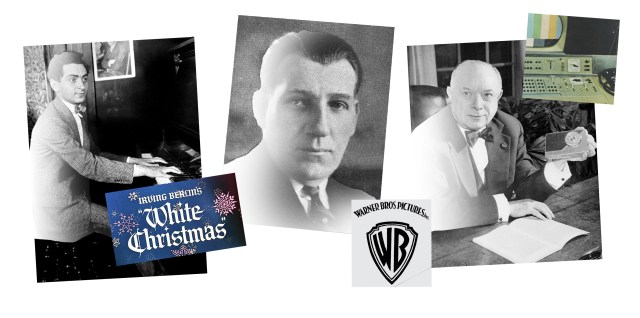
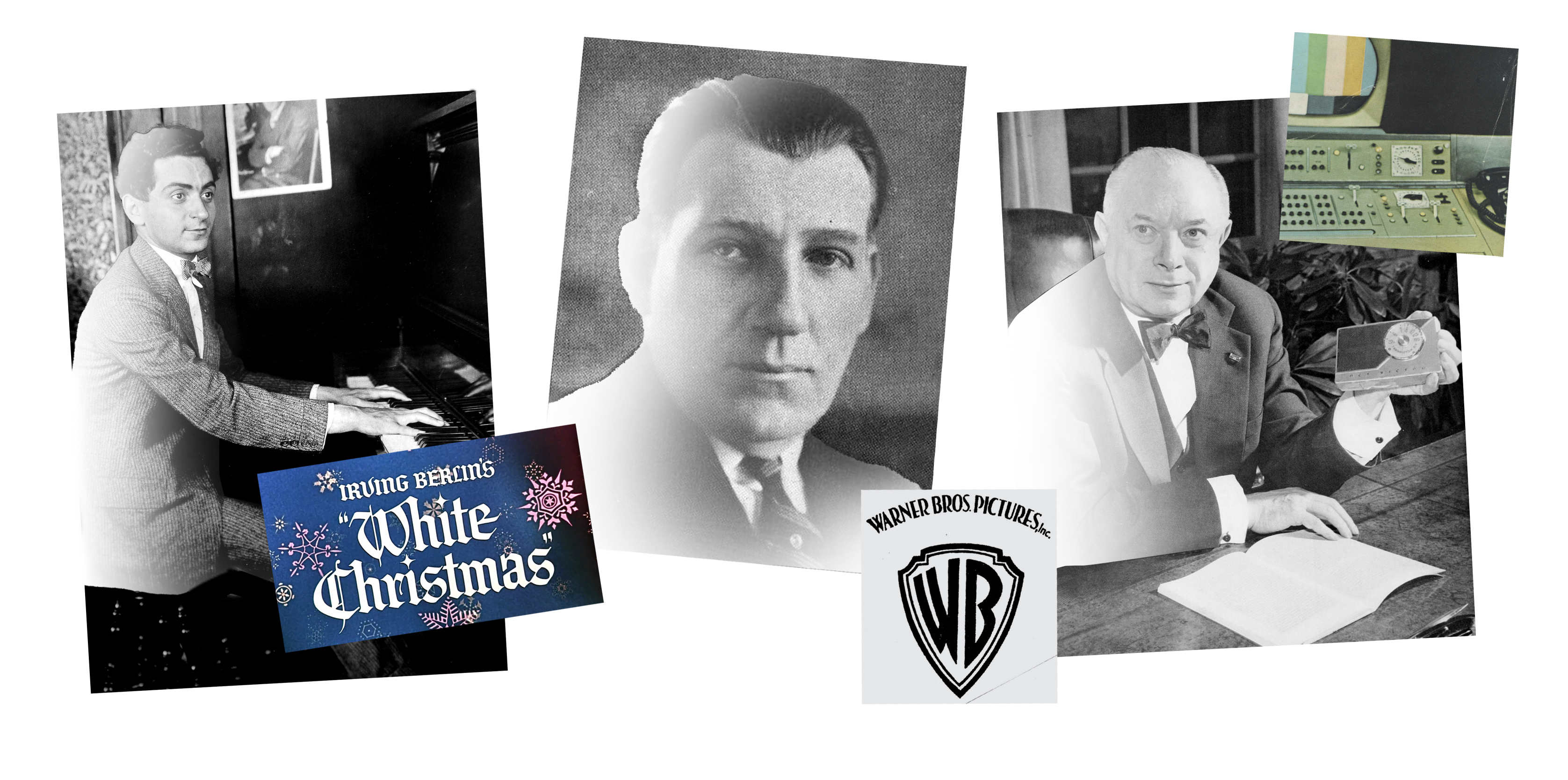
Keep out Wonsal, who changed his name to Sam Warner, one of the Warner Brothers of film history? Okay, but erase films including The Adventures of Robin Hood, Casablanca, 2001: A Space Odyssey, and The Lord of the Rings. Keep out other Jewish refugees from Russia? Okay, but erase Gone with the WindSingin’ in the Rain, Mr. Smith Goes to Washington, and High Noon.

Keep out Beilin, who changed his name to Irving Berlin? So be it, but erase songs ranging from “God Bless America” to “Puttin’ on the Ritz” and “White Christmas.” While you’re at it, erase George Gershwin’s Rhapsody in Blue and Porgy and Bess. Erase Aaron Copland’s Appalachian Spring and Fanfare for the Common Man. Erase a huge chunk of Broadway history. 

Keep out Schwirnofsky, who changed his name to David Sarnoff? Early radio was point-to-point, like an oral telegraph, but Sarnoff saw an opportunity for “mass communicating” and founded RCA, then NBC—and the rest was hysteria.

Keep out Grin, who changed his name to Robert Green, and not a lot of cultural history would be erased—but I would be: He was my grandfather. He came to Boston while Joe Lee, founder of the Massachusetts Civic League, feared that “all Europe” would soon be “drained of Jews—to its benefit no doubt but not to ours.”

Irving Berlin, Sam Warner, and David SarnoffIllustration by CT / Source Images: WikiMedia Commons
From left to right: Irving Berlin, Sam Warner, and David Sarnoff

But immigration was to America’s benefit. The year 1903 was an important one not because my grandfather arrived in a new land but because Theodore Roosevelt did, at least experientially. Up to then he’d spoken much like his friend Henry Cabot Lodge and echoed the warning in Thomas Bailey Aldrich’s poem “Unguarded Gates” about new immigrants “bringing with them unknown gods and rites … Voices that once the Tower of Babel knew!”

In September 1903, though, the New York Times headlined an extraordinary visit: “PRESIDENT STARTS ELLIS ISLAND INQUIRY Astonishes Officials by Naming a Special Commission. HE INSPECTS IMMIGRANTS Perilous Trip Through Blinding Storm.” A reporter told of how “wind increased to almost hurricane force and nearly threatened the craft. The seas ran high. … President Roosevelt was dripping wet when he dashed down the shaky gangplank of the tug and set foot on Ellis Island.” 

The special commission was to scrutinize the actions of commissioner of immigration William Williams, who was in charge of the Ellis Island port of entry for immigrants. Williams wanted tough enforcement of all possible entry requirements, including turning away those immigrants with little money. Roosevelt’s traveling companions were two men sympathetic to immigrants: Legal Aid Society head Arthur von Briesen and Jacob Riis, author of How the Other Half Lives and an immigrant himself.

The Times reported a conversation among the four. Williams wanted to turn away a man who arrived with $12—the equivalent of $440 now—arguing that his authority entitled him to make this judgment call. Von Briesen said that such a decision would mean that “Jake Riis should have been sent back when he came over,” for as the Times reporter snickered, “It seems that Mr. Riis did not have as much as $12 when he arrived in America.” 

An evangelical directed by his faith, Riis was a powerful influence on Roosevelt, and so were immigrants Roosevelt met during his five hours at Ellis: “A dark-haired woman tried to rush forward to the President, but was restrained, and then broke out into cries and sobs regarding the husband she might be blocked from meeting: ‘Don’t send me away from him forever! Oh, please, please let me go!’” Roosevelt “heard the woman’s sobs,” the Times reported, “and later in the day he summoned the family to the Commissioner’s private offices and held an investigation. … He thereupon made a special ruling and released the entire family.” 

Whether through personal encounters or political reckoning, Roosevelt changed his immigration approachgoing forward. He quoted the Bible and told listeners, “We need to remember our duty to the stranger within our gates.” He stopped promoting literacy tests for immigrants, which would have been used to suppress entry to America just as they were used to keep Black Americans out of voting booths.

But once immigrants were admitted, what then? The Times reporter suggested an answer: Roosevelt at Ellis Island “met the missionaries who look after the spiritual and in many cases the material welfare of the immigrants.” The greeters were Protestants, Catholics, and Jews who combated anti-immigrant sentiment not only in words but also through acts of compassion. Israel Beilin and David Schwirnofsky probably received help from some of the tens of thousands of New Yorkers who volunteered at more than a thousand charitable institutions.

Their first port of call was likely Jewish organizations with names like the Hebrew Benevolent Fuel Society. But churches sponsored all-welcome medical clinics, tailor shops that provided work and produced garments for needy children, and free classes in English, dressmaking, embroidering, sewing, carpentry, printing, plumbing, and other skills.

In Baltimore, the young Warner brothers may have gained help from the Association for the Improvement of the Condition of the Poor, which in 1891, according to my research, had some 2,000 volunteers who made 8,227 visits to 4,025 families. If any little Warners became desperately sick, the Presbyterian Eye, Ear and Throat Charity Hospital offered free beds. If the Warners were cold, the Thomas Wilson Fuel Saving Society could come to the rescue: In 1890 it helped 1,500 families buy 3,000 tons of coal at reduced rates and helped 400 families buy sewing machines.

In Boston, Christians animated by In His Steps volunteered at a new social program, Morgan Memorial. Young minister Edgar Helms “was appalled at the conditions faced by immigrants who found themselves in a new country without jobs and sometimes desperate for food, clothing and shelter.” He spoke about Jesus and quoted a command: “Go thou and do likewise.” Morgan Memorial turned into Goodwill Industries. 

Political and social efforts like these helped keep the immigration doors open until 1924. That made it possible for Selman Abraham Waksman, born in the Russian empire in 1888 and survivor of the 1905 massacre in Odessa of 400 Jews, to get to America as soon as he could, in 1910.

It’s good he came here too. In 1952, Waksman won the Nobel Prize “for his discovery of Streptomycin, the first effective anti-biotic against tuberculosis.” Until then TB was the “Great White Plague” due to the pallid complexion of its sufferers. Tuberculosis caused “nearly half of the deaths of people ages 15–35 in the United States during the 19th century,” not including Civil War casualties.

Charles Dickens described tubercular death in Nicholas Nickleby: “The struggle between soul and body is so gradual, quiet, and solemn, and the result so sure, that day by day, and grain by grain, the mortal part wastes and withers away. … Death takes the glow and hue of life, and life the gaunt and grisly form of death.” 

Dickens called it “a disease which medicine never cured, wealth never warded off. … Slow or quick, [it] is ever sure and certain.” Certain, that is, until Waksman and his team figured out in 1943 how to stop it. Waksman’s Nobel Prize lecture describes his process of discovery, which sounds like If at first you don’t succeed, fail, fail again. Waksman said, “The first true antibiotic derived from a culture of an actinomyces was isolated in our department in 1940.” 

Eureka? No: “It proved to be extremely toxic to experimental animals.” Waksman’s 1952 lecture then has pages of refusal to give up, until a real breakthrough occurred: “The conquest of the ‘Great White Plague,’ undreamt of less than 10 years ago, is now virtually within sight.” The number of US deaths from tuberculosis went from 194 per 100,000 in 1900 to 9.4 per 100,000 in 1984, a 95 percent decrease.

Improved living conditions and other medical innovations made a difference. If Waksman hadn’t connected the dots, others probably would have done so—but perhaps years or even decades later. Erase his immigration from America and you may erase thousands of lives. And how much of his determination was that of an immigrant to keep going until the Statue of Liberty was in sight? 

The contributions of other immigrants from the Russian empire alone—dean of US science fiction Isaac Asimov, Maidenform founder Ida Rosenthal (formerly Kaganovich), and so many more—would make a shelf of books. You’d need a whole library to read about the value added by immigrants from Latin America, Africa, Asia, and elsewhere in Europe.

In 2015, kicking off his first campaign for president, Donald Trump emphasized the negatives of immigration: “They’re bringing crime. They’re rapists. And some, I assume are good people.” Last year, he said of Haitian immigrants, “They’re eating the dogs, the people that came in, they’re eating the cats. They’re eating the pets.”

That’s over the top, but Trump was right to think some immigrants will bring trouble. Some evil will emerge. We cannot predict the future.

But we can learn from the past. 


A National Immigration Heritage Month booklist from the Carnegie Library of Pittsburgh lists 15 nonfiction works including Abdi Nor Iftin’s Call Me American: A Memoir. A reading list from the American Writers Museum has 11. Both lists include Angela’s Ashes, the Pulitzer Prize–winning memoir by Frank McCourt.  


Marvin Olasky is executive editor of news and global at Christianity Today.

Books

The Author Who Pulled Me out of the Doomscroll

Fantasy novelist Guy Gavriel Kay, who helped compile Tolkien’s Silmarillion, grapples with the juxtaposition of love and suffering in Written on the Dark.

Author Guy Gavriel Kay
Christianity Today June 3, 2025
Nick Lachance / Contributor / Getty

When I had my first child, I spent a lot of time awake. My son was born five weeks early and wanted to snuggle around the clock, and adults really shouldn’t fall asleep while holding tiny babies. So my husband and I were very much not sleeping, all the time.

And while I was awake, day and night, I was usually on my phone. Journalists have a bad habit of living on social media, and even with a baby, it proved hard to kick that habit. After all, it was 2021. So many alarming, terrible events were happening, and I worried about it all.

Christians are called to mourn with those who mourn, but my scrolling didn’t encourage that in earnest. Instead, it pushed my anxiety into overdrive and distracted me from tangibly loving others. During one of the most joyful moments of my life, I found myself slipping into the most suffocating despair I’d ever felt.

Canadian novelist Guy Gavriel Kay—whose latest, Written on the Dark, published last week—helped me begin to climb out of that pit. On a whim, I picked up Kay’s 2010 book Under Heaven during a walk to the library with my baby, and in it I found an untamed, winding story about humanity’s history, the kind of story a medieval bard might have shared in a great hall before kings and peasants alike.

I’ve always loved reading, and I had tried other books in those months. But I was bone-weary and nearly hallucinating from sleep deprivation, and they never quite spoke to the fears and trials then dominating my life. Under Heaven did. It starts slowly and poetically, daring us as modern, distracted readers to put down our phones, lean in, and pay attention. The story is disarmingly warm and rich with historical detail, as Kay’s characters persevere through a once-in-a-lifetime political crisis based on real events during China’s Tang dynasty. 

Reflecting on the past—dwelling on the wars and pain and joy and beauty that humankind has experienced through the ages—was grounding for me. It was the opposite of doomscrolling. (Hope-reading?)

I read one after another of Kay’s books, finding that theme of resilience across them all. His stories depict evil unflinchingly while holding tightly to the good. These books did more than pull me away from the doomscroll or pass the difficult hours of my early postpartum era; they rekindled my love for storytelling and gave me an appreciation for its power to defy the darkness of this fallen world.

Kay, who is Jewish but not personally religious, often explores themes that Christian readers will find compelling and beautiful, with an emphasis on friendship, love, and self-sacrifice—a father putting his life on the line to save his son, or a warrior setting aside nationalistic animosity to instead value the dignity of his neighbors. Beauty and virtue exist amid pain and evil, just as in our own lives.

“Terrible things can happen, but people can do good things for each other,” Kay told me during an interview in downtown Toronto this spring. “Tenderness can exist in the midst of danger and chaos.”

History is his preferred material for exploring that truth through fiction: The Last Light of the Sun is inspired by wars between Viking raiders and King Alfred the Great. The Sarantine Mosaic series draws from the Byzantine Empire under Justinian. Tigana is a tale of warring wizards and a small band of rebels inspired by Renaissance Italy, and A Song for Arbonne and The Lions of Al-Rassan both meditate on religious conflict, tolerance, and good governance. 

“Every book I’ve ever written has been, in part, an attempt to look at how different the past is and how similar it is,” Kay said. “The people of the past are strange and alien and wildly different from us, but they also loved their children, loved their spouses, didn’t love their spouses, wanted security, wanted a roof, wanted a harvest.”

Their basic needs, hopes, and fears were the same as ours. Their sin, too, is the same as ours, which means Kay’s books are often violent. Those moments are sometimes detailed and distressing enough to make the books inappropriate for sensitive readers and children. His stories also sometimes include sexual scenes that, though typically brief and vague, will be beyond the pale for some Christian readers.

Yet for adults already grappling with suffering or evil, Kay’s work can be encouraging precisely because it can acknowledge the reality of evil without succumbing to it.

It helps that Kay, 70, has been writing successfully for decades. That means he doesn’t have to play by the more restrictive rules of modern publishing, he told me. Rules like: Don’t jump from the past tense to the present tense. Don’t hop between characters’ heads—just choose one perspective per chapter or, ideally, one perspective for the entire book. Don’t write long books. And definitely don’t write an entire chapter from the viewpoint of a grizzled medieval courier who is largely irrelevant to the plot.

Because of his freedom to experiment, Kay’s writing feels like a continuation of a storytelling tradition far older and deeper than most contemporary literary output. He’s not making a product carefully pruned to its most marketable form. He’s telling a tale—and telling a truth.

He also wants that kind of freedom for more of his fellow bards, telling me he’s distressed that publishers increasingly won’t let other writers break the rules like he does.

“If you’re a young writer, the pressure will be on you to fit the category that you’re writing towards, and those categories get more and more rigid,” he said. “‘Your market likes your dragons.’ ‘Your market likes your battle scenes.’ ‘You’ve got to give them battle scenes if you want to keep writing, otherwise you’re going to be doing freelance editing and workshops.’”

The root problem here is bigger than the publishing industry, he argued: “The state of publishing is a reflection of the state of society.”

Distracted, anxious, online scrolling habits like my own are changing the world—and the world of books—instead of the other way around. 

Still, Kay has resisted.

“I trust my readers,” he said simply. “And at this stage, my readers—and I mean it when I say this is a gift—my readers let me get away with it.”

Kay’s characteristic “quarter turn to the fantastic,” exploring history but with twists of magic, also leaves room for the numinous and spirituality. There are no elaborate, concrete magic systems here; instead, the books are haunted by the other, the transcendent, and mystery. Characters sometimes face encounters or miracles they can’t explain but must reckon with nonetheless. 

Kay himself has only experienced the inexplicable a few times, he said. Decades ago, before cell phones, he was backpacking through Europe with a friend when they decided to separate for a bit to explore individually. A month and a half later, he recalls, he was checking his mail in Rome when he had the overwhelming feeling that he should stay at the post office and wait for his friend, who he somehow knew would arrive shortly.

“I hadn’t seen him for six weeks. I had no idea where in Europe he was at that moment,” Kay recalled. But he sat on the floor and waited. Soon, his friend walked into the room. 

It was a small thing, but inexplicable, even now.

“It sits as a complete anomaly in my life,” Kay said.

Though a ravenous reader from childhood, Kay cited his parents, his wife, and the experience of having his own children as more significant influences on his work than any one author. But he also pointed to William Shakespeare: “I read Julius Caesar when I was ten and was stamped for life, like a duckling or something,” he remembered. “That was it. I was done. Lost. Enraptured.”

He started writing and publishing poetry as a teenager, then got his start in fiction as a young adult. In 1974, he helped Christopher Tolkien compile The Silmarillion after the death of his father, J. R. R. Tolkien. That experience helped him get a feel for the demands of novel writing and how to craft worlds. He tried his own hand at it, with a stint in Greece to work on a first attempt at a novel. His work has been published in more than two dozen languages since then, and he was appointed to the Order of Canada in 2014 for “outstanding contributions to the field of speculative fiction.”

After decades’ more experience, writing remains, for Kay, an “endless, brutal effort to reduce the gap between what’s in my head and what I can get on the page.”

His new novel, Written on the Dark, is set in a world a lot like medieval France. It starts as a murder mystery before slipping into a sweeping story about averting civil war, interrogating “the idea that some people could be too powerful for justice,” he said, and that there’s “an immunity that comes from wealth and power.”

The theme is compelling and relevant. Longtime Kay readers will smile at some of his personal flourishes and callbacks to past writing, but the book is accessible to new readers too. It’s shorter than many of his other novels, though, leaving less space for the intimate character development and detailed storytelling style that makes Kay so much fun to read.

Written on the Dark is at its best when it focuses on the relationships of its protagonist, tavern poet Thierry Villar. He begins in love with his city and his lifestyle of freedom, and he ends more committed to the people around him with a newly selfless love.

This is a timeless arc but not a simple or painless one. In one scene, the same night Villar finds love, a side character in the story is killed. “He was dead in a tavern on a summer night,” Villar reflects. “The night my own life altered again and love came in, as through an open window. A gift. A blessing of the god. What are we to make of such things overlapping, coinciding, in our days?”

This is the very question that weighed heavily on me after my son’s birth, as I tried to absorb all the world’s suffering through my smartphone’s screen. And though Kay doesn’t pretend to have the answer, I’ve found I much prefer art that at least knows to ask.

My son is much better at sleeping now that he’s almost four years old. We still cuddle all the time, and I still have to make a conscious effort to put away my phone. (I hope to throw it into the sea one day.)

Reading books aloud with him has become my favorite part of each night. No Kay yet, but books with a similar sense of adventure and moral inquiry: stories set in wild jungles, deserts, and oceans; stories about time travel, pirates, ninjas, knights, and selfish kings; stories of ordinary people trying to live virtuously through it all.

My son likes to jump straight from those stories to playtime. He runs around the yard, pretending to be a Viking facing a long winter or a bold knight challenging a ferocious villain.

“Not you!” he shouts at his imagined foes, his favorite cry of defiance.

These stories aren’t the only way he’ll grow more creative, courageous, and resilient, of course. Those transformations will come with maturity, discipleship, and time. But as a reader, I know—and, I think, Kay knows as a writer—good storytelling can help prepare us to live our own stories with tenderness, love, and bravery, even as we walk through the dark.

Haley Byrd Wilt is a journalist whose work has been published in Foreign Policy, CNN, and The New York Times, among others. She reports on Congress for the nonprofit news publication NOTUS.

News
Wire Story

Despite Burnout, Just 1% of Pastors Leave Each Year

Most who step away from the pulpit end up in other ministry roles.

Two men in cowboy hats leave church.
Christianity Today June 3, 2025
Philip Gould / Getty Images

Pastors face unique challenges in their role and often feel overwhelmed, but few decide to step away from the pulpit and pursue another career.

Only around 1 in 100 pastors leave the ministry each year, according to a Lifeway Research study of evangelical and Black Protestant pastors.

The percentage of pastors who leave for reasons other than retirement or death has remained statistically unchanged over the past decade: 1.3% in 2015, 1.5% in 2021 and 1.2% in 2025.

“The rate of pastors departing the pastorate is steady and quite low given the demands of the role,” said Scott McConnell, executive director of Lifeway Research.

“Many of those leaving the pastorate feel they are moving at God’s direction to another role of ministry. However, it’s easy for those outside and those inside the church to fixate on those who leave because of conflict, burnout or moral failure. Speculation always overstates these cases, yet these are the outcomes churches can seek to prevent.”

The 2025 study, sponsored by Houston’s First Baptist Church and Richard Dockins, an occupational medicine physician concerned about pastoral attrition, surveyed more than 1,500 pastors serving in evangelical or Black Protestant churches. The median pastoral tenure at one church is eight years.

Around 3 in 5 pastors (58%) started their role at their church in the last 10 years. Only 15% say their ministry at their current church stretches back at least 25 years. Additionally, half of pastors (52%) are serving at their first church, while 48% have served a previous church in that role.

Among those churches that existed and had a pastor 10 years ago, 44% still have the same pastor today. Around 1 in 5 (21%) say the previous pastor retired, while 16% are pastoring another church and 7% died.

In the past decade, 7% of pastors left and began working in another ministry role other than pastor, 3% work in a non-ministry role and 2% are involved in something that is not ministry-related and are not retirement age. These groups that leave the pastorate before retirement reveal a current annual attrition rate of 1.2% among evangelical and Black Protestant pastors. This means that in any given year since 2015, slightly more than 1 in 100 pastors walked away from the pulpit.

When the current pastors were asked why the former pastor left the ministry, the most common reasons were a change in calling (37%), conflict in a church (23%) and burnout (22%). Others left because of a poor fit with a church (17%) or family issues (12%). Few were forced to step away because of an illness (5%) or personal finances (3%). Another 4% left because they weren’t prepared for the job. Of the 1.2% of pastors who leave the ministry each year, 7% are forced out due to moral or ethical issues.

“Today’s pastors don’t always know all the reasons their predecessors left their church, but the number of pastors describing the previous pastor at their church leaving because of burnout has doubled over the last 10 years (22% v. 10%),” said McConnell.

Pastoral changes

Among the current pastors who previously served at another church, most left their previous congregation of their own volition. Half (50%) say they left because they took the church as far as they could. Three in 10 (31%) felt their family needed a change. A quarter (25%) left due to conflict in the church, while 21% walked away because the church did not embrace their approach to ministry.

Fewer say they left their previous church because the congregation had unrealistic expectations of them (17%), they were not a good fit for the church (17%) or another reason like feeling God called them elsewhere or to a new opportunity (13%). For some, the decision to leave was made for them, as 13% were reassigned and 8% were asked to leave the church.

“A pastor and congregation must work together,” said McConnell. “Maintaining unity is a biblical mandate that is easy to ignore when someone places too much importance on their own opinion.”

Most pastors who previously led a different church had some conflict in the other congregation. More than a third say there was conflict over proposed changes (37%) or with lay leaders (35%). Similarly, 35% say they experienced a significant personal attack.

Around a quarter felt conflict over their leadership style (27%) or expectations about the pastor’s role (24%). Fewer clashed with their previous congregation over doctrinal differences (18%) or national or local politics (9%). Around a third (35%) say they didn’t experience any of these conflicts in their earlier church.

Most current pastors don’t foresee leaving the ministry behind for one of those reasons. Nine in 10 (91%) are sure they can stay at their church as long as they want. Still, that doesn’t mean pastors are naïve about potential future problems.

Coming conflict

Evangelical and Black Protestant pastors in the U.S. expect to face conflict in their current congregations, even though they are working to limit it. Three in 4 (74%) say they will need to confront conflict in their church in the future, while a quarter (24%) disagree. Additionally, 1 in 5 (19%) say their church experienced significant conflict last year.

But most pastors have received training to deal with such issues and are monitoring their churches for brewing trouble. Around 9 in 10 (88%) say they consistently listen for signs of conflict in their church. A similar percentage (90%) say they invest in processes and behaviors to prevent conflict.

Around 3 in 4 (73%) say their training prepared them for the people side of ministry. Unfortunately, the percentage of pastors who felt their seminary or ministry training prepared them has dropped from 80% in 2015 to 77% in 2021, before falling to 73% today.

That decline may be connected to the shrinking number of pastors participating in related classes. In 2015, 75% of pastors had taken courses on dealing with conflict, and 72% had taken courses on interpersonal skills. Now, those percentages have fallen to 66% and 63% respectively.
“Pastors’ awareness of conflict remains high, but fewer are preparing in a classroom setting to love and lead through various disagreements,” said McConnell.

If many of the preventative steps don’t work, most pastors say their church has steps to address more serious conflicts and issues. Three in 4 (75%) have a process for church discipline.

Ministry troubles

Pastors may not believe their problems are tied specifically to conflict in their congregations, but generally to their role. Two in 3 (67%) feel they must be “on-call” 24 hours a day. This feeling has declined steadily among pastors, however, from 84% in 2015 and 71% in 2021. Another 57% say their role is frequently overwhelming, up slightly from 54% in 2015 but down from 63% in 2021.

Around half (47%) of pastors often feel the demands of ministry are greater than they can handle. This has remained consistent for the past decade. A third (34%) feel isolated as a pastor, unchanged from 2015 but down from 38% in 2021 during the COVID-19 pandemic. One in 5 (19%) say their church has unrealistic expectations of them. This is again consistent with 2015 (21%) but down from 2021 (23%).

“While a couple elements of panic may have eased since the pandemic, the role of being a pastor is still difficult,” said McConnell. “Pastors and their families genuinely need encouragement, people to share ministry tasks with and to discuss differences respectfully.”

Many congregations seek to avoid issues with their pastor by having a document that clearly communicates the church’s expectations of the pastor (72%). Still, around 1 in 5 pastors (21%) don’t believe their church accurately described the congregation before they arrived.

Despite any potential gaps in the perspectives of the pastor and the congregation, 85% of pastors feel free to say “no” when expectations of them are unrealistic. But this has dropped from 89% in 2015.

During their week, 78% of pastors say they “unplug” from ministerial work and have a day of rest at least once a week, but this is down from 85% in 2015. Some may get even more time away from their ministry work. A third (32%) of pastors say their church has a plan for the pastor to receive a sabbatical periodically, up from 29% in 2015.

Potential warning signs

As pastors seek to avoid problems within their congregations and stay faithful in ministry, they may also want to evaluate themselves. Many aren’t investing in their personal spiritual growth daily, and some may struggle with spiritual pride.

Around half of pastors (54%) say they get away to spend time alone with God at least seven times a week. Other pastors have fewer occasions during which they spend time in Bible study and prayer other than in their sermon or lesson preparation, including 9% who say they do so six times a week, 17% five times, 7% four times, 7% three times, 3% two times, 1% one times and 1% find no times.

Close to 1 in 6 (16%) say they frequently get irritated with people at their church, with only 2% strongly agreeing. Slightly more than half (55%) strongly disagree, so for a large percentage of pastors, irritation with churchgoers may be an issue.
Certain attitudes may not be problematic for some pastors but may be for others. Two in 5 (39%) believe their church would not have achieved the progress it has without them. Three in 4 (73%) say they deserve the respect of their people. More than 4 in 5 (84%) work hard to protect their image as a pastor.

“While pastors may be quick to point to God’s provision for their churches and the fact they have maintained their integrity, agreement with these statements may also suggest the presence of self-importance,” said McConnell. “Leading by example, winning trust and serving where God places you are necessary traits of a pastor that can easily become narcissistic when too focused on the importance of your role, your image or what you deserve.”

Apple PodcastsDown ArrowDown ArrowDown Arrowarrow_left_altLeft ArrowLeft ArrowRight ArrowRight ArrowRight Arrowarrow_up_altUp ArrowUp ArrowAvailable at Amazoncaret-downCloseCloseEmailEmailExpandExpandExternalExternalFacebookfacebook-squareGiftGiftGooglegoogleGoogle KeephamburgerInstagraminstagram-squareLinkLinklinkedin-squareListenListenListenChristianity TodayCT Creative Studio Logologo_orgMegaphoneMenuMenupausePinterestPlayPlayPocketPodcastRSSRSSSaveSaveSaveSearchSearchsearchSpotifyStitcherTelegramTable of ContentsTable of Contentstwitter-squareWhatsAppXYouTubeYouTube