News

When a Church Is Not a Church

More ministries call themselves churches or associations of churches to avoid disclosure requirements.

Christianity Today April 15, 2025
Andrew Caballero-Reynolds / Getty

Since 2020, more than 80 of the 1,000 largest Christian ministries in the US have asked the Internal Revenue Service to classify each of them as an “association of churches.” That means the ministries do not file a Form 990, a document that publicizes information about revenue, expenses, and executive compensation.

More than 100 of the largest ministries, including Focus on the Family, Compassion International, Convoy of Hope, and the Billy Graham Evangelistic Association, now have the classification. The failure to file a Form 990 is a “red flag” according to Calvin Edwards, founder of the philanthropic consulting firm Calvin Edwards & Company. 

Edwards said, “The Form 990 has information that you can’t find in the audit, including the salaries of key employees, names of board members and large contractors, and the amount of money the organization spends on its core mission. Also highlighted are the amounts it spends on administrative and fundraising. This information is valuable to donors wanting to assess the effectiveness of a ministry.”

The ministries often say their primary motivation is protecting donors. The issue of donor disclosure went national after Brendan Eich, cofounder of the web browser Mozilla, came under attack. The reason: In 2008 he contributed $1,000 to an organization supporting California’s Proposition 8 ballot proposal, which called for a ban of same-sex marriage. The donation went mostly unnoticed until Eich became chairman of Mozilla in 2014. Public outcry ensued, and Eich ultimately resigned under pressure.

That donation was political, not philanthropic, but it did highlight how ideologues could weaponize donor lists. In 2015, Kamala Harris, then California’s attorney general, attempted to compel nonprofits registered in the state to disclose the names of donors, but a California judge quickly halted Harris’s enforcement efforts, and the US Supreme Court in 2021 effectively barred the public disclosure of Schedule B, the part of the Form 990 that lists donors. 

That means donors and ministries have stronger privacy protections than ever. Harris’s gambit eventually motivated states to start passing donor privacy laws. Today, at least 19 states now have such laws. 

According to Chicago attorney David Bea, who advises Christian nonprofits (including CT), the California effort ended up strengthening, not weakening, donor privacy rights. The need for ministries to reclassify as associations of churches did not increase; it diminished.

But it also generated fear, or at least concern, among Christian ministries. Paul Batura, a spokesman for Focus on the Family, alluded to “several occasions on which non-profit organizations—on both the right and the left—were targeted for information, including the names and personal details of their donors.” 

Attorney Bea said, “I don’t think all the ministries seeking reclassification are playing ‘hide the ball.’” For example, Wycliffe Associates, a large Bible-translation organization based in Orlando, Florida, filed its last Form 990 in 2008. Its former president, Bruce Smith, told CT concern for the security of its personnel working in closed countries was one of the reasons for this decision.

But journalist (and CT contributor) Mindy Belz, who has reported from conflict zones and closed countries, said security concerns overseas do not justify a lack of transparency here in the US. “Shining a light in dark places” often enhances security, she added: “It tends to bring about pressure that is helpful rather than harmful.”

If a US ministry does work overseas, it must disclose the amount of money it spends on that work in its Form 990, but that disclosure is by region, not by individual country. Samaritan’s Purse and World Vision work in closed countries all around the world, but both organizations nonetheless file Form 990s and are transparent with US donors.

World Help’s director of international partnerships, Kraig Cole, said his organization tries to find a “balance between security and transparency.” When reporting to donors and supporters about projects in persecution-prone countries, World Help may blur faces in photos and use different names. World Help does file a Form 990, and its leadership believes none of the information in that document compromises the safety of its staff overseas. 

So if filing a Form 990 compromises neither donor privacy nor the safety of ministry work, why are more and more ministries electing this reclassification? Assessing motives is always a tricky business, but some of the ministries seem to make the reclassification to avoid scrutiny. Controversial and sometimes outright fraudulent organizations have been claiming the church exemption for years. It’s a common practice of televangelists and prosperity gospel preachers.

From 2007 to 2011, Sen. Charles Grassley investigated six televangelists—Benny Hinn, Eddie Long, Joyce Meyer, Kenneth Copeland, Creflo Dollar, and Paula White-Cain—whose organizations lacked transparency. The organizations they led spent donor money on mansions, lavish lifestyles, and private jets

When a ministry reclassifies as an association of churches, it is often an early indication of trouble to come. For example, Ravi Zacharias International Ministries (RZIM) stopped filing a Form 990 in 2015. By 2017, rumors of impropriety began to surface, but because the ministry did not file a Form 990, the public could not see that RZIM now had Ravi Zacharias’s family members in senior leadership positions, as well as in board roles. Accountability and transparency were virtually nonexistent. By 2022, RZIM—once one of the largest and most respected ministries in the country—was out of business.

Biola University dean Ed Stetzer said ministry leaders should consider not just legal questions but biblical principles. He is skeptical of organizations that claim to be churches or associations of churches when they do not possess the essential qualities of a church.

Stetzer said, “The biblical definition of church has been an important discussion among missiologists and theologians for a long time. The Reformers often talked about the right administration of the sacraments, faithful preaching, and church discipline as indispensable marks of a church—if you don’t have those elements, you are not a church.”

He concluded, “That’s why something like a college Bible study is not a church, but 20 people meeting in a home in China can be—the marks are present in one but not the other.”

That’s why Bea said some of his clients have considered reclassification to a church or association of churches but ultimately “made the decision they didn’t think it was honest.”

Warren Cole Smith is the president of MinistryWatch.

Pastors

Spiritual Formation Is Not a Formula

Spiritual formation shouldn’t be an attempt to control ministry outcomes—it’s about cultivating space for God to work.

A farmer tilling the soil and planting carrot seeds in an organic field
CT Pastors April 15, 2025
Image: Susuma Yoshioka / Getty

I recently read about a spiritual formation program that went terribly wrong. 

A cohort of men spent three years in intense formation learning about the way of Jesus. This wasn’t merely an academic program—it involved ministry apprenticeship, shared meals together, common worship, prayer vigils, and even retreats in the wilderness. The program was rigorous and demanding. Some of the students faced resistance from their friends and family. Even local politicians and leaders of faith communities began to take notice.

By the end of the program, many had dropped out. Only a few were still committed. When their formation was complete and their education at its most robust, they shared a festive meal. And it was during this time together that, despite years of intense spiritual formation, one of the students walked away from it all and left the faith in a bid to make some quick cash. The name of the student that threw it all away for a hefty payday? Judas Iscariot.

Not long after, the rest of the group abandoned Jesus too, at least for a while.

At first glance, this might seem like an extreme example of an isolated failure. But Judas’s story—and the story of the other disciples who scattered—raises an uncomfortable question for those of us who care deeply about discipleship: What exactly do we mean by spiritual formation, and can it shape people the way we hope it will? And further, if we trust Jesus’ wisdom in training the disciples in a process that led to mixed outcomes, why do we feel so frustrated when the people we serve seem to fumble?

When programs replace transformation

Spiritual formation is all about using everyday practices, such as prayer, service, and study, to make us into the kind of people we trust God is leading us to be.

It’s not as if any of us are saying, “Come to my Bible study on Romans. It will make you more like Jesus!” or “Participate in this Alpha course and you will be a more godly person!” 

In our desire to see spiritual growth in the lives of the people we minister to, we might see participation in programs like this as a cipher for spiritual maturity. Conversely, we might assume that people who are not active in the programs of our congregation are not as far down the path of discipleship. It is easy to make these assumptions because to even gauge the level of another’s transformation in Christ involves deep listening and knowing. 

Frankly, we don’t have the time to develop these relationships with more than a handful of people. So we start to assume that getting into some kind of Bible study, prayer meeting, or missional group means that someone is doing fine and, if they keep at it, will look more like Jesus.

This is because, as pastors, part of our vocation is to shepherd our congregations toward holiness—to urge our people onward on the path to discipleship. Often, the tools of spiritual formation are the means by which we equip our parishioners for their journey with Christ. 

There is certainly tremendous value in practices that help us become more attuned to what God is doing in our lives. But as this retelling of Jesus’ relationship to his disciples reminds us, engaging in spiritual formation doesn’t guarantee transformation. There are problems with spiritual formation—problems that are rooted in the gospel itself—that are worth naming.

Now, I am not alone in my suspicion of spiritual formation. For instance, James Bryan Smith—echoing concerns raised by Dallas Willard—warns that it can become too focused on “techniques without transformation,” ultimately losing sight of the importance of true discipleship. Similarly, David Fitch expressed some of his own qualms. After giving a brief introduction to the spiritual formation movement pioneered by Dallas Willard and Richard Foster, Fitch cautions that spiritual formation can easily devolve into just another individualistic pursuit for betterment accessible only to an affluent few. 

And then there is the perennial Protestant worry—that any kind of focused effort in the life of faith borders on Pelagianism. To these critics, spiritual formation feels like evangelicalism’s attempt to mimic Roman Catholicism—with all the effort and none of the grace.

These critiques are worth considering. While I have some sympathy for these concerns, they point to something deeper: the theological assumption underneath it all, which is that we can produce transformation through concerted effort and specific practices. This is where my concern lies.

As much as spiritual practices might increase the likelihood of becoming more Christlike, there are no guarantees. After all, Jesus spent three years with his disciples, and in the end, they all abandoned him. 

This isn’t just a theoretical concern—it comes right from the heart of pastoral work. When our people don’t grow in the ways we hoped, we begin to question our methods, even ourselves. We start to equate our effectiveness in ministry with certain visible outcomes in the lives of our parishioners. But even our Lord did not achieve with all of his twelve disciples what we hope to see in the lives of the people we pastor.

For those of us serving in ministry, it’s easy to feel as though we’ve failed when people are not as committed to the faith as we’d hoped. We can feel frustrated when our discipleship programs are not producing the results we envisioned. But even if our Lord didn’t see consistent growth from his small band of disciples, why would we assume our spiritual formation practices can ensure better results? 

What I am trying to say is this: Practices don’t transform us—only the grace of God does. And God’s providence remains a mystery. 

Embracing the role of grace in spiritual formation

Spiritual formation as an individual pursuit is one thing. But with the increased focus on spiritual formation in evangelical seminaries and pushes to integrate spiritual formation into the life of the church, there is often an unspoken assumption that seminary deans and pastors can somehow shape their people through the right practices or, at the very least, shape the practices their people will use to shape their own lives.  

The truth is, most of us can barely manage our own lives, let alone trying to foist some programmatic change on others. And if even our Lord could not (or would not!) force his disciples into being certain kinds of people, we should recognize the danger in thinking that we can and ought to. Faltering steps forward, missing the mark, drifting from Jesus, and returning in repentance—these are all parts of the journey toward being the kind of people God calls us to be. Peter, James, and John trod the same path with Jesus as their guide. 

Don’t get me wrong—it’s not that I don’t see value in spiritual practices. As an Anglican priest, I pray the Daily Office each day, read the Bible regularly, observe fasts, and make a point to attend worship—even when I am on vacation. But I don’t do these things because I think they will boost my spiritual stature. I do them because they are ends in themselves, inherently worth doing. If they happen to change me for the better, that’s icing on the cake. Put another way, spiritual practices of spiritual formation are good and valuable, and they may even serve as a set of tools to prepare the human heart for favorable conditions in which God might bring about growth. 

This shift in perspective can be traced to the wise counsel of Scripture. In his letter to the church in Corinth, Paul offers a beautiful and humbling metaphor that reminds us who is truly responsible for growth. When speaking of the wonder and sacred mystery we call the church, Paul uses the analogy of a garden (among others) to illustrate the organic and often surprising ways that the church can flourish. Apostles don’t make growth happen; they simply tend to the conditions that make it possible. Paul can write that he “planted the seed, Apollos watered it, but God has been making it grow. So neither the one who plants nor the one who waters is anything, but only God, who makes things grow” (1 Cor. 3:6–8). It is God—not Paul, Apollos, or anyone with a master plan—who propels the church forward.

The same is true of personal transformation toward Christlikeness. We can create conditions in our lives in which the Holy Spirit’s renewing power may be most effectual, but we cannot form ourselves in the image of Christ. And how much more true is this for pastors or seminary leaders who are attempting to form others—often young and still growing—toward holiness. Our task is to cultivate an environment where growth is possible and then to back off. Spiritual formation is not ultimately our work—it’s God’s.

Unpredictable growth demonstrates God’s work

This approach to growth reminds me of something Ross Gay writes about education, which, surprisingly, offers a helpful way to think about spiritual formation. Gay, a poet and professor, chafes at the idea that college classes would have fixed learning outcomes. In his book Inciting Joy: Essays, he suggests that if talking of learning outcomes “makes you feel a little bit claustrophobic, or bored, you are not alone.” For Gay, real learning can’t be controlled or predicted because it is “unpredictable, improvisatory, and by definition, confounding. By definition, if the learning is real, the outcomes are unfathomable.” This means that teaching students is not a means of achieving some end but an invitation to do something beautifully, inherently worthwhile together.

I think if spiritual formation must be an emphasis, we need to see it more like Gay sees learning—something that is worthwhile with results that are “unpredictable, improvisatory and … confounding.” In other words, we as pastors must see that spiritual formation, like real learning, is unpredictable but that unpredictability isn’t a failure—it is a gift of grace. And that’s good news for pastors and people alike.

This has certainly been the case in my own life. The kind of person I am becoming—and I pray I am more like Jesus every day—has as much to do with what happens to me (what other people say, circumstances outside of my control, and so forth) as it does with any spiritual growth programs I’ve set for myself.

The practices of spiritual formation likely help move me toward Christlikeness. But they might not. And that’s okay. I don’t have to worry about how effective they are for me, and much less for those I serve. The grace of God does what it does, in God’s time. My job is not to manage outcomes. I must only be faithful to Jesus and stay open to his transforming grace. 

Cole Hartin is an Anglican priest serving in Tyler, Texas, and a fellow at the Center for Pastor Theologians.

How Global Connections Make an Impact for Christ’s Kingdom

A Christianity Today article about prisons in El Salvador shed light on a need, and increased Prison Alliance’s impact in the country.

Lucas Suriano, Prison Alliance Ministry
Chris Powell

In January 2025, a man in the Philippines receiving his first graduation certificate during the Pampanga Provincial Jail’s graduation ceremony needed help to get up onto the stage. Lucas Suriano was leading the graduation ceremony, but he took a moment to stop what he was doing and approached the man. Lucas helped him up and noticed the man was teary-eyed. 

“I asked him how old he was, and he told me he was 72 years old,” said Lucas, who is the Global Operations Manager for the ministry Prison Alliance. “I was blown away because this man had probably been in this prison for years and he still has the strength and willingness to achieve something—to become his better self. It was incredible.”

Prison Alliance started in Raleigh, North Carolina, in 1996. Today it shares the gospel with incarcerated men and women in the United States and more than 17 other countries around the globe. Its mission is to “make disciples of every prisoner in every prison of every country around the world.”

“Day after day I am amazed by what God is doing inside of prisons,” Lucas said. “It’s one of those areas that people don’t usually pay attention to. But I can tell you that God’s love and God’s power is very present inside of prisons.”

Kathleen Skaar started Prison Alliance to make sure men and women in local prisons received Bibles and Christian books. She and her husband then expanded their reach to prisons across the United States. While delivering the Christian books did help those incarcerated, Kathleen realized what the people actually needed was discipleship. So she developed a three-course Bible study program that shares the gospel with prisoners.

Lucas Suriano joined the Prison Alliance team a little over two years ago and has helped Prison Alliance’s ministry grow internationally. While Lucas lives in Argentina he is over all of the global growth of the ministry.

“Getting involved with Prison Alliance was definitely God’s plan for me, because I come from a corporate background,” said Lucas. “My life has completely changed.”

Lucas wasn’t looking to join the nonprofit world, but he was unexpectedly fired from his corporate job. It shook up his life in a good way. During that time he met Tim Curington, Prison Alliance’s Executive Director, while Tim was on a trip to Argentina. Soon after that meeting Lucas started volunteering with Prison Alliance doing some translation work for the ministry in Spanish and Portuguese. That work grew beyond only doing translations into creating more of the vision to expand Prison Alliance’s global reach. Now Lucas works full-time with the ministry and oversees all the international growth for the organization. He is continually looking for more countries where Prison Alliance can work.
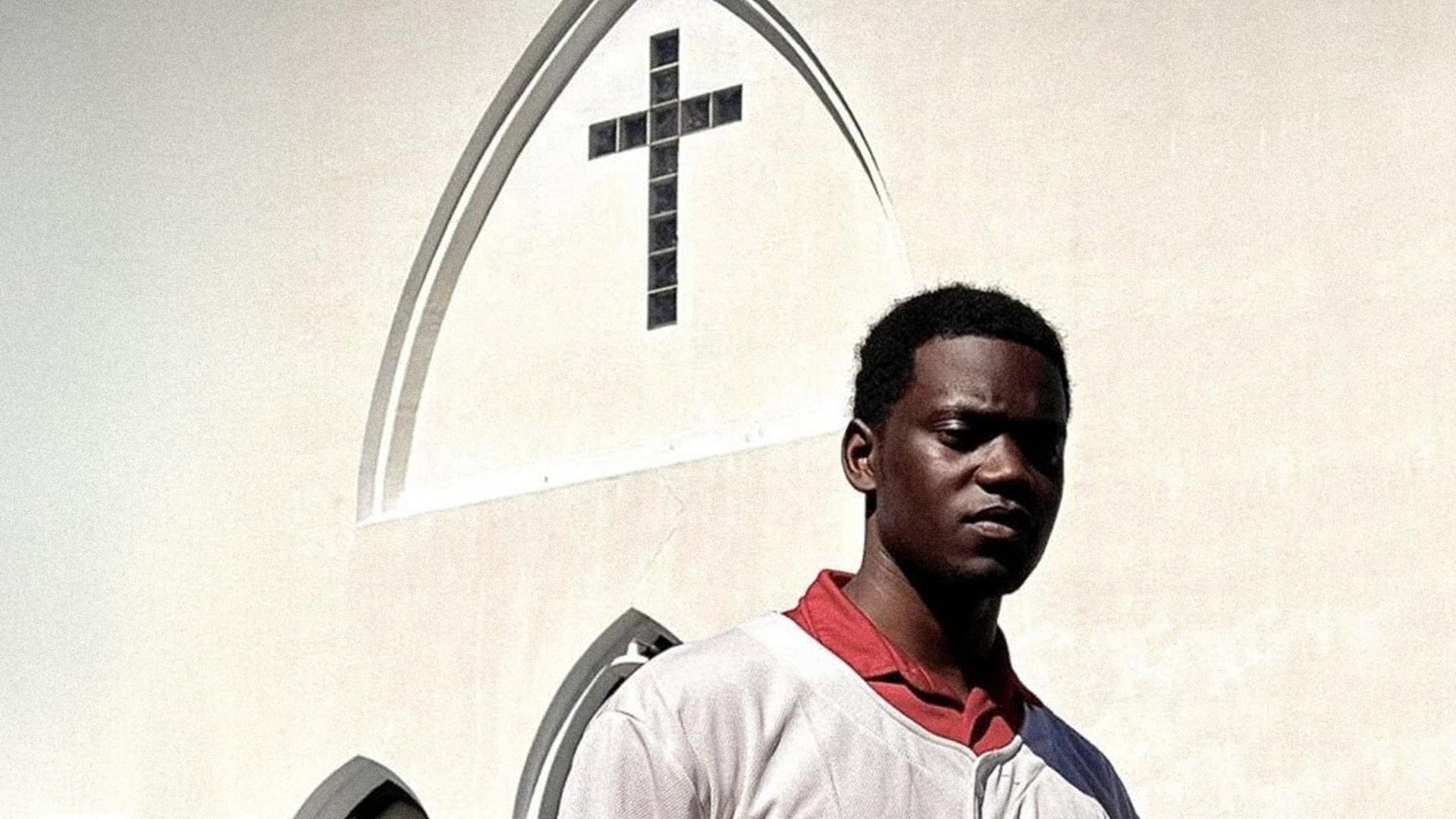
“Physically I am here working in Argentina, but mentally I am with the prisoners,” Lucas said. “I am trying to understand what they need and think about how we can make this program work to the best of our abilities.”

Lucas says that the organization’s heart lies in the words of Hebrews 13:3:

“Remember those who are in prison, as though you were in prison with them; those who are being tortured, as though you yourselves were being tortured.” (NRSV)

Prison Alliance has had a presence in countries like the Philippines for more than five years and Argentina for over three years. They have built solid relationships in these countries and the Philippines is their success model for how to create new partnerships. It is easier for Prison Alliance to do work in these countries. However, in new countries which are just being onboarded, building relationships requires a lot of effort.

Prison Alliance is about to access a second prison in Pakistan. To start their Bible study program in this second prison, they have needed to jump through many hoops, like requesting permission to bring pens and paper inside the prison. 

“It is really a very bureaucratic process, but we have to follow it,” Lucas explained.

However, even working in a Muslim country like Pakistan has proved easier than ministering inside the prisons of El Salvador. Very few churches there have access to prisons; not even certified chaplains can get into the prisons to minister to those who are incarcerated, and the only authorization that is given is for special occasions like Christmas or Easter.

In July 2024, Christianity Today published an article about how difficult it is for ministries and pastors to reach prisoners in El Salvador. The situation in the Central American country is dire; 1 in 56 people in the country are incarcerated, and the government has made it more difficult in recent years for pastors and churches to enter prisons and do ministry.

Prison Alliance and its work in El Salvador were mentioned in the article, and multiple people reached out to Lucas to encourage him and inquire how they could partner with Prison Alliance. Mainly from El Salvador, they have been able to connect with their country pastor, Mario Carias Hernandez from San Salvador City, to put together a larger coalition that will help Prison Alliance grow and expand in the area.

“By God’s grace, the Christianity Today article gave Mario the ability to start a Prison Alliance discipleship program in the Apateos Prison,” Lucas said. “We have collaborated with the purchase of 300 hygiene kits for our first 300 female students already. Mario will be visiting this first prison on a weekly basis, with the support of the local authorities.”

The CT article also raised a lot of awareness among readers about how difficult prison ministry can be in other countries, even in a Christian country like El Salvador. It brought a sense of appreciation to pastors and people in ministry about the resources and abilities they currently have and how they might be able to partner with other organizations like Prison Alliance.

“Christianity Today and Prison Alliance have one thing in common: the desire to reach people all around the world for Christ,” Lucas said. “Maybe we focus on different people, but it is the same goal.”

As Prison Alliance continues to grow, Lucas mentioned the importance of Christianity Today expanding its article translations.

“It really does help local pastors who do not have any experience with English to have these articles in Spanish, Portuguese, etc.,” Lucas said. “We have partners in Brazil who don’t speak English or Spanish, so to have the article Prison Alliance was mentioned in also written in Portuguese means they can read it.”

Lucas believes that the global church is disconnected from itself but that the work of organizations like Christianity Today and Prison Alliance can bridge gaps with the church by combining forces, working smartly, and leading with impact. He believes that Christianity Today helps make an impact on organizations like Prison Alliance by getting the word out about their work and helping them make connections around the world.

“I don’t think the global church is connected in the right way to cause the right impact,” Lucas explained. “There are small fires here and there. If you put together the small fires, it’s a huge burst. That is what I believe Christianity Today can and will accomplish over time, because you are connecting those small fires.”

***

If you want to pray for Prison Alliance and its work, Lucas asks for prayer for three groups: the staff in Prison Alliance’s office, the volunteers who work with them around the world, and the prisoners they are ministering to each day.

You can connect with Prison Alliance on their website.

Ideas

How the Awe of God Reframed My Life

In a moment at Yosemite, I was overwhelmed and assured by God’s presence. What I experienced, I later learned, is called awe.

Christianity Today April 14, 2025
Stephen Leonardi / Pexels

My dreams fell apart in Hollywood—and not in the usual Hollywood way, but during a church internship.

The move from Michigan to Los Angeles to take the job was the epitome of culture shock. I went from the endless open spaces of Big Rapids to a mattress in a 500-square-foot apartment shared with two other people. I was lucky if I could find a parking spot within six blocks, and I had to wake up before 6 a.m. and retread those six blocks to make sure the car didn’t get towed.

My internship was unpaid. But it was ministry, so I raised support. Unfortunately, I didn’t raise enough support, so my food budget was a constant stressor.

To top it all off, I strained my vocal cords. And no matter how many doctors I saw, none of them could help me. “There’s nothing that can be ‘fixed,’” one particularly discouraging doctor observed. “They just look like the vocal cords of an 80-year-old, not a 22-year-old.” It had been my plan to become a worship leader, and now I could not sing.

With no job prospects or savings, tired of my absurd schedule and crowded apartment, I went home to Michigan after five months. I didn’t feel melancholy or depressed on the drive back. Mostly I felt an apoplectic emptiness, and I sat in it through hours and hours of sand, rock, and lonely foliage.

The first night I spent near San Francisco; then I woke up early to get as far as Oklahoma. Some morose folk song came on as I approached Yosemite—and maybe it was just the introspective chord progression, or the fact that this mountain pass was unlike anything I’d ever seen off a computer screen, or the way the rising sun superimposed itself on everything. But one way or another, it was exactly at that spot that I finally felt I could exhale.

The limitations of language are never more apparent than when I try to articulate what that moment was like. It was mystical, ineffable, as if an immediate, inescapable wonder shrunk all my self-concern into nothingness. I was so overwhelmed by God’s presence that I pulled over and shook in my seat. It felt as if fireflies were swirling around in my forehead. I stepped out of the car and breathed. Most of all what I felt was divine assurance: that God exists, that he is with me, that he would make it all worthwhile.

More succinctly, I think what I felt was awe—though I didn’t find that word for it until years later. I came across some work from research psychologist Dacher Keltner that described awe as more than a feel-good dose of wonder: as the sense of being in the presence of something vast, powerful, or beautiful that transcends our understanding of reality. It’s an emotional phenomenon that can transform our lives and grow our faith.

That’s not to say awe is something we can manufacture. But it is something we can pursue, even in more everyday experiences than my roadside moment near Yosemite. In fact, awe is something like Immanuel Kant’s idea of “the sublime”: a mixture of joyous wonder and shock that can overshadow our day-to-day anxieties.

According to Keltner, awe has two main elements. One is vastness (being in the presence of something that makes us feel small) and the other is accommodation (encountering something that forces us to alter our understanding of reality).

In a study Keltner published with other researchers on how awe functions in groups or cultures, participants drew self-portraits depicting themselves next to the sun. One group of participants was in San Francisco; the other was, in coincidence with my story, at Yosemite. Fascinatingly, the Yosemite group drew themselves markedly smaller, in proportion to the sun, than the San Francisco group did. The awe they experienced encountering the vastness of Yosemite altered their perception of themselves. It made them—quite literally—feel small.

Feeling small isn’t necessarily a bad thing, but in the modern West, we tend to link it to powerlessness and loss of agency. Indeed, Keltner has argued that psychological researchers have generally ignored awe in their work because this branch of research arose in a Zeitgeist born of a “hyperindividualistic, materialistic, survival-of-the-selfish-genes view of human nature.” Because awe forces us to “devote ourselves to things outside of our individual selves,” he contends, it was considered less interesting or important as a subject of study than more individualistic feelings and pursuits.

That’s a sad and hollow view, but still a common one, and not only among research psychologists. We live in a post-Enlightenment era of disenchantment, and awe can be hard to come by. We aren’t educated to see mystery or wonder in the world. We aren’t trained to think of ourselves as small, though—considered in relation not to the sun but to God—that is exactly what we are.

Finding awe, then, may require a sort of reeducation. We may have to learn to pause long enough to see the intricacies of a newly fallen leaf, to take in a nephew’s euphoria over assembling some Legos, to put down our phones to go outside and talk to each other and hear from God. The phones are a real obstacle because perhaps the most challenging part of pursuing awe is paying attention long enough. Our lives are frenetic and our attention spans short, and awe requires intentional focus beyond the daily to-do list. We must cultivate the discipline of notice.

That’s not a life hack for self-help’s sake. Yes, awe will make you feel good (and perhaps also unsettled, disoriented, or reoriented in life). But psychological research also suggests that pursuing awe can help us draw near to God—as any reader of the Psalms might have guessed. 

What scientific lingo calls vastness and accommodation, Christians might describe as creation and mystery—the way the visible universe proclaims God’s handiwork (Ps. 19; Ps. 8:3–4) and reveals his nature (Rom. 1:20), a revelation that demands our response (2 Cor. 6:2). “The whole earth is filled with awe at your wonders,” says Psalm 65:8. “Where morning dawns, where evening fades, you call forth songs of joy.” Creation is not an object of our worship, but it is a “proper object of wonder,” as the Christian philosopher Ross Inman has written, “precisely because every facet of it communicates and reflects the marvelous truth, goodness, and beauty of its triune Creator.”

Meditation on God’s mystery is a practice littered throughout church history and the Orthodox church to this day. In the New Testament, mystery involves divine revelation: God’s nature as revealed through Christ or his unfolding plan of salvation (1 Cor. 2:7; Eph. 1:9; Rev. 10:7). These things—sometimes referred to as mysterium tremendum et fascinans, the “awe-inspiring mystery” of God—are “too wonderful” for us (Ps. 139:6), and contemplating them reshapes our understanding of reality. It reminds us we are small and God is infinite.

The experience I had in Yosemite was a collision of creation and mystery. The intricacy of the Yosemite mountainside forced into me the truth that if God cared enough to shape these rocks into something so beautiful, he desires even more to see beauty bloom through the intricacies of my life.

But that experience did not change everything about me forever. I still find it difficult to slow down. Some days I get busy, or I get head-foggy from too much screen time, or I let daily anxieties choke out my patience and attention to God. I miss out on awe—and what God has to say through that experience—all the time. But I say a prayer, breathe, and reel myself in.

I try to remind myself of the wisdom of the diplomat and part-time theologian Dag Hammarskjöld: “God does not die on the day when we cease to believe in a personal deity, but we die on the day when our lives cease to be illuminated by the steady radiance, renewed daily, of a wonder, the source of which is beyond all reason.” God does not die on the day when our dreams fall apart. He always remains. But we die on the day we stop noticing the awe scattered in every corner of our God-given lives.

Griffin Gooch is a writer, speaker, and professor currently working on his doctorate at University of Aberdeen. He writes most frequently on Substack.

History

Was Jesus Crucified with Nails?

Why one evangelical Bible scholar thinks the answer might be no.

Two historic crucifixion nails held in a gloved hand.

A filmmaker in 2011 claimed these two nails discovered in a Jerusalem cave were used in the crucifixion of Jesus Christ.

Christianity Today April 14, 2025
Lior Mizrahi/Getty Images

Correction: This article has been revised to clarify that Scripture, including the Gospel of John, indicates that Jesus was crucified with nails and that Christianity Today, along with Christian scholars and theologians throughout church history, affirms that account. CT’s theological positions can be found in our statement of faith. The author of this article has issued an apology.

The Bible doesn’t describe Jesus being nailed to a cross.

Telling the story of Christ’s death, Matthew, Mark, Luke, and John simply say that Roman soldiers crucified him. They don’t say how. Each of the Gospels include specific detail about the soldiers’ method of dividing Jesus’ clothes—a lottery—but none describe the way the soldiers put him on the cross. There are no nails mentioned in any of the four accounts of Christ’s death.

Jeffrey P. Arroyo García, an evangelical Bible scholar who teaches at Gordon College, thinks maybe there weren’t any nails.

“The word used there, stauroo, just means ‘to hang on a cross,’” García told Christianity Today. “But it doesn’t give the method of how they hang, right? Maybe the reticence is telling.”

Closely reading the Bible, looking at the long historical record of Roman crucifixion, and examining the archaeological evidence, García has come to the conclusion that the Crucifixion might have been done with ropes. While Christians from Emperor Constantine’s mother to documentary filmmakers today have searched for relics of the “true nails” and many have meditated on the iron piercing flesh, the nails might just be the stuff of legend.

García wrote about it for the spring issue of Biblical Archaeology Review in an article titled “Nails or Knots—How Was Jesus Crucified?”

“I don’t stand and say this, definitively, is how it happened,” García told CT. “I basically find it interesting. It could be there were nails, or it could be that there weren’t nails.”

Roman writers left behind lots of scraps and scribbles of writing about crucifixion. One scholar, counting up all the victims mentioned in ancient Latin texts, concluded the Romans crucified at least 30,000 people—an average of about five per month, every month, for 500 years. John Granger Cook, a professor of religion and philosophy at LaGrange College in Georgia, says in his book Crucifixion in the Mediterranean World that that’s a conservative estimate.

There’s lots of evidence of crucifixion and its “pervasive usage” in the Roman republic and empire, according to Cook. But “the authors do not often give lengthy descriptions of crucifixions.”

And in the oldest records, they don’t mention nails.

The Roman historian Livy, for example, recounts how an enemy general from North Africa, the famous Hannibal, once had a guide crucified after the man led Hannibal’s army to the Italian town of Casilinum instead of Casinum, where Hannibal wanted to go. Livy doesn’t say the guide was nailed to a cross, though, but “lifted” to one.

The Romans—perhaps borrowing the execution method from their ancient enemies in Carthage—started to crucify bandits, pirates, traitors, and slaves. People began using crucify as a curse and a crude thing to hurl at someone when they were mad.

In malam crucem ire,” they would say. “Go to the evil cross.” Or sometimes, as it’s preserved in graffiti in the town of Pompeii, “in cruce figaris,” which means something like “get crucified.” Figaris can be translated as “nail,” but just means “fasten.” 

In the many texts collected by Cook, Romans used words like fasten, fix, or fetter to describe crucifixion. When the politician Tiberius Gracchus said he would free enslaved people who fought for him bravely but crucify those who ran away, he said he would fix the cowards to crosses. When Julius Caesar recalled executing deserters in a civil war, he said he attached them. 

The philosopher Seneca, contemplating death on a cross as an example of how people don’t like pain, asked, “Can any man be found willing to be fastened to the accursed tree?”

Gracchus, Caesar, and Seneca don’t mention any nails. Maybe they’re implied. Maybe Romans found their frequent method of execution to be so horrific and shameful that they just skipped over that detail, leaving it vague. Or maybe, García argues, the Romans weren’t using nails.

Scour the ancient texts on crucifixion, as García has done, and there are a few nails to be found. Nails from crosses are listed as ingredients for a magic potion, along with locust eggs and fox teeth. And there’s a law recorded in a port city that says the government will crucify enslaved people at their masters’ request, but the masters must provide the supplies. The list of hardware needed for crucifixion includes nails, along with wood, rope, chains, and pitch, which was used to burn the person being tortured.

It’s unclear if the nails in those texts were used to hold people on the crosses or just to hold the crosses together. Cook writes that the nails were probably “an element of the victim’s torment and not for the construction of the cross” but also says it isn’t clear.

Nails were not required to kill someone in a crucifixion. Death came through suffocation, caused by suspension. Ropes would work for that.

A crucifixion with ropes would still be incredibly painful and bloody. Victims were almost invariably whipped before being crucified, and when Romans mentioned the blood, as the politician Cicero did when complaining that a citizen was improperly crucified in one of the provinces, they talked about the scourging. 

Christ was scourged, according to Matthew, Mark, and John. And John says Jesus was stabbed in the side with a spear after he died, “bringing a sudden flow of blood and water” (19:34), which is the one explicit mention of blood in the texts. 

“Crucifixion is really about barbarity,” García said. “It’s barbarity, humiliation, and the psychological trauma that is inflicted on the people who have to witness this.”

Christian theologians rarely focus on the nails, even in extended discussions of the cross. When they do mention them, they typically don’t ascribe the nails any theological significance but just explain how crucifixion might have worked. 

In Fleming Rutledge’s very widely praised book The Crucifixion, for example, she writes that “it is in the crucifixion that the nature of God is truly revealed” and that “the crucifixion is the touchstone of Christian authenticity, the unique feature by which everything else, including the resurrection, is given its true significance.” 

Nails only come up 50 pages later, in a physical description of the crucifixion methods. Rutledge mentions that Roman soldiers also might have used rope.

Scholars know that nails were used at least sometimes. In 1968, a Greek Orthodox monk turned archaeologist excavated a tomb in Jerusalem and found the remains of a Jewish man in his 20s. A nail—about seven inches long—held his heel bones together. It was the first time anyone had found anything like that.

“When I excavated the bones of this crucified man, I did not know how he had died,” Vassilios Tzaferis later wrote. “This was the tomb of a family of some wealth and perhaps even prominence. … One ossuary also held a bouquet of withered flowers.”

Archaeologists found another example of a crucified heel 49 years later in Cambridgeshire, England, in a grave in an ancient Roman settlement. A man in his late 20s or early 30s appears to have been buried with a dozen nails, and a 13th “passed horizontally through his right heel bone,” according to an official report

“While this cannot be taken as incontrovertible proof that the man was crucified,” the archaeologists said, “it seems the only plausible explanation.”

There are a few other examples of nails found in tombs that are possibly connected with crucifixion. Archaeologists found skeletal remains in Italy and Egypt with holes in their heels, consistent with crucifixion by nails. And a few nails have been found in the bones of people killed in Greece, including one with a nail that was about four and a half inches long and one with a hole in the femur that “probably ruptured the femoral artery, resulting in a quick death,” according to an expert.

The Jewish writer Josephus, who was born around the time Jesus died, is also explicit about the Romans use of nails in crucifixion, García said. He emphasizes the horror of death on the cross. Unlike generations of Roman writers, he wasn’t vague about how it worked. 

But García thinks it’s also possible that Josephus is describing an evolution in the practice of crucifixion. The shift in vocabulary could reflect a shift in real-world methods. 

There are examples of Romans experimenting with cruelty. Across the empire, during the “peace of Rome,” soldiers found new, creative ways to torture their victims. Some people were crucified in papyrus shirts, for example, that soldiers soaked in pitch and set on fire. That was never a common practice, but it did happen. Perhaps nails, similarly, were introduced to make crucifixion—already incredibly painful—even worse.

“We don’t really know,” García said. “We don’t really have a lot of evidence, and the evidence we do have, it involves interpretation.”

Going back to the Bible, García said there is one place in the New Testament that mentions nails. In the Gospel of John, the doubting apostle Thomas says he would have to see and touch the “týpon tón ílon,” or “marks of the nails” (20:25), before he would believe that Jesus rose from the dead. 

Two verses later, the resurrected Jesus says, “Put your finger here; see my hands. Reach out your hand and put it into my side” (v. 27).

Update and clarification (April 22, 2025): García said that is proof that Christ was crucified with nails, but he isn’t completely convinced. Jesus doesn’t explicitly say “nails,” and the Bible does not say Thomas touches Christ’s hands or his feet. García said many scholars also think John was written later—perhaps after crucifixion with nails had become more common.

This is an idiosyncratic position. As Benjamin Gladd, executive director of The Carson Center for Theological Renewal, writes, “The early church was convinced that Jesus was nailed to the cross (e.g., Justin Martyr, Ignatius, Irenaeus, Tertullian, and Origen), and so are most contemporary commentators.”

In addition to the evidence from John 20, the Gospels each allude to Psalm 22, which says, “A pack of villains encircles me; they pierce my hands and my feet” (v. 16).

“By preserving the details about nails that pierced Jesus’s hands and feet,” Gladd explains, “we’re reminded that at the gospel’s heart lies One who is pierced, One who bore God’s wrath, so you and I can enjoy God’s favor.”

García told CT he wanted to explore the issue because it’s good to question tradition and people can benefit from closer scrutiny of history.

“There is a world lying behind the text—but it takes some work for us as moderns to get to the point where we know something about that world, and for me, that deepens, that broadens and focuses how you read the text, how you understand it.”

But the key, according to the Gordon professor, is to send people back to the Bible.

“The most important thing for me,” he said, “is that we read the text.”

Inkwell

The Days of Silence & Flame

Lent, longing, and a father’s fraying

Inkwell April 13, 2025
Moonlit Night Over A Coastal Landscape by Grigori Ivanovitch Kapustin

HIRAETH IS A WELSH WORD I learned recently with no English equivalent. Roughly translated, it refers to a deep longing, a homesickness for what is irretrievably gone. Like my father’s fraying skin. His hands, his arms, his face unravel like threads under too much friction, caught by a gale, pulled by the strictures of time. I try to catch them as they unfurl. I try to keep them together. Like scotch taping a shredded flag, there is no putting them back. There is no making him whole again, my fraying father.

Time smooths the edges of my recall like water over formerly sharp stones. It crumbles the past like light and moisture turning wood to dust. When someone dies, people say the pain will fade. And they are right. What they do not tell you is that the memories will fade, too.

He died in March, during Lent, in our basement apartment, in his bed, under a window that overlooked a red brick alley, an outlet for our dead-end street where he taught me to ride a bicycle. “Don’t worry, I won’t let you go,” he said, running behind me, chasing my back tire, holding onto that seat. But he did let go. And I peddled away, unknowingly, my face turned forward, my hair flying back.

I still peddle away—propelled by a will not my own. Filled with hiraeth, I long to turn my bike around. I imagine that longing tinged with sunlight, flooding that brick alley, filtering through that bedroom window, casting its dappled shadows over my father’s room. It illuminates my childhood with a kind of honeyed and everlasting light like the love of God.


SOCIAL SCIENTISTS SAY our memories are stored collectively. We hold our experiences, not in our mind alone, but in the minds and memories of others, as well. My brother reminds me of when we swam through swamps. My friend recalls when we scaled monument walls and saw the world rippling at our feet. Shared memories remain. Those unspoken dissipate and fray. Yet, some experiences root within our psyches with such complexity that they are nearly ineffable. Then, I believe, materiality steps into the gap. Embodiment unlocks time. Atoms and energy, sounds and scents, touch and images weave together those shredded strands, re-forming a life.

I have forgotten so much about my father. He is a word, a story I too often forget to speak. But back in my hometown, after years away, his memories resurrect with a suddenness prompted by physicality. Downtown, I drive by the paint store and smell my father’s cotton overalls splotched in color, the contrast of natural fiber and chemical synthesis. I pass the grocery store and taste again the flavors of my working-class family: a hotdog’s salty snap in puffed crescent roll, oatmeal, potatoes, hamburger with noodles. I drive by the Baptist church and hear my father reading the Bible and feel the vocal vibrations in his chest. Seeing the park where we used to play, brings him back to poignant life. It is a hurling within space that bends the arch of time. My throat constricts.


NOW I KNOW WHY people resort to séance and soothsayer. It is the longing that drives them. It is the cruel transience of our one-way trajectories. I am filled with hiraeth, longing—to go back, yes, to turn my bike around. Like an idolatrous devotee of the St. Ignatian way, I attempt to contemplate his story, to superimpose his past with my present and imagine again every nook and cranny of our once shared lives. No longer content, I am dissatisfied with memory and its poor approximations. Instead, I drive to exact locations. I get out of my car and attempt to resurrect the dead.

In this park, he picked me up and sat me on this granite ledge, under the shadow of that hill. I run my fingers over its texture, close my eyes, and attempt to excavate time from the porous rock. He was in remission then, but still bald, happy, newly energized, and wearing his running clothes. The future opened. A couple passes me, and I am pulled back into the present, pretending to survey the scenery. Nearby, a child laughs as she runs towards her dad. The granite beside me goes inert.

Corporeality, it turns out, is no match for temporality. Memories, too, are such stuff that dreams are made on. “Death takes us by storm,” Annie Dillard writes. And “then what?”


EX NIHILO from our beginning, in nihilum at our ending, we live, as that ancient mystic and theologian Gregory of Nyssa suggested, on the cusp of nothingness, defined by it, in fact. Born from non-existence and racing toward non-existence, we live and die in a cosmic millisecond. On the scale of the universe, each lifespan is the single flutter of a bee’s wing, beating over 200 times a second. But we long to find a foothold. We long to stitch ourselves into the fabric of permanence.

My father used to burst through the back door of that apartment, at the end of the day, splotched in blues, browns, reds, and grays. My brothers and I stampeded the length of that galley-style hall. We climbed his legs and arms. He threw us over his shoulders. The day the hospital sent him home, he came through that same door unable to hold his own weight. My uncles, his brothers, supported him on either side; they held him like the arms of a cross. He stumbled. They caught him. His clothes hung limp.

I stood there, only seven, like a stone watching them, unable to move. At my feet, the construction paper garland I had made to welcome him home fell to the floor.

During the 40 days of Lent, we wander in the wilderness of our mortality and wrestle with our death. It is a reckoning, this season of Lent. It is a reckoning of life’s finitude—and its longings. On Ash Wednesday, I receive the mark of the cross in ashes and take Christ’s body and blood into mine, remembering his life, death, and resurrection, and also, his temptation in the wilderness (Matt. 4:1-11). Was it a tempting for power, pleasure, and security? Or was it to deny the actuality of being vulnerable and human? Maybe, it was both.


I LEAVE CHURCH and stop by the store. A girl at the register asks me what is on my forehead and does not like the answer. “I’m a Christian and I don’t do that,” she says. I nod in agreement, “Not everyone does.” This is not a moral judgement. But, sometimes, I have to wonder if the reason why Lent has not found more resonance in Christian enclaves is because, often, we would rather not think about our vulnerable state. It is easier, I guess, to jump from this life to the next one, from glory to glory, then to sit with the subject of radical frailty and finitude. Or, maybe, it is easier to find in that impermanence an escape where both “your sins and your good deeds will be lost in oblivion,” writes Czesław Miłosz. If there is no reckoning, we may eat, drink, and be merry, live as we please, forget, and be forgotten.

We may bury ourselves in oblivion and attempt to dim that flame, or appease its appetite, but it will never be enough. “Then what?” C.S. Lewis famously suggested that our insatiable longings point us toward another reality, indicating that we were not made for this world. But I wonder, sometimes, if maybe our longings speak to a more radical truth—that this time-bound, human experience exposes only reality’s partial view, and that we long to be made whole. We long for what is also unseen and eternal (II Cor. 4:18).

So, at last, I go on my pilgrimage to that final relic: the carbon composition of my father’s grave. Embarrassingly, I lose the way. I wander in that cemetery, staring at the engraved faces of angels, until I find that plot, that little spot of earth, under tall trees, at the base of that same hill where my father took me that day. My knees contact dirt and grass, and I am speaking to stone. But there is only silence. He is not here. And so, again, I go back to that brick alley, that dead-end street. I go back, but this time, I pry up the pavement. I grasp that brick, looking for that crucible of hiraeth hidden within that humble vessel of clay and find it fired in the light of an Eternal Enduring Flame.

Like a word on the tip of my tongue, my father is almost within reach, held in wholeness, not by memory or by my longing, but by the One who intersects our every moment, weaving together all that time and space would fray.

Rachel Hoskins is the winner of the Frederick Buechner Excellence in Writing Award and was recently published in The Christian Century and Ginosko Literary Journal. She is pursuing a Ph.D. in Patristics at Emory University and holds degrees in theology from the University of Oxford and Princeton Theological Seminary. You can read more of her work at rachelehoskins.com or at her Substack, The Immanent Domain.

News

Federal Judge Allows Immigration Enforcement in Churches

The ruling said the Trump administration has not been targeting churches, and that one church raid wasn’t significant harm.

A church in Denver, Colorado gathers to discuss immigrant rights.

An AME church in Denver, Colorado gathers to discuss immigrant rights in February.

Christianity Today April 11, 2025
Jason Connolly / AFP

A federal judge on Friday declined to block the new Trump administration policy allowing immigration authorities to carry out arrests at “sensitive locations” like churches and other religious spaces. 

Twenty-seven Christian and Jewish groups had sued, saying the new policy violated their religious freedom under the Religious Freedom Restoration Act

The new policy went into effect January 20 at the start of President Donald Trump’s term and reverses 30 years of federal policy to avoid houses of worship for immigration enforcement. The first Trump administration forbade enforcement at a “place of worship or religious study.” 

In a press release about the new policy this year, the Department of Homeland Security said, “Criminals will no longer be able to hide in America’s schools and churches to avoid arrest.” 

The churches in the case said the new policy has led to Immigration and Customs Enforcement (ICE) surveillance of churches and ICE enforcement actions at churches. The policy has forced churches to hire security and Hispanic congregations have seen significant declines in attendance out of fear of immigration enforcement, the churches said in court filings. They said ICE agents had shown up at church food pantries and after-school programs. 

But Judge Dabney Friedrich said the congregations in the lawsuit had not experienced significant harm from immigration enforcement yet to warrant a preliminary injunction against the policy. She counted only one church in Atlanta among the plaintiffs where immigration agents had conducted a raid. 

Friedrich, a Trump appointee, said the new policy does not expressly “direct law enforcement to target churches or synagogues or to treat places of worship as high priority locations for immigration enforcement.” 

She added that the record doesn’t show churches “being singled out as special targets.” 

CT reported on the first known immigration arrest of a man at a church, Wilson Velásquez, in late January. That Pentecostal congregation was not part of this lawsuit. 

In that incident, immigration agents were waiting in the parking lot of the church during a worship service, and an usher came to tell the congregant that the agents were waiting outside. Velásquez, who had made all his required check-ins at the local ICE office previously and was wearing an ankle bracelet, was then handcuffed and placed in the back of a vehicle.

In her ruling, Friedrich said that the decline churches are seeing in immigrant attendance could be explained by the administration’s immigration enforcement overall, not by this particular policy on churches.  

“Congregants are staying home to avoid encountering ICE in their own neighborhoods, not because churches or synagogues are locations of elevated risk,” she said. “Their requested injunction would not rectify the alleged attendance declines.”

She also said there is no indication that more enforcement actions at churches are “likely or imminent.” 

Those suing included the Mennonite Church, Fellowship Southwest (a Cooperative Baptist Fellowship church), The Episcopal Church, the Presbyterian Church USA, the Latino Christian National Network, and conferences from the United Methodist Church and the United Church of Christ. 

The lawsuit was filed in the US District Court in Washington. A group of Quakers, Baptists, and Sikhs had brought a separate but parallel lawsuit in Maryland. In February, they won a preliminary injunction in their case, but just for their congregations. 

“Armed law enforcement officers operating in or at places of worship pursuant to the 2025 policy will adversely affect the ability of Quakers and Sikhs to follow their religious beliefs or worship freely,” US District Judge Theodore Chuang wrote in that case. 

These cases will likely continue to work through federal courts. 

News

As Anti-Hamas Protests Gather, Christians Stay Away

The several hundred Christians still living in Gaza seek safety amid continued attacks.

Palestinians take part in an anti-Hamas protest, calling for an end to the war with Israel, in the northern Gaza Strip.

Palestinians take part in an anti-Hamas protest, calling for an end to the war with Israel, in the northern Gaza Strip.

Christianity Today April 11, 2025
Contributor, Getty / Edits by CT

In a rare show of defiance, thousands of Gazans took to the streets of the northern city of Beit Lahia and other cities in the past few weeks, demanding Hamas step down and end the war.

Videos from the protests, which started two weeks ago, show protesters chanting, “Out, out, out! Hamas get out!” and carrying banners with the words “Hamas does not represent us.” Demonstrations lasted three days before scattered protests resumed last week.

Protesters vented their anger at Hamas, which has ruled Gaza for 18 years, after Israel stopped aid from entering Gaza and resumed bombing the enclave on March 18, ending a two-month cease-fire. Israel claimed that Hamas’s refusal to accept terms for a prolonged truce led Israel to continue its attacks. Since the war began, Israel’s airstrikes have flattened entire cities and killed tens of thousands of Palestinians, both combatants and civilians, in Gaza.

Hamas continues to control Gaza despite the deaths of thousands of its soldiers and several key leaders during Israel’s campaign. It has also refused to release the 24 remaining hostages presumed to be alive.

“Hamas is scared of these protests,” said Ihab Hassan, a Palestinian Christian and human rights activist based in Washington, DC. Hassan, who grew up in the West Bank, said he has been in contact with at least ten protesters during the past few weeks. One Palestinian told him he is willing to pay the price for protesting because he wants to take a stand against Hamas and the war.

Members of the small Christian community left in Gaza, however, are not participating in the protests, he noted. Many continue to seek refuge from Israeli bombardments in the north and avoid political movements since they are a minority in the enclave.

Protesting in Gaza is a risky act, as Hamas has previously cracked down on criticism and protests. In 2017 and 2019, Hamas officials arrested and tortured hundreds of Palestinians demonstrating against the enclave’s poor living conditions, and Hamas suppressed media coverage of the protests. The most recent protest took place just two months prior to Hamas’s 2023 onslaught.

This time, Hamas operatives kidnapped and tortured a 22-year-old protestor, Odai Al-Rubai, who died shortly after arriving at the hospital. Hamas operatives threatened to do the same to other Palestinians who criticized Hamas, according to The New York Times.

Since the war began, the 1,000 to 1,200 Christians in Gaza have dwindled to between 600 and 700, according to Khalil Sayegh, a Palestinian Christian and political analyst who lived in Gaza until 2009. He is in touch daily with his older sister and cousins in Gaza.

He said Christians in Gaza are struggling as they face food shortages due to six weeks of Israeli blockades. “Things are headed toward a famine,” he said, noting that Muslim neighbors are also coming to the churches with needs.

Most of the Christians who have left for Egypt since the beginning of the war do not want to return. Meanwhile, the Christians who stayed in Gaza returned to their homes in the north during the two-month cease-fire that began in January, Sayegh noted.

Now that the cease-fire has ended and Israel has issued new evacuation orders, the Christians have nowhere to go. Last week, Israeli airstrikes destroyed the home of a Christian family, Sayegh said. They survived by sheltering in a church.

But sheltering in one of Gaza City’s three churches doesn’t guarantee safety. In October 2023, at least 17 Christians died after an Israeli airstrike on the Saint Porphyrius Greek Orthodox Church compound, considered the third oldest church in the world. Israel claimed it was aiming for a neighboring Hamas command center.

Sayegh said at least 30 Christians have died since the war began. His father became one of the war’s victims when he had a heart attack in December 2023 while taking refuge in the Holy Family Catholic Church, also in Gaza City. Israeli tanks surrounded the church complex, preventing his father from getting medical attention, he said.

A mother and a daughter bled to death after getting caught in sniper fire at the same church compound in 2023. Israel denied it intentionally targeted the women or the church but acknowledged exchanging fire with Hamas operatives in the area.

Christians also face challenges from Hamas’s Islamization of Gaza, Sayegh said. Both Sayegh and Hassan have battled rumors they believe could have put the Christian community in danger. For instance, Hassan noted that, last fall, an activist falsely claimed on social media that Christians in Gaza collaborated with Israel to drop gospel fliers from planes into Gaza, leading to angry comments against Christians.

When Sayegh explained the leaflets came from a Baptist hospital in Gaza and had no connection to Israel, the activist deleted the post, but the rumor had already spread through multiple Hamas-affiliated websites.

“We were concerned it could lead to an attack on the church,” Hassan said.

Sayegh said many Palestinians in Gaza are ready for Hamas to be gone, and the uprisings are “unprecedented signs” that Palestinians are fed up. A 2024 Zogby Research Services poll found that while 85 percent of its respondents in Gaza found Israel responsible for the current conflict, 87 percent believed Hamas was to blame.

Hassan said the protesters have a clear message for Hamas: “What you are doing is endangering our lives for nothing.”

News

He Wanted to Honor His Dying Father’s Wishes. India’s Supreme Court Said No.

Right-wing Hindu groups keep denying tribal Christians a place to bury their dead.

Christian cemetery in Noida, Uttar Pradesh
Christianity Today April 11, 2025
Illustration by Mallory Rentsch Tlapek / Source Images: Surinder Kaur

When Ramesh Baghel’s father, Subhash, died in early January, Baghel wanted to bury him next to his grandfather and other Christians in their ancestral village of Chhindwada. Subhash had pastored a church there for 33 years.

Yet right-wing Hindu groups, with the support of authorities, objected to having a Christian buried in the village in Chhattisgarh state, Baghel said. For 20 days, Baghel kept his father’s body in a hospital mortuary in the city of Jagdalpur, 34 miles away, while he petitioned the Chhattisgarh High Court and then the Supreme Court of India for permission to bury his father.

The High Court rejected Baghel’s appeal, citing concerns that it “may cause unrest and disharmony in the public at large.” At the Supreme Court, Justice B. V. Nagarathna advocated for Baghel’s right to bury his father in his village, stating that the village council’s attitude represented “hostile discrimination” that betrays India’s principle of secularism. However, another justice claimed that a Christian cemetery was available 12 miles away from Baghel’s village.

Despite the split ruling, the judges decided to go with the latter option, so Baghel buried his father on January 27 at the Christian cemetery. Police observed the burial to ensure he followed the court’s ruling.

“It was my father’s [dying] wish to be buried alongside his father,” Baghel said. “What kind of a son am I that I could not fulfill his last wish?”

Baghel’s case illustrates a broader pattern of discrimination against tribal Christians all over the country. In recent years, Hindu nationalist groups have intensified pressure across Chhattisgarh’s Bastar region, where Baghel’s village is located, and other parts of India, such as Odisha state. They use organized campaigns and a network of WhatsApp groups to quickly mobilize against religious minorities. Villagers ostracize Christians, boycott their businesses, and prevent them from being buried in the villages unless they convert.

The right-wing Hindu group Rashtriya Swayamsevak Sangh (RSS) and its affiliates organized mobs to target Christian converts in Bastar. RSS is a far-right paramilitary organization that seeks to reshape India into a Hindu nation. It made inroads in the Adivasi, or tribal, community in Bastar through the Vanvasi Kalyan Ashram (VKA), a nonprofit founded in north Chhattisgarh in the ’50s. The VKA now operates in 50,000 villages and runs schools, health camps, and disaster relief programs, building its influence and reframing tribal faiths as branches of Hinduism.

In the past, tribal Christians could worship peacefully and bury their dead in their own villages. Surender Yadav, a Christian leader in Bastar, said things worsened for Christians after 2018. That year, India’s centrist India National Congress (INC) party ended the 15-year rule of the right-wing Bharatiya Janata Party (BJP) in Chhattisgarh.

“The BJP may have lost power, but the groups targeting Christians became more organized and emboldened,” Yadav said.

Since then, anti-Christian attacks, such as forced conversions, escalated sharply as the RSS-affiliated Janjati Suraksha Manch (Tribal Protection Front) ramped up its activities.

Beginning in 2022, the Janjati Suraksha Manch held rallies across tribal regions of Chhattisgarh, demanding that Adivasi who converted to Christianity or Islam lose their official status as part of a Scheduled Tribe—a legal designation in India that grants historically marginalized Indigenous communities access to affirmative action in education, government jobs, and political representation.

Speaking at a rally in Narayanpur, former BJP legislator Bhojraj Nag declared, “These people are using the benefits meant for tribal communities, but at the same time introduce themselves as Christians and Muslims. They should not get a reservation, and we are prepared to take this matter to the court.”

The surge of anti-Christian violence in the Bastar region coincided with the widespread use of smartphones and WhatsApp during COVID-19. This empowered Hindu nationalist groups to better monitor and target Christian communities, particularly in remote areas they previously struggled to reach.

In Bastar, another RSS affiliate called Vishwa Hindu Parishad (VHP), or World Council of Hindus, built a wide-reaching communication network on WhatsApp, organizing its thousands of members into different chat groups. Larger groups chats included members from nearly 50 villages who coordinated smaller, localized group chats. This setup allows for swift coordination and real-time updates across the region.

When VHP members receive word that a Christian has died, they spring into action on WhatsApp, organizing mobs to prevent burials unless the family converts to Hinduism, according to Rest of World.

“Christians died in villages earlier, too, but we got to know of it two or three days after the incident,” Hari Sahu, a VHP leader in Jagdalpur, told Rest of World. “Even if we found out sooner, it took a couple of days and a lot of work to mobilize people. But with WhatsApp, what took us three days now takes us less than an hour.”

Throughout Bastar, Christian activists have documented multiple cases where villagers forcibly exhumed bodies of Christians buried on private land. Such desecrations represent a broader Ghar Wapsi (“homecoming”) campaign aimed at converting tribal Christians to Hinduism.

For instance, Rest of World reported that when Jaldhar Kashyap’s mother died, a mob of more than 50 people appeared at his home and prevented access to the burial ground. “We were given an ultimatum,” Kashyap told the publication. “If we wanted to carry out her funeral in the village, we had to abandon Christianity.”

So Kashyap and his father sat in their dirt courtyard for a conversion ceremony. Although this restored his standing in the community, the cost to his conscience has been severe. “I can’t turn back now,” he said. “I did what I had to do.”

VHP members also record videos of Christians being forced to convert to Hinduism and share them through WhatsApp, further normalizing and encouraging these actions.

The campaigns follow a consistent pattern that the Chhattisgarh Bachao Andolan (Save Chhattisgarh Movement) calls Roko, Toko, Thoko—“stop, harass, and beat up.” Village leaders summon Christian families to community meetings where they threaten them with eviction from their villages if they do not renounce their faith.

In Chandagaon village in Narayanpur, local council members repeatedly summoned 12 Christian families to village meetings throughout October and November 2022. They accused the families of weakening village traditions and dishonoring local deities and pressured families to abandon their faith. When the Christians refused, villagers began restricting their access to farmland and threatened them with eviction.

Then, on December 18, mobs launched coordinated attacks across multiple villages. In Chandagaon, a crowd of about 100 people ransacked a Christian family’s home and locked them out. In nearby Gohda village, 10 other Christian families faced similar violence. The attacks displaced more than 1,500 Christians, who were left to fend for themselves in the bitter cold of the Christmas season.

For those who resist conversion, the consequences extend far beyond burial rights. In Chhindwada and surrounding villages, Hindu nationalist groups enforce comprehensive social and economic boycotts against Christian converts, including Baghel.

In February 2024, Chhindwada’s village council passed a resolution imposing a fine of $60 USD on anyone who made purchases from Baghel’s grocery shop or interacted with his family or the other Christian family in the village.

“Our neighbors would not even offer us basic courtesies for fear of being penalized,” said Baghel. “No daily-wage laborer was allowed to work in our agricultural land, and we have been facing this total boycott for almost two years now.”

When Baghel’s father passed away, his family grieved without community support. In many Indian villages, it is customary not to cook in the house of the bereaved until after the funeral, with neighbors stepping in to provide meals. But after Subhash’s death, only a Christian family from neighboring Junapada came forward—walking more than a mile each way to bring food three times a day. During his memorial service, Hindu neighbors who wished to pay their respects stayed home, afraid of being fined, Baghel said.

Similarly, Shobharam Kashyap’s family (of no relation to Jaldhar) in Bastar faced severe consequences after refusing to convert during a relative’s funeral in June 2023. Villagers boycotted the family, refusing to sell groceries to Kashyap, which forced him to travel miles to buy food.

“Attackers destroyed and stole my crops, causing financial losses equivalent to my annual income,” said Shobharam Kashyap. Eventually, a mob attacked him while he prepared to plant rice, leaving him with serious injuries that required hospitalization. They ultimately forced him to leave his village permanently.

According to Arun Pannalal, president of the Chhattisgarh Christian Forum, attacks on Christians in the state have increased dramatically in recent years. Nationally, the United Christian Forum documented an increase from 127 attacks in 2014 to 834 in 2024, with 165 cases recorded in Chhattisgarh alone.

These increases occurred after BJP regained a majority in Chhattisgarh’s 2023 elections, where the party secured 54 of 90 assembly seats. Before the elections, Amit Shah, minister of Home Affairs, claimed that the then-incumbent INC government had misused state power to convert impoverished tribal members to Christianity.

Despite clear evidence of coordinated violence, authorities have rarely held perpetrators accountable. Degree Prasad Chouhan, president of the Chhattisgarh chapter of the People’s Union for Civil Liberties, observed that laws are often applied unevenly, with Christians facing harsher treatment than Hindus.

For most of Bastar’s Christians, the struggle continues. Yadav, who has helped many victims over the years, says activists like him are struggling as the number of cases mounts. “We are not as networked as right-wing groups are, so we struggle to respond properly after an incident has taken place.”

The Supreme Court’s split verdict in Baghel’s case has laid bare the widening gap between India’s constitutional promise of religious freedom and the lived reality of its Christian. Although the court ordered the Chhattisgarh government to set aside designated graveyards for Christians across the state within two months, nothing has been done.

Baghel plans to petition the Supreme Court to force the state government to act. For him and other tribal Christians in Bastar, their faith has been passed down through the generations and is a vital part of their identity.

“Our fight is not just for rights on paper but for the right to live, worship, and be remembered on our own terms,” said Baghel.

Theology

Christ’s Passion Is More Than a (Strong) Feeling

Jesus’ sacrificial anguish redefined what it means to suffer with purpose.

A winding path with an image of Jesus carrying the cross showing through it.
Christianity Today April 11, 2025
Illustration by Elizabeth Kaye / Source Images: Wikimedia Commons, Unsplash

Palm Sunday marks the day Jesus entered Jerusalem and the beginning of the week of his passion, which, in the context of this article, refers to his suffering and death on the cross.

But if you did not know that and you were to look up the word passion in a modern dictionary (for instance, my computer’s built-in New Oxford American Dictionary), you would likely find these as the top three definitions: (1) “strong and barely controllable emotion”; (2) “an intense desire or enthusiasm for something”; (3) “intense sexual love.” These are the kinds of things we associate with the word passion in our society.

But in good old dictionaries, like older versions of the Oxford English Dictionary (which has been considered the “definitive historical dictionary” of the English language), you will find passion primarily defined according to its original meaning: “suffering,” from the Latin word passio. This consensus goes back to at least the second century when Tertullian wrote in Latin of the passionibus Christi.

To truly grasp passion’s original meaning is to understand that a Lenten reading of John 3:16—“For God so loved the world, that he gave his only begotten Son” (KJV)—may center not on the powerful feeling of love that moves God but on the suffering that Jesus was willing to endure because of that love.

We have slowly lost this sense of the word, and, alas, modern dictionaries document modern usage. But the shift is disconcerting. Could it be that there is little we still care enough about to suffer for in our modern contexts of comfort? Or could it be that our notion of suffering is as anemic as our concept of passion?

Even amid the recent pandemic, Pew Research found that more than 70 percent of US adults generally agreed that “suffering is mostly a consequence of people’s own actions.” Passion, on the other hand, is mostly connected to enjoyment in our culture, which is evident in how modern corporations market everything from coffee to cars to careers.

The Latin passio is also related to another English word, passive, which once carried the same primary definition: to suffer. And while we don’t usually associate passivity with pain, the idea is that a passive person suffers as well—but as “the object, [not] the subject, of action” (quoting from the Oxford English definition.) In other words, the passive person suffers as a result of inactivity. The irony is that resorting to inaction in order to avoid suffering relinquishes our agency when we do inevitably face it.

How different is the passion of Jesus, who willingly set himself on a path of suffering, in obedience to God and motivated by a profound love for humankind. In Jesus, we see not only the full depth of God’s passion for us and the suffering that was an essential part of it (John 3:16; Eph. 5:2) but also the full depth of perfect human passion for God: obedience that led all the way to death. For the joy set before him he endured the cross” (Heb. 12:2).

During Lent, we look at the example of Jesus in his journey of sacrificial suffering—which inevitably presents us with at least two choices: to actively embrace the obedient life that follows the way of the cross or to passively let life happen to us, whether good or bad.

Of course, this framework risks being simplistic, as there aren’t only these two kinds of suffering in the world. Even Jesus rejected simplistic explanations for our trials and troubles, as he did when his students wanted to know who had sinned to make a man blind (John 9:2–3). I also don’t mean this to be a test of a person’s spiritual heroism, like the movies that lionize the soldier who runs toward trouble.

Rather, I think of it as a reminder that we will all face suffering in this life, whether chosen or not. But when we decide to take up our cross and follow Jesus (Luke 9:23), we have the opportunity to suffer in partnership with him and his mission.

Scripture makes it clear that Jesus actively set himself on his path knowing it would lead to suffering (Luke 9:51; Matt. 16:21). Even in times when Jesus refused action in a way that seemed passive—like staying silent before his accusers or opting not to fight when an army came to arrest him—he remained steadfast in his determination to fulfill God’s will, even to the point of refusing to fight back or to call upon angels for protection.

Likewise, we may choose to refuse action in ways that seem passive but are intentional decisions made with full awareness of their cost. Ultimately, our choices are a matter of conscience before God and cannot be measured by their outcomes or visible metrics. Yet I believe that a conscience sensitive to the Holy Spirit’s guidance can recognize forks in the road where we might either choose passionate action or settle for passive inaction.

To live passionately, in the truest sense of the word, is to follow the way of our Lord and accept the cost, whatever it may be. As we consider the joy set before us and follow Jesus obediently, we should expect to suffer—not least in the death of worldly habits and the cost of hard choices that come into conflict with the world’s value systems.

In many cases, we can see the path of suffering we are called to as well as its cost: to speak a difficult truth in love to a neighbor who needs to hear it, to stay with someone in an uncomfortable moment of felt need, to choose a long-term good over a cheap and easy comfort, or to sacrifice extra resources to serve the needs of others.

Of course, none of these actions rises even remotely to the level of Jesus’ suffering and sacrifice; unlike many brothers and sisters around the world, my Western neighbors and I are not likely to face a sentence of death for our faith. But still, so many of us (myself included) resist even the relatively low costs of being a disciple in our contexts.

In my day job as a psychotherapist, I have to understand the brain science behind behavior. But a simple psychological perspective does not account for our God-given spiritual authority to make choices based on something other than happiness. In Psychology Today, Mike Brooks contrasts the evolutionary value of suffering, which “motivates us to move away from things which can cause us harm,” with our innate preference for “pleasure and happiness,” which “help us move toward things that are good for us.”

In other words, as humans, we naturally devote a lot of resources to avoiding suffering and try to put off pain for as long as possible. But in doing so, we miss out on profound opportunities to express our agency and our authority as Jesus did by choosing the way of sacrificial suffering.

Our innate wiring toward happiness should never overrule our desire to follow Jesus, who, near the end of his week of passion, collapsed in anguished prayer in the Garden of Gethsemane—asking God to take away his cup of suffering—yet ultimately chose to let God’s will overrule his own out of love for us, his friends (Mark 14:36; John 15:13).

Two paths: one chosen, active, intentional; another passive, unchosen, subjecting us to the action of external forces. In the end, both ways are marked by suffering. And while it may be true that the passionate person suffers more than the passive one, the passionate person’s pain is filled with a sense of purpose from God.

The worst thing about passive suffering is we can never say, “I knew the cost of my choice and accepted it.” Instead, we are more likely to say, “What did I do to deserve this?”—to which the answer may well be “Nothing.”

To take up our cross and follow Jesus, we accept God’s direction and choose to walk a difficult path. This is a path that promises suffering, but it also promises hope (1 Pet. 5:10)—not only because we do not walk this path alone but also because Easter always follows Lent.

David Maddalena is a writer and licensed psychotherapist in California. He previously served for 20 years within Christian communities in both lay and ordained pastoral roles.

Apple PodcastsDown ArrowDown ArrowDown Arrowarrow_left_altLeft ArrowLeft ArrowRight ArrowRight ArrowRight Arrowarrow_up_altUp ArrowUp ArrowAvailable at Amazoncaret-downCloseCloseEmailEmailExpandExpandExternalExternalFacebookfacebook-squareGiftGiftGooglegoogleGoogle KeephamburgerInstagraminstagram-squareLinkLinklinkedin-squareListenListenListenChristianity TodayCT Creative Studio Logologo_orgMegaphoneMenuMenupausePinterestPlayPlayPocketPodcastRSSRSSSaveSaveSaveSearchSearchsearchSpotifyStitcherTelegramTable of ContentsTable of Contentstwitter-squareWhatsAppXYouTubeYouTube