Culture

Carving Out Faith

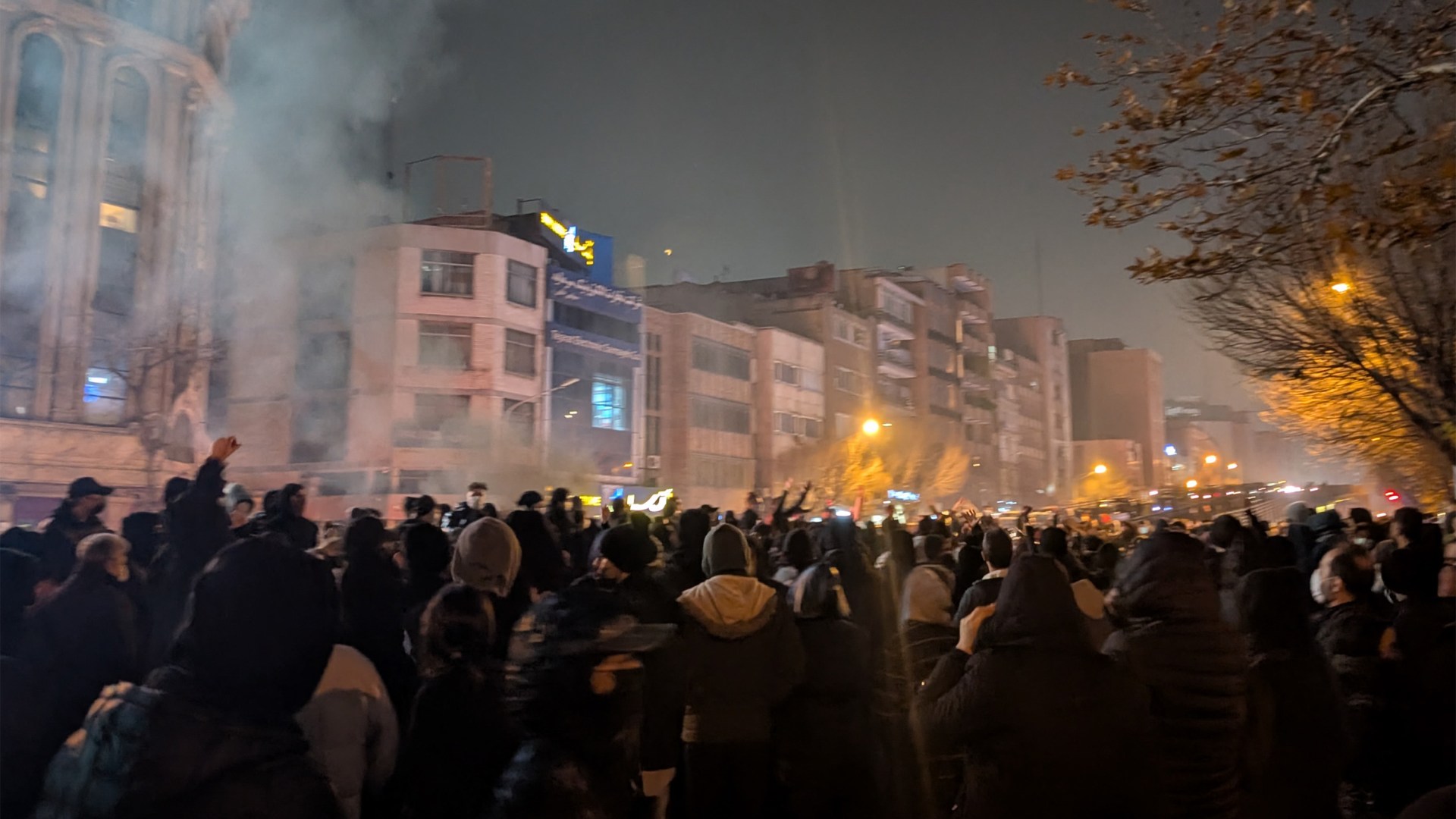
A photo essay highlights thousands of pilgrims observing Christmas in the quiet highland town of Lalibela.

Pilgrims make their way in and out of Biete Medhane Alem (House of the Saviour of the World), the largest of the monolithic churches in Lalibela.

Photo by Andrew Faulk

Each January, as Christmas is observed on the Ethiopian Orthodox calendar, the population of the quiet highland town of Lalibela swells with thousands of pilgrims. They arrive from farming villages, market towns, bustling cities, and distant provinces—some walking for days or weeks along dusty roads and others arriving by bus before climbing the last steep miles on foot. All come for Genna, the celebration of Christ’s birth, and to worship at one of Ethiopia’s most revered holy sites.

Lalibela’s medieval churches, carved directly from volcanic rock in the 12th and 13th centuries under King Lalibela, were created as a “new Jerusalem” for those unable to travel to the Holy Land. Each is hewn as a monolith, and they are connected by narrow passageways, trenches, and dimly lit tunnels. The most iconic, Biete Ghiorgis, takes the form of a cross cut deep into the earth—its walls descending into shadow while its roof levels with the surrounding ground.

In the cool mountain air, pilgrims wrapped in white cotton shammas press into the complex’s winding entrances. They bow to kiss stone thresholds, kneel on uneven floors worn smooth by centuries of devotion, and gather in candlelit chambers where chants echo off carved walls. The rituals are both communal and personal—moments of reverence link them to prior generations.

For many, the pilgrimage is a rare journey away from the demands of life, a chance to gather with family, friends, and strangers in shared worship. Here, the Christmas story is not only told and preached from the mountainsides but also felt—in stone, in song, and in the footsteps of faith.

Photo by Andrew Faulkk
The distinct cruciform structure of Biete Ghiorgis is one of 11 churches around Lalibela that are part of the UNESCO World Heritage Site.

Pastors

It’s Time to Make New Kingdom Friends

It’s not just God who is for us. We’re meant to be supported by a band of saints across dividing lines.

Two hands in a handshake.
CT Pastors November 4, 2025
Kelvin Murray / Getty

We—the authors of this article—have not known each other for long. In fact, we met just over two years ago. In many ways, our differences are apparent. But there is far more that unites us than separate us: our shared love for the kingdom, gospel unity, and tennis.

At a time when pastors and ministry leaders struggle with loneliness and isolation, we recognize that we need healthy relationships. What if pastors and ministry leaders were encouraged that it was not only God who was for them (Rom. 8:31) but that a band of saints across dividing lines was supporting them as well? As we mentioned in our first article, don’t be surprised if life-giving relationships like ours are already within reach for you too.

In October 2003 Perimeter Church and seven other churches launched Unite, a movement of churches working together in Atlanta. It started with white, African-American, Hispanic-American, and Asian-American churches gathering for a collaborative weekend of serving in our communities and then celebrating together the following weekend. 

Over 20 years later, significant collaborative efforts have taken place in our three areas of focus: supporting public schools, advocating for foster care and adoption, and fighting domestic sex-trafficking of minors. Nonprofit organizations such as Street Grace, who is focused on eradicating the sexual exploitation of children through prevention, protection, policy, and pursuit; Samaritan Health Centers of Gwinnett, who provide health and dental care for the poor and uninsured; and Salvation Army’s Home Sweet Home Initiative in Gwinnett have been born through Unite connections. But by far the biggest impact has been personal friendships and relationships. 

I (Chip) grew up in a white country-club atmosphere and did not have any deep friendships with people of color until our group of pastors launched Unite. Over ten years ago, I joined three other members of the leadership team in committing to go deeper in friendship. Our goal was not to start another initiative or to work on Unite but to support one another in the trenches of our lives.

The “Hermanos” (“brothers” in Spanish and what we call ourselves) are Tito Ruiz, David Park, Bryan White, and myself. A Hispanic American, Asian American, African American, and white man developed a deep friendship out of the love of Christ.

It was the first time I truly experienced genuine friendships with people of other cultures. Our friendships have not always been easy, and there are times when we are frustrated with each other. We have different perspectives, but I’ve been transformed through our commitment to each other and our vision of intercultural unity. These brothers have been an important part of my support through painful episodes of significant depression and anxiety.

Through our brotherhood, I now long for more foretastes of Revelation 7:9–10 to be evident in local churches: that even now, each of us can see the beauty of “a great multitude … from every nation, from all tribes and peoples and languages” standing “before the throne and before the Lamb … crying out with a loud voice, ‘Salvation belongs to our God who sits on the throne, and to the Lamb!” (ESV).

Sometimes our relationships also lead to changes beyond our personal lives. In the children’s book The Lorax by Dr. Seuss, there’s a powerful moment when the small creatures living in Truffula trees try to speak up individually, but no one listens. It’s only when their voices come together that the world finally hears them and starts to pay attention. That scene is a great picture of what happens when people work together instead of trying to make change on their own.

Collaboration has real power. A mentor used to challenge me (Robert) with a question: “What can we do together that we can’t do alone?” That mindset has shaped how I think about gospel unity and working across lines of difference.

Too often, I see movements trying to make an impact and become louder by gathering more voices from their own tribe. But that’s like turning up just one note on a piano. It’s loud, but it’s still only one sound. What we need is a symphony—all the notes working together to create something beautiful.

Not long ago, I helped bring together key leaders from both the African American and Asian American communities. The goal was simple: to grow in understanding, to learn from one another, and to realize that we are stronger together than apart. When we work separately, even with the best intentions, our efforts can stall. But when our voices come together, united in the gospel, we can reflect the beauty of what Paul describes in Philippians 1:27, standing side by side for the faith of the gospel.

During our time together, we listened deeply, asked hard questions, and encouraged one another in our shared journey as minority communities. We also had breakout sessions where we could be honest about the challenges we carry, ask each other thoughtful questions, and explore how we could become real friends and support one another.

It wasn’t just a valuable time of learning—it was a glimpse into the richness of the body of Christ working together. It wasn’t perfect. But it was a meaningful step toward the kind of gospel unity we long to see.

In the world of church planting, I have been encouraged by how many healthy church-planters live out the values we’ve explored in this series—especially when it comes to kingdom collaboration. I’ve seen firsthand how these principles are already being practiced by faithful believers around the world.

For example, when I lived in Philadelphia, I was part of a monthly prayer gathering with pastors and leaders from nearly every church in our community. What began as a group of strangers eventually grew into a network of friends who genuinely cared for one another and supported each other in ministry.

When one of the churches decided to plant a new church in a nearby community, the support didn’t just come from the sending church. Other congregations stepped in to help. Some gave financial contributions and others donated books, chairs, or sound equipment. One church even passed along all their vacation Bible school materials—curriculum, stage props, and more—after their own VBS ended.

This group of churches shared a deep desire to celebrate together whenever God’s kingdom advanced. When one part of the body thrived, all rejoiced. They saw this new church plant as a fresh outpost for the gospel, offering more people in the community ongoing chances to hear and respond to Jesus Christ.

How do you approach relationships in your life? We’ve learned that one of the better ways is to meet new people with the presumption that we are already friends, unless told otherwise. What if we approached others in the body of Christ not with suspicion or guardedness but with the belief that we’re already on the same team?

What if we lived out Romans 12:10, striving to “outdo one another in showing honor,” and began every relationship with the assumption that we are for each other? What kind of strength would that give us? How might it change the way we face the challenges of ministry? This kind of posture matters—especially now. Gospel unity isn’t just an ideal. It’s a powerful reality we’re invited to live into. And it starts with how we choose to live out of these kingdom relationships.

Chip Sweney serves on the executive leadership team at Perimeter Church, where he has been a pastor for nearly three decades. He is also the executive director of the church’s Greater Atlanta Transformation Division, which leads Perimeter’s outward-focused ministries across the metro Atlanta area.

Robert Kim serves as an associate professor of applied theology and church planting at Covenant Seminary and the director of church planting at Perimeter Church in Atlanta. He planted churches during his pastoral career and currently serves as a board member for the missions organization Serge. 

News

US Missionary Pilot Kidnapped in Niger

Local Nigerien missionaries are shocked and saddened; foreign workers there provide training, aid, and encouragement.

Kevin Rideout makes preflight checks before transporting a team from Hope Springs International in Niger.

Kevin Rideout makes preflight checks before transporting a team from Hope Springs International in Niger.

Christianity Today November 4, 2025
Image courtesy of Lee Hodges / Hope Springs International

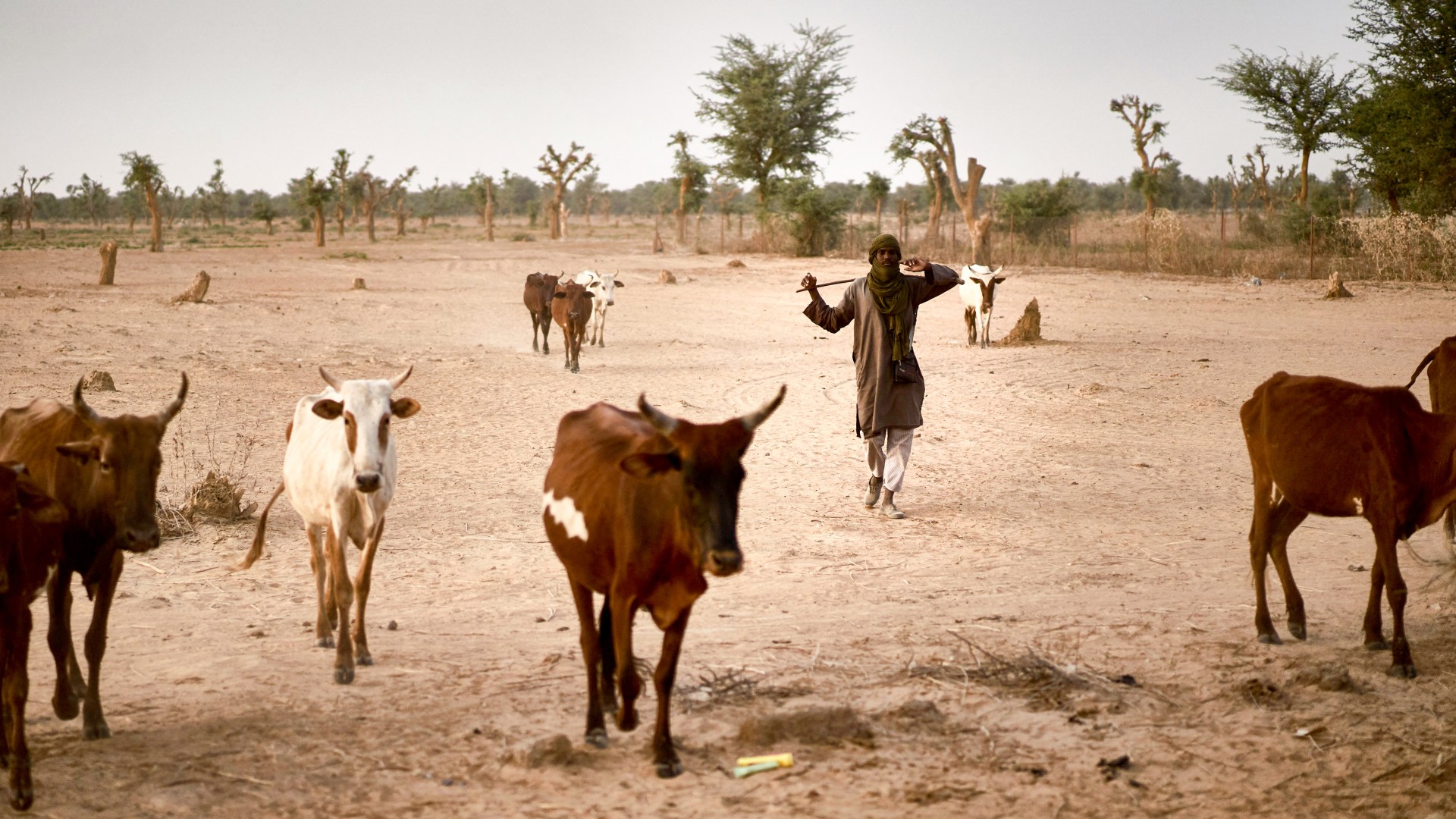
On the night of October 21, three unidentified men kidnapped 48-year-old American missionary pilot Kevin Rideout from his home in a secure neighborhood blocks away from the presidential palace in Niamey, the capital city of Niger. The armed kidnappers then headed toward the western Tillaberi region in Niger, where militants linked to Islamic State (ISIS) and al-Qaeda are active, according to Reuters.

When Moussa Djibo, a Nigerien missionary with Calvary Ministries (CAPRO) in Niamey, heard the news, he was worried. “We … always thought Niamey was safe because it is the capital,” he said. “But after the kidnapping, we realized we are not safe. They can kidnap us too.”

The US embassy in Niamey issued a security alert on October 22 warning American citizens of a heightened risk of kidnapping in the country. “We are seeing efforts from across the US government to support the recovery and safe return of this US citizen,” a State Department spokesperson told CBS News. This is the first kidnapping of an American in Niger since 2020.

Rideout, a pilot for the mission organization Serving in Mission (SIM), has lived in Niger with his family for nearly two decades. He often flew between Niamey and SIM’s hospital in the village of Galmi until flights were paused last year due to insecurity, a colleague of Rideout in Niamey told The Washington Post. A 2014 article on the Rideout family noted that he and his wife, Krista, also worked in drilling wells to provide clean water, helping refugees, teaching literacy, and helping widows start microfinancing enterprises.

Local Nigerien pastors and missionaries noted the importance of foreign missionaries to provide financial support and encouragement in a country where Christians make up less than 2 percent of the population. More than 98 percent of the population is Muslim.

“We work hand in hand with the foreign missionaries,” Djibo said. “When they are not here, there is no one to teach or guide us. They know we are one in the work of the Lord. We are always together.”

Analysts believe that Islamic State Sahel Province or criminals connected to that group kidnapped Rideout. In recent years, the group and its militant rivals have grown in strength in parts of Mali, Niger, and Burkina Faso due to a security vacuum caused by junta leaders kicking out Western military assistance and closing the UN peacekeeping mission in Mali in 2023.

In July 2023, Niger’s general Abdourahamane Tiani ousted President Mohamed Bazoum in a military coup. Tiani vowed to restore security and ordered foreign troops, including the US military, to vacate the landlocked country. But Human Rights Watch reported that Islamist insurgents in Niger have killed at least 130 people in attacks between March and September this year.

Kidnapping of foreign workers in Niger has intensified in the past two years. Jihadists abducted at least 15 foreign nationals between July 2024 and April 2025. The number of terrorism-related deaths increased by 94 percent in 2024, according to the Institute of Economics and Peace, making the French-speaking county the 5th most affected globally, up from 10th in 2023.

The attacks also target the minority Christian population. Open Doors’ 2025 World Watch List ranked Niger as the 28th most dangerous country for Christians. Muslim mobs have set dozens of churches ablaze and attacked Christian communities.

Back in October 2016, Islamic extremists linked to al-Qaeda kidnapped Jeff Woodke, an American missionary with YWAM, from his home in Abalak, Niger. With the help of authorities in Niger, his captors released him more than six years later.

“They broke my hope,” Woodke later told ABC News. “They hated me for being an American, for being a suspected security agent, for being a Christian, doing missions work, all those things.”

Nigerien missionary Dan Karami Hassane said Rideout’s kidnapping should “raise an alarm for every Christian to pray,” as he worries about the missionary’s well-being.

Hassane grew up attending mosque in his hometown of Maradi before a friend gave him a Bible to read as a teen. He felt drawn to the love of the God of the Bible in contrast to the Quran’s teaching of Allah and became a Christian. Now a church planter, he disciples Christians in villages across Niger.

Though shocked by Rideout’s kidnapping, Hassane hopes it won’t deter foreign missionary efforts in Niger, which bring much needed training, finances, and spiritual support to local Nigerien missionaries and pastors. Often the locals are the ones preaching and teaching.

Olu Sunday, president and CEO of Royal Missionary Outreach International in Nigeria and Niger, noted that after the coup, the military government viewed foreign missionaries as spies and barred them from entering villages and remote areas. All the foreign missionaries who used to work with Sunday’s organization have now left. Local missionaries are struggling to fill the void.

“When we were together, they were seriously involved with the Christian converts and projects,” Sunday said. “But now we are [the] foster fathers to all they left behind. We must continue to sustain those local leaders and continue to give them hope.”

Djibo noted that in the mission school he attended, teachers let students know that dying in the mission field was a very real probability. “Even if they ask us to go preach to [the Islamic jihadists], we will find someone to go,” Djibo said. “We have signed that if we are to die, we will die. We don’t have such fear.”

He added that their only fear is about how their deaths and suffering could impact their families.

“Humanly speaking, we have no courage,” Djibo said. “But it is the Lord that has put this courage in us. He is the one protecting us.”

Books
Excerpt

The ‘Whole Counsel of God’ Requires Seeking Justice—and Naming Sin

An excerpt from Don’t Let Nobody Turn You Around on family history, gospel music, and the great Christian legacy of the Civil Rights Movement.

The book cover on a yellow background.
Christianity Today November 4, 2025
Illustration by Christianity Today / Source Images: Getty, IVP

My maternal grandmother, Willie Faye, was born in Forest, Mississippi, in 1932. That’s the same year segregationist Martin “Sure Mike” Conner was inaugurated as governor of Mississippi. 

From Reconstruction to the 1950s, Mississippi had more lynchings than any other state in the Union. Accordingly, Willie Faye’s parents kept a shotgun by the door to protect the family in case the Ku Klux Klan decided to pay them a visit and tried not to leave the house after sundown. Fearing the false allegations of looking at a White woman inappropriately, her first cousins, Billie and Buford, fled the state as teenagers. 

Yet Conner, a Yale-educated lawyer, practically ignored this violence while endlessly railing against the federal government and President Roosevelt’s New Deal for “meddling in the race question” and treading on states’ rights. 

Named after her father, Willie Frazier, Willie Faye—or Faye for short—was the sixth of eight children. By natural disposition, she became the glue binding a house full of conflicting personalities together. She found herself playing the role of mediator, defusing in-house rivalries and settling disputes. The siblings would have to pick cotton to help make ends meet, and they often went shoeless as they labored in the heat of the Mississippi Delta for depressed wages that weren’t magically corrected by the invisible hand of the market. Early on, she vowed that her future children would never pick cotton or go shoeless. 

Unlike Governor Conner, Faye would not attend an Ivy League school or any college at all. She’d leave high school at the age of 16 to get married. According to her mother, this was the best option given the social location of a Black woman of her day, and by this time, her family had uprooted and moved to Decatur, Illinois, in search of greater social justice and economic opportunities. 

Before leaving school, Faye sang in the Colored Girls’ Choir at Stephen Decatur High School. She also sang in the choir of her Black Pentecostal church and developed a passion for the formation and Christian education of children. Faye loved gospel music. Every Saturday morning when she cleaned the house, there was one voice her three children were sure to hear: Mahalia Jackson. 

Known as the Queen of Gospel Music, Jackson was her favorite artist—a muse Willie Faye would cherish in mundane, celebratory, and disheartening moments for decades. Her voice would pierce through denominational walls and inspire singers like Aretha Franklin. Dr. Martin Luther King Jr. would say, “A voice like [Mahalia’s] comes along once in a millennium.” It’s been described as not a voice but a force of nature. 

Mahalia, or “Halie” for short, was born in New Orleans in 1911. She grew up in the Black Pearl section of the city in a three-room house with 13 family members, including aunts and cousins. Her mother, Charity, died when she was five years old, leaving her with her Aunt Duke, a stern disciplinarian.

Three of Mahalia’s nicknames from childhood provide insight into her early social experience: “Hook” referred to her severely bowed legs and crossed feet, “Black” referred to her dark complexion, and “Warpee” was the name of a Native American character who walked around barefoot, as Mahalia often did because she couldn’t afford shoes. 

While the nicknames were often repeated affectionately, they exposed real pain points in her life. Born with deformities, with dark skin in a colorist society, and in poverty, Mahalia was about as far from privilege as one could get. Her ascribed status didn’t provide her with any advantages, but her faith, her diligence, and her voice would distinguish her in due time. 

Mahalia left school before finishing fourth grade to work and tend to family. However, her experience overcoming her disadvantages in a harsh urban environment developed a “mother wit” that’d eventually make her a wise counselor and formidable businesswoman. And throughout a very rough childhood, Mahalia always had the church. 

Her maternal grandfather, Paul Clark, was a Baptist preacher, and from a young age, she was known as a prayer warrior who almost never missed a church service. She sang her first hymn at four and was capturing the audience at Mount Moriah Baptist Church by 14.

Willie Faye and Mahalia shared a common American experience viewed through the lens of faith. Both Black women were born deep in the Jim Crow South and reared in the traditional Black church. The stench of slavery still lingered in the air of their environment and was visible in the scars of the family members who shaped their worldview. Both were nurtured by elders who were formerly enslaved themselves. They were cautioned by the wisdom of the enslaved and emboldened by the courage of those who’d survived America’s original sin. 

These women lived in an era that some have called America’s Second Slavery. Even after Emancipation, Black labor was still being stolen through the sharecropping system, and racial injustice was upheld in courts of partiality. Additionally, white supremacist defenders of the Lost Cause believed it their calling to literally terrorize the Black community to maintain political and economic dominance. During the late 19th and early 20th centuries, almost two or three Blacks were lynched every week in America. 

As Willie Faye and Mahalia were coming into womanhood, the “progressive” eugenics movement was giving “false scientific legitimacy” to forced sterilization. As a result, tens of thousands of Black women were victimized by non-consensual sterilization, including Civil Rights leader Fannie Lou Hamer, who called it a “Mississippi Appendectomy.” They both journeyed to escape Jim Crow’s jurisdiction but would still endure racism with a different accent and Midwestern flavor.

Willie Faye and Mahalia’s story is the story of the Black church’s Civil Rights generation, a generation whose Christian faith and social action prowess provided us with perhaps the greatest illustration of moral imagination in America’s history. For the purposes of this book, Willie Faye and Mahalia’s generation are those who served as the base of the Civil Rights movement—the progeny of the enslaved and the fruit of the Black church. 

They were Black Americans for whom the Christian church served as the center of spiritual, social, and political life. They talked about morality and heaven, but unlike the white evangelical church, they didn’t limit God’s will in the public square to personal piety. They recognized social justice as a required part of the kingdom plan. 

Unlike secularists, they clearly didn’t interpret the separation between church and state to be a severing of one’s faith from their sociopolitical engagement. Faith guided and anchored their social action. 

Unlike the social gospel of today’s progressive Christians, they believed the “whole counsel of God” was more than the justice imperative alone (Acts 20:27, RSV). It also involved the Bible’s tenets about sin and how sin exists in all of humanity, not excluding their community or themselves. 

Lastly, unlike much of Black secular activism, while it understood that “power concedes nothing without a demand,” they believed their social actions had to be aspirational, holy, and redemptive and that no group of people, not even their oppressors, was irredeemable. Willie Faye and Mahalia’s generation were not the originators of the Black church’s social action tradition, but they were perhaps its crown. They grasped the legacy and the lessons they learned from their elders and took “bigger steps and bigger risks.”

While Mahalia grew up in a Baptist church, when she moved to Chicago it became clear that she’d been heavily influenced by the sound of the Black Pentecostal church a few doors from her home in New Orleans. Many of the Baptist churches in Chicago didn’t appreciate the impassioned shouting and improvisation in her style. Gospel singer Sallie Martin said that early on “most of the big churches still didn’t receive her work. … Some were very, very much against her—and other singers looked down their noses at her.” 

Denominationalism and classism were at play here. Many Baptists considered their music refined, unlike the frenzied shouting of lower-class Pentecostals in what was called the sanctified church. But Mahalia would eventually compel some resistant Baptist audiences to “get happy” and applaud a more Pentecostal approach to worship.

Today, the Black Baptist church I attend welcomes shouting and impassioned praise, in large part based on Jackson’s legacy. She was the intoning voice of a generation of women who nurtured and powered churches, communities, and a social movement—women like Willie Faye who fed and supported the leaders before and after they preached and protested. But her voice didn’t just impact the women of her time; it became the pitch for the Civil Rights generation in general. 

If the Civil Rights Movement had theme music and Dr. Martin Luther King Jr.’s visionary words were the bars that laced the track, then Mahalia’s riveting contralto blessed the chorus, melodically expressing the ethic and motif of this world-changing social composition. 

She sang her signature versions of the songs “How I Got Over” and “I Been Buked and I Been Scorned” at the March on Washington in 1963 before Dr. Martin Luther King gave his famous “I Have a Dream” speech. During the speech, in the Black church’s time-honored call-and-response tradition, she would shout, “Tell ’em about the dream, Martin. Tell ’em about the dream.”

That theme wasn’t in his notes, and he hadn’t originally intended on mentioning it that day. But Mahalia had heard Dr. King speak about “the dream” in other addresses and had experienced its power. As fate would have it, her encouragement might have catalyzed the most memorable lines of one of the greatest speeches in American history.

How often did Willie Faye and hundreds of thousands of other Black Christians in her generation find respite in Mahalia Jackson’s voice? How often did they remove their soiled aprons and weathered fedoras after enduring another day of subordination and segregation and pull one of Mahalia’s records from its sleeve? 

I imagine, almost out of necessity, they put the vinyl on the turntable, carefully placed the phonograph needle down, and through her spirituals were persuaded or even compelled to push forward another day. Or perhaps some tuned in to her weekly CBS radio program, sank into the couch, or prepared soul food supper and let her powerful articulation of the sanctified gospel heal their souls. 

Their pain was too real and direct for this to have simply been a routine or formulaic exercise. No, this was soul-penetrating praise and worship in the spirit of the prophet Jeremiah and King David. It was embattled petitioners saying, “Lord, hear my prayer, listen to my cry for mercy; in your faithfulness and righteousness come to my relief” (Ps. 143:1). 

Through the music, we see how the spiritual and the sociopolitical were seamlessly tied together in the Black church social action tradition. The spirituals they sang in church were the same spirituals they sang during marches and protests. In church, they’d sing about faithfully pursuing God: 

Ain’t gonna let nobody turn me ’roun’
Turn me ’roun’
Ain’t gonna let nobody turn me ’roun’ 
I’m gonna wait until my change comes. 

For a social action march, they might adapt the song by singing, 

Ain’t gonna let no Jim Crow turn me around 
Turn me around, turn me around
Ain’t gonna let no injunction turn me around 
I’m gonna keep on a-walkin’, keep on a-talkin’ 
Marchin’ up to freedom land. 

In the same vein, the song “Keep Your Eyes on the Prize,” one of the most recognizable Civil Rights spirituals, was an adaptation of “Keep Your Hand on the Plow,” a gospel song based on Luke 9:62. Negro spirituals were ever present in the Civil Rights Movement. It was a way for Black Christians to take the church with them as they journeyed outside the four walls of the sanctuary. By singing spirituals in the field of life, Willie Faye and Mahalia’s generation was continuing a legacy of placing God at the center of their interactions in the world. 

Black Christians in that generation greatly invested in the church and made major sacrifices for it. Some weeks, Mahalia would be exhausted after five straight nights of revival singing at Greater Salem, where all the proceeds would go to the programming for the children’s ministry, “so those children wouldn’t have to run around the streets.” Faye and her husband, Bishop Thomas L. Cooper, helped build Church of the Living God, Pillar and Ground of the Truth, Temple #1 brick by brick and paid off the last of the mortgage for Temple #2 out of their own pockets. 

The Black Church’s social action, at its best, was a negro spiritual in action. While the Black Church was far from unanimous in its support of social activism, “from the beginning, the Civil Rights Movement was anchored in the Black Church.” Preachers and the people in the pews organized and financially supported the movement. Again, Willie Faye and Mahalia’s generation of Christian advocates didn’t disconnect the sacred from their engagement in the public square. 

Some secular movements have interpreted religion and talk of faith and heaven as merely a form of escapism—a means of disengaging from reality. But for many the hymns helped them better engage reality. There were indeed those in their community who tried to dismiss the here and now by solely focusing on the hereafter. However, the Civil Rights Movement was the opposite of escapism. It was an action-oriented initiative with a keen awareness of the principalities and spiritual wickedness in high places at play in society. 

Social justice outside of the existence of a loving and just God doesn’t make sense. The worldview at the center of the Black church’s social action tradition rejected the idea that this miraculously designed world came from nothingness. A godless particle or uncreated big bang couldn’t possibly create Mahalia’s voice, Zora Neale Hurston’s prose, George Washington Carver’s scientific mind, or a slave’s moral imagination. The “black sacred cosmos or the religious worldview of African Americans” saw the whole universe was sacred.

And acknowledging the spirit world and human limitation doesn’t require a surrender to anti-intellectualism. Look no further than the brilliant Black organizers and tacticians who orchestrated the Civil Rights Movement from church fellowship halls. Leaders like Rev. Fred Shuttlesworth strategically outwitted devious Birmingham commissioners and sheriffs, proving logic was neither scorned nor in short supply in Christian advocacy circles. 

Great minds were at work, but those minds weren’t obstacles to a greater faith. Faith and logic weren’t in conflict. These believers employed both. They were at peace and even celebrated dependence on a higher power (Prov. 13:4; Col. 3:23; Heb. 13:16). Their faith was refuge from the hopelessness of the skeptics. They knew prayer and a song of worship could accomplish things a philosophical treatise could not. 

This Black church tradition can still provide a model for how Christian orthodoxy and orthopraxy can help the church and a polarized nation overcome the toxic culture wars and move toward a greater faithfulness and civic pluralism. Our historic public witness can correct many of the erroneous approaches, attitudes, and practices much of American Christianity has fallen into in the public square today. The Black church has a word for this moment in the public square. 

Justin Giboney is an ordained minister, an attorney, and the president of And Campaign, a Christian civic organization. He’s the author of the forthcoming book Don’t Let Nobody Turn You Around: How the Black Church’s Public Witness Leads Us out of the Culture War.

Adapted from Don’t Let Nobody Turn You Around by Justin Giboney. ©2025 by Justin Giboney. Used by permission of InterVarsity Press. www.ivpress.com.

Books

You Can Be a Christian and a Patriot

Daniel Darling calls believers to their political duty, no matter the chaos.

The book cover on a blue background.
Christianity Today November 4, 2025
Illustration by Christianity Today / Source Images: Getty, Broadside Books

We hardly know how to refer to political philosophies in America these days: What we once called conservatism is now considered “zombie Reaganism” or the passé postwar consensus, overtaken today by populism. Daniel Darling, best-selling author and director of the Land Center for Cultural Engagement at Southwestern Baptist Theological Seminary (SWBTS), is what Russell Kirk called an imaginative conservative.

Kirk described this role not so much as a policy program but rather as a posture of deep gratitude for the American tradition. Like reflective conservatives before him, Darling reminds us in his latest offering that we need the virtue of prudence to navigate politics in a fallen world where there are no utopian solutions.  

In Defense of Christian Patriotism responds to the ubiquitous question of how to relate faith to politics in a contentious but trivializing age. Darling seems keenly aware of the binary temptations believers will face and weaves a path through each with care: neither to retreat from politics nor be obsessed with it, neither to idolize our country nor condemn it.

How should we understand our Christian obligation toward our nation? Patriotism is a duty of all citizens across the world. Just as we have duties to love our families and neighborhoods, we ought to love our countries as well. To borrow from Thomas Aquinas, love is the persistent will for the good of the other—the genuine good, not the perceived one.

That means that in countries with political corruption, citizens ought to work for an honest government even when that means opposing the powers that be. A nation, after all, is not only a government but also a people and a place. Wherever there is good in a national tradition, we ought to celebrate it. When the country needs the service of its people, we ought to give it.

For Christians, the call to true patriotism can be puzzling when the culture seems to have rejected the faith and made itself an enemy of the kingdom of God. Even when our own country is spiritually failing, we must love it the way God commanded the Hebrews in exile to love their Babylonian city and work for its good (Jer. 29:7). Christians have a duty to engage in politics despite its messiness.

This is especially challenging given the ever-increasing cadre of those who consider themselves politically homeless. We might ask ourselves whether our exhaustion from the bad behavior of our parties or politicians excuses us from voting thoughtfully, running for office, and helping to shape policy. What happens if the salt of the earth loses its saltiness? Christians of influence can help to preserve what might otherwise rot.

The problem with Christian nationalism is not that it is (or claims to be) Christian but that it is nationalist. Nationalism claims superiority for one’s own people and place over all others. Patriotism understands our own love and loyalty as compatible with that of other people’s love and loyalty to their own nations, as long as it’s all in service to the genuine good.

To love my own nation is not to discount another’s any more than loving my own family means discounting other families. We can and should love other families and nations in a broad sense, even if we do not have the particular obligations to them that we have to our own.

Darling points us to the story of Jonah. Jonah loved Israel. Since Nineveh and the Assyrians were enemies who had done terrible things, Jonah couldn’t bring himself to love them, even when his explicit mission from God was to call them to repentance and salvation. The fact that he still wanted them destroyed after they had repented and turned to follow God shows that Jonah was a nationalist, not a patriot—and a stubborn one at that.

Differentiating between the real and the overblown threat of Christian nationalism is an important element of responsible citizenship. We must acknowledge a sliver of dangerous and disturbing rhetoric coming from certain Christian circles while taking care not to define Christian nationalism so broadly that we capture normal American politics in our net.

While we can inordinately love our country, we can also inordinately hate it. We must properly lament the sins of our nation while insisting on appreciating its blessings. To do otherwise would be to work against the civil rights tradition, in which everyone from William Lloyd Garrison to Frederick Douglass to the NAACP to Martin Luther King Jr. insisted on the moral authority that the Declaration of Independence and the Constitution gave them to fight for the appropriate inclusion of all in the rights and privileges of American citizenship.

Patriotism rejects claims of ethnic superiority over the inhabitants of other nations, but that doesn’t mean it can’t acknowledge that some nations are exceptional when it comes to certain elements of their cultures or political systems. Every nation on earth has something to lament and something to celebrate. Some nations are famous for their food, others for their natural beauty, others for their art and culture.

America is exceptional in its politics. Its origin story really was without precedent—a true social contract. Its founding documents were revolutionary in their claims of moral and legal equality, creating a striking foil when the nation falls into hypocrisy. And in the bloodiest and most totalitarian of all centuries, America’s role as a stabilizing world power—even with many, many unjust choices—proved an overall gain for freedom-seeking people around the world.

In reaction to the excesses of the left, we’re seeing a sudden turn among famous atheists toward the utilitarian case for religion in society. On the other hand, polling shows that a huge portion of Americans who identify as evangelical do not attend church. Presumably, these two groups associate Christianity with a commitment to truth and a certain kind of cultural groundedness but not necessarily with a life of discipleship to the risen Jesus.

Neither Darling nor I deny that Christianity can play a useful role in grounding and stabilizing society. But our New Atheist friends and their churchless evangelical compatriots may not grasp how much it matters that the faith and commitment be real for them to have the consummate effect. Neither a personally nor a socially effective faith can be cultivated by oneself. Darling condemns the lone-ranger mentality commonly seen among those who identify as American evangelicals. This approach to faith enables the totalizing ideologies we see today on both the left and the right by removing believers from the schoolhouse of grace.

While nonbelieving or nominally Christian citizens can recognize the social usefulness of Christianity, only true believers can successfully reinvigorate the institutions whose loss is creating the most destruction: the family, masculinity, education, and civil discourse.

Progressives need to recognize that the unrelenting cultural attack against these foundations of the social fabric has been alienating and destructive. And some progressives have, including Richard Reeves on masculinity, David Blankenhorn on fatherhood, and Melissa Kearney on the two-parent privilege. However, the conservative Christian tribe can often turn a legitimate cultural battle into a mindless culture war. These fundamental moral issues are worth fighting for, but just as Paul exhorts us to live with others in peace whenever possible (Rom. 12:18), we ought to use our love, wisdom, and self-control to press for solutions.

Darling can’t answer every question in this book. Libertarians may object that his encouragement to vote doesn’t solve the rational action problem around low incentives to stay informed. Libertarians and progressives might raise the concern that distinctions between legitimate and illegitimate global action are fine in theory but in practice are subject to the cronyism of the military-industrial complex. Old-fashioned liberals may object that conservatives’ willingness to embrace the Civil Rights Movement now doesn’t answer for the unwillingness of many at the relevant moment.

This kind of pushback is fair enough, but so is the conservative response: Critique of the voting system or of the role of our military does not a positive program make. We still need to determine election outcomes by voting, and we still have to decide whether our departure from this or that global arena will leave a destructive vacuum. Darling admits readily that conservatives had to learn an important lesson when it came to civil rights, but I ask, did progressives learn their lesson from the terrible consequences that followed the social engineering of their utopian federal programs?

Fittingly, Darling closes the book with an encomium to the local and a call to build up our institutions for the good of the neighborhood. His call to vote, run for election, and engage policy questions responsibly does not necessarily translate to a fixation on the nation. After all, a robust Christian patriotism is probably best represented by nothing other than our own towns’ Fourth of July parades.

It’s these kinds of connections—families uniting in their neighborhoods to celebrate the country, cheering for veterans who fought to protect freedom on the other side of an ocean—that undergird the myriad of institutions we desperately need to function well. The great insight of the conservative is that institutions are easy to tear down but hard to build, so “seek the peace and prosperity of the city to which I have carried you into exile” and “pray to the Lord for it, because if it prospers, you too will prosper” (Jer. 29:7).

Rachel Ferguson is director of the Free Enterprise Center at Concordia University Chicago, assistant dean of its College of Business, and professor of business ethics. She is coauthor of Black Liberation Through the Marketplace: Hope, Heartbreak, and the Promise of America

Theology

Who Are the Ismaili Muslims?

The history of this small Shiite sect includes assassinations, persecution, and periods of adherence to pluralism.

A exhibition from the collection of the Aga Khan Trust for Culture in Berlin, Germany, showing traditional Islamic art.

A exhibition from the collection of the Aga Khan Trust for Culture in Berlin, Germany, showing traditional Islamic art.

Christianity Today November 4, 2025
Sean Gallup / Staff / Getty

This is the second of a two-part series on Ismailism, a branch of Shiite Islam. To read part 1, click here.

An 11-acre Ismaili Muslim religious center is coming to Texas.

Part one of this two-part series described how the small sect of Shiite Islam will soon open the huge prayer hall and social center in Houston. Ismaili leaders emphasize an adherence to pluralism and interfaith dialogue, and this article will discuss how this assertion fits—or clashes—with Ismaili history.

For Ismailis today, who number between 12 and 15 million, pluralism is more than a commitment—it is near dogma. That is due to the center’s subsect, Nizari Ismailism, and its distinguishing feature: the living imam. Most Shiite Muslims name the leader of the Islamic community an imam, but only the Nizari sect claims he is alive and actively present in the world today.

And the imam’s legitimacy originates in his descend from Muhammad.

Islam’s prophet married and had several children, but only his daughter Fatimah survived to adulthood. She married Ali, Muhammad’s nephew and adopted son, and they had two daughters and three sons, one of whom likely died in infancy. All Muslims hold these descendants in high regard, and the current king of Jordan is one of thousands who trace their lineage back to Muhammad.

Yet the branches of Islam divided over who they saw as Muhammad’s true heir. Shiites believe that prior to his death, Muhammad designated Ali as his political and spiritual successor, so they call him “imam.” They also elevate Ali, Fatimah, and their sons Hasan and Hussein as Ahl al-Bayt, “the family of [Muhammad’s] household,” and believe these five received divine knowledge and infallibility. Only Muhammad holds the title of prophet, but his grandsons, in turn, became the second and third imams.

Sunni Muslims reject the claim of special favor, but honor Ali as the fourth community-chosen caliph, the highest Islamic political office. They dismiss the idea that an imam or any other human can inherit Muhammad’s aura of divine guidance.

Sunnis won the ensuing civil war in Islam and then set up a hereditary caliphate. Shiites rallied around Ahl al-Bayt, with some rebelling against the caliph’s authority and others adopting a quiet posture of perseverance. The majority, known as Twelvers, trace a line of 12 imams who from Hussein are designated directly from father to son. Twelvers are prominent in Iran, Iraq, Lebanon, and Azerbaijan.

Ismailis, found primarily in Central Asia, East Africa, and the Indian subcontinent, separated over a disputed succession. In AD 765, the Shiite community faced a crisis when Jafar al-Sadiq, the sixth imam, died at home, allegedly poisoned by the Sunni caliph who had previously detained him. Many of his followers believed he had designated his oldest son, Ismail, as the next imam—who died two years earlier than his father.

Sadiq’s other sons claimed Shiite leadership, with Twelvers following Musa al-Kazim as the seventh imam. But the crisis was more than just political—it was theological.

If an imam is infallible, how could he wrongly designate his successor? A dissenting party no longer in existence concluded that Ismail must still be alive and in hiding. Others held that Ismail’s son Muhammad should next inherit leadership, consistent with the father-to-son pattern. Most Ismailis today follow this line, and their head, known as Aga Khan V, is the 50th imam in the succession.

A century later, a different theological crisis hit the Twelver community. In AD 874, the eleventh imam died without an obvious heir. Consensus emerged that he did have a son who went into “occultation,” concealed from public view. Yet he never reappeared, and Twelvers judged that this Hidden Imam, miraculously preserved, will return to rule at the end of the age. Until then, fallible Shiite scholars lead the community.

In contrast, Ismailis offered Muslims a living imam, and their popularity surged as Twelvers fell into confusion over issues of leadership. As the inheritor of the leadership of Muhammad, Ali, and all proceeding figures in his line, the current Aga Khan—living today in Geneva, Switzerland—is believed by adherents to speak infallibly in spiritual matters and religious guidance. Similar to the pope in Catholicism, this infallibility does not carry over into his personal life or political choices. But when the time approaches, he will authoritatively designate his successor.

Today, the Aga Khan’s guidance is decidedly in favor of pluralism. But as with many religious traditions, Ismaili history is checkered. As a minority religious group, at times Ismailis have felt compelled to hide their faith. At other times they fought fiercely for political power. And in the 9th century their numeric growth helped establish a caliphate of their own.

During their two-century rule from Cairo, the Ismaili Fatimid empire treated Coptic Christians relatively well, governing a diverse population that included a Sunni majority. While Ismailis taught their faith and established the renowned Al-Azhar University as an Ismaili center, they did not impose their doctrines on the population.

One imam, however, reversed this toleration. Al-Hakim required Jews and Christians to wear distinctive clothing, banned the celebration of Easter, and destroyed several churches. His policies appeared to follow political convenience, as he later lessened the persecution and turned against his fellow Shiite rivals.

These rivalries continued. When a later Fatimid imam died in AD 1094, his powerful adviser favored the younger son al-Mustali over firstborn Nizar. The majority branch of Ismailis today believe Nizar was the designated imam, yet he was killed in his subsequent revolt. A minority, primarily in India, believes a descendent of al-Mustali, hidden from public view, remains the rightful Muslim ruler.

The Mustali Ismailis maintained their rule over Fatimid Cairo and expelled from Egypt a Nizari missionary who continued spreading the faith. Hasan Sabbah eventually returned to his native Iran and secured control of a mountain fortress, from which he established another political entity and the Order of Assassins, which killed dozens of high-profile political leaders. Legends carried to Europe by returning crusaders spoke of an elite unit of drug-crazed yet professional hitmen, trained in majestic gardens and surrounded by harems of beautiful women.

Explorer Marco Polo told stories of the medieval Hashishin. The English word assassin is derived from the Arabic word for the narcotic hashish, but modern scholarship refutes the legitimacy of this connection, as there is no evidence of drug use by the order.

History does chronicle the assassins’ murder of two Muslim caliphs and the crusader king designate of Jerusalem, alongside numerous other Islamic and Christian leaders. Ismaili sources cast doubt on their responsibility for some of these assassinations, describing instead a policy of self-defense from within scattered mountain fortresses.

For centuries, Ismailis say, Sunni authorities harshly persecuted them. They skinned Ismaili leaders alive, threw them into bonfires, and crucified them on city walls. And when the Mongols ransacked Muslim territories in the 13th century, some estimates place Ismaili deaths at more than 100,000. A Sunni historian said “no trace was left” of their community.

Ismailis ensured their survival through a policy of taqiyya—an Arabic word meaning “dissimulation,” the hiding of one’s true beliefs under duress. Early leaders pretended to be merchants as they directed a missionary campaign in Sunni-led Syria. Another leader escaped the Mongols by disguising himself as an embroiderer. Later, Ismaili adherents posed as Sunnis, members of other Shiite sects, or even Hindus to blend in locally.

Some Christians cite taqiyya as a reason not to trust Muslims, calling it permission to lie. Other Christians dismiss this claim as false, as do Shiite leaders. But some Ismailis have used deception as a tactic. The founder of their ministate in northern Iran first gained access to the fortress by pretending to be a schoolteacher and then converting the garrison forces. During the Crusades some Ismailis switched sides between Christian lords and Sunni caliphs. And to kill one leading Sunni adviser, an assassin presented himself as a Muslim mystic.

While fleeing Mongol persecution, one Ismaili imam, Shams al-Din Muhammad, reportedly said that taqiyya is “my religion and the religion of my ancestors.” The early imams relied on the practice, Shiites say, to protect the line of the prophet from one generation to the next against Sunni authorities who allegedly poisoned Shiite leaders. Other imams outwardly cooperated with the caliphs while hiding their inner conviction of leadership, hoping to secure greater freedom for their community. Because Shiites saw the imam’s example as infallible, they took up the practice of taqiyya as a community resource.

Ismailis only reemerged as a distinct community in the 19th century when the Shiite Qajar state in Iran appointed the first Aga Khan as a regional governor. After a failed rebellion, he fled to Afghanistan, befriended the British, and settled in India. There the Ismaili imam won a legal case to be the exclusive religious representative of the wealthy Khoja merchant community. Under colonial rule the Aga Khan became a cofounder of the All-India Muslim League and gained global prominence as an Islamic spokesman.

Modern Aga Khans went on to call for inter-Muslim unity worldwide. This is a model for today, Ismailis say, for much blood has been shed between the sects, then and now. Aga Khans also pursued international consensus, and Muhammad Shah, the third in the modern Ismaili line of leadership, became president of the post–World War I League of Nations.

“The tribulations of one people are the tribulations of all,” stated Aga Khan III to the assembly in 1937. “This is no empty ideal. It is a veritable compass to guide aright the efforts of statesmen in every country and of all men of good will who, desiring the good of their own people, desire the good of the whole world.”

At his accession speech as Aga Khan V last February, Prince Rahim, the 50th Nizari Ismaili imam extended a similar vision of tolerance for all humanity. He committed to continuing the work of the Aga Khan Development Network, whose interfaith work was described in part one of this series. As his worldwide community pledged their allegiance to his leadership, he urged them to be loyal and active citizens of the countries in which they live.

Correction: An earlier version of the story misstated the city where Aga Khan V lives and the name of the Aga Khan Development Network.

Church Life

A Pastor Stood Up to Persecution in India. Christianity Spread.

“It is very scary out there. … But the Holy Spirit reminds [me] that ‘for when I am weak, then I am strong.’”

Women working in a paddy field in the Malkangiri tribal district of India.

Women working in a paddy field in the Malkangiri tribal district of India.

Christianity Today November 4, 2025
NurPhoto / Contributor / Getty

In Malkangiri district of Odisha state in eastern India, tribal Christian farmers gathered on an overcast Saturday in June for an annual prayer gathering for the upcoming sowing season. The farmers placed their earthen pots filled with seeds by the pulpit, then knelt as the pastors blessed the seeds.

Suddenly, a mob of 200 Hindu fundamentalists attacked. Pictures from the site on June 21 show broken pots and pools of blood that turned a place of blessing and worship into a scene of horror.

When church members held a peace rally on the street outside the district administration office, condemning the attack, they became the focus of the police’s attention, said Bipul Prasad, the pastor who had planted the church.

While there is no evidence that police registered a case against the perpetrators, “we are now being framed with a false case,” Prasad said with quiet resignation.

Prasad, 49, is accustomed to this type of treatment for his faith. For the past two decades, Prasad has faced beatings, financial loss, and police surveillance for his ministry to reach his own Koya tribe with the gospel. Christianity Today agreed not to use Prasad’s real name or any of his identifiable information, as he could face increased attacks from Hindu nationalist groups.

Yet persecution hasn’t stopped the gospel from spreading in the rugged and densely forested Malkangiri district. Today, Prasad and a team of 25 disciples oversee the 72 churches he has planted in Malkangiri while continuing to share the Good News of the “God of love” to the Koya tribal community, he said. Besides being a pastor, Prasad is also an activist who uses his experience of suffering to counsel Christian victims of persecution, raise cases with police, and pursue legal remedies.

“From a human point of view, it is very scary out there, and I won’t be able to step out of my home. But the Holy Spirit reminds [me] that ‘for when I am weak, then I am strong,’” he said, quoting 2 Corinthians 12:10.

With the rise of the Hindu nationalist Bharatiya Janata Party (BJP) to national power in 2014, the tribal heartlands of Odisha and Chhattisgarh have become battlegrounds between tribal Christians and Hindu nationalists, according to A. C. Michael, the national coordinator of the United Christian Forum (UCF).

In Odisha, the UCF documented 14 incidents of physical assault, damage to property, restrictions on religious assembly, intimidation, and harassment in 2024, up from single digits a decade ago. The neighboring state of Chhattisgarh reported 165 incidents in 2024, up from 29 incidents in 2014. UCF added a caveat that its data is based solely on self-reporting by the victims. The real figures could be much higher, as most incidents go unreported due to fear of retribution.

Prasad’s first brush with persecution came in 2007. Villagers in the remote hamlet of Koikonda warned the young pastor not to visit and spread the “foreign religion,” he said. Yet Prasad still quietly went to pray with two new converts. About 20 minutes later, around 200 people mobbed the house they were in, cursing him.

The two new converts escaped, but the armed men attacked Prasad with sticks and stones until he fell unconscious. The next thing he remembers is waking up in the hospital, regaining consciousness from a coma after six days. He had injuries on his head, chest, abdomen, and legs. It took months to recover.

Sensing trouble in Odisha, Prasad’s mission organization sent him to minister in Jagdalpur and Bilaspur in the neighboring Chhattisgarh state in 2008. Yet his heart longed for his home of Malkangiri. For a year, he preached the gospel in Chhattisgarh, all the while praying for clarity about God’s plan for his life and ministry.

During one of his night prayers, he said he heard Jesus tell him, “What about Malkangiri?”

So after leading a New Year service in Bilaspur in January 2009, he resigned from the missionary organization and headed back to Malkangiri. He moved to the Koya village of Gongola.

Many of Prasad’s fellow ministers questioned his decision to move back to Odisha, where Christians faced great opposition. Hindu fundamentalist groups prowled tribal areas, attacking Christian converts. Fear still gripped Christians in the state after mobs burned and killed Australian missionary Graham Staines and his two sons in 1999.

Within months after Prasad returned, Odisha witnessed the horrific Kandhamal violence, where Hindu extremists killed more than 100 Christians and razed 6,500 homes, 400 churches, and Christian institutions.

Yet Prasad hoped for a revival, motivated by his call to return to Malkangiri. He quietly went to tribal hamlets to tell locals about the Good News of Jesus. He held small prayer gatherings. He avoided using loudspeakers like other evangelists so he wouldn’t draw attention to himself. Collaborating with fellow pastors in the villages, he nurtured converts in their newfound spiritual journeys.

Still, he had frequent run-ins with Hindu fanatics who opposed him for allegedly “forcibly converting people to a foreign religion,” he said.

In 2011, Prasad started a school with 20 tribal children on a piece of land donated by one of the new converts. He hired young adults from Christian families as teachers and offered free education to children from poor families.

The school drew support from locals of all religions. Villagers petitioned local authorities to support and expand the school’s work. In 2015, the local administration allotted a one-acre plot outside the village to build a proper building, which went on to provide education to 250 tribal children from 30 nearby villages. It was the only English-language school within a 100-kilometer (62-mile) radius, Prasad said.

With the school garnering popular support locally, the Hindu extremist organization Rashtriya Swayamsevak Sangh (RSS) began to spread misinformation. It accused the school’s management of distributing Bibles and conducting Christian prayers every day with an intention to convert the children. Yet Prasad noted that the school never pressured the students to convert or to join in prayers.

“It was a conspiracy by the RSS, as one of its leaders opened a school locally in 2016,” Prasad said. “The intention behind the propaganda was to take away children from my school.”

In June 2019, the local administration sent a notice to Prasad, accusing him of illegally operating the school on government land. Despite relevant paperwork to reject the claim and protests by students and parents, the government razed the school to the ground. The destruction left 250 children without a school, and it did even more damage: Prasad, his family, and 12 orphans had lived on the campus. They had to find a new home.

“It felt as if life had been snuffed out of me as the buildings came crashing down,” Prasad said. “Hundreds of contributions, years of strenuous efforts, and close to Rs 70 lakh [about $80,000 USD] were destroyed in a matter of minutes.”

Yet paradoxically, the destruction of the school led more locals to Christ. As villagers saw Prasad pray for the attackers, they noticed a difference between his message of peace and the RSS’s message of hatred. Prasad said many locals believed in Jesus as a result. “The Lord works in mysterious ways,” he said.

To date, Prasad said, he has baptized 700 people. His ministry shepherds nearly 3,500 tribal Christians across 72 churches. Most churches meet in thatched-roof homes, backyards, or mats spread out under trees in the fields.

Due to his own experiences facing persecution from Hindu nationalists, Prasad advocates for the rights of tribal Christians, organizing peaceful protests, raising issues with local authorities, and participating in Malkangiri’s Christian forums to push for justice and protection. He faces increasing challenges: The little legal, financial, and material aid he receives from Christian organizations outside Malkangiri is also becoming hard to come by due to rising scrutiny of Christian relief work.

Yet Prasad continues to take the gospel to the remotest corners of Malkangiri, whether by worn-out cars or by motorbikes or by foot. He looks up to 19th-century Africa missionary David Livingstone as he clings to Philippians 1:21, which says, “For to me, to live is Christ and to die is gain.”

News

Trump’s Refugee Policy ‘Is Slamming the Door on Persecuted Christians’

Faith organizations hope the Trump administration will reverse course after the announcement of a historically low refugee ceiling.

Afghan refugee children at a refugee camp

Afghan refugee children at a refugee camp

Christianity Today November 3, 2025
Jon Cherry / Getty Images

Even when politics becomes a hot-button topic at Scott Venable’s nondenominational church outside Dallas, there’s one issue that brings members together: refugees.

The Northwood Church pastor recalls two volunteers from his church, one a Black Democrat and the other a white Republican, joining forces to heft a couch up a flight of stairs for a newly resettled family. “They both vote opposite each other, but there they were,” he said, “serving and loving.”

The Keller, Texas, congregation has a long history of supporting refugees, with church members signing up to join a Good Neighbor Team, a program that welcomes new arrivals, raises money for resettlement, and recruits volunteers to help. 

But fewer Christians and fellow persecuted minorities will be able to find welcome from churches like Northwood with the Trump administration calling the shots. Next year, the White House plans to admit the fewest refugees since the passage of the Refugee Act of 1980. The reduced ceiling of 7,500 admittances lands at half the previous record low of 15,000 (proposed by the first Trump administration before President Donald Trump left office and temporarily continued by the Biden administration). 

The low figure also came with a shift in focus away from the stated goal of the law, to admit those around the world suffering persecution, and instead prioritizes white Afrikaners and others facing discrimination. 

The policy came as a disappointment to Christians involved in refugee resettlement, whose churches have taken in families from the Middle East, Africa, and Venezuela. 

“I think of those who are our brothers and sisters in Christ who are escaping some horrific situations,” Venable said. “I don’t pretend to understand the math and the nuance of how many refugees to let in. … I just know this is a historically low number, and it is troubling as a follower of Jesus.”

The latest move follows the administration’s efforts to slash the refugee admissions program. At every opportunity, Trump has reduced the number of refugees admitted, going from 50,000 in his first term to now less than 10,000. As a comparison, the Biden administration set the ceiling at 125,000 last year. Trump’s numbers were also much lower than those of other Republican presidents. (The ceiling caps how many refugees can come, but the actual number of admitted refugees varies year to year and is usually lower than the cap.)

The net effect has been that, according to an analysis by the Cato Institute, the entry of persecuted Christian refugees fell by 78 percent in his first term.

World Relief president and CEO Myal Greene called the announcement of the new cap “a heartbreaking day.”

“At a time when there are more refugees globally than ever in recorded history, when Christians and others face horrific persecution on account of their faith, the U.S. will do less than ever to offer refuge,” he said.

During Trump’s first term, his officials occasionally paid homage to persecuted Christians and expressed a desire to help them. In 2017, Trump was the first president to say he would prioritize persecuted Christians in the annual ceiling. 

In 2019, at the United Nations, he also said, “No matter the case, America will always be a voice for victims of religious persecution everywhere. No matter where you go, you have a place in the United States of America.”

Trump’s evangelical supporters had urged him to continue in that vein: In May, Christian organizations including the Family Research Council, Focus on the Family, Open Doors US, and the National Association of Evangelicals sent a letter in support of the refugee program as a means of upholding religious freedom. The refugee program has enjoyed bipartisan support, and around 72 percent of Americans supported refugee resettlement as an important policy as of 2022.

Now, one of the historic means of relief for persecuted people around the world is dwindling at a time when 380 million Christians live in places with high persecution or discrimination.

An Anglican family who fled their home in North Africa due to religious persecution found a spiritual home at Church of the Incarnation in Appleton, Wisconsin, another Good Neighbor Team partner with World Relief. 

“Their kids are in our children’s ministry and our youth group, and we worship together,” pastor Chad Magnuson told CT. “I get that we can’t do that for everyone, but we can do it for a lot more.”

Churchgoers land on both sides of the political aisle, Magnuson said, but their faith has led them to have some things in common: They “have a heart, just as God does, for the poor, the refugee, the immigrant.”

So far in Trump’s second term, the refugee program has been on far shakier ground. On his first day in office, he signed an executive order suspending the United States Refugee Admissions Program. That froze the pipeline to admit refugees into the US, even those who were already vetted and had churches waiting to take them in.

The only exceptions were white South Africans, also known as Afrikaners, whom he called “victims of unjust racial discrimination.” The South African government has denied claims that Afrikaners, primarily descendents from Europe and the Netherlands, are particular targets in the country’s crime problem.

Several hundred Afrikaners have been admitted into the US under a streamlined refugee process since earlier this year. The New York Times reported that some in the administration have recommended canceling the applications of other refugees.

Afrikaners are now the primary recipients of the 7,500 spots, according to Trump’s order. No other group was mentioned.

The administration also said that “other victims of illegal or unjust discrimination in their respective homelands” could be considered refugees going forward. The notice gave no specifics of what would meet the definition of discrimination.

“This isn’t simply a policy shift. It’s a transformation in the character of America’s long-standing, bipartisan refugee program,” said Timothy Young, director of public relations with Global Refuge. “For the first time, the system has been structured to privilege one group over all others, departing from the principle that protection should be based on persecution, not politics.”

“A sole focus on Afrikaners going forward would effectively shut the door for those fleeing religious persecution,” World Relief noted in a statement.

Some organizations, including the Episcopal Church and a faith-based refugee resettlement group connected to the US Conference of Catholic Bishops, have opted out of resettling refugees as the refugee program has faced turmoil and its focus has changed.

Other groups, including Global Refuge (formerly Lutheran Immigration and Refugee Service), plan to still work as federal resettlers even as they mourn the changes to the program. 

“We’re hearing from Afghan women’s rights activists, Venezuelan political dissidents, Congolese families, persecuted Christians, and other religious minorities, all of whom now fear there is no room left for them in a system they trusted,” said Krish O’Mara Vignarajah, president and CEO of Global Refuge. “What refugee families need most is a pathway to protection that is consistent, principled, and grounded in the promise that every life matters equally—not just the few who fit a favored profile.”

Refugee organizations hope Trump’s order isn’t the end of the story. The notice, which was published in the Federal Register on Friday, is the announcement of intent. The Refugee Act dictates that the president must consult with Congress before finalizing or implementing the new refugee target. According to congressional Democrats, no such consultation has yet taken place.

Reversing course would not be without precedent: In 2021, President Joe Biden initially said he would keep the refugee ceiling at 15,000. After significant outcry, including from Christians, he set the cap at 62,500.

The International Refugee Assistance Project, which has sued the administration over the suspension of the refugee program, in an emailed statement urged the Trump administration to “reassess and reconsider this decision, particularly in light of record levels of global displacement.”

Matthew Soerens, vice president of advocacy and policy at World Relief, also hopes something similar could happen now as a response to advocacy. Soerens said Christians have an opportunity now to push back on the move: “This is slamming the door on persecuted Christians, along with those persecuted for other reasons,” he said.

Venable is one of those Christians who are speaking up. He encourages other churches to ask Trump to adopt a higher refugee ceiling, as they did with Biden at the start of his term, and hopes Christians continue to step up and help. 

On Sunday, Soerens said, churches joined Christians around the world for the International Day of Prayer for the Persecuted Church. 

“We set aside time to remember our brothers and sisters in Christ who are persecuted for their faith,” he said. “It would be appropriate this particular Sunday to also be praying for our country to once again be a place that offers refuge and religious freedom to those who have been persecuted for their faith in other parts of the world.”

Church Life

Five Questions Pastors Should Ask Before Using AI

The philosophy of these tools is that the world is data and truth is probabilistic. Christians must proceed with biblically grounded care.

A yellow road sign and a figure pulling a wagon with a robot inside it.
Christianity Today November 3, 2025
Illustration by Kate Petrik / Source Images: WikiMedia Commons

Five years ago, artist and designer Simon Weckert had an idea. He took a little red wagon, filled it with 99 smartphones all running Google Maps, and walked through the streets of Berlin. Wherever he went, the streets were empty, so much so that the scene was almost dystopian. His YouTube video shows clips of him walking down the center of vacant highways. It’s mostly silent, but for the wind and the wagon’s squeaky wheels.

The streets were empty for a reason: Wherever those 99 phones went, Google’s algorithm decided there was a serious traffic jam and sent drivers using the Maps app’s navigation tools on a different route. Vehicles were redirected to avoid Weckert’s wagon. He’d effectively hacked Google Maps.

Weckert’s point was that we’ve integrated this technology into our lives to such an extent that it holds unquestioned and even unnoticed power over us. It has become an unseen and unfelt hand guiding (or even dictating) our daily commutes. Without thinking about it—without questioning the reality or source of the algorithm’s power—we’ve offloaded certain God-given interpretive and cognitive faculties to a machine. In just two decades, Google Maps has grown to more than 2.2 billion active users, about one in four people on the planet who no longer routinely navigate for themselves.

Philosophers and anthropologists often describe our relationship with technology as co-constitutive. This means that technology makes us even as we make it, and understanding that reality is especially important now that we have entered the era of artificial intelligence. 

In just the three years since ChatGPT launched, it’s estimated that there are nearly 800 million monthly active users. Google Maps took around 7 years to reach that milestone, and ChatGPT is now just one of many popular AI chatbots. Moreover, unlike Maps, chatbots will respond to any type of query, from “Make me a budget” to “Write me a sermon” to “Who is God?”

It’s essential for Christians to deliberately and carefully consider how this technology will change (indeed, is already changing) our daily practices, our societies, and the church and to do so before it becomes as unconsidered as Google Maps. Christian leadership must critically evaluate AI before it becomes part of the scenery.

Much has already been written about Christians who have decided to use or shun new AI technologies like Gemini and ChatGPT. But to me, as a PhD researcher studying these AI models, much more needs to be said about what will happen if we do use it—as many (perhaps most) of us will to one degree or another. 

Technology changes us. But how, specifically, would this technology change us? And how will that change matter for Christian leaders, particularly pastors? On this front, I’ve found the thought of media theorist Neil Postman to be an indispensable source of wisdom. In 1998, as he looked to the horizon of the 21st century, Postman gave a talk in Denver entitled “Five Things We Need to Know About Technological Change,” and I’ll interpret these philosophical reflections for pastoral practice. Here are five things pastors should ask before using AI.

1. From Postman: “Technology giveth and technology taketh away.” For pastors: What essential spiritual or cognitive faculties might atrophy when we use these tools?

All technological change is a Faustian bargain, Postman observed. It comes with benefits and prices paid. 

In the dialogue Phaedrus, which Postman cites in the first chapter of his book Technopoly, Socrates argued that the technology of the written word damaged the human capacity for memory and that it would lead to “the show of wisdom without the reality,” an effect that may seem even more relevant in 2025 than it did in 370 B.C. The telegraph gave rise to the instant transmission of news, but it also decontextualized daily life. Social media draws us virtually near our friends and loved ones, affording constant and instantaneous communication, but it has also driven us apart.

In June 2025, MIT published a study that used brain scans to compare the cognitive functions of three groups of essay writers: those using their brain only to write, those who used search engines, and those who used chatbots. 

The results were dramatic: The “brain only” group showed the most intense and widespread neural engagement. Those using search engines landed in between, and the AI-assisted group demonstrated the weakest brain activity, largely offloading their cognitive work to the machine. In fact, these participants using AI struggled to recall their own work and reported the lowest sense of ownership.

Convenience comes at a price. And when this tech is used repeatedly, these cognitive effects become more pronounced. The researchers called this an accumulation of “cognitive debt”—a condition where reliance on external tools gradually replaces the cognitive processes required for genuine understanding. 

Pastors won’t be different from other writers on this point. If they outsource the rigorous work of exegesis and reflection, their God-given faculties of interpretation and creativity will atrophy. Efficiency is gained, yes. But formation is lost.

2. From Postman: “The advantages and disadvantages of new technologies are never distributed evenly among the population.” For pastors: Whose voices are amplified by this technology, and whose are silenced?

There are winners and losers in every technological shift as technology redistributes power. The printing press, for example, took power from rulers, priests, and scribes and gave it to the people, contributing to the rise of the Protestant Reformation and democratic governance. Other technologies, like the social media algorithms that concentrate informational power in a few tech companies, redistributed power in the opposite direction. Technology is not necessarily just nor its effects reliably equal.

This reality calls for dogged adherence to a distinctively biblical ethic of justice. For example, the laws of gleaning in Leviticus 19:9-10 mandated that harvesting be intentionally inefficient to provide for the poor. This is a meaningful counternarrative to AI’s relentless drive toward efficiency and optimization. We must ask who benefits in the AI era.

We should also ask what biases generative AI imbibes as it is trained on the vast corpus of the internet. When we use these tools, we risk adopting perspectives distilled from the AI models’ training data, which is not reliably truthful, let alone biblical. If we consume AI output uncritically, we may all too easily become “conformed to this world,” in Paul’s words, rather than being transformed through the renewal of our minds (Rom. 12:2). 

For pastors, this requires attention to how AI use can degrade our thinking by subtly amplifying some voices and silencing others.

3. From Postman: “Embedded in every technology is a powerful idea.” For pastors: What kind of person does this technology invite me to become?

Postman illustrates this third idea by expanding on an old adage: “To a man with a hammer, everything looks like a nail. … To a person with a TV camera, everything looks like an image. To a person with a computer, everything looks like data.” Each technology carries a philosophy that shapes our perception of reality long before we read the user manual.

Consider the mechanical clock, which shifted the perception of time from natural rhythm (Kairos) to precise, measurable units (Chronos). This embedded a bias in our culture toward efficiency and the commodification of time, altering professional and even spiritual life.

AI evangelists likewise tout incredible “productivity gains.” But that is merely the technology’s utility, not its embedded philosophy. The philosophy of these tools is that the world is essentially data, and truth is probabilistic and statistical. For the chatbot, the “right” answer to any question is determined not by some objective standard of truth but by what word is most likely to come next in other documents on related topics on the internet.

We are shaped by what we trust. The psalmist observes this regarding idols: “Those who make them become like them; so do all who trust in them” (115:8). Our tools too are not neutral. 

If we rely excessively on AI—a technology biased toward efficiency and derivative summarization of existing data—we risk becoming derivative ourselves. Pastors must ask how these tools are transforming their worldviews and their souls. Does this emerging perspective align with biblical principles?

4. From Postman: “Technological change is not additive; it is ecological.” For pastors: What kind of church must we become to minister faithfully in the world made by AI?

Like it or not, new technology means a new world. “In the year 1500, after the printing press was invented, you did not have old Europe plus the printing press,” Postman illustrates. “You had a different Europe.” The Roman Road system didn’t just add easier travel. It created an ecosystem that made possible the rapid spread of the Gospel—as well as the efficient persecution of the church. It made a different world.

A major new technology doesn’t just add something, then. It changes everything, like yeast working its way through a batch of dough (Matt. 13:33). And it bears repeating that the emerging and ever-improving AI tools we are seeing are already changing the world around us. We can’t hide from this shift; we must understand its profound impact and act with wisdom and discernment, steering its use.

I’ve begun consulting with pastors and church leaders on how to understand AI technology and be good stewards of it. Most of the pastors I’ve spoken with have not written an AI policy for their churches, spoken with their congregations about AI, or even considered doing so. How are we to be good stewards if we don’t seek to understand the agents of our world’s change? 

Ezekiel was called to be a watchman for the house of Israel (Ezekiel 33). Watchmen must understand the nature of an approaching threat or opportunity, and they are held responsible for making the threat known. It’s imperative that pastors understand this shift and actively shepherd their congregations through it and imperative that they speak prophetically into the new world AI is creating.

5. From Postman: New technology “tends to become mythic.” For pastors: How do we ensure this tool serves us and not the other way around?

When a technology becomes “mythic” in Postman’s sense, we cease to see it as a human artifact and begin to treat it as a force of nature, something inevitable. This is dangerous because we integrate that tech into ourselves and our daily lives without question, like the Google Maps users changing route to avoid Weckert’s wagon.

We’re rapidly approaching this point with AI. When we accept algorithmic verdicts as inevitable and treat the output of these AI models as oracular, forgetting it’s a statistical prediction rather than a thought, we engage in a form of idolatry.

Colossians 2:8 warns against being taken captive by “philosophy and empty deceit.” Understanding that every technology is embedded with its own philosophies and biases, this passage speaks meaningfully to our present age. Whether it’s a red line on Google Maps, an echo chamber on Instagram, or ChatGPT’s response to your last prompt, it’s easy to forget the nature of the technology and unintentionally elevate it to mythic status. 

Pastors—and all Christians—must actively demythologize AI, recognizing it as an imperfect (if incredible) artifact of human invention. We must proceed with our eyes open so that we may use this technology rather than be used by it.

In the deserted streets of Berlin, Weckert’s wagon performance was a prophetic gesture. He wasn’t riding the wagon but pulling it, deliberately, to make visible the invisible hand of the algorithm. He mastered this tool to show how it commonly masters us.

This is the pastor’s calling in the age of AI: not to follow the blinking red line of efficiency down whichever road it may lead, but to be the one pulling the wagon and to disciple fellow Christians to do the same.

Of course, this is not the first time that God’s people have had to negotiate a new technology. Five hundred years ago, Martin Luther saw the printing press, one of history’s most disruptive technologies, not as a threat but as an instrument of the divine. “Printing,” he exclaimed, “is God’s ultimate and greatest gift … through printing God wants the whole world, to the ends of the earth, to know the roots of true religion.” Luther understood that this new power could serve the idols of the age or be mastered for the cause of the gospel. He chose the latter.

The choice for pastors today is the same. Not so much whether or not to adopt a new tool, but in what direction to pull it. AI offers a world of efficient, probabilistic, and often derivative answers. The gospel offers a world of hard, paradoxical, yet life-giving truth. The one offers efficiency. The other, transformation.

The question, therefore, is whether we will let ourselves be guided by a machine offering, as Socrates warned, “the show of wisdom without the reality.” Or will we take the handle of this powerful, promising new tool and steer it with purpose? The challenge is to pull on a straight path that leads not to the predictions of an algorithm but to the scandalous grace of God.

A. G. Elrod is a lecturer at HZ University of Applied Sciences in the Netherlands and a PhD researcher at Vrije Universiteit Amsterdam. He is the founder of Nativ Consulting, which helps pastors and Christian organizations navigate use of AI.

News

Everything Is Bigger in Texas, Including Its New Islamic Center

But it is run by one of the Muslim world’s smallest sects.

The Ismaili Center in Houston, Texas.

The Ismaili Center in Houston, Texas.

Christianity Today November 3, 2025
Image courtesy of Strata Visuals.

This is the first of a two-part series on Ismailism, a branch of Shiite Islam. The second story will provide background on the Shiite sect and examine whether Ismaili history supports religious tolerance.

Houston is a city known for going big. America’s ninth-largest city by land area, it is home to the world’s largest medical center, one of the nation’s biggest ports, and Texas’ second-tallest building.

Houston’s Christianity is also big, hosting some of the most mega of megachurches, including Joel Osteen’s Lakewood Church and the largest Episcopal church in the nation.

But it is also one of the US’s most religiously diverse cities. And another major religious space will soon join in: The Ismaili Center Houston.

Ismailis are a branch of Shiite Muslims who believe that religious authority continues through a line of imams—divinely guided descendants of Muhammad, the prophet of Islam. The center in Houston is owned by one of two main Ismaili branches, the Nizari Ismailis, who constitute around 1 percent of the global Muslim population.

For much of their history, Ismailis suffered persecution at the hands of other Muslim authorities. Today they wield substantial political and cultural influence, primarily through the Aga Khan Development Network (AKDN), administered by Aga Khan V, the current imam.

Set to open November 6, it will be the first Ismaili center in the US and the seventh worldwide—with others in London, Lisbon, Dubai, Dushanbe (in Tajikistan), Vancouver, and Toronto.

The Ismaili Center will certainly match Houston’s reputation for grandness—it will sit on an 11-acre site with nine gardens and a 150,000-square-foot building featuring a theater, banquet halls, a café, and place for prayer. It also aims to become a place for dialogue between Houston’s religious communities.

According to researchers from Rice University’s Kinder Institute for Urban Research, 38 percent of Houstonians identify as Protestant, 26 percent as Catholic, and 27 percent as “nones,” people with no religious affiliation. Houston also has notable Jewish, Buddhist, Hindu, Muslim, and Sikh populations.

Former Houston mayor Sylvester Turner, longtime member of the evangelical megachurch The Church Without Walls, which reports more than 20,000 members, stated that the center would be more than a “magnificent building” and would have an “impact on Houston, across Texas, and throughout the United States.”

Greater Houston has the largest Muslim population in Texas and the Southern United States, said Farah Lalani, a spokeswoman for the Ismaili Council for the Southwestern USA, including a sizeable Ismaili community. There are an estimated 35,000–40,000 Ismailis in this region, she added.

That community currently gathers at five jamatkhanas in the Houston area. Derived from the Persian word for a community gathering place, a jamatkhana is similar to a mosque but also incorporates social events and cultural activities—much as some larger churches do.

The center, however, is on another scale entirely. Omar Samji, a local lawyer and volunteer spokesman for the Ismaili Council, said that along with hosting theater productions, festivals, and art shows, the center is also part of a long-term vision for Ismailis to engage with and foster connections between faith communities. This, he said, is in line with what he found to be Houston’s reputation for being a welcoming city.

When Samji moved to Houston in 2012, he said one of the first things he noticed was a sense of connection between curious people of faith. As an Ismaili, he was heartened by Houstonians who knew what they believed and were not afraid to ask questions of others. Jewish, Christian, or Muslim, his neighbors were both inquisitive and respectful, he found.

That spirit pairs well with what Samji said is his faith’s emphasis on pluralism. Ismaili scholar Mohammed N. Miraly, in his book Faith and World: Contemporary Ismaili Social and Political Thought, described how their commitment to religious diversity originates in their interpretation of the Quran. Their previous leader, Aga Khan IV, said to be a direct descendent of Muhammad, founded the AKDN not only to improve the spiritual and material lives of his followers but also to demonstrate their ethical framework by benefiting the larger community.

Through the AKDN, Ismailis administer 1,000 development, education, and health care programs in more than 30 countries. Since 1982, this has included the Aga Khan Rural Support Programme for villages in the remote, mountainous, and ethnically diverse areas of India and northern Pakistan. Since 2000, the Aga Khan Music Programme has promoted peace through the preservation of musical heritage in Afghanistan, Kazakhstan, Kyrgyzstan, and Tajikistan. And since 2017, the Global Centre for Pluralism in Ottawa has produced evidence-based research into policies that work toward successful and diverse societies.

“Faith is not only confined to prayers,” said Lalani, “but expressed in how we serve.”

In Houston, this service has included disaster relief, refugee resettlement, and blood drives alongside other people of faith. Ismailis have also regularly taken part in an interfaith Thanksgiving service which features songs, dances, and prayers from numerous religious communities. Samji said he hopes the center will help Ismailis scale up these efforts and build more connections through movie screenings, festivals, and events meant to foster dialogue between religious communities in Houston. 

Kim Mabry, a Methodist minister who facilitates engagement and collaboration between various faith communities at IM Houston—formerly Interfaith Ministries Houston—has seen firsthand how Ismailis have pitched in to help during the city’s frequent hurricanes and floods. Several Ismailis serve on the board of her 60-year-old organization, and she notes the potential of the center to expand future collaboration. Serving together helps transcend theological differences, she believes, and reminds people of different faiths about their shared humanity.

But some Christians have raised concerns. Houston’s conservative talk radio channel KTRH has broadcast the increased wariness many have toward Muslims. And its reporter B. D. Hobbs recently featured former president of Southern Evangelical Seminary Alex McFarland, who warned about the “growth of Islam in the West” and an alleged Muslim goal of replacing the US Constitution with sharia law.

Earlier this year in North Texas, the East Plano Islamic Center (EPIC), one of the largest mosques in the region, proposed a residential development of thousands of homes centered around a mosque and Islamic school. The plans drew backlash and political attention, including a law signed by Gov. Greg Abbott to challenge development’s legal framework on the grounds of discrimination. The US Department of Justice opened an investigation into potential illegal activities by the project’s organizers but ultimately closed it for lack of evidence.

Evangelical pastor Bob Roberts Jr., founder of NorthWood Church in Dallas–Fort Worth, who has spoken about his faith at EPIC, said the development was “never going to be a Muslim-only community.” But, he said, it was a potent reminder of how religious buildings can draw out extreme opinions in a time of polarization and social media half-truths.

Having worked with Ismailis over the years as part of his bridge building between Christians and Muslims, Roberts appreciates their commitment to development at the local and global levels. Christians should not fear their Muslim neighbors, he said. And they should be wary of taking cues from extreme voices online—about The Ismaili Center or any other Muslim sacred space. He encouraged evangelicals in Houston to visit Texas’ newest megaproject.

“There is no off-limits place for Christians,” Roberts said. “The gospel is bigger than any building.”

Apple PodcastsDown ArrowDown ArrowDown Arrowarrow_left_altLeft ArrowLeft ArrowRight ArrowRight ArrowRight Arrowarrow_up_altUp ArrowUp ArrowAvailable at Amazoncaret-downCloseCloseEmailEmailExpandExpandExternalExternalFacebookfacebook-squareGiftGiftGooglegoogleGoogle KeephamburgerInstagraminstagram-squareLinkLinklinkedin-squareListenListenListenChristianity TodayCT Creative Studio Logologo_orgMegaphoneMenuMenupausePinterestPlayPlayPocketPodcastRSSRSSSaveSaveSaveSearchSearchsearchSpotifyStitcherTelegramTable of ContentsTable of Contentstwitter-squareWhatsAppXYouTubeYouTube