News

Bible Reading Is Up Among Young Adults

Millennial readership has increased; zoomers read less than other generations but are on a steady upward trajectory.

Three phone screens showing the Bible.
Christianity Today November 3, 2025
Illustration by Elizabeth Kaye / Source Images: YouVersion, Unsplash

“Around two years ago, I started reading the Bible,” 20-year-old Hailey Gillman told her 200,000 TikTok followers in March. “I proclaimed that I was a Christian on my social media. A lot of people knew that I was a Christian and I loved Jesus, but … I actually never really opened my Bible.”

Gillman is not alone. According to the American Bible Society’s State of the Bible: USA 2025 study, Gen Zers spend less time in God’s Word than older generations do, with just 36 percent of the generation reporting Bible use at least a few times a year. At the same time, the reading habits of these 18-to-29-year-olds have remained mostly steady over the past three years, and more young men are reporting engagement with Scripture.

Like other recent analysis, State of the Bible portrays a nebulous spiritual landscape. Americans between the ages of 18 and 29 are the least Christian generation in the US, according to the most recent Pew Research Center data.

But other research and anecdotal evidence indicate an ever-so-slightly-shifting tide: young Christians who are desiring deeper and more authentic spiritual connections, returning to church or visiting for the first time, and experiencing revival movements in the US, Europe, and beyond.

Boluwatife Familoni, a 22-year-old from Ibadan, Nigeria, reads the Bible from 5 a.m. to 6 a.m. every day. His favorite story is the one about David and Goliath, reminding him that “you might be small, but you are mighty in the eyes of God.”

“Every time I read the Bible, it’s like God is … showing me something new,” he said.

His 27-year-old brother Oluwaloni Familoni agrees. In his daily Bible time, he tries to read passages from the Old and New Testament concurrently. He loves the Old Testament because it’s “entertaining” and has “lots of drama,” although he wishes he was more consistent in writing down what he’s learning from Scripture.

State of the Bible also reported that Scripture reading overall is up 29 percent among American millennials, now aging into their 30s and early 40s. Perhaps surprisingly, their Bible reading habits still lean print-heavy, though they also use digital tools.


Meanwhile, Gen Z Christians are the least likely to read a printed Bible. Of those who consume Scripture digitally, 59 percent use a Bible app, a third prefer podcasts, and nearly a quarter learn on TikTok.

Globally, YouVersion has the most popular Bible app, which includes the Bible App, the Bible App Lite for internet-restricted places, and the Bible App for Kids. It anticipates reaching 1 billion downloads—a number that represents approximately one-eighth of the world’s population—by November 17.

YouVersion doesn’t collect demographic data from its users, so its researchers don’t know how many young people are using the app. But Bible App founder and CEO Bobby Gruenewald said momentum among Gen Z readers is reflected in search trends.

“There’s clearly a hunger among Gen Z for truth they can anchor their lives on. In a world where AI and digital noise make it increasingly difficult to know what’s real, the Bible stands alone as a source of truth that’s been carefully passed down from generation to generation for centuries,” Gruenewald said. “Gen Z is recognizing that. They’re turning to something with substance, something they know they can trust.”

Nigeria boasts the largest expansion (35%) of daily Bible reading on the app. Esther Oni, a 27-year-old Nigerian who currently lives in Milwaukee, said its studies have drawn her closer to God, leading her to read Scripture and pray more.

“When I haven’t read the Bible in a while, I have this crippling level of anxiety,” she said. “I’m just worried about every single thing. [But] no matter what part of Scripture it is I’m reading, there’s just that peace.”

In Latin America, the YouVersion app experienced the most significant growth in downloads in Peru (17%) this year, outperforming Chile (13%) and Brazil (6%). The USA saw a 13 percent increase in downloads.

There’s been a significant shift in how Peruvian Gen Zers read the Bible, said Robin Rodriguez, general secretary of the Asociación de Grupos Evangélicos Universitarios del Perú (Association of Evangelical University Groups of Peru, AGEUP). Previously, many young people struggled to understand minor prophets like Obadiah, Nahum, and Zephaniah. But recent Gen Z–led protests in the country demanding an end to widespread corruption and crime prompted him to introduce Bible studies about these minor prophets to university students, focused on how the prophets served as “seekers of justice” in their contexts.  

“Suddenly, books that were previously ignored took on profound relevance,” Rodriguez said, “demonstrating that when the Bible engages with the specific contexts and concerns of the generation, it becomes a powerful motivator for reading and action.”

In general, stagnant Bible reading may reflect a discipleship issue rather than a lack of interest. Gen Zers might not have people who can teach them how to read the Bible, or they may not understand how God speaks to them through his Word just as he does through prayer. When that guidance is made available, young people take advantage of it. Keithen Schwahn, a young-adult pastor at Church of the City in New York City, told CT earlier this year that his congregation is seeing dramatic growth in its teen discipleship group, and its college students are starting successful prayer groups and Bible studies on their campuses.

“In the past, we have very, very much focused on the Bible—its inspiration, its holiness—but maybe at times have done that at the cost of helping a generation understand how it actually applies to their lives, how it is relevant and is helpful,” former youth pastor Shane Sanchez told Barna in 2023. “We’ve sought to make the Bible, and faith at large, understandable for the next generation, when really what they need is to understand that it is to be experienced, not just understood.”

Bible sales have been steadily rising over the past decade, especially since 2020. In 2024 alone, they were up 22 percent, reaching a record 17 million units sold. (Book sales overall rose less than 1 percent that year.) The KJV giant-print Bible, designed for older readers, was the best-selling Bible of 2024. But the NIV Adventure Bible for kids and CSB She Reads Truth Bibles (popular with young women) made up 3 of the top 10.

The State of the Bible survey postulated that the popular television show The Chosen could be influencing Bible sales, as their rise has paralleled the show’s global success.

And Charlie Kirk’s assassination in September also caused a significant surge, reported The Wall Street Journal. Social media users posted anecdotes of first-time Bible purchases and church attendance after the conservative activist’s death.

No matter the cause, more Scripture reading is only good news.

“I love that God speaks to me through the Bible and speaks about my situation,” Oluwaloni said. “Anything I’m going through, the answer is in the Bible.”

“When you’re not feeding your soul with the truth, you’re not going to see change,” TikTok influencer Hailey Gillman said. “I promise you, reading the Bible will change you.”

Kara Bettis Carvalho is a features editor at Christianity Today. Isabel Ong contributed to this report.

News

Jihadists Persecute Christians in Nigeria. Is It Genocide?

One pastor decries government denials that militants are targeting Christians.

Rev. Ezekiel Dachomo officiating the mass burial of at least 12 Christians victims of Islamic militancy on October 15, 2025.

Rev. Ezekiel Dachomo officiating the mass burial of at least 12 Christians victims of Islamic militancy on October 15, 2025.

Christianity Today November 3, 2025
Image: Youtube / Edits by CT

A crowd of about 200 mourners gathered under the clear sky of Barkin Ladi in Nigeria’s Plateau State as pastor Ezekiel Dachomo officiated the mass burial of at least 12 Christian victims of Islamic militancy on October 15.

“I am in bitterness,” Dachomo told the crowd in a video posted online. In another video, Dachomo cries out, “We are tired to be outside performing burial every day, and they expect us to [be silent].”

He went on to call out the Nigerian government for denying the genocide of Christians and pleaded to the UN, the US Senate, and President Donald Trump to save them, as “they are killing Christians in Nigeria.”

Dachomo, the regional leader of the Church of Christ in Nations, later told a local news outlet that he posted the video “so the world will not deny or forget the scale of the killings,” in what he calls an “ongoing Christian genocide.” Dachomo said he has received death threats over the phone and social media since speaking out.

On Friday, Trump seemingly responded to Dachomo and other Nigerian Christians’ cries by declaring Nigeria a Country of Particular Concern (CPC) for religious freedom.

For years, the Middle Belt states, where a majority Muslim north intersects with a majority Christian south, has witnessed a series of attacks by Muslim Fulani herders. The herders travel across Nigeria seeking grazing for their cattle. This leads to conflict with farmers who want to protect their crops. Some Fulani herders carry AK-47s, which are illegal in Nigeria, claiming the firearms are used to protect their cattle from hostile communities.

Meanwhile, remnants of the jihadist militant group Boko Haram continue to attack Christian villages in northern Nigeria.

The violence in central and northern Nigeria has been at the center of international debate since late September, when commentator Bill Maher drew attention to Christian persecution there. “[The Islamists and Boko Haram] are systematically killing the Christians in Nigeria,” Maher said on Real Time With Bill Maher. “They are literally attempting to wipe out the Christian population of an entire country.”

Maher’s comments received pushback from pro-government voices in Nigeria. “There is no systematic, intentional attempt either by the Nigerian government or by any serious group to target a particular religion,” information minister Idris Muhammed said.

Yet statistics from Open Doors International indicate that a Christian in northern Nigeria is 6.5 times more likely to be killed than a Muslim and more than 5 times more likely to be abducted. The Open Doors’ 2025 World Watch List ranks Nigeria as the seventh deadliest country for Christians.

Militants killed more than 7,000 Christians and abducted at least 7,800 Christians this year,  according to an August report by the International Society for Civil Liberties and Rule of Law. The report also stated jihadists have a destroyed over 19,000 churches, displaced more than 1,100 communities, and killed 125,000 Christians since 2009.

The United Nations defines genocide as “acts committed with intent to destroy, in whole or in part, a national, ethnical, racial or religious group.” The forcible “transferring children of the group to another group” also qualifies a situation as genocide.

Some analysts argue that Nigeria’s mass killings don’t count as genocide since Islamic extremists also kill other Muslims they view as “apostate.” Dachomo contends that doesn’t mean militant groups aren’t targeting Christians. He argues that Fulani militants coordinate their attacks on Christian communities and that the government—currently Muslim-led—is turning a blind eye.

“These are Muslims chanting ‘Allahu Akbar’ when they are attacking,” Dachomo told CT. “That’s the first thing you hear them shout.”

Gimba Kakanda, senior special assistant to Nigerian president Bola Tinubu, attributed the killings to herder-farmer clashes and Nigeria’s complex security crises. “The Fulani herders are mostly Muslim, while the farmers come from diverse groups,” he wrote. “This demographic divide can create the illusion of a religious war, but at its root are disputes over resources. Both sides have been perpetrators and victims.”

Zayiri Yusuf, a Nigerian political analyst, disagrees, saying Islamic groups have primarily targeted Christian communities: “I am yet to find any Muslim community where people have been sacked and others came in to occupy those places.”

When Fulani herders attacked Yelwata, Benue State, in June, they first targeted the local Catholic church before moving on to private homes. They slaughtered at least 1,000 residents overnight in multiple strikes. Their attacks have also spread to the south.

Boko Haram’s 2009 insurgency, which sought to establish an Islamic caliphate across northern Nigeria, also threatens Christians. Boko Haram opposes democracy and rejects Western-style education, which they link to Christianity.

In 2012, Boko Haram issued an ultimatum giving Christians living in northern Nigeria three days to leave the area. They bombed churches and kidnapped unsuspecting victims, including young schoolgirls whom they forced to convert to Islam. In 2018, Boko Haram abducted Leah Sharibu, a Christian schoolgirl, in Dapchi, Yobe State.

Boko Haram returned more than 100 of the kidnapped girls, most of them Muslims, after negotiations. But they demanded that Sharibu renounce her faith, wear a hijab, and recite Islamic declarations. When she refused to covert, they kept her captive.

Veronica Kaduwa, who spent more than three years in Boko Haram captivity before escaping, said she experienced sexual abuse, torture, and pressure to convert to Islam. Kaduwa told CT she saw Sharibu, now a mother of at least three children, in the forest: “Sharibu encouraged me not to convert to Islam.”

Boko Haram split in 2016 after a leadership crisis, which the Nigerian military saw as a sign of the group’s impending demise. However, the Islamic State in West Africa Province (ISWAP), a splinter group, continues to wreak havoc across northeast Nigeria and the Lake Chad Basin.

In April, ISWAP claimed responsibility for two attacks on Banga village, a Christian community in Adamawa State, killing two Christians and destroying more than 30 houses and a church. Analysts described this as a strategic resurgence.

In recent months, US politicians have started speaking up. Early this month, West Virginia Rep. Riley Moore urged the US government to once again designate Nigeria as a CPC, an act that could lead to sanctions. Trump had given Nigeria that designation in December 2020, but former president Joe Biden lifted it a year later. On October 31, Trump restored Nigeria’s CPC status.

In September, Texas Sen. Ted Cruz introduced the Nigeria Religious Freedom Accountability Act of 2025 to impose sanctions on Nigerian officials enabling jihadist violence and enforcing blasphemy laws against Christians in majority Muslim states. Cruz accused the Nigerian authorities of “ignoring and even facilitating the mass murder of Christians by Islamist jihadists.”

In Sokoto State, police allegedly failed to properly prosecute the lynching of Deborah Samuel, a Christian accused of insulting Muhammad in a WhatsApp group in 2022. The suspects went free.

While the Nigerian government has set up special security units to defend farmers from jihadist groups Boko Haram and ISWAP, locals say extremist violence persists.

Dachomo said police and military are difficult to contact whenever militants attack Christian communities because official phones are often switched off. Even when the police answer the phones, “They do nothing.”

In Barkin Ladi, Dachomo has seen boys as young as 12 form vigilante groups, gathering sticks and cutlasses to defend against the attackers’ AK-47s.

“At night, we pray and wish each other a good night,” Dachomo said. “If we see ourselves alive in the morning we say, ‘Thank you, Jesus.’”

Inkwell

From Dust, New Lore

It is up to us to dip our pens into the ink of the past to tell the story of the future.

Inkwell November 3, 2025
Photo by Elizabeth Joy Sanders, Malibu, 2025

Sometimes you see things that your brain can’t immediately comprehend—a vision too strange or horrible to fit into our category of expectation. Language can take a while to catch up to the scenes that play out before us.

A few weeks ago, I sat on the trunk of my car in a no-parking zone, waiting for my wife to walk down from her second-story church office on Head Street in our small town. She was on maternity leave, training her replacement with our baby wrapped in a carrier across her front as she typed away on the laptop—passing on her passion and expertise to the children’s ministry coordinator coming in behind her.

As I waited for her down a narrow alley, I thought about the hilarious concept of myself sitting on the back of a trunk, hazards on, one leg propped up, like I was in some 1970s rom-com waiting for my woman.

I was thinking about the idea of photography and how we pose to imitate natural life. I was thinking to myself about John Berger’s Ways of Seeing—a book that I still haven’t read but have heard so much about—and how funny it is that we take photos of ourselves and others in places or positions that life would rarely naturally cause, as if art created life. So I sat on the trunk of my car in a way that made me feel cool, away from any eyes or cameras, congratulating myself on living artfully even down an empty back alley.

Just a few seconds later, my theorizing about my own image was interrupted by a scene that I was unable to process. All I knew was that my body said to run toward the tiny flailing limbs. 

I saw the silhouette of my baby’s head inches away from the pavement, her neck careening to the edges of my wife’s fingertips. I saw two or three men standing around, looking down at the curb. There was my friend who had helped carry the stroller down from the office and who had recently endured an unspeakable tragedy of his own. And there was my wife, with a skinned knee, shaking legs, and arms that had held our baby tight to her chest as her foot caught the curb and her legs buckled beneath her.

Five seconds later, it was clear that all was completely fine, but we remained in a haze of adrenaline and the blurry edges of our vision. Our brains were still catching up. As reality reconfigured and our tongues came unglued, we all chuckled nervously on the street’s sidewalk and thanked the men who had stopped suddenly to help my wife up from her semi-prone position, patting her back and asking if she was okay.

As we returned to the car, the sight of my open trunk made me laugh in its absurdity. We buckled our baby in the car seat, and my wife told me she had only seen that kind of fear in my eyes once or twice before. We both congratulated me on proving that I wasn’t a “flight” guy when that flight-or-fight response hit, but I secretly wasn’t so sure. As I turned the key in the ignition, it seemed that both the small, young women in my care were safe for the time being. But the scene lingered for a while after. Now, here I am writing about it a month later as I construct some kind of pitch for why you should be interested in our latest literary endeavor. 

Elizabeth Joy Sanders, Malibu, 2025

Sometimes, the most monotonous settings can yield the most jarring insights. Clarity can come after you’ve wiped the fog from the lens of daily life, or the glass we see through darkly catches a piercing shard of light, revealing just how dim our perception actually is most of the time.

Substack essays and social clips galore tell us about the overlapping crises we’re experiencing as a society, and the algorithmic overload we’re all exposed to through our filter bubbles. We see mini-apocalypses happening every day, with fresh tension and terror revealed every time we click the side button of our slim plastic rectangle.

Nonetheless, everyday life doesn’t feel so bad all the time. Humdrum sets in, and we go about our routine commutes to and from work, our conversations with and between family, our desires for rest and excitement—all these come and go with the flow of weeks and years going by. The tension feels strange for many people.

So often, the college students and early-career go-getters I interact with desperately want to know whether their creative work has any worth, whether the fire in their bones will lead to any legitimate opportunity to stamp the world with their mark. More often than not, the hum of modern life makes it feel like there’s both too much and too little going on to make sense of anything fully.

The life of Thomas Stearns Eliot offers us an unsentimental and self-forgetful view of the creative person at work: a daytime banker with the moonlit mind of a poet.

During his years, the West had made it through another war, but not without an adrenal overload, a seared conscience, and a traumatizing scene to decompress from. There was no going back. The center could not hold, and the blood and cruelty had boiled over into something new, sticky and sickly.

Standing on the edge of a stagnant river that snaked its way through his adoptive country, Eliot scanned the shore and saw the ruins of a way of understanding the world that no longer worked—a wasteland of fragmented meaning.

Elizabeth Joy Sanders, Malibu, 2025

Eliot had a friend in Ezra Pound, a fellow poet who did not make it through the war unscathed, both morally and mentally. While Eliot and Pound wrote about their context filled with evil powers and undertones, they conceived these flashes of gritty human history as glimpses of an overarching whole—one that could still be communicated through the conduit of poetry.

Eliot deeply admired Pound for focusing his poetic impulse outward. Pound examined mythic knowledge and the annals of obscure human history in order to secure the self within a universal metanarrative. He argued that the esoteric lore of the past could indeed help construct a poetic understanding of ourselves in the now. Yet The Pisan Cantos features one of Pound’s most famous lines, in which he admits defeat: “Tho’ my errors and wrecks lie about me … I cannot make it cohere.”

Despite his erudition, Pound could not bind the scattered subjectivism of postmodernity into an integrated whole. It had been blown to smithereens by the world wars. Even so, he couldn’t shake the belief in some kind of coherence undergirding reality, of which he spoke about in strange and confusing bursts, exclaiming that “it coheres all right, even if my notes do not cohere.” 

Both of these poets, integral to their literary moment, wrote in a riddled new language. They drew on the conventions of the old, broke many linguistic rules of the time, and were only able to make partial sense of the new world. Each captured the fragmented syllables of a cultural wasteland, wrecked and ruined.

The years that preceded them had shattered any naive perceptions of how bad human evil could actually be. How could one live a normal life, make good art, and find meaning in the midst of such cruelty and at the center of such meaninglessness?

For Eliot, his daily life in the finance and publishing sectors allowed him to intuit the situation of a global ecosystem. He absorbed the ingredients and flavors of the society around him, forming a poetic perspective that would be consumed and chewed on for generations to come. This new way of rendering the world—through active creativity—brought stylistic forms and expressions that would carry us all the way from a postmodern age into our era of hypermodernity, with all its simultaneous comforts and confusion.

Today, it feels like many things are coming apart once again. Centers that once held are exploding with a ferocity that we haven’t experienced before in our post-war, Western millennial and Gen Z lives. I don’t ultimately think it is, but it can sometimes feel like the world is truly on the brink of something incomprehensibly sinister. 

Elizabeth Joy Sanders, Malibu, 2025

I once started an arts and culture magazine called Ekstasis. In its infancy, it felt fragile and small, like it was going to fall to pieces if I didn’t prop it up with monthly poetry postings and cradle it with Instagram carousels. It felt weak, but the work felt lively—it was invigorating, and it was my baby before I had a baby. Now I’ve matured slightly, and this project has reached a kind of adolescence, currently growing into its new identity as Inkwell. It’s still figuring out what it is, but it has a lot more energy and sustenance than in those newborn months.

I can honestly say that I don’t know whether the world of arts, culture, media, and all the things that I give my hours of leisure and paid labor to will survive this century’s great upheaval in their current form. Indeed, they will mature and morph, often in uncomfortable and unfamiliar ways.

Yet I believe that God beckons us through the strange appetite for beauty and truth that remains embedded in the human spirit, which he loves so much. He will continue to beckon and call to us through our heavenly longings, and I desperately want to play a tiny role in creating atmospheres and environments that welcome the call, no matter how faint or how small.

Ezra Pound’s poetry did not make it all cohere, nor did his notes. T. S. Eliot revealed the wasteland’s dusty ruins, but he couldn’t bring us back into the garden. Our poetry and art might not create reality, but they shape our hopes and longings and can remind us over and over of “the laughter in the garden, echoed ecstasy.” 

We think of ourselves way too much, posturing on the trunks of our cars and in front of our black mirrors, absorbing fake words that come from a void and go nowhere fast.

As in their day, it seems like history and language are once again at an inflection point. Eliot and Pound knew something strange was afoot. We once again face a pivotal moment. And it is up to us to dip our fountain pens into the ink of the past and to reckon with the burning in our bones to tell the story of the future.

Though we see and speak in part now, all will one day be revealed. In the meantime, we echo the question posed by C. S. Lewis: Why should God hear the babble that we think we mean? I think it’s because he loves us enough to hear our meaningless chatter become half-formed syllables on the tongue of history.

From dust, there will be new lore. We need creative outlets and lasting networks that will help us thrive in this strange new world. We need local haunts and third spaces where friendships are formed and where the depths of our souls can cry out to one another.

For the next few years at least, Inkwell has the resources and inspiration to help make something small and special happen, and we don’t want to let this opportunity pass us by.

Let’s dine together and find a new language for the future. Be a Local.

Conor Sweetman is the founding editor of Inkwell (formerly Ekstasis) and the director of innovation at Christianity Today.

Books
Review

Finding God on the Margins of American Universities

A new account of faith in higher education adds some neglected themes to more familiar story lines.

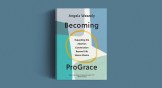
The book cover on a pink background.
Christianity Today October 31, 2025
Illustration by Christianity Today / Source Images: Getty, Johns Hopkins University Press

Many scholars have written about the history of secularization in American higher education. But most of their accounts focus on elite, mainline Protestant institutions. I have been waiting for a book like Religion and the American University, which looks at how God fared among religious groups and institutions on the margins. Author James W. Fraser, an emeritus professor of history and education at New York University, delves into key parts of this neglected story.

He does so by sharing a helpful chronological narrative of religion in higher education after the Civil War, including case studies of particular colleges, more independent cocurricular movements, and campus religious organizations. Most of his specific case studies highlight institutions that were originally marginal to elite American higher education, such as historically Black colleges as well as those serving evangelicals, Jews, and Native Americans. Similarly, his account of cocurricular groups looks beyond well-known entities, like the YMCA and YWCA, to include college chaplains, Catholic Newman Clubs, Jewish Hillel communities, and others.

Rather than revisiting familiar narratives of religious colleges drifting toward secularism, Fraser helpfully focuses on the creative impulses that helped start these diverse institutions in the first place. That said, he does not neglect how secularizing trends in religious higher education have mirrored similar trends in mainline Protestant institutions, which often drifted away from historic Christian orthodoxy during the 20th century.

For example, Fraser quotes a 1937 graduate of the previously evangelical Mount Holyoke College, who noted that one need not “fear a revival of the revivals, or any other outdated custom,” because the school was “primarily interested in its relationship with the world.” Apparently, Mount Holyoke’s leaders had not been reading the Gospel or Epistles of John.

The book’s first major strength is Fraser’s astute attention to the diversity of religious higher education. Although he still neglects some more marginal examples—such as Adventist, Lutheran, Anabaptist, and Pentecostal institutions—he does an admirable job of expanding our understanding of American religious higher education.    

A second major strength is Fraser’s attention to cocurricular groups, a marginalized topic in most historical discussions. As he helpfully recounts, this portion of the university carried the torch of student religious formation at a time, early in the 20th century, when educational leaders were casting this mission aside in the formal curriculum. Here, Fraser highlights the influence of campus chapel services, the YMCA and YWCA, denominational guilds, and chaplains at both private and public universities. His story also expands to include important non-Christian groups like Hillel International.

Fraser helps readers see the ebbs and flows of religion in cocurricular life. In the late 19th and early 20th centuries, he notes, the YMCA and the Student Volunteer Movement dominated the campus religious scene. By the mid-20th century, however, those groups had diminished significantly and college chaplaincy had exploded. Another major shift occurred in the 1960s and ’70s, marked by the emergence of new student groups like InterVarsity Christian Fellowship and Campus Crusade (now Cru).

Oddly, Fraser portrays the following two decades as a period of relative religious decline on campus. I say “oddly” because he makes clear that evangelical parachurch groups grew tremendously during this time. I can attest to that. When I was an undergraduate at Rice University in the late 1980s, over 10 percent of the school’s 2,500 students were engaged in Campus Crusade Bible studies. In reality, Fraser makes the common mistake of interpreting campus religious life through a mainline Protestant lens, attaching greater significance to a decline in college chaplains from established denominations than the corresponding rise of evangelical parachurch groups.

Fraser omits other important dimensions in his account of cocurricular organizations—one more historical and one more contemporary. Anyone familiar with the story of Christianity and intercollegiate sports knows that Christianity played a key role in early collegiate athletics, and Fraser could have given that subject greater attention. He also neglects the significant growth, in recent years, of Christian study centers, as well as Catholic institutes of thought (like the Lumen Christi Institute).

When it comes to broad themes, Fraser highlights two new ones that merit mention. First, he helpfully points out the role of competition—between cities and states, between denominations, or even within denominations—in reshaping the landscape of religious higher education. For example, we learn how Randolph-Macon College, one of America’s oldest Methodist schools, lost out on funding because Methodists in Georgia wanted their own college (present-day Emory University).

This competition also extended to cocurricular groups. Fraser reminds us that both Protestant and Catholic college leaders critiqued the advent of chaplains at secular universities. They feared losing revenue and support from Christian parents and students who might find these universities more attractive as a result. Likewise, leaders of parachurch groups, such as the YMCA’s John Mott, saw little need for university chaplains or pastors from specific denominations.

I hear the same concerns today, whether from administrators at Christian colleges, college pastors in churches, denomination-led student ministries, or parachurch staff at secular universities. Instead of trusting God and having a generous mindset toward fellow Christian laborers, they worry about a proliferation of choices shrinking their share of the student pie.

Fraser picks up on another important theme in addressing the practice of Christian hospitality on campus. As universities became more secular-minded in their approach to residential life, Christians began filling in the gaps. For instance, he highlights the first college chaplain, J. Leslie French at the University of Michigan, who saw providing hospitality as one vital element of his ministry. He and his wife hosted dinners for students most Friday and Saturday nights, a practice now emulated by many Christian study centers at secular universities.

Yet Fraser also recognizes that Christian efforts to extend campus hospitality sometimes resulted in religious tensions. He tells the story of a Hindu student, Anandibai Joshi, who came to the United States in 1883. She gained admission to the Women’s Medical College of Pennsylvania (today’s Drexel University College of Medicine), where she lived with Rachel Bodley, the Christian dean of the college. In deference to her religious beliefs, Bodley let Joshi cook vegetarian meals in her house. As Fraser tells the story, however, the dean “struggled with her sense that she should try to convert Joshi to Christianity and her responsibility to extend hospitality and respect to Joshi’s Hindu beliefs. The demands of hospitality won, and Bodley supported Joshi.”

I find it interesting that Fraser frames Bodley’s decision as a contest between hospitality and sharing the gospel. After all, most Christians would regard both as core duties of Christian outreach, even if they might worry about evangelizing in counterproductive ways. Unfortunately, Fraser’s false dichotomy often prevails today among many Christian college administrators, faculty, and staff members, who think they must refrain from challenging conversations or direct Christian witness for the sake of showing hospitality and respect.

Fraser ends the book by discussing the unique experiment occurring at Baylor University, my academic home for the past 23 years. Baylor’s goal is integrating the mission of Christian education with the intellectual aspirations of major research universities. One major challenge to this synthesis, however, is the persistence of a mindset pitting hospitality and Christ-animated learning against each other.

Fraser’s book, while excellent overall, has one area that would have benefited from a bit more precision and fewer broad generalizations: his account of religion’s role in the development of the curriculum.

In the introduction, Fraser tells us that early course offerings were “deeply suffused with Christianity.” On the same page, however, he appears to contradict himself, writing, “It may be surprising that there was so much of the so-called pagan classics and so little Bible in the curriculum.” There are certainly elements of truth in both statements. But readers who are unfamiliar with the historical details of Christianity’s relationship to early liberal arts models might find themselves confused.

A few pages later, Fraser gives a more accurate summary. “For all their focus on college creation,” he writes, “the founders of most schools did not put a lot of thought into the curriculum. They simply adopted the core of the classical curriculum as it was taught at older schools, especially Yale.” I would argue that this relative inattentiveness meant the curriculum was not “suffused with Christianity.” Instead, Christianity was merely a curricular add-on until the movement to integrate faith and learning emerged among evangelical colleges in the mid-20th century.

Moreover, Fraser misses certain aspects of how Christian colleges authored their own curricular innovations. His section on the academic study of the Bible repeats the view of older scholars who trace its origins to Yale in the early 1900s. However, my own research reveals that numerous evangelical colleges had already adopted this approach shortly after the Civil War, integrating the study of the Bible into the required curriculum rather than relegating it to required Sunday School classes and chapel services.

Omissions like these suggest the possibility of a more detailed story about the historical relationship between Christianity and the college curriculum, especially as it relates to Christianity’s influence (or lack thereof) outside of later religious studies courses. I hope Fraser, or another similarly gifted scholar, will devote a future book to telling it.

Perry L. Glanzer is a professor of educational foundations at Baylor University and a resident scholar with the Baylor Institute for Studies of Religion. He is the coauthor of Christian Higher Education: An Empirical Guide and The Outrageous Idea of Christian Teaching.

Church Life

Indian Churches Encourage Couples to Leave and Cleave

For many couples, in-laws are a major source of marital strife.

An Indian bride and groom holding hands.
Christianity Today October 31, 2025
madisonwi / Getty

After a visit with her new in-laws the day after her wedding, 26-year-old Taara Ravupoodi left anxious and confused by a question her mother-in-law asked her and her husband.

“After God comes who?” her mother-in-law asked angrily.

“Your spouse,” she responded. Yet her new mother-in-law kept repeating the question until she heard the only acceptable answer from her son: “Parents.”

Ravupoodi, an Indian American living in Indianapolis, married her husband, who immigrated to the US from South India at a young age, more than a year ago. Conflicts with family began on her wedding day, when her father-in-law stormed out of the reception because the hired flutist played instrumental music that included upbeat secular songs.

Since then, nearly every tension between the couple has been tied to her in-laws, and they struggle to find the balance between honoring their parents and prioritizing their marriage. Highlighting the sensitivity of this topic in Indian society, Ravupoodi asked to use a pseudonym, as she feared speaking out would hurt her relationship with her in-laws.

Many couples in India and among the Indian diaspora face marital stress due to the strong influence parents have over their children and their children’s marriages. Pastors and counselors trace most marriage problems in India to couples not “leaving and cleaving” from the husband’s family, a reference to the command in Genesis 2:24 that “a man leaves his father and mother and is united to his wife, and they become one flesh.”

Christian ministries in India are helping couples push back against cultural norms while honoring both their in-laws and their spouses. 

Prabhan Chandy Mathew, founder of Urban India Ministries (UIM) in Bengaluru, India, has mentored and ministered to families across India for more than three decades. He noted that, unlike in the West, where children often move out of their parents’ home after high school, in India most children live with their parents even after they get married.

Many Indian parents are deeply invested in their children’s lives—paying for their education and amassing property and wealth for them—and therefore have high expectations of their children. These expectations continue beyond marriage and hinder any attempts at biblical leaving and cleaving, Mathew said.

Mathew added that India’s philosophical understanding of the hierarchy of priorities, “Matha, Pitha, Guru, Daivam” (Mother, Father, Teacher, God), also adds to the problem.

“God is last on that list, and the mother is first,” Mathew said. “And that’s exactly what we see in many Indian Christian homes.” He pointed to popular Indian sayings such as “Your mother has carried you in her womb for nine months, but your wife just came in yesterday.” As a result, “in the Indian context, the biblical ‘leaving’ process becomes more of a ‘grieving’ process, for both children and parents.”

When Ravupoodi’s husband, who had only ever lived with his parents, moved from Chicago to Indianapolis to live with his wife, he felt immense pressure to make sure he didn’t disappoint his parents. Meanwhile, Ravupoodi, who had known her in-laws for several years before marrying her son, noted that her mother-in-law became more possessive of her son after they got married. She’d point out to Ravupoodi how her son was “her everything,” often holding his hand, making it seem like she was competing for his affection.

“She once told me that ‘You might be holding his arm on one side, but I’m always on the other side, holding his arm too,’” Ravupoodi recalled.

Ravupoodi’s husband initially struggled to set boundaries and truly “leave” his parents out of the fear of disobeying them. He also felt indebted to his parents for helping him pay off his college tuition.

When her husband struggled last year to muster up the courage to tell his parents that they’d spend half of their Thanksgiving break with Ravupoodi’s family and half with his family, the couple sought their pastor’s advice.

The American pastor, who had known Ravupoodi’s husband and his family for many years, pointed out that his parents’ expectations of only spending the holiday with them were unfeasible for a married man. He had to be okay with disappointing them. The couple ended up spending three days with Ravupoodi’s family and five days with his family.

Mathew notes that when a couple lives with parents, which is the case for about 70 percent of married couples in India, they aren’t given a chance to become an independent unit. 

“The rule over the parental home is still with the parents, and the newlywed wife often does not even have the autonomy to cook a meal for her husband or do things her way,” he said. Even when couples live separately from parents, Mathew says parents continue to meddle remotely by frequently calling to check on the couple, advising on important decisions, and expecting the couple to visit often.

One pastor of an independent church in New Delhi noted that for many Indians, leaving and cleaving is seen as dishonoring parents. (He asked for anonymity as his church and NGO are currently facing persecution.) He’s seen a married man in his church struggle because his parents expected him to buy them a house, fund his siblings’ weddings, and meet all of their financial needs and wants. As a first-generation Christian who’s trying to share the gospel with his family, the parishioner faces immense pressure to provide for his parents while also prioritizing his own marriage.

Churches are becoming more open in addressing these issues in their congregations, Mathew said. “Many pastors are seeing enough marriage breakdowns within their churches and are realizing that it is beyond their ability to help couples in distress. So they’re reaching out to us for solutions.”

Apart from counseling couples, UIM has held annual marriage retreats since 2003 and started a couples and family counselling helpline in 2015, which now operates in six languages.

In 2023, UIM released a nine-session premarital education curriculum that hundreds of Indian churches now use. The Scripture-based lessons present real-life scenarios and ask couples how they would deal with them. The last session is for the couples’ parents, and they are specifically taught to release their children.

The session is not easy, said Nibu Skariah, pastor of an independent church in Bengaluru who has been using UIM’s curriculum in his church for two years now. He says many parents are not comfortable listening to lessons in a formal setting. But he finds that having a few prior informal conversations with the parents to understand their contexts and mindsets is helpful. The sessions have seen some success in his church, and he has been able to guide both parents and children into the idea of separation, including living separately after marriage.

In cases where parents are insistent on the couple staying with them, Skariah advises couples to live separately for at least a few years after getting married before returning to live with the in-laws. Skariah, who himself struggled while living with his family after getting married, said a couple should strengthen their own relationship first so that they can deal with the frictions of joint living.

However, some pastors emphasize that leaving and cleaving does not always equate living apart.

“When the command to leave and cleave was given in Genesis or in later books, it was given to the Israelites living in tents, by family, by clan,” the New Delhi pastor said. “So I’m careful to point out that it’s not really about physically moving out necessarily but about prioritizing one’s marriage.”

Mathew views the separation as similar to cutting an umbilical cord, which becomes vital for both the mother and the child after a point. But he believes that in an Indian context, it is essential to teach that this is foremost an emotional detachment, rather than a physical one. In restricted environments where physical separation is not possible, he advises couples not to force the issue and to move out only when it’s possible to.

The New Delhi pastor said he makes sure to talk openly with his congregants about leaving and cleaving because he believes it’s good for couples and parents to hear the countercultural message over and over again. Apart from one-on-one conversations and premarital counseling, he also tries to incorporate the idea into his Sunday services and wedding sermons. His church also conducts couples’ retreats every few years, where these topics are discussed in detail.

“Over the last few decades, India has changed a lot: There are more nuclear families, more love marriages, more women working outside of the home,” he said. “People are looking for guidance and are eager to hear the message on leaving and cleaving. So I think it’s the right time to be talking about all these issues relating to marriage.”

However, he’s found that due to the negative impression of counseling, or just the cultural shame around sharing personal problems, people often don’t come to a local pastor for any kind of counseling until things have gotten really bad.

Ravupoodi and her husband never sought counsel from Indian American churches in their area because they feel that community is very parent-centric and preaches a narrative that puts parents above everything, including God’s will. However, the couple has benefited from a Christian counselor who’s been teaching them to build healthy boundaries and establish trust and safety in their marriage.

For instance, the counselor advised them to decide beforehand how many hours they would spend with in-laws, what they would do during their time together, what topics they would discuss, and how to handle a conflict should it arise. He also advised Ravupoodi’s husband to speak up when his parents are being disrespectful.

Ravupoodi said her in-laws have at times been upset and resistant toward some of the boundaries. But overall, things have improved, especially between Ravupoodi and her husband.

“A lot of the beliefs in the Indian Christian community are rooted in Hindu traditions, including putting your parents above everything,” Ravupoodi said. “And it’s now up to us, our generation, to break away from those unbiblical generational traditions. So the hard work is for us to do now.”

History

From Prohibition to Pornography

In 1958, CT pushed evangelicals to engage important moral issues even when they seemed old-fashioned.

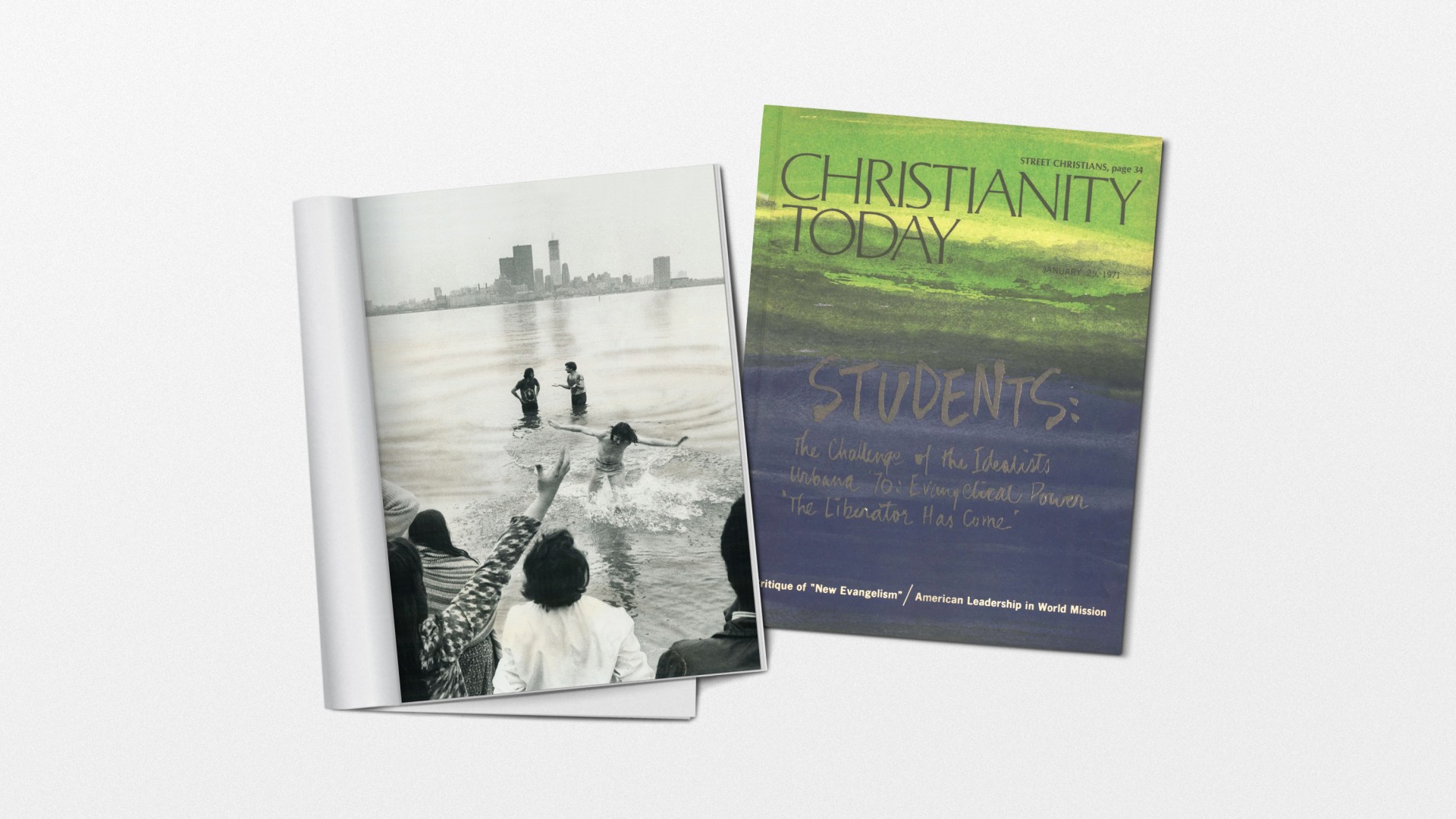
CT's 1958 cover and an image of a brewery cellar.
Christianity Today October 31, 2025
Illustration by Christianity Today / Source Images: Getty, Christianity Today

Christianity Today took a moment in 1958 to reassess the repeal of prohibition after 25 years. Was the relegalization of alcohol good for America? Or had the teetotal Christians and fundamentalist moral crusaders of the 1920s been right to try to ban beer and liquor? 

Alcohol industry leaders didn’t think there was any question that Americans should celebrate their quarter-century of accomplishments. 

This year the brewing industry proudly notes many of its accomplishments since the time of its rebirth, 25 years ago. The distilling industry also joins with the brewers in celebration of the repeal of the 18th Amendment, an occasion “which should be meaningful not only to brewers (and distillers) but also to millions of others who have benefited from relegalization.” So spoke the president and chairman of the U. S. Brewers Foundation, E. V. Lahey, a few months ago.

He pointed out that the national economy at the time of repeal in 1933 was suffering the “deepest depression of the century” and that relegalization of the liquor traffic had brought billions of new taxes to the government, and billions of dollars to American farmers and workers. Beyond this, he implied, the industry should be grateful that 22 per cent of the beer customers are women, that the tavern is now a respectable place, that the tavern operator is “a good citizen and a credit to his community,” and that “a good job has been done in keeping the public sold on the premise that the operation of breweries and taverns is compatible with the American way of life.”

CT thought a biblically informed evaluation of the impact on American life would lead to a very different conclusion.

Frightening and terrifying are mild words to describe the tragic existence of 5,000,000 alcoholics who are in helpless bondage to strong drink. This is a distressing situation, not only to be weighed in terms of a personal hell being endured by alcoholics alone, but more, by the anguish, suffering, shame and tears of those who are related to them. To that staggering number of alcoholics, however, must be added also the appalling number of some 2,000,000 others who are today problem drinkers, verging on alcoholism and whose indulgence is wrecking cars, ruining lives, and destroying homes. Who actually can estimate the moral damage that is resulting from a habit which the liquor industry in a thousand ways is endeavoring to call, “the American way of life?”

Reaction to this deplorable, distressing social problem finds expression in the question Cain once asked: “Am I my brother’s keeper?” … There is a hardened unconcern on the part of the public which accepts the damage resulting from the liquor traffic and absorbs, without a protest, the consequent financial toll. And despite the havoc being wrought and the powerful forces promoting such liquor sale, efforts to stem this evil seem pitiful and inadequate.

Another major moral issue that concerned evangelicals was the increasing availability of pornography. In the spring of 1958, CT investigated how easy it was to buy obscene material, even in Washington, DC.

Two young women learned that the “best” literature in the nation’s capital is readily available to them, even though they are ministers’ daughters.

On a special research project for Christianity Today, they found easy access to the magazine stocks of three newsstands in downtown Washington. One of the girls is the daughter of a Dutch Reformed minister, the other the daughter of a Presbyterian clergyman.

Within three blocks of the White House, they were able to buy:

—The May issue of Hush-Hush, which features “the inside story of the nude model who pinch-hit for Princess Meg.”

—The April issue of Ace, which includes the story of “a voluptuous wench.”

—The spring edition of Sunbathing Review, with more than 85 pictures of nude women and children. One series of photographs portrays the activities of two teen-aged girls in a California nudist camp.

—The March edition of Night and Day, carrying several advertisements that offer by return mail pictures of women posed to order.

—Three undated publications, all of which have pictorial sequences of nude women.

CT called on Christians leaders to pay attention to the issue and speak out against “Sex and Smut on the Newsstands.” 

A virulent moral sickness is attacking American society. Its obvious symptoms may be seen at any newsstand in large cities or small. American society is becoming mentally, morally and emotionally ill with an unrestrained sex mania.

For two years we have been independently—and in the last six months cooperatively—studying trends in popular magazines and paper-backed books. We have watched, appalled, as scores of new titles have made their appearance in the magazine field, many of them violating every standard of decency which has hitherto been recognized in the publishing field.

We are convinced that the only reason there has not been an indignant outcry from our nation’s religious leaders is that few have been advised of the extent to which standards have plunged. We ourselves are incredulous as we survey from month to month some of the cartoons, jokes and stories that appear in the so-called “men’s entertainment magazines.”

It is high time that our churches awaken to the kind of material being circulated to teen-agers and young adults of both sexes, sold openly at drug stores and newsstands under the guise of sophistication and respectability. 

CT also looked at the issue of education in 1958, delving into concerns that secular pedagogical theories were undermining Christian faith in public schools.

Largely through John Dewey’s influence, the twentieth century injected a naturalistic-evolutionary philosophy into professional education. This was a speculation that denied the reality of the supernatural, rejected changeless truth and moral standards, and spurned the relevance of historic Christian theism for the crucial problems of thought and life. Whatever worked was considered “true” until constantly changing society determined something else more workable, “more true” and tenable—until it, too, was replaced, and so on ad infinitum.

This philosophy first penetrated into teachers colleges. It spread among professional administrators, then it captivated large groups of teachers, and finally, it infected thousands of American school children exposed to its direct or indirect influence in the classroom. It was a professionally calculated leavening of American education that involved dismissing eternal spiritual and moral entities to extracurricular classification or even to the circular file.

Although American public education did not fully live and move and have its being in this naturalistic philosophy, it nonetheless contracted the disease of secularism on an epidemic scale. American public education during the past generation has not been religious in character, it has not encouraged training in religious subjects, nor has it given subject matter a religious orientation.

While public education seemed to succumb to “the disease of secularism,” private religious education faced its own challenges. Many evangelicals wondered, “Can the Christian College Survive?” CT invited Wheaton’s president to tackle the question. 

For the Christian college, the storm warnings are out. The academic barometer is unsteady, even lowering, with hints of possible hurricanes on the distant horizon.

There is no assurance of uninterrupted prosperity such as we have seen in the past decade. Prudent college trustees and administrators are considering carefully the possibilities of economic depression beyond recession, with attendant unemployment for both parents and students. Likewise there is always possibility that the present cold war may turn hot, and that “brush fires” on limited frontiers may unleash unlimited nuclear warfare. Christian colleges face the warnings of increasing costs of operation, and likewise the general trend of enrollment toward publicly supported colleges and universities.

But foreboding as the storm warnings are, it is well to remember that Christian colleges are sturdy crafts which have weathered severe storms in past generations. Colleges have a way of riding out a hurricane; and though battered severely, they still sail on.

The magazine also endeavored to assess the social impact of revival. Looking back 100 years at a historical example, a Lutheran minister and evangelist argued that great awakenings not only save souls, they transform culture. 

The indirect results of the revival, for communities and nations, are not so easy to trace fully. But they were as distinct and far-reaching as leaven working on the whole lump of society. The effects touched the social circles of community life, education, government, new institutions, various reforms, cultural standards, and new organizations whose enterprises belted the globe. …

Once again in history God had demonstrated the amazing capacity of prayer in pathfinding all his purposes. The prayer meeting gave us the great revival, and with it, a new Christian unity. The revival, in turn, gave us many social by-products. These, all taken together, put new leaven into our liberties and salt into the whole of our society.

After these hundred years, when living is so fluffy, praying so feeble, and much preaching so flabby, nothing is more renewing than to contemplate the wonders that God can work in all the earth through his simplest organic structure—the prayer meeting.

Without revival, people would pursue alternative answers to life’s problems. That seemed to be what was happening in Latin America, CT reported. 

1958 was communism’s year in Latin America. Facts apparent at year’s end: Stepped up activity of Soviet agents in Hispanic countries, and alarming indifference of public sentiment. In 1958 the Communist party (1) was legalized in Chile, (2) joined a coalition to elect a conservative president in Costa Rica; (3) helped oust a dictator in Venezuela; and (4) threw Argentina into a state of ferment. 

Mexico is Latin America headquarters of Soviet infiltration. All Red satellite countries maintain large embassies in Mexico. The Russian embassy alone boasts a staff of over 900 trained operators. No one can guess how many agents are scattered throughout the continent. But their espionage and indoctrination are backed by a tidal wave of literature and propaganda. … 

And the naturalism of Marx, tangible, here-and-now, seems to offer what modern man needs. He wants potatoes, not platitudes. The earthy religion of the Reds cannot be fought, therefore, with the empty trappings and dead traditions of Romanism. Only an evangelical, supernatural faith can save Latin America—a faith which is not afraid of its social conscience, nor of sacrificial discipline, but which is essentially a regenerating miracle—in short, a New Testament faith.

In the US, many of those who were concerned about freedom were interested in an emerging political movement: the libertarians. CT gave readers a primer on the movement and its relationship to Christianity in a piece titled “Christ and the Libertarians.” 

From the point of view of the average businessman, the New Deal launched America on the path of “creeping socialism.” By the mid-1950’s over one hundred “business sponsored” organizations opposing the New Deal’s political philosophy of interventionism began to appear. Many welcomed the name “libertarian” to distinguish themselves from the political liberals who accepted Big Government as a necessary instrument of social progress.

Although differing on many points, libertarians have, since their beginning, shared one common apprehension: the steady growth of government and the corresponding decline of individual responsibility and freedom. They have been driven by a very real fear, the fear that a government which controls the economic life of its citizens today will control their thoughts and souls tomorrow. To the libertarians, the “democratic process,” which many trust as an adequate safeguard against tyranny, supplies no sufficient guarantee against a tyrannical majority. They have read American history and know that the architects of our Constitutional system, who were aware of the danger of tyranny by the majority, tried to prevent it by specific checks which later political developments either weakened or destroyed.

Three libertarian organizations that have had the most to do with the religious community have been the Foundation for Economic Education, Irvington-on-Hudson, New York; Spiritual Mobilization, Los Angeles; and the Christian Freedom Foundation, New York City.

But the real problem in America, according to CT editors, was not the New Deal, secular education, pornography, or alcohol. The problem underlying everything was actually the church

Pronouncing judgment on America is no longer an exclusive franchise of a few weeping Jeremiahs. Nor is it peculiar to evangelists constantly reminding the nation of its spiritual decline, its neglect of a great Christian heritage, its whoring after false gods of money and ease. Many pulpiteers are indeed swift to show that despite America’s religiosity no sweeping repentance and faith, no decisive change of heart and life, places social forces in our great cities conspicuously in the service of the living God. Billy Graham readily admits this even of New York City. Religious analysts are finding America spiritually and morally second-rate. …

Today not Nero but the churches fiddle while Rome burns. The churches have even approved leaders who support socializing and collectivistic trends in the name of the Christian community, and have permitted them without protest to speak for Christian conscience. …

But absolutes do not cease to be absolutes, imperatives do not cease to be imperatives, because of failure to recognize them as such. Biblical theology and ethics give little credence to the modern notion that God does not articulate permanent principles. Unless the Church accepts her biblical heritage and enunciates the great ethical principles that sustain our tradition of freedom, her own liberties may vanish together with those of the nation she fails. There may not always be a U.S.A., but there will always be a Church. As the believers in Russia can eloquently testify, however, the Church sometimes is chained and imprisoned not alone for her courage to affirm the superiority of spiritual over limited political loyalties, but as penalty also for her silent and unprotesting subjection to the power-state.

News

Tackling Unemployment

The head of The T.D. Jakes foundation on job assistance and economic empowerment.

People walking to work.
Christianity Today October 31, 2025
iStock / Getty

For the past few months, the US job market has been showing signs of weakness. Erratic economic policies coming out of Washington make businesses skittish to hire new workers. Federal workforce cuts, the immigration crackdown, and higher interest rates are also contributing to the slowdown, according to economists.

In the past two years, the general unemployment rate has hovered around 4 percent. For African Americans, it’s increased from 6 to 7.5 percent over the four months leading up to October. Racial employment disparities are nothing new. But the gap has worsened recently as a result of the slowing economy and may worsen even more due to cutbacks to diversity initiatives.

Black churches have long stepped in to help congregants support themselves and their families during financial crises, offering food, cash assistance, and other needed aid. But when it comes to employment, there’s perhaps no one offering services on the same level as Bishop T. D. Jakes, the founding pastor of the Dallas-based megachurch The Potter’s House.

Jakes pastored the predominantly Black congregation for nearly 30 years before handing over the leadership mantle to his daughter and son-in-law in July. He oversees other organizations, including the T.D. Jakes Foundation, a nonprofit focused in part on providing workforce training to residents in underserved communities in Dallas and other cities like Atlanta and Miami.

Funding for the projects comes largely from Wells Fargo, which has struck a partnership with the prominent pastor that both sides say “could result in up to $1 billion” in financing over ten years.

Some have criticized the collaboration with the bank, which has been accused in the past of engaging in harmful lending practices that have disproportionately impacted minorities. The foundation declined to comment on those criticisms. But Jakes has previously said that he feels comfortable working with new leaders at the bank who he believes are attempting to rectify past misdeeds.

Jakes has announced plans to develop mixed-income housing with investment from the bank. The partnership also includes grants from the Wells Fargo Foundation, some of which have already been distributed to historically Black colleges and universities (HBCUs) and economic-empowerment initiatives.

CT recently caught up with Kelley Cornish, president and CEO of the T.D. Jakes Foundation, to hear more about the organization’s work. The interview has been edited and condensed. 

Kelley, what’s the foundation’s origin story? What did the initial launch phase look like?

The T.D. Jakes Foundation was launched just before the COVID-19 pandemic in 2020. Bishop Jakes was thinking about what he wanted his legacy to be.

For the first two years, the foundation focused on moving programs the church was already doing into a public charity. Jakes had started putting together job fairs and hiring mixers when he first came to Dallas many years ago. Today, when people come to our hiring mixers, they can get headshots. We work with employers ahead of time to identify jobs for them.

Jakes had also been hosting two-week summer camps for kids at the church. So we moved those to the foundation. We recently hosted a camp in Atlanta which offered coding and robotics training.

You joined the foundation in 2023. It seems work ramped up around that time.

Around the time I arrived, we were able to partner with the Wells Fargo Foundation and receive funding to build out the foundation.

I have a corporate background, specifically in banking. I knew we needed a vision to steer the organization forward. One day I asked Chairman Jakes, “What’s your vision?” He replied, “What’s your vision?” I was like, “Oh! I don’t know. Let’s figure this out together.”

We brought in a consulting firm and went through a yearlong process to flesh out the vision (“a world where every community thrives”), and the three pillars of our work: financial inclusion, workforce readiness and educational access, and community well-being.

We’ve funded programs in each pillar, and we’re now moving from Dallas to Atlanta, Baltimore, and other parts of the country. We’ve hired more people and now have more than 30 employees.

Are companies—and their foundations—more willing to give money because this work is not being done within the church?

Yes. There are people who really believe in the reach of Bishop Jakes and want to invest or co-partner with the foundation but might not want to donate money to a religious entity.

We also have a corporate board governed by an executive from Google [Jim Anderson], former Dallas Mavericks CEO Cynthia Marshall, and others. We’re not competing with the church. We’re supplementing its work.

The foundation has a goal of reaching up to 75,000 people with workforce programs by 2026. Are you on track to reach that goal? How are you seeing an impact, in terms of growing labor-force participation or participants benefiting from new skills?

We’ve funded some HBCUs —including Clark Atlanta University, Morehouse College, and Wiley University—because they are our pipeline into corporate America and entrepreneurship opportunities.

At Wiley University, Wells Fargo is powering a financial empowerment center that teaches students, staff, and the community about credit and banking. We’re also giving money to other financial-literacy entities like Operation Hope.

Recently, we kicked off our first cybersecurity cohort. Thirty to fifty people are engaged in a four-month program. The certifications they’ll receive will make them eligible to earn an annual salary of $70,000.

Last year, we saw about 2,300 people come through our hiring mixers. We had 1,700 people attend a three-hour event in Dallas. We checked the data afterward and saw that 500 people had actually received jobs from that one particular event.

Tangential programs we’re funding include a nonprofit in Maryland that offers a food-and-employment center and sees upwards of 3,000 people a month, and a Baltimore-based sustainable-energy organization called Power 52 that offers career training, including for formerly incarcerated individuals.

Is growing Black unemployment impacting the organizations you fund, or is it too early to tell?

I always like to see the glass as half full. We’ve been focused on solutions since day one. With our job fairs, it takes us a while to know the impact. But we do see people show up. They’re interested. If they’re not unemployed, they might be underemployed or want to get ahead of changes that might be coming in their organizations.

We’re focused on financial inclusion because we want people to get their financial house in order. So we feel well positioned to respond to what’s happening right now. I’m glad that right now we have components in place to help individuals think about what they can do next.

I’m not surprised by what I’m hearing and what I’m reading in the news. I do think it’s cyclical and believe that the pendulum will swing. It always has.

You’re also focused on reducing prison recidivism rates.

This is another one of those initiatives that started inside The Potter’s House and now lives in the foundation. It’s a 12-to-18-month program that focuses on financial wellness, family unification, faith, and mental health.

The recidivism rate for our program was as low as 17 percent, which is much lower than the national recidivism rate. That program has been around for 20 years, and we’ve had 42,000 people enroll.

We always have more work than we think we can handle. Right now, we have 230 cases, so we’re hiring more caseworkers. We’re looking to expand the program next year and offer a toolkit to other organizations, local governments, or churches that want to launch their own initiatives.

Editor’s note: This article has been updated to correct the number of people who attended the foundation’s hiring mixers last year.

Ideas

The Strangest Enemy I’ll Ever Meet

Scripture speaks of death as an enemy Christ conquers—and the door through which we see God face to face.

Detail from the painting Still-Life with a Skull by Philippe de Champaigne

Detail from Still-Life with a Skull by Philippe de Champaigne

Christianity Today October 30, 2025
Wikimedia Commons / Edits by CT

Here in the rural heart of Burundi, there is a red dirt route that serves as a 5k walk for me. Down the hill, across a small stream, then keep going until you turn left at the cemetery. Due to its proximity to the hospital where I work as a family medicine missionary physician, this cemetery has expanded greatly in the years I’ve lived here. It is mostly a collection of bare wooden crosses scattered in the shade of fast-growing eucalyptus trees. 

But halfway through the cemetery, there is a small clearing. Here the graves are prominent, with large, white-painted crosses that give names and dates of births and of deaths. The graves are covered with tile, sometimes flowers. These are mostly people I’ve known. I was present for most of the burials. They were colleagues and friends at the hospital. Most were my patients before they died. 

I pause in my walks and remember these people and their deaths. Josué was our cashier, wheelchair-bound since before I met him from some old injury. He was smart and kind and unfortunately couldn’t feel the infection in his legs until it had overwhelmed him. 

Silas was a pastor, gentler than anyone could expect from the years he lived as a refugee in Tanzania. He was sick for years, and though I had a suspicion of his diagnosis, I had neither the tests to verify nor a treatment to help him. 

Justine had something wrong with her liver, but I wasn’t able to find out what exactly, and her sudden decline surprised me.

Jean Philippe’s sudden death remains a mystery to me to this day.

They were young. None of them near what I might consider retirement age. Pondering the graves around me, I am confronted again and again with the fact of death. Death has come and taken them from us. When might it come for me? 

The more precise question, medically speaking, is what disease is likely to kill me. Accidents and other tragedies aside, disease is generally how we die.

Recently, my son was doing a school report on author J.R.R. Tolkien, and he wrote that Tolkien died “from old age.” My doctor reflex automatically kicked in: “No one dies from old age,” I told him. Though the phrase is widely used, any doctor will tell you that there’s always some underlying illness. In Tolkien’s case, it was a bleeding ulcer, but dying “of old age” usually means that the person was old and their doctor did not have an exact diagnosis. This is why we don’t write “old age” as a cause of death on a death certificate. Death comes by disease, even if we have not found it. 

Of course, disease does not always lead to death. A child’s fever doesn’t threaten her life in wealthy countries (though it may in Burundi). Many chronic diseases can be managed for years before they bring the possibility of death—if they ever do. 

That ability to separate disease and death surely contributes to the focus of American doctors and patients alike on disease rather than death. But this focus, though medically intelligible, is spiritually impoverishing. The Bible, church history, and Christians in poor countries today all pay more attention to death, and that attention offers insights that can help us live more faithfully in our mortal lives.

Westerners have not always thought about disease and death as we do now. In the art and literature of other eras, we often see death personified. Though people in the past knew full well that disease could lead to death, they spoke of Death, rather than disease, coming to find us. He could be avoided for a time, but not forever. Disease was merely his agent; Death was the real fact, with power over allgreat and small alike.

This tradition has faded from both medical and popular mindsets, especially in wealthy countries. Advances in accessing medical care mean that, in high-resource settings, we almost always know which disease was the immediate cause of a person’s death. We now view disease as the real fact of the situation and death as merely its occasional consequence.

I was trained as a physician in this newer way of thinking, but that mindset could not survive my work abroad. For years now, I have tried to treat patients in desperate circumstances. Their diseases often remain obscure to me, but the coming of death is clear. Living in this more traditional paradigm has forced me to rethink the relationship between death and disease. It has sent me searching out what Christianity has to say of these two great inevitabilities.

The Bible speaks broadly and with great nuance about disease. It is a result of sin in the world, but not necessarily the direct result of sin in the diseased person (John 9:1-3). God sometimes sends disease (2 Sam 24:15), but he also heals and calls his people to do the same (Luke 9:1-2). Healing was central to Jesus’s ministry, and it proclaims what God’s kingdom is like (Luke 7:18-23). Nevertheless, we see a persistence of disease even in Jesus’s followers (1 Timothy 5:23) that speaks of a kingdom still to be fully realized.

Because disease is fundamentally suffering (or at least the threat of suffering) in a person’s mind or body, disease can be understood much as we understand all suffering: as something that is fallen but not without redemption (Gen 50:20, 2 Cor 12:9). We tirelessly fight disease as a result of the Fall. But when it persists despite our efforts, we seek to be faithful in that suffering, trusting that God can and will redeem it in ways that we may only barely understand. 

The Bible also speaks of the obvious ways in which disease leads to death (e.g., Psalm 107:18). Yet Scripture also understands death as more than an endpoint of disease; its model is closer to the older tradition than the modern framework.

In Genesis 3’s story of the Fall of humankind, the consequence is not disease but death: “you will die” and “to dust you will return” (vv. 3, 19), though disease will be death’s tool. Jesus healed, but his life was directed toward death—and resurrection. Paul personifies Death in 1 Corinthians 15 using the words of Hosea to address Death directly—“Where, O death, is your sting”—and describing it as the last enemy Christ destroys (vv. 26, 55).

Like disease, death was never natural in the sense of being part of God’s original creation. And like disease, it will cease in the fullness of God’s new creation. But unlike disease, since Christ’s resurrection, death is more than a defeated enemy: Until Christ returns, it is how we see God face to face (1 Cor. 13:12). In that sense, to “live is Christ,” as Paul writes, but “to die is gain” (Phil. 1:21).

Christ our Lord has walked this path before us. Now, as poet Malcolm Guite writes, God’s grace is “pulling us through the grave and gate of death” into the fullness of his presence.

These biblical passages should shape our understanding of disease and death at least as much as modern medicine does. Let’s take disease first. There’s no doubt that the kingdom of God advances against disease, and part of Christ’s destruction of the works of the devil is our fight against disease (1 John 3:8, Matt 11:4-5). Medicine, surgery, public health initiatives, sanitation, lifestyle modification—all these can be weapons of God’s people for God’s purposes. It is a glorious thing when disease is vanquished. 

Yet we must remember that health and length of days are primarily an opportunity to love and serve God and neighbor (Matt 22:36-40). Health is good, but it is not an end unto itself. And when sickness is not vanquished, despite our best efforts, we must love and serve then too. In this, persistent disease and suffering may not always or only be an obstacle: Suffering can build compassion. Disease can force us to slow down to what John Swinton calls “the speed of love.” 

As for death, Christians look for its coming, difficult though that may be. A 2019 study in the Annals of Palliative Medicine reported the results of a survey of hundreds of people asking their preferred way to die. Overwhelmingly, respondents wanted to live a long, rich life and then die in their sleep. 

Why is this idea so appealing? The study suggests a variety of reasons, but I think most come down to a preference for living as if death is not waiting for us. 

Here in Burundi, death is common and sudden, including among the young. Funerals are attended by the hundreds, and I expect few reach adulthood without having sung in a funeral choir. Nevertheless, I find here much the same sentiment about death that I find in America—the same avoidance those researchers found. Even here, where the subject is unavoidable, talking about death is met with the same hesitation. Even among many Christians, I find the same futile wish to spend life ignoring its most inevitable event. 

Yet there are exceptions to that rule. Pastor Silas, one of my friends in the cemetery, came to talk to me in the final stages of his unknown illness. He wanted to go visit his friends in Tanzania. They were meeting to pray, and he wanted to take a long public bus ride on a broken road to join them, even in his frailty. 

He knew the trip would take a toll on his body. He knew death was near and that this journey would bring it nearer, but still he wanted to go. He made that trip and got back home again, and though we didn’t talk about it directly, he showed me how life is more than length of days.

The difference between how Silas faced death and how many of my other patients do—and the lack of difference between their attitudes and those of my American friends—tells me our approach to death is not determined by our circumstances. Whether death is sanitized and hidden away as in much of America, or raw and ever-present as in rural Africa, we must decide how we will approach it.

For centuries, many Christians carried on the tradition of memento mori, the Latin reminder that we will all die. They would engrave a skull or some other symbol of physical mortality to regularly confront themselves with the fact of death and the need to prepare to meet it. Perhaps these Christian forebears would endorse my habit of taking a regular constitutional past the graves of my friends. 

Here I find myself wanting to suggest that Christians should be marked by having no fear of death, but perhaps this is not reasonable. Even defeated, death marks such a transition—such an unknown—that fear seems inevitable. 

What matters, I think, is less the absence of fear but the presence of hope. Is our faith in Christ’s promise of resurrection more than lip service? We don’t know much about the other side of that door, but if Christ is raised, then life is there (1 Cor. 15:12-28). Life in the presence of our Savior. 

Lastly, what of the intersection of disease and death? Not every disease will end in death, but most lives will end with disease. Medical rescue from death is glorious and redemptive—but always temporary. There is a moment in every treatment where we, doctor and patient alike, must shift our efforts from fighting disease to facing death well. Knowing when that shift should take place is always hard, but cultivating this presence of Christian hope in death may be the best way to protect against compulsively fighting disease and losing the bigger picture.

A “good death” is about more than chronology, more than the prolonging of life by medical or other means. We will only meet death well when we understand that life is more than length of days, and there are worse things than losing years. When I pass the graves of my friends, I remember their diseases but, more than that, the hope they have realized. Awash in that hope is how I hope to die.

Eric McLaughlin is a missionary doctor in Burundi and the author of Promises in the Dark: Walking with Those in Need Without Losing Heart.

Books
Review

First Comes Sex, Then Comes Gender

A new book acknowledges both categories as biblically valid—but insists on ordering them properly.

The book cover on a green background.
Christianity Today October 30, 2025
Illustration by Christianity Today / Source Images: Getty, Lexham Press

In The Body God Gives: A Biblical Response to Transgender Theory, Anglican scholar Robert S. Smith joins conviction and compassion in a sober, cogent analysis of how God’s Word speaks to contemporary gender debates. His crucial conclusion: “God’s desire for my gender—that is, whether I should perceive and present myself as a man or a woman—is revealed by the design of my body.

Smith carefully analyzes Genesis 1:27, which affirms that God created all people “male and female.” Crucially, he notes that Scripture echoes this teaching in its account of Adam and his descendants after the Fall, declaring, “When God created mankind, he made them in the likeness of God. He created them male and female and blessed them” (5:1–2). This latter passage, as Smith writes, shows that man made in the likeness of God “is a community of persons, not an androgynous, asexual, or bisexual individual.”

Together, these Genesis passages demonstrate that the body God gives to every person is part of his good creation, regardless of how he or she perceives it. As such, bodily realities undergird the concept of gender, which is foundational to personal identity. They determine the trajectory we should follow in thinking about our own gender roles and expressions: “To the extent that we can speak of gender identity and gender roles as constructed, faithfulness … requires that all such constructions respect and reflect biological reality.”

A faculty member at Sydney Missionary and Bible College, Smith clearly demonstrates that the fact of our male and female bodies entails a specific approach to gender. His tone is irenic and avoids inflammatory hostility, but he is firm in opposing the constellation of contemporary perspectives that developed out of works in transgender theory like The Transsexual Phenomenon, published in 1966 by Harry Benjamin, an eccentric 81-year-old endocrinologist.

Benjamin argued, “For the simple man in the street, there are only two sexes. A person is either male or female, Adam or Eve. … The more sophisticated realize that every Adam contains elements of Eve and every Eve harbors traces of Adam, physically as well as psychologically.” On this basis, Benjamin contended that every person has androgynous tendencies somewhere deep within them. In some way, he theorized, this contributes to the discomfort some people feel with their own bodies and the corresponding desire to change sexes. In other words, sex and gender are inherently different categories.

In sharp contrast, Smith sees gender as a conceptual category that should be grounded in, and never separated from, biological sex. He defines gender as “the culturally mediated set of conceptions, expectations, and roles associated with being either male or female. Such a definition distinguishes gender from sex without disconnecting gender from sex.” The reality of the body’s sex comes first, and then gender expression flows from the body itself. Accordingly, Smith rejects the idea that subjective feelings of gender dissonance give moral grounds for gender reassignment surgery.

In some respects, debates about gender identity seem distinctively modern. On a deeper level, however, they flow from debates as old as ancient philosophy—in particular, the contest between two schools of thought known as realism and nominalism. While The Body God Gives gestures toward this older debate, Smith could have strengthened the book by addressing it more explicitly.

The conflict between realism and nominalism boils down to what philosophers call universals and particulars. Put simply, universals are qualities or characteristics that can exist in many things or people at the same time. “Maleness” and “femaleness” are universals, but particulars are distinct entities—like a specific husband or wife, mother or father, son or daughter.

Philosophically speaking, realists affirm both universals and particulars, regarding the latter as instances or expressions of the former. Nominalists, however, only recognize particulars. In their view, what realists define as real, objective categories and concepts are nothing more than arbitrary human labels or conventions.

The modern transgender debate demonstrates how realism and nominalism can drive dramatically different ethical conclusions. A realist might say, “John is a man,” connecting something particular (the name John) with something universal (the status of being a man rather than a woman). In this view, the universal category of man encompasses all those who possess male genitalia, X and Y chromosomes, and other shared biological characteristics. These universal properties unite the particular person named John to all others who share them.

In contrast, transgender theory reflects an extreme nominalism. Denying the universal categories of male and female means there are only particular persons, none of whom share the universal properties of either biological sex or gender. 

Without saying as much, The Body God Gives makes a strong case for Christian realism. The universal categories of male and female are woven into creation by a wise God. We describe particular people God created as male and female because these categories are real, not merely convenient inventions.

The Body God Gives also addresses intersex conditions, referring to rare developmental disorders that cause children to be born with some mix of male and female characteristics. As Smith concludes, “intersex conditions do not constitute a third sex.” While I concur with his judgment, he could have presented a stronger argument for it. Intersex advocates may be correct that cosmetic surgery on very young intersex children is sometimes unwise, given that most of the conditions being treated are not life-threatening. But some intersex conditions do impede the healthy functioning of the colon and urinary tract. Specific, surgically correctible problems like these underscore the degree to which intersex conditions represent variations from the normally occurring binary of male and female. In this sense, they are more analogous to a cleft palate than a third sex.

Smith does not resolve the debate about using the preferred pronouns or names of those claiming to have changed genders. But perhaps his book is stronger for staying focused on explaining the goodness of male and female bodies and clarifying their normative guidance on living as men and women. His clarity on these core subjects offers a helpful starting point for thinking through practical outworkings of Christian living in a world where transgender identities are common and celebrated.

Smith’s emphasis on evangelism is also refreshing. We can share Christ and offer the hope of the new birth to anyone who repents and believes, even people who have pursued various steps in gender reassignment. As Smith notes, Scripture attests to this fact by speaking of eunuchs who live faithful, God-honoring lives. In Isaiah, God promises “an everlasting name” for eunuchs “who choose what pleases me and hold fast to my covenant” (56:4–5). And the New Testament records the apostle Philip evangelizing and baptizing the Ethiopian eunuch in Acts 8:26–39.

This brings us to a perpetually difficult question: What should a church do if a transgender person comes to faith in Christ? Smith is correct that genuine repentance means pursuing faithfulness and “living (as much as is possible) in harmony with one’s God-given sex.”

Going further, though, it’s worth emphasizing that some reversals of gender reassignment surgeries may cause more harm than good. Because these procedures are notorious for causing post-operative problems, I would not suggest a reversal surgery if, for example, the new believer has no colorectal or urinary tract issues.

Meanwhile, a transgender person accepting Christ should begin transitioning back toward a gender identity as closely aligned as possible to his or her biological sex. Even so, the church must realize that things might never be exactly as they were. Furthermore, church leaders should approach any use of cross-sex hormones with great caution, as these can involve significant health risks. (No pastor wants an effort to repent from past sins to result in a pulmonary embolism.) But thankfully, God’s grace—alongside prudent medical advice—is sufficient to navigate such problems.

Transgender discussions can be disorienting, but we are not the first generation of believers to face them. In ancient Rome, the popular cult of the goddess Cybele included male devotees who castrated themselves and dressed as females. There are many differences, of course, between this cult and modern transgender advocates. Yet if we traveled back in time to the church at Rome and described our current gender landscape, those early believers might reassure us that they have seen something similar. 

The gospel was sufficient for addressing gender confusion in the first century, and the same gospel is sufficient for addressing it today. The Body God Gives is a helpful tool for the church as it defends the goodness of our created bodies and shapes our moral thinking about gender.

J. Alan Branch is professor of Christian ethics at Midwestern Baptist Theological Seminary. He is the author of 50 Ethical Questions: Biblical Wisdom for Confusing Times and Affirming God’s Image: Addressing the Transgender Question with Science and Scripture.

Ideas

In Politics, Contempt Is a Common Tongue

Antisemitic, racist texts show the need for spiritual and character renewal.

Blue and red snakes hissing at each other.
Christianity Today October 30, 2025
Illustration by Elizabeth Kaye / Source Images: WikiMedia Commons

When the New York Young Republicans recently disbanded after a leaked group chat revealed members were sharing racist and antisemitic messages, state leaders called it a “fresh start.”

Days later, a similar scene played out in Washington, DC. Paul Ingrassia, a young Trump nominee to lead the Office of Special Counsel, withdrew his nomination after Politico published text messages in which he boasted of a “Nazi streak” and called for the Martin Luther King Jr. holiday to be “tossed into the seventh circle of hell.” Ingrassia had made a litany of racist comments before he was nominated. But even for many of the president’s most loyal allies, this appeared to be a bridge too far.

Meanwhile, Jay Jones, a Democratic candidate running for attorney general in Virginia, has fallen behind in the polls after text messages surfaced in which he mused about shooting a political rival, Todd Gilbert, and seemingly wished harm on Gilbert’s young children. Jones apologized and remains in the race.

The exposure of all these private messages has sparked necessary outrage across the political spectrum. But the real story here is about not just one party or one person. It’s about what happens when the rot of contempt seeps into our national bloodstream. There’s what was said but even more so what shaped people to say it—and how our culture, by degrees, is being trained to think, feel, and speak the same way.

While these types of messages still represent extremes in our culture, the underlying language of contempt has become a common tongue of our public life.

What used to be shamefully whispered in private corners now plays out openly in comment sections, podcasts, and campaign rallies. This flagrant contempt for political opponents opens the door to even more grotesque behavior in private spaces. From “jokes” about rape and genocide to gleeful celebrations of opponents’ suffering, cruelty has become a currency of authenticity. To belong in political circles, one must prove a willingness to scorn.

Our digital culture has only magnified the problem. On the right, contempt often takes the form of dehumanizing minorities or glorifying cultural dominance. On the left, it shows up in mockery of faith, in the dismissal of opponents as irredeemable bigots, or in casual delight in their misfortunes.

But this constant contempt is not simply a feeling or an action; it is a curriculum. It teaches that identity is secured by mockery, moral seriousness is naive, and empathy is weakness. It corrodes our humanity and forms habits of the heart that make mercy unimaginable. At the end, it feeds a formative process fueled not by the Spirit but by the flesh.

Behind this culture of contempt often lies a dormant but persistent state of fear: fear of losing cultural and political power, fear of being canceled, fear that if we let our guard down, they will win. This anxiety is enhanced even more when Americans—including Christians—imagine each other as worse than we are.

Recent research from the nonpartisan More in Common initiative, for example, found that while most Americans—81 percent—believe people of all religions should feel like they belong in the US, we drastically underestimate each other’s goodwill. Most Americans also believe 47 percent of evangelicals value religious liberty for everyone, when 78 percent of evangelicals do. Similar misperceptions hold for Muslims, Jews, and atheists.

Fear, however, doesn’t explain everything. Contempt also offers a counterfeit sense of community that’s forged around shared grievance. It presents a type of peer pressure that creates solidarity through shared disgust. It tells us we don’t need to build anything beautiful to belong. We just need to hate the right people, whether or not they’re culpable of harm.

But a community formed through scorn cannot inspire its members toward anything better. It can only hold together through the sinister power of mutual disdain.

Scripture shows us this is precisely where the church should step in. The body of Christ exists to form people differently, cultivating habits of speech, imagination, and love that runs counter to the world. If contempt is the pedagogy of disdain, then the church needs to be the school of grace.  

This formation begins in worship, where we learn to name God rightly and, in doing so, see others rightly. It continues through preaching that deepens the conviction that every person bears God’s image and therefore commands our reverence. It deepens in discipleship that trains believers to speak blessing rather than curse and model biblical examples by directing godly disgust toward sin, sinful systems, and demonic spirits (Eph. 6:12) instead of toward people who God loves. Like Elijah challenging Baal’s prophets or Jesus calling out the scribes and Pharisees, the Bible shows how to use sharp language for godly ends without falling into sin.

The practices we cultivate—truth telling, forgiveness, confession, repair—are not just private virtues but public gifts that our political culture needs to see on display. When we speak well of others, repent when we’re wrong, see others as neighbors rather than enemies, and build bridges of mercy (even in disagreement), God will use these small, stubborn habits to slowly remake our world.

The exposure of these recent hateful messages is painful, but it may also be providential. God often allows what is hidden to come to light so healing can begin. What has been revealed in our politics is a mirror and a message for the nation.

Accountability is critical if we are to move forward in a healthy way. Justice was served when the New York State GOP swiftly disbanded its youth wing and the Senate refused to advance Ingrassia’s nomination. But accountability alone cannot heal a nation that has been shaped by contempt. Punishment may allow the news cycle to move on from a scandal, but what we desperately need is a renewal.

Chris Butler is a pastor in Chicago and the director of Christian civic formation at the Center for Christianity & Public Life. He is also the co-author of  Compassion & Conviction: The And Campaign’s Guide to Faithful Civic Engagement.

Apple PodcastsDown ArrowDown ArrowDown Arrowarrow_left_altLeft ArrowLeft ArrowRight ArrowRight ArrowRight Arrowarrow_up_altUp ArrowUp ArrowAvailable at Amazoncaret-downCloseCloseEmailEmailExpandExpandExternalExternalFacebookfacebook-squareGiftGiftGooglegoogleGoogle KeephamburgerInstagraminstagram-squareLinkLinklinkedin-squareListenListenListenChristianity TodayCT Creative Studio Logologo_orgMegaphoneMenuMenupausePinterestPlayPlayPocketPodcastRSSRSSSaveSaveSaveSearchSearchsearchSpotifyStitcherTelegramTable of ContentsTable of Contentstwitter-squareWhatsAppXYouTubeYouTube