News

Vietnam’s New Religious Decree Further Burdens Local Churches

Pastors and religious liberty advocates worry the government’s effort to manage religion will bring tighter control.

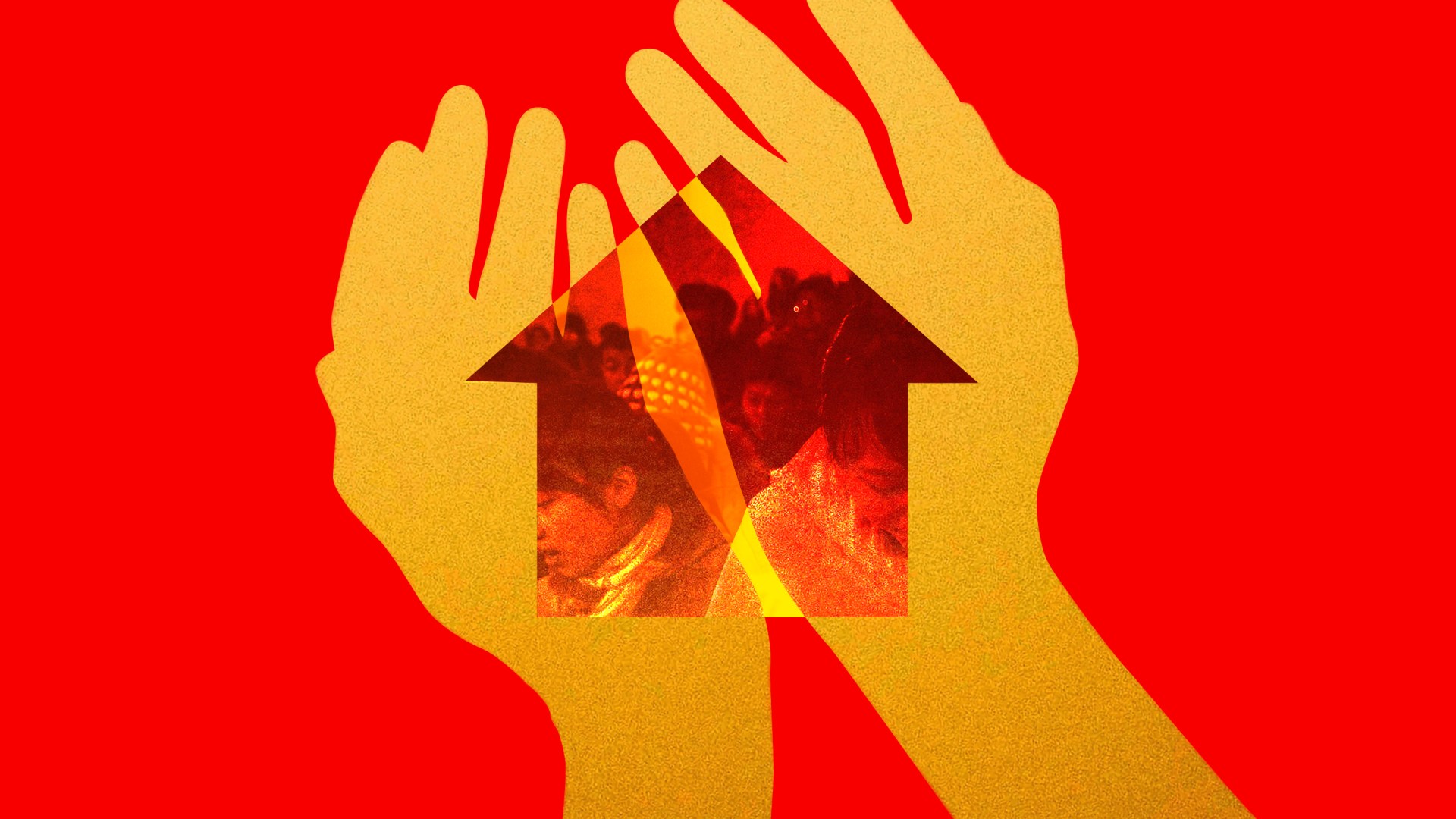
Woman praying during a church service in Vietnam.

Woman praying during a church service in Vietnam.

Christianity Today April 5, 2024
Godong / Getty

Operating a church in Vietnam just became even more difficult thanks to new government regulations that went into effect over the weekend. Under Decree 95, the government will now require religious groups to submit financial records and allow local government officials to suspend religious activities for unspecified “serious violations.”

Nguyen Ti Dinh of Vietnam’s religious affairs committee said the guidelines will improve how the government manages religion by implementing uniform measures for the 2018 Law on Belief and Religion, which requires religious groups to register with the government. Observers believe the decree is Vietnam’s attempt to demonstrate to the international community that it is trying to increase religious liberty and to get off the US State Department’s Special Watch List for countries engaged in religious freedom violations.

Yet religious liberty advocates and local church leaders believe the new rules will do the opposite. Instead of making it easier to register churches, the government is requiring more oversight and control. If the Vietnamese government is trying to show the international community that it is serious about religious freedom, noted Hien Vu, Vietnam program manager of the Institute for Global Engagement (IGE), it needs to explain how the new policy would achieve that.

“With this decree, it’s like Vietnam shot themselves in the foot,” Vu said.

The Southeast Asian country, where Christians make up 8 percent of the population, is ranked No. 35 in the Open Doors’ list of most difficult countries to be a Christian. While Christians can worship freely in bigger cities, believers among ethnic minority groups and in rural areas still face social exclusion, discrimination, and attacks. Religious groups involved in human rights advocacy have also been harassed.

Yet due to work by IGE and other international groups, in the past few decades government officials have become more open to listening to Christians and making space for Christianity in the country.

Decree 95 came as a surprise to religious liberty advocates and local church leaders when the government first made it public in December. It expands on a previous decree (Decree 162) by including measures that allow the government to shut down religious groups and adding requirements for receiving and reporting donations, including from foreign sources, according to Morning Star News.

In 2022, a draft dubbed the “punishment decree” (due to its focus on punishments for infraction of the religious law) drew harsh criticisms from religious leaders and even some government officials. That decree was eventually tabled. But with Decree 95, the government skipped the step of soliciting public opinion and put the new decree into effect three months after announcing it.

To Vu, the most concerning aspect of the new decree is how it expands the government’s financial oversight of churches. An article of the decree reads, “Within 20 days, religious organizations and religious affiliates that receive financial aid are responsible for sending reports on the results of the use of grants to the competent state agency.”

“The government wants to really know where, how, what—everything about receiving financial support,” Vu said. “The government also needs to know how you spend it.”

While ostensibly the reasoning is to increase financial transparency, realistically, the rules are nearly impossible for many of Vietnam’s Protestant churches to follow, as house churches are often not registered with the government. The government’s own stringent rules (including that a church must exist for five years before applying) make it difficult to register. Some house churches are denied while others have waited years for recognition without any progress. Other house churches choose not to register due to the regulatory burdens.

In total, Vietnam has 11 legally registered evangelical denominations, according to Morning Star News.

Without legal status, the groups can’t open bank accounts and all their transactions are done in cash. Unlike in the West where tithes and other donations are tax-deductible, such frameworks and practices are nonexistent in Vietnam, and even large donors do not ask for receipts.

A pastor of a registered church in Ho Chi Minh City, who asked not to be named for security reasons, said that while he is familiar with the country’s religion law, the latest guideline on church finances adds confusion as to what the government now requires from them. Churches in his denomination, especially those in rural areas, often rely on foreign funding to construct or expand church buildings, and none of the pastors know how Decree 95 would impact this.

“We need the government to respect the church,” he said. “Something like Decree 95, something like that should not apply to the church. When we apply to have a church in Vietnam, we’re under very strong control from the government [already].”

The pastor believes the government doesn’t need to meddle with the church’s finances, adding that if the government continues to tighten its control on churches, “the future is not good.”

A third of the decree’s 98-page document focuses on suspending religious activities for serious violations of the rules. Actions such as “infringing on the morality of our indigenous culture” and “using religion for personal aggrandizement” are forbidden. Vu noted that such vague language allows authorities to stop any group they view as a threat to the government’s one-party rule.

Religious groups have 24 months to rectify their behavior or face permanent dissolution. The decree also empowers more government officials in the communist bureaucracy—all the way down to the commune level or the smallest unit of local governance—to suspend religious activities and organizations.

How the new rules will play out in reality remains to be seen. One Vietnamese leader of a nondenominational ministry told Morning Star News that like previous legislation, “in Vietnam everything is open, everything is negotiable.” Despite what is written on paper, previous regulations have not been strictly enforced, and Christians with close relationships with government officials can continue worshiping in peace.

Vu said that even with the new decree in effect, pastors and church leaders in Vietnam remain steadfast and resilient.

“They are used to these restrictions,” Vu said. She described their attitude as “We’ll deal with it when it comes, but we’ll do whatever God calls us to do.”

Culture

Andrew Peterson: ‘No Teachable Moments’

The writer of the best-selling children’s book series The Wingfeather Saga hopes season 2 of the television adaptation “will be taken as a story first.”

Season Two of The Wingfeather Saga

Season Two of The Wingfeather Saga

Christianity Today April 5, 2024
Courtesy of Angel Studios

Can a fantasy epic introduce the gospel to kids? That’s the hope behind The Wingfeather Saga, the children’s book series turned television show that’s just premiered its second season. (Episode 1 is available for viewing starting today, April 5, on www.angel.com; the remaining six episodes will be released weekly this spring.) The series tells the story of the three Igiby siblings—Janner, “Tink,” and Leeli—who live with their mother and grandfather in a world called Aerwiar. When the children learn that their family is at the center of a great mystery, their lives change forever.

Wingfeather came from the mind of award-winning author and musician Andrew Peterson. He recently spoke with J. D. Peabody, author of the children’s fantasy series The Inkwell Chronicles, about art, storytelling, and “making known the deeds of the Lord.” Their conversation has been edited for clarity and length.

What can Wingfeather fans expect in season 2?

There’s a lot of world-building that took place in season 1. With season 2, you’re off to the races. It comes out of the gate fast!

That said, season 2 is also the first time that the kids in the story are separated from their parents. It’s where character development begins—they’re having to solve problems on their own.

We’re not making a cartoon; we’re trying to tell an epic story and using animation to do it. Hopefully the result is something that feels like a real world. The stakes are high, though. The problems that this family faces are earthy, gritty, and painful.

Part of the reason we chose the art style that we did [known as “paint motion,” which blends traditional 2D animation with CGI characters] is that we didn’t want the show to feel disconnected from reality. Even though Wingfeather is set in a fantasy world, we wanted the characters to be people you’re getting to know and care about deeply. Even when they’re encountering things that are not of this world, they’re encountering them the way people in our world would.

Your aim has been to create something with appeal for all ages. What are some themes parents can watch for to discuss with their kids?

One theme that emerges in season 2 is around names, identity, and calling. For example, one of the main characters is called Tink—but his real name is Kalmar. His understanding of who he wants to be is at odds with who he is called to be. When I was writing the Wingfeather books more than 15 years ago, that’s one of the things God was teaching me—this idea that who he says I am is more foundational than who I think I am.

It’s important to me that this story operates as a story and not as a Sunday school lesson. Again and again in my notes for the writers on the show, I’ve written in all caps, “NO TEACHABLE MOMENTS.” At the dinner table afterward, you can find out what it has stirred up inside kids’ hearts and minds, what it is that they are learning.

I’m a pastor’s kid and my antenna is always up. Any time I sense that there’s a moral lesson as the agenda, it kind of pours water on the story for me.

My hope for The Wingfeather Saga is that it will be taken as a story first and will do this mysterious work that God has given stories to do in our hearts. It’s first and foremost an adventure with characters that kids can really identify with; we get to sit back and watch what the Holy Spirit does with it.

What kind of work do you imagine the Holy Spirit doing with it?

I grew up in the church, but I was a nominal Christian who didn’t really know Jesus or have a grasp of the gospel. I just didn’t get it. The year after I graduated from high school, I heard a song by Rich Mullins called “If I Stand.” Somehow it cut through all the other music I was listening to. It got my attention and helped me understand who Jesus really was. Back then, when I said, Yes, Jesus, I will follow you, my request to him was that I would someday be able to write music that would create that kind of moment for someone else.

I really believe in the arts. Poetry, storytelling, and music can sometimes be a portal. On the other side of that portal is the person of Jesus waiting to be discovered. One of my wildest hopes is that this show will be one of the bread crumbs on the way to someone discovering Jesus. Just a month ago or so, I received an email from a mom who said her son understood sin and salvation through the story of Kalmar Wingfeather [who runs from his true identity, losing his way before being restored]. When I read that email, I just started crying because it was an answer to that prayer.

If we can stir some longing in people, some unrest that leads them to find their own place in the story God is telling, that would be amazing.

Your creativity has taken many forms over the years—songwriting, sketching, painting, writing, etc. What has it been like trying your hand at filmmaking?

Filmmaking is much, much more difficult than any of these other endeavors. I’m so thankful that I get to be in the room, but I’m also thankful that the rest of the team has so much experience. The story has moved out from me into this objective space with all these other artists.

I started in music and I’m used to the collaborative process as a songwriter. I’m pretty well versed in not being precious about something that I’ve made; I’ve learned to care more about the thing itself than my own feelings.

In a previous interview with CT, you mentioned that you want to tell truth as beautifully as you can. Are there any new truths you’re learning in this season as you wrap up your annual Resurrection Letters tour?

There are times when I feel very tired and harried. I’m trying to find a balance between real Sabbath rest, stillness, and leading a quiet life, and at the same time being out on the road, on tour, proclaiming this incredible story.

To me, the tension is always in trying to understand if I’m supposed to pray for rest or vigor. I don’t know if I understand the answer to that question just yet. But on a day like today, I am thankful to have breath in my lungs and to be in this beautiful, broken world with this news.

The psalmists say so much about making known the deeds of the Lord; I think my wife and I both feel a calling and a passion for that. We’re trying to figure out how to trust God for the vigor to do that work while at the same time being courageous enough to sit still and say no to things—to realize that the kingdom is also showing up in the garden in our front yard or around the dinner table. Making known the deeds of the Lord also applies to being with our children and our granddaughter.

I don’t have as much shame and fear anymore. We have so much evidence at this point in our lives that God is not going to forsake us. It gives me a little more courage to move forward with a sense of obliviousness and joy.

J. D. Peabody is the pastor of New Day Church in Federal Way, Washington. He is the author of Perfectly Suited: The Armor of God for the Anxious Mind as well as the children’s fantasy series The Inkwell Chronicles.

Domestic Violence Is Rampant in Brazil. How Should Pastors Respond?

Statistics reveal that three out of ten women in the country have experienced abuse at some point in their lives. Theologians and leaders weigh on how to turn churches into safe places for them.

A demonstration in Brazil against sexual abuse of women in front of photos showing the victims of abuse.

A demonstration in Brazil against sexual abuse of women in front of photos showing the victims of abuse.

Christianity Today April 5, 2024
NurPhoto / Getty / Edits by CT

For too many Brazilian women abused by their spouses, the answer church leaders have given to their suffering is Ephesians 5:22: “Wives, submit yourselves to your own husbands.”

“It’s the cruelest phrase in the Bible,” one woman told journalist Marília de Camargo César, as she records in O Grito de Eva (Eve’s Cry). “[Church leaders] teach it in a twisted way, without taking into account the historical context, traditions, culture,” she explains, identified in the book only as Professor Regina.

Three out of ten Brazilian women suffer domestic violence at some point in their lives. The country has high rates of violence against women, ranking fifth in the world. Last year, a national hotline received calls from an average of 245 women each day reporting some kind of violence. All this in a nation where women comprise m ore than half (58%) of evangelicals.

Recent allegations of abuse in North American churches have generated discussion in the Brazilian church around the issue, but churches and denominations have standard procedures or adopted best practices for addressing domestic violence. Yet in an environment where many survivors don’t report violence because of shame and fear of retaliation, evangelical churches have the opportunity to be places of shelter and guidance for hurting women.

Given these realities, CT invited six evangelical leaders who are experts on the subject to answer the following question: “What should church leaders do when a female congregant says she has been a victim of abuse or violence?”

Answers have been edited for clarity and style.

Marília César, journalist and author of the book O Grito de Eva, São Paulo

Church leadership should encourage the person to report it and, if possible, accompany them to the police station to file a report.

Church leaders should then arrange for people, preferably women in the church with experience in this kind of violence, to walk alongside the victim, giving her emotional support and, if necessary, refer her to the appropriate health or mental health professionals.

The perpetrator, if he is a member of the church community, should be called to account. There are churches with therapeutic work that bring men together for a kind of group therapy to deal with abusive behavior and toxic relationships, but unfortunately, these initiatives are still not very common.

Churches need to address this issue more openly and more often until it becomes unacceptable for pastors and members to have to live with situations of sexual abuse in their congregations.

Alex Stahlhoefer, doctor of theology and professor at the Lutheran College of Theology, São Bento do Sul

The first response must always be to welcome the woman suffering. Jesus instructs us to weep with those who weep and to be consolers and comforters. We shouldn’t start by asking them about the details of the violence but should first offer emotional support so that they can express their pain, distress, and fears.

After that, it’s important to deal with the support network. Who will offer her shelter and safety? Can she return home? Who will accompany the victim to the police station to press charges? Care must be taken with the confidentiality of the information, as the victim is already fragile, and we can spare her from the unnecessary judgments of people who don’t need to know what happened.

If the abuser is a member of the congregation or a leader, the church must also take care that they do not use a position of leadership to coerce people to testify on their behalf or spread rumors about the victim’s image in order to diminish their responsibility.

A serious church should have a written statement, approved by the leadership and disseminated to all members, on how the church proceeds in cases of abuse and violence. Creating a culture where violence is not tolerated and where reports are taken seriously helps to create a healthy and safe environment for women.

Jennifer Carvalho, coordinator of the Imago Dei Mission and of the Cosmovision and Sexuality Study Group, Natal

First, church leaders need to be careful not to re-victimize the victim by asking inappropriate questions, asking too many details, or suggesting that they contributed to the abuse. It’s also important to identify whether the abuser is someone close to the victim, to keep her safe from him—if possible, the woman should be taken in by someone she trusts. In the event of rape, within 72 hours after the crime, the victim should be referred to a hospital for medical assessment. By law, victims under the age of 18 must be taken to the hospital.

After that, victims should be advised about the need to report the case to the police station and also be offered psychological and pastoral counseling.

If the abuser is part of the congregation, church leaders should start the disciplinary and removal process and direct him to hand himself in to the police and to start psychological treatment. Only after a few years, with psychological support and trained leadership, can it be assessed whether there has been genuine repentance. His reintroduction to the church, however, will probably not be possible, and the leadership will need, with discernment and study, to create another alternative.

If the person who committed the abuse is a church leader, the previous guideline applies concurrently with a realignment of the church regarding what happened. In addition, there needs to be extensive training about the abuse and its consequences, the publication of a sincere apology, the care of the victim, and an investigation to find out if there have been other cases—so that other possible victims can be cared for.

People will be encouraged to report if the church is welcoming and aware that abuse exists and if this sin is combated from the pulpit to the office.

Yago Martins, pastor of Maanaim Baptist Church, author, and YouTuber, Fortaleza

Unfortunately, many fellow pastors believe that they can only take action after investigating the story very thoroughly, interviewing the husband, and checking all the accounts for any contradictions, to find out whether the woman’s complaint is true or not. In this process it is also important to report the matter to the civil authorities, deposing leaders (if the abuser is someone in this position), [enacting] ecclesiastical discipline, and caring for the victim.

Even if the wife’s testimony alone doesn’t prove that the abuse really happened, the mere testimony should be enough for church leaders to protect the wife from her husband. Protection first, investigation later. I have personally dealt with false reports of abuse in my pastoral ministry, but I don’t regret for a minute having welcomed and protected someone who brought a report that in time turned out to be false. It’s better to offer protection that later turns out to be unnecessary than to run the risk of dismissing such a serious complaint and leaving someone at the mercy of an aggressor.

Douglas Baptista, pastor of the Assemblies of God and president of the Education and Culture Council of the General Convention of the Assemblies of God in Brazil (CGADB)

In the creation act, the divine image is distributed without distinction between men and women (Gen. 1:27). The Bible teaches the equal importance of both (1 Cor. 11:11–12). The Christian marriage model requires the husband to lead his home in the same way that Christ leads the church—that is, with a vital interest in his wife’s well-being (Eph. 5:28–29). The husband must love his wife as Christ loves the church. This implies practicing some kind of sacrifice (Eph. 5:25). The wife must be treated with love and not with violence, threats, or authoritarianism. The husband must care for his wife in the same way that he cares for himself (Eph. 5:28). This means protecting his wife and providing her with a dignified life. This care is not limited to material provisions but includes affection, consideration, and honor, among others. These actions must be sincere and permanent, both in public and in private (Col. 3:19).

According to the biblical model, no woman should be subjected to a toxic relationship. This type of abuse happens in different ways: verbally, physically, emotionally. For this reason, a wife should be aware of her husband’s aggressiveness and whether he becomes more aggressive when he is contradicted. When this happens, the first step is to immediately seek help and report any signs of violence to your leaders and the civil authorities.

If the abuser is a member or leader of the church, the case must be dealt with firmly to stop the abusive behavior. It should also be noted that sometimes women deny or do not see the situation of abuse, or try to justify the violent actions of their husbands. Therefore, it is essential to offer a support system, making women comfortable to approach and receive help.

Norma Braga, theologian and image consultant, São Paulo

Christians must realize that abusers are masters of the art of deception and abusers can be husbands, fathers, pastors, or youth leaders. Healthy leaders will act as protectors of women and children, who are usually the most likely to be victims.

The best prevention against abuse is to foster a Christ-centered culture in the church. It’s not enough for our theology to be accurate. In many cases of sexual abuse, even child abuse, the perpetrator is not reported to the police because “brother doesn’t go to court against brother”—but this argument is a distortion of the Word. In the event of a crime, the church needs to step back so that the state can deal with the case; it’s the state’s sphere, not the church’s.

Abuse among us Christians is even worse, as it is usually justified with odious readings from the Bible, which leaves deep scars on the soul. We need to go back to our origins, to the truly humble leadership of the Lord Jesus, who didn’t use the sheep for his own gain but sacrificed himself for them.

Theology

New Atheism Finally Learns How to Destroy Christianity

Richard Dawkins’s cultural “Christianity” could hollow out our faith far more efficiently than straightforward attacks.

Christianity Today April 5, 2024
Illustration by Christianity Today / Source Images: Unsplash

This piece was adapted from Russell Moore’s newsletter. Subscribe here.

One of the most notorious atheists has had a “come to Jesus” moment. He’s also figured out, at long last, a way to undermine the Christian religion he loathes. And, unlike his previous efforts, this one could actually work.

Richard Dawkins, the author of The God Delusion, was among the most recognized proponents of New Atheism, a movement to reject the existence of God that had its golden era 15 or 20 years ago. Indeed, he was one of the movement’s “four horsemen,” along with Christopher Hitchens, Sam Harris, and Daniel Dennett.

What was “new” about all of this was hardly the arguments, which were usually warmed-over Bertrand Russell. It was the fighting mood of it all. Audiences could feel a vicarious sense of “aren’t we naughty?” counterculturalism when they heard Hitchens ridiculing not just televangelists or abusive priests but Mother Teresa as a fraud. This theatricality eventually wore thin, until even fellow atheists seemed embarrassed by it.

But now Dawkins emerges again, this time in a viral video arguing for Christianity … kind of. He notes the plummeting of church attendance and Christian identification in his country, the United Kingdom, and says that, on one level, he’s glad to see it. Yet on the other hand, Dawkins continues, he’s “slightly horrified” to see the promotion of Ramadan in the UK. After all, he’s a Christian in a Christian country.

Lest anyone be confused, Dawkins made clear that he’s a “cultural Christian, … not a believer.” He loves the hymns and the Christmas carols and the cathedrals—everything about Christianity except, well, the Christ. “I like to live in a culturally Christian country,” Dawkins said, “although I do not believe a single word of the Christian faith.”

In this case, cultural Christian has a distinct meaning for Dawkins, which amounts to “not Muslim.” It’s a way of defining who we and they are based on national customs, not on any concern for who (or if) God is.

I immediately thought of a segment from the television series Ramy, in which the lead character, played by Ramy Youssef, talks with a Jewish businessman about similarities between the American Jewish and American Muslim experiences. One of the major similarities, the Ramy character says, is “Christmaslessness.”

I can’t think of a single one of my Jewish or Muslim friends and acquaintances who would define being a Jew or a Muslim that way (nor, I’m sure, would Youssef say that’s all of it). But I suspect there are some people for whom that feeling is a primary piece of their identity in America, for whom the issue isn’t whether God was really there at Sinai or at Mecca but rather who is part of us and who is them. The sort of “Christianity” Dawkins proposes just replaces “Christmaslessness” with “Christmasfulness,” “Easterfulness,” or, most accurately, “Ramadanlessness.”

Fifteen or so years ago, some Christian friends of mine were terrified of New Atheism. They took the “four horsemen” language as a signal of some sort of catastrophe of which these atheists were the vanguard. The project didn’t work, though. Yes, certain parts of the Western world have continued to secularize, but of all the reasons for a loss of faith, the arguments of The God Delusion probably aren’t one of them.

If I were a Screwtape, a literal devil’s advocate, advising atheists on how best to actually destroy the church, Dawkins’ kind of explicitly disenchanted cultural Christianity is not what I would propose. Overt atheism won’t work, at least at first. People are drawn to belong, and they are drawn to worship. I would, however, propose the basic impulse of what Dawkins said, though tied to rhetoric that still sounds religious. Attacking Christianity rarely works; co-opting it often does.

The urge to make religion the way to prove one’s cultural identity against “outsiders” will always find an eager audience. For those who worship their flesh—defined in terms of race, region, class, political identity, whatever—having a mascot they can call “God” will always be useful. The projection of all that they love about their own people, nation, and selves onto an unquestionable and unquestioning mascot can build cohesion. They might even call that mascot “Jesus.”

This kind of “Christianity” hollows out the Christian religion far more efficiently than straightforward attempts to convince people that God is a delusion. It defeats Christianity by replacing the living God with a God who is, in fact, a delusion.

It works to suppress the conscience that, in the deepest night, says, The God you are worshiping is a projection of your group; the group you are worshiping is a projection of yourself. It does away with a Christian faith that calls not for external conformity but for a new birth, a renewing of the mind, a union with the living Christ. Then it inhabits the husk of that religion, paganizing it until one can toss away the shell.

That final change doesn’t take long. And these blood-and-soil religions are never content to valorize their own blood and their own soil. They eventually move on to shedding other people’s blood, stealing other people’s soil.

The problem with Dawkins’s “cultural Christianity,” then, is not that he says it out loud; it’s that many people hold the same view and won’t say it … yet. Christianity is not about national anthems and village chapels and candlelight carol sings. It’s certainly not about using the levers of culture or the state to coerce other people to pretend that they are Christians when they are not.

If the gospel isn’t real, the gospel doesn’t work. Genuine paganism will win out over pretend Christianity every time.

The apostle Paul warned that in the last days false teachers would use whatever people lust for—pleasure, power, belonging, self—to introduce a kind of religion “having a form of godliness but denying its power” (2 Tim. 3:5). The devil is smart enough to use hollow, cultural Christianity to make us atheists in the long run, to realize that the best way to take down a cross is to replace it with a culture, a crown, or a cathedral—or a Christmas tree.

But remember: Jesus is alive and aware, and he’s a horseman too.

Russell Moore is the editor in chief at Christianity Today and leads its Public Theology Project.

Theology

It’s the End of the World (But Not as We Know It)

The total eclipse is the latest of many apocalyptic expectations corrupting our view of Revelation.

Christianity Today April 4, 2024
Illustration by Christianity Today / Source Images: WikiMedia Commons / Unsplash

Next week’s solar eclipse has stoked the flames of end-time speculations, once again whipping doomsday theorists into a frenzy.

As the April 8 event will take place primarily over North America, some in the US are anticipating a great Day of Judgment complete with terrorist attacks, biological warfare, and nuclear meltdowns. According to alt-right conspiracy theorists, including some fringe evangelical leaders, this war will usher in a new world order in which Christ will return and America (alongside Israel) will rule the nations.

This isn’t the first time apocalyptic predictions were based on impending eclipses—the same thing happened in 2017. But end-of-world interest seems to have increased over the last few years, as things like the COVID-19 pandemic, the war in Ukraine, and the Israel-Hamas conflict have meant nearly every region of the globe has faced some sort of calamity. These and other recent tribulations have led many believers to conclude that the end is near. In fact, a Pew Research Center study found in 2022 that over 60 percent of evangelical Christians in the US believe we are living in the end times.

But while some passages in the Bible do link astronomical phenomena with “the end” (Matt. 24:29; Joel 2:31), doomsday prophets fail to explain why their biblical, global, and cosmic calculus often revolves around America. They further neglect the fact that an eclipse happens somewhere on Earth approximately every 18 months—and that these solar events have been associated with imminent doom for thousands of years without consequence.

And yet, based on the book of Revelation, end-time conspiracists are correct in one aspect of their eschatology: We are living in the end times. But not, perhaps, in the way they might think.

Empowering every generation to see signs of “the end” is precisely the brilliance of the last book in the Bible, which contains the most direct and sustained teaching on the end times in Scripture. John, our apocalyptic author, has masterfully woven together a series of symbolic visions that readers of any time can understand in their own context. Above all, Revelation vividly communicates the gospel message and how Jesus expects us to respond in the here and now—which is why it is just as crucial to our faith as the Gospels.

John teaches that the end is near—so near that it’s already here. Christ’s death and resurrection has inaugurated the last days (1 John 2:18; Heb. 1:2; Rev. 1:1–3), and only the Father knows when Jesus will return (Mark 13:32–33)—which means we don’t have to “decode” Revelation or pinpoint apocalyptic events. Yet this is precisely what many of its interpreters have tried to do.

One of the most popular Christian interpretations of the end times is Left Behind—a series franchise portraying the believers’ Rapture and the subsequent labyrinth of events. Although few are still talking about the books, and it’s been a decade since the last movie came out (which was criticized by CT’s own review and follow-up), the series has “left behind” an evangelical legacy of misinterpreting the Book of Revelation and its apocalyptic vision.

The first Left Behind novel was published a scant few weeks after I became a Christian in 1995, and at first, I consumed the literature with almost as much reverence as Scripture itself. But as I kept reading the series, my interest waned. It seemed to offer little substantive guidance for my burgeoning faith. So I concluded that the Book of Revelation, upon which the books are loosely based, must have little to offer as well. After all, if I was going to be raptured before all the frightening events of the Great Tribulation, why should I care about John’s apocalyptic vision?

But now, nearly 30 years later, I’m a Bible scholar who specializes in the study of Revelation, and I continually implore people to not misuse the book as fodder for such end-times predictions.

The most common way God’s people have distorted John’s Apocalypse is by correlating its visions with real-world events, and so misconstruing its primary message. In every period of history, God’s people have identified signs of “the end” and the nefarious forces that would bring it about. In fact, the end of the world has been variously calculated as the years A.D. 275, 365, 400, 500, 999, 1000, 1666, 1843, 1914, 1994, and 2000, just to name a few.

The problem is, there are real-world implications for these apocalyptic forecasts—especially when they are more informed by a political stance than by a responsible study of the Scriptures.

During the Crusades in the Middle Ages (A.D. 1095–1291), Western Europeans hoped retaking the Holy Land would usher in the return of Christ—and multitudes of Muslim and Jewish people were slaughtered in the process. A couple hundred years later, Protestant Reformers maligned the papacy of the Catholic church as the Antichrist. Soon after, American colonists sought to establish a “New World,” which was closely identified with the New Jerusalem of Revelation 21. Thus, England was seen as the “Beast,” and the British Stamp Act became his mark.

In the 1980s, apocalyptic thinking vilified Russia as an “evil empire,” who, along with China, was identified as Gog and Magog (Rev. 20:8)—vicious enemies who will come against God’s people (and/or Jerusalem) before (or after) the Millennium. Today Iran and Palestine are two more contenders for the Gog and Magog title. At the same time, some among the Russian Orthodox faith believe that America leads the forces of the Antichrist.

My point is that if you are reading the Book of Revelation looking for specific details—a date for the world’s end, the name of an antichrist, or nations to label as enemies of God—you’ll find them. There have always been, and there will always be, forces that oppose God and his people.

But it’s important for us to understand the underlying eschatology behind narratives like the Left Behind series, since it lingers on in the evangelical consciousness and colors the lens through which many still read and interpret the Book of Revelation. One key facet of this worldview is dispensational premillennialism, which holds that true believers will be raptured—or supernaturally transported—to heaven, prior to seven years of intense geological, social, and political upheaval during which the Antichrist will rise and the Jerusalem temple will be rebuilt.

This period, “the tribulation,” will conclude with a great final battle, Armageddon, after which Christ will return and reign on earth with his saints for a thousand years. And although we don’t have space to unpack all the problems with this interpretation, it should be noted that the major tenet of this teaching, the Millennium, is only mentioned in one highly disputed passage of Scripture (Rev. 20:1–7). But exegetical issues aside, what are the potential dangers of this thinking in practice as we daily seek to live out the gospel?

First, if we take this mindset to its logical extent, we run the risk of ignoring our most sacred calling: loving all our neighbors. Viewing other people or groups as the divinely foretold enemies of God absolves us from attempting to reach them with the gospel message. In other words, if the Bible predicts that a person or a group of people are going to be defeated by Christ and burn in the lake of fire (Rev. 20:11–15), who are we to say otherwise?

Instead, Revelation teaches us that our cruciform witness bears fruit and serves as the vehicle by which those who reject God repent and give him glory (Rev. 11:13; 21:24). When we live out the gospel in a broken world, we embody a better way of life—the truth that God is liberating his entire creation from the forces of sin and death.

Second, if we expect to be raptured prior to trials and tribulations, we won’t be prepared when they smack us in the face. A major facet of Revelation’s teaching is that disasters are going to occur time and again. In every age, God’s people will face geological, political, social, and personal calamities. But if we assume Christ will exempt us from such affliction, our faith can wither when we encounter it. Instead, John seeks to fortify our faith as he exhorts us to persevere through trials. We aren’t called to escape the world, but to bear witness to Christ in it.

Third, closely associated with “Left Behind” thought is the belief that the national/political entity of Israel enjoys a status that trumps that of other peoples and nations—in part because of the association of Zionism with American exceptionalism throughout modern history.

But the overwhelming teaching of the New Testament, including Revelation, indicates that all the peoples of the earth are equally treasured by God. The Father desires every people groupto experience his love and grace through Christ (Acts 10:34–35; 2 Pet. 3:9). Biblically and theologically speaking, no national entity, including America and Israel, receives special favor in the eyes of God. And to say otherwise can greatly hinder the spread of the gospel in the world.

With the increasing polarization of the United States and with traditional Judeo-Christian values often being denounced as white nationalism, it is vital for us to affirm that the teachings of Scripture, the salvation of God and his promises are equally available to all peoples. Such a principle is not arbitrarily imposed upon Scripture but arises directly from sound exegesis.

If the point of Revelation isn’t to give us a map of end-time events, what is it for and why do we need it? The purpose of Revelation is to motivate believers through a message of hope. Jesus has already defeated evil! We aren’t waiting on the Rapture, the Antichrist, or Armageddon. We are waiting for Jesus. Out of his love and grace, God may tarry—but when Jesus finally returns, he will come triumphantly to judge evil as well as reclaim and renew God’s creation.

In the meantime, believers continue to “war” on his behalf—not against flesh and blood but against the unseen powers of this world (Eph. 6:12). And our victory is achieved paradoxically through suffering and self-sacrifice. Just as Christ accomplished the redemption of the world through his sacrificial death, so also Christ’s followers are called to become instruments of restoration through our own cruciform obedience and perseverance.

The means of victory in the Apocalypse is both counterintuitive and countercultural. The idea of a future Rapture, in which believers escape tribulation by being supernaturally transported to heaven, completely misses the point of the book. Even worse, expecting Christ to return at the end of time to defeat his enemies through earthly warfare is to make the same mistake as the first-century Jewish people who expected their Messiah to overthrow Rome.

To place our hope in a Messiah who wins through superior power and military might is to agree with the ideology of this world rather than that of the slain-yet-standing Lamb. The Messiah we follow is the one who conquered by means of a humiliating, painful, and public death.

All this rich teaching is lost when we see Revelation as a series of events to decode. Reading the book through any other lens than its own severely impedes our ability to embrace its missional and spiritual significance. So how do we avoid this pitfall and appropriate the message of Revelation in a way that edifies our faith, transforms our theology, and benefits God’s creation?

First, we must study Scripture contextually. If we read Revelation in the context of the Gospels (and the rest of the NT), the image of a militant messiah who returns to slaughter his foes is nonsensical. We must also take the book’s genre into account. Revelation is apocalyptic literature, which contains symbolic communication, allowing us to see reality from a different perspective. An apocalypse doesn’t tell us about the end of the world but does something far more important: it reveals the true nature of the world.

In fact, the English word apocalypse stems from the Greek word apocalypsis, which means “a revelation,” not “the end of the world,” as it has come to mean in vernacular English (which, of course, is why the name of John’s book was translated as “Revelation”). And if that weren’t enough to convince us, John himself tells us that his visions are symbolic (1:1), a nuance that is often obscured in English translations. (The Holman Christian Standard Bible comes closest to the precise meaning with the translation that God “signified” the message to John, with a footnote that he “made it known through symbols.”)

Second, seeing reality from God’s perspective should galvanize our mission to the world. John’s message of victorious perseverance in the face of hostility was initially intended to reorient the identity and purpose of early Christians under the dominion of Rome—exhorting them to overcome the pressure to compromise with a pagan society. In much the same way, we should be motivated to embody the truth of the gospel in a world that rejects Christ and his kingdom.

John teaches that God opposes evil and fights on behalf of justice, and that he will one day decisively defeat all forces of darkness in the earthly and spiritual realms. But for now, God chooses to work primarily through the church and his saints. So, we should publicly fight for truth, goodness, and righteousness and oppose all falsehood, injustice, and evil on behalf of every people group. And we must resist the temptation to align ourselves with ideologies that are socially popular or politically expedient, even if we end up facing persecution for our refusal to join the bandwagon—knowing we’ll be ready for every trial.

Lastly, solar eclipse or not, we are called to live every day as if it is our last. And whether Jesus returns in a day, a month, or a thousand years, we are called to publicly speak and sacrificially embody the truth of the gospel. We can’t know the day or hour, but Scripture says Jesus’ return draws closer with every passing day (Matt. 25:13; 1 Pet. 4:7). Such a biblical truth should realign all our activities, goals, plans, and relationships this side of eternity.

We are living in the end times. So what are we going to do about it?

Andrea L. Robinson is a professor at Huntsville Bible College, an interdenominational speaker, and the author of numerous publications on Revelation, eschatology, and ecotheology.

Books
Review

The Bible’s Development Is a Messy Story, but It Can Bolster Our Faith

If anything, the historical details are even messier than Susan Lim’s new account allows.

Christianity Today April 4, 2024
Illustration by Christianity Today / Source Images: WikiMedia Commons / Getty

What does history have to do with faith? Everything. As Paul attests in 1 Corinthians 15, Christ died. He was buried. He was raised on the third day. And then “he appeared to Cephas, and then to the Twelve,” and then “to more than five hundred of the brothers and sisters at the same time (vv. 5–6). Because Jesus’ work for his people unfolded on earth for everyone to see, the apostles proclaimed historical events.

Light of the Word: How Knowing the History of the Bible Illuminates Our Faith

What, then, does faith have to do with history? Again, everything. The events proclaimed include the Messiah’s death and resurrection, and faith grasps Jesus’ and the apostles’ interpretation of these events, for Christ died for our sins (1 Cor. 15:3) and was raised for our justification (Rom. 4:25). Christians have long embraced the maxim of “faith seeking understanding,” which entails reasoning and asking questions about the content of our faith, as Augustine explains in his Confessions—but always against a backdrop of ultimate confidence in God and the truths of Scripture.

Susan C. Lim models these habits in her book Light of the World: How Knowing the History of the Bible Illuminates Our Faith. Lim, a Biola University history professor, tells the story of how Scripture came to be, detailing all the twists and turns, all the complex debates and deliberations, that resulted in a settled tradition of which books constitute God’s Holy Word. This story, as she demonstrates, is far from neat and tidy—but understood rightly, can strengthen our trust in both the Bible and God’s sovereign guidance over human affairs. Lim wants her readers to join her in the spirit and faith of the Virgin Mary, asking, “How can this be?” (Luke 1:34, NRSV).

Lim’s book is no mere history of the Bible. Weaving her Christian testimony into chapters on the Bible’s history, her candor is refreshing, even as she shares past doubts and questions leading up to her “second confession” that all the Bible is God’s Word. Not every book recounting the Bible’s history contains a chapter on miracles or even takes up matters of interpretation, archaeological evidence, or the historical reliability of the biblical accounts themselves.

Lim rolls up her sleeves and delves into how the Protestant Bible came to have its 66 books (39 in the Old Testament and 27 in the New Testament). Convinced that knowledge of the Bible’s history can breathe life into our faith, she gives readers the facts, even as she admits that those facts do require interpretation. Lim knows the subject can be contentious, for the evidence sometimes leads down murky paths that don’t always go where we think they should. Many readers will resonate with Lim’s intention and design in this book. I certainly do.

The Old Testament and the Hebrew canon

In this same spirit, then, I want to encourage readers in their study of the history of the Bible as I engage Lim’s book on that subject. In my judgment, the book contains several inaccuracies or outdated theories. A few brief examples will suffice before addressing more significant matters.

Consider, for instance, Lim’s claim that Jerome, the early church priest who translated the Bible into Latin, “perhaps proposed” Ezra as the author of the Pentateuch, or the first five books of the Old Testament. But Jerome, in his treatise Against Jovinianus, comes closer to affirming Moses as the author; in another work, The Perpetual Virginity of Blessed Mary, he merely leaves open the possibility that Ezra restored the Pentateuch rather than writing it. A little later, Lim erroneously claims that the Gospel of Thomas circulated in two versions rather than listing two different literary works (the other is entitled the Infancy Gospel of Thomas).

As an account of the Protestant Bible, Lim narrates the relationship between the Hebrew and Protestant canons. Jews and Protestants have the same contents in what they respectively call the Hebrew Bible and the Old Testament, even though each group numbers, orders, and categorizes the books differently. Regarding whether the Tanakh (an acronym for the three parts of the Hebrew canon) was the Bible that Jesus read, Lim cautiously proposes that it “was considered a tradition by Jesus’ time” and that “we don’t know the definitive answer to this question.” Elsewhere, however, Lim concludes more confidently that the Tanakh “served as the foundation for Jesus’ ministry and the birth of Christianity.”

But the fact is that when Protestants began to list the books of the Old Testament, they did not refer to the Tanakh anywhere. For example, Martin Luther’s Bible (1534) lists the Old Testament contents according to the 24 books of the Hebrew Bible but preserves an order of History, Poetry, and Prophecy. This structure can be traced to early Christians like Gregory of Nazianzus, who lists 22 books, according to the number of letters in the Hebrew alphabet, and divides them into three parts: 12 historical books (like Joshua), 5 poetic books (like Proverbs), and 5 prophetic books (like Isaiah).

The Tanakh, for Lim, aids interpretation of individual books like Esther, since its three-part categorization of Law, Prophets, and Writings provides clues to how early readers interpreted individual books, and her observations on Esther in this regard are noteworthy. Still, she could have guided her readers to other ancient Hebrew canon structures and categories (still visible in most English Bibles today) that could illuminate how early readers interpreted books in light of their placement next to other books.

As readers wade into Light of the World, they will encounter terms and categories that early Christians developed to describe their religious literature. These include homologoumena, or “books unquestionably included in the canon”; antilegomena, referring to books “initially classified as canonical but later disputed”; and pseudepigrapha, books that are “religious in nature but outside the canon.” And a fourth category, the Old Testament Apocrypha, denotes “books added to the Greek Septuagint but never included in the Hebrew Old Testament.”

Researchers now refer to a great number of books (like 1 Enoch) a pseudepigrapha, even though early Christians did not use the term often (Cyril of Jerusalem mentioned “falsely titled” gospels like Thomas) and would have labeled these books as apocryphal or “hidden books.” In the heat of polemic, Jerome once referred to Tobit, Judith, Ecclesiasticus (also known as Ben Sira or Sirach), Wisdom of Solomon, and 1 and 2 Maccabees as “apocrypha.” But elsewhere he recommends these books as edifying reading, albeit not for the sake of confirming church doctrines.

Jerome thus joins other early Christians like Athanasius in describing a middle category of religious literature: neither canonical nor apocryphal, but useful and beneficial. Lim does not mention this middle category, and it leads to a problem as she reconstructs the church fathers’ understanding of how the Bible came to be. Many early Christians may have had a high view of these middle-tier books but would not have described them as canonical, disputed, or apocryphal.

The problem comes to a head in Lim’s discussion of the Septuagint (a Greek book collection notoriously difficult to define) and the Apocrypha. Lim holds that some Jewish scribes were responsible for adding books to the Septuagint that later became known as the Apocrypha. Later, Lim claims “the Apocrypha was appended to the Septuagint, which came to be known as the ‘Alexandrian List.’” This list was compiled in Alexandria, Egypt, even though the Jews never accepted the Apocrypha as canonical. The confusion set in, writes Lim, when some church fathers “misunderstood the Hebrew tradition and regarded some Apocryphal books as canonical.”

The history is messier. There is no evidence that Alexandrian Jews drafted a canon list or that they possessed a different canon than other Jews. This theory has been largely abandoned since the 1960s. Moreover, contrary to what Protestants might expect, many early Christians described the church’s Old Testament canon as agreeing with the Hebrew canon. Slightly later, Christians like Augustine developed a rival tradition based on the idea that the biblical canon encompasses books that the churches read and accepted.

In short, the Protestant Old Testament would come to reflect an early Christian view that limited the Old Testament to the Hebrew canon, while the Roman Catholic Old Testament would reflect another early Christian canon articulated by Augustine and the Synods of Hippo and Carthage. Lim is wrong, then, to state that the 16th-century Council of Trent, the main driver of the Catholic “Counter-Reformation,” was the first to reckon the Apocrypha as canonical. Trent was only the first council to pronounce “anathema” on those who refused to accept its canon.

The fourth century and before

In later sections of the book, Lim navigates similar challenges to the formation of the New Testament canon. Here, we’re introduced to heresies like Gnosticism and Marcionism, along with other early Christian literary works like the Shepherd of Hermas and the Didache. Again, the history behind the formation of the New Testament is messy, but when we grasp it rightly, as Lim contends, we see that God’s sovereignty was never thwarted. Furthermore, Lim believes Christians should take comfort in the fact that the New Testament canon came together in the fourth century and not earlier, since the church fathers were working diligently to distinguish canonical books from other books.

Lim interprets the Roman emperor Constantine’s conversion to Christianity in the fourth century as “pivotal” to the establishment of the church and the confirmation of the New Testament canon. Rightly, she avoids crediting the Council of Nicaea (A.D. 325) with creating the canon, but her emphasis on the council’s debates over orthodoxy and heresy does leave open the question of how those debates related to the New Testament’s formation.

For Lim, the end of the fourth century—the era of the Synods of Hippo (A.D. 393) and Carthage (A.D. 397)—brought about the great achievement of officially recognizing the New Testament canon. And no doubt the fourth century brought clarity to some books like 2 John, 3 John, and 2 Peter, which were not clearly recognized before then.

But Lim’s emphasis on the fourth-century culmination might cause readers to skip over important earlier developments in canon history, like the assembling of the fourfold gospel or the Pauline letters. Around A.D. 250, Origen of Alexandria had already listed the 27 books of the New Testament canon. Thus, the core of the New Testament was already established by the fourth century. Though some point to Athanasius’s 39th festal letter (A.D. 367) as authoritatively defining the New Testament canon, it was only a point of development in this process—not its final resolution.

History is messy because it involves people and materials, and the evidence we possess does not allow us to answer all our questions. But for Lim, the Bible’s history should not occasion despair or the deconstructing of one’s faith. Rather than weakening faith, knowledge of the Bible’s history serves to buttress and strengthen it—and, dare I say, even excite and inspire it. “Faith seeking understanding” commits one to trust God’s good providence even as one’s understanding increases through questioning and interpreting the evidence.

I hope readers of Lim’s book join her in the ever-deepening joy of discovering more of the Bible’s history and how it illuminates the Christian faith. If readers walk away even remotely more confident in the Bible’s trustworthiness and authenticity, and further encouraged on their own faith journeys, then Lim should count her mission successful.

John D. Meade is professor of Old Testament and director of the Text & Canon Institute at Phoenix Seminary. He is coauthor of Scribes & Scripture: The Amazing Story of How We Got the Bible (Crossway).

Theology

An Eclipse Is Evidence of Things Unseen

Astronomy teaches us to see the light in the world’s darkness.

Christianity Today April 4, 2024
Illustration by Christianity Today / Source Images: WikiMedia Commons / Unsplash

At the climax of the crucifixion story, darkness comes over the land. Jesus, crowned with thorns, cries out. The earth quakes; the temple curtain is ripped in two. God’s moment of greatest love seems like defeat: a fissure between heaven and earth. But, the Gospels hold, this isn’t the end of the story. The darkness ends, and Sunday morning comes. The stone in front of the grave is rolled away. “Do not be afraid,” an angel declares. “He has risen.”

I’ve often wished I had been there to see this cosmic event with my own eyes. To witness it. To know beyond a shadow of a doubt this was the Son of God. Alas, I wasn’t. I’ve seen no visible stone rolled back nor angelic appearances to light my shadowy doubts or fill those tenacious cracks of spiritual night.

But I have seen a total solar eclipse.

I witnessed the eclipse in 2017, camping in the Smoky Mountains. It’s easy to describe the events leading up to it: the eight-hour drive, the worry about clouds, the marshmallows, mosquitos, and building excitement. But how to describe when the moment hit?

Here are some words I wrote down: wind, cold, 360-degree sunset, crickets, stars, the end of the world.

You see it coming. There’s a shadow, a hundred miles wide, racing toward you, faster than thought. And then it hits. In my memory, it’s like plunging under water. The sound all changes, with a swoosh, like in movies. And the light—it’s not water you’re swimming in. It’s liquid metal. Everything silver, platinum, bizarre. The sun is gone, replaced by an ink-black pupil surrounded with a wild white iris of solar atmosphere.

“Or a morsel of bone,” writes author Annie Dillard in her essay “Total Eclipse.” “I pray you will never see anything more awful in the sky.”

Awful in all the senses of the word. In Scripture, when people encounter angels, they respond with terror and worship. A total solar eclipse is the same. Indeed, I’ve read that in the year 840, Emperor Louis of Bavaria saw the world plunged into eclipse for five long minutes and died of fright. In Syria, one of the earlier records of an eclipse, about 1223 before Christ, is accompanied by a note. It says, “Two livers were examined: danger.”

To experience a total eclipse is to cry out, to feel the earth shake, to feel a fissure between heaven and earth. But also to be full of awe.

In 1806, a condemned criminal, brought from his dungeon to witness the eclipse, raised his manacled arms to the sky.

“There seems an instinctive sense … akin to awe … whispering to our spirits,” wrote James Fenimore Cooper in reaction to that same eclipse. “Never have I beheld any spectacle which so plainly manifested the majesty of the Creator, or so forcibly taught the lesson of humility to man.”

My memory struggles to hold the totality of it all. I know my mouth hung open, overcome.

And then the sun comes back again. A sunrise in midday. The great stone in the sky rolled away, and light returned.

Some might object that any parallels between the events of Easter and the events of an eclipse go too far. What mystery is there in something I can explain to children with a bright flashlight and supplies from Walmart?

A quarter-inch ball of Play-Doh can, when aligned just right, represent the moon and cast a small shadow over a one-inch marshmallow earth about 30 inches away. Even if you want to get into the complicated orbital mechanics that make predicting eclipses a graduate-level mathematics exercise, we understand how the moon’s orbit is tipped, like a gyrating hula hoop, relative to the earth’s. We can calculate the sun’s small tugs that make that hoop precess like a top, compute its rocking like a child’s circus mobile.

Nothing particularly extraordinary: just a 2,200-mile-wide rock blocking some light. No mystery here: just an 80-million-trillion-ton orb of iron and silicon swinging between us and our life-giving star at 2,300 miles per hour.

I am reminded of Moses, when he climbed Mount Sinai to learn God’s laws and asked to see God’s glory. God allowed Moses to glimpse just his back as he passed by—face in full eclipse. When Moses returned, the Scriptures say, his face was radiant from even this obscured glance.

Eclipses have no practical benefit. They have nothing to add to crop production or most modern scientific studies. They seem to be a chance alignment, a coincidence of a moon 400 times smaller and also 400 times closer than our sun. In fact, in a few hundred million years, the moon will have receded far enough from the earth that total solar eclipses will no longer happen.

And yet, for now, every couple of years (for a narrow strip at least somewhere on the earth), they do. In my years as an astronomer, the more I learn of this delicate dance, with its precessing nodes and pirouetting axes, the more, I realize, my face begins to glow.

“God laughs and plays,” David James Duncan wrote. And Carl Sagan, for all his agnosticism, was right when he said, “We know we are approaching the greatest of mysteries.”

Still, I approach with caution. The number one rule of solar-eclipse watching is to not look directly at the sun. Except during those few moments of complete totality, you need to use specially designed eclipse glasses that block 99.99 percent of the light or use the reflected light of a pinhole camera, which effectively does the same.

There’s a similar theological truth. On that mountain God hid Moses in the crevice of a rock and covered him with his hand until he’d passed by. And me—where does God place me that I might glimpse his glory, except perhaps in the crevice of long shadows, like those cast by a rugged wooden cross?

“Every object near a star wears a cone of night,” writes astronomer Chet Raymo. “Near every star there is a ring of cone-shaped shadows that point into space like a crown of thorns. … Every particle of dust in the space of the solar system casts its own tiny pyramid of darkness.”

On a chalkboard I can draw lines and circles showing how the moon, earth, and planets carve narrow cone-shaped shadows in the sun’s light, 100 times taller than they are wide. How the part of the earth and the moon facing the sun are experiencing daytime, and as the earth spins into its pyramid of shadow, we experience night.

Night is a thorn we cannot escape; only from space can we see its sharpness.

In college I spent a significant amount of time pondering the problem of pain. I dove into apologetic, intellectual solutions, like the need for choice or freedom or contrast to bring out joy. Good in a classroom but weak in the face of real, lived pain. Why can a good God allow for all the suffering, all the evil that blankets this world? I still have no answers.

But I do have eclipses.

An eclipse is a reminder that shadows have tips and that night exists only in the narrow shafts of shadow. When we experience a total solar eclipse, we experience the very peak of the moon’s night, stroking the earth with the lightest brush of an ink-dipped feather. Blink and it’s done. But it’s enough to remind us of this gift: In space, night has edges. We live not in a universe of darkness but in a universe awash in light.

As Raymo adds, “Earth’s cone of night is the Paraclete that brings the gift of deep space and deep time.”

I do not know why, if God is loving, he tolerates evil. But I do know that, astronomically speaking, it takes night—real material darkness—to see. Without the narrow cracks of night in the sun’s encompassing light, we’d know nothing of distant galaxies, of forming stars. Earth and heaven are connected through the narrow night.

Job, brave enough to confront God in his pain, receives what I’ve long considered a not-so-comforting reply: “Where were you when I laid the earth’s foundation? … What is the way to the abode of light?” And yet, my friend Anna pointed out to me, Job responds with favor. God gave Job, apparently, exactly the answer he needed.

And I’ve been given an eclipse, a sliver of night, a fissure through which the universe shines. In the dark, in the tip of the moon’s shadow, I behold an abundance of mathematics, motion, and awe. The light of the world descends to darkness but then comes again—a hint of resurrection light.

Luke Leisman is a research professor at the University of Illinois Urbana-Champaign and blogs about astronomy in everyday life at Substack.

Are you looking for a Christian college that could be the right fit for your child?

Download our FREE guide

Christianity Today April 3, 2024

The Christian Faith of ‘Shogun’s’ ‘Blue-Eyed Samurai’

The real-life John Blackthorne was an Englishman who came to be known as Anjin. What the letters he left behind reveal about his relationship with God.

Cosmo Jarvis as John Blackthorne (third from left) in Shōgun on FX Networks.

Cosmo Jarvis as John Blackthorne (third from left) in Shōgun on FX Networks.

Christianity Today April 3, 2024
Courtesy of FX Networks

In Shizuoka, the prefecture of Japan where I grew up, you can find a park dedicated to the first Englishman to enter Japan. A small public space along the water in the city of Itō, it commemorates Miura Anjin, or William Adams, who arrived in the country when his ship washed up on its shores.

Captured by local leaders, Anjin was put in the service of Tokugawa Ieyasu—the first shōgun (a chief army commander who ruled Japan) of the Edo period—which led to his ascendancy as the first Westerner to become a samurai, earning him the nickname of “blue-eyed samurai.” Itō’s annual Anjin Festival in August commemorates his accomplishment in building the first Western-style ships in 1604, and Japan has honored him by registering his burial mound, Anjin-zuka in Yokosuka, as a national historical landmark.

Shōgun (2024), currently playing on FX, takes its inspiration from the lives of Anjin and Tokugawa. Set in the year that Anjin first stepped foot in Japan, it tells the story of an English ship pilot named John Blackthorne (Cosmo Jarvis) who washes ashore and is taken captive by Japanese bushō (“warrior lord”) Toranaga Yoshii (Hiroyuki Sanada). Blackthorne soon becomes entangled in Toranaga’s political rivalry with four other bushōs and ultimately witnesses the rise of Toranaga as a shōgun. Writers and producers Rachel Kondo and Justin Marks based their TV series on James Clavell’s bestselling novel with the same title published in 1975, which sold over 15 million copies and subsequently became a popular TV show in 1980.

Just as the original novel grew the general public’s interest in Japanese culture, the 2024 FX adaptation undoubtedly will inform many about Japanese culture and history. “Shōgun has probably conveyed more information about Japan to more people than all the combined writings of scholars, journalists, and novelists since the Pacific War,” wrote Japan scholar Henry Smith in 1980.

Similarly, the recent television series has garnered wide critical acclaim, as a reviewer for The New York Times noted, especially compared to its ’80s counterpart. But what many of the viewers will rediscover, or perhaps even learn for the first time, is how Christianity manifested in Japan, just 50 years or so after it first arrived.

The portrayal of Christianity in Shōgun

From the first episode, Shōgun establishes that by 1600, Portuguese Catholics had been richly profiting from trade in Japan for decades, keeping the country’s whereabouts hidden from their sworn enemies: the European Protestants. It’s this international religious and political conflict that sends Blackthorne and his Dutch ship Erasmus to Asia in the adaptation, with the explicit command to “plunder any Spanish territory.”

After Toranaga and his men take the crew of Erasmus captive, the prisoners fear that the Catholics are behind their incarceration. At one point, a Portuguese Catholic priest serves as an interpreter for Blackthorne. When the priest introduces himself as “a servant of God,” Blackthorne responds with the derision “your God … you papist prick.” He later rips off the rosary of the priest, stating, “I am not one of them,” and stomps on the cross. The priest then describes Blackthorne as a “devil, murderer, and pirate” who ought to be executed.

This scene is inspired by a historical account of Anjin that he describes in a letter from 1611. He negatively recounts how, soon after his arrival, a foreign Jesuit—his “mortal enem[y]”—came to serve as his translator.

The dramatized conflict between Blackthorne and the Catholic priest reflects the wider Protestant-Catholic religious and political turmoil during the 16th and 17th centuries. After the Protestant Reformation began in Wittenberg in 1517 and spread throughout Europe over the subsequent century, it fomented tension between Catholics and Protestants, at times resulting in armed clashes. Sometimes this violence escalated into significant bloodshed, including the French Wars of Religion (1562–1598) and the Thirty Years’ War (1618–1648).

It was also during this period that Ignatius of Loyola founded the Society of Jesus (better known as the Jesuits) in 1540, and Catholicism at large made a renewed effort in world evangelism. In 1549, the Spanish Jesuit Francis Xavier and his associates arrived in Japan as the first Christian missionaries, and the Roman Catholic faith soon spread across the country, reaching many, including the nobility.

The relationship between these distinct parts of the world also had economic consequences, allowing Portugal and Spain to monopolize trade with Japan. The unexpected arrival of the British Protestant sailor thus presented a religious, economic, and political threat to the (Catholic) Portuguese and Spaniards in Japan.

Miura Anjin / William Adams

The real-life Anjin was indeed a British navigator who left his wife and two children in England and boarded a doomed Dutch ship at the beginning of the 17th century. Just as the show portrays Toranaga granting Blackthorne the rank of hatamoto (a title given to upper-class samurai who were vassals to the shōgun), Anjin also became a hatamoto of Tokugawa and served as the counselor of foreign trade.

James Clavell, who wrote the original novel, as well as the writers of the FX adaptation, took several creative liberties that diverge from the historical account, however. Many of these differences are geographical, including changes to the hometown of the protagonist (from Kent County to London) and the part of Japan he arrives in (from Oita to Shizuoka Prefecture). But the adaptation also shows Blackthorne having a relationship with Toda Mariko (Anna Sawai). (In real life, Anjin took a Japanese wife and had a son named Joseph and a daughter named Susanna.)

Gracia Tama Hosokawa

Toda Mariko is loosely based on a historical figure commonly known as Gracia Tama Hosokawa. Born Akechi Tama, she was the daughter of Akechi Mitsuhide, who is infamously known for assassinating his lord in what became known as the Honnō-ji Incident. Due to her father’s treachery, her husband Hosokawa Tadaoki hid her in the mountains of modern Kyoto Prefecture for several years. Even after she returned to her husband’s palace in Osaka, she remained in confinement until her death.

One day while her husband was off to battle, Hosokawa secretly attended a Catholic Easter church service. Although this was the first and last time she attended a church service, her interest in Christianity led to her subsequent letter correspondences with Jesuit priests and ultimately her conversion. About a decade later, Tadaoki sided with Tokugawa in Japan’s largest samurai battle against commander Ishida Mitsunari.

Although sources differ on how Hosokawa died, when Ishida sought to take Hosokawa as a hostage, she either took her own life, was put to death, or was killed in a fire. As Hosokawa died in 1600, the presence of Mariko in Shōgun, which takes place later, is completely anachronistic. Additionally, the show’s portrayal of Mariko’s frequent interactions with Jesuit missionaries and her coming and going differ from the historical Hosokawa, who spent her life in seclusion. Mariko’s openness about her Christian identity, however, reflects Hosokawa’s strong faith and determination to hold to her beliefs even to the point of death.

A genuine faith?

Viewers may question whether Anjin was genuinely a Christian. In Shōgun, Blackthorne is foul-mouthed, engages in extramarital affairs, and irreverently steps on a cross. But an analysis of six letters written by the real-life Anjin between 1611 and 1617 indicates that his faith may have played a more significant role in his personal life.

Anjin explicitly refers to Jesus twice in his first letter, dated October 1611, which entreats the name of Jesus Christ when requesting that the recipient of the letter report his survival to his wife and children in England. He writes, “I do pray and intreate you in the name of Jesus Christ to doe so much as to make my being here in Iapon, knowen to my poor wife.” He also concludes the letter with a similar request, asking the Almighty God that his wife, children, and acquaintances would hear of his letter and that they would send a reply.

Anjin’s six letters from Japan refer to God a total of 47 times. When describing the hardship he and his crew went through as captives accused of thievery, he praises God for showing them mercy in saving their lives. He also claims that God has blessed him for repaying the evil actions of his “former enemies” (i.e., the Spaniards and Portuguese) with good. He writes a familiar ecclesial blessing: “to him only be all honnor and praise, power and glory, both now and for euer, worlde without ende” and confesses God as the creator of heaven and earth. These references to God support that, at least in speech, Anjin confessed his belief in God’s presence and guidance in his life.

By the time Anjin arrived in Japan, Christian persecution was already underway. In 1587, the imperial regent of Japan, Toyotomi Hideyoshi, described Christianity as an evil religion from Christian nations and Japan as protected by its own gods. He therefore issued edicts requiring his permission for daimyōs (powerful landholders) to become Christian, prohibiting them from forcing conversion upon his subjects, and expelling Christian missionaries. A decade later in 1597, Toyotomi crucified 26 Catholics (including both Franciscan and Jesuit missionaries and Japanese believers) in Nagasaki.

Anjin arrived in the neighboring city of Oita only three years after this tragic event, and his letters attest to increasing Christian persecution during his time in Japan. In a letter dated January 1613, he refers to the presence of many Christians according to the “Romishe order,” but already in 1612, the Franciscans were “put down,” and only the Jesuits remained in Nagasaki.

In 1614, Tokugawa Ieyasu issued an anti-Christianity edict, banning missionaries and making it illegal to become Christian. Anjin witnesses to Tokugawa’s persecution of Christians in a letter dated in 1616–17. He reports that Tokugawa deported foreign Roman Catholics and commanded the burning of churches. Additionally, following the death of Tokugawa, his son (Tokugawa Hidetada) was against the “Romish relligion” and prohibited daimyōs from converting to “Romish Christiane.”

The series of executions of Christians in Japan reflects the increasing severity of persecution during Anjin’s life until he died in 1620: in 1616 in Edo, 23 were martyred; in 1614 in Arima, 43 were martyred; and in 1619 in Kyōto, 53 were martyred.

Japan entered into a permanent state of national isolation in 1633, and during this period, the kakure kirishitan or “hidden Christians” concealed their faith to avoid fierce persecution. Japan hunted down Christians by requiring every Japanese family to register at a Buddhist church, making people step on a fumi-e (a picture with Christian symbols such as Jesus and Mary), and granting rewards to anyone who reported a Christian. Captured Christians were tortured until they renounced their faith, and those who did not abjure were brutally executed.

Though he was a foreigner, Anjin’s story nevertheless illustrates the complexities that Christians faced in the 17th century. As evidenced in his letters, his continued belief in God may attest to his perseverance of faith despite his spiritual isolation. Additionally, his rise to a position of influence reflects how others valued his knowledge, skillset, and social capital, despite his foreign Christian identity.

On the other hand, despite Anjin’s Protestant identity and presence in Japan, Protestantism did not take root or spread in Japan during his lifetime. And while Anjin retained his belief in God, the question remains: Did he conceal his faith in response to the increasing hostilities against Christians in Japan?

In fact, Anjin’s faith is clearest in his first letter, whereas in his later letters from 1617, the expression of his faith is limited to formulaic conclusions that either entrust the recipient to the “protection of the allmighty” or pray for the recipient’s prosperity.

Despite the lack of explicit faith declarations leading up to his death in 1620, one can hope he was inspired by the courageous faith of other Japanese Christians, like Hosokawa, who once told a priest that her conversion happened “not by the persuasion of humans, but only by the grace and mercy of one and only almighty God, in whom I have found that even if the heavens changed into the earth and the trees and the plains ceased to be, I, by the confidence which I have in God, shall not be moved.”

Kaz Hayashi (PhD, Baylor University) is associate professor of Old Testament at Bethel Seminary/University in Minnesota. He was born and raised in Japan, attended high school in Malaysia, and now resides in Minnesota with his family. He is a fellow of Every Voice: A Center for Kingdom Diversity in Christian Theological Education.

Books
Review

Faith Deconstruction Can Be a Search for Answers or a Search for Exits

Christians should encourage doubters’ questions. They should also discern what those questions might be seeking.

Christianity Today April 3, 2024
Rayson Tan / Unsplash

Wrestling with Christian faith—questioning, doubting, reforming, and even falling away from it—has been part of the Christian tradition as long as there’s been a Christian tradition. Christianity asserts some big claims about the world, and a healthy faith can mean wrestling with these claims at some point along our faith journey. The result can be a more robust faith, even if it is a somewhat reformed faith.

The Deconstruction of Christianity: What It Is, Why It’s Destructive, and How to Respond

The Deconstruction of Christianity: What It Is, Why It’s Destructive, and How to Respond

Tyndale

304 pages

$13.12

But this is certainly not how it goes for everyone. Sometimes one can’t get past an objection that calls the truth of Christianity into question. Other times, living by ethical claims that run counter to current cultural norms proves too heavy a burden. Sometimes the sheer audacity of the claims of Christianity leads people to dismiss them as unbelievable and unserious. And then there’s the presence of scandal and abuse within the ranks of church leaders. With church-related trauma all too common these days, some people simply want out.

These experiences, often lived out on social media and other online channels, travel under the banner of faith deconstruction. Deconstruction is one of those terms that feels familiar, even if most people know little about its roots. While it began as a term of art with 20th-century postmodern philosopher Jacques Derrida, I suspect most faith deconstructions aren’t being informed by a study in Derridean semantic theory! Today, deconstruction may refer to a wide variety of experiences.

To help with the confusion, Alisa Childers and Timothy Barnett offer their new book, The Deconstruction of Christianity: What It Is, Why It’s Destructive, and How to Respond. As their subtitle makes clear, Childers and Barnett take a critical stance toward the deconstruction movement. Their tone is decisively polemical toward what they identify as a grave danger facing the church.

Two potential misunderstandings

Before going further, it’s worth highlighting a couple ways the book might be misunderstood. First, it is not primarily a book for those going through deconstruction. As the authors stipulate, its primary audience is “Christians who are experiencing deconstruction from the outside.” The book, then, is written for those who are watching someone else, perhaps a family member or a friend, go through deconstruction. And the authors hope we might be equipped to watch and potentially guide that process in fruitful ways.

The second possible misunderstanding has to do with the target of the book’s criticism. Childers and Barnett have a rather narrow focus. This is seen in their definition of deconstruction. They say, “Faith deconstruction is a postmodern process of rethinking your faith without regarding Scripture as a standard.”

Those who see deconstruction in a more positive light probably won’t appreciate this definition. One might even see the book’s criticisms as aimed at a straw man that doesn’t resemble one’s own experience of doubting or questioning Christian faith. But this could be because the book isn’t aimed at addressing every possible variety of deconstruction.

As I understand the authors, they don’t have in mind someone who merely doubts the truth of Christianity, or even someone who is abandoning the faith after evaluating it on the basis of the evidence at hand. Instead, they are responding to those who use subjective standards—what they call a postmodern process—to come to views that align with cultural norms rather than biblical norms. While this may not be everyone’s form of deconstruction, the authors argue that it is (all too) common and support this claim with a raft of statements from leading voices in the deconstruction movement.

Truths of fact and preference

Childers and Barnett make use of an analogy made famous by the ever-prescient 20th-century theologian Francis Schaeffer. Schaeffer imagined a two-story building to illustrate two different kinds of truth.

On the lower story, we have objective truths, such as those found in science and mathematics. You would operate in a lower-story framework if, for instance, you were constructing a bridge, fixing your automobile, or doing your taxes—all tasks that can’t be completed without reliance upon objective facts. On the upper story, however, we have the truths of preference and what we take to be personally meaningful. Within the upper story, you might give opinions on your favorite ice cream, how someone should decorate their house, or what you personally find inspirational.

In sum, lower-story truths are facts made true by the way the world is, whereas the upper story is composed of subjective truths that are, in a sense, up to us and our preferences.

In many deconstruction stories, argue Childers and Barnett, lower-story truths play a minimal role. In other words, we see little concern for evidence that either does or does not substantiate the truth of Christian claims. Instead, we often hear assurances that one had to follow one’s heart or be true to oneself.

In a related vein, deconstruction narratives sometimes report a process of discovering that certain Christian doctrines are toxic or oppressive. It’s often quite unclear what makes a claim toxic or oppressive, and in many cases the accusation amounts to an expression of subjective distaste. But this shifts the claims of faith from the lower story to the upper story. If a particular flavor of ice cream is distasteful, then by all means reject it. But this doesn’t work so well for lower-story matters like medical diagnoses. The truth about one’s medical condition might be quite unpleasant to hear, but it would be foolish to reject the bad news simply for its undesirability.

Connecting this theme to the Christian faith, Childers and Barnett acknowledge that we may find some parts of it distasteful. But such evaluations, they argue, should take a back seat to considerations of objective truth and falsehood. Just like a medical diagnosis, what ultimately matters is whether the claims of Christianity correspond to reality.

Recovery or ‘improvement?’

It is sometimes said that the deconstruction movement is an extension of the Protestant Reformation. After all, reformers like Martin Luther rejected key doctrines professed by the church. Seen in this light, Luther was deconstructing the faith long before there were any YouTube and TikTok channels.

Childers and Barnett see little affinity between the Reformation and the contemporary phenomenon of deconstruction, as they’ve defined it. The thrust of the Reformation was a return to biblical fidelity. Proponents of deconstruction, on the other hand, seek to “‘improve’ [Christianity] according to their own personal beliefs and preferences rather than to recover the original, which they feel is harmful or oppressive.”

The authors admit that there are “many areas where the church has lost its way.” But even if people have legitimate concerns, this calls for a spirit of reformation, oriented toward the recovery of biblical truth rather than an impulse for wholesale deconstruction.

Childers and Barnett make the point that virtually all deconstruction stories mention the place of questions in launching the deconstruction journey. Questions should be encouraged, they emphasize, and they chide Christians who give overconfident and pat answers or, worse, no answers at all. But we have to be mindful of where the questions are coming from and what their askers might be seeking. As the authors observe, “Some questions seek answers, and some questions seek exits.” They advise taking care to discern where people are in the deconstruction process and assessing their readiness for substantive conversations about faith. Where we see that readiness, we engage their questions as best we can.

What comes next

Childers and Barnett are primarily focused on deconstruction. But deconstruction is a fundamentally negative project. When we deconstruct, we take something apart. What good does that something provide when it lies before us in pieces? At some point, we will replace our deconstructed view with another view about reality and the good life.

While there are a lot of ways, both good and bad, to take something apart, I’d suggest that a more important focus is the process of putting it back together. I fear that in all our discussions about deconstruction, we lose sight of what to do in light of the beliefs we’ve discarded.

To be clear, there are some really ill-advised ways to rethink our faith, and The Deconstruction of Christianity does a worthy job of highlighting them. Unfortunately, people can sometimes blow up their faith in ill-advised ways. Rethinking one’s faith can be an emotionally charged experience, and for some, it will be difficult—if not nearly impossible—to do it in a very principled way. So it’s going to get messy.

What comes next, though, is what’s crucially important. Now that we’ve called it all into question, what will we believe? How will we go about determining it? Will we be as tough on our new view as we were on traditional Christianity? Or will we just accept uncritically whatever is culturally fashionable? Deconstruction may be difficult and painful for many reasons, but the hardest work lies in what comes next.

Travis Dickinson is professor of philosophy at Dallas Baptist University. His books include Wandering Toward God: Finding Faith amid Doubts and Big Questions.

Apple PodcastsDown ArrowDown ArrowDown Arrowarrow_left_altLeft ArrowLeft ArrowRight ArrowRight ArrowRight Arrowarrow_up_altUp ArrowUp ArrowAvailable at Amazoncaret-downCloseCloseEmailEmailExpandExpandExternalExternalFacebookfacebook-squareGiftGiftGooglegoogleGoogle KeephamburgerInstagraminstagram-squareLinkLinklinkedin-squareListenListenListenChristianity TodayCT Creative Studio Logologo_orgMegaphoneMenuMenupausePinterestPlayPlayPocketPodcastRSSRSSSaveSaveSaveSearchSearchsearchSpotifyStitcherTelegramTable of ContentsTable of Contentstwitter-squareWhatsAppXYouTubeYouTube