Theology

Why Storms Are Necessary for Survival

Lent helps us see the trials of life in a new way

The Storm. 40 x 50

The Storm. 40 x 50

Joel Sheesley

Consider it pure joy, my brothers and sisters, whenever you face trials of many kinds, because you know that the testing of your faith produces perseverance. — James 1:2-3

You almost died, bro.”

The words had scarcely registered before my older brother slumped into a chair beside my hospital bed. I’d languished for days after a relatively routine surgery turned into a harrowing post-op full-body infection. My brother, a general surgeon, wasn’t one to mince words. His worn-out posture was evidence enough he wasn’t exaggerating.

My brother had brooded over my medical charts for days, ordering test after test in a desperate attempt to diagnose the bacteria trying to kill me. Though his mood was decidedly salty, he was the one who saved my life through a final corrective surgery. “You’re gonna be okay, bro. You’re gonna be fine.”

That evening, as I lay in my hospital bed, a storm rolled in over the city. The soothing sound of rain drew me out of my bed for the first time in days, and I ambled like an old man to a chair beside the window, hearing the raindrops pelt and then run in squiggly rivulets to the windowsill. Closing my eyes, I pondered the mystery of trials as a Bible verse echoed in my head:

“Consider it pure joy, my brothers and sisters, whenever you face trials of many kinds, because you know that the testing of your faith produces perseverance. Let perseverance finish its work so that you may be mature and complete, not lacking anything” (James 1:2–4).

For me, this passage had often seemed like a sadistic pining for pain. As one who had lived much of his life determined to outrun discomfort, the notion of taking joy in struggle was anathema. Didn’t being a believer invite blessing? How on earth could the pain and suffering of trials be considered pure joy?

In the 1980s, a research facility called Biosphere 2 built a closed ecosystem to test what it would take to eventually colonize space. Everything was carefully curated and provided for, and trees planted inside sprung up and appeared to thrive. Then they began to fall.

I imagine the botanists must have looked on in dismay, finding no evidence of disease or mite or weevil. There was nothing to cause the trees to topple; the conditions were perfect. And then they realized what was missing—something so simple, yet absent within the confines of the structure: wind.

The air was too still, too serene—an ease that guaranteed the trees were doomed. It’s the pressure and variation of natural wind that causes the trees to strengthen and their roots to grow. Though the trees of Biosphere 2 had all the sun, soil, and water they needed, in the absence of changing winds they built no resilience, and eventually fell under the weight of their own abundance.

Could it be that our difficulties, more than our delights, are what drive us closer to God? They remind us of our desperation and lead us back to the sole source of abundant life. Romans 5:3–5 encourages us:

“We also glory in our sufferings, because we know that suffering produces perseverance; perseverance, character; and character, hope. And hope does not put us to shame, because God’s love has been poured out into our hearts through the Holy Spirit, who has been given to us.”

I spent most of the night by that window as the rain continued to fall. Drifting in and out of sleep as my body continued to heal, I felt the peace of God like a warm embrace, reminding me that he’d been with me every step of my near-death journey, guiding my brother’s hands as he saved my life, filling that hospital room with his Spirit.

As we journey through the struggle-filled season of Lent, we can begin to see trials and storms in a new way. Though we may still have a strong aversion to pain, we can see the hand of God when the winds of trial come to buffet, and we can take solace in the fact that our roots are growing deeper.

Reflection Questions:


1. It's often difficult to perceive trials in a positive light while we endure them. As you think through your life, how have your difficult experiences changed you for the good? What did you learn?

2. In your darkest times, what did God teach you about himself? How did he comfort you and help you? Is there anyone in your life, be they friends or family, who you might encourage today through sharing your story?

Robert L. Fuller is a writer and filmmaker residing in Waco, Texas along with his wife and three teenage children. He is the author of an upcoming middle-grade sci-fi novel.

This article is part of Easter in the Everyday, a devotional to help individuals, small groups, and families journey through the 2024 Lent & Easter season. Learn more about this special issue here!

Theology

Eyes on the Prize of Faithful Service

How rugged discipline prepares us for reward

Intersection. Acrylic on Wood Panel. 24 x 24

Intersection. Acrylic on Wood Panel. 24 x 24

Curtis Newkirk

Everyone who competes in the games goes into strict training. They do it to get a crown that will not last, but we do it to get a crown that will last forever. — 1 Corinthians 9:25

The city of Corinth was the site of the Isthmian Games. Hosted every two years (instead of every four, like the Olympic Games), they celebrated Poseidon, the god of the sea. Athletes trained for months to prepare for the competition, to prove their prowess before a hungering audience.

When the apostle Paul challenged the Corinthian church to “run in such a way as to get the prize,” (1 Cor. 9:24), he used an instantly recognizable image: the athlete. “They do it to get a crown that will not last,” Paul wrote. “But we do it to get a crown that will last forever” (v. 25). Paul challenged his readers to treat their Christian life like an athletic feat: to train, run, fight, and finish well.

Western Christians frequently meditate on the gift of salvation. But there is a difference between a gift and a prize. A gift is given freely; a prize is earned and won. The prize Paul references in 1 Corinthians 9 is not salvation, but the reward for the works we do as saved people of God. How we live out our salvation on earth has real ramifications, both in the present and eternally. Earlier in his letter to the church at Corinth, Paul expresses this through the metaphor of home-building:

“For no one can lay any foundation other than the one already laid, which is Jesus Christ. If anyone builds on this foundation using gold, silver, costly stones, wood, hay or straw, their work will be shown for what it is, because the Day will bring it to light. It will be revealed with fire, and the fire will test the quality of each person’s work” (1 Cor. 3:11-13).

Each follower of Christ receives a free gift of salvation by the grace of God (Eph. 2:8). How we build on that gift is the working out of our salvation (Phil. 2:12). If we build with hay and straw— worthless, temporary pursuits—there is little to be shown for our faith on earth. But when we build with the gold, silver, and costly jewels of a mature Christian life, of good works done for the world, the quality of our building will be revealed at the last.

To build in such a way, we have to be strong. Like an athlete training for the games, we must discipline our bodies and keep them under control (1 Cor. 27): not out of legalism, shame, or fear, but out of love for the God who saved us. Discipline—living a boundaried life—brings freedom. By saying no to unhealthy impulses and listening to the Holy Spirit’s leading, we are freed to have deeper relationships, better health, stronger faith, and a greater witness. The disciplined life is not aimless, but focused. We have set our eyes on the prize of “well done, my good and faithful servant” (Matt. 25:21) and can run with his approval in mind.

We do not choose discipline in order to earn salvation; we choose it because we are saved. Because we are in Christ, a new creation, we must choose to say ”no” to some things and say “yes” to what is better—for the sake of our time, for rest, for connection, for discipleship, for health, and for growth. The season of Lent teaches us to say a temporary “no” so that we may experience a much deeper, more fulfilling “yes” to God. Any area in which we learn to delay gratification out of love for God (not out of legalism) leads us to a deeper experience of his affection and the profound impact of the Spirit-led life.

The crown of the Isthmian Games was made of pine. In Greek and Roman culture, pine represented eternal life. Still, the crown received by the winning athlete decayed within a few weeks. Those crowns did not last, but our prize will last forever (1 Cor. 9:24–25). The reward we receive for a faithful, disciplined Christian life is eternal and unchanging. The fruitful ways we build upon our salvation are seen and honored by our God, and when we stand face-to-face with him we can know every unseen effort, every hard-won trial, every painful surrender was worth the effort. May we be able to say with Paul: “I have fought the good fight, I have finished the race, I have kept the faith” (2 Tim. 4:7).

Reflection Questions:


1. How is the season of Lent presented as a time to show discipline and say a temporary "no" for a deeper "yes" to God?

2. How does Paul use the metaphor of an athlete to convey a deeper spiritual truth? What are some examples from your own life?

Phylicia Masonheimer is the founder of Every Woman a Theologian, the author of two books, and host of the Verity podcast.

This article is part of Easter in the Everyday, a devotional to help individuals, small groups, and families journey through the 2024 Lent & Easter season. Learn more about this special issue here!

Theology

A Power Made Possible Through Sacrifice

Palm Sunday’s message of the donkey, the lion, and the lamb

Hall. Oil on Paper. 2018

Hall. Oil on Paper. 2018

Claire Waterman

And when he had taken it, the four living creatures and the twenty-four elders fell down before the Lamb. Each one had a harp and they were holding golden bowls full of incense, which are the prayers of God’s people. — Revelation 5:8

To better understand Palm Sunday’s stark contrast—Jesus the King riding through the streets of Jerusalem on a lowly donkey—we look to Revelation. In Revelation 5, John dictates a dramatic scene where God presents a scroll that cannot be opened due to the fact that no one is found worthy. The apostle is overcome with emotion at the impossibility of the situation and the inability to break the seven seals. Then an elder instructs John to stop weeping: “Behold, the Lion of the tribe of Judah, the Root of David, has conquered, so that he can open the scroll and its seven seals” (v. 5, ESV). I picture the elder making this declaration with a booming voice and a sweeping gesture toward the throne—every eye in heaven expecting to see a roaring, flaming lion burst forth in a display of tremendous power. I imagine eyes scanning back and forth, bright and expectant, initially unaware of the creature that has stepped forward from the throne. Then they see him, the worthy one—not a lion, but a sacrificial lamb, whose throat has been slit, blood pouring down his chest, staining the pure white wool a deep crimson red.

It would have been accurate for Jesus to show himself as the lion of the tribe of Judah, in keeping with the way the elder announced his coming, but he doesn’t. Instead, he appears as one of the most non-threatening creatures on earth. He is approachable. Humble. Meek.

This motif of power demonstrated through restraint and sacrifice spans the pages of Scripture. Jesus Christ continually reveals the majesty in humility: The King of Kings comes to the world not in a palace but in a barn reeking of animal waste. His glory is first made manifest not to Herod the Great but to lowly shepherds. He does not choose to mentor the academic elite but the commoner. He affixes himself not to the upper echelons of society but to the homeless, as he demonstrates the nature of an upside-down kingdom to his bewildered disciples.

This is the Messiah who rides into Jerusalem on a donkey to the sight of palm fronds laid before him. He proceeds not to the halls of power to topple Rome and satisfy the crowd’s expectation of military victory, but to the center of Jewish worship to confront misguided notions of what it means to serve God. Jesus did not succumb to the accolades of the crowd and seek an earthly throne. Rather, he was enthroned on a Roman instrument of torture and execution, in obedience to the Father, and that we might be forgiven, cleansed, and reconciled to God.

Jesus embodied God’s original intent from Genesis chapters 1 and 2: that mankind would exercise a dominion of stewardship over the earth to bring about life, as a gardener endeavors to cultivate fruitfulness and beauty through their efforts. Adam and Eve failed in this task, so a new kind of human needed to emerge—one who would crush the head of the Serpent, but who would also be bruised in the process. Jesus was a suffering servant; a lion who was also a lamb. He is the God of unmatched authority who would don the garment of a servant and wash the very feet of those who would abandon him. One who would ride into Jerusalem on the week of his execution to the acclaim of one crowd, days later to face another that would demand his crucifixion. We see him weeping over the crowds immediately after the triumphal entry, concerned for those around him even as his own life became cloaked in peril (Luke 19:41). Jesus was completely secure in the affection and provision of the Father. He saw beyond the veil of death to the Resurrection, and was, therefore, able to endure betrayal, scourging, and the horror of the cross.

As imperfect humans who are drawn in by applause and fearful of pain, we often seek to embody the power of the lion—but we follow a lion who became a lamb. May we follow in the footsteps of our master this Palm Sunday, pursuing the sacrificial way of the cross so that others may encounter the life found in the blood of our Savior.

Reflection Questions:


1. Though he was powerful, why did Jesus choose to lower himself to serve others?
2. Am I using my resources, abilities, and influence to serve others? If not, how can I take a practical step this week to use power to serve?

Mick Murray has worked in pastoral ministry for over 15 years with Antioch Community Church in Waco, Texas.

This article is part of Easter in the Everyday, a devotional to help individuals, small groups, and families journey through the 2024 Lent & Easter season. Learn more about this special issue here!

Theology

Wasteful Worship

The grace to give when generosity seems absurd

Offertory. Acrylic on Canvas. 32 x 26

Offertory. Acrylic on Canvas. 32 x 26

Susan Savage

She did what she could. She poured perfume on my body beforehand to prepare for my burial. Truly I tell you, wherever the gospel is preached throughout the world, what she has done will also be told, in memory of her. — Mark 14:8-9

If there’s one thing I love, it’s an unexpected gift—whether given or received. Recently, I’ve found myself sending house guests on their way with things I’ve cherished: teapots, clothes, and even jewelry off my own person. I’ve felt the exhilaration and freedom found in the act of giving things away— things with real value. But extravagant and unexpected giving like this rarely comes from a place of natural generosity. There’s a supernatural grace at work, like the grace we see in the story of the woman with her alabaster jar (Mark 14:3–9).

I know this is grace because I’ve spent most of my life suffering from a scarcity mindset: the idea that there’s not enough to go around, and I’d be better off socking away what little I have. When I read the account of the woman anointing Jesus in the days before his crucifixion, my spirit wells with a resounding, Yes! and I wipe away tears in awe of this momentous act of worship. But I confess—and cringe as I do so—that my flesh still has the same response as those who were in the room, and I start to scrutinize her extravagance.

Against the protests of wastefulness and impropriety, Christ defends the woman, explaining to his disciples that she has prepared him for burial (v. 8). Her act of devotion and sacrifice will forever point to the Good News, and she will be remembered whenever it is proclaimed in all the world (v. 9). The woman anointing Jesus emptied out what could have been her most precious possession, pouring out her treasure for the sake of God incarnate. She anointed the Word before his burial, bringing about a tangible reminder of Jesus as the Anointed One, the long-awaited Messiah (Isaiah 61:1–3).

I imagine Jesus would still have been faintly fragrant with that oil as he was taken before Pilate. I imagine he would still have the sweet woody aroma of the nard on his hair, his beard—the lingering anointing. As he carried his cross, I wonder if the bystanders caught the fragrance, beyond the smell of sweat and blood. Perhaps they smelled a sweetness in the air as Christ ascended Golgotha. I wonder if the men nailed to their own crosses on either side of him picked up the scent.

The sign of anointing was largely reserved for kings in ancient Judaism. This woman’s bold act not only acknowledged Christ as King of Kings and Lord of Lords, it also foreshadowed what Christ would do two days later as he poured himself out in a lavish, loving, and seemingly foolish way on the cross. By giving himself as an offering, Jesus accomplishes what we could never have done for ourselves. What can sometimes look like foolishness to us is faithfulness; what appears wasteful is worshipful.

My generosity is more a spiritual discipline than a virtue; I cannot boast in giving because it’s against the will of my flesh. God, in his kindness, both invites me to give generously and empowers me by his Spirit to do so. I’ve come to realize that in teaching me to give things away he’s healing the part of me that still believes there won’t be enough. So I boast in this weakness, and I rejoice even though I still sometimes hear the voices directed at the woman at Bethany:

“How dare you do that?”

“This is irresponsible. You are irresponsible.”

“You’re giving away what you can’t afford. And for what?”

Then comes Jesus, my defender: “She has done a beautiful thing . . . She did what she could.” And the voices hush.

Reflection Questions:


1. What is your honest response to the scandalous generosity of the woman anointing Jesus? Who would you most likely resemble in the room?

2. How does lavish generosity challenge our instincts for financial or social self-preservation?

Hannah Weidmann is the co-founder of Everyday Heirloom Co., a brand dedicated to adorning women as God’s beloved using timeless methods of craft and storytelling.

This article is part of Easter in the Everyday, a devotional to help individuals, small groups, and families journey through the 2024 Lent & Easter season. Learn more about this special issue here!

Theology

The Fatal Fantasy

How Judas’s betrayal reveals the heart of misguided hope

Death is Vast as a Planet at Night. Oil on Canvas. 20 x 25

Death is Vast as a Planet at Night. Oil on Canvas. 20 x 25

Catherine Prescott

Then one of the Twelve—the one called Judas Iscariot—went to the chief priests and asked, “What are you willing to give me if I deliver him over to you?” So they counted out for him thirty pieces of silver. — Matthew 26:14

"We may note . . . that [Jesus] was never regarded as a mere moral teacher. He did not produce that effect on any of the people who actually met Him. He produced mainly three effects—Hatred—Terror—Adoration. There was no trace of people expressing mild approval.” — C. S. Lewis, God in the Dock

We don’t get to pick the version of Jesus we will worship. We love him as he is. Anything else is idolatry. Anything else is fantasy. Anything else is less than what Jesus died for us to have. A man once followed Jesus, counted as one of his disciples. He was released to do works only Jesus could empower, and tasked with guarding the resources of their assignment. However, at some point on his three-year journey with the Messiah, he succumbed to the sickness of disenchantment. His life, which ended at Akeldama, or “the field of blood” (Acts 1:19) reveals both the limitations of our human perspective and Jesus’ invitation to complete trust.

But let’s take a step back from the famous fatality of his story, and observe the climate that seemed to surround him. How could life in proximity to the Source of all hope, all beauty, all joy, end with such anguish and despair? Could the poison of comparison have embittered his heart? Was his imagination captivated by a fantasy of a heroic monarch who would topple an oppressive empire? Did he see a disorienting contradiction in Jesus’ gracious response to Mary of Bethany pouring out precious oil to anoint his feet?

Fantasy tethers a person to a false vision. It takes up the space faith and hope should fill. When things don’t go as expected, spirals of disillusionment and disappointment unfurl. Someone is to blame. Although it’s tempting to blame God for not bringing about the good we imagined, if we catch a glimpse of reality in the mirror, it turns out we are the ones yielding to the seductive call of illusion.

When faced with the reality of Jesus, Judas’s allegiance to his own aims ended up blinding him, and he missed the story that he could have lived. Jesus stays away from our pigeon holes and boxes. He continually shatters our expectations. His kingship is established in truth and grace, not in meeting our expectations. He has an intention, a goal, a gravity in his every step and every decision.

Grief, pain, confusion, unmet expectations, and unanswered prayers tend to reveal the depths of our hearts—do we love Jesus for who he truly is, or the fantasy we’ve created?

Jesus was the King who toppled an oppressive empire, but contrary to Judas’s expectations that empire was not Rome, but sin, hatred, and, ultimately death. Jesus is not disappointing. He is the King who blasts our most exciting dreams to pieces and reveals a story rich with possibility, faith, and joy.

In the story of Judas, we grieve the false promise of the flesh and our desire for worldly gain. We also lift our eyes from the fantasy we built for ourselves, toward the One whose life provokes us to desire things that are more profound, more beautiful, more authentic, and more enduring than our minds can conceive.

When our fantasies shatter and we feel exposed, we can turn away in disappointment, or turn vulnerably toward Jesus and let his everlasting nature swallow up the make-believe and be our living, breathing, and resurrected hope.

Reflection Questions:


1. Identify truths about Jesus that you've found challenging to agree with or accept. What aspects of his nature have you wrestled with?

2. Envision the impact on your life if you wholeheartedly loved Jesus for who he is. How would embracing and loving him authentically shape your daily experiences and overall perspective?

Eniola Abioye is a California-based missionary, songwriter, and poet, collaborating with groups like Upper Room, Bethel, and Maverick City.

This article is part of Easter in the Everyday, a devotional to help individuals, small groups, and families journey through the 2024 Lent & Easter season. Learn more about this special issue here!

Theology

‘I Nosedived into Christianity’: How a President’s Daughter Found Jesus

Once broken and desperate, Jerika Ejercito—daughter of former Philippine president Estrada—now wants to help others find wholeness.

Jerika Ejercito

Jerika Ejercito

Christianity Today February 13, 2024
Courtesy of Jerika Ejercito / Edits by CT

From a young age, Jerika Ejercito has been thrust into the spotlight. Her father is former Philippine president Joseph Ejercito Estrada, popularly known as Erap, and her mother is former actress Laarni Enriquez. Erap’s term was cut short in 2001 as corruption allegations led to an impeachment trial and his ousting. He was imprisoned for seven years.

For Ejercito, then only 16, the pressure of public scrutiny led to eating disorders, depression, suicide attempts, and a lifestyle of partying and drinking. Yet at age 27 she found Christ, and her new relationship with God sparked a life transformation.

Today Ejercito is a mother of five, an Instagram influencer, a Christian life coach, and a women’s ministry leader with a passion for biblical counseling. She talked to CT about her journey of finding redemption in Christ and how she now helps others process hardships and traumas like the ones she once kept secret.

This interview has been edited and shortened for clarity.

Can you tell me about your unique family and upbringing?

My parents are both public figures. My mom was an actress and my dad was an actor turned politician who held government office for 50 years: He was a mayor, senator, vice president, and then the president of the Philippines (1988–2001).

My dad has led a colorful life and has never been ashamed of it. He’s had many partners and nine children outside his marriage—including me and my two younger brothers. Growing up, I was very confused; the whole situation was too complicated for a child to understand, and my parents were not equipped to explain it to me in a way that I would understand.

We Filipinos tend to sweep things under the rug and just pray that everything will turn out okay. We don’t talk about the elephant in the room.

It's easy for people to cast stones against my dad. We are a very Catholic country, and people judge easily. Despite everything, my dad is a loving man. He’s the most generous person I know. He takes care of all of his children equally, and that says a lot about his character. Still, our unusual setup made me feel very insecure; we did not have a strong family foundation at home.

How did your father’s impeachment trial in 2001 impact you?

A few years before the impeachment trial, I was sexually abused. I was around 13 and already kind of lost. Suddenly, my innocence was gone, and that started my rebellious streak. I felt like I had nothing more to lose. After that incident, I became very conscious of my body and became bulimic at age 15.

So when the impeachment happened a year later, I was already a mess. I was in high school, and because of who my father was, I was bullied incessantly. My parents didn’t know how to handle the situation. We didn’t want to make things worse, because there was an ongoing impeachment. My younger brothers and I were all left to just figure things out on our own.

I couldn’t even share with anyone about the bullying I experienced in school because there were just so many things happening all at once. My mom didn’t know how to deal with all the pressure, so she sent me away to boarding school in the UK. She felt like I was going to be safer outside the Philippines.

I was 17 with all of these issues in my head: I felt worthless, not good enough, ashamed, guilty from the abuse and what was happening to my dad—and then I was sent away to be by myself. It was the first time I left the country without my family for that long, and everything just went downhill from there.

Jerika Ejercito with her husband and kids.Courtesy of Jerika Ejercito
Jerika Ejercito with her husband and kids.

Were you able to process that with anyone?

No, because it’s cultural for us to dismiss things like that. Sexual abuse is more common than we would like to admit. It’s a very shameful thing—especially for us because our family is well-known. I never really opened up about it publicly until now, but I would open up about it in church settings when they asked for my testimony.

After being sent away, I wanted to escape. I didn’t want to feel the pain and the shame. I felt so dirty and worthless. I needed things and people to numb me and take my mind off of it, and that’s how I dealt with it for the next 10 years. I don’t think I was ever sober in those 10 years.

None of my friends in boarding school were Christians, so we would feed off of each other’s brokenness. But I was still a good daughter and did everything my parents wanted me to do, and I managed to graduate from university. In 2011, my mom told me it was time to come home—and it was the last thing I wanted to do. When I left, it was the height of the impeachment, and I never really dealt with all the trauma that came with that. It felt safer to stay away from the Philippines.

But then my mom said, “No, it’s time to come home. Your dad has been released; it’s time to make up for lost time.” And so I went home without dealing with my issues.

How did you come to Christ?

Our faith journey started with my mom, who gave her life to the Lord in 1989 when I was four. From then until my teen years, she would constantly go back and forth between the Protestant and the Catholic church. Long before the impeachment, we had already experienced a lot of condemnation from both sides. So we were sometimes Protestant, sometimes Catholic, depending on where we felt a little more welcome. The seed of the gospel was planted in us, but I had a hard time separating God and church back then. He really had to bring me to a breaking point so I could meet him.

During a family gathering in 2012, a cousin of mine who happens to be a pastor came up to me and asked how I was. I wanted to run away because I knew he would try to take me to church again. As I started talking to him, I felt the heaviness of everything and broke down.

At that time, I was already searching. I had tried taking my life twice already. My mom was scared that if I talked to a psychiatrist, they would spread rumors about our family. But I knew I needed help.

After talking to my cousin, I decided that I was going to give Christianity one last try, and this time I’d give it my best shot. I quit drugs. I quit drinking. I quit going out. I started going to therapy, but I ended up feeling more confused than when I started. I felt like I was just going around in circles. So I stopped therapy and focused on my faith.

That’s when I nosedived into Christianity. I did not have a life outside of church. I thought, if this God is who he says he is, then maybe he’s my last chance. So I nosedived into my faith, and here I am now, still nosediving.

You mentioned that faith was more helpful than therapy for you. How so?

Secular therapy is focused on relief. It will give you relief, but there’s no transformation. I was relieved of my addiction and certain compulsions, but I was not changed. I knew I needed more. I don’t want to knock secular therapy, because it did help me quit the bad stuff, the glaring sins. But it was so self-focused, and if I’m trying to save myself, I can’t keep looking at the self. When I took my faith seriously, that was when real transformation happened.

While I was doing therapy, I got pregnant with my first son, Isaiah, with a guy I was in a very toxic relationship with. I eventually left that relationship because it was pulling me down. That was another big blow. I had already started going to church, and the whole congregation was praying for us, asking God to breathe life into this relationship. But nothing happened.

I got really depressed again because I didn’t want a broken family for my son. I didn’t want him to experience what I experienced. Eventually, I decided that if it was just going to be me, my son, and God, I’d be okay. I told God, “If this is your will, then I submit. Just help me raise my son.”

Not long after, I met my husband. Later on, my mom also renewed her faith, and that’s when our relationship started to get better. I also began having better relationships with my brothers. Restoration happened. That’s when I saw that the kind of transformation with the Lord is not just relief—it’s a deep heart surgery. When he humbled me enough to realize that I could not do things on my own, everything took a turn.

One time, after I shared my testimony at a church, people told me, “Wow, you went through all of that?” The term they used was Walang bakas! (“There is no trace!”). And I said, “Well, in Christ, there really is no trace.”

https://www.instagram.com/p/CtorOawPMbW/

Has your family been supportive of your faith journey?

At first, it was just me and my youngest brother, Jacob, who would go to church. My mom also had her own faith journey. She had a health issue and went through a season of wilderness; that’s when she really became on fire for the Lord. It helped restore our relationship naturally in a way that could not have happened through secular therapy. There was just so much resentment and trauma between me and my mom—I blamed her for a lot of things, but then I realized she was also just doing her best in her brokenness. This restoration was only possible with Christ.

Whenever I visit my dad, I play GOD TV, and he doesn’t realize it’s just there in the background. Back in the day, when he was incarcerated, he did Bible study with one of our family friends. I know his life does not reflect it, but my dad is a prayerful man. Growing up, I would always see him pray. Whether he has given his life to Christ is between him and the Lord. Whenever I see him, I pray for him and do little things to help him hear the Word. On my mom’s side, more and more relatives are becoming believers, and we’re praying for them.

What are some areas in life where you still face challenges today?

It’s easy to deal with the glaring sins, the obvious ones. But the tiny ones, the compulsive sins, are the ones that will get you. Sometimes I still place my worth on being a wife or a mom—my worth is not completely in Christ. For example, when my husband and I argue, I explode quite quickly. This happens especially when he corrects me. I would feel convicted after that. I know that correction is from the Lord, but when it’s my husband, I get so annoyed.

I’m also still working through hardwired ways of bringing up the kids in the way I was brought up. Sometimes I shout too often, but I try to catch myself and ask God to make me a gentle and quiet spirit. There are some sins, thorns in my flesh, that remind me how dependent I am [on God]. Nothing good comes out of me. Nothing.

As a content creator, do you ever feel ensnared by the approval found in likes on social media?

Ever since I was bullied during my dad’s impeachment trial, I have been conditioned to not care about what people say. If I do, it will consume me. I’ve had that foundation. So now that I have this platform, I don’t care much for likes. This is who I am, and this is how passionate I am about the God I serve.

If you find that cheesy, that’s okay. If you’re learning something, I’m happy that you’re here. Of course, I have friends from different industries, and being a Christian is not always cool in everyone’s eyes. But this is my life, and I am not ashamed of the gospel. I do pray, though, every time I post something. I pray for wisdom in creating the content I put out there.

Tell me about how you became interested in becoming a biblical counselor.

In 2012, a few months after renewing my faith, I started becoming a mental health advocate. I got really deep into it—I even joined the research group for the Mental Health Law, spoke in the Senate, and campaigned alongside politicians advocating for it.

However, as I grew in my faith, I realized that the principles of secular therapy would always be in conflict with what the Bible says. And so, in 2020, I quietly left mental health advocacy because it just left me even more confused than I already was. I tried to find out if there was a combination of mental health and spirituality. And two years ago, I learned the term psycho-spiritual. That was it—exactly what I was looking for this whole time.

Recently, my brother Jacob started working on his life coaching certificate and said, “I can see you doing this too!” But I didn’t want to do it if it wasn’t Christian or Bible-based. I already knew what didn’t work. So, I prayed and read about Christian life coaching. I applied and got my Christian life coaching certificate.

As I researched further, I ended up reading about biblical counseling. I sensed that it was where God was leading me.

I’ve been working on my certification for a year and a half now. It’s a long and difficult process, but I’m enjoying it. God has been so gracious. He’s healing things as I go along learning about biblical counseling. It’s also ministering to me and helping me minister to others. It helps when I invite the Holy Spirit, am sensitive to his leading, and really abide in the Word in one-on-one conversations.

What sustains your passion for God and your ministry?

I am a product of God’s grace—nothing more, nothing less. Sometimes I feel overwhelmed, but we are called to be faithful in the little things. I try to be faithful with what’s in front of me. I try to be faithful in what he has given me for the day, and I surrender the big things to him. He has shown up for me countless times, so even when I doubt, I go back and remember the times that he saved me.

Theology

Christ and Cancel Culture

A lesson from the Alistair Begg controversy.

Christianity Today February 13, 2024
Illustration by Elizabeth Kaye / Source Images: Wikimedia Commons

Debate has raged in recent weeks about pastor and author Alistair Begg’s advice that a grandmother attend her grandchild’s wedding to a transgender person. Now that the dust is somewhat settled, it’s worth asking what we can learn from the whole episode.

I’ve explained elsewhere why I disagree with Begg’s advice, but here I want to reflect on how we navigate our differences about such matters within the body of Christ. How can Christians disagree so that there is minimal collateral damage to the kingdom of God?

In this case, the disagreement is not about sexual ethics (Begg’s position on that is clear). It’s about a specific, more prudential question: How should Christians who maintain a traditional understanding of marriage function in a society that is increasingly abandoning it? In the circumstance Begg was addressing, for example—a grandmother-to-grandchild relationship in which the grandmother’s conviction is clearly known—is attendance at a gay or transgender wedding ceremony ever permissible?

While I come to a different conclusion about this than Begg, his position should not discount his decades of faithful ministry. Yet many responses portray him as fundamentally compromised or untrustworthy or as a proponent of gay marriage. While it’s perfectly appropriate for people to articulate their disagreement, the wholesale denunciations and cutting of ties seem reflective of a broader dysfunction in how Christians express disagreement.

Unfortunately, “cancel culture” is increasingly common in the church as well as the world. Especially in disagreements that play out over the internet, we often display a reactive, all-or-nothing mentality that ultimately reduces the other person to our disagreement with them—even a disagreement on a secondary or tertiary matter. We desperately need to retain and cultivate the ability to say, I disagree with so-and-so on issue X, but they are still my brother or sister in Christ, and so our disagreement takes place in this larger context. Too often, our disagreements reflect little or no awareness of Christian unity and love.

Could fruitful Christian leaders of the past survive the climate we are currently creating? Would John Stott be cancelled for his views on annihilationism? What about C. S. Lewis for his rejection of biblical inerrancy? Or Dietrich Bonhoeffer for his position on the historicity of Genesis 2–3?

I am not minimizing the importance of these issues. Nor am I saying, Let’s just be nice and not talk about our disagreements. But if the disagreement is with a fellow Christian, the way we disagree must be constrained by that reality.

What does healthy Christian disagreement look like? It’s not formulaic, and I don’t have all the answers, but here are a few ideas worth considering.

Take a break from public disagreement on Sundays

Some of the most heated battles among Christians take place on Twitter on Sunday, even Sunday morning. I wonder if the enemy can use this to distract us from that time in our weekly rhythm that should be especially set aside for rest and worship. What if we took a break from our feuds on the Lord’s Day and instead committed to worship, prayer, and rest?

I cannot bind anyone else’s conscience on a prudential matter like this, but I am making a personal decision to avoid engaging in public disagreement on Sundays, and I would invite others to consider whether something similar might be fruitful in their own lives.

Cultivate a culture of honor

The New Testament calls us to a culture of honor (Rom. 12:10) and gentleness (Gal. 6:1). This does not mean we avoid accountability or criticism as necessary. There is a place for public rebuke (e.g., 1 Tim. 5:20), including of leaders (Gal. 2:11).

However, we need to consider the overall culture we are creating in the church right now, especially for leadership. More than ever before, pastors and other church leaders are operating in a climate of suspicion. According to a recent poll, less than a third of Americans rate clergy as honest and ethical. Relatedly, pastors are increasingly discouraged.

Again, legitimate criticism must be allowed. But the overall trajectory of our culture is such that distrust toward clergy (and distrust toward institutions and leaders generally) is multiplying. This is bad for us all. The entire body of Christ benefits when our leaders flourish. And who can flourish in a climate of suspicion and speedy judgment?

So when we engage in criticism, we do well to ask: What is the overall culture I am cultivating with my words?

Show love amid disagreement

One reason love is so important is that the world watches how we disagree with each other. Jesus taught that “by this everyone will know that you are my disciples, if you love one another” (John 13:35). Further, he prayed for our unity so that the world would believe in him (John 17:21).

In a recent podcast, Trevin Wax drew attention to Francis Schaeffer’s comment on this teaching of Christ: “Jesus, here, gives the world a right to do something on the basis of his own authority. He gives the world a right to judge whether you and I are born-again Christians on the basis of whether we show love to all Christians.” How did the controversy around Begg’s comments come across to non-Christians who are watching us?

Again, love does not mean refraining from disagreement. But when we engage in public disagreement with a brother or sister in Christ, we should consider its broader effect on the credibility of the gospel. Charles Spurgeon gives us a good model here. Discussing his disagreement with George Herbert, he said:

Where the Spirit of God is there must be love, and if I have once known and recognized any man to be my brother in Christ Jesus, the love of Christ constraineth me no more to think of him as a stranger or foreigner, but a fellow citizen with the saints. Now I hate High Churchism as my soul hates Satan; but I love George Herbert, although George Herbert is a desperately High Churchman. I hate his High Churchism, but I love George Herbert from my very soul, and I have a warm corner in my heart for every man who is like him. Let me find a man who loves my Lord Jesus Christ as George Herbert did and I do not ask myself whether I shall love him or not; there is no room for question, for I cannot help myself; unless I can leave off loving Jesus Christ, I cannot cease loving those who love him. … I will defy you, if you have any love to Jesus Christ, to pick or choose among His people.

In the years and decades ahead, we will likely face many more complicated questions of what Christian faithfulness looks like in our society. We will not always agree. But even our disagreements can honor Jesus and commend the gospel to those around us if we have a “warm corner” in our hearts for all the sheep of Christ.

Gavin Ortlund (PhD, Fuller Seminary) is president of Truth Unites and theologian-in-residence at Immanuel Nashville. He is the author of eight books, including Why God Makes Sense in a World That Doesn't.

A version of this article originally appeared at Truth Unites.

Theology

A Call to ‘Wake Up’ 50 Years After Malaysia’s Bario Revival

A revival spread in a small tribal village in 1973. Its impact is still being felt today.

Kelabit women praying.

Kelabit women praying.

Christianity Today February 13, 2024
Courtesy of Lillian Bulan-Dorai / Edits by CT

One October afternoon in 1973, my brother stood in front of a dozen secondary students in Bario, a remote village in Sarawak, Malaysia. In tears, 23-year-old Solomon Bulan announced his resignation as the advisor of the school’s Inter-Christian Students’ Fellowship, confessing that he felt unworthy to lead the group. He saw himself as a hypocrite, lacking personal conviction and a relationship with God. He felt disgusted and ashamed of his lifestyle of drinking and partying, and he struggled to model what he was preaching to the students.

At the close of the meeting, a normally timid student suddenly began to cry as he also asked for forgiveness from his friends for his wrongdoings and confessed and repented of his sins. Another student piped up, then more and more, until the whole room was filled with cries of repentance.

“Their cries were agonizing, pleading with God for mercy while others went around hugging their friends as they confessed their sins to each other, seeking forgiveness, all amidst unrestrained tears,” Bulan later wrote in a book we published together in 2004. “The massive outpouring went on for at least 45 minutes.”

The following week, the revival reached Bario Primary School, where I was a third-grade student. I remember older students pleading with their classmates, “Please forgive me. Jesus is coming soon! Let’s forgive one another and repent.”

From such humble beginnings came the 1973 Bario Revival, which spread through the various villages of our indigenous Kelabit tribe and into neighboring tribes and communities. Repentance, reconciliation, and restoration radically transformed the community’s perspective of God and church, resulting in an immediate cultural shift.

It also set off four waves of revivals in the next 11 years. More than 50 years later, the fruits of the revival are still evident in Bario and other tribal communities. It has also contributed significantly to the growth of the Malaysian church—the Borneo Evangelical Mission, locally known as Sidang Injil Borneo (SIB), is one of the largest evangelical denominations in the country today.

“These events could only be supernatural and the works of our God,” wrote Osart Jallong, one of the 12 students at the meeting, on the 40th anniversary of the revival. “We were mere kampong (village) boys who knew very little about God’s works. I was timid and would not, in my natural self, carry myself to speak to a large crowd of people. But at that time, we feared nobody and would speak and pray for anyone. Only God could give us such courage and words to speak!”

A changed Bario

Bario is located in the remotest part of the Kelabit highlands in northern Sarawak on the island of Borneo, which is shared by three countries: Malaysia, Indonesia, and Brunei. Bario is home to the close-knit Kelabit people. Australian missionary Charles Hudson Southwell, founder of the Borneo Evangelical Mission, reported the first known conversion among this small tribe (then 5,000 people) in January 1940. In 1943, Aris Doemat of the China Missionary Alliance (CMA) in Surabaya, Indonesia, visited the highland villages, and the Kelabit in Bario converted en masse. Missionaries also built the first schools in the village. The introduction of formal education enhanced the Kelabit’s experience of liberation from oppressive rituals and control of evil spirits.

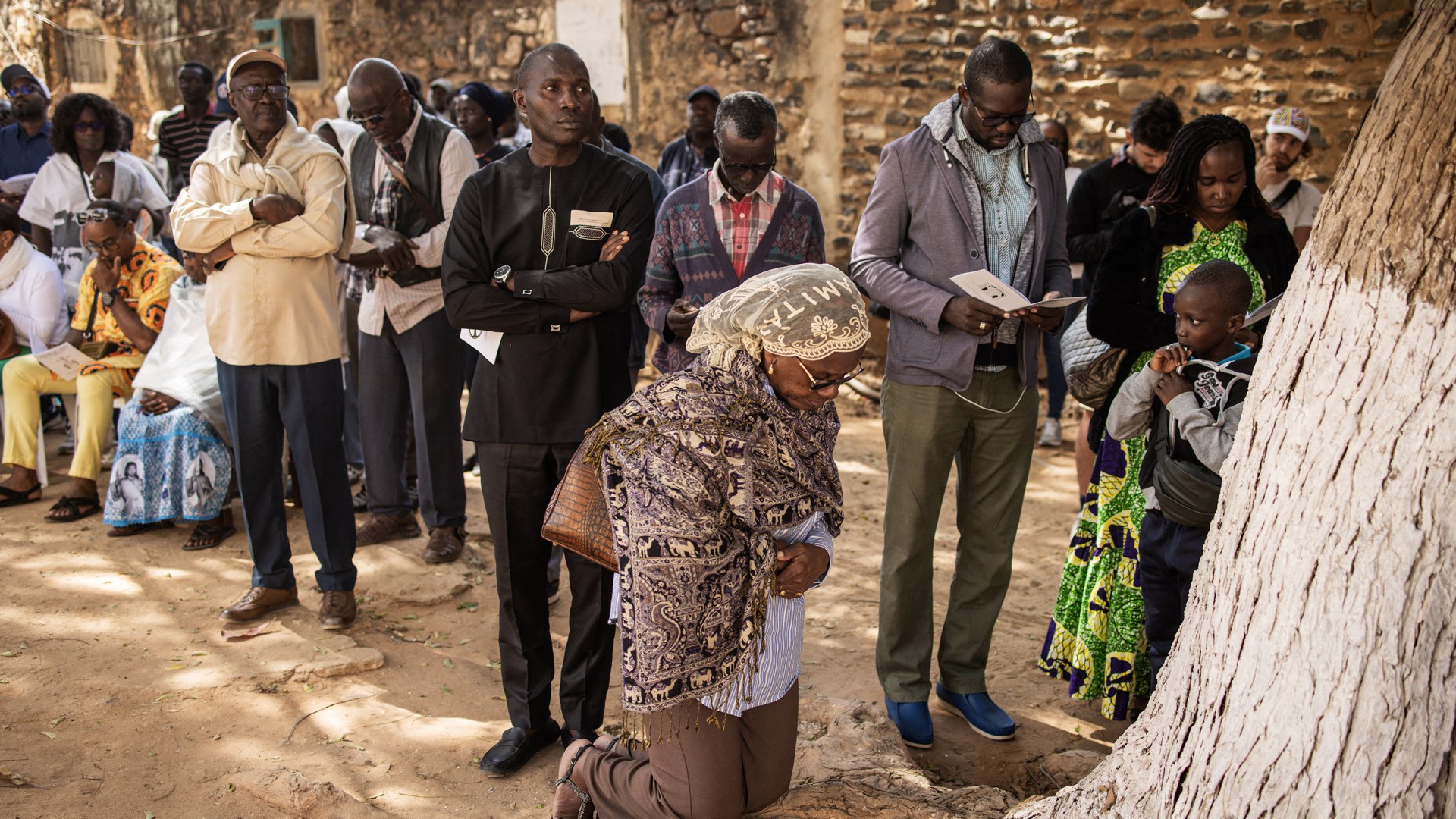
Over time, as a new generation grew up, nominalism set in. Growing up, I learned to pray before eating, bathing, sleeping, and going to school. But when the revival came, the sense of the fear of God and his holiness became pervasive. I remember daily confessing my sins to God. I desired to be in his presence and sought miraculous signs of his presence all the time. My friends and I attended adult prayer meetings and services whenever we could and we even held our own prayer meetings. We often prayed to have visions of God. One night, I encountered God, who assured me that he would always be present to protect me like a mother hen.

Bario, a tribal village in Malaysia, where the revivals took place.Courtesy of Lillian Bulan-Dorai / Edits by CT
Bario, a tribal village in Malaysia, where the revivals took place.

Around me, villagers were overtaken by a deep consciousness of God’s holiness. They stopped drinking and smoking. They got baptized and repented of sins such as pride, lying, adultery, witchcraft, and sorcery. Some returned what they had stolen and gave to the church generously. One man confessed to murder. Yet because of the prevailing conviction to forgive every sin, offenders didn’t face criminal proceedings. The spirit of reconciliation among the villagers was so strong that all pending cases at the court were resolved, and for a number of years, the courts had no work to do.

Despite investing their time in preaching around the villages, the secondary students still managed to do well in their qualifying exams conducted at the end of October that year, earning the school’s best results to date.

Even the land healed. The people’s preoccupation with prayer meetings, services, and outreaches meant less time spent in their paddy fields. Yet throughout those few years, the fields yielded an extraordinary harvest.

Worship and prayer shaped the villagers’ new response to life. Church services became more vibrant and frequent. Worship was spontaneous, while young people preached boldly and evangelized the adults. In the village chapels, people gathered for daily morning devotion at 5 a.m. and attended services on Wednesday and Saturday nights, while also dedicating their Sundays to three adult services and Sunday school for children. These routines remain today in most churches.

Doubts and a revival’s spread

The village’s influential church leaders initially doubted the authenticity of the revival, with some claiming it was simply heightened emotionalism. But Joseph Balan Seling, a respected political leader and seminary-trained church elder, believed otherwise. He promptly returned from a conference in London to Bario upon hearing about the movement.

Balan eagerly wrote to his missionary friends in England and Australia with his observations of the revival: “The Holy Spirit has come down upon the Kelabit churches in the Bario highlands in a mighty force, somewhat similar to the story recorded in the Book of Acts, the Congo, and the Indonesian revivals.”

Because the church leaders in Bario deeply respected Balan, they listened as he explained that Bario was witnessing a great visitation of God, just as the apostles had experienced at Pentecost in Acts 2. Balan shared that what was happening in Bario had happened elsewhere in the world, and the leaders finally accepted that this was a revival.

The people felt the revival needed to be shared. Young people walked for days through the dense jungle and hilly terrain to share the glorious message of repentance and forgiveness to their neighbors. Everywhere they went, people turned to God, repented, confessed their sins, received healings, and were baptized.

In just two months, two other indigenous villages—Ba’kelalan and Taginambur in Sabah—also experienced revival. While these remain the most well-known revivals of Malaysian Borneo, other indigenous communities and churches in the lowlands and towns also experienced their own waves of revival.

Revival’s waves

Revivals ebb and flow. “Like a wave, revival will crest at some point,” wrote Tom Phillips, author and vice president of the Billy Graham Evangelistic Association. “The culmination will be relatively short before the wave follows its natural course and recedes. It’s impossible to live ‘at the peak’ or ‘on the crest’ forever. A revival will move us to new heights and revitalize us.”

We experienced that in Bario too. After about a year and a half, Bario experienced a season of spiritual dryness. Church attendance dwindled as the meetings became routine. People seemed tired and complacent. Bario lacked the needed spiritual leadership.

Looking back, I now see that this was due to the transient nature of Bario church leadership and members. Congregations depended on a handful of government servants, teachers, and church pastors to run weekly services and disciple congregants. Young people often had to leave the village to further their studies in towns and cities. Others left because the village lacked economic opportunities to sustain growing families. The void created by these absences caused Bario to lose the fervor that had started the revival.

Nevertheless, a handful of faithful intercessors arose from the Bario Revival. They consistently prayed together, and God graciously sent three more outpourings in 1975, 1979, and 1984. Each wave came with a different thrust, but all carried the certainty of the Holy Spirit’s power to convict and transform lives and drove the villagers to evangelism.

The second wave was ignited by visits from an Indonesian charismatic preacher, Yohanes Sakai, in 1975, refreshing the community after a period of stagnancy. This wave was marked by the baptism of the Holy Spirit, with people breaking out in tongues, experiencing healing and deliverance, seeing visions, and receiving words of prophecy with immediate interpretations.

New and prophetic songs emerged—sometimes spontaneously—inspired by the Holy Spirit. People experienced deliverance and healing simply through claiming God’s power with the lyrics of songs like “BilurNya, BilurNya Sungguh Heran” (His Stripes Are Miraculous) and “In the Name of Jesus.” For instance, one young woman with a serious eye impairment was healed, and she never wore her thick spectacles again.

I remember the exuberance in the worship and prayer after each testimony of healing. Without fail, the great hymn “How Great Thou Art,” sung in our native language, would bring us down to our knees in thanksgiving, worship, and adoration. Mission teams went out from Bario to the villages and tribes scattered near and far. They returned with reports of miracles: healing of diseases as well as deliverance from the occult and demon possession.

The third revival wave in 1979 came as global influences, technological advancements, and socioeconomic changes brought materialism and self-obsession into our village. The church was deeply concerned about young professionals who had backslid or left the faith and about several prominent church leaders who had fallen into adulterous relationships. Once again, the same faithful intercessors began to mobilize. They received a specific word and vision to retreat to the mountains and devote themselves to pray for the people. As they did, more intercessors joined them, and the intensity of prayer grew.

Prayer meetings often lasted into the cold nights and spilled over into the villages as the intercessors shared testimonies of healings and miracles. Prayer troupes initially climbed the mountains surrounding Bario. Eventually, they had a vision to pray on Mount Murud, the highest mountain in Sarawak. On their first visit, Christians from neighboring Ba’ Kelalan joined them. The Lun Bawang people continued prayers on Mount Murud and built Gedung Halleluyah (Mount Murud Prayer House), which remains to this day.

Baptisms in Bario.Courtesy of Lillian Bulan-Dorai / Edits by CT
Baptisms in Bario.

The fourth wave came in 1984 as people blessed by the earlier waves or who had heard of the Bario Revival in other parts of Malaysia came to Bario either to experience God or to minister to the now complacent villagers. Teams from the Pentecostal and charismatic movement that was sweeping through churches in Peninsular Malaysia came to Bario with charismatic teachings on spiritual gifts, and people were renewed in their experiences of power through baptism in the Holy Spirit, with evidence of speaking in tongues. The gift of tongues then was not just a form of prayer but prophetic words with interpretations.

A new generation

In 1998, church leaders and intercessors in Bario organized the first commemoration of the Bario Revival, calling it Kebaktian Kebangunan Roh (KKR, “Revival Meeting”) so that people might not forget God’s work through the revival. Since then, meetings have been organized annually in Bario and in the growing SIB churches in the city of Miri in Sarawak. The focus is always to call people back to God in the hope that God would bring revival again.

These KKR meetings brought to light the lack of spiritual interest among the younger generation of Borneo’s indigenous people. Many had not yet seen or experienced the mighty work of God among their ancestors and were falling away, even adopting other faiths. So church leaders created a fellowship group for the younger generation called Persatuan Kelabit Saban and Berawan (PKSB), which focused on three small, closely related ethnic groups: the Kelabit, the Saban, and the Berawan.

In 2018, the older leaders of PKSB handed over the leadership to a handful of keen young leaders. With direction from the Holy Spirit, the movement has transitioned from a focus on the Bario Revival to include all 60 indigenous people groups in Malaysia, in keeping with the vision of Revelation 12:9. It changed its name to Tribal Gathering—an intertribal, intergenerational, interdenominational, international prayer movement.

Last year, which marked the 50th anniversary of the Bario Revival, intercessors from across the country focused prayer on the next move of the Holy Spirit in Malaysia. Pastors Sabrina Low and Rachel Bulan (my niece) of Cornerstone Community Church in Miri believed that revival in Borneo was imminent. Leading the monthly Tribal Gathering prayer meetings, they collaborated with pastor Lee Choo of Sidang Injil Borneo Kuala Lumpur (SIBKL), who had started a 24-hour nationwide prayer movement called Malaysia United Fire Wall.

These prayer movements culminated in Tribal Gathering 2023, held in Miri last October and organized to coincide with the 50th anniversary of the Bario Revival. More than 4,000 believers congregated in the city’s indoor stadium. Young leaders from more than 100 churches led the gathering and called on God to awaken the nation. There was a high expectation that revival might break out during the three-day gathering. While that did not happen, it awakened the Malaysian church to an even greater need to pray to change the spiritual trajectory of Malaysia and Southeast Asia. Never before had the Malaysian church seen such unity and deep longing among the young generation for revival.

While the Tribal Gathering 2023 movement is strongly supported and reinforced by prominent church elders from Malaysia, Singapore, and Indonesia, its heart is the young leaders seeking to tu’ee’—or “wake up”—arise, and pick up the baton for the transformation and salvation of our land.

A song sung at the gathering, composed by Rachel Bulan and her cousin Joshua Maran, provided a thunderous, powerful call for the church: “Every tongue and tribe will know Your name / Every knee will bow and sing Your praise / Tu’ee sons and daughters. Come awake, army of God. Wake up!”

Lillian Bulan-Dorai is a registered licensed counselor and a pastor at Full Gospel Assembly in Kuala Lumpur. She heads Family Life, the church’s family and counseling ministry. Lillian is the author of Rushing Wind (2023) and The Bario Revival (2004), both of which she wrote with her brother, Solomon Bulan.

Books
Review

The Data-Backed Case for Marriage

Brad Wilcox’s Get Married debunks misguided conventional wisdom and offers both challenge and hope to Christian singles.

Christianity Today February 13, 2024
Illustration by Mallory Rentsch Tlapek / Source Images: Unsplash / Getty

Marriage and family are much discussed today, and not only among Christians. Marriage rates are going down, the meaning of marriage is contested, and dropping fertility is raising worries of a lonely and childless future, even in the church. Meanwhile, many Christian singles are left hoping their local church will somehow help them get married—or that our growing numbers will finally convince congregations to stop making us feel like second-class Christians.

Get Married: Why Americans Must Defy the Elites, Forge Strong Families, and Save Civilization

The latest contribution to this conversation is Get Married: Why Americans Must Defy the Elites, Forge Strong Families, and Save Civilization, a new book from Brad Wilcox, a Christian professor of sociology and director of the National Marriage Project at the University of Virginia. Wilcox is experienced, widely published, and respected in his field. He’s pulling off an admirable feat: leading a secular institution without compromising his Christian values or reducing his work to a “fringe” project only valued inside the church.

Get Married is a popular-level distillation of that academic work. Wilcox argues that while most culture shapers in our society—from journalists to celebrities, artists to influencers—promote a cynical idea of marriage, data shows that perspective is wrong. And we need to understand the good of marriage, he contends, because the alternatives to a society where most people get married are worrisome: either fewer children (which means a less dynamic economy and declining family and community life) or more out-of-wedlock births (which means more child poverty and more crime).

The book follows a consistent pattern: Each chapter introduces a popular negative idea about marriage, then presents a mountain of mainstream research (much of it conducted by Wilcox himself) and anecdotes debunking the claim. For example, popular wisdom says single people are happier. But the data shows that’s not true; in fact, no single factor better determines happiness and life satisfaction than marriage. Wilcox similarly debunks common claims that single people are wealthier, that divorce is often unpreventable, that parenthood makes you unhappy, and that economic pressures are the main reason marriage and fertility rates are so low.

The strength of Get Married is how deeply aware Wilcox is of modern conversations around marriage. He easily references cultural influences ranging from the anti-marriage rhetoric of red-pill male influencers like Andrew Tate to self-centered views of love marketed toward women in works like Eat Pray Love. And just as important, Wilcox’s responses are readable and research-based, providing a concise compilation of the data in this sprawling debate.

While the book is primarily written for a secular audience, Christians will find its information deeply relevant to our own conversations around marriage. You may be gratified (and in some cases, surprised) to learn how much of this data from mainstream researchers corroborates basic Christian teaching on marriage. For instance, religious couples who attend services regularly are among the least likely to divorce and the most likely to report being happy in their marriages. So are couples who put guardrails around their marriages to avoid opportunities for temptation.

For Christian singles specifically, Get Married may produce more mixed feelings. Many singles already feel our fellow Christians are dismissive of our circumstances, unwilling to take seriously how difficult it is to find a spouse, or assuming that because we aren’t married yet, we must not value marriage and family. Wilcox’s arguments that married people are usually happier than singles—and that failure to marry is often due to poor personal choices—may feel like even more unfair assumptions, however well supported by data the arguments are.

But as a Christian single myself, I found most of Wilcox’s challenges refreshing rather than hurtful. If I embrace singleness, is it because of a call of God on my life (and a rejection of the idolatry of marriage and family)? Or is it because I’ve made an idol of careerism and individualism? For single Christians not pursuing marriage, these are difficult questions, but worth asking.

For singles who are pursuing marriage, Get Married is deeply hopeful. I struggle a lot with my singleness both inside and outside the church. The problem I face most is that Christians either have no good advice for how to find a spouse or they tell me that there’s something wrong with me for still looking for marriage. I should just “focus on Jesus” and “let it happen or not,” they say.

Get Married disagrees. With data to support his claims, Wilcox’s work says my desire for a spouse is not something wrong with me but something deeply right. It says I may be doing things that are holding me back from having a spouse—but I can also stop doing those things and instead take steps to make it very likely I will have a happy and lasting marriage.

That said, while Wilcox acknowledges ways our culture has made it harder to find a spouse—careerism, loosening community ties, an education system increasingly inhospitable to boysGet Married offers little advice for how individuals can actually get married. Most of his proposals concern public policy and structural societal changes. Single readers convinced by the title and thesis of the book may be left wondering what to do next. (Wilcox gave some more concrete advice in an interview on my Overthinkers podcast.)

Get Married also would have been a stronger book if it anticipated and answered more objections to its thesis from the Left, given Wilcox’s broad intended audience. For example, he mentions that some people say they won’t have kids because of worries about climate change but he doesn’t address any reasons that fear is ill-founded. (Wilcox’s goal is not just marriage but marriage with children.) He also doesn’t grapple with the claim that it’s too soon to say whether nontraditional family arrangements, like same-sex relationships or polyamory, can produce quality-of-life benefits similar to traditional marriage.

All in all, Get Married is a vital contribution to the modern conversation around marriage—a helpful resource to make sure our views of marriage are based on facts rather than on cultural folklore and memes. Wilcox’s next task, perhaps, should be an equally data-backed book on how to actually get married in our time.

Joseph Holmes is a Christian culture critic and podcast host living and working out of New York City. He has written at outlets including Forbes, The New York Times, Religion Unplugged, Relevant, and An Unexpected Journal. He co-hosts a weekly podcast called The Overthinkers.

Theology

Easter in the Everyday

Prepare your heart for Easter with Christianity Today

Zatelepina / Getty

Let’s prepare our hearts together during this season leading up to Easter and beyond. The events of over 2000 years ago still reverberate through our bones and bodies today. The death and resurrection of Jesus is the most powerful, world-shaping reality in history, and we still find the truth transported into our everyday lives. It’s up to us to remember, reflect, and abide in the everyday, glorious consequences of Christ’s love for us, revealed through his humility and power, the crisis and the overcoming, the despair, and the overflowing joy. He has died and he has risen indeed, and that changes everything—even the small parts of our daily life. As we prepare our hearts, this devotional invites you on the journey of Lent and Easter through the different stages of the emotional journey and theological truth of death, life, and everything between.

Easter in the Everyday is divided into three frames, each representing a different emotional reality along the Easter journey. The first frame leads us through the time in the church calendar called Lent, where we will confront the humility of our humanness, examine the limitations of our fleshly state, and embrace the call to sacrificial living, fasting, and self-denial. The second frame will take us through Holy Week and prepare us for Easter, leaning in the anticipation of hope. Finally, we will immerse ourselves in the turbulence and intensity of Jesus’ betrayal, crucifixion, resurrection, and reunion. Through this journey, love and awe have overcome the sting of sorrow and death on the eternal stage, as well as in our small lives that will one day be caught up in glory.

This article is part of Easter in the Everyday, a devotional to help individuals, small groups, and families journey through the Lent & Easter season. Learn more about this special issue here!

Apple PodcastsDown ArrowDown ArrowDown Arrowarrow_left_altLeft ArrowLeft ArrowRight ArrowRight ArrowRight Arrowarrow_up_altUp ArrowUp ArrowAvailable at Amazoncaret-downCloseCloseEmailEmailExpandExpandExternalExternalFacebookfacebook-squareGiftGiftGooglegoogleGoogle KeephamburgerInstagraminstagram-squareLinkLinklinkedin-squareListenListenListenChristianity TodayCT Creative Studio Logologo_orgMegaphoneMenuMenupausePinterestPlayPlayPocketPodcastRSSRSSSaveSaveSaveSearchSearchsearchSpotifyStitcherTelegramTable of ContentsTable of Contentstwitter-squareWhatsAppXYouTubeYouTube