News

Study: Gen Z Now Leads in Church Attendance

But American churchgoers average only two out of every five Sundays.

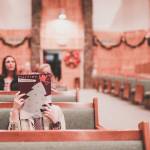
Young people praying worshiping Elizabethton TN
Christianity Today September 3, 2025
Roger Bailey / Believers Church

Churchgoers between the ages of 18 and 28 attend church more frequently than their older siblings, parents, or grandparents. A new study, part of the State of the Church research initiative from Barna Group and Gloo, found a post-pandemic surge among Gen Z churchgoers over the age of 18.

Today, when people born between 1997 and 2007 go to church, they attend, on average, about 23 services per year. Churchgoing Gen Xers, in contrast, make it to about 19 out of 52 Sundays, while Boomer and Elder churchgoers average just under 17, Barna found. 

Millennial churchgoers, born between 1981 and 1996, attend 22 services annually, up from a previous high of 19 in 2012.

The Barna study, released today, calls this a “historic” and “generational reversal.” 

“The fact that young people are showing up more frequently than before is not a typical trend,” Daniel Copeland, Barna’s vice president of research, said in a statement. “This data represents good news for church leaders and adds to the picture that spiritual renewal is shaping Gen Z and Millennials today.”

Barna’s research, based on 5,580 online surveys done between January and July, does not look at the overall decline of the number of people going to church in America, however. A recent Pew Research Center study found that just 45 percent of adults under 30 attend religious services—a number that seems to have dropped nearly 20 points in 10 years, although comparisons are inexact. 

It is possible that the frequency of Gen Z church attendance has increased in the last five years because less-committed, less-regular churchgoers have simply stopped going. Perhaps the ones who still go, are more likely to go more.

Older generations, meanwhile, are going to church less frequently even when they still attend, Barna’s data shows.

“In our collective memory, we have this memory that people attended church every week—twice on Sundays, Sunday school, and midweek services. The data is telling us there has been a shift,” Barna CEO David Kinnaman told CT. “The data helps us recognize the elephant in the room: When people are in church, they’re going about every two out of every five weekends.”

Barna’s study found that churchgoers born before 1946 are attending, on average, 11 fewer services in 2025 than they did in 2000. Churchgoers born between 1946 and ’64 are at church 7 fewer Sundays every year. That’s between one and a half and three months of skipping church.

And large numbers of older people have stopped going altogether. Although Pew says direct comparisons are problematic because polling has shifted from phone calls to internet surveys, a 2007 study showed that about 22 percent of people over the age of 65 seldom or never went to church. In the most recent survey, that number was up to 40 percent. 

If that’s right, then 18 out of every 100 senior citizens quit participating in religious services sometime in the last two decades.

“One of the larger trends in social research on religion that we see is a winnowing the wheat from the chaff as nonpracticing Christians are tiptoeing toward identifying as ‘nones,’” Kinnaman said. “That’s one reason it’s so remarkable to see younger generations saying, ‘I don’t think we’ve given religious communities enough of a chance.’”

When COVID-19 restrictions lifted, many churchgoers seemed to reevaluate what they wanted to do with their Sunday mornings. 

Barna found that Gen X attendance returned to pre-pandemic levels—and increased slightly from start of the century. Today, Gen X churchgoers average 1.6 services per month.

Millennials’ church attendance has also gone up, according to Barna. Today, churchgoers between the ages of 29 and 44 average 1.6 services per month—going to church about six or seven more Sundays per year than they did in 2000.

Barna researchers think this data will confirm the intuition many pastors have about shifting demographics, with younger people coming more often, and average attendance rates, how often people show up. The study notes that many pastors feel frustrated by irregular attendance and find it hard to build momentum in their congregations. 

At the same time, the church-tech company Gloo wants Christian leaders to see new possibilities.

“These shifts in church attendance open the door for leaders to innovate,” Gloo president Brad Hill said. “Churches that prioritize relational touchpoints and digital engagement—through text, social media and other online tools—can better reach younger generations where they already are.”

Kinnaman hopes the data will help church leaders be proactive and encourage them to focus on how they can best meet people’s spiritual needs.

“The fabric of congregational life is changing,” he told CT. “We really need to grapple with the learning needs, the content needs, of younger generations and how we’re structuring discipleship and teaching calendars and building communities when people are at church two out of every five Sundays.”

News

The 2025 Christianity Today Compassion Awards

Meet CT’s inaugural class of winners—seven organizations doing good work in the name of Christ.

Photos by Hannah Yoon / Maddie McGarvey

In this series

From 2006 to 2021, I had the joy of supervising another Christian magazine’s annual compassion awards. Reporters and I sought recommendations and made site visits that resulted in profiles of 120 Christian ministries—homeless shelters, medical clinics, prison programs, and much more.

I loved honoring Christians who for years had loved their neighbors without receiving much pay or publicity. We gave groups small financial awards. Some readers gained inspiration to start their own projects or support those already active.

Now, Christianity Today is giving these awards a new home. In the following pages, you’ll read about seven Christ-centered ministries across the US. These groups will receive $2,000 each to continue to serve their neighbors. Given their past performance, I trust they will find ways to multiply the dollars and the impact.

Historian Demetrios Constantelos noted that, nearly two millennia ago, Christian compassion became known for “transcending sex, race, and national boundaries. Thus it was not limited to equals, allies, or relatives, or to citizens and civilized men, as was most often the case in other ancient societies.”

That’s the common denominator for the seven uncommon efforts profiled in the following pages. Four of them focus on a major 2025 pressure point: transcendence of ethnic and national boundaries.

Last year, some politicians falsely accused immigrants in Springfield, Ohio, of eating pet cats. Our first article takes us inside a Springfield church to show us what Haitian immigrants are really doing—in this case, working hard to learn English while their children play in the church gym.

The stories that follow are not PR spin. Some document hardship, like a legal dead end that a client of an immigration advocacy group faced during our journalist’s visit. Others confront cultural problems, like the high attrition rates and distrust that continue to plague a Christian school serving low-income boys. But these stories also highlight hope. One organization that helps refugees displays its Christ-centered mission on a whiteboard—a handwritten reminder to all who enter that Jesus is a refuge for asylum seekers. Another profile highlights the stark contrasts in America, taking us from the stunning glory of the Garden of the Gods to a stunningly wretched street in Colorado Springs. 

The last report focuses on a challenging outreach in nearby Aurora, Colorado. Christians walk the streets, inviting young immigrants to learn about the good news of Christ—while offering all kinds of tangible help to their families.

Our reporters eyeballed ministries and profiled ones that model Christian compassion. The ministries depend on churches, volunteers, and individual donors. They deal with problems that have an undersupply of solutions. They grow bottom-up through community efforts. They move beyond easy answers and tribal affiliations.

Historians may one day wonder whether 2025 was a year of cruelty or compassion. The former rightly gets attention. The stories behind these awards provide reliable evidence of the latter.

Marvin Olasky is the executive editor for news and global at Christianity Today.

News

Rebuilding Broken Walls with The Nehemiah Foundation

After rumors tear apart a community, churches join in serving immigrants.

Photography by Maddie McGarvey

In this series

One recent evening at a Springfield church, 70 Haitian immigrants hurried inside to classrooms where they were learning English. Some brought their children. “Bienvenue!” said Tami Carter as people came into the church lobby and were separated into classes based on their English proficiency.

Carter is a staff member at The Nehemiah Foundation, which for 33 years has paired Springfield churches with local nonprofit ministry
partners. Its task in a city of 60,000 is to help coordinate resources, passion, and people to work on citywide needs including housing and addiction recovery.

The group is currently assisting 15,000 Haitian immigrants fleeing violence in their home country. They are living in the US legally with Temporary Protected Status.

Most came to Springfield to find work. Some long-term residents were happy to welcome hard-working newcomers, since the city had been in a long population decline. But the recent influx of thousands of people with different cultural backgrounds put stress on local schools, police, and other public services.

Then, last September, presidential candidate Donald Trump and his running mate JD Vance spread false rumors that Haitians in Springfield were eating local pets. Trump and Vance alleged that a Haitian had “murdered” a local child in a car crash (it was an accident) and that Haitians were spreading diseases.

The day after Trump made his claims, Springfield’s city hall received a bomb threat. Staff members at Nehemiah’s offices a block away remember how many such threats their tight-knit city eventually navigated: 33.

During a prayer walk that the foundation helped organize for the city during that heated September, helicopters buzzed overhead and dogs sniffed for bombs. The Nehemiah volunteers, as they prayed for the city, wore T-shirts that said “Bringing Heaven Here.”

“It felt very surreal,” said Amy Willmann, executive director of Nehemiah Foundation, who had been planning a pilot program for church-run classes in English. She recalled that after the pet-eating lies, someone meowed at her Black pastor. But the 20 local churches of many denominations that had agreed to carry out the pilot weren’t deterred.

Though Haitians stayed away at the start, 83 adult students eventually enrolled, and the program was a success. “Our boast is in the Lord,” Carter said. “He has all this planned.”

At the end of the pilot, Nehemiah surveyed the students to ask if they should continue the program and got a yes. This spring the organization launched a full 26-week version of the classes. More than 100 church members from around the city volunteered to teach or to provide childcare two nights a week. Others helped with planning and oversight.

“It’s an opportunity to take the negative press and, while the world is still watching, reflect what happens when the church steps up and says there is a better kingdom,” said Jeremy Hudson, pastor of Fellowship Church, one of the city’s largest evangelical churches.

Haitian immigrants attend an English class at the church attached to the Haitian Community Help & Support Center on August 27, 2024 in Springfield, OH.Photography by Maddie McGarvey
Haitian immigrants attend an English class at the church attached to the Haitian Community Help & Support Center.

The English classes in Springfield include childcare because they are following a time-tested model from Festa, a larger Christian organization providing ESL classes in nearby Columbus, Ohio. Festa had found that a lack of childcare was a barrier to adults attending class, especially for women. It now provides dinner, childcare, and transportation. And its work has blossomed.

Festa trained Nehemiah volunteers, and Nehemiah took on aspects of Festa’s safety system. Volunteers go through background checks and have a badge to show it. Each person working in the program wears a brightly colored T-shirt so students know who to ask for help, and also so organizers know if someone is there who shouldn’t be.

Given the bomb threats and Trump’s threats of deportation, safety remains a concern even for legal immigrants like the Haitians in Springfield. When Nehemiah staff members announced new language classes to one Haitian church and said there would be building security, the congregation broke into applause.

Nehemiah’s long relationships in the community have helped build a strong program. The Clark County Literacy Coalition has advised Nehemiah on honing its program with sensitivity to literacy levels. Local health department and emergency management officials share information about tasks like how to find local doctors or detect a gas leak.

Rebuilding Broken Walls with The Nehemiah Foundation

A Haitian flag is displayed on a home in Springfield, OH on September 17, 2024.

1 of 3

A Haitian flag displayed on a home in Springfield, Ohio.

Photography by Maddie McGarvey

The Delva family at their home in Springfield, OH on October 4, 2024.

2 of 3

The Delva family at their home in Springfield, Ohio.

Photography by Maddie McGarvey

The Delva family outside of their home in Springfield, OH on October 4, 2024.

3 of 3

The Delva family outside of their home.

Photography by Maddie McGarvey

Log in or subscribe to view the slideshow.

Haitian “cultural ambassadors” also advise the language program. Bernadette Dor-Dominique, a Haitian American who translates as needed for Nehemiah’s ESL students, has helped the program develop “a welcoming environment to make them feel loved,” she said. “We are in it together.”

Many Haitians worry about deportation. Dor-Dominique, who was a police officer in Haiti, said, “There’s no safe place in Haiti for anybody.” Depending on what happens with US immigration policy, Springfield may not be the answer either.

But on one evening in a Springfield church gym, children from Haiti played soccer, gulped down sports drinks, and gobbled up peanut butter crackers. In the church’s classrooms, their parents practiced their English and bent over workbooks­—a serious commitment, with several hours of class twice a week. Halfway through class, the students, including a local Haitian pastor, took a break for tea, coffee, snacks, and conversation.

A water tower in Springfield, OH.Photography by Maddie McGarvey
A water tower in Springfield, Ohio.

For some Haitians here, English isn’t their second language but their fourth. In a higher-level class, one teacher discussed cultural questions: Is lengthy eye contact acceptable in the United States? One young student, who clearly had a grasp of both the language and culture of the US, said with a smirk, “It’s not demure,” referring to a phrase from a TikTok trend.

In the meantime, some of the American church volunteers are learning Creole, and others like Kristi Leeth are teaching English classes for the first time. Leeth paused during a break while Haitians and others from around the world laughed together. “I want [these immigrants] to know there are people in our community who are glad they are here,” she said.

Emily Belz is a senior staff writer for Christianity Today.

News

Incentivizing Life Change at Springs Rescue Mission

A homeless shelter helps short- and long-term guests find housing and purpose.

Photography by Kris Cheng for Christianity Today

In this series

Just west of Colorado Springs, the park known as Garden of the Gods features soaring red sandstone formations. At 6,400 feet above sea level, it’s one of the loveliest places in America. Just south of downtown squats one of the ugliest. If the garden hints at the glory of God, Las Vegas Street on a Wednesday at 6:30 a.m. proclaims the wreckage of humanity.

A grizzled man wearing a Mountain Dew T-shirt sits slumped over on a bench. A man and a woman sleep under a blanket next to hypodermic needles, Budweiser cans, a ramen bowl, and a crumpled bag of barbecue potato chips. A man who has overdosed is lifted onto a stretcher and then into an ambulance. But that’s outside the gates of the 15-acre Springs Rescue Mission (SRM) at 5 West Las Vegas Street. Inside is a four-story welcome center topped with a tall cross. Behind that are Next Step shelters for those trying to leave homelessness, plus a barracks—row upon row of cots in one enormous room—for those who have decided to stay homeless but would like clean sheets for the night.

Between those buildings stands the dining hall, which at 7 a.m. serves up a bacon-and-eggs breakfast for those enrolled in the Next Step program. At 7:15, those not in the program sit on the clean, grassy lawn. At 8, they shuffle into the dining hall for a cold continental breakfast.

While they eat, staff members in the barracks move the beds and bring in chairs, in which about 100 men and women will spend their day, slouching before two big-screen televisions showing crime dramas.

In a nearby building, two dozen staff members and ex-addicts are celebrating a graduation from the Next Step addiction recovery program.

Photography by Kris Cheng for Christianity Today

At the ceremony, new graduate Brian Gilliam compared his meth and psych-ward past with his reformed and reverent present: “Thank you, God, for your peace and your joy. You loved me even when I made excuse after excuse,” he prayed, adding. “God gave me another chance to be a man. A couple of times I got kicked out of here, but more and more I want to be light to somebody instead of a vessel for disobedience.”

The addiction recovery and Next Step programs depend on private, church, and foundation funding. The ministry originated in 1994 when Marilyn and Paul Vyzourek, who had overcome their own drug and alcohol addictions, brought bagged lunches and old clothes to people sleeping under bridges and in parks and later put four beds in their basement.

SRM grew for two decades and in 2015 developed an agreement with city officials who recognized that tourists want swept streets, not street sleepers. SRM provides beds for the unhoused, and the city pumps in local money plus federal funds. Now, one-fifth of SRM’s $11 million budget comes from government grants, all of which support one-night stays at the SRM campus, which features a bronze sculpture of Jesus and Bible verses on some walls.

That funding creates controversy, as does SRM’s decision to offer better meals to those who enter a program. At a city council meeting last year, council member David Leinweber asked about the differential treatment. “Is that compassionate?” he said. 

The mission’s then-CEO, Jack Briggs, responded that letting people settle into victimhood with no hope to change their lives is not compassionate: “We gently incentivize them to improve their mental, physical, and spiritual health, as well as their prospects for employment and housing.”

Gentle incentives include getting the same bed every night versus a random assignment. On a typical day, Next Steppers have a dinner of chicken and vegetables. One-day-at-a-timers get beef broth with noodles—not great, but better than junk food and life as a junkie on Las Vegas Street. Everyone gets safety (all residents  must go through metal detectors), a private shower time (with soap and shampoo provided), laundry time, and a storage bin.

It takes a long time to help a person in long-term homelessness to straighten out. SRM has found that the promise of pie 18 months later is ineffective with those who for years have focused on where to get daily bread. No one needs to offer a profession of faith to gain benefits, just a commitment to take one small step toward working and having a home. 

Colorado Springs serves as the headquarters for Focus on the Family, Compassion International, and several other evangelical groups, which gives Christians more political influence than they have in some other cities. Local officials, though, speak of SRM’s program as one that benefits both church and state. SRM sees about 220 people a year move into transitional or regular housing. Thousands come briefly, but at least they’re temporarily safe. Overall, SRM says it saves governments $12 million per year in medical, policing, social work, and other costs.

Some evangelicals criticize SRM because it does not require residents to attend chapel. That was standard in traditional urban missions, where beds and meals went only to those who listened to a sermon. But a formative SRM document declares, “God is the one who transforms. Therefore, when guests make bad choices, it’s up to God to work with them. It’s our role to help in the project, not own it.” 

Other evangelicals criticize SRM because it houses those still in addiction next to recovering addicts. But in one dinner discussion, Next Step participants said such closeness helps addicts see that a better life is possible.

Meanwhile, the dinner line for the unhoused snaked across the courtyard. It included 90 weather-beaten men, one wearing a “Never Too Much Bacon” T-shirt, another complaining that his fifth wife had just kicked him out. It also included 29 women, most with visible tattoos, one who kept talking about how she needed to sell her plasma the next day.

One SRM staff member, Ronnie Hammers, retired from his job in the Midwest and moved to Colorado Springs eight years ago. He volunteered with SRM for a year and then joined the cause.

“I originally thought you could snap your fingers and change things,” he said. “I’ve learned that doesn’t work. I’ve also had to overcome the other tendency: playing God by thinking someone is unable to change.”

Marvin Olasky is the executive editor for news and global at Christianity Today.

News

Hurdling Cultural Barriers at More Than Welcome

Asylum-seekers find opportunity and refuge in Christ.

Photography by Melanie Grizzel for Christianity Today

In this series

Insulated tumblers, coffee mugs, and sparkling waters litter a worktable on the second story of an apartment unit turned office in Austin, Texas. Eight people fill the workspace, bobbing up and down with a carbonated energy more akin to a frenzied live auction than a Monday afternoon office meeting.

“Are they on West 32nd Street?”

“I took a bed to someone down there … Achmed, or Ahmad?”

“Are they coming to class? They’re on the spreadsheet.”

“Who put them on the sheet? Does it say if they need a ride?”

“I think they have five to seven kids, so transportation will be—”

“Oh, Lord, provide more drivers!”

Scrawled on a whiteboard is the organization’s vision: “Helping refugees and asylum seekers find refuge in Christ through the love of the Church.” The nonprofit’s name, More Than Welcome, expresses its hopes for how immigrants will feel in their new home. During the meeting, More Than Welcome staff members—who hail from Austin as well as Congo, Rwanda, and Burundi—applaud as they celebrate an immigrant’s recent decision to follow Christ.

The staff meeting continues with prayer for a Muslim arrival from Burkina Faso who has expressed distrust toward anyone who might try to convert her. There’s a knock at the door. The woman has dropped by unexpectedly to meet with a caseworker. Gasps and more prayers follow as the staff thanks God for leading the woman back to the office.

Another new arrival needs a desk, a washer and dryer, and a lawyer to help start her asylum process. A different immigrant family has a baby in the hospital. Someone from More Than Welcome will deliver fresh clothes.

The organization sprang from the passion of Alliance Samuragwa, a former asylum seeker from Burundi. His megawatt smile, sturdy 6-foot-1 frame, and rotating uniform of hoodies belie a broken past.

As Hutu and Tutsi factions warred in Burundi in 2014, police murdered Samuragwa’s closest friend and tortured Samuragwa for four days, leaving him for dead on the banks of the Ruzizi River. He was spotted by a family friend, and his parents rescued him. His family pooled their resources, securing a US student visa for him and a one-way flight to America. He was 22 at the time.

There are still burn marks on his arm and thigh and a jagged scar on his scalp. “Resentment is part of the journey,” Samuragwa says, “but I thank God, knowing it’s a miracle I’m alive. And now I have empathy for what the families we serve have been through. He led me here for a purpose.”

Refugees and asylum seekers both enter the United States legally, though refugees receive more government support. As an asylum seeker, Samuragwa had only a suitcase with some clothing and his grandfather’s Bible. He found a couch to sleep on in a stranger’s home. Assembly line work and Uber driving paid the bills as he connected with other immigrants and recruited new friends to help meet their needs. 

More Than Welcome now has seven full-time staff members and more than 100 volunteers from 30-plus churches.

Refugees take English classes that include a Bible story and discussion. Staffers and volunteers provide childcare during classes, donate housewares and clothing, transport participants to appointments and grocery stores, help them find legal and medical aid, and read notices that come home with schoolkids or in the mail.

Longtime volunteer Amy Riesterer recalls one refugee saying, “I have to go to the bank, I have all of these checks.” Riesterer had to explain that they were “those fake promotional checks you get in junk mail.”

The work is chaotic. Scattershot systems track clients, volunteers, English class attendance, transportation needs, and so on. Adding to the lack of organization are the inherent difficulties that arise in multi-language, volunteer-heavy environments: Asylum seekers are transient, language barriers make texts and phone calls clunky, and volunteers sometimes withdraw their commitments on short notice.

Some volunteer hours are spent sorting through unusable donated junk instead of fulfilling more pressing needs. For all its zeal, the small staff finds itself playing catch-up on policies and procedures as they navigate frequent crises.

Staffers hope to formalize their family match program, pairing immigrants with church community groups to help newcomers navigate life in the States. Soon, they’ll implement small group therapy sessions for immigrant women to process trauma.

Back at the office, a weary Burmese mother robotically bounces a 10-month-old baby on her lap as an interpreter tells More Than Welcome staff about the woman’s unsafe domestic situation. The organization has helped clients escape violent spouses and work out plans for meeting immediate and long-term needs.

They wrestle with finding the balance between supporting and enabling. They’ll cover one month of rent in special cases, but some—like survivors of domestic abuse—might need more help. Samuragwa envisions acquiring apartment complexes where More Than Welcome could provide housing, jobs, and other services to newly arrived families. He wants to expand to other cities and is developing a five-year plan with the organization’s board.

That’s long-term work. For now, on one Tuesday afternoon, a volunteer helps a 16-year-old Pashto Afghan immigrant learn to drive. Across town, a team visits a 71-year-old Rwandan woman named Margue. She serves Coke Zero and raises her head heavenward, loudly thanking God in Kinyarwanda, her native tongue, for sending visitors to her home.

Katie Gaultney is the administrator of the Zenger House Foundation.

News

Educating Low-Income Boys at Delta Streets Academy

The Christian school is defying the stereotype that “private school is for white people.”

Photography by Timothy Ivy for Christianity Today

In this series

After enrolling at Delta Streets Academy (DSA) in Mississippi in 2016, Imanol Moreno said, he “slacked a lot.” As a middle schooler who pushed back against the rules, Moreno often had to stay after class to handwrite pages crammed with sentences like “I want a disciplined education.” Fed up, he told his parents, “I don’t want to go there no more.”

His father told him to stick it out. The next year, Moreno decided to follow Christ, encouraged by his religion teacher, Nick Carroll. “I started doing my homework, got closer to Christ, put my britches on,” Moreno said.

He graduated from DSA in 2021 and earned an associate’s degree in business management in 2023. He works as the office manager and heavy equipment operator at the construction business he and his father started. “I still read the Bible they gave me at Delta Streets,” he said. Moreno credits the school with sparking his love for math and teaching him to learn from his mistakes. “My life wouldn’t be what it is now without Delta Streets.”

Not every story from DSA ends up like Moreno’s. The Christian academy for low-income boys faces a high attrition rate and distrust bred by decades of segregation in the South. But its leaders keep pushing forward, offering challenging academics and Christian hope to nearly 100 Black and Hispanic boys in grades 4 through 12.

The school is situated two blocks from Greenwood’s gutted downtown, where mom-and-pop shops alternate with swaths of broken, boarded-up, or empty windows.

Students at the Delta Streets academy in Greenwood, Mississippi, walk between classes.Photography by Timothy Ivy for Christianity Today
Students at the Delta Streets academy in Greenwood, Mississippi, walk between classes.

Thomas “T. Mac” Howard, who founded DSA in 2012 after teaching math at a poorly rated local high school, talked about his philosophy for the school while elementary-grade boys played soccer in their new gym. The kids run around for an hour before their first class, in addition to recess after lunch. “The more energy they can burn, the better [they can] focus on class,” Howard said.

Many students arrive at DSA reading well below grade level after spending time at low-performing public schools. Nearly one-fourth of the boys who stay in the local public schools drop out, and the ACT scores of those who stay at the high school are around 20 percent below the national average. 

But for $75 a month, low-income families can send their sons to DSA, which is housed in three steel-clad buildings across the street from a pawn shop covered in ivy and a rundown house nearly concealed by a porch of old furniture.

DSA’s mark system is part of a highly structured disciplinary plan. Students receive demerits for failing to turn in homework, speaking out of turn during class, and more. Two marks, and they’re stuck eating “silent lunch” away from their friends. More, and they must stay after school to write one page per mark.

Educating Low-Income Boys at Delta Streets Academy

Edna Williams, a teacher at the Delta Streets academy in Greenwood.

1 of 3

Edna Williams, a teacher at the Delta Streets Academy.

Photography by Timothy Ivy for Christianity Today

Delta Streets Academy

2 of 3

Delta Streets Academy

Photography by Timothy Ivy for Christianity Today

Jonathan Holland, a teacher and basketball coach at Delta Streets academy, talking to students during tryouts.

3 of 3

Jonathan Holland, a teacher and basketball coach at Delta Streets Academy, talks to students during tryouts.

Photography by Timothy Ivy for Christianity Today

Log in or subscribe to view the slideshow.

The strictness doesn’t keep classrooms from coming alive, though. In fourth-grade English, hands shot up to answer Kristen Montgomery’s rapid-fire questions about verbs and adverbs. Beneath a tall brick wall painted with the word “CADILLAC”—left over from this building’s past life as a dealership—some of the boys fidgeted or lip-trilled, but they paid attention.

In fifth-grade social science, students shouted replies to Edna Williams’s booming questions about the tortoise and the hare. In tenth-grade English, nine students discussed a novel, connecting the teenage characters’ experiences to their own. During lunch, the cafeteria buzzed with conversation (probably boosted by a strict no-phones policy).

Class sizes at DSA are small, with just 15 fourth graders enrolled last fall and about 9 students per graduating class. Mississippi Delta parents are not beating on the DSA doors for their children to get in. Howard says, “The verdict of the Black community is still out on Delta Streets.”

Downtown, a statue of Emmett Till stands just 36 miles from the courthouse where an all-white jury acquitted the Black teen’s white murderers in 1955. Segregation died on paper in 1964 but isn’t yet buried. Milton Glass, pastor of the New Green Grove Church of Faith, told CT of a common “stigma”—which he repudiates—that “private school is for white people.”

Edna Williams talks with students about their futures before taking their final exam.Photography by Timothy Ivy for Christianity Today
Edna Williams talks with students about their futures before taking their final exam.

Whites fleeing desegregation started many private schools in Mississippi, and most white students in Greenwood go to one. Greenwood High’s student body is 95 percent Black, and most of the teachers there are Black too. Howard is white, as are most DSA teachers. Howard acknowledges that DSA struggles to recruit and retain Black teachers; public schools can offer higher salaries. 

Coretta Green, a Black teacher set to become the school’s first elementary principal this fall, has learned that it’s important to provide immediate incentives for students. Kids “fight harder” when rewards are on the line, she said. She started buying goodie bags for students herself. Now, she has added awards for perfect weekly attendance, student of the month, fewest marks, and honor roll.

Green appreciates working for a Christ-centered school with morning devotions—and the student body comes with another bonus: “No girl drama.” But that also keeps some boys away, as do the limited opportunities for athletic recognition. (DSA’s small teams struggle to compete against bigger schools.)

Another barrier to entry is the tuition. For some families, even $75 a month may be unaffordable. “If it was free,” Glass said, “you would have a whole lot more.”

Ty Korsmo is a journalist based in Houston, Texas.

News

Navigating the Law at the Christian Immigration Advocacy Center

In hostile political times, this Pittsburgh ministry helps lawful immigrants stay in the US.

Photography by Hannah Yoon for Christianity Today

In this series

The first client intake I observed at Pittsburgh’s Christian Immigration Advocacy Center (CIAC) was a legal dead end.

CIAC ministry director Rogerio Torres sat behind a desk crammed into a drab office dominated by shelves of paperback Bibles. Rogerio is one of four staffers at CIAC (pronounced “kayak”) who are accredited representatives through the US Department of Justice’s Recognition & Accreditation Program, which allows people who aren’t lawyers to provide select legal services to low-income immigrants and refugees.

Across from Rogerio was the client, a glamorous Ukrainian woman named Dariia Savenko. In a flawlessly coordinated outfit of black and white, trimmed with pearls, she explained to Rogerio how she, her two children, and her boyfriend came to be in the United States. “I crossroad in Mexico, in Tijuana, before the Ukraine program,” she said. But now, “I don’t have idea what to do.”

For 20 minutes, Rogerio reviewed Dariia’s documents and options. She’s in the country through Uniting for Ukraine, which provided temporary immigration status for Ukrainian refugees of Russia’s invasion. But that status will expire in a matter of months if it’s not extended, and Rogerio could offer little hope for a path to legal long-term residency.

“Wait a minute,” Dariia said as the conversation wound down. “Okay. Okay. We have another options for legalization, or no?”

“In the moment, no.”

And that was that—well, almost. Before saying goodbye, with a smoothness obviously born of extensive practice, Rogerio asked Dariia if he could pray. “I dunno if you believe in God,” he said, “but we believe in God, and we know that we plan things, but God is the one who establishes.”

She assented, and Rogerio prayed for Dariia, for her boyfriend, for their uncertain future, and for the revelation of God’s plan for their lives. “It seems that all we can do is to pray,” he finished, “so I’m offering this prayer in the name of Jesus, Lord, so that they will have peace in their hearts that you are in control.”

Dariia is unlikely to return to CIAC, Rogerio told me after she’d left, and that isn’t an unusual outcome for these intakes. All the CIAC staffers I interviewed were clear on their purview: CIAC is not a policy advocacy organization and only works with clients—often refugees and others eligible for a green card or US citizenship—who have an active, licit immigration status and viable legal options going forward.

Intakes are free, but for most services, clients pay modest, income-scaled fees ranging from $40 to $3,000. The organization never works with those in the US illegally, though it may connect them to churches and other local ministries. Nor does CIAC typically handle asylum cases, which are so involved that they’d eat up too much of the group’s limited time and budget.

During three days of interviews and observation, I saw how painstakingly conscientious this team is. Staff members want to help clients achieve their legal goals. But more than that, they want to tell the truth—about clients’ immigration status and prospects, yes, but also about God and his love for each person CIAC serves (which is on track to be more than 1,000 this year). 

CIAC, which has grown rapidly since opening in 2019, receives hosting from Allegheny Center Alliance Church (ACAC), a large and long-
standing
Christian and Missionary Alliance congregation in Deutschtown, on the north side of Pittsburgh. CIAC board member Glenn Hanna, who founded the ministry, was ACAC’s missions pastor until his retirement, and CIAC clients sometimes visit and join the church.

ACAC is a neighborhood institution and an integral part of the CIAC story. When other local churches moved to the suburbs in the midcentury era of white flight and urban renewal, Hanna told me, ACAC chose to stay and actively pursue integration across racial, economic, and political lines.

Hanna joined it as a congregant in the 1990s, committing on the spot when a pastor bluntly spoke against racism from the pulpit. In three decades of membership, he’s seen the church pour resources into Deutschtown’s dilapidated streets, funding a community health center, offering ESL classes, and buying a nuisance bar to shut it down.

CIAC, then, is just one fruit of those decades of faithfulness—and several other congregations are setting up their own programs. One early adopter is my own church, Church of the Ascension in Pittsburgh, where Jennifer Tinker, an immigration attorney who helped Hanna with CIAC’s launch, runs a small offshoot on Thursday evenings.

Many stories of CIAC clients are frustrating or sad, but not all. CIAC aids people like Camille Alves Damota, who came to the United States from Guyana with her three kids in 2020. The marriage to a US citizen that brought her here lasted just seven months, she said, rapidly devolving into abuse. Fearing for herself and her children and unable to navigate Pittsburgh’s tangled streets, she contacted CIAC and met with accredited representative Jessica Weaver, who came to Camille’s home for the initial intake.

Photography by Hannah Yoon for Christianity Today

“Since then, they’re on it,” said Camille, a small woman wearing a bright sweater and a nose ring. “If I call Jessica or any one of the staff, they would be there, try to help me.” With CIAC’s aid, Camille obtained her green card and is moving toward citizenship. She got a driver’s license and a job, and she’s working on her GED.

“I never really give up because I pray and I say, ‘No, God’s going to guide everything,’ ” Camille told me. “I thank God every day—it’s all God.” But she made a point of ending our talk with thanks to CIAC too: “They have so much patience.”

Bonnie Kristian is the editorial director of ideas and books at Christianity Today.

News

Stepping In for Struggling Parents at Safe Families

Children avoid the brokenness of the US foster care system through temporary stays at churchgoers’ homes.

Photography by Tim Klein for Christianity Today

In this series

Brenda Todd needs size 3T and 4T clothes for a little boy who is going to stay temporarily with a host family. He’s bringing nothing with him.

Todd knows who to call: A volunteer in Wheaton, Illinois, has transformed her basement into a storage room stuffed with baby gear and clear plastic totes of children’s clothes in every size. “[The intake form] says he’s potty trained, but I told her to grab pull-ups too, because you never know,” Todd said.

Todd is the director of a Safe Families for Children chapter that covers four counties in the western suburbs of Chicago. It’s one of more than 90 Safe Families chapters in 150 cities across eight countries working, as the website describes, “to enable the global church to return to its historic role of caring for the orphan and the widow.” Often, this care means helping struggling families avoid state involvement and separation.

For instance, if a mother loses housing, Safe Families might place her child with a temporary host family while coaches support her efforts to find a job and a home. Safe Families provides this help for free, and the mother keeps guardianship of her child. Host families understand that the goal is reunification, not adoption.

“If we say we’re pro-life, where do we go from here? It’s not just at the baby stage,” Todd said. “If this mom’s going to have the baby, we need to be there for her all the way through.”

Photography by Tim Klein for Christianity Today

Todd currently oversees 25 cases with the help of one other paid staffer and volunteers from local churches. About one-third of the cases come after the Department of Child and Family Services investigates a family and fails to find evidence of neglect or abuse but knows the family is struggling. Another third of the cases come from other sources, like domestic violence shelters or schools. The rest come from parents who call Safe Families asking for help.

Relationships are at the center of Safe Families. Hosts take on a potentially lifelong commitment to mentor a family through crises that may not resolve. Former host Melissa Duncan says it is painful to watch families struggle repeatedly with the same crises. It’s not “Step into this family’s hard spot and get them through this bump on the road,” she said. “It was all bumpy.”

When a crisis does resolve, it’s also painful when hosts lose touch with the children they’ve welcomed into their homes. When families are reunified, parents may not want to stay in contact, especially if they feel shame about needing a host family.

Given the challenges, government officials in 2003 told Safe Families founder David Anderson that his idea of using hosts from partner churches would never work. “You’re not paying them? You’ll never find families to do this,” they told him. “We can’t find enough foster families to care for children, and we pay them. Why would anyone want to do that for a stranger, for free?” Yet for two decades, church volunteers have come forward.

Some host. Others bring meals to hosting families, arrange social events, or collect children’s clothes and baby gear. Relying on volunteers means that the average Safe Families hosting situation costs $1,500 compared to $40,000 through US foster care.

The brokenness of the foster system is well documented. Public health journals and news outlets have featured articles on the “foster care to homelessness” pipeline. Many children bounce from one foster home to another for years. Only half of government-run cases end in family reunification, compared to 96 percent of Safe Families placements.

Safe Families carries forward the compassion Christians have offered throughout the centuries. As Todd tells pastors of potential partner churches, “You’re preaching [that] you want people to care for their neighbors, but how do they do that? We bring the neighbors that need help to you.”

Laura Finch is a multimedia journalist.

News

Showing Love to Fearful Migrants at Restoration Outreach Programs

Refugees receive the help they need, even as they look over their shoulders for ICE agents.

Photography by Kris Cheng for Christianity Today

In this series

On a Monday evening, Ashley Leopold walked down the streets of Aurora, Colorado, calling young people to join the children’s ministry of Restoration Outreach Programs (ROP). “Are you coming?” she asked a young boy sitting by an open second-story window. “No, not today. I’ll go next week,” he responded. 

Fifteen children from Southeast Asia, Africa, and Latin America were willing to gather at a picnic table in the courtyard of a four-story apartment building. With small whiteboards in their hands, they drew as Leopold’s husband, Zac, read a story about God’s message to Isaiah from the Jesus Storybook Bible. The kids taped eyes and ears to white balloons to make sheep that kept blowing away in the wind.

ROP has made progress among the refugee families living along the impoverished East Colfax corridor, which bridges Denver and Aurora. But this spring, none of the Venezuelan residents from one of the apartment buildings where the children’s ministry meets were willing to participate. “They’re fearful somebody’s gonna show up if we’re gathered in a group,” Leopold said. 

The city’s Venezuelan population had been on high alert since August 2024, when armed men, allegedly members of the Venezuelan gang Tren de Aragua, broke into an apartment half a mile from ROP’s office. A video went of the attack went viral and grabbed the attention of then–presidential candidate Donald Trump. “You look at Aurora in Colorado,” Trump said. “[Venezuelan gangs] are taking over the towns. They’re taking over buildings. They’re going in violently.” 

Photography by Kris Cheng for Christianity Today

Aurora’s Republican mayor, Mike Coffman, called the claims “overstated” and  “simply not true.” As president, Trump has deported thousands of Venezuelans, including women and children. In March, he sent three planes full of alleged Tren de Aragua members to a detention center in El Salvador. But many of them have no verified criminal records.

Since many Venezuelans are afraid to gather in public, ROP staff have fewer people coming to their door. The immigrants fear they’ll attract attention from ICE (US Immigration and Customs Enforcement). Yet Mary Tellis, ROP’s executive director, said she’s not giving up.

“They gonna have to put a lock on our door and take the brick and mortar,” she said. “We’re not going to go easy. … We are going to fight the good fight of faith here.”

East Colfax was once considered the city’s downtown. It began to decline in the 1960s after Interstate 70 opened three miles north, a nearby airport closed, and Aurora built a new city hall farther east. The area’s affordability led refugees and immigrants to settle there. Crime and homelessness increased: Between 2008 and 2022, Aurora’s crime rate rose 12 percent.

A drive down East Colfax reveals both economic challenge and ethnic diversity: Top Pho next to Restaurante Antojitos Hondurenos; empty storefronts next to pawn shops with bars on their windows; a small food court selling cuisine from Myanmar, Syria, Nepal, and Ethiopia. The city’s many ethnicities are reflected within the Aurora school district, where students speak more than 160 languages.

Some see gentrification as the answer to turn around the East Colfax neighborhood. New upscale apartments now stand several blocks north of ROP’s building. The city of Aurora is drafting plans to revitalize business along East Colfax, yet many residents fear the change will raise the rent and force them to move out. ROP and other Christian ministries in the area worry the city is leaving behind the most vulnerable, so they meet with local officials and nonprofits to discuss ways to preserve the community. 

Despite all the challenges, ROP sees God’s provision as it continues to serve the people who show up. In October 2022, the ministry saw a wave of Venezuelans arrive in the Denver area along with migrants from Central and South America, many bused from Texas. ROP’s food bank was running out of food. “It was so overwhelming that I would literally look out the window and begin to pray,” Tellis said. 

Then, in what Tellis calls an answer to prayer, the Food Bank of the Rockies received a $450,000 grant that allowed it to give groups like ROP meat, dairy products, and produce for free. Since then, ROP’s food bank has stayed open. 

Volunteers and staff at the ministry look for ways to infuse faith in all they do. Tracey Grant, head of the GED and work readiness program, said sometimes students she meets with individually arrive distraught over hardships in their lives. She pivots from her planned lesson to talk and pray with them. She teaches English to one student from Myanmar with the help of a parallel English- and Karen-language Bible.

Jim Bever, a volunteer ESL teacher, describes conversations he’s had with a student from China who wanted to know why a large print on the wall describes ROP’s mission as “meeting needs, building relationships, and restoring lives through Christ in the East Colfax community.”

On a sunny Tuesday morning, Tellis walks down the line of people waiting to get into the food bank, greeting regulars and families who have waited hours for the doors to open. “You ready to shop?” she asks a toddler clinging to his mom. “Ya’ll brought the sunshine!” she says as several women grin and laugh.

At the head of the line, a man from Venezuela says he has visited the food bank for the past year to supplement his income from cleaning a hotel. Walking along tables lined with bananas, avocados, spices, pico de gallo, and breakfast bars, he packs his bag with groceries. 

In the dairy section, an 86-year-old woman named Teresa converses in Spanish with people coming down the line as she hands out yogurt and milk. Her daughter said she saw a change come over her mother after she started volunteering at the food bank.

Photography by Kris Cheng for Christianity Today

Teresa, who once owned a store in Venezuela, came to Aurora a year ago and felt isolated at home as her children went off to work. She doesn’t speak English. When a relative invited her to volunteer at the food bank, she agreed. She began to feel like part of the community. Teresa is Catholic, and her daughter said she appreciates that the volunteers start each day with prayer. 

“She really loves it because she is … helping people,” her daughter shared. “This changed her life.”

Most Tuesdays, Doug Ford, the pastor of Restoration Worship Center, stands near the exit of the food bank with a sign offering prayer. It’s written in three languages.

Even though Ford speaks only English, many approach him. He asks God to guide their families and give them favor in the situations they face. And he prays that they will have a relationship with Jesus.

Angela Lu Fulton is the Asia editor for Christianity Today.

News

The Shock of School Shooting Victims in a Minneapolis ER

A doctor prayed for God’s help and presence as he cared for wounded Annunciation students in the operating room.

Police work the scene following a mass shooting at Annunciation Catholic School on August 27, 2025 in Minneapolis, Minnesota.

Police work the scene following a mass shooting at Annunciation Catholic School on August 27, 2025 in Minneapolis, Minnesota.

Christianity Today September 2, 2025
Stephen Maturen / Getty Images

In the operating rooms of Minneapolis’s busiest trauma center, anesthesiologist Andrew Engel regularly cares for gunshot victims. He’s used to the adrenaline of assessing patients in critical condition, stopping their bleeding, and rushing them into surgery.

But last week, when Engel got paged with a message saying students from the mass shooting at Annunciation Catholic School were on their way to Hennepin County Medical Center, he felt something he never feels at work: fear.

Engel, a Christian and Wheaton College graduate, began to pray, “Not my will but yours” and “Jesus, please be with us. Be near us.”

A shooter had targeted Annunciation, a school of 391 students from preschool through 8th grade, on the first day of classes—firing through stained glass windows where kids and staff gathered for Mass.

The attack killed 2 children and injured another 18 children and 3 adults in their 80s. The shooter died by suicide. The FBI said it is investigating the crime as domestic terrorism and a hate crime against Catholics, though the motive remains unclear.  Children from a variety of Christian traditions, including Protestants, attend the school.

On Sunday, priest Dennis Zehren led his first Mass since the one interrupted by gunfire.

“We are in a very low place, a place we never could have imagined even in our worst nightmares,” he said to the congregation, which met in the school’s auditorium instead of the sanctuary that is now a crime scene.

“Jesus says, ‘Can you just sit with me here in the dust?’ That’s the dust where Jesus fell when he was carrying the cross. That’s the dust that soaked up Jesus’ blood as he was on the way to crucifixion,” he said. “That’s where he always can be found, in that lowest place.”

Zehren compared first responders to those who held up Moses’ arms in Exodus 17, saying they were “a rock underneath us.”

Staff at Hennepin County Medical Center were on the frontlines. The hospital shut down all open operating rooms to hold space for the incoming wounded and paged medical staff to come in to help, according to Engel.

OR staff like Engel went down to the emergency room to triage the victims, some in critical condition with gunshot wounds, whom paramedics had rushed from the scene.

That day, Engel worked on victims from ages 6 to 82. Anesthesiologists are highly specialized doctors who make sure patients stay alive during surgeries, monitoring vitals and administering drugs during procedures. Parents who came to the hospital with their children couldn’t go past the door into the operating room. That gutted Engel.

The parents were severely distressed. As a doctor, he had to compartmentalize his feelings. “You can’t let yourself go there emotionally and feel that with them at that time. If you do, you’re not going to make good decisions. You’ll be slow; you won’t be crisp.”

Engel told himself he could process what he was seeing later. He remembered just praying the name “Jesus” under his breath: “God, help us. Help me. Help them,” he prayed.

He recalled a specific prayer from Oswald Chambers’ My Utmost for His Highest, a devotional book his mother had emphasized to him as a reminder to bring Jesus into every moment of his life.

“Prayer is the practice of drawing on the grace of God,” the devotion reads in part. “Don’t say, ‘I will endure this until I can get away and pray.’ Pray now—draw on the grace of God in your moment of need.”

One of the young victims remains in critical condition, the hospital reported.

“It’s unimaginable,” said Engel.

The hospital is Minnesota’s largest trauma center and is considered a “safety-net” hospital because it serves many patients who have lower incomes or are uninsured.

Before the school shooting on Wednesday, Engel’s OR team had already had a tough week, with two shootings, which he believed to be gang-related, bringing victims to the hospital.

Because he sees patients from a range of nationalities and socioeconomic statuses, Engel sees his work as a “mini mission field.” Minneapolis itself is mostly white but has a growing immigrant population. The hospital has interpreters for all the languages patients speak.

“I love my job,” Engel said. “One of the reasons I love it is because I have a sense of my own mortality every day. It could be any day for any of us that we go meet Jesus.”

Before starting at the county hospital, Engel worked 18 years in private practice, which was more profit oriented. He wished he hadn’t spent so much time there. He thrives on the adrenaline of treating trauma patients.

But six-year-old victims on their first day of school was hard to process even for seasoned trauma-care physicians like Engel.

After work, he had a gin and tonic and listened to Maverick City Music. He lay in bed and prayed. He stopped himself from asking, “Why?”

God “doesn’t promise an easy life or a healthy life or a long life, but he does promise us his peace and sometimes his joy—and most importantly his eternal life,” Engel said. “That’s what I’m banking on.”

The next day, the hospital brought psychologists and counselors into the break room to talk to any of the medical staff. People who had tended to the incoming wounded children were “openly emotional,” Engel said, adding that the hospital staff generally is open to talking about the heaviness of such moments.

Several Protestant churches near Annunciation, including Restoration Anglican, City Church, and The Urban Refuge Church, held prayer services that night after the shooting.

Restoration’s pastor of children’s ministry Emily Collings posted resources on talking to children about violence, including a video from Nashville-based Christian psychologist Sissy Goff that she recorded after the Covenant School shooting.

Over the weekend, Engel prayed and read the Bible between shifts.

“I know I can give testimony that God is faithful,” he said. “It isn’t always in the way we envision it. It’s not always physical healing or prosperity, but in the important ways, meeting us in our hearts and mind.”

Apple PodcastsDown ArrowDown ArrowDown Arrowarrow_left_altLeft ArrowLeft ArrowRight ArrowRight ArrowRight Arrowarrow_up_altUp ArrowUp ArrowAvailable at Amazoncaret-downCloseCloseEmailEmailExpandExpandExternalExternalFacebookfacebook-squareGiftGiftGooglegoogleGoogle KeephamburgerInstagraminstagram-squareLinkLinklinkedin-squareListenListenListenChristianity TodayCT Creative Studio Logologo_orgMegaphoneMenuMenupausePinterestPlayPlayPocketPodcastRSSRSSSaveSaveSaveSearchSearchsearchSpotifyStitcherTelegramTable of ContentsTable of Contentstwitter-squareWhatsAppXYouTubeYouTube