The Old Testament

Introductions The notable event in Old Testament publication for 1979 was the appearance of Brevard S. Childs’s Introduction to the Old Testament as Scripture (Fortress). Following up his earlier books (Biblical Theology in Crisis, 1970, and The Book of Exodus, 1974), Childs’s Introduction comprehensively discusses how the much-heralded “canon criticism” applies to the dating and authorship of Old Testament books. Here is the first North American critical introduction on the scale of the larger European works, offering not only a survey of the field, but developing the author’s own position. But the real news is still “canon criticism.” What finally is it? How does it take shape? Is it another form of the current interest in a more literary approach to Scripture, or is this something particularly new?

Canonical criticism is seen to be clearly a theological development. Childs accepts much of the literary-historical development of the Old Testament, but sees as a neglected element the influence of the process of canonization in the shaping of the final text. That this is not simply another form of redaction (editorial) criticism is plain, for the latter is man-centered, while true canonicity reflects the community’s recognition that God, the ultimate Author of Scripture, has a normative and authoritative purpose for the writing that has been taking shape under normal historical and literary forces. This influences the final shape that Childs seeks to capture in his analysis of the text. For starters in learning how this affects traditional critical questions, read the discussion of the relationship between Genesis 1 and 2 (p. 149–150), or the treatment of Isaiah’s canonical unity (pp. 325–336). This Introduction is fresh, responsible, and devoid of irresponsible speculation.

Two other “introductions” deserve mention, though neither pretends to break new ground. The Word Becoming Flesh (Concordia) by Horace D. Hummel is presented as a “middle-level” book, written from a “confessional and evangelical viewpoint.” Clearly a product of confessional Missouri Synod Lutheranism, Hummel provides a moderate and generally nonpolemical examination of the origin, purpose, and meaning of the entire Old Testament: a useful textbook for beginning Old Testament students. Equally useful, but without the confessional base, is John H. Hayes’s An Introduction to Old Testament Study (Abingdon). Although coming to the Old Testament from the historical-critical side (contra Hummel who begins with theology), Hayes is both thorough and fair in his discussions of opposing viewpoints. He makes no attempt to treat definitively matters of individual books or passages, but surveys, rather, various critical questions and how they have been addressed. Unlike most textbooks written for undergraduates, this useful volume simply relates the state of the art and gives something of the direction the author perceives as fruitful in further investigation.

Periodically the (British) Society for Old Testament Study publishes a collection of essays surveying the work done in recent Old Testament study. Tradition & Interpretation (Oxford), edited by G. W. Anderson, is thus an update of the widely circulated 1951 volume, The Old Testament and Modern Study, edited by H. H. Rowley. Roughly the same format is retained, and the degree of erudition is unchanged, but most of the materials were in the editor’s hand by late 1974 and the delay in publication leaves the impression of a somewhat dated account. The articles both on archaeology and philology, for example, make no reference to Ebla, recent developments in Pentateuchal studies do not appear (there is no interaction with any of Childs’s work on canon), and the article on theology is silent on the considerable output since 1974.

In the fertile field of structural analysis and kindred studies, we have two helpful books to report. Anthropology and the Old Testament (John Knox Blackwell) by John W. Rogerson continues the author’s investigation of whether, and how, social anthropology can make a contribution to Old Testament studies. So much is being written that seems to assure the conclusions of certain schools of linguistic-sociological-anthropological thought, that we are doubly grateful when a scholar with Rogerson’s clearheaded approach works his way through the presuppositional verbiage and helps to separate that which is firm from the mass of chaos. Far more varied in its contributions (read Rogerson first) but equally useful is a collection of essays particularly concerned with structure. Encounter with the Text; Form and History in the Hebrew Bible (Fortress Scholars), edited by Martin J. Buss, is divided into four parts, each dealing with some aspect of structural studies and their relation to history, linguistics, sociology, and theology.

PENTATEUCHAL STUDIES The leading commentary in the 1979 book list is Gordon J. Wenham’s Leviticus (Eerdmans). Wenham does not spend much time on critical questions, although he shows that he is fully familiar with the literature. His strong emphasis is on the value and applicability of the Book of Leviticus for today’s Christian. In contrast to the usual attitude toward Leviticus, Wenham argues that theology or practice for daily living is found “especially in the book of Leviticus.”

There is little else by way of notable commentary. In the Layman’s Bible Book Commentary, a series published by Broadman Press and representing moderate Southern Baptist scholarship, three short books deserve mention. Appearing in 1979 were Genesis by Sherrill G. Stevens, Exodus by Robert L. Cate, and Leviticus, Numbers, Deuteronomy by Roy Honeycutt, Jr. Each volume has about 150 pages, assumes a moderately critical stance, and stresses the use of the books for a community of faith.

Two more books round out the available material on the Pentateuch. H. L. Ellison has brought together 12 articles originally written for the “Hebrew Christian” in a volume entitled Fathers of the Covenant: Studies in Genesis and Exodus (Paternoster). As always, his studies are a combination of scholarly, practical, and devotional material. We welcome David J. A. Clines’s The Theme of the Pentateuch (University of Sheffield. England). While it has been usual for scholars to divide up their sources and analyze the smallest particles, Clines reverses the process in this book and looks for unity in the Pentateuch as we have it. It is not that he is arguing against any sources in the Pentateuch but rather that we ask what the Pentateuch as a whole is about. The author uses some of the methodology of modern structural analysis and has produced a short but groundbreaking work.

HISTORICAL BOOKS In this category, the volume perhaps of most interest to CHRISTIANITY TODAY readers will be the “Tyndale Old Testament Commentary” on Ezra and Nehemiah (InterVarsity) by the highly respected British Anglican, Derek Kidner. The book is not intended to make a major contribution to critical issues and the author affirms both the traditional order of Ezra before Nehemiah and the early date of Ezra’s arrival in Jerusalem. In addition to grammatical and historical points, the author sets forth the underlying themes of Ezra and Nehemiah, with allusions to previous writings

A second and in its own way considerably more comprehensive work by Jack M. Sasson is Ruth: a new translation with a philological commentary and a formalist-folklorist interpretation (Johns Hopkins University Press). Sasson’s initial concern was the question of what transpired between Boaz and Ruth, and how Ruth persuaded Boaz to become Naomi’s redeemer. He aims to give us a completely new translation with considerable critical apparatus, in which he takes some liberties with the Hebrew text and, indeed, shows a large degree of independence in his treatment of various philological points. Sasson is not ready to cast aside the historicity of Ruth completely but is not convinced that it is a datable, historical narrative in the usual sense.

A number of shorter commentaries on historical books were forthcoming in the previous year. Two of them represent the Everyman’s Bible Commentary Series published by Moody Press. This series is short and tends to be more devotional than exegetical. Arthur Lewis writes on Judges and Ruth, John C. Whitcomb on Esther.

Two additional studies will mainly interest scholars. David M. Gunn in The Story of King David (University of Sheffield) applies structural principles to the “succession narrative” in II Samuel and I Kings. As in the Clines volume, the emphasis is on both the unity and the aspect of the narrative as story. Sandra B. Berg’s The Book of Esther (Scholars Press) also concentrates on narrative features, which she discovers in terms of motifs. The theme of reversal, which, according to this volume, provides the ordering of the structure of the book of Esther, is the basis for a rather detailed section on the architecture of the book. All in all it is a sound and useful work.

A series of exhortations from such prominent figures among the judges as Deborah, Gideon, Jephthah, and Samson is given by Gary Inrig in a fairly substantial and quite good book entitled Hearts of Iron—Feet of Clay (Moody).

POETRY (WISDOM & SONGS) From C. Hassell Bullock comes An Introduction to the Old Testament Poetic Books (Moody), an excellent book that is thoroughly conservative, both in content and style. It deals briefly with the main critical issues of the books of wisdom and praise, giving a helpful perspective on questions of theme and development. A second introductory treatise, Glendon E. Bryce’s A Legacy of Wisdom (Bucknell University) is more technical and creative in its scholarship. Bryce seeks to support the claim often made by scholars that Israelite wisdom, and particularly the section in Proverbs 22–24, is dependent upon Egyptian prototypes. The author sees three stages of dependence marking the fixation and development of Egyptian materials in the book of Proverbs.

Moving to the area of commentaries and translations of Wisdom books, we have Stephen Mitchell’s Into the Whirlwind: A Translation of the Book of Job (Doubleday), in which a student of both Hebrew and comparative literature gives a fresh and extremely graphic translation of the text of Job, which is far more satisfying from a literary standpoint than from the point of view of Hebrew philology. Some 35 verses are listed on page 140 as deletions for reasons such as that they are glosses.

A contrasting work is a translation of the three volumes of sermons on The Song of Songs by the twelfth-century Cistercian monk, Gilbert of Hoyland, by Cistercian Publications of Kalamazoo. The method is essentially allegorical, relating the physical relationships of bride and groom to our spiritual relationship with the Lord.

On now to three very different books on Job. From Baker Book House comes a selection and translation of John Calvin’s Sermons from Job with an in troductory essay by Harold Dekker. The preaching of John Calvin has received fresh attention in recent years and these sermons dealing with God’s majesty, inscrutability, and all-inclusive providence will demonstrate the reason why. Much more difficult is the English translation of C. G. Jung’s Answer to Job (Routledge and Kegan Paul), a study available in English since 1954, but published here separately. Lawrence L. Beseerman’s The Legend of Job in the Middle Ages (Harvard University Press) begins by asking certain questions about Job, and traces three very different kinds of portraits of Job and his wife from the varied sources of biblical, apocryphal, and ecclesiastical traditions.

Now a few of the varied commentaries that deal with poetic books. John J. Davis offers a useful series of studies in the Twenty-third Psalm entitled The Perfect Shepherd (BHM Books). In the Everyman’s Bible Commentary Series, Job is well served in the short volume by Roy B. Zuck (Moody). Finally, for scholars comes a short study on the text of Lamentations by Hans Gottlieb (University of Aarhus, Denmark)—an invaluable aid to any student of the Hebrew text and a must for libraries.

PROPHETIC LITERATURE We note with pleasure the arrival of the long-awaited second volume of the Jewish Publication Society translation of Holy Scripture. This volume, titled The Prophets (Nevi’im) renders both the former and latter prophets according to the Jewish order.

In the field of introduction we welcome the posthumous work of Leon J. Wood, The Prophets of Israel (Baker). Wood begins with a discussion in the united monarchy and continues his studies of individual prophets down through the period of exile. It is a useful work. A shorter volume and one more dependent on contemporary scholarly opinion is Reading the Old Testament Prophets Today (John Knox) by Harry Mowvley. He begins with the ancient Near Eastern cultural context of prophecy and then shows both the similarities and differences between ancient Near Eastern source material and biblical prophetic life. A closing section discusses the teaching of the prophets, and relates that teaching to the needs of the church today; it is a far more useful work than its size might suggest.

The Book of Daniel continues to attract more attention than any of the other prophetic books. An excellent conservative treatment in paperback is Daniel by Desmond Ford (Southern Publishing Assoc., Nashville), a former student of F. F. Bruce, who has contributed the foreword. Ford shows that Daniel was addressing a world of meaninglessness in order to give it hope and content. This condition in which eschatology began to flourish is not unlike the condition we face today.

Daniel (InterVarsity) by Joyce G. Baldwin continues the offerings of the “Tyndale Old Testament Commentary” series. Miss Baldwin stresses questions of meaning in history and hope for the church in a day when Marxists and others claim to find man exalted in place of God, and history proceeding in a determined direction toward a final godless synthesis. Another book, included as part of a major series “The Bible Speaks Today,” is Ronald S. Wallace’s The Lord Is King: The Message of Daniel (InterVarsity). The purpose here is exposition. Wallace, basing his remarks on sound exegesis, takes the concerns expressed by Desmond Ford and Joyce Baldwin and shows how these concerns speak directly to the issues of 1980.

Most of what remains is reasonably light, though in a number of cases useful. Popular apologist Josh McDowell’s Daniel in the Critics’ Den (Campus Crusade) merely summarizes the positions of conservative scholars. Of a very different order is Jay Braverman’s Jerome’s Commentary on Daniel: A Study of Comparative Jewish and ChristianInterpretations of the Hebrew Bible (Catholic Biblical Quarterly), which includes a fresh translation of Jerome’s commentary.

In the “Proclamation Commentaries,” a short paperback series from Fortress Press designed to give ideas to ways in which the Old Testament is useful for preaching, 1979 saw the appearance of three additional books: Elizabeth Achtemeier’s Deuteronomy, Jeremiah, James Luther Mays’s Ezekiel, II Isaiah, and Bernhard W. Anderson’s The Eighth Century Prophets: Amos, Hosea, Isaiah, Micah. Three additional paperbacks combine study guide format with brief commentary. Thus Says the Lord by Reidar B. Bjornard (Judson Press) examines the book of Isaiah while Jeremiah: Prophet Under Siege (Judson Press) by James M. Efird continues the same series. Additional study guides include Jeremiah by Ernest E. Marten (Herald), Amos: Prophet of Lifestyle from the Neighborhood Bible Studies series, and Just Living by Faith by three authors and published as a study guide to Habakkuk by InterVarsity Press.

HISTORY AND THEOLOGY A welcome addition to the literature of Old Testament theology is William Dyrness’s students’ handbook, entitled Themes in Old Testament Theology (InterVarsity). The author makes no attempt at a full-orbed treatise, but this is a well-written, systematically arranged, nontechnical, and very useful book.

A massive study that makes a point of rejecting theological models for those of sociology, but nevertheless projects a thesis with profound implications for theology, is Norman K. Gottwald’s The Tribes of Yahweh: A Sociology of the Religion of Liberated Israel, 1250–1050B.C. (Orbis). Gottwald, a liberation-oriented biblical scholar, offers a major study into tribal life in early Israel in a framework that sees in the simple tribal structures the liberation missing in much of the remainder of the ancient Near East. This book will disturb many.

An attempt to understand prophecy by bringing to the study a concept from social psychology is Robert P. Carroll’s When Prophecy Failed (Seabury/SCM). The thesis is simple: most biblical prophecies are not understood because we fail to realize the theological and psychological context in which they were uttered. Carroll is convinced that the average Old Testament prophet was unconsciously or consciously attempting to deal with what psychologists call “cognitive dissonance” (a response to disappointed expectations). To interpret the prophet aright we must begin with his hermeneutics and only then move to ours.

Two books deal with the history and theology of the exile. Largely similar in method, these volumes reflect a sharply divergent style. James D. Newsome, Jr., in By the Waters of Babylon (John Knox) draws out the pathos and human experience of exile. Ralph W. Klein’s Israel in Exile (Fortress), wants to say something to the various “exiles” in which contemporary North Americans live, but his touch is that of the theologian rather than the storyteller. With Klein, moreover, it is more difficult to find the unity of response in the various witnesses, and we are left wondering whether there is a single theology that is appropriate.

The next two volumes are revisions of doctoral dissertations. The Just King (University of Sheffield) by Keith W. Whitelam approaches the little-worked area of the responsibility of the Israelite king to uphold justice. Whitelam argues that the royal role, ideally speaking, was largely administrative rather than legislative: a ruler’s activities were to be based on the rules of the covenant. Slightly less careful with Scripture but helpful in understanding an aspect of Israelite royal ideology which ultimately figured prominently in messianic projections is The Royal Dynasties in Ancient Israel (W. deGruyter) by Tomoo Ishida. The question of the extent to which either popular acclaim or divine designation was basic to Israelite kingship has long puzzled readers of I Samuel. By the time of David’s later rule, it is clear that the Judean monarchs can claim both divine authority and a dynastic succession. Ishida tries—not always with the confidence in Scripture we might hope for—to sort out how this development came about, both within Israel and against its ancient Near Eastern cultural milieu.

Three compact subject studies try to fill gaps in our knowledge of Old Testament faith. Claus Westermann gives us a mini-theology of the Old Testament under the title What Does the Old Testament Say About God? (John Knox). God is seen in revelation, history, salvation, creation, and blessing. Christ in the Old Testament (Moody) by James A. Borland is a study of the so-called Christophanies (appearances of Christ) in the Old Testament. Borland is convinced that every occurrence or manifestation of God in human form in the Old Testament was, in reality, an appearance of the Second Person of the Trinity and preparatory to the coming of Christ in the New. A third book, Occultism in the Old Testament (Dorrance) by Solomon A. Nigosian, argues that Old Testament records prove that, “despite the denunciatory excerpts, occultism was a legitimate and accepted norm in ancient Israelite society”—a questionable thesis.

Finally, two books that fit no other category. Gerhard von Rad (Word) by James L. Crenshaw is an appreciative portrait of the late, influential German theologian and is a good starting place for understanding his thought. By contrast, John L. McKenzie’s The Old Testament Without Illusion (Thomas More), is a book best avoided, as showing chiefly how far his researches have led him away from traditional belief in Scripture.

ARCHAEOLOGY Easily the most exciting archaeological book of the year is Ebla: A Revelation in Archaeology (Times Books) by Chaim Bermant and Michael Weitzman. Here a journalist and a scholar combine to give us the “real” story of the spectacular finds in North Syria. We still wonder whether we have the whole story, but the book is helpful and readable. Chapters on the history of Ebla’s discovery, its coverage in the world press, disputes over alleged Zionist plotting, problems between excavator and epigrapher, relation between Ebla and the Bible, all whet our appetite for more.

Beginning but serious students of the Bible backgrounds will rejoice at another splendid textbook from veteran archaeologist/writer Jack Finegan. Archaeological History of the Ancient Middle East (Westview/Dawson) is a connected account of what happened first in Mesopotamia and then in Egypt as revealed by the archaeologist’s spade, between roughly 10,000 B.C. and the rise of Alexander the Great (330 B.C.).

Two volumes will interest the specialist, though each has material that can be profitably consulted by any interested university graduate. Canaanite Myths and Legends (T. & T. Clark), edited by J.C.L. Gibson, is a thorough revision of a 1956 volume by G. R. Driver, in which all the Ugaritic literary texts are published in translation and transliteration, with a full introduction to each. Symposia (American Schools of Oriental Research), edited by F. M. Cross, brings together 11 essays on archaeology, early Israelite history, and sanctuaries in Israel.

LINGUISTIC AIDS Another volume of the Theological Dictionary of the Old Testament (Vol. III, gillulim-haras), edited by G. J. Botterweck and H. Ringgren, continues the rapid English translation of this important German work. Two additional volumes in The Computer Bible (Biblical Research Associates, Box 3182, Wooster, Ohio 44691), edited by F. I. Anderson and A. D. Forbes, continue this valuable study of Hebrew vocabulary. Volumes XIV and XIV A cover all of the words in the text of Jeremiah. Kregel has reprinted a nineteenth-century lexical aid by William Wilson, as Old Testament Word Studies. This book is a bit difficult to work through, but can function as a concordance as well as a dictionary for the Hebrew words behind English expressions in the King James Bible.

Following recent practice in New Testament studies, Baker Book House has issued an edition of Gesenius’ Hebrew-Chaldee Lexicon to the Old Testament numerically coded to Strong’s Exhaustive Concordance. This enables the reader to jump directly from Strong’s entry to the meanings in the Hebrew lexicon. Used with care, this tool can be of great value.

COLLECTED ESSAYS Two collections of essays arrived in 1979. Dedicated to the Union Seminary (N.Y.) don Samuel Terrien, Israelite Wisdom (Scholars Press) is edited by J. Gammie, W. Brueggemann, W. L. Humphreys, and J. Ward. Twenty essays on varied themes of wisdom scholarship are presented, with contributions from North America and Europe. In God and His Friends in the Old Testament (Universitetsforlaget Oslo, Norway), Norwegian scholar Arvid S. Kapelrud brings together 18 of his own articles, particularly on the Psalms and Qumran.

FOR SCHOLARS ONLY This section will only list titles, most of which with the subtitles included are descriptive of content.

Three studies that come as supplements to the “Journal for the Study of Old Testament” (University of Sheffield) are: Thanksgiving for a Liberated Prophet: An Interpretation of Isaiah Chapter 53 by R. N. Whybray, The Sense of Biblical Narrative: Three Structural Analyses in the Old Testament (1 Sam. 13–31, Num. 11–12, 1 Kings 17–18) by David Jobling, and Yahweh as Prosecutor and Judge by Kirsten Nielsen. Two books are part of the Harvard Semitic Monograph series (Scholars Press): Parallelism in Early Biblical Poetry by Stephen A. Geller and The Qumran Text of Samuel and Josephus by E. C. Ulrich, Jr. Also from Scholars Press come Biblical Hapax Legomena in the Light of Akkadian and Ugaritic by Harold R. Cohen and “Righteousness” in the Septuagint of Isaiah by John W. Olley. Finally, we notice Robert R. Wilson’s Genealogy and History in the Biblical World (Yale University).

Carl F. H. Henry, first editor of Christianity Today, is lecturer at large for World Vision International. An author of many books, he lives in Arlington, Virginia.
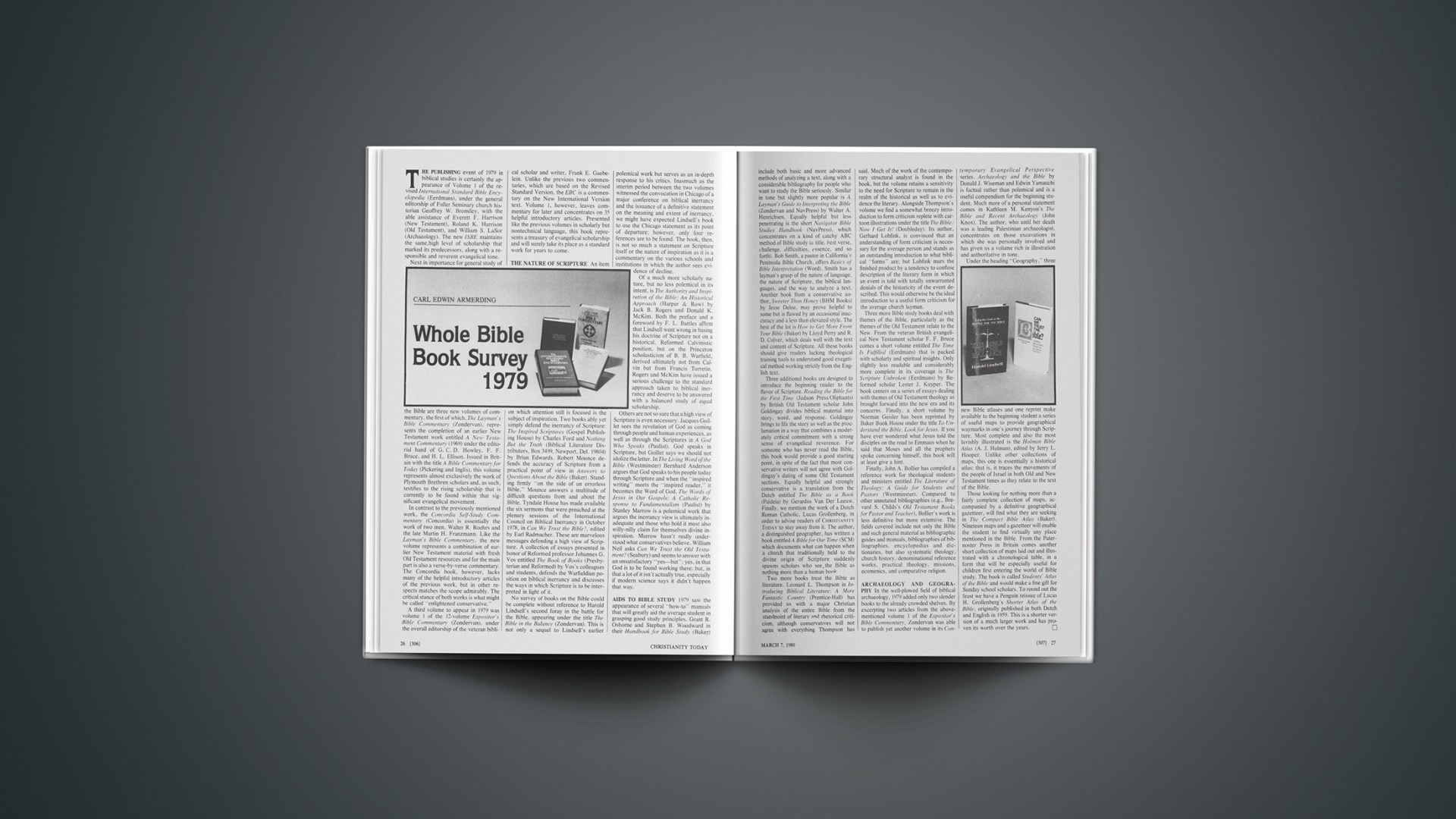
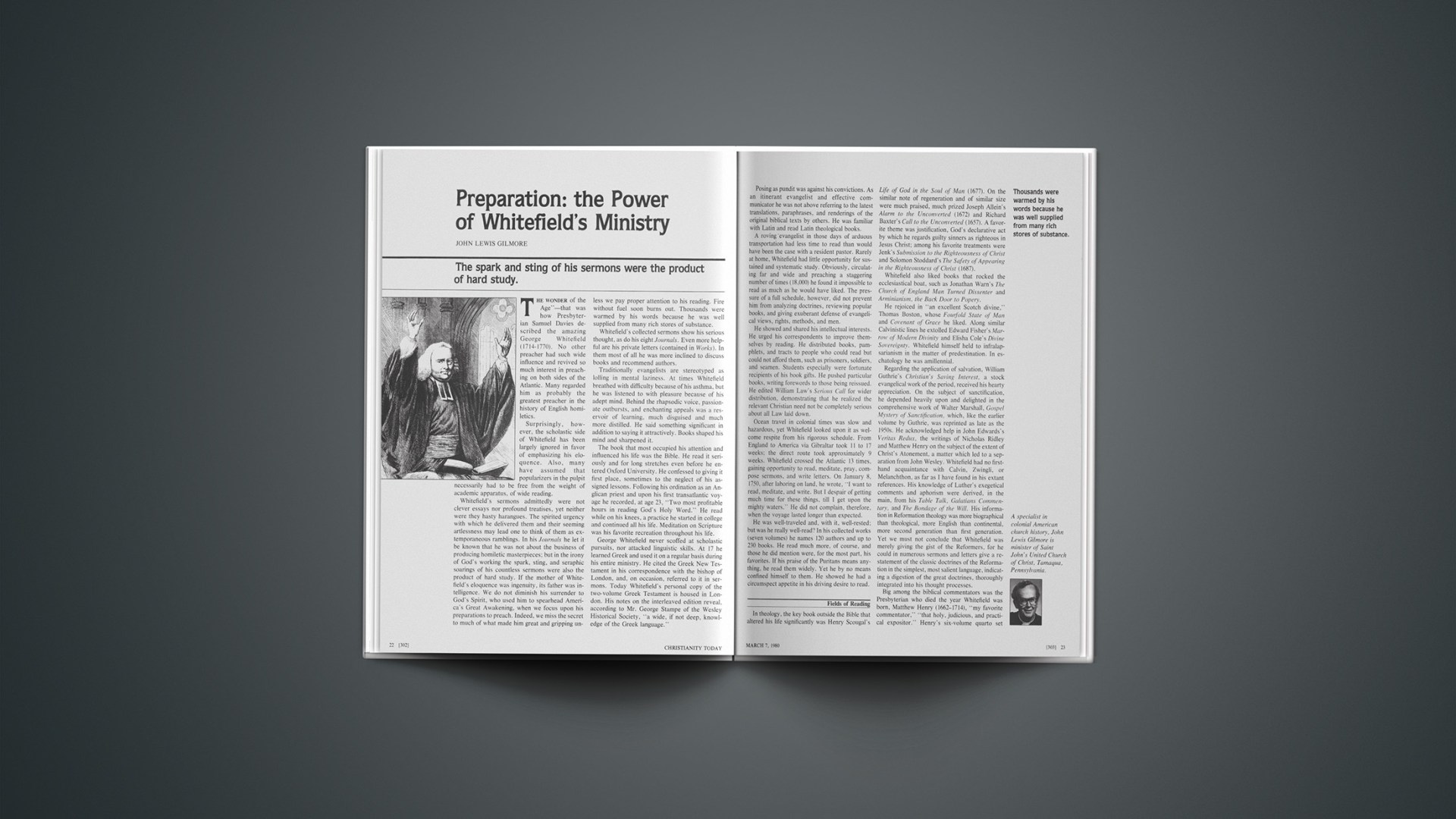
Whole Bible Book Survey 1979

The publishing event of 1979 in biblical studies is certainly the appearance of Volume 1 of the revised International Standard Bible Encyclopedia (Eerdmans), under the general editorship of Fuller Seminary church historian Geoffrey W. Bromiley, with the able assistance of Everett F. Harrison (New Testament), Roland K. Harrison (Old Testament), and William S. LaSor (Archaeology). The new ISBE maintains the same, high level of scholarship that marked its predecessors, along with a responsible and reverent evangelical tone.

Next in importance for general study of the Bible are three new volumes of commentary, the first of which, The Layman’s Bible Commentary (Zondervan), represents the completion of an earlier New Testament work entitled A New Testament Commentary (1969) under the editorial hand of G. C. D. Howley, F. F. Bruce, and H. L. Ellison. Issued in Britain with the title A Bible Commentary for Today (Pickering and Inglis), this volume represents almost exclusively the work of Plymouth Brethren scholars and, as such, testifies to the rising scholarship that is currently to be found within that significant evangelical movement.

In contrast to the previously mentioned work, the Concordia Self-Study Commentary (Concordia) is essentially the work of two men, Walter R. Roehrs and the late Martin H. Franzmann. Like the Layman’s Bible Commentary, the new volume represents a combination of earlier New Testament material with fresh Old Testament resources and for the main part is also a verse-by-verse commentary. The Concordia book, however, lacks many of the helpful introductory articles of the previous work, but in other respects matches the scope admirably. The critical stance of both works is what might be called “enlightened conservative.”

A third volume to appear in 1979 was volume 1 of the 12-volume Expositor’s Bible Commentary (Zondervan), under the overall editorship of the veteran biblical scholar and writer, Frank E. Gaebelein. Unlike the previous two commentaries, which are based on the Revised Standard Version, the EBC is a commentary on the New International Version text. Volume 1, however, leaves commentary for later and concentrates on 35 helpful introductory articles. Presented like the previous volumes in scholarly but nontechnical language, this book represents a treasury of evangelical scholarship and will surely take its place as a standard work for years to come.

THE NATURE OF SCRIPTURE An item on which attention still is focused is the subject of inspiration. Two books ably yet simply defend the inerrancy of Scripture: The Inspired Scriptures (Gospel Publishing House) by Charles Ford and Nothing But the Truth (Biblical Literature Distributors, Box 3499, Newport, Del. 19804) by Brian Edwards. Robert Mounce defends the accuracy of Scripture from a practical point of view in Answers to Questions About the Bible (Baker). Standing firmly “on the side of an errorless Bible,” Mounce answers a multitude of difficult questions from and about the Bible. Tyndale House has made available the six sermons that were preached at the plenary sessions of the International Council on Biblical Inerrancy in October 1978, in Can We Trust the Bible?, edited by Earl Radmacher. These are marvelous messages defending a high view of Scripture. A collection of essays presented in honor of Reformed professor Johannes G. Vos entitled The Book of Books (Presbyterian and Reformed) by Vos’s colleagues and students, defends the Warfieldian position on biblical inerrancy and discusses the ways in which Scripture is to be interpreted in light of it.

No survey of books on the Bible could be complete without reference to Harold Lindsell’s second foray in the battle for the Bible, appearing under the title The Bible in the Balance (Zondervan). This is not only a sequel to Lindsell’s earlier polemical work but serves as an in-depth response to his critics. Inasmuch as the interim period between the two volumes witnessed the convocation in Chicago of a major conference on biblical inerrancy and the issuance of a definitive statement on the meaning and extent of inerrancy, we might have expected Lindsell’s book to use the Chicago statement as its point of departure; however, only four references are to be found. The book, then, is not so much a statement on Scripture itself or the nature of inspiration as it is a commentary on the various schools and institutions in which the author sees evidence of decline.

Of a much more scholarly nature, but no less polemical in its intent, is The Authority and Inspiration of the Bible: An Historical Approach (Harper & Row) by Jack B. Rogers and Donald K. McKim. Both the preface and a foreword by F. L. Battles affirm that Lindsell went wrong in basing his doctrine of Scripture not on a historical, Reformed Calvinistic position, but on the Princeton scholasticism of B. B. Warfield, derived ultimately not from Calvin but from Francis Turretin. Rogers and McKim have issued a serious challenge to the standard approach taken to biblical inerrancy and deserve to be answered with a balanced study of equal scholarship.

Others are not so sure that a high view of Scripture is even necessary. Jacques Guillet sees the revelation of God as coming through people and human experiences, as well as through the Scriptures in A God Who Speaks (Paulist). God speaks in Scripture, but Guillet says we should not idolize the letter. In The Living Word of the Bible (Westminster) Bernhard Anderson argues that God speaks to his people today through Scripture and when the “inspired writing” meets the “inspired reader,” it becomes the Word of God. The Words of Jesus in Our Gospels: A Catholic Response to Fundamentalism (Paulist) by Stanley Marrow is a polemical work that argues the inerrancy view is ultimately inadequate and those who hold it must also willy-nilly claim for themselves divine inspiration. Marrow hasn’t really understood what conservatives believe. William Neil asks Can We Trust the Old Testament? (Seabury) and seems to answer with an unsatisfactory “yes—but”: yes, in that God is to be found working there; but, in that a lot of it isn’t actually true, especially if modern science says it didn’t happen that way.

AIDS TO BIBLE STUDY 1979 saw the appearance of several “how-to” manuals that will greatly aid the average student in grasping good study principles. Grant R. Osborne and Stephen B. Woodward in their Handbook for Bible Study (Baker) include both basic and more advanced methods of analyzing a text, along with a considerable bibliography for people who want to study the Bible seriously. Similar in tone but slightly more popular is A Layman’s Guide to Interpreting the Bible (Zondervan and NavPress) by Walter A. Henrichsen. Equally helpful but less penetrating is the short Navigator Bible Studies Handbook (NavPress), which concentrates on a kind of catchy ABC method of Bible study (a title, best verse, challenge, difficulties, essence, and so forth). Bob Smith, a pastor in California’s Peninsula Bible Church, offers Basics of Bible Interpretation (Word). Smith has a layman’s grasp of the nature of language, the nature of Scripture, the biblical languages, and the way to analyze a text. Another book from a conservative author, Sweeter Than Honey (BHM Books) by Jesse Deloe, may prove helpful to some but is flawed by an occasional inaccuracy and a less than elevated style. The best of the lot is How to Get More From Your Bible (Baker) by Lloyd Perry and R. D. Culver, which deals well with the text and content of Scripture. All these books should give readers lacking theological training tools to understand good exegetical method working strictly from the English text.

Three additional books are designed to introduce the beginning reader to the flavor of Scripture. Reading the Bible for the First Time (Judson Press/Oliphants) by British Old Testament scholar John Goldingay divides biblical material into story, word, and response. Goldingay brings to life the story as well as the proclamation in a way that combines a moderately critical commitment with a strong sense of evangelical reverence. For someone who has never read the Bible, this book would provide a good starting point, in spite of the fact that most conservative writers will not agree with Goldingay’s dating of some Old Testament sections. Equally helpful and strongly conservative is a translation from the Dutch entitled The Bible as a Book (Paideia) by Gerardus Van Der Leeuw. Finally, we mention the work of a Dutch Roman Catholic, Lucas Grollenberg, in order to advise readers of CHRISTIANITY TODAY to stay away from it. The author, a distinguished geographer, has written a book entitled A Bible for Our Time (SCM) which documents what can happen when a church that traditionally held to the divine origin of Scripture suddenly spawns scholars who see the Bible as nothing more than a human book

Two more books treat the Bible as literature. Leonard L. Thompson in Introducing Biblical Literature: A More Fantastic Country (Prentice-Hall) has provided us with a major Christian analysis of the entire Bible from the standpoint of literary and rhetorical criticism, although conservatives will not agree with everything Thompson has said. Much of the work of the contemporary structural analyst is found in the book, but the volume retains a sensitivity to the need for Scripture to remain in the realm of the historical as well as to evidence the literary. Alongside Thompson’s volume we find a somewhat breezy introduction to form criticism replete with cartoon illustrations under the title The Bible: Now I Get It! (Doubleday). Its author, Gerhard Lohfink, is convinced that an understanding of form criticism is necessary for the average person and stands as an outstanding introduction to what biblical “forms” are; but Lohfink mars the finished product by a tendency to confuse description of the literary form in which an event is told with totally unwarranted denials of the historicity of the event described. This would otherwise be the ideal introduction to a useful form criticism for the average church layman.

Three more Bible study books deal with themes of the Bible, particularly as the themes of the Old Testament relate to the New. From the veteran British evangelical New Testament scholar F. F. Bruce comes a short volume entitled The Time Is Fulfilled (Eerdmans) that is packed with scholarly and spiritual insights. Only slightly less readable and considerably more complete in its coverage is The Scripture Unbroken (Eerdmans) by Reformed scholar Lester J. Kuyper. The book centers on a series of essays dealing with themes of Old Testament theology as brought forward into the new era and its concerns. Finally, a short volume by Norman Geisler has been reprinted by Baker Book House under the title To Understand the Bible, Look for Jesus. If you have ever wondered what Jesus told the disciples on the road to Emmaus when he said that Moses and all the prophets spoke concerning himself, this book will at least give a hint.

Finally, John A. Bollier has compiled a reference work for theological students and ministers entitled The Literature of Theology: A Guide for Students and Pastors (Westminster). Compared to other annotated bibliographies (e.g., Brevard S. Childs’s Old Testament Books for Pastor and Teacher), Bollier’s work is less definitive but more extensive. The fields covered include not only the Bible and such general material as bibliographic guides and manuals, bibliographies of bibliographies, encyclopedias and dictionaries, but also systematic theology, church history, denominational reference works, practical theology, missions, ecumenics, and comparative religion.

ARCHAEOLOGY AND GEOGRAPHY In the well-plowed field of biblical archaeology, 1979 added only two slender books to the already crowded shelves. By excerpting two articles from the above-mentioned volume 1 of the Expositor’s Bible Commentary, Zondervan was able to publish yet another volume in its Contemporary Evangelical Perspective series. Archaeology and the Bible by Donald J. Wiseman and Edwin Yamauchi is factual rather than polemical and is a useful compendium for the beginning student. Much more of a personal statement comes in Kathleen M. Kenyon’s The Bible and Recent Archaeology (John Knox). The author, who until her death was a leading Palestinian archaeologist, concentrates on those excavations in which she was personally involved and has given us a volume rich in illustration and authoritative in tone.

Under the heading “Geography,” three new Bible atlases and one reprint make available to the beginning student a series of useful maps to provide geographical waymarks in one’s journey through Scripture. Most complete and also the most lavishly illustrated is the Holman Bible Atlas (A. J. Holman), edited by Jerry L. Hooper. Unlike other collections of maps, this one is essentially a historical atlas; that is, it traces the movements of the people of Israel in both Old and New Testament times as they relate to the text of the Bible.

Those looking for nothing more than a fairly complete collection of maps, accompanied by a definitive geographical gazetteer, will find what they are seeking in The Compact Bible Atlas (Baker). Nineteen maps and a gazetteer will enable the student to find virtually any place mentioned in the Bible. From the Paternoster Press in Britain comes another short collection of maps laid out and illustrated with a chronological table, in a form that will be especially useful for children first entering the world of Bible study. The book is called Students’ Atlas of the Bible and would make a fine gift for Sunday school scholars. To round out the feast we have a Penguin reissue of Lucas H. Grollenberg’s Shorter Atlas of the Bible, originally published in both Dutch and English in 1959. This is a shorter version of a much larger work and has proven its worth over the years.

Carl F. H. Henry, first editor of Christianity Today, is lecturer at large for World Vision International. An author of many books, he lives in Arlington, Virginia.
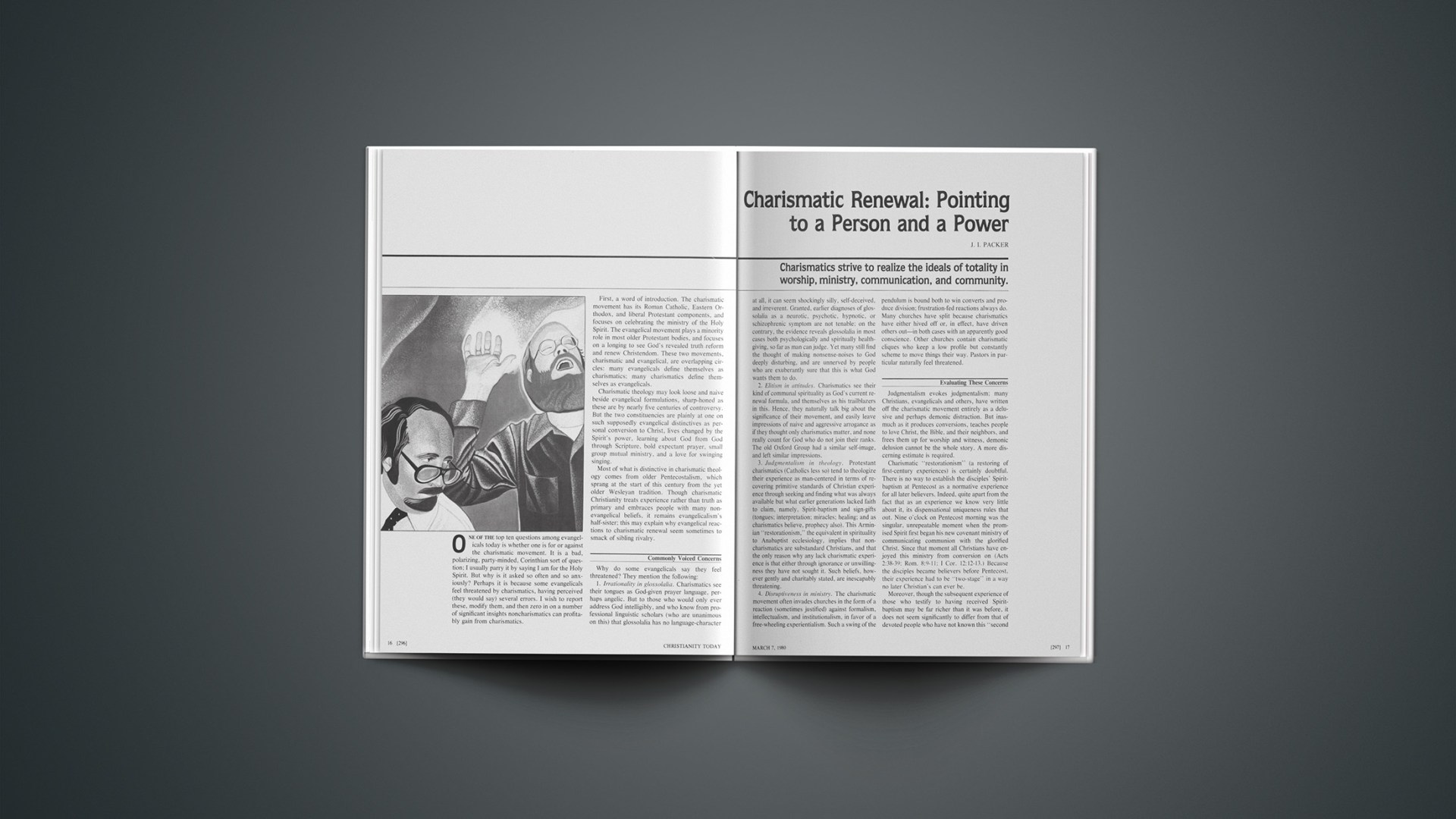
Preparation: The Power of Whitefield’s Ministry

The spark and sting of his sermons were the product of hard study.

The wonder of the Age”—that was how Presbyterian Samuel Davies described the amazing George Whitefield (1714–1770). No other preacher had such wide influence and revived so much interest in preaching on both sides of the Atlantic. Many regarded him as probably the greatest preacher in the history of English homiletics.

Surprisingly, however, the scholastic side of Whitefield has been largely ignored in favor of emphasizing his eloquence. Also, many have assumed that popularizers in the pulpit necessarily had to be free from the weight of academic apparatus, of wide reading.

Whitefield’s sermons admittedly were not clever essays nor profound treatises, yet neither were they hasty harangues. The spirited urgency with which he delivered them and their seeming artlessness may lead one to think of them as extemporaneous ramblings. In his Journals he let it be known that he was not about the business of producing homiletic masterpieces; but in the irony of God’s working the spark, sting, and seraphic soarings of his countless sermons were also the product of hard study. If the mother of Whitefield’s eloquence was ingenuity, its father was intelligence. We do not diminish his surrender to God’s Spirit, who used him to spearhead America’s Great Awakening, when we focus upon his preparations to preach. Indeed, we miss the secret to much of what made him great and gripping unless we pay proper attention to his reading. Fire without fuel soon burns out. Thousands were warmed by his words because he was well supplied from many rich stores of substance.

Whitefield’s collected sermons show his serious thought, as do his eight Journals. Even more helpful are his private letters (contained in Works). In them most of all he was more inclined to discuss books and recommend authors.

Traditionally evangelists are stereotyped as lolling in mental laziness. At times Whitefield breathed with difficulty because of his asthma, but he was listened to with pleasure because of his adept mind. Behind the rhapsodic voice, passionate outbursts, and enchanting appeals was a reservoir of learning, much disguised and much more distilled. He said something significant in addition to saying it attractively. Books shaped his mind and sharpened it.

The book that most occupied his attention and influenced his life was the Bible. He read it seriously and for long stretches even before he entered Oxford University. He confessed to giving it first place, sometimes to the neglect of his assigned lessons. Following his ordination as an Anglican priest and upon his first transatlantic voyage he recorded, at age 23, “Two most profitable hours in reading God’s Holy Word.” He read while on his knees, a practice he started in college and continued all his life. Meditation on Scripture was his favorite recreation throughout his life.

George Whitefield never scoffed at scholastic pursuits, nor attacked linguistic skills. At 17 he learned Greek and used it on a regular basis during his entire ministry. He cited the Greek New Testament in his correspondence with the bishop of London, and, on occasion, referred to it in sermons. Today Whitefield’s personal copy of the two-volume Greek Testament is housed in London. His notes on the interleaved edition reveal, according to Mr. George Stampe of the Wesley Historical Society, “a wide, if not deep, knowledge of the Greek language.”

Posing as pundit was against his convictions. As an itinerant evangelist and effective communicator he was not above referring to the latest translations, paraphrases, and renderings of the original biblical texts by others. He was familiar with Latin and read Latin theological books.

A roving evangelist in those days of arduous transportation had less time to read than would have been the case with a resident pastor. Rarely at home, Whitefield had little opportunity for sustained and systematic study. Obviously, circulating far and wide and preaching a staggering number of times (18,000) he found it impossible to read as much as he would have liked. The pressure of a full schedule, however, did not prevent him from analyzing doctrines, reviewing popular books, and giving exuberant defense of evangelical views, rights, methods, and men.

He showed and shared his intellectual interests. He urged his correspondents to improve themselves by reading. He distributed books, pamphlets, and tracts to people who could read but could not afford them, such as prisoners, soldiers, and seamen. Students especially were fortunate recipients of his book gifts. He pushed particular books, writing forewords to those being reissued. He edited William Law’s Serious Call for wider distribution, demonstrating that he realized the relevant Christian need not be completely serious about all Law laid down.

Ocean travel in colonial times was slow and hazardous, yet Whitefield looked upon it as welcome respite from his rigorous schedule. From England to America via Gibraltar took 11 to 17 weeks; the direct route took approximately 9 weeks. Whitefield crossed the Atlantic 13 times, gaining opportunity to read, meditate, pray, compose sermons, and write letters. On January 8, 1750, after laboring on land, he wrote, “I want to read, meditate, and write. But I despair of getting much time for these things, till I get upon the mighty waters.” He did not complain, therefore, when the voyage lasted longer than expected.

He was well-traveled and, with it, well-rested; but was he really well-read? In his collected works (seven volumes) he names 120 authors and up to 230 books. He read much more, of course, and those he did mention were, for the most part, his favorites. If his praise of the Puritans means anything, he read them widely. Yet he by no means confined himself to them. He showed he had a circumspect appetite in his driving desire to read.

Fields of Reading

In theology, the key book outside the Bible that altered his life significantly was Henry Scougal’s Life of God in the Soul of Man (1677). On the similar note of regeneration and of similar size were much praised, much prized Joseph Allein’s Alarm to the Unconverted (1672) and Richard Baxter’s Call to the Unconverted (1657). A favorite theme was justification, God’s declarative act by which he regards guilty sinners as righteous in Jesus Christ; among his favorite treatments were Jenk’s Submission to the Righteousness of Christ and Solomon Stoddard’s The Safety of Appearing in the Righteousness of Christ (1687).

Whitefield also liked books that rocked the ecclesiastical boat, such as Jonathan Warn’s The Church of England Man Turned Dissenter and Arminianism, the Back Door to Popery.

He rejoiced in “an excellent Scotch divine,” Thomas Boston, whose Fourfold State of Man and Covenant of Grace he liked. Along similar Calvinistic lines he extolled Edward Fisher’s Marrow of Modern Divinity and Elisha Cole’s Divine Sovereignty. Whitefield himself held to infralapsarianism in the matter of predestination. In eschatology he was amillennial.

Regarding the application of salvation, William Guthrie’s Christian’s Saving Interest, a stock evangelical work of the period, received his hearty appreciation. On the subject of sanctification, he depended heavily upon and delighted in the comprehensive work of Walter Marshall, Gospel Mystery of Sanctification, which, like the earlier volume by Guthrie, was reprinted as late as the 1950s. He acknowledged help in John Edwards’s Veritas Redux, the writings of Nicholas Ridley and Matthew Henry on the subject of the extent of Christ’s Atonement, a matter which led to a separation from John Wesley. Whitefield had no firsthand acquaintance with Calvin, Zwingli, or Melanchthon, as far as I have found in his extant references. His knowledge of Luther’s exegetical comments and aphorism were derived, in the main, from his Table Talk, Galatians Commentary, and The Bondage of the Will. His information in Reformation theology was more biographical than theological, more English than continental, more second generation than first generation. Yet we must not conclude that Whitefield was merely giving the gist of the Reformers, for he could in numerous sermons and letters give a restatement of the classic doctrines of the Reformation in the simplest, most salient language, indicating a digestion of the great doctrines, thoroughly integrated into his thought processes.

Big among the biblical commentators was the Presbyterian who died the year Whitefield was born, Matthew Henry (1662–1714), “my favorite commentator,” “that holy, judicious, and practical expositor.” Henry’s six-volume quarto set was a rich mine of insight, providing quaint and quick information for the busy evangelist. Whitefield also mentioned another near-contemporary, Samuel Clark (1676–1729), whose Bible with Annotations, seemed “best calculated for universal edification.” Expository tools in language aids were familiar to Whitefield, and so were the ponderous and hefty commentary-sermons of William Gurnal on Ephesians 6 and Thomas Goodwin on the first three chapters of Ephesians. Clear and crisp by Puritan standards were the works of Thomas Manton and John Flavel, available to today’s readers in reprint.

Whitefield always eyed books from a devotional angle. Prior to his conversion and during his spiritual infancy he read such books as Thomas à Kempis’s Imitation of Christ. The translated works of Prof. August Hermann Francke (1663–1727), the leader of pietism in Germany, prompted Whitefield to write to him.

An experience with Christ beyond participation in the sacraments was a continuous theme in Whitefield’s preaching. He argued this case from the historical fulcrum and illustrated it with biographical and autobiographical detail. He was especially enthusiastic about news reports on the revivals and religious societies scattered throughout the American frontier. He followed with interest the progress made in evangelical charitable works, such as an orphanage in Georgia.

Biography, especially of ministers, delighted him. “Biography … is the best history,” he once said. He continued, “writing and reading the lives of great and good men, is one of the most profitable and delightful kinds of history we can entertain ourselves with.” Among the lives he knew were Archbishop Cranmer, Latimer, Hooper, Bishop Gardner, Bishop Jewel, Bunyan, Luther, Law, Haliburton, Calvin, Philip Henry, Dr. Calamy, and “the venerable Foxe’s history of the martyres.”

When a boy, Whitefield was drilled in plays and poems. In maturity he quoted Homer and Horace, but did not retain much of the youthful enthusiasm he once had. Among poets of his century, he liked George Herbert in England and Edward Taylor in America.

In his youth at Oxford University Whitefield resolved to read or to prefer those books “such as entered into the heart of religion and which led directly into an experimental knowledge of Jesus Christ and Him crucified.” Any book that did not result in building up one’s faith was considered unworthy of a Christian’s time. He urged students to read extensively, even though he warned of being “letter-learned.”

God was vitally interested, as he saw it, as much in what we read as in where we go. Instead of indiscriminate reading, a Christian should be noted for indefatigable reading in the best sources. For him Puritanism offered the best in reading material because it was solid and rewarding. He liked the “critical and judicious commentaries”: they edified and could “go to the bottom.” Of the Puritan writers he singled out “the great Preston” (John Preston), “the learned Dr. Owen” (John Owen), “the great” and “that learned pious soul” Dr. Thomas Goodwin, and “the amiable Mr. Howe” (John Howe). Richard Baxter got his frequent notice and approving nod.

Conclusions

Whitefield knew his talent was not in writing learned works. He strove, however, to improve his mental stock, to keep in touch with contemporary thought, and to argue effectively the merits of Reformed theology. Sometimes his sermons were disorganized; yet they were eloquently expressed and passionately delivered. Even from his digressions it was evident that he had not thrown education to the wind. They were always interesting, even instructive. Unlike some evangelists today, Whitefield never made derogatory remarks about painstaking research. He was not an anti-intellectual.

Further, in that era we can find no more articulate and attractive exponent of orthodoxy. To see the multitudes moved and to hear of large numbers embracing Christ and emulating his stance moved him to enormous effort.

To him a deliberately selective library was no drawback. He judged what he read in terms of faithfulness to Scripture, homiletical usefulness, and personal edification.

Certainly he was no lumbering technologist in theology, but Gilbert Thomas is inaccurate in saying that he was “no lucid thinker.” His mind had been tooled by exact study and trained in a theological tradition both celebrated and censured for its precise distinctions. He spoke and wrote clearly and persuasively. To compose and deliver compelling, life-changing sermons, to marshall the strongest arguments in the simplest manner, to adjust his comments to the immediate situation—all these features of his ministry bore an indirect testimony to the hours he spent in bumping against the best brains of the age.

So the fluent, sensitive Whitefield was a disciplined, reflective reader. Without failing to extol the freedom of the spirit’s presence, Whitefield exemplified the need for intense preparation in preaching. Behind the gifted spokesman of evangelical Christianity was the good student.

Carl F. H. Henry, first editor of Christianity Today, is lecturer at large for World Vision International. An author of many books, he lives in Arlington, Virginia.
Charismatic Renewal: Pointing to a Person and a Power

Charismatics strive to realize the ideals of totality in worship, ministry, communication, and community.

One of the top ten questions among evangelicals today is whether one is for or against the charismatic movement. It is a bad, polarizing, party-minded, Corinthian sort of question; I usually parry it by saying I am for the Holy Spirit. But why is it asked so often and so anxiously? Perhaps it is because some evangelicals feel threatened by charismatics, having perceived (they would say) several errors. I wish to report these, modify them, and then zero in on a number of significant insights noncharismatics can profitably gain from charismatics.

First, a word of introduction. The charismatic movement has its Roman Catholic, Eastern Orthodox, and liberal Protestant components, and focuses on celebrating the ministry of the Holy Spirit. The evangelical movement plays a minority role in most older Protestant bodies, and focuses on a longing to see God’s revealed truth reform and renew Christendom. These two movements, charismatic and evangelical, are overlapping circles; many evangelicals define themselves as charismatics; many charismatics define themselves as evangelicals.

Charismatic theology may look loose and naive beside evangelical formulations, sharp-honed as these are by nearly five centuries of controversy. But the two constituencies are plainly at one on such supposedly evangelical distinctives as personal conversion to Christ, lives changed by the Spirit’s power, learning about God from God through Scripture, bold expectant prayer, small group mutual ministry, and a love for swinging singing.

Most of what is distinctive in charismatic theology comes from older Pentecostalism, which sprang at the start of this century from the yet older Wesleyan tradition. Though charismatic Christianity treats experience rather than truth as primary and embraces people with many nonevangelical beliefs, it remains evangelicalism’s half-sister; this may explain why evangelical reactions to charismatic renewal seem sometimes to smack of sibling rivalry.

Commonly Voiced Concerns

Why do some evangelicals say they feel threatened? They mention the following:

1. Irrationality in glossolalia. Charismatics see their tongues as God-given prayer language, perhaps angelic. But to those who would only ever address God intelligibly, and who know from professional linguistic scholars (who are unanimous on this) that glossolalia has no language-character at all, it can seem shockingly silly, self-deceived, and irreverent. Granted, earlier diagnoses of glossolalia as a neurotic, psychotic, hypnotic, or schizophrenic symptom are not tenable; on the contrary, the evidence reveals glossolalia in most cases both psychologically and spiritually health-giving, so far as man can judge. Yet many still find the thought of making nonsense-noises to God deeply disturbing, and are unnerved by people who are exuberantly sure that this is what God wants them to do.

2. Elitism in attitudes. Charismatics see their kind of communal spirituality as God’s current renewal formula, and themselves as his trailblazers in this. Hence, they naturally talk big about the significance of their movement, and easily leave impressions of naive and aggressive arrogance as if they thought only charismatics matter, and none really count for God who do not join their ranks. The old Oxford Group had a similar self-image, and left similar impressions.

3. Judgmentalism in theology. Protestant charismatics (Catholics less so) tend to theologize their experience as man-centered in terms of recovering primitive standards of Christian experience through seeking and finding what was always available but what earlier generations lacked faith to claim, namely, Spirit-baptism and sign-gifts (tongues; interpretation; miracles; healing; and as charismatics believe, prophecy also). This Arminian “restorationism,” the equivalent in spirituality to Anabaptist ecclesiology, implies that noncharismatics are substandard Christians, and that the only reason why any lack charismatic experience is that either through ignorance or unwillingness they have not sought it. Such beliefs, however gently and charitably stated, are inescapably threatening.

4. Disruptiveness in ministry. The charismatic movement often invades churches in the form of a reaction (sometimes justified) against formalism, intellectualism, and institutionalism, in favor of a free-wheeling experientialism. Such a swing of the pendulum is bound both to win converts and produce division; frustration-fed reactions always do. Many churches have split because charismatics have either hived off or, in effect, have driven others out—in both cases with an apparently good conscience. Other churches contain charismatic cliques who keep a low profile but constantly scheme to move things their way. Pastors in particular naturally feel threatened.

Evaluating These Concerns

Judgmentalism evokes judgmentalism; many Christians, evangelicals and others, have written off the charismatic movement entirely as a delusive and perhaps demonic distraction. But inasmuch as it produces conversions, teaches people to love Christ, the Bible, and their neighbors, and frees them up for worship and witness, demonic delusion cannot be the whole story. A more discerning estimate is required.

Charismatic “restorationism” (a restoring of first-century experiences) is certainly doubtful. There is no way to establish the disciples’ Spirit-baptism at Pentecost as a normative experience for all later believers. Indeed, quite apart from the fact that as an experience we know very little about it, its dispensational uniqueness rules that out. Nine o’clock on Pentecost morning was the singular, unrepeatable moment when the promised Spirit first began his new covenant ministry of communicating communion with the glorified Christ. Since that moment all Christians have enjoyed this ministry from conversion on (Acts 2:38–39: Rom. 8:9–11: 1 Cor. 12:12–13.) Because the disciples became believers before Pentecost, their experience had to be “two-stage” in a way no later Christian’s can ever be.

Moreover, though the subsequent experience of those who testify to having received Spirit-baptism may be far richer than it was before, it does not seem significantly to differ from that of devoted people who have not known this “second blessing.” Contrary claims at this point simply force the question: Who is kidding whom?

Nor is there any way to make good the claim that the sign-gifts that authenticated the apostles (Rom. 15:19; 2 Cor. 12:12; Heb. 2:3f.) are now restored. The nature of those gifts is in many respects uncertain, and must remain so. We cannot be sure that charismatic phenomena fully correspond to them. For instance, charismatics commend private glossolalic prayer, but New Testament tongues are signs for use in public; charismatics who claim healing gifts have a spottier success record than did Christ and the apostles; and so on.

Yet one can doubt restorationism (which in any case is not approved doctrine among Roman Catholic and German Protestant charismatics) and still rejoice in the real enrichment that charismatics have found in seeking the Lord. Their call to expectant faith in the God who still on occasion heals supernaturally and does wonders can be gratefully heard, and their challenge to seek radical personal renewal can be humbly received without accepting all their theology. We should be glad that our God does not hide his face from those who seek him—neither from charismatics nor noncharismatics—until their theology is correct. Where would any of us be if he did? And we should not refuse to learn lessons from charismatics while contesting some of their opinions.

In passing, I urge that a better way to theologize what is called or miscalled Spirit-baptism is as an intensifying of the Spirit’s constant witness to our adoption and inheritance (Rom. 8:15–17), a deepening of the communion with Father and Son of which Christ spoke (John 14:21–23), an increase of what Paul prayed the Ephesians might enjoy (Eph. 3:15–19), and a renewing of that unspeakable joy in Christ (1 Peter 1:8) of which the Puritan John Owen wrote: “There is no account to be given, but that the Spirit worketh it when and how he will; he secretly infuseth and distills it into the soul, filling it with gladness, exultations, and sometimes with unspeakable raptures of mind.”

Vivid awareness of the divine love seems always to be the essence of the experience, whatever its adjuncts, as it has been also of countless comparable experiences. These have included sealing with the Spirit among the Puritans, entire sanctification among the Wesleyans, the noncharismatic Spirit-baptism of Finney, Moody, and Torrey, the Keswick experience of consecration and filling with the Spirit, the mystics’ “second conversion,” and other meetings with God to which no such brand name has been given. I propose the same theological account of God’s work in all such experiences as being biblically viable and fitting the facts.

A Catholic Assesses Charismatic Renewal In His Church

As one who regards himself as a “Catholic evangelical” and a leader in the charismatic renewal, I have watched with interest for signs of response by evangelical Protestants to the Catholic charismatic movement. It has seemed to me that the charismatic renewal among Roman Catholics offers an opportunity for evangelical Christians—Protestant and Catholic—to recognize a common loyalty to the basic beliefs that constitute Christian orthodoxy.

I see indications that some Protestant evangelicals are also perceiving such an opportunity. While some have rejected the charismatic movement as a whole—and thus have not seen the Catholic charismatic renewal as evidence of an evangelical awakening among Catholics—other Protestant evangelicals have taken a positive, though cautious view. Observers such as Robert Culpepper, Charles Hummel, and Richard Lovelace have described the Catholic charismatic renewal as a genuine movement of conversion to Christ and experience of the Holy Spirit. Lovelace comments in the Dynamics of Spiritual Life: “The Catholic charismatic sector is in many aspects among the most balanced and beautiful in this renewal, [although] no one doubts that eventually hard theological issues will have to be faced.”

The World Evangelical Fellowship has asked me, a Catholic participant in the charismatic renewal, to contribute a chapter to its forthcoming book assessing world evangelicalism in the eighties, and by inviting me to attend its general assembly in London this month as an unofficial observer.

After 13 years of growth, what is the state of the Catholic charismatic renewal today, and what might its significance be for evangelical Protestants?

The charismatic renewal in the Roman Catholic church has, since its inception in 1967 in the United States, become a vast, sprawling movement involving large numbers of Catholics in virtually every country in the world. In a recent Gallup survey of American Catholicism, it was reported thhat 10 percent of American Catholics have had some contact with the charismatic renewal and 8 percent had attended charismatic meetings within the last month. That would mean 5 million American Catholics have had some contact with the charismatic renewal and 4 million actually attended a meeting within the month they were surveyed.

While the movement is largest and, in some ways, most developed in the United States, it is a significant presence in many other countries of the world. For example, in Colombia there are reported to be more than 10,000 Catholic charismatic prayer groups. In France, a few hundred thousand Catholics are now involved, and the numbers are growing in many more European countries. More than 20 percent of the Irish clergy and nuns have become involved in the charismatic renewal, and the charismatic influence on the Irish celebrations with Pope John Paul II was obvious—in music and in other ways.

This renewal movement is not organized centrally, and it does not have a handbook; it is happening spontaneously all over the world. There are, however, some important national and international centers that exercise a significant degree of leadership in the renewal. Some American leaders have been working with Cardinal Leo Josef Suenens for the past four years in Brussels at what is the de facto international headquarters of the charismatic renewal in the Catholic church.

The renewal has been amazingly well accepted by Roman Catholic church officials. Pope Paul VI put a final seal of approval on the renewal in 1975 when he gave an encouraging address to the 10,000 participants in the Catholic charismatic conference held in Rome that year. More than 400 bishops, either individually or as members of national bishops’ conferences, have issued positive statements on the renewal. More than 50 bishops are involved, and testify to renewal in their lives.

The normal format for the charismatic renewal is the small prayer group of 10 to 50 people. There are tens of thousands of these groups all over the world. I expect that, like any popular movement, there will be a peak and a decline of the charismatic renewal as a broad popular movement in the Catholic church. Often there are not sufficient leadership resources, wisdom, and maturity in local leadership to sustain a renewal group. Still, it is clear that literally million of Catholics have been renewed or converted to a signficant relationship with Jesus as Savior and Lord, and to a life of holiness and service empowered by the Holy Spirit.

The long-range fruit of the charismatic renewal, besides contributing to a heightened awareness of the evangelical heart of Roman Catholic Christianity, will probably be the emergence of renewal communities, sometimes called covenant communities. These appear to be the way in which the charismatic renewal will continue to function as a powerful leaven for good in the Roman Catholic church. Some of the most significant of these communities are interdenominational, and so the aspect of uniting with other evangelical Christians to give a common witness to the gospel is strikingly present in some cases.

To what extent is the Catholic charismatic renewal an evangelical renewal movement? I would say that it is broadly characterized by a basic conversion or reconversion, through which millions of Catholics have encountered and accepted Jesus Christ as the Savior who takes away the sin of the world, our sin, and as Lord: Lord of the universe, Lord of the church, Lord of our own lives. At the same time, there is emphasis on the need for the power of the Holy Spirit to live the Christian life, and there is tremendous, widespread blossoming of the reading of Scripture and of giving testimony in evangelism.

In many ways I think it is more accurate to talk about what is happening as an “evangelical awakening” in the Catholic church rather than as a “charismatic renewal.” I personally feel more comfortable being called a “Catholic evangelical” than a “Catholic charismatic.” The focus in my life, as it is in most of the renewal movement, is not on the gifts of the Holy Spirit but on conversion to the person of Christ and entrance into a life of faithful service to him. This is not to deny the importance and relevance of the gifts of the Holy Spirit and his work in the life of Christians and communities. But it is really not my intention, or the intention of most of the people in the charismatic renewal, to put the focus on the gifts of the Spirit rather than on the person and work of Christ.

At the same time, because the movement is so broad, some of the same problems that the Roman Catholic church at large is facing—namely, various confusions of the gospel and unhealthy trends in spirituality—are not absent in some segments of the charismatic renewal. Some of the psychologizing of the gospel, some of the various liberalizing tendencies that are at work now in the Catholic church from liberal Protestantism can be seen here and there in the charismatic renewal. But these certainly are not dominant.

A struggle over the basic gospel message is going on right now in the Roman Catholic church, just as has been the case in many of the major Protestant churches. There has been immense confusion in the Catholic church since the Second Vatican Council, and in many ways what has happened has been just the opposite of the renewal the council intended. Liberal Protestant thought has made serious incursions into the Roman Catholic church. It is my hope that the charismatic renewal and the evangelical emphasis growing out of it will be able to contribute to the strengthening of orthodox understanding of the gospel in the Catholic church. I believe this struggle for the basic gospel is an area of common ground between Protestant and Catholic evangelicals.

I see the communities that are emerging from the charismatic renewal, and the renewal itself, as it continues to evolve, as part of a broader evangelical renewal in the Catholic church. I look forward to the time when we Catholic evangelicals have more contact with our Protestant evangelical brothers and sisters; we desire to serve the same gospel and the same Lord.

RALPH MARTIN

Charismatic Contributions

Despite some unhappy theology, the charismatic movement overall bears marks of genuine spiritual renewal, and though it or sections of it may have lessons to learn in doctrine, it has its own lessons to teach concerning practice.

Doubtless they are not unique, and could be learned elsewhere. But when God has brought new life to so many along charismatic channels, it would be perverse conceit on the part of noncharismatics to be unwilling to look and learn.

The charismatic movement, like the evangelical movement, is a fairly self-sufficent, transdenominational, international network, with its own established behavior patterns, literary resources, and leadership. How far to identify with all this, or with what one’s local charismatic community is doing, is something that each individual must decide for himself. But it seems to me Christians can learn more about the meaning of ideals to which lip service is too easily given.

First Ideal: Total Worship

The charismatic conviction is that worshiping God should be a personal realizing of fellowship with the Father and the Son through the Spirit, and therewith—indeed, thereby—a realizing of spiritual oneness with the rest of God’s assembled family. Liturgical structures therefore must be loose enough to allow for spontaneous contributions and ad libs, and relaxed, informal, and slow-moving enough to let all bask in the feeling of togetherness with God and with each other. In pace, in cultivated warmth, and in its way of highlighting points by repetition, charismatic worship is to historic liturgy as Wagner and Bruckner are to Mozart and Haydn: romantic, that is, in the sense of directly expressing attitudes and feelings rather than classical, focusing on excellence of form. The aim is total involvement of each worshiper, leading to total openness to God at the deepest level of one’s being. To achieve this, charismatics insist, time must be taken; their worship meetings thus may be two or three hours long.

What does this say about the brisk, stylized 60-minute canter—clergy, and choir pulling along a passive congregation—which is the worship diet of so many Christians on so many Lord’s Days? All would no doubt protest that total worship was their aim, too—but are all as realistic and perceptive as charismatics in seeing what this involves? Charismatic practice, however childish and zany it may seem on the surface, convicts the restrained, formal behavior in church that passes for reverence of not being the most vivid, lively, and potent way of communicating the reality of God. Let all consider how “atmospheric communication” can best be effected.

Second Ideal: Total Ministry

It was Paul and Peter who first affirmed that every Christian has a gift or gifts for use in the church (Rom. 12:4–6; 1 Cor. 12:4–7; Eph. 4:7, 11, 16; 1 Peter 4:10.). Thus, the charismatics insist (making a point that is distinct from their hazardous claim that sign-gifts are back) that every-member ministry, achieved by discerning and harnessing each Christian’s ordinary gifts, should be standard practice in the body of Christ. Congregational behavior patterns must be flexible and decentralized enough to permit this.

There’s the rub! Every-member ministry is an ecumenical shibboleth as well as a charismatic slogan these days, and few hesitate to mouth it. But are all as practical as charismatics in devising new structures and reshaping old ones so as to make it happen? No. In many churches the complaint is heard that the talents of gifted people lie unused, and obvious needs in personal and neighborhood ministry go unmet because the pastor insists on being a one-man band and will not treat his flock as a ministering team. Some members of the team do some things better than he. Yet charismatics as a body are past this blockage point in a way that radically challenges all who are not.

Third Ideal: Total Communication

Charismatic singing (both from books and “in the Spirit”), clapping, arm-raising and hand-stretching, the glossolalia ritual of lead-passing from one followed by interpretation from another, delivery of prophecies from God to the group, loose and improvisatory preaching and corporate dialogue with the preacher by interjection and response, are features that impress different people differently; but none, can fault the purpose it serves: to make all that God’s people do together deepen, and share sense of God’s presence and power and openness to his leading at all points. When this is achieved in any measure, you have what Walter J. Hollenweger calls “atmospheric communication,” an established revival phenomenon.

Without advocating the practices mentioned or any technique of “working up” meetings (for manufactured excitement never communicates God), I urge that the charismatic purpose is right.

Fourth Ideal: Total Community

Community or fellowship, which means having Christ in common and sharing what we have from him, is a quality of Christian relationships that charismatics seek to maximize. Their distinction is that they share well, giving both themselves and their substance generously, sometimes recklessly, to help others. In their prayer groups, their discipling relationships, and their experiments in communal living, the strength of their desire to serve in love, whether wisely expressed or not, puts others to shame, while the vividness of their vision of each church—the whole church, as a great extended family, is magnificent.

Again, the question that arises is not whether all should imitate the particular things they do, but whether their example does not expose half-heartedness in others who say they want community but settle for locked-up lives and never squander themselves in love. If it does, what steps will those others now take in the matter?

We have seen that some Protestants are hostile to the charismatic movement because they disagree with some strands of its teaching, or because they feel it threatens them. Others, we know, patronize it as involving illusions that some people need which, therefore, should not be resisted, only ignored. These responses seem inadequate. The movement is forcing all Christendom to ask what it means to be a Christian, and to be Spirit-filled. It is bringing into recognizably evangelical experience people whose ears were closed to evangelical witness as such. As “egghead” radical theology invites the church into the wilderness of a new Unitarianism, is it not (dare I say) just like God to have raised up against it not a new Calvin or Owen, but a scratch movement that proclaims the deity and potency of the Son and the Spirit—not by great theological acumen or accuracy, but by the evidence of renewed lives and lifestyle? A movement which by its very existence reminds both the world and the church that Christianity in essence is not words but a Person and a power? Surely we see divine strategy here.

But whether or not I am right to think this is how Christians of tomorrow will see the charismatic renewal of today, I am sure we shall all do well to try and learn the lessons spelled out here.

J. I Packer, noted English theologian, is professor of systematic and historical theology at Regent College, Vancouver, British Columbia, Canada.

Ideas

Promoting Quaility Evangelical Literature

What is offered and what is read are two different things.

Not so very long ago, quality evangelical literature was difficult to find. Basic theological tools such as original language commentaries, introductions, archaeological studies, and doctrinal works were either nonexistent or of questionable value, being polemical or out-of-date, or both.

Happily, those times have changed. Thousands of fine books are currently available for the evangelical public to choose from. Scholarly reference books, technical biblical studies, commentaries, theological treatises, and reprints of classic materials are all available in numerous editions, bindings, and price ranges. Christian publishers are to be commended for this. They have performed a service that in large part is responsible for the strength of evangelicalism today. By publishing the best of the past and giving scholars of today an opportunity to be heard, all of evangelicalism has benefited.

Not that there aren’t areas in need of improvement. We could mention, for example, the need for books aimed at lay people who are beyond the elementary level; for upgraded offerings on psychology and family; for devotional works with substance; and for realistic material on how to live the Christian life. Changing times require updated material. The research and development staffs of today’s publishers cannot afford to go to sleep now.

But what is offered and what is read are two different things. We may dish up a theological banquet, but if no one comes it isn’t really a feast. It’s only a lot of good uneaten food. Evangelical book buyers today seem to be passing up the feast in favor of McDonald’s. A large percentage of the best-selling books are “trendy,” sensationalist, experience-oriented, or theologically shallow. Year after year genuinely significant material fails to reach into the corners of the evangelical market. About the only exception to this rule is C. S. Lewis, who continues to appeal to large numbers of people.

Clearly our work is cut out for us. Publishers need to promote their higher quality material, and pastors, teachers, and Bible study leaders should encourage people to move to a higher level of reading. “As a man thinks in his heart, so is he”; we are, to a large extent, what we read. If evangelicalism is to grow up as a theological movement it will have to feed on more substantial theological fare than it does now.

The worst since Attica in 1971. That’s how the early February prison riot at New Mexico State Penitentiary was described. Investigations will follow, and perhaps some changes, but by and large the daily routine of thousands of prisoners in the U.S. will go on as before. They will suffer overcrowding, unscrupulous guards, and terror from self-appointed cellblock bullies.

As with other social sores, it seems to take a violent eruption, at the expense of many lives, for people to consider remedies. Many will be proposed after the Santa Fe riots, and they deserve serious consideration by public officials: things like reducing overcrowding; improving attitudes of guards (you can be tough and respectful—see Luke 3:14); smaller prisons; halfway houses; open-door residential centers. Actually, the number of alternative programs is climbing, but community opposition remains stiff. Some people have no sympathy for the prisoner, neither while incarcerated nor after released.

Evidence seems to show that imprisonment does little, if anything, to change the crime rate. In the past 10 years, the U.S. prison population has leaped from 200,000 to more than 300,000. Thus, prison riots are the ugly climax of behavior patterns begun years ago, even during childhood. The riots themselves often stem from years of violence and intimidation among inmates. Take criminals off the streets, put them behind bars, and crime continues in the prisons.

Right now the prisons and the public are in a bind. More criminals are being sentenced to longer prison terms, making for more serious problems, but popular resistance is slowing moves toward greater use of alternatives to prison. Public officials and people with either uninformed or calloused attitudes toward prisoners would do well to read Charles Colson’s books, Born Again and Life Sentence. It was in prison that Colson promised a fellow inmate that he would never forget “this stinking place” and the people there. Later, he argued for a Christian ministry to prisoners, telling the director of the Federal Bureau of Prisons that such a ministry was necessary because four out of five crimes are committed by ex-convicts.

A pilot program proved successful, and Prison Fellowship was formed. Colson’s basic approach is to bring selected prisoners to the Washington, D.C., area for training sessions in Christian living and discipleship. After two weeks, the prisoners return to prison to work with their fellow inmates. The fellowship also sponsors seminars to train Christians to visit prisoners while they are in jail and to support them when they are released. Colson’s Prison Fellowship is now working in 130 prisons. He says that in these places there are better relationships between the prisoners, plus a dramatically lower rate of recidivism.

Colson, prison chaplains, and Christians are proving it is possible not only to reform prison life but also the lives of prisoners. Because of their dedication, sacrifice, and witness, some prisoners are able to say, “I was in prison, and ye came unto me.” Colson has his sights set on all 600 prisons in the country. His wisdom, zeal, and courage can serve as the model for local churches and Christians everywhere.

Geo-political developments in West Asia seem to hold the same irresistible fascination for conservative Christians that a bright light holds for a moth. Neither seems able to resist rushing in and fluttering about in a feverish, ludicrous, and self-damaging manner.

The Islamic revolution in Iran and the Soviet consolidation of its control in Afghanistan have once again set the wings to whirring. Some of the same publications that a generation ago identified Mussolini as the Antichrist are once again identifying the forces aligned with the Beast. Ministers who are otherwise none too sure of their Third World geography are proclaiming with amazing certainty from their pulpits the boundaries of Gog and Magog. Today’s breathless presumption, more likely than not, will look a bit hysterical in hindsight, and the observing world will once again be laughing up its sleeve.

Why are we so quick to label God’s enemies and so slow to learn the lessons that God labored to teach his Old Testament people in the ebb and flow of power politics? If God used the Babylonians to punish the Israelites for their idolatry, may he not be using the Iranians to chastize the Americans for their materialistic greed? And if God promptly punished his elect for relying on the horses and chariots of Egypt, why has he restrained his hand when Christians’ only response to recent events is to demand massive rearming and retaliation?

“It is not for you to know the times and the seasons, which the Father hath put in his own power,” our Lord declared just before charging his disciples to be his witnesses. Why do we insist on detracting from our witness by dubious speculation? The apostle John said that God’s children who look for his appearing should have one preoccupation: purifying themselves as he is pure. Let’s get on with it.

A California billboard picturing the Ayatollah Khomeini and the message “Fight Back—Drive 55” perhaps best illustrates the energy predicament our nation is in. Ten years ago conservation implied little more than saving an endangered species of the earthworm; now it means participating in world politics.

The energy crisis is real. It is not a fabrication of special-interest groups opposed to oil company profits. It is not an artificial crisis created by excessive government regulation. Instead, it is the inevitable result when 6 percent of the world’s population consume more than one-third of the world’s resources.

Some have argued that North America’s overconsumption grew out of God’s mandate in Genesis 1 for man to “fill the earth and subdue it.” But Mark Hatfield convincingly showed that our attitudes are more informed by the Enlightenment than by Scripture. Pursuing our own self-interests, rather than the interests of the global community, leads to overconsumption.

The word “stewardship” best describes the biblical attitude we are to have toward the earth and its resources. Before we are told to have dominion over the earth, we read that God created it. God is the owner, and we are to be the stewards.

As Christians, therefore, we should do our part to conserve our limited supply of energy and resources—not because we want to get back at the Ayatollah, but because we know it’s right.

Eutychus and His Kin: March 7, 1980

The Author Takes a Vocation

Author Phillip Keller has a good thing going with his vocational studies of the Bible—A Shepherd Looks at the Twenty-third Psalm and A Gardener Looks at the Fruit of the Spirit. His publishers have not explained why he keeps changing occupations. My guess is that he refuses to pay his union dues.

But the series is creating problems for other publishers. My editor friend at Parchment Publishing complained: “Now everybody thinks his job qualifies him to write about the Bible! Look at this stack of rejected manuscripts—read the titles!”

I obeyed and read: A Statistician Looks at the Book of Numbers; An Ecologist Examines the Great Tribulation; Footnotes to John 13 from a Christian Podiatrist; A Divorce Lawyer Expounds Hosea. The worst of the lot was A Pig Farmer Raps with the Prodigal Son.

But the publishers are not the only ones upset with Keller’s series. More than one seminary professor is at his wits’, end. I interviewed Dr. Knute Freylinghaus, professor of theology at the Free Seminary in Akron, Ohio.

“Keller’s approach is wrecking all our principles of hermeneutics,” he explained. “Our students think they must literally live the passage before they can understand it. I dread to think of what will happen when they start to preach on the Ten Commandments!” Freylinghaus is developing a new school of existential hermeneutics which he has tentatively called “existential hermeneutics”; and he is hoping that some European theological school will take note and grant him an honorary degree.

But worst hit by the occupational approach are the preachers and Sunday school teachers. “No matter what I preach about,” said a pastor friend, “somebody in the congregation knows more about it than I do. Mike Lumpke is an auto mechanic, and he challenged my sermon about the Holy Spirit pictured as oil. When I preached on the parable of the leaven, half the women in the congregation asked for equal time. My sermon about Elijah on Mount Carmel drew fire from Al Dunning and most of his volunteer fire department.”

Where will it all end? “Probably in chaos,” one of my editor friends predicts. “Our house has letters from over 50 convicts, all of whom want to write about Paul’s prison epistles. One of them tried to get special treatment because he was a Christian before he went to prison.”

Yes, Keller has a good thing going. I’m getting on the bandwagon. Maybe my next title will be An Investor Looks at the Parable of the Talents.

EUTYCHUS X

Faith, Not Works

After reading Edward Plowman’s article “The Shaking Up of Adventism” (Feb. 8), I became concerned that non-Adventists might have received an improper impression of how Ellen White viewed the “investigative judgment.” Plowman refers to “the investigative judgment aspect wherein Christ is determining who is saved and who is not, largely on the basis of works.”

A casual reading of Ellen White’s writings might give this impression, but a careful study of statements in The Great Controversy will reveal the opposite. “All who have truly repented of sin and by faith claimed the blood of Christ as their atoning sacrifice, have had pardon entered against their names in the books of heaven: as they have become partakers of the righteousness of Christ” (Great Controversy, p. 483; see also pp. 422 and 486). These statements show that repentance and faith are the keys to who will be cleared in the investigative judgment. Those who have not repented will not be absolved.

Let’s be careful to read statements in their context. After all, who would say that Revelation 20:13 or 22:12 (“to every man as his work shall be”) promote righteousness by works?

LARRY C. COTTAM

Seventh-day Adventist Pastor

New London. Minn.

Color Me Pessimist

Kudos to you and Ralph Covell for the excellent cover article on China (“The Church and China: Building New Barriers?” Jan. 25). Even missiologists are often seemingly ignorant of how the missionary legacy affects present policies in the People’s Republic of China. The future of the church in China for the rest of this century is the church in China, a church refined by fire as few others.

It offends our Western sensibilities to ponder that we may have little to offer that church, which has been largely ignored until recently by evangelicals who assumed the Holy Spirit left China circa 1950. Color me pessimist about Western involvement in the church in China.

FRED DONNER

China Researcher

Summer Institute of Linguistics

Dallas, Tex.

Thanks for the fine, sensitive articles by Ralph Covell and Tim Stafford in your January 15 issue. Covell’s acceptance of the charge of past imperialism in China and Stafford’s wariness lest missionaries be imperialistic in Kenya today are bracing. Each asks us to be sensitive to culture and social problems, to overcome narrowness and privatism. These are the sorts of thinkers we need to guide us—not only overseas, but here too. Lord!

ALFRED KRASS

Associate Editor

The Other Side

Philadelphia, Pa.

Deathly Prose

I have just finished reading “Preplanning Funerals: A Pastor’s Initiative,” by Roslyn Katz (Minister’s Workshop, Jan. 25). I had hoped that it would explain all of the issues of this subject, but it did not.

The article was written by someone who has traditionally been anti-funeral homes and directors. Her story made it appear that funeral directors were against preplanning—they are not even mentioned in the article.

No funeral director I know would discourage anyone from preplanning their funeral. And no funeral director would object to the assistance of the clergy in that process. All of the questions Ms. Katz poses in her article are asked by funeral directors during a preplanning conference.

I am disappointed that CHRISTIANITY TODAY did not tell both sides of the issue and at least make it clear that the funeral director is available.

CHARLES H. DYKEMAN

Dykeman Funeral Service

Waterloo, Iowa

Bravo

Bravo, John Warwick Montgomery, for your stance for life (“Abortion: Courting Serious Judgment,” Current Religious Thought, Jan. 25). I experience deep disappointment, grief, and anger at the number of Christians who, due to fear, willful ignorance of the situation, lack of biblical principles concerning life, or just plain laziness, refuse to stand in opposition to our nation’s yearly slaughter of the innocent unborn.

Yet entire denominations have joined with our U.S. Supreme Court in support of a woman’s “right to choose,” that is, the “right” to choose death for millions of children. As Montgomery aptly stated, they “do so at their peril.”

KENNETH D. THOMAS

Secretary

Presbyterians Pro-Life

Editor’s Note from March 07, 1980

Our cover story by Harry Genet reads like fiction, but it is sober truth—a thrilling tale of the power of God to turn evil into good. Guyana, best known to the world for a revolting nightmare of degenerate religion, may yet become known as a land of mercy and hope for desperate refugees bereft of home and country. It all began with a sudden God-given inspiration that took root in the mind and heart of youthful Franklin Graham and, halfway around the world, with an equally sudden conversion to Christ of a shrewd Latin lawyer, trusted confidant of Prime Minister Forbes Burnham of Guyana. But you must read the amazing story for yourself.

This is also our semiannual book issue, and John Lewis Gilmore puts contemporary Christians to shame by relating in detail the reading habits of George Whitefield. That busy evangelist spent his life on preaching tours up and down the 13 American colonies and in Britain, and yet found time to read himself full and to write more books than some preachers ever read.

Of the making of books, there is indeed no end; but the making of book reviewers is a different story. It is with deep regret that we bid adieu to Dr. Carl E. Armerding and to Dr. David Scholer as regular reviewers for our book issues. Dr. Armerding, who has served as CHRISTIANITY TODAY’s Old Testament reviewer for many years, has recently become principal of Regent College, and we congratulate him on his new post. We shall also miss the good work of Dr. Scholer, for whose New Testament review section Dr. Walter Elwell will assume responsibility.

History
Today in Christian History

March 7

January
February
March
April
May
June
July
August
September
October
November
December
<>

March 7, 203: Perpetua, a Christian about 22 years old, her slave, Felicitas, and several others are martyred at the arena in Carthage. They were flogged, attacked by hungry leopards, and finally beheaded. Perpetua remains one of early Christianity’s most famous martyrs (see issue 27: Persecution in the Early Church).

March 7, 1274: Thomas Aquinas, one of the most significant theologians of all time, dies at age 48. Known for his adaptation of Aristotle’s writings to Christianity, he became famous for his massive Summa Theologiae (or “A summation of theological knowledge”). In its early pages, he stated, “In sacred theology, all things are treated from the standpoint of God.” Thomas proceeded to distinguish between philosophy and theology and between reason and revelation, though he emphasized that these did not contradict each other. Both are fountains of knowledge; both come from God (see issue 73: Thomas Aquinas).

March 7, 1530: Pope Clement VII rejects Henry VIII’s request to divorce Catherine of Aragon. Henry eventually responded by declaring himself supreme head of England’s church (see issue 48: Thomas Cranmer).

March 7, 1964: At a Roman parish church, Pope Paul VI celebrates mass in Italian instead of Latin, implementing one of the most significant changes of the Second Vatican Council—worship in the vernacular (see issue 28: The 100 Most Important Events in Church History).

History
Today in Christian History

March 6

January
February
March
April
May
June
July
August
September
October
November
December
<>

March 6, 1475: Italian artist Michelangelo Buonarroti, famous for his paintings (the Sistine Chapel), sculpture (“David”), and architecture (the rebuilding of St. Peter’s Cathedral), is born in Caprese.

March 6, 1984: Lutheran pastor Martin Niemoller, a founder of Germany’s Confessing Church and a prisoner for his opposition to the Nazis, dies. Because of his advocacy for complete neutrality between East and West Germany (which was perceived as compromise with communism), he spent his later years in obscurity (see issue 32: Dietrich Bonhoeffer).

History
Today in Christian History

March 5

January
February
March
April
May
June
July
August
September
October
November
December
<>

March 5, 1179: Alexander III convokes the Third Lateran Council. Attended by 300 bishops, it gave the college of cardinals the exclusive right to elect the pope (by a two-thirds majority) and enacted measures against the Waldensians and Albigensians.

March 5, 1409: The college of cardinals convokes the Council of Pisa to end the Great Schism, which had divided Western Christendom in 1378 by the election of rival popes. Unfortunately, all the Council of Pisa did was to produce another candidate for the papacy (see issue 68: Jan Hus).

March 5, 1743:The Christian History, America’s first religious magazine, is published in Boston in the midst of the Great Awakening. The weekly publication, “containing accounts of the propagation and revival of religion,” is not to be confused with our magazine—though we’re proud to carry on the name.

March 5, 1797: The three-masted ship Duff arrives in Tahiti’s Matavai Bay, completing a 207-day voyage from London. The ship, commanded by Captain John Wilson, had aboard 37 artisans and pastors of the London Missionary Society (L.M.S.) and their families, who were to be resettled in the South Pacific on the islands of Tahiti, Tonga and the Marquesas.

March 5, 1899: Alcoholic-turned-evangelist Sam Jones begins a crusade in Toledo, Ohio, where the mayor was also named Sam Jones. Mayor Jones at first welcomed the publicity, but he worried when evangelist Jones decried the city’s immorality (if the Devil were mayor of Toledo, the preacher said, he wouldn’t change a thing). Nonetheless, the mayor was reelected the next month by a huge margin.

Apple PodcastsDown ArrowDown ArrowDown Arrowarrow_left_altLeft ArrowLeft ArrowRight ArrowRight ArrowRight Arrowarrow_up_altUp ArrowUp ArrowAvailable at Amazoncaret-downCloseCloseEmailEmailExpandExpandExternalExternalFacebookfacebook-squareGiftGiftGooglegoogleGoogle KeephamburgerInstagraminstagram-squareLinkLinklinkedin-squareListenListenListenChristianity TodayCT Creative Studio Logologo_orgMegaphoneMenuMenupausePinterestPlayPlayPocketPodcastRSSRSSSaveSaveSaveSearchSearchsearchSpotifyStitcherTelegramTable of ContentsTable of Contentstwitter-squareWhatsAppXYouTubeYouTube