Theology

Why One Texas Pastor Believes Racial Justice Should Start with Stories

Candid accounts of the daily grind of oppression are a first step toward national healing.

Illustration by Chris Neville

Steve Miller has spent his life listening. The black Baptist pastor will approach anyone with a broad smile, and he draws out stories wherever he goes—whether he’s standing in the checkout line or sitting in a movie theater. He’ll gladly pray for you, as any pastor would, but he also has another mission: He’s collecting testimonies of racism.

In Bastrop, Texas, the small Hill Country town where Miller’s storytelling work began, people remember him as friendly and fearless. When Latrice Kellough first met Miller, the charismatic community leader reminded her of Barack Obama, if Obama wore jeans and a Kangol hat. She was immediately at ease, for reasons she couldn’t put her finger on. She listened as Miller prayed for her, and then he listened as she described the racial discrimination she experienced while working at a nursing home.

Miller believes in the power of stories like Kellough’s. Over the past five years, he has worked with Texas communities, churches, and colleges, recording the stories of more than 100 people of color who shared their personal experiences of racism. The pastor believes that oral history—ordinary, firsthand accounts of the not-so-distant past—will move America toward racial reconciliation. And he insists that the church, stories in hand, should lead the way.

“Racism exists because one group of people has more power than another, and that power is enshrined in personal attitudes and social structures,” Miller says. “Those in power do not want to look deeply into the real experiences that oppressed groups suffer every day.”

Back to the Beginning

For Miller, building bridges is second nature. He grew up in Henderson, a tiny East Texas town built on the wealth of bricks, timber, and oil. As a child, he played alongside friends of different races and classes. Some of his kindergarten classmates flew to school in helicopters, while others wondered when they would eat next.

Miller spent long days with his grandfather, a Pentecostal preacher and church planter, sitting at the soda fountain or watching him till the garden. His grandfather had a large presence in the community, and his legacy lived on after he died. When a “still, quiet voice” spoke to Miller in a college classroom in 1999, he wasn’t surprised to hear from God. Part of him expected, deep down, to be called to be a pastor. He wasn’t expecting what else he heard, though—the words “racial reconciliation.”

He didn’t know what he was supposed to do with the divine message, so he continued with his life plan. He got his degree. Went to work. Became an investment banker.

Then God troubled his sleep, Miller says. For a decade, he suffered from near-sleepless nights. Every so often, the banker would buy notebooks from Walmart and start writing. He’d jot down ideas about a new civil rights movement. He stashed them in a filing cabinet.

Eventually Miller transitioned from banking to teaching in an effort to focus more on people. Then he moved to Bastrop when a college friend—the county judge—connected him with a job in the small town’s school district. In the wake of the 2008 recession, Miller, his wife, and two children put their spacious home in the Houston suburbs on the market and headed west.

Not in the Plan

When the Millers arrived in Bastrop in the summer of 2009, nothing happened according to plan. First, Miller’s job fell through. That affected plans to buy land and build a home, so he rented instead. It was a dilapidated house, owned by a friend’s aunt, and he agreed to fix it up in exchange for low rent.

He also learned the town was embroiled in racial controversy. He was told that the African American superintendent of the Bastrop Independent School District (BISD), a longtime employee, was forced from his job. The superintendent accepted a pay raise to move down from his powerful post. His new desk sat in the portable buildings where black employees worked, which the community had dubbed the “soul shacks.” News swirled that the new majority on the school board was targeting African Americans in the district’s high-ranking positions.

Again, Miller heard God call him to racial reconciliation. This time, he listened. He arranged an interview with the former superintendent. He went to Walmart and bought a brand-new spiral notebook. When Miller showed up to the soul shacks, he was himself, friendly and open, and the superintendent’s story spilled out.

“I didn’t go in there with a plan,” Miller later said. “I just wanted to find out what happened.”

For three hours, Miller took detailed notes. At the end, he had a list of 35 names of other employees affected by racism in BISD. He began calling them to see if they’d tell him their stories too.

Reporting on Racism

From fall 2009 to June 2011, Miller spent every day documenting stories of racism in BISD and working on his report. After his wife left early in the morning to coach track and teach and he got the kids off to school, Miller interviewed, submitted record requests, gathered statistics, and wrote his report at his living room desk. The former financier tracked everything with countless Excel spreadsheets, scrupulous filing, and those Walmart notebooks.

BISD employees and parents told him about all kinds of racial discrimination. Once, a Bastrop principal had gathered the school’s black eighth-graders in the library and blamed them for the district’s bad test scores. Longtime black BISD employees were routinely passed over for promotions. The assistant cafeteria manager at Bastrop High School was sexually harassed, verbally abused, and made to work below her rank.

Halfway through the 35 interviews, he realized the conversations could also be instruments for healing and hope. His favorite follow-up question—“How did that make you feel?”—helped interviewees process racial trauma. Watching Miller document their experiences stirred hope for change.

The work took a toll on Miller. The stress came not only from listening to difficult stories, he said, but also from fear due to Bastrop’s dark racial history. Several days a week, Miller subsisted on peanuts and orange juice—“protein and vitamin C” —fasting for protection, spiritual strength, and “to keep from becoming hateful.” The family’s bank account dwindled, but God provided.

Miller also threw himself into community organizing, working on a plan to better serve people of color in BISD. He made TV and radio appearances. Some called Miller a rabble-rouser, even a racist. He got sideways glances in Walmart. Looking back, he isn’t sure how he found the power to keep going.

“I was possessed,” he says. “I was filled by the Spirit to do it. I’d wake up every day, and this is what I did all day, every day for three years.”

Miller showed his dossier to the NAACP, which filed a complaint against BISD with the Department of Education. The federal agency looked into six claims. When investigators in suits arrived, things finally began changing. With Department of Justice representatives present, Miller helped negotiate diversity training requirements for all BISD students, teachers, and administrators. Soon employees of color received promotions, and several became principals. It wasn’t everything Miller wanted, but it was progress.

“We did make change with those stories,” he says. “People would come up to me on the street and thank me.”

As he compiled a record of systemic racism, Miller carved out his role in the community as a listener and advocate—the first person you’d ring up when something wasn’t right.

Yet these strides came with little support from the institutions Miller felt should be his strongest allies: churches.

A Spiritual Investigation

As he interviewed people in the school system about their experiences, Miller kept wondering about the people in the churches. Where were they in the fight for justice? How could some Christians consider themselves good on a “pious level,” he wondered, “and still support some of the most devastating and horrific policies against people of color?”

Miller embarked on a spiritual investigation, enrolling in nearby Austin Presbyterian Theological Seminary. There he fell more in love with Christianity and saw how deeply God cares for the disenfranchised.

Miller concluded that “loved ones without color” — the term he uses for white people in an effort to “take the edge off” conversations about race—inflict injustice because they refuse to listen to people of color.

“The key to biblical understanding is repenting. There’s never been a public apology for slavery and Jim Crow. It’s the Christian thing to do, the human thing to do,” Miller says. Asking for forgiveness “puts God in a place to move.”

In seminary, Miller went back to his notebooks and the idea of a new civil rights movement. He mapped out a 50-year plan that starts with changing hearts, then minds. He asked himself how he could be “an evangelist of racial reconciliation” in America.

Miller reflected on the tools he already had and realized he knew what could make the difference: stories. Throughout his investigation, Miller saw how, while telling and retelling their stories, people began to heal from racial trauma—and their firsthand accounts had the power to change listeners.

Miller was ordained in 2015, and now he’s following the call he heard so many years ago: racial reconciliation. Miller believes the church needs to be transformed by everyday stories of racism. So he set out to collect them—an effort involving college students, video equipment, and lots of community organizing. He called it the HBCU (Historically Black Colleges and Universities) Truth and Reconciliation Oral History Project.

The Story Collectors

Miller stood on a San Antonio college campus in February 2019 for the oral history project’s third annual story collection weekend. College students, mostly students of color, ushered community members into private, nondescript rooms, where they stood in front of beige backdrops and faced video cameras. Nearly 50 residents shared their experiences of racism with student interviewers—some for 15 minutes, others for two hours.

Kimberly Holiday talked about being harassed in grocery stores after adopting a friend’s white baby. Sharon Anderson described how real estate agents showed her a flood-prone property and pretended others weren’t available. Tracy Watts recalled finding her son’s family tree hanging behind the classroom trashcan. Patrick Hill described lying on the ground as a white police officer rubbed his boot on his face, as if scraping off gum.

There were so many stories. They took place at football games, outside a Taco Bell, in classrooms, in police cars, and at hospitals. They weren’t big-ticket stories, but candid accounts of the daily grind of racism. “I want the everyday, average, common story that happens to black people that people would never think of,” Miller says.

Students have filmed more than 100 stories, archived at Baylor University and posted online for researchers worldwide. The project has been supported with funding from Ashoka, the National Endowment for the Humanities, and nine Texas colleges and universities, including five HBCU institutions. Every year, several students and a professor from each college gather to document stories in a Texas town.

The day before interviews, students attend classes on subjects like racism, social movements, and empathetic interviewing, and they learn to operate the cameras. Few emerge from the experience unchanged.

“Everybody’s profoundly impacted,” Miller says, “from the storyteller to the student to the professor to me.”

On one level, the stories serve as evidence—a “proof project” about racism. Unlike most oral history projects, however, it’s designed for the community, not just the archives, providing a safe place to release stressful experiences. For the people telling their stories, the experience is often healing.

It can be healing for white audiences, too. Listening gives them an opportunity to confront the callousness and wounds within. Carolyn Helsel, one of the oral history project’s advisers and a professor at Austin Seminary, said the stories can give white Christians eyes to see and ears to hear. She believes that through listening, they can learn to “talk faithfully” about race.

Listening also demands action, Miller says. It isn’t passive; “it’s accepting a legal responsibility to God to bring resolution.”

Change Built on Conversations

The Millers left Bastrop for another fresh start five years ago. They relocated 30 miles north of Miller’s hometown of Henderson, where he fixed up his late aunt’s small 1940s house and turned it into the headquarters for his new vision: the US Christian Leadership Organization (US-CLO).

To many people, including his own relatives, Miller’s career hasn’t made a lot of sense. He’s moved from finance to education to community organizing and now to ministry. But his ministry doesn’t look like other ministries. To some pastors, he seems like more of an activist. But to a lot of activists, his work is suspiciously spiritual.

From Miller’s perspective, though, all his disparate experiences are coming together as he builds the US-CLO and the Truth and Reconciliation Oral History Project and as he works toward the hope of a national transformation that starts with conversations. Racial justice requires changing systems, Miller says, but it starts with changing hearts. That’s why he’s staking his life’s work on stories—which he believes can compel the church to action and change the national narrative around race.

“This is about saving the soul of America,” Miller says, “and living into what we proclaim.”

Sarah Holcomb is an editor at Ashoka, an international nonprofit organization, and is based in Washington, DC. Ashoka has partially funded the work featured in this story but had no role in CT’s reporting.

Have something to add? See something we missed? Share your feedback here.

Church Life

It’s Not Enough to Broadcast a Service. Churches Need to Foster Community.

What pastors can learn from plummeting online attendance.

Christianity Today August 17, 2020
Illustration by Mallory Rentsch / Source Images: PeopleImages / Adene Sanchez / Getty Images / Christopher Gower / Alex Knight / Unsplash

Since the coronavirus forced worship services to move online, nearly a third of church-goers have stopped attending church, according to new Barna research. Among millennials, it’s even higher: Half of those who used to go to church have stopped since the pandemic started.

It is not clear why. But when attendance plummets, we need to stop, reflect, and answer that question.

Perhaps people are “Zoomed out.” Even if people liked video conferencing before lockdown, weeks of online video meetings for work, school, and social gatherings have caused many to dread logging on for one more hour on Sunday morning. But could that really account for nearly a third of churchgoers?

It could be the music. Singing along at home in front of a screen is not the same experience as singing in church, surrounded by fellow believers. Lag time and occasional buffering glitches make it incredibly difficult to enter into the music and find that “flow state” many associate with good worship. But most churchgoers do not rate music as the most important part of their experience at church. The Christian author Gary Thomas identified nine “sacred pathways” that lead people to connecting with God. Only two of them prioritize music. North Point Ministries, similarly, found that musical worship is a top priority for maybe 14 percent of regular churchgoers.

Another reason could be that church members live in areas with low-bandwidth or non-existent Internet, making live-streaming services all but impossible. In 2018, the Federal Communications Commission found that 18.3 million Americans lack access to broadband Internet. As commissioner Jessica Rosenworcel explained, it’s “not that they can’t afford it. It’s simply not available.” This lack of access is especially true in rural parts of the country. But that only accounts for 5 or 6 percent of Americans and wouldn’t seem to explain the dramatic drop in church attendance since March.

Let me suggest another potential reason. There’s something about going to church that hasn’t yet sufficiently translated online. Churches are understandably focused on what happens in the sanctuary one hour each week. Long before the global pandemic, a lot of effort went into creating that 60 to 90-minute event. Once the pandemic hit, that same kind of energy went into translating that service into an online format. But something got lost.

On Sunday mornings before COVID-19, while church staff planned and prepared for what happened inside the sanctuary, something else was going on outside in the foyer, in the atrium, on the patio, in the welcome area. Something less planned, and for some churches, less intentional. People stood around talking. They shared their lives. And at the edges of sanctuaries, or in dedicated rooms, people prayed together for various needs. Before COVID-19, the church building bound together worship, community, and pastoral care.

When worship services go online, what happens to that bundled good? For many church members, these points of personal connection disappeared. Some may have made an effort to recapture it on Zoom or Facebook Live—with instructions to virtually say hello to someone “sitting next to you”—but not many. My guess is this loss of community and pastoral care has dramatically impacted church attendance.

Whereas the worship service is something that churches can produce and broadcast at scale to whoever will watch, community and personal connection are “anti-scale.” That means they resist mass reproduction. Being personally known and cared for is almost always a one-on-one experience and can’t be mass produced. Worship services, on the other hand, tend to be constructed using a one-to-many model of mass production—something is produced by one person and distributed to many. It’s possible just to observe the worship service as an audience member with very little participation.

The sanctuary part of the church service is seemingly easy to broadcast online. What happens outside the sanctuary, though, is incredibly difficult. But if community and pastoral care are what people need and are no longer receiving from the online service, then it makes sense why so many have stopped attending.

When churches prioritize their worship services the same way they did pre-pandemic, it is easy to overlook other seemingly peripheral activities, but those activities make church attendance a critical, life-giving experience for so many. The truth is, we may have misunderstood why a third of congregations were showing up to church every Sunday. It may be the care and comfort people received from their friends and pastors. In fact, where we might assume the worship service facilitates community, it might be the other way around: community and pastoral care support the worship service.

For many, the “peripherals” are actually central. And if that part of church has gone missing because church is only being live-streamed, then people will look elsewhere to address their relational and spiritual needs.

The Barna research found as much, too. Not only for dropouts but also for those who continue to watch church online. The survey reported that “practicing Christians across the US are seeking prayer and emotional support.” In the transition to a broadcast-only format, some churches may have lost sight of these other important priorities. The worship service has been unbundled from community and pastoral care. By going online, the church building no longer holds these three elements together.

So what can churches do?

While the Barna research seems troubling at first, it also offers crucial insight. Attendance for services—online or offline—can no longer be the only metric church leaders use to account for the spiritual and relational health of their church or their congregation. Churches must look for new metrics to account for the community connections and pastoral care that are happening elsewhere in their online and offline ecosystem.

Churches would be wise to develop new metrics in this time of dispersion. Consider tracking prayer requests coming in through the church’s online forms. Some churches have already seen these increase. Churches could also measure phone calls pastors and staff are receiving from and making to their congregation. Metrics should measure what matters. Metrics need not be thrown out, but instead of tracking attendance as a proxy, the church can explore new metrics that could highlight, facilitate, and empower community and pastoral care.

COVID-19 could also re-focus our attention on member-to-member interaction—community. The church building served as a kind of social platform. Community grew organically in that space. What spaces can we create in the COVID-19 era that encourage and foster that experience where people feel cared for, connected, and known? The pandemic took something away, but it doesn’t have to be the final word.

There are many encouraging examples of churches experimenting creatively, advocating for community. The best ideas seem to start with considering a congregation’s unique personality. All Saints’ Episcopal Church in the Ravenswood neighborhood of Chicago, for example, is a historic church that had a tradition of a monthly birthday and anniversary celebration. Once quarantine began, their tradition went online. People emailed a photo of themselves to a minister who compiled them into a photo montage that the church integrated into the Sunday morning livestream. The online context gave participants a chance to become more involved and see themselves and others in the online worship. The practice helped people feel connected to each other.

The efforts need not be high-tech, though. Some churches have retrieved old-fashioned approaches that communicate care in deeper ways. A church in New York arranged members into groups of about 15 and appointed leaders to check in with them, see if they needed prayer, food, or other supplies. While the pastoral staff may be unable to connect with every church member, dispersing the load catalyzes ministry to happen across the church body, not just from the head.

A Baptist church in South Carolina invited members to write letters to nursing home residents who are unable to have visitors and feeling especially lonely. The extra effort of these mailed letters communicates well beyond the simple written words. Again, by simply organizing a creative plan, church leaders could mobilize members to minister outside of the sanctuary.

In Moose Jaw, Saskatchewan, one church printed and posted signs inviting people to call or email for any need. While some respondents needed physical provisions, others feeling lonely just called to chat or ask for prayer. Another area church offered spiritual directors who could provide “compassionate listening” to anyone who called. And a third, like the church in New York, organized a phone tree, which, like the mailed letter, communicated more than a simple text or group email.

There are probably as many ideas for fostering community as there are communities. The point is that COVID-19 is an invitation for churches’ creativity. As a friend of mine likes to remind me, “In the midst of devastation, there’s an opportunity for innovation.” It’s a timely word for the church in an unprecedented time.

Adam Graber is a director at FaithTech and co-host of the podcast Device & Virtue. You can find him on Twitter @AdamGraber.

Books

New & Noteworthy Fiction

Chosen by Erin Bartels, author of “We Hope for Better Things” and “The Words between Us.”

Disappearing Earth

Julia Phillips (Vintage)

Suspenseful in an understated way—and filled with fascinating characters whose lives may come within a breath of one another or intersect in more significant ways—this book feels at first like a collection of linked short stories. But the more you read, the more the plot reveals itself. On the surface, it concerns the disappearance of two young sisters. On a deeper level, it explores the lengths we’ll go to justify our actions and attitudes, even when we know they are destructive, both to others and to our own souls. The minute I finished, I wanted to flip back to page one and start over.

Munich

Robert Harris (Knopf)

In his tight narrative of the days surrounding the Munich Agreement of 1938, which conceded part of Czechoslovakia to Nazi Germany, Harris manages something remarkable: making government bureaucracy in the midst of a conflict whose outcome we already know feel exciting. Through two fictional low-level statesmen, we see behind the curtain as Neville Chamberlain and Adolf Hitler move chess pieces across the board. With remarkable insight into modern political realities, Harris leaves readers feeling that we too live in an age of futile gestures, of seeming powerlessness in the face of broken systems. But even so, we must do what we can—with courage and integrity.

Idaho

Emily Ruskovich (Random House)

In Idaho, Ruskovich has written both a literary novel and an up-all-night page-turner. The plot of this haunting debut novel about life and death, love and memory, holding on and letting go, turns on one violent act, though the act itself is never directly described. Instead, Ruskovich approaches it from various angles at various spots along the timeline, as if trying to approach a wild animal without scaring it away. The result is a multifaceted exploration of loss that sticks to your bones and raises that uncomfortable question we all face at some point: How do we manage to forgive that which seems unforgivable?

Books
Review

Sex Is the Earthly Glow of the Heavenly City

How a lovestruck literature student learned that lesson while walking Oxford’s cobblestone streets.

Liv Merenberg / Unsplash

If Oxford brings to mind cobblestones, study rooms at the top of winding stone stairs, and kettles at the ready, then Carolyn Weber’s memoir, Sex and the City of God: A Memoir of Love and Longing, will bear out every thought you’ve had about the place. Following up on her 2013 memoir, Surprised by Oxford, Weber returns to the beloved school where she received her PhD in literature and met her husband, identified only as TDH (Tall, Dark, and Handsome).

Sex and the City of God: A Memoir of Love and Longing

Sex and the City of God: A Memoir of Love and Longing

IVP

224 pages

$11.63

She writes of her years as a young adult, turning over events like the stones she has walked on to reveal some of the crud, yes, but ultimately the rich soil beneath them. While including sex in the title is a bit misleading (there’s certainly nothing how-to in the book), it is a recurring theme, however vague, as Weber makes the point that physical sex foreshadows our ultimate union with Christ. As Augustine put it, “The sexual intercourse of man and woman, then, is in the case of mortals a kind of seed-bed of the [heavenly] city.”

Weber’s story begins with an emotionally and physically complicated scene involving an ex-boyfriend. She’s home from Oxford for her birthday. It’s stormy out, and they are in her family’s run-down spare vacation cabin. She has just become a Christian. There is a bed. They are on the bed. She knows the bed should be off limits. There is a knock on the door. It is her father (or, ahem, the Holy Spirit). She quickly buttons up her blouse. Thus, Weber sets the stage for the account of her dating years at Oxford and her journey toward a mature faith, a story shaped by many literary works that influenced her at the time.

One of the enjoyable things about a book written by a PhD in literature is that poetry is often tucked into the pages. Literature PhDs know their Keats and their Plath, and well-chosen bits of verse often enrich their books like marbling through meat. After describing a dreamlike Advent party in a quintessential twinkle-lit Oxford hall, holly and ivy and TDH included, Weber recalls some famous lines from the poet Gerard Manley Hopkins: “The world is charged with the grandeur of God. / It will flame out, like shining from shook foil.”

This is the same night she locks eyes with her future husband and he walks across the room to gently brush her hair away from her eyes and scoop her up in a bear hug. It’s a magical evening. Almost too magical. As the poem’s lines imply, even while delighting in the most exquisite moments on earth, Weber remains aware that they will ultimately “flame out, like shining from shook foil.”

But her description of that night shouldn’t tempt you to begin whisper-wailing that you didn’t meet your Tall, Dark, and Handsome while getting your doctorate at Oxford. Even marriages that begin with cobblestones, turrets, and winding stone steps are vulnerable to the human condition, and even TDH will have an argument with his wife every now and then. In fact, near the end of the book, Weber, long married and just having finished an argument with TDH, very unexpectedly comes face to face with a temptation to be unfaithful to her husband. And God—very expectedly—supernaturally intervenes in a moment hearkening back to her father’s knock on the cabin door years earlier.

Throughout the book, Weber lends credibility to her story by including passages on the nuts and bolts of walking with God. She makes clear that growth can come about slowly. “It took a bit more maturing in my faith,” she writes, “to realize that being ‘good’ has nothing to do with receiving grace, and thank God it doesn’t.” The authenticity of her faith shines through when she discusses the ultimate heavenly city.

At times, however, I sensed too great a disconnect between her personal narrative and her passages on spiritual growth. The account of meeting her husband and the sections on maturing in Christ and learning from Augustine’s City of God weren’t as integrated as I would have liked. Oxford and TDH can glow to the point of losing touch with reality, and in these instances, I think Weber could have better served her readers by using events and scenes from her story to show her spiritual progress rather than simply report on it in separate frames.

But where TDH and Oxford can hover untouchable, the author, as in any good memoir, remains the primary protagonist. I trusted Weber from start to finish, especially as she quoted literary giants. Almost all of her chapters begin with an apt epigraph from Augustine. “An epigraph,” she writes, “remains one of my favorite literary devices, perhaps because of how it so strategically yet subtly sets the context for the entire story. It plants a seed.”

Weber nurtures each seed until, like a blazing flower in midsummer, it fans to flame on the page. Her chapters are rich with the beauty of Christ, the eros-flame of ultimate consummation and the eternal glory of a city never ending.

Katherine James is a novelist living in Westchester, Pennsylvania. She is the author of A Prayer for Orion: A Son’s Addiction and a Mother’s Love.

Books
Review

Secular Faiths Are Remaking the American Religious Landscape

Tara Isabella Burton’s report on the ascendance of “Remixed” spirituality is equal parts fascinating and dismaying.

Illustration by Nicole Xu

Meaning-making is a growth industry.” That’s how Harvard researcher Casper ter Kuile put it in a 2018 interview for Vox. He was commenting on the explosive popularity of extreme fitness regimes like CrossFit and SoulCycle, noting how the overt spirituality of both programs allowed them to function almost as secular churches.

Strange Rites: New Religions for a Godless World

Strange Rites: New Religions for a Godless World

PublicAffairs

320 pages

$22.99

At the time, ter Kuile’s words may have sounded like the sort of exaggeration that effortlessly attaches to exercise fads. Two years later, it appears he understated matters considerably.

The fitness industry, of course, has plenty of company in the field of contemporary spiritual entrepreneurship. If you want to sell Americans on razors these days, don’t talk about follicles—talk about toxic masculinity. Don’t pitch your hotel as luxurious—pitch the enlightening potency of self-care. If “sex sells” used to be Madison Avenue’s favorite maxim, today it might be “meaning sells.” Righteousness, too.

It is no coincidence that the person sitting across from ter Kuile was journalist (and recent Christian convert) Tara Isabella Burton. Over the past several years, Burton has brought unparalleled savvy and precision to her work tracing the undulations of American religiosity, in both its conventional and secular expressions.

Burton has compiled her findings in Strange Rites: New Religions for a Godless World (PublicAffairs), a volume that fascinates and dismays in equal measure. It is an essential work for anyone interested in understanding—or addressing—our rapidly transforming cultural and religious landscape.

Bespoke Faiths

On one level, Strange Rites is a book-length refutation of the conventional narrative of religious decline invoked with increasing carelessness to explain the rising numbers of “nones.” Americans, it would appear, have become not less religious but differently religious. But the form these new faiths are taking represents a deep and troubling departure from historical Christianity.

Diving into the numbers and stories of the spiritually unaffiliated, Burton coins a new term: the “Remixed religious,” or the Remixed for short. The Remixed may check “none” (or “spiritual but not religious”) when the census asks about religion, but that’s only because no other label really fits (and they abhor labels to begin with). In reality, the Remixed approach spirituality in the same way they manage their social media presence: They curate. This used to be called “cafeteria religion,” but it’s hardly a cafeteria anymore when the buffet line goes on for miles.

Just as the printing press fueled the rise of Protestant denominations, the Remixed owe much of their traction to the internet. With the help of Harry Potter, Burton illustrates how the bespoke tribes found online can morph into bespoke faiths. In her view, all that’s needed are four components: meaning, purpose, community, and ritual—preferably a type of ritual that fosters what sociologist Emile Durkheim called “collective effervescence.”

Yet like the technology that fuels their evangelism, the Remixed are hardly monolithic. Lacking a common object of worship, they share a mode of meaning-making, relying fully on intuition and eschewing institutions at all costs. Burton takes great care in the opening chapter to illustrate how American religious experience has swung between these two poles, defining intuitional religion as any spiritual expression in which “the locus of authority [rests] on people’s experiential emotions” rather than “outside structures or rules,” which are regarded as “oppressive, and even evil.”

The bulk of the book is spent exploring pockets of the Remixed in unflinching detail. Burton begins with fan culture—in particular the aforementioned Harry Potter fan culture, from which she weaves a beguiling if somewhat tenuous web of connections. In her telling, those books marked an inflection point in the development of internet tribes. (If you didn’t know what a Snapewife was before, you’ve been warned.)

Up next is the behemoth known as Wellness Culture, with its ubiquitous hashtag #selfcare. What began as a statement of personal dignity on behalf of minority women has, in the hands of Instagram influencers, become both a moral imperative and a license to self-indulgence. As Burton observes, “Self-care has become a marketing slogan, one designed to lend legitimacy to behavior that might, in other moral systems, be considered merely selfish.” Needless to say, Gwyneth Paltrow and her Goop product line do not come off well.

Then we come to a more unfamiliar region of Remixed spirituality, which Burton calls the Magic Resistance: a mixture of feminist politics, New Age curiosity, and self-divinization. (There are more witches in the United States, it turns out, than Jehovah’s Witnesses.) From here it’s a fairly straight line to a squirm-inducing chapter on sexual utopianism, which Burton sees as the logical outcome of an intuitive spirituality that exalts personal authenticity.

In fact, an unquestioned valorization of personal authenticity rears its head in pretty much every chapter. The Remixed make very little allowance for healthy self-suspicion. On the contrary, they are convinced of their fundamental goodness—and certain that only external forces can frustrate their path to perfection. As Burton explains, the Remixed live to “express [their] authentic selves, and to pursue that self through freedom.”

Finally, Burton transitions into the heart of her analysis, profiling three movements vying to become America’s new, outwardly godless civil religion: social justice culture, Silicon Valley techno-utopianism, and a reactionary alt-right. Burton brings admirable empathy to these movements without glossing over their liabilities and antagonistic attitudes toward the Christian faith.

Each contender offers a totalizing—and in some cases intoxicating—narrative of the world, our place in it, and the wicked forces that need to be rooted out. Radical social justice movements build their cosmology entirely upon “nurture”: the tabula rasa of humanity corrupted by the original sin of Western patriarchy. By contrast, the alt-right leans exclusively on “nature,” declaring that the original sins of political correctness and feminism have obscured certain uncomfortable, biologically grounded realities. And although it claims fewer actual adherents, techno-utopianism—with its promise of bio- and cyber-hacking our way to eternal life—boasts by far the most cash. Not inconsequentially, it also controls the platforms (and devices!) on which its two rivals wage their battles.

While Burton refuses to predict a winner, social justice culture looks an awful lot like the frontrunner at the moment—at least if real-world repercussions (firings, cancellations, statue removals) are any measure of its influence. Burton describes its spiritual appeal this way:

The social justice movement is so successful because it replicates the cornerstones of traditional religion—meaning, purpose, community, and ritual—in an internally cohesive way. It takes the varied tenets of intuitionalism—its prioritization of the self, emotions, and identity, its suspicion of authority, its utopian vision of a better world born phoenix-like from the ashes of the old—and threads them together into a visionary narrative of political resistance and moral renewal.

Strange Rites does not attempt a response to any of these new religions. Burton is more interested in mapping out the territory, drawing its lineage, and allowing proponents to speak for themselves. And, it should be said, she does so brilliantly, packing her account with enough anecdotes, case studies, and curiosities to lend the book a genuinely panoramic feel. The book has stretches where the argument veers into overstatement (and the subject matter into esoterica). Yet, given the rapid pace at which Remixed spirituality evolves, it wouldn’t surprise me if Burton’s descriptions sound relatively tame even one or two years down the road.

The Unifying Word of Eden

So where does this leave Christians? First, as Burton takes great pains to note, we dare not hold ourselves above the Remixed. Often enough, professing Christians assent to similar doctrines, both consciously and subconsciously. Moreover, the ascendancy of the Remixed should move us to ask whether the church has articulated its own story with sufficient urgency, resonance, and beauty. Perhaps we have been too slow in viewing the internet as a legitimate mission field—a place where people actually live most of their lives and make most of their meaning. In that sense, Strange Rites offers not only a warning but an invitation for Christ followers to feed the spiritual hungers of 2020.

If Burton is right, then the old story of the gospel has not lost a shred of potency. To a culture inclined to locate sin and evil out there, we can speak the unifying word of Eden: that “the line separating good and evil,” as Aleksandr Solzhenitsyn famously phrased it, runs “right through every human heart.”

We can present a faith born of love rather than rage, of sacrifice rather than conflict—one that glories in human frailty instead of denying or despising it. We can speak of a God who liberates us from the shackles of self and the never-ending mandate of perfection. We can speak of the Holy Spirit, active and alive in the world, bringing goodness, light, and healing far beyond our capacity or imagination.

Most of all, we can offer the one thing that all these new religions conspicuously lack: an ethic of forgiveness and reconciliation, which is to say, the miracle of God’s grace. In Jesus of Nazareth, we have a way forward for victims and victimizers alike. The Prince of Peace does not turn away the guilty, hypocritical, or addicted. Instead, he brings hope and new life to those whose self-made religions can only leave them defeated.

This Good News might not be a growth industry right now, but just you wait: To those burnt out on saving the world and themselves, all it takes is a mustard seed.

David Zahl is the founder and director of Mockingbird Ministries. He is the author of Seculosity: How Career, Parenting, Technology, Food, Politics, and Romance Became Our New Religion and What to Do about It (Broadleaf Books).

Ideas

God Knew What He Was Doing When He Gave Jesus Two Family Trees

Columnist; Contributor

How to sort out the many disparities between the genealogies of Matthew and Luke.

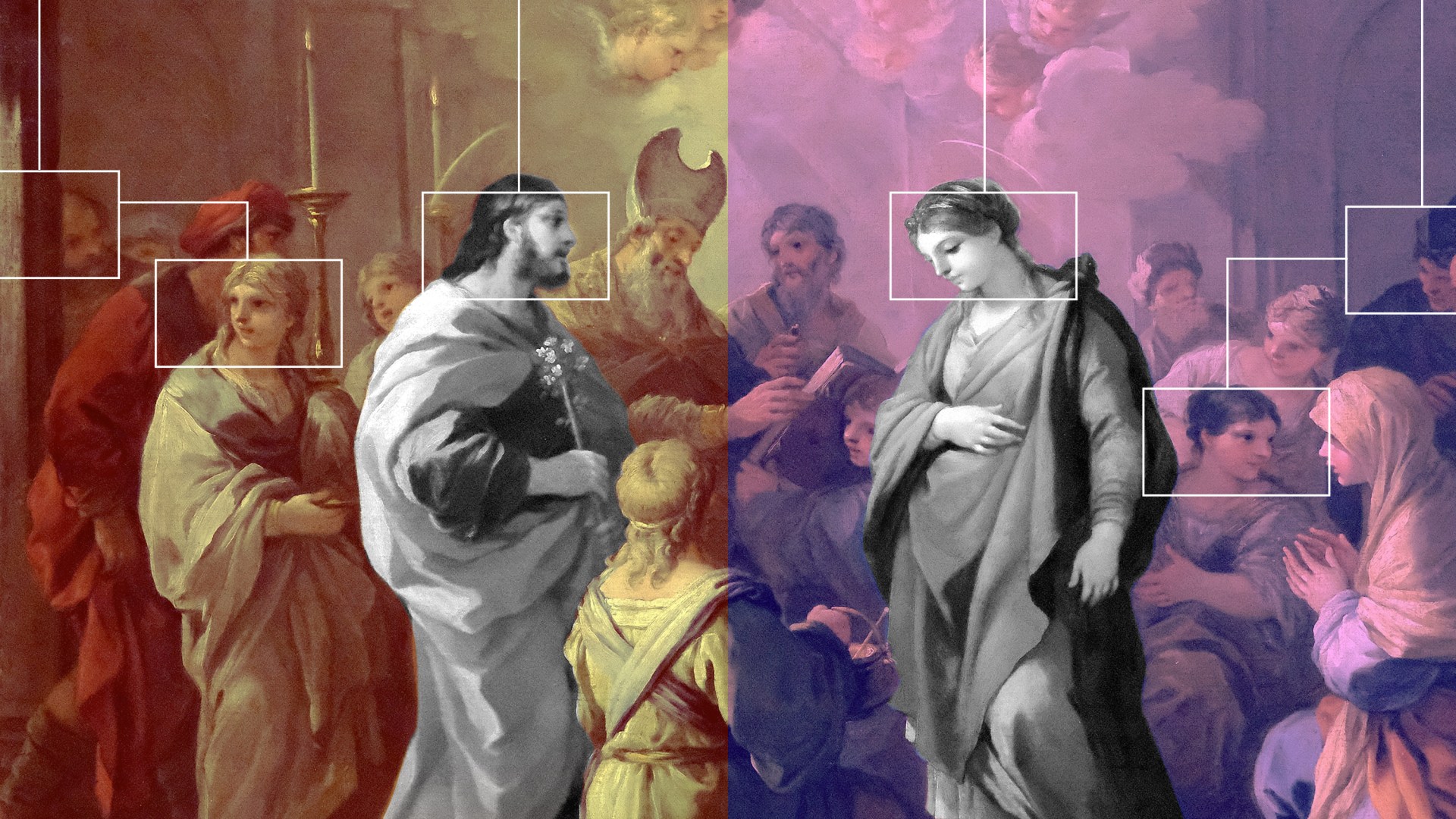
Source Image: Wikimedia Commons

Problems in Scripture work like speed bumps: They may be frustrating, and they can do damage to the unwary, but they effectively slow us down and focus our attention. Tensions provoke thought. Apparent contradictions force us to wrestle with texts in greater detail. When God inspired them, he knew what he was doing.

Studying the Gospels, we immediately encounter the problem of major differences between the genealogies of Jesus in Matthew and Luke. Matthew 1 lists 42 generations going back to Abraham; Luke 3 has 77 generations going back to Adam. Of the dozens of names between David and Jesus, only five appear on both lists. Worse, Jesus has two different paternal grandfathers: Jacob (Matt. 1:16) and Heli (Luke 3:23).

Efforts to sort out the disparities often focus on Matthew’s side, partly because his genealogy looks more theologically motivated—the numerous gaps, the women who feature, the three groups of 14, and so on. Luke, we assume, is giving “just the facts,” while Matthew is fiddling with them to make a point. But this demeans both the historian in Matthew and the theologian in Luke. I think Luke’s genealogy has a theological agenda just as strong as Matthew’s, if not more so.

Consider how he lists 77 generations from Adam to Christ. That number points to the Sabbath. It reminds us of the 77-fold vengeance of Lamech (Gen. 4:24) and the 77-fold forgiveness of Jesus (Matt. 18:22). It evokes the Jubilee year (Lev. 25:8–55), observed once for every seven sets of seven years. Jesus proclaims his fulfillment of the Jubliee promise in Luke 4:16–21, a development foreshadowed two chapters earlier, when the summons to report home for a census recalls the Jubilee command to return to one’s “family property” (Lev. 25:10).

It’s also noteworthy that Luke introduces his genealogy not at the start of Jesus’ life but at the start of his ministry, when he was “about thirty years old” (3:23). Thirty is a striking number. Priests began their ministry at that age (Num. 4:3), the same age at which David became king (2 Sam. 5:4) and Ezekiel saw prophetic visions of God (Ezek. 1:1). By inserting his genealogy at this stage, Luke is connecting Jesus’ ancestry to his ministry as prophet, priest, and king. By tracing it back to Adam, not just Abraham, he portrays Jesus as a prophet to the nations, a priest for all peoples, and king of the whole earth.

Then there is the question of Jesus’ paternal grandfather(s). Ever since the early third century, people have speculated that Joseph had two fathers, either because he was legally adopted or because he was the child of a levirate marriage. (In this Jewish custom, if a man died without children, his brother would marry the widow to preserve the family line.) If so, then Joseph was the son of both Heli and Jacob. That always sounded like apologetic desperation to me. But then I started noticing all the other references in Luke 3 to levirate marriage or legal adoption.

One relates to Herod and his brother Philip (Luke 3:1). Herod had married Philip’s wife, angering observant Jews—and eventually getting John the Baptist beheaded (Mark 6:17). So Luke’s account of Jesus’ adult life begins with a man enacting an adulterous “levirate marriage” while his brother was still alive.

Another concerns Jesus himself: “He was the son, so it was thought, of Joseph” (Luke 3:23). Legally, Jesus was Joseph’s son, but Joseph was not his biological father. As Gabriel explained to Mary, Jesus would be called “Son of the Most High” and “Son of God” (1:32, 35).

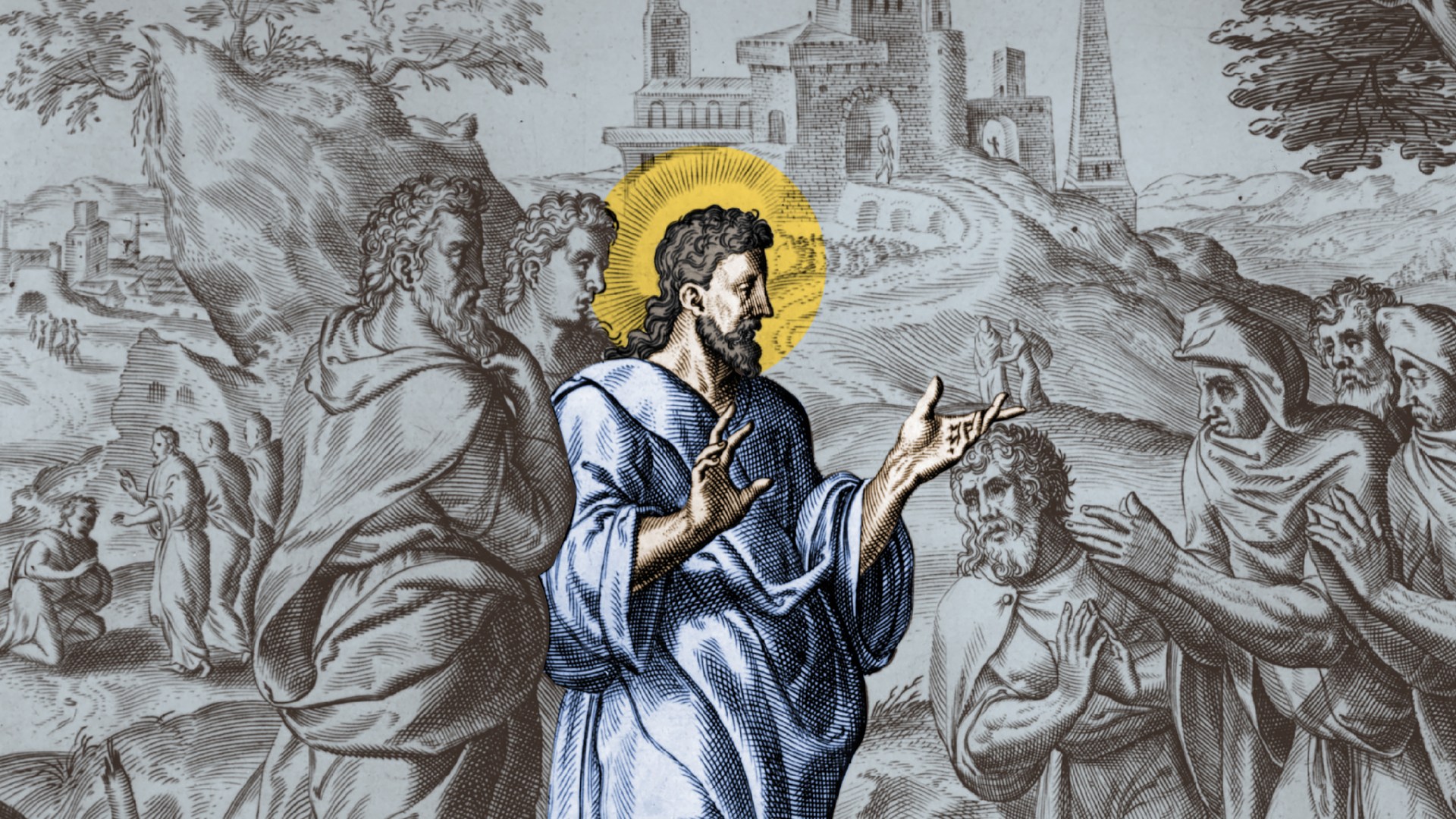
We even find an example in John the Baptist, who famously contrasts himself with one “the straps of whose sandals I am not worthy to untie” (3:16). Untying a sandal strap was the key moment in the halizah, the process that released a man from levirate marriage (Deut. 25:9; Ruth 4:7). Perhaps, as Gregory the Great argued, John was declaring himself not just beneath Christ but also unworthy to displace him as Israel’s true husband. John is the best man, not the bridegroom (John 3:29).

In this wider context, the puzzle of Heli and Jacob is not a coincidence but part of a pattern—one we might overlook without slowing down almost to a stop. Thank God for speed bumps.

Andrew Wilson is teaching pastor at King’s Church London and author of Spirit and Sacrament (Zondervan). Follow him on Twitter @AJWTheology.

Our September Issue: The Bible in Blue

It matters what Scripture says about police.

Stephen Maturen / Stringer

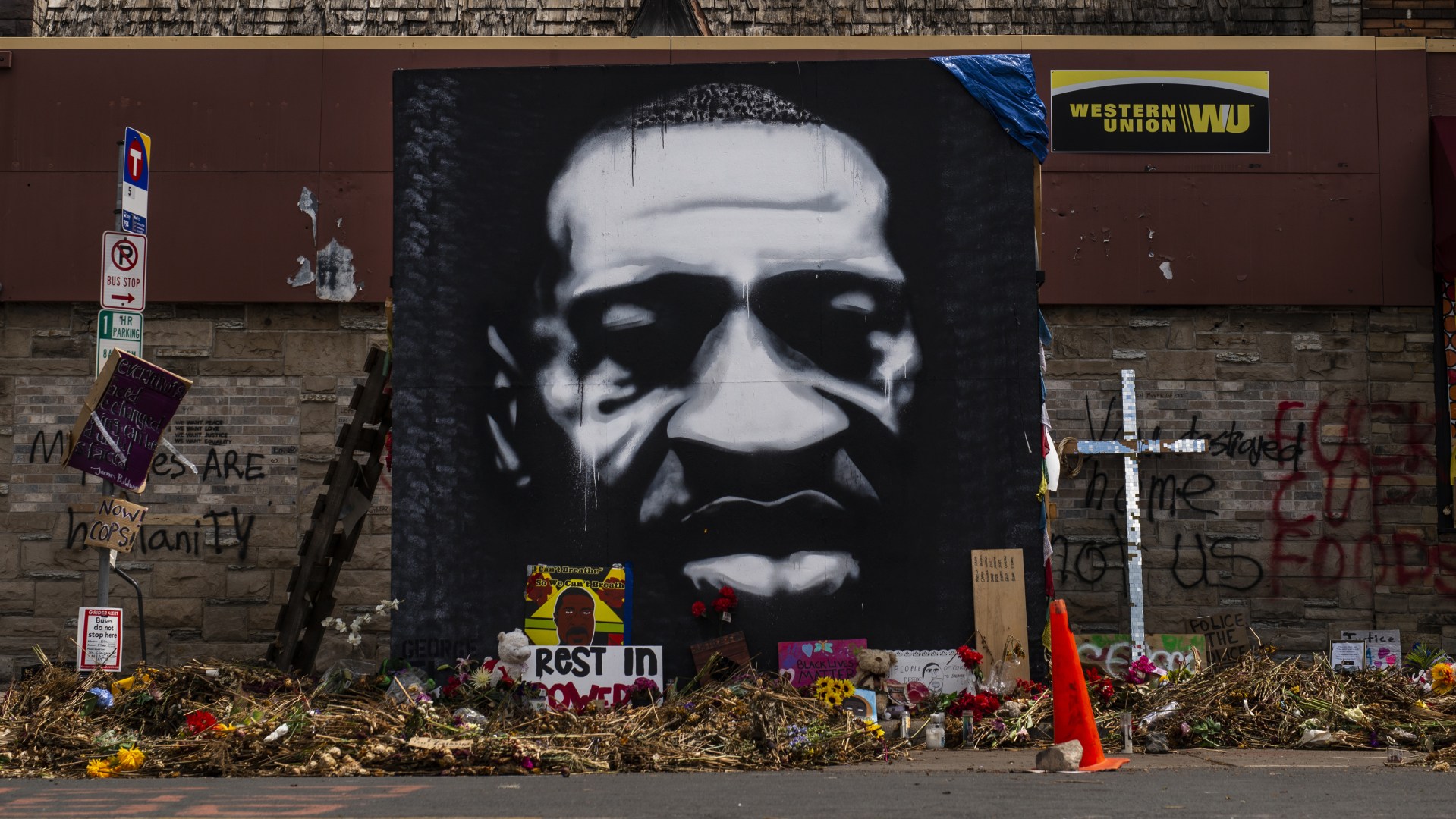
I live in south Minneapolis, where police officers killed George Floyd even as he pleaded for his life. Body camera footage showed the officers—now fired and arrested—giving Floyd no explanation for why he was being questioned, threatened, pulled from his car, and forced to the ground. Protests erupted worldwide as decades of egregious overreach by police against people of color fueled righteous anger. White people joined in, along with pastors and Christians of every tradition. I stood alongside Orthodox priests and Pentecostal preachers at the site of Floyd’s death, an intersection transformed by prayer and protest into sacred ground.

This type of anger is answered by Scripture’s warrants against abuses of power. Our cover package this month explores the outlines of an under-discussed theology of law enforcement. Esau McCaulley draws from Romans and John’s gospel to address policing and the state that authorizes it. As a black man, he describes a certain dread that “trickles down from a national government that has often viewed our skin as dangerous” and a church tradition that has “never had the luxury of separating our faith from political action.” To hunger and thirst for righteousness compels movement toward sustenance and eventual satisfaction, if only at the hands of the Lord.

Scripture does offer a solution to bad policing: good policing. Drawing from Old Testament law and practice, pastor Michael LeFebvre asserts that law enforcement exists not to maintain order but to ensure justice and righteousness—especially “for those easily abused by the powerful” and for “those suffering under society’s inequities.”

Such ideals are not impossibilities. We glimpse them in moments such as when a Roman centurion, the closest thing to a New Testament police officer, solicits Jesus’ help to heal a beloved servant (Matt. 8:5–10). Jesus offers to come and attend to him, only to have the centurion humbly object, “Lord, I do not deserve to have you come under my roof. But just say the word, and my servant will be healed” (v. 8). Jesus, amazed, commends the centurion’s faith as greater than anyone’s in all Israel. Among the lessons is the right (and righteous) understanding and use of authority. Police authority is derivative and meant to serve the common good.

I took my daughter to visit the sacralized intersection where Floyd died. Hundreds gathered around makeshift memorials to pray and reflect. An entire field in a nearby park was filled with temporary tombstones commemorating black lives lost to police maltreatment. Taking it all in, my daughter confessed a sure sadness that so many had died but also a bewilderment that the police, whom she views as protectors, could harm. “Would they ever hurt me?”

Daniel Harrell is editor in chief of Christianity Today. Follow him on Twitter @DanlHarrell.

Theology

When Healing Hurts

Do we want to get well?

Hulton Archive / Handout / Getty

In the fifth chapter of John, Jesus asks a poignant question: “Do you want to get well?” The Son of God stood amid the splendor and suffering of Jerusalem, under the elaborate covered colonnades of the Pool of Bethesda. The afflicted gathered there and entered the waters in hope of healing. We imagine Jesus kneeling beside the man who had been paralyzed for 38 years. What moved him to approach this particular person? And what inspired him to ask what seems like an absurd question? Who would not want to be healed from a lifetime of paralysis?

But perhaps it’s not absurd. Suffering, especially chronic suffering, can become precious to us. When suffering persists, we sculpt our lives around it. We craft an identity that encompasses our suffering until we scarcely know who we would be without it. We become so comfortable and accustomed to our suffering that the prospect of living without it becomes frightening. Of course, suffering can also be instructive. Paul learned humility and utter dependency on God from his thorn in his flesh. Even if the apostle could have removed the thorn, he might have chosen not to, or he might have kept it in a jar as a treasured reminder of all it taught him.

Which brings us to the present. The issue you hold in your hands reflects the many afflictions we confront as a people today. An unrelenting global pandemic. The profound and enduring wounds of our racial history. Political polarization that tears at the fabric of our families and communities. A culture that feels unmoored, confused, and permeated with despair.

Seeing the delight we take in torching our political opponents, the stubborn persistence of conspiracy theories, and the refusal to see the rationality and goodness in one another, one wonders: Do we want to be healed? Are we willing, like Paul, to listen to suffering’s instruction? When suffering is entangled in sin, perhaps humility comes before healing. And perhaps this is another reason why the paralytic might not have wanted to be healed—because healing takes work. It requires us to rethink our lives and revise our very understanding of who we are.

Some people prefer the familiarity of old sins and sufferings to the difficulty of reconciliation. As Christians, we should not be among them. What if Christians could be known as the most generous, compassionate, thoughtful, and hopeful participants in these painful conversations shaping the future of our people? What if we, like the paralytic, could become witnesses to the world of the healing found in Jesus? At Christianity Today, we will do our humble part. For everyone who supports and joins us in this work, we are profoundly grateful.

Timothy Dalrymple is president and CEO of Christianity Today. Follow him on Twitter @TimDalrymple_.

Ideas

Threw Away Your Shot? You’ll Get Another.

Columnist

When we mess up God-given opportunities, God has a habit of giving us more.

Source Image: Istetiana / Getty

On the morning of our wedding, my husband, Tim, wrapped a special gift for each of my two children and delivered them with handwritten cards. He chose a leather-banded watch for the older and a pair of birthstone amethyst earrings for my nine-year-old daughter, Carter. The kids were delighted by these small reminders of new family bonds.

While we honeymooned overseas, the kids enjoyed time with family at a house on the coast. Carter wore her earrings day and night. Somewhere between the pool, the house, and the beach, one of the earrings slipped out. The house was searched high and low. My sister deep-dove in the pool. But the earring was gone.

Soon after our trip, Carter confided in me about what had happened. I could tell that her dread of disappointing Tim was weightier than the loss of the earring itself. I encouraged her to take her time. “Tell him when you’re ready.” Privately, I let Tim know what had happened, we put it aside, and we waited to see what would take shape.

A few days later, Carter slipped into the room and nervously told Tim the story. I was not expecting what happened next. The moment she apologized and explained, Tim responded warmly, pulled a tiny package out of his pocket, and pressed it into her hand.

She unwrapped the satchel and found two gleaming purple amethysts, a second pair of birthstone earrings even larger than the first. He had given a double gift, prepared for her before she had even summoned the courage to talk to him about it. It was a lavish surprise.

This second gift was far more meaningful than the first because of what it signaled. The exchange reminded me of how God is committed to our formation. He keeps giving and forgiving. He has placed us in families and with one another (Ps. 68:6) and is committed to impressing upon us his abundant grace.

In these days of “cancel culture,” second chances seem scarce. We’re more likely to lob a condescending remark over the fence into someone’s social media space than to have a difficult conversation in person. Public figures and beloved leaders are toppled from high places. Reputations are irreversibly shattered in minutes.

But the gospel makes a way for us to be compassionate listeners and givers of second chances. It’s hard work to subdue our pride and fear. While we have reasonable reasons to divide, we have more reasons to come humbly together. We aim our judgment toward someone else’s dark heart even as we hope no one notices the same shadows within us.

We are all more like the parable of the unmerciful servant in Matthew 18:21–35 than we want to admit: receiving news of a canceled debt but quickly turning to withhold that same kind of mercy from others. It may be one of the reasons we have such a hard time getting along.

Whether on social media or in person, the wisdom of Matthew 7:3–5 still implores us, “First take the plank out of your own eye, and then you will see clearly to remove the speck from your brother’s eye.” We tend to most despise the dirt we see on others when it reminds us of our own.

It is easier to cancel than to stay in the hard work of discipleship. Naturally, there are consequences to our choices. But correction can bring more redemptive change than cancellation. The gospel does not play by the rules of corporate culture. By God’s Spirit, we are a new creation, living in a new kingdom. By grace, both people and systems can change. But it’s not without effort. Consequences are not an end in themselves but a means for rightly shaping the action of our lives so our hearts can stay responsive to redemptive change.

In John 17:21, Jesus prayed for us to be one as he and his Father are one. Jesus’ wide, prayerful promise extends to us still. God has not discarded us, though we have come up short. He is rich in mercy (Eph. 2:4) and is campaigning for the good in us and in our world. The kingdom of God breaks in by the surprise of forgiveness and by the healing power of Jesus’ blood—the “double cure.”

God has canceled our sin instead of canceling us (Rom. 5:8), and he commissions us to do the same. Where we find grace, we find second chances. In spite of all the evidence, we move from division toward unity by the double gifts of grace.

Sandra McCracken is a singer-songwriter who lives in Nashville. Follow her on Twitter @Sandramccracken.

Books

The Wise Way to Use ‘Smart’ Tools During a Pandemic

Artificial intelligence can be helpful in fighting COVID-19. But there are ethical worries that cry out for Christian reflection.

Christianity Today August 14, 2020
Illustration by Mallory Rentsch / Source Images: Christina Victoria Craft / XPS / Unsplash / Underworld111 / Getty Images

We live in a “smart-everything” world. We have artificial intelligence (AI) at our fingertips for nearly every part of our day. From AI-based wearable technology to phones, tablets, computers, and even appliances, nearly every aspect of our lives is being tracked, recorded, and processed by some form of algorithmic technology. And there are incredible advantages to these technologies. We now have safer and more effective medical treatment and vaccine development. Our neighborhoods are more connected and safer than ever before because of video surveillance and various communication tools. Our homes are even more efficient and comfortable. And our families have convenient access to more information than previous generations could have imagined.

The Age of AI: Artificial Intelligence and the Future of Humanity

The Age of AI: Artificial Intelligence and the Future of Humanity

HarperCollins Children's Books

192 pages

$14.82

Before the onset of COVID-19, one popular narrative suggested that our technological progress might ultimately lead to the eradication of sickness, disease, and in some cases even death itself. In his New York Times best-seller Homo Deus: A Brief History of Tomorrow, world-renowned Israeli historian Yuval Noah Harari argues that, with small exceptions here and there, humanity has essentially overcome the three big problems that have plagued our lives since the dawn of civilization: famine, war, and plague. He then proudly predicts that we will shift our creative energies toward tackling two other major issues: happiness and death itself. Even granting that Harari’s views of humanity and technological progress are fairly extreme, there is widespread hope and hype surrounding the field of AI and its potential to remake our world.

But how does the turbulent and momentous year of 2020 fit into this grand vision of the future? So far, we have seen devastating famines in Africa, major conflicts between world powers such as the US and China, grotesque racial injustice, and a ferocious worldwide pandemic. And we still have several months to go.

As a Christian, the travails of this year have reminded me of the proper role of technology in our lives and where our ultimate hope is placed. While there are incredible and God-honoring technological innovations being deployed for noble ends across society, we must keep perspective and understand that these tools must be wielded with wisdom if we are to see true human flourishing. How does the Scripture guide us to embrace the real benefits of these tools while navigating the potential pitfalls, ethical dilemmas, and dangers?

Bursts of Innovation

The rise of artificial intelligence occasions a variety of responses. Often, when I talk about AI, people conjure up images of sci-fi Hollywood movie plots involving futuristic societies where a heroine saves the world from the rise of rampaging robots. Some fear that AI-powered innovations will only exacerbate problems of unemployment and economic insecurity, as automation takes over existing jobs or renders them obsolete. Others have decided against buying into the hype of emerging technologies because they just don’t seem terribly relevant at the moment.

Yet most of us use these technologies every day, often without realizing it. In all likelihood, there is a smart device or an AI tool within a few inches of you right now. Computer scientist and author Ray Kurzweil rightfully points out that without these tools, we would struggle to communicate with one another or get money from the bank, manufacturing would grind to a halt, and our national security and even our economy would falter.

As COVID-19 continues to spread, it is easy to overlook the role of AI in driving the fight against it. From drug research to testing and treatment options, some of the most exciting innovations on the AI front are in the field of medicine. AI-enabled tools are able to process vast amounts of data, often more efficiently than their human counterparts can manage. They can be copied quickly and deployed widely as needed.

We see this dynamic at work in drug and vaccine research, where AI systems make rapid connections between various pieces of data, greatly speeding up the process of bringing a drug or treatment into clinical trials. In April, The New York Times ran a story about a company called BenevolentAI from London that turned its attention to coronavirus research earlier this year. The company used AI to scour the literature surrounding COVID-19, and within two days its system had identified a drug called baricitinib, originally designed for rheumatoid arthritis, as a potential treatment option. This drug recently underwent clinical trials with the UK’s National Institutes of Health.

Alongside aiding research on potential treatments and cures, AI is assisting hospitals and staff in triaging patients and protecting health care workers. Radiologists and other physicians at UC San Diego Health have begun clinical trials using an AI system to scan chest X-rays of patients for cases of pneumonia, which often occur in the most severe forms of coronavirus. These tools can rapidly speed up patient testing, saving countless hours that hospital workers can devote to treating the worst cases.

Since many AI systems require large amounts of data, there have been increasing calls to open up access to that data for the purposes of research and testing. The Mayo Clinic and many other hospital systems have launched processes to share anonymized patient data with companies that can use it in the fight against COVID-19.

Outside of the medical community, AI is helping our schools and workplaces safely transition back to their ordinary rhythms as some stay-at-home-orders begin to lift. Some school systems and businesses are experimenting with various security measures, including the use of high-tech surveillance, to slow the spread of the virus. This fall, as part of a test for some new tracing techniques, students in New Albany, Ohio, will be equipped with electronic tracking beacons. This trend will likely continue, as businesses and other gathering places begin deploying tools like temperature-tracking cameras and contact-tracing apps in order to protect customers and employees alike.

Of course, much of this technology is only in the trial phase, which means we’re unlikely to see it used on a wide scale anytime soon. And it’s almost a foregone conclusion that many of the lofty promises made on its behalf will never be realized—at least not in time to make a dramatic difference in defeating COVID-19.

While some will cite such failures as grounds for skepticism toward the hype surrounding AI, it bears mentioning that periods of cultural crisis often spearhead significant bursts in creativity and innovation. This was certainly true of the great wars of the 20th century, which gave rise to sophisticated weaponry and technologies—which, in turn, gave rise to the modern space race and the computer age. Even as the current pandemic rages, one can hope that it might enliven human ingenuity and creativity as we push the limits of technology in the pursuit of human flourishing.

Ethical Dilemmas

But how can we pursue these powerful and life-changing innovations without going beyond certain ethical boundaries? Surely there is a balance to be struck between a posture of “innovate first and ask ethical questions later” and an overcautious approach that risks grinding technological progress to a halt.

What are some of the ethical dilemmas we’ll need to address? Because of the immense power of AI and other emerging technologies, it is critical that these systems are deployed in ways that help to build trust in our communities, especially between governments, technology companies, and our neighbors. According to a 2019 Pew Research report, Americans have an increasingly pessimistic view toward technology companies and their influence in our daily lives. One-third agree that these companies are a negative force in our society, while only half say the impact is positive. This divide reveals a massive amount of distrust, even as we depend on these companies and their tools more and more throughout the pandemic.

But technology companies are hardly the only object of public distrust. As the virus continues to ravage our nation, there is also a growing distrust in government leaders and even public health systems, due to factors like perceived failure, hyper-partisanship, or the pending presidential election. How are we to trust these same officials and leaders to use powerful technologies like AI wisely in this pandemic if we already have difficulties trusting them to perform their ordinary responsibilities with integrity?

In a chapter for The Oxford Handbook of the Ethics of AI, scholars Alessandro Blasimme and Effy Vayena argue that the call for “continuous surveillance, tailored nudging, and paternalistic intervention can generate an Orwellian form of individual control and constrained personal freedoms.” The increased use of AI in our society will naturally infringe upon certain freedoms and ideals of privacy. Without measures to ensure adequate transparency and bolster public trust, our society might reject many lifesaving advances in AI because we fear the other possible uses to which unscrupulous governments might put them.

One major worry that goes hand in hand with this rising tide of distrust is the potential for AI technologies to precipitate a massive erosion of personal privacy. Today, nearly every aspect of our lives is captured in data of some form, and at least some of that data—like digital health records, testing results, or location tracking—could be useful in helping combat the spread of COVID-19. Google and Apple recently joined forces to develop and deploy Bluetooth-powered contact tracing that would inform public-health officials and individuals about potential exposure to the virus.

Not only is our personal data constantly tracked and stored. It can also be exploited by powerful organizations or even governments seeking to control their people. As Professor Mark Coeckelbergh of the University of Vienna observes in his new book AI Ethics, “In [our] networked world, every electronic device or software can be hacked, invaded, and manipulated by people with malicious intentions.” Personal privacy has already been sacrificed in many places throughout the world, including in China and Hong Kong, where ruling Communist Party officials have abused surveillance technology in an effort to subjugate China’s Uighur Muslim minority and silence free expression.

A Biblical Foundation

Ongoing debates in our society about technology and ethics show that there is much work to be done. As AI technology continues to evolve, the church has an opportunity to address many of the fundamental questions that people are beginning to ask. Many debates within the sciences, especially in areas of emerging technology like AI, revolve around age-old questions concerning the nature of ethics and what it means to be human.

How are Christians equipped to enter these conversations in light of the Scriptures? Christianity is not a dead faith that is unable to speak into modern times, as some may claim. Ours is a rich and living faith centered on the God of the universe who created all things, including human beings made in his own image (Gen. 1:26–28) and endowed with a touch of his own creative ability. Not only does being created in God’s image distinguish us from the rest of creation—it also forms the foundation of our ethical thought in every area of life, including how we seek to live our faith out in the public square.

In Matthew 22:37–39, Jesus tells his disciples, “Love the Lord your God with all your heart and with all your soul and with all your mind. This is the first and greatest commandment. And the second is like it: ‘Love your neighbor as yourself.’” These commandments, summing up the entirety of God’s holy law, help ground our approach to major technological innovations like AI. As we consider the role of government in a pandemic and the complex nature of personal privacy, we know that we are called to love God and neighbor in ways that honor the image of God himself. We treat our neighbors with respect—affirming their dignity and value—because they too bear the imprint of God. We work toward justice and transparency as we seek to live out our God-given calling to love one another as God loves us.

As the waves of COVID-19 continue to break upon our fellow image bearers, it is helpful to remember humanity’s place as the crown jewel of creation, which provides a sturdy ethical foundation for navigating the challenges of our digital age. From that place of confidence, we can seek to harness powerful AI tools to serve our neighbor and to stand up for the rights of all people. Artificial intelligence is one of God’s good gifts to us, but it must be wielded with a wisdom grounded in the person and work of the true Homo Deus, the god-man Jesus Christ, who took on flesh in order to save his people and secure their future.

Jason Thacker serves as chair of research in technology ethics at the Ethics and Religious Liberty Commission. He is the author of The Age of AI: Artificial Intelligence and the Future of Humanity.

Apple PodcastsDown ArrowDown ArrowDown Arrowarrow_left_altLeft ArrowLeft ArrowRight ArrowRight ArrowRight Arrowarrow_up_altUp ArrowUp ArrowAvailable at Amazoncaret-downCloseCloseEmailEmailExpandExpandExternalExternalFacebookfacebook-squareGiftGiftGooglegoogleGoogle KeephamburgerInstagraminstagram-squareLinkLinklinkedin-squareListenListenListenChristianity TodayCT Creative Studio Logologo_orgMegaphoneMenuMenupausePinterestPlayPlayPocketPodcastRSSRSSSaveSaveSaveSearchSearchsearchSpotifyStitcherTelegramTable of ContentsTable of Contentstwitter-squareWhatsAppXYouTubeYouTube