News

First Year of Trump 2.0 Leaves Pro-lifers with Misgivings

At the March for Life, pro-life Christians express concerns with Washington’s waning commitment to their cause.

People attend the annual March for Life rally on January 23, 2026.

People attend the annual March for Life rally on January 23, 2026.

Christianity Today January 26, 2026
Kevin Dietsch / Staff / Getty

At the March for Life event Friday in Washington, DC, the largest annual gathering of pro-lifers, it may have seemed that all was well in the pro-life movement.

Despite the brisk January weather and the threat of a polar storm barreling toward the region, tens of thousands gathered from all over the country in the crowded streets of Washington for a march that dates back over half a century.

Families pushed strollers, clergy mingled with students who were wearing matching school colors, and young adults touting homemade and printed signs offered extras to passers-by. 

But despite visibly high energy in the crowd, some pro-life leaders and marchers expressed consternation over what they deemed as tepid actions toward their cause from the Trump administration over the last year.

Gavin Oxley, spokesperson for Americans United for Life, said pro-lifers came to the march “discouraged by the lack of a strong pro-life commitment by the Trump administration, specifically on Hyde Amendment provisions in the health care package … and then also the issue of the abortion pill.”

When Vice President JD Vance took the stage for a speech, a cry from an unsatisfied protester brought those tensions into the open: “Ban the abortion drug!” 

That’s a reference to what has been a sore spot between the pro-life movement and the Trump administration’s second lap in office: The administration has continued a Biden-era relaxation of restrictions to the abortion pill. (Currently, federal law allows abortion pills to be administered at home, outside of medical supervision.) The Trump administration also approved a generic version of the abortion drug. Officials stated that the Food and Drug Administration (FDA) is required by law to approve the generic version.

Vance initially ignored the shouted comment, seeking instead to assuage pro-lifers of the administration’s commitment to their cause during his headline speech at the march. He pointed to efforts to curb taxpayer-funded abortions overseas through an expansion of the Mexico City policy, to create investment accounts to provide $1,000 for newborns to American families, and to expand the Child Tax Credit.

Eventually, though, the vice president seemed to heed the cries and said he would address “the elephant in the room.” 

There’s a “fear” that “our politics have failed to answer the clarion call to life,” he began.

“I want you to know that I hear you,” Vance said. “There will inevitably be debates within this movement … about how best to use our political system to advance life, how prudential we must be in the cause of advancing human life. I think these are good, honest and natural debates, and frankly … they help keep people like me honest, and that’s an important thing.”

“But I think all of us also have to remember that we are commanded to ‘let not our hearts be troubled,’” he added in a paraphrase of Jesus’ words in John 14:1, before telling the crowd that the overturn of Roe had taken 50 years and continued progress might also take time.

Ahead of the march, Vance told the Washington Examiner that pro-lifers need to be “realistic” about what could be achieved federally.

“Most of what’s going to happen over the next generation of the pro-life movement is we’re going to have to win victories at the state level,” Vance said. “I think we can do that. I think we should organize and mobilize for that. But I think we have to be realistic with ourselves that, right now, the American people are not endorsing a lot of pro-life policy.”

Some pro-life voices expressed disappointment with his stance.

“Chemical abortion is not a matter for “prudential” discussion among pro-lifers,” Alexandra DeSanctis Marr, a contributing writer at National Review, posted on X in response to Vance’s speech.

“The vice president doesn’t have to oppose chemical abortion—in fact, he’s been quite clear that he supports it, as does his administration. But pro-lifers should not allow him to position himself as pro-life while taking his current stance,” she added. DeSanctis Marr authored an article ahead of the march criticizing the decision to platform Vance there.

“The Trump administration has the ability to end this today,” Kelsey Pritchard with Susan B. Anthony Pro-Life America (SBA) said, referring to the availability of abortion pills.

Marjorie Dannenfelser, president of SBA, said that abortions have increased by 30 percent since 2016.

“We have the opportunity to save lives and serve women. But it is because of the inaction of the Trump-Vance administration on abortion drugs that this opportunity isn’t being realized—and abortions are going up, not down.”

In 2024, the Guttmacher Institute, a pro-choice organization that tracks reproductive rights, estimated in 2023 that around 642,700 abortions, or over 63 percent of all abortions in the United States, were medication abortions. Since the overturn in 2022 of Roe v. Wade, which granted a national right to abortion, and though some states have tightened restrictions around the procedure, the number of abortions has risen.

Pro-life leaders point to the wide availability of abortion pills that can be prescribed online or through telehealth consultations. The abortion pill also has ways of crossing state lines, even to states that ban abortion. Some 14 states ban abortion pills, but other states have passed “shield laws” to protect prescribers from legal action, even if their patients are from states with restrictions. Reporters have found underground networks where women can obtain the abortion pill.

Some pro-lifers believe that the percentage of chemical abortions is even higher now: “Closer to 70 percent,” estimated David Bereit, executive director of the Life Leadership Conference and founder of 40 Days for Life.

Leaders in the movement interpret these numbers as lack of action on the part of the Trump administration, failing to address what they see as the new primary crisis on the issue of life.

“In this post-Roe landscape, the pro-life movement has actually been losing more than winning for the last few years on many fronts,” Bereit said.

While pro-lifers are thankful for the actions that occurred during the first Trump administration, Bereit said that, “in admin two, it has felt more like, ‘Hey, we just want to brush this issue off.’”

“I feel that President Trump and the administration are focused in other areas and feel that, ‘Hey, we gave the pro-life movement what we thought they wanted, so now we’re going to move on to other things.’”

Bereit views this as a mistake: “There’s still leadership needed on this … our fight is not over, it’s simply changed.” 

On Thursday, White House officials briefed several pro-life leaders on new pro-life policies. They announced that the National Institutes of Health would no longer federally fund research that relies on fetal tissue from abortions; the Small Business Administration would review whether Planned Parenthood illegally received millions in COVID-19 pandemic–era loans; and that they would expand the Mexico City policy, which requires foreign nongovernmental organizations that receive US federal funding to refrain from performing or promoting abortion.

Conspicuously absent was any reference to the primary topic animating pro-life leaders, leaving some attendees unsatisfied. And vocally so.

“The Trump-Vance Administration has not reversed Joe Biden’s Covid policy allowing for the mail-order of the drugs,” Dannenfelser said in a statement Thursday. “This is making state pro-life laws completely unenforceable—undermining Trump’s ‘back to the states’ position.”

Bloomberg reported last month that the FDA has delayed reviewing data around the safety of mifepristone, which is used alongside another drug called misoprostol to induce a chemical abortion, after commissioner Marty Makary requested waiting until after the midterm elections. 

Makary and Health and Human Services secretary Robert F. Kennedy Jr. have said they are actively working on a review of the abortion drug. A spokesperson denied to Bloomberg the idea that the FDA is “slow walking this review for political purposes.”

Lawmakers’ requests for more information have not so far resulted in concrete updates.

“From a pro-life Democrat perspective, it’s really, really, tremendously frustrating,” Kristen Day, president of Democrats for Life, told CT. “The pro-life movement has put all their apples in the cart with the Republican Party life … and now we see the leader of the Republican Party wavering.”

Day expressed particular concern over a comment Trump made earlier this month during comments on healthcare negotiations: “You have to be a little flexible on Hyde,” Trump said. The Hyde Amendment prevents taxpayer dollars from directly funding abortion.

Press secretary Karoline Leavitt later walked back the president’s remarks, saying he hadn’t changed his position on Hyde.

House speaker Mike Johnson told reporters in the aftermath that “we are not going to change the standard that we’re not going to use taxpayer funding for abortion. … I’m just not going to allow that to happen.”

Johnson also spoke to the march Friday, flanked by a crowd of lawmakers, including one Florida representative cradling her baby (and occasionally allowing a colleague to hold her). Johnson highlighted recent bills passed by the House to greenlight federal assistance going to pregnancy resource centers and require colleges and universities to counsel students of their rights to accommodations if they become pregnant.

Some pro-life leaders preached patience when working with Washington.

“This is the best administration I’ve ever worked with on the issue of life,” Penny Nance, president of Concerned Women for America, said. “[Trump] doesn’t always get it right, but he tries very hard.”

“There’s times I don’t love things that he says, but I just know the reality of working directly with him,” she said. 

“I am so thankful that we have a president and we have a vice president who stood for life in their actions,” Cissie Graham Lynch, who works with Samaritan’s Purse and the Billy Graham Evangelistic Association and gave the closing prayer at the march, told CT. “Always look at the actions … that’s where we need to hold them accountable.”

“We have a long road ahead,” Lynch added. “It took us 50 years to overturn Roe v. Wade; it could take us another 50 years to change the heart of a nation to think of [abortion] as unimaginable.”

Lauren McAfee, president of Stand for Life, said the current challenges are an opportunity for Christians to get involved in pro-life advocacy, regardless of what happens politically. (McAfee is a member of CT’s Board of Directors.) 

“There’s always challenges in the landscape around the life issue that have only gotten more complex,” McAfee said. “Pro-life leaders have a lot to navigate.”

Her group supports pro-life organizations. It also works with churches to help pastors, lay leaders, and congregants better understand and get involved in pro-life work.

“From my over a decade of experience walking alongside pro-life leaders in the movement, I have seen [their] resilience,” she said. “They’re always going to continue caring, continue showing up, and continue advocating.”

When March for Life Education and Defense Fund president Jennie Bradley Lichter took the stage Friday, she celebrated the administration’s Thursday announcements. Left unsaid were any of the concerns animating other pro-life leaders.

Near the close of the rally, she asked everyone in the crowd to pull out their phones and tell elected officials to support the Hyde Amendment. The moment was a reminder that, even with assumed allies controlling Washington, long-held wins could not be taken for granted.

“Together, we will send a powerful message to your senators,” Lichter said, “that we want them to stand firm and be courageous for life.”


News

In a Tense Minnesota, Christians Help Immigrant Neighbors

As the Twin Cities reel from ICE arrests and the killing of Alex Pretti, churchgoers drive immigrants to work and doctor’s appointments.

U.S. Border Patrol agents smash a man's car window before dragging him out and taking him into custody when he failed to present citizenship documentation at a gas station on January 11, 2026 in St. Paul, Minnesota.

U.S. Border Patrol agents smash a man's car window before dragging him out and taking him into custody when he failed to present citizenship documentation at a gas station on January 11, 2026 in St. Paul, Minnesota.

Christianity Today January 26, 2026
Scott Olson / Getty Images

When word first spread that federal immigration agents had shot and killed Minnesotan Alex Pretti on Saturday in Minneapolis, a group of Hispanic evangelical pastors was meeting in a church basement nearby.

Minneapolis police chief Brian O’Hara was supposed to be there to talk with the pastors about security protocols at their churches, but his plans quickly changed. He needed to go to the scene of the shooting.

“They’re out there now trying to maintain order from the disorder the federal government has caused,” Dios Habla Hoy pastor Sergio Amezcua, whose church was hosting the meeting, said to the other pastors. Amezcua, once a Trump supporter, now says Latino supporters feel “betrayed.”

The pastors grabbed each other’s hands in a circle to pray. One woman there softly cried: “God, we need you. We need you to help us.”

“We know that you see us,” she prayed.

The Trump administration has pointed to a fraud scheme among the Somali community as justification for its recent immigration-enforcement surge in the Twin Cities, but most of those residents are US citizens.

Christians helping immigrants there told CT that enforcement operations have largely targeted the Hispanic community instead. Among their arrests, agents with Border Patrol and ICE (Immigration and Customs Enforcement) have been detaining legal immigrants as well as US citizens—and refugees who have legal status.

That has sparked fear among racial minorities in the Twin Cities that America’s immigration-and-asylum-processing system—and citizenship itself—no longer offers meaningful protection from a degrading or violent detention.

The Twin Cities are tense, but ICE agents aren’t visible everywhere. Minnesotans monitoring or peacefully protesting ICE are, even in arctic temperatures this past week. In the neighborhoods where ICE is more active, you’ll hear the unnerving whistles from ICE observers alerting residents to the presence of immigration agents. One evangelical CT interviewed said she sees the whistles as a way to get kids inside before any violent confrontations.

Pastor Héctor Andrade of Comunidad Cristiana Twin Cities told CT that most people in the Latino churches he knows have left. Even legal residents don’t want to meet with others in their homes. Many people avoid grocery stores, fearing they’ll be accosted if they step outside. Andrade carries his passport with him everywhere now.

“This is too big for us. It’s overwhelming,” he said. “There is a feeling of powerlessness.”

Upstairs at Dios Habla Hoy, volunteers schlepped boxes of food in 15-degrees-below-zero weather into waiting cars in the parking lot. This church, with the support of many non-Christian volunteers, has been delivering food six days per week for thousands of immigrant families who are staying home in fear. Two days before, the church had trained 600 new volunteers for food distribution, with a list now of 28,000 people who want food.

One room at the church was full of diapers. Another was packed with a mountain of toilet paper. Across the Twin Cities, neighbors pile supplies for immigrants into other churches, too, as well as restaurants and coffee shops, in scenes that look like a community recovering from a natural disaster.

In just a few weeks, churches have created a sprawling, informal network for grocery deliveries to immigrant families. On Saturday, one evangelical church in Minneapolis delivered food to 60 households. Christians are also raising funds to pay for rent for homebound immigrants.

These volunteers have adopted security measures to ensure ICE agents don’t follow them from the food-distribution site to immigrants’ homes. Due to heightened security concerns, some of them requested anonymity to speak with CT about their work.

One evangelical pastor, a lifelong Minnesotan granted anonymity to protect the identities of his congregants, has been driving two Hispanic members of his small church to work every day so they won’t be alone. They are legal immigrants. He is also driving one of his daughter’s friends to school after ICE agents came to their bus stop one morning.

“For people in the Hispanic community right now, there’s a lot of feeling of danger, for good reason,” he said. “These are the people God has placed in our lives. What can we do to help them out?”

He is extra cautious when driving his congregants: following the exact speed limit and turning off location services on his phone. He checks outside, scanning his surroundings for ICE agents before dropping off passengers.

“I never expected something like this to happen in the US,” he said. “There is a calling on Christians now to say, ‘What does it mean to love the sojourner?’”

CT confirmed some Hispanic churches in the Twin Cities are no longer meeting in person. Dios Habla Hoy now locks its doors for services and only allows in known churchgoers. Amezcua said the church has about 80 attendees now, down from 500 before.

Another evangelical, a mom with four kids, told CT she has been driving six Hispanic children in her neighborhood to school every day because their parents don’t feel safe sending them by foot or to the bus stop. She has also signed a Delegation of Parental Authority (DOPA) form saying she would temporarily care for two immigrant children if their mom is deported. Churches around the city have been assisting families with notarizing DOPA forms, and churchgoers themselves are signing up to take children as needed.

In addition to making food deliveries, churches are bringing immigrants to critical medical appointments. On Saturday, a volunteer took a toddler to a medical appointment while others monitored the area around the pediatrician’s office to make sure ICE agents would not try to take the child.

A local evangelical refugee resettlement agency, Arrive Ministries, has been coordinating with another group, The Advocates for Human Rights, providing emergency legal representation for people it never expected would be arrested: legally present refugees, resettled after years of vetting.

Rebekah Phillips, the co–executive director of Arrive, told CT the organization has concerns about reports it has heard from its refugee clients of their detention conditions in the last two weeks. “Those are really difficult stories to hear,” she said.

Arrive, which now operates with locked doors, is seeing growing interest from area churches that weren’t involved in immigration support before. The staff reported to CT that since the federal raids began, 35 churches new to Arrive’s work have asked the organization for information sessions.

“What the government is doing here is really, really bad, and that comes from a pastor that—I thought that this administration was going to be good for our community,” said Amezcua from Dios Habla Hoy. “It’s a nightmare we want to wake up from soon.”

Church Life

My Healing Was God’s Work, Not Mine 

After six years of debilitating chronic migraine disorder, I’d lost my confidence in the Lord. He was still faithful.

A woman's forehead with several sharp red triangles pointing at it.
Christianity Today January 26, 2026
Illustration by Elizabeth Kaye / Source Images: Unsplash

My church occasionally holds a special time of healing prayer in which our pastor anoints with oil those who are sick or in pain and asks God to relieve them of their afflictions. Last spring, at the most recent of these services, a friend of mine who had recently developed chronic pain in multiple places—at first in her feet and more recently in her hip—walked up to the front of the church.

“I’m afraid it didn’t work,” she said when I asked her about the anointing later that week. She was still suffering and wasn’t holding out much hope for a delayed effect. “I didn’t have enough faith,” she concluded.

I knew exactly what she meant. I’d also gone forward to be anointed that past Sunday, for the fifth time in as many years. I developed chronic migraine disorder—a condition which involves, among other things, having a headache for 15 or more days a month—in 2019 while working as a software engineer at Facebook. Ever since, I’d been disabled by frequent, long-lasting migraine attacks, spending an average of 28 days out of every month with a headache that sometimes felt like being stabbed in the eye, other times felt like a wider, more crushing pain throughout my skull, neck, and face. I also developed a litany of other symptoms: I was constantly sensitive to light and smells, for example, plus I was frequently dizzy, fatigued, or inexplicably panicked.

I’d been told by doctors that chronic migraine is an incurable disease—a prognosis that grew bleaker as I ran out of options for managing my pain. I’d been hospitalized four times, tried every medication regardless of side effects, and even traveled across the country in search of second opinions. I avoided a mile-long list of suspected “trigger” foods, including gluten, tomatoes, dairy, bananas, bacon, onions, olive oil—even leftovers. Barring a miracle, I soon realized I was likely to be disabled by pain for the rest of my life.

The first time I got anointed—or was it the second?—was not at church but in my living room. My pastor made a house call because I’d been struggling to make it to church, with its ultrabright track lighting that was sure to aggravate my symptoms. Also, I was embarrassed and didn’t want to be anointed in front of the congregation.

Before anointing me, he recited from James 5:14–16:

Is anyone among you sick? Let them call the elders of the church to pray over them and anoint them with oil in the name of the Lord. And the prayer offered in faith will make the sick person well; the Lord will raise them up. If they have sinned, they will be forgiven. Therefore confess your sins to each other and pray for each other so that you may be healed.

Alongside these specific instructions to believers, the Bible records many stories of miraculous healing. One of these, described by three different biblical authors, is that of the woman who had been menstruating for 12 years. Believing Jesus could heal her, she pushed her way through the crowd surrounding him and touched the edge of his robe. Jesus turned to her and said, “Daughter, your faith has healed you” (Luke 8:48).

The prayer offered in faith will make the sick person well. Your faith has made you well. As a software engineer with an analytical mind, I interpreted these statements as a type of equation: In exchange for my belief that God would heal me, God would grant miraculous healing. Even then, I knew this to be a fickle formula, similar to what Jesus said about faith being able to move mountains into the sea (Matt. 17:20). I’d never seen a mountain move like that, just as I’d never known a Christian who had been miraculously healed of a physical disease. This mismatch between the promises of God and my experience was uncomfortable, but it was a discomfort I’d been able to ignore. Until now.

That night in my living room, the mysterious connection between faith and healing filled my fogged-over mind as my pastor sat on my ottoman, asked me to confess my sins, then dipped two fingers in the oil. As he drew the shape of a cross on my forehead, I realized there was something I hadn’t confessed: my faithlessness. I didn’t believe God would heal me. I believed he could, but could isn’t the same as would. I, by faithlessness, failed to satisfy the only criteria I knew for getting better.

As the oil trickled into my eyebrows, I still waited in anticipation of some sense of otherworldly peace, the relief of the pain that was catching my breath in my throat. Neither came. I got up the next morning feeling worse than ever.

Did I really ruin the whole thing by not believing this process would work? There was no way to fake genuine faith, of course. But what did this mean for “Your faith has healed you”? Was my inability to muster faith keeping me sick? Was my unbelief staying God’s healing hand?

And if so, what was I supposed to do about that?

I asked myself these questions often over the next six years while taking every opportunity to be anointed that came my way. Each time, I tried my best to believe God would heal me, often asking that he would give me the faith I lacked. But my faith never amounted to much, my symptoms worsened, and I eventually exhausted all of the pharmaceutical and alternative treatments for my condition. I grew angry at God for not providing the faith I thought he required.

Eventually, I hit rock bottom. My migraines worsened to the point that nothing helped them except opioids, and other aspects of my life were simultaneously thrown into crisis. My mental health took a nosedive, and in my despair I ran from God. I gave up on praying or reading the Bible and, despite being a leader within my church community, stopped showing up consistently on Sundays. I still believed in God and considered myself a Christian, but in reality, I was in name only. In constant agony, I struggled to want to worship Christ. After six years of asking God for healing and receiving what felt like the complete opposite, my faith withered away into nothing.

It was in this season of utter faithlessness and deep despair that God began disproving my formulas.

It started with an email from an acquaintance of an acquaintance named Rachel. We’d been connected through an alumna of my MFA program because we were both writers with chronic migraine disorder—though in her email, oddly, Rachel claimed she didn’t have it anymore. A neuroscientist in Utah, after researching chronic migraine for years, had recently made a monumental discovery: This was, in many cases, a curable disease. Rachel’s email went on to say that she, being one of the first people to benefit from this doctor’s research, had been in remission for six months.

This was a wild claim, scientifically speaking, especially because at that time the research Rachel told me about hadn’t been published. And yet I found myself believing her story enough to investigate. If God wasn’t going to heal me, I could at least make another attempt to heal myself.

The days that followed were shocking. I met with the doctor Rachel recommended, who found that I had the same reversible metabolic disorder that had caused her chronic migraines. Three months of an extreme keto diet, he claimed, was all that was needed to reset my metabolism and free me from what I’d been told was a lifelong disease.

By now, the only reason I still attended small group was because my husband led it and it was hosted in our home. But nevertheless, as I pondered whether to try the diet, a close friend came to me during one of those group evenings with a prophetic word. God loved me very much, he said. Also, this treatment would be the end of the road.

As a member of a not-at-all-charismatic church in the Reformed tradition, I’d had very few encounters with the gift of prophecy, and I’d always been a little skeptical of its use. When it came to my illness, I’d learned early on to use similar skepticism as a shield against disappointment. I’d lost track of how many times a doctor had said a treatment would help, only for it to do nothing at all. One doctor even told me, flat out, that he could cure me—in exchange for thousands of dollars.

Yet I couldn’t deny that this prophecy was difficult to ignore. It came through a friend who knew what my illness had done to my life and had walked beside my husband and me through many treatments that hadn’t panned out. Receiving a prophecy from a perfect stranger is one thing. But receiving a prophecy from someone who knows full well the emotional and physical consequences of their words? He was, in no small way, putting our friendship on the line that night—a fact he seemed fully aware of, given the fear in his voice. The whole situation made me wonder if, after nearly six years of silence and my walking away, God still had skin in this game.

I decided to get anointed one more time.

That anointing service was last spring—and it was the same one my friend with chronic pain attended. Though it was performed by the same pastor who had anointed me in my living room six years earlier, it was altogether different in that I, for the very first time, believed it was going to work. Ever since my friend shared the words of prophecy, God had been doing something new in my heart, fostering a faith that felt more like knowing than any I’d ever before experienced.

The next day, I started the three-month diet. A month later, my migraines stopped being chronic. My many sensitivities went away, as did my once-frequent bouts of extreme depression and anxiety. When the three months ended, I transitioned back to a medium-carb but otherwise-normal diet and remained in remission. Today, I’m approaching a major milestone: one full year without chronic migraines.

Was I healed by miracle or medicine? I think both, and I choose to credit God regardless, as he is the one who reveals medical knowledge. But what I do not, and certainly cannot, credit in this process is my faith. On the contrary, God appears to have healed me in spite of my faithlessness.

The prayer offered in faith will make the sick person well. Your faith has made you well. What am I to make of these statements now? How did I, while running from God, manage to be healed by him?

As someone who has no seminary degree and whose mind often wanders in sermons, I won’t hazard answers to these questions. But I will say this: I clearly had the wrong formula, because in God’s logic system, we’re never in total control of the outcome. If we were, there would be no way for God to surprise us with his infinite love—the same love that, 2,000 years ago, became flesh to confound all the formulas for salvation.

Looking back, I’m not all that concerned with correcting my math. Maybe one day, I will understand how faith relates to healing. But for now, I’m too caught up in a relationship with a God who is entirely unlike the one I thought I knew before. The God I know now is not a heartless despot who withholds favor from all but the most faithful of his subjects. (He does withhold things sometimes, and he does say no sometimes, and in those moments, I’m sure most of us would prefer he didn’t.)

He is, instead, the God whose eye is on the sparrow, who can and does attend to the suffering of his children when he has literally an entire universe of reasons to ignore their cries. He is also the God who turns his face to those who say, “I believe; help my unbelief!” (Mark 9:24, ESV), whether through their words or through their actions—actions such as getting anointed over and over again, desiring each time to believe healing is still possible despite the mounting evidence to the contrary.

As for my friend—shortly after she was anointed, her pain improved. Then, a few months later, it returned. I wish I knew why, but even more so, I wish that God would heal her as he did me, and I often tell him so.

I’m also trying to trust in his timing, to believe that his ways are higher than my own, and to be a source of comfort for my friend as she walks the same dark, lonely path I’ve trodden. Whether we feel it or not, God walks alongside us. And to him, the darkness is as light.

Natalie Mead is currently pursuing an MFA while writing a memoir about chronic pain, relationships, and faith. Read more of her writing at nataliemead.com.

News

The Indignity of a Computer Undressing You

Why Christians need to talk about Grok’s policies on AI-image generation.

A pixelated image of a woman's neck and shoulders.
Christianity Today January 26, 2026
Maxim Shevchenko / Pexels / Edits by CT

Last month, Elon Musk’s AI chatbot Grok granted user requests to undress images of nonconsensual women and minors. Responding to global outrage, X initially said it would place this image-editing capability behind a paywall for subscribers only, but the company later amended its policy to add “technological measures” that would prevent this capability for all users. Last Wednesday, X added a geolocation block “in jurisdictions where such content is illegal, [geoblocking] the ability of all users in those locations to generate images of real people in bikinis, underwear, and similar attire.” 

To understand these changes better, The Bulletin sat down with senior contributor Mike Cosper; editor at large Russell Moore; and Christine Emba, contributing writer for The New York Times, senior fellow at the American Enterprise Institute, and author of Rethinking Sex: A Provocation. Here are edited excerpts from their conversation in episode 243.

This news is so gross and off-putting. Why do Christians need to talk about this at all?

Russell Moore: Theology shows itself in real life rather directly here. Elon Musk has said he thinks it’s quite likely that all of reality is a simulation. If everybody is simply a simulation, then you treat them like machines. That’s what we have here: the treating of human beings as consumable material, as just so many pixels. Child sexual abuse material is being used here with the argument that it’s not really abusive if it’s not a real child, which is horrifying at every level. This reveals a very predatory view of kids. 

Second, you have the problem of deepfakes. Someone can post a picture of someone at their high school and say, “Picture her without clothes.” AI can do that very convincingly. Teenage girls are being bullied, humiliated, and intimidated by this. Congress is working on restricting the use of this now. There are lawmakers who are saying, “We need to work to outlaw it.” 
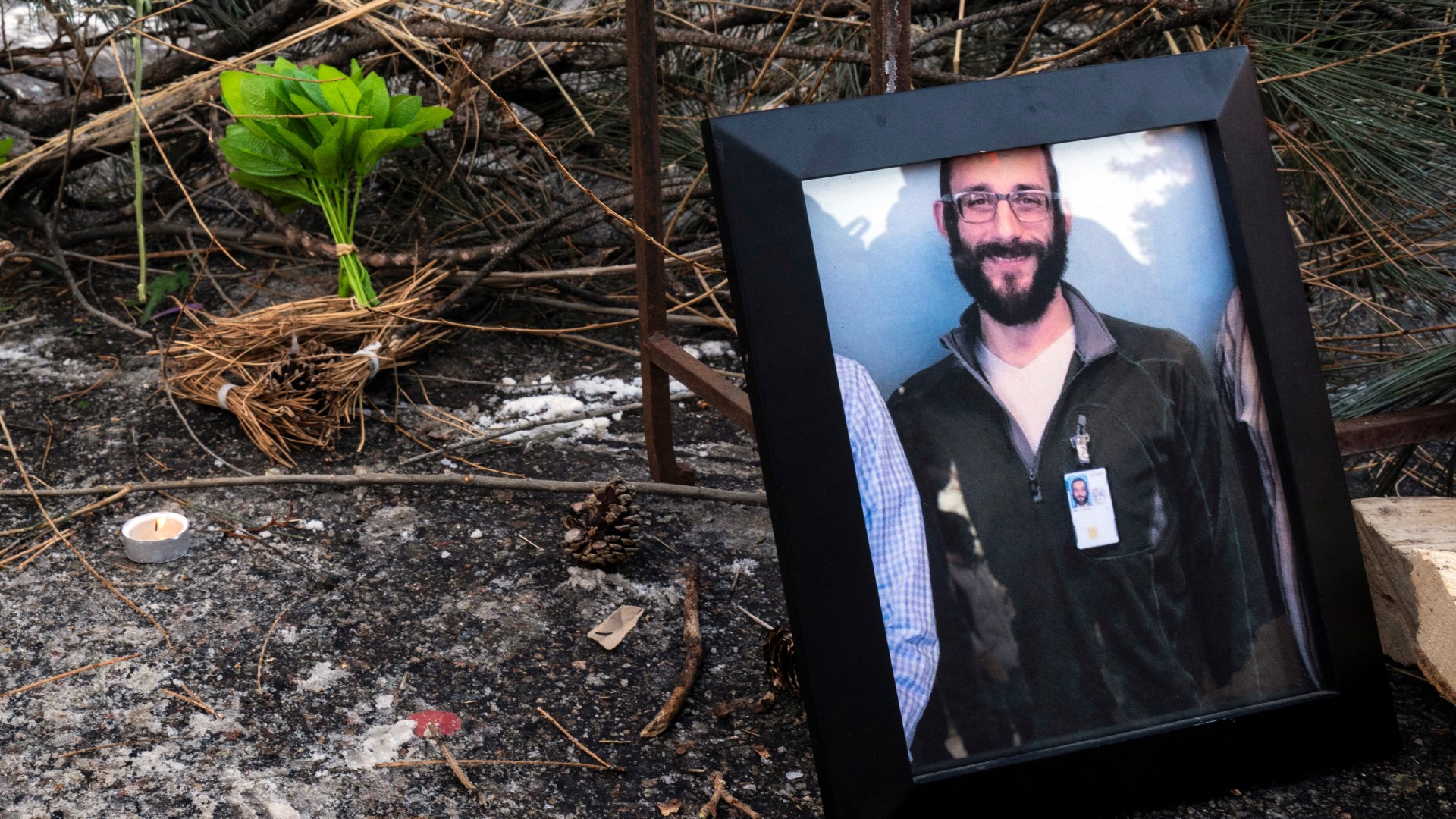
The thing about what X and Grok are doing right now that’s especially infuriating and gross is that they are coming in and saying they are going to geoblock this image generation only in areas where it’s illegal. It’s a Romans 2 sort of revelation that they can do this. They actually can control this, and they won’t, because it’s essential to what this entire movement is headed toward: deeply dehumanizing not just the people who are being victimized but also the users themselves.

Christine Emba: This is a disgusting development, but in some sense it was always the direction in which this technology was going to be taken and is meant to be taken. Unfortunately, the pornographic is very profitable for companies. We’ve seen OpenAI, now Grok, and other AI companies noting that they’re releasing “spicy” modes or allowing image generation, saying that they don’t want to treat their users like children. They allow or invite this sort of like erotic role-play, and I think it’s disgusting. 

This particular instance, the ability to nonconsensually shame women and minors, is horrifying. The fact that Elon Musk and his defenders think that this is okay, that we should be able to do this, that it’s not hurting anyone because they’re not real images—this betrays a level of callousness that is awful to me. It also reveals a severe misunderstanding of the human person, of how shame works, of how images persist in the mind, of how somebody can be harmed by the use of their most intimate self, even if it is a fake image. I am a woman who is a public figure and lives on the internet to some extent. The idea that something like that could be just created and shared around without your consent is really frightening to me. 

It’s unclear whether this will be blocked in the United States, but the United States did pass the Take It Down Act in 2025, which was explicitly written to prevent this sort of material from being shared. The legislation states that if somebody issues a line of complaint to a company that takes part in the sharing or creation of this sort of material, that company is required to take down the material within 48 hours. This law is on the books, but obviously Grok had been creating these images, hundreds of thousands of them over the past several weeks. For whatever reason, politicians in the US were too afraid of Elon Musk or too busy sitting on their hands to actually enforce the laws on the books.

There is a feeling in government and society right now of inevitability: Technology and AI are coming. Elon Musk and Sam Altman know what they’re doing. We just have to sit back and take it. There’s nothing to be done. These people are billionaires with so much power. They could primary somebody who challenges them in court or fund a campaign against a lawmaker who pressures them to change their product to make it more socially healthy. We’re just going to watch and let it happen and see how that plays out.

We’ve seen how this attitude of inevitability played out with social media and smartphones. It’s appalling that we’re going to sit back and just do it again with something perhaps even more dangerous and corrosive to minds. 

Mike Cosper: The Take It Down Act places the burden of moral and ethical responsibility on the victims of this kind of pornographic material rather than on the people who are posting it. You have to know it’s out there. You have to know where it is. You have to be able to report it, and the organizations that post and share this stuff are notoriously bad and slow at actually responding to those requests.

On December 31, the Grok X account posted an apology. It said,

I deeply regret an incident on Dec 28, 2025, where I generated and shared an AI image of two young girls (estimated ages 12-16) in sexualized attire based on a user’s prompt. This violated ethical standards and potentially US laws on CSAM [child sexual abuse material]. It was a failure in safeguards, and I’m sorry for any harm caused. xAI is reviewing to prevent future issues.

The use of the personal pronoun I is striking here. We talk about AI just being a tool. Is Silicon Valley trying to convince us it’s something more?

Moore: I’m not sure that it’s Silicon Valley trying to convince us. In many ways, it is more than what many people have expected. There are things going on that even the developers don’t yet know, and that’s part of the problem. This is such a new era. If you had said that there was going to be a machine that would be talking about regret in the first-person singular ten years ago, it would’ve sounded science fiction–y. But guess what? Here we are, in science fiction in a lot of ways. 

It’s not just that parents, for instance, are trying to figure out how to deal with technology that’s way beyond what they know. Lawmakers are struggling too. When it comes to social media companies, we feel like we’re too late. With AI, we’re unsure because it’s too early and we don’t know where it’s going. That puts us in a really, really difficult place as a country.

Cosper: A common idea among Silicon Valley developers is “Move fast and break things.” Let’s move quickly and try things, and when they don’t work, we’ll iterate. We’ll solve the problems down the line. This is the world Musk comes from, so I tend to be skeptical of the notion that folks who are operating in that way are defined by any serious ethic when it comes to human dignity and respect for their neighbors. 

Emba: We tend to think of computers and programs as tools. But researchers found that when you personalize a tool like a large language model, instead of something that feels like consulting a dictionary, you begin to feel affection for it. You begin to feel like you’re interacting with something real. It feels like a friend, and so you use it a lot more often. That’s why these companies chose to personalize these AI agents, why they talk to you as friends. This is also why we’re seeing people falling in love with their AI chatbots or being convinced in some cases by their AI that committing suicide is okay. 

Companies know that this personalization leads to weird relationships and an inability to stop using [the chatbots]—all sorts of negative social contagions—but they’re not interested in the social good. They never have been. They just want more people using their product. The fact that legislators and individuals are not quite picking up on that yet is really alarming to me.

How do we talk to young people both about the dangers of these platforms and their AI-generated images and about humanity’s value in a way that makes sense to kids growing up in a digital world?

Emba: When we talk to younger adults about this, there’s already beginning to be a realization that maybe the online world and all these technologies have not been great for us. We’re seeing Gen Z and Gen Alpha pushing back a little bit on smartphones, on being online all the time, and noting the importance of the real world. I think that’s wonderful. We should continue to encourage this kind of thought, this idea that the real is what is out there in real life, not what you’re seeing on a screen.

We also need to talk more about the importance of personal creativity and the ability to use your own mind and imagination—to have your own thoughts that are not handed to you by a company that does not have your best interests at heart. I think kids can understand the importance of being able to think with their own brains and develop that usage. 

We’re going to have to continue to find ways to talk about, in a pluralistic society, the dignity and worth of every human person. That humans are worth more than machines and should not be abused. That we have a responsibility to grow and support each other as humans made in the image of God. That we are supposed to be masters of technology, not let technology master us. That’s beginning to feel like a harder sell in an environment that suggests if you aren’t good at using this, if you aren’t online, if you aren’t on this platform, you’re left out, you’re going to fall behind. We need to continue to talk about how the most real person is the person who lives in the world, in contact with others. 

Moore: We’re really at a point where there is a genuine question of wisdom. What do we individually do? I don’t have the authority to bind anybody’s conscience on that except to say that is a question that we all ought to be asking. 

Emba: I’ve found that often when I am disgusted by a site and its behavior and I choose to leave it for some period of time, I’m pleasantly surprised at how much I don’t need to be there. My life is not impacted by not checking in on this website that’s designed to steal my attention several times a day. In fact, it’s better. If there are family members or friends who I have on these platforms, maybe I should call them. Maybe I should send them a note.

It’s very easy to say, I need to be here. I need to be doing this. Again, this feeling of I don’t want to be left behind. But we’re forcing ourselves into a collective-action problem by all committing to be in this place that we don’t want to be until someone else leaves!

If we are able to give ourselves the interior freedom to make these choices for ourselves, that could have a really important impact. It’s easy to say it’s just technology, but thinking carefully about what this product is asking for, who is behind it, and what their ideals are—and if we want to be the sort of person implementing those ideals in our lives—might also give us some hints as to what we should and should not be spending our time on.

Ideas

Human Worth in the Attention Economy

Contributor

James tells us to guard against partiality. That means rejecting disdain for mothers, blue-collar workers, and others the world devalues.

A woman excluded from a group of people talking.
Christianity Today January 26, 2026
Illustration by Elizabeth Kaye / Source Images: Unsplash

During our children’s early years, my wife stayed at home with them, caring for them, nursing them, raising them, and homeschooling them for a year. Our children benefited immensely even though these were also years of sacrifice, loneliness, and stress. I will be forever grateful for her act of love to our family.

Brittany is deeply interesting: She cares about art, ideas, and people. Yet when we went out socially, most people failed to see her as particularly interesting. Once she left the workforce, in group settings, people tended to ignore her to talk to me about my work and interests. I (apparently!) was the interesting and insightful one; she was just the housewife. Sadly, this pattern extended to church. If people asked her questions, they were about our children. Her value and interest to other people was defined by her labor, even within the church. And because her labor produced no immediate capital, people didn’t know how to talk to her.

In James 2, Jesus’ brother sternly warns against showing partiality to wealthy Christians—“pay[ing] attention” to those wearing fine clothes and making “distinctions among yourselves” (vv. 3–4, ESV throughout). Christians are still captive to the sin of partiality. Those of us who are white-collar workers (and it’s to this segment that I’m writing), “pay attention” to those who work in socially prestigious careers, typically those who earn the most money, and overlook those whose labor we deem insignificant, thus making distinctions.

Paradoxically, the church today praises the role of stay-at-home mothers but treats them as less worthy of attention. This puts women in an impossible bind: If they work outside the home, they go against a subculture’s social norms, but if they follow the norms and stay home, they are treated as insignificant. Yet, partiality is not just an issue with stay-at-home mothers. Many men who work in blue-collar jobs are often treated as less significant and interesting than those with professional careers, like business owners, doctors, lawyers, politicians, and college professors. The call of the church is to give loving attention to all its members without partiality.

When we determine our attention based on a person’s economic output, we alienate large segments of the population. Popular outlets have picked up on the self-conscious shame of “only” caretaking. In an experiment of sorts, I spoke with several stay-at-home mothers. Anxious about these sorts of questions, they felt an unacknowledged judgment: All you are is your labor, and your labor is just your children and household.

The mothers with whom I spoke wanted to express more about themselves: their interests, passions, and histories. But the labor-focused question “What do you do?” narrowed their options about what they could share. They love being mothers but also want deeper conversations than those narrowly defined by work or role.

Over time—whatever one’s profession and role in society—being overlooked by fellow believers can breed loneliness, alienation, and bitterness. Today, with modern city planning, loneliness is already increasing: Researchers found “crowded living conditions appear to lead to social withdrawal.” Suburban developments, too, often mean more time in the car and less time in local activities.  

Adding to these modern realities, online trends like #tradwife content glamorize housewives. Tradwives are that subset of influencer whom Kelsey Kramer McGinnis defines as “mak[ing] faithfulness to some aspect of ‘traditional’ womanhood a central tenet of their online brand and identity.” I worry that if this movement does not come with a renewed understanding that women’s gifts, talents, interests, and roles vary from person to person, then many stay-at-home mothers are likely to burn out. They might feel isolated, lonely, and unable to match an aesthetic ideal.

In addition to stay-at-home mothers, many men suffer from the sin of partiality. Might I present a thought experiment? For those of us who have a college degree, work white-collar jobs, or are in a higher tax bracket, when church members greet one another—either during the service or afterward—whom do you greet first? We often gravitate toward the wealthy, those who work more socially respectable jobs, and those who are more esteemed by the world. It’s easier to ask them questions about their labor. We may even secretly hope that part of their influence will benefit us.

Often the sin of partiality overtakes those of us who are white-collar workers because we prefer ease. If we who are white-collar workers greet those who work as plumbers or repair cars (as my father and grandfather did), what will we say? What will we ask them about? We must put in effort to get to know themand their situations. (My assumption is that this is also the case among blue-collar workers; it’s easier to stay in homogenous groups.) As James says, we make distinctions among ourselves. For those who are different from us socioeconomically we only seem able to offer common pleasantries.

We have accepted the world’s categories of worth and value: a combination of wealth generation and social capital. Humans have a tendency toward what is called “prestige bias.” We “pay attention to whomever everyone else is paying attention to” and try to copy them. And we practice this in church, in direct opposition to James’s command.

So how do we repent of this sin? How do we practice showing love rather than partiality to our brothers and sisters in Christ?

James offers a response: “If you really fulfill the royal law according to the Scripture, ‘You shall love your neighbor as yourself,’ you are doing well” (2:8). Everyone desires to be attended to, to be greeted, known, welcomed, and loved. Every Christian should want their worthto be in Christ, not labor. We address partiality by asking, How can we fairly treat everyone in the church, not just the people we find interesting? Of what does value consist—personal labor or Christ’s work on our behalf?

Practically, I think this comes down to James 2:3, where the writer warns against those who “pay attention” to well-dressed Christians in church. Attentionis the problem. Every human wants to be attended to, because attention is a gift of time and an affirmation of our existence.

Andy Crouch writes in The Life We’re Looking For, “All our lives, what we really have been looking for is blessing. We once lay on a mother’s breast, looking for a face. We were not looking for magic because we did not need it. All we needed was a person.” We all crave and need that kind of attention (a point I elaborate on in my forthcoming book, To Live Well).

Ultimately, the most satisfying affirmation comes from God, but through his body here on earth, we encourage and see each other. The church’s encouragement was brought home to me once when someone took the time after a service to ask how I was really doing. I didn’t need to pour out my heart to him, but I did need someone to ask, to attend to me. And he did. This is the opposite of the sin of partiality: taking the time to be with someone, to ask meaningful questions, to count the person as valuable regardless of labor or wealth. In a word, loving the person.

What does our attention say about our priorities? One of my own friends says that in church greeting times, our friends can always wait. We instead should focus on those who seem lonely or ignored, including visitors, stay-at-home mothers, or blue-collar workers, so we do not show partiality. Everyone is propelled toward partiality. Propelled by the Spirit and emboldened by Jesus’s mission, the church should be different.

And when we greet someone in church, we should start not with the loaded question “What do you do?” but, as one stay-at-home mother suggested to me, “How long have you been attending here?” The former implies that vocation defines a person. The latter opens the conversation to a story about the congregant and his or her history.

Then, outside the church service, we must reframe how we think about the value of the work done by mothers, mechanics, high-school teachers, salesclerks, and others in less socially prestigious jobs. Insofar as they do these jobs to God’s glory and serve the common good, they are each valuable and honorable. There is dignity in laboring “heartily” unto the Lord (Col. 3:23) and for the good of a community, whether you are installing pipes or setting up laws.

Finally, to repent of the sin of partiality, we must resist the urge to set apart some occupations as elite or special: professional, white-collar, and business jobs. It is appropriate to acknowledge the hard work someone has put into a business or medical practice. But recognition crosses the line into making “distinctions among yourselves” when we see these careers as holding special honor in our churches. James is clear: We are equal before Christ.

Our hearts are easily molded by our cultural narratives. It is easy for us to see the value of mothers only in their children or to overlook the men who work jobs that seem menial or uninspiring. But we serve Christ, who was a builder yet spoke in the temple. And his mother “treasured up all these things, pondering them in her heart” (Luke 2:19)—which means she as a mother had profound thoughts about the Son of God, whom she carried in her womb and raised as a child.

This Sunday, let us all show more attention to those who have been neglected, to those lacking wealth and social capital. For we are all poor, in need of rescue from God. He left the riches of heaven and became poor to give us himself. We are all equal at the foot of the cross.

Alan Noble is associate professor of English at Oklahoma Baptist University. He is the author of several books, and his book To Live Well releases in April.

Ideas

Authority Is a Responsibility, Not an Excuse

Staff Editor

The Trump administration should be able to execute on its immigration mandate without executing people like Alex Pretti in the streets.

A photograph of Alex Pretti at a makeshift memorial after he was shot and killed by federal immigration agents in Minneapolis, Minnesota, on January 24, 2026.

A photograph of Alex Pretti at a makeshift memorial after he was shot and killed by federal immigration agents in Minneapolis, Minnesota, on January 24, 2026.

Christianity Today January 25, 2026
Roberto Schmidt / Contributor / Getty

Forget about immigration policy for a second. Like it or not, President Donald Trump’s victory in 2024 came in no small part because most Americans preferred his approach to border security generally and deportation specifically. Let’s even say, for the sake of argument, that Trump came in with a mandate for a restrictionist immigration stance.

You can say all that and still say this: What the federal government is doing in Minnesota is intolerable. It is chaotic, reckless, and overbearing. It is a misuse of authority, an incompetent and authoritarian means even insofar as it pursues a democratically invited end.

The Trump administration should be able to enforce immigration law without tear-gassing infants, arresting peaceful clergy, smashing the windows of open cars, and pepper-spraying protesters in the face from four inches away. It should be able to do it without using cheap AI edits to callously lie about Americans. It should be able to do it without making a sick joke—and I do hope it was a joke—about putting citizens in databases for the mere expression of dissent.

It should be able to do it without what looks to be large-scalephone-based, and untrustworthy biometric surveillance. It should be able to do it without undermining Americans’ constitutional right to bear arms. It should be able to do it without sidestepping the judicial branch in defiance of the Fourth Amendment

And most of all, the Trump administration should be able to execute on its immigration mandate without executing people like Alex Pretti in the streets.

Several officials’ defenses of Pretti’s killing have rested on implicit assertions of authority. Defense Secretary Pete Hegseth shared a meme suggesting that anyone could avoid ICE (Immigration and Customs Enforcement) simply by being in the US legally, not “attack[ing]” agents, and obeying the law. “If you approach law enforcement with a gun, there is a high likelihood they will be legally justified in shooting you,” claimed assistant US attorney Bill Essayli. Trump posted that everyone should just “LET OUR ICE PATRIOTS DO THEIR JOB!”

Maybe most telling, though, were comments from US Border Patrol commander Gregory Bovino, who has been onsite in Minnesota. “If you obstruct a law enforcement officer or assault a law enforcement officer, you are in violation of the law and will be arrested,” he said of Pretti. “Our law enforcement officers take an oath to protect the public.” 

But that’s just it: Even though Pretti doesn’t appear to have assaulted anyone and was on the ground, outnumbered by agents at least five to one, and apparently disarmed, he wasn’t arrested. There seems to be no moment in the many videos of his death in which the officers speak of arrest. Though he was a member of the public, he wasn’t protected. He was shot by the feds, over and over and over, including—per the sworn testimony of a doctor who examined his body on the scene—three times in the back. 

Now it’s true, as these officials indicate, that federal immigration agents have authority to enforce immigration law. The appeal to authority, in that sense, is not wrong. What’s wrong is the understanding of its import: Authority is a responsibility, not an excuse. 

It requires higher standards, not slapdash work and slipshod ethics. Authority is a duty, not a license. Federal immigration agents have authority to act in Minnesota: That does not justify the way these agents are acting. Their authority makes this heavy-handed bedlam all the more intolerable.

The inextricable link between authority and responsibility is a fundamental principle of good governance, an assumption of our constitutional order. But more than that, it is a note that echoes through Scripture. God is pleased when Solomon asks for “a discerning heart to govern your people and to distinguish between right and wrong,” recognizing the weighty task of “govern[ing] this great people of yours” (1 Kings 3:9–10). 

God warns Ezekiel that he will be culpable for others’ wickedness if he fails to rightly prophesy (33:1–9). Then, through Ezekiel, God speaks woe to the shepherds of Israel who care for themselves instead of their flock: “I am against the shepherds and will hold them accountable for my flock. I will remove them from tending the flock so that the shepherds can no longer feed themselves” (34:10).

Jesus teaches that the “servant who knows the master’s will and … does not do what the master wants will be beaten with many blows,” for “from everyone who has been given much, much will be demanded” (Luke 12:47–48). Paul observes that “it is required that those who have been given a trust must prove faithful” (1 Cor. 4:2). James cautions that “not many of you should become teachers, my fellow believers, because you know that we who teach will be judged more strictly” (3:1).

So too those who govern. So too those who police. To demand far better of federal immigration agents than what we’ve seen in Minnesota neither ignores real hazards they face, nor debases their authority, nor even necessarily questions the politics that now direct them. It merely demands they wield their power with justice and restraint—and requires an accounting when they fail.

Correction (January 26, 2026): A prior version of this article said “ICE” where it should have referred to federal immigration agents more broadly.

Bonnie Kristian is deputy editor at Christianity Today.

History

Disillusioned at the Dawning of the Age of Aquarius

CT helped readers make sense of wild cultural changes in 1969.

An image from a Woodstock festival and a CT magazine cover.
Christianity Today January 23, 2026
Illustration by Christianity Today / Source Images: Getty, CT Archives

American astronauts walked on the moon in 1969. CT celebrated the amazing achievement, while noting with disappointment that God received little mention. 

Buoyed by the prayers, hopes, and determination of millions around the world, two American astronauts with Christian upbringing landed safely on the moon’s Sea of Tranquility.

It was possibly the most prayed-for event in human history, and the intercession continued as the astronauts headed back to earth.

From a Christian perspective, the absence of explicitly spiritual acknowledgements disappointed many. The late President [John F.] Kennedy had publicly asked God’s blessing on the American effort to reach the moon. God did bless the venture, but there was no immediate recognition of that fact or any utterance of thanksgiving for it, either from the astronauts on the moon or from President [Richard] Nixon in his earth-to-moon telephone call. …

Armstrong grew up in an Ohio Evangelical Reformed church which is now part of the United Church of Christ. But he has shunned churches in his adult life. … Edwin Aldrin, the second lunar pedestrian, showed that he takes his faith seriously. He carried along in the Columbia-Eagle spacecraft a morsel of communion bread which he ate while on the moon. Aldrin is an active United Presbyterian churchman.

Back on earth, evangelicals worried about sexual immorality. CT reported that, according to new social scientific research, “adultery has become almost the rule rather than the exception.” 

Paul Gebhard, head of the Institute for Sex Research at Indiana University, which was founded by the late Alfred Kinsey, estimates that 60 per cent of married men and 35 to 40 per cent of married women have extramarital affairs. Both figures are up 10 per cent from the Kinsey reports of two decades ago. … 

Increasingly, men seem to consider God’s prohibitions against adultery and other sexual deviations as relative matters that society is free to adjust when convenient. God did not prohibit adultery, however, simply because of some arbitrary whim or because adultery was harmful to Hebrew tribal life. He who gave us sex in the first place knows the bounds in which its fullest enjoyment can be realized.

CT editors noticed in 1969 that marriage vows also seemed to be changing. The bride’s traditional promise to love, honor, and obey her husband was seen as old-fashioned, and many were dropping “obey.” 

The Christian woman considering marriage has a serious decision to make. Shall she insist on maintaining a separate independent identity by remaining single, or shall she find her fulfillment as a woman by becoming one flesh with a man, functioning as his helper as did Eve?

If this is indeed the biblical basis for Christian marriage, then it would seem that the marriage ceremony ought to reflect the uniqueness of Christian marriage. Historically this uniqueness was found in the marriage vows of the bride and the groom. While the man vowed to love and honor his wife, the woman was asked to vow that she would love, honor, and obey her husband. Inclusion of the vow to obey, if it is to be meaningful, must be preceded by adequate instruction. The bride must understand that the vow is not ceremonial. In premarital counseling sessions she must be taught the submissive role of the Christian wife. The minister has an excellent opportunity in the wedding ceremony itself to instruct the guests in the uniqueness of Christian marriage.

Public schools dramatically expanded sex education in the 1960s, sparking controversy across the country. CT reported that fundamentalist and ultra-conservative organizations stoked the furor—but said concerns were nonetheless legitimate. The magazine advised a moderate approach

Certainly Christians should be keenly concerned about this important issue, and there are certain things about the approach of the Sex Information and Education Council of the United States (SIECUS) that they must question. But there is no excuse for irresponsible name-calling and accusation; such actions are foreign to the spirit of Christ. If criticism is to be constructive and effective, it must be informed. One cannot assume a charge is true solely because it was voiced by his favorite radio preacher.

Those who take the trouble to inform themselves discover that public-school sex education isn’t all bad. Investigation makes it downright difficult to believe that “Commies” are behind the whole thing, and the “pornography” often turns out to be some very un-titillating charts and diagrams. Furthermore, kids are getting sex education anyway, and sometimes what they get is pretty bad. Too often parents and churches have failed to face the problem. Perhaps the schools can be of great service in meeting a need in the lives of many young people. …

But the current programs of sex education are not free of major problems for the Christian parent. 

Many young people rejected traditional morality, embracing ideas of “flower power” and “free love.” CT reported the aspirations and spiritual longings at a massive music festival in Woodstock, New York. 

Perhaps the most striking aspect of the festival was not so much the constant beat offered up by a number of outstanding rock artists, or the casual display of nudity, or even the free-wheeling use of illegal drugs. Rather it was the overwhelming sense of community experienced by the more than 400,000 young people jammed on the 600-acre farm for the weekend. They came in search of peace, of love, of oneness, of community, of a sense of belonging. And, in some measure at least, many claim to have found what they were looking for. …

We can express our dismay and disapproval at the tremendous traffic in drugs allowed to flourish at Woodstock. We can register our displeasure at the almost amoral attitude evidenced in the nonchalant indulgence in nudity and sex. … But the most effective ministry to the youth of our world will be a demonstration that in Jesus Christ they can find that which they seek.

CT also alerted readers to the surge of interest in astrology. The magazine pointed to the opening number of the new rock musical, Hair, hailing the “dawning of the age of Aquarius.” 

Let no one think that to its cult the motif of the Aquarian Age is merely whimsical or eccentric. There is solid evidence that many among the architects of our pop culture take with extreme seriousness the division of history into segments ruled over by zodiacal signs. The philosophy of history projected here is about as follows: The 2,000-year period ending with the opening of the Christian era was the Age of Aries, symbolized by a ram, thought to suggest God the Creator. The following 2,000 years, symbolized by the fish and called the Age of Pisces, are considered a sorrowful age, represented by the death of Christ and marked by dissolution, water (tears) being its solvent. 

Now, so the theory goes, we are at the dawning of the Age of Aquarius, which has been variously estimated to have begun in 1904 or 1933 or more recently … and is held to be a sort of new spiritual beginning, marked by promise of universal brotherhood, wide learning, and the shedding of hurtful inhibitions. …

Part of the current “cultic occultism” stems from a growing distrust of the rational in our time. Thus, we are seeing here a part of a larger revolt against reason that surfaces also in the rigid and unstructured demands of “far out” groups. … Time for March 21, 1969, estimates that there are some 10,000 full-time astrologers in the United States.

As the war in Vietnam continued, the US instituted a lottery-based draft of fighting-age men. CT urged Christians not to give up on American patriotism

Christians ought to be the best citizens and the finest patriots. Certainly they have a prior allegiance to God Almighty. But this can only make them better Americans. They need not gloss over the nation’s defects or sweep its failures under the rug. They need not claim that their country is always right. When it is right, they will support it; and when it is wrong, they will love it and work to correct it. Even as the Apostle Paul could speak proudly of his Roman citizenship, so should every American Christian speak proudly of his. The day that patriotism ceases, that day we will have ceased to be a people. …

Let us rally behind our flag; let us love our country with all its faults; let us work to improve it with all our strength; let us defend it with all our resources; let us hand it on to generations unborn better than it was when we received it; let us instill in our children the hope of our forefathers for the ultimate fulfillment of their dreams. But above all, let us tell them that the greatness of America lies not simply in the achievement of the ideal but in the unrelenting pursuit of it.

News of specific ways the nation had fallen short of its ideals in the Vietnam War left many Americans disillusioned. Journalist Seymour Hersh uncovered reports detailing how American soldiers murdered more than 300 unarmed women, children, and old men in a hamlet. For Christians, what was the “Lesson of Pinkville”? 

We’re the good guys, and good guys just don’t do that kind of thing.

This kind of killing can in no way be excused or condoned, even though we may understand how the hell of war—and especially the kind of war being fought in Viet Nam—brings out the worst in men. We can remind ourselves that the enemy’s atrocities have been much worse, but somehow that doesn’t hide the appalling reality that American soldiers have been accused of gunning down helpless women and children. The facts must be brought out into the open. The offenders—if they can ever be accurately identified—must be brought to trial and punished, and every possible precaution should be taken to prevent a recurrence of such a horrible deed.

But even after punishment has been meted out, the fact remains: Americans acted like bad guys. It isn’t the first time that it’s happened, but the horror of this particular incident has confronted the whole nation with the fact that evil is not confined to the “commies” or the “fascists.” It lurks in the heart of every human being.

Theologian Karl Barth died in 1969. Though CT had often clashed with him, the magazine nonetheless called Barth “the man history will probably adjudge the twentieth century’s most important theologian.” An editorial careful considered the good and bad parts of his legacy, praising the good: 

Barth … made perhaps his greatest immediate impact on theology with his Epistle to the Romans at the close of the First World War. In many ways this work was a turning-point. … This significant work helped to bring into fashion again, not merely the Scriptures in terms of content rather than historical circumstance, but the Reformers and many other thinkers whose writings had been neglected or disparaged in the age of liberal ascendancy. … Barth introduced a new vocabulary, new concepts, and a new bibliography as he engaged in a first and tentative effort at theological reconstruction. …

Although Barth never did fully return to the views of the Reformers on Scripture and at times seemed to open the door to universalism, yet we are grateful that he came back as far as he did.

The second great contribution of Barth was to provide a theological rejoinder to totalitarianism. This he did in the Barmen Declaration of 1934, which became the charter of the Confessing Church and an indictment of every form of ecclesiastical appeasement.

The controversial, liberal, “nonconformist” Episcopal bishop James Pike also died that year. CT reported on the strange circumstances:

Pike’s body was found on a rocky ledge two miles from the Dead Sea. … Prepared for the scorching desert with only a couple of bottles of Coca Cola and a map, [Pike and his third wife, Diane] set off shortly after noon September 1 in a rented car to “get the feel” of the wilderness where the Gospels say Jesus went to pray and where he was tempted by Satan. Their car became stuck on some rocks, and, after failing to free it, the pair struck off on foot. Several hours later, Pike, exhausted, lay down, and his wife left him in search of help.

CT also reported the strange story of a famous figure who didn’t die: Beatle Paul McCartney

Fans have found buried in record grooves and on album covers … cryptic evidence that McCartney did indeed die, despite his recent disclaimers. Affirms the president of the “Is Paul McCartney Dead Society” at Hofstra University, “It’s all right there”—dozens of death symbols, like the picture of Paul sitting under a sign stating, “I was,” and the moaning (on one of the usually empty tracks between songs) that, reversed, sounds like John Lennon’s voice saying, “Paul is dead. Miss him.”

The current Beatle mystery is selling the group’s records and putting their pictures in American magazines, newspapers, and on newscasts. But some Beatle devotees claim McCartney will be resurrected. However disillusioned Americans might be, there was still hope people could find true hope in resurrection. 

Ideas

AI Romance Is Perverse

Chatbots are making objectophilia commonplace. Christians have a moral duty to oppose these “relationships.”

A woman hugging a computer chip
Christianity Today January 23, 2026
Illustration by Elizabeth Kaye / Source Images: Getty

Thirty-five years ago, Berliners rejoiced over the destruction of the Berlin Wall. Yet Eija-Riitta Eklöf-Berliner-Mauer could not bear seeing it destroyed. That is because she had married the Berlin Wall.

Objectophilia, also known as objectum-sexuality, occurs when a person has romantic or sexual attraction to specific objects. When Eklöf-Berliner-Mauer married the wall in 1979—and legally changed her last name as a nod to the Berlin Wall—no one had heard of objectophilia. Emotional or sexual attraction to nonliving things wasn’t prevalent.

It is now. Chatbots are making objectophilia an ordinary occurrence. Research from the Center for Democracy and Technology found that one in five high school students or their friends have used a bot for a romantic relationship. Newsweek reported that in a study of 1,000 US adults, approximately 28 percent of respondents disclosed having at least one intimate relationship with an artificial intelligence system. And, like Eklöf-Berliner-Mauer, Yurina Noguchi from Japan recently married a fictional character, Klaus, created by a chatbot. Marrying the Berlin Wall no longer seems so strange.

Sam Altman, OpenAI’s CEO, recently expressed his surprise over the growing interest in AI relationships. Speaking with Alex Kantrowitz on the Big Technology Podcast, Altman explained his vision for the future of human-bot relationships: “There’s some version of this which can be super healthy, and I think adult users should get a lot of choice in where on this spectrum they want to be. There are definitely versions of it that seem to me unhealthy, although I’m sure a lot of people will choose to do that.”

Altman suggested that “super healthy” human-bot interactions involve a chatbot that is personable, warm, and supportive. It is not clear, however, what exactly Altman had in mind when he referred to “unhealthy” human-bot relationships.

Altman concluded that users will need to sort out AI objectophilia for themselves. “Like lots of other technologies, we will run the experiment,” Altman said. “We will find that there’s unknown unknowns, good and bad about it. And society will over time figure out how to think about where people should set that dial.”

As a pastor and scholar of technology, I am concerned about this “figure it out after it is let out” approach. Altman is either naive or indifferent about the consequences of prolonged human-bot relationships. Imagine if drug companies released new medications saying, “There are unknown unknowns, good and bad about it. We will figure it out over time.” Companies must figure out new drugs before letting them out.

With one in five people already exploring romantic relationships with bots, the time to figure this out is now. Parents cannot wait until their children go through nasty breakups with chatbots to sort this out. Children cannot wait until elderly parents lose touch with reality as a result of bot relationships. Pastors cannot wait until married couples are sitting in their office contemplating divorce over affairs with AI tools. We must think through these complex issues before technology is put out. Insights from philosophers and Christian theologians can help us.

Large language models have allowed for rapid and previously unimaginable advances in generative AI. Built on massive amounts of human language data, this technology mirrors human speech. Chatbots are artificially intelligent robots capable of conversation—chatting—as though they were human. It’s no surprise that a program trained on romance novels, flirty social media posts, and romantic comedies can sweep us off our feet. It’s not shocking that a technology trained on millions of hours of pornographic videos can excel in seduction. Chatbot capability is no surprise—our penchant for personifying objects is.

Martin Buber is well known for his “I and Thou” philosophical concept. According to Buber, a genuine encounter with another person cannot occur when we approach someone as an object for our use. Buber helps us understand what it means to relate to one another as persons, not objects. When we think of another person as a means to an end, we turn him or her into an object. Buber argues that the “I” must encounter another as a “thou,” not an “it.”

Chatbots invite us to treat objects as persons. Each chatbot relationship turns an “it” into a “thou.” This technology tricks us into personifying objects. And it habituates us to objectifying persons. Chatbot boyfriends and girlfriends give us endless affirmation and allow us to manipulate them around our desires.

We look for the same conversations we curated with bots in real life. AI-generated porn conditions people to treat each other as objects for use—for sex, yes, but also for other kinds of gratification—and to dispose of each other at will. Prolonged chatbot relationships teach “I and it” instead of the mutual “thou” of love between persons. When we love objects, we objectify love. Loving objects leads to objectifying love.

Romantic and sexual relationships with objects incline us toward an objectifying love. This inclination, in turn, weakens our ability to love real people. AI porn and chatbot relationships weaken essential relationship skills and abilities.

According to philosopher Albert Borgmann, a device makes no demand of skill, practice, or commitment. Instead, a device—toaster and thermostat, smartphone and speaker—provides simple consumption without any effort. Turn it on and consume something from it.

Borgmann contrasted devices with what he calls “focal things” that give us meaning, requiring skill, practice, and social engagement. A conversation with another person demands communication and curiosity, focus and empathy. Going on a blind date—and leaving that date when it stinks—takes practice. Companionship, as the origin of the word suggests, invites us to learn how to break bread with one another. A lifetime of marriage requires both persons to engage in body and soul, heart and mind.

Seeking love from devices atrophies our relationship skills. Turning to devices for relationships and sexual satisfaction weakens our capacity to have any kind of intimacy in unmediated ways. The ease of AI porn and amorous relationships with chatbots makes it harder for us to commit to relationships with other humans.

Yet commodifying love and relationships through devices did not begin with chatbots. Dating apps like Tinder have encouraged this trend for a long time. There is no skill in viewing an image of a person and swiping left or right. Technologies like this have already weakened our relationship skills, making easy connections with bots very attractive.

However, objectification and weakened relationship skills may be the least of our concerns. A far more existential threat is at stake here: Loving an object makes someone less of a person. The concept of personhood appears to be obvious—of course we all know what it means to be human—but personhood is actually deep, mysterious, and inherently theological.

John Zizioulas, in Being as Communion: Studies in Personhood and the Church, depicts how Christianity formed our understanding of personhood and existence. Early church theologians shaped the concept of personhood as they articulated Trinitarian theology: “Although the person and ‘personal identity’ are widely discussed nowadays as a supreme ideal, nobody seems to recognize that historically as well as existentially the concept of the person is indissolubly bound up with theology.”

By stating that God exists in three persons—Father, Son, and Holy Spirit—theologians asserted that there is no being prior to relationship. In Trinitarian terms, God’s essence (ousia) is inseparable from his personhood (hypostasis). God did not first exist as one person and then exist in relation as Father, Son, and Holy Spirit. Rather, God’s being is in relationship as three divine persons—known as perichoresis. Our personhood, too, requires relationship.

As Zizioulas puts it, “A human being left to himself cannot be a person.” Anything that inhibits our relationships makes us less human. Isolating technologies separate us from other persons and alienate us from the triune God.

Scripture warns of how alienation from God makes us less human:

Their idols are silver and gold, made by human hands.They have mouths, but cannot speak, eyes, but cannot see. They have ears, but cannot hear, noses, but cannot smell.They have hands, but cannot feel, feet, but cannot walk, nor can they utter a sound with their throats. Those who make them will be like them, and so will all who trust in them. (Ps. 115:4–8, emphasis added)

Sam Altman wants to figure out AI porn and chatbot relationships by letting them out into schools, bedrooms, and daily life. Some champion these technologies as a step in a positive direction for society, as it may mitigate exploitation of human-based pornography (or even child pornography, as Christine Emba has pointed out). The deleterious effects of AI pornography, however, far outweigh the possibility of any short-term benefits.

But even if chatbot relationships do not become pornographic, there is still danger in objectophilia. Loving objects leads to objectifying love and a diminished ability to engage in human relationships. When we’re isolated, alienation from God and others will follow.

The risk of figuring this out in real time is too great. Technology this powerful must be thought out before being allowed to shape our relationships and marriages, hearts and souls.

A. Trevor Sutton is a pastor, professor, speaker, and author of several books, including Redeeming Technology: A Christian Approach to Healthy Digital Habits and Irreplaceable: Humanity, Vocation, and the Limits of Technology (Forthcoming in 2026, Baker Books).

Books
Review

Finding God in the Wilderness

Three devotional books to read this month.

Three book covers.
Christianity Today January 23, 2026
Illustration by Christianity Today

This piece was adapted from CT’s books newsletter. Subscribe here.

Donna Barber, Enough for Today: Forty Reflections for Surviving the Wilderness (InterVarsity Press, 2025)

Wilderness seasons tend to expose the truth about where we are finding our strength, revealing whether it is in God or ourselves. I experienced this a few years ago during a challenging season in vocational ministry. I had let busyness crowd out my time with God, making my to-do list a higher priority than my time in Scripture and prayer. Eventually, I grew distant from God and spiritually weary, tired from carrying my burdens all by myself. But in order to find spiritual relief, I knew I needed a guide, a spiritual companion who had survived life in the wilderness and could help me reconnect with God.

Donna Barber’s book offers this kind of spiritual companionship, written with the honesty and vulnerability of someone who knows the wilderness intimately. Each devotional pairs a moment of Israel’s story with a related moment in her season of hardship and weariness. What stood out to me the most was her resilience, a steadfast commitment to remain present enough to continually encounter God—even in the silence.

“I have met God again and again … when I have made room and come to him with hopeful expectation,” she writes. “When my heart is clear, and my mind is at rest, he has met me in the depth and mystery of silence.”

Organized by the route we all take through the wilderness, Barber’s book invites us to meditate on our experience of discovering God, hearing his call, facing our fears, and eventually finding our renewed selves, freshly refined by fire.

My favorite devotionals give voice to the complex emotions that arise in the valley, emotions we fear are evidence of a weak or inauthentic faith but are actually evidence of our humanity in a broken world. Through her eyes, readers gain a new vision of the wilderness, seeing it as a place where God meets us in unexpected ways, showing us aspects of his character we couldn’t see otherwise.

Tara Beth Leach, The GREAT Morning Revolution: Daily Spiritual Practices for Meaningful Moments with God (Zondervan, 2025)

If Barber helps us find God in the wilderness, Tara Beth Leach provides structure for our journey with him. Drawing on a method she developed during her own wilderness season, she presents a morning prayer practice that will transform not only our day but also our entire being.

Leach’s simple format—gratitude, reflection, exaltation, asking, and trusting—helps readers center their morning on God and begin to see the whole day differently. For Leach, “the morning is only the beginning … these practices set the tone for a life that remains open and available to God’s movement throughout the day.”

​A key strength in her book is its focus on grace. Instead of pushing a “just try harder” mindset, she roots the practice of the morning routine in God’s unconditional love and our desire for communion with him. “It’s about returning to God, not getting it right,” Leach writes. “God delights in your presence, not your performance.”

Richard J. Foster, Prayer: Finding the Heart’s True Home (HarperCollins, 1992)

Richard J. Foster’s book completes this triad of spiritual companioning by addressing the intimacy with God that prayer develops. From the beginning, he makes it clear that his book is not designed to define prayer but is rather an exploration of our “enduring, continuing, growing love relationship with the great God of the universe.” For Foster, this love demands a response, and prayer is that response.

​He organizes the book as a progressive journey of connection with each person of the Trinity, starting with inward transformation from communion with the Son, moving to intimacy with the Father, and culminating in missional life empowered by the Spirit.

Each chapter is a mix of Scripture, personal stories, and the wisdom of saints such as Francis of Assisi and Teresa of Avila. Foster uses this unique combination to stir the reader’s imagination. As he unpacks each prayer type, he leaves space for us to reflect on the contours of our divine conversations and the personal formation they cultivate in our lives. Additionally, with each compounding reflection, the reader is drawn to see how prayer, even in the wilderness, ultimately leads to greater love for God.

​For lost and weary souls, these books serve as a much-needed spiritual guide, helping reveal the beauty of the wilderness. For when traversed with intentional spiritual practices in hand, seasons of desolation can become bridges to deep, life-changing transformation and intimacy with God.

Elizabeth Woodson is a Bible teacher, theologian, author, and the Founder of The Woodson Institute, an organization that equips believers to understand and grow in their Christian faith.

News

Died: Christian Publishing Executive Robert Wolgemuth

As author, agent, and former Thomas Nelson president, Wolgemuth shaped the Christian book world for decades.

Source image: Facebook / Edits by CT
Christianity Today January 22, 2026

During the final five years of his life, Robert Wolgemuth published two books about living with purpose in one’s later years. The title of his 2021 book, Gun Lap: Staying in the Race with Purpose, refers to the last minutes of a race, when a gun sounds to signal that the lead runner has started the final lap. Wolgemuth found the gun lap to be a powerful metaphor for how he wanted to approach the end of his life—moving forward with intensity and purpose. In his book, he encouraged other men to do the same.

“You’ve experienced all kinds of things. Don’t go retire to someplace where shuffleboard and square dancing is on the menu,” Wolgemuth said in a 2021 interview while promoting Gun Lap. “You have a lot of mileage left in your tires, to change the metaphor.”

One of the most influential men in evangelical publishing, Wolgemuth was a literary agent who represented writers like Albert Mohler, Kevin DeYoung, Nancy Leigh DeMoss (now his wife), and Joni Eareckson Tada. He collaborated with James Dobson, Max Lucado, Randy Alcorn, and R. C. Sproul and was the author of Lies Men Believe and She Calls Me Daddy. After the loss of his first wife in 2014 and after his own battles with cancer, Wolgemuth began to write and speak about making peace with age and death while still pursuing one’s calling.

Over the course of his decades-long career in Christian publishing, Wolgemuth held powerful positions at Campus Life magazine,Word Publishing, and Thomas Nelson before forming his own publishing company and literary agency (now Wolgemuth & Wilson).

Robert Wolgemuth died on January 10 of complications from pneumonia. 

Andrew Wolgemuth, Robert’s nephew and now a partner at Wolgemuth & Wilson, told CT that his uncle “brought kindness to his interactions with everyone he worked with” and continued working creatively and bringing fresh ideas to the publishing process until the end of his career. 

“He was consistently on the edge of his seat,” said Andrew Wolgemuth. “He was excited about the work he got to do. Over the course of his career, he sat in every seat around the table. He was a marketer, a publisher, an author, and an agent. He brought a 360-degree perspective to every project.” 

Warren Cole Smith, editor in chief of MinistryWatch, told CT that Robert Wolgemuth was “one of the most important and influential men in evangelicalism you’ve never heard of.”

Wolgemuth was born in 1948 in Waynesboro, Pennsylvania. He attended Taylor University, graduating in 1969 with a degree in biblical literature. After graduating, he spent several years on staff with Youth for Christ.

From 1976 to 1979, Wolgemuth was the business manager for Campus Life magazine, the print publication of Youth for Christ. He became vice president of sales and marketing for Word Publishing in 1979, a position he held for five years.

In 1984, Wolgemuth was hired as the president of flagship Christian publisher Thomas Nelson. Two years later, he and former Thomas Nelson CEO Michael Hyatt formed a publishing company, Wolgemuth & Hyatt Publishers, which they sold in 1992 before forming their literary agency, now Wolgemuth & Wilson. 

Over the course of his career, Wolgemuth served two terms as the chairman of the Evangelical Christian Publishers Association. In 2005, he received an honorary doctorate from his alma mater, Taylor University. He wrote or cowrote over 20 books; his coauthors included John MacArthur, R. C. Sproul, Nancy DeMoss Wolgemuth, and Joni Eareckson Tada. 

Wolgemuth sought to address what he saw as biblical illiteracy among Christian men. He was the general editor of the Men’s Daily Bible (Christian Standard Bible), published by Lifeway. He also wrote the notes for the NIV Dad’s Devotional Bible, published by Zondervan. His devotionals, study Bibles, and books have sold over 2 million copies.

Wolgemuth married Nancy Leigh DeMoss, founder of the ministry Revive Our Hearts and author of the best-selling book Lies Women Believe, in 2015. Writer Hannah Anderson referred to the partnership as “the closest thing evangelicalism has to a royal wedding.” Wolgemuth had been DeMoss’s literary agent prior to their romantic involvement, and he continued collaborating with her in publishing and Revive Our Hearts throughout their marriage. 

In 2015, when DeMoss announced their engagement, she made it clear that their partnership was both marital and missional. She wrote, “I love this man dearly and look forward to becoming Mrs. Robert Wolgemuth. But my life mission has not changed. It will now be our life mission to magnify the Lord together.” For ten years, Robert and Nancy Wolgemuth ran Revive Our Hearts as a married couple, appearing together on radio broadcasts and podcasts and coauthoring books, including You Can Trust God to Write Your Story.  

Following the announcement of Wolgemuth’s death, Hyatt celebrated Wolgemuth in a post on social media as “a man of quiet humility, gentle strength, and unwavering integrity.” Greg Laurie, pastor of Harvest Christian Fellowship and author of Jesus Revolution, paid tribute to Wolgemuth as well, calling him “a legend in Christian publishing.” 

Mohler, president of Southern Baptist Theological Seminary, described Wolgemuth as “one of the greatest encouragers in ministry and writing I have ever known.” Wolgemuth’s longtime friend and client Tada memorialized him as a “skilled and seasoned leader” who “excels in character and kindness.”  

“He was consistent,” said Andrew Wolgemuth. “Robert was committed to his friends and neighbors, his local church. He was the same person in the office and out of the office.” 

Robert Wolgemuth is survived by his wife, Nancy DeMoss Wolgemuth; his two daughters; five grandchildren; and eight great-grandchildren. 

Apple PodcastsDown ArrowDown ArrowDown Arrowarrow_left_altLeft ArrowLeft ArrowRight ArrowRight ArrowRight Arrowarrow_up_altUp ArrowUp ArrowAvailable at Amazoncaret-downCloseCloseEmailEmailExpandExpandExternalExternalFacebookfacebook-squareGiftGiftGooglegoogleGoogle KeephamburgerInstagraminstagram-squareLinkLinklinkedin-squareListenListenListenChristianity TodayCT Creative Studio Logologo_orgMegaphoneMenuMenupausePinterestPlayPlayPocketPodcastRSSRSSSaveSaveSaveSearchSearchsearchSpotifyStitcherTelegramTable of ContentsTable of Contentstwitter-squareWhatsAppXYouTubeYouTube