News

The Foursquare Church Renews Focus on Diversity

With an eye to demographic change and an increase in foreign-born ministers, the Pentecostals welcome ‘what God is doing in America.’

Delphine Lee

Mauricio Rodriguez uses the word family to describe the people of Angelus Temple. He still remembers the smiles and hugs he and his mother and sisters received at the Los Angeles church when they first arrived in 1988 as immigrants fleeing a civil war in Nicaragua. They went to the church because they needed food. The Angelus Temple gave food away as part of a ministry started during the Great Depression by Aimee Semple McPherson, the famed revivalist who founded the International Church of the Foursquare Gospel.

He’s been thinking about that a lot, as The Foursquare Church, which adopted multilingual ministry in its early years and has long advocated for multicultural leadership, is now for the first time hiring a diversity advocate to work on the denominational level. Rodriguez held the position in 2019, when it began as a one-year assignment.

“There are opportunities that God is placing right in front of us,” Rodriguez said. “In the same way that I was welcomed when I came as a three-year-old boy who didn’t understand I was an immigrant and didn’t understand the language, love overcomes language barriers and anything if we would just truly love people the way God has loved us.”

For one year, Rodriguez identified challenges for people from different language and ethnic groups starting Foursquare churches in the US.

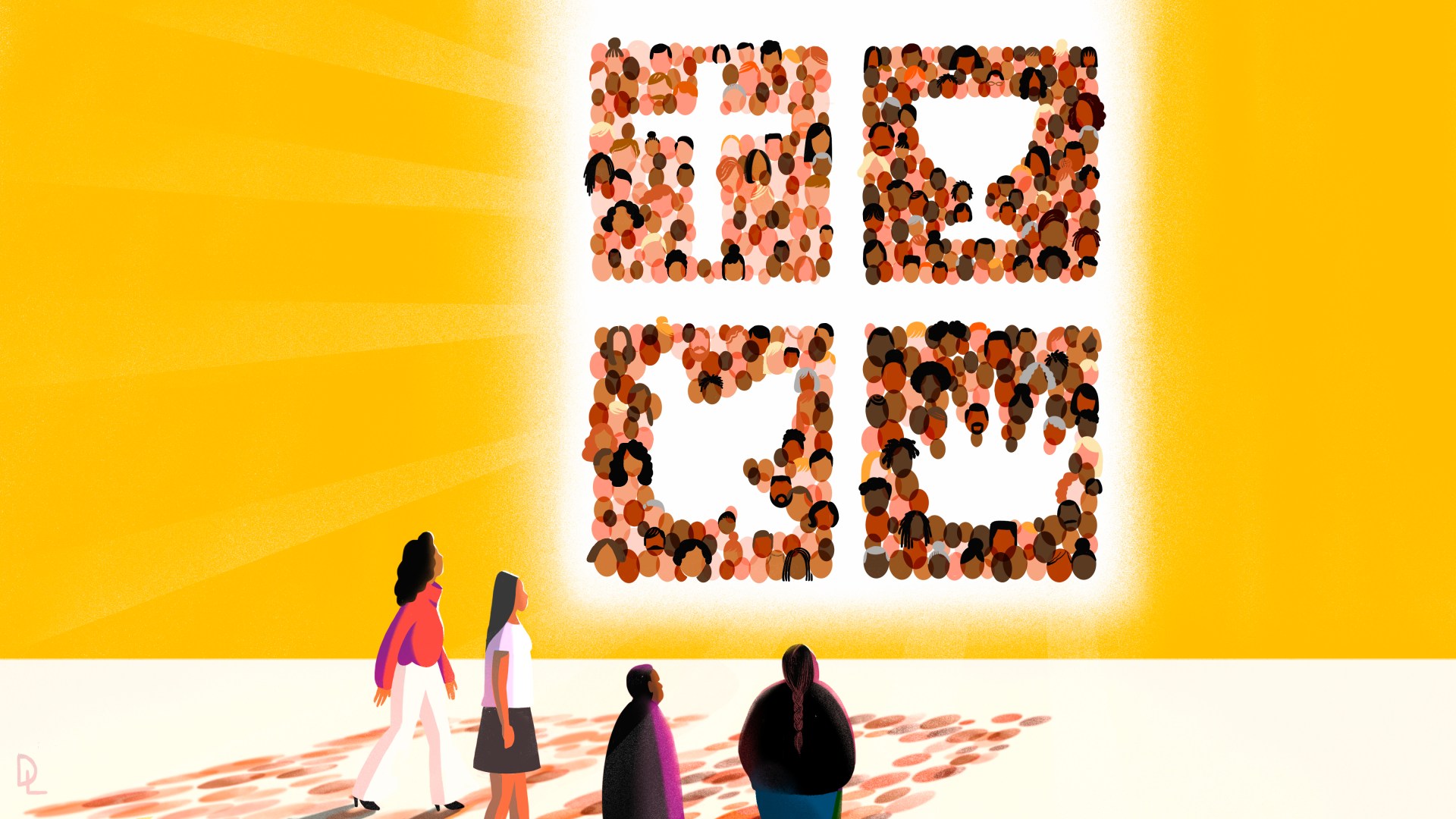
There are ministers from 74 nations, speaking 33 different primary languages, in the US denomination. There are also 477 immigrant congregations that operate as ministries of established Foursquare churches. Leadership expects to launch 200 more in 2020.

“It’s easy to create a process through a lens of administration,” Rodriguez said. “The perspective changes when you go to those you are called to serve. One of the key factors of my role was not to go and talk to our licensing coordinators or district administrators or staff but to go to the field and hear [pastors’] perspectives.”

Several common challenges emerged in the assessment of the licensing process. For one thing, it takes place mostly online. That can be difficult for pastors coming from different cultures, said Dan Cho, who joined Rodriguez in the interviews with pastors in September.

“They come from nations where they don’t trust putting their personal information on a website,” Cho said, “or letting the government even know about that information because of persecution.”

They didn’t always feel empowered by the “self-driven” online process. Many of their cultures emphasize community over the US values of individualism and efficiency.

Some words and concepts in English also don’t translate well. A bivocational Nepali pastor was confused by an application question about how many hours he spent “doing ministry.” The pastor, who is also a health care provider, found the concept of bivocational ministry hard to comprehend. He told Rodriguez he views his role in health care as a part of his ministry too.

“I never even thought about that question,” Rodriguez said. “I found myself saying, ‘Yeah, we are all doing ministry wherever we are.’ ”

Rodriguez finished his one-year assignment in December. He and Cho presented their findings and recommendations to Foursquare’s executive leadership the first week of January, and the church decided to make the position of diversity advocate permanent. Cho was appointed to the job.

Rodriguez’s assignment was part of a larger effort within The Foursquare Church to respond to historic demographic changes in the US—the Census Bureau predicts the country will be majority nonwhite by the year 2044—and continue its legacy of welcoming and sharing the gospel across lines of language, culture, and ethnicity. The Pentecostal denomination has a long history of multiculturalism, going back to when it offered Sunday school classes in Spanish, Japanese, and German in 1925.

“It is not something new to us,” said Emily Plater, who was appointed last year to oversee North American missions, including US multicultural ministries. “We sometimes have to remember that is an important part of us . . . since our very founding.”

In September 2018, The Foursquare Church hosted a summit to refocus on diversity. About 70 denominational leaders gathered at Foursquare’s central office in Los Angeles to discuss the theological significance of the idea of diversity and the denomination’s commitments to supporting different communities.

“It is a cultural conversation right now—a broader one in the United States—but the reality is that it’s really an ancient, biblical conversation,” Plater said. “When I think about diversity in the context of what we’re doing as a church and a denomination, it is a practical, pragmatic way to talk about and evaluate our absolute commitment to giving access to the gospel for everybody.”

Recent attention to immigration only emphasized the need to take intentional steps to welcome people from all over the world and encourage racial and cultural diversity, denominational leaders said.

“God is bringing the world to America,” said Huey Hudson, chair of the church’s board of directors and senior pastor of Restoration Foursquare Church in Madison, Alabama. “We have to find ways to include people of different races and cultures and ethnicities into what God is doing in America.”

The denomination has also brought on an immigration attorney, Debra Valladares, to help immigrants in the church navigate the legal complexities of the US system.

The Foursquare Church is entering a time of transition. In the fall, Randy Remington will succeed Glenn Burris Jr. as the denomination’s president. The new leadership is expected to continue the focus on diversity, though.

“The support behind this project from our senior leadership has been extremely refreshing,” Cho said. “Nothing is off the table, which is pretty astounding to me that a denomination that’s been licensing people for decades and decades is willing to say, ‘Everything is on the table. You can look at it. If something doesn’t make sense, you can change it.’ ”

Rodriguez thinks that’s what it means to care for people as if they were family.

He left the US after his one-year assignment, returning to Nicaragua to run a nonprofit ministry for young mothers called Tree of Life ’84. But he is hopeful the denomination will continue to welcome and serve pastors from every tribe, tongue, and nation in the same way the people of Angelus Temple welcomed his family more than 30 years ago.

“The church should just care for people and love them, just like God meets us where we are,” Rodriguez said. “We in the denomination are going to be moving forward and meeting people where they are as they come and reach people in this nation.”

Lanie Anderson is a writer and seminary student in Oxford, Mississippi.

Have something to add? See something we missed? Share your feedback here.

Editor’s note: Want to read or share in Korean or Indonesian? Now you can!

News

Knock Knock. It’s Weird Evangelical Twitter.

Online, millennial Christians embrace the absurd.

Illustration by Sarah Gordon / Source images: Wikimedia Commons

In real life, Matthew Pierce is a normal adult. He has a wife, three daughters, and a boring job. He lives in Alabama, where he grew up, and he’s slowly becoming like his father.

Online, it’s different. Online, Matthew Pierce plays a character named Matthew Pierce, and that character is a youth group kid hanging out with his homeschool crew, stuck forever in the evangelical subculture of the late 1990s and early 2000s. Steven Curtis Chapman looms large in his imagination, as do Carman, Beth Moore, VeggieTales, LifeWay Christian bookstores, his youth pastor’s ubiquitous advice to “save it for the wedding night,” and the recurring thought that Adam in the Bible had humanity’s first penis.

If you meet him on Twitter, he will ask you one urgent question: “do u like switchfoot? y/n.”

If you don’t know who Switchfoot is or don’t understand what could be so urgent about an indie Christian band that crossed over to mainstream success in 2000, that’s okay. That’s part of the joke with “weird evangelical Twitter,” which embraces absurd earnestness and overcommitment. And Matthew Pierce—the real one and the character—is the undisputed king of weird evangelical Twitter.

“I find it kind of silly,” said Pierce, who has more than 10,000 followers on Twitter. “I’m just making jokes. I have an anonymous job, I come home and play with my kids and make dumb jokes on Twitter.”

The dumb jokes, however, have developed into a style and sensibility among some evangelicals online. Their humor has gone far past the satire and parody of earlier evangelical humor into the realm of the absurd. Fans and followers say the sillines serves as an antidote to political polarization and self-serious posturing. It may also be the most visible part of a generational change, as millennial evangelicals approach middle age and grapple with their parents’ public witness.

“In 2016 there was so much fear and anger,” said Tyler Huckabee, a writer for Relevant magazine. “Things seemed completely upside down. And then in the middle of that, I stumbled on weird Christian Twitter. It was a relief and it was funny, but I also found myself inspired and comforted.”

Before the election, the most dominant form of evangelical comedy was satire. More than a decade ago, on the website Stuff Christians Like, Jon Acuff made fun of the way evangelicals could turn any conversation into an opportunity to witness with the “Jesus Juke.” In viral YouTube videos, John Crist (who was later accused of sexually harassing multiple women) made fun of worship music and Christian jargon like “check your heart.” Cartoonist Adam Ford, creator of the Babylon Bee, joked about evangelicals peppering their prayers with filler words like just.

In the broader culture, too, satire seemed to be everywhere, following the success of TV programs like The Daily Show with Jon Stewart and The Colbert Report. But there was a growing sense that something was wrong with that form of humor. It seemed, to some, like just another aspect of outrage culture adding to the polarization.

“I got burnt out on satire,” Huckabee said. “It got so cynical, most people are pretty bad at it, and it creates such a toxic atmosphere.”

For young, anti-Trump evangelicals in particular, satire seemed insufficient to the moment. It wasn’t funny and it wasn’t an effective social critique.

“For evangelicals like me who grew up in fundamentalist or very conservative churches—and I still attend a conservative church—we were seeing Christian leaders bend the rules that we were taught growing up in the ’90s, like they applied to Bill Clinton and not to Donald Trump,” said Alan Noble, an English professor at Oklahoma Baptist University and the editor in chief of Christ and Pop Culture. “What do you do with that? One of the things you do is lean into the surrealism and embrace the absurdity.”

Some corners of the internet were already nurturing that alternative Christian humor. In 2014, Daniel Lavery, the child of megachurch pastor John Ortberg and cofounder of the website The Toast, started inventing dialogues between anonymous medieval monks, imagining the discussions behind odd works of art.

In the first one, Lavery wrote:

MONK #1: what do babies look like

MONK #2: ….huh good question

MONK #1: kind of like a very old man?

MONK #2: but also baboons

The same year, Pierce self-published an e-book about his childhood called Homeschool Sex Machine.

David Regier, the Baptist music minister behind the parody Twitter account “Church Curmudgeon,” drew in tens of thousands of fans with his one-liners satarizing grumpy old people at church. But in 2015, he started pushing his jokes in a new direction.

“I don’t want to be one of those people who is part of the polarization. There is plenty of that and I don’t want to be a part of it,” said Regier, who now has more than 100,000 people following the @ChrchCurmudgeon Twitter account. He started experimenting with wordplay and making his jokes weirder.

“You put two random things together and get a pun in there, I love that,” Regier said. “And it sort of rounded Church Curmudgeon out as a person. I wanted to make sure he’s not just a grumpy old man because that’s true of the people in your church. Those people have whole and full lives. They’re not just one-dimensional creatures in the back row.”

The absurdist humor flourished on Twitter, and attracted fans. Pierce started spinning stories about his homeschool crew and tweeting his character’s pressing question at celebrity pastors, asking Jimmy Swaggart, John Piper, and others, “do u like switch foot? y/n.”

Others followed him into the weirdness. Jake Raabe, a graduate student at George W. Truett Theological Seminary at Baylor University, inserted himself into heated Twitter fights, especially when they involved Southern Baptist pastors, demanding to know people’s position on updog.

If anyone took the bait and asked, “What’s updog?” he’d reply, “Not much, what’s up with you?”

“It can just lower the temperature,” Raabe said. “It’s like, conversations happen in unhelpful ways, and absurdist humor can be a way to ask people to re-contextualize and not take themselves too seriously.”

The jokes can also spark new debates framed in ways that pull people into the humor. Raabe did this with a joke about Baby Yoda. Images of the new character from the Star Wars franchise were spreading around social media, and Raabe retweeted one.

“Baby Yoda is so cute,” Raabe wrote, adding a smiley face. “Please do not baptize him until he is old enough to make that decision for himself.”

Soon, social media was roiling with arguments about the nature of baptism and how the theology would be best applied to the fictional creature. The debates were serious but also bizarre, and for a few days whole swaths of public discourse were co-opted into this strange corner of the internet.

The heart of weird evangelical Twitter isn’t the juxtaposition of pop culture and theology, though, or the funny trolling. The key to the sensibility is in the specific references to evangelical youth culture from the 1990s and early 2000s. The sense of community is built around that shared knowledge and the experience of becoming an adult and realizing your childhood was strange.

“It was such a narrow culture and there were so many weird little shibboleths,” Huckabee said. “You make an obscure reference, and if that worm catches any fish, it’s like, gosh, I’m not as alone as I thought.”

The writer D. L. Mayfield, who posted a video from coronavirus quarantine of her lip-synching a Carman song, said making an evangelical pop culture reference can be like shooting off a flare to find the people who relate. And those people can help you process your past. It takes time and work to evaluate the culture that formed you and figure out what part of the faith that you learned as a child was the gospel, and what part was the spiritual struggles of your parents.

“There are some things that I was raised with, including stuff about fear and power, that I would not like to replicate in my life,” Mayfield said. “But I was also really immersed in the Bible. You get to the point in your life where the easier answers aren’t going to cut it, and then you go back and read the Gospels and think, oh my gosh, this is really good news.”

Jokes can be a way to re-assess as you find yourself slowly turning into your parents. And the absurdism of weird evangelical Twitter can help people separate the serious things from the things that don’t actually matter.

Pierce, for example, is working on a joke about Steven Curtis Chapman authorizing him to lead an army of Awanas in the war on Christmas. It might involve Bill Gaither or Russell Moore, Relient K, the Rapture, inappropriate sexual thoughts, homeschool moms, angels, Presbyterians, and maybe Testamints. He’ll imagine Matthew Pierce the character obsessed with the things he used to be obsessed with, fighting ridiculous battles that he used to think were serious.

But in real life, Pierce will go to church and sit in the back. He’ll go to his job and then come home. He’ll go see his parents, who have a hazy conception of weird evangelical Twitter and a polite agreement not to talk about it with their son. Pierce will think about how he’s becoming like them in some ways and not in others, and how, on balance, he’s okay with that.

Daniel Silliman is news editor of Christianity Today .

Have something to add? See something we missed? Share your feedback here.

News

Called to Missions. Held Back by Student Loans.

Rising debt stops many who would serve.

Illustration by Mallory Rentsch / Source Images: Eskay Lim / EyeEm / Getty Images / Neonbrand / The New York Public Library / Unsplash

J. R. Duren wanted to evangelize Europe. He felt God calling him to be a missionary. So he went to a state college, and then a Christian college, and then seminary, preparing for the work. He graduated in 2007, and finally he was ready. But when Duren sat down to apply with Campus Crusade for Christ (now Cru), he realized he might have a problem.

In 11 years of higher education, Duren had amassed more than $75,000 in student loans.

“I thought . . . my faith was being tested,” Duren recalled. “The proverbial odds were stacked against me, and the only thing that was going to get me through was God’s promise and my faith. I was trusting that he was going to be able to make up for this gap that I couldn’t resolve on my own.”

Cru had a different response, tempered by long experience. Duren’s application was rejected.

“Maybe the Lord wants you to focus on paying off your debts as soon as you can, then go,” a Cru staff member wrote to Duren. “Or maybe there is another way you can go. I don’t know.”

Today, more than 10 years later, many would-be missionaries receive similar rejections. As student debt levels have rapidly increased, missionary organizations regularly see recruits who feel called to missions but are held back by loan payments.

According to the most recent data, the average college graduate in 2018 had about $29,000 of student debt. That number has plateaued a bit since 2010, after a decade of rapid growth of annual borrowing. But it’s also misleading: 55 percent of graduates owe less than $20,000, while 15 percent owe $40,000 to $80,000, and 10 percent owe more than $80,000. Missions agencies say massive debt is a frequent problem.

“It is in the top ten things that we ask people when we’re having preliminary discussions,” said Jake Moore, director of mobilization for Christian Missionary Fellowship International (CMFI). “Just in the last year, I’ve had conversations with some individuals who have debt upwards of $100,000.”

CMFI has decided to come up with plans for candidates who have between $40,000 and $60,000 in debt, according to Moore. Send International has set the limit at $30,000, but the agency assesses each situation. Wycliffe Bible Translators looks at monthly minimum payments, rejecting single people who have payments of $400 or more per month or couples who have payments of $700 or more. The Southern Baptist Convention’s International Mission Board, which does not require most long-term missionaries to raise support, doesn’t list a specific amount but conducts a credit check and evaluates debt. Other organizations have set similar financial requirements.

The agencies are not trying to quash dreams or throw up random roadblocks, according to Michelle Atwell, US director of Send International. They have found debt can be a serious challenge for missionaries who have to raise their own funds and often live off small salaries.

“They have payments that are so unaffordable,” Atwelll said. “We want to send people well because we want that work to thrive and have that missionary be successful.”

Duren understands that. He doesn’t know what would have happened if he had moved to Europe with $75,000 in student loan debt. Cru was right, he said, for sticking to its financial standards.

In retrospect, he blames himself for getting caught up in “this glorious, noble struggle,” instead of facing reality. Today, he works as the editor of a news website that covers finance. “Ultimately, those financial decisions are my responsibility,” he said. But Duren also wishes his Christian mentors had encouraged him to be more financially prudent.

“You’ve left all these people chasing the exception. Because that’s what God was about, that’s what real faith was about. It was about doing all these crazy things, believing that the act of God was going to intervene and save you,” Duren said.

Matt Allison, senior director of operations at Serge (formerly World Harvest Missions), agrees that churches should do more to give prospective missionaries realistic expectations. “Any framing that we can do as a church along the way of the missionary reality is good—with the proviso that the reframing has to be no less Christ-centric,” he said.

At the same time, Allison noted, it’s actually young Christians’ concern for financial security that’s driving them to accept more college debt. Young people are more concerned about the value of their degrees and the earnings potential of their future careers, compared to the days when many missionaries were educated at unaccredited Bible colleges.

There’s some data to support this. A 2017 Barna Group survey reported that 69 percent of evangelicals say the main purpose of college education is increased financial opportunities, while only 19 percent said the primary purpose of college is self-discovery. Less than a third of evangelicals said the purpose should be learning how to make a difference in the world.

There are some programs to assist missionaries with student debt, such as the GO Fund, which has helped missionaries pay off $316,000 in student debt since 2012, and MedSend, which supports health care professionals who want to find a way to serve.

“The optimal time to pursue God’s call to missions has always been when candidates have had maximum freedom and flexibility in their lives,” said Seth Barnes, executive director of Adventures in Missions.

Missions agencies also often work with recruits to help them pay their loans, allowing a portion of their fundraising to go toward loan payments, giving them financial advice, and helping them find ways to cut costs elsewhere. A couple who wanted to serve with Send moved out of their apartment and into the home of a fellow church member, Atwell said. This allowed them to reallocate housing costs to loan payments, which ultimately allowed them to become missionaries.

It takes hard work and sacrifice to become a missionary. Escalating student loans with almost-out-of-reach monthly payments can be a test of faith for young people who feel called to serve God in mission work. That’s a lesson Duren learned the hard way.

“God does things that blow my mind all the time,” Duren said, “but that doesn’t mean that the day you graduate, God is going to swoop in with this cadre of angels, holding stacks of cash that go straight to the Department of Education to pay off your loans.”

Liam Adams is a reporter in Colorado.

Have something to add? See something we missed? Share your feedback here.

News

Gleanings: May 2020

Background: AleksandarGeorgiev / iStock / Getty

Worship service at center of COVID-19 outbreak

South Korean health officials traced more than 1,000 suspected COVID-19 cases to one woman in her 60s who went to church. Officials had managed to prevent a major outbreak of the coronavirus for four weeks, tallying only 30 cases. “Patient 31,” however, was tested on February 15 and went the next day to the Shincheonji Church of Jesus, whose founder claims to be the second coming of Christ. Within a few days, hundreds of new coronavirus cases were connected to the sect.

Coronavirus shutdowns apply to churches

Legal experts say religious gatherings are not exempt from government bans on social events, despite robust US protections of religious liberty. Many governors called for large events to be canceled starting in mid-March in response to the COVID-19 pandemic. The Centers for Disease Control and Prevention recommended holding no meetings of 50 people or more for eight weeks, which affects about 80 percent of religious congregations. Most churches moved services online, but a few refused to stop meeting. If states decide to enforce the ban, the Supreme Court has found governments may “substantially burden” religious exercise when it serves a legitimate state interest, when the law is generally applicable, and when the burden is as light as possible.

Holy Land tourism halted by COVID-19

The coronavirus is expected to devastate the economy of the Holy Land, which depends heavily on Christian tourism. When more than 100 cases were confirmed in Israel and dozens in the West Bank, the Israeli government mandated a 14-day quarantine for everyone entering the country from March to Easter. The Palestinian Authority instituted similar restrictions in the West Bank. This puts all Holy Land trips on hold during the busiest season of the year. About 70 percent of Bethlehem’s economy revolves around tourism, and 9 out of 10 Palestinians employed in tourism are Christians.

Government admits Christians are terrorist target

A Nigerian official acknowledged terrorists have been targeting Christians, departing from the government’s previous position. The minister of information and culture said in March that Boko Haram and the Islamic State West Africa Province have attacked Christians specifically to “divide Christian brother against Muslim brother.” After 11 Christians were executed and a regional leader of the Christian Association of Nigeria was beheaded, Christians accused the government of not doing enough to protect them. To date, terrorists have killed an estimated 27,000 citizens, including 7,000 Christians.

Parliament considers religious liberty law

Australian Prime Minister Scott Morrison proposed a revised version of his religious discrimination bill for the 2020 legislative session after Christian groups criticized the first draft. The bill says an honest expression of belief is not discrimination, even if it otherwise meets the criteria under a 1998 law. The bill would prevent large employers from restricting employees’ religious statements, with social media codes of conduct for example, and would allow religious groups to require employees to affirm religious doctrine. Some Christians were concerned the definition of “religious groups” didn’t include some charities and wanted to expand protections for health care workers.

Neo-Nazi charged for plot on black church

A 26-year-old Virginia man was arrested in February on charges that he “swatted” a historic black Baptist church, calling police to make a false report that would prompt armed officers to raid the building. According to federal prosecutors, the man is a leader in the neo-Nazi group Atomwaffen Division. The group espouses “accelerationism,” the theory that politics cannot solve the United States’ racial problems or “drain the swamp” and that only violence can secure the future for white America. In the same month, a Louisiana man pleaded guilty to setting black churches on fire for his black-metal album art.

Iraqi American Christians ask Trump administration for help

Two Iraqi American Christian leaders met with Vice President Mike Pence in February to ask him to halt deportations of refugees who may face severe religious persecution if they are forced to return to Iraq. Both men said that Pence was receptive and promised to help. In a campaign speech, President Donald Trump also said he would help Iraqi Christians stay in the US. The administration’s lawyers, however, have continued to call experts to argue in court that Christians are unlikely to be targeted in Iraq. About 1,400 Iraqi Americans have faced removal orders, most of them Christians living in Michigan.

Christians suggest change to divorce law

In Egypt, Orthodox, evangelicals, and Catholics jointly proposed a new law in March that would regulate family issues for Christians. Until now, Christian marriages, divorces, and inheritance have been subject to a patchwork of laws, including shari‘ah law in some divorce cases. The proposed change unifies the legislation, while allowing the three Christian groups to set their own restrictions on divorce. Egypt’s Ministry of Justice is reviewing the proposal.

Churches asked to help riot victims

The Evangelical Fellowship of India condemned violence in the nation’s capital and asked churches in New Delhi to aid riot victims. More than 200 were injured in three days of violence in February when protesters clashed over the Citizenship Amendment Act, which creates a path to citizenship for religious minorities who were persecuted by Muslims in Pakistan, Bangladesh, and Afghanistan but which blocks citizenship for Muslim refugees from those same countries. India has seen a rising tide of Hindu nationalism since Narendra Modi was elected prime minister, with increased hostility toward Muslims.

Books
Review

Churches: Don’t Get Too Comfortable Online

Digital worship is a necessary stopgap under pandemic conditions. But in the long run, in-person fellowship is indispensable.

Christianity Today April 20, 2020
Illustration by Mallory Rentsch / Source Images: Hannah Busing / Unsplash / Damion Hamilton / Lightstock

In his classic book Understanding Media, revered Canadian philosopher and media theorist Marshall McLuhan wrote the following prophetic words: “When the technology of a time is powerfully thrusting in one direction, wisdom may well call for a countervailing thrust.” Over the past half decade, even as digitally mediated communication has encroached on nearly every aspect of life, McLuhan’s “countervailing thrust” has begun to take shape.

Analog Church: Why We Need Real People, Places, and Things in the Digital Age

Analog Church: Why We Need Real People, Places, and Things in the Digital Age

IVP

216 pages

$20.67

The list of those pushing back against the digital age’s most nefarious side effects includes journalists like Rana Foroohar; professors like Sherry Turkle, Cal Newport, and Shoshana Zuboff; and lawyers like Tim Wu. Senators Josh Hawley (R-MO) and Mark Warner (D-VA) among others have also become critical of how certain aspects of digital technology are eroding public discourse and potentially causing their users cognitive and psychological harm.

Even some of Silicon Valley’s leading lights have begun vocally resisting where technology is taking us, virtual reality pioneer Jaron Lanier and former Google ethicist Tristan Harris among them. In Christian circles, perhaps the most notable critics of the digital age are Tony Reinke with his books 12 Ways Your Phone is Changing You and Competing Spectacles, and Andy Crouch with his book The Tech-Wise Family.

All of these voices, and others like them, have written persuasively about the negative effects of digital technology on our brains, our relationships, and our work, arguing that users should take a more careful and intentional approach to technology use in order to mitigate its harmful effects.

Jay Kim, a pastor at Vintage Faith Church in Santa Cruz, California, joins the “countervailing thrust” against ubiquitous digital technology in his new book, Analog Church: Why We Need Real People, Places, and Things in the Digital Age. But instead of analyzing how Google and Facebook have impacted individuals, Kim provides a thorough and convincing critique of the church’s often uncritical co-opting of the digital infrastructure of the internet, smartphones, and social media. He looks at how this phenomenon has shaped—and in some cases, corrupted—evangelical churches, and then asks what should be done in response.

The Red-Hot Pursuit of Relevance

In laying the foundation for the book, Kim quotes McLuhan’s call for a “countervailing thrust.” This is especially necessary, he writes, “when it comes to the way the digital age and its technological tools are changing the way the church gathers to worship. We need … a shakeup of the way we think about, plan, and engage in worship.”

Indeed, one of Kim’s most critical arguments addresses the way many evangelical churches, in their “red-hot pursuit of relevance,” have turned to celebrity pastors and rock-concert styles of worship, replete with fog machines and strobe lights. To illustrate the folly of such an approach, Kim tells the story of Jake, an electronic dance music (EDM) artist who, upon attending a church that used a smoke-machine and laser lights, admitted, “I didn’t feel like I was cool enough to be there. I don’t think church should be like that.”

According to Kim, young people like Jake are unimpressed—even repulsed—by the church’s quest for relevance. What’s more, this quest has come at the cost of something far more important: transcendence. What millennials and Gen Zers like Jake crave in the digital age—what all of us crave, really— are authentic communities that prioritize transformed lives over splashy techniques for transmitting information and manufacturing “experiences.” Essentially, what people want and need, to invoke the title of Kim’s book, are analog churches.

Later in the book, Kim shares his own impressions from preaching at a multisite church. As he was about to assume the pulpit, the service coordinator reminded him, “Jay, don’t forget to look directly into the camera at the back of the room so the campuses feel connected to you.”

Kim explains that even as he tried following this recommendation, he felt shaken. He began wondering whether there was a better way to herald God’s Word. Here Kim makes an important distinction between digital forms of communication (like video sermons) and analog forms of communication that rely on face-to-face, embodied interaction: While the digital can inform, only the analog can transform. By relying on video sermons, Kim argues, too many churches are missing out on the opportunity for preachers to embed themselves in “real time and in real space with real people.”

Of course, underneath the multisite church movement and its video sermons is a conscious decision by many evangelical churches to align themselves with business-leadership models used in corporate America. Kim argues that this has resulted in a trend toward pragmatic and results-based decision-making. Within this model, the language of commodity replaces the language of community, and ideals of compatibility and comfort trump an ethic of commitment. These shifts make the church feel more like a business than the family of brothers and sisters in Christ that Scripture envisions.

As Kim sees it, the world is hungry for an analog resurgence, and the church is uniquely equipped to provide a refuge for the digitally weary. Indeed, some churches, such as The Village Church in Texas and Redeemer Presbyterian in New York, have already moved away from the multisite church model. More recently, Bethlehem Baptist Church of Minneapolis, another nationally prominent multisite congregation, began considering a transition from video preaching to weekly live preaching at each of its three campuses.

It bears mentioning, of course, that Kim is far from disavowing video sermons in a time of crisis, as we face now in these days of the coronavirus and social distancing. To preempt those who might question his stance on video sermons and internet churches when many believe these are our only viable options during the current shutdown, Kim took to The Gospel Coalition to argue that online church, however necessary for a time, is not a long-term solution. “As we temporarily direct our congregations to these online spaces, it is of utmost importance that we clarify this digital reality as a temporary compromise rather than an ongoing convenience,” wrote Kim.

Alongside the blessings of incarnational ministry and live preaching, churches that forgo the multisite model enjoy the added bonus of guarding against what Kim calls “the cult of Christian celebrity.” Events at Mars Hill Church and Willow Creek Community Church—where video sermons furthered the rise of celebrity pastors who eventually crashed and burned—offer a set of cautionary tales. While Kim stops short of calling for the end of all multisite churches, his vision of analog churches that resemble families more than businesses leans tellingly in that direction.

Though Kim’s greatest concern is how digital technology has altered the ways we gather and worship, he also takes care to address its influence on our approach to Scripture. Smartphones, Bible apps, and feel-good verses uploaded to Instagram have fragmented our experience of God’s Word. The result, Kim says, is a generation of believers who view Bible reading as a “fast, convenient, and individual exercise.”

While it is doubtless a blessing to have God’s Word in our pockets everywhere we go, Kim suggests that we have been too quick to give up the corporate reading of Scripture, instead relying on daily devotions to feed our souls. These are essential to spiritual growth, Kim argues, but they are only meant to be supplemental.

Together Again

As a remedy to the shallow, bite-size manner of reading Scripture that plagues the church in the digital age, Kim introduces several ministries and churches that are creating time and space for Christians to encounter the whole counsel of God—together. Neighborhood Church in Visalia, California, for example, hosts a weekly gathering where dozens of believers meet to read through God’s Word. Kim also mentions a ministry he works with, the ReGeneration Project, which seeks to improve biblical literacy among younger generations.

While these ideas (and several others in the book) provide practical steps forward for pastors and leaders looking to de-digitize their churches, Kim would have done well to include more practical advice, either from his own ministry or from what he gleaned during his research. On the whole, the book is written with church leaders and pastors in mind. Kim’s chapter on the necessity of a more analog approach to Scripture is filled with useful insights for everyday believers, but for better or worse, the majority of the book will appeal more to decision-makers in formal ministry. It would be great to see a book with similar insights targeted toward the laity (Analog Faith, perhaps).

Even so, Kim makes a convincing case for the church to confront the digital age with an analog mindset. His book is a worthy addition to the online-skeptical “countervailing thrust” gathering steam across our contemporary landscape.

John Thomas is a freelance writer whose work has appeared at Christ and Pop Culture, The American Conservative, and Desiring God, among other outlets.

Ideas

We May Be ‘Safer at Home.’ But Many At-Risk Kids Aren’t.

The rising demand for foster families presents an opportunity for the church.

Christianity Today April 20, 2020
Cindy Ord / Getty Images

While most children in the country are dealing with the frustrations of missing their friends, a hiatus in sports seasons, and closed playgrounds, others worry about the very real possibility of homelessness, abuse, or neglect. Most of all, they face the fear and uncertainty of wondering if they are alone.

This is a fear no child should ever endure. As we stay home to protect the medically fragile and elderly, we can’t forget this other highly vulnerable group.

I won’t parse words: The number of children in foster care will dramatically increase because of the coronavirus pandemic. It will upend the lives of countless children and families across the country. Like any worldwide crisis or natural disaster, the pandemic has amplified the vulnerability of the already vulnerable and will disproportionately impact them.

The current circumstances have brought further financial and emotional strain on families living paycheck to paycheck or parents fighting addiction. Unsurprisingly, history suggests that domestic violence and child abuse worsen during disasters. Research shows that increased stress can result in substance abuse or child neglect—two factors that increase the likelihood of a child’s removal from home and placement into foster care.

Making matters worse, we expect child abuse and neglect are going unreported. Usually, evidence of child abuse would be noticed by a teacher or school nurse, but right now, at-risk children are isolated at home and out of sight.

Plus, shelter-in-place orders, job losses, and the closing of courts make it harder for biological families to regain custody of their children. Many children who were likely to be reunited with their biological parents will remain in the foster care system until the pandemic is over.

At Bethany Christian Services, we are already seeing the need for more foster families. The current pool of foster parents is dwindling due to older foster parents facing an elevated risk of coronavirus infection and younger families with children not wanting to risk exposure or add one more unknown.

Undoubtedly, many families who have been considering foster care have put that decision on hold. But they are needed now, more than ever. Children in need of safe and loving homes are becoming more vulnerable. As we see an uptick in the number of children entering the system, we will not have enough homes for them unless more families step up. We do not have the luxury of waiting until the pandemic is over to act.

Some might assume that because most physical offices are temporarily closed, foster care programs are on hold as well. This is not the case. At Bethany, we are still recruiting and training families virtually, as are many other foster care providers across America.

The time for raising awareness about the foster care crisis in America is now. If you have ever thought about adopting or fostering children, we urge you: Use this extra time at home to research the process of becoming a foster parent. If you haven’t considered it before, now may be the time to look into how to offer support or get involved.

The number of children in foster care will dramatically increase because of the coronavirus pandemic.

Those of us in the church should be paying particular attention to those living in unstable conditions and be ready to step in and offer assistance if we can. As daunting as this challenge is, this is a time for the Christian church to be the hands and feet of Christ for vulnerable children.

Scripture teaches us to “Learn to do right; seek justice. Defend the oppressed. Take up the cause of the fatherless; plead the case of the widow.” (Isa. 1:17). James, the brother of Jesus, reminds us that “Religion that God our Father accepts as pure and faultless is this: to look after orphans and widows in their distress and to keep oneself from being polluted by the world” (1:27). As followers of Jesus, we are consistently called to love and serve the vulnerable.

While our government figures out how to communicate information and distribute financial relief amid this pandemic, the church is equipped to meet the needs of the community more immediately and effectively, which is exactly what we’re seeing across America. Churches are bringing groceries to the elderly, supporting healthcare workers and first responders, providing benevolence to families who have lost jobs, and facilitating vitally important community. I urge churches to also consider how to leverage their unique capacity to make a difference in the lives of hurting children.

To be clear, the Bible does not say that every Christian must foster or adopt. However, it does convey that the body of Christ is called to play a role. There are numerous ways to serve children in foster care. There is respite foster care, which is a short-term commitment to help with emergency child transitions. There is the Safe Family for Children program, which provides compassionate, caring community for isolated families. Your small group can help a foster family out by cooking meals. We also need mentors, prayer warriors, support groups for foster families, and Court Appointed Special Advocates (CASAs).

The coronavirus has already claimed millions of victims. Whenever the COVID-19 crisis ends, we will need homes for a different kind of victim: the additional children entering foster care over the coming weeks and months.

Despite a tenuous time in our shared history, I’ve seen much compassion, hope, and love abound. We must call attention to the vulnerabilities of children in our neighborhoods, which will lead to more compassion, hope, and love where it’s desperately needed. Unfortunately, COVID-19 will increase the number of kids in foster care, but there are things the church must do now to mitigate and prepare to help.

Chris Palusky is president and CEO of Bethany Christian Services, an international child social services organization that supports children in foster care across the country and around the world.

Speaking Out is Christianity Today’s guest opinion column and (unlike an editorial) does not necessarily represent the opinion of the publication.

After Stillbirth, Families Search for Dignity

A growing industry in perinatal care allows parents a proper goodbye.

Steelworks Studio

When Emma Ping was 35 weeks pregnant with her fifth child, Selah, she thought she was in the clear. After suffering a miscarriage months earlier at six weeks pregnant, she had been nervous when she conceived again. But deep into her third trimester, her odds for a healthy birth were overwhelmingly positive.

Then, at 36 weeks, Selah died in utero when her umbilical cord wrapped twice around her neck. Ping joined the countless mothers throughout history left swollen with milk and yearning for an alternate reality after delivering a stillborn child.

There was, however, at least one small comfort amid her nightmare. Ping and her husband did not have to rush immediately into heart-wrenching decisions like choosing a headstone, a song for the funeral, or a tiny burial outfit from among the baby shower gifts.

Instead, the Pings were offered something called a CuddleCot, a miniature cooling unit disguised as a bassinet. Rather than whisk away Selah’s body for physical preservation, the hospital allowed them to keep their baby at the bedside for up to 48 hours in the cot, offering a chance for her siblings, friends, and family to hold and meet her.

In past years, and in many hospitals still, the baby would have been relegated to a distant morgue. Selah’s presence was a salve for Ping, who described a night when she woke up traumatized in her hospital room at 2:30 a.m. and “could not bring myself to turn over and turn away from her.”

She counts it a great comfort just to “have that experience that people have when their babies are born living, so the baby is with you all the time and you can take care of them, dress them, take photos, spend that time with them.”

It was not that long ago that a stillbirth—the loss of a fetus after 20 weeks—was widely seen as something to be forgotten as quickly as possible. In the 1960s and ’70s, women normally did not see babies who died before or shortly after birth; the babies were quickly carried away, leaving an empty uterus and an eerie silence. There were often no death certificates, funerals, gravestones, or photos. It was as if the child had never existed, and hospitals attempted to resolve the incidents quietly.

But many today are far less averse to grieving death in the delivery room. Hospitals are increasingly offering parents options for mourning a child lost after 20 weeks, spurred by a cottage coalition of volunteers, nonprofits, and boutique companies promoting the idea of “perinatal hospice.”

“The loss of a preterm baby is devastating, and our culture’s ambiguity about the personhood of the unborn adds to the difficulty and complexity of this specific kind of grief,” said Tish Harrison Warren, a writer and Anglican priest who has spoken out about the search for her and her child’s dignity after her miscarriage.

Grieving stillborn children may, in fact, be the one area where Americans’ divided views on in-utero personhood are finding common ground.

Hospitals are increasingly offering parents options for mourning a child lost after 20 weeks.

Overall, Americans have remained split over the morality of abortion in the decades since Roe v. Wade. But polls have shown that a majority of Americans are uncomfortable with abortion after 20 weeks and that an overwhelming majority disapprove of it in the third trimester. Those sentiments have shaped a movement to honor the lives of infants that almost were. The movement has, at times, been an overlooked skirmish line in the fight to define when life begins. In the early 2000s, pro-choice groups lobbied against “Missing Angels” bills that passed in more than 20 states and granted birth certificates to stillborn children. And legal skirmishes continue around whether a stillborn fetus should be considered a full-fledged child in medical malpractice cases.

“From a societal perspective at large, a lot of people don’t see embryos and fetuses in the first trimester as fully human,” said Christina Francis, a board-certified ob-gyn and chair of the board for the American Association of Pro-Life Obstetricians and Gynecologists (AAPLOG). Many women “feel their first trimester miscarriages very deeply, but from a practical standpoint, the longer she carries that baby, the more connected she will feel.”

Every year, an estimated 24,000 women in the United States have a stillbirth, and at least 10 to 15 percent of all pregnancies end in miscarriage (before 20 weeks). According to some estimates, up to a quarter of pregnancies will result in miscarriage.

“Miscarriage is a frequent and normal part of the human experience, but we rarely talk about it, so a woman going through one often feels like she, or she and her partner, are alone,” wrote New York University professor Amy Webb in The Atlantic. Webb suffered eight miscarriages while continuing to work professionally. Colleagues were unaware of her losses.

The undervaluing of young lives has a long history. Ancient Roman culture, known for widespread infanticide, afforded no mourning period for children who died in their first year. Children who died before age ten received less mourning time than adults. In ancient Egypt and many other cultures, infant death was so common that parents often didn’t name children for months. This practice has maintained its hold today. One academic study found that, between 1800 and 1979, one in five children who died in the US before age one remained unnamed.

Jewish tradition, for example, has responded to high rates of infant mortality in recent centuries by relieving parents and the community of their mourning duties. In many cases, while the infant was buried, grieving families didn’t know the location of the grave and didn’t hold a funeral or observe the week of visitation. In the past 30 years, especially as rates of stillbirth and neonatal death have decreased, some Jewish traditions have developed more detailed rituals on observing mourning and burial. (Israel’s health ministry only issued more formal regulations for infant burial in 2017, according to The Jerusalem Post.)

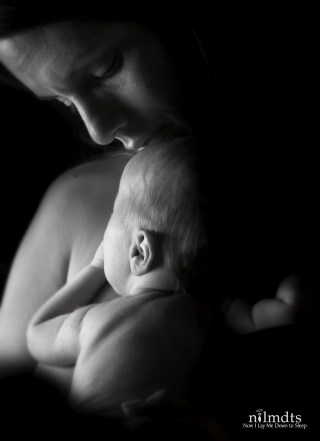
Sandy Puc / Courtesy of Now I Lay Me Down to Sleep

Even as recently as the late 1980s, mothers with babies who died during pregnancy were urged to quickly forget their experience. Lindsey Wimmer, executive director of the Star Legacy Foundation, which advocates for families who have experienced perinatal death, said parents sometimes didn’t name their children or even see them—and were often told to “move on and have another baby.”

But stillbirth rates have dropped dramatically in the second half of the past century. In 1931, stillbirths totaled 3.8 of every 100 births, according to the CDC. By 2019, stillbirths in the United States had dropped to 1 out of 100 births. How much of that drop is due to legalized abortion is debated, since terminated pregnancies are not counted in prenatal mortality statistics. But it’s clear that transformative advances in medical science, like prenatal testing, early ultrasound, and advanced neonatal care, have led to healthier babies. Plummeting stillbirth rates makes the relative rarity of losing a child after 20 weeks culturally more acceptable and logistically more practical to mourn it for the tragedy that it is.

“In the mid to late ’80s, there was a paradigm shift,” said Wimmer. In 1988, President Ronald Reagan acknowledged that shift by declaring October as Pregnancy and Infant Loss Awareness Month. “There was a general movement to encourage families to meet their babies, take photos, or have a memorial service.”

Though a cultural transformation has been mounting for years, the past decade has brought especially dramatic shifts. Of the more than 2,000 US hospitals that offer obstetric care, more than 300 now have perinatal hospice programs and technology that gives families more time with their deceased infants. Perinatal hospice often includes palliative care and bereavement counseling in cases of a fatal pregnancy diagnosis. Though some doctors do counsel women to abort, many women choose to care for and comfort their children for as long as they survive after birth.

Francis, of AAPLOG, said most doctors aren’t aware of perinatal hospice or don’t offer it as a viable option when pregnancies go wrong. She said mothers have told her they would have chosen that avenue over abortion had it been presented to them.

One way that some families cope with their loss is through portrait sessions with their stillborn infants. Now I Lay Me Down to Sleep, perhaps the best-known group focused on stillbirth photography, began in 2005 when Mike and Cheryl Haggard lost their newborn baby, Maddux, to a condition called myotubular myopathy. After Cheryl’s disappointment with her personal photographs, the couple called a professional photographer to capture their time with Maddux. “Seeing the images of Maddux, I am not reminded of the pain and sadness of that night; I am reminded of the beauty and blessing Maddux continues to be in our lives,” Cheryl said in a video posted on her website. The Haggards’ organization has paired more than 40,000 families with volunteer photographers.

Grieving stillborn children may, in fact, be the one area where Americans’ divided views on in-utero personhood are finding common ground.

The idea for CuddleCots, like the one Ping used, also came from a grieving mother. CuddleCot founder Steve Huggins ran a business in the United Kingdom that designed a cooling system for deceased obese patients. He was caught off guard when a mother requested a special unit for her baby. Huggins designed a custom unit, and new orders poured in as word spread on social media. Since he launched the CuddleCot in 2010, Huggins has sold more than 1,100 units in the US, mainly for hospital use but also for some parents who take deceased infants home for several days. Priced around $3,000, most CuddleCots are purchased and donated to hospitals by families who found solace in using one themselves.

“We had no idea there would be this much demand for it,” Huggins said in an interview. “We did some testing in local hospitals, and it soon became clear that this was a product that was going to work.”

Mothers, families, and individual hospital staffers like maternity nurses have largely led the way in persuading hospitals to alter how they deal with infant loss. Families hear about a CuddleCot, hospice program, or memorial service from peers and then bring the idea to the doctors or nurses caring for them.

“Just like families who lose a child that’s [age] eight or ten, part of that healing process is being able to see a child after they have passed away for it to kind of sink in or for closure,” Francis said. “That is the only time they are getting with that child, and it’s a good thing that families aren’t being rushed.”

The Pings have dedicated three Cuddle-Cots in Selah’s honor, and they donate “Selah Boxes” to hospitals for families who lose a child. The keepsake boxes contain a handmade blanket for the baby as well as a journal and handwritten note to the family.

Like Ping, many local groups nationwide have found ways to support grieving families through sewing burial gowns or writing original poetry. Claudette Roberts is a longtime member of Heaven’s Handiwork, a sewing group run out of White River Christian Church in Noblesville, Indiana. She and about 25 others have been meeting twice monthly for years, crafting blankets, quilts, and hats for nursing homes and other nonprofit ministries. They recently added to their work the items that go in Selah Boxes. “There are some members in our group who have experienced loss through miscarriage or stillbirth, and that’s one reason [we were drawn to it],” Roberts said. “God has given us the gifts to make these and be a part of this ministry that is so wonderful and touches so many families in such a special way.”

Dede Flaherty is a Christian and a pioneer in the perinatal hospice movement. A bereavement director at Riverview Hospital in Indianapolis, Flaherty has worked for several decades as a labor and delivery nurse. She never intended to take on bereavement work, but after interacting with families, she saw a need and developed the position at her hospital.

“It was tough at the beginning,” said Flaherty, whose first projects included purchasing a bench for a healing garden outside the maternity ward so families could have a dedicated space to grieve. “I had a few barriers to go through, just letting the administrators and doctors know that it’s okay to talk about infant loss.” Her position includes coordinating counseling sessions, organizing support groups, and providing resources for funeral planning and grief education, all of which were previously absent. Flaherty said the scrappy, unofficial nature of her role—a side hustle to her full-time job as a nurse—is common at other hospitals as well.

Some hospitals, however, are eager to implement progressive care that includes bereavement services and better mental health care options. Community Hospital North in Indianapolis began embracing a comprehensive program for late-term loss in 2018. Amy Wire, a vice president overseeing women’s services, said hospitals may shy away from this kind of care due to cost barriers or “a knowledge deficit.”

“They may not be aware of the impact it can make to a family that is experiencing a loss, to get that time with that baby that is so limited,” Wire said. Community Hospital North began regularly gathering bereavement coordinators from its five hospitals to exchange ideas and best practices. Each hospital has a CuddleCot.

Wimmer, of the Star Legacy Foundation, said cost is a huge factor in the slow embrace of programming or education—thus, most resources are donated by families. “A lot of hospitals are not willing to put that kind of money into a thing that hasn’t been tested scientifically” for long-term benefit, Wimmer said. “It’s extremely rare for medical school and nursing programs to have perinatal bereavement care or principles as part of their training.”

Wire said some hospitals may also worry that the extra care could “create a struggle for nursing staff.” After all, bereavement service goes beyond medical knowledge into time-consuming, uniquely sensitive, and comprehensive patient care.

Brooke Martin is an Indianapolis news anchor and mom who lost her baby, Emma, in early 2019 to anencephaly, which causes an underdeveloped brain and skull. She went public with her story and hosted a ceremony at a church, inviting anyone who had ever lost a child to honor him or her there. The response from women across generations was overwhelming.

“People would write and say, ‘I am 83 years old,’ or ‘I am 75, this is the first time I have ever written my child’s name. . . . I can’t tell you how much healing this has brought to see them recognized,’ ” Martin said in an interview last year.

Research suggests that perinatal care can lead to better mental and spiritual health for parents following a loss. Everyone CT interviewed, from veteran nurses to spiritual leaders in health care, agreed that the changing culture around infant loss has been positive.

A few hospitals even offer grievance ceremonies for patients who lose their babies before 20 weeks. Flaherty followed the example of bereavement nurses at larger hospitals and began coordinating such ceremonies for her families.

For babies lost later, some churches host celebrations of life, drawing hundreds of mourners—friends, family, and community members standing in unity. These services are similar to funerals and often include gospel songs, Scripture reading, short sermons, and dedications from family members.

“Those of us who affirm the value and dignity of children from conception have a responsibility to support families as they mourn,” said Warren, the priest. “Lending rituals and practices like funeral services, prayer, and burial services is one way the church can do this, but certainly not the only way.”

Robert Lyons, a Catholic priest who has worked as a health care chaplain in Indianapolis for 20 years, said the spiritual healing that comes from time spent with stillborn infants—and time spent memorializing them—can be profound.

“It gives people an opportunity to develop their own context and tell their own story,” Lyons said, “and to invite God to be part of that experience with them in a very natural way.”

Cathy Arnett, a mom in Bloomington, Indiana, who lost her first child to stillbirth more than 20 years ago when she was 38 weeks along, taught her two daughters to remember the older brother they never met. “At school, when teachers asked about siblings, [the girls] would always talk about their older brother in heaven,” Arnett said. “And every year, we celebrate his birthday.”

Ericka Andersen is a freelance writer and mother of two in Indianapolis. She is the author of Leaving Cloud 9 and host of the Worth Your Time podcast.

News

Can Christian Streaming Services Last Alongside Netflix and Disney+?

Faith-driven streaming services can’t compete with the ever-growing number of entertainment giants flooding into homes. But maybe they don’t have to.

Ran Zheng

Growing up on an Idaho farm, Neal Harmon recalls how film sparked imagination in him and his three brothers. “I remember watching Swiss Family Robinson, then building treehouses in the trees behind our house,” he said. “After watching Star Wars, we’d jump in the canals during a big snowstorm and pretend the Empire was coming to attack. Entertainment shaped the way we saw the world.”

Now, Harmon and his brothers are the cofounders of Provo, Utah-based VidAngel, one of the many faith-based streaming video-on-demand companies that have multiplied in the entertainment industry.

In 2018, US audiences spent more money on digital in-home entertainment than at movie theaters for the first time, and dollars have only shifted more since most movie theaters closed this spring during the COVID-19 crisis. Netflix, Amazon Prime, Disney+, and other billion-dollar heavyweights are duking it out, while two more major platforms from HBO and NBCUniversal launched in early 2020.

Christian parents say the competing content requires tech-savvy wisdom to navigate. “You have to be more diligent today as a parent,” said Julie Foust, a part-time teacher and mother of four in Albany, Illinois. “We have to be aware that the world we live in has so much evil in it, even as we want to have fun watching shows with our kids.”

Currently, more than 140 separate services offer movie and TV streaming—including a few players that have made a name reaching Christian families during the past decade: Pure Flix, VidAngel, Christian Cinema, and Minno, among others.

“The mainstream streamers all offer perfectly good family content, but mixed in with things that are decidedly for adults only,” said Kate O’Hare, who serves on staff at Family Theater Productions in Los Angeles. “The faith-based services offer an assurance that the content will not be overtly sexual, gratuitously violent, nor containing messages that run counter to Christian moral beliefs. It’s a safe bet.”

The main faith-based streaming services may look similar—especially given the prominence VeggieTales plays in their catalogs—but their strategies vary in degree. Erick Goss, a former e-book and print-on-demand executive at Amazon, runs Nashville-based Minno. He encapsulates the proposition each streaming group hopes to fulfill: “We want to provide a compromise-free, worry-free environment for Christian families.” Christian parents may use Amazon Prime and Disney+, he added, but they’re still frustrated with these services from a faith-and-values standpoint.

Last November, The Walt Disney Company rallied all its resources—fan conventions, the ABC network, theme parks, and more—for its launch into streaming. The subscriber base for Disney+, numbering tens of millions and growing, quickly eclipsed not only niche faith-and-family services but also bigger secular companies like HBO, an exclusive partner on Sesame Street. Considering Disney’s dominance in home entertainment since the 1980s and its growing stable of beloved brands from Mickey Mouse to Toy Story, it’s no mystery why families signed up. Disney+ offers the entire library of Pixar films, live-action flicks like Mary Poppins, recent Marvel and Star Wars movies, and endless animated TV episodes. Original content has been sparse, with the big-budget series The Mandalorian (which spawned the “Baby Yoda” memes) a notable exception.

“I tend to be hesitant about what we allow into our home,” Foust said. “If I could get away with it, we wouldn’t have TV! But [my husband] Michael and I were excited about Disney+ [because] there had not been a great way to show our kids all the classic quality movies we used to watch.”

Even as early Disney+ subscribers, the Fousts say the service is not a free-for-all in their home. Michael Foust, who reviews entertainment for Crosswalk.com, noted “dramatic differences” between modern Disney shows and his family’s values. “There are general attitudes, where kids might hear ‘doofus’ and ‘shut up’ in a Disney show,” he said. “But there are also social agendas.” Romantic same-sex relationships, for example, appear in the storylines of Disney Channel show Austin & Ally and a recent High School Musical reboot series on Disney+, both targeted to preteens.

While their four-year-old loves PBS “edutainment” fare like Daniel Tiger’s Neighborhood, the Fousts also watch Minno (formerly known as JellyTelly). Touting over 2,300 episodes, it includes a couple dozen animated shows that retell Bible stories alongside The Torchlighters, sanitized episodes about Christian martyrs and heroes; the inventive ’90s series McGee and Me!; and other character-building entries. “For our eight-year-old twins, Minno really hits the sweet spot,” Foust said.

Goss, a father of three daughters, said they watch Disney films, too. “It’s hard to be involved in media and not consume Disney content, because they tell a lot of the stories driving culture,” Goss said. “[Yet] the narrative we often find there—that it’s only about you and what you can accomplish—is at odds with the biblical narrative. Life is really about what God is doing in the world and his offer to participate with him in that.”

VeggieTales remains the top Christian kids brand, a fact demonstrated when three different Christian streamers late last year all claimed the largest library of VeggieTales episodes. TBN’s recently launched service Yippee appears to be the winner, since it’s co-producing new episodes as well. Series co-creator Phil Vischer, who recently returned as writer and executive producer, laments that his show still seems to be the most popular. “If something better came along, that would mean there was a vibrant industry,” he said. “Today, a lot of parents will be happy with the nonviolent messages their kids are getting . . . to the point that they don’t even notice that God is completely absent from all of those imagined worlds.”

Faith-driven programming is moving beyond squeaky-clean, one-size-fits-all-ages storytelling.

Well, not completely absent. Some major streaming services give at least a nod to their religious audiences. Disney+ offers Christian classics like The Sound of Music and the Chronicles of Narnia trilogy, co-produced by Walden Media. Netflix carries a rotating slate of faith-based titles, plus documentaries like The Pharmacist and Undefeated that include underlying faith themes. Amazon Prime’s library includes a few Christian kids’ series along with hard-to-find gems such as the 1975 film The Hiding Place, about Corrie ten Boom.

Christian Cinema, a 20-year-old online entertainment service based near San Antonio, found major studios, including Universal, Lionsgate, and Warner Bros., open to collaboration. With a library nearly equal to Disney+ in size, Christian Cinema offers individual titles to rent or buy, as the subscription model proved too costly.

“It’s taken us since 2010, when we started conversations with the studios,” said Bobby Downes, CEO and founder of Christian Cinema. “They said: ‘We don’t know where the dust is going to settle with streaming.’ I said: ‘Look, we are going to be a major player, just count on it.’ By the end of 2018, major Hollywood studios began allowing us, to some degree, to curate titles.”

Still, onscreen storytelling is trending away from faith themes. The Wall Street Journal reported that Apple TV+ banned an image of a crucifix from one of its shows, along with any overtly religious themes from its original productions.

“Everybody shies away from faith, which is why we want to push into it,” Pure Flix cofounder David A. R. White said. “We have a ton of family titles and Hallmark movies on our service, but we’re more interested in investing on the faith side with our originals because no one else is doing that.”

Based in Scottsdale, Arizona, Pure Flix claims more than 250,000 subscribers and emphasizes its own films, documentaries, and series like The Encounter, a Hallmark Channel–type series that features Bruce Marchiano as Christ showing up in current-day situations. Despite the pitfalls of Disney’s pick-yourself-up-by-your-bootstraps vision of the good life, Christian critics have also panned themes common to Pure Flix releases. White starred in Pure Flix’s hit God’s Not Dead trilogy, which former Christianity Today film critic Alissa Wilkinson excoriated for reinforcing a persecution complex among evangelicals. “Despite their titles, the movies haven’t really been about arguments for the existence of God,” Wilkinson wrote. “[The series] is about threats Christian characters face from people who are hostile toward Christians talking about God in the public square.”

But not every Christian streaming company’s mission is to make films with “Christians talking about God.” Starting in 2015, Harmon’s company VidAngel has been about making mainstream films more friendly to religious viewers. His company focused on filtering explicit scenes from mainstream films, then streaming (or, like Netflix in its earlier days, mailing) the filtered version to subscribers.

“VidAngel allows families to view content on their own terms,” Harmon said. “Disney has a famous saying: ‘Be our guest.’ We like to say: ‘We are your guest.’ Disney creates incredible experiences, as long as you are willing to experience them on their terms. When it comes to the private home setting, we believe the family has the final say.”

Ran Zheng

Despite his love of Disney films, Harmon experienced a dark side of the Magic Kingdom. In 2016, Disney and two other Hollywood studios sued VidAngel for copyright infringement over its filtering technology.

“The Disney corporation has taken on a life of its own since Walt Disney has passed,” Harmon said. “It’s clear today that the problem Disney has with VidAngel’s technology is it challenges their monopoly on family content.”

Last June, a California jury ruled that VidAngel violated copyright laws and ordered the company to pay major studios $62 million in damages. On March 5, VidAngel announced a tentative plan to gradually pay off that sum and emerge from bankruptcy. While court battles cloud the future for its filtering model, VidAngel has turned to producing original shows.

The Chosen, produced by Dallas Jenkins, son of Left Behind author Jerry B. Jenkins, is an adaptation of the narrative of Christ’s earthly ministry in a gritty, multiseason show. The series broke a crowdfunding record in 2019, raising over $10 million from small investors. Season 1, which premiered last November, has racked up four million views worldwide, most through a free VidAngel-developed app. A second season is in preproduction.

Curiously, some episodes of The Chosen have been rated TV-14 due to mature subject matter, reflecting how faith-driven programming is moving beyond squeaky-clean, one-size-fits-all-ages storytelling. “Our first episode isn’t for kids—there is demonic possession and physical violence,” Jenkins told CT last year.

“On the surface, little about the Gospels is bright, happy, clean, fun, and family friendly,” he added. “The setting in which Jesus came was a very depressed and oppressive time period. What makes the redemption of the gospel so powerful is the depth of what they’re being redeemed from, which this show will portray.”

“When I look at the landscape, we can’t avoid trouble and darkness, but we can shine a brighter light.”

VidAngel, meanwhile, has drawn scrutiny from some evangelical viewers for its ties to Mormonism. The Chosen is produced by evangelical Protestants, but most of its other original productions draw heavily from the Utah-based Mormon film industry (which has its own small world of streaming services). “Personally, I am a member of the Church of Jesus Christ of Latter-day Saints,” Harmon said. “Our company staff are evangelical, atheist, Catholic, and a variety of beliefs. Rather than affiliated with a specific faith, we see VidAngel as a platform that serves underserved audiences and serves the family.”

Pure Flix says it also reaches across faith boundaries. “We have a large array of different religious segments,” White said. “Evangelical Christians are the largest, but we have a strong Catholic group and some Muslim, Buddhist, and Hindu users who are watching.”

Even in the tight-knit world of faith-based filmmakers, leaders still differ in how they view the intermingling of values and entertainment.

Christian Cinema, for example, recently distributed a few films with cursing, such as the military drama Bennett’s War. Downes says his audience has welcomed it as a commitment to reflecting realism.

“It’s quite a shift from the past, when people complained about even one cuss word,” Downes said. “Traditional cultural values are not in cement as much as we’d like to think. It used to be wrong for [male] Christians to have long hair; now many male worship leaders have long hair. Though Christian culture may change, it doesn’t mean that doctrine does.”

Upcoming releases will likely keep mainstream services in play for many Christian families. Amazon has begun production on a prequel series to The Lord of the Rings, while Netflix has a reimagined take on the Chronicles of Narnia in the works. “Families want content that’s safe, but also that’s compelling and well produced,” said O’Hare of Family Theater Productions. “If parents want edgier or higher-quality options for themselves, it starts squeezing the budget to keep both.”

Within the faith-based market, Pure Flix may not remain the dominant player. In 2018, the small studio looked to be on the upswing with five theatrical releases. Then, in December of that year, Pure Flix laid off 25 staff members. In 2019, the controversial pro-life biopic Unplanned ended up being its only theatrical release, and none is slated for this year.

“It was just a shift,” said White of the layoffs right before Christmas. “As we were doing less theatricals and home entertainment has decreased, we needed fewer people. But we also were pouring more into the streaming platform and hired more people for that.”

Goss, of Minno, circles back to the purpose of alternative streaming options. “Stories fuel imagination,” he said. “God shows up in these stories, and our hope is that kids will imagine what it means to commune with him throughout the rest of their lives. As someone who worked at Amazon, I can tell you: That is not going to be a priority on these other platforms.”

The Fousts believe building an appetite for good storytelling early on sets kids up for success as they grow. For years they’ve had a family movie night on Fridays—a time to laugh, cry, and discuss what they viewed—watching things like last year’s faith film Breakthrough, marathons of The Andy Griffith Show, and Spider-Man: Into the Spider-Verse.

“You don’t let Hollywood raise your children,” Julie Foust said. “We try to teach them to be discerning, that ultimately we want to please Jesus with the things we watch. When they do turn something off, there is rejoicing that ‘Okay, this is getting through to them.’ ”

By producing and curating entertainment where faith is explored rather than shunned, Christian creatives hope to spread their message. Downes recalls how, when his family lived near Six Flags Fiesta Texas, fireworks used to explode every night at 9 p.m. “It would’ve been more convenient if the fireworks went off when our kids were not trying to get to bed, like at noon,” he said. “But then no one would see them.”

He takes it as a metaphor for the work of culture making. “Fireworks are best seen against a dark backdrop—and so is our faith and the God we worship,” he said. “When I look at the landscape, we can’t avoid trouble and darkness, but we can shine a brighter light.”

Josh M. Shepherd is a freelance journalist who writes on culture, faith, and public policy. He and his wife live in the Washington, DC, area with their son.

Books
Excerpt

Our Olive-Skinned Gospel

As a Middle Easterner, I can’t read the Bible without a smile of recognition crawling across my face.

Henry Ossawa Tanner / Smithsonian American Art Museum / Wikimedia Commons

Having been a Muslim for most of my life, I now have been a Christian for nearly two decades, following a lengthy exploration of the gospel’s credibility. What struck me during that exploration—and still strikes me—is Christianity’s Easternness and Middle Easternness. On every page of both the Old and New Testaments, I hear the Levantine accents of those speaking.

Seeing Jesus from the East: A Fresh Look at History’s Most Influential Figure

Seeing Jesus from the East: A Fresh Look at History’s Most Influential Figure

HarperCollins Children's Books

240 pages

$12.03

As a Middle Easterner, every time I read Bible stories, a smile crawls across my face because its aphorisms sound so much like those my relatives use. I can almost smell the spices of dishes I came to love as a child. My heart warms at the examples of hospitality. After all, Jesus and his disciples were not sharing apple pies, french fries, or hot dogs as they ministered to those around them. The Bible’s Eastern tang is so pungent that one wonders how Christianity has come to be viewed as a Western, white religion.

Reading the Bible through my Western lenses, I see also how Jesus appeals to Western minds. If the East is based on communal conformity, the West is based on individualism and countercultural nonconformity. Jesus was countercultural, despite his Easternness. While he naturally expressed the communal culture of the Middle East, Jesus often extolled the virtues of the individualism that Westerners have come to value so much. In a patriarchal and often misogynistic society, Jesus shocked those around him by lifting women to their rightful status as equals. He bucked the ethnocentrism of his day as well.

Somehow all of that had escaped my attention. When I was a Muslim, I thought that the Bible whitewashed Jesus, while the Qur’an depicted his Middle Eastern quality. When I read the Bible to really explore it, however, I discovered the opposite. The biblical Jesus is a fully fleshed-out person, steeped in Middle Eastern qualities.

What’s more striking is that somehow Jesus’ olive-oil quality had escaped the attention of Christians who tried to share the gospel with me. That’s the power of today’s narrative currents labeling Christianity as a white, male religion. “Familiarity,” as the saying goes, “breeds contempt.” And in the West, familiarity and complacency have diluted the gospel’s Eastern tang.

This is another reason why Westerners should care how Eastern Jesus is. As the West becomes more and more concerned with whether nonwhites and women are being oppressed, we would do well to recapture the reality that nonwhites were Christianity’s original champions and martyrs. So much blame for cultural ills has been laid at Christianity’s feet that it’s time to reassess the positive impact Jesus can have today.

Years ago, I met a bright, young African American man. He was raised in a Christian home but became convinced that the Bible condones slavery, racism, and other repugnant ideas. Eventually, he abandoned the Bible as outdated and immoral by contemporary standards. Decades (and even centuries) of Christians using the Bible to justify such ugly practices didn’t help matters.

We sat down together and wrestled with the Bible’s difficult passages that seem to condone slavery. Those passages are laced with Eastern idioms that are unfamiliar or even off-putting to Western ears. But when properly understood, the harshness gives way to something ennobling and valuable for people of all races. It is, of course, true that imperialists have used Christianity to oppress others. Avarice-enchanted men contorted Christianity to rationalize the slave trade, conquests of indigenous peoples, and forced conversions. At times, Christians who didn’t condone racism have turned a blind eye to it. But it was Christianity rightly understood and applied that brought about abolition and emancipation.

A famous abolitionist image that seared itself onto British retinas and hearts depicted an African slave kneeling as he asked the question, “Am I not a man and a brother?” This question eventually elicited white Britons to answer yes, because they were influenced by the olive-skinned gospel that declares all humans to be the bearers of God’s very image. True, it took decades to accomplish. But it likely never would have been accomplished were it not for the message of equality so profoundly uttered and demonstrated by Jesus.

The young man I spoke with was beginning to see the Bible’s Easternness and how it impacted Europe for the better, contrary to the narrative of Christianity as Western and imperialist. Seeing Jesus from the East is critical for Westerners, whose culture owes so much to the carpenter from Nazareth.

Taken from Seeing Jesus from the East by Ravi Zacharias and Abdu Murray. Copyright © 2020 by Zondervan. Used by permission of Zondervan. www.zondervan.com.

Books

New & Noteworthy Books

Compiled by Matt Reynolds.

Uncommon Ground: Living Faithfully in a World of Difference

Timothy Keller and John Inazu (Thomas Nelson)

In their respective spheres of influence, pastor Timothy Keller and legal scholar John Inazu have been at the forefront of efforts to help contemporary believers live out their convictions in pluralistic environments. In Uncommon Ground, Keller and Inazu gather first-person accounts from leading Christian public figures, representing a range of vocations, who are known for cultivating habits of faithful and respectful engagement. Among those sharing their stories are theologian Kristen Deede Johnson, writer Tish Harrison Warren, entrepreneur Rudy Carrasco, rapper Lecrae, songwriter Sara Groves, and president of the Council for Christian Colleges and Universities Shirley Hoogstra.

Wait with Me: Meeting God in Loneliness

Jason Gaboury (InterVarsity Press)

Loneliness is widespread in modern society, and often the loneliest people are those you’d least expect. Jason Gaboury, a campus minister, couldn’t understand his persistent feelings of isolation amid an outwardly full and fulfilling life until a conversation with a trusted spiritual adviser yielded an insight: Loneliness can spur us toward deeper fellowship with God. “If we learn to hear the invitation of God in loneliness,” Gaboury writes, “we can discover aspects of God’s character, and ours, that are available no other way. If we meet God in loneliness we can grow the desire and capacity to love others.”

A Public Missiology: How Local Churches Witness to a Complex World

Gregg Okesson (Baker Academic)

Public life is marked by “thickness,” says Gregg Okesson, a missiologist at Asbury Theological Seminary. Between its overlapping networks of neighborhood, school, and workplace and its dense thicket of laws, customs, and mores, it isn’t easily moved or swayed. Fortunately, Okesson argues, local churches possess their own underappreciated thickness, empowering them to reach outward with the light and love of Christ. “[I]t is not possible,” he writes, “to witness to anything as thick (or complex) as the public realm with a thinness (or simplicity) of identity. We may think of a local congregation as a fairly simple entity, but it is actually a complex organism.”

Apple PodcastsDown ArrowDown ArrowDown Arrowarrow_left_altLeft ArrowLeft ArrowRight ArrowRight ArrowRight Arrowarrow_up_altUp ArrowUp ArrowAvailable at Amazoncaret-downCloseCloseEmailEmailExpandExpandExternalExternalFacebookfacebook-squareGiftGiftGooglegoogleGoogle KeephamburgerInstagraminstagram-squareLinkLinklinkedin-squareListenListenListenChristianity TodayCT Creative Studio Logologo_orgMegaphoneMenuMenupausePinterestPlayPlayPocketPodcastRSSRSSSaveSaveSaveSearchSearchsearchSpotifyStitcherTelegramTable of ContentsTable of Contentstwitter-squareWhatsAppXYouTubeYouTube