Ideas

Real Love Requires a Command

Strangers and enemies don’t come naturally.

Illustration by Mallory Rentsch

In a familiar passage from Mark’s gospel, Jesus gets asked what matters most. Embroiled in a cauldron of theological unrest over taxes and what happens after we die, Jesus impressed with agile wisdom. An Old Testament Law professor, overhearing, interjected his own question: “Of all the commandments, which is most important?” (Mark 12:28). There were over 600 commandments in Old Testament Law, the Torah, addressing practically every aspect of Jewish life. Earnest followers of God wanting to live morally had a hard time keeping track. Distill it down for us, will you?

Typically with law professors, Jesus presumed a trap. He’d answer their questions with questions or tell parables with punch lines to trap them. This time, however, at least here in Mark, Jesus perceived his inquirer to be a straight shooter. So he answered plainly: “The most important one . . . is [to] love the Lord your God with all your heart and with all your soul and with all your mind and with all your strength” (vv. 29–30). Orient your entire self in worship to the Lord and everything else falls into line.

This first command is known among Jews as the Shema, from the Hebrew word meaning listen. The Shema hangs on observant Jews’ doorposts, is recited twice every day, and is sought to be the last words spoken at one’s death. I knew a sweet Christian saint who sang the Shema three times a day with his wife. He said he sang it so often because he didn’t want to forget to do it, since, as we all know, loving God is one of those things that if not done deliberately never happens by itself.

Jesus proceeded to add a second commandment, which he equated with the first: “‘You shall love your neighbor as yourself.’ There is no other commandment greater than these” (v. 31). What looks like a curveball, naming two commandments when the professor asked for one, is in fact a single imperative with three objects: Love. Love God. Love your neighbor. Love yourself.

True, Jesus didn’t explicitly command you to love yourself. But most of us love ourselves without being told, if not out of selfishness or vanity then certainly out of simple self-concern. This was Jesus’ point of comparison. Just as you make time for yourself, take interest in yourself, want what’s good for yourself, and make excuses for yourself—so you should take time for your neighbor, take interest in your neighbor, want what’s good for your neighbor, and cut your neighbor some slack.

The Old Testament Hebrew word for neighbor mostly means close kin or a relative. In New Testament Greek, the word could mean anybody nearby. My daughter and I hosted a block party for our neighbors last summer. She designed the invitations, and we walked them door to door to the 30 houses on our street. As most of my neighbors are actually strangers to us, I figured few if any would risk crossing the social borders of unfamiliarity and discomfort to make small talk and get bitten by mosquitos. We were prepared for nobody to show. We set up a few chairs, made a modest pasta salad, set out drinks, and waited. Twenty minutes or so after the gathering was scheduled to start, we decided we might as well eat. But then a family walked up with food to share and games to play. Then came a few more and a few more after them. We soon had a veritable party of strangers, all of whom were now neighbors and some who’ve become friends, one a family with a daughter the same age as mine. The girls now walk together to school every day.

A small step to be sure, especially when you consider that the kind of love Jesus calls us to includes radical behaviors like speaking the truth and turning the other cheek, loving your enemies, forgiving whatever wrong is committed against you, and laying down your life for a friend. We’re tempted to treat Jesus’ teachings as idealistic—a high bar we can never get over, so why even try? Better to confess your shortcomings, get your grace, and then get on with what you were going to do anyway. Jesus saves us from our sins. Except that salvation from sin is also for the sake of obedience. While we can do nothing to earn our salvation, we must do something to show we’ve received it.

“If you love me, keep my commands,” Jesus said (John 14:15). There is an imperative link between loving the Lord and loving your neighbor. There is power too. Christ’s love compels us—both our love for Christ and Christ’s love for us (2 Cor. 5:14). Call us crazy, but chances are, if you’ve ever put yourself out there for the sake of love in obedience to the gospel—loving others as yourself, caring for the poor, confronting injustice, forgiving your enemies, and all the rest—then you’ve likely experienced that power, that spiritual fire, that joy of obedience that energizes you to put yourself out there even more.

Daniel Harrell is editor in chief of Christianity Today.
Democratic Christians Weigh Their Primary Concerns

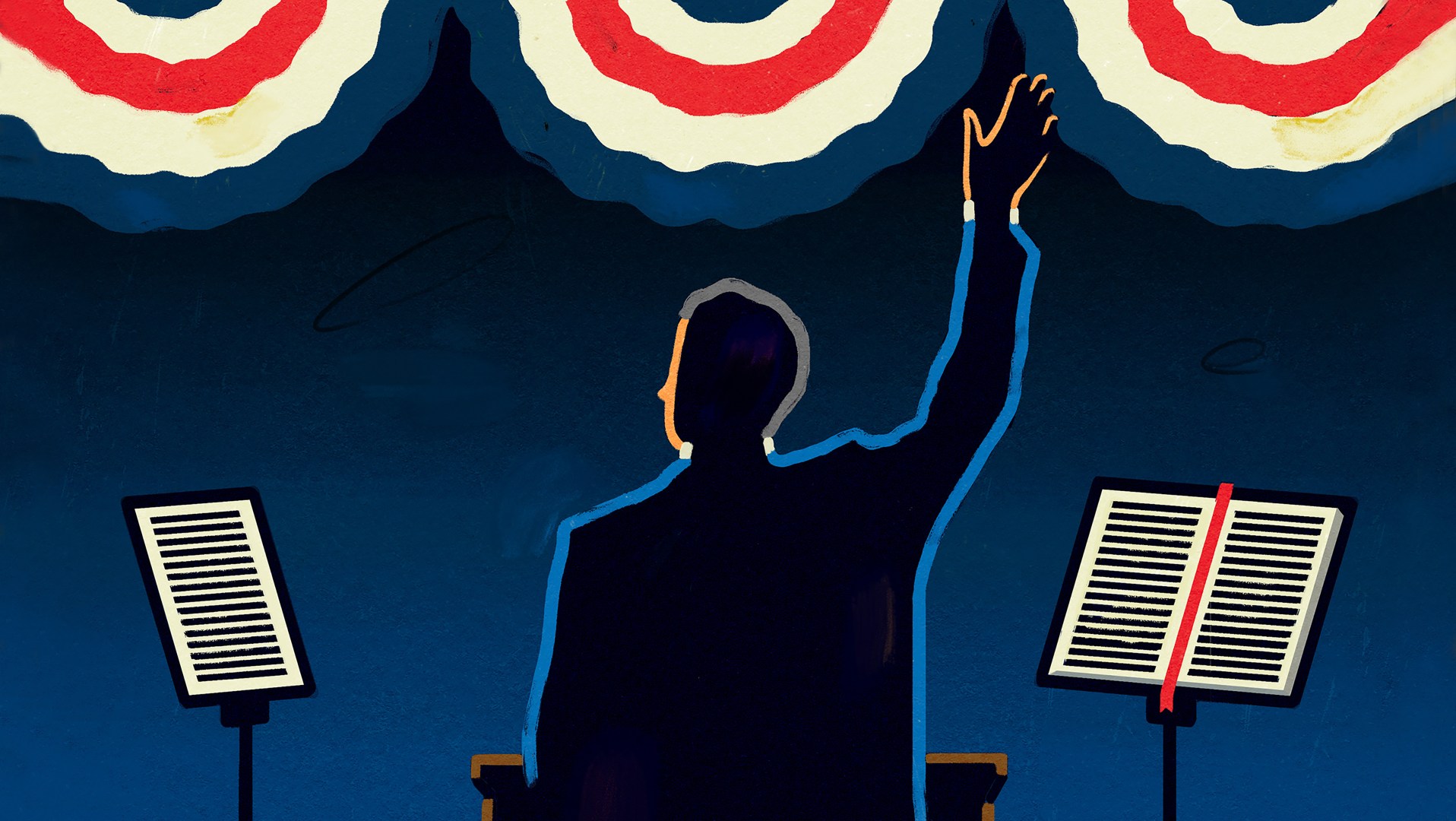
The presidential contenders are wooing religious voters. How do the faithful make sure God isn’t a political prop?

Illustration by Peter Ryan

Pastor Telley Gadson was the calm center of St. Mark United Methodist Church in Taylors, South Carolina, as the congregation prepared for a visit from Joe Biden’s presidential campaign and a North Carolina congressman who would speak on Biden’s behalf. The historic black church is known as the 9-1-1 because of its street address. And the church did seem like it was responding to a minor emergency Sunday morning as people rushed around to get ready.

An usher burst into Gadson’s office to announce a reporter from Christianity Today just as two deacons hurried out to make sure good seats had been saved for the Biden campaign staff. But Gadson was calm. “It’s just another Sunday at the 9-1-1,” she said.

The service kicked off with an organ trio, an amplified Hammond backed by thumping bass and drums. As the music started, about 100 people found their places in the purple upholstered pews and another 25 or 26 got up on stage. Everyone started praising Jesus.

A minister stood up and said the thing black Christians say across the South when they gather to worship: “I want to thank the Lord who woke me up this morning.” And the people sang more.

Then it was the congressman’s turn. G. K. Butterfield, a former head of the Congressional Black Caucus, got up in the pulpit to deliver his message, and the church got quiet. Butterfield said, “I’m here to ask you to support my friend Joe Biden. And it’s easy to do, because I’ve known Joe Biden for a long time.”

Democratic candidates are doing an unprecedented amount of faith outreach this presidential primary campaign. Some Democrats in the past have talked about their faith, like Jimmy Carter and Barack Obama. But now, almost every candidate is making a point of it.

This is more familiar territory for Republicans. The GOP has done extensive faith outreach since the 1950s, when Dwight D. Eisenhower promised church leaders that spiritual renewal would be part of the nation’s defense against communism. Opposition to abortion—a non-negotiable issue for many Christian voters—and support for public religious expression have long attracted many Christians to the GOP. President Donald Trump hopes to continue that alliance, solidifying his support from white evangelicals and expanding it among Latino evangelicals. Today, Christians are more than three times as likely to see the Republican Party as “friendly to religion.”

But about a third of all Democrats go to church every week. Nearly half say faith is very important in their lives, and polls show that 28 percent of evangelicals identify with the Democratic Party, along with 80 percent of black Protestants, 44 percent of Catholics, and 40 percent of mainline Protestants. And a lot of Christians are Independents, curious if a Democratic candidate might appeal to their faith values.

Two Democrats—Biden and Pete Buttigieg—have hired religious-outreach coordinators, who help their campaigns connect to pastors and articulate the moral visions undergirding their political plans. Elizabeth Warren set up an interfaith advisory council. Eight candidates have cited Scripture on the stump. Warren regularly quotes Matthew 25 at election events, giving a campaign speech/sermon about the sheep and the goats. Even Bernie Sanders, a non-practicing Jew, refers to the Golden Rule again and again.

For Christians, though, these efforts raise questions about when a candidate is using faith as a political prop. What’s the difference between appealing to the Bible and exploiting it? How can Christians discern when a politician doesn’t have a genuine commitment to shared values, but is just using the right words to get their votes?

Michael Wear worried about this when he was Obama’s faith outreach coordinator, working to get the president re-elected in 2012. Just as Wear got started, the president changed his position on same-sex marriage, saying he had “evolved” on the issue. During the 2008 campaign, Obama told religious voters he believed marriage was only between a man and a woman. “For me as a Christian,” he had said, “it’s . . . a sacred union. You know, God’s in the mix.”

“I was forced to ask myself,” Wear writes in his memoir, “would he really have used religious language to convince voters of something he did not believe?”

Wear doesn’t definitively answer the question in the book and still doesn’t seem to know for sure. But he does think Christians have reason to be cautious about being manipulated by religion in politics. Wear worries that some faithful voters just want to be “tickled in the right places.”

“It turns into a form of identity politics,” said Wear, chief strategist for the AND Campaign, a nonpartisan effort encouraging Christian political involvement. “It’s not good when we’re so easily appeased. We can easily fall into looking to politics for self-affirmation, instead of trying to use politics to advance human dignity and advance justice.”

These concerns come up for candidates as well. How can they be honest about their faith without turning it into a strategy to win over fellow believers? Tom Steyer—the former hedge fund manager and now philanthropist running a long-shot campaign for the presidency—fears bringing his Christian beliefs into the primary race could be a kind of betrayal, according to his campaign manager, Alberto Lammers.

At the beginning of 2020, Steyer was pulling about 2 percent support in national polls and a bit higher in some of the early primary states. His campaign was trying to help him make a personal connection with the electorate, but the candidate wasn’t comfortable using his religion to do it.

“He goes to church every week—usually Episcopalian or Methodist,” Lammers told CT. “He really listens, and he loves singing. He loves those churches. But he just goes. He sits wherever there’s space, and we don’t make any sort of arrangements for media coverage.”

Raised by a Jewish father and a Methodist mother, Steyer believes his religious upbringing has shaped his political vision for the country—but he doesn’t want to pander to get religious votes.

“He doesn’t go into a Bible verse just because the TV camera is on. He knows the Bible very well, but that’s not who he is and he’s not going to change who he is just to attract voters,” Lammers said. It’s a bit of a quandary, politically. Lammers hasn’t figured out how to solve it yet. But the candidate is insistent: “That’s not how he’s going to talk about his faith.”

Other candidates aren’t afraid to talk about faith. They talk about immigration, economic inequality, climate change, LGBT rights, and war as religious issues. The candidates haven’t tried to shift the party’s position on abortion to appeal to religious voters. Most of the campaigns leave little to no space for opposition to abortion, or even ambiguity, conflicted feelings, or compromise on the subject. For some religious voters who might otherwise side with the Democratic party on a slew of issues, abortion is a major barrier. This campaign cycle, only Amy Klobuchar has been willing to even say the party has room for pro-life Democrats.

The candidates have, however, talked about a lot of other issues in religious terms, and it seems to be working. Campaign fundraising reports filed with the Federal Election Commission show that more than 200 Christian ministers donated to Democratic campaigns over a six-month period in 2019.

Julián Castro, who emphasized his commitment as a Catholic to caring for the poor, received 53 donations from 13 ministers before he dropped out of the race in early January. Cory Booker, a Baptist who said he had also been deeply influenced by Buddhism, received $13,000 from 19 Christian clergy before he dropped out. Warren, a Methodist who can quote the King James Version of the Bible from memory, has received 250 donations from 51 ministers. Buttigieg, an openly gay Episcopalian who has made his faith a key piece of his campaign, received more support from clergy than any other candidate, with $36,000 in contributions from nearly 100 ministers over the course of six months.

Buttigieg got his first blast of national attention in the 2020 campaign by bringing up religion. In a CNN town hall last year, the mayor of South Bend, Indiana, contrasted himself with his state’s former governor, Vice President Mike Pence. He said Pence had compromised his morality by supporting Trump for president and had misconstrued the Bible with his conservative politics.

“My understanding of Scripture is that it’s about protecting the stranger and the prisoner and the poor person and that idea. That’s what I get in the gospel when I’m at church,” Buttigieg said.

He has continued to talk that way throughout the primaries. One person who felt like the religious rhetoric resonated was Shawna Foster, a Unitarian Universalist who was ministering among asylum seekers waiting to get into the US from Tijuana when she first listened to Buttigieg. She was impressed that he spoke explicitly about his faith and was inspired by the way he could frame Democratic policies in moral terms that would appeal to Christians and non-Christians.

She decided she could trust him because he sounded so authentic. She remembers thinking “you could just tell” his faith was real.

“A lot of politicians do a rote profession of faith and then that’s it. That’s all they do,” Foster told CT. “Pete . . . talks about his faith. And you can hear how it impacts his thinking. This is something he thinks about that’s important to him and he’s been thinking about it for a long time. He really has an authentic connection to faith and it shines through.”

Foster became the faith outreach coordinator for the Buttigieg campaign in August 2019. She hopes that Buttigieg’s rise will convince more Democratic politicians to share their religious values with voters. “We need more politicians to speak about faith authentically,” she said.

Biden’s faith outreach coordinator thinks Christians should trust politicians’ deeds, not their words. Michael McClain was the South Carolina field director for Biden’s presidential campaign in 2007. When he was first approached, he remembers he didn’t know if he should trust Biden.

“You have to have great discernment,” McClain told CT. “Don’t sell your soul for a dollar. Don’t work for a candidate you don’t believe in.”

McClain, the pastor of a historic black Baptist church in Catawba, South Carolina, knew the Democratic candidate would need the support of a lot of black Christians like him to win the pivotal primary state. And he knew that politicians could always talk a good talk.

“There will always be some charlatans,” McClain said, “and the black church, sometimes we’ve been gullible.”

McClain started contacting pastors in Delaware, where Biden, a lifelong Catholic, had served as senator since 1973. He called older ministers he respected. Did they know Biden? Had they worked with him? What did they think?

“They would say, ‘Mike, he’s solid,’ ” McClain recalled. “ ‘He’s a man of his word. He’s a man of integrity. He’s not a bigot. He’s not a racist. He cares about helping people, and you can look him in the eye, and he’s solid.’ ”

McClain says now it’s his job to get that same message to pastors in the primary campaign, especially in South Carolina. A lot of times, though, he’s just reminding them of what they already know. When he gets black pastors in a room with the former vice president, the first thing they say is “Thank you for sticking by Obama.” They consider that, more than anything, a testament to kind of man he is.

When the Biden campaign visited black churches in South Carolina ahead of the February 29 primary, they didn’t use a lot of religious language to convince Christians that Biden believed what they believed. Instead they focused on the idea he was reliable, a steady hand, and they should support him because they could trust him.

When Congressman Butterfield took the pulpit that Sunday morning at the 9-1-1, he never mentioned Biden’s personal faith. Instead, he told a story about Barack Obama, before Obama was elected president in 2008.

“One day,” Butterfield said, “I asked Barack, ‘Who are you gonna get to be your vice president?’ Barack said, ‘You know I can’t tell you that, but I can tell you this. You’re going to be proud of him.’ And he was right. I am tremendously proud of Joe Biden and the work he’s done.”

Butterfield told the church he first met Biden in the early 1980s. Butterfield and some other Southern civil rights lawyers wanted someone in the Senate to amend the Voting Rights Act, to strengthen protections for African American voting rights. They went to Washington, and Biden listened to them and became their champion. In 1982, the Voting Rights Act was amended like they asked.

Biden’s record on civil rights is long and complicated, but Butterfield argued it is the length that matters. He emphasized Biden’s experience as a public servant for more than four decades before Obama picked him. Then he stuck by Obama. Black Christians in South Carolina, Butterfield said, should support Biden for president.

Pastor Telley Gadson has not endorsed Biden. She is flattered that the campaign would come to the 9-1-1, though. She is the church’s first full-time pastor in 150 years, and now it’s growing and expanding. The campaign stop is a recognition of that.

“What does it feel like,” she asked the church on Sunday, “to know that when a politician comes to town, they got to come to the 9-1-1?” Everyone applauded.

The organ trio started up again and the church launched into a song about the love of Jesus while the congressman hustled out a side door to drive to another black church in nearby Greenville, South Carolina.

At the next church, Israel Metropolitan Christian Methodist Episcopal, pastor Courtney Adams preached a full sermon before he let Butterfield speak. He preached about worship, but it was also about politics.

“Did you wake up this morning with Jesus on your mind?” Adams asked the church, and people said, “Amen.”

“Did you wake up and say, ‘Thank you, Jesus?’ ” he preached. “We come here because we love a God who is worthy of worship. I don’t worry about what is going on in the White House if I come into the house of God. I don’t got to worry. I got to worship.”

If the church was going to hear from a politician, it was going to hear this first: Don’t put too much trust in a candidate. Maybe you could trust Joe Biden a little bit, the preacher suggested, but don’t be gullible. The church has been gullible before. Some politicians seem solid, but they’re not solid. And even when they are solid, that won’t save your soul. Put your real trust in the one who woke you up this morning.

Adams invited Butterfield up to make an announcement at the end, and the congressman said, “I’d like you to prayerfully consider supporting Joe Biden on February 29.” He repeated the part about being a civil rights lawyer—but quicker this time—and about how Obama trusted Biden to be his vice president. “I love Joe Biden,” he finished. “I know he gets the job done.”

When the congressman concluded, two women in the back stood up and applauded with vigor. Everyone else in the congregation stayed seated.

With Democrats doing an unprecedented amount of faith outreach in 2020, a lot of Christians are going to face that choice of how to respond to presidential candidates speaking to them as Christians. They will have to figure out what it means to vote faithfully on a morning when the Lord woke them up.

Daniel Silliman is news editor of Christianity Today .

Strip the Labels

We should be “hidden with Christ”—which means rejecting social and political identities and staying above the fray on issues like impeachment.

Christianity Today February 17, 2020
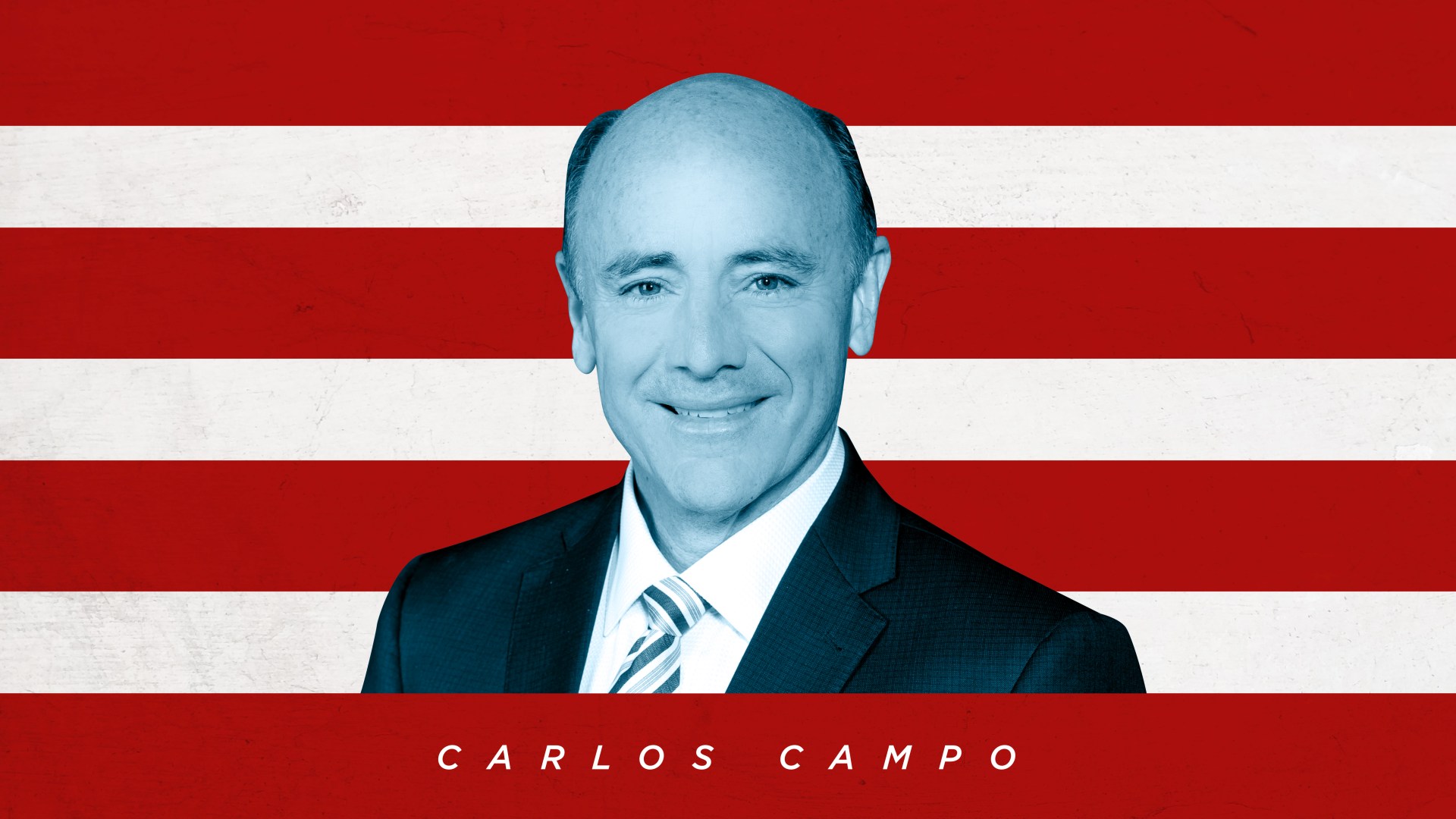
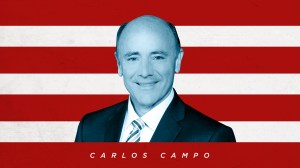
Illustration by Mallory Rentsch / Source Images: Courtesy of Carlos Campo / Photo by Allison Waltz

In this series

As someone who has for years argued for an evangelicalism that reflects the fullness of the kingdom of God, it has been painful to see our “every tribe and every tongue” ideal narrowed into a tiny tribe that often conflates politics and faith. We are not that, and we never were. Yet we let others redefine us. Instead of people who seek justice and the propagation of a message of hope, we became an angry, judgmental, mainly white religious minority. Many have refused to accept that identity, speaking up out of the refusal to silence their moral outrage any longer.

As one who has been defined as a “Hispanic evangelical,” I (we) know all about the limitation of labels. We represent a broad spectrum of humanity and reject confining our identities as children of a God who is boundless. Among our ranks you will find those who revile President Donald Trump for what they view as his anti-Latino rhetoric and policies and see him as an emerging fascist in the mold of many Latin American leaders. You will also encounter Hispanic evangelicals who embrace Trump for what they perceive as his strong stance in protecting religious liberty, the rights of the unborn, and judicial appointees who reflect their values. Between those poles is the vast middle, whose views about the president are as diverse as the sprawling middle spectrum of evangelicals in America. The idea that there is a single, pan-ethnic Hispanic response to Trump is as wrongheaded as believing that CT editors and staff, their readers, white evangelicals, or any other group of human beings are perfectly unified in their view of the president.

Political labels are particularly problematic for Christians. Some of the defining features of the Republican and Democratic parties inherently clash with tenets of the Christian faith, but the pursuit of righteousness, purity of purpose, and desire for God’s will should always take precedence over concerns for the environment, distribution of wealth, limited government, gun rights, and a host of other issues. Our faith flourished at its founding because we refused to conform to Roman customs and became known as a people transformed by a resurrected God who demanded an allegiance that superseded statist requirements. In a world that continually pushes us to “come out” and “identify” with political and social labels—often further restricted by the limitations of social media—Christians must accept the challenge of being “hidden with Christ in God” so that his grace and love are projected through us despite our foibles.

Former CT editor in chief Mark Galli took up the mantle of some like-minded evangelicals and planted a flag for them in their own yet-to-be-labeled land. But label limitation immediately followed him as CT faced sharp criticism. Going beyond critique of the president to demand the action of “removal” crossed the bright historical line set by CT’s founder, the late Billy Graham. Graham always transcended partisanship yet conveyed an uncompromised commitment to the power of the gospel. CT has carried this honorable “above the fray” label for years, reflected in past responses to presidents who were labeled by many with the “morally unfit” hashtag.

Faced with a similar impeachment dilemma in 1974, the publication asked for the process to play out without calling for Nixon’s resignation. In 1998, the magazine was critical of a morally disgraced Bill Clinton, but stopped short of Galli’s cry for an ouster, focusing instead on Clinton’s “hollow” apology. Instead of a call for Clinton’s removal, the 1998 article referenced a pastoral letter titled “An Appeal for Healing," which declared, “It is now a time for forgiveness and healing. Governments err and presidents make mistakes; we are all sinners. But the God of love and justice does not judge us without the hand of grace and mercy. It is a time to reclaim the nation's finer character.” These words seem to reflect the heart of evangelicals everywhere who understand the inherent limitations of labels—including “evangelical.”

We are best served when we shoulder the responsibility of leading in love, expanding our reach to reflect the fullness of the Christian faith in our great nation. Ours must be an ongoing determination to broaden the tent of evangelicalism through even greater intentionality in the future by “communicating the breadth of the true, good, and beautiful gospel.”

Carlos Campo is president of Ashland University in Ashland, Ohio.

Politics Is Not a Test of Fellowship

Christian freedom requires unity amid disagreement.

Christianity Today February 17, 2020
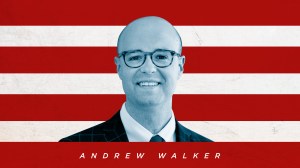
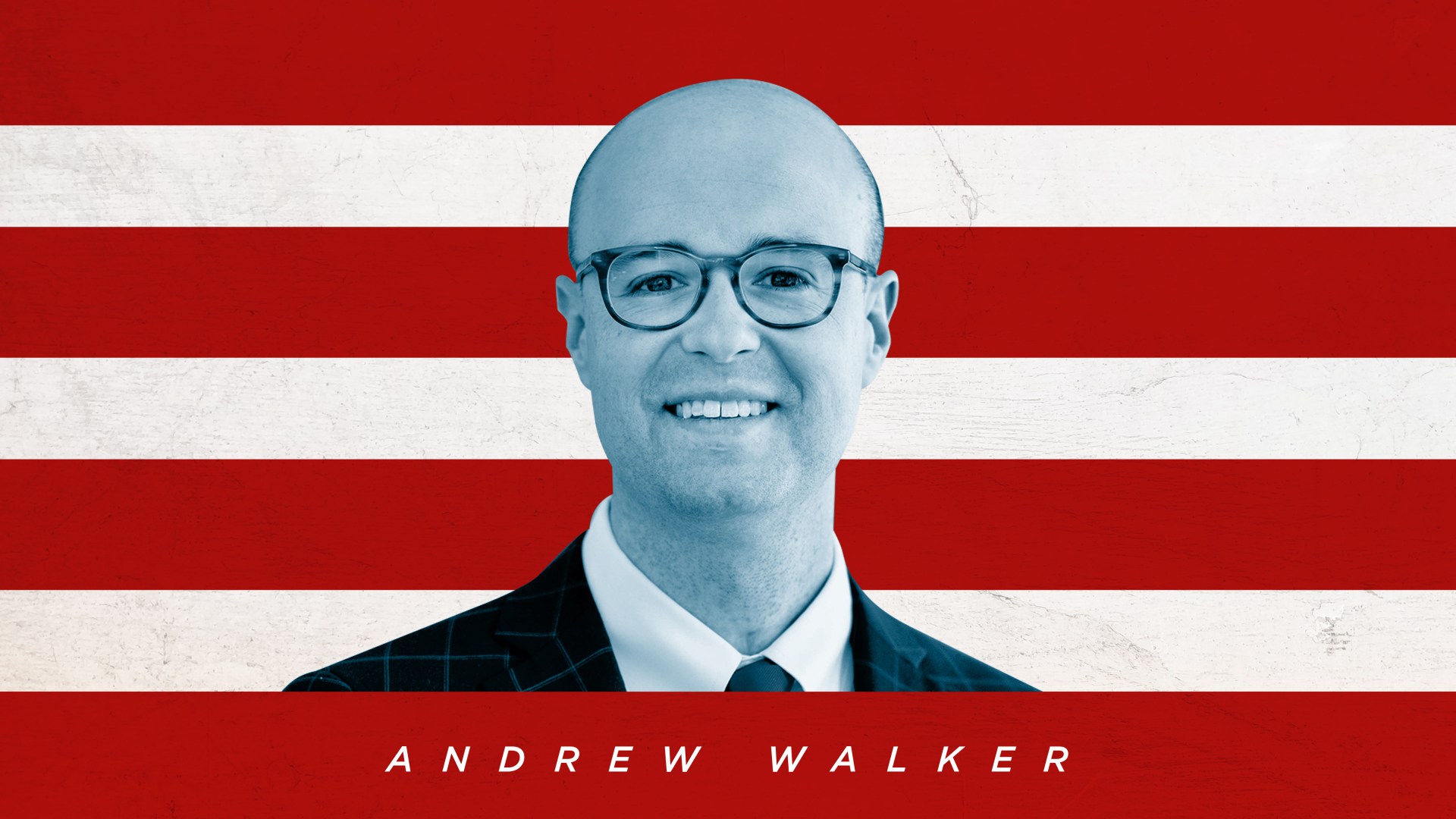
Illustration by Mallory Rentsch / Source Images: Courtesy of Andrew Walker

In this series

As a people for whom Jesus explicitly prayed would be united as one (John 17:20–23), we cannot allow political tribal markers to define our identity more than the blood of Christ does. Christ did not die for us to merely tolerate one another but for us to love and bear with one another—even if we do not like how our Christian brother or sister triages political priorities (Eph. 4:2; Col. 3:13). Diverging political urgencies compel competing visions for Christian political witness. On one side is an evangelical constituency that views Christian political witness as mediated primarily through moral consistency; on the other side is a constituency that views secularism ravaging basic pillars of human decency. Though the categories are imprecise, the contest rages between those more attuned to social justice and those more attuned to cultural conservatism.

As I witness self-identified evangelicals engaged in our fraught political climate—a climate captured in microcosm by the Christianity Today impeachment editorial—I am alarmed by the judgment-casting from both sides, especially on social media. Neglected are the listening and sympathizing that Scripture demands of Jesus’ disciples (James 1:19). We tell ourselves that politics ranks below our faith obligations, but our actions betray our priorities. Political affiliation—especially in the Trump era—determines how we relate to and how we regard the political preferences of others.

For the Trump-voting Christian, refusal to support the president is seen as elitist capitulation. For the Trump-opposing Christian, support for the president is low-culture captivity to nationalism and nativism in Jesus’ name. Trump defenders reject the assertion that voting for Donald Trump is at odds with moral credibility and Christian integrity. Excuses pave over the president’s excesses for the sake of policy wins and proximity to power. Trump-resisters condescendingly downplay the achievements of the Trump administration many Christians favor. For resisters, whatever Trump is for must either be opposed outright, or, if acceptable, begrudgingly acknowledged.

There are thoughtful Christians who will carefully decide to support Trump in his re-election. There are thoughtful Christians who believe Trump’s baggage, character flaws, and bravado cannot justify voting for him. I can respect both and refuse to see either as reasons to throw stones. At the same time, cartoonish extremes on both sides need rebuke.

Based on what we know now, I don’t have strong opinions on whether impeachment was justified. Likewise, I did not have strong reactions to the position Christianity Today took on impeachment. I did, however, take umbrage with the rationale that led to the editorial’s conclusion. Whether intended it or not, the editorial had the effect of binding the consciences of his readers. It became a test of fellowship (Gal. 2:9). Galli’s statement, “That he [Trump] should be removed, we believe, is not a matter of partisan loyalties but loyalty to the Creator of the Ten Commandments” was bitterly divisive. Intended or not, it labeled those who disagreed with impeachment as on the wrong side of God and the Ten Commandments.

We need to honor freedom of conscience among our Christian brothers and sisters, even if we do not agree with the use of that freedom. This is central to Christian public theology. Public theology does require passionate commitment to justice and morality, but their application to contemporary society entails careful nuance based on a faithful hermeneutic as well as personal and ecclesial instincts able to distinguish between first-order ethical issues from second- and third-order ethical issues.

The apostle Paul writes in Romans 14:10–12 (ESV):

Why do you pass judgment on your brother? Or you, why do you despise your brother? For we will all stand before the judgment seat of God; for it is written, ‘As I live, says the Lord, every knee shall bow to me, and every tongue shall confess to God.’ So then each of us will give an account of himself to God.

With this perspective in mind, we must disagree humbly and with charity. In a time when our political disagreements are punctuated with particularly harsh forms of judgment, the Apostle Paul reminds that each of us stands in judgment ultimately and only before God.

As I have written elsewhere, evangelicals can muster justifiable rationales for voting for Trump, just as they can find just cause in choosing to not vote for him. This applies to divergent opinions on impeachment too. As Romans 14:1 begins, we are “not to quarrel over opinions.”

Andrew T. Walker is an associate professor of Christian ethics at Southern Baptist Theological Seminary.

News
Wire Story

15 Killed in Fire at Haiti Orphanage Run by US Church

The controversial Church of Bible Understanding lost accreditation several years ago for unsanitary conditions at the facility.

Christianity Today February 17, 2020
Dieu Nalio Chery / AP

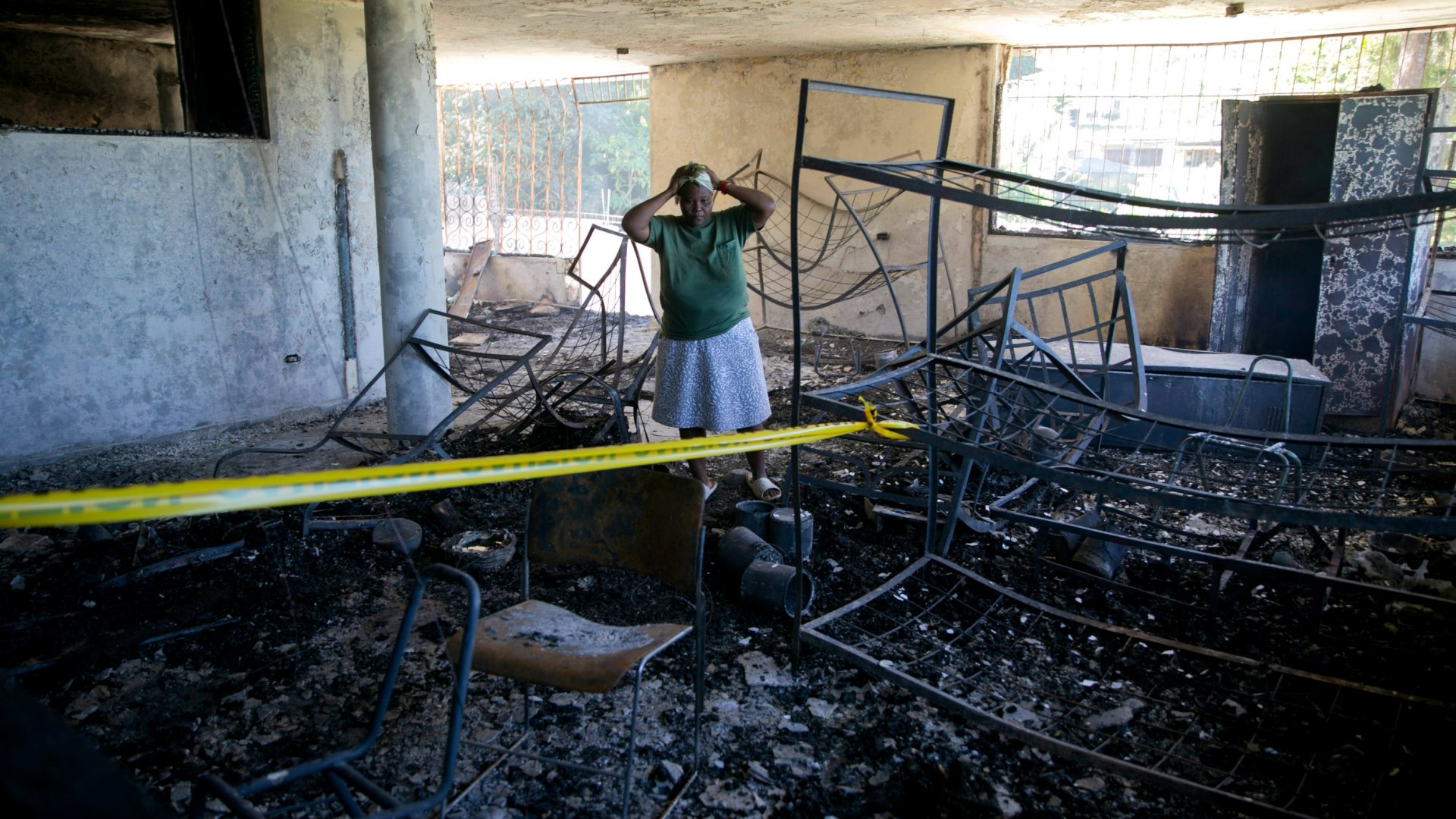
A fire swept through a Haitian children’s home run by a Pennsylvania-based Christian nonprofit group, killing 15 children, officials said Friday.

Rose-Marie Louis, a child-care worker at the home, told The Associated Press that the fire began around 9 p.m. Thursday and firefighters took about 90 minutes to arrive. The orphanage had been using candles for light due to problems with its generator and inverter, she said.

About half of those who died were babies or toddlers and the others were roughly 10 or 11 years old, Louis said.

Late Friday afternoon, police raided another home also run by the Church of Bible Understanding and took away several dozen children in a bus over protests from employees.

The fire happened at the group’s orphanage in the Kenscoff area outside Port-au-Prince, the Haitian capital.

“It could have been me,” said Renadin Mondeline, a 22-year-old who lived in the home with her son, now 6, for about two years until she started making enough money as a street vendor to start renting her own place to live last year. “These little girls inside were just like my baby.”

Rescue workers arrived at the scene on motorcycles and didn’t have bottled oxygen or the ambulances needed to transport the children to the hospital, said Jean-Francois Robenty, a civil protection official.

“They could have been saved,” he said. ‘‘We didn’t have the equipment to save their lives.’’

The Associated Press has reported on a long-standing series of problems at the two children’s homes run by the Church of Bible Understanding.

“‘We are aware of the fire in the children’s home in Haiti,” said Temi J. Sacks, a spokesman for the group, which is based in Scranton, Pennsylvania. “It would be irresponsible for us to comment until after all the facts are in.”

The Church of Bible Understanding lost accreditation for its homes after a series of inspections beginning in November 2012. Haitian inspectors faulted the group for overcrowding, unsanitary conditions, and not having enough adequately trained staff.

Members of the religious group were selling expensive vintage building fixtures like banisters and chandeliers at high-end stores in New York and Los Angeles and using a portion of the profits to fund the homes.

The Associated Press made an unannounced visit to the group’s two homes, holding a total of 120 kids, in 2013 and found bunk beds with faded and worn mattresses crowded into dirty rooms. Sour air wafted through the bathrooms and stairwells. Rooms were dark and spartan, lacking comforts or decoration.

The Church of Bible Understanding operates two homes for nearly 200 children in Haiti as part of a “Christian training program,” according to its most recent nonprofit organization filing. It has operated in the country since 1977. It identifies the homes as orphanages but it is common in Haiti for impoverished parents to place children in residential care centers, where they receive lodging and widely varying education for several years but are not technically orphans.

“We take in children who are in desperate situations,” the organization says in its tax filing for 2017, the most recent year available. “Many of them were very close to death when we took them in.” The nonprofit reported revenue of $6.6 million and expenses of $2.2 million for the year.

Associated Press journalists Evens Sanon reported this story in Port-au-Prince, AP writer Michael Weissenstein reported from Havana and AP writer Ben Fox reported from Washington.

News

Have You Noticed Church Is Farther Away Than it Used to Be?

Study finds more Christians driving longer distances to worship.

Peeterv / Getty Images

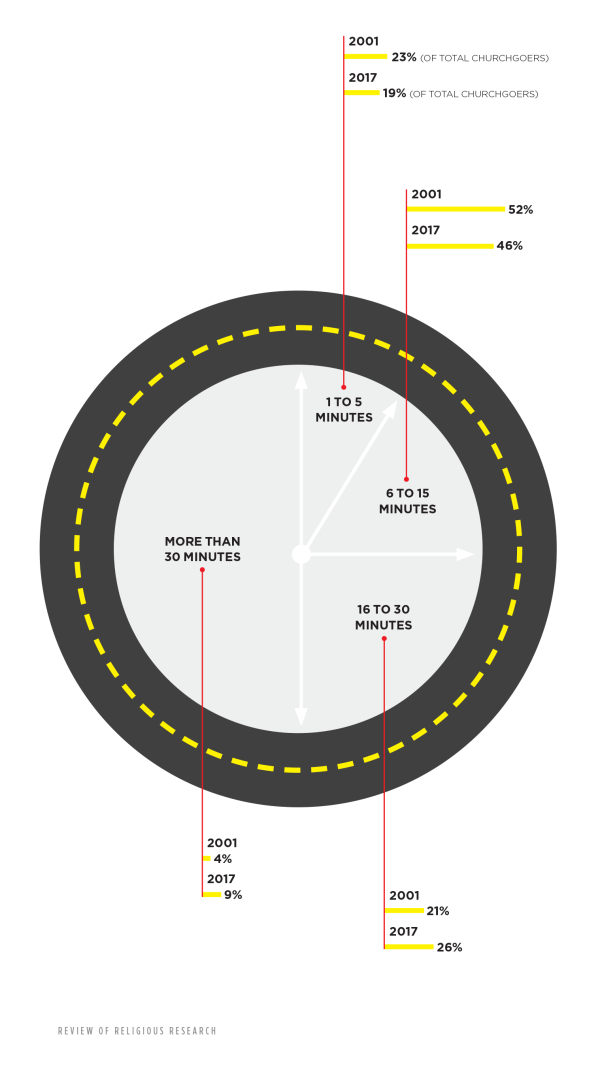
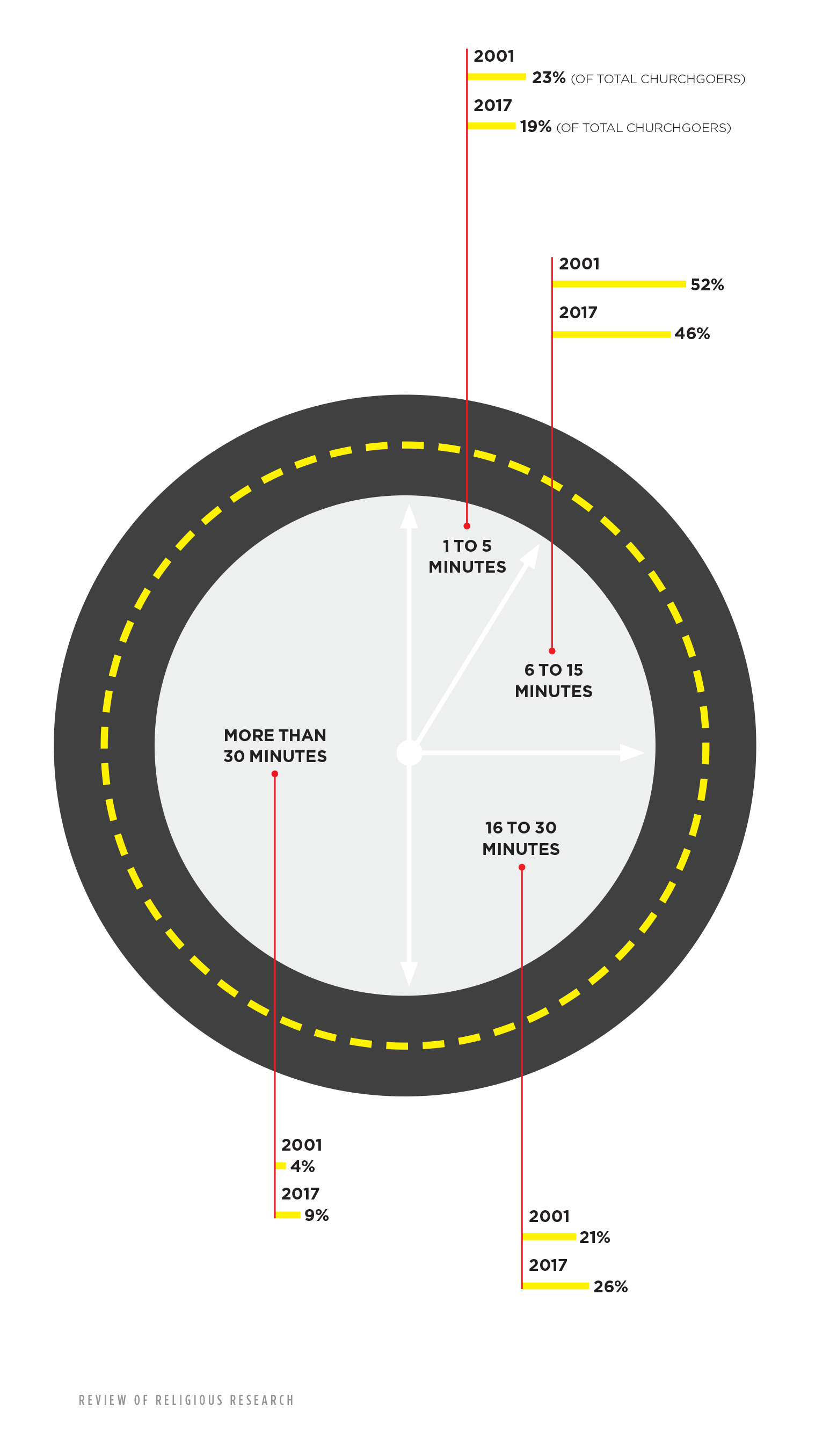
More Americans are driving farther to church, according to a new study from sociologists Kevin D. Dougherty at Baylor University and Mark T. Mulder at Calvin University. About a third of evangelicals drive more than 15 minutes to church, and 8 percent drive more than half an hour. Black Protestants drive farthest, with nearly one in five going more than 30 minutes to worship. Among all church goers, the percentage traveling more than 15 minutes to church increased 10 points from 2001 to 2017. The change may be connected to the growth of megachurches, the sociologists say, which pull people from a larger geographical area.

María de los Ángeles La Torre Cuadros

Jonathan Bartlett

In this series

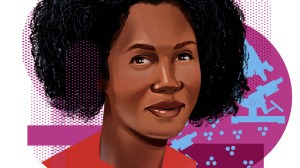
Ethnobotanist, Lima, Peru

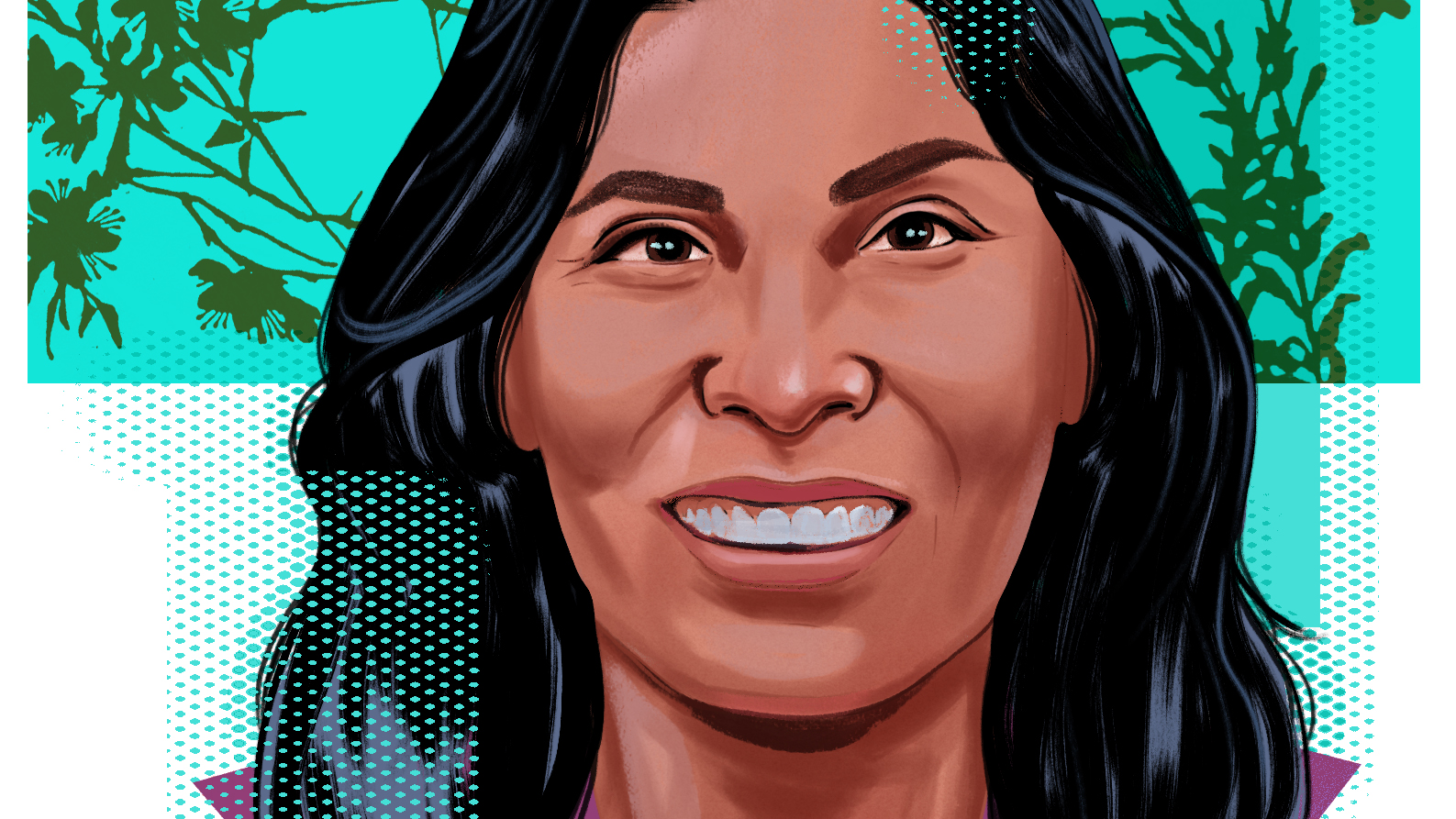
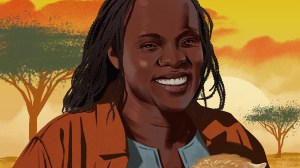
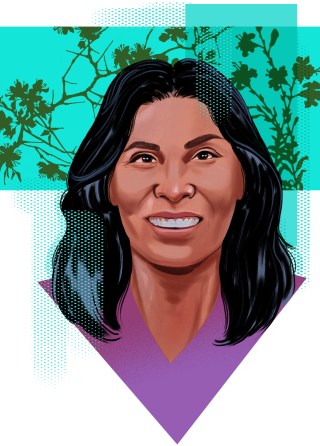
Little is formally known about tree species of the tropical Andes, but for María de los Ángeles La Torre Cuadros, it isn’t just about the trees. She’s captivated by the whole ecosystem—including the people who live there. She works to articulate the knowledge of local native communities in the language of science to build sustainable ecosystems.

A scientist with the Christian conservation organization A Rocha, La Torre Cuadros grew up where flowers covered the coastal hills south of Lima, Peru, in the winter. “On an aesthetic level, I have always been struck by the diversity of colors, the detail of each element, and in general the majesty that it represents and that overflows your senses,” she said. “I understand God’s infinite love in seeing creation.” In seeking understanding of creation, La Torre Cuadros reads “a constant open book about life.”

Jonathan Bartlett

When she first began her career as a scientist, her church saw her absences on weekends for academic trips as an oversight of her faith. But now, in a different church, the congregation prays for her when she leaves and is particularly sensitive to when she must travel to high-risk places.

As a female, ensuring security in some communities or sometimes with colleagues is difficult, she said. But there’s a growing respect for women’s contributions because of their leadership and empathy with those unlike themselves. Furthermore, being a woman of color has helped her initiate a “more horizontal dialogue” with local communities.

La Torre Cuadros works to keep a priority of empowering other people and valuing their knowledge within a culture of science that is constantly striving for quantitative measures of personal success, such as publications or projects.

While she’s happy with her academic contributions, La Torre Cuadros finds great satisfaction in elevating the knowledge of local communities and helping others to care for creation.

Joanna Ng

Jonathan Bartlett

In this series

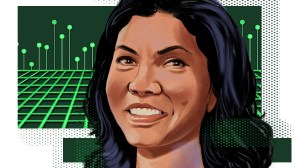
Computer scientist, Toronto, Ontario, Canada

When Joanna Ng told her boss of her father’s death, he said, “Your dad must be proud.”

But Ng had tried to keep her work and her family life separate. “At that moment,” she said, “it dawned on me that I never told my dad what I was working on, because I knew that it was not a way to earn a brownie point from him.”

Jonathan Bartlett

In the view of her traditional Chinese family, she wasn’t supposed to find a career. Ng’s parents sent her to university to find a well-educated husband. She only took computer science courses as electives, not thinking she’d be good at them. Then she realized “God wired me for this field.”

Ng finds commonality with other women from similar cultural backgrounds. “I had to reject the female role that my family put upon me and willfully accept the role that God had for me in his divine destiny. That took a lot of years until I was comfortable in my own skin.”

Ng spent 35 years working for IBM and has been granted 44 patents under her name—notable because in the last 10 years, only 4 percent of patents list a woman as the sole inventor. “I am proud of my patent portfolio because it is my testimony of my journey of co-creating with God through the Spirit,” she said, referencing Jeremiah 33:3.

In 2018, Ng left IBM to start her own company. Using artificial intelligence, she hopes to create technology that takes virtual assistants, like the Alexas and Siris of today, beyond their passive functionality of today (you still have to ask them a question for them to work). She sees a world where Alexa helps health care workers with large caseloads monitor patients’ vitals and prioritize tasks.

To her, AI is nothing to be feared but should be used wisely—a message she shared at a Lausanne Network meeting last year in Manila.

Audrey Bowden

Jonathan Bartlett

In this series

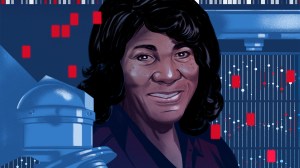
Biomedical engineer, Nashville, Tennessee

Audrey Bowden’s lab at Vanderbilt University uses optics to improve technologies doctors apply in a range of scenarios. One project is developing imaging tools to aid doctors in improving in vitro fertilization outcomes. Another works on brain imaging technology so that researchers can study ADHD in children.

“One of the hopes of my field is be able to improve health outcomes,” said Bowden. “We’re trying to build technologies that help doctors detect health problems earlier so (patients) get the treatment they need.”

Jonathan Bartlett

A bigger dream of hers, though, is to develop technology that is “more low-cost and portable so people who don’t have access to really expensive health care options can still get high quality medical care.”

The desire is fueled by living abroad as well as by her parents’ work with world missions. “My dad is always contacting me and asking, ‘Can we take your technology with us on our next trip?’” While that is something she has yet to do, “that is one of the things that drives me.”

“It’s part of our responsibility as Christians to raise a voice for those who don’t have a voice,” she said, pointing out that diversity can include other experiences, such as single parenthood or different citizenship. “But I do think that people who are diverse have more interest in raising their voice for these.”

In medicine, it’s especially important, explained Bowden, as it moves toward a more personalized approach, where people aren’t just put in broad categories but are given unique consideration. “We need diversity in science to even raise the question: ‘Are we using a diverse set of samples to make sure the treatment is effective for people?’” said Bowden.

Margaret Miller

Jonathan Bartlett

In this series

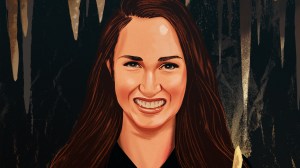
Coral ecologist, Miami, Florida

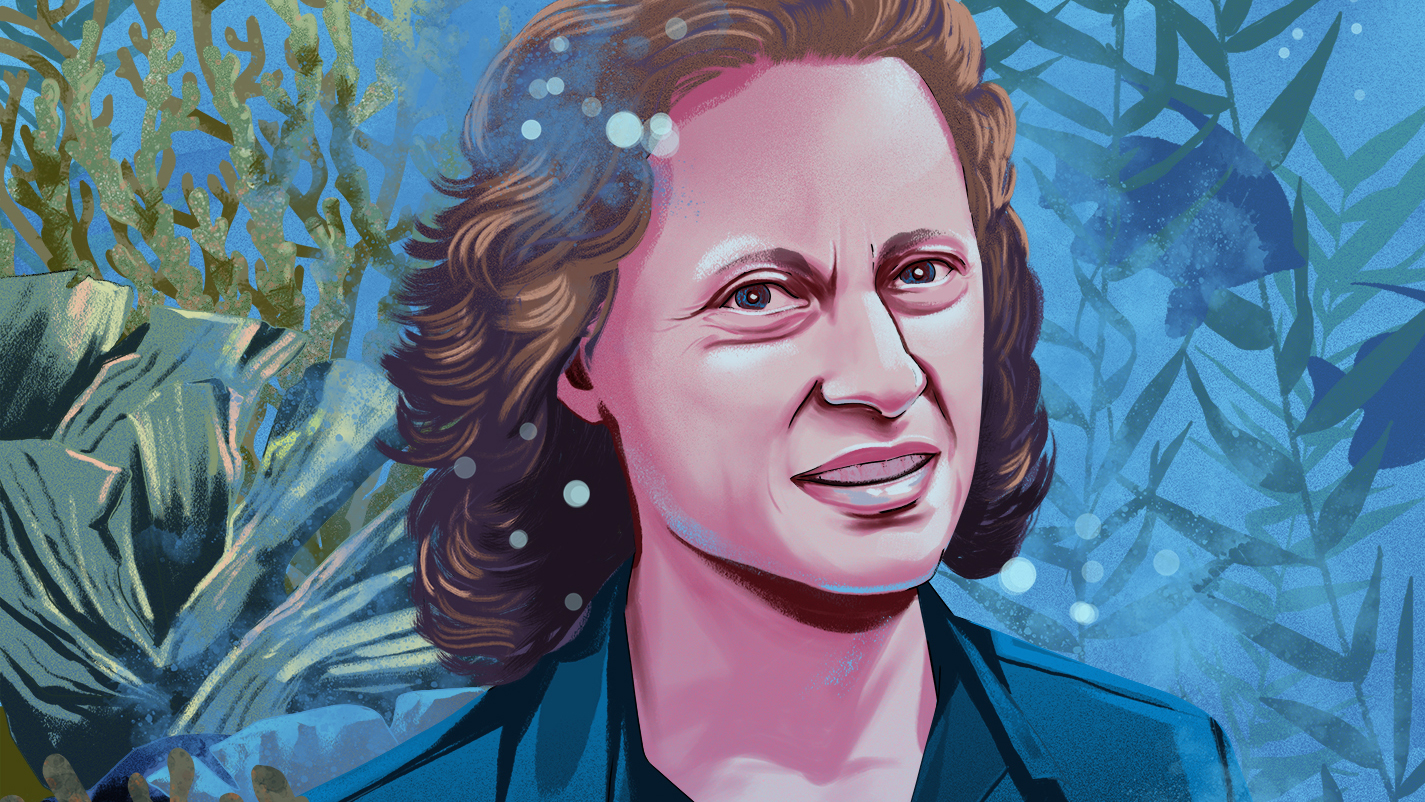
Like a midwife, Margaret Miller raises coral from larvae and then rejoins them to reefs. “In the biblical terminology, our goal is to restore the fruitfulness of corals,” she said.

Coral reefs around the world faced massive bleaching events after a heatwave that lasted from 2014 to 2017, and many, like the ones in the Florida Keys near Miller’s home, weren’t doing well in the first place. Some reefs lost 50 to 70 percent of their coral. “It’s very sobering,” said Miller, who is the research director for SECORE International. “The corals have declined so breathtakingly fast and recently.”

Jonathan Bartlett

It’s not just that corals are dying, but they seem to have an impaired ability to reproduce, which is why Miller and her team begin with sexual reproduction. Cloning corals has been somewhat effective in the past, but SECORE’s approach, though more complicated, is promising.

“I wanted to play a role in alleviating that human detriment on nature,” she said.

Before her current job, Miller worked 19 years for the National Oceanic and Atmospheric Administration, whose mission of stewardship resonated with her biblical outlook. “I draw hope from the understanding that God loves creation . . . but also God promises to renew creation.”

Miller stands on the shoulders of her mother, who earned a master’s degree in math and taught at the college level. “She experienced tremendous hurdles. Professors would explicitly refuse to talk to her and answer her questions because she was a female,” she said.

Apple PodcastsDown ArrowDown ArrowDown Arrowarrow_left_altLeft ArrowLeft ArrowRight ArrowRight ArrowRight Arrowarrow_up_altUp ArrowUp ArrowAvailable at Amazoncaret-downCloseCloseEmailEmailExpandExpandExternalExternalFacebookfacebook-squareGiftGiftGooglegoogleGoogle KeephamburgerInstagraminstagram-squareLinkLinklinkedin-squareListenListenListenChristianity TodayCT Creative Studio Logologo_orgMegaphoneMenuMenupausePinterestPlayPlayPocketPodcastRSSRSSSaveSaveSaveSearchSearchsearchSpotifyStitcherTelegramTable of ContentsTable of Contentstwitter-squareWhatsAppXYouTubeYouTube