Church Life

Young Christians Can Stay in the Black Church

A legalistic congregation and my own spiritual immaturity made me sour on church. But God and another congregation drew me back.

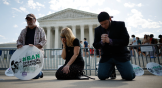
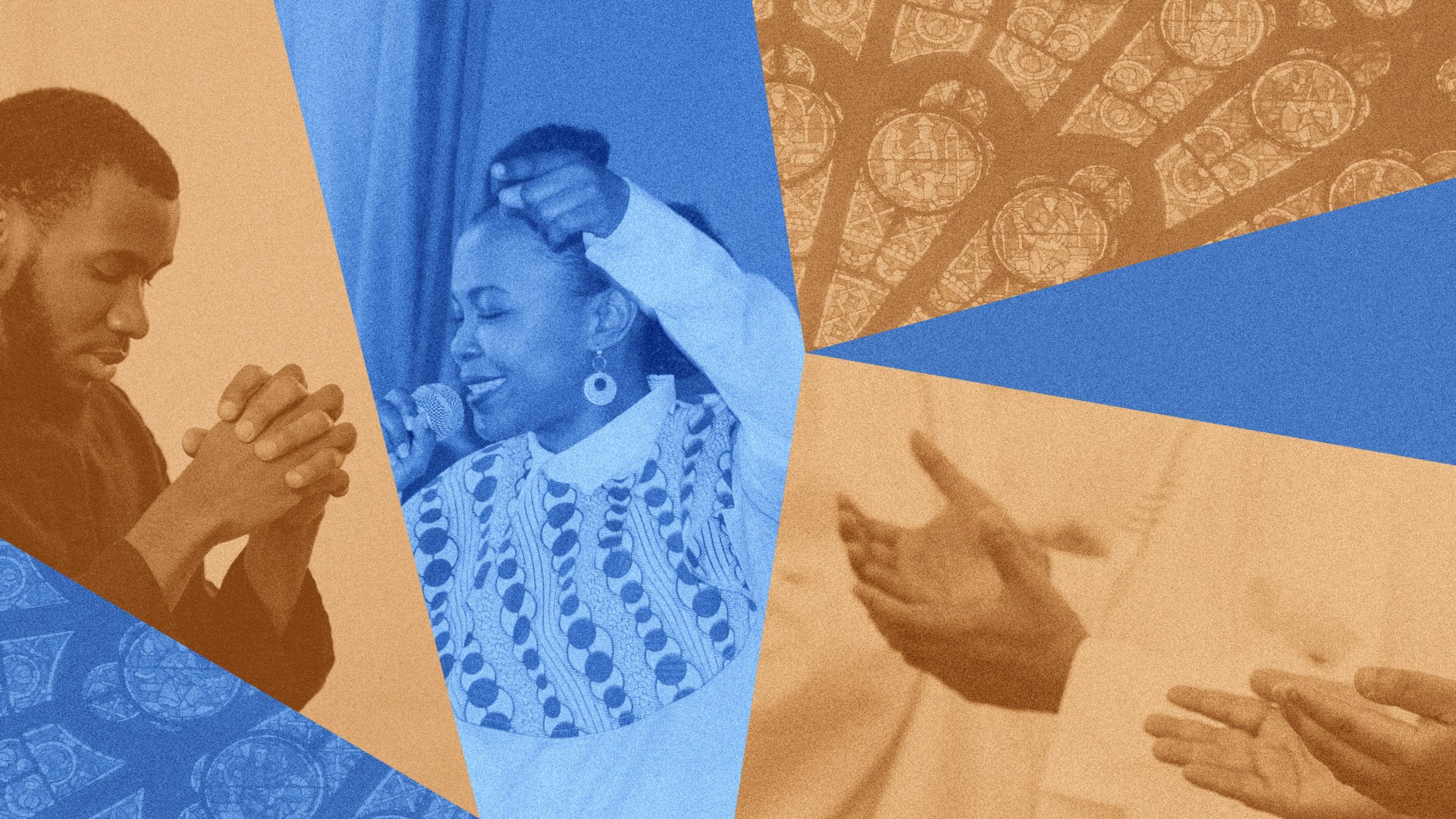
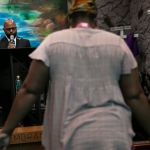
A black man and woman praying.
Christianity Today January 28, 2026
Illustration by Elizabeth Kaye / Source Images: Unsplash, Pexels

If you go to a Sunday service at many Black churches, you won’t find a lot of young people there. Pew Research Center confirmed this generational gap, which has also attracted media attention. Congregations that once served as the political, social, and economic nerve centers of their neighborhoods face uncertain futures as millennial and Gen Z Christians opt for online services, seek membership in multiethnic churches, or ditch church altogether.

There are many reasons young people are stepping out of the pews. Some just don’t want to go to church or to be affiliated with one religion. Others think the Black church is not involved enough in contemporary political and cultural issues. And a subset of young Black Christians distrust spiritual leaders, feel that they don’t fit in at church, or have had upsetting experiences they often call church hurt.

Some of these sentiments echo in my own journey of walking away and coming back to the Black church about ten years ago, at 30. My relationship with the church changed when I understood the deeply personal reasons behind why I left, studied Scripture for myself, and transformed my understanding of the role God intended church to play in my life. I realized what we all eventually discover: There’s no perfect church or perfect Christians, just a perfect Savior worth following.

Whenever I meet anyone new, I do not enjoy answering the question “Where are you from?,” because the predominately white suburb where my parents chose to raise me is not what I would have picked for myself. My parents grew up in tight-knit segregated Black neighborhoods in the 1960s. When they had the opportunity to choose where to live in the mid-1980s, they moved to a northern Atlanta suburb that had a population of roughly 50,000 people.

The makeup of the town meant I was isolated from the Black history and institutions that were important touchpoints with my own culture and with the city of Atlanta—the only exception being a local Black church my family attended. When I was five, my mother reminds me, I asked her why the people at my school were white when the people at church were brown. I remember some kids asking me if they could touch my fade or if I was black all over my body. Others were overly eager to make “a Black friend,” which made me acutely aware that I was not like them.

Since my extended family lived elsewhere, our church became my version of the proud Black neighborhoods where my parents grew up. Church was the place I could see people who looked like me, and it was the center of my family’s social life. My father taught the high school Sunday school class for decades while my mother poured her heart into the children’s program and youth ministry.

My parents, particularly my dad, cast large shadows. It seemed every active member knew him and by extension knew I was his son. Growing up, I often felt as if fellow church members treated me like a carbon copy of my father, even though both of us were (and still are) very different from each other. We don’t share the same ministry gifts. But the constant comparison made me wonder if God wanted me to be a replica of him. Those feelings planted seeds of anger, hurt, insecurity, and spiritual doubt, all of which were then watered by legalistic attitudes within the congregation.

This was the beginning of a complicated relationship with my church. On the one hand, it was the place where I met my childhood best friend, and I felt the Holy Spirit moving as our youth choir sang a rendition of Psalm 23. I loved and respected many of the members. On the other hand, it was also the place where, like many Christians in predominately white evangelical churches, I saw the excesses of the ’90s purity culture.

As a teen, I involuntarily joined a junior-high vow-of-purity program in which my peers and I were told we could risk going to hell for having premarital sex. A sin? Yes, but surely not one uniquely beyond the reach of God’s mercy. The well-intentioned but ultimately poor theology didn’t stop there: our teachers also told us we would face the eternally fiery furnace if we listened to secular music, especially if we did so on a Sunday.

Then there’s what didn’thappen. We didn’t have nuanced conversations about honoring God with our sexuality. My biggest takeaway from our church was that Christians shouldn’t talk, joke about, or even acknowledge our sexual desires. There was also little to no conversation about how to stay true to the biblical sexual ethic in a nation where many who oppose our views on sex align with us on racial-justice issues—and where those hesitant to address injustice call themselves Christians too.

Then there was the case of traditional marriage, which our church rightly promoted as a worthy aspiration. But at times, it felt as if we were championing the American dream (the spouse, the house, the kids) instead of preaching the whole counsel of God, which says not everyone is called to marriage or parenthood (1 Cor. 7:1–8). Moreover, even when Christians are called to this path, their journeys may not follow the formulaic fairy tale we were sold.

Over time, I struggled with how a church that seemed to paint every issue in black and white could be a relevant part of my life when the situations I encountered Monday to Saturday had many hues of gray. So I left.

When I went to college, I was still a Christian. But church was no longer where I rooted my social or spiritual life. I eventually found a group of friends (made up of fellow jaded Christians, agnostics, and “spiritual” people) who embraced candor and occasional irreverence and were not preoccupied with whether everything I said, did, or thought was a sin. I wanted a community that could handle my doubts about legalistic biblical interpretation and did not shy away from the fact that life is sometimes messy—even for the most dutiful Christians. My friends provided that, but my spiritual life petered out.

Years after I ran away from church, however, God used another Black congregation in Harlem, New York, to shake me out of my spiritual slumber. He also pushed me to confront a hard truth: The root cause of my attitude toward the church was my own spiritual immaturity.

I visited the Harlem church with my then-girlfriend, now wife, after our yuppie peers suggested it was a fun place to go before brunch on Sundays. There, the doubt and criticism of church behaviors I encountered as a kid were welcomed, not rejected. The church pushed us to read the Bible cover-to-cover so we would know what was in it and what was not. At that point, I couldn’t have told you the general narrative of the Bible from Abraham to Jesus. I knew hymns but not the context of the Bible passages that inspired them.

The other church members and I did not always agree with each other—or our pastor—on theological interpretation. But we learned how to disagree with a Bible-centered perspective.

The accounts of Israel’s monarchs in the Old Testament showed me God doesn’t relate to every generation of a family the same way, so I did not have to feel guilty or insecure about having different gifts than my dad. I didn’t feel pressure to never miss a church service, which felt like an expectation growing up. The Harlem church’s training gave me a spiritual defensive mechanism against the subtle forms of legalism that bothered me as a kid and that, I believe, have led a chunk of young people to walk away.

But the fault isn’t with Black churches alone. Many young people, including me, left because we had a distorted view of our local congregations. We didn’t see Black churches as what God intended: a joint spiritual savings account that requires investment from every member. Instead, we saw them as tools we could use to withdraw support, prayers, love, and a weekly sermon about rules we had to follow.

Maturity in the faith requires taking ownership of our relationships with Christ and looking for opportunities to help others lean into that same fellowship, not expecting everyone (including churches) to cater to our every need. That doesn’t mean we won’t face pain. Other believers might continue to hurt us, and life will have messy seasons. But when our faith and hope are rooted in Christ—not in people or circumstances—we can better weather those storms.

Today, my wife and I are raising our kids in a racially diverse community in Atlanta. We go to a Black church, but we don’t rely on it to be the only place where our kids encounter people who look like them. My dad and I respect each other’s differences and allow each other the space to worship and serve in our own ways. Our churches are not perfect, and neither are we.

Black churches, like all other congregations, are made up of people, not walls. They are imperfect, but they are also one of the instruments God is using to renew the world. Millennials and Gen Zers should avoid squandering their proud legacy and choose to invest in them instead.

Michael Lyles II is an executive recruiter in Atlanta and a member of Elizabeth Baptist Church, where he teaches a children’s church class with his wife, Kristina.  He has written for Our Daily Bread Publishing and is part of the volunteer answer team at GotQuestions.org.
News

An ‘Underground Railroad’ to Rescue Abducted Ukrainian Kids

Russia has taken tens of thousands of children, who end up in reeducation facilities, military schools, or illegal adoptions.

People from the nonprofit organization, AVAAZ, light candles in Belgium beside teddy bears for Ukrainian children who have been kidnapped.

People from the nonprofit organization, AVAAZ, light candles in Belgium beside teddy bears for Ukrainian children who have been kidnapped.

Christianity Today January 28, 2026
Thierry Monasse / Getty

Sashko Radchuk hasn’t seen his mother for nearly four years.

One month into Russia’s full-scale invasion of Ukraine in 2022, a shell fragment struck the then-12-year-old’s left eye. His family lived in Mariupol—only 35 miles from the Russian border—and was unable to flee as Moscow’s troops advanced.

Radchuk ran inside his home, screaming in pain. His mother sought help from Ukrainian soldiers, who took them to a military hospital set up inside a metal factory. Doctors removed the shell fragment as Russian troops closed in, forcing them to remain at the makeshift medical clinic.

Two weeks later, Russian soldiers seized the factory and took Radchuk and his mother to a hangar in Bezymenne, a village in the Donetsk region, then to a camp for “filtration”—a brutal interrogation process Russia uses to determine who might pose a threat to Moscow’s war aims. Some Ukrainians undergo torture and forced deportation in these centers.

Radchuk remained in a tent while Russian officials interrogated his mother in a separate location for 90 minutes. Immediately after she returned, the Kremlin’s so-called child services arrived.

“They told me that they were taking me away from my mom, and they didn’t let me say goodbye to her or say anything,” Radchuk told Christianity Today through a translator. “They put me in the car and drove me away.”

Russian officials transferred Radchuk to two different hospitals to monitor his recovery and told him he would eventually be sent to a school or adopted into a Russian family.

Sashko RadchukCourtesy of Ukrainian Child Rights Network.
Sashko Radchuk

The Ukrainian government estimates Russia has taken nearly 20,000 Ukrainian children since the war began. The Kremlin places the number much higher—close to 700,000. Moscow insists these aren’t abductions, but humanitarian evacuations from war zones.

Mounting evidence, however, points to a coordinated effort to strip kids of their Ukrainian identity and move them to different cities, making them difficult to locate. Recent reports suggest some kids could be as far away as North Korea.

“By abducting children and forcing them to abandon their language, faith, and identity, the Kremlin is attempting to erase an entire people,” said Mykola Kuleba, an evangelical and founder of Save Ukraine, a Kyiv-based organization that has rescued 1,124 children.

Most children are placed in Russian reeducation facilities, while others are illegally adopted or sent to military schools. Some Ukrainian children are even sent to the battlefield to fight against their own country, according to the Institute for the Study of War. Kuleba believes the Kremlin’s ultimate goal is to “turn them into future soldiers.” If Russia’s crime goes unanswered, it risks normalizing the weaponization of children, he added.

Ukrainians are urgently advocating for the return of all abducted children, and Christians are deeply engaged at every stage, Kuleba said. “Faith-based networks help identify missing children, support rescue missions, and provide trusted contacts that make this work possible.”

Save Ukraine’s “underground railroad” is a tedious and expensive process, requiring months to secure original birth certificates and plan travel logistics. It’s often more difficult to extract kids from occupied Ukrainian territory than from Russia, said Daria Kasianova, chair of the Ukrainian Child Rights Network. Her Kyiv-based organization consolidates efforts to return and reintegrate Ukrainian children. Some missions require a trip through multiple countries and across western Russia to reach Ukrainian territory under the Kremlin’s occupation.

Kuleba said his organization has documented multiple consistent testimonies from rescued children who reported seeing Russian-controlled Telegram channels promoting the transfer of Ukrainian children to North Korea. Locals—including kids—are expected to follow the channels for information about schools and other community news, but they are also used to normalize and encourage participation in transfers to camps.

While the North Korea claims are difficult to independently verify, Kuleba said the consistency of the accounts suggests they are not simply rumors.

He is also aware of confirmed cases in which Ukrainian children have been sent to isolated regions in Russia, including the Kuril Islands—more than 5,000 miles east of Ukraine. Some abducted children believed they were going to summer camp but never returned home.

The longer the children remain in Russian hands, the more challenging rescue operations become, Kasianova said. Russian authorities sometimes change children’s names and dates of birth, making them hard to track, she added. The longer they are exposed to Russian indoctrination, the more difficult it becomes to convince them to return home.

“Children are really afraid to leave the territory because they heard terrible information about Ukraine,” Kasianova said. Her team employs psychologists to reassure them it is safe to return home. Some children who haven’t embraced Russian propaganda contact her organization directly on social media to ask for help.

Her organization has so far rescued 309 kids. In one case, a Russian soldier raped a 13-year-old girl during the invasion of Kherson. Her father, a Ukrainian soldier, had died weeks earlier and her mother wasn’t involved in her life. Russian social services sought to place the girl and her sister in a Russian institution or foster family, but Kasianova’s team was able to intervene just hours before the girls were to be sent away. They now live with their grandmother.

Save Ukraine also operates 20 education and empowerment centers based in local churches across 11 regions in Ukraine. The centers support rescued children and their families as well as others suffering from trauma and displacement.

These church-based spaces are often “where trust is rebuilt first and where families feel safe, welcomed, and not judged,” Kuleba said. “This is where the church is seen at its best: active, present, and deeply caring for children and families in crisis.”

Many of the rescued kids suffer from post-traumatic stress disorder that requires extensive therapy and reintegration programs.

In December, Kuleba testified before a US Senate hearing on Russia’s mass abduction of Ukrainian children. He was encouraged by the bipartisan concern over the plight of the abducted kids and hopes the US government will support the rescue, rehabilitation, and reintegration of Ukrainian children.

“Their willingness to stand with Ukraine’s stolen children reflects America’s moral leadership and our shared conviction that every child is made in the image of God,” he said.

When Russian authorities took Radchuk to a hospital in Donetsk, he hoped his mother would soon follow. She never came. He couldn’t remember his grandmother’s phone number, and the hospital staff didn’t know how to help the desperate boy. One of the staff members posted his picture on social media, and Radchuk’s grandmother eventually encountered the post.

With the help of the Ukrainian Child Rights Network, his grandmother made a trip through Ukraine, Poland, Lithuania, Latvia, and Russia to reach Radchuk in occupied eastern Ukraine—two months after he was separated from his mom.

“It was a joy, but also I felt very proud for my grandma, because she traveled so many kilometers just to rescue me,” said Radchuk, now 15.

His mother is still missing—one of thousands of Ukrainians who have been victims of Russia’s enforced disappearances—so he currently lives with his grandmother.

He hopes ongoing peace negotiations will bring an end to the war and secure the return of missing Ukrainian children and adults. “I haven’t seen my mom in four years at this point, and it’s very difficult for me,” Radchuk said. “And there are many more children who haven’t seen their parents in a long time because of the war.”

Church Life

I Trained to Monitor ICE but Found Myself Feeding the Hungry

Here in Minneapolis, our immigrant neighbors are scared. Local churches like mine are working to meet their needs.

Federal agents stand in tear gas and face protesters on Nicollet Avenue in south Minneapolis on January 24, 2026.

Federal agents stand in tear gas and face protesters on Nicollet Avenue in south Minneapolis on January 24, 2026.

Christianity Today January 28, 2026
Star Tribune via Getty Images / Contributor / Edits by CT

I sit at a friend’s kitchen table at her home in our South Minneapolis neighborhood. A vinyl tablecloth wrinkles under my notebook as we work together to make a grocery list for her family so I can shop for her. 

She snuggles her young daughter and begins to cry as we talk in the dimly lit room. The shades have been pulled down for weeks; she hasn’t gone anywhere besides work; and her children have not stepped foot outside since December. She is a US citizen of Mexican descent, as are her two children, and her husband is undocumented. She is afraid that her family will be separated. 

This past year, many in my community began to prepare for the reality that our city might become the site of an immigration crackdown. Minneapolis has for decades been a haven for refugees and immigrants, and that plus the political dynamics—the administration considers Minnesota a sanctuary state and promised to “come after” such jurisdictions last summer—made this foreseeable.

Years working as an ESL teacher have deeply embedded me in relationships with families from every corner of the globe. So last June, I attended training sessions run by immigration advocacy groups to learn how I could help protect these neighbors. Even so, I was not prepared for the jarring intensity of what we’ve experienced in recent weeks.

While the rest of the country sees scenes of violence on their screens, we see it in front of our homes, our libraries, our children’s schools, and our churches—all set to a soundtrack of helicopters hovering overhead. I understand why some think of Operation Metro Surge as law enforcement. But from the inside, it feels like an invasion. Masked militia, carrying weapons, have arrived in droves and roam through residential neighborhoods. 

Long-standing members of our community are vanishing as federal immigration agents round up far more than the “worst of the worst.” A November analysis of leaked Immigration and Customs Enforcement (ICE) data from the Cato Institute found three in four of those the agency detained had no criminal record, and only 5 percent had a record of violent crime. 

Numbers the Department of Homeland Security (DHS) provided to our local Fox station suggest that pattern holds here. A “little more than 10% of ICE arrests fall into [the] category of being the ‘worst of the worst,’” people who have been convicted of crimes other than immigration offenses, Fox 9 reported earlier this month. Of that 10 percent, about half (5 percent of the total, as in the Cato report) were convicted of violent crimes. 

Overwhelmingly, then, the people being detained and in many cases deported from Minnesota have not been convicted of nonimmigration offenses. Some have legal immigration status in America. Some are even refugees.

Julie Oostra, a nearby neighbor and friend from church, shares a story that has become all too familiar in the past weeks. “In my work as a notary, helping vulnerable families obtain and certify important contingency documents if they were to be deported, I was asked to help a mother whose 6-year-old son had been detained with his father earlier that day,” she told me:

When I arrived at her house, she was distraught. She basically fell into my arms even though we were strangers, and I held her as she told me she could not locate her son as no known database of minors exists. She wept and clutched her son’s stuffed Spiderman toy, detailing how despite rounds and rounds of phone calls made by her and supporting neighbors, no one could tell her if her son was being held with his father, separately, or if he was even in the state.

This has all been so surreal and chaotic that many of us who are not activists or protestors—including people who support immigration reform and oppose open borders—have felt a civic duty to defend the rule of law, due process, and civil and human rights. Christians around the city have found ourselves grappling with what is ours to do in this crisis. 

As federal agents began pouring into Minneapolis weeks ago, I remembered the pull of the Spirit that drew my family to this city. My husband and I had been teaching English in South Korea, and we both felt called toward mission work. But factors in our personal lives seemed to be pointing to Minneapolis, and God reminded me that he had brought the nations to this city. In recent weeks, I felt a strong compulsion to do something to ease the suffering of my city, to care for the foreigners among us. 

For days, I struggled with unshakeable stomach pain and anxiety as I watched the unrest and wondered what to do. At first, I helped patrol local schools as a legal observer at drop-off and dismissal, whistle and phone at the ready to alert immigrant families if immigration agents appeared. 

But after legally observing several times, I found myself questioning whether I was called to this type of work. I was always nervous, and I kept experiencing doubt: What if I was impeding an arrest of someone who’d committed a horrible crime? How do I follow the biblical call to respect governing authorities while convinced that they are violating a higher moral law? What is the call of Jesus for me in this moment?

Then a close friend asked if I’d accompany her to drop off groceries to a vulnerable family. At the food pantry, a hum of volunteers busy sorting donations filled the air. One helped us gather the groceries the family needed, and we drove to their home with trepidation, warily scanning the streets for immigration agents.

But once we’d safely handed over our boxes and returned to the car, I experienced a profound peace. I knew in that moment that whatever he required of others, the call of Jesus to me in this pivotal time was simple. This is how I can love my neighbor as myself. 

In the following days, I discovered a safety net that Christians around the city had woven. I joined a neighborhood care group co-run by John Hildebrand, a member and elder of Calvary Baptist Church here in Minneapolis, which has been fielding needs from vulnerable families in their neighborhoods. Vetted members of the group respond to needs as they arise, offering to give rides, do laundry, bring groceries, or shovel front walks for people—even strangers—afraid to leave their homes. 

As I became more involved in this and other care networks, my phone pinging all day with new needs, it occurred to me that this is what it may have been like if the church of Acts 2 had used a group text:  

Ride needed, 9:30 a.m., to pick up food at food pantry 

Grocery shop needed: family of 5 + a baby 

Volunteers needed to bring supplies and give rides to released detainees 

Looking for rental assistance for a family 

In search of midwife or doula for homebirth – mom is too afraid of the hospital 

One by one, needs are met. 

When I asked Hildebrand what had initially compelled him to be involved in running the care group, he didn’t hesitate. “It’s the story of the good Samaritan,” he told me. “The point of the story is that to be neighborly means to be the one who stops to help. And for me, that’s the call of discipleship. That’s what it means to follow Jesus. It’s to be aligned with and protective of the vulnerable.” 

At my own church, which my pastor asked me to keep anonymous because the building has been surveilled by ICE agents, many members assembled into smaller care groups, each “adopting” a family in need. 

We soon found that, beyond food, many families were in dire need of basic home and hygiene products. One group leader suggested we establish a hygiene bank, as these products are often hard to come by at food pantries, and within days, the bank went from concept to reality. From the generosity of strangers, the church received towers of supplies. Volunteers worked overtime to sort and stack them. Hygiene products are already going out to families in need, and our church is donating extras to other churches and organizations in the area. 

Jesus did not spend his years on earth debating Roman law or fighting the empire’s soldiers, as some of his followers hoped he would. He announced his ministry as an anointment of the Spirit “to proclaim good news to the poor … to proclaim freedom for the prisoners and recovery of sight for the blind, to set the oppressed free, to proclaim the year of the Lord’s favor” (Luke 4:18–19). And he called his followers do the same: to feed the hungry, give drink to the thirsty, welcome the stranger, clothe the naked, and visit those in prison (Matt. 25:31–46). 

As my city has been rocked by turmoil, I have been honored to witness Christians obeying this command. I’ve seen individual Christians giving their time, goods, and money. I’ve seen churches meet the moment, sharing resources and space. And people outside our faith are noticing too. 

Hildebrand’s church is just over a block away from where Alex Pretti was killed. You can see the church’s steeple in much of the footage from that day. Within hours of the tragedy, church members were on site, passing out coffee and hand warmers outside and inviting people into the sanctuary to escape lingering tear gas and chaos. 

Calvary Baptist offered this respite throughout this past weekend and has since received many notes of gratitude. One couple emailed to say that though they’d only gone into the church to use the restroom, Hildebrand told me, “when they went in, they looked around a bit and said a prayer, and they felt God’s presence in that space as strong as they have ever felt it in 71 years.” 

I met another community member while working on establishing the hygiene bank. Katie (who only wished to share her first name) still considers herself a Christian but admits that she and her family have not attended church in a long time. They’ve struggled to find a congregation that actually practices what they preach, she said. 

“I have been so encouraged by how generous everyone at the church has been in responding to needs without condition or criteria,” she told me. “I feel like while I know people in this congregation have different political viewpoints, everyone is looking at the same north star in this moment, trying to follow the teachings of Jesus versus dogma. I’m rethinking church in all of this and wondering if this is a body I could be a part of.” 

These volunteer efforts are at once small and significant. Person by person, church by church, we are caring for our neighbors. Keeping this focus can be difficult in these divisive times that tempt us to choose sides or to be more interested in policies than the people God has put in front of us. 

But as a follower of Christ, I have learned and relearned this month that we must be “rooted and grounded in love” (Eph. 3:17, ESV). Our highest call is to love God with the whole of our being and to love our neighbors as ourselves (Matt. 22:37–40). Love can hold boundaries and be firm. Love does not mean lawlessness. But love is kind. It does not dishonor others, is not easily angered, does not delight in evil, and always protects (1 Cor. 13:4–7). 

I don’t know what’s coming next for my city or so many people I care about. But my prayer is that God will continue to use me, my church, and Christians throughout Minneapolis to love and serve our neighbors as Jesus did. 

Elizabeth Berget is a Minneapolis author whose first book, Love Like a Mother, releases May 2026 with Brazos Press. She writes on Substack at Back of the Flockand her work has been widely published. 

Books
Review

Love Thy Dead-for-200-Years Neighbor

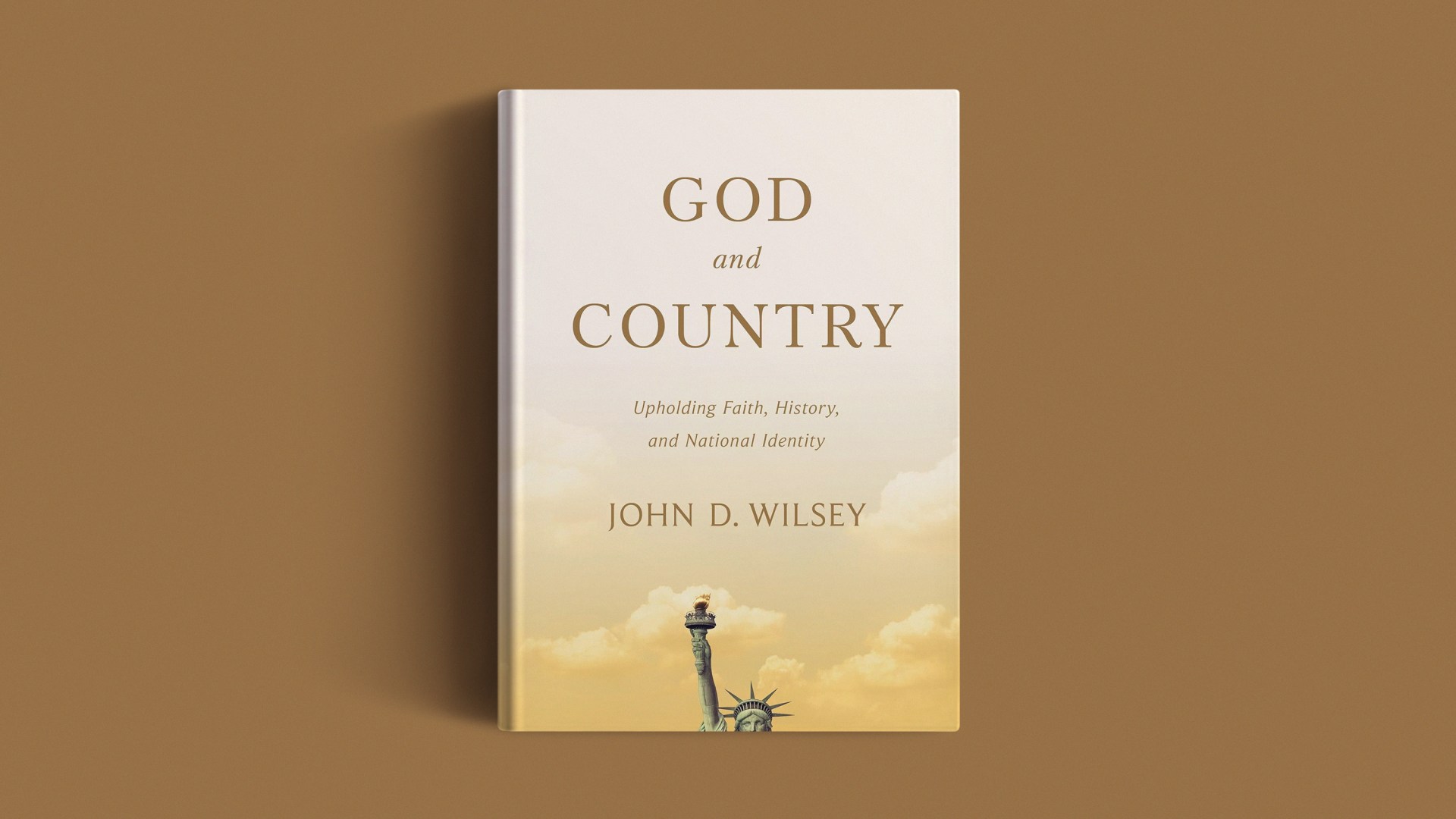
God and Country argues Christians studying the past must be charitable to its flawed inhabitants.

The book cover.
Christianity Today January 27, 2026
Illustration by Christianity Today / Source Images: Getty, B&H Academic

In one of his dark epistles, the devil Screwtape tells his nephew Wormwood that Satan has managed to deceive humanity by convincing scholars to adopt the “Historical Point of View.”

“The Historical Point of View, put briefly, means that when a learned man is presented with any statement in an ancient author, the one question he never asks is whether it is true,” C. S. Lewis’s character explains.

And since we cannot deceive the whole human race all the time, it is most important thus to cut every generation off from all others; for where learning makes a free commerce between the ages there is always the danger that the characteristic errors of one may be corrected by the characteristic truths of another. But thanks be to Our Father [Satan] and the Historical Point of View, great scholars are now as little nourished by the past as the most ignorant mechanic who holds that “history is bunk.”

As I think back on my graduate education in history, I realize that my own attitudes toward the past were for a while perhaps uncomfortably close to this devilish perspective. Like the scholars Screwtape describes, I learned the art of researching the past using primary source documents. I enjoyed immersing myself in the texts—but I didn’t necessarily look to them for wisdom.

John D. Wilsey’s God and Country encourages Christians to adopt a more spiritually mature attitude toward the past. Like Lewis, Wilsey knows that if we’re not “nourished by the past,” we will be more vulnerable to the Devil’s lies. And like Lewis, he wants Christians to avoid the errors of uncritical nostalgia on the one hand and unreflective dismissal on the other.

Both dangers are certainly with us. Wilsey writes in the wake of a movement on the left to tear down statues of past heroes because their actions were out of step with our contemporary moral code. He also writes at a time when an uncritical, reactionary celebration of the Confederacy is alive and well in some circles on the right.

And he writes at a time when numerous other Christians question why they should study the past at all. As a church historian teaching at Southern Baptist Theological Seminary, Wilsey notes that many of the aspiring pastors in his classes wonder why they need to take time away from their biblical and theological studies to study Christian history.

God and Country explains both why Christians should study the past and how they should do it.

Thinking about the past is part of being human, Wilsey asserts: “Humans are the only creatures that have an awareness in time.” We make memorials and tell stories about days gone by. We were “fashioned by [our] Creator” to “think historically,” he writes.

Though remembering the past is a universal phenomenon, Christians have another reason to study history. Without an awareness of what’s already happened, we won’t be able to understand God as the author of history. Christianity is not a set of moral teachings, parables, or wise principles that can be divorced from a historical context. It is instead the story of God’s redemption accomplished through a divine intervention in time and space. “Our faith and confidence in God are rooted in what He has said and done in the past,” Wilsey says. “Thus, the option of considering history as irrelevant is not open to the Christian.”

After making the case for history’s necessity, Wilsey instructs his readers in its study. His first two chapters on the subject present material that will probably be familiar to most professional historians. Students of history, he writes, must consider the “five Cs”: change over time, context, causality, contingency, and complexity. In other words, studying the past is not simply describing what happened but instead examining why particular events occurred and how they relate to other developments.

On that point, few historians would disagree, whether they’re atheists or believers. But Wilsey then pivots to suggest something I never encountered in my historiography classes at secular institutions. To study the past, he argues, we need to cultivate virtue, since “without virtue in the study of history, there is no fear of God; thus, there can be no understanding.”

Specifically, Wilsey argues that we need to develop love for the people whose lives we examine—not a mandate to like them personally, let alone excuse their flaws—but to treat them with charity in accordance with 1 Corinthians 13. Because “Paul wrote that love is patient,” we must bear with our historical subjects “in their manifold expressions of their fallenness,” Wilsey says. “We must be fair to them and their times,” he encourages. “Our place in relation to them is as their student rather than their judge.”

“Ever since the Enlightenment, it has been common to regard the people of the past as boorish, childish, superstitious, brutal, and prejudiced,” he continues. But “love excludes arrogance toward others in the present and the past.” If we cultivate Christian virtue, we won’t be “chronological snobs.”

And if we learn to love the people of the past, with all their flaws, we will find it easier to love people in the present who also are deeply flawed.

One of those present loves Wilsey says we need to cultivate is love for country. He devotes the last chapter of his book to a rightly ordered Christian patriotism, grounded in an understanding of the country’s history. An unreflective celebration of America might be jingoistic idolatry. But a Christian student of history can love America for the good it has done while lamenting its failures. Just as we can learn to love people in the past even with all their faults, so we can learn to love our country even when it has not lived up to its ideals.

It is this last chapter that is likely to raise the greatest controversy among some Christians. At least on a surface level, it’s hard to disagree with most of what Wilsey says in this book. What Christian historian, after all, would say we shouldn’t treat our historical subjects fairly and charitably? What Christian historian would say we shouldn’t consider context when studying the past?

But some Christian historians may resist Wilsey’s conclusion, at least in part. I have attended enough conferences to know that many believe historical study should be a quest for truth and justice, in the sense that we should seek to expose the wrongs of the past in order to right them in the present.

Some of these Christian historians, I imagine, would not necessarily agree with Wilsey’s assessment that “the United States is a story of the advancement of freedom, not only within our borders but around the world.” He proclaims, “No other country has done more for the advancement of human freedom than the United States.”

For those who believe that the United States is a flawed—but still mostly admirable—country, with an unparalleled record of advancing human freedom, it makes sense to love the nation despite its missteps.

On the other hand, for those who believe, as Nikole Hannah-Jones argues in the New York Times’s 1619 Project, that “anti-black racism runs in the very DNA of this country,” it may be harder to take such a sanguine view.

Wilsey is honest about America’s history of racism and slavery. But at the same time, there’s a distinct difference between his view of America as a bastion of freedom despite its racist sins and Hannah-Jones’s view of America as a society founded on racism despite its promise of liberty and equality. I’m not sure the theological work Wilsey does in this book can fully address that gap, because the gap is not simply a matter of theology but rather a matter of historical interpretation.

Even so, I hope even those who are most critical of Wilsey’s traditional conservatism and love for the United States will learn from his theological opposition to what Lewis called “chronological snobbery.”

If we find ourselves quick to denounce earlier generations who defended slavery or engaged in other morally objectionable actions, perhaps we should ask ourselves if we are treating our historical subjects with love and understanding. If we look to the past only to champion the oppressed and further our own agendas in the present, perhaps we should ask whether we’re cutting ourselves off from needed sources of wisdom.

In other words, perhaps we should ask if we’ve fallen for Screwtape’s devilish agenda.

With Wilsey’s book as a guide, readers will be less likely to succumb to this error. And maybe in the process, we’ll also become better practitioners of the Christian virtues, capable of extending grace to others—both those who lived in the past and those who are with us now.

Daniel K. Williams is an associate professor of history at Ashland University and the author of The Search for a Rational Faith: Reason and Belief in the History of American Christianity.

News

Zimbabwe Christians Push Back Against Proposed Abortion Legalization

One woman warned the senate of a “silent aftermath they will never legislate away.”

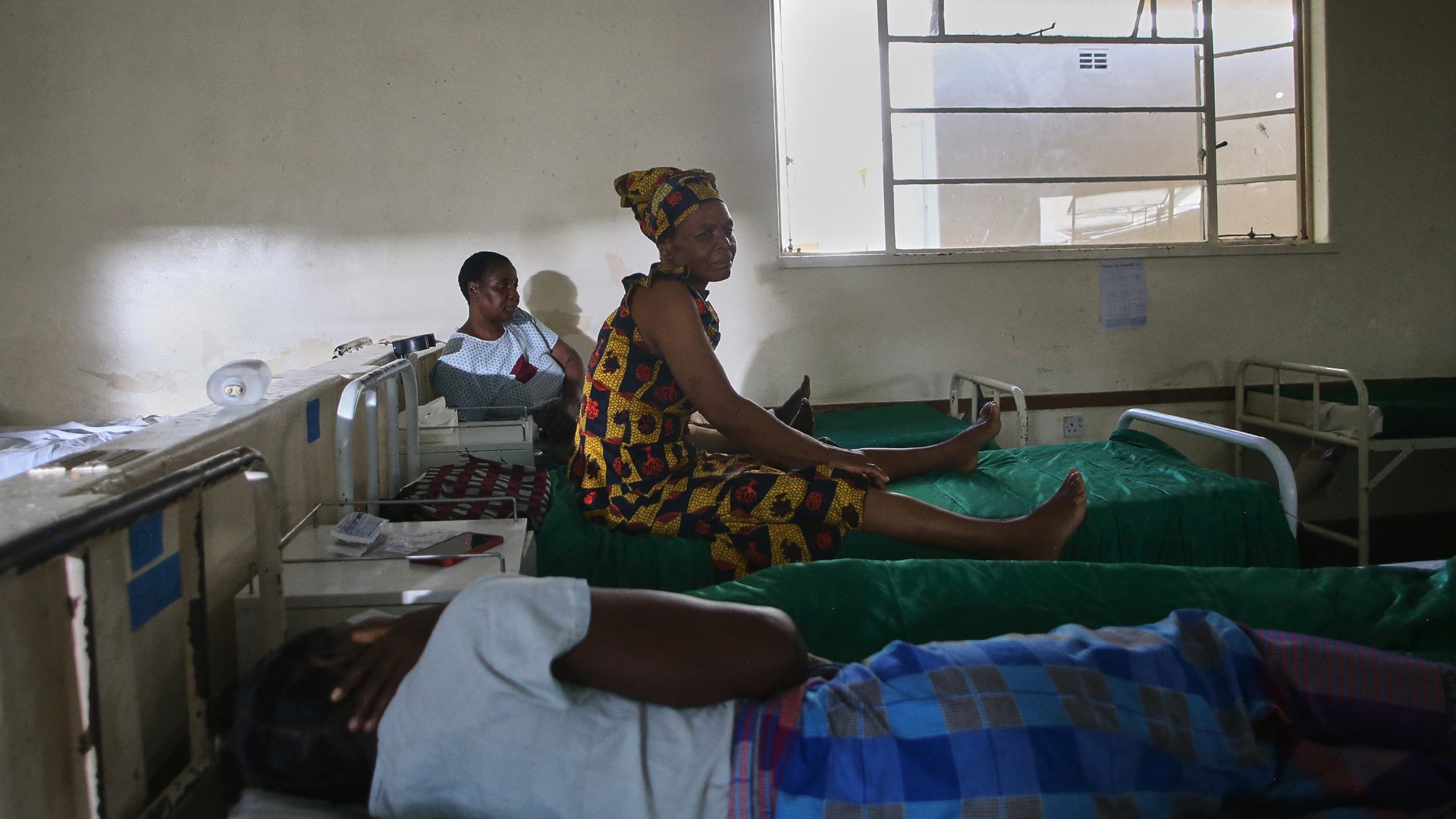
Women in recovery in the women's ward at Karanda Mission Hospital in Mount Darwin, Zimbabwe.

Women in recovery in the women's ward at Karanda Mission Hospital in Mount Darwin, Zimbabwe.

Christianity Today January 27, 2026
Jekesai Njikizana / Contributor / Getty

Maria Shingi woke up one morning a decade ago with body aches. Then friends noticed she had gained weight and advised her to get a pregnancy test. Shingi, then 30, stopped at the pharmacy on her way home from her administrative job at the Nigerian embassy in Harare, Zimbabwe, to buy one. Fear gripped her as two lines formed on the test. She was pregnant.

“It was the most devastating experience,” Shingi recalled. “I cried. I really cried.”

The baby’s father, an official at the embassy, was 20 years older than her and already had a wife and children back in Nigeria. He and Shingi started having an affair after she reported another superior’s sexual harassment to him and sought his advice. Shingi, a Christian, acknowledges the relationship was wrong.

Although the father was willing to take responsibility, Shingi wasn’t ready to bear the stigma of a child outside marriage or “belong to a polygamous union,” she said. So she found a licensed medical doctor who also performed illegal abortions.

The doctor assured her an abortion would be fast and pain-free. He told her the child wasn’t formed yet at four to six weeks and was “merely blood.” He didn’t mention how the procedure might affect her mind and emotions.

Three days after the abortion, Shingi began to bleed. The doctor gave her some medication, but it didn’t stop the bleeding. Then she visited a different gynecologist who explained to her fetal development and what an abortion entailed. Guilt overwhelmed her: “I began to realize … it was a real human. I had killed a human being.”

The abortion procedure haunted her. Shingi fell into depression and had suicidal thoughts, which she tried to escape by drinking alcohol. Still, she couldn’t shake the trauma.

 “I couldn’t heal,” Shingi said.

Now she fears a new bill under consideration in her country will remove restraints and push other women to make the same choices she made. In October, Zimbabwe legislators passed the Medical Services Bill, which would roll back abortion restrictions, through its National Assembly. It now heads to the Senate for debate.

Pro-life advocate Albert Dhafana said it will “take a miracle” for the Senate to block the bill’s passage, but he hopes churches and Christian senators will push back, as about 85 percent of Zimbabweans identify as Christian. “There is a little glimmer of hope among the Christians,” Dhafana said. “These are the only people that can make a difference.”

Zimbabwe’s current abortion law—the 1977 Termination of Pregnancy (TOP) Act—only allows abortion in the cases of rape and incest, risk to the life of the mother, or risk of physical or mental defects in the child. If signed into law by President Emmerson Mnangagwa, the new bill would gut the TOP Act and allow on-demand abortion anytime up to 12 weeks of gestation and up to 20 weeks in cases of a threat to the woman’s health, mental well-being, or socioeconomic stability. About half of Zimbabwe’s population lives below poverty line.

“We are very afraid that in addition to going against the principle of life and human dignity, it just makes humans so dispensable—just like trash,” Dhafana said. “We really can’t imagine where this will end.”

Despite being illegal, abortions are already common in Zimbabwe. A 2019 study found that half of pregnancies “ended in intended birth, 24% in unintended birth, 16% in miscarriage, and 10% ended in abortion.” Researchers attributed this to gaps in contraceptive use and access, low socioeconomic status, and lack of sex education.

Zimbabwe doesn’t have many pro-life resources for women in crisis, and the handful that exist are poorly funded, according to Dhafana. Meanwhile, activists lobbying for legal abortion have gained strength through years of practice and increased funding. The pro-abortion lobby in Zimbabwe and throughout Africa receives much of its financial support from international family planning organizations such as the Gates Foundation and MSI Reproductive Choices (formerly Marie Stopes International).

Dhafana said Sweden and the UK are also pushing for the legalization of abortion in Zimbabwe through a network of pro-abortion organizations influencing lawmakers.

“These [pro-abortion activists] are people who have obviously been paid,” he said. “These are efforts to change our culture of preserving life.”

Local pro-abortion organizations such as Zimbabwe Human Rights Commission have systematically worked to dismantle the country’s abortion restrictions for years. They achieved a breakthrough in 2024 when the Zimbabwe Ministry of Health and Childcare released new comprehensive abortion guidelines that adopted World Health Organization abortion protocols and allowed nurses and midwives to perform first-trimester abortions.

Then in November, just after the Medical Services Bill passed the National Assembly, Zimbabwe’s High Court chipped away at the long-standing TOP Act. Justice Slyvia Chirawu-Mugomba declared parts of the TOP Act unconstitutional and said it treated women with mental health challenges and victims of rape unfairly by considering only physical reasons as valid for abortion access.

But, pro-life activists argue, Chirawu-Mugomba didn’t address the psychological harm abortion has caused to women like Shingi. Neither do organizations such as Safe Abortion Fund, an international group operating in Zimbabwe whose documentaries seek to influence policymakers by telling the stories of women who experienced unsafe abortions.

The Zimbabwe Heads of Christian Denominations (ZHOCD) group warned in a statement that the bill would weaken safeguards against exploitation and “open the door to late-term abortions under broad mental-health provisions and potentially enable sex-selective or disability-based abortions.”

The bill also proposes expanding abortion access for minors without parental consent or magistrate approval. Advocates of the bill claim this will remove bureaucratic delays that cost lives. Christians say it isolates teens in need of community.

“Many of the girls are vulnerable at that moment,” Shingi said. “They need support and honesty—this bill takes away that possibility.”

Shingi believes the church needs to step up to provide support and proactive advocacy. After her abortion and subsequent alcoholism, she turned to a WhatsApp group called Hot Seat Confessions—where members anonymously ask for advice about domestic issues such as cheating spouses—for the support she didn’t find in church. There she met an 18-year-old girl who’d had three abortions in two years and was planning another. Shingi persuaded her to have the baby instead.

 “A lot of people can be helped if people like me speak up,” she said

Shingi said churches provide few or no forums for women to ask questions and receive counsel.  Meanwhile, both single and married women are aborting their babies. “It’s a problem the church should take seriously.”

Even after finding forgiveness in Christ, Shingi said her alcoholism lingered. She finally stopped drinking after a church member referred her to an addiction counselor. She’s been sober for four years now.

When Shingi learned about the Medical Services Bill in December, she quickly wrote a letter to the National Assembly telling her story and protesting the impending bill. She asked leaders to reckon with “the silent aftermath they will never legislate away” and said that for her, healing came only through repentance.

“When abortion is legalized, what is legalized is not only a procedure but a lie: that abortion resolves crisis, that it liberates women, that it averts mental health, that it leaves no permanent mark,” Shingi wrote. “I am here as living evidence that this is untrue.”

Books
Excerpt

The First Christian Nation

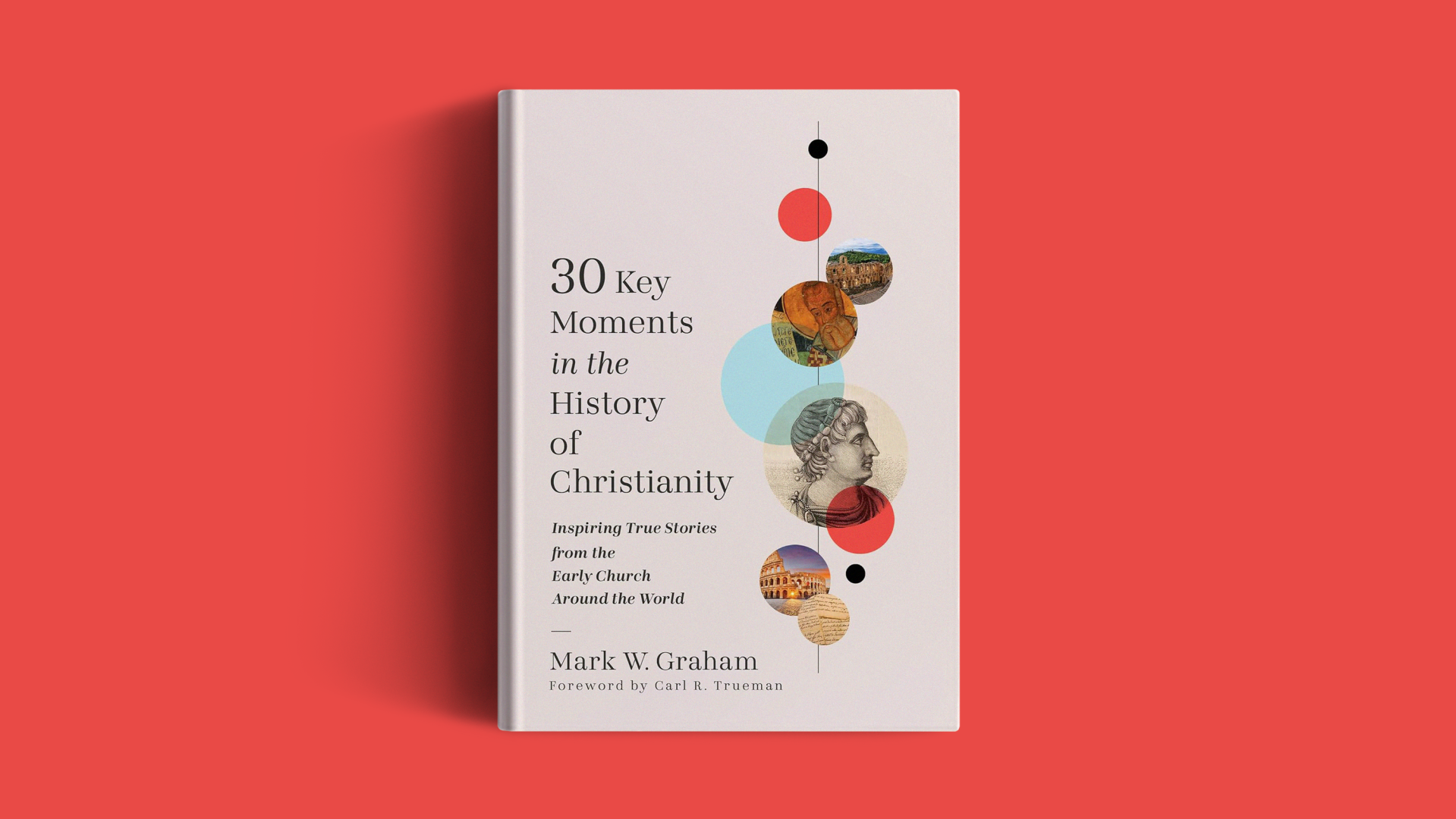
An excerpt from 30 Key Moments in the History of Christianity.

The book cover
Christianity Today January 27, 2026
Illustration by Christianity Today / Source Images: Getty, Baker

The story is told of how the Armenian king Trdat (also known as Tiridates III) was physically transformed into a wild boar as a form of divine punishment for persecuting Christians. He reportedly developed claws, a snout, fangs, and bristly hair, symbolizing his descent into a beastlike state.

Ancient church historian Agathangelos tells how Trdat suffered from this strange affliction until divine aid provided a cure. The king’s sister had a vision of a man who could heal him—the same man Trdat had years earlier thrown into the aptly named Pit of Oblivion for refusing to sacrifice to an Armenian ancestral goddess.

The man’s name was Grigor (we know him as Gregory the Illuminator), and he should have died there. But when the Pit of Oblivion was opened, Grigor was found alive thanks to the generosity of a woman who had furtively tossed bread into the pit each day for years.

Grigor was brought forth to heal King Trdat, who immediately repented and converted, dedicating the rest of his long reign to tirelessly building up the Armenian Church with Grigor’s help.

How should we approach inspiring (and often entertaining) stories like this one, which many cautious historians of Christianity introduce with phrases such as “According to tradition …” or “Legend has it that …”? The history of the Armenian Church is full of such accounts, yet historians remain divided on whether or how to incorporate them into serious historical narratives.

Even the date of Trdat’s conversion is deeply controversial, with scholars arguing for either 301 or 314 or somewhere in between. Such challenges are intricately enmeshed with the Armenian national story. Well before Trdat’s conversion, Christianity had been growing steadily in Armenia, as it was elsewhere. Early church traditions declare that Bartholemew and Thaddeus, 2 of the 72 disciples mentioned in Luke 10:1, were the original apostles to the Armenians. Perhaps.

Several important trade routes cut through Armenia, and merchants and missionaries shared their faith in the major cities. Over the course of the second and third centuries, Christianity came to Armenia primarily from Edessa in Mesopotamia, which was home to a vibrant Syriac Christianity, and from Cappadocia, which was predominantly Greek. The first recorded Armenian bishop was Meruzanes, who we know corresponded with Dionysius, bishop of Alexandria, around the year 250.

By the late third century, some powerful Armenian nobles embraced Christianity as well. The political situation of Armenia was vital to Christianity’s rise there. Armenia was located between two warring superpowers—the Romans to the west and the Sassanian Persians to the east.

Even at moments of relative independence, Armenia was almost never centrally unified and was usually only superficially autonomous. At one such moment, in 298, the Roman and Sassanian empires signed a peace treaty that recognized Armenian autonomy and acknowledged the Arsacid royal house, which had a strong connection to the Roman Empire.

Trdat came to power as part of that treaty but soon faced strong religious and political pressures from all sides. From the east, “the Sassanian Persians were increasing pressure on the Armenians to accept the official Zoroastrian religion of [their] empire” in something akin to forced conversion.

From the west, Roman leaders called on Trdat to suppress Christianity and to punish any Christians fleeing to Armenia to escape Roman persecution. Trdat bowed to Roman wishes, reversed a history of religious toleration in Armenia, and began persecuting Christians, declaring his intentions in a letter to Diocletian, the Roman emperor who orchestrated the Great Persecution.

But when the Roman emperor Constantine converted to Christianity in 312, Trdat dutifully reversed course, embraced Christianity, and was taught by Grigor. All along, Trdat also felt pressures from inside his own country, as a number of Armenia’s assertive and strong aristocrats had become Christians themselves.

The two central figures in the early Armenian Christian story, Trdat and Grigor, shared strikingly similar backgrounds. Both were born into noble families with roots tracing back to Parthian or Persian heritage. As young children, they narrowly escaped death during periods of intense political upheaval thanks to courageous nurses who smuggled them out of Armenia and into Roman territory after their families were murdered.

Interestingly, some accounts suggest a dramatic connection between their families: Trdat’s father was assassinated in a plot in which Grigor’s father is said to have played a role. Agathangelos tells us that, while sheltering in the Roman region of Cappadocia as a child or teenager, Grigor “was raised as a devout Christian.”

Later, in the city of Rome, Trdat befriended influential Romans, laying the groundwork for bonds of friendship. When Grigor reached adulthood, he returned to Armenia, where he and 33 Christian women, led by Hripsime and Gaiane, shared the gospel at the Armenian court. Trdat, however, demanded that Grigor and the others publicly sacrifice to the royal Armenian goddess Anahit. When they refused, they were subjected to torture, though it remains unclear if the infamous Pit of Oblivion was actually involved. Sometime later, Trdat embraced Christianity.

Scholars have proposed various reasons for his conversion, none of which, notably, involve the tale of bristly boar hair. Some point to the influence of powerful Christian nobles within his court, others to the courageous witness of Grigor, Hripsime, Gaiane, and their companions.

Another factor may have been Constantine’s Edict of Milan in 313, which granted religious toleration throughout the Roman Empire. It is likely that a combination of these factors played a role. What is clear, however, is that once Trdat converted, he immediately began reshaping Armenia in accordance with his new faith. In 313 or 314, a state assembly in Vagharshapat, Armenia, affirmed his choice of a new religion.

The first official act of the Armenian Christian state was to send Grigor back to Cappadocia for ordination as bishop of the Armenians. He received an official political mandate to the entire Armenian people. Grigor returned to continue teaching, and in 314 or 315, he baptized the Armenian king, the army, and, sources say, the Armenian people in the Euphrates River. The areas Trdat controlled most strongly in his fragmented realm and areas controlled by Christian nobility saw immediate conversions. Pockets of paganism remained, as we see Mesrop Mashtots still sharing the gospel with pagan Armenians well into the fifth century.

But the royal family and nobility ensured that Christianity would be the religion of the state from the time of Trdat onward. Toward the end of his long reign, he would even send an Armenian representative—Grigor’s son Aristaces—to the Council of Nicaea in 325.

The Roman emperor Constantine, as we will see, embraced the faith himself and extended toleration to others. Trdat went a serious step beyond this when he “established Christianity as a state religion,” the first ruler ever to do so. Whether one accepts the traditional Armenian account and dates Trdat’s conversion to 301, making him the first political leader to embrace Christianity, or the current consensus of 314, or somewhere in between, Armenia was the first state to embrace Christianity. The Roman Empire would not declare Christianity the state religion until almost a century later. The Armenians would come to view themselves as God’s chosen people.

The ancient writer Agathangelos described his home country as a place “where God’s grace has been manifested,” with assumptions of exclusivity that have been connected with national pride there ever since.

Not surprisingly, this first “Christian nationalism” bore some unpleasant fruit. Once Christianity became the state religion, “an intense—and at times violent—proselytizing campaign began to enforce the new religion on the entire population.” Non-Christians were persecuted, and pagan and Zoroastrian sites and temples were destroyed, with Christian projects often built directly on top of the ruins. Christianity had not functioned this way before, but it would do so in subsequent centuries with great regularity across many different settings.

Throughout history, we find similar examples of Christianity being consolidated with political power. Such dangers lurk whenever a people—whether Romans, Franks, Brits, or Americans—claim to be chosen by God and adopt, in effect, a Christian nationalism.

Still, it is impossible to ignore the power Christian nationalism has to sustain a people. Christianity left a unique mark on the Armenian people that has remained strong through the centuries. Despite an often politically fragmented realm, “it was Christianity that cemented the distinctiveness of Armenian identity” in this period.

That identity has long sustained our Armenian brothers and sisters through setbacks, conquests, and occupations by Persians, Byzantines, Arabs, Ottoman Turks, and Soviet Russians. They remained a people, sometimes even without any official state to speak of.

Within a century of Trdat’s conversion, the first Armenian alphabet and script were developed by Mesrop Mashtots, and Armenians now had texts—first the Scriptures, then original literature—written in their own language. Up to that point, Christian writings had only been available in Greek and Syriac.

These were powerful markers, statements, and enforcers of Armenian national faith and identity that remain so to this day.

Mark W. Graham is chair of the history department at Grove City College.

This essay is adapted from 30 Key Moments in the History of Christianity: Inspiring True Stories from the Early Church Around the World by Mark W. Graham (Baker Books, a division of Baker Publishing Group, 2026). Used by permission.

News

First Year of Trump 2.0 Leaves Pro-lifers with Misgivings

At the March for Life, pro-life Christians express concerns with Washington’s waning commitment to their cause.

People attend the annual March for Life rally on January 23, 2026.

People attend the annual March for Life rally on January 23, 2026.

Christianity Today January 26, 2026
Kevin Dietsch / Staff / Getty

At the March for Life event Friday in Washington, DC, the largest annual gathering of pro-lifers, it may have seemed that all was well in the pro-life movement.

Despite the brisk January weather and the threat of a polar storm barreling toward the region, tens of thousands gathered from all over the country in the crowded streets of Washington for a march that dates back over half a century.

Families pushed strollers, clergy mingled with students who were wearing matching school colors, and young adults touting homemade and printed signs offered extras to passers-by. 

But despite visibly high energy in the crowd, some pro-life leaders and marchers expressed consternation over what they deemed as tepid actions toward their cause from the Trump administration over the last year.

Gavin Oxley, spokesperson for Americans United for Life, said pro-lifers came to the march “discouraged by the lack of a strong pro-life commitment by the Trump administration, specifically on Hyde Amendment provisions in the health care package … and then also the issue of the abortion pill.”

When Vice President JD Vance took the stage for a speech, a cry from an unsatisfied protester brought those tensions into the open: “Ban the abortion drug!” 

That’s a reference to what has been a sore spot between the pro-life movement and the Trump administration’s second lap in office: The administration has continued a Biden-era relaxation of restrictions to the abortion pill. (Currently, federal law allows abortion pills to be administered at home, outside of medical supervision.) The Trump administration also approved a generic version of the abortion drug. Officials stated that the Food and Drug Administration (FDA) is required by law to approve the generic version.

Vance initially ignored the shouted comment, seeking instead to assuage pro-lifers of the administration’s commitment to their cause during his headline speech at the march. He pointed to efforts to curb taxpayer-funded abortions overseas through an expansion of the Mexico City policy, to create investment accounts to provide $1,000 for newborns to American families, and to expand the Child Tax Credit.

Eventually, though, the vice president seemed to heed the cries and said he would address “the elephant in the room.” 

There’s a “fear” that “our politics have failed to answer the clarion call to life,” he began.

“I want you to know that I hear you,” Vance said. “There will inevitably be debates within this movement … about how best to use our political system to advance life, how prudential we must be in the cause of advancing human life. I think these are good, honest and natural debates, and frankly … they help keep people like me honest, and that’s an important thing.”

“But I think all of us also have to remember that we are commanded to ‘let not our hearts be troubled,’” he added in a paraphrase of Jesus’ words in John 14:1, before telling the crowd that the overturn of Roe had taken 50 years and continued progress might also take time.

Ahead of the march, Vance told the Washington Examiner that pro-lifers need to be “realistic” about what could be achieved federally.

“Most of what’s going to happen over the next generation of the pro-life movement is we’re going to have to win victories at the state level,” Vance said. “I think we can do that. I think we should organize and mobilize for that. But I think we have to be realistic with ourselves that, right now, the American people are not endorsing a lot of pro-life policy.”

Some pro-life voices expressed disappointment with his stance.

“Chemical abortion is not a matter for “prudential” discussion among pro-lifers,” Alexandra DeSanctis Marr, a contributing writer at National Review, posted on X in response to Vance’s speech.

“The vice president doesn’t have to oppose chemical abortion—in fact, he’s been quite clear that he supports it, as does his administration. But pro-lifers should not allow him to position himself as pro-life while taking his current stance,” she added. DeSanctis Marr authored an article ahead of the march criticizing the decision to platform Vance there.

“The Trump administration has the ability to end this today,” Kelsey Pritchard with Susan B. Anthony Pro-Life America (SBA) said, referring to the availability of abortion pills.

Marjorie Dannenfelser, president of SBA, said that abortions have increased by 30 percent since 2016.

“We have the opportunity to save lives and serve women. But it is because of the inaction of the Trump-Vance administration on abortion drugs that this opportunity isn’t being realized—and abortions are going up, not down.”

In 2024, the Guttmacher Institute, a pro-choice organization that tracks reproductive rights, estimated in 2023 that around 642,700 abortions, or over 63 percent of all abortions in the United States, were medication abortions. Since the overturn in 2022 of Roe v. Wade, which granted a national right to abortion, and though some states have tightened restrictions around the procedure, the number of abortions has risen.

Pro-life leaders point to the wide availability of abortion pills that can be prescribed online or through telehealth consultations. The abortion pill also has ways of crossing state lines, even to states that ban abortion. Some 14 states ban abortion pills, but other states have passed “shield laws” to protect prescribers from legal action, even if their patients are from states with restrictions. Reporters have found underground networks where women can obtain the abortion pill.

Some pro-lifers believe that the percentage of chemical abortions is even higher now: “Closer to 70 percent,” estimated David Bereit, executive director of the Life Leadership Conference and founder of 40 Days for Life.

Leaders in the movement interpret these numbers as lack of action on the part of the Trump administration, failing to address what they see as the new primary crisis on the issue of life.

“In this post-Roe landscape, the pro-life movement has actually been losing more than winning for the last few years on many fronts,” Bereit said.

While pro-lifers are thankful for the actions that occurred during the first Trump administration, Bereit said that, “in admin two, it has felt more like, ‘Hey, we just want to brush this issue off.’”

“I feel that President Trump and the administration are focused in other areas and feel that, ‘Hey, we gave the pro-life movement what we thought they wanted, so now we’re going to move on to other things.’”

Bereit views this as a mistake: “There’s still leadership needed on this … our fight is not over, it’s simply changed.” 

On Thursday, White House officials briefed several pro-life leaders on new pro-life policies. They announced that the National Institutes of Health would no longer federally fund research that relies on fetal tissue from abortions; the Small Business Administration would review whether Planned Parenthood illegally received millions in COVID-19 pandemic–era loans; and that they would expand the Mexico City policy, which requires foreign nongovernmental organizations that receive US federal funding to refrain from performing or promoting abortion.

Conspicuously absent was any reference to the primary topic animating pro-life leaders, leaving some attendees unsatisfied. And vocally so.

“The Trump-Vance Administration has not reversed Joe Biden’s Covid policy allowing for the mail-order of the drugs,” Dannenfelser said in a statement Thursday. “This is making state pro-life laws completely unenforceable—undermining Trump’s ‘back to the states’ position.”

Bloomberg reported last month that the FDA has delayed reviewing data around the safety of mifepristone, which is used alongside another drug called misoprostol to induce a chemical abortion, after commissioner Marty Makary requested waiting until after the midterm elections. 

Makary and Health and Human Services secretary Robert F. Kennedy Jr. have said they are actively working on a review of the abortion drug. A spokesperson denied to Bloomberg the idea that the FDA is “slow walking this review for political purposes.”

Lawmakers’ requests for more information have not so far resulted in concrete updates.

“From a pro-life Democrat perspective, it’s really, really, tremendously frustrating,” Kristen Day, president of Democrats for Life, told CT. “The pro-life movement has put all their apples in the cart with the Republican Party life … and now we see the leader of the Republican Party wavering.”

Day expressed particular concern over a comment Trump made earlier this month during comments on healthcare negotiations: “You have to be a little flexible on Hyde,” Trump said. The Hyde Amendment prevents taxpayer dollars from directly funding abortion.

Press secretary Karoline Leavitt later walked back the president’s remarks, saying he hadn’t changed his position on Hyde.

House speaker Mike Johnson told reporters in the aftermath that “we are not going to change the standard that we’re not going to use taxpayer funding for abortion. … I’m just not going to allow that to happen.”

Johnson also spoke to the march Friday, flanked by a crowd of lawmakers, including one Florida representative cradling her baby (and occasionally allowing a colleague to hold her). Johnson highlighted recent bills passed by the House to greenlight federal assistance going to pregnancy resource centers and require colleges and universities to counsel students of their rights to accommodations if they become pregnant.

Some pro-life leaders preached patience when working with Washington.

“This is the best administration I’ve ever worked with on the issue of life,” Penny Nance, president of Concerned Women for America, said. “[Trump] doesn’t always get it right, but he tries very hard.”

“There’s times I don’t love things that he says, but I just know the reality of working directly with him,” she said. 

“I am so thankful that we have a president and we have a vice president who stood for life in their actions,” Cissie Graham Lynch, who works with Samaritan’s Purse and the Billy Graham Evangelistic Association and gave the closing prayer at the march, told CT. “Always look at the actions … that’s where we need to hold them accountable.”

“We have a long road ahead,” Lynch added. “It took us 50 years to overturn Roe v. Wade; it could take us another 50 years to change the heart of a nation to think of [abortion] as unimaginable.”

Lauren McAfee, president of Stand for Life, said the current challenges are an opportunity for Christians to get involved in pro-life advocacy, regardless of what happens politically. (McAfee is a member of CT’s Board of Directors.) 

“There’s always challenges in the landscape around the life issue that have only gotten more complex,” McAfee said. “Pro-life leaders have a lot to navigate.”

Her group supports pro-life organizations. It also works with churches to help pastors, lay leaders, and congregants better understand and get involved in pro-life work.

“From my over a decade of experience walking alongside pro-life leaders in the movement, I have seen [their] resilience,” she said. “They’re always going to continue caring, continue showing up, and continue advocating.”

When March for Life Education and Defense Fund president Jennie Bradley Lichter took the stage Friday, she celebrated the administration’s Thursday announcements. Left unsaid were any of the concerns animating other pro-life leaders.

Near the close of the rally, she asked everyone in the crowd to pull out their phones and tell elected officials to support the Hyde Amendment. The moment was a reminder that, even with assumed allies controlling Washington, long-held wins could not be taken for granted.

“Together, we will send a powerful message to your senators,” Lichter said, “that we want them to stand firm and be courageous for life.”

News

In a Tense Minnesota, Christians Help Immigrant Neighbors

As the Twin Cities reel from ICE arrests and the killing of Alex Pretti, churchgoers drive immigrants to work and doctor’s appointments.

U.S. Border Patrol agents smash a man's car window before dragging him out and taking him into custody when he failed to present citizenship documentation at a gas station on January 11, 2026 in St. Paul, Minnesota.

U.S. Border Patrol agents smash a man's car window before dragging him out and taking him into custody when he failed to present citizenship documentation at a gas station on January 11, 2026 in St. Paul, Minnesota.

Christianity Today January 26, 2026
Scott Olson / Getty Images

When word first spread that federal immigration agents had shot and killed Minnesotan Alex Pretti on Saturday in Minneapolis, a group of Hispanic evangelical pastors was meeting in a church basement nearby.

Minneapolis police chief Brian O’Hara was supposed to be there to talk with the pastors about security protocols at their churches, but his plans quickly changed. He needed to go to the scene of the shooting.

“They’re out there now trying to maintain order from the disorder the federal government has caused,” Dios Habla Hoy pastor Sergio Amezcua, whose church was hosting the meeting, said to the other pastors. Amezcua, once a Trump supporter, now says Latino supporters feel “betrayed.”

The pastors grabbed each other’s hands in a circle to pray. One woman there softly cried: “God, we need you. We need you to help us.”

“We know that you see us,” she prayed.

The Trump administration has pointed to a fraud scheme among the Somali community as justification for its recent immigration-enforcement surge in the Twin Cities, but most of those residents are US citizens.

Christians helping immigrants there told CT that enforcement operations have largely targeted the Hispanic community instead. Among their arrests, agents with Border Patrol and ICE (Immigration and Customs Enforcement) have been detaining legal immigrants as well as US citizens—and refugees who have legal status.

That has sparked fear among racial minorities in the Twin Cities that America’s immigration-and-asylum-processing system—and citizenship itself—no longer offers meaningful protection from a degrading or violent detention.

The Twin Cities are tense, but ICE agents aren’t visible everywhere. Minnesotans monitoring or peacefully protesting ICE are, even in arctic temperatures this past week. In the neighborhoods where ICE is more active, you’ll hear the unnerving whistles from ICE observers alerting residents to the presence of immigration agents. One evangelical CT interviewed said she sees the whistles as a way to get kids inside before any violent confrontations.

Pastor Héctor Andrade of Comunidad Cristiana Twin Cities told CT that most people in the Latino churches he knows have left. Even legal residents don’t want to meet with others in their homes. Many people avoid grocery stores, fearing they’ll be accosted if they step outside. Andrade carries his passport with him everywhere now.

“This is too big for us. It’s overwhelming,” he said. “There is a feeling of powerlessness.”

Upstairs at Dios Habla Hoy, volunteers schlepped boxes of food in 15-degrees-below-zero weather into waiting cars in the parking lot. This church, with the support of many non-Christian volunteers, has been delivering food six days per week for thousands of immigrant families who are staying home in fear. Two days before, the church had trained 600 new volunteers for food distribution, with a list now of 28,000 people who want food.

One room at the church was full of diapers. Another was packed with a mountain of toilet paper. Across the Twin Cities, neighbors pile supplies for immigrants into other churches, too, as well as restaurants and coffee shops, in scenes that look like a community recovering from a natural disaster.

In just a few weeks, churches have created a sprawling, informal network for grocery deliveries to immigrant families. On Saturday, one evangelical church in Minneapolis delivered food to 60 households. Christians are also raising funds to pay for rent for homebound immigrants.

These volunteers have adopted security measures to ensure ICE agents don’t follow them from the food-distribution site to immigrants’ homes. Due to heightened security concerns, some of them requested anonymity to speak with CT about their work.

One evangelical pastor, a lifelong Minnesotan granted anonymity to protect the identities of his congregants, has been driving two Hispanic members of his small church to work every day so they won’t be alone. They are legal immigrants. He is also driving one of his daughter’s friends to school after ICE agents came to their bus stop one morning.

“For people in the Hispanic community right now, there’s a lot of feeling of danger, for good reason,” he said. “These are the people God has placed in our lives. What can we do to help them out?”

He is extra cautious when driving his congregants: following the exact speed limit and turning off location services on his phone. He checks outside, scanning his surroundings for ICE agents before dropping off passengers.

“I never expected something like this to happen in the US,” he said. “There is a calling on Christians now to say, ‘What does it mean to love the sojourner?’”

CT confirmed some Hispanic churches in the Twin Cities are no longer meeting in person. Dios Habla Hoy now locks its doors for services and only allows in known churchgoers. Amezcua said the church has about 80 attendees now, down from 500 before.

Another evangelical, a mom with four kids, told CT she has been driving six Hispanic children in her neighborhood to school every day because their parents don’t feel safe sending them by foot or to the bus stop. She has also signed a Delegation of Parental Authority (DOPA) form saying she would temporarily care for two immigrant children if their mom is deported. Churches around the city have been assisting families with notarizing DOPA forms, and churchgoers themselves are signing up to take children as needed.

In addition to making food deliveries, churches are bringing immigrants to critical medical appointments. On Saturday, a volunteer took a toddler to a medical appointment while others monitored the area around the pediatrician’s office to make sure ICE agents would not try to take the child.

A local evangelical refugee resettlement agency, Arrive Ministries, has been coordinating with another group, The Advocates for Human Rights, providing emergency legal representation for people it never expected would be arrested: legally present refugees, resettled after years of vetting.

Rebekah Phillips, the co–executive director of Arrive, told CT the organization has concerns about reports it has heard from its refugee clients of their detention conditions in the last two weeks. “Those are really difficult stories to hear,” she said.

Arrive, which now operates with locked doors, is seeing growing interest from area churches that weren’t involved in immigration support before. The staff reported to CT that since the federal raids began, 35 churches new to Arrive’s work have asked the organization for information sessions.

“What the government is doing here is really, really bad, and that comes from a pastor that—I thought that this administration was going to be good for our community,” said Amezcua from Dios Habla Hoy. “It’s a nightmare we want to wake up from soon.”

Church Life

My Healing Was God’s Work, Not Mine 

After six years of debilitating chronic migraine disorder, I’d lost my confidence in the Lord. He was still faithful.

A woman's forehead with several sharp red triangles pointing at it.
Christianity Today January 26, 2026
Illustration by Elizabeth Kaye / Source Images: Unsplash

My church occasionally holds a special time of healing prayer in which our pastor anoints with oil those who are sick or in pain and asks God to relieve them of their afflictions. Last spring, at the most recent of these services, a friend of mine who had recently developed chronic pain in multiple places—at first in her feet and more recently in her hip—walked up to the front of the church.

“I’m afraid it didn’t work,” she said when I asked her about the anointing later that week. She was still suffering and wasn’t holding out much hope for a delayed effect. “I didn’t have enough faith,” she concluded.

I knew exactly what she meant. I’d also gone forward to be anointed that past Sunday, for the fifth time in as many years. I developed chronic migraine disorder—a condition which involves, among other things, having a headache for 15 or more days a month—in 2019 while working as a software engineer at Facebook. Ever since, I’d been disabled by frequent, long-lasting migraine attacks, spending an average of 28 days out of every month with a headache that sometimes felt like being stabbed in the eye, other times felt like a wider, more crushing pain throughout my skull, neck, and face. I also developed a litany of other symptoms: I was constantly sensitive to light and smells, for example, plus I was frequently dizzy, fatigued, or inexplicably panicked.

I’d been told by doctors that chronic migraine is an incurable disease—a prognosis that grew bleaker as I ran out of options for managing my pain. I’d been hospitalized four times, tried every medication regardless of side effects, and even traveled across the country in search of second opinions. I avoided a mile-long list of suspected “trigger” foods, including gluten, tomatoes, dairy, bananas, bacon, onions, olive oil—even leftovers. Barring a miracle, I soon realized I was likely to be disabled by pain for the rest of my life.

The first time I got anointed—or was it the second?—was not at church but in my living room. My pastor made a house call because I’d been struggling to make it to church, with its ultrabright track lighting that was sure to aggravate my symptoms. Also, I was embarrassed and didn’t want to be anointed in front of the congregation.

Before anointing me, he recited from James 5:14–16:

Is anyone among you sick? Let them call the elders of the church to pray over them and anoint them with oil in the name of the Lord. And the prayer offered in faith will make the sick person well; the Lord will raise them up. If they have sinned, they will be forgiven. Therefore confess your sins to each other and pray for each other so that you may be healed.

Alongside these specific instructions to believers, the Bible records many stories of miraculous healing. One of these, described by three different biblical authors, is that of the woman who had been menstruating for 12 years. Believing Jesus could heal her, she pushed her way through the crowd surrounding him and touched the edge of his robe. Jesus turned to her and said, “Daughter, your faith has healed you” (Luke 8:48).

The prayer offered in faith will make the sick person well. Your faith has made you well. As a software engineer with an analytical mind, I interpreted these statements as a type of equation: In exchange for my belief that God would heal me, God would grant miraculous healing. Even then, I knew this to be a fickle formula, similar to what Jesus said about faith being able to move mountains into the sea (Matt. 17:20). I’d never seen a mountain move like that, just as I’d never known a Christian who had been miraculously healed of a physical disease. This mismatch between the promises of God and my experience was uncomfortable, but it was a discomfort I’d been able to ignore. Until now.

That night in my living room, the mysterious connection between faith and healing filled my fogged-over mind as my pastor sat on my ottoman, asked me to confess my sins, then dipped two fingers in the oil. As he drew the shape of a cross on my forehead, I realized there was something I hadn’t confessed: my faithlessness. I didn’t believe God would heal me. I believed he could, but could isn’t the same as would. I, by faithlessness, failed to satisfy the only criteria I knew for getting better.

As the oil trickled into my eyebrows, I still waited in anticipation of some sense of otherworldly peace, the relief of the pain that was catching my breath in my throat. Neither came. I got up the next morning feeling worse than ever.

Did I really ruin the whole thing by not believing this process would work? There was no way to fake genuine faith, of course. But what did this mean for “Your faith has healed you”? Was my inability to muster faith keeping me sick? Was my unbelief staying God’s healing hand?

And if so, what was I supposed to do about that?

I asked myself these questions often over the next six years while taking every opportunity to be anointed that came my way. Each time, I tried my best to believe God would heal me, often asking that he would give me the faith I lacked. But my faith never amounted to much, my symptoms worsened, and I eventually exhausted all of the pharmaceutical and alternative treatments for my condition. I grew angry at God for not providing the faith I thought he required.

Eventually, I hit rock bottom. My migraines worsened to the point that nothing helped them except opioids, and other aspects of my life were simultaneously thrown into crisis. My mental health took a nosedive, and in my despair I ran from God. I gave up on praying or reading the Bible and, despite being a leader within my church community, stopped showing up consistently on Sundays. I still believed in God and considered myself a Christian, but in reality, I was in name only. In constant agony, I struggled to want to worship Christ. After six years of asking God for healing and receiving what felt like the complete opposite, my faith withered away into nothing.

It was in this season of utter faithlessness and deep despair that God began disproving my formulas.

It started with an email from an acquaintance of an acquaintance named Rachel. We’d been connected through an alumna of my MFA program because we were both writers with chronic migraine disorder—though in her email, oddly, Rachel claimed she didn’t have it anymore. A neuroscientist in Utah, after researching chronic migraine for years, had recently made a monumental discovery: This was, in many cases, a curable disease. Rachel’s email went on to say that she, being one of the first people to benefit from this doctor’s research, had been in remission for six months.

This was a wild claim, scientifically speaking, especially because at that time the research Rachel told me about hadn’t been published. And yet I found myself believing her story enough to investigate. If God wasn’t going to heal me, I could at least make another attempt to heal myself.

The days that followed were shocking. I met with the doctor Rachel recommended, who found that I had the same reversible metabolic disorder that had caused her chronic migraines. Three months of an extreme keto diet, he claimed, was all that was needed to reset my metabolism and free me from what I’d been told was a lifelong disease.

By now, the only reason I still attended small group was because my husband led it and it was hosted in our home. But nevertheless, as I pondered whether to try the diet, a close friend came to me during one of those group evenings with a prophetic word. God loved me very much, he said. Also, this treatment would be the end of the road.

As a member of a not-at-all-charismatic church in the Reformed tradition, I’d had very few encounters with the gift of prophecy, and I’d always been a little skeptical of its use. When it came to my illness, I’d learned early on to use similar skepticism as a shield against disappointment. I’d lost track of how many times a doctor had said a treatment would help, only for it to do nothing at all. One doctor even told me, flat out, that he could cure me—in exchange for thousands of dollars.

Yet I couldn’t deny that this prophecy was difficult to ignore. It came through a friend who knew what my illness had done to my life and had walked beside my husband and me through many treatments that hadn’t panned out. Receiving a prophecy from a perfect stranger is one thing. But receiving a prophecy from someone who knows full well the emotional and physical consequences of their words? He was, in no small way, putting our friendship on the line that night—a fact he seemed fully aware of, given the fear in his voice. The whole situation made me wonder if, after nearly six years of silence and my walking away, God still had skin in this game.

I decided to get anointed one more time.

That anointing service was last spring—and it was the same one my friend with chronic pain attended. Though it was performed by the same pastor who had anointed me in my living room six years earlier, it was altogether different in that I, for the very first time, believed it was going to work. Ever since my friend shared the words of prophecy, God had been doing something new in my heart, fostering a faith that felt more like knowing than any I’d ever before experienced.

The next day, I started the three-month diet. A month later, my migraines stopped being chronic. My many sensitivities went away, as did my once-frequent bouts of extreme depression and anxiety. When the three months ended, I transitioned back to a medium-carb but otherwise-normal diet and remained in remission. Today, I’m approaching a major milestone: one full year without chronic migraines.

Was I healed by miracle or medicine? I think both, and I choose to credit God regardless, as he is the one who reveals medical knowledge. But what I do not, and certainly cannot, credit in this process is my faith. On the contrary, God appears to have healed me in spite of my faithlessness.

The prayer offered in faith will make the sick person well. Your faith has made you well. What am I to make of these statements now? How did I, while running from God, manage to be healed by him?

As someone who has no seminary degree and whose mind often wanders in sermons, I won’t hazard answers to these questions. But I will say this: I clearly had the wrong formula, because in God’s logic system, we’re never in total control of the outcome. If we were, there would be no way for God to surprise us with his infinite love—the same love that, 2,000 years ago, became flesh to confound all the formulas for salvation.

Looking back, I’m not all that concerned with correcting my math. Maybe one day, I will understand how faith relates to healing. But for now, I’m too caught up in a relationship with a God who is entirely unlike the one I thought I knew before. The God I know now is not a heartless despot who withholds favor from all but the most faithful of his subjects. (He does withhold things sometimes, and he does say no sometimes, and in those moments, I’m sure most of us would prefer he didn’t.)

He is, instead, the God whose eye is on the sparrow, who can and does attend to the suffering of his children when he has literally an entire universe of reasons to ignore their cries. He is also the God who turns his face to those who say, “I believe; help my unbelief!” (Mark 9:24, ESV), whether through their words or through their actions—actions such as getting anointed over and over again, desiring each time to believe healing is still possible despite the mounting evidence to the contrary.

As for my friend—shortly after she was anointed, her pain improved. Then, a few months later, it returned. I wish I knew why, but even more so, I wish that God would heal her as he did me, and I often tell him so.

I’m also trying to trust in his timing, to believe that his ways are higher than my own, and to be a source of comfort for my friend as she walks the same dark, lonely path I’ve trodden. Whether we feel it or not, God walks alongside us. And to him, the darkness is as light.

Natalie Mead is currently pursuing an MFA while writing a memoir about chronic pain, relationships, and faith. Read more of her writing at nataliemead.com.

News

The Indignity of a Computer Undressing You

Why Christians need to talk about Grok’s policies on AI-image generation.

A pixelated image of a woman's neck and shoulders.
Christianity Today January 26, 2026
Maxim Shevchenko / Pexels / Edits by CT

Last month, Elon Musk’s AI chatbot Grok granted user requests to undress images of nonconsensual women and minors. Responding to global outrage, X initially said it would place this image-editing capability behind a paywall for subscribers only, but the company later amended its policy to add “technological measures” that would prevent this capability for all users. Last Wednesday, X added a geolocation block “in jurisdictions where such content is illegal, [geoblocking] the ability of all users in those locations to generate images of real people in bikinis, underwear, and similar attire.” 

To understand these changes better, The Bulletin sat down with senior contributor Mike Cosper; editor at large Russell Moore; and Christine Emba, contributing writer for The New York Times, senior fellow at the American Enterprise Institute, and author of Rethinking Sex: A Provocation. Here are edited excerpts from their conversation in episode 243.

This news is so gross and off-putting. Why do Christians need to talk about this at all?

Russell Moore: Theology shows itself in real life rather directly here. Elon Musk has said he thinks it’s quite likely that all of reality is a simulation. If everybody is simply a simulation, then you treat them like machines. That’s what we have here: the treating of human beings as consumable material, as just so many pixels. Child sexual abuse material is being used here with the argument that it’s not really abusive if it’s not a real child, which is horrifying at every level. This reveals a very predatory view of kids. 

Second, you have the problem of deepfakes. Someone can post a picture of someone at their high school and say, “Picture her without clothes.” AI can do that very convincingly. Teenage girls are being bullied, humiliated, and intimidated by this. Congress is working on restricting the use of this now. There are lawmakers who are saying, “We need to work to outlaw it.” 

The thing about what X and Grok are doing right now that’s especially infuriating and gross is that they are coming in and saying they are going to geoblock this image generation only in areas where it’s illegal. It’s a Romans 2 sort of revelation that they can do this. They actually can control this, and they won’t, because it’s essential to what this entire movement is headed toward: deeply dehumanizing not just the people who are being victimized but also the users themselves.

Christine Emba: This is a disgusting development, but in some sense it was always the direction in which this technology was going to be taken and is meant to be taken. Unfortunately, the pornographic is very profitable for companies. We’ve seen OpenAI, now Grok, and other AI companies noting that they’re releasing “spicy” modes or allowing image generation, saying that they don’t want to treat their users like children. They allow or invite this sort of like erotic role-play, and I think it’s disgusting. 

This particular instance, the ability to nonconsensually shame women and minors, is horrifying. The fact that Elon Musk and his defenders think that this is okay, that we should be able to do this, that it’s not hurting anyone because they’re not real images—this betrays a level of callousness that is awful to me. It also reveals a severe misunderstanding of the human person, of how shame works, of how images persist in the mind, of how somebody can be harmed by the use of their most intimate self, even if it is a fake image. I am a woman who is a public figure and lives on the internet to some extent. The idea that something like that could be just created and shared around without your consent is really frightening to me. 

It’s unclear whether this will be blocked in the United States, but the United States did pass the Take It Down Act in 2025, which was explicitly written to prevent this sort of material from being shared. The legislation states that if somebody issues a line of complaint to a company that takes part in the sharing or creation of this sort of material, that company is required to take down the material within 48 hours. This law is on the books, but obviously Grok had been creating these images, hundreds of thousands of them over the past several weeks. For whatever reason, politicians in the US were too afraid of Elon Musk or too busy sitting on their hands to actually enforce the laws on the books.

There is a feeling in government and society right now of inevitability: Technology and AI are coming. Elon Musk and Sam Altman know what they’re doing. We just have to sit back and take it. There’s nothing to be done. These people are billionaires with so much power. They could primary somebody who challenges them in court or fund a campaign against a lawmaker who pressures them to change their product to make it more socially healthy. We’re just going to watch and let it happen and see how that plays out.

We’ve seen how this attitude of inevitability played out with social media and smartphones. It’s appalling that we’re going to sit back and just do it again with something perhaps even more dangerous and corrosive to minds. 

Mike Cosper: The Take It Down Act places the burden of moral and ethical responsibility on the victims of this kind of pornographic material rather than on the people who are posting it. You have to know it’s out there. You have to know where it is. You have to be able to report it, and the organizations that post and share this stuff are notoriously bad and slow at actually responding to those requests.

On December 31, the Grok X account posted an apology. It said,

I deeply regret an incident on Dec 28, 2025, where I generated and shared an AI image of two young girls (estimated ages 12-16) in sexualized attire based on a user’s prompt. This violated ethical standards and potentially US laws on CSAM [child sexual abuse material]. It was a failure in safeguards, and I’m sorry for any harm caused. xAI is reviewing to prevent future issues.

The use of the personal pronoun I is striking here. We talk about AI just being a tool. Is Silicon Valley trying to convince us it’s something more?

Moore: I’m not sure that it’s Silicon Valley trying to convince us. In many ways, it is more than what many people have expected. There are things going on that even the developers don’t yet know, and that’s part of the problem. This is such a new era. If you had said that there was going to be a machine that would be talking about regret in the first-person singular ten years ago, it would’ve sounded science fiction–y. But guess what? Here we are, in science fiction in a lot of ways. 

It’s not just that parents, for instance, are trying to figure out how to deal with technology that’s way beyond what they know. Lawmakers are struggling too. When it comes to social media companies, we feel like we’re too late. With AI, we’re unsure because it’s too early and we don’t know where it’s going. That puts us in a really, really difficult place as a country.

Cosper: A common idea among Silicon Valley developers is “Move fast and break things.” Let’s move quickly and try things, and when they don’t work, we’ll iterate. We’ll solve the problems down the line. This is the world Musk comes from, so I tend to be skeptical of the notion that folks who are operating in that way are defined by any serious ethic when it comes to human dignity and respect for their neighbors. 

Emba: We tend to think of computers and programs as tools. But researchers found that when you personalize a tool like a large language model, instead of something that feels like consulting a dictionary, you begin to feel affection for it. You begin to feel like you’re interacting with something real. It feels like a friend, and so you use it a lot more often. That’s why these companies chose to personalize these AI agents, why they talk to you as friends. This is also why we’re seeing people falling in love with their AI chatbots or being convinced in some cases by their AI that committing suicide is okay. 

Companies know that this personalization leads to weird relationships and an inability to stop using [the chatbots]—all sorts of negative social contagions—but they’re not interested in the social good. They never have been. They just want more people using their product. The fact that legislators and individuals are not quite picking up on that yet is really alarming to me.

How do we talk to young people both about the dangers of these platforms and their AI-generated images and about humanity’s value in a way that makes sense to kids growing up in a digital world?

Emba: When we talk to younger adults about this, there’s already beginning to be a realization that maybe the online world and all these technologies have not been great for us. We’re seeing Gen Z and Gen Alpha pushing back a little bit on smartphones, on being online all the time, and noting the importance of the real world. I think that’s wonderful. We should continue to encourage this kind of thought, this idea that the real is what is out there in real life, not what you’re seeing on a screen.

We also need to talk more about the importance of personal creativity and the ability to use your own mind and imagination—to have your own thoughts that are not handed to you by a company that does not have your best interests at heart. I think kids can understand the importance of being able to think with their own brains and develop that usage. 

We’re going to have to continue to find ways to talk about, in a pluralistic society, the dignity and worth of every human person. That humans are worth more than machines and should not be abused. That we have a responsibility to grow and support each other as humans made in the image of God. That we are supposed to be masters of technology, not let technology master us. That’s beginning to feel like a harder sell in an environment that suggests if you aren’t good at using this, if you aren’t online, if you aren’t on this platform, you’re left out, you’re going to fall behind. We need to continue to talk about how the most real person is the person who lives in the world, in contact with others. 

Moore: We’re really at a point where there is a genuine question of wisdom. What do we individually do? I don’t have the authority to bind anybody’s conscience on that except to say that is a question that we all ought to be asking. 

Emba: I’ve found that often when I am disgusted by a site and its behavior and I choose to leave it for some period of time, I’m pleasantly surprised at how much I don’t need to be there. My life is not impacted by not checking in on this website that’s designed to steal my attention several times a day. In fact, it’s better. If there are family members or friends who I have on these platforms, maybe I should call them. Maybe I should send them a note.

It’s very easy to say, I need to be here. I need to be doing this. Again, this feeling of I don’t want to be left behind. But we’re forcing ourselves into a collective-action problem by all committing to be in this place that we don’t want to be until someone else leaves!

If we are able to give ourselves the interior freedom to make these choices for ourselves, that could have a really important impact. It’s easy to say it’s just technology, but thinking carefully about what this product is asking for, who is behind it, and what their ideals are—and if we want to be the sort of person implementing those ideals in our lives—might also give us some hints as to what we should and should not be spending our time on.

Apple PodcastsDown ArrowDown ArrowDown Arrowarrow_left_altLeft ArrowLeft ArrowRight ArrowRight ArrowRight Arrowarrow_up_altUp ArrowUp ArrowAvailable at Amazoncaret-downCloseCloseEmailEmailExpandExpandExternalExternalFacebookfacebook-squareGiftGiftGooglegoogleGoogle KeephamburgerInstagraminstagram-squareLinkLinklinkedin-squareListenListenListenChristianity TodayCT Creative Studio Logologo_orgMegaphoneMenuMenupausePinterestPlayPlayPocketPodcastRSSRSSSaveSaveSaveSearchSearchsearchSpotifyStitcherTelegramTable of ContentsTable of Contentstwitter-squareWhatsAppXYouTubeYouTube