Church Life

The Gen Z Worship War

Contributor

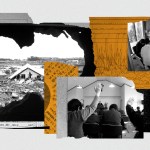
Well, not a war so much as a slow and worrisome sorting of men and women into different corners of Christianity.

Christianity Today May 29, 2025

My generation is among the least churched adults in America, but zoomers who are in the church are quietly steering its worship in two directions at once.

On the one hand, some are flocking to more traditional and liturgical forms of Christianity like Eastern Orthodoxy. Though a lot of reporting on this trend has been more anecdote than data, a 2024 survey from the Orthodox Studies Institute found Orthodox parishes in the US have a rising number of converts, many of whom are young ex-Protestants.

On the other hand, contemporary Christian music (CCM) is thriving, led by artists like Maverick City Music, Elevation Worship, and Forrest Frank. CCM was the fourth fastest-growing music genre in the US in the first half of 2024, and market research indicates younger audiences are driving much of this growth.

So is Gen Z at worship traveling back in time or making its home in modernity? I believe that the answer is both at once—and that the primary worship divide in my generation isn’t random, nor is it strictly about theology, denomination, or politics (though it’s related to all of those). The main difference is sex. Zoomers gravitating toward traditional worship are mostly men, while CCM resonates primarily with women.

These aren’t rigid categories, of course. There’s plenty of crossover—I myself have been swept up by the emotional power of CCM and am sympathetic to friends who have ditched the auditorium for the cathedral. And there are churches that combine traditional liturgies with CCM songs.

But if this pattern generally holds, it points to a future where a growing sex divide extends beyond politics and other cultural preferences into our sanctuaries. It may become an increasing point of tension in Christian marriages—or, if young men and women sort themselves into different churches entirely, may be one factor keeping those marriages from happening at all.

For me, this divide is personal. These aren’t just national trends but stories I’ve seen in my own community, among my own friends. I don’t think these are isolated incidents, and I think they’ll be influential in the future of the American church.

It’s too early to be sure how this will all play out. But for now, I think it’s worth noticing three things on the way to asking what should be done.

First, the Gen Z worship divide is connected to how zoomer men and women understand faith itself. For many Gen Z men, traditional worship is less about nostalgia and more about nonnegotiables. In their eyes, true faith doesn’t bend with the culture. It plants its feet, folds its arms, and says, This is what we believe. It hasn’t changed. It won’t change. Take it or leave it. This is a common theme in reporting on young men moving toward Orthodoxy. They want stability as a stark counterpoint to a culture characterized by constant reinvention.

Faithful women in Gen Z tend to be more interested in personal authenticity and intimacy with God through personal devotion—it’s not that they don’t care about eternal theological truths, but they care greatly about an individual sense of honesty and vulnerability. CCM lyrics are emotive and expressive. In CCM, an authentic faith proclaims, This is me—no filters, no pretense. I’m here, as I am, before a God who loves me. This too can be countercultural in an age dominated by curated personas, but it’s a starkly different expression of worship from that of more traditional liturgy.

Second, this worship divide is influenced by the growing segregation of Gen Z men and women online, and that digital pattern will have further-reaching spiritual effects.

Subsets of platforms like RedditQuoraYouTube, and X (formerly Twitter), all of which have a majority male user base, have become hubs for discussing theology. Consider the Orthodox Christianity discussion board on Reddit, with over 85,000 members, many of them young men discovering and deepening their interest in Orthodoxy. A member of an Orthodox church in Riverside, California, told the New York Post that he has seen several young men join his congregation after encountering Orthodoxy through digital spaces like this. 

Meanwhile, CCM thrives on Instagram and TikTok, where audiences engage with its emotional and visual appeal. The influence of all these digital media is self-reinforcing—the more we consume, the more the algorithm sends our way—and it will affect more than worship music and liturgical choices. The theology the TikTok algorithm serves up to a 21-year-old woman is worlds apart from what’s trending on Orthodox Reddit or Jordan Peterson’s YouTube feed. And while Peterson, a non-Christian, at least invites long-form engagement with real questions, his answers aren’t always rooted in Christian orthodoxy. TikTok, meanwhile, delivers spiritual content with the depth of a bumper sticker and the lifespan of a fruit fly.

Churches can’t change the algorithm, of course, or coerce men and women into the same online spaces. But neither can they ignore this pattern lest digital divides dictate discipleship. Men need more than intellectual stimulation and stoic self-help; they need the historic, embodied faith of orthodox Christianity with all its beauty, challenge, and intimacy. And women, just as much, need grounding in theological depth and tradition, not just vibes, reels, and vague inspiration. But for now, the genders are divided by algorithm.

Lastly, Gen Z worship differences are tied to bigger patterns in what men and women tend to want. As social psychologist Jonathan Haidt argues in The Anxious Generation, men often prioritize agency (the ability to overcome inner and external obstacles to grow stronger and achieve purpose) while women frequently prioritize communion (the pursuit of relationships, connection, and harmony).

For young men interested in discipline, self-mastery, and resilience, Orthodoxy and similar traditions offer structured liturgies and rigorous fasting. CCM evangelicalism does not. But for young women who emphasize personal connection and devotion to God, CCM will resonate because the industry is making music with exactly this demographic in mind.

If these two trajectories continue, I don’t expect another round of the “worship wars” of the 1990s. Instead, I think we’ll see a structural divide—not heated debate over hymns and electric guitars but a slow fade into wholly separate congregations.

Christians have split into different churches for all kinds of reasons since the Reformation and the Great Schism before it. Some traditions have even had men and women sit on opposite sides of the sanctuary—but we’ve never seen entire churches split by gender. That would be new. 

It would also be a problem for obvious reasons, and much of American evangelicalism—even in complementarian churches where women are not in leadership roles—falls squarely on the CCM side of the spectrum. What can evangelicals do?

Author and pastor Gavin Ortlund’s retrieval theology offers a compelling solution. His idea is about recovering historic Christian traditions to enrich modern worship—not rejecting contemporary forms like CCM but deepening them. Retrieval theology calls for the church to look backward in order to move forward, reclaiming lost practices and distinctives that historically shaped Christian worship and discipleship. 

For many evangelical churches, a renewed emphasis on the Lord’s Supper could be the first step. Weekly observance, perhaps, instead of monthly, quarterly, or yearly. This is an act of both agency and communion. It calls believers to examine ourselves, participate together, and encounter the presence of Christ in a personal way. 

We could also revive other historic practices—like responsive prayers or creedal recitation—that shaped Christian worship for centuries but have faded in many modern evangelical settings. These worship elements can provide the rigor young men are seeking without alienating women. They are traditional and communal at once, and a written prayer can be a vehicle for personal vulnerability and relationship with God just as much as a CCM song. 

Pastors can attend to the need for balance between agency and communion too. There is “a time to weep and a time to laugh, a time to mourn and a time to dance” (Ecc. 3:4)—a time for comforting sermons of grace and solace and a time for hard truths and clear direction from the pulpit.

Indeed, it’s not liturgy alone that draws young men to Orthodoxy; it’s the call to a life of self-discipline and purpose. Evangelical churches making a similar call will sound a bit different, but we can pair contemporary worship with exhortation to prayer, fasting, and confession. This renewed focus on spiritual disciplines is already gaining traction among young evangelicals, largely through the influence of John Mark Comer. Evangelicalism more broadly can call young men not just to survey the wondrous cross but to take up their own.

Authenticity and stability don’t have to be at odds, and evangelicalism need not shortchange women for the sake of men. A church that integrates tradition and innovation, structure and emotion, agency and communion in worship sends a powerful message: Our faith is personal, rooted, and distinct. Men and women can come together in harmony, not homogeny, to worship the God who made us all. For the sake of my generation, I pray we do.

Luke Simon is a content strategist for The Crossing church in Columbia, Missouri, and MDiv student at Covenant Theological Seminary. He has written on Gen Z, technology, masculinity, and the church. You can follow him on X.

Church Life

How Coptic Martyrs—and Migrants—Inform Our Christian Faith

While beheadings grab headlines, poverty and cultural friction push emigration to the West—where the welcome is not always what Copts expect.

Prayers in Deir El-Garnouse Coptic church in Egypt for victims of a terrorist attack.

Prayers in Deir El-Garnouse Coptic church in Egypt for victims of a terrorist attack.

Christianity Today May 29, 2025
NurPhoto / Contributor / Getty

The Coptic Orthodox church marks time by its martyrs. Its ecclesial calendar begins in AD 284, year 1 Anno Martyrii (Year of the Martyrs), when Emperor Diocletian ascended to the throne and put 800,000 Egyptian Christians to death, according to tradition. The most famous martyr of this era, military leader Saint Maurice, famously defied commands to kill fellow Christians, only for the emperor to murder his legion of over 6,000 soldiers. 

Persecution waned after Constantine declared Christianity the Roman Empire’s official religion. But during the Byzantine era, some emperors imposed the largely European understanding of Christology upon what eventually became an Oriental Orthodox church. Subsequent Islamic rule restored the Coptic patriarch and provided some religious toleration. But it also legally established Christians as second-class citizens, known as dhimmis. The number of martyrs declined, but the Middle Age Mamluk era was particularly violent.

Coptic fortunes fluctuated during the Ottoman and colonial eras, giving way to a modern state that has struggled to define the balance between equal citizenship and a Muslim majority. Among other incidents, in 2000 in the village of Kosheh, rioters killed 20 Copts following a disagreement between a Muslim and a Christian shopkeeper. After the New Year’s Eve service in 2010 in the Mediterranean city of Alexandria, a car bomb outside a church killed 21. And in 2015 in Libya, ISIS beheaded 20 Copts and one Ghanaian Christian.

Fearing the Muslim Brotherhood’s rise following the 2011 Arab Spring, 100,000 Copts fled Egypt to the US, quadrupling the size of the local diaspora. Large communities exist also in Canada, France, and Australia. Egypt ranks No. 40 on Open Doors’ World Watch List of countries where it is hardest to be a Christian. Similar reports and subsequent immigration have contributed to a common assumption that Copts experience constant persecution.

The story is far more nuanced than the flight from religious intolerance, however, says anthropologist Candace Lukasik. Her book, Martyrs and Migrants, represents 24 months of fieldwork among Upper Egyptian Copts, transnational Orthodox clergy, and recent immigrants to the United States. Not only do most Copts emigrate for reasons other than persecution, she told CT; upon arrival they often trade one set of difficulties for another.

Born a Polish Catholic in Buffalo, New York, Lukasik, assistant professor of religion at Mississippi State University, reencountered God in the Coptic Orthodox church and was baptized into its faith in 2012. Through her encounters with the church in Egypt, she believes the Coptic tradition offers tools for all believers to understand and confront the suffering and hardship of everyday life. This interview has been edited and condensed.

Why does the Coptic Orthodox Church emphasize martyrdom?

For Coptic Christians, the blood of martyrs symbolizes both Christ’s triumph over death and an eternal spiritual belonging in the body of Christ. The Coptic calendar notably doesn’t begin with Christ’s birth or the start of Christian Egypt. Instead, it starts with the Era of the Martyrs, commemorating the widespread persecution of Christians under the Roman emperor Diocletian.

During the early Islamic expansion in Egypt, stories of martyrs and persecution became crucial for the Coptic church to maintain its institutional strength as the community’s social structure evolved. And new martyrs are incorporated into the Coptic Orthodox Church’s Synaxarium, or Life of the Saints, and linked to the sacrifice of Christ on the cross. These stories of saints serve as powerful reminders of Coptic identity and reinforce their resilience and distinctiveness, whether under Arab and Islamic rule or other governments.

Coptic Christianity is a perpetually minority tradition, and Copts practice their faith through this orientation. Yet martyrdom not only is more than a symbol to give meaning to suffering and death; it represents a way of life that entails everyday sacrifice and deep connection to God.

What does this sacrifice mean for ordinary Copts?

It takes on different forms depending on social status. A middle-class Copt in Cairo experiences everyday martyrdom quite differently than an agricultural worker in rural Upper Egypt. For the former, Copts may be discriminated against at university, such as in biased grading, or face difficulties at work, such as exclusion from positions of leadership.

For the latter, arguments with a Muslim neighbor over something ordinary like purchasing vegetables sometimes take on religious dimensions that lead to assault or even murder. These cases are complicated in that all of Egypt’s poor are marginalized, but for the Copt it may be additionally difficult to seek equal justice. 

Overall, whether deeply religious or rarely going to church, Copts in both categories see themselves as part of a long tradition of Christian witness and interpret their everyday sufferings as forms of martyrdom. And many then proceed to describe themselves as second-class citizens.

Some Copts and many Muslims say instead that Christians are equal citizens. What is the reality of persecution in Egypt?

There is a perception of persecution that describes it as happening nonstop, but the reality is not as obvious. It exists within the balance between friendship and conflict. In one instance a Muslim mother might tell her child, “Don’t eat in that Christian home because they’ll poison you,” yet she might also take her child to the church to receive blessings from a certain saint.

Focusing on incidents of violence alone can obscure these nuances. These examples happen and are terrible. But in everyday life, Copts experience what the West calls microaggressions. A teacher in Upper Egypt related how Islamic culture impacts Christian life—the Quran is memorized in Arabic language classes, for example, while Muslim phrases might be inserted alongside daily repetition of national slogans. Children are sometimes scolded if they don’t join in. 

He [the teacher] then asked me, “Candace, what is the greatest miracle you have seen in Egypt?” I thought he was changing the subject. But he said, “We [Christians] are still living here, in the middle of this society. Every time I think about emigrating, I think about what would happen to Egypt after I left.”

His answer makes me emotional. The struggle for Christian presence in the Middle East is so difficult. Violence, war, or the economy—there are many factors separating these ancient Christian communities from their sacred homelands. 

In what ways do Muslims and Christians work together?

Everyday interactions over mundane issues like electricity costs and educational fees bring Muslims and Christians together. Ordinary life makes them accountable to one another in overcoming such difficulties—perhaps by sharing tutoring lessons or rides to work or school.

At the national level, formal interfaith initiatives look like a priest and a sheikh shaking hands at a national unity conference, which from the outside appears very hopeful. And there is institutional cooperation between the church hierarchy and the leadership of al-Azhar [University], the leading center of learning in the Sunni Muslim world.

But these interactions tend to mean very little to Copts, who often describe them as a political performance. Their understanding of this type of cooperation is necessarily balanced by news that a Copt had his throat split because he owned a liquor store. These dueling frames—communal exchange and incidents of violence—bracket and impact the normal Coptic experience with their Muslim neighbors.

Say more about these dueling frames.

During my research, I spent time with Coptic landowning families in Upper Egypt and became very close with one family. One evening, we sat in their garden, and as I conversed with Jackleen, the matriarch, a man approached. The family needed some water from the nearby market, so Jackleen asked him whether it would be possible to grab some for us.

After the man left, Jackleen turned toward me and said, “That’s Ahmed. His entire family has worked for us in agriculture. He’s Muslim, but I swear to you, he has gone to the Virgin Mary Church nearby and brought blessed bread back for us. No one at the church looks at him strangely because they know he is a part of our family. He even enjoys eating it with us.”

The next evening, we had dinner together again, and Ahmed stopped by right before the breaking of the fast for Ramadan. “Do you need anything?” he asked Jackleen. “No, thank you, Ahmed,” Jackleen replied. She turned toward me and said, “He checks on us every night because he just wants to make sure we’re okay. He’s an educated Muslim and knows the faith well.”

But an hour later at dusk, the call to prayer started loudly from the small mosque next door to signal the breaking of the fast. As if to signal to me her disgust, Jackleen then held her hands over her ears and grimaced.

It was puzzling at first. She is closely connected to Ahmed but also to the mosque. With one there is a relationship while the other is a nuisance, a reminder of Islamic imposition.

I noticed the same when Jackleen would smile describing her Muslim friends and their shopping excursions. But when she told me about her relatives in North Carolina, her disposition changed. “Why do they allow Muslims into America?” she said. “My sister says that they are taking over whole neighborhoods near her. You think that you’d be able to escape them after leaving Egypt!”

What influences these attitudes?

I think timing is one factor. Jackleen held her hands over her ears in 2017, not long after the attack that killed dozens of Coptic pilgrims on a bus going to visit the desert monastery of Saint Samuel the Confessor. The theology of martyrdom shapes how Copts see such incidents.

But so does the politicization of the persecution narrative in America. Many people in Upper Egypt have a smartphone and receive on social media translated reports from Fox News from their relatives. Unfortunately, often these are the only outlets that talk about Coptic difficulties.

How is Coptic martyrdom interpreted by American Christians?

One particularly radical example came the day before the US Capitol insurrection on January 6, 2021. Conservative evangelical author Eric Metaxas tweeted an image of the 21 martyrs beheaded in Libya, with the caption “What price are you willing to pay for what you believe in?”

The parallel was clear for Metaxas’ followers, many of whom were angry over the loss of Trump in the 2020 election—their struggle to save America from liberal peril was comparable to the witness of the Coptic martyrs. The arrangement presented both as persecuted innocents, victims of religious and political intolerance.

But Metaxas is part of a broader narrative in right-wing media that employs Coptic suffering to demonize Muslims as a whole—and diaspora Copts sometimes participate. For example, on September 11, 2010, conservative activists staged a protest against a planned Muslim community center next to the site of the World Trade Center. It featured Joseph Abdelmasih, founder of a Christian satellite-television station, who held up a bloodied image of a man from that year’s Nag Hammadi Christmas massacre.

“This is one of our dear friends in Egypt [killed] … in the name of Islam,” he said, then pointed back to the site of the World Trade Center. “Three thousand persons burned here, and in the same area they need to build a mosque! … I know the truth because I’m from Egypt … Wake up, America! … Stop [the] Islamization of America!”

What is the effect of this narrative in Egypt?

American instrumentalization of global Christian suffering is nothing new, but it has produced a fraught predicament for the transnational Coptic community. Between 1996 and 1998, discussions around the International Religious Freedom Act (IRFA) took shape, bringing together Middle Eastern Christian activists, American religious leaders, and politicians. A special waiver ensures the US government does not sanction important geopolitical allies and economic partners for their violations of religious freedom protocols. But the act presented a challenge for Copts in Egypt.

One Coptic member of parliament [in 1998] said in an article that IRFA was a new form of imperial interference that would impact Christian-Muslim relations and was actually “stabbing Copts in the heart.”

And in the late 1970s during negotiations for the Camp David peace accords with Israel, activists in the Coptic diaspora publicized anti-Christian violence and discrimination in Egypt. During this tumultuous period, it was reported that President Anwar Sadat would repeatedly complain, saying, “Why do these Copts want to turn the Christians of the world against me and Egypt?”

Have these initiatives contributed to violence against Christians?

I cannot authoritatively say one way or the other. How is that measurable? But shortly after the beheading of the 21 martyrs on the shores of Libya, ISIS released its newsletter entitled “Revenge for the Muslim Women Persecuted by the Coptic Crusaders of Egypt.”

This framing can only take shape if Copts are viewed as part of Western Christianity and not an essential part of Egypt. It was similar under British colonial rule, when Copts were accused of being part of the “Christian” colonial regime.

An added layer to these perspectives on anti-Christian violence is how some Copts in Egypt describe how they play into this narrative. Early in my research I wanted to find out the root causes of violence against Christians in Egypt. When I asked about emigration, the two reasons that predominated were economic and a desire for greater freedom.

But one person I spoke with told me that to receive sympathy from the US consular officer, “We [as Christians] use persecution as a frame for our situation in order to travel to America.”

Most Copts have not experienced a shooting or bombing. They simply want a better life, and aside from economic factors, their desire is for freedom from the sense of Christian marginalization. Alongside these observations, I also have a visceral reaction to those who say that Copts are equal citizens in a spirit of national unity. I take offense because it is the commonality of nonspectacular negative interactions that shows how difficult it is to be a Christian in Egypt.

What is the US like for diaspora Copts?

Even though the US offers the promise of freedom, justice, and spiritual witness, many Copts express surprise that their experience of migration is also a form of sacrifice. Not only do they lose their sense of belonging; some also encounter racial discrimination and poverty—along with immigrating Muslims.

They expected America to be a Christian country where they could religiously, socially, and economically flourish, but wind up discovering a major paradox: While American evangelicals appreciate the martyrs, many view living Copts as heretics. It is the spilled blood that enters them into a Western Christian conception of the global Christian community and not specifically their Coptic Orthodox faith.

Yet despite these new struggles, the richness of their tradition still sustains them, as it has through other experiences of historic marginalization.

What can Americans learn from the Copts?

Evangelicals often say, “We’ve strayed from the early church.” But Coptic Christians are part of that early church. Why not invite them to your congregation to learn from their ancient faith? Coptic Orthodoxy is a continual orientation to humility and mystery. Coptic youth sometimes complain about their priests always telling them, “Turn the other cheek.”

But martyrdom—in life or death—is resistance to the egocentric ways of the world. It is not a passive act but a vital witness to Christ and the power of the Resurrection. As Bishop Youssef of the Coptic Orthodox Diocese of the Southern US noted on the 21 martyrs of Libya, “The challenge of understanding martyrdom is two fold: first to bring honor to our Lord through a willingness to die for our beloved Coptic Christianity; second it is to spread our faith through the world with the blood of the martyr.”

Culture
Review

A Graceless Exit

The Mission: Impossible franchise believes the world needs forgiveness … but its leading man is problematically perfect.

A still from the movie showing Ethan Hunt holding a cross.
Christianity Today May 29, 2025
© 2025 Paramount Pictures. All Rights Reserved.

At one point in the film Lawrence of Arabia, the eponymous T. E. Lawrence, an imperious Englishman, defies his Arab friends’ disapproval in order to save a man’s life. When they object that the man’s time has come, that he must die because “it is written,” he counters, “Nothing is written.”

In Mission: ImpossibleThe Final Reckoning, the concluding installment to the franchise, superspy Ethan Hunt (Tom Cruise) borrows Lawrence’s catchphrase as a response to his enemies: “Nothing is written.” One suspects he has in mind not just fictional supervillains but also risk-averse studio executives.

This phrase, shot through with the hubris of the Lawrence character, is paired with a film that’s chock-a-block full of Christian imagery. None of it hangs together in a coherent way. (Neither does the film.) But as an expression of Hollywood megalomaniacal vision, it’s still strangely pious, a grab bag of Saint Christopher medals, paeans to free will, Cold War–liberal aspirations for global harmony, and an overall lament that no one seems to know the truth anymore because it’s been redefined by “the Lord of Lies.”

In this final mission, Ethan and the gang are fighting for more than just survival—they’re looking to preserve free will against a determinist, antihuman, antitruth enemy. Much is made of the series’ iconic catchphrase: “your mission, should you choose to accept it.” Ethan is humanity’s advocate, claiming that a machine wants only other machines but humanity’s strength lies in individuals who go rogue.

And what about when going rogue goes wrong? The film puts the final, crucial action of the heist—and the fate of the world—into the hands of (a woman named) Grace. But the gesture feels empty when everyone needs her … except Ethan Hunt.

The Final Reckoning starts in the middle of a worldwide crisis of truth. An evil, sentient artificial intelligence system, the Entity, which took over the internet in the previous installment, is intent on capturing all the nuclear arsenals and destroying the world entirely, sealing itself safely in a digital bunker. Ethan wants to destroy this “anti-God” while everyone else wants to control it because it will give them the power to define what’s real and do a bunch of other stuff. (In a film which could easily lose 45 minutes of exposition, the Entity’s rules and powers are somehow still vague.) The Entity itself, of course, just wants to put humanity out of business.

Cruise’s supporting cast is made up of quippy character actors, with Luther Stickell (Ving Rhames) as the mellow voice of truth. The rest are mostly there as comic relief, though impish pickpocket Grace (Hayley Atwell) gets a great entrance—and provides welcome bleeding-heart shock as she witnesses Ethan’s violent lifestyle.

In a world where “human” is always better, it’s strange that so little attention is paid to supporting characters’ story arcs. Several times, motifs suggest a build to a resolution, from a vixenish assassin (Pom Klementieff) forever requesting permission to seek revenge (a theme that’s funny every time it appears) to an earnest sidekick (Simon Pegg) being given explicit responsibility for a team. But both of these threads peter out without payoff. Instead, we get endless throwbacks and retcons to the earlier films in the series, larding up a story that’s already ambitious with the weight of legacy.

The one subplot that does get screen time is all telling, no showing, as an American president (Angela Bassett) handles a turgid nuclear standoff. With an AI villain, it’s a little boring that the worst-imaginable scenario in a post-truth world is just a rehash of the paranoid fears of Tom Cruise’s and director Christopher McQuarrie’s Cold War childhood. (There’s also an amusing dose of Luddism—baby boomer Cruise snarls, “You spend too much time on the internet,” as he beats up a henchman.)

This subplot’s premise is essentially recycled from Fail Safe, a political thriller from 1964, in which Henry Fonda’s US president resolves to nuke New York City as a gesture of apology when an American nuke accidentally strikes Moscow—this despite the fact that his wife will die in the blast. It’s a sign of how half-baked this tribute is that when Bassett’s president picks an American city, we never find out which one.

Despite endless talk about how high the stakes are in the president’s war room, those scenes don’t hold a candle to the heart-pounding danger of actual stunts. You don’t need much explanation about the stakes when the enemy is gravity. The most famous image in the series remains Tom Cruise dropped on a wire into a pristine white CIA vault, destroying some poor national security employee’s career by stealing top-secret information. (We actually catch up with that very employee, banished to a South Pole research station. But don’t worry—lest we think Ethan is really blameworthy, the employee forgives and thanks him right away.)

And Ethan’s twin battles with gravity in this film are worth the price of admission. Having commandeered an aircraft carrier, mostly because it’s a cool ride, Ethan dives to the bottom of the Bering Sea to go on a tense, nearly silent scavenger hunt inside a Russian sub on the ocean’s floor. It’s not clear to me whether the water is as cold as we assume, but when he exposes his bare skin to it, I shuddered viscerally anyway. I couldn’t help but think of another catchphrase Ethan repeated earlier in the film: “It’s only pain.”

The final action sequence is another stunner, with Cruise doing some complicated stunts involving biplanes that I won’t spoil by describing.

The sequences, however, feel totally independent of the personal stakes that made such stunts so engaging in previous films. Ultimately, we just don’t care when the world is at risk. There needs to be a person on the line—a person cared about by another person. However, with each film, Ethan has become increasingly isolated, a suffering servant of espionage.

The problem is that Ethan is interesting when he’s doing things, but when introspection becomes the mission, the series won’t give him anything to regret. Every time he faces a bad decision, he’s told there was a good angle he hadn’t considered. Without accompanying the cocky swagger of “Nothing is written” with the true sense of tragedy and irony that Lawrence ultimately faces, a hero’s introspection is toothless, a mere self-canonization.

Is it really a problem that we’re given a perfect hero? Christ figures have their role in stories, but only when they are truly “with us,” the people of Earth. Ethan Hunt is sealed in an unreality bunker of his own. One can’t help but be appreciative of his mighty feats, but a little self-awareness might have successfully landed the franchise plane. Instead, it parachutes to safety, coattails aflame.

Hannah Long is an Appalachian writer living in New York City. Her writing has appeared in Angelus News, The Dispatch, and Plough Magazine.

News

From Prosperity Televangelism to the White House

Paula White-Cain’s friendship with the president turns into a position leading Trump’s faith office.

Paula White-Cain speaks at White House garden with Trump in background

Paula White-Cain

Christianity Today May 29, 2025
Andrew Harnik / Getty Images

On May 1, 2025, the National Day of Prayer, Paula White-Cain stood in the White House Rose Garden and called President Donald Trump “the greatest champion of faith we’ve ever had.” She then led religious leaders and Trump cabinet members in singing “Great Are You Lord” and “Amazing Grace.”

The president, seated at a desk amid the group, signed an executive order establishing his Religious Liberty Commission, with Texas lieutenant governor Dan Patrick as chair. The commission will work alongside the White House Faith Office, directed by White-Cain.

White-Cain’s life is rags to riches: hardship, struggle, faith in Christ and positive thinking, victory, wealth. She often describes herself as a “messed-up Mississippi girl” whom God saved from early years of abuse, poverty, and single motherhood. 

A neighbor in her trailer park led her to Christ, then White-Cain married Randy White, a Pentecostal preacher. The newlyweds scraped together enough resources to start a church in Tampa, Florida, that eventually became Without Walls International Church. They divorced in 2007, just before a Senate Finance Committee investigation found they had spent tax-exempt donations on a lavish mansion, a private jet, and exorbitant salaries for family members.

Today, White-Cain is married to Jonathan Cain, an original member of the band Journey and pastors New Destiny Christian Center in Apopka, Florida. She preaches a prosperity gospel, and religion scholars Shayne Lee and Phillip Sinitiere called White-Cain the “‘Oprah’ of the evangelical world.” She platforms wellness experts, instructs followers on weight loss (repent and stop eating sugar), and offers beauty tips.

According to Lee and Sinitiere, White-Cain “reinvented her image with extensive plastic surgery, modish hairstyles, perfectly manicured nails, chic silk suits, fitted dresses, and a leaner size 4 figure.”

In the early 2000s, she launched her show Paula White Today, and by 2006, she appeared on a half-dozen stations including Trinity Broadcasting Network and Daystar. During that time, Donald Trump saw her on TV and invited her to a meeting at Trump Tower.

They became friends, and White-Cain went with Trump to Atlantic City, New Jersey, where she conducted Bible studies and prayer meetings with celebrities who visited the casinos. White-Cain said Trump had a born-again experience and told Religion News Service she was “one hundred percent” sure he “confesses Jesus Christ as Lord.”

White-Cain is both a logical choice to direct the White House Faith Office, given her friendship with Trump, and a surprising one, given the office’s history. It began in 2001 under George W. Bush as the White House Office of Faith-based and Community Initiatives, an outgrowth of compassionate conservatism. Its first director was policy expert John DiIulio.

During her Rose Garden speech, White-Cain said that in the first 100 days of the Trump presidency, the Faith Office has hosted dinners and held “briefing,” “listening,” and “working” sessions. It has invited more than 1,000 religious leaders to the White House, “and they are not here for ceremony [but] for collaboration—creating and crafting policy and sharing their hearts.”

Stanley Carlson-Thies, deputy director of Bush’s faith office, sees a “strong continuity” between the two offices on “key tasks,” such as “helping agencies redesign programs to become more effective by engaging with community-based organizations.”

Jim Towey stresses the differences. He led the White House faith office from 2002 to 2006 and focused it “on the needs of the poor,” he said in an email statement. “I don’t know what President Trump proposes to do with the faith office. … It does not appear to be centered on the poor and how to help them access the most effective social service programs, sacred or secular.”

Both Carlson-Thies and Towey are taking a wait-and-see approach. Towey said, “We will have to judge a tree by its fruit.” Carlson-Thies said, “I’m praying that the many clergy who come [to the White House] to pray will not simply bless the president and administration but bring a strong sense of the biblical wisdom that just governance is ‘under God’—subject to God’s intentions for government in the in-between times of the present world.”

John Fea is distinguished fellow in history at the Lumen Center in Madison, Wisconsin.

Theology

Jordan Peterson’s Pause

Columnist

YouTube atheists were right to expect a better response to the question “Are you a Christian?” But there are worse answers.

Jordan Peterson
Christianity Today May 28, 2025
Illustration by Christianity Today / Source Images: WikiMedia Commons

This piece was adapted from Russell Moore’s newsletter. Subscribe here.

In a room full of atheists, psychologist and political pundit Jordan Peterson sat in the center seat. He was asked a single, simple question: “Are you a Christian?” His response: “You say that. I haven’t claimed that.”

This is the viral video pinging around social media accounts, puzzling both believers and skeptics. Peterson was further asked the question “Do you believe in God?” He said he wouldn’t say.

The conversation was part of Jubilee’s Surrounded series on YouTube and was originally titled “A Christian vs 20 Atheists” (later changed to “Jordan Peterson vs 20 Atheists”). One would think that with a title like that, God might come up.

Still, Peterson’s stammering might not be the worst answer he could give—especially in a cultural moment such as this.

Peterson is, of course, a polarizing figure, which is probably why he was invited to the debate. His fans are devotees who love to love him, and his detractors love to hate him.

Added to this, though, is Peterson’s unique caginess on these kinds of questions. Known as an atheist/agnostic throughout his career, Peterson has taken to wearing a suit featuring iconography of the Virgin Mary and the infant Jesus and has taught courses on the text of books of the Bible.

But he doesn’t seem keen to talk about whether any of this actually happened in space and time.

For instance, in a different conversation with New Atheist Richard Dawkins on whether Cain and Abel—a story Peterson claimed is central to understanding human history—actually existed, Peterson quibbles about what it means to be “true.”

To some degree, Peterson’s reticence at that point is somewhat warranted. Dawkins, after all, has a literalist and materialist sense of scientific objectivity that Peterson no doubt wanted to pierce with the—forgive me—truth that there are realities outside the purview of naturalistic investigation.

The difference between the two mindsets was on display when he and Dawkins disagreed over whether dragons exist. Dawkins, of course, is thinking in terms of phyla and species, while Peterson is thinking in terms of Jungian archetypes of the “hero’s journey.”

Even so, Peterson’s evasiveness about what is true is usually recognized as just that: evasion.

An old cliché in Christian circles is that when a pastor search committee asks a candidate, “Do you believe in the resurrection of Jesus?” and the response is, “What do you mean by resurrection?” that means the candidate doesn’t believe in the resurrection.

The fact that Peterson turned the question around on his interlocutors is not in itself a miscarriage of argument. Jesus sometimes answered questions head-on, sometimes challenged the assumptions of the question, and sometimes refused to answer at all.

When the chief priests, scribes, and elders asked Jesus by what authority he did the things he did, Jesus refused to answer until they answered a question of his own: “Was the baptism of John from heaven or from man?” (Mark 11:30, ESV throughout).

Either answer would have put the temple leaders in a political bind—of the sort they were trying to create for Jesus, not for themselves—so they replied, “We do not know.” Jesus responded, “Neither will I tell you by what authority I do these things” (v. 33). Jesus wasn’t refusing to argue; he was winning the argument with his refusal.

The apostle Paul likewise famously interrogated his Athenian questioners about their altar to an unknown god and about their own poems. In doing so, he showed them that their assumptions were inconsistent on their own terms (Acts 17:16–34).

If one is going to engage in these kinds of debates, it is true that one should first deconstruct the misconception behind them—that God is an object or an idea to be investigated like some other “thing” or concept rather than, as Paul put it, the one in whom we “live and move and have our being” (v. 28).

The examples of Jesus and Paul, though, do not seem to fit the context of Peterson’s caginess here.

Jesus was facing questions not because of his ambiguity but because of his clarity. He had just driven the marketers out of the temple, seeming to equate the dwelling place of God’s presence with his own house. Paul was summoned to Mars Hill for his debate because he was “preaching Jesus and the resurrection” (v. 18).

For a believer, saying “I don’t know” to a question about who the Nephilim of Genesis 6 were or how predestination fits with human freedom are perfectly legitimate. But to refuse to say whether God lives or not is another matter.

Looking at Peterson’s answer through a grid of suspicion, we would probably conclude that he is more like Jesus’ religious questioners referenced above than like Jesus himself. Peterson saw that either answer would lose part of his constituency, so he punted. From that perspective, we might assume that he was less like Jesus remaining silent before Pontius Pilate and more like Pilate—right down to the irritated retort “What is truth?” (John 18:38).

Through a less cynical lens, however, we might wonder if Peterson wouldn’t answer the question because he couldn’t.

A more charitable view might wonder if, like Nicodemus, Peterson was asking questions without yet knowing the answers (John 3:4). Or perhaps, like C. S. Lewis at the first stages of his grappling with God, Peterson is becoming broadly convinced that something or someone is out there beyond his sight, but he’s not yet sure what or who that is.

Whatever the case, I stand by my assertion that Peterson’s non-answer is better than some possible answers. One of those would be to say, “Yes, I’m a Christian” and “Yes, I believe in God,” meaning “I believe that belief in God is good for society” or “I believe in Christianity as the moral and cultural heritage of Western civilization.”

Much of what goes under the name of Christianity right now—a claim to Christian identity without personal faith in the God of Abraham, Isaac, and Jacob through the mediation of the crucified and risen Christ—is, in fact, worse than unbelief.

Jesus once healed a man who was born blind, and the religious leaders were outraged that he did this on the Sabbath. When asked about it, the formerly blind man’s parents were afraid they would lose their place in the community and said, “We know that this is our son and that he was born blind. But how he now sees we do not know, nor do we know who opened his eyes” (John 9:20). Jesus had no harsh words for them.

The man himself said of Jesus, “Whether he is a sinner I do not know. One thing I do know, that though I was blind, now I see” (v. 25). Jesus does not condemn this either.

But of the religious leaders themselves, Jesus said, “If you were blind, you would have no guilt; but now that you say, ‘We see,’ your guilt remains” (v. 41).

To be a “Christian” because one is Western or because atheism has proven bad for nations and cultures is ancestor worship—not the gospel. To claim God because God is useful is to construct an idol. The living God despises all idols, but especially those that claim to be him (Ex. 32:8; 1 Kings 12:28; 13:1–3).

In that sense, the synthesis that Peterson now attempts of mining the Bible for Jungian archetypes is not a step on the way to Christianity but a step away from it, just as every other attempt at syncretism is.

As the orthodox Presbyterian J. Gresham Machen wrote, the kind of useful “Christianity” that cleans up societies, shores up cultures, or provides useful life principles for people is an entirely different religion than that of Christ and him crucified.

Peterson lost that YouTube debate—something he’s not used to. He lost it because the atheists on that stage were, on one point, more biblical than he: If Christ is not raised, faith is futile and we are still in our sins (1 Cor. 15:17).

They knew that if this is true, not just metaphorically but actually true, then after all the “what is truth” questions are over, “if in Christ we have hope in this life only, we are of all people most to be pitied” (v. 19).

But maybe behind Peterson’s hesitation, there’s something more than artful dodging. Maybe he’s listening for what “come follow me” might actually mean.

Peterson’s name is literally “Peter’s son.” And maybe he is. Perhaps he is following in the way of Simon Peter, still answering the question “Who do people say that the Son of Man is?” but not yet ready to answer for himself (Matt. 16:13).

The question “Who does YouTube say that I am?” is relatively meaningless. The question “Who do you say that I am?” is life or death.

“I don’t know” is not a final answer to the most important question posed on YouTube or in life. But sometimes it’s a good start.

Russell Moore is the editor in chief at Christianity Today and leads its Public Theology Project.

Ideas

Should We Bring AI into the Church?

A church-tech skeptic talks values with technologists from faith-aligned AI company Gloo.

Visitors to St. Paul Church in Fürth, Germany, take part in a pre-recorded service created by ChatGPT in 2023.

Visitors to St. Paul Church in Fürth, Germany, take part in a pre-recorded service created by ChatGPT in 2023.

Christianity Today May 28, 2025
Picture Alliance / Contributor / Getty

It’s strange to think that artificial intelligence as we now know it has been available to the public for less than three years. ChatGPT, the most famous of large language models (LLMs)—programs that can function as chatbots, create content, and perform administrative tasks based on conversational instructions from users—launched in late 2022. Since then, LLMs have rapidly progressed in their capabilities and are increasingly integrated into our digital lives.

But should they be integrated into our spiritual lives? Should pastors use LLMs to write sermons or reformat sermon content into small-group study guides? Should church websites have chatbots on hand to answer visitors’ questions around the clock? Is there a role for AI in discipleship and catechesis?

My own answer (others at CT may hold different views) to all those questions is no. While I do see some practical uses for AI—like transcribing the dialogue below, with a backstop of full human review—I’m deeply wary of proposals to bring LLMs and similar AI tools into the life of the church. I believe that chatbots have no place in spiritual formation or pastoral care and that even many simpler applications, like telling a potential visitor when the Sunday service starts, are already amply handled by regular old websites.

Those instincts made me curious about Gloo, a dominant player in the “Christian AI” space. The Colorado-based company brands itself as “the leading technology platform dedicated to connecting the faith ecosystem,” and last summer it announced $110 million in new venture capital funding.

Gloo promises “AI you can trust for life’s biggest questions,” a chatbot that “guides you to real answers and next steps for a life that matters.” An animation on its site suggests that users ask the chatbot “anything” about the Bible, politics, religion, relationships, and more.

Gloo offers “verified” answers from “reliable sources” that are “biblically sound” and “grounded in faith-based principles” so it can “guide you and those you care about with confidence.” But equally—on the same page, in the same list—the company offers personalization so individual users can get answers that reflect what they already believe.

“Customize your experience with filters that align with your values, ensuring every result reflects what matters most to you,” the site says next to an illustration apparently suggesting users can reject an information source for their personal AI interface.

This language left me wondering what it means to make what Gloo calls “values-aligned” AI. The company first connected me to its chief AI officer, Steele Billings. Our conversation centered on the technology, and Billings explained that Gloo uses Microsoft’s Responsible AI, then layers its own standards and training data from Christian sources on top.

That starts with Harvard’s Global Flourishing Study, which defines human flourishing in six dimensions: “happiness and life satisfaction, physical and mental health, meaning and purpose, character and virtue,” “close social relationships,” and “financial and material stability.” To that list, with help from evangelical polling firm the Barna Group, Billings told me, Gloo added a seventh dimension of faith and spirituality.

Of course, people of faith are famously prone to disagreement about the truth—thus the personalization. Gloo tools can be customized by individual, congregational and denominational users, Billings said: “One of the things that our technology does is it will go out when a church signs up” and “pull the statement of faith off the church website” so it can “answer questions that are aligned with that statement of faith.”

That customization even extends outside the church, Billings confirmed when I asked about other religions, like Judaism or Islam. “While today you would see mostly Protestant organizations on our platform,” he told me, “we do not prohibit in any way a Muslim organization from coming in and using our technology.”

Later this spring, I also spoke with Brad Hill, Gloo’s chief solutions officer. That conversation, which turned from the technical details to Gloo’s philosophy of AI development and function, is below. It has been edited and condensed.

Editor’s note: Christianity Today has partnered with Gloo on advertising projects in the past, including the development of branded content about AI and the church. These projects have never involved CT’s editorial team and had no influence on this article.

I’d like to focus here on some higher-level questions about the purpose, goals, and visions that Gloo has for the Kingdom-Aligned Large Language Model (KALLM) and for your work with churches in particular. Let’s start with something your colleague, Steele Billings, said when we spoke about the technical side of this work: “Technology is neutral,” and it’s about what we choose to do with it, what kind of worldview we bring to that task, whether it’s a biblical worldview. Is that Gloo’s mindset? If yes, what does that look like? How do you think about it?

That’s a great starting point. Yes, that is what we would contend: The technology is neutral.

Put another way, I’ve heard it described as amoral. It’s neither good nor bad. It can certainly be applied for things that are quite bad, but also it can be applied for things that are incredibly good and incredibly redemptive.

Our contention is that in every other station of culture, wherever we look in the world, technology is being used. And our strong belief is that the church—and those in ministry and, as we would say, the faith and flourishing ecosystem—needs to be equipped with the very same tools for good. It’s important. It’s not a “nice to have” anymore.

One reason is that technology is more than just tools, bits and bytes. It’s shaping culture. Look at what happened with social media over the last decade plus. Look at the internet and how it’s affected every station of life. AI is now a very similar phenomenon that’s upon us. So while the technology itself might be classified as neutral, we would contend strongly that people who are in the business of flourishing and people who are trying to advance good need to be equipped with the very best tech so that they can apply it to that end.

If I can probe that a little bit, I think there are many uses of AI that are pretty uncontroversial: people who use it as a search engine, for example, or administrative functions like scheduling meetings. Where it tends to be controversial, as you no doubt know, is around creating material—for instance, writing sermons or study guides based on sermons. And so that affirmation that the technology is neutral, is that truly across-the-board for Gloo? Or are there areas that you would say are off-limits?

It’s an interesting question, and I think honestly there are different answers to that question depending on whether you have AI tools that are built with a values alignment or not.

We don’t say technology is neutral if we’re dealing with tools that just have a general-market use, which is mostly what the public is familiar with right now. Even your example that was somewhat innocuous—of using ChatGPT as a search engine—I would contend that’s not neutral, because most folks may not fully understand where ChatGPT is getting its results, and those results are likely not aligned to the values of someone who follows Christianity or adheres to biblical truth. If you ask questions on matters of ethics and deeply felt needs, you may get answers that are antithetical to Scripture.

However, when you have tools that are built on more of a biblical foundation and aligned to human flourishing values, I would say my answer broadens regarding what’s within bounds. Because then you feel a lot more confident turning to these tools to answer questions around some of those weightier issues. That’s exactly what we see at Gloo.

Right now, there’s a gap in the market for generative AI tools that are trained on the values we hold. So for instance, I could ask ChatGPT to help me plan dinner. I think ChatGPT is a wonderful tool for that or for scheduling, as you said. But when we’re asking these weightier questions around faith, ethics, and morality, we want tools built on a model that’s been trained on proper values.

And that’s what Gloo is building now. We’re ultimately not looking to fully replace tools like ChatGPT or Claude or Gemini but to complement them and leverage the good that’s in all of them so that we have an incredible tool that can tell me what to make for dinner and can help me as a parent or in a relationship or when I’m exploring faith.

It’s funny you mention a market gap, because that’s my next question. You think about the classic inventor—say, Eli Whitney and the cotton gin. We can see the market gap there: We don’t want to process this cotton by hand anymore. Here, yes, there’s a market gap in the sense you’re describing: These other LLMs have different values, and maybe their makers present these tools as ethically neutral when really they’re not. So for Gloo, the market gap is for an LLM with biblically informed values.

But I want to ask about a market gap in a different sense, which is: What is the lack in the church that this tool is filling? What is it that 2,000 years of Christianity didn’t have that this AI is going to provide?

You mean what is AI itself filling as a gap?

Yeah, what is the gap in the church?

Well, the premise of your question is that we have this timeless gospel message that is complete and sufficient, and we start there. However, what’s also true is that in the world around us, culture constantly moves.

Even in biblical times, we saw examples of technology. Jesus used the Roman roads. Later on, we had the printing press. When the printing press was first invented, there were plenty of religious leaders decrying that as unnecessary or even evil. So all throughout history, we have examples where initially people of faith are skeptical of a new technology. What happens every time, though, is that culture responds to that new technology and there are new standards or practices that emerge. As Christians, we’re then faced with the question of how we apply this timeless gospel to what’s changed.

Think of the average congregation: maybe 150 people, a pastor, maybe a youth pastor or secretary. They worship together every Sunday. When you look at that church, what part of that do you see and say, “We need to put AI in there?” Is it the service? Is it the pastoral care? It doesn’t sound like it’s just the scheduling.

Yeah, well, I mean, it doesn’t matter what size church you are. You could be giant, or you could be a hundred people. Like you said, the people in your church are experiencing the most dramatic shift we’ve ever seen in humanity. I mean, AI is affecting them as parents. It’s affecting them in relationships and as workers in jobs. So when our surveys have come back, what we hear is people in churches are interested in their pastors and their leaders helping them navigate this new post-AI world. That’s one thing.

And yes, there are tools that can help with the operational side of church too. It can help us with content repurposing. It can help us with language translation and other administrative tasks.

But we also think, as we get deeper into this, that there’s a profound and lasting impact on every life and every church from AI, and the church has an opportunity now to think about how we understand what’s going on and how we equip our people to navigate whatever questions or whatever challenges are coming at them outside the church. The church can be a place where we can come to learn how to navigate a post-AI world.

I think that’s vital, and pastors should absolutely help us navigate the post-AI world. But what I would want to distinguish here is that there seems to me to be a big difference between one, that guidance, and two, using an AI chatbot to ask personal spiritual questions.

For instance, when I emailed with your colleague Chase Cappo, Gloo’s AI enterprise director, he mentioned—and I believe he was talking about KALLM, but correct me if I’m wrong—that there’d already been more than 10 million conversations with Gloo’s Christian AI app. He said that people were “getting more personal than with most pastors.” And I don’t know about you, but I’m a parent, and if I found out my kid was taking personal spiritual questions to a chatbot instead of me or our pastor or another trusted adult human, I would be highly alarmed.

I think there’s a very big difference between pastors helping Christians navigate a post-AI world and pastors providing Christians with a tool that has no soul so they can talk to it about the state of their spirits, the state of their relationships with God.

Well, first of all, as a parent, cannot agree more with your sentiment.

And I would also just share we have a core principle at Gloo, and the way we phrase it is that relationships catalyze growth. Our belief is that God has wired each and every one of us to really grow best in the context of relationship, not in the context of interacting with an app or with content or what have you.

So when you hear us talk, for example, about values-aligned AI, one of the principles that really drives our work is thinking about how these tools support a relationship rather than replacing a relationship. And there is a danger of that with the tools we see today. You illustrated one example, where someone might turn to a chat tool in lieu of a person.

As we navigate this at Gloo, one of the principles we want to literally design into any tool that supports human flourishing is not just to provide a helpful, productive answer to someone’s question but to point them toward discussing it further, getting into a conversation, making a connection with someone. You’re not going to see most general-market tools behave that way for various reasons. We believe that every tool should support relationship.

Practically speaking, would that look like? For instance, certain keywords would prompt the tool to say, “Hey, go talk to your pastor about this”?

Yeah. Well, in the example that Chase gave you, we have a set of tools called assistants that are placed in various spots. They might be on church websites, or they might be in apps—little chatbots and the like. They’re built with a feature called escalation. We’re learning patterns of when a conversation is appropriate to conduct via chatbot. Like, “What time are the services on Sunday?” “Do you have children’s programming?” Those are fairly administrative, factual questions.

But when the conversations get a little bit more sensitive or lose appropriateness for the chatbot, the tool is going to say, “That’s a great question. Let me see if I can connect you to someone at the church who can explain more.” And that then escalates the conversation away from AI to humans. That’s an example of how we support a relationship. We’re not looking keep the conversation in a chatbot forever. We want to eventually make a human connection.

You mentioned regular ChatGPT could be damaging to our social, spiritual, or relational health because it does have values—and perhaps values we don’t even notice. But if there’s a new technology being used to some negative or at best neutral end, to my mind it doesn’t clearly follow that Christians should just put out the modified “Christian” version of it. There are, I think, some things where we just have to say, “No, that’s not something we’re going to try to redeem.”

Do you see a line like that coming up in the future of AI as it progresses? Or is this particular technology a case where we can do a modified Christian version? I’m not going to hold you to this 50 years down the line, of course, if AI takes an unanticipated swerve. But so far as we can see, is this something we can continue modifying to our purposes?

I’m tracking with your question. When we use AI as an umbrella term, it refers to such a vast set of technologies and tools and capabilities that we’re really just beginning to understand. So it’s kind of like asking, “Are there guardrails where books should not be used for certain things? Or where the internet should not be used?” I mean, it is quite broad.

In that sense, the answer has to be yes. Of course there will be certain applications and uses that, no matter how much you try to redeem it, will destroy human flourishing. They’re going to be antithetical to it. The list would probably be what you’d expect, nefarious or destructive uses around mental health, adult entertainment, and so on.

But I think that it would be hard to just outright discard AI or chatbots or any similar category, because each of them can be applied to save lives and find cures for cancer. They can also be applied to negatively affect mental health. The opportunity, I think, and the challenge for us is to distinguish between uses, like between what I cook for dinner and how I parent through a hard situation.

We don’t need a modified Christian version to teach me how to cook, but we do need it for matters of ethics, mental health, faith, and so on. That’s the nuance where we’re applying a values-aligned layer over top of the existing tools, not trying to create a replacement for what’s already out there.

Having been a new parent relatively recently, I’m very familiar Googling, “How do I get my kid to do X, Y, or Z?” I’m sure you’re right that this is a common way people are using these tools. Is it inevitable, though? When people speak about technology—and not just about AI—often they speak in terms of inevitability: “It’s coming. You can’t stop it. You just have to make the best of it.”

And there is some truth to that. Certainly, at the individual level, I have no control. But I question it at the societal scale. I think you see a reconsideration of this kind of thinking with social media, as we’ve belatedly realized its downsides. We do have agency, actually. This stuff isn’t inevitable, and adapting and redeeming are not the only options.

I’m not a pastor, but if I were, I would not want my congregants to inevitably turn to computers for answers to weighty questions about parenting as a Christian. So are we resigned to a future in which people will take their problems to computers and all we can do is make sure they take them to computers with our values?

It’s so easy to sympathize with a pastor, a parent—anyone who wonders, “Hey, is this a foregone conclusion? Can we not stop the train?”

Any child growing up today is never going to live in a world that doesn’t have AI. And I think right now, today, in first half of 2025, generally when you’re interacting with these conversational applications or these generative AI tools, you know what you’re doing—that is, I purposefully opened the ChatGPT app on my phone. I know that I’m using it.

But I think what we’re going to see as time goes on is that AI will become more and more embedded in more and more things that we do and use every day. It’s going to be in our cars. It’s going to be on our phones. It will be how we consume entertainment, education, what have you.

My belief—and, I think, the way Gloo would look at this—is that we see both an opportunity and a responsibility, not just for pastors but for all people of faith. It’s a renewed call for discernment, right?

I think that maybe an effort to stop young people from using AI tools could be workable for some period of time. But what’s probably more likely and admittedly more nuanced is that we need to teach them how to responsibly use those tools for good.

With my own children, we have conversations about what they’re learning, what answers they’re getting back from AI, and how those answers square with what they know to be true. Because we’ve talked about biblical truth. We’ve talked about principles outside what they’re encountering in those tools. There’s an opportunity for pastors, parents, and educators to equip and arm people to have a truth detector and to understand that when you get answers back from AI, you don’t have to accept those outright. You should question and be curious.

Hopefully that kind of discernment is something we’ve always had, but the stakes are higher now with these tools. They speak realistically, and they give us answers that sound right, but that information requires more inspection sometimes.

I share that hope as well—that we will be able to develop that kind of discernment. I do wonder, though, what it communicates if on the one hand we’re saying, “Hold these tools at an arm’s length. Test what you’re hearing against the truth,” but then on the other hand, when I come to my church’s website, it has an AI chatbot. That’s my church, so why would I doubt it? Isn’t that a confusing message? “Be circumspect about AI and chatbots,” but also “Here’s our chatbot. It’s good.”

That’s a great point. And I think you’re really getting to matters, ultimately, of trust. We should be able to trust our religious institutions or houses of faith, and they historically have been a place where trust is held in high esteem. It can also be quickly broken.

AI tools give churches now a tremendous ability. A small church using AI can create content and repurpose content in forms and languages that would’ve been out of reach only three or five years ago. A small church of 50 people could now have a Spanish-speaking ministry if they chose. That’s a wonderful thing.

But to your point, if that church is choosing to use tools that are exposed to the congregation, I would agree there’s a responsibility for the church to know that tool is in fact trustworthy and does adhere to the values that the church espouses. That does create a higher burden—a higher bar, if you will—for church leaders before they put a tool out there. They need to ensure that’s an invitation to test, to explore, to be curious, to try to break the tool and make sure it’s going to answer the way the pastor would answer. Otherwise, maybe it’s not ready to go out.

Books
Review

To Lead Others to Christ, Get Comfortable with Their Sorrow

In an era defined by failed quests for happiness, our evangelism can offer a consoling presence.

A hand holding a flower that's dying with another hand reaching for the petals
May 28, 2025
Illustration by Mallory Rentsch Tlapek / Source Images: Unsplash, Pexels

Of all the theological words that have taken a hit during the 21st century, evangelism has suffered perhaps the most. Too often, the word evokes all the stereotypes a Pure Flix film can offer: canned speeches, formulaic presentations, a confrontational style. After two centuries of preaching crusades, relational evangelism, pocket tracts, and door-to-door witnessing, the energy for evangelism is lost in many corners of Christianity.

Believers, of course, still want to see other people come to know Jesus Christ. But in certain contexts, they seem allergic to the language of evangelism. In seminaries, for instance, one often sees efforts at bringing Christian faith into public spaces labeled as “witness,” “interfaith dialogue,” or “cultural engagement.” In his newest book, Evangelism in an Age of Despair: Hope Beyond the Failed Promise of Happiness, Andrew Root wants to rehabilitate this beleaguered term, offering a renewed vision of how the Good News draws people into a relationship with God.

Root begins by reframing what is at stake, defining evangelism as “the practice and theology of consolation.” He does so by shifting our focus from possible evangelism techniques to a set of underlying theological questions: What does coming into relationship with God mean in the first place? How does this happen? And where does the cross of Christ fit in?

To begin sketching out his answer, Root traces the story of Mary Ann and Renate, coworkers at a fictional high-end apparel brand, who form an enduring friendship across various trials. Against this thematic backdrop, Root teases out the failure of one form of evangelism (rooted in happiness) and proposes a very different alternative (rooted in consolation). As we follow this friendship through job losses, illness, and death, we see evangelism reconceived as joining others in sorrow—just as God joins us in our own.


It might seem strange to link conventional forms of modern evangelism to the pursuit of happiness. To help us see the connection, Root shows how the pursuit of God, though rightly the deep desire of our souls, has been wrongly bound up with any number of earthly goods, such as a better family or social prosperity. Christianity, in this sense, does more than joining us to God. It takes on the added burden of making us happy along the way.

There are real problems, Root writes, with the way evangelism existed in the 20th century. Most fundamentally, he suggests, it existed as a “tool to gain things that can be counted.” Following French theologian Eugen Rosenstock-Huessy, Root describes how a preoccupation with enjoying lives of vitality and fullness led Christians to mistake vibrant religious experience for genuine church health. But emphasizing Christianity as a path to personal fulfillment moves too quickly past the cross of Christ, the Spirit bringing life out of death, and resurrection from the grave.

When we ignore these realities, we lose sight of our spiritual bankruptcy. And as Root stresses, “it is into this bankruptcy that the church is called. Christianity’s renewal is possible only inside embracing and joining this poverty, for this is what leads us to the cross.”

Root’s diagnosis is sobering not only theologically but culturally as well. For generations, the field of positive psychology has deeply influenced Christian accounts of human flourishing. Even setting aside invitations to “live your best life now” and other prosperity-gospel excesses, a striking amount of contemporary Christian discourse plays up themes of emotional resilience and well-being. We see this in the growing number of books that equate the Christian life with the condition of being psychologically well-adjusted.

By contrast, Root’s vision for evangelism involves getting comfortable inside desolation, which sits uneasily with rival visions that seek to renovate the heart without first dwelling inside its ruins.

In mapping out an intellectual genealogy of how evangelism came to be so intertwined with happiness, Root first takes us through the work of philosopher Charles Taylor, best known as the author of A Secular Age. In modern societies, Taylor argues, people tend to commit themselves wholeheartedly to individualism, rules-based rationality, and the soft tyranny of experts. We enjoy a large measure of autonomy, but we’re always constrained by the rules we’ve chosen, and various authorities stand ready to tell us we’re doing it all wrong.

Not surprisingly, Root writes, our evangelism practices echo the problems of the modern world. Evangelism, particularly the prevailing model of the late-20th century, was rooted in individual fulfillment and individual choice. It predicated a relationship with God on transactional formulas, as seen in evangelistic tools like the Four Spiritual Laws and ministries like Evangelism Explosion. And it traded on the testimony of experts, whether from crusade leaders or spiritual gurus.

Not only, then, do people find themselves condemned to endlessly pursuing happiness and authenticity, but our evangelism can encourage these futile quests. Linking the gospel with visions of earthly well-being can only amount to a false promise: What happens when the call to Christ means unhappiness, suffering, or even death?

As Root argues, we need “an evangelism that can address failing happiness-seekers.” But the legacy Taylor describes runs deep. Root embarks on a tour through the work of philosophers Michel de Montaigne and Blaise Pascal, showing how the first treated pursuing personal happiness as the highest good, while the second called that mindset into question. He then turns to a quintet of theologians, including Gregory of Nyssa, Gregory’s sister Macrina, and Martin Luther, to develop a theology of God’s presence amid desolation.

These figures emphasize God’s consoling nature, helping Root construct a version of evangelism that elevates God’s presence in our sorrow above our pursuit of happiness. As Root puts it, “Evangelism in these sad times is ultimately the confession that God meets us in our human sorrow and through our sorrow takes our person into Jesus’s own person. This is good news!” We encounter Christ as one who has been raised from the dead, and Christ encounters us as those who are dead and need raising to life. Accordingly, God finds us not in the pursuit of happiness but in the shambles of our failure.

There is no need to manufacture shame or sadness to accomplish this vision. Life brings enough of both on its own, as the theologians Root discusses are keenly aware. In dignifying human suffering as the place where God finds us, Root gives a breathtakingly fresh vision of evangelism, one that summons Christians to be present in the depths of suffering as well.


This vision has far-reaching ramifications for all who share the gospel. As one example, Root highlights how evangelism invites us to embrace a pilgrim mentality. We journey with others on the trail of sorrow, and in doing so, we reconfigure the practices and priorities of the Christian life. The pilgrim differs from the tourist, Root writes, in that the pilgrim joins this trail where God draws near, while the tourist observes and then departs. “If we lose this sense of pilgrimage,” he writes, “evangelism becomes grossly instrumentalized.” It “becomes something other than pilgrims joining pilgrims in saying goodbye, trusting that God meets and transforms us inside the sorrow of goodbyes.”

Though Root’s proposal focuses on evangelism, it bears on the whole of Christianity. Centering sorrow in the manner he advocates would mean shifting our pastoral approach to suffering, changing the mix of songs sung in worship, and reincorporating virtues of courage and patience into our discipleship. It would mean questioning the hope we invest in political involvement and reevaluating norms of ministry “success.”

It’s possible, of course, to make too much of sadness and sorrow, leaving no place for joy in the Christian life. If, as Root suggests, the way to Christ is found in sorrow, then how might we offer worship to God in a celebratory spirit? And how can we avoid pitting evangelism against the delight we’re meant to enjoy in Christ?

These are tensions Root might have done more to clarify. But that shouldn’t detract from the value of his book. In a world where turmoil, in forms large and small, never seems to cease, leading others to Christ will naturally involve journeying with them in sorrow. Evangelism in an Age of Despair helps us inhabit that sorrow not as mere sympathetic well-wishers but as fellow pilgrims walking the same road.

Myles Werntz is the author of From Isolation to Community: A Renewed Vision for Christian Life Together. He writes at Taking Off and Landing and teaches at Abilene Christian University.

Theology

Yes, Jesus Loves Me—The Catechism Tells Me How

Your child can memorize every line from their favorite film. Why not a few lines of gospel truth?

A child stepping into a book reaching for Jesus' hand
Christianity Today May 28, 2025
Illustration by Mallory Rentsch Tlapek / Source Images: Getty, WikiMedia Commons

When I came across Shai Linne’s Jesus Kids album, I wasn’t expecting my two-year-old daughter’s favorite song to be “Catechism Interlude 1.”

I assumed it might be the song that names all the people from Bible stories or even the one that sings the Lord’s Prayer. But one weekday shortly after I laid her down to nap, I heard her little voice reciting questions and answers about the nature of God. Though her words were unintelligible to anyone but me, I knew exactly what she was trying to say (or more specifically, trying to rap).

Over the next several weeks, we listened to the song on repeat, and I eventually memorized the words too. After that, I started asking her the song’s questions, sometimes in order and sometimes not. She always knew the answers—answers to questions I still struggled to answer concisely. Suddenly, much of her language about theology was stronger than mine had been in the first three decades of my life. And she hadn’t even completed the first three years of hers.

Born and raised a Southern Baptist, I had never thought much of the word catechism until stumbling across this album. However, discovering those songs and my daughter’s amazing toddler ability to quickly memorize changed the way my husband and I approached family discipleship. We were finding fun ways to catechize her constantly through songs, books, and dinner-table discussions. Then, we started with our one-year-old son as soon as he began talking.

One night, my husband said something I’ll never forget: “As a kid, I was memorizing everything too: sports facts, lines from my favorite TV shows, and more. Someone is always catechizing kids. So why aren’t Christians jumping to be the first?”

A catechism can be defined as “a manual of religious instruction usually arranged in the form of questions and answers used to instruct the young, to win converts, and to testify to the faith.” The church has a rich history of catechism, but the word entered the vernacular in the 15th century. Early catechism-like instruction included the Apostles’ Creed, Martin Luther’s Small Catechism, and Calvin’s catechism.

But the use of catechisms didn’t stop there, as many faith traditions continued to use them in later centuries. Take, for example, the Catechism of the Catholic Church, The Westminster Shorter Catechism, The Heidelberg Catechism, and even one of the most recent used in many evangelical churches today, The New City Catechism.

To my husband’s point, the world is thoroughly catechizing our children in one way or another. But surmising from a study from Pew Research Center, our current catechisms—the things our children are memorizing that shape the way they see the world—aren’t producing disciples of Jesus.

It may not be through questions and answers, but our children’s worldviews are being shaped by songs and sayings they encounter daily. Our son, who watches his favorite hero-dog-themed TV show only on rare occasions, can tell you almost everything about it. His mind is a sponge, and now more than ever, there is always something new to learn.

Pew confirms what we see around us: Not as many 18-to-29-year-olds consider themselves religious—much less Christian—though more than 70 percent of adults over age 50 would say they believe in some kind of a God or higher power. Additionally, the latest State of Theology survey from Lifeway Research and Ligonier Ministries found several troubling trends among evangelicals, including the beliefs that God changes, people are born innocent, and the Bible was not divinely authored.

In a cultural context where we can’t (and shouldn’t) expect the world to pepper our children’s minds with truth, parents and church communities can help the youngest, freshest minds in our communities memorize doctrine that could change the trajectory of the next generation’s theology and perhaps even revive a generation for the gospel. Followers of God have a storied history of using memorization to strengthen theology. When we catechize our children with solid, orthodox doctrine, we give them a foundation for faith, lean into their tendency to ask questions, and help them rehearse the gospel story.

My daughter can answer a few questions I’ve known adults who cannot answer: “Is there more than one God?” No, there is only one God. He is three persons. “Who are the three persons of God?” God the Father, God the Son, and God the Holy Spirit. These are from my toddler theology book. Now, does my daughter understand the complexities of the Trinity? Of course not. (Although I’m convinced that children who don’t worry about those complexities are better off than many adults who do.)

But prayerfully, when the Holy Spirit ignites in my daughter’s heart and beckons her to follow Jesus, she will already have language to describe what’s happening. While memorizing questions and answers about theology doesn’t ensure that a child will grow up to love God, these questions can do two foundational things: be used by the Holy Spirit to drench kids’ hearts in gospel truths and give them a starting place to dive deeper into the knowledge of God.

Catechism also leans into a child’s natural tendency to ask questions. Anyone who has spent any amount of time around a child knows that a big way children make sense of the world is by asking questions. When we teach our kids the core truths found in God’s Word through a question-and-answer format, we meet them at their level and communicate in their language. We let them know their inclination to ask about God is good—and there are answers which have stood the test of time.

There will come a time when children begin asking questions about God of their own accord—ones we haven’t introduced them to. And while not every answer can be found in your favorite set of catechism questions, many of them are. “Why did God make people?” To know him, love him, and glorify him. “Why was it necessary for Christ to die?” Because only his death could bring us back to God. “How do we pray?” Our Father in heaven, your name be honored as holy

The answers may not fully satisfy the curiosity of everyone reciting them, but again, they provide a starting place and remind kids that asking questions about God and bringing them to him is a good and helpful practice.

Lastly, catechism helps children rehearse the gospel story. There’s nothing more nerve-racking than being in a small group or Sunday school class when the leader asks everyone to find a partner and practice sharing the gospel. We have thoughts like What if I miss something or do something wrong? We rack our minds to pull up every part of the gospel story we can remember in that moment.

Instead, what a gift it will be to our children if, when it comes time for them to share the gospel with their friends or whenever they just need to be reminded of it themselves, it’s already embedded in their minds. “Who created the world and why?” “How did sin enter the world, and who is the only one who can save humanity from that sin?” How precious it will be for them to instinctively remember, through the words written on their hearts, how the gospel unfolded and what it means for them.

When God instructed the Israelites on his most important commands, he said this:

Hear, O Israel: The Lord our God, the Lord is one. Love the Lord your God with all your heart and with all your soul and with all your strength. These commandments that I give you today are to be on your hearts. Impress them on your children. Talk about them when you sit at home and when you walk along the road, when you lie down and when you get up. Tie them as symbols on your hands and bind them on your foreheads. Write them on the doorframes of your houses and on your gates. (Deut. 6:4–9)

Since Israel’s early history, God has been calling his people to impress his commandments on the next generation in everyday life, providing structured, memorable ways of teaching children the truths of Scripture. Just as these words encourage repetition and visible reminders of God’s Word, catechisms train young hearts and minds to know and love God and his Word, anchoring children in truths from the earliest age.

So how and where should we start?

The first place children will come into contact with the church as the family of God is through their parent’s own faith—which means our homes are the best place for us to begin. Parents can help their children learn catechisms by weaving them into fun, daily rhythms. Perhaps that’s through catechisms found in books or The New City Catechism, which anyone can access through the app. Bring catechisms to your breakfast or dinner table. Blast them from a stereo in your home if that’s what resonates with your kids. Make it a game, not an assignment. And then watch your child’s mind take hold of truth.

At some point, there will be follow-up questions. Children will wonder, for instance, why God couldn’t have made another way for people to be saved without Jesus having to die. Your child may double-click on the whole “one God, three persons” thing. And if you don’t have an answer as clear and concise as your favorite catechism, you can wrestle through it with your kids. Set out together to find the answers in Scripture and the writings of past saints who have wrestled with the very same questions. Then praise God that you have created a secure environment where your children can bring up those questions—that you’re opening the door for their natural curiosity in the safety of your home.

Finally, local churches can utilize catechisms in their liturgy, classes, and small groups. Churches can consider weaving questions and answers into particular sermon series and encourage members, including children, to answer the questions aloud together. Perhaps the church can give catechism books to families when they dedicate their children or when their children are baptized. Sunday school classes could commit to learning one question and answer each month—and as kids get older, they can join their parents in small groups to learn catechisms together.

No matter how catechisms fit best into a family’s or local church’s rhythm, commitment to teaching kids orthodox theology is an act of joining with the Holy Spirit as he counsels God’s people. For as Jesus said, “The Counselor, the Holy Spirit, whom the Father will send in my name, will teach you all things and remind you of everything I have told you” (John 14:26).

My daughter is now six, and like many kids her age, she is a question-asking machine. When we started our catechizing journey, we had no idea how it would affect her discipleship. We still don’t know the end of that story. But there is a foundation to her questions, a knowledge she holds, that she wouldn’t have if it weren’t for faithful saints—those like Shai Linne—who have constructed catechisms for her mind to memorize and, more importantly, for her heart to hold.

Lauren Groves is the acquisitions editor of Lifeway’s B&H Kids. She has authored several books for kids and teens, including New Year, New You, Easter Changes Everything, and Hey Friend, and is the creator of a series of catechism board books called Toddler Theology.

News

Died: ‘Duck Dynasty’ Patriarch Phil Robertson

The founder of the successful family duck-call business was also a Bible teacher and champion for conservative causes.

Phil Robertson, wearing a beard and bandana, in black and white

Phil Robertson

Christianity Today May 27, 2025
Nicholas Kamm / AFP via Getty Images / edits by Christianity Today

Phil Robertson, the no-nonsense patriarch of the Louisiana family who founded the Duck Commander brand and starred in Duck Dynasty, died Sunday at 79. His family shared last December that he had been diagnosed with Alzheimer’s disease.

The Robertsons became Christian reality-TV stars when the series chronicling the antics at their family duck-call business took off in 2012. Each episode of the A&E show, which ran for 11 seasons, ended with Robertson praying over a meal with his extended family, including his brother Si and sons Willie, Jase, and Jep.

Sporting a camouflage bandana and long, gray beard, Robertson regularly referenced the humble roots of the multimillion-dollar hunting enterprise and his own troubled past.

The family’s show set a record at the time as the most-watched reality cable series. The Robertsons went on to pen dozens of Christian books and devotionals as well as a Duck Commander–themed edition of the New King James Version of the Bible. Robertson autobiography, published in 2015, sold more than a million copies, and he turned his testimony into a Christian movie, The Blind, released in 2023.

Since Duck Dynasty, Robertson’s granddaughter Sadie Robertson Huff, introduced on the series, has become a major evangelical speaker and influencer. “It was his testimony that changed his life, our [family’s] life, and thousands of others,” Huff, 27, posted following his death on Sunday. “Now he is experiencing it in the fullness. Fully alive in Christ. The new has come.”

Robertson was an elder at White’s Ferry Road Church, a Church of Christ congregation located down the road from the Duck Commander warehouse in West Monroe, Louisiana. In addition to speaking at churches and Christian events, he taught a Bible class there until December 2024, when he stepped down due to his health.

Robertson and his two oldest sons, Jase and Al, a former minister at the church, cohosted a Bible podcast named for Romans 1:16, Unashamed with the Robertson Family, which aired on the conservative network Blaze Media.

Patriotic and pro-life, Robertson spoke out politically at events like the Conservative Political Action Conference and backed President Donald Trump, whom he met before the 2020 race. He was temporarily suspended from the reality show in 2013 over “coarse language” paraphrasing a Bible verse on homosexuality and sexual sin.

Phil was born in Vivian, Louisiana, the fifth of seven kids who grew up in a log cabin in the woods without electricity or indoor bathrooms. “It was the 1950s when I was a young boy, but we lived about like it was the 1850s,” Phil wrote in his autobiography, describing how the family sustained themselves mostly on what they could garden, hunt, and fish.

By Robertson’s account, his dad, James, went to work in the oil fields, leaving the kids behind with their mother, Merritt, who suffered from psychotic episodes.

In high school, Robertson played football and began dating cheerleader Kay Carroway, whom he married two years later. At Louisiana Tech University, he played as the starting quarterback ahead of future NFL Hall of Famer Terry Bradshaw.

After graduation, Robertson taught high school before running a bar and slipping into addiction. He hid out in the woods in Arkansas and left behind his wife, Kay, and their young family. Robertson’s younger sister, Janice, sent pastor Bill Smith to meet with him, saying, “If you could convert my brother, if you could convert him, he would bring many, many people to Jesus.” Phil rejected Smith’s outreach at first.

Kay relied on Smith and his congregation, White’s Ferry Road, during their separation. She also urged her husband to listen to the pastor, and Robertson eventually heard the gospel for the first time from Smith.

“I decided, having been a heathen for 28 years, [to] put on my brakes,” Robertson recounted. “The preacher didn’t have to tell me to repent. I knew what repentance meant.”

Robertson returned home to his wife and family, taking his four sons to fish and hunt in the woods as he did growing up. Robertson began designing his own duck calls in the early 1970s, distributing them on a small scale and supplementing the family income through commercial fishing.

He patented the Duck Commander in 1973, and the business grew big enough to stock in major chains including Cabela’s and Walmart. The company sold over a million calls a year once Duck Dynasty aired. Robertson and his family attribute the success to God’s blessing.

“It was either dog luck, but I am giving the credit to God Almighty in heaven for the duck call sales, for the fish that were in the nets way back, for my life,” he said.

Robertson also saw his sister’s prediction come true. He continued to study and preach the Scriptures as a member of White’s Ferry Road. He said he never looked the part and once led a funeral in hunting clothes since he didn’t own a suit.

He regularly brought up how God had turned him around when he was stuck doing drugs, drinking, and fornicating. He praised the faithfulness and prayers of Kay, who was married to him for almost 60 years.

In 2020, Robertson discovered he had a daughter from an affair during his dark period, and the Robertsons welcomed Phyllis into their family. A devout Christian who saw God’s providence in reconnecting with her biological father, Phyllis joined several family members who shared their testimonies in a series from the organization I Am Second.

Even after the success of Duck Commander and Duck Dynasty, Robertson remained much the same. Kay called him a “a plain, blunt man who loves God.” The family stayed in their Louisiana town. He refused to use a cell phone and hung on to a landline.

“Fame is rather fleeting, as you know, or should know. Money can come and go, and fame comes and goes,” Robertson told The Christian Post.

“Peace of mind and a relationship with God is far more important, so this is the precedent that we’ve set in our lives. The bottom line is, we all die, so Jesus is the answer. Many have told me through the years: ‘I think I’ll take my chances without Jesus.’ And I always come back and say, ‘So what chance is that?’”

The Robertsons will return to A&E without Phil for the first time since 2017 with Duck Dynasty: Revival, which premieres Sunday. The show focuses on his children, his grandchildren, and their young families.

The family announced that they have planned a private funeral for Robertson and will later share details about a public memorial.

Ideas

The Limits of Liturgy

I love liturgy, but it’s not a means to make better, cooler, more politically with-it Christians. It doesn’t even guarantee orthodoxy.

A image of people praying next to an image of a church interior.
Christianity Today May 27, 2025
Illustration by Christianity Today / Source Images: Pexels

Despite my yearning to lay down roots, over the past two decades I’ve lived in a handful of American cities. One consequence is perspective—and if I’m being truthful, strong opinions—about things some places do better (and worse) than others. 

For example, you can buy tacos in Dallas and Los Angeles alike, but you’re better off getting a burrito in Los Angeles and a taco in Dallas. My wife and I have learned the hard way that pizza outside our native New Jersey is usually a disappointment. And infrastructure quality varies much more than you might expect: Reliable snow removal and coherent traffic patterns are not a given.

Without that kind of comparative perspective, it’s easy to assume local advantages and problems are more unique than they really are. In their excellent book How Big Things Get Done, Bent Flyvbjerg and Dan Gardner argue that this “uniqueness bias” is a recurring obstacle to our plans. We fail to see that our thing is also a member of some larger category or “reference class.” It may have unique features, but it’s still one iteration of many. This bias leaves us shortsighted, and as a result, many people are unknowingly stuck with poor snow removal, and Midwesterners persist in believing they’ve had pizza.

Christians are not exempt from this problem. We are isolated from one another by the grievous divisions of the church, so theological movements, denominations, regional church bodies, and individual congregations are highly susceptible to uniqueness bias. We are at risk of neglecting lessons we might learn from our reference class—that is, other church communities with similar experiences. 

I think about this nearly every time I hear my evangelical friends talk about liturgy, which they do with increasing regularity and in the breathless tones of people who think they’ve found some kind of spiritual panacea. And I get it. Liturgy, done well, is beautiful and powerful, and what takes place in Christian worship is of highest importance. And yet.

When I have gently suggested to my friends that they might be overvaluing liturgy, they have typically responded by saying that the evangelical tradition of worship is impoverished and that I’m simply speaking as someone from a historically rooted tradition who takes liturgy for granted. 

And I don’t press the matter. But there it is: uniqueness bias and lack of interest in their reference class. Because, whatever the significant differences between an evangelical and a mainline Protestant—and I speak as one with historic-orthodox views on the Incarnation, the Resurrection, and matters of gender and sexuality—we nevertheless belong to the same reference class. In theological terms, we’re afflicted by the same sinful nature, baptized into the same Christ, called into the same life of faith. And perhaps one of the roundabout ways we can practice ecumenism is to notice one another’s mistakes.

The first thing someone like me notices about the growing evangelical interest in liturgy is that there’s some confusion about what liturgy actually is. In love, may I clarify: Not every written prayer is a liturgy. Liturgy isn’t something you do by yourself at home, and it’s even a stretch to say it’s something you can do at home with your friends and family. That’s called prayer—even if it’s recited rather than extemporaneous. 

Properly speaking, liturgy is the prayer of the whole church. It is our communal joining of ourselves to Jesus in his once-for-all act of offering himself to the Father in the Spirit. In most historic Christian traditions, that act is embodied in the Lord’s Supper, in which the Lord graces us with himself and we return ourselves to him in thanks and praise. That is liturgy.

For that reason, I find it somewhere between amusing and cringe when evangelical writers or leaders describe themselves as “liturgists,” by which they mean they are writers of prayers that other people may recite. This is a lovely ministry—which should be called something else.

But let’s get to the heart of the matter: Liturgy enthusiasts tend to be enamored with the power of liturgy for Christian faith formation. After all, they say, liturgy forms people in habits that are politically, culturally, and economically countercultural. Rich or poor, ugly or beautiful, we all eat together. People of every race and nationality come to the same table. We recite the historic creeds in one voice.

Certainly, these observations of what happens in liturgy are factually correct (and good and right). But they misunderstand worship as a means in the spiritual life. It is not a means. It is an end in itself.

The purpose of our lives is to worship God. Yet I see newly minted liturgy enthusiasts wanting to take that end and wield it as a means, a way to form better, cooler, more politically with-it Christians. 

But the worship of God isn’t for that—or for anything. We worship God because that is why we exist. We care about the poor and about racial reconciliation and justice as acts of worship on our way to the greatest act of worship with all God’s people. That our communion with God in worship should result in bearing fruit of good works is God’s doing alone (Eph. 2:10; Phil. 2:13), not a result of our clever liturgical scheming.

And there’s another, somewhat alarming problem with the liturgy-as-formation assumption: Throughout church history, liturgical Christian communities have not been better than others. They have not been more pious, more socially just, more culturally diverse. 

Five centuries ago, my tradition produced the first Book of Common Prayer—and to this day, the prayer book contains, I believe, the best English-language liturgies in the world, with its perfect cadences and turns of phrase and its relentless use of biblical language. This liturgical heritage has not made the Episcopal Church a community of biblical literacy, distinctive Christian identity in the world, theological seriousness, or economic and racial diversity. 

We recite the Nicene Creed each Sunday, and yet the denomination is still afflicted with creeping Unitarianism. Outside the Lent and Easter seasons, the liturgy begins, “Blessed be God: Father, Son, and Holy Spirit,” and yet still too much of what’s said in too many Episcopal pulpits amounts to encouraging us to direct our prayers “to whom it may concern.” 

I say all this as someone nevertheless quite passionate about liturgy. I believe that words matter, that beauty matters, that the church ought to pray this way. And yet.

The structure of liturgy is, in the end, little more than the regulation of the “traffic pattern” of the church’s life: It is the lines on the road, the yield signs, the traffic lights, the guardrails when we’re going around the bend, all of which we need. I don’t blame evangelicals for wanting these things. But if you come to the next town over, you’ll see that people still run red lights and roll through stop signs. Liturgy is intended to ensure that the church’s worship is deliberate and faithful, but by itself it doesn’t guarantee vibrant Christian faith and practice any more than decent road infrastructure guarantees good drivers. 

For that, you’ll need something more. Conveniently, I think evangelicals already have what it takes.

Matthew Burdette is a religion scholar, writer, and editor. You can read his work online at Theology of Culture with Matt Burdette.

Apple PodcastsDown ArrowDown ArrowDown Arrowarrow_left_altLeft ArrowLeft ArrowRight ArrowRight ArrowRight Arrowarrow_up_altUp ArrowUp ArrowAvailable at Amazoncaret-downCloseCloseEmailEmailExpandExpandExternalExternalFacebookfacebook-squareGiftGiftGooglegoogleGoogle KeephamburgerInstagraminstagram-squareLinkLinklinkedin-squareListenListenListenChristianity TodayCT Creative Studio Logologo_orgMegaphoneMenuMenupausePinterestPlayPlayPocketPodcastRSSRSSSaveSaveSaveSearchSearchsearchSpotifyStitcherTelegramTable of ContentsTable of Contentstwitter-squareWhatsAppXYouTubeYouTube