Church Life

Bend Toward the Light

A lesson from plants on our need to bend toward the light.

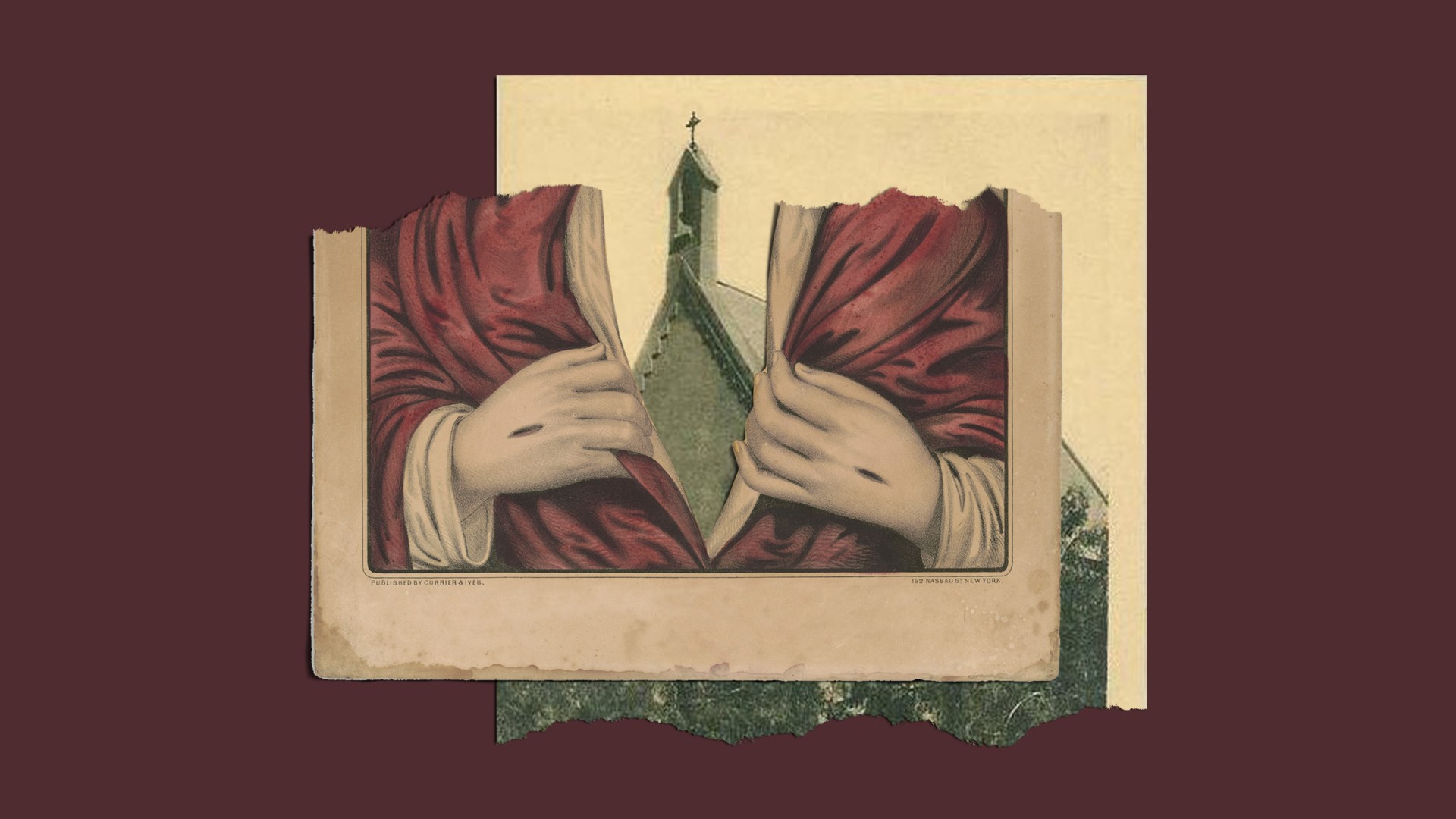
Illustration by Jill DeHaan

I’ve been told that during and after COVID-19, many of us picked up a variety of hobbies—from sourdough-bread making to new workout routines and regimens, we all tried to find something to help us pass the time. For me, it was plants; what started with a solo pothos plant from Lowe’s on an ignored shelf became a burgeoning collection of all manner of plants. Confession: I have killed many a plant in my brief career, but I’ve come to understand that one absolutely essential element for all plants is good lighting. Light is king in the plant world.

Because of this reality, one of the hardest times for a plant lover like myself is the winter; the days and sunlit hours are shorter, and the nights are long and cold, especially here in the Midwest. A few days ago, I came into my kitchen and saw that several of my plants were looking a bit sad and depressed. Yet a slice of sunshine was coming through the windows that was particularly bright for even this cold day. I’m sure it could have been my imagination, but it seemed that one of the plants was bending toward the light, as if crying out, “I can’t take this dreariness forever. I must get to you.”

It was a stark reminder that we share some similarities with plants. That shouldn’t surprise us at all. Botanical and arboreal themes abound throughout Scripture. Like plants, we humans aren’t made for the darkness. We don’t thrive there. But, for whatever reason, we often find ourselves there. Whether by choice or circumstance, every human being experiences dark times and days.

What darkness envelops you today? Perhaps it’s the long winter months we find ourselves in, the overwhelming expectations of the holiday season, the pain and heartbreak of broken and estranged relationships—we’ve all been there. Darkness is defined by the absence of light. In the dark, we can feel abandoned, forgotten, and unloved.

What are we to do, then? Like my plant, we do whatever we can to bend toward the Light. The prophet Jeremiah seems to capture this aching tension of living in the reality of a broken, dark world but also straining for whatever ray of light we can faithfully see: “The Lord will not cast off forever, for, though he cause grief, he will have compassion according to the abundance of his steadfast love; for he does not afflict from his heart or grieve the children of men” (Lam. 3:31–33, ESV).

In times of darkness, my encouragement to my own heart and yours today is to do whatever it takes to bend toward the Light. Bending our hearts toward Jesus is an act of faith, because sometimes the darkness feels so overwhelming to us. But we remind ourselves and others that it’s in the light that we truly flourish. As the apostle John records in relation to Christ’s first advent, “The true light that gives light to everyone was coming into the world” (John 1:9).

Jonathan Holmes is the executive director of Fieldstone Counseling and the interim executive director of Christian Counseling & Educational Foundation (CCEF). He also serves as an instructor at Westminster Theological Seminary in the master of arts in counseling program.

Church Life

No More Night

Without acknowledging our grief, we won’t experience the deep comfort of releasing our sorrows to the suffering Savior

Illustration by Jill DeHaan

One day we noticed that the trim around our door frames was especially dark. I assumed we hadn’t dusted enough. Then we noticed discoloration on the concrete floors, and it hit us—there’s mold in the house! This led to major upheaval in our lives. Then, within weeks, financial investments bottomed out, my wife was in a car accident, and I lost my job.

We struggled with anxiety about finances, worry that we would lose our home, and a sense of injustice. But mostly, we were sad. It felt like we were in the pitch black of night. When our pastor asked my daughter how she was handling everything, she replied, “We are grieving. We also know that sometimes you have to sacrifice things for the spread of the gospel. But we’re also sad.”

It’s important to hold both of these realities in tension: grief over loss and hope in gospel gain. If we just brandish our hope, we won’t experience the deep comfort of releasing our sorrows to the suffering Savior. But if we get mired in our grief, without a sense of what God is doing, we will spin out into despair.

In Revelation 21, John writes about our future with great hope: “The city does not need the sun or the moon to shine on it, for the glory of God gives it light, and the Lamb is its lamp. The nations will walk by its light, and the kings of the earth will bring their splendor into it. On no day will its gates ever be shut, for there will be no night there” (vv. 23–25).

Within this stunning description of life under the unwaning sun of God’s glory is a hint of previous darkness: “and there will be no night there.” In this brief phrase, John acknowledges the unwelcome darkness of suffering. Earlier he describes God’s judgment wiping out a third of all lights in the sky (8:12). The exiled apostle writes about the glory of Christ with a profound sense of how dark things can get. Yet he knows the night is on notice.

One day, there will be no more night. Life will be so peaceful and safe that the protective gates of the city will never need closing. There will be no threat of loss, no pain of grief, no more injustice. Only light.

The good news is that light can break into our lives now. Jesus’ undiminished glory illuminates our present path like a shaft of light in the darkness. If we trust him with our heartaches and step out to follow him, he will lead us into the light of the eternal city. While this doesn’t immediately resolve the tension between grief and hope, it does diminish the darkness of night.

Another daughter had strep and was confined to the house for several days. Toward the end of the week, we decided to go outside together. As we stepped out into the warm sunlight, she said, “Daddy, the light hurts.”

I replied, “That’s because you’ve been in the dark so long. Once you get used to the light, you’ll see it’s a beautiful day.”

Coming out of the darkness can be painful, even scary, but as we step into the light, our eyes adjust to take in the brilliance of Jesus, who brings us unique comfort and hope.

Jonathan K. Dodson has served as the founding pastor of City Life Church, a theologian in residence, and the founder of the resource ministry Gospel-Centered Discipleship. He is married to his remarkable wife, Robie, and is the author of numerous books, including The Unwavering Pastor.

Church Life

An Invitation to Believe

I was a memory-verse A-lister, Bible trivia ace pastor’s kid. A crisis of faith brought me to read Scripture anew.

Illustration by Jill DeHaan

When I was 27, my faith fell apart. To be more accurate, the house of cards I had carefully constructed to look like faith fell apart.

For years I had hidden certain doubts and hypocrisies behind theological knowledge and articulate arguments. I gave the impression of confidence in Christ while actually grasping at confidence in myself. And then it all blew up. I was fired from a job for dishonesty and theft. My sin was exposed, and the damage it caused was deep. Worst of all, though, I was forced to confront the question “What do you actually believe?” Not “What do you profess?” or “What do you assent to?” but “What do you stake your life on?”

And I couldn’t very well answer. All my previous professions of faith had brought me to this place. I was staring into the chasm of unbelief, on the brink of falling in completely, and realizing I didn’t know how to believe or whom to believe in.

Amid this crisis, an elder from my church who was patiently caring for me and offering guidance urged, “Go back and read the Gospels and look for Jesus. Try to forget all your preconceptions.” That’s not an easy thing for a pastor’s kid, Sunday schooler, sword-drill champion, memory-verse A-lister, Bible trivia ace, and flannelgraph aficionado. Preconceptions were, in many ways, all I had.

But I did my best. Starting in Matthew 1, I read stories and passages I’d read a hundred times. I read through Jesus’ teachings and about his miracles. I muddled and trudged my way into Mark. Then I got to Mark 9 and the account of a desperate father bringing his demon-possessed son to Jesus for deliverance. I knew this story. It barely registered as significant in the moment, except for one interaction:

“It has often cast him into fire and into water, to
destroy him. But if you can do anything, have compassion
on us and help us.” And Jesus said to him, “‘If
you can’! All things are possible for one who believes.”
Immediately the father of the child cried out and said,
“I believe; help my unbelief!” (Mark 9:22–24, ESV)

This grabbed my attention. When a struggling doubter brought those doubts to Jesus and asked for help, Jesus didn’t reject or condemn him for his struggles. The man could look Jesus in the face and say, “Help my unbelief” and Jesus would. This offered a paradigm for real faith: belief with struggle, belief with dependence.

The words I had so often skipped over began to take on flesh in the living person and reality of Jesus. Whereas I had been unmoved by reading of Jesus’ birth, I now discovered another sort of advent—when Jesus comes alive in a soul.

These discoveries weren’t immediate. Yet seeing those verses that day was the spark that caught the tinder of my heart. Over the ensuing months, the flame flickered, then crackled, then roared into heat and light in my heart. Jesus invited me into belief and showed me he is indeed the life who is the light for men’s hearts (John 1:4).

Barnabas Piper is a pastor at Immanuel Church in Nashville, Tennessee. He is the author of several books, including Help My Unbelief and Belong. He is married to Lauren and has three children.

Church Life

Hope That Cannot Be Overshadowed

Advent reminds us that light is never overcome by darkness.

Illustration by Jill DeHaan

Summer of 2022 was a high point in my life. I was on sabbatical, getting some much-needed rest and an abundance of quality time with my family and the Lord. Psalm 16:5–6 became the theme of that season: “Lord, you are my portion and my cup of blessing; you hold my future. The boundary lines have fallen for me in pleasant places; indeed, I have a beautiful inheritance” (CSB). The Lord was helping me embrace my limitations and see his goodness in both the highs and lows of life and ministry. I returned from that season of rest with renewed hope and joy in the provision and promises of God in my life.

But immediately upon my return, it was all put to the test. The hopeful light of that season was replaced with discouraging darkness. My first day back as lead pastor came with the news that a staff member was preparing to leave. This was followed by the departures of several church members, leaving a wake of grief and pain. It was a season of discouragement unlike any other I had experienced in my years of pastoring.

Aside from the ministry pains, my wife was bearing the weight of caring for her father, who was suffering from dementia. Together, we shared the burden of praying for our oldest son, who remained close to our family but had distanced himself from the church and his faith a couple years before. We found ourselves facing so many discouragements and challenges. By November, it felt like all the light of the summer was on the verge of being overshadowed.

But then the season of Advent came with the reminder “The light shines in the darkness, and the darkness has not overcome it” (John 1:5). This is one of the great gifts this season presents to us. It invites us to remember that no matter how dark things might seem, light has come and is coming again, and darkness cannot overcome it. Advent bade me to not forget the lessons of the summer and to embrace that even amid discouragement, the boundary lines have fallen for me in pleasant places, the Lord holds my future, and I still have a beautiful inheritance.

Jesus was so good in that season to lead me to cling to him and the hope he brings, even if it meant waiting for things to actually feel hopeful. And he was gracious to not make us wait too long. Within a few months, a spirit of joyful hope returned to our church. Even more beautifully, the Lord brought our son to faith in one of the most amazing transformations I have seen.

Whatever you are facing in this season, however dark things might seem, remember that light has come and is coming again, and darkness cannot and will never overcome it. The beautiful inheritance we have in Christ cannot be overshadowed.

Chris Jones is the founding and lead pastor of Redeemer Community Church in Bloomington, Indiana. He’s been married to his wife, Krystal, for 25 years, and they have three children.

Church Life

The Storm and the Promise

A word of comfort for weary saints.

Illustration by Jill DeHaan

Mom passed away this afternoon.” My sister-in-law spoke the five words no one wants to hear—especially not on Christmas Eve. As we adults talked quietly on the phone, our kids half watched a Christmas movie and ate their dinner, trying to figure out what was going on.

It was Chinese takeout, our family’s yearslong Christmas Eve tradition. It was cold before we grown-ups took a bite.

We walked in circles outside, reeling. We’d experienced death in our extended family before, but this was different. This was my wife Emily’s mother. This was the first of our parents to die. Even as we tried to process the news and planned to get Emily to Canada to be with her dad and sister, Christmas loomed large. What would the next day be like? How would we tell our friends—our gospel family here in Tennessee—about what happened without ruining their Christmas?

The next day was heavy but normal. Presents, food, and another failed attempt at rallying the family around a reading of the birth of Jesus (Luke 2:1–20). Phone calls and texts with family. Quiet time to contemplate.

The following days and weeks were a blur of calls, texts, tears, and travel. As January passed into February, we prayed for a sense of normalcy. We didn’t yet know this was only the beginning of a storm that would rage for over a year: A major health scare and surgery. Another unexpected death, this time my sister’s husband, a man I’d known for over 30 years. The end of our church of more than eight years.

We prayed for the storm to end and for peace to come. But instead of Jesus calming the storm (Mark 4:39), our boat was overturned. Instead of finding stillness, we were washed up on the shore to sit beside Job, the weary saint who helped me see the light.

It’s easy to misread Job’s story, especially when God breaks his silence and responds to Job’s complaints (Job 38–40). His “Where were you when” stings, seeming to say, “I’m God. You’re not. So how about you sit down and shut your mouth?” Yet one small but important detail challenges this idea: “Then the Lord spoke to Job out of the storm” (38:1). When God appears, he is identified by his intimate, covenantal name—YHWH, I Am Who I Am. The name given to sustain his people in their distress (Ex. 3:14). The name that told them he was with them in their trials—and tells us the same.

He is with us in the storm.

That is Advent’s promise, one Christ’s birth made manifest as “the Word became flesh and made his dwelling among us” (John 1:14). Despair will haunt us, but God will not abandon us. Storms will come, but Christ is with us. Darkness will come, but after darkness comes light.

And one year later, on Christmas Eve, we sat down for dinner. It was Chinese takeout, our family’s yearslong tradition. It was hot when we took our first bite.

Aaron Armstrong is the author of Faith Simplified: What We Believe and Why We Believe It. For nearly 20 years, he has served local churches as a preacher, small-group leader, and children’s ministry leader.

Church Life

Darkness to Light

A prayer, a prophet, and a poem for those in the dark.

Illustration by Jill DeHaan

The people walking in darkness have seen a great light.” Those prophetic words of Isaiah 9:2 continue to have a powerful resonance for us today. They came true supremely, for the whole world, at Christmas when Christ the Light of the World was born for us in a stable. But they also come true for us time and again in our individual lives when, at times seemingly against all odds, the light of Christ shines anew for us.

I am someone who occasionally experiences the real darkness of depression. Often there seems to be no outward reason for it. It is as though the light in my world suddenly dims or goes out altogether, and I feel that I am stumbling in the dark—or worse, not even stumbling; I can hardly get out of bed or even breathe. But I hold on. I “keep on keeping on,” as Bob Dylan says, and I pray through clenched teeth.

I wrote about that experience once in an Advent poem about Isaiah’s promises that Christ would be given “the key to the house of David” (22:22) and set the prisoners free (61:1):

Even in the darkness where I sit
And huddle in the midst of misery
I can remember freedom, but forget
That every lock must answer to a key.

I go on to confess in that poem:

I cry out for the key I threw away
That turned and over turned with certain touch
And with the lovely lifting of a latch
Opened my darkness to the light of day.

And he does come. After I wrote that poem, the darkness began to lift a little. By way of recovery, I went and stayed a few days on the little sailboat I kept on the River Orwell, on the east coast of England. After a night on the boat, I got up very early in the morning and stood on the foredeck to watch the sun rise over the river. I recited the ancient Advent Antiphon prayer “O Oriens” (O Dayspring), which goes like this:

O Dayspring, splendor of light eternal and sun of Righteousness:
Come and enlighten those who dwell in darkness and the shadow of death.

As the sun rose and I watched the path of its light on the river, my prayer was answered and my inner darkness lifted completely. I celebrated that in another sonnet:

First light and then first lines along the east
To touch and brush a sheen of light on water,
As though behind the sky itself they traced
The shift and shimmer of another river …
So every trace of light begins a grace
In me, a beckoning. The smallest gleam
Is somehow a beginning and a calling;
“Sleeper awake, the darkness was a dream
For you will see the Dayspring at your waking,
Beyond your long last line the dawn is breaking.”

(Poems from Sounding the Seasons, Canterbury Press, 2012, pp. 10–11)

Malcolm Guite is a poet-priest who lectures widely in England and North America on theology and literature and has published various books on poetry, theology, and literary criticism.

Church Life

God of Light and Life

God used a national tragedy to wake me from personal darkness.

Illustration by Jill DeHaan

The summer before my freshman year of high school, I traveled on my first mission trip to New York City to assist several church plants, pray for people on the streets, and share the gospel with people in the park. It was a challenging but fruitful week. I fondly remember getting on my knees and “giving my life to the work of ministry” during our last evening of worship at the Marriott World Trade Center, nestled between the Twin Towers.

It should not surprise us that the Evil One, personal sin, and the world’s pleasures increase their temptation after a spiritual high like I experienced that summer. Indeed, after I entered high school, those moments of service and surrender faded as I was enveloped in my new surroundings. From that point, the lure of a life untethered to a Christian family and the local church led me to move four hours away to attend university. There, unrestrained and intoxicated living brought me to a place of nihilism and hopelessness. Looking back, I realize I spent most of my high school and college years fumbling in the darkness, spiritually empty and aimless.

Then came the morning of September 11, 2001. All of us who experienced it remember where we were on that day of darkness in our country. The unprecedented events surrounding that fateful day brought our nation to its knees. Yet God used that national tragedy to wake me from personal darkness. You see, I was brought to my knees as well.

As I sat alone in my dorm room watching the second plane crash into the South Tower, I could not help but think about that summer before high school. While I watched the towers fall, by God’s grace I could not help but question my trajectory and the inevitable end of my future. Just five years earlier, I had been in those very buildings. On a mission trip. Surrendering my life to gospel ministry.

Not knowing what else to do, I opened a drawer and found a Bible I had reluctantly accepted from a campus ministry in the university courtyard a few months earlier. I began to read the Word of Life prayerfully for the first time in years, and light started to break forth. In the following weeks and months, God began to work in my heart. That Christmas, I returned home, and God set me on a new path.

Post tenebras lux—“after darkness, light.” In moments of darkness, people are drawn to the light. Against the backdrop of darkness, light shines even brighter. As each Christmas approaches, I am reminded of my journey back to Christ, “the light of the world” (John 9:5). Perhaps you or a loved one is walking in a season of darkness. In moments of di!culty, disease, and even death, it’s vital to remember that the God of light is always at work. In him, the darkness cannot overcome, because it does not have the last word (John 1:5). While we may not know what the future holds, we know who holds our futures. And there is no shadow of change in him (James 1:17).

Matthew Z. Capps (MDiv, DMin, PhD candidate) serves as the lead pastor of Fairview Baptist Church in Apex, North Carolina. Matt is the author of Drawn by Beauty and Every Member Matters.

Church Life

The Light of Life

Joni Eareckson Tada’s Advent reflection on this dark-become-light season.

Illustration by Jill DeHaan

When I was a kid, early on Saturday mornings I would gather with neighborhood friends, and—with our parents’ permission—we would ride the streetcar up to the Ambassador Theatre in Gwynn Oak Junction, Baltimore. When the movie was about to begin, we had to walk through a thick velvet curtain to enter the theater. Immediately, we’d bump up against the back row. Only after our eyes adjusted to the dark could we find our seats.

After the show was over, again there was no vestibule to ease ourselves out of darkness and into the light of day. The sun was so dazzling outside that we’d stumble, rub our eyes, and try not to bump into things. The brilliance was a jolt to our senses.
I often think about that experience when I read 1 Peter 2:9, “Proclaim the excellencies of him who called you out of darkness into his marvelous light” (ESV). The spiritual contrast Peter is explaining here is akin to exiting a pitchblack theater and being hit with blinding sunlight.

This verse also describes the jolt I felt when God called me out of my own darkness. You see, more than five decades ago, I broke my neck in a diving accident that left me a quadriplegic. Without use of my hands or legs, I plummeted into deep depression, convinced that God had abandoned me. The depression was like a thick darkness, and it lasted a long time.

Then, Christian friends opened the Bible and shone into my soul John 8:12, where Jesus said, “I am the light of the world. Whoever follows me will never walk in darkness, but will have the light of life.”

It sounded hopeful, and I wanted to believe, yet Jesus’ claim seemed audacious. But a friend explained, “If Jesus loved you enough to die a torturous death to save you, then doesn’t that prove he is trustworthy? That his intentions for you are good?”

It was a jolt to my senses—like parting a heavy curtain and stepping out into a light so bright it illuminated everything. I realized God took no pleasure in my paralysis, but it was part of his mysterious yet trustworthy plan for my life. When the eyes of my heart adjusted to God’s hope-filled light, I felt as though I had awakened from a long nightmare. And although I would remain paralyzed in a wheelchair, my soul would never be the same. God had “called [me] out of darkness into his marvelous light.” It was just like Jesus shouting into a dark grave, “Lazarus, come out!” (John 11:43).

It’s why I love Advent. The world was impossibly dark before the birth of Christ. But then the Light of the World arrived, changing everything. Advent reminds us that “the true light that gives light to everyone [has come] into the world” (John 1:9). During this dark-become-light season, part the curtain and hear Christ’s call: “Come out!” Then, step into the sunshine of his glorious salvation.

Joni Eareckson Tada is founder and CEO of Joni and Friends, an organization that provides Christian outreach in the disability community. Joni is the author of numerous bestselling books, including Joni and Ken: An Untold Love Story and When God Weeps. Joni and her husband, Ken, reside in Calabasas, California.
Church Life

Endurance and Redemption

The hope of my adopted son’s birth began long before last August.

Illustration by Jill DeHaan

I gave birth to my adopted son last year. He was born at home before dawn on a warm August morning. I carried him for 38 weeks—still, he was conceived years before his days in my womb. I delivered a baby in 2024 whose life began in the year 2003.

Mercedes Luna-Munroe was born in New York to Dominican parents. She met her first husband when she was 25. She remembers the day he walked into her parents’ home. The year was 1998. A stranger on an errand, he came to pick up empanadas from her mom and left an impression behind. The stranger became her friend and then her husband in 2000. Sadly, difficulty would devour the young marriage.

Mercedes heard the dreadful word “infertile” at age 26. She was diagnosed with polycystic ovarian syndrome and was given few options beyond in vitro fertilization (IVF). She trod the costly road of conceiving children through IVF and welcomed six embryos in April 2003. Although her journey to children should have ended that year, the story had just begun.

Mercedes became pregnant with two of her six embryos—twin girls named Samantha and Lizbeth. Then the unthinkable happened at 23 weeks of gestation. Her cervix dilated prematurely, and her amniotic sac was accidentally punctured during an examination. An untimely labor ended the lives of her twins. The girls, born on August 11, 2003, lived only a few hours. The traumatic loss of her babies is a heartbreak Mercedes continues to nurse. Her pregnancy with Samantha and Lizbeth would be her last. 

Her doctor transferred two additional embryos to her with no positive pregnancy test. By 2005, Mercedes had two remaining embryos and no marriage. Her memories of this period are saturated with dark shadows. She sank into depression while working to maintain her home and preserve her two frozen embryos. When she could no longer afford to pay the storage fees, Mercedes faced two choices: destroy the tiny lives or donate them. She (and her ex-husband) chose the latter. The embryos were shipped to the National Embryo Donation Center (NEDC) in Knoxville, Tennessee. And here, my family enters the story.

I was battling secondary infertility when I learned of NEDC’s embryo adoption program. My husband and I applied in early 2023 with the hope of adopting an embryo who had been waiting for a long time. Mercedes’ little ones had been frozen for 20 years when we found them. Both embryos were transferred to me in December 2023. One went to be with the Lord; we named him Zion. The other was born on August 11, 2024, and we named him Kian (which means “enduring”). Kian shares a birthday with the twin sisters Mercedes delivered and lost 21 years before.

Kian’s middle name is Immanuel, which means “God with us.” The name appears in Isaiah 7:14. Israel was threatened by strong enemies and shook with fear like a forest shaken by winds. But God was with his people and promised to save them. His word came with a sign: A son would be born and named “God is with us” despite the dark circumstances. This sign, partially fulfilled in Isaiah’s time, was ultimately satisfied one starlit night in Bethlehem. A virgin conceived and bore a son—Jesus the Messiah (Matt. 1:21–23).

God’s people live in a world where traumatic heartbreaks leave us shaken. Yet our God is with us in every darkness. His presence is our light and the source of our hope. I gave birth to an adopted son named Immanuel because the greater Immanuel is a redeemer.

Nana Dolce (MTS) is the author of You Are Redeemed and The Seed of the Woman. She is a guest lecturer at the Reformed Theological Seminary in Washington, DC, and a Charles Simeon Trust instructor. Nana lives in Washington, DC, with her husband and four children.

Church Life

When the Darkness is Inside

Creation brings forth light in which darkness will not have the final word.

Illustration by Jill DeHaan

The opening salvo of the biblical narrative exemplifies a truth that runs through the entirety of the unfolding drama: Light will overcome the darkness.

Open the pages of our sacred book and you are at once introduced to the beautiful theme of illumination. Out of nothing, God calls forth the cosmos with its trillions of burning stars, moons, and celestial lights illuminating what was dark before he spoke. Creation inaugurates an economy of light in which darkness will not have the final word, and this theme remains steady as the story unfolds.

We see light overcoming the darkness when God is present with his people as a pillar of fire illuminating the way in the night (Ex. 13:21–22). In the Psalms, we see that both God and his Word illuminate, as the psalmist declares, “The Lord is my light and my salvation—whom shall I fear?” (27:1) and “Your word is a lamp for my feet, a light on my path” (119:105). In the New Covenant, the theme of light is advanced as John writes about the incarnate Christ: “In him was life, and that life was the light of all mankind. The light shines in the darkness, and the darkness has not overcome it” (John 1:4–5). Even those who follow this incarnate, illuminating Christ are called “the light of the world” (Matt. 5:14–16).

These are but a handful of passages in which God emphasizes the power of light over darkness. All this illuminating beauty—from the burning stars to the light of God’s Word—is glorious news, but the good news of God’s light does not stop there. These instances of God’s illuminating work are all “out there.” There is a distance to them. God’s breathing burning stars into existence is wonderful beyond description, but many times illumination is most needed not “out there” but rather “in here.”

For many of us, a darkness lingers in the crevasse of our souls, showing itself as a crippling feedback loop of self-degradation. It’s a chorus, sung on repeat, from my innermost being that reminds me of my brokenness, my unworthiness, and, most often, my being unlovable. For many of us, the gospel is a true, present, and even gorgeous reality that we have no problem believing on behalf of others. I believe that no one is beyond the reach of the gospel’s cleansing power. I believe that God not only loves you but even likes you. I believe that, in Christ, you are not an unwanted stepchild but an adopted and cherished son or daughter with bold access to your Father, who will never turn you away. And often, I can believe these realities for you, but the darkness inside makes it difficult to see how any of them can be true for me. This is not humility; it’s a perverse inward humiliation in which I sometimes feel as though darkness may have the final word in my self-talk and self-hatred.

Yet God’s illuminating work is not confined to the cosmos— as big as it may be. Though it can be a fight to believe at times, God illuminates not only the sky with burning stars in creation but also those dark corners of our souls. In the darkness-expelling beauty of the gospel, we hear the promise of 1 John 3:20 that even when “our heart condemns us, God is greater than our heart, and he knows everything” (ESV).

The illuminating work of God can be like fireworks that light up the sky and give light to all who look up. But for each of us with a dreadful inner voice, at times the illuminating gospel is more importantly a surgeon, taking the scalpel of Christ’s life, death, and victorious resurrection to the inward darkness, the crevasses of the soul. Places we thought were unredeemable, unlovable, and maybe unfindable, God goes even there in his illuminating work of bringing resurrection where there was death.

Ronnie Kurtz is an assistant professor of systematic theology at Midwestern Baptist Theological Seminary. He is the author of several books, including Fruitful Theology: How the Life of the Mind Leads to the Life of the Soul and Light Unapproachable: Divine Incomprehensibility and the Task of Theology.

Apple PodcastsDown ArrowDown ArrowDown Arrowarrow_left_altLeft ArrowLeft ArrowRight ArrowRight ArrowRight Arrowarrow_up_altUp ArrowUp ArrowAvailable at Amazoncaret-downCloseCloseEmailEmailExpandExpandExternalExternalFacebookfacebook-squareGiftGiftGooglegoogleGoogle KeephamburgerInstagraminstagram-squareLinkLinklinkedin-squareListenListenListenChristianity TodayCT Creative Studio Logologo_orgMegaphoneMenuMenupausePinterestPlayPlayPocketPodcastRSSRSSSaveSaveSaveSearchSearchsearchSpotifyStitcherTelegramTable of ContentsTable of Contentstwitter-squareWhatsAppXYouTubeYouTube