Ideas

Get Up and Stop Sinning

Contributor

Social disadvantages are real. But both personally and corporately, we must honestly confront the ways in which we’ve injured ourselves.

A red snake coiled around an empty chair
Christianity Today May 13, 2025
Illustration by Mallory Rentsch Tlapek / Source Images: Unsplash, WikiMedia Commons

In Raythe Academy Award–winning biopic about Ray Charles, the audience walks with the singer through the gut-wrenching realization that he’s going blind at the age of seven. 

His mother breaks the news to him in a mix of tender love and matter-of-fact sternness. At one point, he trips, falls, and screams for her. Though standing nearby, she tearfully—but wisely—refuses to respond. She knows he’ll never discover his full capacity if he doesn’t learn to use his other senses to work through his predicament. She constantly reminds him that though he has a disability, he also has real choices and shouldn’t resort to self-pity. His mother’s words replay in his mind as the film follows his life: “Promise me you’ll never let nobody turn you into no cripple.”

The story isn’t a tribute to rugged individualism. Rather, Charles’s life becomes a parable about how resilience in the face of disadvantage and misfortune can introduce us to the heights of our capacities. Despite the many things we can’t control, God gives each of us agency, the power to make choices that impact our lives (Rom. 2:1, 6). This is coupled with the dignity of bearing his image (Gen. 1:26–28). And with God-given agency and dignity comes responsibility for our choices—not only as individuals but also as members of communities. 
Our misfortunes and mistreatment can do drastic damage to our lives, but they’re rarely the whole of our problems. We must also deal with the effects of our own foolishness and sin. As an adult, Ray was forced to acknowledge that he’d broken his promise to his mother and made himself a cripple by his choice to use heroin. He found capacity even in blindness and lost capacity through addiction.

And our communities—including our churches—can suffer from problems of their own making too. It’s tempting for communities to avoid internal correction and to blame all their problems on external disadvantages. But both personally and corporately, we must honestly confront the ways in which we’ve injured ourselves.

Jesus had a way of caring about people’s social disadvantages while also making them face their own shortcomings. In John 5, he heals the lame man, then tells him to get up and stop sinning (vv. 8, 14). 

Likewise, in the Old Testament, the Hebrews had gone through more than 400 years of oppression before being delivered into freedom by God’s hand (Ex. 12:40). Yet that didn’t absolve them from accountability for misused agency in the wilderness. God’s compassion and conviction extend grace for our afflictions—with external and internal causes alike—without relieving us of responsibility.

In the United States, the political right and left have long been in a heated debate about the impact of social disadvantages on community agency and outcomes. In true culture-war form, many have dumbed this down to an all-or-nothing proposition.

On the right, the characteristic error is to focus too much on agency, to the point of dismissing intractable effects of historical oppression or unjustly blaming people for their own mistreatment. Some conservatives discount the disadvantages caused by racism, sexism, and classism, insisting the solution to any individual or community problem is just to pick yourself up by your bootstraps. 

Conversely, some progressives suggest that it’s oppressive to expect any responsibility from certain identity groups. This point of view might sound compassionate, but it’s ultimately disempowering. Telling people they have no responsibility for things they can influence robs them of dignity and agency. It fosters a hopeless and helpless paralysis that forgoes opportunities to take initiative. We’re not always in control of our lives, but we should find encouragement in identifying our spheres of influence and working to better our lives and the lives of others. 

Both individually and communally, we must be as clear-eyed about our own wrongdoing—and our own agency—as we are about wrongs committed against us. We should be suspicious of anyone who breaks a man’s leg and then shames him for limping, as well as of the man who complains while refusing physical therapy to work on his limp. 

No ethnic group or economic class or political party should be granted a comprehensive excuse for all its problems and pathologies. We cannot honestly blame everything on elites or oligarchs, progressives or MAGA, immigrants or racists. Whatever blame they’re due, to reject our own responsibility is to lean on a diamond-studded crutch. It must be cast away just like everything else that dishonors the agency and dignity God has given us. 

For many of us, it will need to be cast away again and again. There will always be opportunists and deceivers ready to offer us fat, succulent scapegoats on whom we can lay all our problems. But whatever the scapegoat, such offers are not liberation. They’re an invitation to “bitterness, rage and anger, brawling and slander, along with every form of malice” (Eph. 4:31).

I wonder if Americans’ single-minded focus on national politics makes it easier to refuse responsibility for ourselves and mercy for the oppressed. We’ll overlook the chaos on our front doorstep to obsess over faraway problems and the people we suppose are causing them. 
In solidly red Tuscaloosa, we’re preoccupied with the wrongs of distant Democrats. From deep blue Los Angeles, we’re worked up about Republicans clear across the country. To some extent, this habit is a cop-out—an unwillingness to take responsibility for issues closer to home. National politics are important, of course, but can also serve as a convenient distraction from addressing what’s in our control and fixing what we have broken.

The pattern is particularly dangerous in leaders, as it can steer whole communities away from accountability. When Oakland mayor Sheng Thao was indicted in an FBI corruption investigation, she defiantly blamed “radical right-wing forces” for her predicament. (In California?) Likewise, the Trump administration blamed the media for its Signal security breach. And Christians sometimes blame the devil for our own immoral actions, overlooking dysfunction and bad theology in the church to hyperfocus on an external enemy.

Historical injustices can have stubborn effects. We may have canny political rivals. And certainly, as Christians, we have fierce opposition in the spiritual world. But to exaggerate the power of these external enemies is to impeach the power of God and undermine our own agency. 

Even in the face of serious disadvantages, God has endowed each of us with the capacity to make meaningful choices for ourselves and our communities. We must not abdicate that duty, settle for scapegoating, or run from local responsibilities. Let us call one another to God-given dignity that confronts both external offenses and internal shortcomings with grace and power.

Justin Giboney is an ordained minister, an attorney, and the president of And Campaign, a Christian civic organization. He’s the author of the forthcoming book Don’t Let Nobody Turn You Around: How the Black Church’s Public Witness Leads Us out of the Culture War.

Ideas

We Should Not Be Silent This Time

Most churches did nothing as Japanese Americans faced mass incarceration during World War II. We must do better for immigrant communities today.

A Japanese American girl sitting in an internment camp and an immigrant and his son sitting on the ground
Christianity Today May 13, 2025
Illustration by Christianity Today / Source Images: WikiMedia Commons, Getty

In 2023, I helped lead a civil rights tour with the Asian American Christian Collaborative. Our trip took us to the Manzanar War Relocation Center—one of ten former incarceration sites for Japanese Americans during World War II.

Surrounded by the barren California desert and the stark remnants of the camp, our multigenerational group of 20 people was collectively stunned by how easily a nation can come to justify cruelty in the name of security.

The brutality on display at the historic site left some visitors incredulous. A high school student in our group overheard a middle-aged white couple walking out of the visitor center saying, “This can’t be true. The US would never do anything like this. This must be fake news.”

Sadly, it’s not. In early 1942, following the attack on Pearl Harbor, around 120,000 people of Japanese descent were forcibly removed from their homes by executive order. Two-thirds of them were American citizens.

Given only a few days’ notice, families packed what they could of their belongings, sold their businesses at a loss, and boarded buses to government-run “relocation centers,” where they remained an average of two to three years in terrible living conditions. Upon leaving the camp, many suffered huge losses in livelihood and continued to face xenophobic and racist threats.

A group of Asian Americans enters the Manzamar internment camp in California. Photography by Abigail Erickson
AACC tour participants enter a building at the Manzanar War Relocation Center

The US government’s formal apology and reparations to Japanese Americans in 1988, although acknowledging that the internment was fueled by racial prejudice and wartime hysteria, did little to heal the wounds of generational trauma.

Around 80 years after the Japanese internment, we as Christians must ask what lessons we have yet to take to heart.

As I reflect on my visit to Manzanar, I am struck by the unsettling parallels to what immigrant communities are facing today. Even though the US is not currently at war, we are again witnessing the troubling and unchecked use of executive power that jeopardizes the rights and safety of individuals living in our country.

Since March, hundreds of migrants have been deported to El Salvador without due process, with officials completely disregarding a court order from US District Judge James Boasberg to halt the flights.

One of the most alarming cases is that of Kilmar Abrego Garcia, a Salvadoran immigrant with legal protections. He was mistakenly deported and sent to a megaprison designed to house 40,000 people accused of gang affiliations. Despite the Supreme Court ruling that his deportation was unlawful, the government has taken no steps to return him, and he remains imprisoned.

Some of those caught in the crosshairs are women and children. One mother was deported to Honduras without time to arrange care for her four-year-old son, a US citizen, who is battling late-stage cancer. In another case, a pregnant woman and her young daughters were deported despite one of the children being a US citizen, raising serious concerns that there had been no legal review.

Even the church is no longer a safe haven for worship. In January, a policy protecting schools and houses of worship from Immigration and Customs Enforcement (ICE) was rescinded, opening sacred spaces to immigration agents. Just a month later, ICE officers arrested Honduran asylum seeker Wilson Rogelio Velásquez Cruz outside a Georgia church that he had helped plant.

Cases like these send a dangerous message. They imply that even those with legal protections—like the Japanese American citizens who were incarcerated—are not immune and that their rights can be disregarded without consequence.

Where is the church in the midst of all this? Considering that more than 75 percent of immigrants at risk of deportation from the US are Christians, what is our obligation to them as fellow believers?

During World War II, most of the American church remained quiet as Japanese Americans were carted off to places like Manzanar. Only a handful of individuals and groups, like the Quakers, actively opposed the incarceration. These responses seem similar to those of today.

Yes, there are political complexities. Yes, the issues surrounding immigration are layered. No, unrestricted open borders are not the solution. But the gospel does not allow us the luxury of remaining neutral or disengaged when it comes to the unjust treatment of those made in God’s image. From Genesis to Revelation, Scripture tells a bigger story and calls us to a costly love for neighbor.

Throughout the Bible, God’s people intervene on behalf of the oppressed: Moses before Pharaoh; Esther before the king; the early church on behalf of the widowed, orphaned, and poor. Speaking up for the vulnerable is not partisan—it is prophetic, truthfully calling for repentance and justice. And our response to the current crisis, far from being merely a matter of politics, is a matter of obedience.

That’s because justice is central to who God is. He acts on behalf of the stranger, the outsider, and the oppressed, and he calls his people to likewise do justice, love mercy, and walk humbly with him (Mic. 6:8).

Jesus himself was a refugee, driven from his home by political violence. He knew what it meant to be misunderstood, mistreated, and marginalized. When he began his ministry, he did so with a bold proclamation: He had come to bring good news to the poor, to free the captives, and to liberate the oppressed (Luke 4:18).

Jesus did not turn a blind eye to injustice. We too must take up our cross and follow him, even when it leads us to the lives of the most vulnerable.

If the church remains silent now, we risk repeating the mistakes of the past. But if we act with courage and conviction, we can help write a different future, one that honors Christ by standing with those whom he calls beloved.

This is the moment for the church to rise—not with fear, but with faith. Not with silence, but with solidarity. And across the country, faith-based organizations are doing just that.

In January, five Quaker groups filed a federal lawsuit challenging the removal of protections that once safeguarded sensitive locations, such as houses of worship, from ICE raids.

In Newark, New Jersey, a coalition of Catholic, Protestant, and interfaith leaders gathered to publicly oppose mass deportations and affirm their support for immigrant families.

Faith-based organizations are hosting trainings offering legal guidance through “know your rights” workshops. 

This is the legacy of faith in action, from the orphan-care movements of the early church to the Underground Railroad of the 19th century to the sanctuary movements of the 1980s and today. And all of us, as members of the body of Christ, are called to similarly take up the mantle in the ways we can.

We can support ministries that provide legal aid, language access, and holistic care to immigrant families. We can amplify and listen to the voices of immigrant leaders and stand in solidarity with them as fellow image bearers and believers.

We can create space for lament in our churches, pray for those affected, and open our doors as places of refuge and advocacy. And we can repent: of our silence, our indifference, and our complacency in the face of suffering.

If we believe the gospel is good news, then it must be good news for the immigrant, the asylum seeker, the undocumented child. It must be good news for those who are afraid.

The gospel was certainly the good news that the incarcerated Japanese American Christians clung to. In the face of immense hardship, they refused to let their faith be extinguished.

They gathered in makeshift chapels and worshiped in the camps, finding solace in the stories of exile in Scripture and trusting that God’s promises were greater than the fences that confined them. They called on the God of justice and mercy, and God met them there.

In this moment when history seems to be on the verge of repeating itself, let us remember the Japanese American Christians and the truth of what happened to them.

Let us remember our identity as the church: witnesses to a kingdom marked by compassion, righteousness, and reconciliation.

And let it be said that when the vulnerable cried out in 2025, the body of Christ did not look away. Instead, we stood up. We spoke up. We followed Jesus to the margins, and there we found him.

Raymond Chang is the president of the Asian American Christian Collaborative, executive director of the TENx10 Collaboration (out of Fuller Theological Seminary), a pastor, and a writer.

News

Ukrainians Mourn Evangelical Family Killed While Going to Church

Trump signals shifting sympathies as Russia repeatedly rejects cease-fire proposals.

Ukrainian faces at the funeral of an evangelical family killed in Sumy by Russian airstrike
Christianity Today May 13, 2025
Roman Pilipey/AFP via Getty Images

American chaplain Karl Ahlgren had just finished speaking at a Ukrainian church in the eastern city of Kramatorsk on Palm Sunday when he heard the news. Two Russian ballistic missiles had torn through the northeastern city of Sumy in the deadliest attack this year. 

The first strike demolished a university building where Ahlgren had prayed with 20 local pastors eight days earlier. He said it was a miracle that only three people were in the building and everyone survived. Close to 60 adults and children were scheduled to arrive an hour later.

But less than five minutes later, a second ballistic missile loaded with cluster munitions designed to increase casualties struck one of the city’s busiest streets.

This time, more than 100 people were injured, and 35 died, including Mykola and Natalia Martynenko and their 11-year-old son, Maksym, who were walking to New Generations Church three blocks away. Natalia served on the worship team, and Mykola helped with the church’s ministry to locals struggling with addiction. 

“I just felt this calling to go back,” Ahlgren said. “Relationships matter, and as a Christian, it’s important that we are available when the Lord needs us to go.” 

He packed his bags and made the 250-mile trip to Sumy the next day. Two days later, he spoke at the family’s funeral. He didn’t know the Martynenko family and had never delivered a message at a funeral. Still, he accepted the invitation to share words of encouragement to a community struggling to make sense of the tragedy. 

One moment in particular stood out to Ahlgren. After the funeral, he approached the son’s best friend, who was standing next to the open casket with tears streaming down his face. 

“I told him when I was his age, I had lost a close friend,” Ahlgren said. “He gave me the biggest hug. I mean, he didn’t let go.”

Russia has launched a series of deadly attacks against Ukrainian population centers in recent weeks—the worst in months. The assaults killed close to 400 civilians in March and April, according to the United Nations human rights office. 

A Russian missile struck a playground and apartment buildings in Kryvyi Rih in early April, killing 20, including 9 children. An attack on Kyiv at the end of the month killed 12 people.

President Donald Trump called the attack on Sumy a “horrible thing” but suggested the Kremlin may not be targeting civilians. He claimed he “was told they made a mistake.” 

He spoke more forcefully after the attack on Kyiv. “I am not happy with the Russian strikes on KYIV. Not necessary, and very bad timing,” he posted on social media in a rare rebuke to Russia. “Vladimir, STOP!” 

Vice President JD Vance echoed Trump’s frustration on Wednesday, saying the Russians are “asking for too much” in negotiations to end the war—a sign that Washington may begin shifting sympathies away from the Kremlin. Trump recently approved the transfer of a Patriot air-defense system from Israel to Ukraine, according to The New York Times

Trump initiated talks with Russian President Vladimir Putin more than two months ago, but the Russian leader has repeatedly rejected calls for a 30-day ceasefire. Over the weekend, European leaders threatened sanctions unless the Kremlin accepted Trump’s proposal, but Putin ignored them and instead suggested direct talks in Turkey on Thursday. 

Ukrainian President Volodymyr Zelensky agreed and challenged the Russian leader to meet him there personally. Putin has refused to meet with the Ukrainian president since the full scale war began in 2022. Their only face-to-face meeting was in 2019. 

Meanwhile, the attacks haven’t stopped. 

Drone strikes hit Kyiv, killing a mother and son, and Kharkiv, Ukraine’s second largest city, injuring at least 47 people.

“There were not and could not be any military targets,” Zelensky posted after the strike on Kharkiv. “Russia is hitting residential buildings at the very time when Ukrainians are at home, when they are putting their children to bed. Only tyrants can give such orders and carry them out.”

Putin wanted a cease-fire—but on his own terms. He called for a three-day pause in fighting while Russians celebrated the 80th anniversary of the end of World War II with military parades from May 8 to 10. 

Zelensky rejected the Kremlin’s proposal and told reporters in Kyiv the cease-fire was a “theatrical performance.” He said the 30-day cease-fire proposed by the United States was possible “even starting today” if the Kremlin would accept the terms. 

Last week, Ukraine launched two overnight drone attacks on Moscow and initiated dozens of other strikes in regions across Russia, temporarily shutting down more than ten airports. Russia accused Ukraine of killing civilians in the attacks but did not provide evidence to support the claims.

The assaults created an atmosphere of nervousness as the Kremlin prepared to welcome international heads of state for Victory Day celebrations that doubled as a show of Russian force. Chinese and Russian soldiers marched alongside each other and the Kremlin paraded Iranian-made drones and its own weaponry together through the streets. 

Sumy resident Anna Ulanovska worries Putin could use a temporary cease-fire as a way to rearm and recalibrate his offensive in Ukraine. “The common opinion is that nobody can trust him,” she said about Putin. “We should not be deceived. He wants the whole of Ukraine.”

She hears constant shelling in the morning and during the night and sometimes hears Ukrainian fighter jets. 

“It’s scary to hear all this shelling,” said Ulanovska, a member of a Pentecostal church called Christ for Everyone. “Our region is under attack again.”

Her son is a first grader in a small Christian school that meets in the church basement, a common alternative to bomb shelters. Her 14-year-old daughter attends classes virtually like most of the children in Sumy since Ukraine’s Kursk operation last summer. 

She knew the Martynenko family. Maksym had attended a local summer camp where she served as a volunteer.

“Nobody has a right to hit the city center on Palm Sunday,” she said. “Who could do this?”

Now the attacks seem relentless. A May 6 missile strike on a Sumy suburb less than 2 miles from Ulanovska’s home killed three people, including a child. Ulanovska said the beginning of the full-scale war in 2022 was a shock for many Christians. She could see the Russian tanks from her home. 

She has theological questions about the loss of life, but as the attacks have increased again, she’s drawn encouragement from Scripture. 

“I think that God in the Bible didn’t promise that everything would be smooth and perfect during our lifetime,” Ulanovska said. “He warned that we would have some troubles, trials, and tribulations.” 

She didn’t fully understand this concept before the war, she said. But she notes God has since given her a peaceful sense of his protective hand even as she sees danger and death around her. 

Ahlgren said he hopes Americans won’t forget Ukraine. 

“I talked to frontline soldiers, and I talked to everyday citizens, and they are tired and feel betrayed, but they will never quit,” he said. “For the administration to continue to basically look the other way while Putin and his military are targeting civilians is really horrific.”

News

Real Christianity Amid War

A Romanian church opens up to refugees from Ukraine with donations by the truckload.

Dmitro Isaeiv standing in front of a yellow wall.

Dmitro Isaeiv

Christianity Today May 13, 2025
Photography by Esther Havens

He’d been simply and peacefully living his life in the Donbas region of Ukraine. Then Russia’s war machine invaded the wide-open fields neighboring his village in the early days of 2014. 

We’re sitting at the end of Dmitro Isaiev’s kitchen table in Arad, Romania, on an early spring afternoon of 2025 when he tells us how the frontlines with Russia fell not three miles from his home back in the Ukraine region of the Donbas. 

For nearly eight years from 2014 to 2022 as more than 2 million Ukranians fled the war-torn region, Dmitro lived on the edge of the war with his door wide open to offer shelter to fellow Ukrainian refugees displaced by unprovoked violence. 

“One of the elderly women in our church, she’d started to prepare 150 portions of food every day, pelmeni dumplings, for the war refugees in our region. 85 years old. Making 150 servings of dumplings every day.” Dmitro passes down a plate of cookies to us. “That was her heart responding to the grief and loss of the people.” 

Just before dawn on February 24, 2022, when Russia launched a full-blown invasion and dozens of missiles struck cities throughout Ukraine, Dmitro himself sought a safe haven. 

He found it here in the Christian community of Romania. 

“If we as Ukranians fleeing the war had found Romanians closed to us, it would have been an anti-witness of Christ, or really a witness of Antichrist.” Dmitro sets down the pot of coffee in the center of the table in his small home on a quiet Romanian side street. 

“The nature of Christ’s people is to be open.” Dmitro speaks quietly, humbly. 

While Russia had been building a military presence for full-scale assault on the people of Ukraine, Romanians, including Harvest Church in Arad under the servant leadership of pastor Cristian Barbosu, had been building a compassionate welcome, preparing to be a refuge for fleeing Ukranians.

Sitting next to Dmitro at his table now in Arad are his new friends, Romanian members of Harvest Church, Delia and Nelu Vat, who have opened their lives and home to countless Ukranians since the Russian invasion.

Delia says, reaching for coffee, “Even if you don’t have what you think is enough or have the perfect home to receive people, all you have to do is open your heart.” Dmitro nods. 

She continues, “If your heart is open, then you can open your home.” Her eyes find mine, and I’m not sure I’d ever heard it so succinctly: When your heart is open, you’ll open your doors. Whether doors are open or closed is more than the policy of a state—it’s ultimately reflective of the state of people’s hearts. 

“Even before the refugees came to us, we started going to the refugees,” Barbosu says, leaning forward, hands animated, pointing to the window. “We were going to three major points right in Ukraine with help and aid and food and supplies.”

The trip from Arad to Ukraine takes over 14 hours, but Barbosu and his congregation at Harvest Church opened their own homes and partnered with various organizations to rent a hotel, where they also brought in dozens of fridges and gas stoves to create a huge kitchen. 

They then welcomed Ukranians, offered them a doctor’s weekly services, created care teams to help find employment and secure necessary documents, and offered the warm community of church and the hope of Jesus.

Committed Christians from Harvest Church still, three years into the war, give up their weekends to drive into Ukraine a van and trailer—purchased by Harvest Church specifically to help Ukrainians—packed with donated clothes and food. 

Delia’s husband, Nelu, reaches across the table to show me photos of an industrial generator they donated. Nelu and a team of volunteers from the church drove the generator into Ukraine to help a church become also a medical clinic and school.

In Suceava, near Romania’s northeastern border with Ukraine, Harvest Church partnered with Fight for Freedom ministry to refurbish an abandoned building into a care center for at-risk Ukrainian children. 

“Russians were stealing the orphans. They stole hundreds of orphans—so we supported Fight for Freedom to move orphaned and at-risk children out of the war zone in Ukraine, into safety in Romania,” says Barbosu.

“We also sent people from our church to serve there, to help care for children at the life center, while we’ve also connected with La Seve, a French Christian association that has come with buses of volunteers from France to help care for these Ukrainian at-risk children who have lost families in the war with Russia.”

Dmitro offers his guests another cup of coffee and speaks softly: “When I came here, I had very bad teeth. A pastor here in Romania paid 3,000 euro for my dental work. It was a little bit uncomfortable for me, to take such huge help, because I understand that the pastor wasn’t at all rich to give such a big investment, but that’s what the Romanian pastor told me: ‘I did it only because of Christ. Because I love Christ, I love you. And you don’t owe me anything.’” 

There’s a kind of Christian love that embodies cruciform generosity because the image of God is in all of humanity.

“And let’s be honest,” Dmitro flashes a beautiful smile as he looks toward his Romanian friends, Delia and Nelu, across the table. “Nelu doesn’t maybe need me to help him, but he called me to come work for him because he knew that I didn’t have work and I am trying to support my family. I tried to help Nelu how I was able to help, but I understand that Nelu really offers me work because of his heart and his kindness and because he loves God so much.”  

Dmitro is still smiling. Nelu and Delia, moved, humbly try to brush off any praise. Dmitro leans forward: “One of the most important things in life is that no one should play at Christianity. You should actually live Christianity every day. Real Christians have God in their hearts.” 

Dmitro’s voice hardly carries down the table, but we are all still, trying not to miss a word from the Ukrainian who has found Christ in the Romanian church: “Nominal Christians? They may go to church, they may even serve in the church. But the main difference between real Christians and nominal Christians is, if someone has issues, struggles, or grief in their life, the real Christian will immediately be ready to act, like immediately, because this is the nature of their new heart. They can’t not act.”

Dmitro looks down the table: “The nominal Christian—they kind of don’t care.”

News

G3 Ministries: Founder Used Fake Profiles to Slam Fellow Christians

Pastor Josh Buice has resigned, and the organization canceled its upcoming conference, after his church uncovered “sinful” and “deeply divisive” online behavior.

Josh Buice speaks behind a pulpit at a 2022 conference.

Josh Buice

Christianity Today Updated May 17, 2025
G3 Ministries

Key Updates

May 17, 2025

Resigned G3 Ministries president Josh Buice apologized Friday for using fake accounts to spread “unsubstantiated and sinful remarks” against fellow Reformed Baptist leaders.

“I was deceived by the deceitfulness of sin and allowed myself to be led down a path that dishonored God and unjustly maligned faithful men and ministries through an unrighteous, critical spirit cloaked in anonymity,” Buice said in a post from G3. It’s the first public statement shared from Buice since the ministry announced his removal four days prior.

Buice brought up “unsubstantiated and sinful remarks” made against author and speaker Voddie Baucham and said that he had met privately with Baucham to apologize.

On Friday evening, The Roys Report wrote that it received a tip last year from an email address that Buice’s church has since confirmed as one of his fake accounts. According to the story, the email message questioned Baucham’s $1.1 million fundraiser to cover medical expenses from his 2021 heart failure and suggested his book Fault Lines contained plagiarism.

On X, G3 board member Tom Buck said Buice’s apology lacked “true repentance.” Buck said Buice hadn’t confessed to the email tip when he met with Baucham—The Roys Report story wasn’t out yet. Buice’s statement does not indicate what remarks he apologized for, but he did say they were “unfounded” and “false claims” that shouldn’t have been used against Baucham and his ministry partners Tom Ascol and Founders Ministries.  

Founders acknowledged the reports of Buice’s anonymous online activity and stated that a “large percentage of his wicked words and actions” targeted Founders and Ascol. The ministry also pulled Buice’s content from its site this week.

May 12, 2025

The Reformed Baptist ministry G3 has called off its biennial conference after reporting that its president, Josh Buice, ran multiple anonymous online accounts to insult fellow Christian leaders.

Buice’s church, Pray’s Mill Baptist in Georgia, found “irrefutable evidence” that the pastor—who had over 59,000 followers on his personal X account—was secretly behind at least four other social media profiles as well as two email addresses and Substack accounts, according to an announcement on Monday.

“These accounts were used to publicly and anonymously slander numerous Christian leaders, including faithful pastors (some of whom have spoken at G3 conferences), several [church] elders, and others,” the church wrote. “These actions were not only sinful in nature but deeply divisive.”

Last week, Buice resigned from G3 and was put on indefinite leave from Pray’s Mill Baptist, where he served as pastor for 15 years. Church leaders said the suspicions around Buice’s ties to the anonymous accounts date back at least two years; Buice denied involvement until the end of an hourslong meeting with elders over a week ago.

Buice founded G3—named for gospel, grace, and glory—in 2013, growing the ministry into a biennial conference drawing over 8,000 attendees, as well as a church network and a publishing arm. The ministry involves several prominent Reformed leaders who are outspoken on X, including Scott Aniol as executive vice president and Tom Buck as a board member.

Buice was part of conservative Reformed circles where leaders debated and decried leftward drift within the evangelical church, including the Southern Baptist Convention. Citing concerns around critical race theory, social justice, women’s roles, and ecclesiology, Buice’s church left the Southern Baptist Convention in 2022.

But according to the church’s statement, his anonymous activity targeted those closer to his own conservative Reformed movement and even fellow elders in his own congregation. The church has not publicly identified Buice’s fake accounts, and his personal pages have been taken down from X and Instagram.

On Monday, Buice’s ministry partners and critics responded to the news. Some called out prominent pastors’ online platform-building and the role of anonymous accounts in stirring debate and dissent. Some applauded his church for taking action and explaining what happened.

The church said Buice continued to deny the accounts for two hours after being confronted by elders last Sunday, May 4. “Only after further evidence was presented and much pleading with him to walk in the light did Josh finally confess to his actions,” the statement read. “Since then, Josh has acknowledged his sin, expressed sorrow, and asked for forgiveness.”

G3 wrote that Buice resigned May 8 after board members privately encouraged him to do so. According to the ministry, no one working with Buice knew about his secret online activity. On Tuesday, G3 posted an update saying its leaders decided to remove Buice’s blog posts and teachings “due to the public and egregious nature” of his sin.

Tom Buck, a Texas pastor and G3 board member, said he was “deeply grieved.”

“For me personally, this is a great reminder of my own need to ‘keep a close watch’ on myself (1 Tim 4:16), to take heed lest I too fall (1 Cor 10:12), and to not deceive myself by thinking I am something (Gal 6:3),” he wrote on X.

More than a decade ago, Mark Driscoll apologized for comments he made on message boards under the pseudonym William Wallace II, and since then others have been subject to rebuke and church discipline for online behavior, anonymous or not. A 2024 survey of US evangelicals found that a majority use social media despite believing the negative effects on their faith outweigh the good.

“Twitter is part of your CV. It can disqualify you from ministry. It is a window into your soul. Your actions have actual impact outside the URL,” wrote Brandon Smith, cofounder of the Center for Baptist Renewal and a theology professor at Oklahoma Baptist University. “Twitter is indeed real life.”

The 2025 G3 Conference was slated to take place in the Atlanta area in September, featuring Buice along with Paul Washer, Phil Johnson, James White, and others. The ministry explained in its update on Tuesday that it canceled the gathering not because it couldn’t go on without Buice but because he had targeted several speakers on the lineup, and “we did not want to put these brothers in the difficult position of deciding whether to participate in an event so closely tied to someone who had maligned them.”

Though G3 said it will refund tickets, some attendees had already booked flights and hotels.

Buice and conference organizers faced pushback last month for marketing a $977 ticket option that included a meet-and-greet with plenary speakers; a couple weeks ago, after Buice responded to criticism on X, G3 apologized and eliminated the option.

The ministry also responded to controversy last year, taking down materials by Steve Lawson, a Dallas pastor and former dean of The Master’s Seminary, who was removed from ministry over sexual misconduct.

In his explanation, Buice wrote, “Moving forward from this tragedy, we take many lessons with us. First, we’re reminded never to lower our guard; temptations and worldly traps are ever-present. We also see that God’s sovereign plan to call His people out of darkness into His marvelous light continues. His plan doesn’t depend on the labor of any one person.”

This is a breaking news story and has been updated.

News

Ikwueme Feared Condemnation for Her Pregnancy. Her Pastor Showed Her Grace.

Nigerian churches decided how to respond to rising rates of unwed childbearing.

A mother holding her young baby at one of the nutrition clinics in Nigeria.
Christianity Today May 12, 2025
Stefan Heunis / Stringer / Getty

Christianity Today’s Africa project began last week and is showing its first fruits. Here’s the third story from CT’s new African cohort. The first two covered the gig economy in Togo and Nigerians displaced by Boko Haram

Ogechukwu Ikwueme woke up to a bright morning in January at the peak of the dry season. The usual harmattan haze was missing, and so was something else.

“It hit me that I had missed my period,” she told Christianity Today. Ikwueme watched as two lines on her at-home pregnancy test slowly turned red for positive. This opened a floodgate of emotions, especially fear.

Ikwueme is single.

Nigeria only allows abortions when a pregnancy endangers the life of the mother, though women still seek illicit abortions for unexpected pregnancies. Forty-two-year-old Ikwueme decided to carry her child to term, but she worried about how she would cope alone.

How would she pay her bills and find emotional support? Her salary as the head of human resources at a law firm was hardly meeting her needs amid Nigeria’s rising inflation. Her body would change. She would have to ditch her weight-loss routine. She worried about facing her family, friends, fellow church members, and pastor.

In Nigeria’s traditional society, having a child outside wedlock comes with stigma. Nigerians often speak of “baby mamas” with condescension. Although Nigeria has laws on the books—such as the Child Rights Act and the Violence Against Persons (Prohibition) Act—aimed at establishing paternity and child support, these measures are poorly enforced, leaving unmarried women vulnerable.

While Nigerian churches often reinforce cultural disdain toward unmarried mothers, some pastors are shifting how churches respond—offering women a call to grace and repentance instead of condemnation.

That’s why Ikwueme was so surprised by her pastor’s reaction.

Many churches expect brides to take pregnancy, HIV, and genotype tests on the eve of their weddings. Though these practices are meant to discourage premarital sex and emphasize sexual purity among church members, they haven’t done much to reduce the prevalence of unplanned pregnancies.

Exact numbers of pregnancies among unwed women are hard to find, but a 2021 study estimated 42 percent of births in Nigeria occurred out of wedlock in 2018—likely due to an older average age of marriage.

Data from the Guttmacher Institute—Planned Parenthood’s research arm—estimates that 29 percent of pregnancies in Nigeria from 2015 to 2019 were unintended and that almost half of unintended pregnancies during that time ended in abortion. If trends have held steady, about 312,000 births may result yearly from unplanned pregnancies.

While Ikwueme decided to break the news to her pastor personally, she made up her mind to stop attending church afterward. She didn’t want to face condemnation or pity from members of her church. But rather than judge her, Ikwueme’s pastor offered support.

“He shocked me,” Ikwueme explained. The pastor told her that “God is still in the business of forgiving sins and [unwed pregnancy] was not enough reason to forsake attending fellowship.”

The pastor’s wife called her a few days later to check on her and to find out whether Ikwueme had registered for prenatal care. Whenever she missed services due to illness or fatigue, the pastor and his wife checked up on her.

“These people were determined to behave like Jesus would,” Ikwueme said. “I am very lucky with my choice of church.”

Ikwueme’s pastor is not alone. Babatunde Ojo, who pastors a branch of the World Evangelism Bible Church (WEBIC) in the suburbs of Nigeria’s Federal Capital Territory, said that while denominational leadership discourages having children outside wedlock, his small congregation of 100 has never cast away an unmarried member who became pregnant. He would rather provide support and counseling.

“It is only God that forgives sins,” Ojo said, adding he doesn’t believe it’s his place to help God judge a sinner.

Other Christian leaders have not cared so well. The Zion Prayer Movement Outreach, a ministry with branches in Lagos and Imo, has gone viral this year for harsh sermons preaching against women like Ikwueme and discouraging prenatal care for all women. The ministry’s spiritual director Chukwuebuka “Ebuka” Anozie Obi alleged in a viral video on Facebook claimed that many pregnant women fornicate or commit adultery with doctors during prenatal visits.

Obi claimed at least eight women said doctors had slept with them during medical checkups. But by discouraging prenatal care and suggesting it encourages immorality, Obi’s comments put women at risk. Many women already shun hospitals, preferring to go to prayer houses to deliver their babies. In a country with a high mortality rate—about 1 of every 100 women die while giving birth, according to the World Bank Group—discouraging proper care during pregnancy endangers lives.  

Unique Sisters Fellowship lead pastor Rita Erengwa disagrees with Obi’s approach, saying her ministry won’t turn away unwed mothers. She said her fellowship bases its position in part on Romans 3:23, which states, “All have sinned and fall short of the glory of God.”

“Some churches make them sit at the back as a way of sanctioning them,” Erengwa said, but she calls this counterproductive, as it pushes some women away from the church.

“Only God can judge, because when somebody opens up to you and acknowledges that she has sinned, it is not the time to condemn.”

News

From Jesus Revolution to the White House

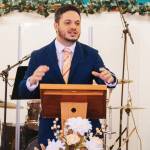
Greg Laurie is one of the surprising evangelical supporters of President Trump.

Greg Laurie poses for a portrait on Hollywood Blvd.

Greg Laurie

Christianity Today May 12, 2025
FAME / Harvest Ministries

On Wednesday before Easter, Greg Laurie walked in the darkness outside the White House after enjoying a dinner with President Donald Trump and a few dozen prominent evangelical leaders.

The founding pastor of Harvest Christian Fellowship in Riverside, California, looked into a phone camera held by another pro-Trump pastor, Travis Johnson, and described how “great” it was to visit “the seat of power,” the “most important building in the world.” 

Laurie was back in Riverside on Easter Sunday. At the 31:35 mark of his Resurrection Day sermon, he spent six minutes telling the Harvest congregation about his visit to Washington.

Trump spent four hours with evangelical leaders on that Wednesday evening. Laurie and his friends got a tour of the White House, which included a stop in the presidential family quarters and the famous Lincoln bedroom: “The pastors were like kids in a candy shop.”

It’s surprising that Laurie was in that particular candy shop. He is 72 and came to faith in 1970 as part of the Jesus People movement, a countercultural evangelical movement of young people who were searching for meaning and hope in California’s hippie culture and eventually found it in Jesus. A Christianity Today headline in 2013 summarized the drug past of many participants: “They got high on Jesus instead.”

The “Jesus people” staged a Holy Spirit-led rebuke to what they saw as the stuffy traditionalism of mainstream evangelicalism. Laurie told the story of the movement in his 2018 memoir Jesus Revolution. Five years later, Hollywood turned the book into a feature film. This West Coast spiritual revival had a profound impact on Laurie’s life, sending him on the path of Christian celebrity.

Today Laurie has a global outreach through his multicampus megachurch, which includes a Harvest Christian Fellowship in Maui, Hawaii; mass evangelistic crusades in Angels Stadium; and a media outreach that includes books, movies, and a large social media presence. He wants to “point people to Christ.”

Laurie desperately wants the United States to experience revival, and argues that Trump’s presidency is a sign of it. After praying at a Trump rally in California during the 2024 campaign, he said he would gladly do the same at a Kamala Harris rally if asked. Laurie said his relationship with the politicians he encounters is “pastoral,” not “political.”

In January, Laurie asked his social media followers to pray that God would surround Trump with Christian advisers. He quoted Proverbs 29:2, which says, “When the righteous are in authority, the people rejoice” (NRSVue). He is on record as opposing the separation of church and state. He said he doesn’t like the phrase Christian nationalism and prefers to call himself a “Christian patriot.” 

Last month, Laurie offered a homily on X about how he sought entry to the White House in April but “my name wasn’t on the list. Yep, pastor gets denied at the door. It reminded me of something far more serious—what Jesus said will tragically happen to some people one day when they step into eternity.”

Laurie explained that after further ado “they let me in. No harp music or pearly gates—but a tremendous worship service packed with White House staff members ready to praise the Lord. I shared a verse from the Book of Esther and reminded them that, yes, God had placed them there—for such a time as this. What an honor it was to be there. And don’t worry—I made sure my name is on the right list too.”

Queen Esther in the Bible used her proximity to power to tell King Ahasuerus that his executive order would result in the deaths of tens of thousands of innocent people. Laurie has stated clearly that he sees his task differently. Following Trump’s inauguration, he said, “We are tired of the crazy ‘woke’ agenda we’ve been dealing with.”

Laurie added, “God has placed Donald Trump in office,” and he agreed with Trump’s statement that “I was saved by God to make America great again.”

Laurie said, “I know President Trump understands the important role faith plays in the history of our nation, as well as the need for it in our present and future. And I am very appreciative of the fact that many Christians have been put in positions of influence around him. Godly people influencing and counseling him is exactly what we want.”

John Fea is distinguished professor of history at Messiah University.

News

Will the Trump Administration Deport Afghan Christians?

Christian groups ask the Trump administration to reconsider ending legal protections for Afghans and other Christian immigrants in the US.

Afghan children in the United States

Afghan children in the United States

Christianity Today May 9, 2025
Anna Moneymaker/Getty Images)

Christians who fled Afghanistan and have rebuilt their lives in the United States are now facing a return to their country that equates to an almost-certain death sentence.

Some Afghan evacuees who sought refuge abroad have been granted green cards, US citizenship, or a legal status known as Special Immigrant Visa (SIV) that’s given to people who worked alongside US forces in Afghanistan. But others came under more temporary legal statuses like humanitarian parole or Temporary Protected Status. That status, which began in 2023, expires May 20.

On April 10, Tricia McLaughlin, assistant secretary for public affairs at the Department of Homeland Security said the department would not be renewing temporary protected status for Afghans once it expires.

A group of faith leaders sent a letter to the Trump administration a week ago urging it to protect hundreds of Afghan Christians from being deported as part of the administration’s crackdown on immigration. Focus on the Family, Save Armenia: A Judeo-Christian Alliance, Open Doors US, the Family Research Council, the National Association of Evangelicals, and other groups have signed on.

In addition to undertaking a widespread crackdown on immigrants and asylum seekers, the White House has also mostly suspended refugee admissions. “It is critical,” the faith leaders’ letter said, “that our nation continue to provide refuge to those whose lives are at risk because of their faith, including Afghan Christians.”

“Afghanistan is among the most dangerous places in the world for Christians,” the letter read. Despite that, Afghan Christians recently received emails from the administration warning them to self-remove within a week.

The plight of Afghan Christians and other Christians at risk of deportation was in the spotlight at a congressional briefing Thursday in Washington, DC. The briefing highlighted a report by the Center for the Study of Global Christianity at Gordon-Conwell Theological Seminary finding that more than 75 percent of immigrants at risk of being deported (due to either being undocumented or having a legal status the Trump administration could revoke) are Christians.

Walter Kim, president of the National Association of Evangelicals, said the situation facing Christian immigrants challenges American “believers to understand the biblical truth of 1 Corinthians 12:26, that if one part of the body suffers, the whole body suffers with it.”

The briefing on Thursday put faces to that 75 percent, featuring an Afghan man; Kevenson Jean, a Haitian man who came to the US legally and may be deported depending on what a federal judge rules; a young American woman whose parents were deported after decades living in the US; an ordained priest from Nigeria whose parish members are now afraid to leave their homes due to fear of an immigration raid; and two American pastors.

The National Association of Evangelicals, the US Conference of Catholic Bishops, the Center for the Study of Global Christianity, and World Relief hosted the briefing.

“Being a Christian in Afghanistan, we had to hide our faith from everyone,” Afghan Christian Ben Moradi said. Moradi’s family used to host covert meetings with a handful of Christians in their basement, windows covered. The meetings shut down entirely after the Taliban took over. 

Moradi counted himself blessed when he came to the United States in 2020 and his family was able to escape in August 2021.

The situation in Afghanistan has only worsened since then. “No one can meet as a Christian anymore, because they will just break down your door and then come inside and kill you,” Moradi told Christianity Today. CT agreed to use a family name to protect Moradi’s identity. “The Taliban and your neighbor are against you, and if your neighbor reports you, they get a prize. Of course they are going to do it.”

Moradi is currently an elder at Oklahoma Khorasan Church, made up of around 22 Afghan Christians. But recently, a group of his fellow congregants—ten adults and two children—have gotten emails from the Trump administration warning them they have to self-remove from the US within a week. They also got another letter, revoking their work permits and their humanitarian parole visas. 

Those who received the emails came to the US after getting an appointment through the US app called CBP One. They had to live in Mexico for 10 months in a church sanctuary while waiting for approval to come into the US legally.

Contemplating their return to Afghanistan is a grim thought. “These Afghan Christians, if they get deported … they’re going to be killed,” Moradi said. “Afghanistan is [a] 100 percent Islamic country today. … They don’t even show mercy to fellow Muslims. How would they show mercy to Christians? It’s impossible. The penalty for those Muslims leaving Islam is death.”

For Nathan Brewer, lead pastor at Grace Harbor Church in northwest Oklahoma City, the deportation of Afghan Christians would mean a loss for his church as well. Meeting Moradi “opened my world,” Brewer said. Grace Harbor has partnered with Oklahoma Khorasan Church, including in engaging with Muslims in Oklahoma City. “Our ministries and our work together are very intertwined.”

Immigration attorneys have advised Afghan parolees the deportation emails do not apply to someone who has a pending asylum request, though some still don’t find those reassurances comforting. The situation also leaves in limbo those who haven’t completed their applications but who still have a “credible fear of persecution.” According to World Relief, parolees were told they had a year to submit their asylum applications after arrival.

In an environment where immigration lawyers are scarce, that’s a process that takes time. It can take up to 75 hours to prepare a single asylum application, according to Matthew Soerens, vice president of advocacy and policy for Christian refugee resettlement organization World Relief. “Finding an immigration attorney, especially if you don’t have thousands or even tens of thousands of dollars available, is very, very difficult in this current environment.”

Signatories to the letter hope the administration will reverse course and revoke the deportation notices to Afghan immigrants.

Last month, the administration told Politico that emails telling Ukrainians to self-deport had been sent in error. Around 240,000 Ukrainians were granted temporary legal status after fleeing their war-torn country during the last presidential administration. The agency retracted the email Friday in a follow-up email, according to CBS News.

The administration could also redesignate Temporary Protected Status for immigrants and refugees from Afghanistan.

Franklin Graham, president of Samaritan’s Purse, told Fox News Digital that he’s heard from Noem that Afghan parolees have until later this summer. “I understand from Kristi Noem—she said that I think it’s July, that the Afghans have till July. … They’ve got more time to work out this visa issue.”

But the administration has not so far announced any kind of extension or retraction. McLaughlin said Department of Homeland Security Secretary Noem “made the decision to terminate TPS for individuals from Afghanistan because the country’s improved security situation and its stabilizing economy no longer prevent them from returning to their home country.” Meanwhile, the State Department advises against traveling to the country, citing threats of armed conflict, terrorism, and kidnapping.

News

How Evangelicals View the First US Pope

Though Leo XIV is from Chicago, his election to the papacy reflects the move of Christianity toward the Global South.

Conclave Elects Pope Leo XIV

Newly elected Pope Leo XIV, Robert Prevost addresses the crowd in St Peter's Square on May 08, 2025 in Vatican City, Vatican.

Christianity Today May 9, 2025
Vatican Media via Vatican Pool / Getty Images

A pope from Chicago with citizenship in Peru?

In a Chicago suburb, evangelical faculty at Northern Seminary were excited to claim Leo as a Chicagoan, according to a professor there. Latino evangelicals in the US told Christianity Today they were happy that Pope Leo XIV gave part of his first papal address in Spanish. And in Philadelphia, evangelical leader Shane Claiborne pointed out that the pope went to Villanova University, and therefore has Philadelphia roots too. In Peru, the president celebrated Leo as one of the country’s own. 

Evangelicals in all of the Americas were curious about the new pope, with a side of regional pride. 

Though they don’t claim him as their church leader, many evangelicals look to see what impact the head of the Roman Catholic Church will have on religious dialogue, global politics, and the world’s understanding of Christian teaching. 

The 69-year-old Leo, previously known as Robert Prevost, was born in Chicago, but he has spent most of his adult life as an Augustinian friar outside of the US. He was a missionary in Peru and then promoted to important roles at the Vatican.

Many are celebrating Leo as the first pope from the United States, but it probably makes more sense to emphasize his Latin American experience, according to David Kirkpatrick, a religion historian at James Madison University who has specialized in research on Latin American evangelicalism.

“While Prevost has roots in the United States, from a different lens his election can also be seen as continuity—of another Global South pope following Francis,” Kirkpatrick said. “Far from a papacy that centers the U.S. or those in positions of power, I expect him to continue Francis’ emphasis on the oppressed and marginalized of the world.”

As news of Pope Leo XIV’s elevation spread on Thursday and the world learned more about his life and ministry, many evangelicals were encouraged.

“I appreciate that there is a pope who is familiar with Latin American Christian realities and immigrant realities,” said Gabriel Salguero, the head of the US-based National Latino Evangelical Coalition. “He’s on the record of being pro-immigrant, pro-family, pro-poor, all of those things in our evangelical community where there is common ground.”

Salguero added that the name Leo XIV indicates Leo will follow the example of Leo XIII, who was known for advocating for the working poor in the wake of the Industrial Revolution. Leo XIII chartered the Catholic University of America. 

“We’re living in very interesting times,” Salguero added. “We need religious leaders who understand the global interconnectedness.” 

Francis, who died on April 21, was the first non-European pope in more than a thousand years. Francis picked Prevost, an Augustinian friar, as his adviser on bishop appointments in 2023. 

“This appointment is in line with what Pope Francis did: placing a bishop from the periphery of a peripheral church—like Peru’s—at the heart of the Vatican,” said historian Juan Fonseca, a professor at the Universidad del Pacífico in Lima, Peru.

Before Prevost’s elevation to the Vatican, “he was never part of the upper echelons of the Catholic church,” said Fonseca. “Those are usually Peruvians from the elite who serve in the prestigious episcopal sees like Lima and Arequipa.”

In Peru, where Prevost became a naturalized citizen, he also worked on the margins. 

When Prevost first arrived in Peru in 1985, he served briefly in Chulucanas, a desert town of just over 40,000 people near the Ecuadorian border. He left in 1986 to complete his doctoral thesis at the Pontifical College of St. Thomas Aquinas in Rome. Between 1988 and 1999, he held various posts in the northern diocese of Trujillo. In 1999, he returned to his native Chicago, not coming back to South America until 2014.

That year, he was appointed apostolic administrator of the Diocese of Chiclayo, a coastal city of 600,000 in northern Peru, and in 2015 was named its bishop by Pope Francis. In his opening speech as pope before a crowd gathered in St. Peter’s Square, Leo spoke in Spanish to send greetings to his “beloved diocese of Chiclayo.”

“He had a pastoral approach rooted in deep connection with the excluded,” said Rolando Pérez Vela, vice president of the Asociación Evangélica Paz y Esperanza (Peace and Hope Evangelical Association) in Peru. “Leaders—whether Catholic priests or evangelical pastors—who serve in the periphery are more likely to denounce injustice because they see it firsthand, they witness people’s pain.”

Prevost was a member of the Episcopal Commission for Social Action, the Peruvian bishops’ arm for human rights advocacy, grounded in Catholic social teaching.

He took a critical and difficult stand for human rights when he opposed the pardon of Peruvian leader Alberto Fujimori, who was elected in 1992, staged a self-coup the following year, and remained in power until 2000. 

Arrested in Chile in 2005 and extradited to Peru, he was sentenced to 25 years in prison. A subsequent president decided to pardon him in 2018, though the Supreme Court overturned the decision a year later. 

The now-pope demanded that Fujimori apologize to the Peruvian people, Perez recalled.

“In Latin America, where human rights are often trampled, the churches have a responsibility to embrace a prophetic ministry—one that calls out the crimes of those in power,” Perez said. “They must challenge structural sin, impunity, and abuse of power.”

Leo’s elevation says something important about the ongoing shifts in global Christianity, said Gina Zurlo, a visiting lecturer in world Christianity at Harvard Divinity School.

In 1900, 73 percent of Catholics lived in Europe and North America. Now only 25 percent do; the rest are in the Global South. 

Zurlo said in that context, she would expect someone from the Global South to lead the Catholic church. Though most observers weren’t expecting the pope to be someone who also had American connections, American Christianity is also fundamentally global, Zurlo said, because of the large numbers of Christian migrants in the US and the number of Christians going overseas, whether for work, study, or religious mission. 

Leo speaks English, Spanish, Italian, French, and Portuguese. 

Leo has described himself regularly as a missionary. “I am a missionary; I have been sent,” he told Catholics in Chiclayo in 2003, when he was assigned to the Vatican. 

He reiterated that identity in one of the few interviews he gave before becoming pope, telling the Vatican News in 2023, “I still consider myself a missionary.”

In his first papal address, Leo said the Catholic church must be “a missionary church.”

Political leaders in both countries spoke Thursday of what an honor it was to have a man from their country made pope. Peruvian president Dina Boluarte wrote on social media that Prevost’s election “fills our nation with pride and hope,” adding that he “served our people with love and devotion.”

US President Donald Trump said it was a “great honor” to have a pope from the United States.

Leo has a record of criticizing Trump’s immigration policies, but some Trump-supporting evangelicals still welcomed his papacy. Samuel Rodriguez, the head of the National Hispanic Christian Leadership Conference, said Leo’s election was a “watershed moment” and “a reminder that faith is for all people in all places and that the gospel is an invitation to all.”

The new pope has emphasized the importance of invitation. In one interview, he described it as the first task of a Christian leader. 

“We are often preoccupied with teaching doctrine,” he said. “We risk forgetting that our first task is to teach what it means to know Jesus Christ and to bear witness to our closeness to the Lord. This comes first: to communicate the beauty of the faith, the beauty and joy of knowing Jesus. It means that we ourselves are living it and sharing this experience.” 

That desire to share the gospel resonates with some American evangelicals.

“We’ll still have our disagreements with Rome,” said Matthew Bates, a professor of New Testament at Northern Seminary in the suburbs of Chicago, who has written about Protestants and Catholics finding common theological ground. “But we see this as important for the future of the whole church—seeing Catholics as our brothers and sisters in Christ even if we don’t see [Leo] as our head.”

Catholics and evangelicals already work together on social concerns like the care of immigrants and refugees. Matthew Soerens, the vice president of advocacy and policy at World Relief, said that is a long-standing legacy of the Catholic church. 

“As evangelical Christians, we of course have some theological differences, but our biblically rooted concern for the well-being of immigrants is a point of commonality, and we’re eager to continue to partner with our Catholic brothers and sisters as Pope Leo XIV begins his papacy,” he said. 

Most observers see Leo as a continuation of the direction set by Francis and are talking about Leo following Francis’ example. 

Shane Claiborne from Red Letter Christians gently rejected the idea. 

“Francis was radical because of Jesus. He didn’t come up with the washing feet idea, even though he did it for folks in prison,” Claiborne said. “Pope Leo has the same example. The hope is always that the pope is an arrow pointing toward Jesus. … Jesus is the cure to a lot of things that have gotten twisted within Christianity.”

News

God ‘Laughs at Restrictions,’ Says Missionary in China

From May 1, foreigners can only preach and teach with government approval.

A man looking at the Lingbo Church in China.
Christianity Today May 9, 2025
South China Morning Post / Getty

American missionary Caleb Rowen has witnessed firsthand China’s tightening restrictions on religious faith and practice.

From 2006 to 2016, government policies prohibiting missionary work did not feel strictly enforced, Rowen said. Cross-organizational outreach, partnerships, and Bible translation projects took shape and flourished in this season.

The Chinese government “just turned a blind eye,” he said, “until they didn’t.”

In 2014, the Chinese government started cracking down on Korean missionaries and went on to expel entire Western mission agencies in 2018. In the same year, it shut down prominent house churches and arrested pastors like Wang Yi of Early Rain Covenant Church. It seemed as if overnight, half the missionaries whom Rowen knew had left China. CT is using a pseudonym for Rowen, as he is concerned about his safety for speaking with Christian media. 

The crackdown on foreign missionaries led Rowen and his wife—also an American—to leave their former Christian organization and establish a business as a form of marketplace missions. Then the COVID-19 pandemic dealt another blow to missions efforts in the country: He watched as many remaining missionaries left the country during this time. While many initially had plans to return, he said, they eventually settled back in their home countries or began working in other contexts.

Now, the Chinese government has implemented new restrictions on foreign missionary activity, which kicked in on May 1. Outlined in the National Religious Affairs Administration’s Rules for the Implementation of the Provisions on the Administration of Religious Activities of Aliens Within the Territory of the People’s Republic of China, the restrictions stipulate that foreigners may practice their religions only at legally approved religious venues. Foreigners must also submit written applications to worship collectively at government-approved venues.

The six missionaries CT spoke to said they do not believe the new restrictions will have major impacts on their daily work. They have always operated under the assumption that any interactions with Chinese people that involve religious teaching or sharing are considered illegal, especially as many of these missionaries work with unregistered house churches.

“As long as it remains true that ‘against such things (the fruits of the Spirit) there’s no law,’ my personal belief is that every government on earth desires the kingdom of God, even if they wouldn’t admit it in those terms,” Rowen said.

With the new rules in place, foreigners in China will only be allowed to preach with formal invitations from national or provincial religious groups. They are permitted to bring in a limited amount of religious material for personal use—no more than ten individual publications or no more than three sets of collected works—and are not allowed to distribute materials.

Foreigners can teach at religious institutions only if they are officially employed there, and can study at religious schools only when a recognized Chinese religious organization arranges it. If a foreigner wants to participate in religious exchanges with Chinese religious groups, the interaction must be arranged through national or provincial religious organizations.

The country’s tightening restrictions are a “strict limitation—almost a complete prohibition—on missionary activity,” said Bob Fu, founder of Christian nonprofit ChinaAid.

China first established formal regulations in January 1994 with the release of Decree No. 144 for foreigners engaging in religious activities. The government expanded these restrictions in 2000 by issuing a set of Implementation Rules, which were revised in 2016 and 2020.

The Implementation Rules’s latest updates, published on April 1, incorporated 16 new articles to take effect in May. They intensify the Chinese government’s oversight of foreign religious activity in China and continue President Xi Jinping’s campaign to make religions like Christianity “more Chinese.”

Although most of the measures effective on May 1 are not entirely new, “in both the number and substance of the provisions, [they] represent a significant overhaul,” said Ying Fuk Tsang, honorary senior research fellow at the Chinese University of Hong Kong. 

Notably, the updated restrictions broaden the scope of legal liability to ordinary civil or commercial interactions, such as when landlords rent properties to Christian groups. Doing so may now fall under providing “conditions for illegal religious activities of foreigners within China,” Ying said.

Another restriction outlines a ban on using the internet to conduct “illegal” religious activities. The Chinese government first imposed internet regulations prohibiting religious communication, teaching, and evangelism on March 1, 2022. Now, with the May 1 restrictions, if a pastor conducts online training for Christians in China, he or she could face criminal penalties if caught, Fu said.

The updated restrictions may also affect foreign Christian fellowships in China. If foreigners can only worship at government-sanctioned Three-Self Patriotic Movement (TSPM) churches, they will be unable to head international worship gatherings not affiliated with TSPM that currently gather in cities like Beijing and Shanghai, Fu said. To establish international fellowships or preach independently in China, they would have to go through various layers of bureaucracy.

“The so-called laws are just a way to legalize repression,” Fu said. “It would close off the loopholes or incomplete regulations in the past where lawyers were still able to defend people’s rights and formalize and solidify the process.”

Missionaries have always viewed the Chinese government’s policies restricting foreign religious activity as “shrouded in secrecy,” one American missionary said, making it difficult to know what the actual rules are at any given time. “We always just think that we need to be as careful as possible while still doing good work where we can,” she said.

Rowen had not heard about the latest restrictions before CT interviewed him. But he is unfazed by them and does not think they will trigger a major crackdown on foreign missionaries currently living and working in the country.

The new policies will not change his approach to sharing who Jesus is either. Traditional missionary models have not worked for years in China, Rowen says. He and his wife now work as full-time entrepreneurs and view their roles as “scaffolding,” or temporary support and encouragement, for the local Chinese church.

After 20 years of living in the country, Rowen and his family have witnessed the Chinese church’s explosive growth, with and without persecution. They’ve seen how much local believers have grown in boldness and courage.

“We are full to overflowing with hope because we’re swimming in the kingdom of God,” he added. “He laughs at restrictions, and so do we, because we know that no system on earth can keep the lid on this thing—this chain reaction that God initiated with the cross.”

Apple PodcastsDown ArrowDown ArrowDown Arrowarrow_left_altLeft ArrowLeft ArrowRight ArrowRight ArrowRight Arrowarrow_up_altUp ArrowUp ArrowAvailable at Amazoncaret-downCloseCloseEmailEmailExpandExpandExternalExternalFacebookfacebook-squareGiftGiftGooglegoogleGoogle KeephamburgerInstagraminstagram-squareLinkLinklinkedin-squareListenListenListenChristianity TodayCT Creative Studio Logologo_orgMegaphoneMenuMenupausePinterestPlayPlayPocketPodcastRSSRSSSaveSaveSaveSearchSearchsearchSpotifyStitcherTelegramTable of ContentsTable of Contentstwitter-squareWhatsAppXYouTubeYouTube