The United States had not held war crimes cases since the end of World War II. During that time, Sherwood F. Moran—a missionary to Japan and a US Marine during the war—was the most effective interrogator of Japanese POWs. His secret? Treat them humanely, or as he put it, “human being to human being.”
A legend among military interpreters, Major Moran knew Japanese culture intimately and spoke fluent Japanese, but decent treatment was his best contribution to America’s war effort against a fanatical and implacable foe. This humanity resulted from his Christian faith. Major Moran knew that all were created in God’s image.
America desperately needs more Sherwood Morans conducting effective interrogations in our war against terror. The U.S. Senate’s report on torture, released last week, brought disheartening details from recent cases to public attention, including the abuse of Abu Zubaydah by rookie contract interrogators.
These contractors failed to get actionable intelligence, and their techniques prevented the U.S. from moving forward with prosecution. They showed that abusive interrogations do not work and do not thwart future plots. (The tragedy of the Zubaydah case is compounded by the fact that the original FBI interrogators treated him humanely and were getting actionable intelligence—including the huge tip that “Muktar” was a code name for alleged 9/11 planner Khalid Sheik Mohammed.)
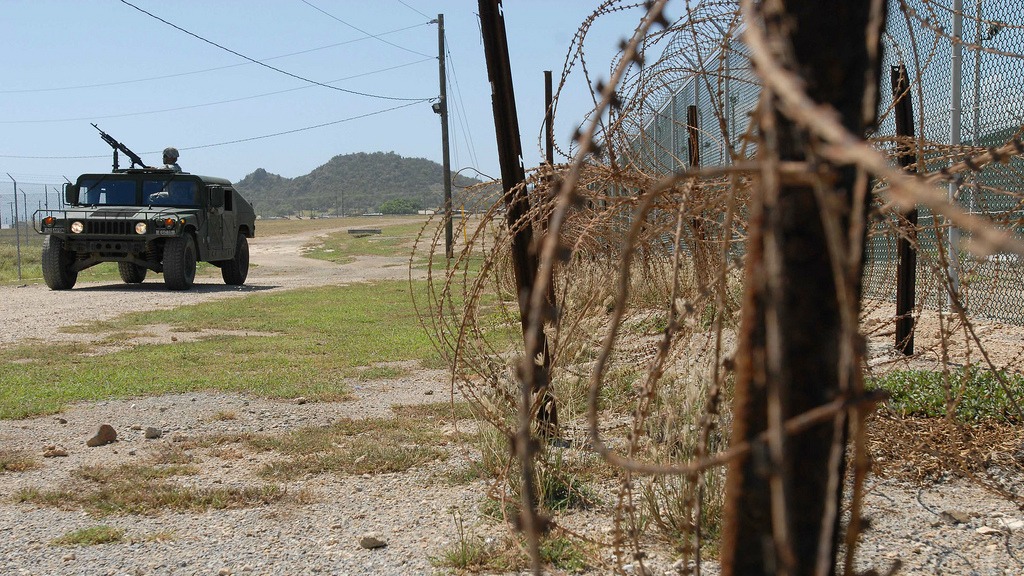
One highlight from my 30 years in the US Navy JAG Corps was working as a war crimes prosecutor with the Office of Military Commissions in Washington DC and Guantanamo Bay, Cuba. Our historic mission was to bring justice to detainees who violated the laws of war and were members of al-Qaeda.
After returning to active duty in 2008, I ran into enormous investigative aberrations: cases that could not be prosecuted, not because of weak evidence, but because the suspected terrorist was tortured during interrogation. Prosecutors may only use voluntary statements made by the accused. Forced statements are inadmissible in court.
The post-9/11 abusive treatment wasn’t called torture, of course, but “enhanced interrogation techniques” or EITs. After providing incomplete information, the CIA received legal clearance from the Justice Department to use these techniques, including waterboarding. The so–called torture memos were later withdrawn as legal authority by the Justice Department, but from approximately 2002 until 2007, our interrogators were free to use EITs on some terrorism suspects—despite the US agreement to the UN’s Convention Against Torture in 1987 and Common Article III of the Geneva Convention, which mandate humane treatment of all, including terrorism suspects.
I was not surprised that the recent Senate report found that torture failed to result in any actionable intelligence. In other words, the enhanced interrogation techniques did not save innocent lives by thwarting terror plots. As a war crimes prosecutor, I heard the line that abusive treatment worked and saved lives, but remained skeptical since I was never given any details. Now, the official majority finding of the Senate Committee confirmed my suspicions.
Somehow an earlier torture report, from the Senate Armed Services Committee in 2009, did not draw the same levels of attention and outrage. An overlooked blockbuster, this earlier report found, according to Michigan Senator Carl Levine, the interrogation techniques “are based on tactics used by Chinese Communists against American soldiers during the Korean War for the purpose of eliciting false confessions for propaganda purposes.”
As a Christian, I can find no biblical authority that condones torture. We are all made in God’s image and therefore entitled to humane treatment. Romans 13:1 says to obey “the governing authorities;” in my view, those authorities include the Convention Against Torture and the Geneva Convention’s Common Article III.
Christian service members—under the Uniform Code of Military Justice—are not obligated to obey illegal military orders, and Christian interrogators must also recognize the limits to what agency authorities may lawfully order. Government agencies and military personnel are subject to God’s ultimate authority, in addition to the authority of human laws that clearly prohibit torture and abusive treatment of suspects.
Scripture presents examples of God’s people refusing to submit to wrongful state action. Shadrach, Meshach, and Abednego refused to bow to the golden idol, despite a mandatory law. In Daniel 3, Daniel too violated a law that prohibited prayers to anyone besides King Nebuchadnezzar. Their accounts illustrate that sometimes God’s people must refuse to obey human authorities when such obedience violates God’s law. God protected them despite their civil disobedience.
I had no conflict as a Christian prosecutor, because by that time, a new law prohibited the government from using in court evidence derived from abusive treatment. Unable to rely on testimonies secured through torture, interrogators refrained from the enhanced interrogation techniques. Some cases contained enough untainted evidence to allow us to prosecute. Other detainees involved in our cases were never abused or tortured.
Even aside from the many legitimate moral, legal, and scriptural concerns over torture, the bottom line from the recent Senate report is that it doesn’t work. It fails to bring actionable intelligence, makes us hypocrites on the world stage and violates international law. If we truly are a “city set on a hill,” we must keep the lights on and avoid the darkness.
David C. Iglesias is the director of the J. Dennis Hastert Center for Economics, Government and Public Policy at Wheaton College. He also teaches US national security classes as the Jean and E. Floyd Kvamme associate professor of politics and law. He previously served as the U.S. Attorney for the District of New Mexico and recently retired as a Captain in the reserve Navy JAG Corps.