Even if I had somehow taken a course on “How to Be a Pastor’s Wife,” it probably would not have included a lesson on what to do when a global pandemic shuts down church as we know it.
On Sunday, March 15, I stood in an almost-empty church in downtown Ottawa, watching my husband, Brent, an Anglican priest, speak to our congregation through his iPhone set up on a tripod, improvising a worship service over Facebook Live.
Like so many other congregations, ours stumbled through the first week of COVID-19. And like so many other people married to pastors, I was called to duty.
Someone else was in charge of filming, but my job was to shush anyone who happened to wander into the church and to post the link to the online bulletin and service guide should anyone ask for it in the comments. I also appointed myself the role of thumbs-up gal, acknowledging the kind feedback that scrolled up under the feed. I felt helpful.
Then, almost overnight, I became not so helpful. The next week, I became like a hysterical cheerleader. I sent multiple articles to Brent on what other churches were doing. What about this? What about that? I thought of a really great idea. Look at this. Read that. Have you considered this, that, and the other thing?
My husband listened patiently, but as I saw the ocean of communication he waded through each and every day, I slowed down. I also recognized that some of my suggestions grew out of my own fear and insecurities about how our church would weather this crisis. Acknowledging my own fears settled my heart.
“This will be a marathon,” Brent said, “not a sprint.” I realized that for all the great ideas out there, no one actually knew what they were doing. This is a new place we haven’t yet visited. Not churches, not pastors, and not the people married to them.
I have always been a do-what-is-needed kind of pastor’s wife. Does the church kitchen need to be swept after the potluck? Hand me that broom. Is there a shortage of Sunday school teachers? I am in.
I have done what has needed to be done, even when I wasn’t very good at it, like ironing out—or trying to iron—those stubborn, stiff creases in the fair white linen used for Communion and then setting things up just so for the Sunday service. (Eventually, Brent encouraged my early retirement from the altar guild because I was poorly suited for work so precise, and because other people stepped forward.)
I have embraced tasks both big and small, some naturally suited to my abilities and some not, partly because I love God and the church, but also as a way to love my husband well. If I could help him, why wouldn’t I? If I could relieve that one stressful thing with the balm of my activity, I would.
As so much of what we know falls away, what remains seems to be very basic things.
But this pandemic has stripped away so much of what we normally do, each and every one of us, to be the church. We are all finding our way forward through this present darkness.
I’m making great meals. I am cooking well and as abundantly as possible for my family, all sequestered here together in our semidetached old house with its narrow upstairs corridor, creaky doors and floors, and thin walls. So, here’s where I’ve settled. It has surprised me with its simplicity. It’s almost old-fashioned.
The two children with us are 19 and 21. The dining room table seems to be the place where we now meet once a day. That is enough. I have lowered my expectations of this being a great time to grow closer as a family to a more manageable “Let’s get out of this still speaking to each other.” That takes the pressure off everybody, including my husband.
I’m also cleaning. Lysol wipes and the vacuum help me feel like I can control something in this world gone mad while also helping to protect my family and keep them healthy.
I listen. And I tell Brent to stop reading the latest COVID-19 statistics at night in bed, as we try hard to drift off to sleep. I’m encouraging him to rest, take time off, and walk with me outside under the sun that seems to be growing warmer every day, if it’s not trying to fool us.
I see my friends doing the same kinds of things for their families, and for their spouses, whatever their daily work would normally be. People are making fresh bread and hauling out the family bicycles a month early to try to get their people moving and breathing in clean air. Because we can’t reach out, we are reaching in even more tenderly, or at least that’s what I am doing.
How can I love you here and now and even better? We are all asking.
As so much of what we know and what is familiar falls away during this crisis—and never have my daily rhythms of life and church and work been so disrupted—what remains true and good and real and important seems to be very basic things . Rise. Breathe. Pour coffee. Pray. Here’s a poached egg with some buttery toast. You deserve butter today.
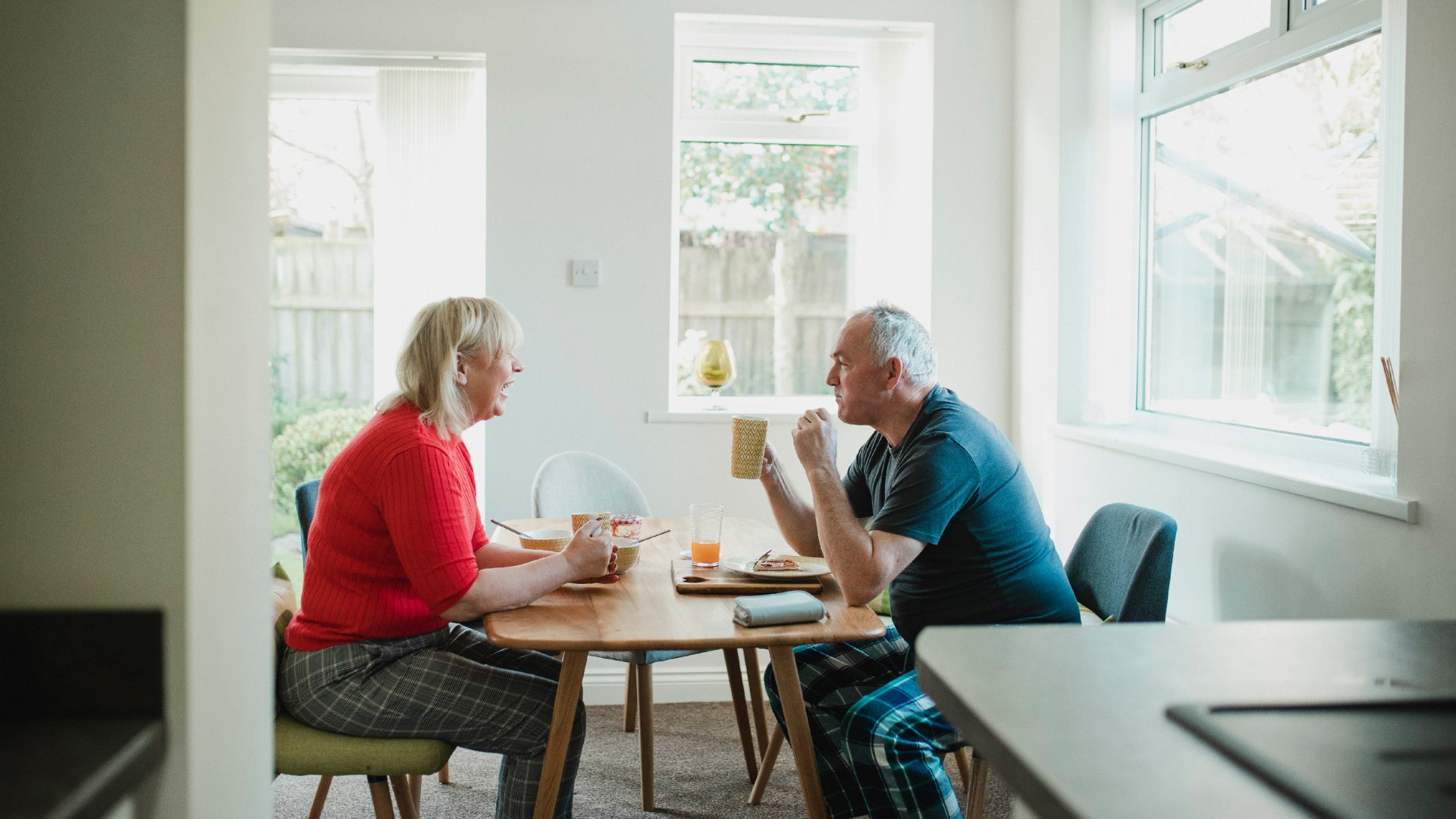
In the mornings, Brent sits at one end of the table, conducting morning prayer with a diehard group of Zoomers. I am on the other side, reading my Bible more steadily and regularly than ever. A chapter a morning. First it was Ephesians, then Philippians, now it is Colossians. I’m moving through the New Testament exactly like I’m moving through my days, one foot in front of the other, step by step. There is a comfort found in steady and slow.
And if a “How to Be a Pastor’s Wife” course did have a pandemic primer, I think it might say things like that . One step at a time. Keep it simple. Love him well. Trust God, and things will be better someday.
Karen Stiller is senior editor of the Canadian magazine Faith Today. Her memoir, The Minister’s Wife, releases next month.